Keanu Reeves takes on the High Table in final trailer for John Wick: Chapter 4
[embedded content]
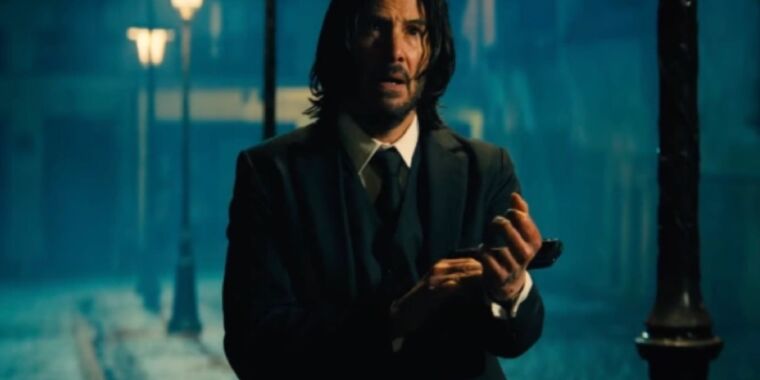
Keanu Reeves is back to take on the High Table in John Wick: Chapter 4.

When we last saw Keanu Reeves’ John Wick, he was battered, bloodied, betrayed, and vowing revenge on the High Table. That’s going to involve a lot of killing, as evidenced by the action-packed, very bloody final trailer for John Wick: Chapter 4.

(Some spoilers for the first three films below.)

As I’ve written previously, for the benefit of those who missed the first three movies, Wick (Reeves) is a legendary hitman who tried to retire when he fell in love and got married. Unfortunately, he was drawn back into the dark underground world after his wife’s untimely death. Some Russian gangsters stole his car, beat him up, and killed the adorable new puppy, Daisy, that his late wife had arranged to be sent to him after her funeral. Who could blame the man for seeking (and taking) bloody retribution?

The film was a huge hit, so naturally there was a sequel. In John Wick: Chapter 2, Wick took on a whole slew of Russian baddies and also found himself honor-bound (per the professional hitman’s code) to go on one last assignment. Of course he succeeded—he’s John Wick—but he ended up killing the double-crossing client—newly named to the High Table—inside the Continental Hotel in New York, which is supposed to be a safe space for assassins. Wick was declared “excommunicato,” cutting him off from all the resources the hitman underground usually provides.

That’s where John Wick: Chapter 3—Parabellum picked up, with Wick scrambling to find allies (and ammo) to fight off pretty much the entire underworld of assassins, all of them eager to claim the bounty on his head. John negotiated a deal for the forgiveness of his many transgressions against the High Table in exchange for killing Winston (Ian McShane), manager of the NYC Continental. But when the time came, John refused, so the High Table sent its army of assassins. John killed pretty much all of them, but then Winston betrayed John, shooting him. John survived and joined forces with the badly wounded Bowery King (Laurence Fishburne) to exact their mutual revenge on the High Table.

The four principals are returning for this installment: Reeves, McShane, Fishburne, and Lance Reddick as Charon, the urbane concierge of the NYC Continental. Among the new characters is Akira, played by Japanese singer-songwriter Rina Sawayama in her feature-film debut. The cast also includes top Hong Kong action star Donnie Yen as a blind High Table assassin named Caine, apparently a friend of Wick’s; Hiroyuki Sanada as another old friend named Shimazu; Shamier Anderson as The Tracker; Bill Skarsgård as the Marquis de Gramont, a new member of the High Table; Clancy Brown as The Harbinger; George Georgiou as The Elder; and Scott Adkins as Killa, who shares a common enemy with Wick.

Per the official premise:

John Wick (Keanu Reeves) takes on his most lethal adversaries yet in the upcoming fourth installment of the series. With the price on his head ever increasing, Wick takes his fight against the High Table global as he seeks out the most powerful players in the underworld, from New York to Paris to Osaka to Berlin.

Reeves swung by San Diego Comic-Con last July to introduce a sneak peek teaser for the film, featuring a smörgåsbord of action shots: samurai swords, nunchucks, bows and arrows, “dog fu,” daggers, and of course, guns, guns, guns. The first official trailer, set to a cover of  “Seasons in the Sun,” dropped last November. We were introduced to the Marquis de Gramont. Winston advised John to challenge him to single combat since, win or lose, he will finally be able to escape his predicament—even if that escape involves his death. We also learned that while John doesn’t sit at the High Table, apparently his family does.

This final trailer doesn’t shed much more light on the plot and largely eschews dialogue, preferring to give fans all the action and bloodshed we’ve come to expect from this franchise in a tightly edited minute and a half. Based on this footage, the choreographed fight scenes will (once again) not disappoint. The run time is nearly three hours, and you can be sure that all that fighting will ratchet up Wick’s already impressive body count even more.

John Wick: Chapter 4 hits theaters on March 24. Yes, there will be a Chapter 5. A spinoff film, Ballerina, will feature Ana de Armas as a young woman raised to be an assassin vowing revenge on those who killed her family. There is also a limited TV series in development, The Continental, focused on a young Winston in the 1970s, played by Colin Woodell.

Listing image by YouTube/Lionsgate

https://arstechnica.com/?p=1918242



Archaeologists found evidence of trepanation on medieval woman’s skull

close up images of skull with arrows showing tool marks
Enlarge / This skull of a 50-year-old-ish medieval woman, circa 6th to 8th century, shows evidence of trepanation.
I. Micarelli et al., 2023

Scientists analyzed the skull of a medieval woman who once lived in central Italy and found evidence that she experienced at least two brain surgeries consistent with the practice of trepanation, according to a recent paper published in the International Journal of Osteoarchaeology. It’s one of the few archaeological pieces of evidence of trepanation being performed on early medieval women yet found, although why the woman in question was subjected to such a risky invasive surgical procedure remains speculative.

Archaeologists have found evidence of various examples of primitive surgery dating back several thousand years. For instance, last year, archaeologists excavated a 5,300-year-old skull of an elderly woman (about 65 years old) from a Spanish tomb. They determined that seven cut marks near the left ear canal were strong evidence of a primitive surgical procedure to treat a middle ear infection. The team also identified a flint blade that may have been used as a cauterizing tool. By the 17th century, this was a fairly common procedure to treat acute ear infections, and skulls showing evidence of a mastoidectomy have been found in Croatia (11th century), Italy (18th and 19th centuries), and Copenhagen (19th or early 20th century).

Cranial trepanation—the drilling of a hole in the head—is perhaps the oldest known example of skull surgery and one that is still practiced today, albeit rarely. It typically involves drilling or scraping a hole into the skull to expose the dura mater, the outermost of three layers of connective tissue, called meninges, that surround and protect the brain and spinal cord. Accidentally piercing that layer could result in infection or damage to the underlying blood vessels. The practice dates back 7,000 to 10,000 years, as evidenced by cave paintings and human remains. During the Middle Ages, trepanation was performed to treat such ailments as seizures and skull fractures.

The skull examined for this latest paper was excavated in the late 19th century from the Longobard cemetery of Castel Trosino in central Italy, dated between the 6th and 8th centuries CE, along with hundreds of other burials. But only 19 skulls found at the site were in sufficiently good condition for study. Castel Trosino was strategically important to the region in the wake of the collapse of the Roman Empire. According to the authors, the Byzantine government wanted to stabilize its control of central Italy and ensure peace by encouraging members of prestigious Longobard families to live there. So the burial sites included gold objects and fine jewelry along with the human remains.

Molding and casting process of skull CT1953.
Enlarge / Molding and casting process of skull CT1953.
I. Micarelli et al., 2023

This particular skull is that of a woman about 50 years old. It was found in a double burial, along with male remains, plus a bronze brooch, comb, and gold filaments that suggested the couple belonged to one of those elite families. The authors initially examined the skull and noted several cranial defects—specifically, a cross-shaped section of porous bone with an oval-shaped depression at the center and a second oval-shaped scraped area.

So they took CT scans of the skull and made casts to learn more. They cleaned the bone surface with cotton swabs and let it dry before applying blue silicone to the areas with bone defects with a dispensing gun. Then a second layer of orange silicone was added to cover the blue silicone. Then casts were made of epoxy resin and left to dry for 48 hours. The cast surfaces were then metallicized with golden powder and scanning electron microscopy was used to analyze the samples.

“We found that the woman had survived several surgeries, having undergone long-term surgical therapy, which consisted of a series of successive drillings,” said co-author Ileana Micarelli of the University of Cambridge and a former postdoc at Sapienza University, which coordinated the international study.

https://arstechnica.com/?p=1917619


Prototype of the final unreleased 3dfx GPU sells on eBay for $15,000

Graphics cards cost more than they used to, but it turns out that they can get even more expensive when they’re also a rare collector’s item. A late-revision prototype of the unreleased Voodoo 5 6000—intended as the flagship of the Voodoo 5 GPU family—sold on eBay this week for $15,000, a price that makes the GeForce RTX 4090 look cheap by comparison.

The GPU was said to be in “excellent condition” and appears to be fully functional—seller gtastuntcrew302 posted a screenshot of the card achieving a score of 6,995 in 3DMark 2000 run at a 1024×768 resolution. These cards were never sold at retail, and only about 1,000 prototypes were manufactured, according to Piotr Gontarczyk’s Polish-language history of 3dfx.

“This card was personally reworked by the well known 3DFX engineer Hank Semenec for fully stable 8X FSAA (I have personally verified that this card is rock solid at 8X),” wrote the seller. “Unlike a lot of other Voodoo 5 6000 prototypes, this one is from the later stages of the 6K prototype project where the vast majority of bugs have been ironed out.”

Based on the same VSA-100 architecture as the single-GPU Voodoo 4 4500 and the dual-GPU Voodoo 5 5500, the 6000 includes a total of four VSA-100 chips with access to 32MB of RAM apiece. It might have been able to beat contemporary GeForce 2 and Radeon 7000-series GPUs, but those GPUs each used a single chip, making them much easier to manufacture and cheaper to buy. VSA-100 also lacked full support for the Direct3D 7 and Direct3D 8 graphics APIs, both of which were supported by Nvidia and ATI GPUs at the time.

Early prototypes also had data corruption bugs that limited them to AGP 2x speeds, though the prototype from this eBay listing appears to have resolved those bugs. The retail version of the card would have required an external power brick because it needed more power than the AGP graphics slot could provide—a rarity at the time, though today’s GPUs virtually all require extra power via some internal connector. The prototype draws its extra power from an internal 4-pin Molex connector, which was commonly used for hard drives, optical drives, and other internal accessories at the time.

Nvidia bought 3dfx in late 2000, before the Voodoo 5 6000 or anything like it could come to market. Nvidia and ATI (and then, AMD, after AMD bought ATI) were the only major players in the dedicated graphics market for more than two decades until Intel finally launched its first Arc dedicated GPUs in 2022.

Listing image by gtastuntcrew302/eBay

https://arstechnica.com/?p=1917663


What medieval attitudes tell us about our evolving views of sex

Two sketches of women in Medieval clothing
Enlarge / Vintage illustration of medieval women wearing kirtles. A kirtle (sometimes called a cotte or cotehardie) is a garment that was worn by men and women in the Middle Ages. It eventually became a one-piece garment worn by women from the late Middle Ages into the Baroque period.

In the illuminating and entertaining blog Going Medieval, Eleanor Janega, a medievalist at the London School of Economics, upends prevalent misconceptions about medieval Europe. These misunderstandings include that people didn’t bathe (they did) and that these were the Dark Ages*. Her new book, The Once and Future Sex, is subtitled “Going Medieval on Women’s Roles in Society,” and that’s exactly what she does—if by “going medieval” you intend the pop culture meaning of “dismembering in a barbaric manner” which, despite her protestations, you probably do.

Her main thrust, in the blog and in the book, is that it’s easy and convenient for us to envision medieval times as being backward in every way because that makes modern times seem all that much more spectacular. But not only is this wrong, it’s dangerous. Just because life is definitely better for women now than it was then, that doesn’t mean our current place in society is optimal or somehow destined. It’s not.

Progress did not proceed in a straight arrow from bad times then to good times now. Maintaining that things were horrible then deludes us into thinking that they must be at their pinnacle now. Janega lays out this argument in the introduction and then spends the bulk of the text citing evidence to bolster it.

Blame the Greeks

The first chapter describes how medieval Europeans got their ideas about women, sex, beauty, and… well, generally everything from the Greeks. Greeks viewed men as the default humans; women were viewed spiritually as fallen men (Plato) and physically as inside-out men (Galen). Then Christianity and its doctrine of Original Sin came along, which did not exactly induce men to see women in a more favorable light.

“Augustine’s message was that even when a man disobeyed God, it was probably because a woman had convinced him to do so,” she notes. Men wrote down these ideas about women and then spent centuries teaching them to other men in universities and monasteries, where there were definitively No Girls Allowed.

(Nuns were permitted to read, study, and think, and the surviving records of women who did so, like Hildegard of Bingen [1098–1179] and Christine de Pizan [1364–c.1430], suggest that they did not view their own natures quite like men did. But educated women were rare, and surviving writings by or about them are rarer still.)

Then there’s a chapter on beauty standards for women, which mandated golden tresses, milky-white skin, and rosy cheeks. The adjectives were lifted directly from Dares Phrygius, a contemporary of Homer’s who purportedly witnessed the Trojan War, and they’ve remained unchanged until… basically now. Then, as now, women were supposed to naturally have this appearance; God forbid they put any time, money, or effort into it. (Quite literally—using make-up was considered among the gravest of sins).

Medieval men did like a potbelly on their women, though. This is the opposite of today’s preference for chiseled abs, but both features denote the same trait: wealth. Medieval women sporting potbellies clearly had enough to eat, and today’s flat-bellied women clearly have enough leisure time to work out.

https://arstechnica.com/?p=1916296


The Last of Us episode 5 asks: What if prestige TV shows had boss monsters?

I think we all need a hug after that episode's conclusion...
Enlarge / I think we all need a hug after that episode’s conclusion…

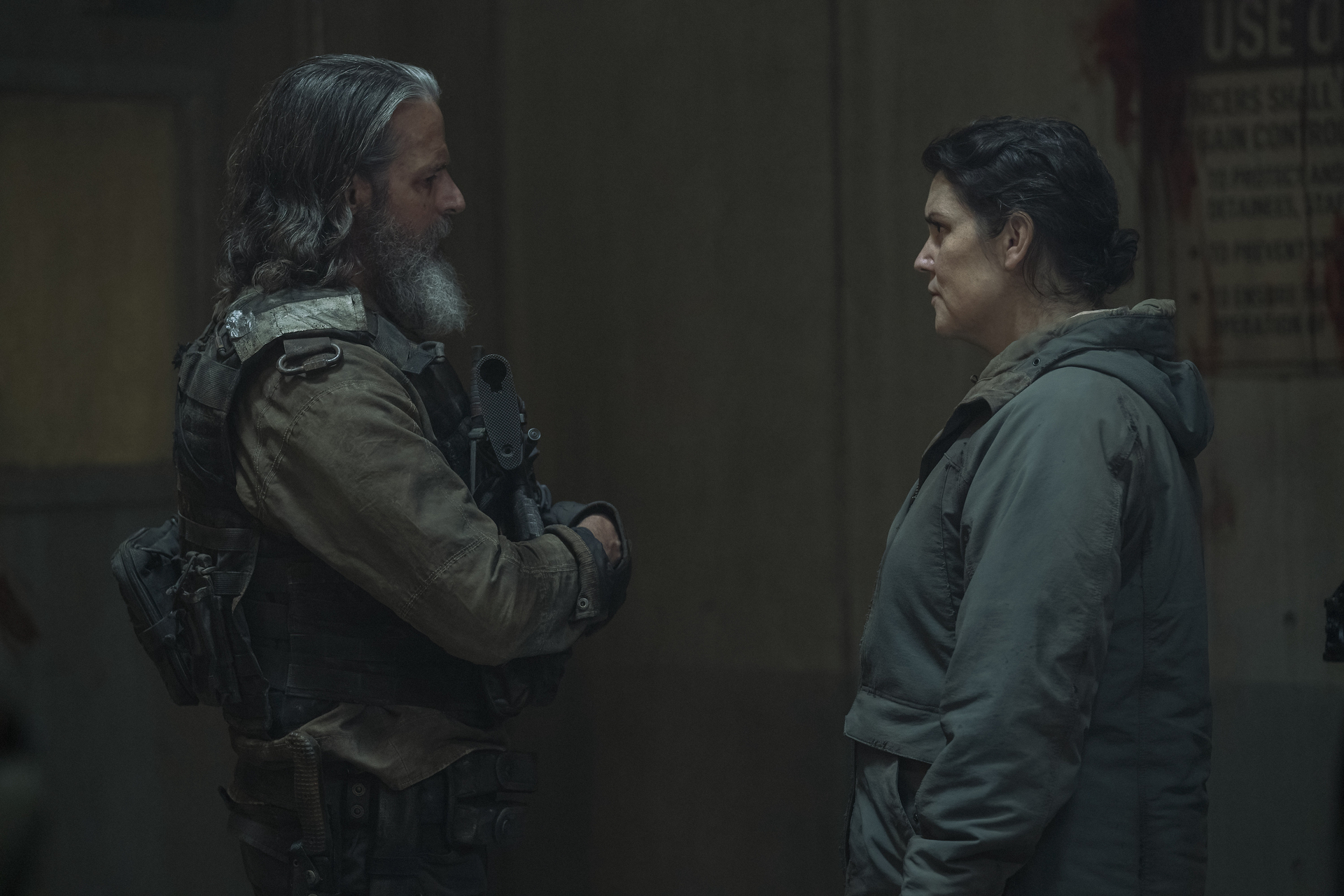
Kyle: Like anyone who’s played the games, I imagine, I’ve been kind of dreading watching this episode ever since we first saw Henry at the end of the last episode. The ultimate fate of him and his brother Sam is one of the most indelibly sad moments in a game series that’s full of them.

Part of me tried to hold out hope that they might change that fate for the show—they’ve changed a lot of other stuff about the narrative, including a lot about Henry and Sam themselves. But really that was probably just wishful thinking born out of a deep connection with the characters. The specifics might change, but this plot beat needed to stay in there, precisely because it’s so emotionally raw.

Andrew: I don’t know how every beat is going to play out, but I do know the story is defined by the Joel-Ellie dyad. Which gives the show this sad air of inevitability whenever someone else joins the party. First with Tess, and now with Henry and Sam. I don’t think that every ally they make along the way is going to end up dead or infected or both, but the odds of them heading west with Our Heroes seem pretty bad.
Kyle: Yeah, if you are traveling alongside Joel and Ellie for any significant period of time, you might as well break out a red Star Trek uniform. Really, though, Henry was kind of asking for it with his “I’m absolutely sure there are no dangers in this creepy underground tunnel vamping. Just no Genre Savvy at all…
I'd say "Nice knowing ya" but... well... it wasn't that nice?
Enlarge / I’d say “Nice knowing ya” but… well… it wasn’t that nice?
Andrew: And the Kansas City vigilantes really should have assumed that Chekov’s Pulsating Basement Floor from the last episode was going to be an issue. I’m not going to say I would be great in an apocalypse, but knowing how these stories work definitely seems to give you a leg up.

So, you say lots of details of the Henry-Sam story are different than in the games, and you said last week that this Kansas City story and the characters in it were different from the games. Without knowing what’s coming in the next few episodes, what purpose do the changes serve? Just reformatting things to be more workable on TV or something else?

Kyle: Some of the changes are kind of incidental in the grand scheme, like making Sam a bit younger and deaf. The biggest change to this whole arc is the creation of Kathleen, who gives a stronger narrative focal point to the more anarchic Hunters faction in the game. I did appreciate them trying to humanize her a little bit with her reminiscence about her brother and such, but in the end, I did not really feel bad when Little Miss “LOL, no trials for these jokers” got her comeuppance.
Andrew: The show decided it needed to make Kathleen a monster and humanize her inside of just two episodes, and that’s hard to do, especially when all we know about her brother is told and not shown. Melanie Lynskey gives it her best shot, but at the end of the day it is hard to root for the character advocating for child murder. The way that Joel and crew just kind of… leave her to her fate was kind of darkly funny, whether it was meant to be or not.
Kyle: Yeah, after the second time you point a gun at someone only for Infected to distract/eat you at the last moment, you know the writers are just out to mess with you at that point.

By contrast, one thing the show managed to establish quickly was the friendship between Ellie and Sam. We’ve talked about her “tough girl” exterior here before, but the thing this story hammers home so well is that, deep down, she’s just a lonely kid who’s quickly realizing that everyone she grows close to could leave her.

https://arstechnica.com/?p=1916769


Jason Momoa is out for revenge in action-packed Fast X trailer

[embedded content]
This time it’s personal: Vin Diesel’s Dom Toretto must protect his family from old enemies in Fast X.

Vin Diesel’s Dom Toretto finds his peaceful family man existence violently interrupted yet again in the trailer for Fast X, the 10th main installment (and 11th full-length film) in the wildly successful Fast and Furious franchise.

(Some spoilers for prior films in the franchise below.)

This has been in the works since 2014, later divided into two films that will wrap up the main installments. Justin Lin was originally tapped to direct Fast X, but he exited the project due to “creative differences” one week after filming began in April last year, though Lin co-wrote the film and stayed on as a producer. The Hollywood gossip mill soon kicked into high gear, with reports of on-set clashes between Lin and Diesel, alleging the star was out of shape, struggled with his lines, and was often late to set. Lin also objected to some of the rewrites to his screenplay, and there were reports that after one intense disagreement with Diesel, he exclaimed that the film “is not worth my mental health.”

Universal had to scramble to find a replacement director, and it found one in Louis Leterrier, who directed the first two Transporter films, as well as 2008’s The Incredible Hulk, 2010’s Clash of the Titans, and 2013’s Now You See Me. Leterrier said that he wanted to do more real stunts enhanced with visual effects, rather than tons of CGI, to bring the franchise “back to Earth”—perhaps a sly reference to F9, which featured a climactic scene in which Tej (Chris “Ludacris” Bridges) and Roman (Tyrese Gibson) ride a “rocket car” into near-Earth orbit to destroy a satellite and are rescued by the crew of the International Space Station (no, really). We’ll even see a bit more of the street racing that featured so prominently in earlier films.

All the main cast members are returning for Fast X: Diesel, Bridges, Gibson, Michelle Rodriguez as Letty, Jason Statham as Deckard Shaw, John Cena as Dom’s brother Jakob, Jordana Brewster as Dom’s sister, Nathalie Emmanuel as computer hacktivist Ramsey, and Sung Kang as Han Lue, who we learned in F9 had faked his death. Charlize Theron reprises her role as criminal mastermind Cipher, and Helen Mirren is back as Deckard’s mother, Queenie. There are some new faces, too, most notably Jason Momoa as the main antagonist, Dante, in league with Cipher. Brie Larson plays a character named Tess, and Rita Moreno plays Abuela Toretto, grandmother to Dom, Jakob, and Mia. This will also be the first film in the series to feature electric cars like the DeLorean Alpha 5.

Family has long been a central theme of F&F movies, and Fast X is no exception. Per the official premise:

In 2011’s Fast Five, Dom and his crew took out nefarious Brazilian drug kingpin Hernan Reyes and decapitated his empire on a bridge in Rio De Janeiro. What they didn’t know was that Reyes’ son, Dante (Jason Momoa), witnessed it all and has spent the last 12 years masterminding a plan to make Dom pay the ultimate price.  Dante’s plot will scatter Dom’s family from Los Angeles to the catacombs of Rome, from Brazil to London and from Portugal to Antarctica. New allies will be forged and old enemies will resurface. But everything changes when Dom discovers that his own eight-year-old son is the ultimate target of Dante’s vengeance.

The trailer opens with Abuela reminding our assembled crew that despite all the hardships they have faced, they are still here together, “building this magnificent family.” But Dom is worried about past adversaries, especially now that he has something precious to lose. “You’re about to learn all about fear,” we hear Momoa’s Dante warn in a voiceover. He envies Dom’s happy, stable family, believing Dom to be responsible for his lack of the same, and vows to break them apart “piece by piece.” It’s not enough to bring death; Dante is out to make Dom suffer. Given that this film (plus its planned sequel) will bring the saga to an end, Letty just might be right when she says, “One of us might not come back from this.”

Fast X hits theaters on May 19, 2023.

Listing image by YouTube/Universal Pictures

https://arstechnica.com/?p=1916830


System Shock remake demo fuses modern design to a retro FPS/RPG package

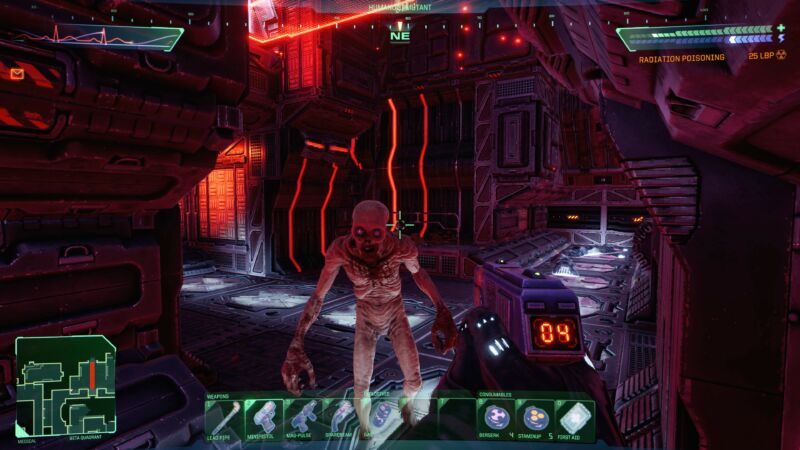
A humanoid mutant approaching the player in a dark corridor in System Shock.
Enlarge / Dark corridors, cyberpunk lighting, low ammo, mutated humanoids: same as it ever was.

Nobody was expecting to see a PC demo for the System Shock remake this week, least of all me. I’ve been waiting to revisit Citadel Station and its malevolent AI since the project’s announcement nearly seven years ago. Having spent a couple hours in the first level, I’m certainly impressed but curious about some of the decisions and focus areas.

If you played and loved the original, this demo, and likely the full game, is almost certainly worth your while. You can punch 0451 into the medical storage locker like it’s 1994 again, but this time at modern resolutions and frame rates, using far more comfortable controls, even a gamepad. You can blast and pipe-bash enemies, but they aren’t Wolfenstein-era 2D sprites anymore. And, of course, you can play the game on Steam, GOG, or Epic, rather than having to find an ancient CD-ROM.

There are some new conveniences, like an entirely overhauled interface with better shortcuts for secondary items, like grenades and stim patches. But the beats of the story, the puzzles and enemies and traps, the very core of the innovative, quirky game is still there. You can still spend far too much time meticulously organizing your inventory and collecting scrap for junk credits, while supposedly in the midst of a humanity-endangering crisis.

For context, and disclosure, I played the original extensively in the era when Looking Glass still existed. Getting it to run on my dad’s Gateway office computer was a big part of my computer education. I backed Nightdive’s Kickstarter for the game in 2016, when it was expected to arrive by the end of 2017. All that to say: I’m a fairly soft target.

So I certainly enjoyed seeing familiar faces: the grungy mutants, the Picard-as-Borg-like cyborg drones, the trash-can-looking bots that flail their arms at you. But I’ve also noticed some things that left me wondering if there’s more to be fixed up in the finished product. The melee combat feels just as stiff and non-kinetic as it did in the mid-1990s, which is not a good thing. Enemies perpetually respawning in areas you’ve already visited might make sense narratively, but it’s a mechanic I might have left behind.

There’s far less mousing around inside a screen-hogging HUD than the original, but still more fiddling than I’d expect in a modern game. The gamepad controls seemed incomplete in this demo, but basically functional. It’s still far more of a mouse-and-keyboard game.

Some things look crisp and new, others have a kind of retro-pixel glean to them.
Enlarge / Some things look crisp and new, others have a kind of retro-pixel glean to them.
Nightdive Studios

Most intriguing are the graphics. I wasn’t expecting a modern AAA shooter, but the rough pixel edges on some objects and textures caught my eye. I’m playing on a budget-focused Nvidia RTX 3050, but even with every graphic setting turned up to “High” or “Ultra,” and the resolution set to 4K, it looked about the same. At the same time, with the graphics maxed out, the game positively hummed along at about 70 frames per second. I asked Nightdive about this through its marketing team. Were the somewhat granular textures a design choice to evoke the original? Consideration for gamers who may not have a top-of-the-line GPU? The nature of working outside AAA development? Some or all of these?

I heard back that it was “a deliberate design choice.” Knowing this, I played a bit more, and the visuals, taken as a kind of knowing throwback, melded a bit more in my mind. Given thousands more pixels to work with than Looking Glass had, Nightdive has given the first level more color, and far more shadow and light, but not an excess of detail. Your mind is still meant to fill in some of the gaps of how this space station worked, how people lived, and what it was like when things went terribly wrong. How the team handled the bright colors and organic materials of later levels remains to be seen.

It’s easier to talk about the sound: It’s a huge improvement. The soundtrack, ambient noises, and the creepy-yet-pathetic utterances from unwilling cyborgs are improved and better fit the atmosphere. Hearing a cyborg hunting for me after a first glimpse, whispering “Nothing … nothing … nothing,” was nice and creepy. The voice memos left behind by the dead, now a trope of survival-horror, hit their marks, if a bit less dramatically than I remember.

The long road from Looking Glass

The full story behind this new version of System Shock starts more than a decade ago. It involves a Guatemalan rainstorm, a Michigan insurance company, and a French developer with mysterious access to long-forgotten source code. Five years ago, the Kickstarter project launched by those events scaled out of control, and there was a reboot of the reboot. That’s why this fully playable first level, and a seemingly firm March 2023 release date, arriving during Steam’s Next Fest demo week, caught many of those following along flat-footed. (There was also a System Shock 3 launched in 2015, at Looking Glass veteran Warren Spector’s OtherSide Entertainment, but that died in 2019.)

System Shock is a key progenitor of immersive sims, the kind of first-person shooter/RPG games with dynamic settings, interesting player choices, and control over more than just where you aim your crosshairs. Its studio, Looking Glass, never hit it big, but its ideas and staff shaped many aspects of gaming. Without System Shock and Looking Glass, there is likely no Deus Ex, BioShock, Dishonored, Gone Home, or even Rock Band.

What Nightdive is offering is a remake, not a reboot or a remaster (or a low-key enhancement, which they already offer). If Nightdive pulls it off, Looking Glass’ ideas and narratives should come through more clearly. The mechanics, visuals, and systems of System Shock, as a game you can play in 2023, won’t feel new to most people, largely because of the game’s successors and offspring. But the feelings of dread, of being just slightly overwhelmed and under-resourced, of feeling like there really is a rogue AI working against you, should be easier to access in this game than the original. That’s the mark I’ll want to see this game hit.

We’ll have more to say when the full game is available. Given how far this remake has come, a month or so seems like a reasonable wait. (Versions of System Shock for Xbox, PlayStation, Mac, and Linux are also listed as forthcoming.)

https://arstechnica.com/?p=1916700


Windows 11 could replace bad gamer apps with built-in RGB lighting controls

If your PC looks like this, you're probably used to bad software.
Enlarge / If your PC looks like this, you’re probably used to bad software.
Andrew Cunningham

RGB lighting isn’t for everyone, but a quick glance at PC-builder Reddit or the legions of glass-sided PC cases suggests it is for some people. If that’s you, you’re probably used to dealing with sub-par RGB control apps from the company that made your motherboard, keyboard, mouse, and/or fans. Not all of this software is awful, but it usually includes all kinds of features you don’t need or want, and it’s often difficult to use.

Microsoft may be working on a fix for this in a test build of Windows 11, according to Twitter user @thebookisclosed. They discovered a hidden screen in the Settings app in Windows 11 build 25295 dedicated to basic RGB lighting controls for connected accessories, providing a consistent and unified interface for assigning colors and lighting patterns that doesn’t require the installation of third-party software.

We don’t know if this feature will ship in Windows 11 or what form it will take if it does—Microsoft tests all kinds of features in its Windows Insider builds, and the company doesn’t always end up shipping to regular consumers. If the feature ships in anything like its current form, it may have limitations. Third-party apps will probably still offer a wider array of lighting patterns and effects, plus other features like the ability to sync all the RGB accessories in a given room. It’s also unclear whether the UI can control RGB accessories connected to a motherboard’s 3- or 4-pin RGB header or RAM slots, in addition to things connected to external USB ports or your motherboard’s internal USB headers. Those 3- and 4-pin headers are physically and electrically compatible, but programming the lights at a software level is handled slightly differently by each motherboard maker.

To date, the closest we’ve gotten to a universally compatible RGB control app is OpenRGB, an open source and cross-platform control app. But it supports some accessories better than others, it doesn’t consistently detect everything in a given PC (at least in my experience with it), and it can go a while between major updates. A built-in control for these lights in Windows could help standardize the experience for the less technically inclined, while also saving them from downloaded gigabytes’ worth of competing RGB control apps from different accessory makers.

Other features Microsoft is said to be testing in Windows beta builds include a tabbed UI for Notepad, a revamped version of File Explorer, and a search bar for Task Manager.

https://arstechnica.com/?p=1916772


Framework now offers Steam-Deck-sized SSDs, just because it can

Steam Deck shown in Framework's blog post, with USB drives nearby
Enlarge / Framework’s blog post shares this Steam Deck image to illustrate its commitment to housing gigantic Steam backlogs.

Steam Deck and Microsoft Surface owners looking to get more SSD storage than is typically offered (and for less money) have a new, unexpected source: Framework, the repairable laptop company.

Seeing the need for reputable vendors of smaller-size M.2 drives, the company decided to “add one more line item” to its typical Western Digital drive order. As such, the company has started offering a 2TB M.2 2230 drive for $300 in its US and Canada stores. As of this writing, the drives are sold out, but you can sign up to be notified when they’re back in stock.

This little 30 mm nugget unlocks a lot of storage in the devices that can't fit anything bigger.
Enlarge / This little 30 mm nugget unlocks a lot of storage in the devices that can’t fit anything bigger.

Framework founder and CEO Nirav Patel describes the move as “an interesting opportunity to enable upgrades on another popular consumer electronics product: the Steam Deck.” Patel notes that “it can be difficult to find legitimate sources for larger capacity drives,” like the 2TB SN740 2230 models from Western Digital that Framework will offer. Patel links iFixit’s guides to upgrading the Steam Deck and Surface devices and asks Framework fans to let the company know about other ways to “help you with hard-to-find upgrades for other products.” We’ll presume “retail-price GPUS” isn’t worth mentioning.

As we noted in an article about the widening availability of teensy SSD drives, these drives aren’t cheap, but they still provide large savings over the big OEM vendors’ prices.

Upgrading the Surface Laptop Go 2 from a 128GB SSD to 256GB costs between $50 and $100 if you buy from Microsoft or another retailer, and higher-capacity drives aren’t available. Microsoft will charge $300 to upgrade the Surface Pro 9 from a 256GB SSD to 512GB and $600 to upgrade from 256GB to 1TB. The Steam Deck’s various price tiers come with other non-storage-related benefits, but going from the base model’s 64GB of slow eMMC storage to a 256GB SSD still costs at least $130.

Buying from a name like Western Digital via Framework is also likely to be a better bet than purchasing from lesser-known vendors on eBay or other marketplaces. While these drives are not Framework-labeled and thus don’t have the company’s one-year warranty, there is still a 30-day return policy and a wider number of support options. Framework’s warranty language suggests that actual malfunction or failure response would be handled by Western Digital.

https://arstechnica.com/?p=1916747


Leonardo noted link between gravity and acceleration centuries before Einstein

Caltech researchers re-created an experiment on gravity and acceleration that Leonardo da Vinci sketched out in his notebooks.

Caltech engineer Mory Gharib was poring over the digitized notebooks of Leonardo da Vinci one day, looking for sketches of flow visualization to share with his graduate students for inspiration. That’s when he noticed several small sketches of triangles, whose geometry seemed to be determined by grains of sand poured out from a jar. Further investigation revealed that Leonardo was attempting to study the nature of gravity, and the little triangles were his attempt to draw an equivalence between gravity and acceleration—well before Isaac Newton came up with his laws of motion, and centuries before Albert Einstein would demonstrate the equivalence principle with his general theory of relativity. [Edited for clarity.] Gharib was even able to re-create a modern version of the experiment.

Gharib and his collaborators described their discovery in a new paper published in the journal Leonardo, noting that, by modern calculations, Leonardo’s model produced a value for the gravitational constant (G) to around 97 percent accuracy. What makes this finding even more astonishing is that Leonardo did all this without a means of accurate timekeeping and without the benefit of calculus, which Newton invented in order to develop his laws of motion and universal gravitation in the 1660s.

“We don’t know if [Leonardo] did further experiments or probed this question more deeply,” Gharib said. “But the fact that he was grappling with the problems in this way—in the early 1500s—demonstrates just how far ahead his thinking was.”

Leonardo was born in 1452, the illegitimate son of a Florentine notary named Ser Piero d’Antonio and a local peasant girl named Caterina. Caterina was foisted off on a cowherd in a neighboring village, while Ser Piero married into a wealthy family. But he didn’t abandon his son. Leonardo grew up in his father’s household and received a solid education, and when his artistic talents emerged, he was apprenticed to Andrea del Verrochio, a prominent Florentine artist. In Andrea’s workshop, Leonardo learned the basics of painting and sculpting, grinding and mixing pigments, and perspective geometry. By the time he was accepted into the painters’ guild in 1472, he was already making sketches of pumps, weapons, and other ingenious devices of his own design, in addition to his art.

Leonardo da Vinci's sketches and descriptions of the anatomy of the human heart.
Enlarge / Leonardo da Vinci’s sketches and descriptions of the anatomy of the human heart.
Public domain

Leonardo produced more than 13,000 pages in his notebooks (later gathered into codices), less than a third of which have survived. The notebooks contain all manner of inventions that foreshadow future technologies: flying machines, bicycles, cranes, missiles, machine guns, an “unsinkable” double-hulled ship, dredges for clearing harbors and canals, and floating footwear akin to snowshoes to enable a man to walk on water.

Leonardo foresaw the possibility of constructing a telescope in his Codex Atlanticus (1490) when he wrote of “making glasses to see the moon enlarged”—a century before the instrument’s invention. And in 2003, Alessandro Vezzosi, director of Italy’s Museo Ideale, came across some recipes for mysterious mixtures while flipping through Leonardo’s notes. Vezzosi experimented with the recipes, resulting in a mixture that would harden into a material eerily akin to Bakelite, a synthetic plastic widely used in the early 1900s. So Leonardo may well have invented the first manmade plastic.

The notebooks also contain Leonardo’s detailed notes on his extensive anatomical studies. The artist occasionally received permission to dissect human corpses from local hospitals, studying some 30 cadavers in his lifetime, and the sketches of what he observed are mostly remarkably accurate. Most notably, his drawings and descriptions of the human heart captured how heart valves can ebb blood flow 150 years before William Harvey worked out the basics of the human circulatory system.

https://arstechnica.com/?p=1916547