Review: Shadow and Bone is a worthy adaptation of the Grishaverse novels

A lowly orphan and military cartographer in a war-torn world discovers she may be the key to her country’s survival in Shadow and Bone, a new Netflix series based on young adult author Leigh Bardugo’s bestselling “Grishaverse” novels. Those YA roots are mostly hidden in this lavish, entertaining adaptation, which boasts strong performances, terrific production design, and compelling mythical storytelling. Think Cursed meets The X-Men, with embellishments from Doctor Zhivago.

(Some spoilers below, but no major reveals.)

As we’ve reported previously, Bardugo published Shadow and Bone, the first of a trilogy, in June 2012, followed by Siege and Storm in 2013 and Ruin and Rising in 2014. She told Entertainment Weekly in 2012 that she deliberately avoided the usual medieval fantasy motifs and drew inspiration for her fictional kingdom of Ravka from the Russian Empire in the early 1800s. In 2015, Bardugo published Six of Crows, followed by a sequel, Crooked Kingdom, the following year. This duology is set in the 17th-century equivalent of the Dutch Republic, a town called Ketterdam. Ravka is also bordered to the north by the Scandinavian-inspired Fjerda and to the south by Shu Han (inspired by Chinese and Mongolian cultures).

For those who haven’t read the books: the Grishaverse gets its name from the “grisha,” people with special abilities who practice what is known as the “Small Science.” It’s technically magic, although, as the powerful grisha known as The Darkling sees it, grisha manipulate the “stuff” of the world around them; they don’t create something out of nothing. The Darkling views the latter as true magic, and he has a point. Nonetheless, the grisha are hated, feared, and even hunted down and killed or enslaved because of their powers.

There are several different orders of grisha, depending on their abilities. Corporalki are the Order of the Living and the Dead and include Heartrenders and Healers, both useful on the battlefield because they can manipulate critical body functions. This order also includes Tailors, rare grisha who can change people’s appearances. Materialki are the Order of Fabrikators, essentially chemists and material scientists. Durasts can manipulate solids, while Alkemi specialize in chemicals and gases. Etherealki are the Order of Summoners, able to manipulate the elements. Squallers can harness the wind; Inferni can create and command fire from a mere spark; Tidemakers can manipulate water. Rarest of all grisha are the Shadow Summoner—who can create and command darkness—and the Sun Summoner, who can call forth light.

The latter two are central to the lore of Shadow and Bone, since it was a power-hungry Shadow Summoner, the Black Heretic, who created a barrier of darkness, known as the Fold and inhabited by vicious monsters known as volcra, some 400 years before. It has cut the kingdom of Ravka in two, requiring risky trips through the Fold to transport supplies from the west to the east. The Ravkan people cling to the hope that a Sun Summoner will one day appear and use that power to destroy the Fold once and for all.

The Netflix adaptation follows the main storyline of Shadow and Bone pretty closely. Teen orphan Alina Starkov (Jessie Mei Li, Last Night in Soho), half-Shu and now a cartographer in the First Army of Ravka, is sent on an expedition across the Unsea (aka the Fold) to bring back provisions from West Ravka for the residents of East Ravka. Her best friend, Malyen “Mal” Oretsev (Archie Renaux, Hanna, The Gold Digger), is also on the expedition. When the volcra attack, Alina saves the day thanks to her previously unsuspected grisha powers—she can summon light, making her the long-awaited mythical Sun Summoner.

Naturally, this catches the attention of grisha leader and Shadow Summoner General Aleksander Kirigan (Ben Barnes, Westworld, The Punisher), who brings her to the city of Os Alta, where she begins training with other grisha to control her powers. Genya Safin (Daisy Head, Harlots, Endeavour), a Tailor, becomes a welcome confidante and helps her navigate the strange new world of the Little Palace, while Alina clashes with the resident jealous mean-girl Zoya (Sujaya Dasgupta, Guilt), a Squaller. But her tutor Baghra (Zoë Wanamaker, Harry Potter and the Sorcerer’s Stone) warns Alina that Kirigan cannot be trusted. Many harrowing adventures ensue.

The TV series also incorporates characters and storylines from Six of Crows, introducing Kaz Brekker (Freddy Carter, Pennyworth), aka “Dirtyhands,” a thief in the city of Ketterdam, and his partners in crime: acrobat and knife expert Inej Ghafa (Amita Suman, Doctor Who, The Outpost)) and sharpshooter and inveterate gambler Jesper Fahey (Kit Young, Endeavour). In the book, they are hired to rescue a scientist from a fortress known as the Ice Court. The TV adaptation brings them into Alina’s world; they are hired to kidnap the Sun Summoner instead. Plus, we get a third subplot (also from Six of Crows) involving a former brothel worker and Heartrender Nina Zenik (Danielle Galligan, Game of Thrones), and a Fjerdan Drüskelle (witchhunter), Matthias Helvar (Calahan Skogman).

Bringing in those storylines was a smart choice, since it really fleshes out the richness of this fictional world. And for the most part, the adaptation is seamlessly done—having Bardugo herself involved in the process might be one reason for that. Alina is less passive than in the books, and making Kirigan markedly older (instead of appearing to be the same age) enhances the lopsided power dynamics between him and Alina. Mal is outright heroic and less of a callous jerk than he is in the books. The sole weak point is the storyline involving Nina and Matthias, which is where the show’s YA roots really show. Galligan and Skogman gamely do the best they can as shipwrecked enemies whose budding attraction is hidden beneath constant bickering, but mostly their journey took me too far out of the main action.

But that is the most minor of quibbles. Overall, this is a fine adaptation that captures the most critical elements that made fans fall in love with the Grishaverse in the first place. Best of all, it doesn’t end on an annoying cliffhanger, although the finale deftly sets up the inevitable second season.

Shadow and Bone is now streaming on Netflix.

Listing image by Netflix

https://arstechnica.com/?p=1760925


Epic vs. Apple trial starts today—here’s what to expect

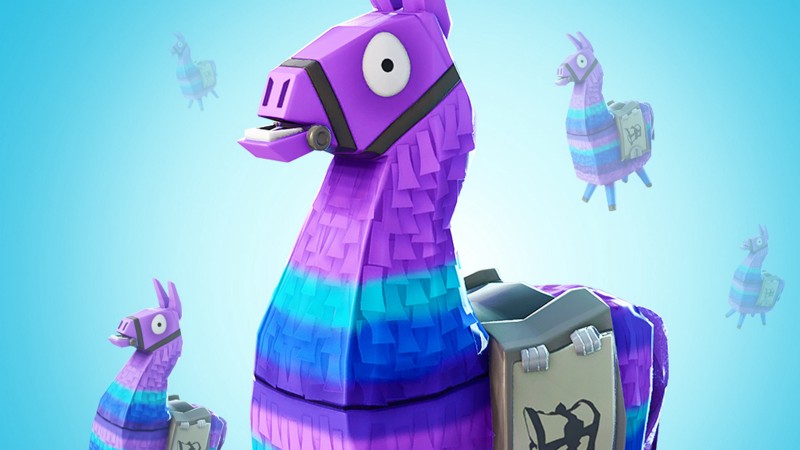
Purple cartoon donkey piñata.
Enlarge / Whoever wins this case will get a llama full of prizes.

It has been nine months since Epic set off its legal battle with Apple over the right to include alternative payment options in the iOS version of Fortnite. After months of pre-trial arguments and maneuvering, the case goes to trial Monday before US District Judge Yvonne Gonzalez Rogers in Oakland, California.

The bench trial, which is expected to last three weeks, will center on the question of what it means to have “monopoly power” in the market for downloadable phone apps. The final outcome could produce huge ripple effects throughout the multi-billion-dollar smartphone market, as well as other digital app delivery platforms.

How did we get here?

On August 13, 2020, Epic used an unreviewed “hotfix” update to add an “Epic Direct Payment” option to the standard Apple App Store and Google Play payment options for microtransactions in the mobile versions of its hit free-to-play game Fortnite. By using Direct Payments, players could get a 20 percent discount over the “standard” payment methods, which Epic said was a way to pass on some of the savings that Epic enjoyed by going around the 30 percent cuts taken by the OS makers’ mobile storefronts.

Hours later, Apple removed Fortnite from the iOS App Store for violating its developer guidelines (Google did the same on its Play Store later that evening). Less than an hour after Apple’s move, Epic filed its original complaint for injunctive relief and posted a video about how it had “defied the App Store monopoly.”

In the wake of Epic’s lawsuit, Apple tried to completely block Epic’s access to the iOS and Mac App Stores, a move that would have had a huge impact on games and apps that use Epic’s Unreal Engine. Epic’s introduction of an alternative payment method in Fortnite amounts to a “Trojan horse” that was “little more than theft,” Apple argued in a later countersuit.

<a href="https://rassegna.lbit-solution.it/wp-content/uploads/2021/05/epic-vs-apple-trial-starts-today-heres-what-to-expect-3.jpg" class="enlarge" data-height="329" data-width="691" alt="Apple says the example here, showing Fortnite‘s alternative payment scheme on iOS, amounts to "theft" by Epic Games.”><img alt="Apple says the example here, showing Fortnite‘s alternative payment scheme on iOS, amounts to "theft" by Epic Games.” src=”https://rassegna.lbit-solution.it/wp-content/uploads/2021/05/epic-vs-apple-trial-starts-today-heres-what-to-expect-1.jpg” width=”640″ height=”305″ srcset=”https://rassegna.lbit-solution.it/wp-content/uploads/2021/05/epic-vs-apple-trial-starts-today-heres-what-to-expect-3.jpg 2x”>
Enlarge / Apple says the example here, showing Fortnite‘s alternative payment scheme on iOS, amounts to “theft” by Epic Games.

Given that, Apple also argued that it was worried Epic could insert a similar “Trojan horse” through the iOS Unreal Engine if Epic’s actions weren’t checked. By going around the App Store’s standard payment structure, Apple argues that Epic “sought to enjoy all of the benefits of Apple’s iOS platform and related services while [lining] Epic’s pockets at Apple’s expense.”

Judge Rogers denied those arguments in her first major pre-trial ruling in the case, saying that if Apple eventually won the case, “Epic just owes you money… You don’t have to take the step of removing access [for Unreal Engine development]… With respect to Unreal Engine, that seems like an overreach.”

At the same time, Rogers said Epic only had itself to blame for Fortnite‘s removal from iOS. “Your client created this situation,” Rogers told Epic’s lawyers in an August hearing. “Your client does not come to this action with clean hands… in my view, you cannot have irreparable harm when you create the harm yourself.”

When is a monopoly not a monopoly?

In the trial, Epic is looking for nothing less than the ability to run its own competing app distribution platform on iOS, completely separate from the Apple App Store. “To be clear, Epic does not seek to force Apple to provide distribution and processing services for free, nor does Epic seek to enjoy Apple’s services without paying for them,” Epic wrote in a pre-trial motion. “What Epic wants is the freedom not to use Apple’s App Store or IAP, and instead to use and offer competing services.”

But Apple argues that its 30 percent cut of App Store revenues is about more than just payment processing. The cut also “reflects the immense value of the App Store, which is more than the sum of its parts and includes Apple’s technology, tools, software for app development and testing, marketing efforts, platinum-level customer service, and distribution of developers’ apps and digital content.”

More than that, Apple says that requiring iOS apps to go through the Apple App Store is necessary to “ensure that iOS apps meet Apple’s high standards for privacy, security, content, and quality.” A separate App Store would essentially be free-riding on the iOS platform, Apple argues, and would expose iOS users to additional risk.

Artist's conception of competing lawyers from Apple and Epic Game focusing their legal arguments on the court. Metaphorically, of course.
Enlarge / Artist’s conception of competing lawyers from Apple and Epic Game focusing their legal arguments on the court. Metaphorically, of course.

Whether Epic has a right to its own iOS App Store largely depends on the legal determination of whether or not Apple’s control of iOS constitutes a monopoly in a relevant market. Apple says that’s ridiculous, since Fortnite is available on competing platforms like Android, Windows, and MacOS, as well as all major consoles. And in the case of consoles, at least, those platform-holders often impose equally restrictive terms for accessing exclusive game download stores.

“Fortnite is not entitled access to everyone on the globe,” Apple’s lawyers argued in September. “They just need alternatives [to iOS] available, and they have that in spades.”

But Epic’s lawyers have argued that it’s equally ridiculous to define the relevant market as “all the ways someone can reach a user to play a video game… In order for Apple to face competitive discipline [from the market], it would mean there would need to be a meaningful number of developers who would give up the [iOS] platform if Apple raises its price. We know that’s not the case. They’re not going to give up the opportunity to reach a billion users.”

Legally, Apple could have monopoly control of the “secondary market” for iOS app downloads if users are unfairly “locked in” to that market, without the ability to easily switch. Arguing such lock-in exists could be an uphill battle for Epic, though, requiring the company to show that users have difficulty switching away from iOS thanks to network effects or other monopoly-style elements.

Epic also says that Apple unfairly ties the use of the App Store to the use of Apple’s payment systems for in-app purchases. It points to double standards on this score, saying that ride-sharing apps like Uber can collect payments directly from customers, even as game developers can’t.

But Apple argues that these are two elements of an “integrated part of Apple’s offerings” intended to collect commissions across the platform. The in-app purchases are an “essential ingredient of Apple’s formula for success,” Apple argues, and necessary to help pay for the infrastructure that makes the iOS platform possible and to ensure security and privacy protections for users.

Epic’s counterarguments point to macOS, where Apple maintains its own App Store but also allows users to run apps obtained elsewhere. If that situation is sufficient to maintain privacy and security on the Mac, why is iOS treated differently? That’s purely a business decision for Apple, Epic contends.

What to expect

Following opening arguments today, Epic is expected to spend the first week of the trial calling witnesses including CEO Tim Sweeney and VP of Business Development Mark Rein. After that, the second week of the trial will likely be taken up by competing economic experts arguing about the meaning of monopoly in dry legal terms.

Then Apple will present its case in the third week with witnesses including CEO Tim Cook, Senior VP of Internet Software and Services Eddy Cue, Senior VP of Software Engineering Craig Federighi, and former Apple marketing chief Phil Schiller. Supporting witnesses from Microsoft, Nvidia, and other third parties could also be called to testify about competing app marketplaces, much as Valve has already been dragged into the legal fight.

After that, it will be up to Judge Rogers to decide if the status quo prevails or if iOS has to open itself up to new methods of payment and app distribution (or some compromise in between). Whatever her decision (and how it holds up on appeal), Apple will also face similar arguments in front of EU courts and regulators, as well as from multiple early legislative efforts to enforce more competition on iOS hardware in some US states.

https://arstechnica.com/?p=1761959


Invincible S1: Clearly TV’s most fun superhero shows are on Amazon these days

[embedded content]
The trailer for Amazon’s Invincible.

The last few years have been great for viewers who enjoy standard-issue CW teen dramas (Gossip Girl forever!) but want a little something extra mixed in. Bridgerton blends in period-piece flair and a Cinemax “Skinemax” pulse, while I Am Not Okay With This blends a teen story with dark supernatural mystery. And don’t forget how Anna and the Apocalypse manages to weave together teen drama, Christmas stories, zombies, and musicals (albeit in a film).

But no show has playfully leveraged genres with a teen narrative at its core as creatively as Invincible, Amazon Prime’s new animated series based on the Robert Kirkman comics. The story follows ho-hum high school nobody Mark Grayson doing all the usual stuff: trying relationships, considering his post-graduation future, and dealing with overarching family drama. But all that noise only gets more complicated because Mark happens to be the son of the most powerful being in the galaxy, a Superman-like figure known as Omni-Man to the world (and Nolan to his family). Teen drama meets a superhero story, meaning the guy coming of age happens to be coming into his powers, too.

Invincible wraps its first season this weekend, and Variety reported Amazon has renewed the show for two more seasons already. That’s great news, because it means people who love superheroes now have time to catch up. This show may not have “Marvel’s” in the title, but after these eight episodes, I’m extremely confused why you’d get your new caped crusader kicks anywhere else.

Way better than that Wahlberg movie

Invincible is far from the first show or film to blend teen drama and superheroes; see everything from last year’s X-Men: New Mutants to the entire existence of Spider-Man. And of course merely alluding to, referring to, or borrowing from a multitude of genres and archetypes does not make successful entertainment (sorry, Ready Player One). Instead, what makes Invincible‘s initial eight episodes stand out is that the show juggles so many different influences in such a natural way.

Invincible starts as a teen drama with a superhero element that gets quickly introduced. But season one also has the systemic-driven crime drama of The Wire when Invincible (aka Mark’s costumed identity) is getting his hero feet wet in episode 5. That’s when he wants to help Titan, a Hulk-like henchman he took down earlier in the season. Titan is in debt to a bigger (equally superhuman) bad pushing drugs named Machine Head, and the former says he just wants out of the game to be a better husband and father. Perfect case for a burgeoning hero, right?

When Invincible gets called upon by this world’s version of S.H.I.E.L.D. (called the GDA, Global Defense Agency) to shadow Earth’s first crewed mission to Mars in Episode 4, the show introduces the familiar frights of parasitic alien horror. The season’s first half has a noir detective storyline playing out in the background of Mark’s growing pains. There’s an ancient, reawakened spirit straight out of archaeological adventure films lurking, too. The beginning of the season finale functions as a grim disaster film. And, without giving away the big season one reveal, Invincible ultimately offers a third major genre pillar to stand on equal footing with the teen and superhero stuff moving forward. (It’ll make you look back on the preceding episodes thinking, “Of course. How on [and off] Earth did I not see that?”)

If that description sounds too convoluted for your taste, Invincible has a few structural advantages to keep things manageable when compared to your average TV series. First, the show’s choice to embrace its comic roots literally and opt for animation goes a long way toward preventing everything from feeling over the top. If this was a genuine CW show—the kind starring some overly handsome to-be-discovered actor alongside a cast of hyperattractive 20-somethings posing as teens—it would be very, very easy to dismiss it as too soapy or campy. Instead, consciously or not, I gave everything more leeway because the show’s anime-ish aesthetic already indicates things will get surreal.

An unparalleled voice-acting ensemble doesn’t hurt, either, as it’s hard not to buy in to these relationships when they’re given life by Steven Yuen (Minari, Walking Dead), JK Simmons (Counterpart), Sandra Oh (Killing Eve), Zazie Beetz (Atlanta), Mahershala Ali (Moonlight, True Detective), Gillian Jacobs (Community), Walton Goggins (Justified), Jason Mantzoukas (The League, The Good Place), and Mark freakin’ Hamill.

Invincible also balances all of its plot points by blending its storytelling styles—this is both an episodic and serialized series. As Mark battles big bads of the week, the show can try on different genres as the season’s long story arcs stay focused on the teen and superhero stories. It’s a hybrid approach that a show like Justified used to great effect, and it makes Invincible feel different even if a lot of its plot elements are familiar.

And with those big bads in particular, Invincible manages to deliver some spectacular fight sequences week in and week out. Remember, this is a Robert Kirkman creation (both the comic and TV series), so the action does veer into ultraviolence. But the set pieces overall are varied both in their logistical makeup (a bad guy army, a bad guy super team, some feuding super heroes, etc.) and their visual flourishes, concisely giving viewers some breathtaking time away from the show’s more YA story elements.

Really, the only hesitation I’ve had when recommending S1 to others has nothing to do with the show itself—instead, it’s the Kirkman of it all. As a writer/creator, he’s most famous for the most unkillable show on television, The Walking Dead. That project proved to be historic for its reach but notorious for its unflinching and never-ending nihilism. Early seasons felt riveting, but ultimately Rick Grimes and his gang of survivors would fall victim to the same tough-hang cycle over and over again (Oh, new humans! Are they nice? Seems like it!), to the point I dropped out after season four. And given how Invincible wrapped this inaugural season, it’s easy to imagine a scenario where this show could also be infinitely extended with unlucky outcome after unlucky outcome befalling our hero. Who has the emotional bandwidth for that these days?

Yet these eight episodes were so much fun, I had to know if Dead déjà vu lies ahead; spoiler risks be damned. Did Invincible the comic have a genuine ending? For anyone who also fell off from The Walking Dead (or survived Season 8 in Westeros), rest easy. This story is absolutely headed somewhere, details TBD. The fact Kirkman announced an ending for Invincible even made news back in 2016. That’s enough to settle any commitment anxiety for now. So sit back and relax knowing Mark has at least two more seasons ahead to clean up this mess, and prepare to get the itch to dive back into comics again. With apologies to Disney+, these days the most fun superhero shows on television have clearly landed on Amazon Prime.

All eight episodes of Invincible S1 are available now on Amazon Prime.

Listing image by Amazon

https://arstechnica.com/?p=1761469


Why are game makers creating new Game Boy games in 2021?

Promotional image of original Nintendo Game Boy.
Enlarge / Now you’re playing with power…. portable power!

Here’s an unavoidable fact: the original Nintendo Game Boy is reaching middle age. The world may have moved on to sleeker, less bulky technology since Nintendo’s first portable landed in shopping malls and mom-and-pop electronics stores back in 1989. But a number of developers are returning to the green hue of Nintendo’s flagship handheld to explore new ideas for the platform, using the classics as a template.

“Pokémon and Zelda are obvious, really surface level,” Izma, creator of new Game Boy game Deadeus, says of his inspirations. “But then there’s some that I would say are a little deeper. Lisa: The Painful, the vibe and tone of that game heavily influenced [Deadeus]. Things like Tower of Heaven, a flash Game Boy-style game—the narrative’s not the emphasis of the game, but there are certain beats that I tried to match here.”

Currently a full-time UI artist at Coatsink games, Izma began making Deadeus during a game jam with some friends from Magic Leap Studios. They used GB Studio, a free engine for building games to the specifications of a standard Game Boy. Izma had been toying with the Game Boy’s art style in GameMaker and found using GB Studio to be compelling enough to flesh out a fuller version of what he’d started.

Centered around a young boy trying to avoid a catastrophic event over the course of three days, Deadeus is a tad higher concept than your average Game Boy thriller. It may borrow the trappings of Pokémon Red and Blue, but this strange adventure is more Donnie Darko than Link’s Awakening, featuring multiple paths to its 11 different endings.

Izma believes some of that childlike, Game Boy lightheartedness still slipped in, though. “I spent a lot of time looking at the back catalogue of the Game Boy games when I was making it,” he said. “A lot of it [is what] I’ve called in the past ‘Halloween horror’—like horror-themed rather than meant to scare. Which is 100 percent understandable with it being a handheld game and the target audience, but I think a little bit of that’s in there as well.”

Freely available on Itch.io, a limited physical run of Deadeus was also sold through Spacebot Interactive, a one-man publisher founded by Chris Reach. Spacebot got its start when Reach decided to sell his own Game Boy fantasy RPG, Dragonborne. Slowly expanding to include more creators, he wants to build a library that expands what people expect from Nintendo’s oldest handheld.

“I spent a lot of time looking at the back catalogue of the Game Boy games… a lot of it [is] ‘Halloween horror,’ like horror-themed rather than meant to scare.”
Deadeus developer Izma

“I find it so cool to see games being developed for the Game Boy that we would have never had back in its day,” Reach said via email. “I actually have another game that’s very different to anything else I’ve played, which is lined up for release.”

A labor of love

Spacebot is one of several publishers that’s distributing Game Boy games as if we were still in the mid-’90s, using era-appropriate boxes, instruction manuals, and cartridges to complete the physical package. The disparate parts are ordered wholesale, then put together by hand by what is often just one person.

It’s all a labor of love, fueled by a mix of youthful longing and ease of access by people for whom the physical Game Boy holds a certain magic. These are emphatic collectors creating their own version of vinyl; instead of 12-inch LPs in wild colors, they’re making small gray squares that usually have less than one megabyte of storage.

Sentimentality is key to Spacebot. The first hurdle for developers who want to be part of the publisher’s growing line of Game Boy titles is piquing Reach’s interest. That means presenting something that gives him “that excitement and spark of nostalgia,” as well as a clear vision for the project and who it’ll appeal to. Once an agreement is reached, a rigorous bug-testing process starts before moving on to designing the art and inlays, running a preorder, and then meeting demand.

This splits the workload from development through to getting carts in people’s hands, and some operate without the middleman. John Roo has been his own publisher since he started selling his game, Quest Arrest, on bona-fide Game Boy hardware. A spiritual successor to Sierra‘s Police Quest games, Quest Arrest is an investigative RPG with seven different endings, unlocked based on how competent you are as a player. Like Deadeus, it was made using GB Studio, though Roo had to make some custom alterations to the engine to suit his needs.

“I was forced to get creative. Now, you can build menus and all these kinds of things, but that wasn’t available to me when I was building Quest Arrest,” Roo tells me. “These simple functions that are available in the engine now were nonexistent then. It was things that they ended up adding into the engine later and making them normal functions, that I was adding in myself.”

A souped-up engine

GB Studio continues to be updated by creator Chris Maltby—version 2.0.0 just entered beta—and its simple functionality has been a central force in the gradual rise in Game Boy and retro-styled development. The tool itself is based on software that has been on the web since the late ’90s, when developers finding each other online was a very different experience.

“The Game Boy community back in 1999 was mainly set around the IIRC channel, GBDev,” Super JetPak DX co-developer Quang Nguyen said. “We used to hang out in there a lot, and there [were] a bunch of Game Boy development websites linked together by webrings.”

At that point, the Game Boy Color was only a year old, and the system was thriving. Like-minded homebrew creators shared knowledge on coding and such through message boards and chat rooms, spurred on by Michael Hope and Pascal Felbar’s GBDK, an open source Game Boy development kit.

“People told me a lot when I started to get into [game development] that you can learn any code that you want to, but if you don’t understand how the logic of a game works, it’s going to be difficult to do anything.”
Deadeus developer Izma

Using that software, Nguyen remade 1983’s Jetpac, a ZX Spectrum game, as Super Jetpak and released it online. Two decades later, after the 2020 lockdowns caused Nguyen to become unemployed, he and his brother became full-time developers under Asobi.tech and released Super Jetpak DX, an improved Game Boy Color version of that initial remake.

Hope and Felbar have long abandoned work on GBDK, but a number of fans have since resurrected it as GBDK 2020. At least some of GB Studio is based on that update, meaning developers now are drawing on the past ingenuity of those GBDev members, whether they know it or not. Nguyen still uses GBDK and has shared all his old source code and design documents since beginning Super Jetpak DX.

The latest iteration of GB Studio features more variety than ever, including the power to implement point-and-click mechanics through the Game Boy interface. Further boundary-pushing is coming out of devs who brave the waters of manually coding Game Boy games in C and assembly, a practice practically every developer I talked to mentioned as difficult at best. Tools like GB Studio and GBDK 2020 make it easier to turn your idea into something playable, even if your options are narrower.

Forever your Boy

“People told me a lot when I started to get into [game development] that you can learn any code that you want to, but if you don’t understand how the logic of a game works, it’s going to be difficult to do anything,” Izma explains. “With GB Studio, [by] entering the code in a much more entry-level way, it scoops the difficult bit out, and you can experiment and learn that way.”

Roo’s next game is well underway. Using the online moniker The Retro Room Roo, he plans to publish and produce more ’90s-inspired art and media. Izma is toying with something else Game Boy-related, while Asobi.tech is working to get the second print run of Super JetPak DX, from Pocket Pixel Design, out the door after a number of delays.

Regardless of what anyone does, as long as Roo, Izma, and Maltby pass on their knowledge as Nguyen and those ’90s homebrewers did before, Game Boy game development is set to continue for many years to come.

“We stand on the shoulders of giants,” Nguyen said. “Stuff I learned was from stuff people did before, and the stuff that people do now is stuff that I did before. A lot of people are still using the old tools. We have a GBDK 2020 Discord, and since it’s open source, it’s great to see a younger generation taking this old source code and developing it further, fixing the bugs.”

https://arstechnica.com/?p=1761698


What became of 2009’s Left 4 Dead 2 boycott? Here’s the inside story

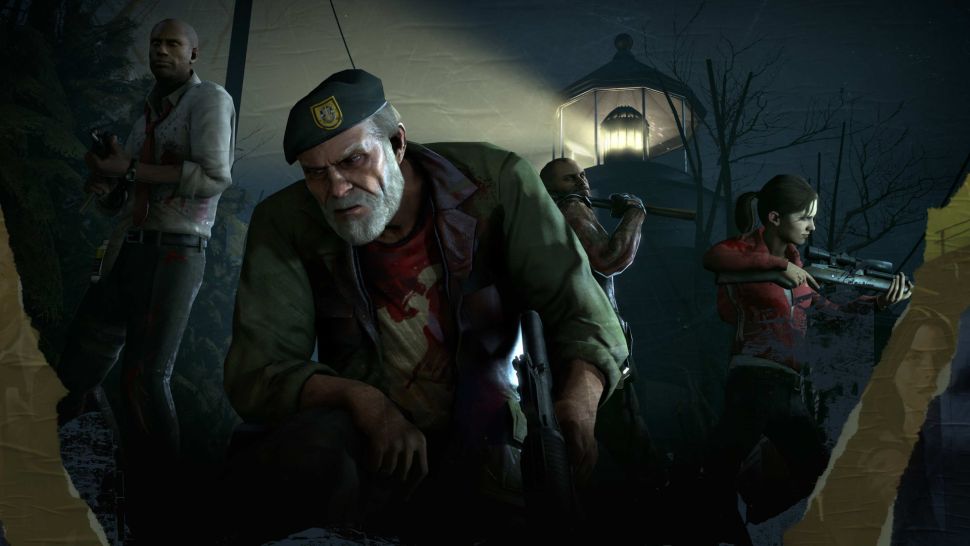
Bill looks over the boycott's corpse to determine if it's still a threat...
Enlarge / Bill looks over the boycott’s corpse to determine if it’s still a threat…
The following piece, originally published in late 2009, looks back at that year’s somewhat quixotic attempted boycott of Left 4 Dead 2—and how that effort eventually fell apart. Flawed as it was, that movement would serve as a precursor to more frequent attempts by organized fan communities trying to bring change in the game industry. The most famous example might be the outcry around the conclusion of Mass Effect 3 in 2012, where the developers actually released a downloadable patch changing the conclusion of a franchise-sweeping narrative to placate vocal fans.

This report and over a dozen more are collected in Save Point, a new collection from Ars Technica Senior Gaming Editor Kyle Orland. The book looks back on video games as they were between 2003 to 2011, a sometimes-uncomfortable “awkward adolescence” period where the industry did its best to grow up with the young audience that had grown up with games as their entertainment of choice through the ’70s, ’80s, and ’90s. The pieces collected in the book analyze how games were learning from their past and influencing the future, report on some of gaming’s growing and myriad sub-communities, and examine how the business of selling and marketing games was evolving alongside the explosive growth of the Internet.

Save Point is available exclusively as part of the Spring Getaway Games Bundle through May 13.

In general, gamers aren’t very effective at organizing to effect change in the game industry. Sure, there are hundreds of online petitions demanding everything from a Full House game to a generalized end to game hacking, but the vast majority fail to garner much attention or support. Even well-organized and well-publicized efforts, like those seeking LAN support in StarCraft 2 or further support for the Earthbound games are met with official responses ranging from polite refusal to teasing hints, and rarely with real change.

But this year, many gamers took a different tack to protest what they saw as a betrayal of a publisher’s past promises. Mere hours after Valve announced the planned November release of Left 4 Dead 2 (L4D2) at June’s Electronic Entertainment Expo, a group calling for an L4D2 boycott popped up on Valve’s Steam user community. The group’s first public message asked a simple question that would come to define its cause: “Where’s all the content and the updates you promised for [the original Left 4 Dead], Valve?”

The somewhat impolitic logo for the boycott group.

By casting their disagreement in the form of a boycott, the tens of thousands of gamers that joined the L4D2 boycott group immediately set themselves apart from the Internet petitioners that came before them. A petition is just a polite request for someone to change their mind, if they would, please. A boycott is a statement of collective action—a way for a group to flex its economic power to force change. It’s a way for a community to effectively put its money where its mouth is and demand that its case be heard. It’s a cause that brings up images of patriotic movements, civil rights struggles, international incidents and other events more momentous than an argument over the release timing for a video game sequel.

Now that Left 4 Dead 2 is actually available for sale, can those that took part in the boycott argue they achieved their goals? Was this boycott more effective than any of the other failed grassroots petition efforts undertaken by gamers over the years? Did Valve change its plans to gain the approval of the masses, or did it effectively pacify the Internet throngs with nothing more than a couple of plane tickets and a hotel reservation?

In other words, was the boycott successful?

Well, it depends on what you mean by “successful.”

An explosive start

From the start, the Left 4 Dead 2 boycott effort succeeded at attracting a lot of attention, at least. Thanks to mostly bemused coverage from gaming websites during the high-traffic E3 news window, 5,000 Steam users signed up for the group in its first three days of existence. “We gave interviews to just about anybody that asked,” said Walking_Target, the pseudonymous founder of the L4D2 boycott group, in an interview for this piece. “[We] responded to questions from our members and benefited from a lot of press exposure, even if a lot of it was negative. In the end, it was so successful [at attracting members], because this was a group made mostly of Valve fans who just wanted to let Valve know that they expected more for L4D.”

But getting people to click a button and sign up for an Internet protest group is simple. Getting them to actually organize for effective action is the tough part. Luckily for the group, Walking_Target seemingly realized this early on in the process. “To simply talk about the release of L4D2 and the issues we have with it are not enough,” he wrote in a June 4 message to the group. “It is only half the battle. A storm of words without action is no more potent in its ability to move our cause forward or make our goals happen. It is time we took some action as a community.”

But first they had to figure out what those goals were. So, after a quick poll to gauge the group’s “official concerns,” the boycotters put together a 325-word manifesto that laid out their commitments, beliefs, and requests for Valve.

Crucially, the manifesto started off by recognizing Valve’s need to make money off its games, and acknowledged that “judgment cannot be passed on the quality of Left 4 Dead 2 until its release.” But those concessions didn’t dampen the impact of the group’s demands: “That Valve honor its commitment to release ongoing periodic content for Left 4 Dead;” that “Left 4 Dead 2 not be released as a stand-alone, full-priced sequel but as either a free update to Left 4 Dead or an expansion with full compatibility with basic Left 4 Dead owners;” and “that Left 4 Dead owners be given discounts for Left 4 Dead 2, should it be released as premium content.”

While the requested changes to the price and format of the sequel were important, it was the idea that Valve was somehow abandoning the original Left 4 Dead that animated the most passion in the boycotters. “Left 4 Dead has not yet received the support and content which Valve has repeatedly stated will be delivered,” the manifesto argued.

[embedded content]
The E3 trailer that set the boycott in motion.

It was an argument that had some justification behind it. In an October 2008 interview with VideoGamer.com before the original game’s release, Valve Co-Founder and Managing Director Gabe Newell compared Left 4 Dead to Valve’s own Team Fortress 2 (TF2), a multiplayer staple that has received frequent free updates since its late-2007 release. Newell said that these updates had proved key to the continued success of TF2‘s online community, and that Left 4 Dead would receive the same kind of continued attention. “We’ll do the same thing with Left 4 Dead where we’ll have the initial release and then we’ll release more movies, more characters, more weapons, unlockables, achievements, because that’s the way you continue to grow a community over time,” he said.

“I do think that a bit of the issue falls on Valve for training us for such good free content.”
Brent Copeland, host of Left 4 Dead podcast ‘The Safe House’

When Valve announced Left 4 Dead 2 in early June, this was beginning to look like a bit of an empty promise. By that point, the company had only released a collection of small tweaks and new modes as a Left 4 Dead “Survival Pack” and had provided a beta version of a Software Development Kit for eager modders. These tepid additions didn’t come close to matching the robust updates being provided for an ongoing game like Team Fortress 2.

The depth of Valve’s support for TF2 may have actually set a precedent that’s come back to bite Valve during the slow rollout of new Left 4 Dead content. “I do think that a bit of the issue falls on Valve for training us for such good free content,” said Brent Copeland, host of The Safe House, a Left 4 Dead-focused podcast. “I almost think if L4D came from a different company that there wouldn’t be as big of an issue.”

Walking_Target agreed that Valve’s handling of TF2 led people to think of it as a different kind of company. “It made a reputation for Valve as a company that supports their games. It was probably a bad idea to compare support for L4D to TF2 so early on, though.”

https://arstechnica.com/?p=1761388


Humble Bundle creator brings antitrust lawsuit against Valve over Steam

The Valve logo, as seen in an etched design at its offices.
Enlarge / The Valve logo, as seen in an etched design at its offices.
Sam Machkovech

Indie developer (and Humble Indie Bundle originator) Wolfire Games has filed a proposed class-action lawsuit against Steam creator Valve, saying that the company is wielding Steam’s monopoly power over the PC gaming market to extract “an extraordinarily high cut from nearly every sale that passes through its store—30%.”

An unbreakable monopoly

The lawsuit, filed in a Washington state federal court, centers on what it considers an illegal tying of the Steam gaming platform (which provides game library management, social networking, achievement tracking, Steam Workshop mods, etc.) and the Steam game store (which processes online payments and delivers a copy of the game). After years of growth, the vast majority of PC gamers are locked into the Steam platform thanks to “immense network effects” and the high switching costs to move to a new PC platform, the suit argues.

That makes the platform “a must-have for game publishers,” who need access to the players on Steam to succeed. But games that use the Steam platform also have to be sold on the Steam Store, where Valve takes its 30 percent cut of all sales. By leveraging its monopoly platform power into a “gatekeeper role” for the store, Valve “wield[s] extreme power over publishers of PC Desktop Games” that leads to a “small but significant and non-transitory increase in price” for developers compared to a truly competitive market, the suit argues.

The suit includes a laundry list of competitors that have tried to create their own platforms to take on Steam’s monopoly, including CD Projekt Red, EA, Microsoft, Amazon, and Epic (not to mention “pure distributors” with platform-free stores like GameStop, Green Man Gaming, Impulse, and Direct2Drive). But the lawsuit argues that Steam’s lock-in effects mean none of these stores have been able to make much of a dent in Valve’s monopoly position, despite plenty of well-funded attempts. Even the Epic Games Store, which has spent hundreds of millions of dollars securing exclusives and free game giveaways, has a market share of only “a little above 2 percent,” according to one cited analysis (in an interview last June, Epic’s Tim Sweeney estimated a more robust 15 percent market share for EGS).

“The failure of these companies to meaningfully compete against the Steam Gaming Platform shows it is virtually impossible as an economic matter to compete against the Steam Gaming Platform,” the suit argues. “The Steam Gaming Platform has well-cemented dominance in the PC Desktop Gaming Platform Market, and given its unique and strong network effects, that is unlikely to change.”

Steam key restrictions

Valve does offer one method for publishers to sell Steam platform games on storefronts other than the Steam Store. A publisher can ask to generate free Steam Keys, which can then be sold on competing platforms that might take a smaller commission than Steam itself.

But Valve places significant limits on this feature, which “[rigs] the Steam Keys program so that it serves as a tool to maintain Valve’s dominance,” according to the lawsuit. That includes a “Price Parity Rule” that tells publishers, “Steam keys cannot be sold on other sites unless the product is also available for purchase on Steam at no higher a price than is offered on any other service or website.” Valve also reserves the right to deny key requests if the publisher asks for an “extreme number of keys and [isn’t] offering Steam customers a good value” (as the suit notes, the precise definitions of “extreme” and “good value” are unspecified and determined by Valve).

When requesting keys, publishers also have to click a box saying, “I agree that I am not giving Steam customers a worse deal.” And Valve also makes use of what the lawsuit calls a selectively enforced “Price Veto Provision” to alter the Steam Store pricing of games that are offered cheaper elsewhere, even in the case of games that don’t make use of the Steam platform.

One could argue that these restrictions are in place to prevent a game publisher from free-riding on the Steam platform. By selling the vast majority of its Steam keys on a different storefront, for instance, a publisher would be able to get all the benefits of the Steam platform while avoiding the bulk of the store’s 30 percent cut (and thereby generating much less revenue for Valve itself). If that argument sounds familiar, it’s probably because Apple has used similar arguments in its legal battle with Epic over Fortnite and the iOS App Store.

Wolfire’s lawsuit, though, argues that Steam’s pricing protection is an “anticompetitive restraint” that ensures that “Valve can stop competing game stores from offering consumers a lower price on Steam-enabled games in order to shift volume from the Steam Store to their storefronts.” Because of Valve’s pricing protections, “rival distributors have no meaningful way to attract publisher customers and take away share from Valve, because their efforts to compete on price (e.g., by charging lower commissions) are blocked by Valve’s price parity requirements.” Thus, Valve faces little to no competitive pressure on its 30 percent commission structure.

The only meaningful way to avoid these anticompetitive measures, the suit argues, is “to avoid using the Steam Gaming Platform at all.” But Valve’s monopoly position means that “there are no economically viable alternatives to the Steam Gaming Platform” for most PC games. While the suit acknowledges a few counterexamples (Riot’s League of Legends is cited by name), such titles “typically require a long history of recognition and success before they can attempt to thrive without the Steam Gaming Platform,” the suit says.

“At bottom, Valve’s scheme imposes a massive tax on the PC Desktop Gaming industry,” the suit argues in seeking the usual mix of damages and injunctive relief to fix the situation. “If Valve did not block price competition for Steam-enabled games, gamers and publishers would be able to have a seamless and non-fragmented platform while also enjoying the benefits of price competition in the distribution market. That would improve quality for gamers and publishers alike, all while lowering prices for everyone.”

The new lawsuit comes as Microsoft has announced plans to lower its revenue cut for games on the Microsoft Store from 30 percent to 12 percent starting in August. It also comes months after a group of five Steam users brought a similar lawsuit alleging that Valve’s monopoly position was keeping game prices artificially high.

https://arstechnica.com/?p=1761574


What I learned about cars watching all 8 Fast & Furious movies in 4 days

LOOKS LIKE THEM DUKE BOYS ARE AT IT AGAIN
Enlarge / LOOKS LIKE THEM DUKE BOYS ARE AT IT AGAIN
This week, Universal Pictures announced that a different Fast and Furious movie will be in theaters once a week starting today, leading up to the franchise’s newest sequel on June 25. The best part of the announcement? The showings are free. (The second-best part of the announcement is how often it refers to the F&F movies as a “saga.”) As we previously learned, once a week for this series is arguably a saner way to devour so much vehicular mayhem than the four-day gauntlet we endured—and we’ve resurfaced that 2019 article below. If health or safety precautions make Universal’s latest promotion inaccessible to you as of late, never fear: we’re riding again, much like the Duke boys, with a look back at all the engine-gunning, Corona-drinking, window-smashing fun so that you don’t feel left out.

As of last week, I had never seen any movies in the Fast & Furious franchise. I probably missed the first one in 2001 because I was planning my wedding or something else equally pedestrian. Then, before I knew it, there were seven more, and I had no chance of catching up.

But now the franchise has lasted longer than any of our president’s marriages and has just birthed its first spin-off feature. So I have taken it upon myself to shotgun all eight movies in four days and report back to you what they have taught me about cars.

For the uninitiated, F&F more or less follows the car-crashing bromance of two shredded dude-bros played by Paul Walker and Vin Diesel. The former is a cop-turned-crook-turned-cop-turned-vigilante secret agent. The latter is a street-racing crook who eventually—well, look, there isn’t really a job description for what these guys end up doing by the end of the series. When not racing or knocking heads, their relationship consists of Diesel dispensing blue-collar wisdom in a monotone while Paul Walker stares adoringly.

In order to truly understand their relationship, I’ve ordered the movies below by following the series’ internal chronology. Yes, this differs from the release dates. Just because these movies go real fast doesn’t mean they always move in a straight line.

Car vs. car: The Fast and the Furious (2001, dir. Rob Cohen)

The single-minded devotion of the first two films to their meathead aesthetic is astounding. Every car gleams. Every man spends as much time at the gym as the women spend waxing. The world is bereft of body fat or ugly people. The only sentences that don’t end with “bro” end with “man” or “dude.” Everything is “by Christian Audigier.” (Not just the clothes; possibly the dialogue, too.) One of Vin Diesel’s jacked homeys wears two tank tops at the same time. Hip-hop and jock jams blast continually from every orifice.

The Fast and the Furious is tightly paced and plotted, which is to be expected for what is essentially a remake of Point Break. Just replace the cars with surfboards and Vin Diesel with Houston’s own Patrick Swayze (did I ever tell you I went to junior high with his cousin?).

Stand-out vehicles

Sure, Vin Diesel uses a 1993 Honda Civic EJ1 for his heists, but that’s not where his heart is. He’s all about family and community—which means American muscle cars like the 1970 Dodge Charger R/T his father left him. It’s no surprise that Walker’s undercover cop is so drawn to VD: the cop has no past, no roots, and no relationships. As such, Walker prefers foreign cars, including a 1995 Mitsubishi Eclipse RS that gets machine-gunned by gangsters and a 1995 Toyota Supra Mk.IV JZA80 that he gives to Vin Diesel as a part of a previously established bro-code that I won’t spoil for you (spoiler: it’s ultra bro-y). The dichotomy presented in the movie is true for all cultures across all time: do we stick with our traditions, no matter how ungainly, or do we become more adaptive, agile, and fuel efficient? Dude, heavy.

What I learned about cars: Going fast will turn your ride into a light cycle from TRON.

The hot rods in The Fast and the Furious are tricked out with tanks of magic juice—like, liquid Schwartz or something. The juice makes them go so fast that the world gets all blurry. Maybe it’s cough syrup? Whatever the stuff is, I’ll see if I can pick some up later at AutoZone for my 2001 Corolla.

Car vs. boat: 2 Fast 2 Furious (2003, dir. John Singleton)

And now we come to 2 Fast 2 Furious, the most ridiculous (and therefore best) title for a sequel. It joins Electric Boogaloo as a punchline for all potential sequels from now until the heat death of the universe. Possible examples include 2 Call 2 Name, 2 Temptation 2 Christ, and The Passion of Joan of Arc: Tokyo Drift.

The plotting in 2 Fast isn’t as tight, but this is also the most whimsical of the series. It has to be—it’s called 2 Fast 2 Furious. The trash-talking chemistry between Walker and singer-turned-actor Tyrese is a delight, and Tyrese’s knowledge of different ways to say “bro” (“brah, “breh,” etc.) is encyclopedic. When Walker and his old frenemy Tyrese reunite for the first time, director John Singleton (Boyz n the Hood) shoots their graceless scuffle in a Buster Keaton-esque longshot while an FBI guy has a snack. They eventually agree to go undercover for the Bureau in exchange for having their criminal records cleared. Remember that phrase “criminal records cleared,” because you’ll only hear it 1,584,925 more times in the next 13 hours.

Stand-out vehicles

Even as Walker reluctantly hints at his past, he still prefers slick, modernist cars from far-off places. That includes the 1999 Nissan Skyline GT-R R34 he drives to feed his racing addiction and the 2002 Mitsubishi Lancer Evolution VII that he uses on behalf of the FBI. Being his friend from Way Back, Tyrese also goes Japanese, although he prefers a 2003 Mitsubishi Eclipse Spyder GTS convertible in “look-at-me!!!” purple. And when the time comes for “the Dukes of Hazzard shit” stunt Walker pulls at the end, he drives a 1969 Yenko Camaro SYC, perhaps in tribute to Vin Diesel.

What I learned about cars: Yelling makes you go faster.

No, yelling at the car doesn’t make it go faster. That would be ludicrous. (Though that would be fitting, since Ludacris co-stars.) I mean yelling while you’re driving. Despite being in different cars and often miles apart, Walker and Tyrese can’t stop shouting smack at each other. It’s wonderful.

Car vs. mountain: Fast & Furious (2009, dir. Justin Lin)

When Paul Walker showed up for his henchman audition in 2 Fast 2 Furious, he wore shorts and a West Coast Choppers T-shirt. But when we first see him in Fast & Furious, he’s wearing—groan—a suit. WTF? Does removing all the definite articles in the movie’s title grant instant sophistication?

Turns out Fast & Furious was intended as a “soft reboot.” Parts one, 2 Fast, and three are all about street-racing and cranking the bro-speak dial to 11 (we’re skipping part 3 for now, stay with me). Meanwhile, characters still occasionally have to pay for things. But with Fast & Furious, the franchise shifts to multimillion-dollar heists around the globe, while Our Heroes can seemingly pluck cars, guns, and computers from the nearest tree.

In Fast & Furious, Walker (who skipped Tokyo Drift) reunites with Diesel (who skipped parts two and three) and helps him seek vengeance for VD’s murdered love interest. That role is played by Michelle Rodriguez and—spoiler alert!—she has one of the least-convincing off-screen deaths in cinema history. Drug dealers, FBI guys, and vehicular mayhem ensue. And Ludacris has gone from being a neighborhood mechanic to a world-class hacker. (I assume Luda’s character runs mv bitch regularly.)

Stand-out vehicles

The indistinguishable American ’70s and ’80s muscle cars that Vin Diesel drives in Fast & Furious can be best described as “GRRRR MANHOOD!!!” Paul Walker has the 2002 version of his beloved Nissan Skyline GT-R as well as a 2009 Subaru Impreza WRX STi GH.

What I learned about cars: Sometimes you don’t have time to roll down a window.

Despite tricking out his dad’s 1970 Dodge Charger (and then tricking it out again after it gets wrecked), Vin Diesel never installs power windows. Either they slipped his mind or blah-blah-blah “staying true to your roots.” So when he urgently needs the driver-side window down during a car chase, he puts his elbow through it. His arm is fine. Meanwhile, I bumped my foot on my AC adaptor while typing this and now I’m bleeding.

(BTW, can you picture anyone calling him “Vin” or “Mr. Diesel”? I imagine he’s always “Vin Diesel” to everyone all the time, the way no one ever said “John” or “Mr. Wayne.”)

Car vs. train: Fast Five (2011; dir. Justin Lin)

Maybe my brain was turning to car-crash mush by this point in the marathon, but Fast Five left me dizzy in the backseat with its bonkers plot. Vin Diesel has collected enough sidekicks to fill an NBA starting lineup. The movie has as many plot points as The Dark Knight or Heat, and it has more heists than those movies combined (I know comparing Fast Five to Heat is unfair because comparing anything to Heat is unfair). Also, I think someone gets pregnant, but I can’t be sure.

Remember in 2 Fast 2 Furious when Our Guys spend a solid 30 seconds saying “ouch!” after they’ve just crashed their car into a yacht? I can’t imagine Fast Five taking the time for such a great throwaway bit.

Maybe decrying a movie with “fast” in the title for being too fast makes me a philistine. Sue me. At least Dwayne “The Rock” Johnson finally makes his F&F franchise debut. I remember that part. I like The Rock.

Stand-out vehicles

PW and VD levitate their way out of a 1963 Chevrolet Corvette Grand Sport after driving off a cliff (rad). Then there’s the 2010 Dodge Charger SRT-8 LX: given a good chain and a heavy object, two of these can apparently level a city.

What I learned about cars: Regular cars work fine for off-roading.

So you bought a Jeep or a dune buggy or a pickup with huge tires to do some off-road driving? You chump. Turns out your average muscle-car or Hyundai Elantra can tear-ass across the desert at full speed without getting a scratch. Go get your dumb money back.

Car vs. tank: Fast & Furious 6 (2013; dir. Justin Lin)

Heavily customized Formula 1. It reminds me of a platypus.
Enlarge / Heavily customized Formula 1. It reminds me of a platypus.

To the surprise of absolutely no one who has ever seen a movie or turned on a television, Michelle Rodriguez didn’t really die in Fast & Furious. Turns out she just had amnesia.

Coincidentally, so do I. The plot conceit here, about her work for a globetrotting villain, might be sophisticated and nuanced. I didn’t really digest it. Maybe I was too busy imagining the whole yell-to-drive-faster thing working out for my next drive to HEB.

Stand-out vehicles

I went Googling for more info on the cars of Fast & Furious 6, and I ended up at Maxim. Because of course. The site describes the villain’s cuckoo-bananas getaway car thusly:

Essentially a Formula 1-type chassis with a large metal plate where the windshield should be, it allows the driver to both outrun their pursuers as well as destroy anyone fast, and foolish, enough to keep pace. You also have to love the sound of that sequential gearbox revving to the limit.

What I learned about cars: What a single car cannot accomplish, many cars working together can get done.

Just as we once fantasized about filling a garage floor to ceiling with Apple IIs to reach the power of a single Pentium, F&F6 shows that, with enough sports cars working together, you can take down a tank or a jumbo jet.

https://arstechnica.com/?p=1544021


Does nuclear secrecy make us secure? New book offers counterargument

A "Restricted Data" classification stamp on a document from the US Atomic Energy Commission in the early 1950s. The document pertains to the classification of opacity calculations that were part of the work on the hydrogen bomb. The document is no longer classified and is available in the US National Archives.
Enlarge / A “Restricted Data” classification stamp on a document from the US Atomic Energy Commission in the early 1950s. The document pertains to the classification of opacity calculations that were part of the work on the hydrogen bomb. The document is no longer classified and is available in the US National Archives.

The revolutionary discovery of nuclear fission in December 1938 helped launch the Atomic Age, bringing with it a unique need for secrecy regarding the scientific and technical underpinnings of nuclear weapons. This secrecy evolved into a special category of proscribed information, dubbed “Restricted Data,” which is still in place today. Historian Alex Wellerstein spent over 10 years researching various aspects of nuclear secrecy, and his first book, Restricted Data: The History of Nuclear Secrecy in the United States (University of Chicago Press), was released earlier this month.

Wellerstein is a historian of science at the Stevens Institute of Technology in New Jersey, where his research centers on the history of nuclear weapons and nuclear history. (Fun fact: he served as a historical consultant on the short-lived TV series Manhattan.) A self-described “dedicated archive rat,” Wellerstein maintains several homemade databases to keep track of all the digitized files he has accumulated over the years from official, private, and personal archives. The bits that don’t find their way into academic papers typically end up as items on his blog, Restricted Data, where he also maintains the NUKEMAP, an interactive tool that enables users to model the impact of various types of nuclear weapons on the geographical location of their choice.

The scope of Wellerstein’s thought-provoking book spans the scientific origins of the atomic bomb in the late 1930s all the way through the early 21st century. Each chapter chronicles a key shift in how the US approach to nuclear secrecy gradually evolved over the ensuing decades—and how it still shapes our thinking about nuclear weapons and secrecy today.

Along the way, we meet such pivotal figures as Vannevar Bush and James Conant, as well as famous Manhattan Project scientists like Robert Oppenheimer, embedded journalist William Laurence, and notorious Soviet spies Klaus Fuchs and Julius and Ethel Rosenberg. Wellerstein delves into the establishment (and eventual dissolution) of the post-war Atomic Energy Commission, the emergence of the Cold War, and how attempts to reform the system failed (due in part to partisan politics), leaving the US with an outdated nuclear secrecy policy that is arguably not especially effective.

“One of the things that makes American nuclear secrecy so interesting is that it sits at a very interesting nexus of belief in the power of scientific knowledge, the desire for control and security, and the underlying cultural and legal values of openness and transparency,” Wellerstein writes in his introduction. “These at times mutually contradictory forces produced deep tensions that ensured that nuclear secrecy was, from the beginning, incredibly controversial, and always contentious, and we live with these tensions today.”

Ars sat down with Wellerstein to learn more.

Vintage World War II posters urging the importance of secrecy.
Enlarge / Vintage World War II posters urging the importance of secrecy.
Corbis/Stocktrek/Getty Images

Ars Technica: Why is there still so much interest in this period of US history?

Alex Wellerstein: I think there is an inherent draw toward nuclear weapons because of their power and their persistence. Even if we got rid of all of them tomorrow, we would still be fascinated with their history and their development because they represent some level of the maximum that we as clever creatures can accomplish, for both good and for ill. The Cold War feels like it’s further away from us, but we still live in a world that’s shaped by it, and it really wasn’t that long ago. We had the historical conditions that led to these states building massive nuclear arsenals, doing so with huge amounts of secrecy around them, knowing that if they ever use these weapons, it could potentially be catastrophic. I think it’s very telling about human beings and the types of creatures we are.

Ars Technica: A major theme running throughout your book is the tension between the need for secrecy and the ideal of free and open science.

Alex Wellerstein: You cannot make these weapons without relying heavily on advanced scientific input. Scientists typically share an ideology that developed over the 19th and 20th centuries about what it means to be a scientist. It usually does not mean that they want to be technicians; they actually look down on technicians and engineers—people they see as being simply transactional in their knowledge, people who are just fulfilling a role. The scientists, especially the physicists, look at their job as being explorers of the natural world. They often identify not along national lines but on professional lines. They see themselves as being apart from the world to some degree.

So you have these conflicting desires, even within individual people. I spent a lot of time in the book talking about Leo Szilard. I like him as a character because he was, in certain ways, really conflicted. He believed in the openness of science. He did not believe that military secrecy is a good thing; he thought that it would be misused. He believed scientists need to have total freedom of movement. At the same time, he also was terrified of the Nazis. So he had to try to come up with ways of reconciling these two impulses, which ultimately left him pretty unsatisfied because there really isn’t a great way to reconcile them.

(Left) David Greenglass’ sketch of a cross-section of the Nagasaki implosion-style atomic bomb. (Right) Page from Hans Bethe's 1950 Scientific American article on the hydrogen bomb, partially censored by the Atomic Energy Commission. Wellerstein: "Carefully looking at such annotations—especially the minor notes made with a pencil—can help one get inside the mind of the censor decades later."
Enlarge / (Left) David Greenglass’ sketch of a cross-section of the Nagasaki implosion-style atomic bomb. (Right) Page from Hans Bethe’s 1950 Scientific American article on the hydrogen bomb, partially censored by the Atomic Energy Commission. Wellerstein: “Carefully looking at such annotations—especially the minor notes made with a pencil—can help one get inside the mind of the censor decades later.”
NARA/Public domain

Ars Technica: Many Jewish physicists fled Nazi Germany and occupied countries and ended up working on the Manhattan Project. That experience couldn’t help but color their perceptions.

Alex Wellerstein: It’s not even that many as a proportion, but their impact is extremely disproportionate. That’s not a coincidence. If your project requires people who really take the threat seriously, there’s nobody who takes the threat of a Nazi atomic bomb more seriously than Jewish refugees from Nazism. Somebody who’s a native-born American might say, “Well, I don’t know what the odds are that it’s possible.” These are the people who are going to say, “It doesn’t matter if there’s a low chance because the consequences are unimaginable. This is not some petty squabble with a fool. This is a genocidal experience. And if you don’t get your act together, it’s going to come for you, too.”

It’s also part of the answer to why so many of the spies were Jewish—because of the history, especially in New York City, of Judaism and communism. This was a time in which many of the Jews felt that the United States and the capitalist world were not doing enough to combat fascism, so [Stalin] looked like a viable alternative.

Ars Technica: Just how extensive were the spy networks?

Alex Wellerstein: We’ve learned a lot more about the spies in the last 15–20 years, including the size of the Soviet spying effort, partially through the release of the Venona transcripts, which are intercepted Soviet decrypts. There were so many communications from World War II that were decrypted after and revealed the existence of these spy networks. And there has been at least one major case of a former Soviet agent grabbing all of his old books and [defecting] to the United States, which gave the codenames of everybody who was in the Venona transcripts.

As far as we can tell, there were zero spies for Nazi Germany in the Manhattan Project, zero spies for Japan, zero spies for Italy. The Soviet spy apparatus in the United States consisted of several hundred people in different roles, maybe 10 of whom were connected in some way to the Manhattan Project. Of those 10, two or three at Los Alamos actually knew very much. And of those, Klaus Fuchs was the only one with deep connections. Through him, you got David Greenglass and Julius and Ethel Rosenberg. Fuchs could give the Russians detailed diagrams, with measurements, of every part in the bomb.

Julius and Ethel Rosenberg, separated by a heavy wire screen as they leave a US courthouse after being found guilty by a jury in 1951.
Enlarge / Julius and Ethel Rosenberg, separated by a heavy wire screen as they leave a US courthouse after being found guilty by a jury in 1951.
Public domain

There were probably at least 10,000 scientists working on the Manhattan Project out of a total labor pool of 500,000 people, so having one crucial spy is not very surprising. They were so preoccupied with other things, that really wasn’t what they were worried about. In the book, I describe it as an impossible mandate because it’s literally impossible to imagine screening out those people and not having one of them slip in under the radar. With Fuchs, they didn’t screen him at all because he was part of the British delegation, so he basically got a free pass. If they had looked closely at him, they probably would have raised some questions about what he was doing and what his political views were.

There was an event for the 70th anniversary of the Manhattan Project at the Atomic Heritage Foundation a couple of years ago. A physicist named Ben Bederson spoke; he was bunkmates with David Greenglass in the same special engineering detachment. He said, “Oh, Greenglass was obviously a [communist], he talked about it all the time. I tried to get transferred out of his bunk because he was so annoying. He never tried to recruit me, but he assumed that because I was from the same part of New York as he was, that I had similar opinions because I was Jewish. If anybody had ever asked me once, ‘Are there any communists in here?’ I’d have said, ‘Obviously, David Greenglass.’”

https://arstechnica.com/?p=1760295


Returnal review: Roguelite arcade combat has never felt this epic—or hard

Returnal is a sci-fi video game about a person constantly reliving the past in order to find a new future. In some ways, it feels like a pointed metaphor for the game’s creators.

PlayStation fans are likely familiar with Finnish game studio Housemarque, whose best modern games have masterfully combined classic arcade chops with modern flourishes. Yet even its biggest PS3 and PS4 games (Super Stardust HD, Resogun, Nex Machina) have mostly felt like translations from classic cabinets, thanks to fixed perspectives and allegiant action. Blow stuff up, aim for the high score, game over, and repeat.

This week, Returnal sees the studio aim its pedigree at a much higher scope: a game that combines the pure action of ’80s arcade games with the plot, production value, and world exploration of a full-blown “adventure” game. It’s as if someone at Housemarque looked at 1981’s Galaga running next to 2018’s God of War and said, “Can we somehow combine these two?”

The result feels like a statement game for Housemarque, arguably in the same way that 2019’s Control solidified Remedy Studios’ own reputation—though this effort isn’t quite as successful. At its best, Returnal delivers the studio’s finest-yet action and tension within a phenomenal 3D-shooting system. I’ve gone to sleep thinking about the game’s best blasting moments, eager to wake up the next day and return (returnal?) for “one more run.” Yet at its worst, Returnal‘s roguelite trappings sometimes threaten to bring the whole package down—especially if you’re not very good at high-speed shooter games.

Returnal will be some people’s favorite game of 2021. But even those players should prepare to strap in for a bumpy, weird start.

A Selene for every (deadly) occasion

Returnal product image

Returnal [PS5]

(Ars Technica may earn compensation for sales from links on this post through affiliate programs.)

Returnal stars a modern-day astronaut named Selene, whom players take control of the moment she crash-lands onto a mysterious planet named Atropos. You crawl out of your wrecked ship, get your bearings, and run (as seen from a third-person, over-the-shoulder perspective) to find a useful weapon… next to a dead astronaut with the same outfit and callsign as yours.

More dead Selenes appear, usually clutching personal audio recording devices that spoonfeed more of the game’s mysterious plot. You’ll add to that pile of corpses before long, since the opening tutorial segment includes a brutally difficult monster that traps you in a pit and kills in two hits. Immediately after your death, the screen flashes black, and the opening crash-on-a-planet sequence plays again with different camera angles; Groundhog Day stuff, but instead of “I’ve Got You, Babe,” your mornings always open with screams and smoke.

Your version of Selene remembers dying and coming back to life this time, but the world you’ve landed on looks different. The opening door reveals a new zone to run through. Different dead Selenes lie in different places (sometimes with new audio logs). Different rooms, lairs, and caverns appear, now full of new arrangements of enemies, items, and secrets.

Hence, we’re in roguelite territory, and the object is to die-and-retry while unraveling Atropos’ mysteries and finding a mix of temporary and permanent upgrades within every randomly generated sequence. That’s different than a roguelike, where each death starts you from scratch; roguelites bring you back to life with some upgrades remaining persistent after every death, while other stuff vanishes if you don’t use or spend it before you die. (The latter is much more common in the modern gaming era, with popular examples like Hades and Dead Cells; comparatively, Spelunky is the best example of a modern roguelike, if not the titular PC classic itself, Rogue.)

You’ll get stronger, you’ll keep going, you’ll keep dying

By the time you find that stronger monster again, you’ll have recovered a permanent “alt-fire” mode for your gun that shoots a charged, concentrated blast, along with a likely assortment of temporary upgrades. You’ll get stronger, in both permanent and temporary ways, and you’ll keep going.

But you’ll also keep dying.

Selene’s spacesuit has some nice batteries built in.

Returnal would rather you learn its systems within the course of the game’s die-and-retry loop, instead of breaking its brutality out to a tutorial. To some extent, I get it. This serves a plot that hinges on Selene’s confused dedication to breaking a time loop, and plot morsels emerge at a steady rate—which, I assure you, I haven’t spoiled here in the slightest. Still, you’ll have a better time if you understand the type of difficulty you’re getting yourself into.

Like Demon’s Souls before it, Returnal establishes a unique, tough-as-nails ruleset for combat, only this game’s take feels so much more like a Housemarque game. In a major departure from the Souls-like genre, Selene’s default movement speed is “damned fast,” and this is helped by unlimited “run” stamina (for even faster movement) and an instant dash-dodge button, which needs a second to recharge. In fact, there’s no “stamina” limitation anywhere in Returnal. Selene’s spacesuit clearly has some nice batteries built in.

This speed is imperative because players see Selene from a tight third-person angle as she runs through a mix of open fields and fallen-apart architecture. To live, you’ll have to keep moving, lest you get caught by waves of enemy bullets (usually large, slow-moving laser orbs) coming from all sides, along with foes that hunt for Selene’s body and pounce with melee attacks. To organically encourage your “git gud” mentality, Housemarque offers built-in help in the form of “adrenaline,” a meter that fills up every time Selene kills a foe without taking damage. Get your adrenaline high enough, and you’ll get perks. Some are combat boosts like increased melee damage (for the sword you eventually find), but others contribute directly to combat visibility. One perk makes ghosts of enemies appear if they’re behind cover. Another creates a warning radius around Selene’s body, lighting up to indicate whether you’re being targeted by bullets (white), turrets (purple), or pouncing foes (red) in any direction.

https://arstechnica.com/?p=1760537


Play this Dreamcast Castlevania game 20+ years after it was canceled

Back in 1999, journalists and industry insiders attending that year’s E3 got to try an early demo version of Castlevania: Resurrection for the Sega Dreamcast. When the game was canceled in March of 2000, those lucky few became the only people outside of Konami to ever experience an exclusive Castlevania game on the system.

Today, you can join them, as a playable version of the Resurrection demo has been uploaded to the Internet.

The long-lost demo comes to the wider world thanks to French Dreamcast preservationist Comby Laurent, who has documented a number of unreleased Dreamcast prototypes on his website. Laurent said he first became aware of a working copy of the Resurrection demo earlier this month through an acquaintance who had provided the first new video evidence of the demo in action.

Shortly after, the seemingly one-of-a-kind demo was listed on eBay, with the owner promising to back the disc up and release the contents “at some point.” That auction reportedly bid up to $20,000 before being taken down.

Fast forward to today, and Laurent has provided a full write-up and downloadable build of the demo thanks to an owner who placed “his trust in me by entrusting me with the [files].” (Laurent adds on Twitter that the owner “is adorable and passionate.”)

Let’s play Castlevania

Resurrection was set to be the seventh named Castlevania title and the third in 3D, following two awkward Nintendo 64 entries. The game as envisioned would have given players control of both Sonia Belmont, the protagonist of 1997 Game Boy title Castlevania Legends, and Victor Belmont, a descendant who wouldn’t actually show up in a game until Castlevania: Lords of Shadow 2 in 2014.

Sonia is the only controllable character in the E3 demo, though, running and jumping through some very sparsely populated castle halls with her trusty whip and familiar secondary weapons like axes, knives, and vials of holy water. The blocky polygonal enemies include floating specters, fire-spitting skull towers, a giant three-headed hydra, and a bare-breasted, acid-spitting Medusa boss that ducks in and out of the shadows with frightening speed.

[embedded content]
The Dreamcast Junkyard provides a relatively complete playthrough of the short demo.

Magazine reports at the time estimated that the demo version was only 25 percent complete, so there are still plenty of glitches and rough edges in this playable version (including wonky camera controls and hit detection). In a 2007 interview with The Castlevania Dungeon, project art director Greg Orduyan said the game was making good progress subsequent to that E3 showing, but Konami canceled the project (and every other Dreamcast game it had planned) “the same day that Sony announced the PS2” in March of 2000.

The game was also reportedly plagued by strained relations between the Japanese parent company and the new subsidiary Konami of America, which was heading up the first Castlevania game developed outside of Japan. Orduyan vaguely gestured toward “some people within Konami who had their own agenda,” seeding some negative impressions of the game early in its development.

In any case, don’t let Konami’s decision stop you from enjoying what remains of this title over two decades later. In addition to the original GD-ROM files, Laurent has also provided a CDI disc image that can be burned to a compatible CD-R and played on original Dreamcast hardware (a compressed version can also be played on Dreamcast emulators).

Still jonesing for more canceled Dreamcast prototypes? Check out an Ecco the Dolphin demo that surfaced in 2016. Or how about an official Sega-produced Genesis/Mega Drive emulator designed to run on the Dreamcast?

Listing image by YouTube / Dreamcast Sega Info

https://arstechnica.com/?p=1760871