A quick look at the Switch’s new Game Boy and Game Boy Advance emulation

The Switch Online Game Boy Advance emulator will look and feel familiar if you've used the NES, SNES, Genesis, or N64 emulators.
Enlarge / The Switch Online Game Boy Advance emulator will look and feel familiar if you’ve used the NES, SNES, Genesis, or N64 emulators.
Andrew Cunningham

Nearly a year after apparently-Nintendo-developed Game Boy and Game Boy Advance emulators for the Switch leaked online, Nintendo has finally made those emulators available to Switch Online subscribers. All subscribers can download the Game Boy emulator, which includes a combination of classic Game Boy and Game Boy Color games. Game Boy Advance emulation, like Nintendo 64 and Sega Genesis emulation, is exclusive to the more expensive “expansion pack” tier of the service.

Nintendo’s first-party emulation efforts don’t have an amazing reputation, and the N64 emulation, in particular, has suffered from accuracy issues and other bugs in the past (though Nintendo has addressed many of the problems that existed at launch). But the emulators for older and less-taxing-to-emulate 2D systems have generally been pretty good, and both Game Boy emulators fall into that group.

The user interfaces for both apps will be familiar to you if you’ve used any of these other first-party emulation apps on the Switch: a screen full of games (not very full at this point; per usual, the selection is limited at launch and will slowly expand over time) in a customizable grid. Zip over to the menu on the left to switch between single-player and offline and online multiplayer modes. But it’s the Settings menu that we’re most interested in.

Let’s start with the Game Boy. Nintendo’s emulator gives you three different screen options: one that simulates the look of the original pea soup-green Game Boy, one that’s more like the black-and-white Game Boy Pocket, and one that makes the game act as it would if played in a Game Boy Color. Note that only original Game Boy games can access all three of these panel options; Game Boy Color games, even ones that would play in an original Game Boy or Game Boy Pocket, can only be launched in Game Boy Color mode.

Most of the viewing options in the Game Boy app. Choose a screen type, whether you want the pixel-and-ghosting filter enabled, and whether you want the game stretched to fill the screen or left tiny and Game Boy-sized.
Enlarge / Most of the viewing options in the Game Boy app. Choose a screen type, whether you want the pixel-and-ghosting filter enabled, and whether you want the game stretched to fill the screen or left tiny and Game Boy-sized.
Andrew Cunningham

There are two other display modes you can experiment with, too. “Reproduce classic feel” turns on-screen filters that simulate the visible pixel grid from a Game Boy’s LCD screen and enable a light LCD ghosting effect to simulate the higher response time these old screens had. They also make the Game Boy and Game Boy Pocket viewing modes look significantly darker. Unfortunately, there’s no way to separate these three visual effects—if you want any of them, you need to enable all of them.

The other display option, “Display with small screen,” shows the game at its native resolution with no stretching. Actually playing in this mode is a bit awkward since the game becomes a tiny square patch on the Switch’s large screen, but if you want to experience these games as you would have on the original hardware, it’s definitely more accurate.

If you disable the onscreen in-game controls (which recommend in all of these emulators to maximize usable screen space), the emulated Game Boy’s screen stretches all the way from the top to the bottom of the Switch’s screen in handheld mode. The Game Boy’s screen was 144 pixels tall, exactly one-fifth the height of the Switch’s 720p screen. For people bothered by the gray pattern displayed to the left and the right of the game in these Switch emulators, it is unfortunately still here and still something that can’t be disabled.

My only real gripe about the emulation here, aside from the limited game selection, is that you can’t choose the palette that the Game Boy Color mode applies to old Game Boy games. The original hardware came with a list of button combinations you could press to change the colors used onscreen, but those buttons could only be pressed at the boot screen, something the Switch’s emulator skips in favor of launching directly into the game.

The Game Boy Advance comes with fewer display options; just the “Display with small screen” mode and a “reproduce classic feel” mode that applies a pixelated filter.

One nice thing about both the Game Boy Color and Game Boy Advance emulators is that Nintendo has attempted to shift the colors a bit so that they more accurately reflect the saturation level they would have had on the older, non-backlit LCD panels. You might not notice it without seeing screenshots side by side, but especially in Game Boy Color games, the way many emulators display these colors can make them look oversaturated and harsh; on the Switch, they’re closer to what they would have looked like on original hardware.

If you want to play the entire library of Game Boy or Game Boy Advance games, the Switch is far from your only option, and the tiny game selection will only get a little better as time goes on. All the other Switch Online game libraries represent just a fraction of what was available on the real systems, and many major third-party titles are missing (in many cases, so their original developers can package them up and sell them separately).

But given how uneven Nintendo’s first-party N64 emulation was at launch, it’s nice to see both the Game Boy emulators paying some attention to detail. None of the filters or other display options here can quite match what the Analogue Pocket or some of the better RetroArch filters can offer, but support for things like LCD ghosting and color palette adjustments make these Switch Online emulators a decent, easily accessible facsimile of the “real thing.”

https://arstechnica.com/?p=1916522


Nintendo Direct gives us Zelda: Tears of the Kingdom details, Metroid, and more

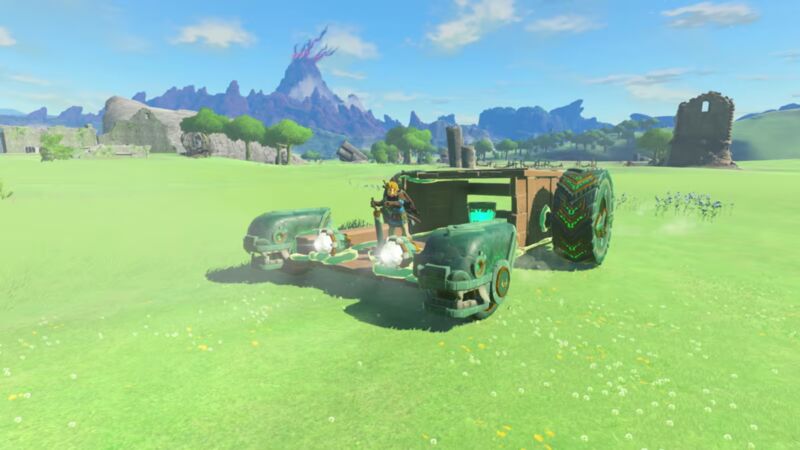
Link riding a wild-looking ATV-type vehicle
Enlarge / “Link gets an ancient-tech ATV/combine/dragster” was not in most people’s list of likely content in The Legend of Zelda: Tears of the Kingdom.

Today’s Nintendo Direct livestream gave those with sky-high but long-deferred Zelda hopes just enough to stay excited: ominous tones, real gameplay footage, a tease at a playable Zelda, and a definitive May 12 release date and pre-order offer. And, not for nothing, a $70 price tag.

The Legend of Zelda: Tears of the Kingdom was announced in mid-2019, given a May 2023 release date, and had most of its details held back until today. At the end of Nintendo’s regular showcase, Nintendo loosened the leash a bit on the Breath of the Wild sequel. Speaking over footage of dark, misty, eternally beset Hyrule, archvillain Ganon speaks in his best after-school-cartoon-villain mode: “Rise, rise, my servants. Sweep over Hyrule. Eliminate this kingdom and her allies. Leave no survivors!”

[embedded content]
The February 8 Nintendo Direct, with more games than you can keep up with at typing speed (ask me how I know).

In the quick-cut moments that follow, you can see familiar elements, like Sheikah technology, the blood moon, hang-gliding, and horse-riding. But there’s also rail-riding, blimp floating, a four-wheeler, a quad copter-like glider, the Hyrule equivalent of a rocket launcher, a high-tech glove, and, again, a real release date. Toward the end, Zelda’s voice says, “Link, lend me your power,” offering a loose but still real hint that the princess could be playable in this title.

It's just three months and change until you can fight this pile of animated cubes.
Enlarge / It’s just three months and change until you can fight this pile of animated cubes.

The $70 price tag might surprise some people, but only if they haven’t been watching closely. Triple-A game development has been due for a return to the $70 mark for a while now. Tears of the Kingdom is the only game to hit that mark, with other new games and remasters ranging in price at $60 or below. But it’s another major game publisher asking for that price, which may become a trend.

Few things could compare in size to that announcement, but the availability of classic Game Boy games on the Switch certainly stacks up. Starting today, subscribers to Nintendo Online can play a number of the uber-classic handheld’s games: Mario Land 2: The 6 Golden Coins, Kirby’s Dream Land, Tetris, Zelda: Link’s Awakening, and more. Those who shell out for Online + Expansion Pack get access to Game Boy Advance titles, including Mario Kart: Super Circuit, Legend of Zelda: Minish Cap, and Super Mario Advance 4: Super Mario Bros. 3 (a collection of original levels for that title). More games were teased in the trailer, including Advance titles like Metroid Fusion and F-Zero: Maximum Velocity.

Nintendo’s intent to offer Game Boy titles was tipped in early 2022, when emulators seemingly made by Nintendo leaked online. Many of the games teased in today’s Nintendo Direct appeared in those dumped files. Various files and dates in the emulators suggest that their development began as far back as 2018, with major work accomplished by 2020.

<a href="https://cdn.arstechnica.net/wp-content/uploads/2023/02/metroid.jpeg" class="enlarge" data-height="900" data-width="1600" alt="Moving and aiming in Metroid Prime? In this economy?”><img alt="Moving and aiming in Metroid Prime? In this economy?” src=”https://rassegna.lbit-solution.it/wp-content/uploads/2023/02/nintendo-direct-gives-us-zelda-tears-of-the-kingdom-details-metroid-and-more-2.jpg” width=”640″ height=”360″ srcset=”https://rassegna.lbit-solution.it/wp-content/uploads/2023/02/nintendo-direct-gives-us-zelda-tears-of-the-kingdom-details-metroid-and-more-4.jpg 2x”>
Enlarge / Moving and aiming in Metroid Prime? In this economy?

The other major blast from the past showing up today was Metroid Prime Remastered. The groundbreaking first-person Metroid, originally released in 2002 on GameCube, is available today for $40. Along with the souped-up graphics and portable convenience, this version allows for modern dual-stick controls, with one to look and one to move.

Many of the titles displayed were DLC or expansion passes for existing games. Among the more notable premieres and updates from today’s Direct are:

  • Pikmin 4 got a more thorough run-through, with the dome-headed protagonist tossing their primary-colored followers at both backyard and intergalactic obstacles. “A dog-like creature was spotted. What will it show us?” the Direct host asked afterward. You can find out on July 21.
  • Samba de Amigo: Party Central, a new game in the occasional Sega series that will let us shake our Joy-Cons like maracas. You can also shake with a friend to rate your compatibility, or as a “Love Checker.” There’s a global online competition mode, too. Available summer 2023.
  • Dead Cells: Return to Castlevania brings Richter and Alucard Belmont into Dead Cells, where they were always going to be a perfect fit in the stylish, tough side-scrolling roguelike. It arrives March 6, with pre-orders starting today.
  • Tron: Identity, a visual novel set in the more modern Tron aesthetic, arrives later this year.
  • Bayonetta Origins: Cereza and the Lost Demon takes the gun-battling witch (formerly known as Cereza) and her demon-possessed stuffed toy back to their adolescence ascendance. Available March 17, with pre-orders available now.
  • A Splatoon expansion pass in two “waves,” with one bringing back Inkopolis from the original game, and a “Side Order” second wave, shown only as a squid kid staring at a whited-out realm.
  • Disney Illusion Island is an intriguingly animated platformer, with Mickey, Minnie, Donald Duck, and Goofy each having Super Mario Bros 2-esque unique skills, with local co-op for up to four players. July 28.
  • Octopath Traveler 2 is available as a demo today, showing off the first few hours of JRPG gameplay. The full release is February 24.
  • Advance Wars 1+2: Re-Boot Camp finally brings turn-by-turn invasion and defense tactics, so we can slowly decimate friends in local or online gameplay. Available in April for $60, pre-order available now.
  • We Love Katamari REROLL+ Royal Reverie arrives sometime this year, adding modern graphics and an improved UI to the trippy 2005 roll-up-everything game.
  • Kirby’s Return to DreamLand Deluxe adds a bunch of new abilities, new gameplay modes, and more brightly colored stuff than I can describe here. It lands, gently, on February 24.

Listing image by Nintendo

https://arstechnica.com/?p=1916269


Lost and found: Codebreakers decipher 50+ letters of Mary, Queen of Scots

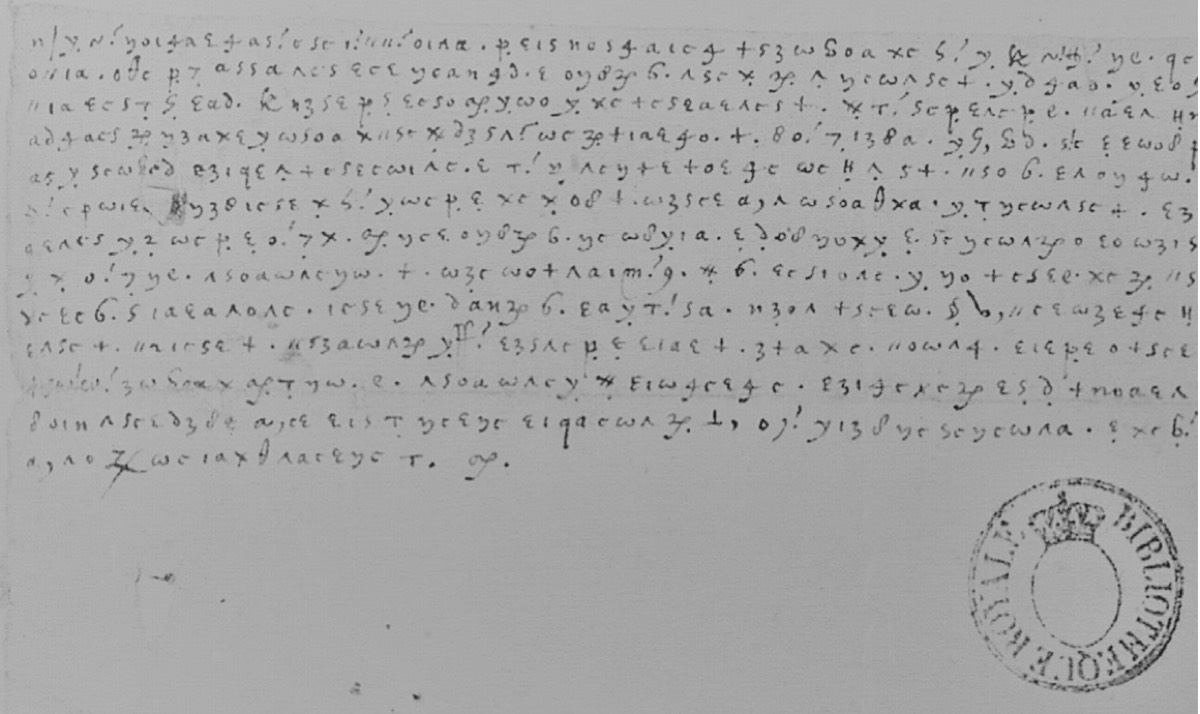
Sample ciphertext (F38) found in the archives of the Bibliothèque Nationale de France, now attributed to Mary, Queen of Scots.
Enlarge / Sample ciphertext (F38) found in the archives of the Bibliothèque Nationale de France, now attributed to Mary, Queen of Scots.
Bibliothèque nationale de France

An international team of code-breakers has successfully cracked the cipher of over 50 mysterious letters unearthed in French archives. The team discovered that the letters had been written by Mary, Queen of Scots, to trusted allies during her imprisonment in England by Queen Elizabeth I (her cousin)—and most were previously unknown to historians. The team described in a new paper published in the journal Cryptologia how they broke Mary’s cipher, then decoded and translated several of the letters. The publication coincides with the anniversary of Mary’s execution on February 8, 1587.

“This is a truly exciting discovery,” said co-author George Lasry, a computer scientist and cryptographer in Israel. “Mary, Queen of Scots, has left an extensive corpus of letters held in various archives. There was prior evidence, however, that other letters from Mary Stuart were missing from those collections, such as those referenced in other sources but not found elsewhere. The letters we have deciphered are most likely part of this lost secret correspondence.” Lasry is part of the multi-disciplinary DECRYPT Project devoted to mapping, digitizing, transcribing, and deciphering historical ciphers.

Mary sought to protect her most private letters from being intercepted and read by hostile parties. For instance, she engaged in what’s known as “letter-locking,” a common practice at the time to protect private letters from prying eyes. As we’ve reported previously, Jana Dambrogio, a conservator at MIT Libraries, coined the term “letter-locking” after discovering such letters while a fellow at the Vatican Secret Archives in 2000.

Those “locked” Vatican letters dated back to the 15th and 16th centuries, and they featured strange slits and corners that had been sliced off. Dambrogio realized that the letters had originally been folded in an ingenious manner, essentially “locked” by inserting a slice of the paper into a slit, then sealing it with wax. It would not have been possible to open the letter without ripping that slice of paper—providing evidence that the letter had been tampered with.

Portrait of Mary Stuart c. 1558–1560 at about 17 years old, painted by François Clouet.
Enlarge / Portrait of Mary Stuart c. 1558–1560 at about 17 years old, painted by François Clouet.
Public domain

Queen Elizabeth I, Catherine de Medici, Machiavelli, Galileo Galilei, John Donne, and Marie Antoinette are among the famous personages known to have employed letter-locking for their correspondence. There are hundreds of letter-locking techniques like “butterfly locks,” a simple triangular fold-and-tuck, and an ingenious method known as the “dagger-trap,” which incorporates a booby-trap disguised as another, simpler type of letter lock. Mary, Queen of Scots, used an intricate spiral letter-lock for her final letter (to King Henri III of France) on the eve of her execution for treason in February 1587. A 1574 letter from Mary also used a variant of the spiral lock.

Mary was well-trained in the art of cipher by her mother, Marie de Guise, from a very young age. The substantial collection of her letters that are housed in various archives contains tantalizing references to other missing letters. John Bossy, author of Under the Molehill: An Elizabethan Spy Story (2002), suggested that these missing letters might have been written in cipher to Mary’s extensive network of associates and allies—a network that was fatally compromised around mid-1583 by Sir Francis Walsingham (Elizabeth I’s spymaster), eventually leading to Mary’s trial and execution for treason. Like many before him, Bossy assumed those letters had been lost.

Enter Lasry and his fellow code-breaking enthusiasts: physicist and patents expert Satoshi Tomokiyo and pianist and music professor Norbert Biermann. As part of DECRYPT, they were scouring various archives for documents encrypted with ciphers, particularly documents that had not yet been attributed. They stumbled upon several collections at the Bibliothèque Nationale de France’s online archives, identifying 57 documents fully written in cipher. Other items in the collection dated from the 1520s and 1530s and were primarily concerned with “Italian affairs.” None of the text in the letters was written in clear language, so it wasn’t possible to determine who wrote them without first deciphering them.

https://arstechnica.com/?p=1915179


James Cameron did the experiment: Titanic’s Jack probably wouldn’t have survived

<img src="https://rassegna.lbit-solution.it/wp-content/uploads/2023/02/james-cameron-did-the-experiment-titanics-jack-probably-wouldnt-have-survived.jpg" alt="Jack (Leonardo DiCaprio) sacrifices his spot on a makeshift raft to save Rose (Kate Winslet) in Titanic.”>
Enlarge / Jack (Leonardo DiCaprio) sacrifices his spot on a makeshift raft to save Rose (Kate Winslet) in Titanic.
CBS/Getty Images

(Major spoilers for the 1997 film below. Psst: The ship sinks.)

Ever since James Cameron’s blockbuster film Titanic hit movie screens in December 1997, fans have been arguing about a specific scene in which Jack (Leonardo DiCaprio) nobly gives up a spot on a makeshift raft to ensure Rose (Kate Winslet), the woman he loves, survives. Tired of constantly having to defend his artistic choice against claims that both lovers could have fit onto the raft, Cameron decided to re-create the scenario under controlled conditions in a new documentary for National Geographic: Titanic: 25 Years Later with James Cameron, marking the film’s quarter-century anniversary.

For the 10 people on the planet who haven’t seen the film, Jack and Rose are star-crossed lovers from different social strata who have the misfortune of consummating their love minutes before Titanic hits that infamous iceberg. (The characters are fictional, intended to humanize the tragedy by giving us someone specific to root for.) Much drama ensues, involving Rose rescuing Jack from a lower deck as the icy waters approach and engulf them and jumping off the lifeboat she briefly boarded because she can’t imagine leaving Jack behind.

Thanks to Jack’s cool head in a crisis, they survive Titanic‘s sinking. They end up splashing around in the icy waters with the other survivors until Jack finds a floating piece of debris and hoists Rose onto the makeshift raft. But when he tries to climb up too, the raft becomes unstable. Unwilling to risk her safety, Jack stays in the water, clinging to the raft’s edge, and slowly freezes to death. Rose is rescued. Many diehard romantics were outraged at being robbed of their fairy tale ending, prompting heated debates and speculative theories about how Jack might have survived in the water long enough for them both to be rescued.

Cameron’s commitment to getting every last historical detail right for Titanic is legendary—so much so that it led astrophysicist Neil deGrasse Tyson to take issue with the astronomical details depicted in the original film as Rose is floating on the open ocean, looking up at the stars. Cameron recalled receiving “quite a snarky email” from Tyson pointing out that we know the precise latitude and longitude for that day and time in 1912 and that the star field was incorrect. Tyson sent him the correct star field, and Cameron (to his credit) made the change in the 3D re-release of the film.

James Cameron supervises a cold and wet re-enactment of Jack and Rose on a makeshift raft.
Enlarge / James Cameron supervises a cold and wet re-enactment of Jack and Rose on a makeshift raft.
National Geographic

But the question of whether Jack could have also been saved didn’t have the same definitive answer. That’s one reason it’s still a matter of heated debate.  It was even the subject of a 2012 episode of Mythbusters. Co-hosts Adam Savage and Jamie Hyneman conducted their own experiment and concluded that both Jack and Rose could have shared the raft and survived, provided they propped their upper bodies upright, and figured out how to attach Rose’s lifejacket underneath it to increase the buoyancy. Cameron also appeared in the episode, telling the duo he thought they were “missing the point” and weren’t accounting for just how difficult it would be to tie a lifejacket onto a floating piece of debris underwater when the water is 28° F.

“Had he lived, the ending of the film would have been meaningless,” Cameron told Vanity Fair in 2017 on the film’s 20th anniversary. “The film is about death and separation: He had to die. So whether it was that, or whether a smoke stack fell on him, he was going down. It’s called art, Things happen for artistic reasons, not for physics reasons.” Cameron said he spent two days on set testing the wood in the water to get just the right amount of buoyancy. He reasoned that Rose couldn’t be immersed in the 28° water if she was going to survive one to three hours before being rescued. And he said he thought it was “silly” to still have the same debate after two decades.

[embedded content]
After hearing fans continue to insist Jack didn’t have to die that night, director James Cameron mounts tests to see, once and for all, whether both Jack and Rose could have fit on that raft and survived.

It’s now been 25 years and Cameron told the Toronto Sun in December that he had conducted a scientific study to “put this whole thing to rest and drive a stake through its heart once and for all.”  Two stunt people were chosen to represent Jack and Rose, with matching ages, heights, and weights. They were outfitted with three internal thermometers to monitor body temperature—if their temps dropped below 95° F, they were hypothetically dead— and proceeded to test several different scenarios with a re-creation of the makeshift raft floating in a tank of cold water (One hopes the stunt people were very well paid, because these were not comfortable experiments—even dangerous.) Cameron also re-created the Mythbusters‘ proposed scenario for good measure.

https://arstechnica.com/?p=1914961


Report: Microsoft expects UK to block Activision merger deal

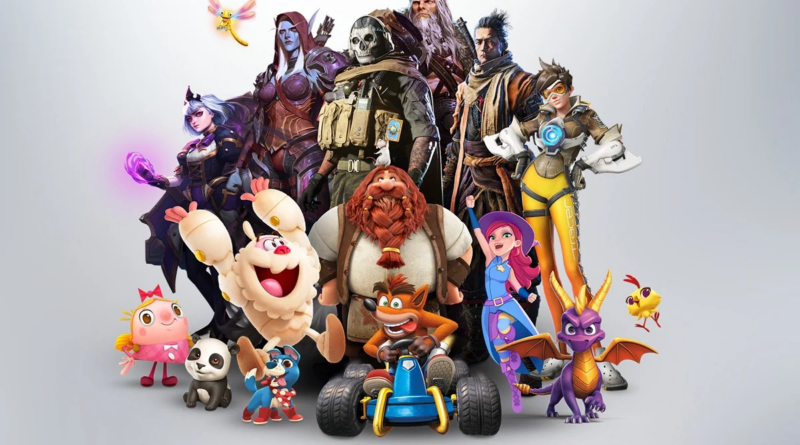
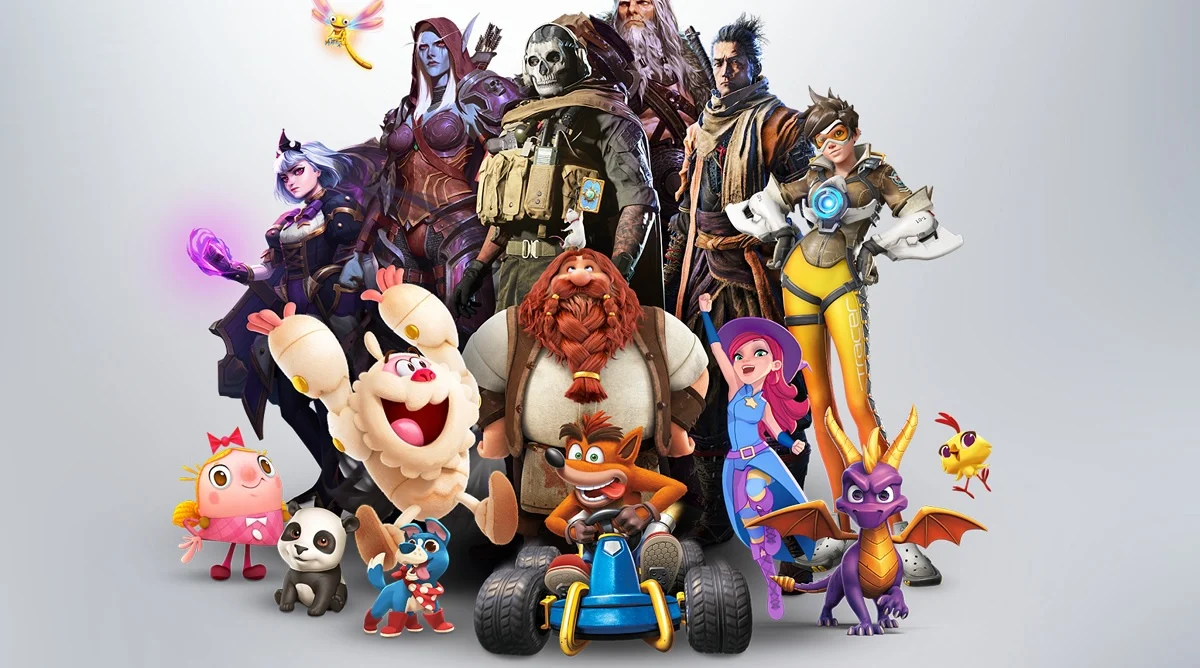
A small selection of the characters that would be part of Microsoft if its proposed Activision/Blizzard merger is allowed to go through.
Enlarge / A small selection of the characters that would be part of Microsoft if its proposed Activision/Blizzard merger is allowed to go through.


Microsoft’s legal team now expects Britain’s Competition and Markets Authority to formally oppose its long-planned $69 billion merger with Activision Blizzard. That’s according to “four people briefed on the matter” cited many paragraphs deep in a New York Times report about the direction of globalized antitrust regulation.
Microsoft expects the European Union’s separate “in-depth” investigation into the deal to be more amenable to “potential remedies” that would allow it to go forward, according to the Times. As those processes play out on the other side of the Atlantic, the US Federal Trade Commission seems content to limit its response to an administrative lawsuit rather than issuing an emergency injunction that could have stopped the deal from moving forward.

Representatives from Microsoft and Activision have yet to offer any public comment in response to a request from Ars Technica.

A British bulldog with teeth

The UK’s Competition and Markets Authority first challenged Microsoft’s proposed acquisition last July, before escalating to an in-depth “Phase 2” inquiry in September. In announcing that move, the UK regulator raised concerns that the deal could lead to a “substantial lessening of competition” in the markets for game consoles, subscription gaming services, and cloud gaming.

The Commission recently issued an eight-week extension to the statutory deadline for finishing that investigation, pushing that final date to April 26. But Bloomberg reports that preliminary findings in that inquiry are expected to be published as early as this week.

Since it was created following Britain’s contentious exit from the European Union, the UK’s CMA has been an international leader in stopping anti-competitive mega-mergers. And a negative decision from the CMA could be especially damaging for Microsoft and Activision, since the UK’s Competition Appeal Tribunal rarely overturns the regulator’s decisions.

While the CMA decision technically couldn’t be applied internationally, any move that prevented a merged Microsoft/Activision from operating in the UK would likely sour the deal in other jurisdictions.

The EU, meanwhile, reportedly issued its formal statement of objections to Microsoft this week, giving the company several weeks to respond.

https://arstechnica.com/?p=1915422


The physics of James Joyce’s Ulysses

<img src="https://rassegna.lbit-solution.it/wp-content/uploads/2023/02/the-physics-of-james-joyces-ulysses.jpg" alt="An early edition of one of Dublin's most famous literary masterpieces: Ulysses by James Joyce, published in 1922.”>
Enlarge / An early edition of one of Dublin’s most famous literary masterpieces: Ulysses by James Joyce, published in 1922.
Fran Caffrey/AFP/Getty Images

Ulysses, the groundbreaking modernist novel by James Joyce, marked its 100-year anniversary last year; it was first published on February 2, 1922. The poet T.S Eliot declared the novel to be “the most important expression which the present age has found,” and Ulysses has accumulated many other fans in the ages since. Count Harry Manos, an English professor at Los Angeles City College, among those fans. Manos is also a fan of physics—so much so, that he penned a December 2021 paper published in The Physics Teacher, detailing how Joyce had sprinkled multiple examples of classical physics throughout the novel.

“The fact that Ulysses contains so much classical physics should not be surprising,” Manos wrote. “Joyce’s friend Eugene Jolas observed: ‘the range of subjects he [Joyce] enjoyed discussing was a wide one … [including] certain sciences, particularly physics, geometry, and mathematics.’ Knowing physics can enhance everyone’s understanding of this novel and enrich its entertainment value. Ulysses exemplifies what physics students (science and non-science majors) and physics teachers should realize, namely, physics and literature are not mutually exclusive.”

Ulysses chronicles the life of an ordinary Dublin man named Leopold Bloom over the course of a single day: June 16, 1904 (now celebrated around the world as Bloomsday). While the novel might appear to be unstructured and chaotic, Joyce modeled his narrative on Homer’s epic poem the Odyssey; its 18 “episodes” loosely correspond to the 24 books in Homer’s epic. Bloom represents Odysseus; his wife Molly Bloom corresponds to Penelope; and aspiring writer Stephen Daedalus—the main character of Joyce’s semi-autobiographical A Portrait of the Artist as a Young Man (1916)—represents Telemachus, son of Odysseus and Penelope.

In his paper, Manos notes that the fictional Bloom fancies himself a man familiar with science, but Joyce slyly shows his protagonist to be a dilettante whose knowledge stems primarily from the popular science books available at the time—which would certainly explain certain misconceptions Bloom holds. For instance, when Bloom invites Dedalus to his home, he tries to impress the young man by declaring that it is possible to see the Milky Way during the day if the observer were “placed at the lower end of a cylindrical vertical shaft 5000 ft [sic] deep sunk from the surface towards the center of the Earth.”

<a href="https://rassegna.lbit-solution.it/wp-content/uploads/2023/02/the-physics-of-james-joyces-ulysses-3.jpg" class="enlarge" data-height="836" data-width="1200" alt="James Joyce with Sylvia Beach, owner of the Paris bookstore Shakespeare and Company, in March 1930. Beach was the first to publish Ulysses in 1922. “><img alt="James Joyce with Sylvia Beach, owner of the Paris bookstore Shakespeare and Company, in March 1930. Beach was the first to publish Ulysses in 1922. ” src=”https://rassegna.lbit-solution.it/wp-content/uploads/2023/02/the-physics-of-james-joyces-ulysses-1.jpg” width=”640″ height=”446″ srcset=”https://rassegna.lbit-solution.it/wp-content/uploads/2023/02/the-physics-of-james-joyces-ulysses-3.jpg 2x”>
Enlarge / James Joyce with Sylvia Beach, owner of the Paris bookstore Shakespeare and Company, in March 1930. Beach was the first to publish Ulysses in 1922.
Keystone-France/Gamma-Keystone/Getty Images

This is false, of course; Manos writes that Rayleigh scattering would render the stars invisible—even from the bottom of a cylindrical vertical shaft or tall chimney. Where might Bloom have acquired this misconception? Manos notes that Sir Robert Ball, at the time director of the Dunsink Observatory just north of Dublin, had published two popular books. Dedalus spots one of them, The Story of the Heavens, in Blooms’s library, The other was called Star-Land, which talks about being able to see stars in daylight from the bottom of a mineshaft or tall chimney. If Bloom possessed the first book, it’s highly likely he would also have read Star-Land—hence his misconception.

Other physics examples reflect the accepted science of that time, even though subsequent advances rendered that science incorrect. For instance, Bloom ruminates on how heat is transferred through convection, conduction, and radiation while boiling water for tea, including a mention of how the Sun’s radiant heat is “transmitted through omnipresent luminiferous diathermanous ether.” At the time, some physicists still believed in the existence of a luminiferous ether that served as the medium through which light traveled. It was eventually disproved—thanks to the famous Michelson-Morley experiment in 1887 and Albert Einstein’s development of special relativity and his paper on the photoelectric effect in 1905 (his annus mirabilis). But Manos notes that a high school textbook contemporary with the novel’s 1904 setting still referenced the ether as a scientific fact.

In Chapter 15 (“Circe”), one of the characters says, “You can call me up by sunphone any old time”—a phrase that also appears in Joyce’s handwritten notes for the chapter. While Manos was unable to trace a specific source for this term, there was a similar device that had been invented some 20 years earlier: Alexander Graham Bell’s photophone, co-invented with his assistant Charles Sumner Tainter.

A photophone transmitter showing the path of reflected sunlight, before and after being modulated.
Enlarge / A photophone transmitter showing the path of reflected sunlight, before and after being modulated.
Public domain

Unlike the telephone, which relies on electricity, the photophone transmitted sound on a beam of light. Bell’s voice was projected through the instrument to a mirror, causing similar vibrations in the mirror. When he directed sunlight into the mirror, it captured and projected the mirror’s vibrations via reflection, which were then transformed back into sound at the receiving end of the projection. Bell’s device never found immediate application, but it’s arguably the progenitor to modern fiber optic telecommunications.

There are several other instances of physics (both correct and incorrect/outdated) mentioned in Ulysses, per Manos, including Bloom misunderstanding the science of x-rays; his confusion over parallax; trying to figure out the source of buoyancy in the Dead Sea; ruminating on Archimedes’ “burning glass”; seeing rainbow colors in a water spray; and pondering why he hears the ocean when he places a seashell to his ear. Manos believes introducing literature like Ulysses into physics courses could be a boon for non-majors, as well as encouraging physics and engineering students to learn more about literature.

In fact, Manos notes that an earlier 1995 paper introduced a handy introductory physics problem involving distance, velocity and time. Ulysses opens with Stephen Dedalus and his roommate, Buck Mulligan, standing at the Martello tower overlooking a bay at Sandy Cove. Mulligan is shaving and slyly performs an “apparent miracle”: he whistles, and a few moments later a passing mailboat whistles back. Mulligan had spotted the mailboat through his shaving mirror giving its usual two blasts at that time of the morning, about a mile away.

Using a simple equation (t = d/v), “Students can easily calculate that at the speed of light, Mulligan would have seen the steam in 5.4 ×10⁻⁶ s, with the whistle blast,” Manos wrote. “At 1100 ft/s, the sound would have traversed the mile to the Martello tower in 4.8 s, giving Mulligan time to whistle to the heavens and wait (“paused”) for the heavens (the mailboat’s departure whistle) to reply, thus pulling off his apparent miracle.”

DOI: The Physics Teacher, 2021. 10.1119/5.0028832  (About DOIs).

https://arstechnica.com/?p=1914902


My latest co-op multiplayer obsession is Raft, the game where you build a raft

<img src="https://rassegna.lbit-solution.it/wp-content/uploads/2023/02/my-latest-co-op-multiplayer-obsession-is-raft-the-game-where-you-build-a-raft.jpg" alt="Raft is developed by Redbeet Interactive and published by Axolot Games.”>
Enlarge / Raft is developed by Redbeet Interactive and published by Axolot Games.
Redbeet Interactive

My co-op gaming group has logged a few hundred extra hours in Deep Rock Galactic since I wrote about it a year and a half ago, but we’re always looking for another game to fall in love with.

We’ve tried a bunch of things in the last year, guided by a combination of positive reviews and “whatever is on sale in Steam at the time.” We’ve logged time in Back 4 Blood, Payday 2, Warhammer: Vermintide 2, Sea of Thieves, Diablo III, Risk of Rain 2, and Borderlands 3, and each has had its charms. But the one that has stuck with me the most is called Raft, a game about building a raft.

Raft isn’t new—it went into Early Access in 2018—but its formal 1.0 release happened this past June. The pitch: You begin the game drifting across an endless ocean on a tiny wooden raft cobbled together from flotsam and jetsam. Armed with only a trusty throwable plastic hook, you must comb the ocean for planks, plastic, and other bits of scrap that you can use to expand your raft and stay alive. And once you’re no longer in constant danger of starving to death (and once you can steer your raft instead of just letting it drift), you can begin sailing to the world’s remaining islands to figure out what happened to everyone else.

Bits of trash dot the water around you—from these, your empire will be painstakingly constructed.
Enlarge / Bits of trash dot the water around you—from these, your empire will be painstakingly constructed.
Andrew Cunningham

The surest sign that you’ll like Raft is if you like Minecraft (or if you want to like Minecraft but find its general aimlessness frustrating instead of freeing). Building is all done on a grid system, you’re constantly combining and recombining materials to build and improve your tools, and the way the game gradually advances from an early survival-horror phase to a more free-form building-and-exploration phase is distinctly Minecraft-y. The game includes combat, and what is here feels fine (it flows a lot better than the clunky, boring combat in Sea of Thieves), but it’s all subordinate to building, exploring, and resource gathering.

<a href="https://cdn.arstechnica.net/wp-content/uploads/2023/02/raft-04-scaled.jpg" class="enlarge" data-height="1440" data-width="2560" alt="The crafting UI and inventory management are dense and kind of clunky, in a (mostly) endearing, Minecraft-meets-Animal Crossing kind of way. “><img alt="The crafting UI and inventory management are dense and kind of clunky, in a (mostly) endearing, Minecraft-meets-Animal Crossing kind of way. ” src=”https://rassegna.lbit-solution.it/wp-content/uploads/2023/02/my-latest-co-op-multiplayer-obsession-is-raft-the-game-where-you-build-a-raft-2.jpg” width=”980″ height=”551″>
Enlarge / The crafting UI and inventory management are dense and kind of clunky, in a (mostly) endearing, Minecraft-meets-Animal Crossing kind of way.
Andrew Cunningham

In the early game, you’ll be driven almost exclusively by hunger and thirst. The two meters are ticking down all the time, and starving or dehydrating will slow you down and eventually sap your health until you die (you can always revive or respawn, but the former requires a teammate to haul you to a bed on your raft and the latter comes at the cost of 2/3 of your inventory at normal difficulty). Further complication circles you in the form of an aggressive and omnipresent shark, which is always ready to bite you if you hop in the water (or to take a bite out of your raft, if you’re out of its reach).

You can play solo, but the game is less intimidating with friends—it means more mouths to feed, but you also don’t need to stop collecting precious planks and palm leaves so you can take a break to fish or refill your water desalinization rig. There are no specific character classes, but there’s enough to do that you and up to three of your friends can find a distinct lane depending on what you like the most. I focus mostly on actual raft construction and caring for our steadily growing menagerie of domesticated animals, while others in our group prefer navigating, collecting food and materials, and advancing the game’s tech tree.

https://arstechnica.com/?p=1914738


SEC gets $35 million settlement in Activision misconduct disclosure case

A magnifying glass inspects a surface covered in various corporate logos.
Enlarge / Taking a close look…


The Securities and Exchange Commission announced Friday that Activision Blizzard has agreed to pay $35 million to settle a probe into the company’s handling of widespread workplace harassment and discrimination allegations.

In an administrative order, the SEC said that complaints of workplace misconduct at Activision Blizzard “were not collected or analyzed for disclosure purposes” since at least 2018. This left Activision Blizzard management “lacking sufficient information to understand the volume and substance of employee complaints of workplace misconduct,” and therefore unable to warn investors of any potential business risks those complaints entailed.

The SEC also found that Activision asked departing employees to enter into “separation agreements” that illegally asked those employees “to notify Activision Blizzard of any requests from an administrative agency in connection with a report or complaint.” That violates SEC rules designed to protect whistleblowers and prohibit employers from impeding employee complaints to government agencies.

The SEC says Activision started implementing “company-wide structural changes” on workplace misconduct complaints starting in May 2020 and changed its separation agreement language in early 2022.

By settling these matters out of court, Activision avoids any formal admission of wrongdoing. “We are pleased to have amicably resolved this matter,” Activision Blizzard said in a statement provided to Ars Technica. “As the order recognizes, we have enhanced our disclosure processes with regard to workplace reporting and updated our separation contract language. We did so as part of our continuing commitment to operational excellence and transparency. Activision Blizzard is confident in its workplace disclosures.”

Despite the size of the settlement, the payment represents less than 0.4 percent of Activision Blizzard’s $8.8 billion in annual revenue (as of 2021) and, thus, will likely have a minimal impact on the company’s bottom line. Settling the matter out of court also means the complaint is no longer a potential complication for Microsoft’s planned $69 billion acquisition of Activision, which is facing its own government headwinds from the Federal Trade Commission.

Today’s settlement follows an $18 million settlement the company reached with the Equal Employment Opportunity Commission in 2021, just a day after that complaint was filed.

https://arstechnica.com/?p=1915026


Donkey Kong cheating case rocked by photos of illicit joystick modification

<img src="https://rassegna.lbit-solution.it/wp-content/uploads/2023/02/donkey-kong-cheating-case-rocked-by-photos-of-illicit-joystick-modification.png" alt="Mitchell (right) at the 2007 FAMB convention with former Twin Galaxies referee Todd Rogers and what appears to be a Donkey Kong cabinet with a modified joystick.”>
Mitchell (right) at the 2007 FAMB convention with former Twin Galaxies referee Todd Rogers and what appears to be a Donkey Kong cabinet with a modified joystick.

Over the years, King of Kong star Billy Mitchell has seen his world-record Donkey Kong scores stripped, partially reinstated, and endlessly litigated, both in actual court and the court of public opinion. Through it all, Mitchell has insisted that every one of his records was set on unmodified Donkey Kong arcade hardware, despite some convincing technical evidence to the contrary.

Now, new photos from a 2007 performance by Mitchell seem to show obvious modifications to the machine used to earn at least one of those scores, a fascinating new piece of evidence in the long, contentious battle over Mitchell’s place in Donkey Kong score-chasing history.

The telltale joystick

The photos in question were taken at the Florida Association of Mortgage Brokers (FAMB) Convention, which hosted Mitchell as part of its “80s Arcade Night” promotion in July 2007. Mitchell claims to have achieved a score of 1,050,200 points at that event, a performance that was recognized by adjudicator Twin Galaxies as a world record at the time (but which by now would barely crack the top 30).

In his defamation case against Twin Galaxies, Mitchell includes testimony from several purported witnesses to his FAMB performance. That includes former Twin Galaxies referee Todd Rogers (who was later also banned from Twin Galaxies), who testified that the machine used at the event was “an original Nintendo Donkey Kong Arcade machine as I have known since 1981.”

<img alt="Another angle showing Mitchell, Rogers, and Ritch Workman in front of the seemingly modified Donkey Kong cabinet.” src=”https://rassegna.lbit-solution.it/wp-content/uploads/2023/02/donkey-kong-cheating-case-rocked-by-photos-of-illicit-joystick-modification-1.png” width=”580″ height=”403″>
Another angle showing Mitchell, Rogers, and Ritch Workman in front of the seemingly modified Donkey Kong cabinet.

But the pictures from the FAMB convention, made public by fellow high-score-chaser David Race last month, raise additional questions about that claim, thanks to what Race calls a “glaringly non-original joystick” seen in the machine shown in those photos.

Original upright Donkey Kong arcade cabinets were shipped with a distinctive short joystick with a prominent black ball atop a silver metal stick (close-up available here). But the machine behind Mitchell in the recently released FAMB photos clearly shows a taller joystick with a red ball and stick.

<a href="https://rassegna.lbit-solution.it/wp-content/uploads/2023/02/donkey-kong-cheating-case-rocked-by-photos-of-illicit-joystick-modification-3.png" class="enlarge" data-height="400" data-width="800" alt="The joystick shown in the FAMB photos (left, zoomed in for detail) vs. the joystick on an unmodified Donkey Kong cabinet (right).”><img alt="The joystick shown in the FAMB photos (left, zoomed in for detail) vs. the joystick on an unmodified Donkey Kong cabinet (right).” src=”https://rassegna.lbit-solution.it/wp-content/uploads/2023/02/donkey-kong-cheating-case-rocked-by-photos-of-illicit-joystick-modification-2.png” width=”640″ height=”320″ srcset=”https://rassegna.lbit-solution.it/wp-content/uploads/2023/02/donkey-kong-cheating-case-rocked-by-photos-of-illicit-joystick-modification-3.png 2x”>
Enlarge / The joystick shown in the FAMB photos (left, zoomed in for detail) vs. the joystick on an unmodified Donkey Kong cabinet (right).

Use of a non-original joystick would violate Twin Galaxies’ Donkey Kong rules, which require games be played with “an original stock 4-way Donkey Kong arcade joystick, or a replacement 4-way joystick of exact size and shape as the original Donkey Kong arcade game joystick.” Twin Galaxies’ also requires “a wide image of the game’s control panel” in any record recording to verify this. And archived rules discussions also suggest that players of that era knew cabinets with aftermarket joysticks were known to be unacceptable, even if the core arcade board had authentic Donkey Kong software.

A taller joystick might actually be a hindrance for high-level Donkey Kong play since it requires more physical movement to get the same in-game results. But that disadvantage could be worth it if the controls in question were an eight-way joystick rather than the standard four-way joystick Nintendo shipped on original cabinets. An eight-way joystick mod could give a player an advantage by letting them enter diagonal inputs (e.g., up and left simultaneously), which could speed up transitions after climbing ladders, for instance.

Mitchell also testified in court documents that his FAMB Donkey Kong performance was “visible on a TV above the cabinet to give the guests greater viewing capability.” But while a VCR can be seen above the cabinet in the photos—presumably to record the performance for later verification—no such external display can be seen (though it conceivably could have been brought in for added visibility when Mitchell was actually playing).

In that same testimony package, technician Robert Childs testified that the FAMB score was achieved using “my same Donkey Kong Arcade machine,” which was purportedly used by Mitchell to set a 2004 record of 1,047,200 points in Childs’ warehouse/showroom. Assuming that’s true, the non-standard joystick could also further jeopardize that performance’s place in the record books.

https://arstechnica.com/?p=1914874


Deep Rock Galactic celebrates 5 years by letting players dig like it’s 2018

Dwarven miner outfitting their digger class
Enlarge / Five years later, there are still seemingly infinite upgrades to each class you’ll get after just _one more run_.
Ghost Ship Games

Deep Rock Galactic, the grim vision of galactic extractive hypercapitalism that’s also a wonderful community and great hang, will soon be 5 years old. The co-op first-person shooter is celebrating by letting you play the game as it launched in preview form in 2018.

Deep Rock Galactic (DRG) is a co-op shooter that’s not like other co-op shooters. You and up to three other players choose a class of dwarven miner, enter a procedurally generated section of an insectoid-infested planet, and then shoot, dig, build, fix, collect, and goof your way toward objectives. One moment you’re deep into a tough-as-nails, Aliens-esque blitz for survival, and the next you’re picking out silly hats and tossing beer steins at a robot barkeep.

<a href="https://cdn.arstechnica.net/wp-content/uploads/2023/02/Screenshot-2023-02-03-at-8.30.23-AM.png" class="enlarge" data-height="962" data-width="1378" alt="Some of Deep Rock Galactic’s sales and engagement stats since its early-access release in 2018.”><img alt="Some of Deep Rock Galactic’s sales and engagement stats since its early-access release in 2018.” src=”https://rassegna.lbit-solution.it/wp-content/uploads/2023/02/deep-rock-galactic-celebrates-5-years-by-letting-players-dig-like-its-2018-1.png” width=”640″ height=”447″ srcset=”https://rassegna.lbit-solution.it/wp-content/uploads/2023/02/deep-rock-galactic-celebrates-5-years-by-letting-players-dig-like-its-2018-2.png 2x”>
Enlarge / Some of Deep Rock Galactic’s sales and engagement stats since its early-access release in 2018.
Ghost Ship Games / Steam

That game and other factors—lower system requirements, a generally friendly and welcoming online community, constant updates, Game Pass availability—have led to DRG selling more than 5.5 million copies by the end of 2022, across all platforms. Its daily active users have nearly tripled since 2019. And its Steam reviews have been 97 percent positive since its launch there.

Now those players will soon have a rare chance to appreciate how far intergalactic mining has come since its inception. Developer Ghost Ship Games writes that it will add the option to “play DRG as it was when it originally launched in early 2018.”

From the early-access reviews dating back to 2018 we could find (at Polygon, VG47, and various YouTube channels), that version of the game is, as you might expect, more stripped-down. The weapons and HUD look more like a traditional FPS. The mine textures, while still visually distinctive, are less detailed and more earth-toned. And your home base is likely to look far, far less rich and interactive (as seen at Gaming Boulevard). Still, it might be worth a few visits for perspective on what gets added to a constantly developed game.

DRG‘s developers also plan to offer a “Supporter II Upgrade DLC” full of (entirely optional and cosmetic) weapon styles, clothing, and paint jobs that mark you as an appreciator of geologic camaraderie simulators. Fans often buy these not just for the gear, but also to support developers who have provided a wealth of free updates years after many players first bought the game (though more join every year, it seems). The developers also plan to host livestreams from their office about the game’s future and keep working on the project.

“We are not slowing down on Deep Rock Galactic,” Ghost Ship Games wrote in its update. “We have never been as busy making exciting new things for this labor of love which now turns 5.”

Listing image by Ghost Ship Games

https://arstechnica.com/?p=1914747