Valheim is the endless Viking survival game we have craved for years

Valheim is Steam’s latest top-selling, out-of-nowhere indie game, and from some angles, it sure looks the part. Depending on what screenshots you stumble upon, you might get some serious PlayStation 1 nostalgia vibes, with characters, animals, and trees that look straight out of the first ’90s Tomb Raider game.

We’ve seen this before when it comes to Steam Early Access hits, usually because a game maker spends more time on gameplay and depth, not screenshots. Hence, it’s not surprising to notice similarities to other survival-creation fare like Minecraft and Rust, where glitchy simplicity is part of the charm. But starting and ending with the graphics in this epic, Viking-tinged tale misses the modern-gaming forest for the blocky-voxel trees.

To understand why the $20 Valheim has surpassed the 2 million sales mark in only 13 days, and why its Early Access buyers can’t get enough of it, you have to scrape a few hours beneath the comparison-heady surface level. Get that far, and the game’s allure becomes clearer. This is a survival game made by people who really like survival games—but don’t necessarily like the genre’s tedium.

I’m a dozen hours into Valheim, and I’ve been fortunate to share a multiplayer server with friends who’ve already cracked the 80-hour mark. Between these two extremes, I’ve been astounded by how many ways I’ve been able to access and enjoy what Valheim has to offer—and to lose track of the gameplay’s ceiling of potential. For an Early Access game, it’s honestly hard to tell where Valheim’s content thus far runs out.

Where the deer and the antelope die

Valheim begins with your in-game character—a blocky, low-polygon Viking—carried by a massive crow through a thunderstorm. As the clouds and rain part, a wild forest spreads below, and you’re dropped next to a series of rune-covered stones and pillars. Your fate, as told by these stones, is that you must figure out how to conjure supernatural beasts, then defeat them.

In a classic series like Legend of Zelda, this is the point where the game might tell players, “It is dangerous to go alone! Take this!” From there, your journey is wide open, but your mission is narrow (usually requiring you to visit specific dungeons, where you’ll find essential items and totems of power). Modern series like Minecraft, meanwhile, begin with a massive, randomly generated world… and zero direction. You may figure out in those games that you should punch trees to collect wood, then use that wood to craft useful items, and so on, but otherwise, you can quite easily ignore its hints of a quest.

Valheim‘s opening splits the difference between these. Like Minecraft, every new Valheim quest begins in a randomly generated 3D universe. Unlike Minecraft, combat is impressed upon new players as an imperative path of quests (with no “creative” mode as a safe playground), but you’re also dumped naked into the woods with a mythological hint that you’re supposed to start by killing deer. Trouble is, this game’s deer sure are a pain to get to. They run too fast to catch up with, what with your pathetic default punches and your piddly stamina bar.

All you can do at first is jump, run, and punch (as seen from a third-person 3D perspective). Punching the big trees doesn’t do anything, but the small ones explode into wood when beaten. What’s more, once you have cut wood in your hands, that same crow who carried you appears again to tell you: touching these cut-up trees has taught you how to make a few useful things. Pick up some nearby stones, and the same thing happens. Simply holding a new object is Valheim‘s “educational” system. Wood and stone, thankfully, unlock your path to making some implements, particularly a hammer. Equipping this lets you make floors, walls, ceilings, and other basic wooden building blocks, along with a “workshop.”

Oh, and the workshop only functions when you place it somewhere with a roof. I guess we should make a building.

From castles to bones to smelts

Valheim regularly teases out progress by announcing the final objective of a quest—killing a beast of legend—then letting its massive, varied overworld serve as an amorphous “dungeon” to reach that point. Players must puzzle out how to make each quest-specific beast appear, usually in the form of an animal sacrifice, and then survive and battle well enough to face each legendary beast. They’re typically much more difficult than the boars and simple zombies found in the first few hours of play.

For starters, you have to craft better weapons and armor, and some of these require finding specific elements. Maybe you need rare stones to make something, as hinted at by one of the game’s lore-filled pillars, but you can’t get certain stones with just any hammer. You’ll need a pickaxe made out of bones, and bones can only be found when you kill zombie skeletons, as found at abandoned castles (which themselves are a journey to find). Take bones from these corpses, and you’ll learn how to craft a useful pickaxe.

Once you finally break down a vein of tin or ore, however, that helpful crow from earlier comes squawking in your own language: “Those unrefined elements need to be smelted.” Off to another zone you go, to find what you need to create a smelting system.

Stories like this play out all over the place in Valheim, and each leads to a new zone of potential battle or elemental damage. With each newly discovered danger comes new needs: weapons, armor, machines, potions, recipes, and more, whether to survive the bitter cold of a snowy mountain or to lug a massive number of unrefined stones to a home base so they can be processed.

Architectural digestive system

Thankfully, the game’s mechanical core consistently feels tuned for fun and simplicity—meaning, even though the game’s universe is constantly telling you to aspire to bigger quests, it’s not a pain in the butt to get from point to point.

In one cool Valheim twist, players are almost immediately given the building blocks needed to go to great architectural lengths with whatever homes they want to build. You’re quickly taught that structural integrity matters in what you build, so you’ll need to place pillars and blocks of various heights to buttress everything from a single-story shack to a multi-story smelting factory—and you can point a hammer at parts of your house to gauge how structurally sound they are with easy-to-read color highlights.

As soon as you have the hammer, by the way, you’re basically a grizzled house-building veteran, in terms of what you can quickly build out of basic wood and stone. Stairs, walls, floors, roofs of various angles, and chimneys snap together easily thanks to an auto-snap default for architectural dunces. (Hold down a single button to disable this “snap” functionality, and you can build much more complex designs, which lock together with the game’s robust physics engine if they’re architecturally sound.) Valheim‘s simple default system soundly outpaces trying to do the same in Minecraft, and if you’re anything like me, the quickness of building your first one-story house will lead you to get a little more adventurous with an additional story, a basement, or a fenced-off garden nearby.

This is all helped by one of Valheim‘s best core tenets: rebuilding and repairing are instant, free tasks. Did you build a roof in the wrong place? Tap a “deconstruct” button to get its cost of wood back in full. Is your roof damaged? If there’s a working workshop nearby, just tap “repair” and it’s back to 100 percent for free. Same goes for any wear and tear on your weapons, armor, and tools. Valheim wants you to be mindful of wear-and-tear enough for you to return to a home base (or build a new one) and fix things up on occasion but in a far less punishing way than other survival games. Still, Valheim incentivizes returns to a home base in a few ways, particularly with a small default backpack that you’ll find yourself emptying at home on a regular basis (or building a cart to lug cargo from larger dig sites).

Buildings are imperative, by the way, thanks to a day-night cycle and random bouts of rain and snow (plus the fact that any “workshop” you build doesn’t work without a roof over its head). At first, you’ll merely stand indoors with a cozy fire for a few minutes to offset conditions like “cold” and “wet,” which otherwise bring down your stamina (and avoid the more dangerous foes who wander at night, though these can be warded off while holding a torch). Later, you’ll learn that pimping out your homestead gives you a longer-lasting “resting” bonus to take into the wilderness. Your home also lets you create and lock up chests to store supplies—and create a convenient “spawn point” in the shape of a bed, in case you die in battle and need to gear up to run back to your supplies-loaded corpse.

Crucially, the simplicity of house-building helps when you need to create makeshift shelter on the way to a distant objective. Who doesn’t love a guest-house-in-a-box? (Or, in a pinch, a quickly constructed treehouse, whose branches count as cover for much-needed fire pits?)

Combat, servers, and friends

Eventually, your unarmed punches give way to a solid arsenal of swords, spears, bows and arrows, shields, axes, and more. The battling system is admittedly the game’s wonkiest aspect as of its current version, and it resembles Zelda: Ocarina of Time but without that classic game’s “Z-focus” ability to strafe around targets. But it contains a decent amount of depth, thanks to a healthy dodge-roll option, a perfect shield ability that parries and harms foes when you time your blocks correctly, and a solid “arrows drop after a distance” physics system that feels satisfying to master.

Combat is linked to a stamina meter, which also affects your ability to sprint, jump, sneak-walk, and use your crafting and mining tools. In good news, Valheim is liberal about letting you level-up your abilities. Simply do a certain action over and over and over, and it will become stronger. Heck, go punch trees for an hour or so, and you’ll be a veritable Jackie Chan in terms of unarmed damage and stamina. Though thankfully, that kind of grinding isn’t necessary. In my experience, my character’s ability scores have ramped up at an appropriate, organic rate—though not enough to stop me from seeking more powerful weapon upgrades in the world’s wilds.

Sometimes, combat in Valheim boils down to your connection to a central server, since multiplayer only works if a player runs a “dedicated Valheim server” instance via Steam. You and your friends might want to pony up for a dedicated hosting instance in the cloud, because as solid as the game feels in single player, Valheim was clearly built for multiplayer fun.

In fact, some of my best time in Valheim has been tagging along with higher-level friends as they’ve scoured their server’s farthest regions for useful supplies and crafting materials. In one session, my group joked about me being an “embedded journalist,” then gave me an upgraded armor set that focused on sneaking and hiding so that I could hang back and snap photos while they dealt with wyverns, wolves, and other beasts. This all happened on an arctic hike up a mountainside and into a silver mine—which they’d already built out with a roof and doors “to keep the damned wolves out”—and forced them to hand me some temporary potions so I wouldn’t immediately die from chilly conditions. (They’d already played through quite the chain of conquests to find and craft such potions, along with others, which I’ll leave unspoiled.)

Timberrrrr!

I really enjoy how Valheim scales for various expertises in an adventuring party. Want to get into a crazy battle with a boss or a large group of foes? Sure! One person, adept in combat and adorned in shiny armor, can rush a boss and “kite” it to control its movement, while weaker characters can hang back to either shoot arrows at the largest foe or assist by killing weaker minions nearby. Or maybe just follow strong friends to a far-off destination and help them load useful items into a rolling cart for the sake of a central base’s operations.

All along the way, a robust physics system underlies everything you do in Valheim, which ranges from immersive to wacky. When you chop down your first tree, for example, you’ll come to learn that giant trees fall to the ground based on the angle of your blows—and they can harm or kill any friends nearby (or do damage to nearby houses, whoopsiiiie). Then you’ll notice that enemies affect the environment the same way you do… and maybe that means the massive troll in a forest full of valuable, higher-ranked wood can stomp around while chasing you and more quickly knock trees down for other members of the party to scoop up before running the heck away.

Those anecdotes may sound all too familiar if you’ve been down the survival-crafting game hole before, but Valheim is clever by gating its content behind specific battles and objectives—and adding just enough overt purpose to its randomly generated landscapes. The storytelling potential amongst friends is strong with this game, a fact that becomes louder as you uncover magical abilities upon defeating bosses. (There’s a bit of an endgame spoiler to how these learned boss-based abilities link together, but let’s just say the developers tease out clever reasons to retrace discoveries you make earlier in the game.)

Yet there’s clearly room for this “Early Access” game to grow from here on out. Most obviously, players can’t ride any horses or beasts just yet, though Valheim hints that this could change. Early in the game, players are taught that maybe instead of killing wild animals and cooking their flesh for health bonuses, they can tame animals to become domestic, breed-crazy pets in a home base’s gardens. Hopefully we’ll get to do that soon with horsies or gnarly Viking-caliber mounts someday (like the spiky, oversized porcupines known as Lox). Also, I haven’t even mentioned traversal over the game’s rivers and oceans, which at this point are nothing more than ways to get from place to place; some Assassin’s Creed-caliber sea combat would be a real treat.

But any Valheim wishlist betrays the truth of the game’s current, “unfinished” state: there’s already so much adventuring, crafting, building, and discovery available—and in ways that can easily be shared amongst friends for only $20. (And if the screenshots I’ve chosen haven’t made clear, this game can be very pretty, as its engine smothers its blocky characters with handsome effects and gorgeous vistas). We’ve put games in our year-end lists for less potential than what I’ve already enjoyed in Valheim thus far, and I don’t see us getting out of 2021 without repeating praise for this killer multiplayer adventure option on PC.

https://arstechnica.com/?p=1742416



Jared Leto’s Joker is back in new trailer for Zack Snyder’s Justice League

[embedded content]
Happy Valentine’s Day, DCEU fans: HBO Max dropped a new trailer for Zack Snyder’s Justice League.

Disappointed DC Extended Universe fans were clamoring for a “Snyder cut” soon after the release of 2017’s Justice League, and Warner Bros. eventually obliged them, announcing it would release the full director’s cut on HBO Max. For Valentine’s Day, the studio dropped a full two-minute-plus trailer for Zack Snyder’s Justice League to further reward the fandom’s patience. Count me among the skeptics on the question of whether we really needed a “Snyder cut,” but I must admit, based on the full trailer, Snyder’s version does seem markedly different from the theatrical release. Among other changes, the trailer includes a brief glimpse of Jared Leto’s Joker, who didn’t appear at all in the original.

As we’ve reported previously, the original Justice League was the third film in a trilogy that included Man of Steel (2013) and Batman v. Superman: Dawn of Justice (2016). It brought together Ben Affleck’s Batman and Henry Cavill’s Superman with Wonder Woman (Gal Gadot), Aquaman (Jason Momoa), The Flash (Ezra Miller), and Cyborg (Ray Fisher). They are on a mission to save the world from arch-villain Steppenwolf (Ciarán Hinds), a “New God” in search of three “Mother Boxes” that will enable him to terraform the Earth into something more hospitable to him and his army of Parademons.

Snyder completed all the principal photography and was well into post-production, but he stepped down as director in May 2017 following the tragic suicide of his daughter, and the studio turned to Joss Whedon (The Avengers) to complete the film. Whedon rewrote the script, adding some 80 pages, and did extensive reshoots, bringing more humor and a brighter tone into the mix. He also cut more than 90 minutes of Snyder’s original footage to accommodate the studio’s requested 120-minute runtime, although Whedon’s version retained the basic story outline. The result was what some critics called a “Frankenstein” film, struggling to incorporate the very different visions of two directors. Reviews were mixed, and while Justice League wound up grossing $657 million, the purported break-even point was around $750 million.

Thanks in part to pressure from fans, Warner Bros. forked over around $70 million to complete the visual effects, score, and editing, as well as reshoots in October 2020, to fully realize Snyder’s original version. Per the official premise:

Determined to ensure Superman’s (Henry Cavill) ultimate sacrifice was not in vain, Bruce Wayne (Ben Affleck) aligns forces with Diana Prince (Gal Gadot) with plans to recruit a team of metahumans to protect the world from an approaching threat of catastrophic proportions. The task proves more difficult than Bruce imagined, as each of the recruits must face the demons of their own pasts to transcend that which has held them back, allowing them to come together, finally forming an unprecedented league of heroes. Now united, Batman (Affleck), Wonder Woman (Gadot), Aquaman (Jason Momoa), Cyborg (Ray Fisher), and The Flash (Ezra Miller) may be too late to save the planet from Steppenwolf, DeSaad, and Darkseid and their dreadful intentions.

HBO Max released a teaser trailer for Zack Snyder’s Justice League during the virtual DC FanDome event last August, set to the mournful tones of Leonard Cohen’s “Hallelujah.” That triggered some legal issues, causing the trailer to be pulled from YouTube until the issues could be resolved. To mark the occasion of said resolution, Snyder released a black-and-white version of that teaser trailer in November, accompanied by a virtual breakdown during a livestreaming event on Vero.

During the DC FanDome online panel, Snyder confirmed that in addition to his cut being darker in tone, the character of Steppenwolf (Ciarán Hinds) has been redesigned and that Steppenwolf’s uncle, Darkseid (Ray Porter), will be the main villain. Darkseid did not appear at all in the original theatrical release, so this will be the character’s first appearance in a live-action film.

Snyder later confirmed that Jared Leto’s Joker will also appear in the director’s cut; the character did not appear in the 2017 theatrical release, but Leto participated in the reshoots. And indeed, the final moments of the new trailer show the Joker slowly turning to the camera, as he says, “We live in a society where honor is a distant memory. Isn’t that right… Batman?”

Zack Snyder’s Justice League premieres in theaters and on HBO Max on March 18, 2021.

Listing image by YouTube/HBO Max

https://arstechnica.com/?p=1742236


The digital divide is giving American churches hell

The digital divide is giving American churches hell
Leon Neal | Getty Images

For Clay Scroggins, preaching on Zoom was never part of the plan. As lead pastor at Buckhead Church in Atlanta, he was accustomed to services in a 3,000-seat auditorium, with live music and a jumbotron for people in the back. But God’s plan is often mysterious, so when the city of Atlanta forced him to shut the church’s doors last spring, Scroggins faithfully moved his ministry online. “Ultimately, we were really informed by Jesus’ calling for us to love our neighbors,” he says, “and the most loving thing we could do was to continue to meet virtually.”

And continue to meet virtually they have. Sunday sermons are broadcast live and posted to the church’s YouTube channel for congregants to watch anytime. Bible study and small group meetings have moved to Zoom. Buckhead has even managed to replicate spontaneous church lobby “bump-ins” with video chat breakout rooms for some events. Donations, which provide all of the church’s operating income, remain the same, they just come via a digital collection plate. At Buckhead Church, virtual worship is going so well that some parts of it might be here for good. But not every congregation has been so blessed.

For places of worship, Covid-19 has upended traditions and emptied sacred spaces. About 45 percent of Americans attend religious services regularly, most of them in Christian churches, like Buckhead Church. Or they did, until last spring. Then shutdowns and stay-at-home orders sent congregations scrambling to move their services online, similar to schoolsand workplaces. Some, like Buckhead, found themselves well prepared, with the resources and technical savvy to keep attendance and alms steady throughout the year. Other churches found themselves in trouble, struggling to reach worshippers virtually while facing budget cuts, layoffs, and the threat of bankruptcy or even permanent closure. Nearly one year into the pandemic, its effects on religious life, like other aspects of American society, appears unevenly distributed, with large, successful churches continuing to do well and struggling churches falling further behind.

“The digital divide in churches reflects the digital divide in American society more generally,” says Mark Chaves, a theologian at Duke University and director of the National Congregation Study, which has surveyed religious groups in the US since 1998. Churches with less of a digital presence tend to be located in rural areas. Their congregations are more likely to be older, lower-income, and Black. Those demographic groups are also less likely to have access to broadband, and they have been disproportionately affected by the pandemic, both in health and economic outcomes. Those realities have factored into church outcomes too. A survey from LifeWay Research, which focuses on Christian ministries, found that white pastors were the most likely to report offerings that were higher than expected in the past year. Black pastors, by contrast, were most likely to report that the pandemic economy was impacting their churches “very negatively.” Churches often run on tight margins, and those impacts can have long-term effects: LifeWay Research found that a small percentage of churches have had to cut down on outreach, suspend Sunday School or small group programs, or lay off staff members. Black pastors were more likely to say they cut staff pay or deleted a church position.

Chaves says that churches that have been slow to adopt technology usually have fewer resources, so they’re more reluctant to spend on things like a live-streaming setup. But the resistance can also be cultural. “Sometimes there’s a tension with institutions that are based on tradition,” says Walle Mafolasire, founder and CEO at Givelify, a digital tithing startup. “It’s like, what do you mean, ‘tap, tap, give,’ when it’s right there in the Bible that you should bring your gifts to the altar?” The pandemic, he adds, has changed the equation: “Well, right now, I’m on Zoom. Zoom is my altar.”

At the start of 2020, about half of American churches used a digital tithing service like Givelify. Platforms like these uncouple giving from church attendance and allow people to set up recurring donations, which can make it easier for a church to predict its income. The pandemic greatly accelerated the pace of adoption: By April, one-third of churches that weren’t using a digital tithing platform had signed up for one, according to LifeWay Research. Givelify says that it has seen an explosion of new users, and that the gross amount of donations to churches on its service has remained steady in the pandemic (although, in recent months, the number of donors has slightly decreased). The company also found that one-third of faith-based organizations reported an increase in donations during the 2020 pandemic—specifically, ones with more of a digital presence. Churches with YouTube channels, Instagram pages, and prominent websites saw 533 percent more donations than those without.

Technology like this can help churches of all kinds, but it has been a lifeline for some smaller and more rural churches, which have been more vulnerable in the pandemic. The First Baptist Church Reeltown, in rural Notasulga, Alabama, has a bare-bones digital presence—a website and a Facebook page—and operates its ministry in an “antiquated way,” says Sarah Jones, the church’s secretary. Last year, it broadcast sermons more regularly on Facebook Live while it was unsafe for its 200 members to meet in person. The church also happened to sign up for another digital tithing service called Pushpay at the end of 2019—a decision that quickly paid off. Despite several months when no one attended First Baptist Church Reeltown in person, giving to the church remained consistent. “Most churches our size experienced decreased giving and really felt the weight of that,” says Jones. “That was not our story this year.”

Pushpay says churches have seen as much as $500,000 in new giving a year after signing up for the service. “This means that half a million dollars was sitting there latent, but people started giving because they can now do it from their phone,” says Troy Pollock, Pushpay’s chief ambassador. The company sees its payments platform as an entry-level product that can introduce churches to its other technological solutions.

That’s what happened at First Baptist Church Reeltown. Although the church is still mostly run on “paper and pen,” Jones says, it’s now looking into new ways to incorporate technology into its services. Last year the church used Pushpay’s additional features to upload sermon notes and prayer cards for members. For churches with larger congregations and more complex needs, Pushpay also offers a “church management system”—modeled after Salesforce software—that keeps data on parishioners. The service can help churches to gently nudge their members to be more active, from attending services on Sundays to volunteering and teaching Bible study classes.

For the faith sector, the acceleration of new technologies could lead to massive changes. Other industries, like media and retail, have been transformed as they progressively moved online; money, influence, and attention now converge in a small pool of winners, often at the expense of smaller outfits. Some believe churches might experience something similar. “You’re going to have the top 40 preachers that everyone listens to, and the regular everyday preacher is not going to be able to compete,” says William Vanderbloemen, a former pastor and founder of the Vanderbloemen Search Group, an executive search firm for churches. That’s not to say more niche markets couldn’t also emerge. “People will still show up to hear a message from a pastor who knows their specific community on a micro-contextual level. Like, here’s what happened in our zip code this week, and here’s how it relates to how we think of our God.”

Mafolasire, the founder of Givelify, calls this the “Amazon-like way of experiencing faith.” People might still be practicing with their local parish, but they’re also looking around more at other churches, and in many cases giving money to them too. In the past year, about 20 percent of Givelify’s donors have given money to multiple faith-based organizations. To Mafolasire, this suggests that churches that get ahead will be the ones that can magnify their online presence, drawing in new people from the internet. Givelify’s data from this year backs that up too. “For those churches who saw their giving increase,” says Mafolasire, “it was coming from their ability to reach a wider audience.”

Chaves, who runs the National Congregation Study, says it’s too soon to know whether this year will have a lasting impact on worship practices, and what that impact would be. “Church attendance has been declining slowly for decades,” he says. “Will we see a shift if online participation stays ubiquitous? Or will it mean that more people are participating?” Some early research suggests that churchgoers are eager to get back to in-person services and worshipping together with their community. While some smaller congregations are unlikely to continue broadcasting their sermons on Facebook Live, other churches may find value in a hybrid model, where some people come into Sunday services and others watch from their computers.

At Buckhead Church, the Sunday services will continue to be online until the congregation can safely reunite en masse. Pastor Scroggins doesn’t love preaching over Zoom, but it reminds him of a Bible verse—2 John, 1:12. “I have much to write to you, but I do not want to use paper and ink. Instead, I hope to visit you and talk with you face to face, so that our joy may be complete.” For Scroggins, it captures the essence of pandemic preaching. “I think what John is saying is that the most complete form of communication is face to face,” he says. “But that’s not always possible.”

This story originally appeared on wired.com.

https://arstechnica.com/?p=1742105


Review: The Stand starts out strong and then whiffs the landing

James Marsden, Alexander Skarsgård, Whoopi Goldberg, and Amber Heard are among the ensemble cast of a new miniseries adaptation of Stephen King's sprawling 1978 novel, <em>The Stand</em>.
Enlarge / James Marsden, Alexander Skarsgård, Whoopi Goldberg, and Amber Heard are among the ensemble cast of a new miniseries adaptation of Stephen King’s sprawling 1978 novel, The Stand.
CBS All Access

A deadly virus wipes out most of the human population, and the survivors find themselves caught in an apocalyptic battle between good and evil in The Stand, the latest miniseries adaptation of Stephen King’s sprawling 1978 novel. But despite a strong start, terrific performances from the all-star ensemble cast, and impressive production values, as a story, The Stand starts unraveling midway through, culminating in a meandering, seemingly pointless finale.

(Spoilers for the book below; a few major spoilers for the new miniseries below the gallery. We’ll give you a heads-up when we get there.)

As we reported previously, The Stand is widely considered to be among King’s best work, with a sprawling cast of characters and multiple storylines. It’s also his longest, with the 1990 Complete and Uncut Edition surpassing even It in page count. King has said he wanted to write an epic dark fantasy akin to The Lord of the Rings, only with a contemporary American setting. “Instead of a hobbit, my hero was a Texan named Stu Redman, and instead of a Dark Lord, my villain was a ruthless drifter and supernatural madman named Randall Flagg,” King wrote in his 1981 nonfiction book, Danse Macabre. “The land of Mordor (‘where the shadows lie,’ according to Tolkien) was played by Las Vegas.”

The novel opens with the accidental release of an especially contagious and deadly influenza virus (dubbed the “superflu” or “Captain Trips”), developed as a biological weapon in a secret US government laboratory. The accident kills everyone in the laboratory except for a security guard named Charles Campion, who escapes and tries to flee with his family. But he is already infected and spreads the virus before he dies. Even imposing martial law can’t contain the virus, which eventually spreads worldwide, killing over 99 percent of humanity within a month.

But some people prove to be immune—including the main protagonist, Stu Redman—and these survivors must figure out how to rebuild some semblance of a functioning society. They are aided by mysterious shared dreams. In one, “Mother Abigail” Freemantle calls for them to come to her Nebraska farm; the other involves terrifying visions of a “dark man” named Randall Flagg. Each survivor must choose one or the other. Stu ends up leading a group of survivors in Boulder, Colorado, who follow Mother Abigail; Flagg sets up a brutal totalitarian government in Las Vegas, where he is worshipped as a messiah and crucifies all those who displease him.

In 1994, ABC aired a miniseries adaptation of The Stand, starring Gary Sinise, Molly Ringwald, Rob Lowe, Ed Harris, Miguel Ferrer, Laura San Giacomo, Ossie Davis, and Ruby Dee, among others. The miniseries received critical praise and was nominated for six Emmy awards; it won two, for makeup and sound mixing. So why produce a second miniseries at all when the first one was such a hit? Perhaps the intent was to introduce a new generation to King’s dark apocalyptic vision. Or perhaps CBS just wanted a piece of the current market demand for King adaptations (cf. It, It: Chapter Two, Doctor Sleep, the Castle Rock series, and so forth).

This new limited miniseries on CBS All Access is co-written by Josh Boone and Ben Cavell. In this version, James Marsden stars as Stu Redman, who leads the group of survivors that heed their visions of Mother Abigail (Whoopi Goldberg) and form a community in Boulder. He falls in love with, and eventually marries pregnant college student Frannie Goldsmith (Odessa Young), much to the disappointment of teen nerd Harold Lauder (Owen Teague), who is also in love with Frannie. En route to Boulder, disillusioned pop singer Larry Underwood (Jovan Adepo) befriends a 30-something virgin teacher named Nadine Cross (Amber Heard), who has in turn befriended an orphaned boy named Joe (Gordon Cormier).

(Some major spoilers below; stop reading now if you haven’t (a) read the book, and/or (b) finished the miniseries.)

The Boulder denizens also include a deaf/mute named Nick Andros (Henry Zaga); sociology professor Glen Bateman (Greg Kinnear) and his trusty golden retriever, Kojak; a mentally challenged man named Tom Cullen (Brad William Henke); and farmer Ray Brentner (Irene Bedard), gender-swapped from the book. On the dark side, a suitably menacing Alexander Skarsgård plays Randall Flagg, with Nat Wolff playing Flagg’s conflicted right-hand man, Lloyd Henreid, a career criminal whom Flagg sprung from jail after everyone else around him had died, leaving Lloyd to slowly starve. Ezra Miller plays the Trashcan Man, a pyromaniac/schizophrenic who plays a pivotal role in the final confrontation. (There is also a sly cameo by King himself for eagle-eyed viewers.)

The first three episodes are fantastic, vividly depicting the onset of the deadly pandemic and the ensuing panic, gradually introducing us to our main characters, brought together by their shared visions of Mother Abigail. That’s a lot of narrative threads to juggle and Boone and Cavell do so admirably. Unfortunately, they were unable to maintain that delicate juggling act over the course of the entire series, beginning to elide over key character developments in their rush to the inevitable confrontation with Flagg.

This is most noticeable in the love triangle of Stu, Frannie, and Harold, notably the latter’s decision to join forces with an increasingly deranged Nadine (who also gets short shrift as she descends into madness) and follow Flagg.  Harold ends up planting a bomb that takes out most of the community’s leadership. King’s novel spends a good deal of time fleshing out Harold’s deep-seated psychological issues that eventually drive him to violence, only repenting on the brink of death. We get none of that here, other than a few brief glimpses of the teen’s growing obsession and paranoia—although Teague’s portrayal of Harold’s final moments, after Nadine abandons him, is quite moving.

Up through the penultimate episode, the narrative hews closely to King’s novel, particularly the longer uncut version, with minor modifications. That includes the stark good vs. evil binary, Nadine’s pregnancy by Flagg and subsequent suicide, and Flagg instructing the Trashcan Man to retrieve a nuclear warhead. But the Trashcan Man brings the warhead to Flagg’s headquarters, the fictional Inferno hotel, instead, and it kills everyone in “New Vegas” when it detonates. There’s a lot more nuance to all of this in the novel, which is lacking in the miniseries, to the latter’s detriment. It makes the Hand of God plot device (the quintessential deus ex machina) that sets off the warhead downright silly, especially since it’s accompanied by lightning strikes vaporizing many of Flagg’s followers, like the ark of the covenant taking out Nazi soldiers in Raiders of the Lost Ark.

One might be inclined to cut the show some slack on that score; it’s supernatural horror, after all. But for some reason, the writers decided to tack on one more episode, written by King and his son, Owen. It’s essentially a prolonged, rambling denouement where Stu and Frannie leave Boulder with their newborn baby to visit Maine, because Frannie is homesick and wants to see the ocean. Stu agrees because the Boulder Free Zone is getting too populous for his liking, and he fears crime will become a problem—which makes no sense, given all the horrors we’ve witnessed over the course of the series. A few drunk and disorderlies should seem like heaven after all the torture and murder and whatnot.

The last episode frankly serves no clear purpose. I mean, Frannie falls down a well, has a vision of a resurrected Flagg, and is ultimately rescued by Stu and a young version of Mother Abigail, who warns them that the wheel keeps turning and the fight between good and evil never ends. Just… why? I can only presume that CBS is hopeful of a potential second season, focused on the survivors trying to rebuild humanity, with Flagg as a lurking menace to their success. And who knows? Freed from the onus of following the source material, with so many strong characters already established, it might just make for a better sequel.

All episodes of The Stand miniseries are now streaming on CBS All Access.

https://arstechnica.com/?p=1741186


Bad Girls: Grindhouse chills, thrills, and kills shot on a $16K budget

You’ve probably never heard of the underground film industry in Columbia, South Carolina—which is understandable, since it has only produced three films in the last 10 years or so. Two of those films are by producer/director/person-with-a-dream Christopher Bickel, who finished his sophomore full-length movie effort Bad Girls just this month.

Bad Girls is an over-the-top grindhouse jam, packed full of sex, drugs, loud music, and ultraviolent action. The movie was shot on a budget of $16,000—approximately one-tenth the amount that Troma (probably the best-known ridiculously low-budget production company) spent making its first film in 1979.

The microscopic budget makes it almost impossible for Bad Girls to avoid the Dancing Bear trope—but despite the movie’s lack of funds and semi-amateur cast and crew, Bad Girls delivers a thoroughly watchable experience to its target audience.

What does “semi-amateur” mean, anyway?

We're not sure how much affirmation and how much naked challenge this final line in the credits represents.
Enlarge / We’re not sure how much affirmation and how much naked challenge this final line in the credits represents.
Colacitta Films

Bad Girls was shot in and relatively near the cast and crew’s home town of Columbia over multiple weekends, spanning the course of about three months. None of the cast and crew—including Bickel himself—was able to work either the shoot or post-production as a full-time endeavor. The majority of the film’s $16,000 budget went to paying the cast and crew during shooting, which could almost be described as a “film commune”—everyone involved, cast or crew, received a flat $50 per day for their efforts.

The equipment used to shoot the film was similarly spartan, consisting entirely of a handful of consumer cameras ranging from a Canon EOS 5D Mark IV down to a DJI Osmo Pocket. Filming locations were free—or, in one case, “They figured out we were shooting a movie and chased us off after a couple of days.” Use of the movie’s several, lovingly featured classic muscle cars was donated by a supporter—with an unexpected upholstery repair bill to one vehicle eating up about $800 of the budget.

Once shooting wrapped, there was another nine months or so of work to be done in post—including color matching, special effects, and soundtrack-wrangling, capped by several frustrating days of wrestling a final rendering out of Adobe Premiere. The final line of the film’s credits reads as half affirmation, half challenge: “There is nothing stopping you from making your own movie.”

Buckle in—it’s going to be a wild ride

There’s rarely a dull moment in Bad Girls‘ 97-minute runtime—by the time we even hear the titular bad girls’ names uttered, they’ve committed multiple homicides and robberies, overserved themselves with stolen hallucinogenic drugs, and crashed one of the movie’s several classic cars.

Bad Girls doesn’t maintain quite this frenetic of a pace the whole way through—the viewer is also treated to some exposition and character development. But it’s fair to say the major focus is over-the-top havoc, leavened with a sprinkling of running verbal and sight gags, mostly delivered by the pair of fumbling cops/federal agents/largely unspecified G-men following the girls along their cross-country rampage.

If you’re not sure whether you’re in Bad Girls’ target demographic, one line delivered early on by the very senior, very misogynistic Special Agent Cannon makes an excellent barometer. While investigating the corpse of one of the girls’ victims, Cannon declares, “This poor bastard reeks of gunpowder and pussy, of course this was [the work of] our girls!” That line will probably make most people determined either to watch the movie or to avoid it—whichever reaction you have, it’s almost certainly the right call for you.

Character development is Bad Girls‘ weakest aspect—the girls, the cops, the victims, and bystanders are all pretty much cardboard cutouts. Val, Mitzi, and Carolyn are teenage stripper desperadoes—a determined but unbalanced visionary, a realist, and a loyal friend. Special Agents Cannon and McMurphy are the grizzled, angry senior and the younger, put-upon voice of reason. The kidnap victims are largely on board due to free sex and drugs, and the majority of the murder victims clearly deserved it—you get the overall picture quickly.

The hollow characters and formulaic plot are largely alleviated by the cast’s enthusiasm for the project—some scenery will definitely get chewed along the way, but nobody’s bored while they’re doing it. The real fun in Bad Girls comes from the girls’ nonstop craziness, the special agents’ deadpan humor, and—surprisingly for such a low-budget film—its overall look and feel.

Despite its inexpensive, all-digital cameras and rough-and-ready lighting, Bad Girls manages to avoid looking like the world’s bloodiest soap opera. Most of the movie evokes a low-budget 16mm film aesthetic—Bickel self-deprecatingly described this as largely a side effect of amateur lighting and extensive color-matching in post between his disparate camera models. But the effect is genre-consistent and satisfying.

Bad Girls also exhibits a surprisingly deft touch with its special effects. The visuals get entertainingly trippy as the drugs are consumed, things go “boom” when they should, and the copious blood is well-delivered—with more attention given to “fun” than “realism,” somewhat reminiscent of the much higher-budget Syfy series Blood Drive.

Availability and distribution

Bad Girls isn’t available on any streaming services yet, but you can purchase a copy as a $9 digital download or $24 autographed Blu-Ray disc at its Indiegogo project page. Digital download delivery begins February 11, with Blu-ray discs expected in a couple of months; all copies are distributed directly by the project itself.

We asked Bickel when—or if—Bad Girls might show up on more traditional platforms like Amazon Prime. He told us he planned to put that off until all other avenues have been exhausted—because his first film The Theta Girl was downloaded by a bot and placed onto torrent sites on its very first day of Amazon availability, effectively destroying its revenue stream.

Listing image by Films Colacitta

https://arstechnica.com/?p=1741134


CD Projekt Red source code reportedly sells for millions in dark Web auction [Updated]

This bird has been hacked!
Enlarge / This bird has been hacked!

Earlier this week, CD Projekt Red announced that it had been hit with a ransomware attack that allegedly exposed the source code for games including Cyberpunk 2077, Gwent, and The Witcher 3. Now, security experts are reporting that the source code has been auctioned off on a dark Web forum, seemingly for millions of dollars.

VX Underground, which tracks ransomware and other malware attacks, noted on Wednesday that the ransomed source code had been posted on a dark Web forum known as EXPLOIT. The starting bid was reportedly $1 million, with a $500,000 bidding increment and $7 million “buy it now” price.

Cyber intelligence firm KELA confirmed the authenticity of that auction, telling The Verge that forum users needed to put up 0.1 BTC (roughly $4,700 as of this writing) to participate in the bidding as a sign that offers were legitimate. The sellers also reportedly provided file listings for Gwent and the Red Engine that underlies CDPR’s games as proof that the data was authentic.

While the auction was originally intended to run for 48 hours, by Thursday morning KELA and VX Underground were both reporting that it had been closed successfully. “An offer was received outside the forum that satisfied us,” the sellers wrote, according to the reports.

[Update: At least one analyst sees reason to doubt the seller’s report of a separate buyer swooping in from outside the auction. “There is another possible scenario that we think is more likely: no buyer exists and the closure of the auction is simply a means for the criminals to save face after failing to monetize the attack following CD Projekt’s refusal to pay the ransom,” Emsisoft Threat Analyst Brett Callow wrote in a blog post. “We have seen this behavior in the past with REvil, a ransomware group that threatened to release damaging information about Donald Trump. Although the hacked law firm refused to pay to prevent the leak, the information was never published—the attackers just claimed to have sold it.”]

KELA threat intelligence analyst Victoria Kivilevich told IGN that the stolen data was sold in a single package. The sellers also reportedly threatened on separate dark Web forums that CDPR will now have “a lot of interest [sic] things on their accounts alive [sic]” if they didn’t close the auction by paying the ransom.

CDPR said on Monday that documents “relating to accounting, administration, legal, HR, investors relations, and more” were taken as part of the attack, adding that “we will not give in to the demands nor negotiate with the actor, being aware that this may eventually lead to the release of the compromised data.”

Security experts analyzing the ransom note shared by CDPR have identified a hacking group known as HelloKitty as the likely culprit in the ransomware attack. That same group was reportedly behind a ransomware attack on Brazilian power company CEMIG, among others, late last year.

The raw source code for a game, which is used to create the executable files distributed to players, is usually considered to be among a developer’s most valuable trade secrets. Back in 2003, the leak of source code for Valve’s then-unreleased Half-Life 2 led to the arrest of a German hacker. More recently, a large tranche of source code for classic Nintendo games was released online as part of a so-called “Gigaleak.”

Peter Groucutt, the managing director of IT protection service Databarracks, said this kind of “Double Extortion” ransomware attack (where data is stolen and also locked behind an encryption key) could be a growing threat to businesses with popular intellectual property. “Ransomware originally sought to simply paralyze a business [and] victims with robust backups could refuse to pay the ransom and restore their data from backups,” he said. “The difference between this attack and other Double Extortion attacks is the exfiltrated data was highly valuable IP. Even if you don’t pay up, criminals can still make a considerable amount of money by selling the IP. If these attacks prove successful, we may see a shift to targeting those organizations with the most valuable data.”

A recent report by cybersecurity analysis firm Coveware found that total ransomware attack payments dipped slightly in the fourth quarter of 2020, after rising steadily for years prior, as more companies refuse to pay. An increasing number of those attacks now include threats to leak data online, Coveware found, and hackers often release stolen data even if the desired ransom is paid.

https://arstechnica.com/?p=1741880


Apple TV+ acquires a “sci-fi courtroom drama” about a murderous robot doll

Astronauts stand in a row on the lunar surface.
Enlarge / A shot from For All Mankind‘s second season.

More science fiction is headed to Apple TV+, according to a new video and report. Apple has published a “first look featurette” video and related augmented reality app for its alternate-history space-program drama For All Mankind‘s second season, and the report claims that a drama about a robot accused of murder will soon begin production.

The latter will be a feature film called Dolly and is based on a short story written by Elizabeth Bear. According to Deadline, Apple acquired the film “following a competitive bidding war” involving four bidders, including multiple studios and another streaming company.

The film is described as a science fiction take on a courtroom drama, with the premise that a robotic doll murders its owner but “shocks the world by claiming she is not guilty and asking for a lawyer.”

Florence Pugh (Marcella, Little Women) has been cast in a leading role, and the screenplay will be written by Drew Pearce (Mission: Impossible – Rogue Nation, Iron Man 3) and Vanessa Taylor (Game of Thrones, The Shape of Water, Divergent). No director has yet been attached.

As for Battlestar Galactica showrunner Ronald D. Moore’s For All Mankind, the new video featurette fleshes out the alternate-history 1980s world that last month’s trailer first introduced. It’s filled with scenes of militarizing astronauts on the Moon and speeches by President Ronald Reagan, and it features returning actor Joel Kinnaman, also known for his role as the lead in the first season of Netflix’s Altered Carbon sci-fi series.

Here’s the video:

[embedded content]
For All Mankind season two featurette.

Additionally, Apple has introduced an app called For All Mankind: Time Capsule that allows users to engage with various objects in augmented reality to learn more about the show, its timeline, and its characters. The app is the first of many AR experiences Apple plans to introduce in relation to its TV series and other properties.

Science fiction is set to become a mainstay of Apple TV+’s lineup. In addition to the above, the streaming platform launched with the critically panned post-apocalyptic series See starring Jason Momoa, and Apple also plans to premiere a TV series based on Isaac Asimov’s venerated Foundation series, starring Mad Men, Chernobyl, The Crown, and The Terror actor Jared Harris. Foundation is expected to premiere in 2021, though we haven’t heard much about it since the trailer debuted last summer.

The second season of For All Mankind is due out on February 19.

https://arstechnica.com/?p=1741475


Why didn’t GameStop sell some of its inflated stock during the bubble?

Hi, yeah, how much can I get by trading in this slighty used share of GameStop stock?
Enlarge / Hi, yeah, how much can I get by trading in this slighty used share of GameStop stock?

At the beginning of the year, the stock market as a whole valued video game retailer GameStop at roughly $1.15 billion. By the close of trading on January 27, at the height of the speculative mania surrounding the stock, that total value had surged to about $22.6 billion. Today, GameStop’s market cap has sunk back down to a more reasonable $3.34 billion.

You’d think GameStop would have tried to take advantage of this brief market mania, cashing in on its suddenly hot brand by trading inflated stock for real money that could help its struggling brick-and-mortar business. But a new Reuters report cites “three people familiar with the US video game retailer’s internal deliberations” in detailing the logistical and regulatory hurdles that prevented that from happening.

Insider red tape

The core of GameStop’s quick cash-in problem was the SEC’s insider trading rules, which define a specific “trading window” schedule outlining when company insiders can and can’t trade on quarterly earnings results that haven’t yet been made public.

Unfortunately for GameStop, that regulatory window closed on January 25, six days before the end of the company’s fiscal quarter. That means GameStop’s opportunity for quick and easy capitalization on its stock price closed just as its then-roughly $5 billion market cap was ready to shoot up to its $22+ billion peak just two days later.

GameStop could have gotten around this problem by rushing to release a preliminary earnings report well ahead of its usual schedule (the report for the quarter ending last January wasn’t released until late March). But that report would still have likely taken at least a few days to prepare for the public. SEC rules would have also required the company to wait an additional two full trading days after any such release to start cashing in. Given the volatility of GameStop’s stock value at that point, the company likely still would have missed the peak, even with a rushed-out report.

What’s more, anything short of a stellar earnings report may have burst the delicate bubble of speculative fervor that had driven GameStop stock up so high in the first place. If even a small segment of traders saw those earnings as a fresh warning sign that the stock was dangerously overvalued, it could have triggered the stock’s inevitable sell-off much more quickly before GameStop would have been able to truly capitalize.

Pop goes the bubble...
Enlarge / Pop goes the bubble…

And even if the timing of a preliminary earnings report release worked out perfectly, GameStop may have been wary of increased regulator scrutiny of any such attempt to cash in. The SEC wrote on January 29 that “issuers must ensure compliance with the federal securities laws for any contemplated offers or sales of their own securities” and that it would “act to protect retail investors when the facts demonstrate abusive or manipulative trading activity that is prohibited by the federal securities laws.” Such warnings could have easily given GameStop pause in trying to take advantage of its unexpected paper windfall.

GameStop’s regulatory timing is even more unfortunate given the success that some other companies (with fiscal quarters ending in December) had in converting their recent brief January stock bubbles to actual financial gain. Theater chain AMC’s new owners used the company’s inflated stock price to effectively wipe out $600 million in debt, a huge relief valve for a company that was on the verge of bankruptcy just a week before. And American Airlines sold over $1 billion shares of new stock after its shares rose nearly 50 percent last month.

A cash-in deferred?

Even though GameStop’s stupendous stock peak now seems to have passed, the company’s opportunity to cash in might not be completely over. GameStop stock is still trading at around $50 a share as of this writing, or roughly 375 percent of the consensus analyst estimate of a $13.44 target price. That stock price has been relatively flat since February 4, too, suggesting there may still be just enough HODL-ing investors out there to maintain some of that value in the near term.

Reuters reports that GameStop had already registered a plan with the SEC to sell $100 million of GameStop stock in December, when its market cap hovered around just $1 billion. While the company elected not to go through with that plan, it seems like it’s something it might consider again if the market cap stays about three times as high as it was in December.

A quick cash infusion from the sale of still somewhat-inflated stock might be just what GameStop needs to jumpstart activist investor (and recently installed GameStop board member) Ryan Cohen’s ambitious turnaround plans, too. Cohen wrote in November that he thinks GameStop should “cut its excessive real estate costs and hire the right talent [to] begin building a powerful e-commerce platform that provides competitive pricing, broad gaming selection, fast shipping, and a truly high-touch experience that excites and delights customers.”

It’s unclear whether such an ambitious plan could help turn around a company whose core business model still faces plenty of headwinds. But it would be a shame if GameStop didn’t end up as one of the winners in an incredible stock bubble that has already generated a lot of unexpected winners and losers.https://arstechnica.com/?p=1741478


Disney fires Mandalorian’s Gina Carano over “abhorrent, unacceptable” posts

Disney fires Mandalorian’s Gina Carano over “abhorrent, unacceptable” posts
Aurich Lawson / Lucasfilm

Gina Carano’s turbulent tenure as a member of the Star Wars acting universe has come to an abrupt end.

Lucasfilm issued a statement to the press on Wednesday, which Ars first found on io9, confirming that Carlano was out of not just The Mandalorian, on which she co-starred for two seasons, but all Star Wars properties. It read:

Gina Carano is not currently employed by Lucasfilm and there are no plans for her to be in the future. Nevertheless, her social media posts denigrating people based on their cultural and religious identities are abhorrent and unacceptable.

The phrasing implies that Carano’s relationship with Disney and Lucasfilm may have ended before her most recent high-profile post on social media: an Instagram “story” quoting an anti-mask podcast’s post that compared Nazi “rounding up” of Jews during the Holocaust to “hating someone for their political views.” The same post, from this Tuesday evening, implied that Jews were somehow more subject to violence by “neighbors” than by Nazis—without citing a nation, era, or other clarification about the point being made.

The Hollywood Reporter quoted “a source with knowledge of Lucasfilm’s thinking,” who said that Lucasfilm and Disney execs had been “looking for a reason to fire [Carano] for two months, and today was the final straw.” In recent months, the former MMA athlete and Fast & Furious actor had doubled down on anti-mask messaging and casting doubt on the presidential election. As it turns out, according to THR’s “sources,” these November posts moved Disney to pivot from their previous plans of announcing Carano as the star of her own Disney+ TV series. (This Carano-series news had previously not been reported until today.)

Her history with social media controversy went back further than November, however. In August, Carano posted an picture of Nazi soldiers in a crowd, with a single non-saluting Nazi circled and not otherwise captioned. She followed this in September with a change in her social media profile to read “Beep/bop/boop”—an apparent response to fans asking her to list pronouns as an act of allyship with the trans community. Carano spent Wednesday doubling down on this reputation for controversial social media messaging, going so far as to post a take on the “Epstein didn’t kill himself” meme, among other posts.

Carano or no, Disney+ appears to have no shortage of new Star Wars-related content to lean on for the foreseeable future, between an Obi-Wan series starring Ewan McGregor and three Mandalorian-related series.

https://arstechnica.com/?p=1741349


HBO Max signs “adult” cartoon series based on Scooby-Doo’s Velma

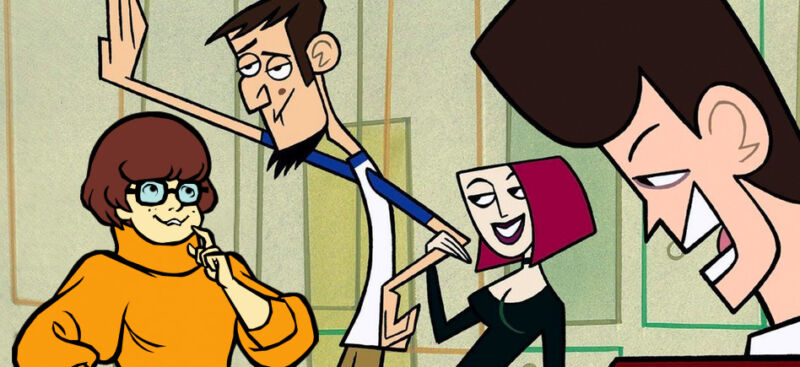
This artist's approximation imagines Velma from the <em>Scooby-Doo</em> series getting chummy with the <em>Clone High</em> cast. We doubt that such a crossover will happen, but animation nerds can dream, right?
Enlarge / This artist’s approximation imagines Velma from the Scooby-Doo series getting chummy with the Clone High cast. We doubt that such a crossover will happen, but animation nerds can dream, right?

One of HBO Max’s biggest differentiators in the video-streaming scramble has been its animation family, which includes a glut of established “mature” cartoons from families like Adult Swim and DC Universe. A Wednesday announcement sees WarnerMedia moving aggressively on that front with a whopping seven new series orders on top of existing series in development.

Today, the company’s Hanna-Barbera family announced one of its biggest nudge-nudge, wink-wink series ideas since off-kilter fare like Space Ghost: a series, simply named Velma, about the “origins” of Scooby-Doo mainstay Velma Dinkley.

Suggestive Scooby stuff, from Gunn to Max

WarnerMedia’s press release says the series’ first ordered season will offer “an original and humorous spin that unmasks the complex and colorful past of one of America’s most beloved mystery solvers,” then confirms Mindy Kaling (The Office) as the voice of Velma. Kaling will also serve as an executive producer of the show. The announcement doesn’t include information on other cast members or writers/directors, simply doubling down on a suggestive description: “an adult animated comedy series.”

Fans have long applied adult connotations to the Scooby-Doo universe, and modern live-action films, as written by James Gunn (Guardians of the Galaxy), giddily mixed the series’ family-friendly mysteries with ’70s-adjacent suggestions about drug use and sexuality. Velma’s attire, style, and socially awkward behavior have also frequently been called out as evidence of an identity outside the heteronormative spectrum. HBO Max is well-equipped to silo such adult-leaning content in a way that children and families wouldn’t accidentally tune into on network TV.

If you want any hint about how far WB Animation might take the concept, look at the animated Harley Quinn series on HBO Max, whose F-bombs, gratuitous gore, and shameless sex jokes are proof that WB’s gutter can reach serious depths.

Send in the clones

In arguably less salacious news, HBO Max’s other high-profile Wednesday pickup has huge name cachet: Phil Lord and Christopher Miller, whom you may know as the writers and producers behind Ars-beloved fare like The Lego Movie and Spider-Man: Into the Spider-Verse. They have joined HBO Max to produce two new seasons of Clone High, a cult-classic animation favorite that aired for a single season on MTV in 2002-03. The show’s original voice cast included comedians Will Forte, Nicole Sullivan, and Donald Faison, who portrayed teen versions of historical legends (Abe Lincoln, Cleopatra, Joan of Arc, Gandhi) reborn as modern-day teens at the same high school.

So far, we only know of two additional staffers from the original run returning on a writing, producing, and showrunning basis, while the revived series’ voice casting hasn’t been revealed. The original series included white actors portraying historical legends of color, and modern animation series ,particularly Netflix’s Big Mouth, have sharply trended toward recasting in recent years. Still, the deal’s two-season order suggests either confidence in the series’ return or a required investment to get Lord and Miller to sign on now that they’re far more famous than they were in the early ’00s.

[embedded content]
“Fired on Mars,” the original 2016 short.

Today’s last announcement is Fired on Mars, based on a six-minute animated short (embedded above) from 2016 by animators Nate Sherman and Nick Vokey. The HBO Max version will star SNL‘s Pete Davidson as a hapless grunt worker on a Mars colony, facing the reality of being laid off after crossing the Solar System to work on a new planet.

These three new series join Regular Show spiritual successor Close Enough, which received a new-season order today after debuting on HBO Max in July. The streaming service didn’t stop there, with announcements of four more brand-new animated series in production: an adaptation of Eisner-nominated DC comic series Cover; a robots-versus-masters comedy called Uncanny Valley (executive-produced by comedian Ed Helms of The Office); a full series based on the published-on-Instagram comic strip Obi; and an animated series about a “neurotic millennial cat” called Hello Paul, as helmed by the lead singer of Sub Pop indie band Moaning.

HBO Max’s glut of new animated series lines up with other networks scrambling to create new content during the COVID-induced streaming boom. Comedy Central in particular leaned on corporate-family nostalgia last year by announcing new seasons of Beavis & Butt-head and Ren & Stimpy, along with an animated Daria spinoff; each of these will likely land alongside the streaming-exclusive Star Trek: Lower Decks on what is currently CBS All Access (but will soon be renamed Paramount+).https://arstechnica.com/?p=1741216