PS5 owners won’t get this set of free PS4 games for much longer
Enlarge/ A look at the games available in the PlayStation Plus Collection, which will no longer be offered to PS5 subscribers as of May.
For over two years now, PlayStation Plus subscribers who owned a PS5 got access to the PlayStation Plus Collection, a set of 19 legacy PS4 games available for free download and play via the console’s backward compatibility. This week, Sony announced that it will be ending this subscriber benefit in May. Current PS5 owners will have until then to redeem their free games, which will remain available on their account as long as they stay subscribed to any of PlayStation Plus’ multiple tiers.
Hundreds of legacy PS4 games are still available for download as part of the higher-end PlayStation Plus “Extra” and “Premium” tiers (starting at $14.99/month or $99.99/year). That list includes many of the titles that were part of the PlayStation Plus Collection, including almost all of Sony’s first-party titles. But the PlayStation Plus Collection was also available at the cheapest “Essential” pricing tier ($9.99/month or $59.99/year).
The PlayStation Plus Collection served as a valuable introduction to legacy PlayStation franchises for PS5 owners who never owned a PS4. Sony said in an earnings release last night that such users made up a full 30 percent of the PS5’s monthly active users, suggesting that “the acquisition of new users is progressing,” as the company put it. Players who did upgrade from a PS4 to a PS5, meanwhile, are spending significantly more time and money on the new console on average, according to Sony.
The sunsetting of the PlayStation Plus Collection comes as Sony promises that long-standing retail shortages of PS5 hardware should be easing thanks to increasing supplies and despite “unprecedented demand.” PlayStation Plus currently boasts 46.4 million subscribers across all consoles, Sony said, a number that has remained essentially flat over the last two years.
Subscription numbers for both console subscription services might be hitting a saturation point, though. As Xbox CEO Phil Spencer said in remarks last October, “at some point, you’ve reached everybody on console that wants to subscribe.”
Here’s the full list of the PlayStation Plus Collection games that will be departing in May (games still available on the Extra/Premium tier are noted with a *):
Batman: Arkham Knight*
Battlefield 1
Bloodborne*
Call of Duty: Black Ops 3
Crash Bandicoot N. Sane Trilogy
Days Gone*
Detroit: Become Human*
Fallout 4*
Final Fantasy XV*
God of War*
Infamous Second Son*
Monster Hunter World
Mortal Kombat X
Ratchet and Clank
Resident Evil 7: Biohazard
The Last Guardian*
The Last of Us Remastered
Uncharted 4: A Thief’s End*
Until Dawn*
https://arstechnica.com/?p=1914436
Teasing out the secret recipes for mummification in ancient Egypt
Enlarge/ Illustration of an embalming scene in an underground chamber.
Nikola Nevenov
Most of what we know about ancient Egyptian mummification techniques comes from a few ancient texts. In addition to a text called The Ritual of Embalming, Greek historian Herodotus, in his Histories, mentions the use of natron to dehydrate the body. But there are very few details about the specific spices, oils, resins, and other ingredients used. Fortunately, science is helping fill in the gaps. A team of researchers used molecular analysis to identify several basic ingredients used in mummification, according to a new paper published in the journal Nature.
Egyptian embalming is thought to have started in the Predynastic Period or even earlier, when people noticed that the arid heat of the sand tended to dry and preserve bodies buried in the desert. Eventually, the idea of preserving the body after death worked its way into Egyptian religious beliefs. When people began to bury the dead in rock tombs, away from the desiccating sand, they used chemicals like natron salt and plant-based resins for embalming.
The procedure typically began by laying the corpse on a table and removing the internal organs—except for the heart. Per Herodotus, “They first draw out part of the brain through the nostrils with an iron hook, and inject certain drugs into the rest” to liquefy the remaining brain matter.
Next, they washed out the body cavity with spices and palm wine, sewed the body back up, and left aromatic plants and spices inside, including bags of natron. The body was then allowed to dehydrate over 40 days. The dried organs were sealed in canopic jars (or sometimes put back into the body cavity). Then the body was wrapped in several layers of linen cloth, with amulets placed within those layers to protect the deceased from evil. The fully wrapped mummy was coated in resin to keep moisture out and placed in a coffin (also sealed with resin).
Back in 1994, a pair of archaeologists memorably tried to replicate the mummification process, which is how they discovered that it was easier to remove the brain from the cranium if the organ was allowed to liquefy and drain naturally with the help of gravity rather than using a hook to yank the brain matter out. This was confirmed in 2008, when CT scans revealed the remains of a rod-shaped tool inside a mummy’s cranial cavity, sans hook, contradicting the account of Herodotus.
Enlarge/ The Saqqara State Tombs Project excavation area in Egypt, overlooking the pyramid of Unas and the step pyramid of Djosar.
S. Beck/University of Tubingen
This new work builds on a 2018 study in which University of Tübingen Egyptologist Stephen Buckley and his colleagues analyzed organic residues from the mummy’s wrappings with a technique called gas chromatography-mass spectrometry. The method sorts vaporized chemical compounds by their mass so scientists can analyze the chemical composition of a sample. As we reported at the time, they found that the wrappings were saturated with a mixture of plant oil, an aromatic plant extract, a gum or sugar, and heated conifer resin. Those ingredients were essentially the same ones used to treat the bodies of New Kingdom royalty 2,500 years later. These compounds helped ensure that decay-causing bacteria couldn’t recolonize the body once it had been dried out.
The findings supported an earlier 2001 study by Buckley (then at the University of Bristol) and his colleague, Richard Evershed, in which they found evidence of very similar embalming compounds on fragments of linen wrappings that had come from a Predynastic burial in Mostagedda, about 374 km (232 miles) north of the Turin mummy’s long-lost grave. Some of those wrappings dated to as early as 4300 BCE (about 600 years older than the Turin mummy), and others dated to as late as 3100 BCE, but none were still associated with an actual mummy. The 2018 study was the first to identify Predynastic embalming materials in an intact mummy.
Now Buckley is back with a new team of colleagues, this time analyzing the residues on a collection of 31 ceramic vessels excavated from the Saqqara necropolis near Cairo—specifically from an embalming workshop dated between 664-524 BCE (the 26th Dynasty). Saqqara served the ancient Egyptian capital of Memphis and boasts numerous pyramids, including the Step pyramid of Djoser, whose design and construction is usually attributed to Imhotep, chancellor to the Pharaoh Djoser. Over the years, archaeologists have unearthed many tombs, artifacts, and mummies while excavating the site: a rare gilded burial mask, for instance, several dozen caches of mummies, and, most recently, a new papyrus of the Egyptian Book of the Dead.
https://arstechnica.com/?p=1913572
Unofficial Link to the Past PC port is a reverse-engineered gem
Enlarge/ Among the many upgrades made possible by this project, A Link to the Past is now a game you can Alt+Tab out of when a supervisor comes near.
Nintendo / Kevin Purdy
It’s a sad reality among retro emulation enthusiasts: You often spend far more time crafting your perfect setup than playing the games. You get your controller, linear filtering, sound engine, and everything else just right, and then you discover that your favorite game of yesteryear is far slower and more annoying than you remember.
And they often far outshine game publishers’ official offerings, which usually amount to little more than officially licensed, lightly tweaked emulation.
Now you can add The Legend of Zelda: A Link to the Past to the list of classic games reverse-engineered and made great in modern times (first spotted by Neowin). I got the game working on a Windows PC (there are instructions for Mac, Linux, and homebrew-enabled Switches, too). It took about 10 minutes of reading the instructions, futzing with Python, and adding a few files—including the extraction of assets from a personal backup copy of the original game.
[embedded content]
Side-by-side comparison of The Legend of Zelda: A Link to thePast running next to Snesrev’s reconstructed port.
What resulted was a version of one of the foundational games of my childhood that I’m far more likely to play again. The game fits my modern high-resolution monitor and has options for alternate higher-fidelity music (via drop-in MSU files). It looks mostly the same, though it plays far more quickly and smoothly, without the frame-rate drops and long scene transitions I remember. I’ve enabled several quality-of-life upgrades: fast item switching, breaking pots with a sword, turning off the low-health beep, and some other small fixes. You can go further by messing with all kinds of settings in an .ini file.
A Link to the Past plays smoothly in this PC port, no matter how many sprites you can stack up on one screen.
If you wanted to play the entirety of A Link to the Past as Zelda, Finn from Adventure Time, or Frog from Chrono Trigger, you now can, thanks to hundreds and hundreds of hours of code work.
For me, this represents an agreeable compromise between nostalgia and modern realities. You can play A Link to the Past with nothing but support for your modern system and screen. Or you can tweak many little things that might irk you and swap out Link’s sprite for Zelda, Hello Kitty, or others. Either way, you’re playing the original game, freed from the limitations of its original hardware but not significantly altered in any real way.
Less noticeable a feature, but just as remarkable, is this port’s deep fidelity to the original. You can run Snesrev’s version in a way that shows the original machine code version running side by side with their C implementation, with the RAM state compared between each, frame by frame, to ensure you’re playing, at a fundamental level, the same game.
Somehow it’s not surprising that this thoughtful rework of a classic game comes not from copyright-holder Nintendo but from a group of volunteers working diligently to understand what made the original game work and streamline it.
From talking to contributors in their Discord, I gleaned that the disassembly work (from binary to assembly code) came from Spannerisms. Moving the assembly to nearly 80,000 lines of C code and creating a playable product was Snesrev. FitzRoyX cleaned up bugs from the original game, xander-haj maintained the wiki and added item features and sprite swaps. Xander-haj noted that other ports were forked from the Snesrev project, including Xbox One and PlayStation Vita.
While projects based on a Nintendo property are often killed by legal threats just as they come to attention, this reverse-engineered project, which specifically makes no use of any original game assets, has a good chance of staying alive. Reverse-engineered code for Grand Theft Auto III and Vice Cityremains online after Github agreed to a Digital Millennium Copyright Act counterclaim. Courts have previously struck down reverse-engineering-based projects based on end-user license agreements (EULAs). But fully decoupled projects from the likes of the Zelda Reverse Engineering Team march on, giving hope that even more games get their shot at modern tuning.
https://arstechnica.com/?p=1914063
Bethesda’s Redfall needs to be online for single-player mode
<img src="https://rassegna.lbit-solution.it/wp-content/uploads/2023/02/bethesdas-redfall-needs-to-be-online-for-single-player-mode.jpg" alt="Artist's conception of a single player (foreground) trying to access Redfall without an Internet connection.”>
Enlarge/ Artist’s conception of a single player (foreground) trying to access Redfall without an Internet connection.
Bethesda’s upcoming supernatural shooter Redfall will require “a persistent online connection,” even for the single-player experience. That’s according to an FAQ posted by Bethesda last week, which also confirms that players will need an active Bethesda.net account to play the game.
Many modern single-player games require an online check-in (or even a text message confirmation) the first time they’re launched, and some require periodic online anti-piracy checks. Games that require a persistent online connection for solo play are rarer, though significant exceptions do exist.
While Bethesda has not responded to a request for comment on the decision, game publishers often cite piracy or cheating concerns as reasons to require players to connect to the Internet for solo play. In 2013, for instance, Blizzard’s Mike Morhaime said an online connection was “critical to the long-term integrity of the game experience” for Diablo III and its controversial (and later removed) real-money auction house.
These decisions aren’t set in stone, though. Zombie shooter Back 4 Blood launched with an online connection requirement in 2021, but a completely offline mode was added just two months later. And EA’s SimCityfinally got an offline mode nearly a year after its disastrous online-only launch.
Redfall is set for a May 2 release on Xbox Series X/S and PC and will be available through a Game Pass subscription.
https://arstechnica.com/?p=1914267
Netflix stirs fears by using AI-assisted background art in short anime film
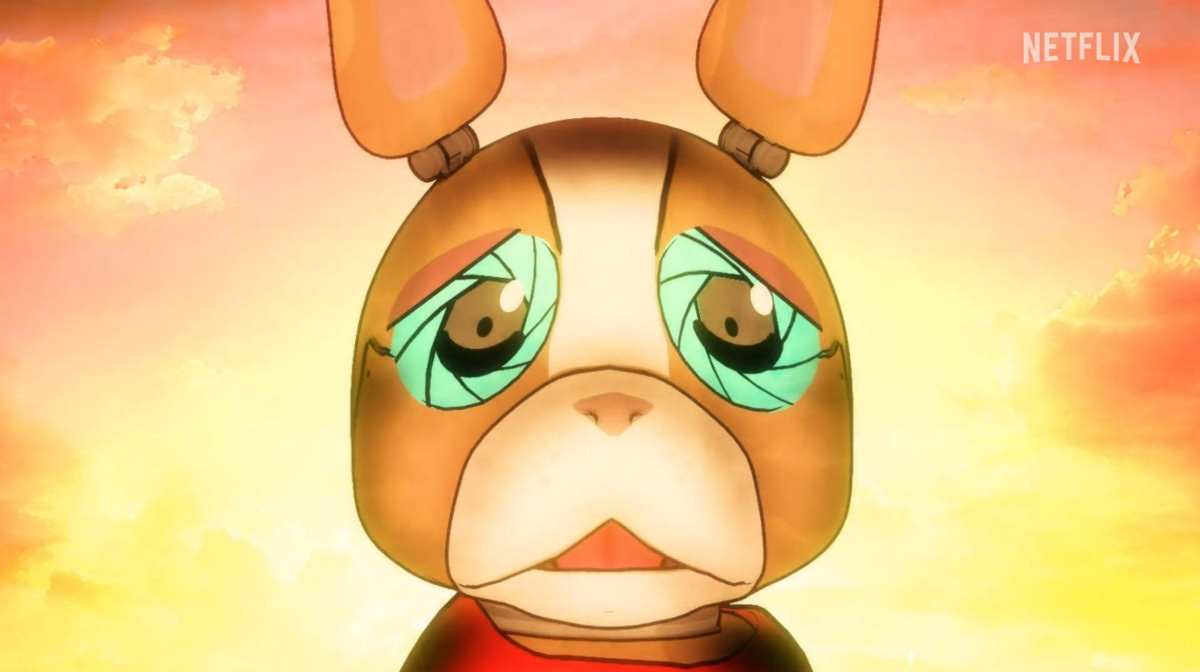
Enlarge/ A still image from the short film Dog and Boy,, which uses image synthesis to help generate background artwork.
Over the past year, generative AI has kicked off a wave of existential dread over potential machine-fueled job loss not seen since the advent of the industrial revolution. On Tuesday, Netflix reinvigorated that fear when it debuted a short film called Dog and Boy that utilizes AI image synthesis to help generate its background artwork.
Directed by Ryotaro Makihara, the three-minute animated short follows the story of a boy and his robotic dog through cheerful times, although the story soon takes a dramatic turn toward the post-apocalyptic. Along the way, it includes lush backgrounds apparently created as a collaboration between man and machine, credited to “AI (+Human)” in the end credit sequence.
A still image from the short film Dog and Boy that features AI-assisted background art.
A still image from the short film Dog and Boy that features AI-assisted background art.
A still image from the short film Dog and Boy that features AI-assisted background art.
A still image from the short film Dog and Boy that features AI-assisted background art.
In the announcement tweet, Netflix cited an industry labor shortage as the reason for using the image synthesis technology:
As an experimental effort to help the anime industry, which has a labor shortage, we used image generation technology for the background images of all three-minute video cuts!
Netflix and the production company WIT Studio tapped Japanese AI firm Rinna for assistance with generating the images. They did not announce exactly what type of technology Rinna used to generate the artwork, but the process looks similar to a Stable Diffusion-powered “img2img” process than can take an image and transform it based on a written prompt.
The film is currently available to view for free on YouTube.
[embedded content]
Netflix’s official Dog and Boy promotional video.
Almost immediately, Twitter users responded with a torrent of negative replies to Netflix’s tweet announcing the film, such as, “I know a ton of animators looking for work if you guys are struggling to find them (are you looking very hard?).” Several others quoted legendary Studio Ghibli animator Hayao Miyazaki as saying that AI-powered art “is an insult to life itself.”
“Image generation technology”? Just say you stole artists work through an AI gen and then claimed a labour shortage even though people like me and my brother who have degrees can’t get jobs because there’s 500 other graduates also trying to get an interview per application. Liars
— Reece Alex Burton //39k of 80k Draft// (@ReeceAlexBurton) February 1, 2023
In a news release, Netflix expressed its hopes that the new technology would assist with future animation productions (translated by Google Translate): “As a studio, Netflix focuses on supporting creators in the creation of works on a daily basis. As the shortage of human resources in the animation industry is seen as an issue, we hope that this initiative will contribute to the realization of a flexible animation production process through appropriate support for creators using the latest technology.”
Step one in the AI-assisted background art process, captured from the credit sequence of Dog and Boy.
Step two in the AI-assisted background art process, captured from the credit sequence of Dog and Boy.
Step three in the AI-assisted background art process, captured from the credit sequence of Dog and Boy.
The fourth and final step in the AI-assisted background art process, captured from the credit sequence of Dog and Boy.
It also looks like Makihara also wanted to push boundaries in animation by using AI technology as part of the production process. The Netflix release quoted him as saying, “By combining tools and hand-drawn techniques, we can create something unique to humans … I think that the core of the story is ‘drawing a human being.’ I think that it will be possible to secure and return to its roots, which will eventually strengthen the strengths of Japanese animation and expand its possibilities.”
Labor shortage or not, AI assistance may possibly speed up production times and lower production costs, allowing the creation of more animated content than ever before. But will people be happy about it? That remains to be seen.
https://arstechnica.com/?p=1914185
Intel cuts Arc A750 GPU’s price while boasting about driver optimizations
Enlarge/ The Arc A750 is slower than the top-tier A770, and it’s getting a $40 price cut to make it more appealing.
It has been about four months since the launch of Intel’s long-awaited Arc graphics cards. If you rolled the dice and bought a flagship A770 or an A750 in the interest of getting a decent deal on a mid-range GPU after two years of artificially inflated prices, the news has been mostly good. There have been some weird issues here and there, but Intel has kept plugging away at its buggy drivers, slowly improving Arc’s performance across a range of games.
The company is making a pair of announcements today. First, the Arc A750 (the third-fastest Arc card, behind the 16GB and 8GB versions of the A770) is getting an official price cut, from $289 to $249. Second, the company is releasing yet another driver update (version 31.0.101.4086), bragging about widespread performance improvements in old DirectX 9 games and more targeted improvements for newer titles relative to the launch drivers from October.
Enlarge/ Intel is using the A750 for these performance comparisons, but the drivers will benefit all Arc GPUs, from the lowly A380 up to the 16GB A770.
In our review, the Arc A750 was usually around 10 or 20 percent slower than the 16GB version of the A770, at least for games where the A750’s 8GB of memory wasn’t a bottleneck. But in the games where it did well, it usually still outperformed Nvidia’s RTX 3060, and Intel’s driver updates have made the “games that Arc plays well” list a little longer by now. A new RTX 3060 still typically goes for somewhere in the $350 to $400 range.
The driver improvements are mostly old news if you’re an Arc owner who has been installing new updates as they’ve been released; many of the DirectX 9 improvements, in particular, were previewed in a beta driver update in December. Intel seems to be using both DirectX 12- and Vulkan-to-DirectX 9 translation layers, choosing different layers to optimize speeds for specific games.
<a href="https://cdn.arstechnica.net/wp-content/uploads/2023/02/Arc-Q1-2023-03-scaled.jpeg" class="enlarge" data-height="1440" data-width="2560" alt="Frame times in CS:GO also suggest that the DirectX 9 optimizations will make games perform more smoothly, with fewer visible hitches.”><img alt="Frame times in CS:GO also suggest that the DirectX 9 optimizations will make games perform more smoothly, with fewer visible hitches.” src=”https://rassegna.lbit-solution.it/wp-content/uploads/2023/02/intel-cuts-arc-a750-gpus-price-while-boasting-about-driver-optimizations-2.jpg” width=”980″ height=”551″>
Enlarge/ Frame times in CS:GO also suggest that the DirectX 9 optimizations will make games perform more smoothly, with fewer visible hitches.
On average, Intel says these older games will perform 43 percent faster than they did with the launch drivers. Gameplay should also generally feel smoother and have fewer hitches, thanks to lower and more consistent frame times.
Improvements for newer DirectX 11 and DirectX 12 games were smaller and less widespread, according to Intel. It’s difficult to say just how much faster they are, on average, because Intel’s charts occasionally veer into hard-to-parse measurements like “average FPS per dollar.” But the company’s focus on big multiplayer games (Fortnite, Valorant, DOTA 2, League of Legends) and major releases (Assassin’s Creed, Red Dead Redemption 2, Cyberpunk 2077) means that most people probably play at least a few games that have benefitted from Intel’s driver work so far.
Enlarge/ The measurement here is a little weird, but it does demonstrate widespread Arc performance improvements relative to the four-month-old launch drivers.
In the months leading up to Arc’s launch, Intel went on a sort of preemptive apology tour, explaining multiple times that Arc performance in newer DirectX 12 and Vulkan games would be great but that performance in DirectX 11 and older games would be hit or miss.
It wasn’t the best footing for Intel to start on, especially since Arc was also arriving late to the party—it was designed to compete with the Nvidia RTX 3000 series and AMD RX 6000 series, both already being replaced. Intel also missed the opportunity to launch while 2021 and 2022’s GPU shortage was still in full swing. But the explanations did have the benefit of setting expectations, and most reviews of the GPUs were at least faintly positive where they could have been unforgivingly negative.
Whether that effort translated to sales is hard to say, though most signs point to a slow start. Arc has yet to make a blip in the Steam Hardware Survey data as of December 2022, and is still being lumped in with “other.” If we use customer reviews as a proxy for popularity, all Arc A770 and A750 GPUs, combined, have a total of 142 reviews on Newegg, while the RTX 3060 GPU listings collectively have many times that amount.
https://arstechnica.com/?p=1913749
Sony: Would-be PlayStation 5 buyers “should have a much easier time” now
In a blog post published on Monday, Sony hardware VP Isabelle Tomatis announced that there is now an “increased supply” of PlayStation 5 game consoles after more than two years of shortages. “If you’re looking to purchase a PS5 console, you should now have a much easier time finding one at retailers globally,” she wrote.
This is the second time this month Sony has publicly said that it believes its PlayStation 5 supply woes have concluded—the first was during a press conference at this year’s Consumer Electronics Show.
In the blog post, Tomatis pinned the prior struggles on “unprecedented demand.” That seems to be true, according to analysts who watch Sony and the video game industry—but there may have been other factors at play, such as pandemic-related supply constraints for some components.
After thanking would-be PlayStation buyers for their patience over the past couple of years, Tomatis pointed out that people in the US, UK, France, Germany, Netherlands, Belgium, and Luxembourg should be able to buy at least one bundle or standalone console through Sony’s direct.playstation.com store. Sure enough, we checked the US store and there are currently multiple models available; only the disc-less, digital download-only model is sold out.
Additionally, the US version of nowinstock.net notes at the time of this publication that consoles are currently available from Walmart, and there are shipping-delayed preorders at Amazon. Of course, supplies likely vary by region, and they could shift again in the future.
Despite Sony’s struggle to make units available or get them shipped to consumers, the PlayStation 5 sold nearly as well in its first year as its predecessor did in the same time frame.
Sony’s announcement about delivering supply to meet demand for the base console comes between two major accessory launches: last week’s DualSense Edge controller release, and the upcoming February release date for the PlayStation VR2.
The timing is key. The PlayStation VR sold quite well for a VR headset in its time, but Sony needs to make sure people can get their hands on the PlayStation 5 so that they can buy a VR2.
https://arstechnica.com/?p=1913480
D&D maker retreats from attempts to update longstanding “open” license
<img src="https://rassegna.lbit-solution.it/wp-content/uploads/2023/01/dd-maker-retreats-from-attempts-to-update-longstanding-open-license.jpg" alt="Artist's conception of D&D fans holding back WotC’s attempts to change the game’s license.”>
Enlarge/ Artist’s conception of D&D fans holding back WotC’s attempts to change the game’s license.
Dungeons & Dragons (D&D) owner Wizards of the Coast (WotC) has halted its attempts to update the longstanding Open Gaming License (OGL) that has dictated the legal use of the game’s rules for decades. The move comes after weeks of controversy and belated attempts to partially scale back leaked plans for an OGL update.
WotC’s full retreat in this licensing battle comes as WotC says survey feedback on the latest draft update to the license was “in such high volume and its direction is so plain,” that the company felt it had to act immediately, as Executive Producer Kyle Brink wrote on the D&D Beyond blog.
That decisive response includes an overwhelming majority of more than 15,000 survey respondents who said:
They didn’t want to publish RPG content under the proposed OGL 1.2 (88 percent)
The new license would force them to change a part of their business (90 percent)
They did not want the original OGL deauthorized (89 percent) and/or
They were not happy with WotC’s drafted policy of virtual tabletop content (86 percent)
Beyond that, 62 percent of respondents said they wanted more content from the SRD included under a Creative Commons license (above and beyond the core rules that were so covered as of last week). Now the entire SRD is under a Creative Commons license that, Brink pointed out, is “irrevocable in a way that doesn’t require you to take our word for it.” Choosing such a license is like going through “a one-way door,” he added. “There’s no going back.”
Content creators will now be able to choose to use the original OGL or the new Creative Commons license as the basis for their D&D-related content going forward, Brink writes. And the SRD being under a new license means that there’s no longer a need for a specific policy on virtual tabletop content; “with this new approach, we are setting that aside and counting on your choices to define the future of play,” Brink writes.
“Thank you for your continued dedication and love for Dungeons & Dragons,” WotC tweeted from the D&D Beyond account. “We are sorry for the pain we’ve caused to the community. We look forward to building what comes next with our players and creators.”
https://arstechnica.com/?p=1913223
How to fix GoldenEye 007’s control issues on the Nintendo Switch [Updated]
Update (5:35 pm ET): As user Cuesport77 points out on Reddit, Nintendo offers a system-level button remapping function that can get around most of the issues highlighted in this piece. Going into the Switch’s system settings and swapping the left and right analog stick inputs (as well as the inputs for any other buttons you want) can help provide more standardized “dual stick” controls for the game.
This isn’t the most convenient option, as players will have to undo the customizations when switching from GoldenEye to any other Switch game (and then back when going back to GoldenEye). These customizations also don’t seem to be available on any controller connected to the system when in portable mode.
Nonetheless, Ars regrets not recognizing this option existed before publishing the below story, which is included in its original form (with a few noted updates) below.
Original story: After 25 long years, players can finally enjoy official ports of GoldenEye 007 on platforms newer than the Nintendo 64. Those playing the game on Nintendo Switch, however, face a set of awkward, non-customizable control schemes that suffer greatly in the transition from the N64’s “batarang” to the Switch’s Joy-Cons.
Just like Rare intended
Anyone who’s played a console first-person shooter in recent decades expects a basic control paradigm that works across the genre: the left analog stick is used for lateral motion (forward, back, or side to side), while the right stick is used to turn and look around. Decades of muscle memory have trained console shooter players to expect this basic split, and anything else just feels instantly “off” after all this time.
What many GoldenEye fans have forgotten (or perhaps never knew) is that the N64 original was one of the first titles to use that kind of left thumb/right thumb control dichotomy. GoldenEye‘s built-in “1.2 Solitaire” control scheme mapped lateral movement to the oft-neglected N64 D-pad (positioned under the left thumb), while turning and looking around was controlled by the system’s single analog stick (positioned, in this case, under the right thumb).
Savvy players know this layout felt more natural than the “1.1 Honey” default, which awkwardly mixed front-back movement and left-right turning on the left stick with left-right sidesteps and up-down looking on the directional C buttons. And even if many GoldenEye players ignored it at the time, it was there as an intended (and very forward-thinking) control option 25 years ago.
Sure, many committed GoldenEye players no doubt learned to circle-strafe and quick-aim with the best of them using GoldenEye‘s cumbersome default control scheme. Still, there’s a reason subsequent FPS control design has more closely resembled GoldenEye‘s “1.2 Solitaire” and its segregation of movement and turning/looking to different thumbs. After all this time, the “dual-stick” split still feels like the most natural way to do first-person movement on a console controller.
Flipping the Switch
Enlarge/ Unfortunately this basic “N64 to Switch” button mapping can’t be customized at all.
Unfortunately, GoldenEye‘s transition to the Switch has flipped the old left/right thumb muscle memory on its head. Now, if you choose “1.2 Solitaire” from the built-in control options on the Switch, the right stick ends up used for lateral motion (standing in here for the directional C buttons) while the left stick is used to look around (You can also use the directional buttons on the left Joy-Con to move, but without turn/look controls on the right stick, this is not a very useful option).
Some players already change their FPS controls to this kind of “southpaw” control scheme and will feel right at home with the “flipped” Switch controls here. But the vast majority of players will probably feel like they’re playing in a mirror, and have to relearn controls instincts that have been burned into their thumbs for decades.
Nintendo doesn’t offer any game-level or emulator-level customization options to reconfigure these controls to fit better with their expectations [Update: There are system-level customization options, though; see above]. Contrast that with the Xbox version of GoldenEye, which also released today as part of Rare Replay or an Xbox Game Pass subscription.
The default control scheme on Xbox’s version of GoldenEye 007 is a new “3.1 Diamond” layout designed specifically for the Xbox controller.
You can also customize the Xbox controls to map whatever function to whatever button you want.
On Xbox, the game defaults to a new control scheme specially designed for the Xbox controller, with the left stick controlling movement and the right stick controlling turning/looking. Moreover, the Xbox version allows full customization of any game function to any button or direction on the controller.
We’ve talked before about how the Switch’s N64 emulation leaves a lot to be desired on the control front. The lack of control customization options is especially noticeable in GoldenEye, though, an FPS that relies so heavily on the ability to move and aim intuitively.
A partial solution
The best solution to this Switch-based control problem is probably to pick up one of the official Switch Nintendo 64 controllers Nintendo offers for sale on its website. But that’s not a practical option for many since the $50 controllers are almost constantly sold out these days (to say nothing of their uselessness when playing in portable mode).
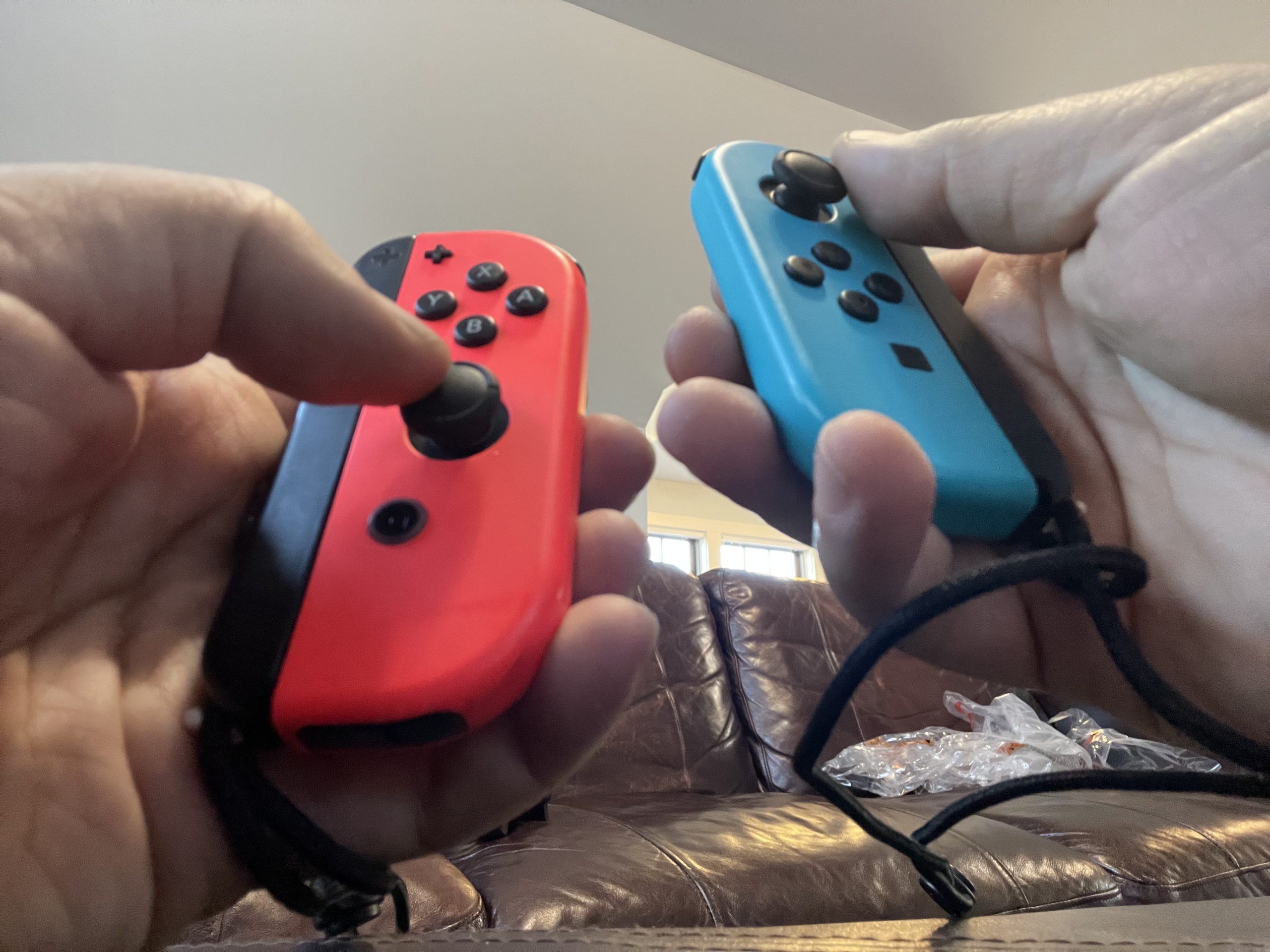
After an entire morning of fiddling and experimenting, though, I’ve found the best solution for my GoldenEye Switch woes was to, counterintuitively, flip the Joy-Cons. By holding the right Joy-Con in my left hand, and vice versa, GoldenEye‘s “1.2 Solitaire” control scheme finally approaches the “normal” feeling of left-stick movement and right-stick turning/looking I was looking for.
Enlarge/ So it’s come to this— holding the Joy-Cons in the wrong hands…
Kyle Orland
This control “solution” has some obvious problems—the Joy-Cons were obviously not designed to be held this way. Even with the standard, rounded wrist strap attachments hooked on, the Joy-Cons don’t fit comfortably in the wrong hands.
Everything feels out of place with the Joy-Cons mixed up, too, from the analog sticks (which are now arranged with the left stick “low” and the right stick “high” on the hand) to the shoulder buttons (which now require an awkward, extra-long reach to hit) to the face buttons (which now require you to hit the A and B buttons with the “wrong” thumb). This solution also doesn’t work when playing the Switch in portable mode, obviously.
Still, it’s the best option I’ve been able to come up with to make GoldenEye on the Switch feel like I expect it to feel. It’s a shame, because Nintendo could easily fix this with some sort of remapping option for its Switch N64 emulator [Update: Or including easier switching options for the system-level control customization mentioned above]. As it stands, though, the only version of GoldenEye 007 with online play is also the one with the worst control options available.
https://arstechnica.com/?p=1913186
GoldenEye can’t distract from Switch retro games’ most annoying pitfall
<img src="https://rassegna.lbit-solution.it/wp-content/uploads/2023/01/goldeneye-cant-distract-from-switch-retro-games-most-annoying-pitfall.jpg" alt="Nintendo's promotional key art for the launch of GoldenEye 007 on Switch.”>
Enlarge/ Nintendo’s promotional key art for the launch of GoldenEye 007 on Switch.
Today marks the long-awaited rerelease of the Nintendo 64 classic GoldenEye 007 on the Nintendo Switch. As was announced before the launch, the game supports widescreen. When I learned that, my first thought wasn’t “Oh, nice!” Rather, it was “OK, but what about the rest of the library?”
To be clear, there’s no easy way to make old 4:3 games fill up a modern 16:9 aspect ratio, and that’s not something I would recommend in this case. But the solution used by the rest of the library of old games running within the Nintendo Switch Online service—enclosing every game in horribly distracting and potentially destructive gray borders—is, well, awful.
So as Nintendo finally adds one of the most beloved Nintendo 64 games to Switch Online, allow me a moment to vent some frustration on behalf of many players.
Give players the choice
Players have been complaining about the mandatory gray borders since the launch of the Switch’s subscription-based classic game library back in 2018, but Nintendo has never done anything to change it.
While I have trouble imagining actually wanting those borders, choice seems key here. Players who enjoy the same NES, SNES, Genesis, and Nintendo 64 games in emulators on Windows or Linux PCs, Macs, Android phones, and other devices can choose whether to include a border or to simply display black letterboxing on either side of the image. Even among retro collections released by most other publishers, players are usually given a choice. For example, Sega’s recent Sonic Origins collection infamously did a lot of things terribly wrong on the emulation and presentation front, but it at least got this part right.
I’m often the first to defend the notion of a developer or artist’s intent with a game, but since this feature is used across numerous games from several developers, that’s not a factor here.
Part of the frustration stems from the fact that it seems like such an easy change to make. Granted, players often believe that issues in games can be easily fixed, even when that’s not true. Some gamers who don’t understand what goes into making games have taken to Internet forums to insist that it would take just “a day or two” to add multiplayer to any given single-player game. (That is definitely not the case.) But speaking as a developer myself, in this case, the requested change really would be easy.
To my knowledge, Nintendo has never shared its justification for this choice, but it’s surely at least that: a deliberate choice.
The OLED problem
For many people, the border comes down to personal preference, but for others, it’s a more pressing concern. Folks using TVs that rely on technologies that carry burn-in risk find Nintendo’s approach particularly frustrating. On modern OLED or older plasma TVs, there’s always a risk that static elements on the screen could permanently scar the TV’s image, even after different content is displayed. It takes a lot for that to happen on the latest OLEDs, but models from even a couple of years ago carry a higher risk.
The border is the same for every game in the Nintendo Switch Online catalog, so players who spend a lot of time on one of those TVs playing retro games on the Switch may find themselves anxious about doing damage to their expensive screens. OLED TVs make up anywhere from a third to half of premium TV shipments, depending on the region. That’s not a small number of TVs that are potentially at risk, and the market share is growing every year.
One of Nintendo’s Switch models even has a built-in OLED display, but it hasn’t been on the market long enough to determine if problems will arise. Plus, the borders undermine that model’s main advantage: perfect black levels.
A widescreen mode largely bypasses this problem for GoldenEye 007 on the Switch, but switching between that game and other Nintendo 64 titles just makes the borders in the latter stand out all the more.
So this is one more request, added to a mountain of pleas over almost half a decade: Nintendo, please let us get rid of that awful gray border on Switch Online retro games.