How to turn your Xbox Series X/S into an emulation powerhouse

Why play new games on these expensive consoles when you can emulate old ones?
Enlarge / Why play new games on these expensive consoles when you can emulate old ones?
Sam Machkovech

After a new console is released, it usually takes hackers months or years to find a hole in the console’s security that lets them install homebrew software like emulators. So it may come as a surprise that you can already load RetroArch—and its vast array of emulation cores for dozens of classic systems—on the newly released Xbox Series X/S consoles. The installation vector here comes not through an unforeseen security hole, but through Microsoft’s policy of allowing any retail Xbox One console to become a full-fledged dev kit. After promising that functionality in 2013, there were signs that Microsoft was thinking of abandoning those plans in 2014. By 2016, though, Microsoft officially opened up the Xbox One, allowing registered Universal Windows Platform (UWP) developers to load and test content directly onto a stock retail console.

Enter Libretro, which decided in late 2018 that it would commit to creating an Xbox One-compatible UWP build of its popular emulator package. That version launched in Alpha in 2019 and has been updated sporadically since. Ars has confirmed that a new build works on the Xbox Series X as well, allowing your new console to pretend to be anything from an Atari 2600 to a Wii, with a whole lot of consoles in between.

Jumping through hoops

Getting RetroArch on your brand-new Xbox isn’t as simple as just inserting a USB drive and puttering away. First, you have to sign up for a Microsoft Developer Account through the Windows Dev Center portal. There’s a one-time $19 fee associated with registering an individual account, so you’ll have to decide early what the possibility of running emulators on the Xbox is worth to you.

Once you’re registered, go to your console and search for the “Dev Mode Activation” app in the Store. The system will guide you through a few steps to link the console to your new Developer account, and you may have to download some updates before restarting in Developer Mode (if the update doesn’t take for some reason, this trick may work to force the system into Developer Mode).

Be aware that an Xbox console in Development Mode won’t be able to play any retail Xbox games, either on disc or download. It’s relatively simple to switch back and forth to/from retail mode using the on-screen menu, though, as long as you’re willing to wait for the system to reboot.

With your console in Developer Mode (and connected to the Internet), the screen should display an IP address for local network access to the system. Type that address in a Web browser on your computer to open up the Xbox Device Portal. From there, simply download the Xbox One RetroArch files and dependencies (labeled as “UWP runtime package”) from the RetroArch website, then upload them to your console using the green “Add” button on the Device Portal page.

When you go back to your console, RetroArch should appear as a launchable project whenever you’re in Developer Mode. From inside RetroArch, you should be able to use the on-screen menus to directly download updates to the front-end interface and backend cores directly on the system itself.

Note that some of the emulation cores included in the RetroArch package require a BIOS file pulled from actual hardware to work; you’ll have to source and upload those yourself (from your own legitimate hardware, of course). And while RetroArch has a number of homebrew, shareware, and open source ROMs available for download directly through its system menus, you’ll have to find and upload any additional ROMs (such as backups ripped from your own game collection) on your own.

An emulation powerhouse

[embedded content]
Modern Vintage Gamer tests out some of RetroArch’s emulation cores on the Xbox Series S.

RetroArch can already run on everything from the original GameCube to the Switch to a cheap Raspberry Pi, so another console full of emulators might not seem that exciting. But the folks at Modern Vintage Gamer put the $299 Xbox Series S through its emulation paces, and they found “some of the very best emulation that I’ve seen on a console.”

This is especially true when it comes to recreating relatively recent and/or difficult-to-emulate 3D hardware like the Gamecube/Wii, Saturn, or PSP. For these consoles, the extra hardware power on the new Xbox consoles helps emulation run more smoothly than you might expect from cheaper devices. As long as you don’t expect completely perfect authenticity or compatibility, it seems that Xbox Series X/S hardware can stand in pretty well for older systems.

The developers at Libretro will continue to update RetroArch and its underlying emulation cores as time goes on, too, so new advancements in emulation technology should make their way to the Xbox UWP build in due time. Right now, the team seems close to getting PlayStation 2 emulation core PCSX2 into workable shape in RetroArch, which would be a bit ironic considering that PS2 games are not natively compatible with the PlayStation 5.

https://arstechnica.com/?p=1725260


The Animaniacs reboot, reviewed: Zany is harder to pull off in 2020

Promotional image for Hulu's reboot of Animaniacs.
Enlarge / Come join the Warner Brothers (and the Warner Sister, Dot).

The Warner Brothers—and the Warner Sister—are back, thanks to Hulu. The streamer has rebooted the Emmy-winning, enormously popular Animaniacs, stalwart of 1990s afternoons, for a new generation and a new era.

Animaniacs first hit the small screen in 1993, part of a cohort of cartoons that tried to reach young audiences in a whole new way. At the highest level, Animaniacs was an animated variety show, with the main plot, such as it was, centered on Yakko, Wakko, and Dot Warner, animated creations from the 1930s who spent most of the 20th century locked up in a water tower until their escape in the 1990s. The show’s artistic DNA seemed to be equal parts Looney Tunes and Laugh-In, with a Dadaist streak and a heavy dose of Mel Brooks-style parody woven through.

Animaniacs was, in the end, a pretty weird show, equal parts absurdist and educational. And that suited me perfectly because I was, frankly, a pretty weird kid.

I was in middle school when Animaniacs began airing, right on the cusp of an exceptionally awkward and uncomfortable adolescence. I was the only child of two classical musicians, one of whom was also a politics junkie and total history buff. I could tell you anything you’d like to know about the Hollywood studio system, the music of Georg Freidrich Handel, or the rise and fall of the Soviet bloc, but I couldn’t name more than two of 1993’s Top 40 songs if you’d paid me.

And along came Animaniacs, a kids’ show that didn’t talk down to me. It felt, at the time, as though it had infinite layers. Not only could you get your daily dose of slapstick (and how), but also it had educational songs that actually stuck, wrapped in layers of slyly referential humor that rewarded you for paying attention—and for being able to get the references. Suddenly all that absolutely useless knowledge in my head about 1930s and 1940s Hollywood was useful. In a show carefully designed for the kids and the adults to laugh in completely different places, I was able to laugh in both, and Animaniacs seemed to relish giving me the opportunity.

But as Yakko, Wakko, and Dot themselves are the first to tell you during the pilot episode of the reboot—in song, of course—the world has changed quite a lot in the past 27 years. Nostalgia is cheap and easy; the adults who were once ’70s, ’80s, and ’90s kids are not above lapping it up at any opportunity. But a reference by itself is neither zany nor amusing, and today’s children have a decidedly different media diet and bar for humor than we did. So with constantly connected computers in our pockets, bringing us the latest and greatest in short-form humor on demand at all times, is there still room in our century for Animaniacs to be, well, funny?

I watched the first four episodes this weekend with my 7-year-old (more about her opinions in a bit) to find out. The answer, luckily, is yes—but it takes some time to get there. Much like Good Idea, Bad Idea, you need to see the positives and the negatives juxtaposed in order to get the most out of what you’re watching.

The nostalgia is the joke

Animaniacs was always a deliberately self-aware show that existed to break the fourth wall and frolic in a meta-referential field. That was one of its charms. The new show, however, lays that on so thick in the first couple of episodes that the charm wears off. Fast.

The word that appears most often in my notes is lampshading: a trope wherein a creator specifically calls out some ludicrous thing they’re doing (i.e., hanging a lampshade on it) to make sure you know they know that you know. Animaniacs is very thorough with its lampshades: there’s a whole song-and-dance number (literally) in the first segment about how this isn’t the 1990s anymore, in which the Warners explain that their job is pop culture and that pop culture has changed.

Unfortunately, as the Warners also explain, the episode was written in 2018. Traditional TV takes time, even when you design it for a streaming service, and time is not on the Warners’ side when it comes to topicality. In 2020, a trend can hit TikTok at breakfast, be all over Twitter by lunchtime, and be yesterday’s news by dinner, and TV just can’t move that fast.

As a result, Animaniacs‘ jokes about Donald Trump feel deeply passé when the show is thinking about the covfefe era and we are now into the lame-duck period, and a Game of Thrones reference landed with an entire thud. Other attempts to stay topical feel almost ghoulish against the 2020 we ended up having: a segment riffing on the Olympics, for example, serves only to remind us that we cancelled the Olympics this year because of a widespread pandemic.

“Bloompf”

When the show leans into its worst impulses, it seems to become all form and forget its function. A Red Scare setup twice removed—told by a generation of adults who heard about it from their grandparents, rather than by a generation of adults who lived through it—feels pointless. Riffing on an idea from the ’50s by way of riffing on the ’90s becomes such a tangled nest of referents that it’s more dull than entertaining, and it borders on the offensive when it leans on ancient, dried-out stereotypes to do so.

But when Animaniacs widens its scope just the tiniest bit more, it works. Gloriously. Where the show find its feet is not in rehashing everything the Warners already did nearly 30 years ago but, instead, in discovering what the Warners can do now.

The first bit that made me genuinely laugh aloud—a real, hearty laugh—came at the tail end of episode 4, when the Warners don black turtlenecks to advertise a new ultrashort-form video service, “Bloompf.” It is a parody for today broadly, not for a single frozen moment in our fleeting decade, and it’s delivered with impeccable timing and a keen understanding of what, in our current reality, is best lampooned.

To prove their mousey worth, they’ll overthrow the Earth…

I, like many others, was a big fan of the “Pinky and the Brain” segments in the original. The genetically altered, megalomaniac lab mice were so popular that they earned their own spinoff show, which ran from 1995 to 1998. To this day, I can still sing every word of the theme song from their spinoff (which is two verses longer than the version in Animaniacs shorts). I particularly enjoy answering, “I think so, Brain, but how are we going to make pencils that taste like bacon?” in a deliberately atrocious mockery of Pinky’s already-atrocious accent whenever my 7-year-old asks if I know what she’s thinking.

I mention all this to explain how much it pains me to admit that Animaniacs‘ 2020 edition has, in fact, given us far, far too much of a good thing. This is not to say that Pinky and the Brain are unwelcome or that they have run out of creative ideas for taking over the Earth. But the way they feature in every episode, unsparingly, lends a sense of dry, formulaic necessity to their presence.

The opening credits of the whole show, both old and new, asks us to, “Meet Pinky and the Brain, who want to rule the universe,” and that’s all well and good. But in lieu of Goodfeathers flock together / Slappy whacks ‘em with her purse in the rebooted opening credits, we have instead the line, our brand-new cast who tested well / in focus group research. There’s a joke there, but not a personality, and that shows.

Animaniacs is at heart a variety show—which I didn’t fully appreciate until the reboot brought with it a stunning lack of variety. The three-act cartoon format always was pleasantly modular, allowing the show’s creators to put together an episode from the palette of many different recurring characters. I liked Slappy Squirrel, felt largely indifferent to the Goodfeathers, and actively disliked Rita and Runt, Elmyra, and Mindy and Buttons (poor Buttons!)—but their presence was, I think, necessary in a way. I hope that season 2 broadens the show’s scope, the same way season 1 broadens the Warners’.

“This is a kids’ show!”

Animaniacs has always been loaded with double entendre and grown-up-friendly humor. That’s true twice over for the remake, which is counting on its original audience to have returned as the adults in the room. (*raises hand* present.) But as Yakko, Wakko, or Dot tend to reminds us after every sly wink at standards and practices, Animaniacs is, in theory, children’s programming. My opinion, therefore, is only half of what matters. Do actual children, who were not alive in the 1990s, enjoy the show?

Well, my kids do, at any rate. My second-grader seems to have found a kindred soul in Pinky, and I half expect her to start saying “narf!” around the house. And we do, indeed, laugh in completely different places, as the cartoon gods intended. For example, I cackled when a sports announcer said, “High jump: now legal in 12 states!” and she laughed when the character attempting the jump face-planted ingloriously. A perfect division of cartoon labor.

That said, your modern kid is also quite likely to have a YouTube-sized attention span. The traditional-length show segments all felt slightly too long for her, especially when they got mired down in stories and jokes she doesn’t quite understand. There is a dearth of catchy, two-minute song segments for which Animaniacs became famous in the first place—which is a pity, because I think she would both enjoy them and learn from them. (As, for that matter, would I.)

A victim of the binge

Which leads to the real feeling I took away from the show. In the end, you have to take Animaniacs for what it is: an artifact of the 1990s, trying to find its way in a world where we might by now be immune to zany thanks to incessant daily exposure. And the most important feature of broadcast programming in the 1990s was: you couldn’t binge it. You had to watch new episodes when they were delivered to you.

Animaniacs is not a great show to binge-watch, but it has the seeds of a great show in it. Go into the reboot with the spirit of the original, then, and take the episodes one or two at a time. They’ll seem better for it, and you’ll get to spread the laughs out longer.

https://arstechnica.com/?p=1725029


Review: Synchronic is a time-bending slow burn of a sci-fi thriller

[embedded content]
Anthony Mackie and Jamie Dornan star as New Orleans paramedics who encounter a series of bizarre, gruesome accidents in the sci-fi thriller Synchronic.

Chances are you missed Synchronic, the latest sci-fi film written and directed by indie filmmakers Justin Benson and Aaron Moorhead, when it was released in limited theaters and drive-ins last month. Not only were many theaters still shut down because of the pandemic, the filmmakers themselves made the unusual move of warning potential viewers (via Instagram) of the health risks associated with indoor movie theaters. (“We personally wouldn’t go to an indoor theater, so we can’t encourage you to,” they wrote.)

It was admirably responsible of them, but it did severely limit the audience, especially since the film’s distributor inexplicably opted not to release it simultaneously on VOD—now a common practice in these pandemic times. And that’s a shame, because Synchronic is a smart, inventive, thought-provoking film, featuring standout performances from co-stars Anthony Mackie and Jamie Dornan.

(Mostly mild spoilers below, with a couple of significant plot twists below the gallery. We’ll give you a heads up when we get there.)

Benson and Moorhead are well-known around the film festival circuit, co-directing the 2017 sci-fi cult hit, The Endless, as well as 2014’s Spring (which made a splash at the Toronto International Film Festival that year) and 2012’s Resolution (which takes place in the same fictional universe as The Endless). Over coffee one day, they came up with the idea for Synchronic. “It was brand-new, completely insane, and made an odd sort of real-world sense,” the directors have said, where the past would be the main antagonist—a very different kind of movie monster. “We could also express how we tend to always be looking forward or backward for happiness, rather than right here in the moment.”

Per the official premise:

When New Orleans paramedics and longtime best friends Steve (Anthony Mackie) and Dennis (Jamie Dornan) are called to a series of bizarre, gruesome accidents, they chalk it up to the mysterious new party drug found at the scene. But after Dennis’s oldest daughter suddenly disappears, Steve stumbles upon a terrifying truth about the supposed psychedelic that will challenge everything he knows about reality—and the flow of time itself.

The film opens with the duo responding to a call concerning a couple in a motel. The couple’s drug-induced hallucinations resulted in the male partner somehow plunging several floors down the elevator shaft, while the woman is in shock and unresponsive, staring in horror at something only she can see. She also has a mysterious snake bite. Steve and Dennis also respond to a call involving a burned body in an amusement park and a drug user who has been stabbed by a vintage sword.

The common factor in all these bizarre calls is a new designer drug called “synchronic.” We learn that it’s similar to DMT (the hallucinogen in ayahuasca), with a molecular structure just sufficiently different for it to be technically legal. But this particular batch was rushed to market amid rumors of a pending FDA crackdown and has some pretty severe side effects. Steve manages to buy up the remaining supply at the local Big Chief smoke shop to get the drug off the local market, but not before Dennis’ 18-year-old daughter, Brianna (Ally Ioannides), goes missing after attending a fraternity party that left one young man dead.

In the midst of all this, we learn the results of Steve’s recent MRI, and the news is not good. He’s got an inoperable brain tumor on or near the pineal gland, a tiny pea-shaped region near the center of the brain that secretes the hormone melatonin, which is tied to sleep/wake cycles, among other functions. (Fun fact: the 17th-century philosopher Rene Descartes believed the pineal gland was the seat of the soul.) That turns out to be significant, since synchronic messes with the pineal gland—hence its unusual effects with regard to how users experience time.

(WARNING: a couple of significant spoilers below.)

Both Benson and Moorhead describe themselves as “armchair enthusiasts of astrophysics, philosophy, and futurism,” among other interests, and they particularly liked the idea of a designer drug that causes people to experience past, present, and future simultaneously (or all jumbled up), rather than in a neat linear progression. When Steve encounters the chemist who created synchronic, the chemist draws an analogy to a vinyl record: you drop the needle on whatever track you wish to play, but all those other tracks are still always there. “These tracks are like time, and synchronic is the needle,” the chemist explains. Steve is also something of an armchair physicist, citing a letter by Albert Einstein to a friend whose wife had died: “the distinction between past, present, and future is only a stubbornly persistent illusion.” Synchronic temporarily shatters that temporal illusion.

But there’s a twist: it’s not just one’s perception of the flow of time that is affected. The drug actually makes you physically experience different time periods. And if that happens to involve a Spanish conquistador attacking you because you just appeared out of nowhere in a swamp, you will suffer a very real death if he succeeds in skewering you with his sword. And teenagers whose pineal glands haven’t yet calcified can actually travel to another time period and get stuck there, which Steve realizes is what has happened to Brianna.

Because of his cancer, Steve has the uncalcified pineal gland of a teenager rather than an adult. So he thinks he can rescue Brianna with his limited supply of the remaining synchronic. One of my favorite elements of the film is how Steve conducts a series of videotaped experiments, gradually figuring out the “rules” at play. For instance, where you are standing turns out to determine which time period you end up in (for some reason, it’s always the past, never the future), and you have to return within a short window of time.

But Steve screws up when he decides to take his trusty doggo, Hawking, back in time with him for one experimental run. Suffice to say that dogs will be dogs, and Hawking doesn’t make it back to the present in time. Instead, Steve gets one final glimpse of Hawking whimpering sadly at his beloved master before the vision fades. And Steve only has enough synchronic left to either rescue Hawking or rescue Brianna. He makes the right call (Brianna), but that doesn’t make Hawking’s fate any less heartbreaking.

It’s the most upsetting scene in the film; I’m still kinda mad at Steve for risking Hawking instead of running that experiment with an animal that was not a beloved loyal canine companion. Yet there’s no denying its power. That moment is permanently seared onto my brain, and it’s critical in terms of raising the emotional stakes. So objectively, I have to applaud Benson and Moorhead for not blinking on that score. I can always console myself by imagining Hawking being befriended by a young boy, and they go on to share all kinds of fun adventures. Hawking still gets to live his best life, albeit in a distant past.

The entire structure of this movie is admirably tight, as Benson and Moorhead continuously add extra constraints to further heighten the tension and build genuine suspense. Synchronic is a smoldering slow burn that pays off with a surprisingly moving, bittersweet conclusion. But I still maintain that Hawking was a Very Good Boi who deserved better.

Synchronic should be coming to VOD in the next few months.

Listing image by Well Go USA

https://arstechnica.com/?p=1724783


Xbox Series X/S vs. PlayStation 5: Our launch-month verdict

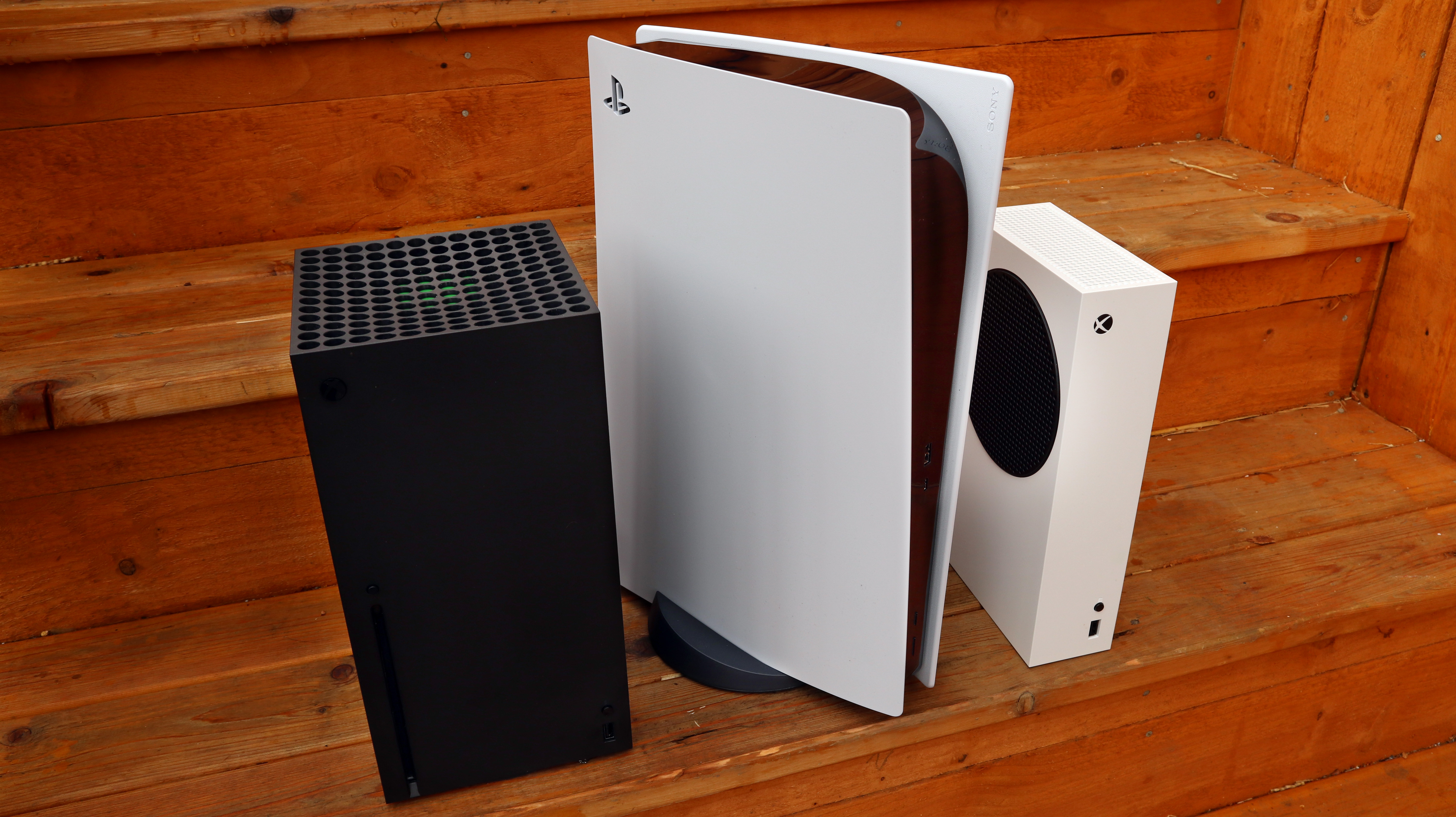
picture of Xbox Series X, PlayStation 5, Xbox Series S
Enlarge / L-R: Xbox Series X, PlayStation 5, Xbox Series S.
Sam Machkovech

Though this year’s newest consoles have only been on store shelves for less than two weeks, we’ve already published tens of thousands of words about the Xbox Series X/S and the PlayStation 5. Between months of tech previews, picture-filled unboxings, comprehensive reviews, coverage of some of the biggest launch games, and more, you could spend all day doing nothing but reading our detailed thoughts about Sony and Microsoft’s new consoles. If you don’t have the time for all that, we understand. That’s why we’ve put together this handy, head-to-head summary comparing the most important features of both systems directly. By the end, we hope you’ll know if it’s time for you to upgrade your console, and which path you should take if it is.

Hardware design

Both the PS5 ($499 with disc drive, $399 without) and the Xbox Series X ($499) are really big. The Series X astounds as a chunky, minimalist cuboid, with a minimum 6″ clearance on any of its sides—making it a nightmare for an average entertainment center’s shelves. The PS5 gets its minimum clearance down to 4.25″, but that comes at the cost of being 50 percent bigger than Series X in total volume. Once you find a place to put either, the other differences boil down to your aesthetic preferences: black monolith with mild green accents, or a curvy popped-collar tower?

Both are quiet (excepting discs spinning in the disc drives) but the PS5 has a slight discernible fan noise, whereas Xbox Series X is literally whisper quiet. While we’ve seen reports about “coil whine” affecting certain PS5 customers, we haven’t been able to duplicate that noise issue.

While those two consoles’ cooling systems are not identical, their silicon makeup is similar enough to explain why they draw very similar amounts of power. Each maxes out at roughly 205W at next-gen games, though they run closer to 190W on average.

Xbox Series S ($299), meanwhile, is as quiet as its Series X sibling (owing to, among other things, an identical 12″ fan system), while shrinking to a form factor on par with 2017’s Xbox One X. The longer we’ve sat with it, the more we’ve grown to like its “Bluetooth speaker” design of a black ring on an otherwise white box—especially as slotted into a crowded entertainment center. Its power draw is also phenomenal, never exceeding 90W on the console’s highest-drawing games.

Hardware power

Put aside all the talk of GCN compute units, RDNA 2 cores, Zen 2 Jaguar cores, and the like. When it comes to running actual games, the Xbox Series X and the PS5 are practically indistinguishable. Third-party titles available on both systems look and run almost identically, and you’d be hard pressed to pick one from the other in blind tests.

Series X power usage
Rest mode 16-30.5W
Rest mode (w/ download) 33-55W
Idle on menu 62W
Netflix 64W
Playing 4K Blu-ray 64-76W
Gameplay (Spelunky X360) 101-104W
Gameplay (Gears 5 XSX) 170-198W
Installing Dark Souls II from disc 70 – 71.5W
Playing Dark Souls II (w/ disc in drive) 103-105W
Series S power usage
Rest mode 8.6-17.5W
Rest mode (w/ download) 16-18W
Idle on menu 31W
Netflix 40W
Playing 4K Blu-ray n/a
Gameplay (Spelunky X360) 53W
Gameplay (Gears 5 XSS) 50-85W
Installing Dark Souls II from disc n/a

Only one title proves an exception at this point: Assassin’s Creed Valhalla. While both PS5 and Xbox Series X target identical graphical settings and not-quite-4K resolutions (and they look good doing so), its Series X version currently struggles to lock to 60fps as well as PlayStation 5 does. That’s not enough data to declare PS5 the “stronger” console, and we’ll be coming back to that question as we compare more third-party games in the coming months.

Compared to their predecessors, games on the new consoles do look better, taking advantage of higher resolutions and graphical techniques like ray tracing (which is especially noticeable in reflections). But depending on the game, the increase in fidelity is more marginal than you might expect for a $500 upgrade. The seven-year-old hardware Sony and Microsoft are looking to replace has aged better than you might have expected, and the mid-generation upgrades that came out in 2016 and 2017 continue to hold up quite well.

Where you’ll see a huge jump in 2020’s consoles is in frame rates. Games like Yakuza: Like A Dragon, Spider-Man: Miles Morales, and Assassin’s Creed Valhalla look quite similar when comparing screenshots across “last-gen” and “next-gen” systems. But the bump from 30 fps on older consoles to 60 fps on newer consoles makes a huge difference when seeing these games in motion.

PS5 power usage
Rest mode 28-32W
Rest mode (w/ download) 42-45W
Idle on menu 67W
Netflix 71-73W
Playing 4K Blu-ray 76-79W
Gameplay (Downwell PS4) 70-76W
Gameplay (Tony Hawk 1+2 PS4) 116-130W
Gameplay (Miles Morales PS5) 156-205W
Installing Knack from disc 124 – 134W
Playing Knack (w/ disc in drive) 116-127W

In the case of some games, like the PS5-exclusive adventure of Demon’s Souls, that extra 60 fps fluidity contributes to atmosphere in incredible ways. But even that game is mechanically identical to its source material, which dates back to PS3. And another Sony exclusive, the surprisingly charming Sackboy: A Big Adventure, is so similar between its PS4 and PS5 versions that we recommend anyone missing out on new consoles rush to play that family-friendly game on their last-gen machines.

All of the new consoles enjoy blistering fast loading times, thanks to the now-standard PCIe 4.0-rated NVMe storage. It’s not quite a return to the “hit power and start playing instantly” days of cartridge gaming, but it’s close.

The PS5 appears to have the loading time edge in some cases (like the aforementioned Assassin’s Creed Valhalla), but the differences across next-gen consoles are minor at this point. Meanwhile, Xbox Series enjoys the benefits of Xbox Quick Resume, allowing near-instant swapping from game to game. on the PS5, you have to endure a (quick) load from the main menu when swapping to a new title, rather than resuming directly from where you left off.

As of press time, though, some Series X/S games choke on this Quick Resume feature. We hope Xbox fixes these edge cases soon, because even with faster storage, PS5 feels sluggish in comparison without its own version of Quick Resume.

One important note: Xbox Series S has been advertised as able to play Series X’s up-to-4K games, only pared down to resolutions ranging from 1080p to 1440p. In action, that sales pitch is mildly misleading, as visual downgrades from X to S also include reductions in shadow resolution, level-of-detail (LoD) scaling, ambient occlusion, and other features, depending on the game. For the most part, we’ve seen identical frame rates between Series X and Series S, which is arguably a bigger deal, but Assassin’s Creed Valhalla remains a striking exception: only 30fps on Series S, compared to 60fps on Series X. Until we compare more next-gen Series X/S games, this issue remains a huge asterisk for the $299 Series S.

https://arstechnica.com/?p=1723766


One hell of a send-off: Pandemic Legacy: Season 0 wraps a stylish board game series

One hell of a send-off: Pandemic Legacy: Season 0 wraps a stylish board game series
Welcome to Ars Cardboard, our weekend look at tabletop games! Check out our complete board gaming coverage at cardboard.arstechnica.com.

When Pandemic Legacy: Season 1 was released in 2015, it was met with a rave reaction from players. A campaign-based take on the original Pandemic, it dropped fans into the familiar role of medics battling to eradicate deadly viral strains before they spread around the globe and destroy humanity.

The game’s biggest draw was a storyline which unfolded over multiple play sessions, with diseases mutating and cities falling into chaos as a sinister conspiracy spread its tendrils across the world. Along the way, players put stickers on the board, destroyed cards, and opened sealed compartments to reveal hidden components, permanently changing the game in response to their own actions. A sequel, Pandemic Legacy: Season 2, took the action decades into the future, exploring a world wracked by the events of the first game. Now, there’s a third and final installment, taking players back to the dangerous days of 1962 and the height of simmering tensions between the United States and the Soviet Union.

Pandemic Legacy: Season 0 revolves around CIA agents tasked with uncovering plans for a powerful new bio-weapon being developed by rogue elements of the Soviet intelligence services. Where the established Pandemic formula saw players zipping from city to city to get rid of plastic cubes representing diseases, here you and your companions aim to clear the board of miniature plastic spies. Let them spread too freely, and they’ll overthrow the capitalist system. More importantly, they will hand you an embarrassing loss.

It’s mostly a superficial change, but it’s far from the only way that Season 0 evokes its Cold War atmosphere. Different locations on its board come with different alignments: Allied, Soviet, and neutral. As enemy agents, you won’t be able to fly freely into Soviet territory, and getting around these restrictions requires setting up teams of local agents, represented by plastic miniatures that look like VW vans. You’ll be able to dispatch them to do your dirty work, assassinating Soviet spooks with ruthless efficiency.

Your objectives for each playthrough also feel suitably CIA-esque. You’ll need to find the locations of enemy assets and infiltrate secret Soviet facilities. Best of all, though, are the high-stakes manhunt missions which see a target such as a defector or double agent start in one city and frantically make their way towards Soviet strongholds while you try to cut off all of their possible escape routes. It makes for a thrilling chase with some genuinely gut-wrenching moments where your quarry slips through your fingers just as you close in to grab them.

What really makes the game shine, though, is what happens between missions. As with previous games in the series, you’ll run through a deck of cards introducing dramatic new plot elements. You’ll add stickers to the board representing ever-tightening Soviet surveillance, making certain cities more dangerous to visit. But what’s most interesting is the ability to upgrade your characters over time. Each comes with a passport booklet with pages for three different identities, all with their own abilities. Over time you’ll add new powers, letting you fine-tune each agent for tasks like hunting down enemies, sharing information with teammates, or recruiting local operatives.

You’ll be able to switch between identities as you play to adapt to the changing situation on the board, and in an inspired touch the game lets you customize your characters’ appearance using layers of stickers. It has no effect on gameplay, but the idea of slapping on a wig and a false mustache to sneak behind the Iron Curtain is undeniably fun.

As you delve deeper into the campaign, the game ramps up its difficulty, and while it’s impossible to go into detail without giving away some important surprises, you can expect to deal with ever-intensifying Soviet schemes and pencil-pushing superiors who seem intent on getting in your way. What begins as a moderately more complicated version of Pandemic morphs into something far meatier and more demanding.

The incremental process of change means you never feel overwhelmed. There are some occasions, though, where it becomes clear midway through a session that you aren’t going to win, and it’s here that Season 0 feels flat, with players aimlessly wandering around the board chasing unobtainable objectives. It feels like going into the second half of a soccer match with your team losing 8-0, although in our campaign it only happened once.

Even when you lose, you’ll progress through the plot. This might mean missing out on some vital intelligence, however, and obtaining and interpreting information can be just as important as what actually occurs on the board. There are smuggled documents, secret plans, eyewitness testimonies, and other clues which you’ll aim to piece together to form a complete picture of what your adversaries are up to.

What might be most impressive, though, is the way the game digs into the interior conflict of its protagonists. There are multiple points throughout the campaign where players’ opinions on different issues have a direct, mechanical effect on the game. And while the plot runs largely on rails, there are a handful of key decisions which lead to a selection of different endings.

If there’s one narrative shortfall, it’s that Season 0 never really addresses the deeper question of whether the ends of all this shady spycraft justify the means. It’s not that the game presents a simplistic good-vs-evil view of the Cold War; its depiction of the CIA is far from heroic, and there are some terrible people on both sides. But the idea of vans prowling Latin America to bump off leftists is distinctly uncomfortable given the real-world history of CIA involvement in the region, even if you manage to assume that the people you’re wiping off the map are in fact secret agents in the pay of Moscow.

Spy fiction of all forms exists on a spectrum. On one side is escapist fantasy like James Bond, on the other are deeper stories exploring a world of mistrust and duplicity, and what happens when we allow people to step outside of legality and accepted norms. Season 0 falls mostly into the former category, and I would have liked to have seen how its blend of narrative and mechanical wizardry handled some deeper, more reflective issues.

Is this enough to negate everything that Pandemic Legacy: Season 0 does well? No. The game is a fitting culmination to a series which has given players a succession of tough decisions, hard-won victories, and agonizingly close defeats. For newcomers, Season 1 is a better place to start in terms of complexity and storyline. But if you’ve been along for the ride from the start, this is one hell of a send-off.

https://arstechnica.com/?p=1724685


College undergrads find hidden text on medieval manuscript via UV imaging

[embedded content]
Rochester Institute of Technology students discovered lost text on 15th-century manuscript leaves using an imaging system they developed as freshmen.

A page from a 15th-century medieval manuscript turns out to contain hidden text that is only visible under UV light. The discovery is due to the efforts of a team of undergraduate students at Rochester Institute of Technology, who built their own multispectral imaging system as part of a class project and managed to complete it despite the ongoing pandemic.

It’s not unprecedented to uncover previously hidden texts on ancient manuscripts. In 2016, an international team of scientists developed a method for “virtually unrolling” a badly damaged ancient scroll found on the western shore of the Dead Sea, revealing the first few verses from the Book of Leviticus. Similarly, in 2019, we reported that German scientists used a combination of cutting-edge physics techniques to virtually “unfold” an ancient Egyptian papyrus, part of an extensive collection housed in the Berlin Egyptian Museum. Their analysis revealed that a seemingly blank patch on the papyrus actually contained characters written in what had become “invisible ink” after centuries of exposure to light.

And earlier this year, we reported on a new analysis using multispectral imaging showing that four Dead Sea Scroll fragments housed at the University of Manchester in the UK—previously presumed to be blank—had readable text written in carbon-based ink, along with parts of characters and ruled lines. One fragment in particular showed the remnants of four lines of text, consisting of about 15 letters. Only one word, Shabbat (Sabbath), was readable, but based on the analysis, Joan Taylor of King’s College London thought the text related to the passages in Ezekiel 46:1-3.

So the RIT undergrads are in good company. Their project began earlier this year. The 19 students enrolled in a course known as the Innovative Freshman Experience, offered by RIT’s Chester F. Carlson Center for Imaging Science. The goal was to bring students from various disciplines together and have them combine their expertise to solve a particular problem—in this case, building a multispectral imaging system to analyze historical documents.

Traditionally, the students would have presented their completed project at the annual Imagine RIT: Creativity and Innovation Festival in the spring. But just as the device was nearing completion, the COVID-19 pandemic hit in March, and the university closed its campus, just like every other educational institution in the US. To compensate, the students in the class divided into four smaller groups, each with a different task. One group created a technical manual for the imaging system, another produced an end-user guide, a third group wrote a research paper, and a fourth produced a video documentary about their project. Coronavirus willing, they’ll be able to present at next year’s Imagine RIT.

“Something really valuable that we’ve done in the absence of being able to work on the system in person is integrate more useful workplace skills into our learning,” Liz Stublen, a photographic sciences student, said in May. “When we were building the system, a few of us were focused on programming and 3D modeling, and now we’ve been able to shift the focus for the whole class to be able to develop their skills in that area. So even though this is not a great situation, we’ve been able to turn things to maximize the benefit from this time.”

Three students in particular—Zoe LaLena, Lisa Enochs, and Malcom Zale—spent their summer completing the system. When classes resumed in the fall they started examining the 15th-century medieval manuscript leaves housed in RIT’s Cary Graphic Arts Collection. The parchment leaves had been acquired about ten years ago from historian and collector Otto Ege, who regularly compiled such leaves from damaged or incomplete manuscripts. The collection has, of course, been studied by many scholars. But this was the first time anyone had looked at the leaves under UV light.

When the students imaged one such leaf, they found that the page was actually a palimpsest, with multiple layers of writing—specifically, the imaging revealed a “dark French cursive,” according to LaLena. During the 15th century, parchment was pricey, so it was often scraped clean and re-used. But even centuries later, a telltale chemical signature remains if one looks at the page in the right spectrum of light. The next step is to use their imaging system to analyze the other 29 known pages from Ege’s collection, which could also turn out to be palimpsests.

“The students have supplied incredibly important information about at least two of our manuscript leaves here in the collection and in a sense have discovered two texts that we didn’t know were in the collection,” said Steven Galbraith, curator of the Cary Graphic Arts Collection. “Now we have to figure out what those texts are, and that’s the power of spectral imaging in cultural institutions. To fully understand our own collections, we need to know the depth of our collections, and imaging science helps reveal all of that to us.”

Listing image by RIT

https://arstechnica.com/?p=1724700


Lost “Sega VR” game unearthed, made playable on modern VR headsets

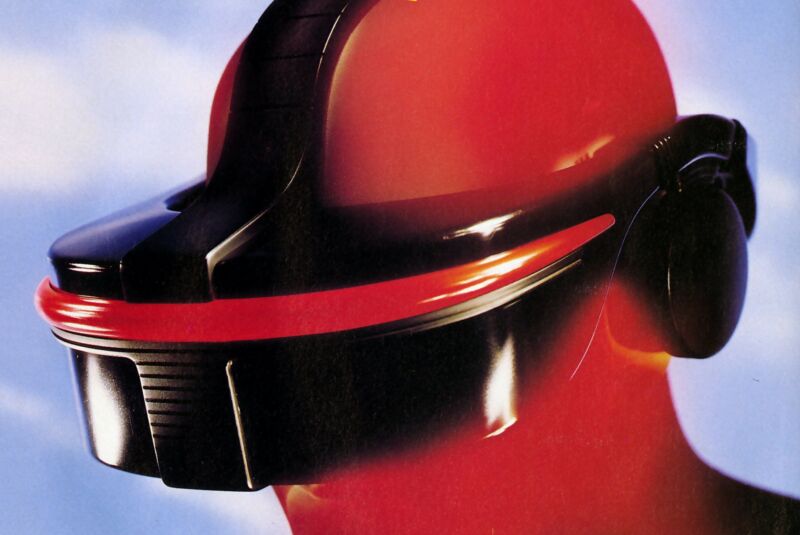
Sega VR was manufactured, advertised, and pushed as Sega's next big thing, up until its unceremonious cancellation in 1994. Twenty-six years later, we finally get to see how it worked.
Enlarge / Sega VR was manufactured, advertised, and pushed as Sega’s next big thing, up until its unceremonious cancellation in 1994. Twenty-six years later, we finally get to see how it worked.

One of Sega’s most mysterious products ever, the canceled Sega VR headset, finally emerged in a “playable” form on Friday thanks to a team of game history preservationists. It’s a tale of a discovered ROM, a search for its source code, and efforts to not only rebuild the game but also adapt existing Genesis and Mega Drive emulators to translate virtual reality calls from today’s PC headsets.

The story, as posted at the Video Game History Foundation’s site, begins with a ROM discovery by Dylan Mansfield at Gaming Alexandria. The game in question, Nuclear Rush, was one of four games announced for Sega VR, a headset system designed to plug into standard Genesis and Mega Drive consoles.

Not quite 72Hz…

Gamers from that era likely heard about Sega VR, as the game publisher’s PR push included plenty of mentions in gaming magazines, a public reveal at 1993’s Summer CES, and even a segment on ABC’s Nightline. But the ambitious device, slated to launch at a mere $199, was quietly canceled, and former Sega President Tom Kalinske eventually confirmed why: researchers found the device made a huge percentage of testers sick with headaches and dizziness.

Today’s discovery explains in part where those sickness symptoms likely stemmed from. By breaking down and understanding the way Sega VR games communicated with a Genesis, and therefore a Sega VR headset, VGHF digital conservation head Rich Whitehouse discovered the headset’s severe limitations: a mere 15Hz refresh for its stereoscopic images, as opposed to the 72Hz minimum for Oculus Quest (let alone the 90Hz standard established by companies like HTC and Valve). Additionally, Sega VR only translated pitch and yaw movement for users’ heads, not roll—and that’s on top of the system already being limited as a three-degrees-of-freedom (3DOF) system, requiring that users stay seated.

How did Whitehouse find out so much about Sega VR’s functionality this many years after the add-on vanished? As it turns out, Mansfield’s day-to-day search for game history errata includes requests to various ’90s developers for whatever old prototypes or code they might have tucked away in a drawer. In the case of Kenneth Hurley, who worked on Nuclear Rush as part of Futurescape Productions, he went one higher and sent Mansfield a CD-ROM dated August 6, 1994—which miraculously hadn’t succumbed to bit rot.

Whitehouse stepped in at this point to figure out how to compile the leftover nearly complete code (dubbed “final” but not “retail final”), which required a mix of C and assembly. Among Whitehouse’s discoveries: the code as written only worked on certain Genesis and Mega Drive hardware revisions, based on how it handles horizontal and vertical scrolling of sprites and assets, which required a minor fix. Also, metadata in the code hinted to a Winter CES 1994 showing for Sega VR that never came to pass.

Could have used an SVP

Though the discovered CD-ROM was missing key Sega VR files (which Whitehouse says would have been named VR.DOC and VR.TXT), Whitehouse was still able to work out how the system would have worked with 16-bit consoles. Sega VR IO would have revolved around the console’s second controller port—though Whitehouse’s explanation doesn’t clarify whether the console’s video-out port would have been redirected to the Sega VR headset or how that would have worked. Additionally, the Sega VR headset would have been fed two 30Hz images, which Nuclear Rush would have then divided further with its 15fps refresh.

While figuring out how to make Nuclear Rush work as a VR experience in 2020, Whitehouse talked to the game’s original lead programmer, Kevin McGrath, who confirmed that his team did a lot of work on Sega VR without actually having a headset to test on—and they invented a test that had the game’s video output flicker between two computer monitors to see how it might do the same with two headset images. Another Sega VR-era game programmer, Alex Smith, confirmed that the team working on Outlaw Racing never even went hands-on with a headset prototype before its project was canned.

The rest of Whitehouse’s work revolved around building OpenVR support into a working Genesis emulator, which included, among other things, doing serious guesswork about how Sega VR’s panels were positioned and shaped, then fixing 1994-era quirks to run more efficiently on modern computers (in part to reduce potential motion sickness from a Genesis-era game locked at 15fps). The resulting emulator and a pair of compiled Nuclear Rush ROMs are available for download and testing from the VGHF article.

[embedded content]
Nuclear Rush running on an emulator, as presented by Richard Whitehouse.

Ars Technica has tested this combination of emulator and ROM on a Windows 10 PC running an HP Reverb G2 headset, and I can confirm that the game plays about as well as you might expect: it’s a rudimentary 3D tank game, as if Atari’s arcade classic Battlezone had been rebuilt with Genesis-era sprites and palettes, but it’s all sprite-field trickery, not the rudimentary polygonal stuff of early ’90s fare like Star Fox or Virtua Fighter. (Sega VR games clearly weren’t being bulked up with extra on-cartridge chips like Sega’s SVP, used in the Genesis version of Virtua Racing.)

The resulting restored game isn’t a revolutionary gameplay experience by any stretch. Still, the combined efforts of everyone listed above brought life back to a game whose original version would likely have made you sick. Thankfully, modern hardware (and its enterprising users) can revive canceled games in ways that won’t make game history aficionados toss their cookies, and that’s a testament to the modern game-preservation movement as a whole.

Check out the whole intriguing story, complete with a ridiculous amount of technical information, at the Video Game History Foundation.

https://arstechnica.com/?p=1724674


Challenge accepted: Inventing a plausible far-flung future for ST: Discovery S3

Sonequa Martin-Green plays Michael Burnham in the third season of <em>Star Trek: Discovery</em>, which is set over 900 years in the future from the first two seasons.
Enlarge / Sonequa Martin-Green plays Michael Burnham in the third season of Star Trek: Discovery, which is set over 900 years in the future from the first two seasons.

Star Trek: Discovery started out as a prequel to the original series, set roughly 10 years before Captain Kirk and his crew took over the USS Enterprise and boldly went where no man had gone before. But we’re now in uncharted territory with ST: Disco S3, which rocketed the ship and her crew over 900 years into the future. That posed a considerable creative challenge to stay true to the ethos of the franchise while reimagining its future—a challenge facing not just the writers, but series prop master Mario Moreira and science consultant Erin MacDonald as well.

(Some spoilers for S2 and the first five episodes of S3 below.)

The series stars Sonequa Martin-Green as Michael Burnham, an orphaned human raised on the planet Vulcan by none other than Sarek (James Frain) and his human wife, Amanda Grayson (Mia Kirshner)—aka, Spock’s (Ethan Peck) parents. So she is Spock’s adoptive sister. As I’ve written previously, the S2 season-long arc involved the mysterious appearances of a “Red Angel” and a rogue Starfleet AI called Control that sought to wipe out all sentient life in the universe.

The big reveal was that the Red Angel was actually a time-travel suit worn by Michael’s biological mother. She had accidentally jumped 950 years into a bleak future in which Control had achieved its nefarious goal and had been traveling through time leaving signals (the Red Angel visions), hoping to alter that future. In the S2 finale, Michael donned a copy of her mother’s suit to lead Discovery over 900 years into the future. The crew of the Enterprise told Starfleet that Discovery was destroyed in the battle and were ordered to never speak of the ship or her crew again.

In the S3 opener, Michael (and, eventually, Discovery and her crew) arrives in the future and finds that Control’s plan has been thwarted: life still exists. But the galaxy is very different thanks to something called The Burn, a catastrophic event that caused all the dilithium in the Milky Way to explode and destroy much of Starfleet in the process. In the aftermath, with no warp drive possible, all the planets have become disconnected and are no longer governed by the Federation. Michael does, however, manage to locate one sole Federation liaison on a remote space station, with the help of a new ally, Book (David Ajala).

All the props

The first two seasons of Discovery were akin to period pieces, according to Moreira, since they were set 10 years before TOS. That meant reverse engineering a lot of the props, like the phasers, tricorders, and communication devices. (The opening credits pay homage to that rich franchise history.) Jumping 900+ years into the future freed Moreira and his team to be a bit more creative, although the iconic Star Trek technologies are still preserved.

For the futuristic tech, an overall design principle did gradually emerge: rather than having many different kinds of tools, Moreira and his team envisioned a future where the multipurpose tool was the norm. So the new Federation Tricon badges are “hubs to the ship’s systems,” Moreira told Ars. They serve both communication and transporter functions and can link to tricorders as well, all in one simple, compact device. Ditto for the new medical tool, which was initially nicknamed “Beyond One” in the writers’ room until everyone eventually settled on calling it the “medical PIN” (poly-inoculator).

“It’s your tricorder, it’s an anesthetic, it’s a laser scalpel,” said Moreira. “It’s everything in one, because everything in the future is about getting down to a minimal item that can do the maximum amount of work.”

The biggest technology leap this season (thus far) was the introduction of “programmable matter,” which is basically a highly advanced version of the nanotechnology and 3D-printing capabilities of today. Programmable matter can take almost any form: it can be solid, liquid, or even holographic. It’s a key feature of the control console for Book’s ship, but it’s also a huge advantage when it comes to multipurpose tools.

“A pre-programmed amount of matter that’s carried on a person can become a pre-programmed shape,” said Moreira. “You’d always have your tools on you,” but you wouldn’t need to be carrying a number of individual tools.

His team also redesigned the iconic Star Trek phasers as programmable matter units. “The previous phaser on ST: TNG was nicknamed ‘the Dolphin’ by fans because of its shape,” Moreira said. “We knew we wanted ours to be tougher than that. We had already nicknamed it the ‘Great White Shark,’ so we have elements of the shape of a shark body.”

Moreira is especially proud of the hand cannons featured in the first episode (“That Hope Is You Part 1”). “We were inspired by the idea that the guards would have this wrist tech on, and when their phasers came out, it would realize the shape of their wrist,” he said. And thanks to recent advances in paint finishes and 3D printing, “All those hand cannons you saw on-screen were both foam stunt versions and safe (‘hero’) versions,” said Moreira. “There was no need to switch back and forth.”

In the fifth S3 episode (“Die Trying”), the people of Discovery are finally reunited with the remnants of Starfleet, which is in the midst of a medical crisis. Anxious to prove their usefulness (and trustworthiness) to a suspicious Starfleet Commander-in-Chief Vance (Oded Fehr), Burnham, Dr. Hugh (Wilson Cruz), and security officer Nahn (Rachael Ancheril) use Discovery‘s spore drive to travel to the USS Tikhov. The Tikhov houses the seed archives that might hold the cure for whatever disease is ravaging Starfleet.

The concept of the seed archives has a real-world counterpart in the Svalbard global seed vault in Norway, which provided much of the inspiration for Moreira’s design. At Svalbard, seeds are stored in sealed three-ply foil packages, which in turn are placed into plastic tote containers on metal shelving racks in refrigerated rooms. To update the concept for the series, “We designed single-unit refrigeration pieces that could hold liquid inside,” said Moreira. It looks like a futuristic, high-tech collection of safety deposit boxes inside a bank vault.

Science serves the story

For science consultant Erin MacDonald, an astrophysicist by training, working on Star Trek: Discovery is a dream come true. (She has also consulted on several episodes of Orbital Redux.) She regularly cites Captain Kathryn Janeway of Star Trek: Voyager as inspiring her to pursue a career in science, along with The X-Files‘ Dana Scully. So seeing an upgraded, future-generation version of the USS Voyager in episode 5 was a particular thrill.

Despite its futuristic setting, Star Trek has always taken a fairly serious approach to how it incorporates cutting-edge science and technology—that’s one reason so many working scientists, like MacDonald, cite their love of the franchise as a main reason they chose to make science their career.

“We’re on multiple generations of people who have gone into science because of Star Trek, and I think a lot of the creators and writers want to keep that legacy going,” MacDonald told Ars.

The challenge for a Hollywood series like Discovery is to be entertaining while still including cool, solid science that could inspire future generations. It’s a delicate balance, and ultimately the story comes first. That means occasionally being willing to stretch the science a bit in terms of plausibility when the narrative requires it. “As long as it’s a conscious decision and you want to have that factored into it, you can work around the science,” said MacDonald.

One of the most successful S3 examples of keeping the science reasonably accurate, while still in service to the story, is when Michael arrives in the future a full year ahead of the Discovery crew, even though they entered the wormhole just a minute or so apart. It’s an example of gravitational time dilation, a central feature of Albert Einstein’s general theory of relativity—one of MacDonald’s scientific specialties. Einstein unified the three dimensions of space with the fourth dimension of time, and this spacetime will warp and stretch in the presence of a mass or equivalent distortion. “So when you’re inside a gravitational well, you experience time differently than someone outside of that gravitational well,” said MacDonald.

Transporter accidents

This particular trope is a common feature in the Star Trek franchise. In the case of ST: Discovery, “As they’re going through the wormhole, there is an extreme stretching of spacetime,” MacDonald said. “So as Discovery is still in the wormhole, the crew were experiencing time differently than Burnham, who came out first and [thus] was outside the wormhole. It’s a great way of implementing some known physics and taking it to the extreme degree as a storytelling tool.”

MacDonald’s influence is particularly evident in the fifth episode, in which Michael and her cohorts arrive at the Tikhov to find all the occupants are dead except for one man, who exists out of phase. They learn that the fatal event was a coronal mass ejection (CME), a massive release of plasma from a star like our Sun that can give rise to geomagnetic (Solar) storms when they hit Earth’s magnetosphere. (The largest Solar storm recorded on Earth occurred in 1859 and was known as the Carrington Event. It knocked out telegraph systems and was accompanied by strong auroral displays.) The sole survivor aboard Tikhov happened to be mid-teleport into the seed bank when the burst of radiation hit. So he survived, albeit trapped out-of-phase.

“We all love our transporter accidents,” said MacDonald, “so this is just another great one for the books.”

Thus far, Star Trek: Discovery continues to withhold any further details about the specifics surrounding The Burn, although fan theories abound. So does MacDonald have any scientific insights into what might have caused The Burn? “No comment,” she laughed. “Anything I say is going to be a definitive answer.” Her advice: “Stay tuned.”

New episodes of Star Trek: Discovery‘s third season air every Thursday on CBS All Access.

https://arstechnica.com/?p=1724205


Stadia game streaming will come to iOS via Web browser

After over a year of being barred from iOS, Google’s Stadia game-streaming service will soon be available on the mobile platform as a progressive Web application running through a browser, Google announced today. Testing for the mobile Web version of the service will begin this week, with a wider rollout planned for “several weeks from now.”

The move to a Web app for iOS support gets around the onerous restrictions Apple recently placed on game-streaming apps distributed through the iOS App Store. Such apps would need to submit each individual game for review by Apple for listing in a distinct App Store product page.

Xbox Chief Phil Spencer said last month that Microsoft would be using the same Web-based workaround to get its Project xCloud streaming service on iOS sometime in 2021. Amazon’s Luna streaming service has support for iOS via a Web interface.

Back in September, developer Zach Knox launched an iOS Web browser called Stadium that was specifically designed to work with Stadia’s existing Web-based interface (as it does on PCs). That browser was pulled from the App Store in October over what Apple said were issues with its implementation of Apple’s WebKit API for controllers. The specialized browser returned to the App Store earlier this month with the issue fixed.

Struggling for attention?

One year after something of a rough launch for Stadia, Google is also giving away a free “Stadia Premiere Edition” package (including a Chromecast Ultra and a Stadia controller) for anyone who preorders Cyberpunk 2077 on the platform before December 18. That deal—which packages hardware usually valued at $100 with the purchase of a $60 game—suggests Google may be struggling to sell the Premiere package at its current price.

Today also marks the first day that Destiny 2: New Light is available for free on the Stadia platform. Anyone with a Gmail address should be able to play the game instantly with this link. We’ve said in the past that offering instant, free access to games could be a strong differentiator for Stadia, but at this point it may be too little, too late.

Google still hasn’t publicly discussed how many players have tried Stadia, subscribed to Stadia Pro, or bought any of the games on the service. Analytics firm Sensor Tower estimated that roughly a million people had downloaded the Stadia mobile app as of April, roughly six months after the Stadia’s launch and just after the rollout of the service’s free tier. And an Ars analysis from January found that only a few thousand people were playing the free copy of Thumper that was included with their Stadia Pro subscription that month.

Google is also touting Stadia’s selection of over 80 games currently available on the service, with over 135 total expected by the end of the year. For context, the Xbox One had about 126 games available by the first anniversary of its late 2013 North American release, while the PlayStation 4 had roughly 80 at the same point in its lifecycle. Google also touts that 31 of those titles are included if you sign up for a $10/month Stadia Pro account today and that 15 of them are “First On or Only On Stadia.”

Listing image by Kyle Orland

https://arstechnica.com/?p=1724355


Wonder Woman 1984 will reach theaters, HBO Max the same day: December 25

Wonder Woman 1984, now coming to HBO Max the same day it hits theaters.
Enlarge / Wonder Woman 1984, now coming to HBO Max the same day it hits theaters.
Warner Bros. Pictures

After weeks of rumors, a leaked trailer has let the golden lasso out of the bag: Warner Bros. Pictures’ oft-delayed film Wonder Woman 1984 has finally conceded to the pandemic with a massive digital launch plan.

The film’s December 25 launch date had been previously announced after being bumped out of June, then once again out of October. That Christmas launch date remains fixed for theaters around the world—including those in the United States that remain open in the face of rising COVID-19 contraction rates. The news today is that HBO Max, which currently operates exclusively in North America, will additionally serve the film on the same day—without charging existing subscribers any extra fee on top of its $14.99/mo rate.

This plan differs from Disney’s September launch of its live-action Mulan remake, which was restricted to theaters in countries without the paid Disney+ subscription service. In territories with Disney+, on the other hand, subscribers could pay a one-time fee of $30 to access the film for unlimited viewing, or wait until December 4 to access the film as part of the standard Disney+ $7.99/mo service.

Wednesday’s Wonder Woman 1984 news came once fans discovered an unlisted YouTube video advertising the change, which DC Studios and Warner Bros. Pictures uploaded without password protection before taking it down as word spread. Fans were quick to grab an image of the advertisement’s final screen, confirming a December 25 launch for both theaters and “HBO Max at no extra cost to subscribers.” Though the video remains hidden as of press time, outlets like Variety and Deadline immediately moved forward with their own confirmations that the news is legit—and follows theater operators being told the news.

Shortly after those reports went live, WW84 Director Patty Jenkins offered her own statement via social media:

The time has come. At some point you have to choose to share any love and joy you have to give, over everything else. We love our movie as we love our fans, so we truly hope that our film brings a little bit of joy and reprieve to all of you this holiday season. Watch it in theaters, where it is made safe to do so (check out the great work theaters have done to make it so!). And available in the safety of your home on HBO Max where it is not. Happy holidays to all of you. We hope you enjoy our film as much as we enjoyed making it.

[Update, 8pm ET: The trailer in question is now live, and it’s exactly the same as the one posted in August but now with an HBO Max notice at the end.]

That sets up arguably the largest streaming-film launch face-off we’ve ever seen, with Disney-Pixar’s animated film Soul launching on Disney+ the same day. (It, too, eschews the Mulan model, coming as part of standard Disney+ subscriptions.)

https://arstechnica.com/?p=1724210