The PlayStation 5 has a hidden Web browser; here’s how to find it

Officially, the PlayStation 5 doesn’t include a Web browser, marking an apparent software downgrade from the PlayStation 4. But Ars has discovered the PS5 does actually include a limited, hidden Web browsing interface that you can use to load up generic websites on your TV in a pinch.

Getting in

The easiest way to get into the PS5 Web browser is to go to the system settings and load up the User’s Guide. Unlike most other informational menus on the system, this one loads up inside a Web browser that points to the live URL at manuals.playstation.net.

If you visit that address from a standard PC or mobile Web browser, the site gives an error message. But if you access it from the PS5 menu, you see a picture explaining “how to navigate this user’s guide” with the DualSense controller, as seen above.

While this user’s guide is fun (and informative) to play around in, it doesn’t offer any external links that could provide a hook to the wider Web. And without any option to just type in a generalized URL via the PS5 interface, the User’s Guide is of limited use for surfing the information superhighway (as all the hippest ’90s kids would say).

To get that kind of wider access, you have to scroll down to the Users and Accounts menu on the PS5 and head to the “Link with Other Services” option. There, you can choose to link to a Twitter account, which brings up a webpage with a Twitter login prompt.

As designed, this page is meant to log you in to Twitter, link your account to the PS5, and spit you back to the system menu. However, if you click on the small Twitter icon in the top corner, you go instead to Twitter’s standard Web interface, just as it would look on any other browser. Log in from there and you get full access to Twitter through the PS5’s Web browser.

Though you still can’t type into the URL bar in this interface, Twitter.com offers (slightly cumbersome) access to the wider Web through clickable links in tweets and profile descriptions. If the site you’re interested in has a Twitter account (or is simply discussed on social media at all), finding those links is usually as simple as typing your intended target into the Twitter search bar.

You can even plug in a USB keyboard to make the searching simpler and/or hop through links with the arrow and Enter keys. USB mice don’t seem to work with the PS5 browser, though—you still need to use the DualSense joysticks to scroll or move the on-screen pointer.

Testing the Web waters

After a bit of spot testing, we found that the PS5 Web browser seems to work just fine for pages that are primarily text and images. Multimedia and/or interactive pages were a bit more hit or miss, though.

Video sites like YouTube, Vimeo, and Twitch worked without much issue on the PS5, complete with sound, though trying to go “full screen” with a video failed on each one. Music streaming sites like Spotify, Soundcloud, and Bandcamp, on the other hand, could generally load the interface but couldn’t actually play any music through the PS5 in our tests.

Web-based games were also pretty spotty in our PS5 browser tests. Games and/or emulators that are coded in pure HTML and Javascript seem to load, though controls were an issue unless they’re designed to work with just a keyboard. Games that require WebGL, Flash, or other fancier Web-based libraries seemed to fail, though. That includes the Internet Archive’s massive library of emulated software; the site’s Web-based implementations of DOSBox and MESS/MAME seemed to freeze immediately after loading assets on the PS5.

When it comes to productivity sites, I was surprised that I could log in to Ars’ Slack Web interface and even type to my co-workers from the PS5. Ars Technica’s WordPress-based Content Management System loaded, too, though I decided to actually compose this post on a PC (after struggling to write a similar post on an Xbox One seven years ago).

Trying to write on Google Docs, though, led to an error asking me to upgrade my browser (if only that were possible) and an inability to type in the main composition window. The site’s top menu worked just fine, though, so I could make a complete document by inserting Web images and “special characters” one by one on the PS5 if I really wanted to.

Why is it hidden?

It might seem odd for Sony to build a decently functional Web browser into the PS5 and then hide it away where most users will never really use it. It might seem especially odd since the PS4 featured a fully supported Web browser complete with URL bar and quick access to “frequently used pages.” It seems odder still when you notice the PS5 system menu actually includes a “Web Browser” settings section where you can disable JavaScript, delete cookies, and “prevent cross-site tracking.”

That said, for Sony to upgrade the PS5 browser from its current “ramshackle interface for the User’s Guide and Web service logins” to “fully featured browser that works reliably across the Web” would probably take a decent amount of effort (and customer support). And Sony has recently suggested that putting in that effort just isn’t a priority at the moment.

“Currently, we don’t intend to include a Web browser in PS5,” Sony Senior Vice President Hideaki Nishino said in a recent interview with Japanese site AV Watch (as translated by Twitter user Nibel). “We have doubts about whether a Web browser is necessary for a game console as an app, so we’ll have to wait and see.”

(On the Xbox One and Series S/X, third-party browsers like Monument can serve your browsing needs nicely).

For now, if you’re desperate to load up a webpage through your PS5 for some reason, the workaround discussed above will let you do so. But don’t be surprised if that’s the closest we get to official support for PS5 Web browsing in the near future.

https://arstechnica.com/?p=1722534


Spencer: Microsoft almost abandoned Xbox brand after the Xbox One launch

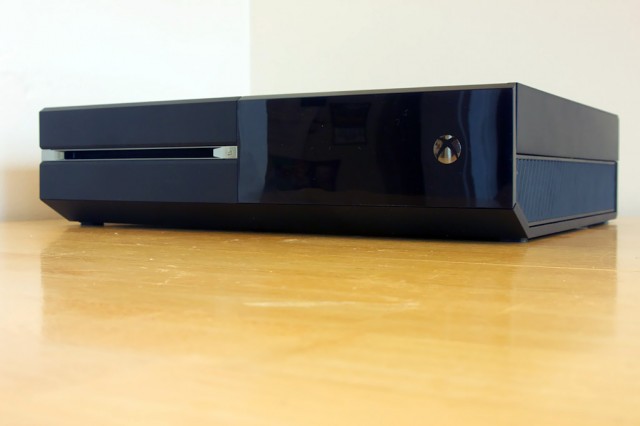
This could have been Microsoft's last game console if things had gone a bit differently at the company in early 2014.
This could have been Microsoft’s last game console if things had gone a bit differently at the company in early 2014.

Today Microsoft celebrates the start of its fourth (or fifth?) generation of video game console hardware with the launch of the Xbox Series X/S. But Microsoft Xbox Chief Phil Spencer says the company’s gaming efforts almost didn’t make it to this point, and Microsoft was considering abandoning the console space just after the 2013 launch of the Xbox One. In an extensive interview with Shacknews, Spencer looks back a bit at the tumult within Microsoft in general (and the Xbox division in particular) leading up to the Xbox One rollout. The retirement of Xbox President Don Mattrick in July of 2013, just after the Xbox One’s troubled E3 debut, left planning for the Xbox One launch “distributed amongst the company in what I would say is a way that wasn’t really feasible for Xbox,” Spencer said.

With just months to go before launch when Mattrick left, control of the Xbox brand was splintered across three teams: a platform team headed by Marc Whitten; a first-party games team led by Spencer in “another” part of the company; and a separate marketing team that had been “moved out” from the rest of the Xbox planning. “I don’t think it was the best move for stability of our launch,” Spencer recalled.

While the splintered team managed to launch the Xbox One “mostly on time” that holiday season, as Spencer put it, that lack of leadership meant that there were “some of the parts of the platform that weren’t completely done when we launched.”

Former Xbox executives have previously reflected on the problems during the pre-launch period for the Xbox One as well, especially the rollout and subsequent reversal of digital licensing policies that would have let game publishers restrict used sales of physical game discs. “Certainly our messaging was horrible,” former Microsoft Director of Product Planning Albert Penello told Ars in an interview at the time. “While the intent was good… we didn’t deliver what our fans wanted,” former Microsoft Corporate Vice President for Windows and Devices Yusuf Mehdi said in a LinkedIn post years later.

Do we keep going?

By early 2014, a few months after the Xbox One launch, Whitten had left for Sonos, and Spencer was the one left to pitch the value of the gaming division to newly named Microsoft CEO Satya Nadella. “Then the question is, do we go forward with Xbox?” Spencer said. “Because we’re getting really outsold by PlayStation in the market at this point. Do we stay invested in it? Or do we make a different decision?”

While Spencer said he knew he was going to stay in the game business, at the time he thought it was far from clear if there would be space for him to do so at Microsoft. “I think the question was, is the company going to stay in this space?” he said. “And then, if so, you know, what’s my role?”

[embedded content]
Microsoft Head of Xbox Phil Spencer talks about how the Xbox One launch almost killed the Xbox brand.

Spencer said that at the time, Nadella “didn’t quite understand [the gaming division] yet, not from an intelligence standpoint, but he just hadn’t been close to it.” Still, Nadella decided to give the division his continuing support, letting Spencer head up a reunified Xbox team. “I think the reason I ended up in the job, frankly, was the other leaders were gone,” he said. “I tease myself that I was the last person left at the table, and there’s some truth in that. I want to make sure I keep my ego in check.”

The full interview contains a lot more details about Spencer’s history at Microsoft and the philosophy behind the Series S/X and Microsoft’s focus on Game Pass subscription plans for game access. It’s well worth a read if you have the time.

https://arstechnica.com/?p=1721825


Assassin’s Creed Valhalla review: A Viking quest worth sinking your axe into

In <em>Assassin's Creed Valhalla</em>, Eivor reps the Raven Clan while storming 9th-century England the only way a Viking knows how: By swinging axes, making pals, and drinking mead.
Enlarge / In Assassin’s Creed Valhalla, Eivor reps the Raven Clan while storming 9th-century England the only way a Viking knows how: By swinging axes, making pals, and drinking mead.

Before I go into everything about Assassin’s Creed Valhalla—the writing, the action, the open-world jank—I want to offer an unusual preface. Basically: Gosh, I like this game.

It’s a rare earnest turn for me, especially when I’m talking about open-world Ubisoft games. I try to find a fair-and-balanced way to talk about their hours of gameplay, and I respect the heck out of how their multi-studio teams slam together so many moving parts into a giant, playable romp. But personally, I can get bored with them—same fetch quests, same ho-hum mechanics and checklists, year after year. After playing only a few hours of these games, I feel less like an adventurer and more like an errand boy or girl. None of their high-end rendering or historical references can change that feeling.

Yet the Assassin’s Creed series has been evolving into AC Valhalla‘s shape for some time, which we last saw from the character-driven surprise of 2018’s AC Odyssey. This year’s model is undeniably messy and imperfect, and it doesn’t surpass Ghost of Tsushima as my favorite open-world romp so far this year. But it earns my recommendation for getting enough things right—and doing so with more nuance than a phrase like “a more RPG-like Assassin’s Creed” implies.

Equal parts diplomacy and pillaging

Assassin’s Creed: Valhalla product image

Assassin’s Creed: Valhalla

(Ars Technica may earn compensation for sales from links on this post through affiliate programs.)

We’re now roughly 7,000 games into the series, so if you don’t know the basic drill, check any of our older AC reviews. In short: once again, you control a “chosen one” warrior in a real-world historical era, as dramatized for the sake of a video game. You’re occasionally interrupted by a modern-day plot about researchers who dive into ancient warriors’ DNA to wage war against a global, generations-deep conspiracy theory. This offers enough wacky plot hooks for anyone invested in the series. But mostly, you’re back in time juggling a mix of open-world traversal, stealthy Spider-man crawls around massive historical sites, and all kinds of murder.

In AC Valhalla, this formula lands in 9th-century England, where you’re cast as Eivor, a high-ranking warrior in a band of Norse Vikings. This historical angle obviously means more beards, axes, and mentions of Odin than in any AC game before, which I can get down with, but the plot also hinges on the real-life immigration of Viking bands to begin new lives in other nations. This does something new for the AC series: it creates a home base. Eivor and her brother Sigurd have their hearts set on winning over England’s “unpacified” kingdoms with equal parts diplomacy and pillaging, and both angles are helped by a central base for recruiting, resting, and gathering strength.

Sure, growing your home settlement (named Ravensthorpe, after your clan’s affinity for ravens) amounts to a glorified menu system. Gather enough in-game resources to build a fishery, for instance, and you get access to the game’s fishing mini-game. Other buildings do everything from adding cosmetic options to unlocking quest lines. But unlike the home bases found in older entries like Assassin’s Creed II, this one has much more personality and unlocks brand-new gameplay features—and makes me wish we didn’t have to wait so long for Ubisoft to toy with the concept again. It’s nice to have a hub that always welcomes your hero with open arms, full of town-specific NPCs and past adventuring companions alike, and it fits into the game’s expanded emphasis on narrative.

Trash talk: Two thumbs up

Speaking of: if you were to think of AC Valhalla as a cable TV series’ single, lengthy season, you’d land somewhere between SyFy and AMC, and closer to the latter. Its reams of dialog and cast of voice actors deliver about as well as you might expect from over 30 hours of primary and secondary quests. It’s perhaps easiest to compliment the game’s narrative by way of elimination: one character, who appears in modern-day flash-forward sequences, is a travesty in terms of voice acting and dialog. I point that out because her misstep is the only glaring example I can think of in a cast of hundreds. Everyone else receives ample breathing room to establish traits, quirks, and motives, often broken out in mid-mission dialog passages or optional Q&A moments, and I appreciated how each in-game “chapter” of quests (usually two to three hours of adventuring) introduces and establishes at least one interesting character, if not a few.

I am also compelled to praise the game’s Viking-proud propensity for vulgar and sexual banter. Ubisoft’s narrative team was given full rein to let men and women alike revel in the brutal realities of battling as a Viking and celebrating with booze, dance, and outright sexual thirst as appropriate (though always with words, not with awkward polygonal sex). AC Valhalla is a rousing success in terms of going rated-hard-R with its dialog without coming off as sophomoric or leaning on punching-down humor.

Plus, roughly every hour in this game, you’ll be treated to a shouting match between two very angry people—sometimes two blood-stained warriors, but more satisfyingly between a fighter and an impish noble—that calls for a battle to the death. The trash talk that plays out in these encounters is somehow always brutal, vulgar, and darkly hilarious. That this quality doesn’t waver by the game’s end is a testament to Ubisoft’s Viking interpretation of “yo momma” fights. After seeing reports about Ubisoft woes in terms of management and HR, I have to wonder if lower-rung Ubisoft developers used this game’s pre-battle face-offs as a way to subtweet at their bosses. If so, I hope it felt as good for the devs to record these lines of dialog as it was for me to listen to them.

A refreshing perspective on side quests

That dialog is meaningless without an enjoyable game attached, and AC Valhalla gets just enough right to keep you mashing away at a controller for dozens of hours. Much of that boils down to the usual AC open-world formula of quests, combat, puzzles, and mysteries, which Ubisoft has honed to a mostly steady sheen. But I was surprised by the way one major tweak to the games played out: emergent missions.

Your average on-foot march, horse ride, or longship charge through the Dark Ages will include some form of organic interruption. Ubisoft knows where you’re likely to go in terms of valleys between massive mountains or direct paths between primary mission objectives, and it uses obvious visual and audio clues to nudge you toward passers-by in need of help. That’s not anything new in this genre, but oftentimes, such an interruption dumps a new “quest” and list of objectives into your pause menu. Like, “I’m on my way to install a puppet king, and you need me to go to which five chapels to interrupt impure marriages, m’lord?!”

AC Valhalla is careful not to interrupt your noble journey in such a manner. Instead, the people you meet along your path offer one-and-done requests, which you complete in the vicinity you find them in. As an example, if you run past a crowd of children while holding two axes and looking determined, those children will lose their minds—you’re the closest thing to Lebron these kids are going to see on an average, disease-filled day—and ask to play with you. Sometimes, this will turn into a makeshift game of hide-and-seek, which makes you flex your arsenal of sneaking moves. Other times, they’ll want to pantomime war games, so you’ll “fight” wooden dolls staged nearby.

“Nearby” is an operative word: side-quest objectives, with very few exceptions, do not derail your primary progress or make you fast-travel to another part of the map. But Ubisoft is also mighty clever about what these tasks entail. With less distance to travel, the side-quest tasks you’re given do not light up as icons on your map or appear as vague clues in a text sidebar. Instead, you’ll get a spoken prompt from the questgiver, then look around their vicinity to find and resolve the objective. Here’s one of my favorite examples: early on, a young man says he seeks to engage in an honorable battle; your hero suggests that the man fight a woodland creature as a baby step into such battle-hardened glory, and he agrees. At this moment, you hear some wolves in the distance, and if you run to them, they make chase. The idea: lead the wolves to the man so he can battle them. (This is… not exactly how the quest plays out, but I’ll leave its resolution unspoiled.)

With these side quests, Ubisoft’s quest developers break the mold of the average open-world quest—and seem to openly have fun doing so. Primary objectives, after all, still require romping through massive cities, epic battles, and “defeat three warlords before you continue” kinds of sprawl and movement. You’ll still check your map for icons and guidance to accomplish those, but since side quests are designed that much differently in AC Valhalla, they can be much quirkier by default—and in ways that don’t turn out annoying or tedious. Like the time I had to carry a guy’s barrel of apples down a half-mile stretch of road and… nothing else happened. On one hand, this quest toyed with my expectation that carrying apples would devolve into, say, a fight against a bear (which it didn’t). On the other, the narrative team took advantage of my rapt attention to host an odd conversation, beginning with a man’s love for apple orchards and ending with a sweet conversation about differing religious beliefs. How about dem apples?

https://arstechnica.com/?p=1721602


Mortal’s brooding take on Thor is the antithesis to Marvel’s incarnation

[embedded content]
Nat Wolff stars in Mortal, a new fantasy action film inspired by Norse mythology.

A young American man hiking through Norway’s countryside just might be the modern incarnation of the Norse god Thor in Mortal, an intriguing new film from Norwegian Director André Øvredal. This is definitely not Marvel’s version of Thor, and while it shares a basic premise with the recent Netflix YA drama, Ragnarok, both visually and tonally, it’s a very different beast.

American actor and singer Nat Wolff stars as Eric, whom we first meet walking through the woods of the island of Askøy, near Bergen. He dreams of a fire breaking out and finds that fire is real when he awakens—and that he has an odd, painful wound on his ankle. Limping into town for provisions, he is confronted by local teenagers, one of whom mysteriously collapses and dies just from touching Eric. This brings him into police custody, where he meets a young psychologist named Christine (Iben Arkelie). She discovers that he has unusual electromagnetic powers that tend to run out of control whenever Eric’s stress and anxiety ramp up—which, alas, is quite often, given his circumstances. Christine seeks to help him control it; a US Embassy rep named Hathaway (Priyanka Bose) wants to control Eric, and if she can’t—well, she’ll just have to take him out (or try).

As a filmmaker with a foot in both Hollywood and his native Norway, Øvredal also brought us last year’s Scary Stories to Tell in the Dark (adapted from the series of children’s books from the 1980s by the late amateur folklorist Alvin Schwartz) and the 2010 dark fantasy/mockumentary Trollhunter. (It’s fantastic, if you haven’t seen it.) Next he’ll be adapting Stephen King’s 1979 dystopian horror novel, The Long Walk (as always, coronavirus willing). We sat down with Øvredal to learn more about the process of making Mortal.

Ars Technica: What drew you to this particular story, which is almost an anti-Marvel version of Thor? It’s a much more dark origin story, driven by tragedy.

André Øvredal: There is no way to compete with Marvel or any of these big blockbuster movies. So to do the opposite was always the thing. I just wanted to tell a story in the Northern mythology landscape that wasn’t the obvious one, that was something slightly different. To create a story about a modern-day ancestor to that world felt like something intriguing. And I love the idea of just starting somewhere you don’t understand: create a mystery, to try to open that mystery up as the first act proceeds, and eventually fully reveal more of what this really is about. I love movies that do that myself. So, just trying to do what I love. I wanted to make a very intimate character story, a very small movie, but one that is entertaining and fun and exciting as well.

Ars: There’s a certain minimalist restraint to the film, and you don’t rely on flashbacks to gradually reveal the underlying mystery, which seems like an unusual choice. 

Øvredal: I think unless the movie is structured for flashbacks—which some movies are and they’re great, from Citizen Kane to Goodfellas, which works brilliantly—throwing in flashbacks to explain something is the worst kind of storytelling I know. I hate it. And I like minimalistic visual storytelling where the images tell the story, and you juxtapose things and you let the audience put things together—or not even put them together. Sometimes they don’t have the information they need. It becomes something that they’re teased with for a while. In Mortal, there isn’t a word spoken in the first 10 to 12 minutes of the movie. I’ve seen movies do that, and I’m very fascinated with how that works, and I was trying to do something similar.

Ars: Naturally, you’ve got all that gorgeous Norwegian scenery, but I was impressed with how you extended the minimalist feel to the special effects—ionized air, levitating water drops, and of course, quite a bit of lightning. It gives the film a very distinctive look. 

Øvredal: I wanted the film to look elegant and to have two very distinct points of view. One is the large scale, where sometimes we’d use as wide shots and lenses as we possibly could to get distance and to put everything in context. And then I wanted to have a very macro view on the world, to be very intimate, close to hands and eyes and ears—to really feel the texture of the world. That lends itself to this kind of closeness with nature and also [to] an intimate character movie, obviously.

Ars: I grew up reading mythology, and the Norse myths were among my favorites. What is it about these stories that resonates so powerfully that we’re driven to reinvent them? 

Øvredal: I think that the mythology is weird. The stories don’t really connect that well. But the characters are amazing, and the character relationships are intriguing. I think that’s first and foremost: all those wonderful characters exist in this world. They’re iconic and unique. Thor, for example, is a character who has different facets. He’s an angry god, he has a temper, but he’s also a protector of mankind. That’s how we are as human beings. We have many sides to ourselves. I think that’s the stuff that intrigues us.

Ars: Without giving anything away, you’ve opted for quite an ambiguous, open ending. What was your thinking behind that decision?

Øvredal: I always saw this as the beginning of a story, and I wanted to really leave it as a beginning. I also wanted the ending to be a dramatic, huge twist on everything you’ve seen. To go out with a genuine bang was to me a huge attraction, and also to dare end the movie where you don’t expect it. I personally love when movies do that. Some people don’t, but I do.

Ars: How does Mortal fit within the broader context of your work? You seem to move quite easily between making European films and Hollywood films. 

Øvredal: I think the Norwegian movies are a little bit more oddball. The American movies are a little bit more solid stories maybe, and the Norwegian movies are kind of crazier in some way. I think that just goes with what the culture expects. American storytelling is very plot driven. It’s very character driven. While maybe European movies are a little bit more atmospheric and not so focused. That probably is the difference that shows up in somebody’s work who’s split between the two worlds. I love American storytelling. It’s what I grew up with. It’s what made me fall in love with movies, not European filmmaking. So all I can do is maybe add a little bit of flair to my American movies.

Mortal is currently available via video on demand and in select theaters in English and Norwegian, with English subtitles.

[embedded content]
Clip from Mortal.

Listing image by Saban Films

https://arstechnica.com/?p=1720229


Alex Trebek, 1940-2020

Alex Trebek, seen here hosting a themed Jeopardy tournament in January 2020—and while the tournament's name was about high-performing contestants from the series' past, today, we are going to say that it's specifically about Trebek himself.
Enlarge / Alex Trebek, seen here hosting a themed Jeopardy tournament in January 2020—and while the tournament’s name was about high-performing contestants from the series’ past, today, we are going to say that it’s specifically about Trebek himself.
Getty Images

The staff of long-running TV game show Jeopardy confirmed on Sunday that its beloved host Alex Trebek has passed away. He was 80 years old.

While the announcement did not go into details, other than confirming he passed on Sunday in the presence of family and friends, Trebek had previously been transparent with fans about his stage-four pancreatic cancer diagnosis, using YouTube to tell fans directly about the news in March 2019. At the time, he said he chose to speak to fans via YouTube “to prevent you from reading or hearing some overblown or inaccurate reports.”

Since then, Trebek went on to continue hosting the series between rounds of treatment, posting regular updates to Jeopardy‘s YouTube account. The last such message came in July of this year, which confirmed that the show’s regular production had been put on hold due to COVID-19 precautions. This allowed him, among other things, to write a memoir that came out shortly after that last YouTube message: The Answer is… Reflections on my Life.

[embedded content]
Alex Trebek’s last personal update, posted to Jeopardy’s YouTube channel in July 2020

The July announcement to fans cited positive factors: “I’m doing well. I’ve been continuing my treatment, and it is paying off, though it does fatigue me a great deal. My numbers are good, and I’m feeling great.” His July memoir, meanwhile, was more frank about the struggles he faced during cancer treatment, including symptoms of depression. Incredibly, that book was published only four months after Trebek began writing it—a hasty decision driven in part by another memoir being scheduled to publish around the time of Trebek’s 80th birthday.

“One thing they’re not going to say at my funeral as part of the eulogy is, ‘He was taken from us too soon,'” Trebek wrote in his memoir. “I’m about to turn 80. I’ve lived a good, full life.” That fullness included a Guinness World Record awarded in 2014 for longest-running game show host. At the time, that tally, starting with his takeover of the series in its 1984 reboot, counted 6,829 episodes, a number he went on to pad even through 2020.

While we at Ars Technica appreciate what Trebek meant by that statement, we are saddened by today’s news, as serious appreciators of Trebek’s insistence on facts, science, humor, and a mustache, and send our best to his family and loved ones.

For more information about pancreatic cancer, visit the American Cancer Society.

https://arstechnica.com/?p=1720361


BioWare confirms Mass Effect remaster in 2021, new Mass Effect later

BioWare confirms Mass Effect remaster in 2021, new Mass Effect later

BioWare today confirmed one of the worst-kept secrets in video games: an HD remaster of the Mass Effect trilogy will be coming to Xbox and PlayStation consoles, as well as PC, in 2021. The company also surprised fans, however, by announcing that an all-new Mass Effect game is additionally in the works.

BioWare general manager Casey Hudson revealed the news in a post on the BioWare Blog this morning.

“We really struggled to keep this one a surprise,” Hudson admitted, “But now it’s official: today we announced the Mass Effect Legendary Edition!”

The remastered edition will include all single-player base content and DLC from all three games in the original Mass Effect trilogy, Hudson confirmed, optimized for 4K Ultra HD. “Our goal was not to remake or reimagine the original games but to modernize the experience so that fans and new players can experience the original work in its best possible form,” Hudson explained. “It’s been amazing to see the adventures of Commander Shepard take on new life in super-sharp resolution, faster frame rates, and beautiful visual enhancements.”

The Legendary Edition should be available in “spring” 2021 for XBox One, PlayStation 4, and PC, with forward compatibility and “targeted enhancements” for XBox Series X and PlayStation 5.

A long time coming

Mass Effect first hit the world in the heady heyday of 2007—a banner year for gaming that launched not only that franchise but also brought us the first installments of Assassin’s Creed, BioShock, Portal, The Witcher, and Uncharted, among others. Mass Effect‘s 2010 sequel, Mass Effect 2, was a resounding hit. ME2 won a staggering number of Game of the Year awards at the time and, a decade later, still routinely shows up on best-of-decade and best-game-ever lists.

Two years later, Mass Effect 3 (2012) proved significantly more controversial. Launch reviews were largely positive, but the negative fan reaction to the game’s last act and final conclusion was strong enough, and widespread enough, that BioWare released a revision to the game’s last mission and final cutscenes as a free DLC three months later.

As time has passed, however, the trilogy overall has remained a huge fan favorite, in large part due to the strong character writing and—let’s be very real, here—the options for romance among those characters.

But while time has been mostly kind to the content of the trilogy, the actual act of playing through the Mass Effect games has become, well, an enormous chore. The game originally launched on the XBox 360 and PlayStation 3 in addition to the PC, now two full console generations ago. EA released a omnibus edition of all three games in November 2012, for the first-ever N7 Day—but even that compilation edition is now 8 years old. Chasing down all the DLC for the first two games, which launched before the advent of EA’s Origin platform as a one-stop shop, can be another headache in and of itself. With the PlayStation 5 and Xbox Series X/S landing any day, along with massive improvements in PC graphics, the Legendary Edition will be a welcome update.

And, eventually… MORE Mass Effect!

BioWare also confirmed that it is actively working on “the next chapter of the Mass Effect universe,” under the auspices of an unnamed “veteran team” inside the company.

Hudson said very little about the project, other than to drop one image as a vague tease. “We are in early stages on the project and can’t say any more just yet, but we’re looking forward to sharing our vision for where we’ll be going next.”

BioWare's URL called this a "mudskipper." And that's about all we've got. Looks like a salarian in silhouette in there, somewhere.
Enlarge / BioWare’s URL called this a “mudskipper.” And that’s about all we’ve got. Looks like a salarian in silhouette in there, somewhere.

This news comes as much more of a surprise than the remaster, as many fans had worried BioWare had perhaps written off new ME games for good.

Five years after the end of the original trilogy, the studio tried to keep the franchise alive with 2017’s Mass Effect: Andromeda. Reviews for the Ryders and the Pathfinder crew were weaker overall than for the original trilogy, though, and the game struggled to find quite the same foothold in fans’ hearts. Rather than releasing a year’s worth of DLC, as is BioWare’s habit, the studio’s sci-fi storytelling crew were redirected instead to work on the also-poorly-received online shooter Anthem.

We are likely in for a long wait, however. Fans have already been waiting more than six years for the next installment in BioWare’s other tentpole franchise, Dragon Age. The studio shared a peek at work for that as-yet-unnamed title over the summer, and while it seems to be a long way from launch, it still seems probably that it would land before a new Mass Effect.

https://arstechnica.com/?p=1720152


Facebook and Twitter struggle with online fury from Trump supporters

HARRISBURG, PENNSYLVANIA - NOVEMBER 05: A child holds a sign as dozens of people calling for stopping the vote count in Pennsylvania due to alleged fraud against President Donald Trump gather on the steps of the State Capitol on November 5, 2020 in Harrisburg, Pennsylvania. The activists, many with flags and signs for Trump, have made allegations that votes are being stolen from the president as the race in Pennsylvania continues to tighten in Joe Biden's favor.
Enlarge / HARRISBURG, PENNSYLVANIA – NOVEMBER 05: A child holds a sign as dozens of people calling for stopping the vote count in Pennsylvania due to alleged fraud against President Donald Trump gather on the steps of the State Capitol on November 5, 2020 in Harrisburg, Pennsylvania. The activists, many with flags and signs for Trump, have made allegations that votes are being stolen from the president as the race in Pennsylvania continues to tighten in Joe Biden’s favor.
Spencer Platt | Getty Images

Facebook and Twitter are struggling to contain rising anger from Donald Trump’s supporters online, as a wave of momentum builds around the US president’s claims that the election is being stolen from him.

In the past 24 hours, Facebook has invoked emergency measures to make it harder for users to share posts that contain misleading information, to remove such posts from people’s newsfeeds, and to restrict the circulation of poll-related livestreams.

The social media company has also expanded its warning labels from posts by political candidates to a wider web of rightwing influencers, many of whom were echoing Mr. Trump’s messages, saying that it was flagging individuals based on whether their posts were going viral.

On Thursday afternoon, Facebook moved to shut down a “Stop the Steal” group, which had amassed more than 360,000 followers in just a day, saying that it was concerned about calls for violence from some of the group’s members.

The move prompted outcry from the group’s founders, the pro-Trump Women for America First, who also complained that their account on MailChimp, the group emailing service, had been suspended. “Is this how social media treated Black Lives Matter protesters?” Chris Barron, a spokesperson for the group, wrote on Twitter.

Another 79,000-strong private group called Stand Up Michigan to Unlock Michigan was also shut down by Facebook, but only after it had successfully called for its members to storm a Detroit counting center.

Alex Stamos, Facebook’s former chief information security officer and a professor at Stanford University, said that while “nothing really stuck on election day,” online narratives had since “consolidated” around several themes, particularly “Stop the Steal,” a catch-all slogan for all accusations of voter fraud against Democrats and election officials.

In one sign of the growing discontent and tension on the platform, an internal metric at Facebook that tracks “violence and incitement trends” rose 45 percent over the past five days, according to a report by BuzzFeed that Facebook did not deny.

Paul Barrett, deputy director of the Center for Business and Human Rights at NYU Stern, acknowledged that Facebook and other platforms had been “much more aggressive” in this election in labelling posts and removing potentially dangerous online groups.

But he said in the coming days, Facebook will need “to do a lot more and a lot sooner,” and called for automated systems to “catch these things.”

Twitter, meanwhile, permanently banned the account of Steve Bannon, Mr. Trump’s former chief strategist, after he called for the execution of Dr Anthony Fauci and FBI Director Christopher Wray.

The moves angered Mr. Trump, who took to Twitter to accuse the platform of being “out of control, made possible through the government gift of Section 230,” the law that grants social media groups immunity for the user-generated content they host.

A Twitter spokesperson also said the group had been “proactively monitoring #StopTheSteal and related Tweets since Tuesday morning,” adding warning labels to a number of tweets from high-profile Republicans pushing the narrative.

The approach contrasted with that of Google-owned YouTube, which has come under fire during this election for failing to respond to misinformation.

In one example, the company refused to take down a video posted by rightwing media group One America News Network that included false claims that President Trump won the election and allegations of voter fraud conducted by Democrats.

YouTube said that the video, entitled “Trump won,” contained “demonstrably false content that undermines trust in the democratic process”—but added that this still did not breach its policies in any way.

Additional reporting by Kiran Stacey in Washington, DC.

© 2020 The Financial Times Ltd. All rights reserved Not to be redistributed, copied, or modified in any way.

https://arstechnica.com/?p=1720076


Lifting the VR veil: How PlayStation 5 works with Sony’s last-gen headset

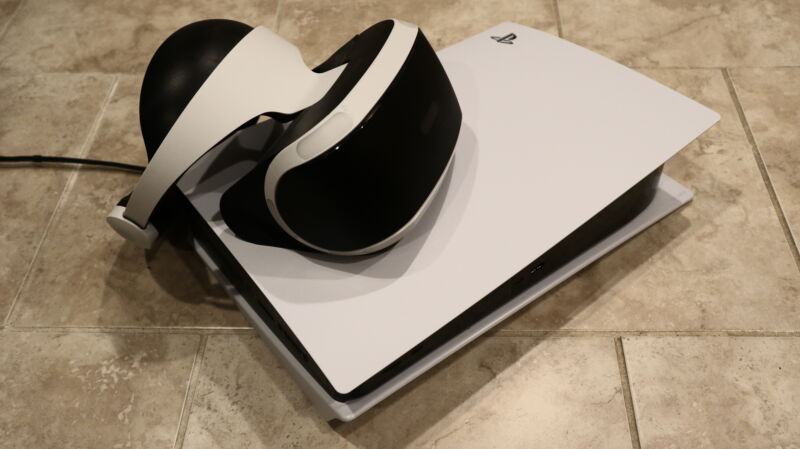
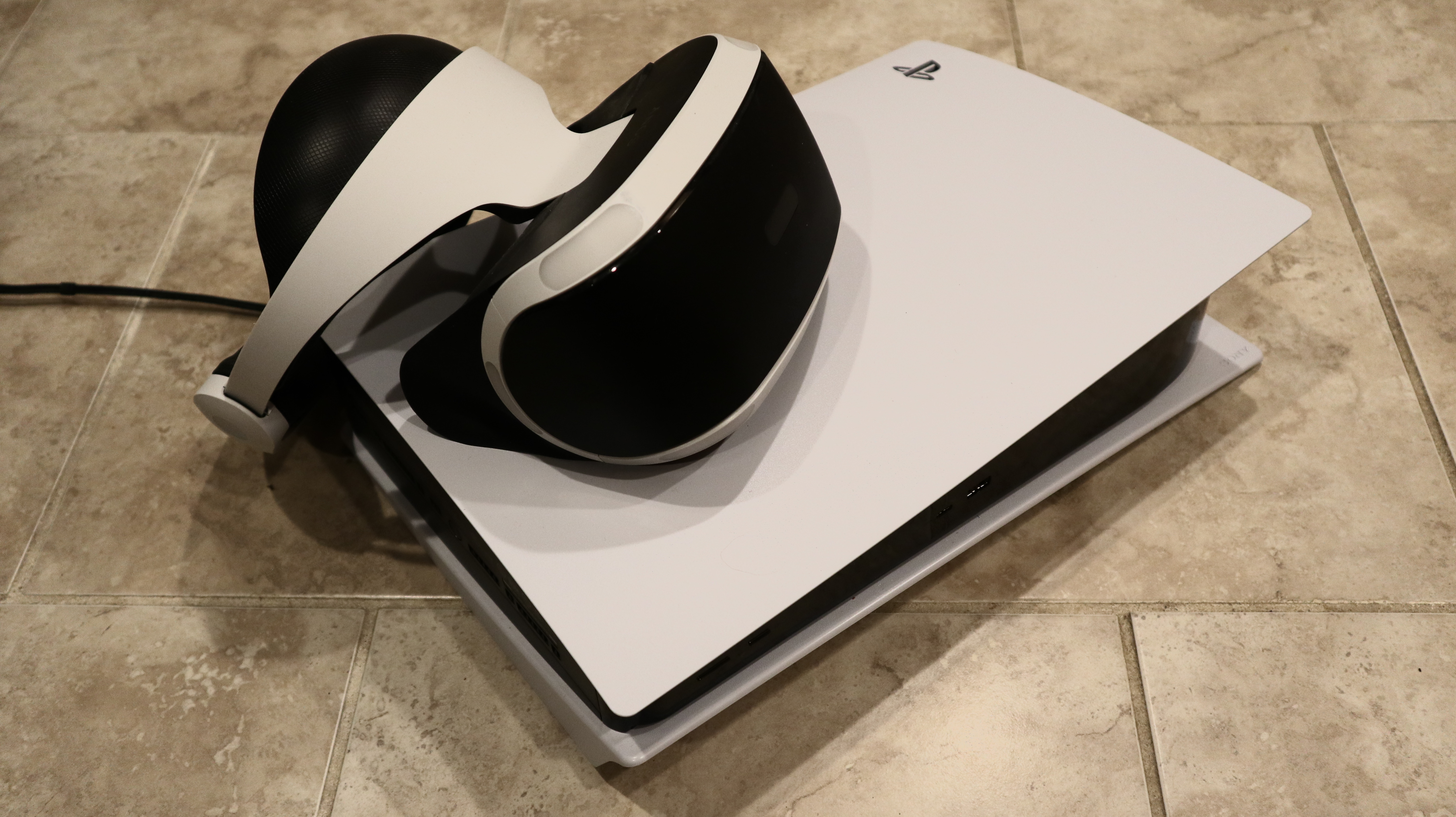
You probably want to put the PlayStation VR headset on your head, not on top of a new PlayStation 5, for an ideal use case. But, hey: You do you.
Enlarge / You probably want to put the PlayStation VR headset on your head, not on top of a new PlayStation 5, for an ideal use case. But, hey: You do you.
Sam Machkovech

Today’s feature-length review of the PlayStation 5 covers a lot of ground, primarily about how it works on your favorite TV set, 4K or otherwise. But what if your preferred PlayStation gaming screen is one you strap to your face?

You’d be a minority, based on PlayStation VR hardware sales since it launched in 2016, but that’s still millions of players. And Sony has confirmed that PS5 works with the existing PSVR ecosystem, hardware and software alike, while otherwise not saying anything definitive about future next-gen VR hardware. (Xbox, on the other hand, has thus far ruled out VR entirely.) But how exactly does it work? Are there any benefits to connecting a last-gen headset to a next-gen console? And should existing VR players on PS4 hang onto their older console for any reason?

I’ve broken this guide out from the PS5 review as a way to answer whatever VR questions you may have ahead of the new console’s launch next week.

Dongles, ports, and thresholds

Earlier this year, Sony confirmed that existing PSVR systems—which include a headset, a PS4-specific camera, and an extra VR processing box—can plug into PS5 consoles and play pretty much every PSVR game. However, this requires a special adapter for PS5 since Sony, in its mid-’10s wisdom, elected to use a proprietary connector for the “PlayStation Camera.” (Confusing matters, the PS5’s launch is joined by the “PlayStation HD Camera,” which is not compatible with PSVR.)

Last week, Sony opened up a redemption program so that PSVR owners can get said dongle. The site’s first 36 hours were a nightmare of vague error codes; the most common response told users to call a hotline instead of simply waiting for servers to recover from a pounding. Once that settled, anyone with a PSVR in their hands could submit the serial code listed on the processing box and get a PS5 dongle shipped to their homes, completely free of charge. (Not even a shipping/handling surcharge! Thanks, Sony.) I eventually got through this site and placed an order, and it came with a hazy pledge of “weeks” for my dongle to arrive.

On the same day, Sony shipped a PlayStation Camera dongle (pictured above) to me as a member of the press. The dongle accepts the PS Camera’s proprietary plug on one end, then feeds it to a USB Type-A 3.1 plug on the other.

The front-facing port can’t handle USB 3.1 speeds.

With this in hand, I pulled my tubby PS5 out of my entertainment center and began connecting cables. This is where I ran into my first problem. PS5 includes three USB Type-A ports, but only two of these, on the back of the console, are rated USB 3.1. (An additional front-facing USB Type-C port is rated for higher speeds, at least.) In comparison, PS4 Pro includes three USB 3.1 Type-A ports, along with a separate dedicated port for its camera.

I came to learn that the last-gen PlayStation Camera requires a USB 3.1 port—as does my external hard drive, which I currently use since PS5’s 660GB of internal storage isn’t enough for my entire library of next-gen, last-gen, and VR games. Neither of those devices will work plugged into the front-facing port; warning messages make clear that they require USB 3.1 speeds, which the front-facing port can’t do. Thankfully, the PSVR processing box doesn’t require that threshold of USB throughput.

Still, with three devices plugged in, that left me with zero USB Type-A ports left for things like charging or pairing controllers, or connecting the next-gen PlayStation HD Camera. The only way around this was to use a third-party USB Type A 3.1 hub, which thankfully could juggle two cameras, a hard drive, and the PSVR processing box.

Older controllers, (mostly) same performance

Additionally, you’ll need some kind of past-gen controller to play PSVR software, since the system’s design revolves around PS4’s PlayStation Camera identifying bright bulbs of colored light. The PSVR headset has multiple colored panels, which the camera uses to orient your position in a virtual world, and the PS4’s DualShock 4 controller uses a “light bar” for the same thing. The PS5’s new DualSense gamepad does not have an equivalent light bar, so it doesn’t work.

If your game of choice uses other compatible controllers, like the PSVR Aim gun or the PlayStation Move wand, they too will work on PSVR via PS5.

To prove out PS5’s abilities with PSVR fare, I went straight to the clunkiest game on the platform: Sony’s own Iron Man VR, an uneven robo-flying game from earlier this year. On all PS4 consoles, the game failed to lock down a consistent high frame rate of 60Hz (as interpolated and doubled to 120Hz via the PSVR’s processing box), and it struggled with slow loading times. Sure enough, without any apparent patches designed around PS5, the game clears both of those technical hurdles on the newer console—but not in ways that feel particularly “next-gen.”

In my testing, an Iron Man VR campaign level that loaded in 126 seconds on PS4 Pro now takes 78 seconds when installed to PS5’s internal NVMe storage or 100 seconds when installed to an external, platter-based drive. And where the campaign level in question (Chapter 3, in virtual Shanghai) was once the game’s most obvious source of stuttering, it now runs at a locked 120Hz (albeit driven by interpolation from 60Hz). And it does this no matter how many robots or effects appear in the game world.

Meanwhile, in-game detail is identical between both platforms. If there’s any increase to the game’s VR resolution on PS5, it’s not significant enough that I can point it out. The sense of increased clarity might be due to a mild jump in base resolution (if the game revolved around dynamic resolution in the first place), or it might simply be because of less frame rate flicker.

Underperforming PSVR games are rare on the platform, owing to them being generally optimized for the system’s lower specs as compared to a VR-ready PC. Iron Man VR‘s performance woes are an outlier, and in the case of Ars Approved PSVR exclusives like Astro Bot: Rescue Mission, Resident Evil 7, and Wipeout: Omega Collection, I perceived equivalent performance and resolution as found on PlayStation 4 Pro.

It works, just not elegantly

If you’ve been playing PSVR fare on a standard PS4 and want to enjoy the mild boosts of Sony’s mid-gen console, then moving your existing PSVR setup to PS5 makes sense (if you are already diving into the PS5 universe, at least). But those boosts are mild, and they should be considered a perk on top of the PS5’s flat-screen library as opposed to a reason to buy a whole new PlayStation.

After all, Sony has stated that it has zero plans to release PS5-minded software or patches for PSVR, though existing PSVR retail bundles have recently been updated to add PS5 adapters to their boxes. That means we should expect some form of PSVR support from Sony for at least one more year, even if the publisher has generally backed away from making major new games—and is still mildly teasing a new Sony VR system to come… some day? In 2022, possibly?

Meanwhile, if you decide to hold onto a PlayStation 4 Pro with a PSVR attached, I gotta say: maybe keep it that way. Testing PS5 with PSVR has forced me to add a USB Type-A dongle, as if I’m the owner of a modern MacBook Pro, and I’d rather keep my PS5 neat and tidy instead of bolting so many PSVR cords and things to it (and I already have to hang onto a last-gen controller, anyway). If you’re planning to reduce your PlayStation footprint by selling or trading your existing PS4 console, of course, PS5 works just fine with PSVR, but definitely add a USB Type-A dongle to alleviate stress about the newer console’s available ports.

https://arstechnica.com/?p=1719599


PlayStation 5 review: Not just a more-powerful PS4

Back in 2016, when the mid-generation hardware upgrades of the Xbox One X and PS4 Pro were still just mere announcements, we publicly wondered if we had seen the last truly distinct break between console generations. Instead of releasing completely new console platforms—with exclusive games and features that just don’t work on the previous model—Microsoft and Sony at the time both seemed to be leaning towards a smartphone-style model, with regular releases of more powerful consoles that share a common software platform with what came before.

This seems to be the direction Microsoft is heading with the Xbox Series X and S, two console options that serve as baseline hardware power upgrades in a consistent Xbox ecosystem. But Sony is going for more of a hard break with the PS5. In addition to the usual horsepower boost (and standardization of quick-loading NVMe storage), Sony has put extra effort into a new controller and system-level features that try to make the new console more distinct from PlayStations past.

After a few weeks with the console, there’s a lot to like about the PS5’s new vision for the PlayStation line. Whether those improvements are worth $500 at the moment, though, is a harder question to answer.

Spec Comparison
PS4 PS4 Pro PS5
GPU 18 Radeon GCN compute units @ 800 Mhz 36 improved GCN compute units @ 911 Mhz 36 RDNA2 compute units @ up to 2.23 Ghz (variable freq.)
CPU 8 Jaguar cores @ 1.6Ghz 8 Jaguar cores @ 2.1Ghz 8 Zen 2 Cores @ up to 3.5 Ghz (variable freq.)
RAM 8GB GDDR5 @ 176GB/s 8GB GDDR5 @ 218GB/s (plus 1GB DDR3) 16GB GDDR6 @ 448GB/s
Max power consumption (gameplay) 148W (79W for PS4 Slim) 154W 205W
USB ports 2 USB 3.0 3 USB 3.0 2 USB 3.1, 1 USB 2.0, 1 USB-C
Storage 1TB (PS4 Slim) 1TB HDD 825GB NVMe
Size (widest points) 265 x 39 x 288mm (10.4 x 1.5 x 11.3″) (PS4 Slim) 295 x 55 x 327mm (11.6 x 2.2 x 12.9″) 390 x 104 x 260mm (15.4 x 10.2 x 4.1″)
MSRP $300 $400 $500 ($400 for All-Digital) w/ Astro’s Playroom

The Shell

We’ve already talked quite a bit about the PS5’s unique, curvy exterior, but in case you’re just catching up, the first thing to know about the PS5 is that it comes in a historically massive shell for a console. You’ll want to break out the measuring tape to make sure the 15.4″ x 10.2″ x 4.1″ system (slightly smaller for the $400 all-digital edition) will fit in your entertainment center.

PS5 power usage
Rest mode 28-32W
Rest mode (w/ download) 42-45W
Idle on menu 67W
Netflix 71-73W
Playing 4K Blu-ray 76-79W
Gameplay (Downwell PS4) 70-76W
Gameplay (Tony Hawk 1+2 PS4) 116-130W
Gameplay (Miles Morales PS5) 156-205W
Installing Knack from disc 124 – 134W
Playing Knack (w/ disc in drive) 116-127W

Sony has said this physical design was made in part to help with cooling and reduce the system’s apparent fan noise in the system. So far, that decision has been borne out in our testing. The PS5 doesn’t run completely silently  (and is a tad noisier than the Xbox Series X, in our direct comparisons), but the gentle hum of the system’s cooling fan is only apparent in a completely quiet room (or right up close to the system). That’s true even when the system is drawing over 200W at its heaviest gaming load, a welcome change from the high-speed fan whine of the PS4 and PS4 Pro during high-end gameplay.

Unfortunately, the system’s disc drive is not nearly as quiet. Despite Sony’s attempts at insulation, you’ll  easily make out the whirring of the spinning drive from across the room when installing a game from a disc or watching a disc-based movie. External spinning hard drives can also make their own noise, so invest in an external SSD if you want to reduce the racket.

The PS5’s fan system is aided by a massive array of vents that run up and down all sides of the system. These let out a stream of noticeably hot air when you get up close to the system running at full horsepower. Even then, though, the massive white panels on either side of the system remain notably cool to the touch, a marked difference from the notably hot surface of a running PS4 Pro.

https://arstechnica.com/?p=1719112


Spider-Man: Miles Morales review: New hero, same heroic gameplay

It’s not that rare for a new game console to launch with a big marquee sequel. From Super Mario World and Breath of the Wild to Sonic Adventure and, uh, Perfect Dark Zero, companies often use such sequels to try to highlight the benefits new hardware can bring to an established and well-loved game design.

Spider-Man: Miles Morales isn’t quite in the same category. The game, which serves as a marquee launch title for the PS5 (and which is also available on the PS4), is much more of a “more of the same” sequel than a generational showcase for the gameplay power of a brand-new console. There are a few graphical upgrades and a few new gameplay tweaks, but if you played 2018’s Spider-Man, you pretty much know what to expect.

Good thing, then, that the basic gameplay remains as compelling and fun as ever and has an interesting new story to boot. Miles Morales doesn’t reinvent the wheel because it doesn’t have to. Take the same solid gameplay, throw in an intriguing new character focus, and mix it together into a tightly paced open-world package that doesn’t wear out its welcome with a lot of extraneous padding. The result is an able sequel, even if it’s not exactly the system seller that Sony might want for the PS5 at this point.

A new kind of wall-crawler

<em>Spider-Man: Miles Morales</em> product image

Spider-Man: Miles Morales [PS4, PS5]

(Ars Technica may earn compensation for sales from links on this post through affiliate programs.)

Miles Morales is a new, friendly neighborhood Spider-Man who’s adjusting to a new neighborhood himself. After moving from the Bronx to Harlem after the death of this father, Morales is coming to terms with his new powers while also coming to terms with the loss of the familiar. And to top it all off, his mentor Peter Parker is conveniently leaving the country for a vacation, giving Miles his first real chance to act as the solo Spider-Man for the entire city.

After decades of Peter Parker stories, focusing on Miles gives the game a fresh perspective that’s about much more than the main character’s heritage. Morales is a decidedly modern teenager, mixing a packed social schedule and social conscience in with family obligations, charity outreach, and web-slinging heroics. It’s evocative of the earliest Spider-Man comics, when Parker was just an everyday ‘60s teen coming to grips with how strange new powers affected his everyday life.

The game does a good job of slowing things down every so often for intimate looks at Miles as a person, not just a hero. You see him deal with strained friendships, fraught family dynamics, and trying to be an upstanding member of the community even when he’s out of his Spider suit. These well-written, personal story interludes ground the game in a way that’s atypical for the usual superhero beat-em-up.

Sure, there’s still a bit of the usual scenery-chewing comic-book-style super-villainy, and a fair few heavily telegraphed plot twists leading to the big, climactic battle. But there’s also a lot of effort put into giving the new Spider-Man’s main antagonists here some believable motivations beyond mere anger or revenge. Without spoiling too much, I’ll just say that the interweaving plotlines left me with some conflicted feelings about what constitutes “going too far” in the fight back against injustice.

More of the sameplay

While the specific Spider-Man we’re focusing on is new here, the act of being Spider-Man is utterly familiar in Miles Morales. You still websling around the city with some of the most satisfying mid-air superhero controls this side of the Batman: Arkham series. You still use an in-game social media app to find side quests and nearby crimes amid the story beats. You still sneak taking out as many enemies as possible while hiding above them stealthily, then resorting to edge-of-your-seat melee-combat to take out the last few stragglers.

The biggest changes here involve Miles’ electrical powers, which he slowly discovers over the course of the game. Regular combat charges up your electrical meter, which you can use for powerful armor-reducing punches, area-of-effect crowd-dispersal attacks, quick dashes across long distances, and more. Eventually, Miles also gets the power to briefly go invisible, giving new stealth possibilities and a chance to get out of tough scrapes.

There’s enough variety and challenge to these encounters that I never got tired of them, even as I fought through dozens in my ten hours or so with the game. Miles Morales does a good job always throwing just enough threats at you from all angles to ride that fine line between “I’ve got this” superhero bravado and overwhelming test. Thanks to an incredibly readable visual interface, you quickly gain the reflexes and muscle memory necessary to juggle up to a dozen or more enemies at once, all of which aren’t afraid to work together from all directions with different attack patterns.

In between the fighting, you get the usual sharp, quip-filled comic book writing Spider-Man is known for (as well as an entertaining series of dueling news podcasts that play automatically as you swing through the city). You also get a lot of fetch quests that reward exploring every inch of an extremely detailed and lively version of New York City. These exploration tasks are woven in well with the story, fleshing out characters’ pasts and relationships with some subtle depth every time you find a new trinket.

The only real sour note in the proceedings is a handful of extremely simple spatial relation puzzles. These focus on looking around the nearby environs with “spider-vision” to figure out how to hook up some electrical generator to some other electrical doodad, or to use web power to arrange some massive scenery in the necessary way. The best thing that can be said about these portions is that they’re rare enough and short enough to avoid messing up the excellent pacing of the rest of the game’s web-swinging and fighting.

I’m usually not the type to bother going for 100% completion in this kind of open-world game, but the sheer joy of exploring Miles Morales New York—looking for hidden baubles and beating up its less-savory characters all the while—will have me exploring every last morsel of Spider content. My one complaint at this point is that there isn’t more of that content—15 hours or so should be enough for a completionist playthrough that I’d be happy extending for much longer (though a New Game + option lets you start over with all your upgrades if you want to work through the game again).

Miles Morales may not be exceptionally original, but it’s a well-told, exceedingly human superhero story built on a strong, proven foundation of open-world mechanics. What better way to show off a new console?

The Good

  • Grounded human plot focuses on a new kind of Spider-Man
  • Clever (if cheesy) writing and strong, natural vocal performances
  • The same solid web-slinging mechanics of its predecessor make exploring the city a joy
  • Melee combat maintains challenge without becoming overwhelming

The Bad

  • Occasional spatial-relations puzzles slightly bog down the pacing
  • You may run out of content before you run out of interest in the game

The Ugly

  • Waiting for load times on the PS4 after experiencing the PS5 version

Verdict:
Buy it if you want an “expansion pack” sequel with an interesting story and solid, familiar gameplay.

https://arstechnica.com/?p=1719935