Brawling through a wacky version of Japan’s past in Like a Dragon: Ishin!

Don't bring a knife to a historical Japanese gunfight.
Enlarge / Don’t bring a knife to a historical Japanese gunfight.

Sega’s cult-favorite Yakuza series is in a league of its own in its ability to blend brutal, stylish combat with a heartfelt and endearingly melodramatic storyline. Following the success of 2020’s Yakuza: Like a Dragon and the spinoff Judgement series, the over-the-top and unapologetically earnest action series has made great strides in reaching a larger audience worldwide.

With the franchise’s 20th anniversary approaching, Sega is making a larger push for the series, now known simply as Like a Dragon, in the West. Like a Dragon: Ishin! is an upgraded visit to one of the franchise’s most elusive games and the first chance for Western audiences to circle back to the sprawling story’s 19th-century origins.

After some time with the game’s early chapters, it’s clear this remake reaffirms the series’ signature approach to marrying absurd yet poignant storylines with action encounters that come right out of a comic book.

Once upon a time in Edo Japan

Like a Dragon: Ishin! focuses on the exploits of Sakamoto Ryoma, a mid-1800s character who bears a striking resemblance to recurring franchise protagonist Kazuma Kiryu. Ryoma is attempting to find a mysterious assassin in the fictional city of Kyo. After infiltrating the Shinsengumi police force to hunt for leads, he’ll rub shoulders with other historical figures and vagabonds trying to survive through Japan’s Edo period, when the beginning of Western intervention was bringing radical shifts in Japanese society. Along the way, he’ll brawl with roaming gangs, help common folk with big problems, and engage with the city’s many incidental side activities and hidden stories.

The switch to a period setting, which reinterprets many fan-favorite characters into period-specific versions, makes for a fresh and interesting change of pace from the urban sprawl of previous Yakuza games. But the trip back in time, while different, doesn’t affect the series’ signature mix of different tones.

En garde.
Enlarge / En garde.

The action and narrative are honed through that wacky yet still somehow totally earnest Yakuza-style lens. One moment you’re thrust into the politics of the Japanese criminal underworld, learning about the sacrifices and trauma characters have endured. And the next, you’re in a cathartic and raucous karaoke session where stone-faced protagonists sing their hearts out. It sounds jarring, but it all works so well in practice. Much like the recent Oscar-nominated Telugu historical epic RRR, Like a Dragon: Ishin! embraces its sense of hyper-reality to meld a crowd-pleasing action and storytelling style with its period setting.

Exploring the past

Like a Dragon: Ishin! sticks close to the plot and structure of its original Japan-only PlayStation 4 release. But this version revamps the combat and adds numerous quality-of-life improvements that bring the game closer to modern series entries. That includes introducing the flair and character growth systems found in 2020’s JRPG-inspired Yakuza: Like a Dragon, which melds with the original game’s brawling to make Ishin! feel like more of an action RPG.

My hands-on time with Ishin! dropped me into Chapter 3, which, as mentioned previously, sees Ryoma arrive in the Fushimi district of Kyo. As an outsider, he must explore an unknown town while trying to follow up on a mysterious assassin. This chapter is where the game’s structure and gameplay open up properly, giving you the entire Fushimi district to explore. While you have a main objective, you’re free to wander back alleys, engage in mini-games, and encounter unsavory and colorful characters hanging around town. These types of activities are what make the Yakuza games so special, and Ishin! delivers on that in a big way.

One of the more compelling aspects of Ishin! was just venturing out and exploring the city to see what I could find. I mostly took my time exploring the more populated areas of town, engaging in diversions, including going to restaurants to snag sushi and sake; checking out training dojos to better Ryoma’s combat prowess; and jumping in on side activities focused on learning complex dances to perform for a crowd.

Take a break from brawling with karaoke!
Enlarge / Take a break from brawling with karaoke!

One of my favorite moments, and a perfect example of how random the game can be, came when I rounded a street corner and found five people arguing. Upon interacting with them, I jumped into a sub-story involving a stolen mochi snack, asking me to figure out who was involved. A light interrogation sequence followed, which closed with a poignant story about the bonds of friendship. It was bizarre to find myself embroiled in this impromptu mystery, but once it was done, I was utterly charmed by how it played out. I found myself amused by how strange things can be and impressed by how Ishin! maintained an earnest perspective throughout the wacky circumstances.

So far, Ishin! maintains the Yakuza series’ characteristic vibrant, active world. Although it’s not a proper open-world game, Ishin! still provides a densely packed setting that you’re free to explore. The Bakumatsu era is recreated in rich detail, showcasing the lively personality and culture of the city. It was exciting just taking time to explore the streets, bump into wandering citizens going about their business, and even get into a few scrapes here and there.

https://arstechnica.com/?p=1912933


Archaeologists discovered a new papyrus of Egyptian Book of the Dead

<img src="https://rassegna.lbit-solution.it/wp-content/uploads/2023/01/archaeologists-discovered-a-new-papyrus-of-egyptian-book-of-the-dead.jpg" alt="Sample illustration from an Egyptian Book of the Dead—not the newly discovered papyrus—depicting the "weighing of the heart."”>
Enlarge / Sample illustration from an Egyptian Book of the Dead—not the newly discovered papyrus—depicting the “weighing of the heart.”
Public domain

Archaeologists have confirmed that a papyrus scroll discovered at the Saqquara necropolis site near Cairo last year does indeed contain texts from the Egyptian Book of the Dead—the first time a complete papyrus has been found in a century, according to Mostafa Waziri, secretary-general of the Supreme Council of Antiquities in Egypt. The scroll has been dubbed the “Waziri papyrus.” It is currently being translated into Arabic.

Fans of the 1999 film The Mummy know that the Egyptian Book of the Dead plays a key role in bringing the cursed high priest Imhotep back to terrorize the living. The reality is naturally quite different: notably, there is not one magical copy of the Book of the Dead, as depicted in the film; there were many versions over the centuries, all unique, with the choice of spells often tailored to the specific needs of deceased royals and (later) high-ranking members of Egyptian society.

These “books” were actually collections of funerary texts and spells to help the deceased on their journey through the underworld (Duat)—not to bring people back from the dead—and they are not holy texts like the Bible or Qur-an. They were originally painted onto objects or written on the walls of burial chambers. Over time, illustrations were added and spells were also inscribed on the interior of coffins or the linen shrouds used to wrap the deceased.

The Step Pyramid of Djoser, Saqqara, Egypt.
Enlarge / The Step Pyramid of Djoser, Saqqara, Egypt.
Nick Brundle Photography/Getty Images

One of the most famous spells is the “Weighing of the Heart” (designated 125 by scholars), dating to around 1475 BCE, by which time copies of the Book of the Dead were commonly written on papyrus. Anubis would lead the deceased before Osiris, where they would swear they had not committed any of 42 listed “sins,” and their heart was weighed on a pair of scales against a feather to determine if they were worthy of a place in the afterlife. (Those who watched Moon Knight will remember a version of this ceremony depicted in one of the later episodes, conducted by the hippo-headed Egyptian goddess of childbirth and fertility, Taweret.) Of the 192 spells currently known—no one manuscript contains them all—there are several protective spells to guard against the damage or loss of the heart, and in one case (30b) imploring the heart not to “betray” its owner during the weighing ritual by “telling lies in the presence of the god.”

Copies of the Book of the Dead were made to order by scribes, and the scrolls could be as short as 1 meter (3.2 feet) and as long as 40 meters (about 131 feet). People knew of the existence of such scrolls in the Middle Ages, and assumed that they were religious in nature because they were found in tombs. Karl Richard Lepsius coined the name Book of the Dead in 1842 after translating one such text. The best known example to date is the Papyrus of Ani, discovered in luxor in 1888 and now housed in the British Museum. But such finds are increasingly rare.

Last year, archaeologists at the necropolis of Saqqara, near Cairo, discovered a cache of 250 complete mummies in painted wooden sarcophagi
Enlarge / Last year, archaeologists at the necropolis of Saqqara, near Cairo, discovered a cache of 250 complete mummies in painted wooden sarcophagi
Ministry of Tourism and Antiquities

The Saqqara necropolis served the ancient Egyptian capital of Memphis, and boasts numerous pyramids, including the Step pyramid of Djoser, whose design and construction is usually attributed to Imhotep, chancellor to the Pharoah Djoser (and later immortalized as the monster in The Mummy). Saqqara was named a World Heritage Site by UNESCO in 1979, although looters during the 2011 Egyptian protests broke into store rooms and caused some damage to the site that year. Over the years, archaeologists have unearthed many tombs, artifacts, and mummies while excavating the site: a rare gilded burial mask and several dozen caches of mummies in 2018, for instance, or statues of various gods and a number of completely sealed sarcophagi in 2020.

In March 2022, archaeologists discovered five 4000-year-old tombs, recovering 250 painted wooden sarcophagi containing complete mummies and 150 statuettes of various gods at the site’s Cemetery of Ancient Animals. There was also a collection of cosmetics, bronze vessels, and a sistrum (percussive musical instrument). One of the sarcophagi also contained a papyrus scroll they believed measured about 9 meters (29.5 feet) and contained a chapter of the Book of the Dead written in hieroglyphics. It was sent to the laboratory of the Egyptian Museum in Cairo for further study.

Once the papyrus was fully restored, it actually measured 16 meters (about 52.5 feet). And scholars have now confirmed that the scroll does indeed contain spells from the Book of the Dead. According to Waziri, the papyrus will be presented at the opening of the Grand Egyptian Museum in Cairo sometime this year.

[embedded content]
No harm ever came from reading a book… right? Classic scene from 1999’s The Mummy.

https://arstechnica.com/?p=1911466


D&D maker still wants to revoke earlier versions of “open” gaming license

<img src="https://rassegna.lbit-solution.it/wp-content/uploads/2023/01/dd-maker-still-wants-to-revoke-earlier-versions-of-open-gaming-license.png" alt="Artist's conception of D&D-maker Wizards of the Coast trying to destroy its original Open Gaming License with fire.”>
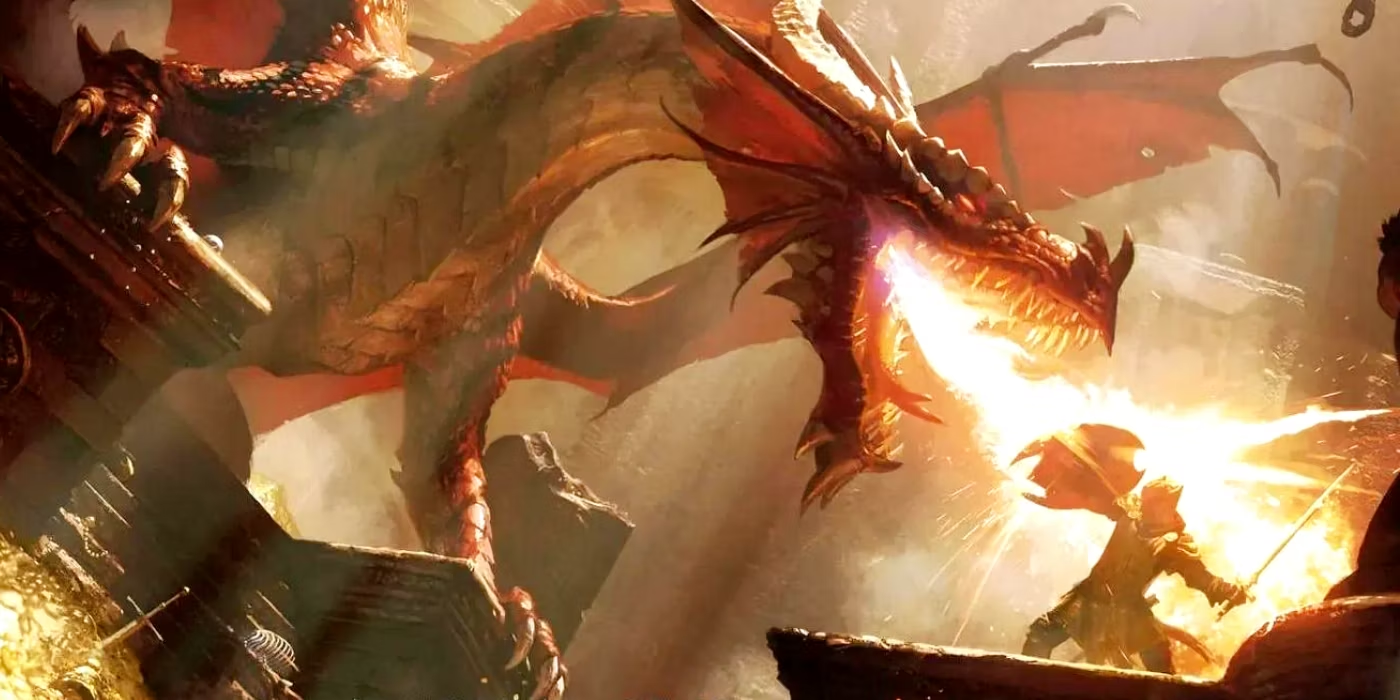
Enlarge / Artist’s conception of D&D-maker Wizards of the Coast trying to destroy its original Open Gaming License with fire.


Dungeons and Dragons (D&D)-maker Wizards of the Coast’s (WotC) latest attempt to update its decades-old Open Gaming License (OGL) still includes the controversial statement that “the Open Game License 1.0a is no longer an authorized license.” The news comes after the company’s first attempt to draft an OGL update with similar language (and other controversial changes) was met with widespread fan outrage and alienation from the creator community.

WotC says this proposed “deauthorization” of OGL v1.0a won’t affect any original content that was published under that earlier license since its debut in the early ’00s and that such content won’t need to be updated or relicensed to comply with any new OGL language. But any content published after the proposed OGL v1.2 goes into effect would not be able to simply choose the earlier license instead, according to the update as drafted.

In an explanatory post on the D&D Beyond blog, WotC Executive Producer Kyle Brink said that WotC realizes this planned deauthorization is a “big concern” for the community. But he added that it’s a necessary move to enforce the new OGL’s restrictions on illegal and/or hateful content, including “conduct that is harmful, discriminatory, illegal, obscene, or harassing,” as determined by WotC.

“We can’t use the protective options in 1.2 if someone can just choose to publish harmful, discriminatory, or illegal content under 1.0a,” Brink wrote. Ensuring an “inclusive play experience” in this way was a “deeply important” goal that was not included in the original OGL, he added.

Whether WotC actually has the legal power to fully revoke the earlier OGL version is still an open question, though. That’s because the original OGL contains a clause clearly saying that players can “use any authorized version of this License to copy, modify, and distribute any Open Game Content originally distributed under any version of this License.”

The original OGL doesn’t contain any specific language saying it’s irrevocable. But in an FAQ posted when the original OGL was published, WotC directly stated that “even if Wizards made a change [to the license] you disagreed with, you could continue to use an earlier, acceptable version at your option.” And in a recent interview with tabletop gaming site En World, original OGL architect and former WotC VP Ryan Dancey said the company “does not have the power to deauthorize a version of the OGL. If that had been a power that we wanted to reserve for Hasbro, we would have enumerated it in the license.”

Coming to the Commons

Aside from the OGL v1.0a deauthorization, the new draft language scales back many of the most controversial portions of the original leaked update, including plans to require revenue reporting, collect royalties for the biggest content creators, and force a license-back to WotC for original content. The new draft language also explicitly notes that the new license is “perpetual, non-exclusive, and irrevocable,” with only a few technical sections being eligible for modification in the future.

<a href="https://cdn.arstechnica.net/wp-content/uploads/2023/01/dnddiscuss.jpg" class="enlarge" data-height="1342" data-width="1920" alt="Artist's conception of the coming discussion between Wizards of the Coast and the D&amp;D community over proposed OGL updates.”><img alt="Artist's conception of the coming discussion between Wizards of the Coast and the D&amp;D community over proposed OGL updates.” src=”https://rassegna.lbit-solution.it/wp-content/uploads/2023/01/dd-maker-still-wants-to-revoke-earlier-versions-of-open-gaming-license.jpg” width=”640″ height=”447″ srcset=”https://rassegna.lbit-solution.it/wp-content/uploads/2023/01/dd-maker-still-wants-to-revoke-earlier-versions-of-open-gaming-license-1.jpg 2x”>
Enlarge / Artist’s conception of the coming discussion between Wizards of the Coast and the D&D community over proposed OGL updates.

D&D‘s core mechanics would be licensable under the Creative Commons Attribution 4.0 International (CC BY 4.0), which WotC says “is not placing any limitations at all on how you use that content.” While that’s not strictly true, that license does give “a worldwide, royalty-free, non-sublicensable, non-exclusive, irrevocable license” to that rules content on the condition that the licensor appropriately credits WotC for its creation.

For “quintessentially D&D content” published by WotC (e.g., classes, spells, monsters, and other creative content made by the company), the new license would allow use, modification, and distribution with a few restrictions. In addition to limits on illegal and/or hateful content, as discussed above, the draft language bars anything that infringes on third-party IP or implies an official endorsement from WotC.

A survey allowing members of the public to comment on this new draft OGL language will go public sometime Friday, WotC said, and will be available until February 3. Further updates based on that feedback will be published on or before February 17, according to the company, and that kind of iteration on feedback “will extend as long as it needs to… until we get it right,” Brink wrote.

https://arstechnica.com/?p=1911476


Meet the real zombifying fungus behind the fictional Last of Us outbreak

A vivid visual imagining of what a Cordyceps infected human might become.
Enlarge / HBO’s The Last of Us provides a vivid visual imagining of what a Cordyceps infected human might become.
YouTube/HBO Max

HBO’s new sci-fi series The Last of Us debuted earlier this week and is already a massive hit. Based on the critically acclaimed video game of the same name, the series takes place in the 20-year aftermath of a deadly outbreak of mutant fungus that turns humans into monstrous zombie-like creatures (the Infected, or Clickers). While the premise is entirely fictional, it’s based on some very real, and fascinating, science.

(Minor spoilers for the series below.)

The first episode showed us the initial outbreak and devastation. Fast-forward 20 years, and the world has become a series of separate totalitarian quarantine zones and independent settlements, with a thriving black market and a rebel militia, known as the Fireflies, making life complicated for the survivors. A hardened smuggler named Joel (Pedro Pascal) is tasked with escorting a teenage girl named Ellie (Bella Ramsey) across the devastated US, battling hostile forces and hordes of zombies, to a Fireflies unit outside the quarantine zone. Ellie is special: She is immune to the deadly fungus, and the hope is that her immunity holds the key to beating the disease.

The basic premise for the fictional pandemic is neatly laid out in the cold open. Two epidemiologists are guests on a 1968 talk show in the vein of The Dick Cavett Show, discussing the possibility of a future pandemic. One cites viruses (specifically an airborne virus, like, say, COVID-19) as the threat that keeps him up at night. The other (played by one of my favorite actors, John Hannah) insists the real threat will come from fungus and proceeds to make a very convincing case.

As Hannah’s Dr. Neuman explains, there really is a family of zombifying parasitic fungi called Cordyceps—more than 400 different species, each targeting a particular species of insect, whether it be ants, dragonflies, cockroaches, aphids, or beetles. In fact, game co-creator Neil Druckmann has said his premise for The Last of Us was inspired in part by an episode of the BBC nature documentary Planet Earth (narrated by Sir David Attenborough) portraying the “zombification” of an ant in vivid detail.

<a href="https://rassegna.lbit-solution.it/wp-content/uploads/2023/01/meet-the-real-zombifying-fungus-behind-the-fictional-last-of-us-outbreak-2.jpg" class="enlarge" data-height="800" data-width="1200" alt="A dead ant that has been taken over by a species of Cordyceps in the Rio Claro Reserve in Colombia. “><img alt="A dead ant that has been taken over by a species of Cordyceps in the Rio Claro Reserve in Colombia. ” src=”https://rassegna.lbit-solution.it/wp-content/uploads/2023/01/meet-the-real-zombifying-fungus-behind-the-fictional-last-of-us-outbreak-1.jpg” width=”640″ height=”427″ srcset=”https://rassegna.lbit-solution.it/wp-content/uploads/2023/01/meet-the-real-zombifying-fungus-behind-the-fictional-last-of-us-outbreak-2.jpg 2x”>
Enlarge / A dead ant that has been taken over by a species of Cordyceps in the Rio Claro Reserve in Colombia.

First, the fungus infiltrates the host’s exoskeleton and brain via spores scattered in the air, which fall to the ground. When a foraging ant encounters a spore, the spore attaches to the ant’s body, burrowing inside. Once inside, the spores sprout long tendrils called mycelia that eventually reach into the brain and release chemicals that make the unfortunate host the fungi’s zombie slave. The chemicals compel the host to move to the most favorable location for the fungus to thrive and grow. Then the fungus slowly feeds on the host, sprouting new spores throughout the body as one final indignity. Those sprouts burst and release even more spores into the air, which go forth to infect even more unsuspecting hosts.

Much of this is consistent with the premise of The Last of Us. Dr. Neuman assures his audience that while fungi seem harmless enough, the danger from Cordyceps is that these fungi are more interested in controlling rather than killing the hosts. He mentions certain fungus-derived hallucinogens (LSD, which comes from ergot, and psilocybin): “Viruses can make us ill, but fungi can alter our very minds…. like a puppeteer with a marionette.”

As Neuman’s fellow epidemiologist points out, Cordyceps might be real, but the fungi doesn’t target humans. Neuman agrees, adding this is because the fungi can’t survive if the host’s body temperature exceeds 94° F. This is technically accurate, per David Hughes, an evolutionary biologist at Penn State University who has studied Cordyceps for several years. (He also consulted with developer Naughty Dog on The Last of Us game.) “Insects exploit this fact by inducing a behavioral fever to reduce infections,” he told Ars. “But going to a hot area reduces fungal growth.”

https://arstechnica.com/?p=1910513


PSVR 2 launch includes only a handful of exclusive titles

<img src="https://rassegna.lbit-solution.it/wp-content/uploads/2023/01/psvr-2-launch-includes-only-a-handful-of-exclusive-titles.png" alt="Horizon VR: Call of the Mountain is one of the few exclusive titles available for next month’s PSVR 2 launch.”>
Enlarge / Horizon VR: Call of the Mountain is one of the few exclusive titles available for next month’s PSVR 2 launch.


Those who purchase the PlayStation VR 2, available next month, won’t be able to play their existing PSVR library on the new headset. But they will be able to purchase more than 30 titles on the headset’s February 22 launch and a total of 37 within a month of that launch, Sony announced today.

The initial PSVR 2 lineup is overwhelmingly a sort of “greatest hits” collection of titles available on existing VR platforms. Almost all of the headset’s launch window titles are also available on SteamVR, the Oculus Quest platform, or the original PSVR.

Of the handful of PSVR 2 exclusives, the previously revealed Horizon VR: Call of the Mountain stands out as a first-person adventure in the vein of Half-Life: Alyx. As far as third-party exclusives, Supermassive’s The Dark Pictures: Switchback VR is an on-rails VR roller-coaster akin to the similar Until Dawn: Rush of Blood, while Fantavision 202X is a fully 3D take on the infamous, fireworks-filled PS2 launch title (and will also work without a headset).

Of the remaining PSVR “exclusives” for the time being, two take the form of free VR-compatible updates to existing flat-screen PS5 titles: Gran Turismo 7 and Resident Evil Village. Then there’s the haunting narrative of Before Your Eyes, which launched on Steam and mobile in recent years but will make its VR debut on the PSVR 2 next month, using the headset’s eye-tracking cameras to monitor the player’s time-controlling blinks.

Say so long to the original PSVR's glowing blue lights.
Enlarge / Say so long to the original PSVR’s glowing blue lights.

While existing PSVR games won’t work by default on PSVR 2, a handful of developers are offering free upgrades for those who purchased games on the older headset: NFL Pro Era, Pistol Whip, Puzzling Places, Song in the Smoke: Rekindled, Synth Riders, and Zenith: The Last City. Those who own Rez Infinite or Tetris Effect: Connected on PSVR, meanwhile, will be able to upgrade to a PSVR 2 version for just $9.99 each.

In addition to eye-tracking and “passthrough” cameras, the $550 PSVR 2 sports a 2000×2400 per-eye resolution, 100-degree field of view, support for HDR colors, and a set of headset motors for tactile effects. The new headset also connects to the PS5 via a single cable, replacing the mess of cables, junction boxes, and external cameras needed for the original PSVR on the PS4.

Here’s a full list of the PSVR 2 launch titles announced so far, including a reference for which other platforms have seen the same games.

PSVR 2 Title PSVR Quest PC VR Non-VR Notes
After the Fall X X X
Altair Breaker X X
Before Your Eyes X “launch window”
Cities VR X
Cosmonious High X X
Creed: Rise to Glory – Championship Edition X X X “launch window”
The Dark Pictures: Switchback “launch window”
Demeo X X
Dyschronia: Chronos Alternate X X
Fantavision 202X
Gran Turismo 7 X Free update for PS5 non-VR version
Horizon: Call of the Mountain
Job Simulator X X X
Jurassic World Aftermath X X
Kayak VR: Mirage X
Kizuna AI – Touch the Beat! X X X
The Last Clockwinder X X
The Light Brigade X X X Purchase includes PS4 and PS5 versions
Moss 1 & 2 Remaster X X X
NFL Pro Era X X X Free upgrade for PS4 owners
No Man’s Sky X X X “launch window”
Pavlov VR X
Pistol Whip X X X free upgrade from PSVR
Puzzling Places X X free upgrade from PSVR
Resident Evil Village X free DLC for PS5 game
Rez Infinite X X X
Song in the Smoke X X X
STAR WARS: Tales from the Galaxy’s Edge X
Synth Riders X X X free upgrade from PSVR
The Tale of Onogoro X X X
Tentacular X X
Tetris Effect: Connected X X X X
Thumper X X X
The Walking Dead: Saints & Sinners: Ch. 2: Retribution X X X “launch window”
Vacation Simulator X X X
What the Bat X X
Zenith: The Last City X X X free upgrade from PSVR

https://arstechnica.com/?p=1911255


The first “Bored Ape” NFT game costs $2,300+ for three weeks of play

The first “Bored Ape” NFT game costs $2,300+ for three weeks of play


Owners of Yuga Labs’ infamous “Bored Ape” non-fungible tokens (and related crypto tokens) get free access to a simple endless runner/tunnel racing game called Dookey Dash today. But some members of the “exclusive” Bored Ape Yacht Club (BAYC) are already selling a chance to play the time-limited game for thousands of dollars on the secondary market.

Listings on the OpenSea exchange show a current floor price of 1.49 ETH (about $2,293) for a “Sewer Pass” NFT that grants access to Dookey Dash until February 8. In less than 24 hours, the exchange has seen 8,394 ETH (about $12.8 million) in Sewer Pass transactions, with some passes selling for as much as 5.75 ETH (about $8,770).

While wash trading and/or crypto laundering could be driving some of those those Sewer Pass transactions, some players are clearly clamoring for access to Dookey Dash and are willing to spend to get it. But that demand isn’t being driven by any sort of novel or transcendent gameplay experience that Yuga Labs is offering. Instead, NFT speculators are trying to use the game to get in on the ground floor of what they hope will be the next artificially scarce, high-demand digital asset.

Avoid obstacles for high score

As seen in an extremely scatological trailer released this week, Dookey Dash resembles a slightly modernized version of everyone’s least favorite level from Earthworm Jim. Players fly through a sewer tunnel from an over-the-shoulder perspective, dodging obstacles and collecting items to score points, much as you do in countless free-to-play mobile and web games.

[embedded content]
Warning, this trailer may not be safe for work (or humanity).

In an extensive FAQ, Yuga Labs describes Dookey Dash as a “skill-based mint.” That means a player’s highest score in Dookey Dash is tied to the player’s Sewer Pass NFT (one Sewer Pass allows as many attempts as a player can tolerate before the February 8 deadline arrives). Sewer Pass holders will then be able to trade their pass for a mysterious “Power Source” NFT during “The Summoning,” which starts on February 15.

The quality of those Power Sources will apparently be tied to each Sewer Pass’ relative position on the game’s final leaderboard, with rarer “traits” being associated with higher scores. The player at the very top of the leaderboard will be the only one to get the “Ultimate Power Source,” whatever that means.

Yuga Labs promises it has “anti-cheat checks” in place to ensure that human players are generating those high scores, and it says it will review game sessions that “raise red flags.” But players who want to get a legal advantage in the game can get a score boost with a higher tier of Sewer Pass (generated by better tiers of Bored Ape and/or associated digital pets). Players can also spend their crypto ApeCoin on a “powershart pack” (yes, that’s the actual name) for time-limited boosters, putting money directly into Yuga Labs’ pockets in the process.

https://arstechnica.com/?p=1911184


GeForce Now Ultimate first impressions: Streaming has come a really long way

Rows of GeForce Now servers
Enlarge / It’s not actual GeForce RTX 4080 cards slotted into GeForce Now’s “Superpods,” but Nvidia says the hardware is pretty close.

Cloud-based gaming service GeForce Now’s new Ultimate tier is rolling out today, promising a series of adjectives about game streaming that might have seemed impossible just a few years ago: high-resolution, ray-traced, AI-upscaled, low-latency, high-refresh-rate, and even competition-ready.

I tested out the Ultimate tier, powered by Nvidia’s RTX 4080 “SuperPODs,“ for a week on a server set up for reviewer early access. If I hadn’t been hyper-conscious of frame numbers and hiccups, I could have been tricked into thinking the remote 4080 rig was local. Ultimate streaming can also be “better than local,” such as when it lets you stream a AAA, ray-traced game on a low-powered laptop, tablet, or TV with no console attached.

Ars had previously described our GeForce Now 3080 experience as “dreamy” and called the performance “a white-hot stunner that rivals the computing power you can muster” with the same RTX 3080 card in your PC. It’s easy to lay at least the same kind of praise on the new Ultimate tier. It replaces the previous RTX 3080 option with the next generation’s chipset for the same price ($20 per month, $99 for six months). That might be a steep price tag for a service that mostly makes you buy your games, but given the 4080’s $1,200 price, the rent-versus-buy question is worth considering at this level.

That’s especially true if you want the flexibility to bring your games to screens outside your main gaming system. I got to play Hitman 3 on a MacBook Air (through a monitor) at rates higher than 60 frames per second, at medium-to-high graphics. I logged a few impressive-looking battles in Marvel’s Midnight Suns, sitting on a couch with an iPad and a Nintendo Switch Pro Controller. I almost felt bad when Cyberpunk 2077 on an Nvidia Shield benchmarked 90 fps at 4K on my 60 Hz TV (save those extra frames for lean times!). When playing on these lower-res or lower-refresh screens, an Ultimate stream trades impressive fidelity for stability.

Not everybody has the high-refresh monitor, or the interest in GeForce Now’s particular games library, to need the Ultimate tier. But if you have wider bandwidth on your Internet connection than in budgeting for a single piece of a gaming PC, or want to test the waters of max-spec PC gaming, GeForce Now Ultimate is mighty intriguing.

Test-driving a monster GPU across the Northeast

What follows is a first impression of the service, more like a test drive than a full review covering every facet. That’s for a few reasons. My monitor’s refresh rate only (“only”) goes to 144 Hz (i.e., 144 fps). I tend toward single-player games, not twitchy multiplayer shooters. I didn’t dig much into Reflex mode, the latency-reducing setting aimed at competitive games like Apex Legends, Rainbow Six Siege, Destiny 2, and others (The Verge review leans into that aspect heavily). My personal graphics card is an RTX 3050, a budget-minded model that couldn’t hope to hit 60 fps at 1440p on ultra or max settings on our test games.

In other words, I’m a PC gaming enthusiast living with a pedestrian mix of hardware—potentially just the type GeForce Now is targeting.

Still, I had some basis for comparison. I previously had a Founders Edition account that provided access to less-powerful card types (GTX 1080 and, on occasion, GTX 2060) and was familiar with the games’ performance on my local RTX 3050. I mostly stuck to games in my library that worked on GeForce Now, though I briefly dipped into Destiny 2 multiplayer to see how remote multiplayer felt. And I’ve been a regular user of Nvidia’s local-streaming GameStream, with the lowest latency you could hope for.

https://arstechnica.com/?p=1911040


D&D maker promises to get player feedback for coming “open” license update

<img src="https://rassegna.lbit-solution.it/wp-content/uploads/2023/01/dd-maker-promises-to-get-player-feedback-for-coming-open-license-update.jpg" alt="Artist's conception of the coming discussion between Wizards of the Coast and the D&D community over proposed OGL updates.”>
Enlarge / Artist’s conception of the coming discussion between Wizards of the Coast and the D&D community over proposed OGL updates.


When Wizards of the Coast (WotC) rolled out proposed changes to its decades-old Open Gaming License (OGL), most average players and smaller creators had to hear about it via a leaked copy of a version sent to big content makers. Now, WotC promises any coming changes will be done through a “more open and transparent” process that will start a “robust conversation” around any new proposals.

In a post on the D&D Beyond forums today, WotC Executive Producer Kyle Brink writes that “new proposed OGL documentation” will be shared publicly on or before Friday, January 20. At that point, community members will have at least two weeks to offer feedback via a survey that will include specific questions and open-response fields.

WotC compared the new process to the one it uses for playtests of Unearthed Arcana documents, which are often used to solicit feedback on draft mechanics and gameplay ideas that haven’t been fully tested. Once the new OGL survey concludes, Brink says WotC will “compile, analyze, react to, and present back what we heard from you.”

We’re sorry (that you noticed)

Brink clarified a few types of fan-made content that the new OGL explicitly won’t affect, including videos, contracted services (e.g., paid dungeon master services), and virtual tabletop content. Brink also reiterated WotC’s recent promise that the new OGL won’t charge any royalties, won’t impact existing content licensed under OGL 1.0a, and won’t require you to license creative content back to WotC (all elements that were contradicted in the leaked version of OGL 1.1).

Brink’s post also offers WotC’s most direct apology yet for the OGL fiasco that led many tabletop publishers to abandon WotC in recent weeks.

“We are sorry,” Brink writes. “We got it wrong. Our language and requirements in the draft OGL were disruptive to creators and not in support of our core goals of protecting and cultivating an inclusive play environment and limiting the OGL to TTRPGs. Then we compounded things by being silent for too long. We hurt fans and creators, when more frequent and clear communications could have prevented so much of this.”

Brink’s post and other WotC communications have referred to the leaked OGL 1.1 as a “draft” that was shared with major content creators “so their feedback could be considered before anything was finalized.” But some in the community have challenged that characterization, saying OGL 1.1 was distributed with an attached contract that allegedly came with a signature deadline and pre-negotiated preferential terms for some funding sources.

“Wizards is going to try to say what we’ve seen of OGL 1.1 is a draft that they sent out for feedback. That’s a lie,” major D&D creator The Griffon’s Saddlebag said on Instagram last week. “Never once did WotC ask for feedback or say that it was a draft or any of these things. … The thing is that nobody signed it, that’s why they’re backpedaling and waffling on this.”

Wizards of the Coast has not responded to a request for comment from Ars Technica on the ongoing controversy surrounding OGL changes.

https://arstechnica.com/?p=1910927


Fire of Love revisits tragedy of French volcanologists who died in 1991

Vulcanologist Katia Krafft stands near a lava burst
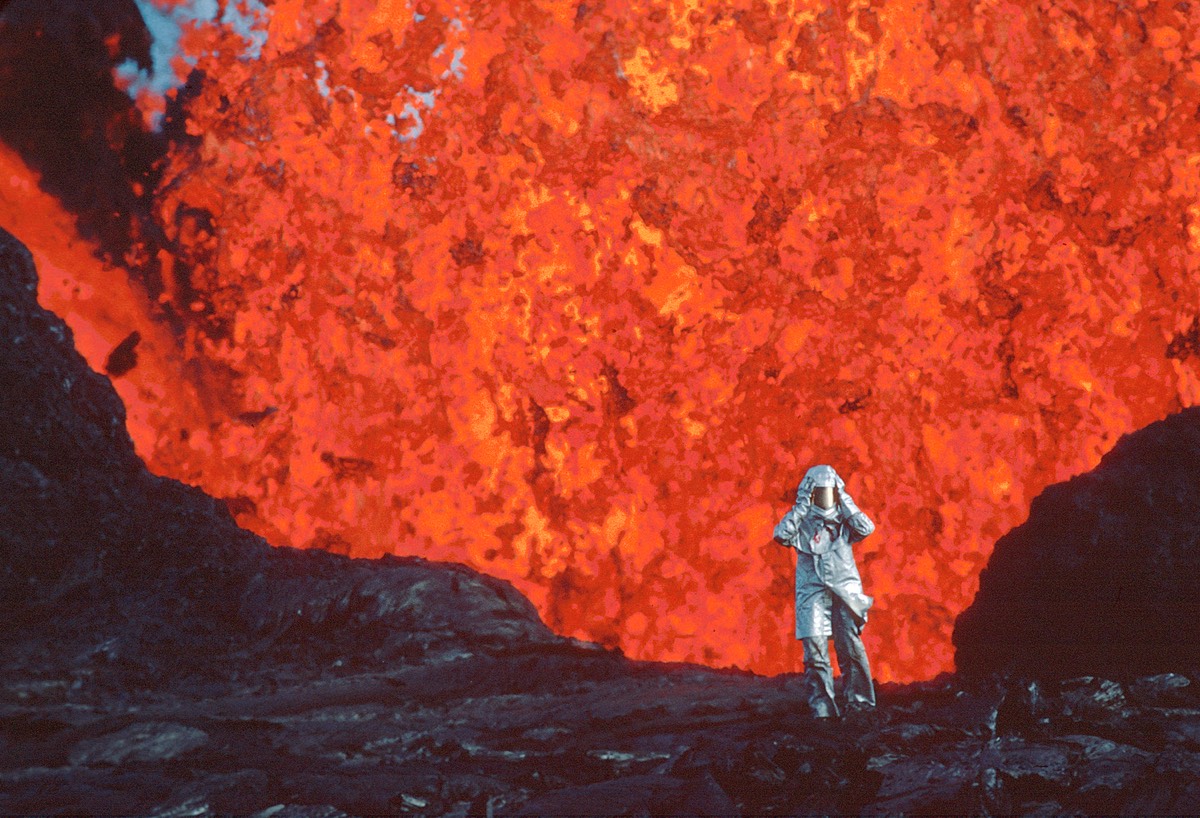
Enlarge / Volcanologist Katia Krafft wears a heat suit for protection from an erupting volcano in Fire of Love.

French volcanologists Maurice and Katia Krafft carved out an illustrious career by daring to go where most of their colleagues feared to tread: right to the edge of an erupting volcano. The photographs and video footage they recorded during the 1970s and 1980s contributed to significant breakthroughs in their chosen field. Alas, the couple’s luck ran out on June 3, 1991, when they were killed by a massive pyroclastic flow from the eruption of Mount Unzen in Japan. The striking image above of Katia Krafft in a protective heat suit, dwarfed by a wall of fire, is just one of many powerful moments featured in Fire of Love, a 2022 National Geographic documentary about this extraordinary couple that is now streaming on Disney+.

Director Sara Dosa was scouring archival images of volcano imagery for one of the segments in her previous documentary (The Seer and the Unseen) set in Iceland when she came across the story of the Kraffts. “I became completely hooked on the nature of their relationship,” she recalled. “It wasn’t just Maurice and Katia in a relationship; it was almost a love triangle between the two of them and the volcanoes.” Apart from a handful of new footage shot by cinematographer Pablo Alvarez-Mesa, the entire film is composed of archival footage.

Maurice and Katia (nee Conrad) Krafft met at the University of Strasbourg and married in 1970. Katia earned degrees in physics and chemistry, while Maurice studied geology. He had been fascinated by volcanoes since he was 7 years old during a family trip to Naples and Stromboli. Katia shared that fascination, and one of their first excursions as a couple was to Stromboli, where they photographed its eruption.

That launched their career as volcanologists. They were often the first to show up at an active volcano, often going right to the edge to capture vivid still photographs and video of eruptions, creating footage that was the envy of their peers. Katia would also take gas readings and mineral samples and carefully record the data. She wrote numerous books to help fund their many trips and even made a volcano documentary for PBS. And they often relied on giving talks at nursing homes to drum up funding, according to Leanne Wiberg, who knew the Kraffts while working at the Smithsonian some 30 years ago.

The Kraffts traveled relatively lightly in terms of personal items, preferring to reserve the limited suitcase space for their gear. “They would go to Goodwill stores in the US when they landed, because if a volcano erupted, they couldn’t go back to France to get their favorite camera and hot suits,” Wiberg told Ars. “The hot suits alone took up a whole suitcase. Their supplies would be shipped from France. So they didn’t have any luxuries or extra clothing.”

Maurice and Katia Krafft being interviewed in their home in Alsace, France.
Enlarge / Maurice and Katia Krafft being interviewed in their home in Alsace, France.

The couple decided to document the eruption of Mount Unzen in the late spring of 1991. There had been several small debris flows beginning on May 15 of that year, with the first small pyroclastic flow forming on May 24. Several more small pyroclastic flows occurred over the next several days, and much of the surrounding area was evacuated. But the Kraffts, American geologist Harry Glicken, several media teams, and assorted locals remained, perhaps lulled into a false sense of security about their ability to steer clear of the pyroclastic flows.

“The goal was for Maurice to get a side profile view of the pyroclastic flow,” said Wiberg. “The laminar flow is slower than the billowing overlap on the top. That’s why they have these cauliflower-pluming shapes. [The Kraffts] set up on a ridge that they thought would be far enough away to be protected by another ridge. But things didn’t go as expected.”

Accounts differ as to what triggered the massive pyroclastic flow on June 3—10 times bigger than the earlier flows—but it’s possible the culprit was the half a million cubic meters of hardened lava that broke off when the lava dome collapsed. According to geologist Jess Phoenix, author of Ms. Adventure: My Wild Explorations in Science, Lava, and Life (the paperback comes out next month), pyroclastic flows can move as fast as 435 mph (700 kilometers per hour). “I can’t overemphasize how destructive pyroclastic flows are,” Phoenix told Ars, likening the flows to a highly effective bulldozer. “You’ve got heavy rocks of varying sizes on the bottom of the pyroclastic flow, and a super-heated cloud of glowing ash and gas higher up. They are strong enough to wipe town buildings out of existence. And if there’s a reinforced structure with concrete and rebar, the rebar will be bent over sideways.”

Those still in the danger zone had no chance against the fast-moving flow. The Kraffts’ bodies were found lying side by side near their rental car, burned beyond recognition, while Glicken’s body was found a bit farther away. The 43 casualties also included 16 members of the media, 12 firefighters, four taxi drivers, two police officers, two city council workers, and four local farmers. The Kraffts’ footage of the event was destroyed, but in 2005, another (melted) video camera by a media reporter who had died was recovered, and the tape was miraculously still playable.

https://arstechnica.com/?p=1910139


Din Djarin seeks forgiveness for his sins in The Mandalorian S3 trailer

[embedded content]
Pedro Pascal reprises his role as a bounty hunter who befriends a youngling powerful with the Force in The Mandalorian.

The Mandalorian returns in March for a much-anticipated third season. We had a brief teaser last fall during Disney’s annual D23 Expo, but the Mouse House debuted the full trailer last night during the halftime show of the NFL Super Wild Card matchup between the Dallas Cowboys and Tampa Bay Buccaneers.

(Spoilers for the first two seasons and The Book of Boba Fett below.)

The series takes place a few years after the fall of the Empire and before the emergence of the First Order. In the first season, Pedro Pascal’s titular lone bounty hunter was tasked with delivering a youngling, Grogu (aka Baby Yoda) to a shady client who wanted to perform experiments on the child. Mando ended up rescuing Grogu instead, and the two formed a strong bond. In the second season, the Mandalorian reluctantly worked to reunite Grogu with his own kind—or at least with a Jedi so the youngling could grow stronger in the Force. Mark Hamill made a surprise cameo as a (digitally de-aged) Luke Skywalker in the season 2 finale, taking Grogu with him to complete his Jedi training. There wasn’t a dry eye in the house as Grogu and the Mandalorian made their farewells.

Fortunately, the two weren’t separated for too long. The pair reunited in the finale of The Book of Boba Fett. Ahsoka Tano (Rosario Dawson) had passed on a gift of chain mail to Grogu after warning Mando/Din Djarin that his presence would be a distraction from Grogu’s Jedi training. Luke—sensing the youngling’s divided loyalties—told Grogu to choose between the chain mail and Yoda’s old light saber, i.e., between his love for the Mandalorian and his Jedi training. Grogu chose the chain mail and arrived on Tatooine mid-battle, leaping delightedly into his buddy’s arms with a squeak. He even did his own Force-ful part in the battle, including soothing a savage rancor.

Per the official S3 premise:

The journeys of the Mandalorian through the Star Wars galaxy continue. Once a lone bounty hunter, Din Djarin has reunited with Grogu. Meanwhile, the New Republic struggles to lead the galaxy away from its dark history. The Mandalorian will cross paths with old allies and make new enemies as he and Grogu continue their journey together.

All our favorite series regulars are returning for the third season: Katee Sackhoff as Bo-Katan Kryze, Carl Weathers as Greef Karga, Amy Sedaris as Peli Motto, Emily Swallow as The Armourer, and Giancarlo Esposito as Moff Gideon. Christopher Lloyd and Tim Meadows will be joining the cast this season, along with a rumored appearance by Babu Frik, who appeared in 2019’s The Rise of Skywalker. Showrunner Jon Favreau penned all eight episodes.

The trailer gives us plenty of shots of Grogu and his space daddy as Din Djarin dispenses a bit of wisdom and reflects on what he’s lost in a voiceover. “Our people are scattered like stars in the galaxy,” he says, an oblique reference to the “Night of a Thousand Tears” in Star Wars lore, in which the Mandalorian people were massacred by the Empire. “What are we? What do we stay for?”

His quest this season clearly involves returning to Mandalore in hopes of being forgiven and welcomed back into the fold. In season 2, Din broke his Mandalorian sect’s protocol by taking off his helmet twice: once to save Grogu and once to bid the adorable green baby Force user farewell. That did not go well with his people, particularly the Armourer. Bo-Katan covets the Darksaber that Din won by defeating Moff Gideon in battle, technically making him the ruler of Mandalore—but is he really cut out for government?

There’s plenty of action, of course. We see a group of lightsaber-wielding Jedi, suggesting we’ll get a flashback at some point to the infamous Order 66. There’s a brief glimpse of Dr. Pershing (Omid Abtahi)—perhaps on Coruscant? Grogu shows off his growing strength with the Force, and that sure looks like a Kowakian monkey-lizard obnoxiously laughing in a tree.

The Mandalorian‘s third season debuts on Disney+ on March 1, 2023. Two more interconnected spinoff series are slated to premiere later this year: Ahsoka and Skeleton Crew.

Listing image by Disney+

https://arstechnica.com/?p=1910454