Milla Jovovich, Tony Jaa take on vicious creatures in Monster Hunter trailer
[embedded content]
Milla Jovovich plays Captain Artemis, who must battle monsters after being transported to a hidden world in Monster Hunter.
US soldiers must fight for their lives in a parallel world filed with gigantic, aggressive creatures in Monster Hunter, a forthcoming film adapted from the hugely successful global video game franchise of the same name. Die-hard fans of the games are already noting their displeasure with the trailer, which I get—let’s be honest, the trailer looks a little cheesy. But the film also co-stars martial arts star Tony Jaa of the Ong-Bak franchise, which in my book makes up for a lot of sins. And director Paul W.S. Anderson was the driving creative force behind the wildly popular Resident Evil film franchise.
The Monster Hunter games are Capcom’s second bestselling game series—behind the Resident Evil series—with more than 64 million units sold globally to date across all platforms. Anderson (Mortal Kombat) discovered Monster Hunter while visiting Japan in 2008, and adapting a film from the game world became his new passion project. With the hope of establishing another successful film franchise, he enlisted his own wife, Milla Jovovich (who starred in the Resident Evil films), for the lead role of Captain Natalie Artemis, a US solider who falls into the gaming world via a portal—Anderson’s plot device for introducing cinema audiences to that universe.
In the Monster Hunter role-playing games, players choose a Hunter character, along with custom armor and weapons. The characters don’t have intrinsic abilities, like traditional RPGs; rather, whatever abilities they have derive from the choice of weapons and armor. Those choices are basic at first, and players collect additional resources from their quests to conquer various monsters—including fashioning new assets from parts gleaned from the defeated creatures. In single-player mode, the Hunters are usually accompanied by a Felyne or sentient cat creatures known as Palicos for additional support.
Milla Jovovich stars as Capt. Natalie Artemis, a member of a United Nations military team.
A mysterious totem in the desert.
YouTube/Sony Pictures
They’re caught in a supernatural sandstorm.
YouTube/Sony Pictures
And they end up in another world.
YouTube/Sony Pictures
Looks peaceful enough.
YouTube/Sony Pictures
Surely these are the bones of an extinct creature. Right?
YouTube/Sony Pictures
A giant monster rears its ugly head.
YouTube/Sony Pictures
The soldiers spend a lot of time gaping in this trailer.
YouTube/Sony Pictures
It’s martial arts star Tony Jaa to the rescue.
Nice bow, dude.
YouTube/Sony Pictures
Peeved at being shown up by a bow and arrow.
YouTube/Sony Pictures
A human settlement.
YouTube/Sony Pictures
An attack by night.
YouTube/Sony Pictures
YouTube/Sony Pictures
Bracing for combat.
YouTube/Sony Pictures
Apparently Drogon from Game of Thrones is moonlighting as the Rathalos in this movie.
YouTube/Sony Pictures
Locked and loaded.
YouTube/Sony Pictures
The main characters in the film are based on game characters (e.g., the Handler and the Admiral), and all the weapons, armor, and monsters are largely drawn from the gaming world as well—including Palicos and the signature monster, dubbed the Rathalos (basically a fire-breathing dragon). Jovovich picked her character’s trademark dual blades after experimenting in-game with different weapons, believing they would make for visually exciting action sequences.
Per the official premise:
Behind our world, there is another: a world of dangerous and powerful monsters that rule their domain with deadly ferocity. When an unexpected sandstorm transports Captain Artemis (Jovovich) and her unit (TI Harris, Meagan Good, Diego Boneta) to a new world, the soldiers are shocked to discover that this hostile and unknown environment is home to enormous and terrifying monsters immune to their firepower. In their desperate battle for survival, the unit encounters the mysterious Hunter (Jaa), whose unique skills allow him to stay one step ahead of the powerful creatures. As Artemis and Hunter slowly build trust, she discovers that he is part of a team led by the Admiral (Ron Perlman). Facing a danger so great it could threaten to destroy their world, the brave warriors combine their unique abilities to band together for the ultimate showdown.
Yep, that pretty much sums it up. Monster Hunter premieres in theaters on December 30, 2020, coronavirus willing, so we can ring in the new year with a big monster stomp.
Welcome to “Scare Tactics,” a pilot for a video series that aims to explore how different creators make horror games. We see horror as a special genre—horror games aren’t always played for the same reasons as other games. They aren’t necessarily fun, and their reward often comes from overcoming one’s own fears, rather than from overcoming the game’s mechanics.
We’re starting the series by cozying up to Frictional Games cofounder Thomas Grip. To call the release of Frictional’s Amnesia: The Dark Descent a watershed moment in horror gaming would be a severe understatement—it launched the careers of many Let’s Play YouTubers and spawned dozens of copycats all trying the same scare-your-brains-out formula. The company is currently working on Amnesia: Rebirth, but Grip took time away from finishing Rebirth to take us through his philosophy and approach to horror game design.
(Along the way, he also shared some Rebirth previews with us, and our video above showcases a few Rebirth gameplay elements that haven’t been seen yet!)
Things that go bump in the night
No matter how you slice it, horror is ultimately subjective. We’ll never agree on which things are scariest, which gameplay elements are necessary, or even what the experience is for. This puts horror game creators in a weird position—how do you make good games in a genre where “good” doesn’t necessarily mean the same thing as it does elsewhere?
On a personal level, I’ve been a fan of Grip for years, and I really respect his views on game design. He also directed Soma, which was a masterpiece—and the scariest game I think I’ve ever played. (Outside of the atmosphere and the setting and the monsters, Soma actually managed to give me nightmares because of the questions it caused me to ask about life and existence and humanity and consciousness. And isn’t that what any good piece of art should do?)
Enlarge/ These games aren’t always frightening for obvious reasons—Soma in particular has things lurking under the surface that go far beyond body horror or jump scares.
Frictional Games
With strange aeons
This isn’t our first dive into horror—we’ve done videos on the genre before, including talking with the venerable Glen Schofield about Dead Space and previous chatting with Grip about the original Amnesia.
But consider those earlier efforts as prologue, because “Scare Tactics” as a series is a passion project of mine. We don’t really plan on doing reviews or previews of games, but rather using the release of a game as an opportunity to explore a whole genre. Like “War Stories,” we want to apply that Ars Technica special sauce to a subject and give brilliant designers like Grip the chance to talk about the nuts-and-bolts of how they make us afraid. (So if you happen to have any favorite horror genre games you’d like us to dig into, please drop a note in the comments!)
Amnesia: Rebirth will be out on October 20 for PC and Playstation 4. It’s currently available for pre-order on Steam or GOG for $26.99.
https://arstechnica.com/?p=1713912
Review: Utopia is a very good series released at exactly the wrong time
Jessica Rothe plays Samantha, a fan of the Dystopia comic, keen to bid on the just-discovered copy of the unpublished sequel: Utopia.
Fellow Dystopia/Utopia fans Becky (Ashleigh LaThrop) and Ian (Dan Byrd).
YouTube/Amazon Prime
Check out the cover of the only known copy of Utopia.
YouTube/Amazon Prime
Wilson Wilson (Desmin Borges) lurks on the convention floor.
YouTube/Amazon Prime
Some fans see complicated hidden connections in the comic.
YouTube/Amazon Prime
“You’re one of those, huh?” Not all fans buy into the conspiracy rumors.
YouTube/Amazon Prime
Also lurking: Jessica Hyde (Sasha Lane), the comic’s famed central character.
YouTube/Amazon Prime
Convention after-party in Wilson’s underground bunker.
Amazon Prime
It’s rarely a good thing when Arby (Christopher Denham) shows up.
YouTube/Amazon Prime
“They’ve killed every single person who’s seen Utopia.” Including the wealthy collector who bought it.
YouTube/Amazon Prime
Wilson loses an eye but escapes with his life.
YouTube/Amazon Prime
Joining forces with Jessica Hyde.
YouTube/Amazon Prime
Can’t a girl go get a coffee without coming back to a bloodbath?
Amazon Prime
Burning their cell phones to better elude their pursuers.
Amazon Prime
It’s a rare TV series that gives me pause about even writing a review, but Amazon’s new sci-fi thriller Utopia turned out to be just that. Not because it isn’t good—on the contrary, I found it both entertaining and thought-provoking. But there are several key elements of the central plot that proved disquieting enough (even for someone like me who is not generally squeamish) that I had to ponder the pros and cons of giving space to a show whose release perhaps should have been postponed by a few months, given current world events. (I mean, read the room, Amazon! Geez!) In the end, the pro arguments won out.
(All major spoilers are below the second gallery. We’ll give you a heads-up when we get there.)
As we reported previously, the series is a reboot of the 2013 British version, about online fans of a graphic novel called Dystopia that seems to have the power to predict the real-world future. The fans are obsessed with tracking down the sequel, Utopia, and this makes them targets of a secret organization. Amazon has kept the same basic premise (with a few tweaks) and swapped in an American cast. Per the official premise: “When the conspiracy in the elusive comic Utopia is real, a group of young fans come together to embark on a high-stakes twisted adventure to use what they uncover to save themselves, each other and ultimately humanity.”
Ian (Dan Byrd, Easy A), Becky (Ashleigh LaThrop, The Handmaid’s Tale), Samantha (Jessica Rothe, Happy Death Day), Wilson Wilson (Desmin Borges, You’re the Worst) and Grant (Javon “Wanna” Walton, Euphoria) are the conspiracy-minded uber-fans of Dystopia. They are intent on teasing out the meanings hidden within its pages that they believe will predict major calamitous events in the real world. They meet up in person for the first time at a comics convention where they plan to bid on the only known copy of Utopia.
Unfortunately, they are not the only ones interested in obtaining the comic. In fact, anyone who has seen it mysteriously ends up dead, courtesy of a sociopathic hitman named Arby (Christopher Denham, Manhattan), who has no qualms about executing random cosplayers, or even entire families (toddlers included), should his orders require it. Also seeking out Utopia is Jessica Hyde (Sasha Lane, American Honey, 2019’s Hellboy), the comic’s famed central character, who is actually real and thinks Utopia holds the secret to finding her long-lost father. Meanwhile, a mysterious deadly virus has begun infecting schoolchildren around the country, and the death count is rising rapidly.
Earn your place in this crowded world
The cast also includes John Cusack (Grosse Pointe Blank) as Dr. Kevin Christie, CEO of a powerful biotech company that manufactures vaccines, along with a few other ethically questionable research programs. He’s an idealist who espouses an especially twisted form of utilitarianism: in lieu of grace at family dinners, every family member must recount what they did that particular day to “earn your place in this crowded world.” Yes, Christie is up to something, most likely nefarious in nature. Rainn Wilson (The Office) plays Dr. Michael Stearns, a nebbishy virologist who suspects the virus currently killing children is the one he discovered in Peru years ago. The series also stars Farrah Mackenzie (Logan Lucky) as Alice, a young girl who falls in with Jessica and her ragtag crew of uber-fans, and Cory Michael Smith (Gotham) as Christie’s son Thomas.
The British version received critical praise for its originality and visual style, offset by strong reservations about its extreme violence, which struck many as unnecessarily gratuitous. The most famous scene involved a torturer using a spoon to gouge out a victim’s eye. That scene is still intact, albeit a bit less graphically depicted.
“I don’t want it for a cartoon effect or for shock value,” Gillian Flynn (author of Gone Girl and Sharp Objects), who adapted the series for Amazon, told Deadline Hollywood in August about whether this version would be as violent. “I think we as an audience are past most of that as pure shock value. I want to use violence when it’s effective and appropriate.” That tone is reflected in the series, despite a body count to rival The Boys. When young kids are the victims, for instance, the camera looks away, opting to imply their demise rather than show it on screen.
There’s so much to like about this Utopia. The cast is terrific, the writing is sharp, and the story is compelling and expertly paced, and there are enough sparks of bleak humor to keep the series from being a slog. So what could possibly give me pause about reviewing it? Pretty much the entire central conspiracy, which might have played well in 2013 but hews way too close to the bone in late 2020.
(WARNING: Major spoilers below. Stop now if you haven’t finished the series.)
John Cusack plays Dr. Kevin Christie, CEO of ChristieBIO.
Christie’s son Thomas (Cory Michael Smith) is his right-hand man.
Amazon Prime
Beware corporate idealists who think the end justifies the means.
Amazon Prime
Rainn Wilson plays Michael Stearns, an expert on viruses.
YouTube/Amazon Prime
A top-secret quarantined camp.
YouTube/Amazon Prime
Charlotte (Hadley Robinson) knows her purpose in Christie’s grand scheme.
YouTube/Amazon Prime
Seems like a vaccine might be in the works.
YouTube/Amazon Prime
Jessica and her new allies try to decipher the clues.
Amazon Prime
Even aspiring corporate saboteurs need the occasional snack.
Amazon Prime
Christie’s master plan hits a few snags
Amazon Prime
“We can fight it.” Hope springs eternal for Stearns.
YouTube/Amazon Prime
“Practically begging to be slaughtered.”
YouTube/Amazon Prime
Love blooms even when lives are in danger.
Amazon Prime
Arby has an epiphany.
Amazon Prime
Jessica comes home.
Amazon Prime
We don’t discover the full extent of Christie’s nefarious plan until the final two episodes, but it amounts to this. He has deliberately manufactured the viral outbreak that has been killing hundreds of schoolchildren, all for the purpose of panicking the public and getting people to demand that the FDA fast-track approval of an experimental vaccine developed by Stearns, bypassing the usual safety trials.
Christie’s company will then ship out massive quantities of the vaccine worldwide—except it’s not really the vaccine against the virus. Rather, it will sterilize almost everybody who gets the vaccine, essentially curbing population growth for an entire generation to reduce the global population to a mere 500 million so that there will be more precious resources for everyone. Christie is like Marvel’s Thanos, only instead of an Infinity Glove, he’s using a manufactured health crisis to solve what he perceives to be an overpopulation crisis. And there’s a vast global conspiracy backing him.
There are plenty of people who fall into the “morbidly curious” camp—myself included—which is why the 2011 film Contagion experienced a sudden resurgence in popularity as the coronavirus pandemic began to escalate in the United States in March. In fact, some researchers believe that this is an evolved human response mechanism for dealing with threats by learning from imagined experiences, much like a love of horror may exploit our evolved fear system. We seek out being afraid in controlled settings as a means of confronting our fears in a safe environment, and we may seek out pandemic-themed entertainment for similar reasons. And until this year, I would have confidently asserted that people are far better at discerning fact from fiction than the tsk-tsking pearl-clutchers typically give them credit for.
Context matters
But we’re now several months into the pandemic, with over 200,000 dead in the US alone and a shattered economy. Everyone’s nerves are stretched thin. A good many panicked people are being fed misinformation via a highly coordinated campaign across multiple platforms, reaching to the highest levels of our government. Otherwise rational people are buying into outlandish conspiracy theories about a manufactured virus deliberately released to create demand for a vaccine—except that vaccine is a plot masterminded by Bill Gates so he can secretly microchip us and track our every movement.
There is political pressure to rush approval of a vaccine, skipping the usual safety trials against the advice of experts, and there is general distrust about whether any such vaccine can thus be trusted. QAnon adherents are running for Congress. Others are dismissing the pandemic as a hoax, refusing to take the simplest precautions and making it that much harder to get the outbreak under control. And on and on and on. Is this really the time for Amazon to pour gasoline on the fire, when so many people are in such deep denial that they will choose their preferred fictions over objective reality?
In other words, context matters. In the end, however, I came back to my conviction that good art is supposed to make us feel a little uncomfortable—Utopia just pushes that boundary further than most because of the poor timing of its release. Anyone inclined to take its fictions as fact is going to find abundant fodder to feed their fantasies regardless of whether Amazon had chosen to postpone the series or not. Some people will find Utopia a bit too on-the-nose right now; others won’t understand what all the fuss is about. I trust Ars readers to know which category they fall into and decide accordingly.
DiRT 5 and our first Xbox Series X “enhanced” tests: 120Hz saves the uneven ride
Microsoft provided the following three images of DiRT 5 running on Xbox Series X, which line up with how the game can look in its sweetened “photo” mode. But how does it look in action? Read on to find out.
Codemasters
The best visual element in DiRT 5 is the dirt, which spews from tires in convincing, particle-filled clouds. (Perhaps they’re too good, as these clouds can cause frame rate stutters in the game’s pre-release version.)
Codemasters
Dirt and grime will accumulate on your car’s body over the course of a muddier track.
Today, for the first time, I’m allowed to lift the curtain on a game made for Xbox Series consoles: DiRT 5, the latest drift-heavy racing game from Codemasters. What’s more, it is the first game I’ve ever tested for a bespoke game console with frame rates up to 120fps. That’s a substantial increase from the 60fps max of past console generations (and a big rally-car leap above the 30fps cap you typically see on current-gen games).
I want to be clear: DiRT 5 is not the best foot forward for Xbox Series X, and I’m not entirely sure it’s representative of the console’s next-gen promise. I urge you to keep an eye out for more next-gen game impressions before loading ammunition into your preferred “console war” cannon. But DiRT 5‘s first taste of 120Hz racing on a console, and what it takes to get there, is fascinating enough to merit an asterisk-covered preview.
Deform your deformation expectations
The first major issue with DiRT 5 is how seemingly current-gen the whole game looks. When I think about the promise of Xbox Series or PlayStation 5, I look back at bullet-point lists in the recent hype cycle. Insane loading times. Virtual worlds that can stretch much further into the distance, owing to a faster I/O architecture. Larger crowds of people and vehicles, powered by a substantial boost to CPU specs. Incredible texture fidelity on people and terrain. Maybe some ray tracing (though, let’s be real, we’re still waiting on anything with ray tracing enabled to exceed 30fps on one of this year’s consoles).
DiRT 5 fails to meet pretty much all of those bullet points. Generally, it looks like a current-gen console game that would have struggled to hit a smooth 60fps on Xbox One X or PS4 Pro, especially at resolutions higher than 1080p. I’ve seen crazier amounts of distant terrain and geometry in 60fps racers like OnRush, and I’ve seen more convincing foliage and weather effects in Forza Horizon 4 (which maxed at 30fps when it launched on Xbox One). Like other mainline entries in the series, this DiRT sequel sticks to formal racetracks with a mix of concrete and unfinished roads—not open-world romps. It looks so familiar, in fact, that if I told you all of the images in this article were from 2017’s DiRT 4, you might believe me. (To be clear, all images in this article are from DiRT 5 on Xbox Series X.)
Even at their most ambitious, DiRT 5‘s race tracks emphasize the kinds of foliage designs and rendering distances you’ve seen before. In particular, camera angles emphasize limited views as you careen toward your next drift-filled turn, as opposed to eye-popping zips through massive valleys. (The few times the game has you drive off massive ramps, they’re not sold with a sense of scale; you simply see a wide-open, low-resolution skybox behind a straight chunk of road to land on.) Also, for a game with so many puddles, the reflections in this game use a particularly inaccurate-looking screen-space option—and, again, I didn’t expect ray tracing, but even cube maps would’ve looked better than this.
Worst of all is the game’s terrain. Despite so much emphasis on driving over puddles, mud, and snow, DiRT 5 includes zero terrain deformation systems. You won’t see mud pile up in tread-filled chunks, nor clear tire trails through dusty roads, while the meek trail marks through snowy terrain auto-vanish after about 10 yards. I’m not saying the game needs such computationally expensive systems, nor even a cleverly coded facsimile that applies simple texture tricks over messy roads. But in DiRT 5, all of the splashes and explosions of mud and dust aren’t met by a road that matches, and it’s hard not to notice.
New console’s resolutions
Comparison gallery time, here to help you see the difference between the highest- and lowest-end settings in DiRT 5 on Xbox Series X. Here’s a screen in the game’s “resolution” graphics mode, cropped to a 1080p zoom.
Same scene, captured in “120 fps” mode and cropped to a 1080p zoom. The car’s geometry dwindles, and the fans along the track vanish altogether.
A screen in the game’s “resolution” graphics mode, cropped to a 1080p zoom.
Same scene, captured in “120 fps” mode and cropped to a 1080p zoom. Though the cars on this grid differ, you can still see major visual downgrades like shadow resolution and level-of-detail downgrades in the distance.
A screen in the game’s “resolution” graphics mode, cropped to a 1080p zoom.
Same scene, captured in “120 fps” mode and cropped to a 1080p zoom.
A screen in the game’s “resolution” graphics mode, cropped to a 1080p zoom. The resolution definitely isn’t up to a full 4K at this point, with a crowd of cars and other details straining Xbox Series X.
Same scene, captured in “120 fps” mode and cropped to a 1080p zoom. Resolution drops further still here, as do other obvious details.
A screen in the game’s “resolution” graphics mode, cropped to a 1440p zoom.
Same scene, captured in “120 fps” mode and cropped to a 1440p zoom. Notice the lack of blue reflection effects on the bottom of the car in this shot.
DiRT 5 includes three visual modes as options: “resolution,” “frame rate,” and “120 Hz.” And all of the above complaints are compounded as you take each step toward lower detail.
In “resolution” mode, the game runs in an apparently uncapped frame rate; this bounces between 30fps and 60fps, which averages out to roughly 40fps. This mode’s dynamic resolution maxes out near 2160p and falls as low as an apparent 1440p. (Compared to Xbox One’s heavily aliased DiRT 4, the jump in resolution this time around is very appreciated.) Drop to DiRT 5‘s middle “frame rate” setting, and you’ll see a mild hit to texture pop-in on the ground ahead of you, along with a noticeable hit to shadow pop-in in the near distance. Settings are otherwise mostly left intact, other than a dynamic resolution that scales down lower, while the frame rate gets close to, but doesn’t lock to, 60fps.
The visual quality continues to dwindle when you take things all the way to 120fps mode, at which point major visual features disappear. The worst is an aggressive level-of-detail (LoD) downgrade for any elements near and above the race track. Mountains start to look less like mountains and more like college-grade assets purchased directly from the Unity development store. Tree-lined hillsides lose some trees. Cars lose polygonal detail and flourishes like grills. And the crowds of cheering fans sitting or standing by the road all disappear, even though the game’s audio doesn’t reflect this reality. (If you think fake crowds in pandemic sports games are bad enough, you ain’t seen nothin’.)
Additionally, pop-in issues become much more apparent for both textures and shadows, and ambient occlusion is axed across the board. Those distant trees look weirder without a coat of accurate shadows, while ground textures look decidedly flat in this mode. Plus, its dynamic resolution appears to max out near the 1080p mark, dropping further during busy scenes.
Hugging the track with many more frames
Ars Technica’s default gallery interface shrinks images, which is why the above gallery uses zoomed-in crops. Here, I’ve included full 4K resolution grabs of the same scenes, which you’ll need to click through and open in new tabs to do your own granular pixel comparisons. This is from the “resolution” mode.
Same shot from the “120 fps” mode.
A 4K capture from the “resolution” mode.
Same shot from the “120 fps” mode.
A 4K capture from the “resolution” mode.
Same shot from the “120 fps” mode.
A 4K capture from the “resolution” mode.
Same shot from the “120 fps” mode.
And yet! Unlike the other two modes listed here, 120fps mode only suffers from a drop from its advertised frame rate at the outset of certain races, when every car is kicking up particle clouds of dirt or water. Other than those frame rate stutters, the mode does a really good job of locking to its target frame rate.
That’s when we start cooking with gasoline.
DiRT 5 is at its best when its race tracks eschew boring, wide-open straightaways and focus on skin-of-your-teeth maneuvers. Hilly corkscrew turns, aggressive zig-zags, and downhill dives into blind corners feel particularly good when the team at Codemasters lets you rip them open at 120fps, and these zanier courses benefit from clever art direction (particularly on a series of courses near Christ the Redeemer in Brazil) and weather effects that explode with HDR-10 effects. A given track might transform from cloudy to rainy to a direct-in-your-eyes sunset, and the HDR grading in this one is truly something to behold, especially when rain droplets or celebratory confetti shine in the gleam of your headlights.
Major video-sharing platforms in the year 2020 severely lack 120fps options, so there’s no way I can show you the 120fps difference when careening through DiRT 5‘s dusty, particle-filled tracks. Some people may even insist they can’t tell the difference between 60fps and anything higher. I’ll simply insist that roughly 1/3 of its courses send me with a blistering sensation, where I feel like I’m bolted into the very car I’m virtually driving with the extra sense of responsiveness that 120fps affords me. Plus, the smooth refresh rate makes it easier for a driving-Philistine such as myself, who normally pulls the camera out to an angle above my car, to place the camera into a tight spot just above my car’s hood.
These compliments double up when you get into DiRT 5‘s “Playground” mode, which lets you build and share your own race tracks (including “gymkhana” score challenges) using generic course-builder parts. These all take place in a generic desert backdrop, and they match well with Codemasters’ impressive take on rally-driving suspension. In these tracks, it’s just your car, the concrete, and some incredibly tight turns and twists. Rip into these with the responsiveness of a 120fps refresh, and you likely won’t have the bandwidth to notice if any shadows or textures take too long to pop into view.
What, could you build a better $500 PC?
I conducted my tests with Xbox Series X’s packed-in controller, not a racing wheel, though in good news for enthusiasts, any wheels compatible with Xbox One will work on the newer console. But while DiRT 4 offered players a choice between “fun” and “realistic” handling models, DiRT 5 does not—and its default hews heavily towards arcade-styled racing. The result sometimes feels like a spinoff of Namco’s Ridge Racer arcade series, but when it’s just you and one or two other cars jostling for precious position around a brutal corner, DiRT 5 continues to feel springy and responsive—and feels even better when set to the game’s highest frame rate mode.
Also, if your gaming TV or panel of choice doesn’t have an HDMI 2.1 connection, then that 120Hz mode is likely off the table for you—at least on consoles like Xbox Series X. (Related: Ars Technica’s HDMI 2.1 guide is coming soon.) That’s the point where I direct you to the game’s upcoming PC version, which can get you higher frame rates via connections like DisplayPort… but if you don’t already own a gaming-grade PC, I don’t know of a $500 PC on the market, complete with a 1TB NVMe 4.0 storage drive, that will get you up to 120fps on a racer like DiRT 5.
I imagine what I’m saying here about DiRT 5 will apply to most so-called next-gen games for the next few months. Maybe a game is launching simultaneously on older and newer consoles. Or maybe it has a PC version, so it can’t home in specifically on the incredible data-processing pipeline of either PS5 or Xbox Series. Whatever the case may be, the very near future of gaming will be less about insane technological leaps and more about taking a “next-gen difference” whenever we can get it.
In DiRT 5‘s case, at least, that difference feels a lot better than it looks. But it’s also making us wonder: will developers struggle to get the most out of Xbox Series X’s differences while designing for multiple hardware generations? Will other developers come up with more clever ideas, or at least less aggressive downgrades, to reach that blazing-fast 120fps rate? And will VRR get its act together on Xbox Series X in time to smooth the inevitable frame rate lapses along the way? We don’t have those answers yet, obviously, but we’ll continue asking them while covering both sides of 2020’s next-gen frenzy.
Listing image by Codemasters
https://arstechnica.com/?p=1713027
In The Columnist, reading the comments isn’t bad—being a toxic online troll is
[embedded content]
The trailer for The Columnist
Maybe this is too wonky for those outside of film nerdom to care, but 2020 has cemented a fundamental truth about festivals—international films are increasingly the MVP of this scene. Sure, at the highest of high profile events (Cannes, TIFF, Sundance, Telluride), you can reliably get a sneak peek at the titles showing up at the next Oscars ceremony. But for the rest of us who maybe only make it to one or two of these things that tend to be local affairs (shout out to Austin Film Festival and Fantastic Fest), a lot of the most interesting stuff available comes from abroad. Russia’s Zoology(now on Amazon Prime) took How Stella Got Her Groove Back and gave it a dystopian sci-fi setting in 2016. Sweden’s Border (streaming on Hulu) found a fantastic approach to examine national borders and how we treat others in 2018, and it played some of the same events as the gripping filmmaking of Denmark’s The Guilty (also on Hulu before the US version with Jake Gyllenhaal happens). And last year, anyone even remotely following the film calendar was aware of Bong Joon-Ho’s masterful Parasite(Hulu, again, really getting it done) rising up from the festival scene to the Oscars stage.
Our year of COVID-19 may only be strengthening this trend. Big US feature films with hopes for a theatrical run seem hesitant to participate in festivals that exist only as VOD. Small shorts looking to make a splash and find a deal for full-length productions have hit pause, too, preferring to save their “premiere” bargaining chip for a time when film festivals can bring industry folks together in person once more. But international films, some of which have already enjoyed theatrical runs in their home countries (last year or during a better pandemic response), simply come to festivals to find new audiences and maybe upgrade for a US theatrical run or a wider-reaching streaming service deal. That’s still happening in 2020. And in a year where US film fans may be starved for new titles to get excited about, we all need to hope the Netherlands’ The Columnist soon transitions from the festival scene to your preferred at-home screen.
Talk about relatable
Dutch newspaper columnist Femke Boot (Katja Herbers, Westworld) writes about the toxic aspects of online culture, which means anonymous haters on Twitter and Facebook or in comment threads just love her. All that bile seems to grow exponentially with each of Boot’s new columns or appearances. “We are all people, and we shouldn’t forget that,” Boot says while appearing as an analyst on some 24-hour news channel’s “Twitter: A Blessing or a Curse?” special. “Well, we also shouldn’t forget to recycle or to eat our vegetables,” responds her counterpart, a conservative fiction writer named Stephen Dood (Bram van der Kelen). His work, naturally, seems to often involve an awful lot of murder and violence against women.
You can probably guess the response: Why do they still allow untalented women on TV? I hope they rough up your daughter, @femkeboot. If @FemkeBook gets AIDS, I’ll organize a party, deal? Boot manages to shake it off—unfortunately this isn’t a new occurrence—but this may just be the tip of a larger online garbage iceberg. Boot recently sold a book idea on online culture, and the first draft due date looms ahead of the publisher’s goal to release before Christmas. Her publisher wants more online social promotion, more appearances on TV or in radio. “You’re not on the talk show for fun, you’re a brand,” the publisher says. “You should’ve mentioned the book… we need a stir for it. ‘Next Christmas’ is practically ‘This Christmas,’ which is practically now.”
Understandably, all the pressure weighs on Boot. She struggles to get her writing done without checking her mentions out of some morbid curiosity. And on top of that, it seems like her neighbors constantly have house work happening to disrupt her peaceful writing silence. But while doom scrolling one day at the grocery, Boot recognizes a familiar face—her noisy neighbor, Arjen, happens to be among the anonymous mob trolling her. As she does some amateur sleuthing on his other social profiles, she sees Trump memes and links to her work with comments like ‘I’m ashamed to live in a country like this.” The more Arjen continues to be a different person to her face—Want some leftover ham, Femke?—as he loudly wraps up his new fence, Femke gets increasingly fed up. So later that day, she takes an axe to the fence—a move that feels surprisingly therapeutic. Even better, the decision seems to settle Boot down and allow her to get some real writing done. So when she next hears some banging from the roof and finds Arjen working on shingles up there, well, she has a book to finish, right?
Never read the comments (unless it’s Ars), Femke.
Ivo van Aart / Fantasia Fest
Internet trolls come in all shapes and sizes, though most of ‘em are white dudes when you’re a woman writing about online culture.
Ivo van Aart / Fantasia Fest
Perhaps the poster for The Columnist hints at the fact Femke doesn’t settle to simply embarrass her trolls with a quote tweet.
Ivo van Aart / Fantasia Fest
Sorry Tenet, but…
The Columnist may be the best film I’ve come across in 2020 to date; at the very least, it’s the most enjoyable and entertaining. Director Ivo van Aart and writer Daan Windhorst have a clever story, a tightly wrapt plot, and a final act where I didn’t guess the outcome in advance. Toss onto that Herbers maintaining the perfect tone for Boot (quiet and calm on the outside, explosive exhaustion when confronting her trolls, and a constant inner rage shown through performance stillness and restraint) and some highly relevant present-day themes, and this would easily be the first 2020 movie I’d recommend to anyone asking for something new to watch. (The Netherlands communities where everything takes place being nice to look at mid-quarantine doesn’t hurt, either.)
Early on, the film quickly shows itself to be a thoughtful commentary on modern existence, not some one-note, B-movie slasher flick. Boot’s mustachioed villain Dood, for instance, outright admits he plays a character the second time these two cross paths (“I’m afraid I’m more cynical than you about TV,” he says. “You were there to change the world; I was there to sell a book.”) Soon enough, he becomes a likable ally to Femke who goes as far as repeatedly sharing perhaps effective advice for online life in 2020 (#NeverReadTheComments, to start). “I think it’s very healthy,” Dood says about writing violence. “A lot of people have those thoughts, most people don’t dare admit it. I have ways of letting off steam… video games like Doom and stuff. So I know what you mean that everyone has hate inside.” Or, here’s Dood about spending a lot of time on social media: “Have you been on Twitter again? Don’t do that, they’re just idiots with delusions of grandeur.”
So even if he approaches mass TV in bad faith, Dood gets it. The real villains of The Columnist are instead those who don’t: the jerks who join in the digital pile-ons to “be part of the crowd” or because “it’s just a bit of fun” and all the people in Boot’s life who dismiss enduring all that crap as no big deal. “If it was really all that bad with the death threats and all, you’d have gone to the police and not a talk show,” says one “friend.” “It’s just the Internet, it’s not real,” says another.
The Columnist makes it clear that free speech at large is a good thing despite the prevalence of such idiocy. In fact, one of the film’s B-plots involves Boot’s daughter, Anna, encountering a staunchly pro-censorship principal while working at her school paper. (This happens in a more amusing way than that sentence may indicate; swearing is involved.) But speech intended to hurt others does not come without consequence no matter how much the original messenger insists they didn’t mean it that way. We see it all the time IRL as people get fired for idiocy online. This film just turns up the dial to 11.
“Why can’t we have different opinions and be nice about it?” Boot lectures when confronting one of her trolls. “I’m a person—if you call me a whore, a stupid bitch, a pedo, I feel that. It keeps me awake. Do you get it, Tarik? Other people have feelings. I’m not a Nazi or a psychopath. The fact I have a different political opinion doesn’t make me a monster. I’m a woman who writes for a newspaper.”
It’s not always clear whether The Columnist views Femke as a hero (someone cleaning up, albeit coldly and bloodily, the gutter sludge that exists anonymously online) or a victim (someone pushed into madness by an unrelenting wave of verbal abuse on addictive platforms). I am not a woman simply existing online, and your understanding-mileage may vary if you can more directly relate. But The Columnist definitely does not portray Femke as a villain or ask viewers to sympathize with the victims whose hate-spewing went previously unchecked. Instead, this Tarantino-y revenge fantasy with over-the-top comic violence recognizes the evil and bile that sits at the center of a nameless, faceless mass of blue eggs or random handles saying the worst things their deficient brains can come up with. The most toxic of online trolling showcases a complete disregard for the well-being of others and an inability to empathize even slightly with someone who differs from you.
In contrast, viewers of The Columnist will most likely sympathize with all the middle fingers awaiting them in this film.
NY Comic-Con: the Dark Man cometh in first trailer for The Stand miniseries
[embedded content]
James Marsden, Whoopi Goldberg and Alexander Skarsgård star in the new CBS All Access limited miniseries The Stand, based on the Stephen King novel of the same name.
It’s Stephen King’s world; we’re just living in it. During New York Comic Con, CBS All Access dropped the first official trailer for its ten-episode limited miniseries of The Stand, an adaptation of King’s sprawling 1978 post-apocalyptic fantasy novel about the aftermath of a deadly pandemic that wipes out most of the world’s population.
(Some spoilers for the Stephen King novel below.)
The Stand is widely considered to be among King’s best work, with a sprawling cast of characters and multiple storylines. It’s also his longest, with the 1990 Complete and Uncut Edition surpassing even It in page count. King has said he wanted to write an epic dark fantasy akin to The Lord of the Rings, only with a contemporary American setting. “Instead of a hobbit, my hero was a Texan named Stu Redman, and instead of a Dark Lord, my villain was a ruthless drifter and supernatural madman named Randall Flagg,” King wrote in his 1981 nonfiction book, Danse Macabre. “The land of Mordor (‘where the shadows lie,’ according to Tolkien) was played by Las Vegas.”
The novel opens with the accident release of an especially contagious and deadly influenza virus (dubbed the “superflu” or “Captain Trips”), developed as a biological weapon in a secret US government laboratory. The accident kills everyone in the laboratory except for a security guard named Charles Campion, who escapes and tries to flee with his family. But he is already infected, and spreads the virus before he dies. Even imposing martial law can’t contain the virus, which eventually spreads worldwide, killing over 99 percent of humanity within a month.
But some people prove to be immune—including the main protagonist, Stu Redman—and these survivors must figure out how to rebuild some semblance of a functioning society. They are aided by mysterious shared dreams. In one, “Mother Abigail” Freemantle calls for them to come to her Nebraska farm; the other involves terrifying visions of a “dark man” named Randall Flagg. Each survivor must choose one or the other. Stu ends up leading a group of survivors in Boulder, Colorado; Flagg sets up a brutal totalitarian government in Las Vegas, where he is worshipped as a messiah and crucifies all those who displease him.
Adapting such a huge novel proved daunting, with a film version languishing in development hell for a decade. In 1994, ABC aired a miniseries adaptation of The Stand, starring Gary Sinise, Molly Ringwald, Rob Lowe, Ed Harris, Miguel Ferrer, Laura San Giacomo, Ossie Davis, and Ruby Dee, among others. The miniseries was nominated for six Emmy awards; it won two, for makeup and sound mixing.
Nothing but bad news as a pandemic wipes out most of humanity.
YouTube/CBS All Access
Larry Underwood (Jovan Adepo) and Rita Blakemoore (Heather Graham) contemplate their next steps.
YouTube/CBS All Access
Take a moment to shed a tear for that amazing apartment and view.
YouTube/CBS All Access
Larry arrives in Boulder to meet up with a group of survivors.
YouTube/CBS All Access
James Marsden plays Stu Redman, leader of the Boulder group.
YouTube/CBS All Access
Whoopi Goldberg plays Mother Abigail.
YouTube/CBS All Access
Mother Abigail “brought us all together to keep us safe in these uncertain times.”
YouTube/CBS All Access
Henry Zaga plays Nick Andros, a deaf mute.
YouTube/CBS All Access
Alexander Skarsgård makes an appropriately menacing Randall Flagg, aka the Dark Man.
YouTube/CBS All Access
Crawling through the corn field for… reasons, I guess.
YouTube/CBS All Access
Frannie Goldsmith (Odessa Young) hears the Dark Man’s call.
YouTube/CBS All Access
Harold Lauder (Owen Teague) is infatuated with Frannie.
YouTube/CBS All Access
The Dark Man appears to Mother Abigail in wolf form.
YouTube/CBS All Access
Abigail’s team heads to Las Vegas.
YouTube/CBS All Access
Las Vegas is now Flagg’s dystopian settlement.
YouTube/CBS All Access
The Dark Man’s power continues to grow.
YouTube/CBS All Access
“There’s bitter days ahead. Death and terror.”
YouTube/CBS All Access
And there will be blood.
YouTube/CBS All Access
Around 2014, Warner Bros. and CBS Films began developing another film version of The Stand—at one point there were plans for four separate feature-length films to truly do justice to the breadth of the source material. That project eventually morphed into the current limited miniseries on CBS All Access, co-written by Josh Boone and Ben Cavell. King and his son, Owen, penned the final episodes. King’s 1990 uncut version of The Stand included an epilogue in which Flagg awakens on a beach with no memory of how he got there, and soon earns the worship of the local natives. Apparently the final chapter will be markedly different from the novel, and King has written a new coda for the CBS All Access limited miniseries.
In this version, James Marsden stars as Stu Redman, who leads the Boulder group that includes disillusioned pop singer Larry Underwood (Jovan Adepo); a teacher named Nadine Cross (Amber Heard); pregnant college student Frannie Goldsmith (Odessa Young); sociology professor Glen Bateman (Greg Kinnear); teen nerd Harold Lauder (Owen Teague); and a mentally challenged man named Tom Cullen (Brad William Henke). Alexander Skarsgård co-stars as Randall Flagg, with Whoopi Goldberg as Mother Abigail.
There was a bit of controversy over the casting of a hearing actor, Henry Zaga, as the deaf/mute Nick Andros, but Boone assured critics that the actor had learned ASL and there were deaf consultants on set. Heather Graham plays Rita Blakemoore, the Rat Man is now the Rat Woman (Fiona Dourif), and the character of farmer Ralph Brentner (now Ray) has been gender-swapped as well, played by Irene Bedard. Marilyn Manson appears in an as-yet-undisclosed role; he also recorded a cover of The Doors “The End” for the miniseries. And Mick Garris, who directed the 1994 miniseries, will appear in a non-speaking role.
Judging by this first trailer, we can expect this new adaptation of The Stand to also follow the novel fairly closely, at least until the reworked ending. We see Larry leave New York City and find his way to Stu’s group in Boulder, where he is surprised to find Stu has been expecting him, thanks to visions from Mother Abigail. “All I know is that we dreamed of her and she was real,” Stu says. “She brought us all together to keep us safe in these uncertain times.”
Skarsgård’s Flagg (aka Dark Man) is appropriately menacing, and we get a glimpse of his wolf form threatening Mother Abigail. She predicts “bitter days” ahead, filled with death and terror; she’s probably right. There are shots of the totalitarian society in Vegas (complete with crucifixions) as Flagg assures his flock, “They told you it was wrong to want more. Their time is at an end. Our time has begun.”
Given how good the 1994 miniseries was, I’m not sure why another miniseries adaptation is warranted—perhaps to introduce a new generation to King’s dark apocalyptic vision, which is particularly timely coming in 2020. The Stand debuts on CBS All Access on December 17, 2020.
Listing image by YouTube/CBS All Access
https://arstechnica.com/?p=1713152
RIP to Crucible, Amazon Games’ first PC shooter: 2020-2020
Enlarge/ We’ve previously put these Amazon Games mascots behind prison bars; now, they’re in flames. RIP, Crucible. We hardly knew ye.
Amazon Games / Aurich Lawson
As it turns out, Amazon’s idea of a Crucible couldn’t handle the intense heat and pressure of the games industry.
After launching in May of this year, Crucible, Amazon Games’ first large-scale shooter title for PC, will stop receiving updates and matchmaking support on November 9, the studio announced on Friday (at the exact end-of-week hour that bad game-news stories are typically sent to pasture). The company is taking the extreme measure of offering a “full refund” for any purchases made during the free-to-play game’s lifespan, and it’s directing customers to make refund requests through either Steam Support or Amazon’s own contact form, depending on where purchases were originally made.
This followed the game’s formal delisting from Steam in July, which followed painfully low concurrent player counts (as low as 200) that made it difficult for players to successfully matchmake with each other. Though the game launched with considerable attention, including a promotional blitz on the Amazon-owned game-streaming platform Twitch, it only briefly maintained a player population exceeding 10,000 users.
Not the ping we were looking for
According to Amazon, the game’s July delisting was meant to let the developers test and implement a “roadmap” of future content and fixes, and this included features that were woefully missing from its retail launch. As an “action-MOBA” game (think League of Legends or Dota 2, mixed with shooter mechanics), Crucible failed to clarify key information to players in terms of where they might find teammates and objectives on the massive map, and it launched without anything in the way of player communication options (meaning, no text or voice chat, nor a visual “pinging” system).
On top of those issues, the game launched with three significantly different gameplay modes, which stretched the issue of character balancing all over the place. One of Amazon Games’ first big changes before the Steam delisting was to focus its matchmaking to a single gameplay mode, but the damage had already been done.
In a Friday post titled “Final Crucible developer update,” the game’s devs placed the blame on two factors: “the feedback we’ve heard from you, paired with the data we’ve collected.” But the letter doesn’t explain what that data spelled out—which was likely scant data, gathered from whatever miniscule playerbase remained after the Steam delisting. We’d been keeping an eye on Crucible‘s Steam updates and saw the developers continue to post detailed patch notes, which we thought might be paid forward by an official “relaunch” at a later date.
Weirdly, Amazon Games has promised to continue patching and touching up the game in its 30-day end-of-life period before shutting down development and “transitioning” its staff to the upcoming MMORPG New World (which received its own delay from this fall into 2021) and “other upcoming projects.” Once the game’s matchmaking service is shut down on November 9, its client will continue to support “custom” peer-to-peer matchmaking—which we seriously appreciate at Ars, as opposed to making a game die with its servers—and the staff will host a last-hurrah matchmaking frenzy with fans before that November 9 date.
Friday’s news follows this week’s Amazon Games report at Wired (full disclosure: Conde Nast is the parent company of both Wired and Ars Technica), in which staff writer Cecilia D’Anastasio follows the ups and downs of nearly a decade of game development within the company, based on insider accounts. That included the story of Crucible‘s considerable six-year development journey (reportedly hampered by Amazon management’s insistence on using its hacked-together Lumberyard rendering engine), along with claims that the game nearly launched in 2018. Though developers wanted to launch it while “battle royale” fever was peaking, executives reportedly feared launching anything short of “a billion-dollar product.”
https://arstechnica.com/?p=1713239
PlayStation 5 will only leave 10 old PS4 games in the back-compat dust [Updated]
We should probably start with the big news that Sony has not cleared up just yet.
Today, we received our first indication that PlayStation 5 will ship with something known as “Game Boost,” which its Friday news post suggests “may make [select] PS4 games run with a higher or smoother frame rate.” This suggestion doesn’t come with a handy footnote pointing us to a list of affected games or features, however.
Sony did not immediately respond to our request for clarification, so I’m left pointing to my recent deep dive with Xbox Series X’s backward compatibility suite. What I found there was compelling: Most games play nearly identically on Xbox Series X as they do on Xbox One X, since console games are typically coded with hard limits on technical aspects. But in the case of games that launched on PS4 with “unlocked” frame rates and dynamic resolutions, well, the sky might be the limit.
Will PS5 let those older, uncapped games tap into the full PS5 architecture or will certain CPU and GPU aspects be limited for compatibility’s sake? I found that Xbox Series X was generally quite generous to the minority of games that could tap into increased horsepower, but there’s no guaranteeing Sony will treat its older games the same way, in order to prioritize compatibility over upgrades. Additionally, will current-gen PlayStation VR games see their own boosts? “PSVR” is referenced repeatedly throughout today’s new document but not in the brief mention of Game Boost.
[Update, 3:05pm ET: Sucker Punch Productions has now confirmed that this year’s Ghost of Tsushima, which is currently capped at 30fps on PlayStation 4 consoles, will receive 60fps support and faster loading times on PS5 via a Game Boost-minded patch. This is likely a good sign that other recent first-party PS4 games will receive similar updates.]
Just deal with it
While we’ve yet to see a list of “select” games affected by Game Boost, we now have a small list of 10 games that stand out as exceptions for PS5’s back-compat suite. Sony seems confident in saying that the “overwhelming majority” of over 4,000 PS4 games will play on PS5, so we’ll start by pouring one out for the following 10 games that will not:
DWVR
Afro Samurai 2: Revenge of Kuma, Volume One
TT Isle of Man – Ride on the Edge 2
Just Deal With It!
Shadow Complex Remastered
Robinson: The Journey
We Sing
Hitman Go: Definitive Edition
Shadwen
Joe’s Diner
Only one of those appears to be a PSVR exclusive, and the games’ commonality is otherwise difficult to ascertain. That weird list is also a possible hint that the metric for “playable” might be a fuzzy one for PS4 games, since Sony is already saying things like the following:
Although many PS4 games are playable on PS5 consoles, some functionalities that were available on the PS4 console may not be available on PS5 consoles. In addition, some PS4 games may exhibit errors or unexpected behavior when played on PS5 consoles.
That warning is followed by stern advice from Sony: before buying DLC for a game that you want to take from PS4 to PS5, test the game out on PS5 first “to see if you are happy with the play experience.” Hmm. We’d sure like to see more explanations or examples of how PS4 games on PS5 might leave players unhappy—should we expect loading pauses, frame rate stutters, or outright glitches? Or are we talking more about tolerable differences like mild audio hiccups or color-grading issues? Right now, we have no idea.
Speaking of color-grading: “HDR is automatically switched on for PS5 consoles,” Sony says, but this doesn’t confirm whether we should expect any “auto-HDR” treatment for older PS4 games, like Xbox Series consoles offer for older Xbox software. (This automatic HDR switch won’t happen on TV sets that don’t support the standard, and Sony says it can be disabled if you prefer.)
A sense of shock
Existing PlayStation VR hardware seems to be entirely compatible with PS5, with Sony confirming once again that users will need a PlayStation Camera adapter to connect to PS5—and that those adapters will be free. How exactly PSVR owners will get those adapters remains to be seen.
The matter of PS5 controller compatibility is a bit more complicated than Xbox Series’ pledge of total forward and backward compatibility (with the exception of Xbox One Kinect, RIP). As has previously been hinted, PS5’s new DualSense controller will work with older games, but PS4’s DualShock 4 gamepad will not work with PS5 games. (Yes, you can still connect a PS4 DualShock 4 to play PS4 games on PS5. Whew, that’s a mouthful.) In good forward-compatibility news, if you already bought an expensive add-on controller, Sony assures you that “specialty peripherals [from the PS4 era], such as officially licensed racing wheels, arcade sticks, and flight sticks,” will work with PS5 software.
When playing the PS4’s library of PSVR games on PS5, Sony encourages users to stick with DualShock 4 as a gamepad, suggesting that the older gamepad offers the “best experience” in PSVR. This implies, but doesn’t confirm, that DualSense will not work the same way as a DualShock 4 in PSVR games like Astro Bot, which relies heavily on gamepad motion sensing via tracking elements like its “light bar.” You can also use existing PlayStation Move wands in PSVR games on PS5. [Update, 2:50 p.m. ET: Another official Sony page confirms that DualSense controllers will not work for PS4’s PSVR games.]
Certain PS4 system features have been scrapped when moving forward to PS5. The DualShock 4’s “share” button now brings up the PS5’s built-in “create” menu, which appears to do all the stuff that “share” did on PS4 but with a few additional button shortcuts. And PS4 social features like tournaments, “in-game live,” and second-screen app functionality have all gotten the axe.
And as Sony already confirmed last month, if you were holding out hope that any of your PS1, PS2, or PS3 discs would work on the PS5, you should stop that at once.
https://arstechnica.com/?p=1713093
Report: Xbox game streaming will land on iOS in 2021 using Web workaround
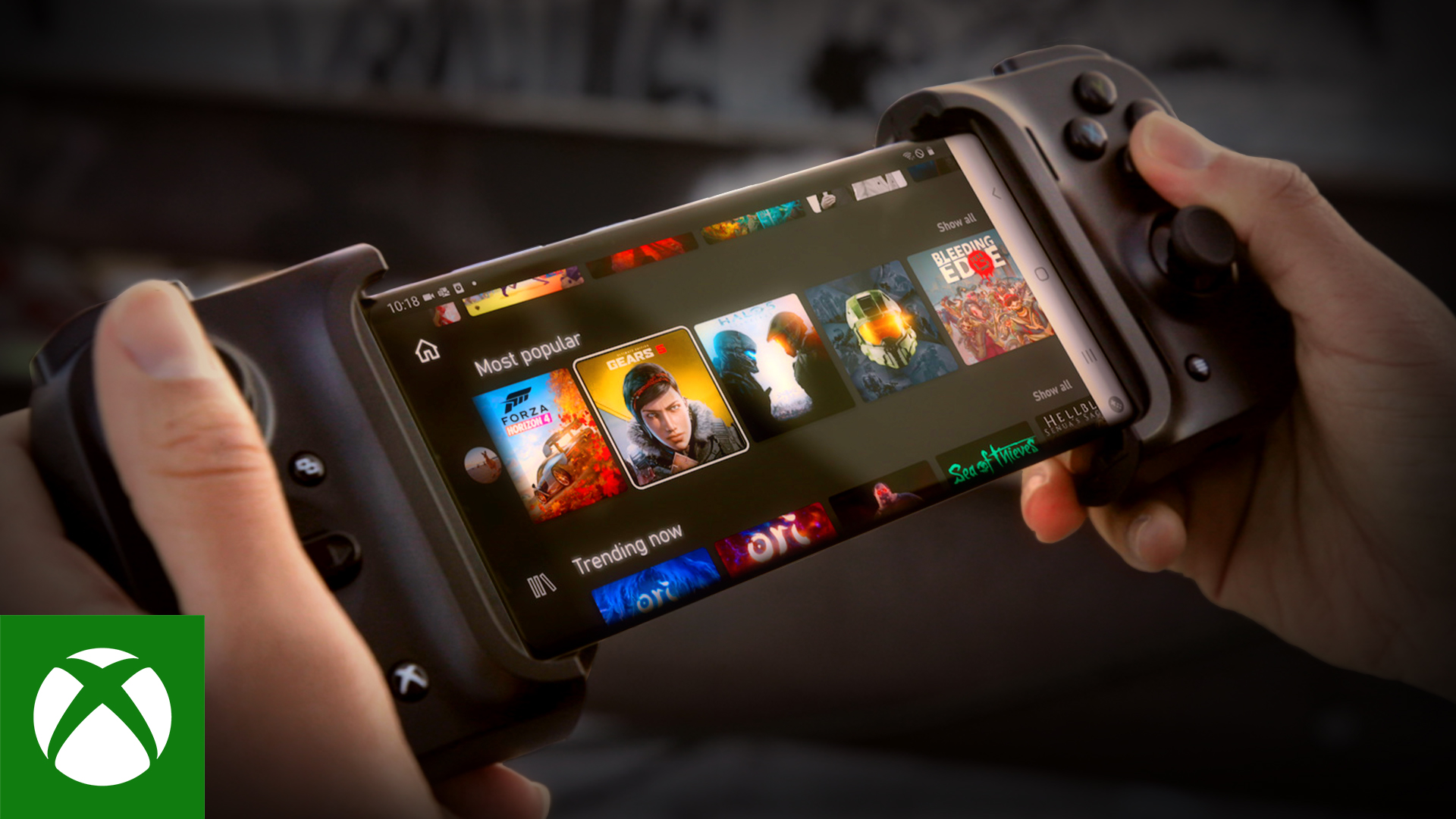
Enlarge/ This demonstration of Microsoft’s Project xCloud as played with a Razer Kishi controller, attached to a standard Android smartphone, could be a hint of what’s to come to iOS devices in 2021.
Project xCloud, the Microsoft game-streaming service that comes packed as a bonus in certain Xbox Game Pass subscription plans, may finally have a path to working on Apple’s range of iOS devices—well after a public row between the tech giants that put the possibility into question.
The news comes from a report by Business Insider, which claimed that an internal Microsoft meeting on Wednesday included a vote of confidence from Xbox chief Phil Spencer. “We absolutely will end up on iOS,” Spencer reportedly said about getting its streamed Project xCloud game content onto iOS devices in “2021.”
Progressive policies
Previously, Apple shot down existing versions of both Project xCloud (which has since been rolled into the “Xbox Game Pass” app) and Google Stadia as iOS apps. Their public statements hinged on “reviewing” the games included in the subscription against App Store guidelines, though the issue could also stem from in-app purchases within both Xbox and Stadia’s offerings. Eventually, Apple offered a revised stance on such apps, but this onerous “approval for every separate game” proposal comes with its own headaches, as opposed to a clear path toward a simple subscription service (as you’ll find in popular iOS media apps like Netflix and Amazon Video).
Roughly one month later, Amazon announced its own game-streaming service, Amazon Luna, which the company said would work on iOS devices. How? Amazon’s plan will skip the App Store and operate instead with a “progressive Web application” inside of iOS’ Safari app, which Apple cannot prohibit in the same way.
Unsurprisingly, this week’s Microsoft meeting included a call to build a similar Web-based solution for getting xCloud running on iOS devices. That would likely broaden xCloud’s reach to even more devices, and sure enough, The Verge later confirmed that the same meeting included a call to have xCloud running on Windows 10 devices in 2021.
What these reports don’t clarify, however, is how xCloud’s industry-leading latency measures, which make a serious difference in streaming twitchy video games from a server, will change when moving from a built-in app to one that routes its calls through a standard Web browser. Based on our tests of xCloud on Android, we’re not sure that Microsoft has built a simple wrapper around a Web-based app—and thus the xCloud team probably has some work ahead of them to get up to speed on one of the planet’s biggest operating systems. https://arstechnica.com/?p=1713068
The future of the Belt has begun in first trailer for The Expanse S5
[embedded content]
The fifth season of the sci-fi series The Expanse will begin streaming on Amazon Prime on December 16, 2020.
Amazon Prime debuted the first trailer (embedded above) for the upcoming fifth season of The Expanse during the series panel at the New York Comic Con’s Metaverse today. And the stakes are high. According to the official premise, “The future of The Belt has begun as Marco Inaros (Keon Alexander) wages Armageddon against the Inners for a lifetime of oppression and injustice.”
(Some spoilers for prior seasons below.)
As we previously reported, The Expanse is based on a series of novels by James S.A. Corey (the pen name for writing team Daniel Abraham and Ty Franck), exploring interplanetary tensions that are breaking out all over a Solar System long since colonized by humans—mostly between Earthers, Martians, and “Belters.” Part mystery, part political thriller, part classic space opera, The Expanse has earned almost nothing but praise from critics and its devoted fans alike, not just for its gripping storytelling, but also its excellent use of accurate physics. The third and fourth seasons earned a rare 100 percent score on Rotten Tomatoes (seasons one and two earned 76 percent and 96 percent, respectively).
So it was something of a shock when SyFy cancelled the series after just three seasons. The network cited “restrictive distribution arrangements,” specifically, just first-run linear rights in the United States. Fortunately, the production company, Alcon Entertainment, committed to shopping the show around to other networks, and its devoted fan base circulated an online petition (with over 100,000 signatures) to Netflix and Amazon. In the end, Amazon saved the show; no doubt it helped that CEO Jeff Bezos was also a fan.
S4 was based on Cibola Burn, the fourth novel in the series. Having access to thousands of Earth-like planets created a land rush and furthered tensions between the opposing nations of Earth, Mars, and the Belt. The crew members aboard the Rocinante traveled to Ilus, a colonial world where a dispute had broken out between Royal Charter Energy (RCE)—the corporation that claimed rights to the world—and the first settlers there. Surviving members of an alien civilization were also living there, and they created the Protomolecule that featured so heavily in the story arc of S3 in particular. Then there was the onset of mysterious swarms, similar to dust storms, only composed of tiny robots—Protomolecule technology.
Suffice to say, a lot happened over the course of the season—far too much to recap here. Most relevant, in light of the new trailer, is what happened with Marcos Inaros, a Belter-faction leader turned pirate who captured the UNN colony ship Sojourner and executed all its passengers. He was captured and stood trial midway through S4 but was narrowly acquitted. That good deed did not go unpunished. In the season finale, Inaros launched asteroids (cloaked with Martian stealth tech) toward Earth, cleverly targeting blind spots in the planet’s defenses (“They’ll never see it coming”).
Belter faction leader Marcos Inaros (Keon Alexander) declares war on the Inners.
YouTube/Amazon Prime
Chrisjen Avasarala (Shohreh Aghdashloo) also sees the message from Inaros.
YouTube/Amazon Prime
James Holden, captain of the Rocinante
YouTube/Amazon Prime
Dominique Tipper is back as Rocinante engineer Naomi Nagata.
YouTube/Amazon Prime
Wes Chatham as Amos Burton, former mechanic of the Rocinante, who returns to Earth on unfinished business this season.
S5 of the series picks up as multitudes of humans leave the solar system in search of new homes and vast fortunes on the earth-like worlds beyond the alien Ring, and a heavy price for centuries of exploitation of the Belt finally comes due and a reckoning is at hand. For the crew of the Rocinante and the leaders of the Inner Planets and the Belt, the past and present converge, bringing forth personal challenges that have wide-reaching repercussions throughout the Solar System.
Amos (Wes Chatham) returns to Earth to confront his past and the legacy of the life he fought to leave behind. Naomi (Dominique Tipper) reaches out to her estranged son in a desperate bid to save him from his father’s toxic influence. Bobbie (Frankie Adams) and Alex (Cas Anvar) confront the collapse of Mars as they chase a shadowy cabal with ties to terrorists and criminals. Holden (Steven Strait) wrestles with the consequences of his own past with the Protomolecule, the aliens who built it, and the mystery of what killed them. Drummer (Cara Gee), with a new crew, fights to escape who and what she used to be. And Avasarala (Shohreh Aghdashloo), refusing to be relegated to the sidelines, fights to prevent a terrorist attack unrivaled in history.
And then, of course, there’s Inaros’ vendetta to contend with. “With the opening of the alien gate, we are at a crossroads,” he declares in the trailer. “No longer will Belters be persecuted. With this attack, we will show our oppressors a strength they never thought possible.”
The fifth season of The Expanse will debut on Amazon Prime on December 16, 2020.