Mario’s early levels wear out their welcome in Super Mario Bros. 35

Illustration of Nintendo's Mario smashing through a glass wall.

Back in 2018, at the dawn of the PlayerUnknown’s Battlegrounds phenomenon, designer Brendan Greene told Ars Technica that he thought every genre—not just shooters—could potentially benefit from sampling the last-man-standing concept of the battle royale genre. Since then, games like Tetris 99 and Fall Guys have proven how flexible and robust that idea can be across the industry.

Super Mario Bros. 35 (available for free today through March 2021 as part of a Nintendo Switch Online subscription) should be a welcome addition to that collection, mixing the time-tested gameplay of the Mario series with the endless competition of the battle royale genre. Unfortunately, some odd design decisions have made my first day with the game a repetitive, overly simplistic mess, and it doesn’t feel like the game will have much staying power.

All hail the Fire Flower

Here are the basics: Super Mario Bros. 35 looks a lot more like Tetris 99 than it does PUBG or Fortnite. (No, 99 Marios aren’t dropping from a Koopa airship to find a single Princess Peach.) You and 34 online competitors get your own self-contained instance of levels from the original Super Mario Bros., and everyone plays the classic game simultaneously in isolation, as opposed to 35 Marios jumping around the same playfield. (You can see everyone else’s progress in tiny preview windows around the screen, and you’ll recognize when they’re underground or in a dungeon while you’re elsewhere).

The name of the game is surviving as long as possible, and that survival is made more difficult here by a strict timer that starts at just 45 seconds. The primary way to earn more time is to kill enemies, which can add anywhere from one to five seconds to your personal timer for each kill. Killing an enemy also sends a copy of that same enemy a few screens down on an opponent’s current board, a competitive move somewhat akin to the “garbage blocks” you can send opponents in Tetris 99.

On paper, this seems like it would be a great system for the sort of risk-versus-reward, push-and-pull needed for a good battle royale competition system. In practice, though, those extra enemies (shown in gray on your screen) are not quite the existential threat the game wants them to be.

Part of this is because the placement of those enemies is altogether random; Goombas will often appear in a location where they harmlessly walk off a cliff seconds after appearing, Koopa Troopas will harmlessly trawl the ocean floor in a water level, etc. Mostly, though, I found it way too easy to mow down entire lines of “garbage” enemies with a Fire Flower.

The Fire Flower simply feels overpowered in Super Mario Bros. 35, letting you dispatch dozens of extra enemies just by standing still for a few seconds and tapping the Y button repeatedly. Everything from Goombas and Koopa Troopas to Hammer Bros. and even Bowser himself can almost always be defeated  with ease and from afar through a flurry of fireballs. Floating Bloopers and Cheep Cheeps can be a little tougher to avoid thanks to more complex movement through the air, but they have shown up more rarely so far (and fireproof Buzzy Beetles haven’t shown up at all).

Being able to clear extra enemies so easily means that it’s harder for those enemies to take away your Fire Flower in the first place. If you do get hit, though, additional power ups aren’t too hard to find in the game’s endlessly repeated early levels (more on that in a bit).

Even if a power-up isn’t handy, you can tap X to spend 20 earned coins and get a random item. A quarter of the time this will get you back to your overpowered, Fire Flowered state. The rest of the time you’ll get a Mushroom, Starman, or screen-clearing POW block, all useful enough in their own right (getting a Mushroom or Fire Flower when you don’t need that upgrade grants you extra time as well).

I hope you like Level 1-1

To be fair, there are still a few threats a Fire Flower can’t help with. Bottomless pits are still a risk, and one missed jump can end a run instantly. Firebars and Podoboos in the odd castle stage also need to be managed with good timing.

But even these threats have been few and far between in my first few hours with Super Mario Bros. 35. That’s because those threats aren’t especially present in the game’s first two levels (aka 1-1 and 1-2), which I have played over and over and over again this morning.

Progression from level to level in a Super Mario Bros. 35 match doesn’t go in the same sequence as in the original game. Instead, as far as I can tell, everyone chooses a level at the start of the match and then the game shuffles through those chosen levels randomly in the same order for each player.

The main problem with this, at the outset, is that every new Super Mario Bros. 35 player only starts with a single selectable level unlocked: Level 1-1. Players can unlock additional level selections as they play, but it’s not exactly clear how. After nearly three hours of high-level play this morning, advancing my account to “level 34,” I’ve only unlocked the first 10 of the game’s 32 levels for selection.

For now, in practice, this means the level selection is overwhelmingly weighted towards the game’s first two levels. In my play this morning, I completed Level 1-1 41 times and Level 1-2 23 times, according to the in-game count. I’ve completed all other levels (from a selection of eight distinct levels) a combined total of 46 times, meaning over 58 percent of my gameplay has been made up of those first two levels.

To give you some idea how ridiculous this can get, here’s my level sequence from a recent match:: 1-1, 1-2, 1-1, 1-2, 1-1, 1-4, 1-1, 2-2, 1-2 (finish).

Don’t get me wrong, these first two levels are classics of game design, a testament to the Mario series. But unless you’re a pro-level speedrunner, they’re not compelling enough to play dozens of times over a matter of hours. Theoretically, the addition of new enemies sent by opponents would mix things up, but as long as you have a Fire Flower, it’s still way too easy to blaze through the levels just as you have every previous time.

Maybe the level selection will expand more as the days and weeks go on and as either Nintendo or other players unlock more levels. For now, though, this constant level repetition makes a horribly dull first impression.

https://arstechnica.com/?p=1711053


Famous strange demises get a second look in The Curious Life and Death of…

[embedded content]
Medical historian Lindsey Fitzharris hosts the Smithsonian Channel’s new documentary series The Curious Life and Death of….

Infamous historical cold cases get a scientific face-lift in The Curious Life and Death Of…, a new documentary series from the Smithsonian Channel. Hosted by author and medical historian Lindsey Fitzharris, each of the six episodes takes a fresh look at a famous death with a mystery attached to it and sifts through the scientific clues to (hopefully) arrive at fresh insights.

Per the official synopsis:

Author and medical historian Dr. Lindsey Fitzharris will use science, tests, and demonstrations to shed new light on famous deaths, ranging from drug lord Pablo Escobar to magician Harry Houdini. Using her lab to perform virtual autopsies, experiment with blood samples, interview witnesses and conduct real-time demonstrations, Dr. Fitzharris will put everything about these mysterious deaths to the test. Along the way, she’ll be joined by a revolving cast of experts, including Scotland Yard detectives, medical examiners, weapons gurus and more.

A noted science communicator with a large Twitter following and a fondness for the medically macabre, Fitzharris published a biography of surgical pioneer Joseph Lister, The Butchering Art, in 2017. (It’s a great, if occasionally grisly, read.)

“I was a strange child and I kind of grew up to be a stranger adult,” Fitzharris told Ars. “I’ve always been fascinated with the past and with death.” As she says in the trailer (embedded above), “I think the way people died tells us a whole lot about how they lived.”

Fitzharris has found that even people who typically don’t like history tend to be fascinated by medical history, and that has become her brand, so to speak. “The space I try to fill is, what would happen if you had a toothache in 1792 or broke your leg in 1845?” she said. That brand caught the attention of the Smithsonian Channel, who tapped Fitzharris to host their new series. She’s joined on the show by former New Scotland Yard detective Brian Hook, as well as forensic chemist Raychelle Burks and forensic pathologist Judy Melinek when their specific expertise is needed.

Halfway through production, the coronavirus pandemic hit, and the series was put on hold for a few months. Eventually, the team was able to complete the necessary reshoots while taking all the recommended precautions, although Fitzharris admits the experience was a bit anxiety inducing.

Each episode focuses on one famous death that still has a mystery attached to the departed, and over the course of the episode, Fitzharris and her team revisit the evidence, conduct their own experiments, and ultimately come to a verdict based on their findings. Each episode also includes small side segments, dubbed “Curious Case Files,” to elaborate on smaller, quirky historical details—like the urine wheels medieval physicians often used for diagnosis, or the legend of the chief baker aboard the Titanic whose blood alcohol level was so high he miraculously survived the icy waters after the ship sank. ‘I wanted to bring that kind of weird history [to the show],” she said.

There’s a mix of historical and contemporary cases, from Lizzie Borden, Harry Houdini, and the “Unknown Child” who died aboard the Titanic, to Rolling Stones co-founder Brian Jones, actress Brittany Murphy, and Colombian drug kingpin Pablo Escobar. The Borden case is, of course, quite famous, and even though Lizzie was acquitted, questions have always remained about whether she was actually guilty. Fitzharris gets physical in the segment, taking a small axe to a ballistic gel body and then analyzing the damage and blood spatter with Hook’s help.

“They’re fantastic—they react just like human bodies,” she said of the synthetic cadavers, confessing, “It was a lot harder to break through the skull than I could have imagined.”

I won’t spoil the “verdict,” but even though Fitzharris takes her own stand, she acknowledges that there is very little surviving forensic evidence, given that the murders were committed in 1892. “People will debate this to the end of time,” she said. “But one of the things that bothers me about Lizzie Borden is that, when she died, she requested that her body be buried next to her father, and in fact it is. So if she did [the murders], that is a very uncomfortable level of psychopathy.”

RIP Brittany Murphy

The relative recency of Brittany Murphy’s tragic death in 2009 posed a different kind of challenge. “I’m a historian used to dealing with the very dead, not the recently dead, and I wanted to ensure that we did this in a respectful way,” said Fitzharris.

There’s more of a debunking emphasis in the Murphy episode, including a revelatory interview with Murphy’s mother-in-law. “There were so many conspiracy theories that sprung up, because she died under very strange circumstances,” said Fitzharris. “And her husband died just a few months later under almost identical circumstances in the same house, in the same room.” She hopes the episode will help put those crazier theories to rest.

It remains to be seen whether The Curious Life and Death Of… will get a second season, but if so, there are plenty of other famous cases Fitzharris is keen to revisit—like the Old West outlaw Jesse James, for instance, or the labyrinthine conspiracy theories surrounding the assassination of President John F. Kennedy in 1963—assuming she can uncover new knowledge or a fresh angle.

“I’m not shocked that people are attracted to these kinds of stories, even today,” said Fitzharris about the human tendency toward morbid curiosity, particularly when it comes to shocking deaths. “We’re not really exposed to death in the same way that we once might have been, so there is a natural curiosity about it. We gravitate toward shows like this for that reason. But I hope it’s more than just your typical true-crime show. It’s a bit of forensic science, a bit of true crime, a bit of weird history. And hopefully we can give a much more nuanced view of each of these cases.”

New episodes of The Curious Life and Death of… air on Sunday nights at 9pm on the Smithsonian Channel through October 11, 2020. Episodes that have already aired are available for streaming on Amazon Prime.

[embedded content]
“The Most Striking Finding from Brittany Murphy’s Autopsy,” on The Curious Life and Death of….

Listing image by Smithsonian Channel

https://arstechnica.com/?p=1710466


Trailer: Disney’s Marvel’s 616 docu-series explores lesser-known Marvel stories

[embedded content]
The Marvel’s 616 trailer

Disney+ has a broad variety of content at this point—family shows, animated films, The Mandalorian, and so on. But there’s a distinct, Disney-specific formula that has emerged for the streaming network’s original series: documentaries talking up the cultural importance of Disney’s own brands and the creative contributions of the filmmakers, artists, and so on behind those works.

That continues with a new series titled Marvel’s 616; Disney just released a trailer for the show today.

616 will span eight episodes, each directed by a filmmaker of some prominence (some of them more widely known as actors, actually), and each focused on a different aspect of the world of Marvel comics and films and the fandom thereof. In some ways, it sounds a bit like the Marvel version of other self-promotional series like Disney Insider, Disney Gallery / Star Wars: The Mandalorian, One Day at Disney, and The Imagineering Story.

The first episode is directed by esteemed documentary filmmaker David Gelb (Jiro Dreams of Sushi) and is focused on the modern-Internet-meme-worthy cultural phenomenon that was “Japanese Spider-Man.” The Japanese version was a licensed character who differed in significant ways from his Western counterpart but who, nonetheless, made a cultural splash in his target market at the time.

Other filmmakers attached to the series include Paul Scheer, Gillian Jacobs, Clay Jeter, Andrew Rossi, Sarah Ramos, Brian Oakes, and Alison Brie. Other episode topics range from cosplay culture to high school plays based on Marvel properties, along with profiles of the women who have played a key part in creating the worlds and characters of Marvel and an exploration of lesser-known or forgotten Marvel characters.

All told, Marvel’s 616 looks likely to be the best-produced, most robust effort at cranking out documentary content about some of the world’s most popular comics, movies, characters, and stories—and thus, it may be of particular interest to those immersed in geek culture. The show’s title might seem odd to those who don’t live and breathe comic books, but “Earth-616” is the name used to describe the main timeline and canon of the Marvel comic book universe.

The series will premiere on Disney+ on November 20.

Listing image by Disney / Marvel

https://arstechnica.com/?p=1710409


Apple vs. Epic hearing previews a long, hard-fought trial to come

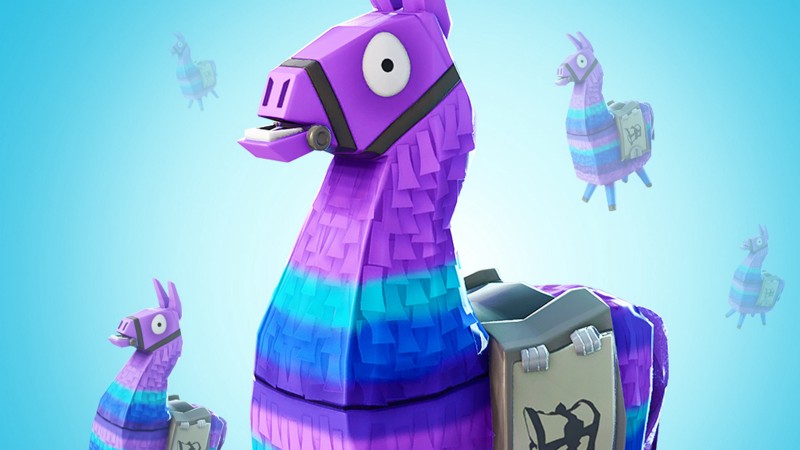
Purple cartoon donkey piñata.
Enlarge / Whoever wins this case will get a llama full of prizes.

Federal District Judge Yvonne Gonzalez Rogers heard arguments this morning regarding Epic’s request for a temporary injunction in its case against Apple. That injunction would force Apple to put Fortnite back on the iOS App Store during the trial, following the game’s removal last month over Epic’s skirting of Apple’s in-app purchase rules.

The hearing gave the clearest indication yet of both parties’ best arguments in the matter and of which positions seem most likely to hold sway with Rogers as the case heads toward a full trial.

When is a monopolist not a monopolist?

A central issue in the case is Epic’s contention that Apple’s exclusive control over the iOS App Store constitutes an illegal monopoly that hinders competition. Today’s discussion of Epic’s claim centered heavily on what market, exactly, Apple is allegedly monopolizing.

Apple argued that iOS is just one of many platforms in the wider competitive market for video games like Fortnite. There, Apple faces competition from console makers, PC-based stores like Steam and GOG, and Google’s Android platform to name just a few. In this market, Rogers herself noted that most of the competing platforms charge the same 30 percent fee to developers as Apple, suggesting iOS lacks any harmful market-controlling power.

Epic’s lawyer Gary Bornstein argued in response that the market in question should not simply be viewed as “all the ways someone can reach a user to play a video game.” Where Apple holds the monopoly, he said, is in the market for developers to distribute their game to iOS users, specifically.

“In order for Apple to face competitive discipline [from the market], it would mean there would need to be a meaningful number of developers who would give up the platform if Apple raises its price,” Bornstein argued. “We know that’s not the case. They’re not going to give up the opportunity to reach a billion users.”

Apple argues that <em>Fortnite</em>'s availability on platforms like the Switch shows it doesn't have monopoly control over the mobile gaming market.
Enlarge / Apple argues that Fortnite‘s availability on platforms like the Switch shows it doesn’t have monopoly control over the mobile gaming market.

That’s an important distinction for Epic to make, legally. There’s some existing case law to suggest a company can have monopoly control over a secondary market (in this case, app downloads) even if it faces competition in a wider market (in this case, video game and/or smartphone hardware). Proving that case is an uphill battle, though, that usually requires showing that customers are unfairly “locked in” to that secondary market after making the primary purchase.

63 percent vs. 10 percent

In the hearing, Bornstein noted that “63 percent of iOS users who play Fortnite play only on iOS.” Those players aren’t technically “locked in” to iOS—they could switch to another platform, and many do. But they also don’t necessarily have multiple devices to play on and might not be able to afford separate hardware to access Fortnite, he said.

Even if iOS player do have access to other hardware, Bornstein said the situations are not always analogous. “That’s like saying there is not a [monopoly] market for ride-sharing and taxis if people can also walk or bike or get a friend to drive them or access public transit,” he said. “You can’t play an Xbox when you’re on a bus.” (Though you can play a Switch, as Judge Rogers noted in response).

Apple lawyer Richard Doren said the number of iOS Fortnite players who don’t use other platforms is immaterial. Instead, he cited Epic co-founder and CEO Tim Sweeney’s assertion that less than 10 percent of Fortnite‘s daily average users played on iOS. That shows “Epic itself uses the [alternative] options in the marketplace available to it,” he said, and that Apple can’t exert monopoly control over Epic’s Fortnite business.

“Fortnite is not entitled access to everyone on the globe,” Doren said. “They just need alternatives [to iOS] available, and they have that in spades.”

In her statements, Judge Rogers seemed more inclined to Apple’s view of its position in the wider video game market. “If we look at this plaintiff and industry, walled gardens have existed for decades,” she noted. “Nintendo has had a walled garden. Sony has had a walled garden. Microsoft has had a walled garden… In this particular industry, what Apple is doing is not much different… It’s hard to ignore the economics of the industry, which is what [Epic is] asking me to do.”

Fortnite aside, though, Judge Rogers also said she was inclined to agree with Epic’s assertion that “there is an uproar in the marketplace about the lack of competition for [distribution of] iPhone apps. You read the papers, I read the papers, it’s there.” That said, Judge Rogers also suggested this specific case might not be the right one to make that argument, “given the amount of competition for mobile games.”

https://arstechnica.com/?p=1710267


Feels Good Man, a film that truly gets how things are passed across the Internet

[embedded content]
Trailer for Feels Good Man.

There’s no shortage of documentaries about our current political climate or the fact that the Internet might be bad, but Feels Good Man focuses on the craziest intersection of these two modern realities: Pepe, the cartoon frog.

If you’re aware of Pepe already, chances are it’s because the character has become synonymous with the alt-right, that extreme online demographic tied to modern white supremacists and Nazi movements. Or perhaps you heard of Pepe before that, during the time this frog had become the meme du jour of 4chan, the anonymous message board associated with all sorts of nefarious real-world behavior. Though Pepe’s most high-profile 15 minutes of fame were inarguably a cameo on then-candidate Donald Trump’s Twitter feed, leading to the character’s adoption by some of his most extreme supporters, like conspiracy theorist Alex Jones.

Feels Good Man will get to all that, of course, but this documentary starts with the now-toxic toad’s tadpole days. By doing so, the film will likely show viewers something they didn’t know or hadn’t previously considered regardless of prior familiarity with Pepe and the insanity swirling around him. And through tracing Pepe’s evolution, Feels Good Man manages to remind everyone of a fundamental truth of communication, particularly in the Internet age. Once you click send on something, things like original intent and context might become as ephemeral as a single tweet.

A film that truly understands Internet

While ostensibly marketed on the festival circuit as “the Pepe doc,” Feels Good Man actually has another central figure: Matt Furie, a Bay Area comics artist. Back in the days where MySpace existed, he created a Gen X-ish group of animal friends existing in perpetual post-college slackerdom for a series called Boy’s Club. Furie’s lifelong frog fandom led to an amphibian named Pepe becoming one of the comic’s lead foursome. “Feels Good Man,” the phrase, has been literally lifted from Pepe’s mundane adventures, particularly the one where he discovered how nice it felt to pee standing up with your pants removed entirely.

The documentary thoroughly and exhaustively documents things chronologically from here. You’ll see early Boy’s Club comics Furie drew in the back of a San Francisco thrift store, posts documenting how Pepe became the preferred badge of self-deprecating irony on 4chan, or a mountain of Pepe merch Furie once had produced but can’t in good conscience give away or sell these days. While walking viewers through all of that, Feels Good Man seems remarkably smart about identifying turning points for the cartoonist and the character he once controlled. It’s quite evident Director Arthur Jones deeply understands how culture can snowball in between disparate Internet communities until it becomes too big for society at large to ignore. Maybe Trump retweeting a Pepe meme is an obvious touchstone in retrospect, but this film gives equal weight to moments such as weightlifters displaying a fondness for the frog or eventual shares from celebs like Katy Perry and Nicki Minaj.

“When 4chan wanted to defend its memes, they’d make them as offensive as possible so they couldn’t be co-opted, see Pepe with 9/11 or Nazi messaging for instance,” Dale Beran, an author who studied 4chan, says in the film. “Back then, it was just the most offensive thing you could do. But it now reads as a weird prologue to when the irony melted away.”

Feels Good Man stays riveting because of the variety of interviews Jones conducted. Furie participates to the fullest, as does his partner and close friends (one of whom got a Pepe tattoo back in the early days 🤦‍♀️). So do other illustrators from projects as big as BoJack Horseman to lend credence to Furie’s ability and work. But the same holistic approach gets applied to voices examining Pepe’s Internet evolution—scholars like Beran who study memes, people who go by one-name handles like Mills or Pizza during their extensive 4chan experiences, and the freakin’ director of strategy for the “Trump 2016” campaign all appear. These folks understand the Internet in ways Furie only could once it became too late.

“[We analyzed] over one billion posts across Twitter, reddit, /pol/ and 160 million images just from one year,” Jeremy Blackburn, a data scientist who looks at weird online behavior and wanted to take a “quantitative look at hate speech throughout the Web,” tells Furie in the film. “There tends to be a Pepe variance in every cluster—you pick a random meme, and Pepe has been inserted in some form. Pepe becomes an entry point to radicalization.”

The poster for <em>Feels Good Man</em>.
Enlarge / The poster for Feels Good Man.

Feels Good Man ultimately finds Furie at a point where enough is enough—he has finally sought out legal aid in recent years to try to fight back against some of the most egregious and offensive uses of his slacker frog. He fought Infowars and won (Alex Jones had to pay a settlement and stop selling a poster showing Pepe in an Avengers-like squad alongside figures like President Trump). Furie fought a known anti-Muslim cartoonist and won (that guy wanted to write a “children’s book” called Pepe and Pede as a trojan horse for bad ideas). The list goes on and includes reprehensible white supremacy opportunists, from The Daily Stormer to Richard Spencer. In total, Furie’s legal help at WilmerHale says it successfully enforced Pepe copyrights against nearly 100 entities “connected to images or messages of hate” at the time of this documentary.

But Furie naively still thinks his character can be salvaged in society’s eye. He seems to view one particular battle as the way to do it: in 2016, the Anti-Defamation League officially added Pepe to its list of known symbols of hate. If the frog can finally be removed, Furie appears to think, that would restore the original, wholesome idea of Pepe once and for all. Watching this unattainable goal drive Furie through all kinds of efforts (including a formal Boy’s Club funeral for the Pepe they knew), Feels Good Man plays like a post-modern horror. In real (run)time, you watch the worst impulses of the Internet rain down again and again on someone who just doesn’t comprehend what he’s up against. “I didn’t even know what a meme was,” Furie admits at one point. “I still don’t even know if I’m saying it correctly. It was through Pepe that I learned what a meme was.”

From 10,000-feet, however, Feels Good Man has a more philosophical idea at its core. This film reminds viewers time and time again of a basic communication and rhetorical studies principle: no matter the intent of someone who puts a message into the world, once it’s out there, that idea/work/message/whatever no longer entirely belongs to the messenger. Some part of meaning always lies in reception. So in that sense, a message becomes at least partially owned by the people receiving it, who can soon change and evolve its ultimate meaning (aka how larger society understands it) through interpretation and usage.

Fan service creative works like the Snyder Cut or The Rise of Skywalker might represent notable manifestations of near-total recipient ownership, but Pepe embodies this concept at its most extreme. Furie clearly did nothing wrong when creating Pepe, seemingly a kind of amusing slacker frog borne out of the artist’s lifelong frog fandom. And never in a million years could he have imagined how his character would be received, reinterpreted, and reused after uploading a few strips to MySpace. But by not doing anything in the early days of cooption, Furie lost his creation (non-legal sense) forever. No matter what he does now, Pepe’s ultimate fate simply lies beyond Furie’s control. And though Feels Good Man attempts to leave an optimistic door open—have you seen who has become a symbol of protest in Hong Kong, for instance?—this film makes the tragedy clear to anyone… so long as you didn’t create the Internet’s most infamous frog, that is.

Feels Good Man continues to play the festival circuit (Ars caught it through Fantasia Fest this month). The film is also available through VOD platforms like Amazon Prime, Microsoft Store, Google Play, Vimeo on Demand, et al. Today—Sunday, September 27—there’s even a special online screening with a post-film Q&A hosted by This American Life‘s Ira Glass.

Listing image by Feels Good Man

https://arstechnica.com/?p=1709825


Gloomhaven: Jaws of the Lion makes the megahit more accessible

There's still a lot of stuff in this box.
Enlarge / There’s still a lot of stuff in this box.
Cephalofair Games
Welcome to Ars Cardboard, our weekend look at tabletop games! Check out our complete board gaming coverage at cardboard.arstechnica.com.

There’s a reason Gloomhaven (read our 2017 review) is so popular. There’s also a reason why half of my friends who own a copy have opened it once, stared in despair at the contents within, and loosed a timid box-fart as they reassembled the package. “More is better!” can be true, especially when it comes to fighting your way through a dungeon. “More” means more monsters, more classes, more loot—even additional varieties of stonework decorating the corridors. It also happens to mean, you know, more. More to learn. More to remember. More to sort and keep sorted. Gloomhaven basically defines “more.”

But now there’s Gloomhaven: Jaws of the Lion, the largest box to ever feel small. With only four classes, a single (mostly) linear campaign, and some clever quality-of-life improvements, this is Isaac Childres’s attempt to make a Gloomhaven for the rest of us. (Or the rest of you, since I played Gloomhaven until I was well and truly sick of it.)

How does Childres go about streamlining a game so monolithic that it once bestowed sentience upon a chimp? The answer is: easier passage into the game systems, fewer components, and a more focused quest line. Let’s take those in turn, because there’s more to each than you might think, including some drawbacks you may want to consider if you’re already curious about diving into Gloomhaven.

Tutorials get a bad rap. I’m speaking mostly of video games, where tutorials have been a staple ever since we collectively decided we weren’t going to read the manual anymore. The problem is twofold: either the game belabors the stuff we already know, like how to look around and click to shoot, or it fails to really dissect all the little subsystems that make the game purr. A good tutorial walks a tightrope between talking down to us like we’ve been living in a cave for the past fifteen years and assuming we hold a PhD in Interpreting Game Design Intentions. Yes, I know how to move the mouse. No, I don’t know why my king is in love with his biological sister. Meet me halfway here, game.

Jaws of the Lion is one of a few modern board games to try a tutorial. For the most part, this is a success. The original Gloomhaven didn’t exactly throw its players into whitewater rapids, but “deep end” wouldn’t be an overstatement. Here, the focus is squarely on the good stuff: the game’s novel card system rather than, say, the fact that you lose hit points until you fall over.

Every turn is about picking two of your hero’s cards. These cards determine the order you’ll move in, both relative to your fellow adventurers and the enemies crowding the table, as well as the moves and attacks you’ll deploy. The rub is that you’re required to use the top half of one card, usually an attack or a spell, and the bottom half of the other card, which lets you reposition yourself on the board. That might sound breezy, but the game quickly teaches you that spent cards are discarded, narrowing your options until you’re forced to take a breather.

Gloomhaven’s card system has always been one if its main draws. Get it? Draws?
Enlarge / Gloomhaven’s card system has always been one if its main draws. Get it? Draws?
Dan Thurot

Each of these concepts is taught over the course of the first few scenarios. First, you learn how to pair cards to move and attack, then how to navigate your environment, manage the decks that regulate enemy actions, charge up elements to boost your moves, and finally how to square off against a miniboss. New cards and concepts trickle out with each fight, adding options without swamping you. Where the first scenario functions almost like punching those dummies that fall over only to pop back up into your face, by the sixth scenario you’ll have a solid handle on nearly everything you’ll need to know to play Gloomhaven.

Here’s the good news: it works. After answering hundreds of rules questions on the BoardGameGeek forums, Childres understands which concepts are second nature and which require reinforcement. The flipside is that this isn’t only a tutorial for the game’s rules. It’s also a tutorial for how Jaws of the Lion ought to be played. As in, by a single consistent group. Ideally one that happens to be patient enough for the game’s particularities, like choosing when to rest and who will breach that next door. Oh, and you should be fine playing the same character for a very long time.

The campaign book supplies the maps, with a supplemental book for the big ones.
Enlarge / The campaign book supplies the maps, with a supplemental book for the big ones.
Dan Thurot

That last point is one of Jaws of the Lion’s biggest departures from Gloomhaven’s big box, and it bears some explanation. At first glance, this is standard save-the-city fare. You’re big damn heroes, there are big damn monsters, and we all know the rest. What sets the game apart from its kin isn’t only its card system, but also how it approaches its characters, all of which are refreshingly imaginative.

My character was the Hatchet. Tall, furry, and horned, the Hatchet seems like your standard melee bruiser. Except he isn’t. He’s a ranged warrior who throws hand-axes, tomahawks, cleavers, mattocks, and other hefty bladed implements whose names I’ve forgotten, often striking multiple targets in the same turn. More importantly, he strikes hard, like he’s dealing melee damage instead of flinging stuff around the room.

Over time, the Hatchet grows even more interesting. He has a favored blade that can be stuck into a large monster for bonus damage and then cause even more bonus damage every turn until the monster dies and the Hatchet reclaims his favorite. He also has a supply drop, which is akin to throwing a healing crate into an opponent’s head so it can rebound to heal a friend. Rather than playing the ranged warrior trope straight, he has tricks and spells of his own, all of which mark him as a capable fighter in multiple respects.

And it’s a good thing I liked playing as him, because Jaws of the Lion only provides four heroes. It’s a slight spoiler to say precisely how many classes were in the original game, so suffice it to say there were more, with a retirement system that let players swap out their character for someone else mid-campaign. Like a few of Gloomhaven’s other ideas, this was sometimes cumbersome—one of my friends had a retirement goal he never seemed capable of meeting—but it put the game’s dedication to variety front and center.

By contrast, Jaws of the Lion is necessarily pared down. Don’t get me wrong, there are still plenty of monsters to slay and maps to explore. In fact, gone are map tiles entirely, replaced by a campaign book that sets up briskly by flipping to the proper page and putting a few obstacle and treasure tokens in their proper places. This in particular is an improvement, decreasing the amount of time spent digging for the right tiles, accessories, and everything else while sacrificing, say, a scenario generator or wide branching paths in the campaign.

Another highlight is the way monsters activate and attack.
Enlarge / Another highlight is the way monsters activate and attack.
Dan Thurot

The emphasis on a campaign book explains both the improvements and the limitations of Jaws of the Lion. Upon opening the box, there’s a setup sheet explaining how to bag all the monster components. The very first page of the rulebook has you set up the first scenario. The character decks are sorted into small clusters of cards to ease players into the system. Everything is designed to get you over that initial hump and keep you moving through one scenario after another. Think of it like a drawbridge. Where previously you were expected to swim the moat and climb the battlements, now you’re welcomed through the front gate.

Yet some of what was so thrilling about Gloomhaven was that stiff challenge, the thrill of being able to claim you’d made that swim, survived that climb, and came out the other side breathing. This isn’t “true gamer” cred I’m talking about. It’s the joy of plunging into a system that’s playable but somewhat overgrown, of finding your own enjoyment in this vast box of playthings.

The process of focusing is also the process of narrowing. Jaws of the Lion is Gloomhaven made more focused and more narrow. It’s still cerebral, still clever, and still imaginative—and best for those who previously regarded the journey with intimidation rather than relish.

https://arstechnica.com/?p=1709833


Deep algebra for deep beats: The beautiful sounds of musical programming

Deep algebra for deep beats: The beautiful sounds of musical programming
Aurich Lawson / Getty Images

Pop musicians have spent centuries flirting with technology to push the boundaries of the art, from the Theremin to mid-century tape experiments. Despite this fascination, only a tiny niche have gone so far as to programmatically generate music via code. In a span of roughly 70 years, the few who’ve done so comprise a Venn diagram of intersecting programmers and avant-garde musicians.

The results are unlike anything you’ve ever heard—and some of the most ambitious music to blend the realms of analog and digital sound.

I talked with people who are using code to make a wide variety of music, from sample mangling to a live algorithmic radio show to preaching the Marxist qualities of open source software. Despite the technological complexity and deep algebra involved, they are all seeking something very simple: a creative sandbox unbound by conventions of time and theory.

“A way of thinking suggested by the program”

[embedded content]
A song from Carl Stone’s new album Stolen Car, now for sale

Carl Stone has been mangling samples (“mangle” being an agreed-upon verb among sound manipulators) since 1973. He borrows them from commercial music, tears them apart, and glues them back together in nonsensical ways, with results resembling everything from a pop song played backwards to rapid gunfire made from a human voice. So, it was no surprise to me when I discovered (after a sonic onslaught of a February 2020 show where elderly people plugged their ears) that he exclusively uses Max, a beloved programming language for music and multimedia. It’s a visual workspace with musical commands presented as modular boxes that you can chain with virtual wires. The open-ended design allows for free-flowing experimentation.

“You start each coding experience with a completely blank slate,” Stone says. “It’s unlike any of the other commercial programs that have preconceptions and optimizations built in. A program like [Ableton] Live—which I respect very much—tends toward a way of thinking that’s suggested by the program itself.”

Without that framework, Stone’s compositions are overtly surreal. He likens his sample-based work to an anagram: “It has a semblance of semantic meaning, but it’s strange.”

A Los Angeles native and CalArts graduate with little coding background, the 67-year-old has been making music on computers since 1986. He worked with ’80s algorithmic music software such as Jam Factory and Laurie Spiegel’s influential Music Mouse. He describes his ‘80s computers as “luggable” for the road, and he toured with a Macintosh Plus for years.

Don’t copy that floppy?

Stone discovered Max (named after computer music pioneer Max Mathews) in 1989 during an artist residency in Japan, when his friend slipped him a pirated version on a floppy disk. At this point, Max could only send out MIDI info and couldn’t handle signal processing. Stone began performing with it, frequently collaborating with Japanese video artists, dancers, and musicians.

He’s witnessed the software transform over the years: Signal processing and visual processing were later incorporated. The software got hackey-sacked between different corporations, with Stone formally beta testing its development at various stages. Eventually, one of its developers founded a company to sell it, Cycling ’74. An outside party used Max to breadboard the wildly popular music software Ableton Live. The two programs eventually integrated, and soon after, Ableton absorbed Cycling ‘74 altogether.

Predictably, Stone has resisted the linear temptations of Ableton integration, and his recent output is more radical than his work from 30 years ago (one of his newer songs sounds a lot like the electronic subgenre vaporwave, but he says he has never heard of such a concept). He performs with an iPad and laptop, wearing a felt hat and using OSC (Open Sound Control) to send control data to his Max patches. He’s lived in Japan full-time since 2001, teaching at Chukyo University; he’s spent his quarantine in Los Angeles, though, teaching Zoom classes to Japanese students at 2am local time.

His newest album, Stolen Car (an anagram of his name), was released on September 25.

https://arstechnica.com/?p=1707526


The madness of Susanna Clarke, fairy princess

Jonathan Strange & Mr Norrell fans, it's a good fall.
Jonathan Strange & Mr Norrell fans, it’s a good fall.

Do fairies exist? To steal us away, to cast curses, to impurify our bloodlines? Let’s say yes. We have artists, don’t we? Sensitive types, so fragile and retreating. The best of them seem touched by an otherness, an otherlandishness, of being. Maybe a small part of their humanity was bargained away without their knowing. A pinky finger. A left eyeball. That’s why they don’t stomp through the world as the rest of us do, very loudly. On those rare occasions when they’re seen to leave their homes, they sort of flicker—fairly float—across the way. Whatever you do, don’t startle the fairy-people, or you’ll scare them off. Just look at what befell Susanna Clarke.

In 2004, Clarke published what can only be described as her first dispatch from the land of Faerie. Ten years in the making and 846 (footnoted!) pages long, Jonathan Strange & Mr Norrell was ethnography, lore. It was as if she’d been there, to England, at the time of Napoleon, when those two infamous magicians, the bookworm Norrell and his perky pupil Strange, tapped into unearthly powers to impress politicians, move mountains, and defeat the French. That’s not how it happened, you say? Why, yes it is. You simply haven’t read your hidden history.

The events that followed only proved Clarke’s preternatural pedigree. After the publication, in 2006, of The Ladies of Grace Adieu and Other Stories, a collection of fairy tales written around the same time, and in the same world, as Strange & Norrell, Clarke went poof. Yumpy. Far, far away. For 14 years. The official story was debilitating mental illness—housebound, couldn’t write—but clearly her fairy patrons had come for her, to reclaim their erstwhile princess. Or else they meant to punish Clarke for her betrayal, for spilling their precious secrets, by enfuzzing her beautiful brain. Something like that. The ways and reasons of the Fae are little known to common folk.

If this strikes you as cutesy, tidy, annoying, even a bit disturbing, a romanticization or fancification of what sounds like a period of immense torture for Clarke and her loved ones, consider their own words. “It was as though she’d been captured into the land of Faerie, as if she had been taken away from us,” Clarke’s editor told New York magazine. Clarke herself, in a rare interview, told The New Yorker, “You really shouldn’t annoy fairies, or writeabout them—they don’t like it very much.” Given that Clarke has now released a second dispatch from Faerie, called Piranesi, which plunges far deeper than Strange & Norrell ever did into those forbidden fortresses from which the un-mad and mortal among us are forever barred, perhaps there’s no better explanation. Clarke has indeed been there and back again.

Mirrors help

In Strange & Norrell, Clarke reports on the various ways an enterprising soul might make it to the fairy realm, which is located, difficultly, “behind the sky” and “on the other side of the rain.” Mirrors help, if you know the enchantment; if you don’t, make friends with an evil fairy king who desires your soul. Whatever it takes, because Faerie is the wellspring of magic, magic which seems to have trickled out of England sometime in the 1500s.

Three centuries later, Gilbert Norrell rolls up, bewigged and less than bemused, to bring it back. “To restore,” as he likes to put it, “English magic.” An obsessive-compulsive hoarder of arcane spellbooks, he alone possesses the know-how, until a young country woman demands of her dissolute boyfriend that he shape up and find a job. Thus Jonathan Strange becomes England’s second working magician. He and Norrell pass through stages of friendship and enemyship and eventually settle on something like frenemyship. Elder and upstart, conservative and liberal, scholar and seeker, loner and lover—they’re your classic dyad, two halves making a whole.

One irksome point of contention between these boys: Norrell won’t give Strange directions to Faerie, so Strange must hack together a DIY solution. It’s not pretty, this process, for it involves cooking a decrepit old cat lady down into the essence of her crazy. Tastes something unspeakable, but if fairies are “barely sane” by human standards, Strange reasons, then to reach them one must get, as it were, on their level. In the end, Clarke’s book really isn’t about the restoration of English magic. It’s about the restoration of English madness.

Madness, for Clarke as for so many of her fellow fairy-folk over the ages, confers certain compensations. “It used to be well known that when fairies hid themselves from general sight,” Clarke writes, “lunatics were often able to perceive them.” (Strange discovers this when the King of England, blind and batshit, makes effortless conversation with the fairy king.) The olden-time mages, she adds, “regarded madmen as seers and prophets and listened to their ramblings with the closest attention.” For all its agonies, madness awakens in its sufferers the gift of fairy sight, access to those deepest truths covered up by centuries of mannish toil and industry.

The only possible conclusion is: Clarke is writing from experience. There’s stuff in Strange & Norrell no normie could know, like the secret ingredient of regret-colored pigment (“the tears of spinsters of good family, who must live long lives of impeccable virtue and die without ever having had a day of true happiness”). Or the meaning of a rose at one’s lips. Or the way a fairy sublimely sings. “The world is not dumb at all, but merely waiting for someone to speak to it in a language it understands,” Clarke writes. “In the fairy’s song the earth recognized the names by which it called itself.” Here’s a writer who is at her most lucid precisely when she’s articulating the highest insanities. If not quite a defense of madness, Strange & Norrell is an argument for at least a little more of it in the modern world. More freakiness. More fairyness. When Strange quaffs a safer titration of his crazy potion, he doesn’t crack up. Instead, he journeys within: “He found that he no longer cared very much about magic. Doors slammed in his mind and he went wandering off into rooms and hallways inside himself that he had not visited in years.”

This was to be the very thing Clarke would do, in the addled years spent thinking about, and then writing, Piranesi.

Magic has long been extinct

Giovanni Battista Piranesi was a mid-18th-century Italian artist, best known for his black-and-white, proto-Escherian etchings of fantastical architectures, particularly his Prisons series. Clarke must be a fan. She mentions Piranesi in both Strange & Norrell and Ladies of Grace Adieu, and Piranesi prints are glimpsed in the 2015 BBC adaptation of the former. His work conjures the giddy terror of being caught in a good maze, like Norrell’s twisting manor, or the land of Faerie.

Amazon / Bloomsbury

The Piranesi of Clarke’s new novel, its narrator and main character, is not an artist, but he is a man trapped in an infinite megastructure. Fabulous and frightening, Piranesi calls it “the House” but also, at times, “the World”—“since the two are for all practical purposes identical,” he says. One is made to think of Jorge Luis Borges, who must be Clarke’s fairy godfather. Like the House, Borges’ labyrinths exist ab aeterno and are, for all practical purposes, the universe.
Piranesi isn’t the narrator’s real name; that’s only what his warder, known as the Other, calls him. As far as we can tell, Piranesi and the Other are the sole inhabitants of the House. Meaning the only two people in the entire world. The House is all they know: its endless statue-strewn rooms and the pelagic waters that periodically flood them. This is not, in other words, the 19th-century Europe of Strange & Norrell (even if it, too, concerns a manly dyad). In fact, the House is not of this earth at all. Though we meet no actual fairies in Piranesi, it must be to their otherworldly realm that these souls have been banished.
Piranesi is a mystery, a mystery of the mind, a way for Clarke to communicate the incommunicable. What is this place? Why is Piranesi, so wonderstruck and innocent, stuck there? Reading it, one can’t help but imagine its origins in Clarke’s own life, the years she spent sick, dissociating, wandering the rooms and hallways, Strange-like, inside her head. “The labyrinth plays tricks on the mind,” the Other tells Piranesi. “If you’re not careful it can unpick your entire personality.” A devastating verb, unpick. Something a fairy might do, come to think, with a scalpel of unimaginable delicacy. Which Clarke would have felt, surely, throughout that decade-plus in private lockdown, always at the intimate mercy of its blade.

After everything Clarke has endured, one might expect her to hate fairy guts, to make these conniving, tyrannical creatures, and the madness for which they are metaphors, the ultimate enemy. She won’t. She refuses. Because to do so would be to lose: herself and everything else. As the tragedy of Piranesi’s circumstances unfogs, he holds fast to brightness, the treasures acquired along the way. For he knows the miracles madness makes, whose names are whimsy and wonder. “Magic has long been extinct in these islands,” as Jonathan Strange once lamented, speaking of his world as well as our own. To which he could’ve added, as Clarke writes in Piranesi: “Once, men and women were able to turn themselves into eagles and fly immense distances. They communed with rivers and mountains and received wisdom from them. They felt the turning of the stars inside their own minds.”

That Susanna Clarke has done and felt such things, these turnings and communions, falls somewhere in the realm of absolute truth. A blessed being, she has performed the long-lost miracles, and she has lived, more miraculous still, to tell the tale. With great effort, she has un-unpicked her personality and returned to this world, our Earth, so that the rest of us might know her exquisite burden. Welcome back, Fairy Mistress, if only for a spell! We are grateful to you, oh yes, but we mourn you a little, too—that you must work so hard to be human.

This story first appeared at wired.com.

https://arstechnica.com/?p=1709906


Amazon Luna servers will run Windows games directly on Nvidia T4 GPUs

Amazon’s newly announced Luna streaming service will run Windows games on a standard Amazon Web Services EC2 G4 instance, the company told Ars Technica in a roundtable discussion. Those server instances sport Nvidia T4 GPUs equipped with 320 Turing Tensor cores and support for Nvidia’s GRID virtualization drivers.

Luna’s server architecture is significantly different from that of Google’s Stadia, which uses Linux-based data servers and Vulkan’s open source graphics APIs. That means extra work for Stadia developers who have to port their existing games to Stadia’s environment, which can sometimes lead to apparent graphical snafus.

The precise amount of porting work needed for a Stadia port can vary. A game like Doom (2016), which already supported Vulkan graphics, reportedly took only three weeks of fulltime work by two developers to get running on Stadia. But Cyberpunk 2077 will be coming to Stadia after its Windows and console launches, according to publisher CD Projekt Red, likely due to the extra porting effort.

Amazon hopes to avoid that hassle with Luna. “Our goal is to make porting games as low effort as possible” for developers, Amazon Luna Director of Product Oliver Messenger told Ars Technica. “We’ll support existing Windows games… [Developers] don’t need a new tech stack to port over. If there’s a Windows version of their games, they can bring them over to our service in short order.”

Luna game ports also won’t have to add specific code to support Luna-specific social networking, matchmaking, or achievement systems, because those don’t exist. Instead, Luna developers can make use of the existing services they already use for these features; for the Ubisoft channel, that will mean leaning on UPlay, for instance. It’s unclear what this will mean for games that currently rely on Steam or other third-party platform-level solutions that may not integrate well with Luna.

Optimizing for the browser

For iOS compatibility, Luna is getting around Apple’s onerous rules for streaming game apps by running as a Progressive Web Application directly in the browser. Luna Head of Engineering George Tsipolitis said that the Luna team prioritized this compatibility on iOS, “work[ing] with the Safari team to ensure from a Web standpoint we’re getting the right optimizations of the video pipeline and broad controller support” on the mobile browser. “As soon as we get that through early access working as expected, we’ll bring that to Android as well.”

Tsipolitis said that any additional overhead from running in a Web browser wouldn’t be significant for a streaming game service like Luna. The open source WebRTC protocol that Luna uses for server-to-player communication (and back) runs identically in the browser and in a native app, he said. That protocol will also allow Luna to monitor network conditions and adjust streaming quality on the fly to account for congestion and provide “low-latency, high-fidelity” gameplay. Amazon did not directly address questions on precisely how much control latency users could expect on the service, though.

If Apple changed its rules for streaming game apps in the App Store, Tsipolitis said Amazon would consider moving Luna away from the browser. But “a lot depends on what the rules would change to and what the guidelines are,” he said. “We want to create a great experience for customers.”

Other tidbits from our conversations:

  • Tsipolitis said support for 4K graphics would be up to individual developers, based on what performance they saw on their Luna dev kits. “If they’ve gotten the performance to the point they’ve expected, we’ll send it to customers,” he said.
  • The lineup of games on the $5.99 Luna+ subscription is expected to increase from 50 at launch to 100 by the time the invite-only early-access period is over. After that, prices may change, and the game selection may start rotating through a selection of available titles (rather than simply growing larger). Amazon says it will clearly communicate any such changes well ahead of time.
  • There are currently no systems in place to let players take their save data with them if and when they decide to leave Luna. But Messenger said the freedom to go between devices and services without having to pay a penalty is “something we’re thinking an awful lot about” and to expect “more information to come on that soon.”
  • There are currently no plans to offer Stadia-style à la carte game purchases on Luna; all games will be available through various subscription “channels.”
  • Luna will support up to four local controllers for single-room multiplayer games.

Listing image by Amazon

https://arstechnica.com/?p=1709706


Here’s the trailer, release date for Simon Pegg/Nick Frost sitcom Truth Seekers

[embedded content]
Simon Pegg and Nick Frost play ghost hunters in the new Amazon Prime horror comedy Truth Seekers.

Back in July, during the virtual San Diego Comic-Con@Home, Amazon Studios released a beguiling teaser for Truth Seekers, the forthcoming sci-fi/horror/comedy series starring Simon Pegg and Nick Frost. It looked like a lot of fun—how could you go wrong with a reunion of Pegg and Frost? The full trailer just dropped, and it definitely reinforces that positive first impression. We also now have a release date: Amazon will screen the first two episodes at the Canneseries festival on October 10 and will release the full series on Prime Video on October 30, 2020.

As we reported previously, the series was created by Pegg, Frost, James Serafinowicz, and Nat Saunders. It’s envisioned as a cross between The X-Files and the British TV series Arthur C. Clarke’s Mysterious World. Each of the eight episodes will focus on a specific paranormal incident, a throwback to a classic monster-of-the-week format. Rather than going with pure spoof, Truth Seekers will apparently take its horror aspects seriously.

Per the official synopsis:

Truth Seekers is a supernatural comedy series about a team of part-time paranormal investigators who team up to uncover and film ghost sightings across the UK, sharing their adventures on an online channel for all to see. However, as they stake out haunted churches, underground bunkers and abandoned hospitals with their array of homemade ghost-detecting gizmos, their supernatural experiences grow more frequent, more terrifying and even deadly, as they begin to uncover a conspiracy that could bring about Armageddon for the entire human race.

Frost plays Gus, described as a lonely guy with a boring job installing broadband, who moonlights as an amateur paranormal investigator. Pegg has a somewhat smaller role (in terms of screen time) as Gus’ rather paranoid boss, Dave, who may or may not be up to something suspicious. 

The rest of the cast includes Gus’ fellow ghost hunters: Gus’ cantankerous father, Richard (THE Malcolm McDowell, A Clockwork Orange, Bombshell), Astrid (Emma D’Arcy, Hannah), Gus’ co-worker Elton (Samson Kayo, Dolittle), and Helen (Susie Wokoma, Year of the Rabbit, Enola Holmes). Julian Barratt (In Fabric) plays Dr. Peter Toynbee, who seems to have some dubious occult leanings.

The new trailer opens with Dave meeting with his “No.1 installer,” Gus, and giving him the task of training up the new guy, Elton. Gus is far from thrilled: “The last thing I need is some clueless millennial mouth breather cluttering up my van.” That’s when we see Elton is also sitting in on the meeting. It doesn’t seem like the beginning of a beautiful friendship, but then Elton sees what seems to be a ghost on one of their broadband service visits.

That’s when Gus tells him about his side gig as a ghost hunter, specifically the host of a low-budget YouTube series called Truth Seekers. Elton wants nothing further to do with ghosts, but then Astrid stops their van in a panic. She insists she’s being chased by ghosts and asks for their help. The rest of the trailer gives a tantalizing taste of the kinds of specters we can expect our ragged band of amateur ghost hunters to encounter—more “malevolent entities” than mere restless spirits. One thing’s for sure: if an incantation needs to be cast, it’ll be poor Elton who gets stuck with drinking the tepid urine.

Truth Seekers debuts on Amazon Prime on October 30, 2020.

Listing image by YouTube/Amazon Prime

https://arstechnica.com/?p=1709391