Black Panther star Chadwick Boseman, 1976-2020 [Updated]
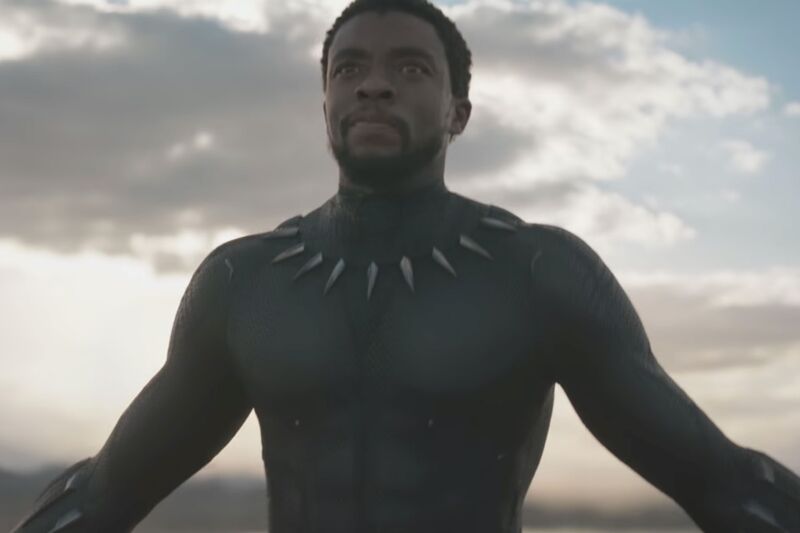
Wakanda forever! Chadwick Boseman's rising star shot into the stratosphere when he took on the role of T'Challa in <em>Black Panther</em> (2018).
Enlarge / Wakanda forever! Chadwick Boseman’s rising star shot into the stratosphere when he took on the role of T’Challa in Black Panther (2018).

[Updated, Sunday, Aug. 30, 2020, 5:25pm]:

Ryan Coogler, who directed Chadwick Boseman in Black Panther, has released a moving tribute to the late actor. An excerpt:

Chad deeply valued his privacy, and I wasn’t privy to the details of his illness. After his family released their statement, I realized that he was living with his illness the entire time I knew him. Because he was a caretaker, a leader, and a man of faith, dignity and pride, he shielded his collaborators from his suffering. He lived a beautiful life. And he made great art. Day after day, year after year. That was who he was. He was an epic firework display. I will tell stories about being there for some of the brilliant sparks till the end of my days.

Original article:

Actor Chadwick Boseman, best known for his starring role in Marvel’s blockbuster movie Black Panther (2018), has died from complications related to a four-year battle with colon cancer. Reactions on Twitter began with shock and disbelief and quickly progressed to a collective outpouring of grief and heartfelt condolences to Boseman’s family.

One reason the news came as such a shock is that Boseman kept his illness quiet since his diagnosis in 2016—the same year Captain America: Civil War (which introduced his character) was released. Principal photography for Black Panther began in January 2017, just after his diagnosis. It was a physically demanding role, but you’d never know it from Boseman’s performance. He continued to work—filming Avengers: Infinity War, Avengers: Endgame, 21 Bridges, and Da 5 Bloods—between surgeries and chemotherapy treatments, as his Stage III colon cancer gradually progressed to Stage IV. His final film will be the Netflix adaptation of August Wilson‘s play Ma Rainey’s Black Bottom, currently in post-production.

“A true fighter, Chadwick persevered through it all, and brought you many of the films you have come to love so much,” Boseman’s family said in a statement. “From Marshall to Da 5 Bloods, August Wilson’s Ma Rainey’s Black Bottom and several more—all were filmed during and between countless surgeries and chemotherapy. It was the honor of his career to bring King T’Challa to life in Black Panther.”

Boseman’s acting career began with TV roles on shows like Third Watch, Law & Order, and CSI: NY. He snagged his first starring film role portraying pioneering baseball star Jackie Robinson in the 2013 biopic 42. The official Twitter account for Major League Baseball tweeted: “We are devastated by the tragic loss of Chadwick Boseman. His transcendent performance in 42 will stand the test of time and serve as a powerful vehicle to tell Jackie’s story to audiences for generations to come.”

Thomas Tull, who produced 42, offered his own remembrance:

Chadwick was a force of nature full of abundant talent and strong spirit. Tonight all baseball teams are wearing 42 to honor Jackie Robinson, and today marks the anniversary of Dr. King’s iconic I Have a Dream speech. Chad was special, he played Jackie Robinson with respect and reverence for the legacy of a man who changed the world. Chad was kind and genuine, I will miss him dearly and I will never forget him. My heart goes out to his wife and family.

Boseman played an NFL draft prospect opposite Kevin Costner in the 2014 film Draft Day and starred as James Brown in Get On Up that same year. In 2017, he starred in the biopic Marshall, playing Thurgood Marshall, the first African American Supreme Court justice; the film focused on one of the first cases of the justice’s long legal career, the State of Connecticut v. Joseph Spell.

But it was Black Panther that shot this rising star into the stratosphere. Black Panther grossed a whopping $1.3 billion worldwide—the highest-grossing film by a black director and the ninth-highest-grossing film of all time—and became the first MCU movie to win multiple Oscars (Best Costume Design, Best Original Score, and Best Production Design). It was nominated for Best Picture, although it didn’t win. By those merits, Black Panther represents the pinnacle of mainstream achievement for black filmmakers in Hollywood (thus far), and it was Boseman’s electrifying performance as T’Challa that anchored the entire film.

Among those offering remembrances were Chris Evans, Chris Hemsworth, Brie Larsen, Mark Ruffalo, Ryan Reynolds, Denzel Washington, Lena Waithe, John Boyega, Don Cheadle, Ava DuVernay, Taika Waititi, Jordan Peele, Dwayne Johnson, Sterling K. Brown, Joe Biden, Kamala Harris, Cary Elwes, and many others.

Here’s Kevin Feige, president, Marvel Studios & chief creative officer, Marvel:

Chadwick’s passing is absolutely devastating. He was our T’Challa, our Black Panther, and our dear friend. Each time he stepped on set, he radiated charisma and joy, and each time he appeared on screen, he created something truly indelible. He embodied a lot of amazing people in his work, and nobody was better at bringing great men to life. He was as smart and kind and powerful and strong as any person he portrayed. Now he takes his place alongside them as an icon for the ages. The Marvel Studios family deeply mourns his loss, and we are grieving tonight with his family.

Robert A. Iger, executive chairman and chairman of the board, The Walt Disney Company, also quickly released a statement:

We are all heartbroken by the tragic loss of Chadwick Boseman—an extraordinary talent, and one of the most gentle and giving souls I have ever met. He brought enormous strength, dignity and depth to his groundbreaking role of Black Panther; shattering myths and stereotypes, becoming a long-awaited hero to millions around the world, and inspiring us all to dream bigger and demand more than the status quo. We mourn all that he was, as well as everything he was destined to become. For his friends and millions of fans, his absence from the screen is only eclipsed by his absence from our lives. All of us at Disney send our prayers and heartfelt condolences to his family.

A sequel to Black Panther is currently in development at Marvel, with Director Ryan Coogler back at the helm, scheduled for a May 6, 2022, release. Clearly the role of T’Challa will need to be recast, although it’s hard to imagine who could fill Boseman’s shoes. It’s just one of many likely future roles we’ll now never get to see. Rest in power, king.

https://arstechnica.com/?p=1702110


New Bill & Ted: Two ‘80s dudes have no business working this well in 2020

As a person over the age of 30, I, too, have a soft spot for 1980s cinema: Indiana Jones, Ferris Bueller, an infinite number of high school movies. But 40 years later for some of these films, rose-colored glasses can quickly shatter whenever you start a rewatch. Indy runs around snatching up artifacts that should probably be in the hands of local leaders, no? Ferris Bueller treats his girlfriend and best friend like trash. And, good lord, things like Revenge of the Nerds wouldn’t be greenlit in 100 years if pitched this century.

All of that—plus Indiana Jones and the Kingdom of the Crystal Skull—made “caution” the correct reaction when the long-rumored “Bill & Ted 3” finally transitioned to reality in March 2019.

Kind of a buddy comedy, high school slacker movie, and time travel adventure all wrapped into one absurd package, the original Excellent Adventure remains something I adore. (Ate the cereal to get the phone booth; had the Genghis Kahn action figure.) And rewatching it recently, that film refreshingly holds up better than your average ’80s flick. Outside of some ill-chosen words in medieval times (which frankly seems out of character for Theodore Logan and Bill Preston Esq. even considering the film’s release year), Bill and Ted unironically love each other, they treat folks from other cultures with respect (as best they know how to, at least), and they never pretend to be anything close to tough or cool. Even some of the subtle messaging holds up: People in authority—from a cop dad to a sundae-loving Napoleon—can be jerks. Music or the arts can be a great unifier. Even those with pre-destined, Earth-saving greatness can use a little practice from time to time.

So maybe it shouldn’t be a surprise that Bill and Ted Face the Music—the series’ latest film simultaneously released this weekend in theaters and via VOD (~$20 to rent on most platforms)—so seamlessly shifts our most excellent heroes into modern times. If you’re not aware that strange things can be afoot at the Circle K, you’ll want to watch the originals first (both to enjoy some references/in-jokes and to have a basic grasp of what’s happening). But if you also already have a soft spot for the Wyld Stallyns, hop in your nearest phone booth, dial up the infinite, and prepare for another charming, over-the-top and surprisingly poignant ride through time.

Washed dads

Face the Music takes place 25 years after the events of Bogus Journey, and Bill (Alex Winter) and Ted (Keanu Reeves) have stuck with their history-shaping music careers. Only, it hasn’t quite gone as the prophecy hinted. “What have you got to say for yourself?” The Great Leader (Holland Taylor) says at one point while trying to remind our heroes of their goals here (writing a song that will unite humanity and all). “One month ago, you played an Elks Lodge in California to 40 people, who were mostly there for $2 taco night, whatever that means.” When we first see the duo—performing at a very familial wedding—they appear to be into an experimental noise rock phase. Theremin. Throat singing. The works.

Unfortunately, Bill and Ted seem to have kind of wasted their potential primes just aimlessly enjoying each other’s company and rhythm guitar work. Their marriages to the princesses need couples therapy. Chief Logan (Hal Landon Jr. returns!) thinks of these boy-men as even more deadbeats now, as they have tall tales of time traveling to accompany non-existent careers and ambitions. Life has gotten depressing enough that Ted considers finally selling his signature Les Paul.

But not everyone has lost the faith. Locally, the dudes have become dads, and their daughters Billie Logan (Brigette Lundy-Paine, Netflix’s Atypical) and Thea Esquire (Samara Weaving, SMILF) still see the two aging rockers as most excellent. The girls also share their fathers’ passion for music, but they’ve already surpassed their parents when it comes to encyclopedic knowledge of it. Billie and Thea can find the bass intro- or solo section-sized bright spots in even the roughest Stallyns tracks.

The future hasn’t quite abandoned these sonic saviors, either. The Great Leader thinks time has all but run out for Bill and Ted to write the song, so maybe only sending a robot to murder them will save how warped history and reality have become. But Rufus’ daughter Kelly (Kristen Schaal, Bob’s Burgers) thinks all the duo needs is one last chance to hop in the phone booth to right the ship. When she charters an interdimensional pod for San Dimas to let Bill and Ted know time has started to run out, the race is on to finally deliver a savior single—or die trying.

[embedded content]
B&T3 can’t simply be some comedy about two dudes aging and grappling with not accomplishing their goals… interdimensional time travel and the faith of humanity once again rear their complex heads.

Still excellent to audiences

Saying anything more about the story might spoil the fun, and Face the Music exists to deliver fun. Face the Music has a bit less of the extended historic time and place adventures than Excellent Adventure and a bit less of the hell hijinks than Bogus Journey, but both of those ideas factor into this new installment. If your favorite part of the originals involved Bill and Ted interacting with other themes via time travel, on the other hand, that bit gets turned up to 11 (to mix music movie metaphors). Reeves and Winter demonstrate repeatedly they haven’t lost their comedy chops after all the years and many divergent Hollywood gigs, and some of these sequences stand among the film’s funniest (silliest) moments.

All of the new cast additions feel natural in the Bill & Ted universe, but in particular Lundy-Paine and Weaver really do Billie and Thea justice. Their characters are younger, more capable female clones of their dads, and these actors nail the intonation and demeanor of young Winter and Reeves. My mind swears it heard 1989 Keanu Reeves saying “dads!” repeatedly. (Kid Cudi as “Kid Cudi, but into quantum entanglement” ranks a close second in terms of favorite new additions.)

Most charming of all, this entry into the now-trilogy continues the ethos of those old films. Instead of Bill and Ted loving each other unironically (still a thing, even if it jeopardizes their marriage), Face the Music extends that unabashed care to father-daughter relationships, too. The “be excellent to each other” mantra has clearly been passed down a generation based on how Billie and Thea interact with the various past and present figures they encounter. And in the end, no one from Bill and Ted and Billie and Thea to Death or a Death-delivering robot ever pretends to be anything they’re not. In this excellent expanded universe, you can always come as you are (even if you prefer 1980s glam rock to early ’90s grunge).

Face the Music even manages to sneak in a few extremely 2020 sentiments (though the script came about long before our COVID-19 existence did). Bill and Ted speak to the steady march of modern labor where hours increase but real wages don’t (Bill believes saving their marriages requires them to stick with the band that’s put a strain on everything: “That’s why we have to keep working,” he says. “Isn’t that the problem?” Ted replies. “Yes, but it’s also the solution”). Kelly reflects generational divide angst as the world grapples with problems sowed decades ago, from climate change to systemic racism (“I’m trying to save the world mother, it’s not like your generation has done that great”).

But ultimately, the most encouraging message Face the Music offers is the 10,000-foot view of our two heroes. Face the Music is initially a story of unfulfilled promise: two dudes believed they could do big things and set about trying to make it happen, but only life happened. Suddenly it’s years later, no grandiose goals have been achieved, and things seem to be in stasis. If less admirable characters were in the frame, that’s the kind of starting point that could lead to an overly dark DC superhero flick. But with Bill and Ted, even journeys through hell reinforce hope. It’s never too late to change the world (or the trajectory of your all-of-humanity-impacting life), especially if you believe in empowering the next generation and the everlasting appeal of 1980s operatic rock. Party on, dudes (and in the real world, let’s hope live music can eventually safely return to continue unifying small groups of humanity, Wyld Stallyns style).

Listing image by Orion Pictures

https://arstechnica.com/?p=1701791


Apple terminates Epic’s App Store access following Fortnite dispute

Epic's mobile action-RPG is collateral damage in the battle over <em>Fortnite</em>.
Enlarge / Epic’s mobile action-RPG is collateral damage in the battle over Fortnite.

Apple says it has terminated the developer account that Epic Games used to publish and update App Store games.

The move means Epic games like mobile RPG Battle Breakers are no longer available for download on the iOS App Store, sharing the same fate Fortnite has faced for weeks now. Users that have previously downloaded defunct Epic Games titles like Infinity Blade will still be able to play them, but they can no longer be re-downloaded or make use of any previously available in-app purchases.

Epic’s iOS app updates are also cut off, meaning iOS Fortnite players are stuck without access to the Marvel-themed content that was recently added to the game. Fortnite players on iOS are also currently unable to enjoy crossplay with players using the latest version on other platforms.

In a statement provided to the press, Apple once again cited Epic’s attempt to go around the default iOS payment platform for Fortnite as the root cause of the issue:

We are disappointed that we have had to terminate the Epic Games account on the App Store. We have worked with the team at Epic Games for many years on their launches and releases. The court recommended that Epic comply with the App Store guidelines while their case moves forward, guidelines they’ve followed for the past decade until they created this situation. Epic has refused.

Instead they repeatedly submit Fortnite updates designed to violate the guidelines of the App Store. This is not fair to all other developers on the App Store and is putting customers in the middle of their fight. We hope that we can work together again in the future, but unfortunately that is not possible today.

Epic CEO Tim Sweeney took to Twitter to dispute Apple’s characterization of its actions surrounding Fortnite. “They chose to terminate Epic’s account,” Sweeny wrote. “They didn’t *have* to.”

Sweeney also took issue with Apple’s suggestion that the company “repeatedly” submitted updates violating the App Store rules. The most recent Fortnite update, Sweeney said, was submitted to Apple with the option for Epic Direct Payments intact “in case Apple wishes to restore Fortnite to the App Store in time for Season 4 launch.”

Apple is also telling CNBC that Epic has been directing frustrated users to contact AppleCare for support, leading to “refund quality issues and support problems for Apple users around the world,” as CNBC puts it.

Apple’s decision to bar Epic’s App Store account shouldn’t affect the development of Unreal Engine for iOS. Epic International uses a separate account governed by a separate contract for that development, and that account was recently protected from Apple’s planned retaliation by a federal judge’s restraining order.

Elsewhere online, the official Apple App Store Twitter account today took the opportunity to promote PUBG Mobile, a major competitor to Fortnite in the battle royale genre. In a wry reaction to that move, Sweeney retweeted Apple’s promotional tweet while noting that PUBG is “another awesome battle royale game powered by Unreal Engine!”

https://arstechnica.com/?p=1702097


When should we expect launch prices and dates for 2020’s new consoles?

As August transitions into September, both Sony and Microsoft continue their marketing push for new high-end game consoles promised by the end of the year. But with just 90 days to go until Thanksgiving, the public at large is still waiting on both companies to reveal important details about the price and specific launch dates for the PlayStation 5 and Xbox Series X.

While this situation isn’t unprecedented in recent history, it is unusual. And if we don’t get public price and launch date announcements by the end of September, we’d be in largely uncharted territory for modern console releases.

An above-average wait

As shown in the figures above and the chart below, console makers have usually given the public more warning of their launch plans than they’re set to this year. In the 12 console launches since 2000, the all-important price and release date announcements have come an average of 128 days before the actual console launch, or a median of about 153 days (for the North American launch).

Assuming early November launches for the PS5 and Xbox Series X, that would mean we should have expected this information to be publicized in June or early July, on average.

This console cycle looks even weirder if you separate recent console launches by company. That’s because Nintendo brings down the overall average by generally keeping its launch plans close to its chest for as long as possible. The price and release date for the Switch, for instance, were revealed just 50 days before the system’s March 2017 launch, the shortest turnaround in the last two decades.

Company Console NA Release Date Launch details announced Difference (days)
Sony PS2 10/26/2000 5/13/2000 166
Microsoft Xbox 11/15/2001 5/16/2001 183
Nintendo Gamecube 11/18/2001 5/17/2001 185
Microsoft Xbox 360 11/22/2005 8/18/2005 96
Sony PS3 11/17/2006 5/9/2006 192
Nintendo Wii 11/19/2006 9/14/2006 66
Nintendo Wii U 11/18/2012 9/13/2012 66
Sony PS4 11/15/2013 6/10/2013 158
Microsoft Xbox One 11/22/2013 6/10/2013 165
Sony PS4 Pro 11/10/2016 9/7/2016 64
Nintendo Switch 3/3/2017 1/12/2017 50
Microsoft Xbox One X 11/7/2017 6/11/2017 149

(We’re disregarding console launches from the ’90s and earlier because the largely pre-Internet media environment of the time was different enough to make modern comparisons a bit troublesome. Still, Sega’s surprise early launch of the Saturn the same day as availability and pricing was announced at E3 1995 deserves special mention here, at least.)

For Sony and Microsoft, though, leaving important launch details secret until less than three months out is practically unheard of. The only exception is the PS4 Pro, which was fully unveiled to the press and public just 64 days before its November 2016 launch. If the PS5 is going to launch before Black Friday, Sony is running out of time to avoid setting a new company record with this year’s announcement timing.

What’s the hold-up?

So why isn’t 2020 console marketing timing aligning with historical norms? The lack of a physical electronic Entertainment Expo this year may have something to do with it. Microsoft and Sony overwhelmingly use E3 press conferences in May or June to fully unveil the details of upcoming launches in October or November, in order to maximize public attention.

Without a centralized press gathering this year, both companies have been left scrambling a bit with remote technical presentations and sizzle reel trailers instead. The coronavirus pandemic also means neither company has been able to host demo events where the press can get hands-on time with new hardware ahead of its launch, further complicating marketing plans and schedules.

There also may be a bit of a game of chicken going on with price announcements this year. Neither Sony nor Microsoft wants to announce a launch price for their console only to be undercut by the competition right away. The unveiling of a $400 PS4, which came mere hours after a $500 Xbox One unveiling in June 2013, shows just how impactful that kind of pricing difference can be. And with reports suggesting that new consoles may retail for $500 or more at launch this year, neither Sony nor Microsoft wants to be seen as the more unaffordable choice during a pandemic-induced recession.

The other possibility, of course, is that Sony and Microsoft aren’t actually going to hit their late 2020 console launch targets after all. Both companies have been publicly confident that they’ll still be able to launch this year, despite pandemic-fueled disruptions to the global supply chain. Sony even began registering early customer interest in PS5 pre-orders for the PS5, suggesting its reveal of launch details is imminent.

Still, delays in console launches aren’t unprecedented; the Nintendo 64 famously bounced from a planned Christmas 1995 launch to an April 1996 target before finally limping onto North American shelves in September 1996 in North America. And Sony has already reportedly reduced its PS5 production plans because of expected reductions in consumer spending this year.

With delays for high-profile next-generation console games like Halo Infinite, Deathloop, and Vampire: The Masquerade: Bloodlines 2, pushing the new consoles into next year might not be the worst idea.

If Sony and Microsoft are going to release new consoles this year, though, both companies are running out of time to tell consumers when they’ll be available and how much they’ll cost. If those announcements don’t come before the end of September, we’re really going to have to wonder what’s going on behind the scenes.

Listing image by Barone Firenze | Shutterstock.com

https://arstechnica.com/?p=1701978


A most excellent interview: The team behind Bill and Ted Face the Music

Alex Winter and Keanu Reeves reprise their iconic roles in <em>Bill and Ted Face the Music</em>.
Enlarge / Alex Winter and Keanu Reeves reprise their iconic roles in Bill and Ted Face the Music.
Orion Pictures

Time travel becomes a family affair in Bill and Ted Face the Music, the long-awaited third film in the popular Bill and Ted comedy franchise (Amazon Video, Apple TV, Google Play, Vudu). Fans won’t be disappointed: the film is most excellent, capturing that same breezy, chaotic, let’s-just-have-fun-with-this madcap magic of its predecessors. That’s due to a winning script by co-creators Ed Solomon and Chris Matheson and the skillful direction of Dean Parisot of Galaxy Quest fame.

“We were trying to pay some homage to the original two [films] while making it feel like it was contemporary,” Parisot told Ars about how he approached bringing the Bill and Ted franchise into the 21st century. “The sense of humor might be a little drier and more absurd, but that’s about it.”

(Some spoilers below.)

In the original Bill & Ted’s Excellent Adventure (1989), Bill (Alex Winter) and Ted (Keanu Reeves) are high school students in danger of flunking history. If that happens, Ted’s father will ship him off to a military academy, thus breaking up their band, Wyld Stallyns. But the band is destined to usher in a future utopia, which is now threatened. With the help of a time machine in the form of a phone booth—provided by Rufus (played by the late George Carlin), a messenger from the year 2688—the pair travels through history, meeting Socrates, Billy the Kid, Sigmund Freud, Beethoven, Genghis Khan, Joan of Arc, and Abraham Lincoln, among others.

In the sequel, Bill & Ted’s Bogus Journey (1991), the boys must defeat their evil robot doubles from the future to preserve the utopian society based on their ideals. Among the highlights: Bill and Ted must play a game (Battleship, Clue, and Twister) against Death (William Sadler) in order to escape from hell and return to Earth to win the Battle of the Bands. The Grim Reaper turns out to be a hell of a bass player, joining Wyld Stallyns until a falling-out over his fondness for 40-minute bass solos.

Bill and Ted Face the Music revisits the BFFs as middle-aged men, still living in San Dimas, California. They have music-loving daughters—Wilhelmina/Billie “Little Bill” Logan (Brigette Lundy-Paine) and Theodora/Thea “Little Ted” Preston (Samara Weaving)—and frustrated wives, Princess Joanna (Jayma Mays) and Princess Elizabeth (Erinn Hayes), who insist on couples counseling. Per the official premise:

The stakes are higher than ever for the time-traveling exploits of William “Bill” S. Preston Esq. and Theodore “Ted” Logan. Yet to fulfill their rock and roll destiny, the now middle aged best friends set out on a new adventure when a visitor from the future warns them that only their song can save life as we know it. Along the way, they will be helped by their daughters, a new batch of historical figures, and a few music legends to seek the song that will set their world right and bring harmony in the universe.

“You still have Bill and Ted, but they’re now middle-aged. They’re not teenagers, but you retain the essential qualities of them—this good-hearted ludicrous optimism,” said Parisot. “They’ve been best friends for years. They think alike, they act alike, they never doubt their friendship for a second. If those qualities came through, then you would have a Bill and Ted movie.”

Bill and Ted’s mid-life crisis

Writers Ed Solomon and Chris Matheson, who created the characters all those years ago, had long wanted to revisit Bill and Ted. They came up with the plot and basic structure for Face the Music, but then faced the daunting task of trying to write characters they hadn’t inhabited for decades. Matheson admitted he wasn’t sure it would work. “Are they going to make sense to us?” he recalls wondering. In the end, “I wouldn’t say it was effortless, but it was like riding a bike,” he told Ars. “They somehow still live on, and they do make sense to us.”

One thing that helped during the writing, according to Solomon, was not re-watching the first two movies in preparation. “I’m glad in retrospect that we didn’t, because we would have been trying to copy them too much,” he told Ars. “We just said, where would these characters be now? Let’s just feel them that way and write from that place. So the movie has its own sensibility, and I’m proud of that.”

Longtime fans might be surprised to find that Bill and Ted have daughters in Face the Music. At the end of Bogus Journey, we see Bill and Ted playing live with their infant children, “Little Bill” and “Little Ted,” strapped to their backs. The assumption was always that the duo had fathered sons, but when Matheson and Solomon were writing Face the Music, they quickly realized that wasn’t going to work. If the sons were ignorant, they were too much like their dads, and if they were cool, it wasn’t funny. “It just felt like no matter what path we took with them having sons, it felt unfresh,” said Solomon. “As soon as we made them girls, it opened up the whole movie, allowing us to break some patterns that we had created inadvertently.”

“We wanted them to be different than Bill and Ted but to have the qualities of Bill and Ted,” said Parisot. “Brigette and Samara created their characters by watching Alex and Keanu play Bill and Ted, but they worked hard to create unique characters.” While the daughters also love music, their knowledge of music is encyclopedic. “They know the roots of the music that the musicians they meet with don’t even know,” said Solomon.

“There’s nothing more fun than writing that character who just has this deep need to be loved even though he’s a terrible villain.”

Billie and Thea are the only guests dancing enthusiastically when Bill breaks into some Tuvan throat singing at the third wedding of Bill (and later Ted’s) sexy stepmother, Missy (Amy Stoch), grooving to the sounds their dads are laying down. So naturally when they’re putting the ultimate band together, they recruit not just Kid Cudi (playing himself as an amateur theoretical physicist), Mozart (Daniel Dorr), Jimi Hendrix (DazMann Still), and Louis Armstrong (Jeremiah Craft), but also the (gender-swapped) Chinese musical legend Ling Lun (Sharon Gee), and a cave woman drummer known only as Grom (Patty Anne Miller).

The movie does bring the old band back together, so to speak. In addition to Stoch, Sadler returns as the Grim Reaper (aka the Duke of Spook, the Doc of Shock, the Man With No Tan), and Hal Landon Jr. returns as Ted’s dad. Parisot had wanted to posthumously include Carlin via archival footage enhanced with CGI, but budgetary constraints ultimately nixed that plan. Instead, a hologram of Carlin briefly appears.

While Sadler’s Grim Reaper was the standout comic relief in Bogus Journey, an oddly ingratiating killer robot sent from the future named Dennis Caleb McCoy (Anthony Carrigan) is the breakout character in Face the Music. He started out as a plot point and ultimately took on a life of his own, bolstered by Carrigan’s fantastic (occasionally ad-libbed) performance. “We needed somebody to kill everybody,” said Matheson. “And then, Ed and I just love, love, love insecure villains who are doing terrible things but feel really bad about it and have no confidence.”

“There’s nothing more fun than writing that character who just has this deep need to be loved even though he’s a terrible villain,” Solomon agreed.

A song to unite the world

Tonally, this is very much a Dean Parisot film; like Galaxy Quest, it’s a comedy that embraces silliness but also plays it somewhat straight and exudes a deep love for its main characters. It’s no small feat to strike that perfect balance; for Parisot, it’s in line with his personal aesthetic. “We all have a point of view on the world,” he said. “I love ludicrous characters dealing with a tragic circumstance, which feels like my life. I like people who are conflicted, maybe damaged in some ways, because I think we all have that. I like to watch them work through it. I want to like all my characters because I understand them, because I understand how they got to where they are.”

Audiences love these characters, too. So what is it about Bill and Ted that makes them so enduringly lovable? “The first thing is their friendship, which is never in question,” said Parisot. “The second thing is their enthusiasm for trying to solve their problems. They’re sort of universally like children, but those aspects of children that we love. They’re naïve, they’re hopeful, they’re absolutely invested in doing something good. That’s why the last couple of lines of the movie resonate with me: it wasn’t the song so much as everybody playing it together [that saved the world].”

“I think it’s very easy to see the world through dark lenses—anger, fear, anxiety, resentment, pain—and I’m very much inclined to do that,” said Matheson. “These guys don’t. They see the good in things, and they’re not trying to be anyone else. Accessing that—which must bizarrely somehow exist within me, too—feels incredible.”

“A lot of writers write characters that embody their darker selves, and they get to watch those characters do some of the darker deeds that only exist in the deeper recesses of our own minds and imaginations,” Solomon concurred. With Bill and Ted, “We get to watch these characters move through the world with the kind of beneficence that I don’t think we do in life as much. It’s such an interesting flip. I think a lot of comedy is written from a place of cynicism, or snark, or meanness, and to write comedy that’s rooted in characters that don’t have a bad thing to say about anybody is refreshing.”

That’s one reason Solomon and Matheson struggled to get Face the Music made ten years ago, when the trends in American comedy were darker and more cynical. “It wasn’t vulgar, or pushing the edge, or dark and cynical,” said Solomon of the film. “Amazingly, we ended up at a time that seems to be a little more open to humor that isn’t punching up or down. It’s not punching at all. It just opens its arms a little wider.”

Bill and Ted Face the Music is now playing in select theaters and is also available on demand.

[embedded content]
Weezer – Beginning of the End (Wyld Stallyns Edit) (Official Video) from Bill and Ted Face the Music.

https://arstechnica.com/?p=1699600


Incredible Ratchet & Clank gameplay demo reveals PS5’s SSD difference

Ever since the hype campaigns began for the Xbox Series X and PlayStation 5, we’ve gotten apparent teases of real-time next-gen gameplay, enough to convince us that these systems are adequately powerful. But the full-blown execution of what “only on PlayStation 5” can look like finally crystallized for the first time on Thursday. It came in the form of six uninterrupted minutes of live gameplay from Insomniac Games’ Ratchet & Clank: Rift Apart, which will debut on the PS5 during the console’s “launch window,” we learned today.

Sony couldn’t have rolled out a better, more convincing sense of what top-to-bottom next-gen gaming architecture can deliver than this shiny, explosive, SSD-powered sequence—and so far, it’s more stunning than anything we’ve seen from Xbox Series X-exclusive fare.

Portals far beyond Portal

The new Sony console’s first sales point is illustrated in the top gallery, though merely looking at the images misses a key part of the equation: miniscule load times between insanely complicated sequences.

We’d already seen teases of the game’s rift-jumping mechanic, where the series’ run-and-gun heroes warp from one dimension to the next on a regular basis. In action, this plays out with two types of portals. Yellow portals can be activated with an apparent lasso, which whips your character from one side of the room to the other—while rendering the nearby geometry in duplicate, as opposed to merely serving as a generic grappling hook. Comparatively, Valve’s classic puzzle series Portal was careful to not double-render its geometry through its warping portals, instead cleverly disguising the content you warped through.

This new lasso mechanic admittedly goes for visual overkill to achieve the same mechanical result as older Portal games, but hey, it looks sick in action.

But the other half of R&C:RA‘s warping mechanic, through purple portals, is an absolute jaw-dropper in action. The demo shows its player falling through purple portals and floating through a multi-dimensional rift for up to 1.5 seconds at a time, at which point an entirely new level appears, complete with ridiculous draw distances, insane amounts of geometry, and a dizzying amount of animated characters. This content hinges largely on PlayStation 5’s solid state drive technology, which Sony has previously championed in terms of high levels of bandwidth.

The effect isn’t lightning-instant, mind you, what with those 1- or 1.5-second pauses between dimensions, but compared to the previous generation’s emphasis on hiding techniques like waiting in elevators, going around corners, or ducking-and-crawling through tight spaces, the result is an absolute generational leap. No, wait, that doesn’t sound big enough. It’s a generational rocket forward. I’m absolutely floored by how it looks in action (which you can see in an embedded video at the end of the article).

Clank, your polish is lookin’ good, buddy

The other PS5 difference comes in the form of two particular visual effects: ray tracing and particle effects. Instead of describing everything at length here in this paragraph, I urge you to read the above captions, which break down how each scene is rich with the kind of visual detail that can only work by leveraging next-gen console architecture.

We’ll obviously have to go hands-on with the game and analyze various moments, particularly zooming in on characters outside of cut scenes, to see how often ray tracing is skipped in favor of cheaper tricks like screen-space reflections and cube maps. But in one indoor sequence in particular, we see that the PS5 delivers a solid albeit low-resolution version of apparent ray tracing, and it appears to pick up off-screen geometry to deliver a convincing reflection pipeline.

The obvious concession at this point is the demo’s inability to lock to a 30fps refresh rate; these kinds of effects, after all, are computationally expensive to render on high-end GPUs, even when they have ray tracing built into their architecture. (This likely means 60fps for Insomniac’s game is off the table.) We’ll have to wait and see how Insomniac gets this much visual quality to the finish line, or whether it offers fans options like resolution reduction or disabling ray tracing altogether. But if the developer can lock these effects to at least a 30fps refresh, I’m on board for accepting so much detail at the expense of animation speeds, given how gorgeous the results already look.

Quite honestly, the whole thing makes me pray even harder that my PS5 pre-order registration worked out. And while we know Xbox Series X is equipped to deliver similar effects (click here to learn about XSX’s Velocity Architecture, for starters), we’re eager to see similarly stunning results from that console’s upcoming games.

[embedded content]
Ratchet & Clank: Rift Apart extended gameplay trailer.

Listing image by Insomniac Games / Sony Interactive Entertainment

https://arstechnica.com/?p=1701787


New Dragon Age still on track to exist, no release date given

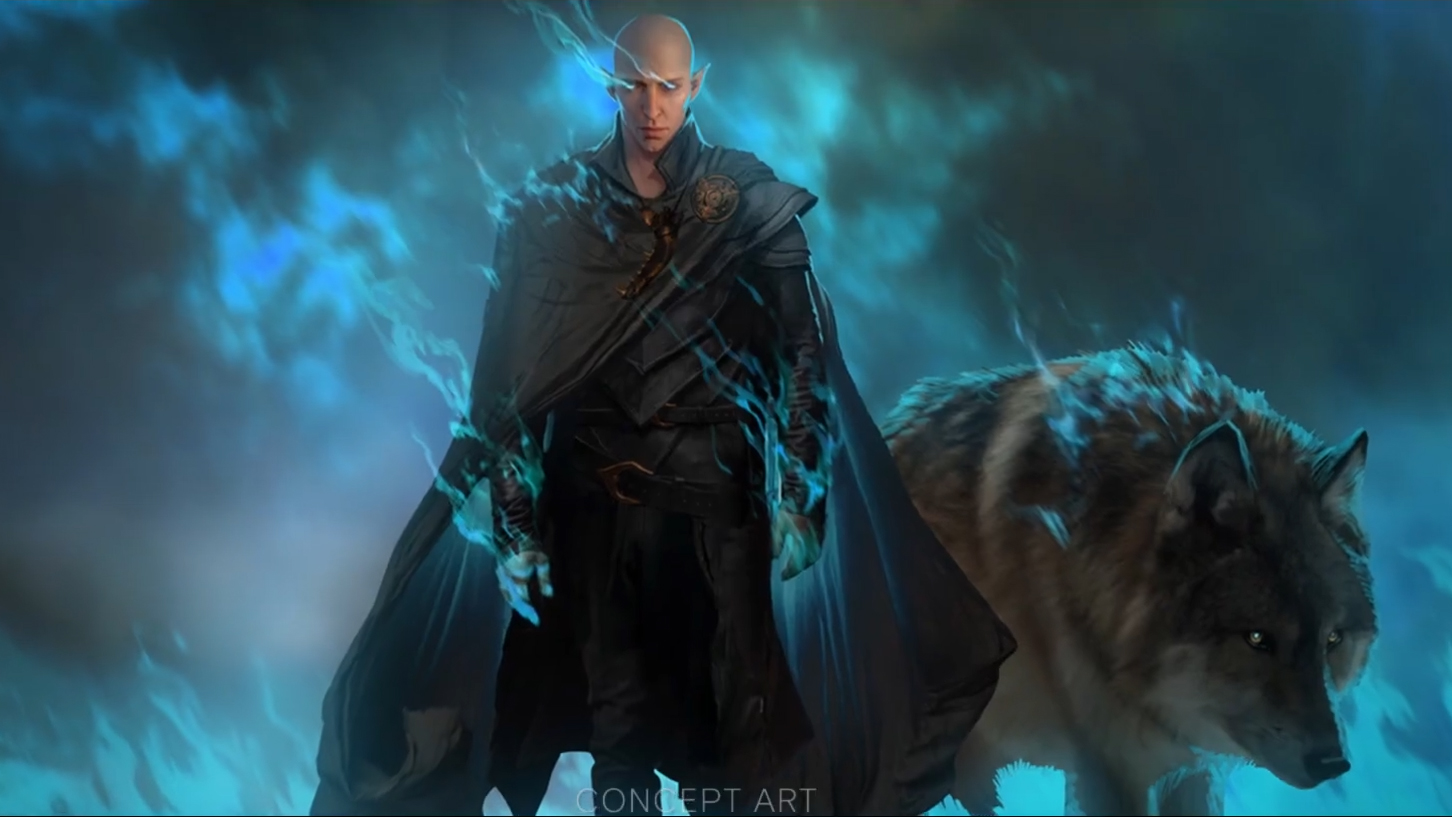
Solas, accompanied by a very large wolf, looking angry and glowing blue.
Enlarge / May the Dread Wolf take you!

Fans of BioWare’s Dragon Age series got a nice little surprise today, as the studio dropped a four-minute highlight reel at the all-virtual Gamescom 2020 promising players that the next game is still in development, and that it’s still going to be Dragon Age, even if we do have to keep waiting for approximately a million more years.

Dragon Age enthusiasts (me) have been waiting for concrete news about the next game in the series since 2015, when the Trespasser DLC for Dragon Age: Inquisition all but literally offered itself up as a prologue. Although the existence of some kind of Dragon Age 4 was an open secret, it took years for the studio even to admit publicly there was indeed a new game in development. Instead, BioWare focused on science-fiction properties like Mass Effect: Andromeda and Anthem.

The four-minute video features an array of studio leadership talking in very high-level terms about the game’s development. Everyone featured promises that the game will be chock-full of characters we’ll love, hate, or love to hate; epic boss fights; sweeping scenery; and all the fanciest technology the next console generation has to offer, all of which you’d expect to hear.

It also promises many more of the kind of trademark agonizing decisions that have defined the series to date, particularly in Inquisition. “Choice is a big part of what Dragon Age is as a franchise,” Gameplay Director Andre Garcia says in the video. “The decisions you make can effect change in the world.”

RPG Programmer Katrina Barkwell then expands on this idea: “Decision-making can mean that a party member lives… or that a party member dies,” she intones with the kind of glee that players who have chosen between saving Hawke or saving certain other living Grey Wardens know to both love and fear hearing from the Dragon Age crew.

Details are otherwise light. In small snippets of voice actors recording their lines, the video teases both the return of existing antagonists (hi, Solas, I’m coming for you) and also teases two previously unknown characters: Bellara and a Grey Warden called Davrin. Concept art liberally sprinkled throughout hints at locations throughout Thedas, which desperate, thirsty fans (…still me) are sure to immediately start tearing apart for details and clues while we wait another year or two for more concrete information.

[embedded content]

https://arstechnica.com/?p=1701713


Your PlayStation allegiance may determine whether you can preorder a PS5

This credit card doesn't exist, but if it did, we're not sure it'd count as "previous interests and PlayStation activities" in terms of jumping the PlayStation 5 pre-order line.
Enlarge / This credit card doesn’t exist, but if it did, we’re not sure it’d count as “previous interests and PlayStation activities” in terms of jumping the PlayStation 5 pre-order line.
Aurich Lawson / Getty Images

Want to be first in line to preorder PlayStation 5? In a rare move for a console’s launch, Sony has led the charge by announcing a direct-sales program—one that bypasses typical retail channels—before the upcoming system’s price, release date, or other details have been announced.

Starting today, prospective buyers can go to Sony’s official preorder site to express their interest in purchasing a PS5. Users only need to enter one piece of information into the form: their PlayStation Network ID. And… that’s it.

Before ordering, please answer 27 questions about Nathan Drake…

From there, Sony will determine exactly who will be deigned worthy of a shot at purchasing a PS5, and this will be based on “previous interests and PlayStation activities.” Exactly what that information is, and how it will be weighted, is currently unclear. Years of membership? Number of games owned? Whether the account in question pays for subscription services like PlayStation Plus or PlayStation Now, or merely uses a wholly free PSN account? Sony has yet to clarify this point.

If you’ve been selected as part of Sony’s direct pre-order program, you’ll find out at some point (currently unknown) via an email sent to the address registered to your PSN account. (Hence, today would be a good day to double-check that address and other PSN profile information.) If you didn’t get into Sony’s preorder program, you won’t receive the bad news in the form of an email or any other notification. And while PSN IDs from all over the world will be eligible for this program, orders will only work if they ship to US addresses. It’s unclear whether Sony will roll out similar campaigns for other territories.

With that email, you’ll be told the exact time window you have to place an order of a PS5 console, which can either be the standard version (with a disc drive) or the “Digital Version” (no disc drive). Sony has emphasized a limit of one PS5 console per PSN ID. Invited PSN users will also be able to directly order PS5 peripherals with their console, including DualSense controllers, headsets, cameras, media remotes, and controller charging stands. No peripheral bundle will be forced upon buyers in Sony’s direct-sales program.

Sony’s language implies, but doesn’t quite confirm, that this PSN-related program will be the very first one in the world to offer PS5 console preorders. Meaning, Sony may beat typical retailers like Gamestop, Amazon, and Best Buy to the preorder party. It’s another major blow to the usual retailer product chain, which was already disrupted by Sony giving fans the option of punting discs with the Digital Edition and buying all their games directly from PlayStation Network.

We’re still waiting to hear exactly how much the console will cost and when it will begin shipping to customers and retailers, but other crucial details remain unanswered before a program like this rolls out. How much will all of PS5’s peripherals cost—particularly the brand-new DualSense controller, which looks bulkier and adds more sensitive functions (particularly its haptic feedback system) than any previous first-party PlayStation gamepad? What kind of built-in capacity should we expect for the PS5’s solid-state drive, and what requirements should we expect for add-on NVMe drives?

Which previously announced games will launch alongside the console? (So far, we only know about Spider-man: Miles Morales as a first-party PS5 game for 2020, but whether it will accompany the console’s launch is still unknown. Comparatively, Microsoft originally announced Halo Infinite as a launch title for this year’s Xbox Series X, only to pull back.)

Most of all, will fans know the price before this preorder program goes live, or will interested buyers have mere milliseconds to swallow the price tag before placing their preorder amongst a crazed mob of specially selected PSN users? Sony likely isn’t incentivized to let anyone mull the price tag, considering how high we expect it will be—and third-party game publishers are already revving fans’ wallets in the form of higher next-gen game prices.

https://arstechnica.com/?p=1701592


The next Call of Duty will cost $70 on next-generation consoles

Players who want to play the newly announced Call of Duty Black Ops: Cold War on the PlayStation 5 or Xbox Series X will have to pay an additional $10 for the privilege. And whether fans agree with that call or not, a slew of versions and clarifications about physical copies isn’t helping the messaging for today’s news.

Following today’s official reveal of the game, Activision is detailing three different versions of the title for pre-order ahead of a Nov. 13 launch:

    • Standard Edition ($59.99): The standard game available for Xbox One, PS4, or PC, complete with “cross generation, cross play and cross progression support” if you upgrade later.
    • Cross-Gen Bundle ($69.99): The Standard Edition with “a dual entitlement… which allows you to play on current (PS4, Xbox One) and next-generation consoles within the same console family (PS5, Xbox Series X).”
  • Ultimate Edition ($89.99): Current and next-generation versions of the game, plus exclusive skins and a Season Pass. (also available on PC)

In addition to those digital packages, Activision also lists physical Standard Editions of the game, which will cost $59.99 for current-generation consoles and $69.99 for next-generation consoles. And while the Xbox Series X physical Standard Edition will include a copy for Xbox One, the PS5 physical edition will not include a copy for PS4.

To make things even more confusing, the cheaper PS4 and Xbox One digital versions of the game will play via backward compatibility on the PS5 and Xbox Series X, respectively, according to online store listings. Those versions should get some basic performance improvements on the higher-end hardware, but they won’t be able to get fuller benefits like more detailed textures, higher native resolutions, and faster load times.

One more makes a trend

Activision’s move comes weeks after Take Two similarly set a $69.99 price point for the next-generation versions of NBA2K21, which is also $10 higher than the Xbox One and PS4 versions of that game. But Take Two is asking cross-generational players to shell out $99.99 for a “Mamba Forever Edition” if they want access to both a current and next-generation version of the game in one package.

Since Take Two’s announcement, no other major publishers had followed suit with $70 pricing for their own PS5 and Series X games. Take Two has explicitly said that its game pricing would be determined on a “title by title basis” going forward. Ubisoft has promised that all of its “Christmas games” for 2020 would be priced at $60 for all consoles (and will be freely upgradeable from current consoles to the next generation).

Take Two and Activision’s pricing moves come despite reports from earlier in the summer that Microsoft was urging third-party publishers to make Series X upgrades free for those who purchase a game for the Xbox One. Many publishers are doing just that by using Microsoft’s Smart Delivery system. Other publishers are providing free next-generation upgrades in their own way, such as with EA’s Dual Entitlement program or Bethesda’s free optimized upgrades.

We’re still stuck in an awkward transition period where major publishers are trying to figure out how to best manage a console transition where inter-generational compatibility is taking a prominent role. Whether or not $70 eventually becomes a new standard price for high-end console games, though, it’s worth remembering that inflation means that nominal price point is not what it used to be. https://arstechnica.com/?p=1701567


Review: NOS4A2’s second season is a satisfying, genuinely scary horror story

A young mother must overcome her personal demons to save her son from a psychic vampire in the second season of AMC horror drama NOS4A2 (pronounced “Nosferatu”), an adaptation of the 2013 novel of the same name by Joe Hill. (Hill is having a banner year between this and the successful Netflix adaptation of Locke and Key). While the otherwise compelling first season dragged in places—mostly when it was weighed down a bit by the need to build out the fictional world—S2 wastes no time kicking off the action. NOS4A2 rarely lets up over its newest ten episodes.

(Spoilers for S1 below. Mostly mild spoilers for S2 until after the final gallery. We’ll give you a heads up when we get there.)

As we’ve reported previously, the novel is about a woman named Vic McQueen with a gift for finding lost things. She’s one of a rare group of people known as “strong creatives,” capable of tearing through the fabric that separates the physical world from the world of thought and imagination (their personal “inscapes”) with the help of a talisman-like object dubbed a “knife.” For Vic, her knife is her motorcycle; for a troubled young woman named Maggie, it’s a bag of Scrabble tiles. And for psychic “vampire”/child abductor Charlie Manx, it’s a 1938 Rolls-Royce Wraith, which seems to have a mind of its own.

But there’s a cost to using their creative gifts: Maggie stutters, Vic’s eye weeps blood, and Manx wields his power at the cost of his soul. In order to maintain his youthful appearance, he must “feed” off the souls of kidnapped children, transforming them into little monsters and trapping what’s left of them in a place in his inscape called Christmasland. The novel moves back and forth between multiple time periods: Vic as a young girl in 1986, Vic as a rebellious teenager in 1996, and an older Vic with a son in 2008 and 2012. Naturally Manx eventually targets her son, and Vic must defeat him once and for all to save the boy—at great personal cost.

Showrunner Jami O’Brien’s adaptation divides the timelines in Hill’s sprawling novel so that the first season focused on Vic’s (Ashleigh Cummings) teen years and her first showdown with Charlie Manx (Zachary Quinto). She kept most of the key elements intact, including Vic’s alcoholic father, Chris McQueen (Ebon Moss-Bachrach), who is prone to violence against Vic’s mother, Linda (Virgina Kull); and Bing Partridge (Olafur Darri Olafsson), a mentally challenged janitor who helps Manx kidnap the children, believing they will be happy forever in Christmasland.

But there were also some deviations, adding in a few new characters, fleshing out backstories, and taking viewers into Manx’s Christmasland inscape itself for a few key scenes. (In the book, we don’t visit Christmasland until the climactic showdown.) Those changes included the introduction of a drive-in waitress named Jolene (Judith Roberts), another strong creative and former love interest of Manx from the 1950s. There was also a subplot involving Vic’s desire to study art at the Rhode Island School of Design and a rather tedious romantic triangle between Vic, her childhood friend Craig (Dalton Harrod), and a privileged trust fund kid.

In the S1 finale, Craig was trapped in The Wraith as Vic and Manx faced off. Knowing that if she destroyed the Wraith it would kill Manx, and urged on by Craig, Vic set fire to the car. Craig was killed in the explosion, and Manx was hospitalized, in a coma, weakening by the day. A pregnant Vic vowed never to let her child (by Craig) ever fall victim to someone like Manx. But in the final scene, Manx appeared to revive, killing an unsuspecting nurse in the process.

S2 adapts the other half of Hill’s novel, following Vic as an adult, now living in Colorado with a mechanic/garage owner named Lou Carmody (Jonathon Langdon) who loves her son—named Bruce Wayne (Jason David)—as his own. As the season opens, Vic thinks she is free of Manx and the trauma she experienced at his hands, painting custom designs on motorcycles for Lou’s garage. But her peaceful existence is interrupted by a series of creepy phone calls from the children of Christmasland. Unbeknownst to Vic, the Wraith has been restored by an unsuspecting vintage car collector, reviving Manx, who breaks out of the hospital and is soon up to his old child-snatching ways. And this time his sights are set on Vic’s son as revenge.

As I wrote in my review last year, “Like Hill’s novel, NOS4A2 is as much a depiction of the potentially destructive nature of artistic gifts as it is about the tragedy of dreams deferred—just all draped in supernatural trappings.” Those themes carry over beautifully into S2, as we see how the cost of her gift has damaged Vic. This is an older and far less wiser Vic McQueen, still haunted by her encounter with Manx all those years ago and prone to drinking whenever his name comes up on the news. At one point she accidentally sets fire to the house, which prompts a confrontation with the long-suffering Lou. Her worst fears are realized when Manx shows up at the garage in the Wraith, intent on luring young Wayne inside with promises of the delights of Christmasland.

(Warning: A couple of significant spoilers below the gallery.)

Just like S1, the basic storyline is intact with some notable additions and deviations, and this time those changes all work very well—even the introduction of yet another strong creative villain, Jonathan Beckett (Paul Schneider), aka the “Hourglass Man,” whose sole purpose seems to be to give Manx an ally. But he does teach Maggie a neat trick for controlling the negative consequences (epileptic seizures) of her gift. (You can either hurt yourself, or hurt someone else; naturally Maggie chooses the former.)

Most notably, O’Brien has fleshed out the backstories of Charlie Manx and his demon-daughter Millie (Mattea Conforti) to give them more emotional depth. We see Manx’s humble origins and troubled childhood, with all the elements you’d expect to find in a serial killer/predator’s past. We also see him as a young man working as a chauffeur, marrying the daughter of his wealthy employer (who naturally disapproves of the match) and fathering Millicent. The two share a strong bond, and he regales her with stories of an imaginary place called Christmasland—as the marriage sours in the wake of financial struggles.

When Manx discovers and buys The Wraith, he comes into his full powers and fulfills his promise to Millie to take her to Christmasland. Millie has been there ever since, leading the other demon children who are victims of Manx’s predation. But even murderous little demon girls start to grow up eventually. Feeling neglected by her father’s constant absence, Millie starts to doubt his ability to keep them all safe in Christmasland when she discovers a different part of Manx’s inscape—one even he doesn’t realize exists, since it houses his deepest subconscious fears.

Once again, the performances are stellar, with extra kudos for Langdon’s Lou Carmody and Conforti’s Millie. (They are relative newcomers; each appeared only briefly in S1.) S2 doesn’t stumble until the finale, which neatly wraps up the events from the book in the first 15 minutes and spends the rest of the time rather ham-fistedly setting up a possible third season. There’s absolutely nothing wrong with producing a limited two-season series when adapting novels, and I wish it were a more common practice. I get why O’Brien would be keen to continue the story, especially after putting all that work into developing Millie Manx. While she’s a great character, I’m not yet convinced she works as a new Big Bad. But I’m more than happy to be proven wrong.

Two seasons in, NOS4A2 remains a beautifully executed, satisfying, and genuinely scary psychological horror story that deserves a broader audience. With many movie theaters still closed, and film and TV production still mostly shut down, now is the perfect time to discover NOS4A2—and maybe even read (or re-read) the book for good measure.

[embedded content]
The cast and creators of NOS4A2 reveal why S2 is an action-packed deep-dive into chaos and why Charlie Manx is the “ultimate shadow” over Vic McQueen’s life.

Listing image by AMC

https://arstechnica.com/?p=1700570