Facebook has begun ghosting the “Oculus” moniker in its VR division
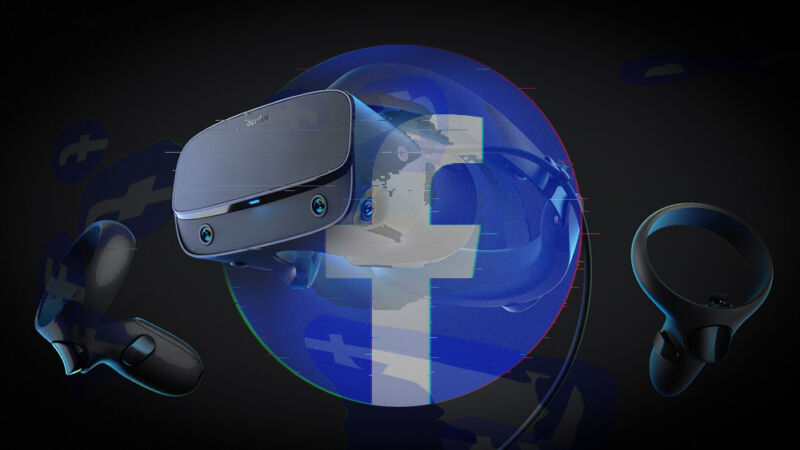
Facebook has begun ghosting the “Oculus” moniker in its VR division
Aurich Lawson / Facebook

Our “Facebookening of Oculus” series continues today with the announcement of the Facebook Connect conference as a free, live-streamed event on September 16. You may remember years of “Oculus Connect” conferences, which focused on the company’s efforts in virtual reality and other “mixed reality” mediums. That conference is dead. It’s Facebook Connect now.

In a Tuesday announcement, Facebook exec Andrew Bosworth cited the company’s broader product portfolio as a reason to expand its conference’s definition beyond Oculus. To back that claim up, however, he only cited two Facebook products: Spark AR, the camera-software toolset used to identify faces and add silly effects and filters, and Portal, the company’s webcam-chat hardware platform. Having attended many Oculus Connect conferences, I can safely say neither of those product lines received much focus (and attending VR-interested developers didn’t express interest in it either).

Now it’s FRL, soon it’s FBOS?

What’s more, Facebook used the Tuesday announcement as an opportunity to rename its entire Oculus VR division: Facebook Reality Labs. That name may sound familiar, since it was given to a number of skunkworks teams working on experimental VR-like features and hardware (including years of focus on 3D spatial audio at its Seattle-area office).

Facebook isn’t shy about explaining why it is renaming everything: to collate and combine its disparate entities in order to “build the next computing platform to help people feel more present with each other, even when we’re apart.” That sure sounds like a bold admission of the so-called “Facebook operating system” that I keep hearing rumors about, with VR, mixed reality, and smartphone cameras at its core. Facebook has spent months hinting at mixed computing systems being combined in the workplace, which the company has conveniently summarized in a new Facebook Reality Labs post from today.

While Facebook paid $2 billion to acquire Oculus in 2014, that money was clearly spent more on the underlying VR technology than on the name, and it remains to be seen whether any of the company’s future VR headsets will be stripped of “Oculus” branding as well. (For what it’s worth, today’s FRL announcement cites “Oculus” as a hardware line multiple times.)

“Much like Facebook’s recent corporate rebranding, our emphasis is on clarity—visually identifying us as a part of Facebook while looking toward the future of the next computing platform that puts people at the center,” Bosworth writes in today’s announcement. But I would argue that this smushing of seemingly unrelated products—VR headsets, webcam chat platforms, funny-face filters, and the smorgasbord of social media content that is an average Facebook feed—only serves to obfuscate what Facebook is trying to sell to consumers. Previously, you could expect to purchase an Oculus headset, then buy, download, and install preferred VR software (or even attach it to more open sales platforms like SteamVR and Windows Mixed Reality).

As we’ve recently learned, that kind of “whatever software you want” freedom may not be in the cards for Oculus hardware much longer, since Facebook will soon start mandating Facebook logins for all brand-new hardware—and I’ve previously predicted that new hardware will be a centerpiece of the company’s next major VR event (which we now know is happening on September 16). Whether new hardware will include other Facebook-specific mandates, like a built-in suite of Facebook-connected social spaces and games, remains to be seen; if so, these would effectively bully out other social and gaming software partners. One could argue that apps like Rec Room and VRChat helped Oculus get to where it is today by delivering the kind of social spaces that Facebook and Oculus have repeatedly failed to maintain. (One of its biggest attempts, the feature-incomplete Facebook Spaces, barely lasted two years before being canceled in favor of another in-development app, Facebook Horizons.)

All of this continues to reek in ways that I expressed my disdain about last week:

Facebook is taking what many users will argue is, on its face, a “dumb” system—the equivalent of a computer monitor combined with a microphone and a mouse-like controller—and leveraging its competitive advantage to install Terms of Service and data-collecting priorities onto an attached hard drive. And regulators should begin understanding exactly what Facebook is doing—and how comparable it is to existing technologies and business initiatives, as opposed to some mystifying, “unique” VR consideration—so they can reject the whole thing.

Oculus already offers ties to Facebook features, which is well within its purview. But users currently have a choice. Facebook wants to take that choice away.

For these reasons, simply advocating that people not buy Oculus products isn’t good enough. Mandated Facebook accounts on any computer device, VR or otherwise, have got to go.

https://arstechnica.com/?p=1701161



Sony could detect PlayStation users based on how they hold a controller

A recent Sony patent application identifies a problem many console gamers may be able to identify with when moving between consoles: “To log in to their account a user is often required to enter a password, which may be seen by other users. Moreover, once a user has entered their password, a situation arises where the user remains logged into their account unless the user subsequently performs a log out operation, which can result in other user’s [sic] potentially obtaining access to the user’s profile.”

Luckily, Sony’s patent application for an “apparatus, system, and method of authentication” also offers a solution: a new method for “determining an identity of a user holding a handheld controller” by detecting and analyzing that user’s unique “manipulations of the controller.”

Controller fingerprinting?

The full patent application, filed by Sony in February and published by the US Patent Office late last week (and first unearthed by SegmentNext), details how this detection system would rely on measurements of the controller’s position, orientation, and the “closed or open state of a pressure sensitive switch” (i.e. pushing the controller’s buttons). Analyzing how these values change over time for different users during standard gameplay can provide a unique signature, the patent suggests, which can be recognized the next time they pick up a controller.

By way of example, the patent suggests that, for a certain player, “the left-hand side of the controller may be slightly elevated with respect to the right-hand side of the controller” on average. For another, “the user’s height may mean the user has a tendency to hold the controller at a certain vertical position.”

The way players move a controller over time also feeds into the detection algorithm. “Some users may have a greater tendency than others to move their arms and hands while using the controller,” the patent says. The method may also be able to detect unique “small variations (micro variations) in accelerometer and/or gyroscope readings indicative of certain motions of the controller when operated by a given user.”

How it works

The raw data for Sony’s patented detection method could come from any number of sensors, including gyroscopes, accelerometers, and/or magnetometers (as found in the DualShock 4); lights tracked by a camera (à la PlayStation Move); and/or a head-mounted display (à la PlayStation VR). The data could even come from peripherals external to the actual controller, the patent suggests, such as “a wristband or armband” that tracks the user’s movement.

During gameplay, the patented system would use these sensors to measure the controller’s position, acceleration, angular velocity, orientation, motion, and the precise length of time the player pushes the controller’s buttons. The algorithm then calculates summary statistics (e.g. minimum, maximum, mean, median, variance, standard deviation, deciles, etc.) for all of these values, thus creating a profile of how that user generally manipulates the controller.

When an unidentified user picks up a controller later, the system analyzes the same controller movement data over a series of short “time buckets.” That data is then compared with the universe of known users (either locally or potentially over a server) to determine a “degree of match” for each known profile. That value is based on which combinations of data points are unique enough to distinguish that user from “the plurality of users.”

If the degree of match surpasses a certain “confidence threshold,” the system can automatically log the user in to the matched account or provide an on-screen prompt to do the same.

The patent suggests the detection algorithm could run periodically throughout a play session to detect when a controller gets handed off from one player to another, for example, or when a user picks up a controller from a table while the system is idle. When the controller is put down, the system could also immediately log the detected user out.

As with all patents, there’s no guarantee this system will ever make it into an actual marketed product, much less the upcoming PlayStation 5 DualSense controller. Based on the patent alone, it’s not even clear how far along Sony is in implementing this idea, or how accurately and quickly it would work in real-world scenarios.

Still, in a world where password-free identification methods like FaceID and fingerprint sensors are becoming standard on mobile phones, it would be nice to see some technology to smooth out the console login experience. Let’s just hope Sony keeps user privacy in mind if and when this idea does roll out to the public.

(Update: The original version of this story suggested that the patent had been approved by the USPTO, when it had actually just been published. Ars regrets the error.)

Listing image by Sony / USPTO

https://arstechnica.com/?p=1701180


The best game-breaking speedruns of Summer Games Done Quick 2020

The best game-breaking speedruns of Summer Games Done Quick 2020
Aurich Lawson / Getty Images / GDC / DotEmu

If you’ve read our gaming coverage over the past few years, you may have picked up on our love of speedrunning—the act of mastering and exploiting beloved games to finish them faster. While a ton of video and streaming channels focus on this hobby, we continue to look to the biannual Games Done Quick marathon series for the most entertaining (and even educational) speedruns every year.

This week, Summer Games Done Quick turned 10 years old and celebrated the milestone by raising $2.3 million for Doctors Without Borders—all without leaving the house. The series already has a few years of remote speedrunning tech experience under its belt, so the lack of a physical location had only a mild effect on the marathon’s watchability. Thankfully, the whole event was captured for VOD enjoyment on YouTube, so if you’d like to catch up on the fun, we present to you the following embedded options and explanations as to why they’re fun to watch.

[embedded content]
TASBot breaks Super Mario 64.

Super Mario 64: Speedrun.com continues to list the N64’s breakout classic as a fan favorite, so we were excited to see how a preprogrammed run, adjusted on a frame-by-frame basis, could break the game. As an added bit of challenge, the programmers in question focused on a later version of SM64, which meant they couldn’t lean on its notorious “backwards long jump” bug for extra speed.

Instead, they found an entirely new, and utterly bonkers, exploit in which Mario perfectly jumps between two walls to gain ludicrous amounts of speed. And thanks to their TASBot approach, they guided the jumps in ways that a human player could likely never replicate. The result gets this game’s “any percent” run down to an unbelievable 7 minutes, 38 seconds.

[embedded content]
The DDR-like dance game Pump It Up!, fast forwarded to the bonus challenge of a 220bpm dance.

Pump It Up!: One benefit of running SGDQ 2020 from players’ homes is that nobody had to ship their bulky equipment. That’s certainly the case for the insanity of Pump It Up!, a DDR-like dance game whose songs stretch across a “two-player” array of buttons for a single player. This run’s player, a pro dance gamer who goes by the alias HappyF333tz, demonstrated some of the most insane rhythm-gaming proficiency I’ve ever seen, and the full hour-long run is an utter spectacle.

If you’re short on time, fast forward to the one-hour mark in the above YouTube embed to cut to the “bonus incentive” song that F333tz completes at the end, after he’s already clearly exhausted. He nearly fails this 220bpm blur of a track a few times but still manages to complete it, after reminding viewers that only six people in the world have beaten that song on the above settings.

[embedded content]
Half-Life: Alyx speedrun at SGDQ 2020.

Half-Life: Alyx: The honor of GDQ’s first-ever VR game goes to Valve’s 2020 masterpiece, and it arrived with a serious bang thanks to this game-breaking speedrun for the ages. The meat is all in runner Buffet Time’s physicality, which you can see in the corner of the screen. He exploits the VR game’s head-tracking focus by constantly kneeling, ducking, and crawling. By getting low to the ground, resetting his in-game position, and standing up, Buffet Time grows to serious heights in order to march above the levels in ways players were never meant to do. (That’s not his only “strat,” mind you, but you’ll have to watch the whole thing to see his other wizardry.)

[embedded content]
Homey D. Clown speedrun at SGDQ 2020.

Homey D. Clown: At an early point in this awful game’s 10-minute run, one of the commentators offers a pretty simple summary of what to expect: “This game aggressively farts at you.” Indeed, the highlight (or, arguably, lowlight) of the marathon’s “awful block” is a point-and-click MS-DOS conversion of a recurring sketch from the ’90s Fox comedy series In Living Color. You’ll appreciate how brief this speedrun is as soon as the music and sound effects begin, which are easily some of the worst ever committed to a hard drive.

[embedded content]
Virtual Boy Wario Land speedrun at SGDQ 2020.

Virtual Boy Wario Land: In another first for the marathon series, we see an original Virtual Boy game—albeit rendered in “2D” mode (just the left eye’s view) and with the obnoxious red overlay converted to pure black-and-white. Even without that failed Nintendo console’s 3D gimmicks, we’re still left with a compelling side-scroller speedrun, especially since the Wario Land series emphasizes special, weird abilities like high-speed rushes.

[embedded content]
The Witcher 3 at SGDQ 2020, fast forwarded to the floating-horse trick.

The Witcher 3: The phrase “any percent” in a speedrun usually indicates that we’re getting into game-breaking territory, and this runner’s exploits are absolutely dizzying to watch. The run begins with a funny floating-horse trick, but shortly after that, speedrunner Kaadzik says goodbye to pegasus emulation and hello to a time-warping glitch that makes the game run at “Yakety Sax” speed.

[embedded content]
Doom Eternal speedrun at SGDQ 2020.

Doom Eternal: While the 2016 Doom reboot was notorious for broken skyboxes and geometry, its sequel had some (but not all) of those patched up. Either way, this “no major glitches” speedrun of this year’s triumphant series return forces its runner to focus on proper movement and combat timing, and it’s among the most technically proficient speedruns of this summer’s entire eight-day stretch. (In particular, the infamous Marauder enemy doesn’t stand a chance against these strats.)

[embedded content]
Link’s Awakening speedrun at SGDQ 2020

Legend of Zelda: Link’s Awakening: “We didn’t even scratch the surface of how unbelievably busted this game is,” one commentator said at the end of this glitch-filled exploration of the Game Boy classic. That’s remarkable, because the number of exploits and glitches shown off in this year’s speedrun was pretty remarkable. (This is not the 2019 remake, to be clear, which has its own litany of exploits.) Bonus points go to this speedrun’s play-from-home nature, which meant speedrunner Mghtymth enjoyed couch cameos from his mother and dog.

[embedded content]
Hypnospace Outlaw speedrun at SGDQ 2020—and a new speedrunning world record.

Hypnospace Outlaw: One of 2019’s weirdest and most memorable games, Hypnospace Outlaw is also easily exploitable for the sake of speedruns since it revolves around browsing an alternate-history version of the Internet. If you’ve never played the game, this run will have the simultaneous effect of spoiling its biggest twists but also enticing you to play the game yourself and learn about all the weird side stories that runner Lizstar passed on her way to establishing a new world record (without even realizing it).

[embedded content]
TrackMania Nations Forever speedrun at SGDQ 2020.

TrackMania Nations Forever: In another “less glitch, more proficiency” run, speedrunner Wirtual flexes his lightning-quick reflexes in this beloved, physics-filled PC racing game.

[embedded content]
Dusk speedrun at SGDQ 2020

Dusk: This nostalgia-driven FPS from 2018 is already a blast to watch in a speedrunning capacity, since it was intentionally designed with bugs and exploits left in the code for speedrunners’ benefit (and older, speedrun-friendly versions can be accessed via the game’s official Steam version via the “beta” drop-down menus). The fun only ramps up when its lead designer and producer join in as commentators, mostly in the form of faux-complaining about how the speedrun is breaking their game.

The above speedrun embeds are only a taste of the eight days of madness you can find at the full SGDQ 2020 archives, which include a number of speedrun “races,” a motherlode of classic and niche games, and lengthy runs of popular RPGs like Final Fantasy VII Remake, Pokémon Shield, and more.

https://arstechnica.com/?p=1700463


Microsoft backs Epic against Apple in legal fight over Unreal Engine on iOS

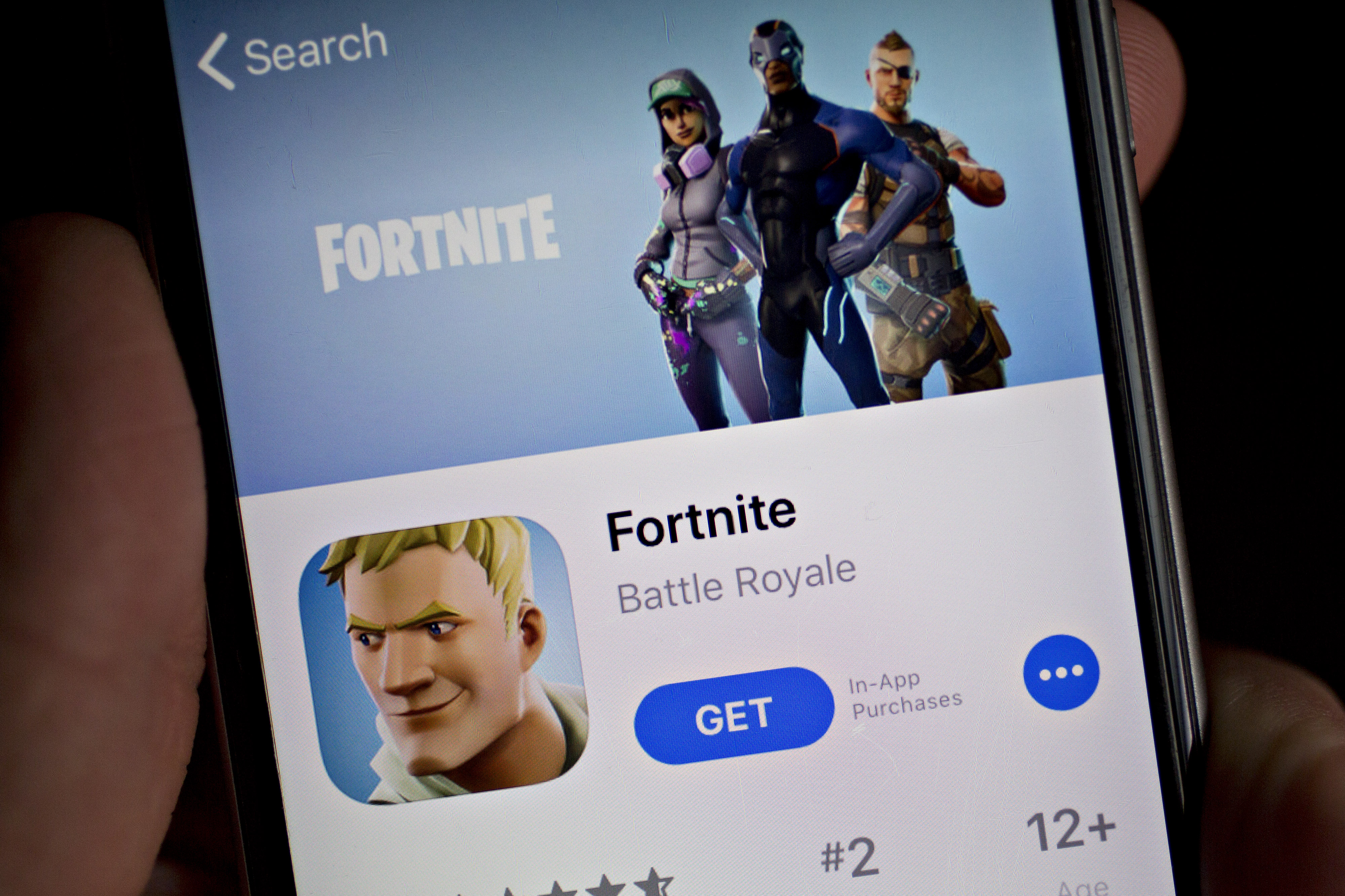
<em>Fortnite</em> seen in the App Store on an iPhone on May 10, 2018.
Enlarge / Fortnite seen in the App Store on an iPhone on May 10, 2018.

In court documents that surfaced this weekend, Microsoft offered its support for Epic Games in the Unreal Engine-maker’s quickly unfolding legal battle with Apple over access to the iOS app marketplace.

The legal declaration from Microsoft Gaming Developer Experiences General Manager Kevin Gammill comes in response to Apple’s threat to halt Epic’s access to software development tools used to update its popular Unreal Engine for use on iOS. That threat itself came after Epic tried to use its own payment system in the iOS version of Fortnite to get around Apple’s 30-percent platform fee. That move quickly got the game pulled from the Apple App Store and led Epic to file a lawsuit in response.

Gammill says that any move harming development of Epic’s Unreal Engine on iOS would hurt Microsoft’s business, because “in Microsoft’s view there are very few other options available for creators to license with as many features and as much functionality as Unreal Engine across multiple platforms, including iOS.”

“Ensuring that Epic has access to the latest Apple technology is the right thing for gamer developers & gamers,” Microsoft’s Head of Xbox Phil Spencer added while tweeting a link to the declaration Sunday.

Microsoft uses Unreal Engine for iOS games such as Forza Street, and Gammill says Epic’s software is “critical technology for numerous game creators, including Microsoft… if Unreal Engine cannot support games for iOS or macOS, Microsoft would be required to choose between abandoning its customers and potential customers on the iOS and macOS platforms or choosing a different game engine when preparing to develop new games.”

Microsoft says its work on games like <em>Forza Street</em> would be hurt by Apple's threatened actions against Unreal Engine development.
Enlarge / Microsoft says its work on games like Forza Street would be hurt by Apple’s threatened actions against Unreal Engine development.

Developers currently working on Unreal Engine projects for Apple hardware would have to incur significant costs to start over, Gammill said, while developers with current Unreal Engine apps on iOS will be stuck with an engine that can’t “take advantage of new iOS or macOS features, fix software bugs, or patch security flaws.

“In addition, this situation could bifurcate a game’s player base, such that gamers on iOS or macOS cannot play or communicate with friends or family who are playing on other platforms,” Gammill added.

Chilling retaliation?

In court documents filed late last week, Apple argues that the “irreparable harm” Epic claims Apple is causing in this matter is actually the “self-inflicted… result of its choice to breach its agreements” with Apple. All of these problems can go away, Apple asserts, if Epic resubmits a version of Fortnite that complies with the App Store’s standard in-app purchase rules (including Apple’s 30-percent fee).

“The harm raised by Epic here is completely avoidable—here and now,” Apple writes. “The asserted harm to Epic customers, whether of Fortnite or Unreal Engine, can be ended by Epic. All of the users and developers that Epic asserts are at risk are disadvantaged only because Epic’s scheme included breaching its agreements and running into court for relief. Epic has put customers and developers in this position, not Apple.”

In its response filing, though, Epic asserts that any issues surrounding Fortnite should not affect Epic’s ability to separately continue developing Unreal Engine for iOS. That’s because Apple’s Program License Agreement—which Apple says Epic breached with its Fortnite direct payment plan—is completely separate from its XCode and Software Development Kit agreement—which governs the testing and development of Unreal Engine on the platform.

“The breadth of Apple’s retaliation [against Unreal Engine development] is itself an unlawful effort to maintain its monopoly and chill any action by others who might dare oppose Apple,” Epic writes in urging the court to block Apple’s threatened action. “Epic asks only that the Court preserve the status quo so that Epic continues to have the same access to software, software development kits (“SDKs”), application programming interfaces (“APIs”) and other developer tools that it has today.”

Strange bedfellows

Separate from Epic’s battle, Microsoft is also waging its own PR war against Apple over the blocking of an iOS version of its xCloud game streaming platform. “Apple stands alone as the only general purpose platform to deny consumers from cloud gaming and game subscription services like Xbox Game Pass,” Microsoft said earlier this month. “And it consistently treats gaming apps differently, applying more lenient rules to non-gaming apps even when they include interactive content.”

But Microsoft and Epic make somewhat strange legal bedfellows. As recently as 2016, the two companies publicly sparred over similar platform control issues raised by Microsoft’s Universal Windows Platform, which Epic called a “fiasco” and “the most aggressive move Microsoft has ever made.” Epic and Microsoft publicly buried the hatchet last year, though, with Epic CEO Tim Sweeney telling VentureBeat “Epic loves Microsoft. Epic hearts Microsoft.”

Microsoft also exercises strict, iOS-style control over the software market on Xbox consoles and extracts a similar 30-percent fee for in-game items sold on the platform. But Sweeney has said these console markets are different from mobile platforms because of console-makers’ “enormous investment in hardware, often sold below cost, and marketing campaigns in broad partnership with publishers.” https://arstechnica.com/?p=1700858


This COVID-19 summer’s must-watch show is… an NBA rookie’s YouTube page?

Even if you don’t like sports, the NBA bubble in Orlando has been a fascinating epidemiological experiment: if you had seemingly infinite resources available and every participant willingly agreed to follow protocols based on our best understanding of a nascent viral pandemic, could you construct a truly safe environment? Take note, US government, as so far the answer has been, “Yes.” As of August 19, the NBA has officially had zero new COVID-19 infections to report over the league’s five-week restart. And that’s with the league needing to utilize contingency quarantine protocols for players unexpectedly leaving and traveling (which they’ve done for everything from family emergencies to, um, lemon-pepper chicken wings?).

Traditional media has been invited inside to an extent in order to document this unprecedented playoff season, and the NBA has relied heavily on Zoom access to players for other reporters. Twitter, naturally, has also birthed an aggregator account that will bring you all the beer-chugging player social media you desire. But nearly all of these glimpses into bubble life remain limited—the league has shifted access areas for press on a dime, and player interviews have time restrictions (and often PR personnel on the line to step in if things get into unwanted territory).

All of this makes Philadelphia 76ers guard Matisse Thybulle’s ongoing video diary remarkable and essential viewing. I’ve never been one to get into YouTube series or personalities, but his eight-episodes-and-counting of Welcome To The Bubble has been the can’t-miss viewing experience of the summer.

[embedded content]
Episode one of Welcome To The Bubble by Matisse Thybulle

Thybulle’s just a kid by league standards—a rookie beloved by online stat heads who appreciate defense, largely unknown otherwise—so his approach lacks the polish of a superstar who started a production house or the time-worn savvy of a veteran who might overly self-censor. Instead, he does what any of us might do during an unusual experience: Thybulle brings his Canon EOS 6D Mark II with him everywhere as he navigates this strange new world, keeps the thing rolling, and then edits and publishes 10-minute diaries during down time.

In early videos, Thybulle demystifies bubble policies and experiences as much as any traditional media. Even if players will ultimately come into contact early and often during games, Welcome To The Bubble shows they must stay apart in fixed-position chairs during breaks on the practice court. Disney park wristbands that might normally FastPass a ride on Space Mountain instead help a player’s health data travel with them seamlessly for instant clearance. And Thybulle walks the audience through this process: after arriving to the bubble and quarantining in their rooms until passing a consecutive number of COVID-19 tests, players then must take their temperature daily and head to a ballroom regularly for nose swabs. All that medical context lives in an app (developed with the help of the NBA, much like that new COVID-19 saliva test), which is synced to the wristband that grants healthy players access to various parts of the Disney sports complex.

While such granular NBA regulations never let those in Orlando ever forget the extraordinary circumstances, at the same time, these are young men away from their families and living among their peers for an extended period of time. It can kinda, sorta be fun adult summer camp during downtime. Thybulle charmingly brings viewers along for the ride in this aspect, too. We get to see some world-class athletes enjoying some very basic activities—golf, fishing, corn hole—for the first time, and luckily Thybulle and his teammates aren’t afraid to look like amusing amateurs in front of the camera (despite providing ample ammunition to rip one another).

Perhaps most interesting of all for this particular moment, Thybulle continues to press record as he and his 76ers teammates have some real conversations about the elephant in the room: race, and specifically how NBA players might be able to leverage this high profile spotlight to spark real change in the aftermath of the deaths of George Floyd, Breonna Taylor, and other victims of police violence. At press conferences and during televised games, NBA stars have been quite eloquent and strategic about how to use their time with the media to further messages about Black Lives Matter or about particular incidents (Oklahoma City Thunder guard Chris Paul, for instance, has been writing Breonna Taylor’s name on his shoes game in and game out). But Welcome To The Bubbles lets us in on the candid conversations being had behind the scenes about why this work is important and what exact actions and strategies might achieve the best results. The 76ers talk about trying to make their arena a polling place ala the Atlanta Hawks, about shouting out locally-owned Black businesses whenever possible, and about emphasizing education as the first step towards building a more equitable society.

With so much attention on the NBA bubble in general, Thybulle’s small pet project inevitably blew up. In later episodes, he talks to the camera about preparing for an interview with the New York Times or about making an appearance on The Tonight Show with Jimmy Fallon, for instance. Sixers PR can’t help but get involved here, too, as slick intro graphics start to appear and well-edited game footage does, too.

But make no mistake—Thybulle remains the one doing the work (he even shows his editing queue in what looks like iMovie). The 76ers media team actually profiled the rookie for his photography prowess last fall, and Thybulle told the New York Times it’s something he’s done for years (his mom let him play with her point-and-shoot camera as a kid). So even with a little extra polish, Thybulle’s personality, perspective, and sensibilities still sit firmly in the center of Welcome To The Bubble. In the latest episode, he responds to fan mail the series has generated, takes viewers inside the players’ restaurant, and still finds time to annoy teammate Kyle O’Quinn before grabbing some soft serve. Based on the game footage added to the end of that one, most of the events took place around August 14—before the playoffs officially started that weekend.

That’s a good thing, because it means maybe the world can enjoy an episode or two more of Welcome To The Bubble before things are said and done. In an effort to keep the bubble as safe as possible, per NBA protocols teams must exit the premises within 24 hours of being officially eliminated from the season. And in the 76ers’ first round matchup with the Boston Celtics, Thybulle’s team currently trails 0-3 in a best of seven series with Game 4 tipping off later today (1p ET). By the time you’re reading this, Thybulle could be packing up his tiny hotel room and camera and preparing to head out.

That’s a shame, because there will likely be so much more to see. When the second round of playoffs comes around, for instance, friends and family will be permitted to enter the bubble, which raises the complexity of the NBA’s epidemiological experiment. And as the United States grapples with upcoming fall challenges undeniably intertwined with COVID-19—restarting schools, conducting elections, trying to restart other sports like the NFL or college football, etc.—it’d be fascinating to hear the conversations being had in this isolated, thus far pandemic-free environment. At the very least, sticking around for the behind-the-scenes ride of a playoff run unlike any other the NBA has ever seen (and may ever see) would be the greatest time capsule sports fans could ask for.

So, Boston Celtics, if you don’t mind, maybe give the 76ers a few more days for the sake of the rest of us? The premiere of HBO’s Lovecraft Country was delightful, but it’d be great to get at least a 10- or 12-episode season for the unexpected show of the summer.

Listing image by Joe Murphy/NBAE via Getty Images

https://arstechnica.com/?p=1700681


HBO Max drops first trailer for Zack Snyder’s Justice League

[embedded content]
The first teaser for Zack Snyder’s Justice League is set to Leonard Cohen’s “Hallelujah.”

Fans who have been clamoring to see Zack Snyder’s director’s cut of the disappointing 2017 film, Justice League, will finally get their wish, as HBO Max released a two-minute trailer for Zack Snyder’s Justice League during the virtual DC Fandome event. The trailer actually leaked online before the panel, but was quickly pulled until the official release.

(Some spoilers for the 2017 Justice League below.)

The original Justice League was the third film in a trilogy that included Man of Steel (2013) and Batman v. Superman: Dawn of Justice (2016). It brought together Ben Affleck’s Batman and Henry Cavill’s Superman with Wonder Woman (Gal Gadot), Aquaman (Jason Momoa), The Flash (Ezra Miller), and Cyborg (Ray Fisher). They are on a mission to save the world from arch-villain Steppenwolf, a New God in search of three “Mother Boxes” that will enable him to terraform the Earth into something more hospitable to him and his army of Parademons.

Snyder completed all the principal photography and was well into post-production. But he stepped down as director in May 2017, following the tragic suicide of his daughter, and the studio turned to Joss Whedon (The Avengers) to complete the film. Whedon rewrote the script, adding some 80 pages, and did extensive reshoots, bringing more humor and a brighter tone into the mix. (A common criticism of Batman v. Superman was that it was slow, lacked humor, and was too dark in tone.) He also cut more than 90 minutes of Snyder’s original’s footage to accommodate the studio’s requested 120-minute run time, although Whedon’s version retained the basic story outline.

The result was what some critics called a “Frankenstein” film, struggling to incorporate very different visions of two directors. Reviews were mixed, and while Justice League wound up grossing $657 million, the purported break-even point was around $750 million. Its poor box office return may have influenced Warner Bros.’ subsequent decision to shift way from the Marvel model of a series of interconnected films in a shared universe, in favor of standalone films and franchises.

The rumored production woes had some fans clamoring for an alternate “Snyder cut” soon after the theatrical release, leading to a social media campaign that occasionally got ugly. In May, Snyder confirmed that his cut would air on HBO Max during a virtual watch party for Man of Steel, insisting it would feel like an entirely different movie, with new visual effects sequences, additional character development, and some added dialogue.

During the DC Fandome online panel, Snyder confirmed that his cut will be aired on the streaming platform in four one-hour installments. In addition to being darker in tone, Snyder said that the character of Steppenwolf has been redesigned, and that Steppenwolf’s uncle, Darkseid (Ray Porter), will be the main villain. (Darkseid did not appear at all in the original theatrical release.)

Miller and Fisher also appeared on the panel, and Snyder said we will see more of their respective characters.  The Flash will have “more of an emotional arc,” and Cyborg will be “the heart of the movie,” per Snyder. “He holds the team together in a lot of ways and I’m excited for fans to see how it’s realized.”

That should be especially good news for Fisher, who has recently aired his frustrations with the behavior of Whedon on the Justice League set after Snyder’s departure. Although Fisher had been a good soldier while promoting the theatrical release during the 2017 San Diego Comic-Con, he retracted those statements in early July. “Joss Whedon’s on-set treatment of the cast and crew of Justice League was gross, abusive, unprofessional and completely unacceptable,” the actor tweeted, adding that producers Geoff Johns and Jon Berg “enabled” Whedon.

WarnerMedia has since announced an investigation, and Fisher called the decision a “MASSIVE step forward,” tweeting, “I believe this investigation will show that Geoff Johns, Joss Whedon, Jon Berg (and others) grossly abused their power during the uncertainty of AT&T’s merger with Time Warner.”

Zack Snyder’s Justice League will debut on HBO Max in early to mid 2021. It definitely feels like a different beast from the theatrical release. It remains to be seen just how much of an improvement Snyder’s version will be.

Listing image by YouTube/HBO Max

https://arstechnica.com/?p=1700695


New Wonder Woman 1984 trailer offers first look at Kristen Wiig’s Cheetah

[embedded content]
Diana Prince (Gal Gadot) fights crime in the 1980s in Wonder Woman 1984.

Warner Bros. dropped the latest trailer for Wonder Woman 1984 today during the DC Fandome online event, giving us our first real look at Kristen Wiig’s villainous Cheetah. Bonus: we get to see a miraculously revived Steve Trevor (Chris Pine) don parachute pants in an attempt to blend with the times, much to the amusement of Gal Gadot’s Diana Prince.

Inspired by the comic book heroine created by William Moulton Marston in the 1940s for DC Comics, Wonder Woman made her big-screen debut in the DCEU with 2016’s Batman v Superman: Dawn of Justice, followed by 2017’s Justice League. As we reported previously, the first fell short of box office expectations; the second bombed outright. So when Jenkins took on Wonder Woman’s origin story, she deliberately departed from the grim humorlessness and dark sensibility of those earlier films, bringing a brighter energy and wit to her tale, along with the usual action. That vision paid off: Wonder Woman went on to gross $821 million worldwide and earned critical raves, making it the most successful of the DCEU films thus far.

Since we’re now in the 1980s, Diana is operating in a Cold War scenario, taking on Pedro Pascal’s villainous Maxwell Lord, a shrewd and powerful businessman. Wiig plays Barbara Ann Minerva, a British archaeologist who will eventually evolve into her arch-nemesis Cheetah.

The first trailer dropped way back in December of last year, with Diana and Barbara having a heart-to-heart girl talk about long-lost loves. There was a battle in a local supermall, with Diana intervening to restore order, as walls of TVs start showing Lord giving a motivational pitch. (“Think about finally having everything you always wanted.”) We saw Diana and Steve work together once again to thwart whatever evil plan is threatening the day, and got a few flashbacks to a young Diana competing in an Amazonian tournament. But we didn’t get to see Wiig in full Cheetah mode—until now.

This second trailer opens with those same flashbacks to Themyscira. “This world is not yet ready for all you will do,” we hear her mother, Hippolyta (Connie Nielsen) say in a voiceover. “The time will come, Diana. And everything will be different.” (Robin Wright will also reprise her role as Antiope for these flashbacks.)

Then we’re in 1984, as Maxwell Lord makes an important announcement. “Citizens of the world, I’m here to change your life,” he says. “Anything you want. Anything you dream of, you can have it.” He has gained possession of the Dreamstone, which makes those dreams real—like Diana coming face to face with her lost love, Steve. “You look like you saw a ghost,” he says, just before thy embrace. It doesn’t escape his notice that she hasn’t aged a day since World War I—just one more advantage to being a demigod.

Not everyone’s dreams are quite so pure, however. “I don’t want to be like anyone,” Barbara says. “I wanna be an apex predator.” Even though she befriended Diana, there’s always been some jealousy there, and Barbara’s newfound powers seem to amplify her resentment. “You’ve always had everything, while people like me have had nothing. Well, now it’s my turn. Get used to it.” Soon she’s sporting a sexy animal print outfit with thigh-high boots, and taking on Diana in hand-to-hand combat.  She also joins forces with Lord, who admits he’s “never been one for rules,” telling Barbara/Cheetah, “The answer is always more.”

All in all, it’s an action-packed trailer, with all the great special effects and flashes of humor we’ve come to expect from Patty Jenkins—like Steve’s dismay upon learning of the existence of radar for tracking planes, or those over-the-top parachute pants. We get another look at Diana’s iconic golden armor as she faces off against Cheetah (now fully transformed with claws and an animal print body suit) one last time: “Barbara, what did you do?”

Wonder Woman 1984 is currently still scheduled to hit theaters on on October 2, 2020, although given the ongoing pandemic, any film release dates should be considered subject to change.

Listing image by YouTube/Warner Bros.

https://arstechnica.com/?p=1700655


The race to collect the pandemic’s history—as it unfolds

Hand made face masks drying in Southeast France.
Enlarge / Hand made face masks drying in Southeast France.
ICHAUVEL / Getty Images

On March 13, the day the New-York Historical Society closed its doors to the public, Rebecca Klassen, an associate curator for material culture, was scrolling through Instagram when something caught her eye. A friend from the gym had posted an image to her story of a massive bottle of Purell. At the time, store shelves across the five boroughs were already bereft of disinfectants. The picture, Klassen says, was reminiscent of “some kind of night run in the frantic search for sanitizer.” It was captioned “liquid gold.”

The post prompted Klassen to send two messages. The first was an email to Margaret K. Hofer, the Historical Society’s museum director and vice president, asking whether they ought to start collecting items from New Yorkers related to the coronavirus pandemic. The second was a DM in response to her friend’s story. “Hey, can I have that when you’re done?” she asked. “I want to add it to our museum collection.”

People tend to think of archives as massive troves that are compiled long after an era has ended or someone has died. But when it comes to COVID-19, archivists, curators, and librarians nationwide are assembling the record of how the pandemic is impacting their communities in real time, collecting everything from makeshift masks to journal entries to protest signs. Their mandate is both urgent and sweeping: Gather items from a broad swath of residents that, viewed together, tell the story of a particular region’s collective experience of coronavirus. “A lot can be lost over time,” says Ayshea Khan, the Asian American community archivist at the Austin History Center. “Memories can shift, things can be thrown away. It’s important to archive present moments when they happen, as much as we can, to ensure an accurate representation of our city’s history.”

COVID-19 isn’t just impacting what is being archived, it’s also impacting how. Before the lockdowns, staffers at libraries and history centers would organize drives for donations, attend events to look for discarded physical artifacts, and collaborate with local memory keepers to get the goods. “Normally, with our rapid-response collecting, we are out there on the street,” Hofer says. These days, though, archivists have had to get creative. Many organizations have built online portals for volunteers to submit digital files—audio, photos, poetry, you name it. Some collections are more selective than others, but when the archive being formed is largely digital and donor-directed, there can be reason to hold onto almost anything that falls within the scope of the project. “It’s a comprehensive set of resources,” says Madeline Moya, the media archivist at the Austin History Center. “We don’t know what a researcher will come in looking for at any given time.” Sorting through these submissions will be a huge amount of work, but that’s a problem for a later date. For now, the goal is to collect as quickly and widely as possible.

The Austin History Center has been leveraging its social media following to crowdsource imagery and artifacts from 2020.
Enlarge / The Austin History Center has been leveraging its social media following to crowdsource imagery and artifacts from 2020.
Facebook screenshot

At the Austin History Center, collecting for what they’re calling the “COVID-19 Files” began on Facebook, where Marina Islas, the AHC’s Latinx community archivist, posed a question: “We are living through a historic moment. How is that affecting your life?” Meanwhile, Khan emailed organizers and groups she had worked with previously to gather their experiences and participated in a virtual town hall addressing anti-Asian racism related to COVID-19 in the area. Moya reached out to a photographer she knew who works with Austin’s homeless population about donating recent works. Audiovisual archivist Afsheen Nomai, who has been active in the r/Austin subreddit for a decade, archived the posts of a user whose daily coronavirus charts had developed a loyal following.

In New York, Klassen has made ample use of Instagram. She’s messaged friends about donating items, like the supersized Purell bottle, but says the app is also a way to pick up on trends even outside the boundaries of her own filter bubble. “Seeing something shared multiple times or visually through pictures elevates its importance and its collection-worthiness,” she says. In the early months of the pandemic, she noticed people posting photos of burgeoning miniature herb gardens and handwritten notes of thanks from local businesses and sought out those images for the collection. Then, when Black Lives Matter protests began in late May, the app became her way to keep track of New York City’s many grassroots organizing efforts and to follow up with participants about donating signs or telling their stories. The New-York Historical Society’s collecting program is among those that are now gathering materials from both the pandemic and the protests. “Some people see pandemic collecting and Black Lives Matter collecting as two separate streams,” Klassen says. “On the one hand they are, but they’re also very much intertwined.”

Not just that, but many issues at the heart of both are central to the work of archiving. Decisions around who gets to be remembered and whose voice should be listened to have been instrumental in perpetuating racism for as long as there have been history books. Done right, community collecting can be an opportunity to redefine what kinds of stories, artifacts, and experiences are being prioritized and preserved.

The pandemic, of course, isn't the only major happening of 2020—museums are trying to capture materials from everything from the Black Lives Matter protests to electisn materials to back to school imagery. Here, a protester holds a placard at Timss Square during the Black lives Matter protest in early August.
Enlarge / The pandemic, of course, isn’t the only major happening of 2020—museums are trying to capture materials from everything from the Black Lives Matter protests to electisn materials to back to school imagery. Here, a protester holds a placard at Timss Square during the Black lives Matter protest in early August.
SOPA Images / Contributor / Getty Images

Scholars of prior pandemics know first-hand that this is imperative. Nancy K. Bristow, the chair of the University of Puget Sound’s history department and author of American Pandemic: The Lost Worlds of the 1918 Influenza Epidemic, began her research in the hopes of understanding the experiences of her working-class great-grandparents in Pittsburgh. But finding information about poorer Americans, least of all those who wielded even less social power, was a significant challenge. “Without a substantive and sustained effort to collect the stories and experiences of people from the widest range of communities, we risk silencing those distant from political, economic, and cultural power, the very people whose stories we most need to hear,” she says.

J. Alexander Navarro, the assistant director of the University of Michigan’s Center for the History of Medicine, agrees. He’s spent years researching influenza epidemics and often finds the documents at his disposal lacking. “Archives generally collect the materials of more ‘important’ people,” he says. “As a result, we are missing a trove of very rich—if not sad—stories about how everyday people lived through the [1918] pandemic.”

The Austin History Center created its community archive program to fill out these kinds of gaps in its collections, many of which privilege white history. Since 2000, the city has actively sought out nonwhite archivists to build trusting relationships with its communities of color and facilitate the preservation of their stories. In recent years, for example, the center has put on exhibits highlighting Austin’s first Chinese families and photographs from the Villager Newspaper, the city’s longest-running Black community paper. “I got into this work because I believe archives and other forms of memory-keeping can be meaningful spaces for healing during times of trauma,” Khan says. “Especially for people of color there’s something very powerful in the act of being able to share your story in your own words.” Still, this spring and summer have underscored the gaps in the History Center’s services. Looking at the COVID-19 materials collected so far, “there are silences, especially from our different Black, brown, and other communities of color,” she notes. “We have a lot more work to do.”

During a year when people are figuring things out day by day under the best of circumstances, it can be difficult to wrap your head around anything that looks ahead, least of all a project meant to help people in the distant future understand what’s happening in the present. But archivists know that that’s exactly why this has to start now. Eventually this pandemic will end, and these archives will get organized. History centers will create digital exhibits and physical displays. And one day, when historians, kids working on school projects, or anyone who’s curious wants to learn more about what it was like to live in, say, Austin in 2020, they’ll be able to see for themselves. Pictures of the boarded-up bars on Sixth Street, recollections of braving the hospital and the grocery store, signs made to protest outside the Austin Police Department, and, yes, bottles of Purell will all be there to help them write a richer, more complete draft of history.

This story first appeared on wired.com.

https://arstechnica.com/?p=1700564


How do you do, fellow gamers?—Burger King exploits Twitch for cheap ads

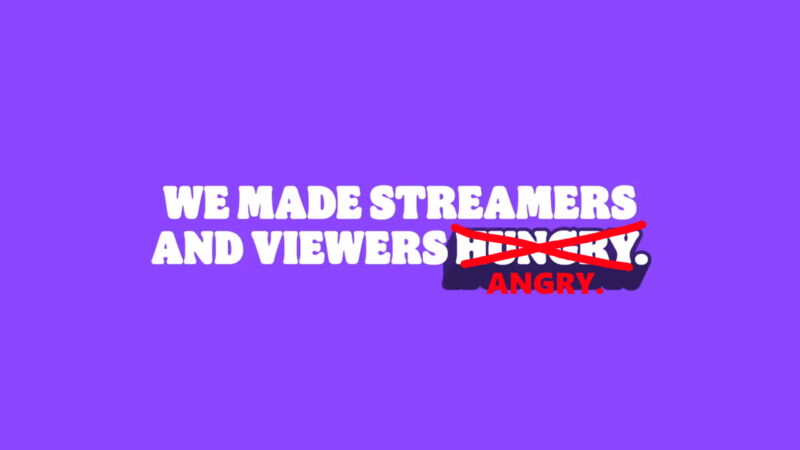
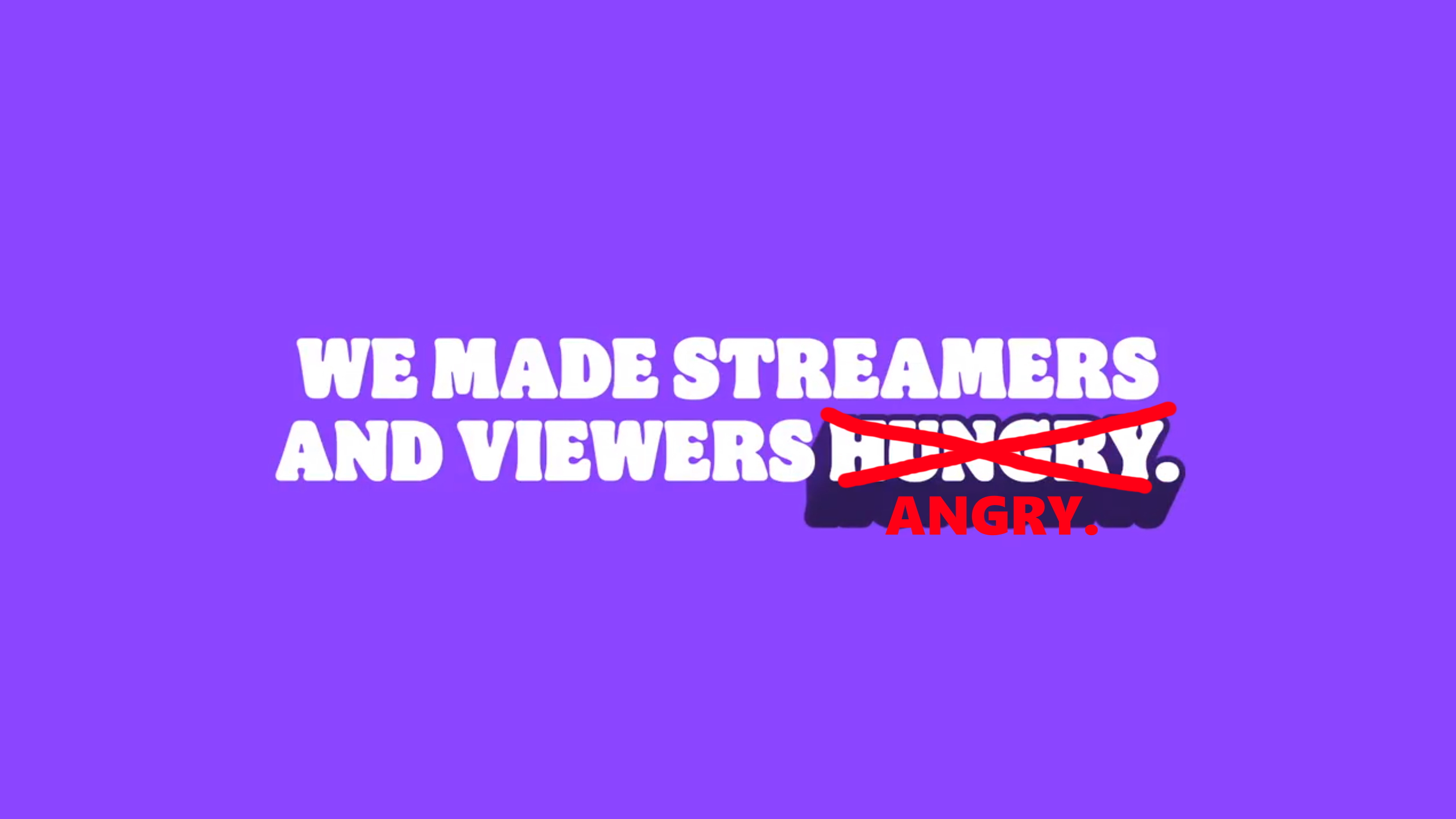
Ogilvy boasted about its ad campaign with the following claim. We have edited it slightly.
Enlarge / Ogilvy boasted about its ad campaign with the following claim. We have edited it slightly.
Ogilvy / Ars Technica

Earlier this week, an advertising agency emerged with a video bragging about an ad-campaign concept: We’ll invade gaming-filled Twitch chat rooms and post ads for your brand for cheap. The attached video was exactly the kind of cringe you might expect from “brand engages with video game culture,” with edgy yet inoffensive quotes, footage of fake games, and digitally altered voices.

But what looked like a fake ad concept has turned out to be very real—and after examining how Twitch works, the whole thing looks like a possible FTC violation.

More like “king of steaming-mad Twitch users”

The ad campaign, run by the Ogilvy agency on behalf of Burger King, relied on a common Twitch trope of donating to game-streaming hosts. “Affiliate” Twitch users are eligible to receive cash from viewers, either in the form of flat-rate subscriptions or variable one-time donations, and hosts often encourage this by adding text-to-voice automation to the process. So if you pay a certain amount, a voice will read your statement out loud—and hosts usually retroactively react to weird and offensive statements made by these systems instead of pre-screening them. (They’re busy playing a game, after all.)

Ogilvy’s promotion revolved around the low cost of entry for these text-to-voice prompts. Their ads, written to promote a fast-food chain, were attached to specific dollar amounts. One example, as explained by Twitch streamer Ross “RubberNinja” O’Donovan (not to be confused with that other Ninja), went as follows: “I just donated $5 to tell you that you can spend $5 and get [a combined meal on our app]. It seems like a twisted strategy.” O’Donovan went on to post his disdain for American fast food and compared it to what he ate when he lived in Australia, which prompted Ogilvy’s “THE_KING_OF_STREAM” account to donate another $5 and make a joke about Australian food.

Ogilvy had described the ad campaign as run by a “bot,” implying automation, but O’Donovan’s example implies some form of human control and curation in terms of reacting to Twitch host pushback.

FTC issues?

In a Thursday report, Kotaku’s Nathan Grayson went sniffing around to discover many other examples of Ogilvy’s ads playing out on real Twitch channels over the course of the week—and the Kotaku report quoted pretty much all of those hosts decrying this practice. “I assumed it was some viewer shitposting, so I didn’t stop them,” O’Donovan told Kotaku about his immediate reaction at the time. “Viewers using my streams to advertise is against the rules.”

Many streamers pointed out that ad agreements are a crucial part of their income, whether because they’re agreeing to video ads on their channel or other forms of consideration (banner ads, product placement, event collaboration). “I really despise when companies take advantage of my live content in order to push their ads without clearing it with me first or offering what I should be paid for the marketing, which is more than $5 I’m pretty sure,” streamer Anne Munition posted on Twitter.

[embedded content]
RubberNinja’s breakdown of this week’s Burger King ad campaign, which he participated in without his consent, included his own sleuthing to find the fake video game footage inserted into real streamers’ reactions.

More crucially for Ogilvy and Burger King, however, is the matter of how those ads appeared: as sneaky “fan” declarations in chat rooms. Though the campaign was largely run by the aforementioned “THE_KING_OF_STREAM” account and appeared as such in Twitch chat rooms, it wasn’t in any way represented by Twitch as a sponsor’s account, nor were the posts labeled as “#ad” or other clear markings. As O’Donovan and other streamers have made clear, that kind of transparency would have gotten such chat statements instantly deleted or modded for violating individual channel rules.

While the Federal Trade Commission (FTC) has clear guidance about “deceptive” online advertising, and it demands that channel hosts comply with FTC guidance to make sure sponsored statements are easily identified, Ogilvy may have slipped through the FTC’s current guidance cracks. The question is whether the FTC would define a fan account typing in a Twitch streamer’s chat room as an “influencer.” If so, the lack of any clear marking about these $5 donations as ads would certainly run afoul of its 2019 influencer guidelines. (According to official FTC language, such scrutiny jumps through the roof on a gaming-specific site: “Advertising directed to children raises special issues,” the agency says.)

When asked about any potential action, FTC Office of Public Affairs spokesperson Jay Mayfield declined to comment to Ars Technica: “The FTC does not comment on the actions of particular companies other than in the context of a law enforcement action,” he wrote via email.

A Twitch spokesperson did not immediately respond to Ars Technica’s questions, but the company forwarded a statement it has been sharing with press: “We are always looking for opportunities to create innovative campaigns with leading brands. While we welcome creativity, we were not involved with this Burger King promotion. Our community is our priority, and we work to ensure our streamers come first with any brand we partner with.”

https://arstechnica.com/?p=1700533


Blast off: Disney drops first trailer for The Right Stuff dramatic series

[embedded content]
In October, Disney+ will debut its new series, The Right Stuff, based on the 1979 book by Tom Wolfe.

A team of elite military test pilots finds itself tapped to be astronauts for Project Mercury, the first human spaceflight program in the United States, in The Right Stuff, a new eight-episode dramatic series debuting in October on Disney+. Like Philip Kaufman’s Oscar-winning 1983 film of the same name, the series is based on the bestselling 1979 book by Tom Wolfe.

Wolfe became interested in the US space program while on assignment by Rolling Stone to cover the launch of Apollo 17, NASA’s last Moon mission. He spent the next seven years writing The Right Stuff, intent on capturing the drive and ethos of those early astronauts. (In a foreword to the 1983 edition, he pondered “What makes a man willing to sit up on top of an enormous Roman candle… and wait for someone to light the fuse.”)  Wolfe spent a great deal of time consulting with General Chuck Yeager, who was shut out of the astronaut program and ended up as a contrasting character to the college-degreed Project Mercury team featured in the book. The Right Stuff won widespread critical praise, as well as the National Book Award for Nonfiction.

When United Artists decided to finance a film adaptation, the studio hired William Goldman (The Princess Bride) to adapt the screenplay, but his vision was very different from that of director Philip Kaufman, and Goldman quit the project. Kaufman wrote his own draft script in eight weeks, making Yeager more of a central figure; Goldman’s script ignored Yeager entirely. Goldman later wrote that “Phil [Kaufman]’s heart was with Yeager. And not only that, he felt the astronauts, rather than being heroic, were really minor leaguers, mechanical men of no particular quality, not great pilots at all, simply the product of hype.”

The film bombed at the box office, grossing $21 million against its $27 million budget, but it was a critical success and went on to win four Oscars. Wolfe himself disliked Kaufman’s film, and there were some objections to historically inaccurate details. The most egregious example was a scene when the Liberty Bell 7 spacecraft sinks after splashdown. The film shows a panicked Gus Grissom deliberately detonating the hatch’s explosive bolts—something that, in reality, NASA later determined had been a mechanical failure. (Grissom was tragically killed in the Apollo 1 launchpad fire in January 1967.)

Produced for National Geographic by Appian Way (Leonardo DiCaprio’s production company) and Warner Bros. Television, the new series also draws heavily on Wolfe’s book as source material. “The Right Stuff evokes the wonder and awe of the moment we first escaped the bounds of our only home and ventured into the unknown,” showrunner Mark Lafferty told Deadline Hollywood in May. “But the show is as much about who we are today as it is about our historic achievements. At a time when the world is confronted with significant challenges, this story reminds us that what seems impossible today can become the triumph of tomorrow.”

Per the official premise, the series will be a “gritty, anti-nostalgic look at what would become America’s first reality show as the obsessive original Mercury Seven astronauts and their families become instant celebrities in a competition that will either kill them or make them immortal. The one-hour drama will follow the protagonists from the Mojave Desert to the edges of space, with future seasons carrying through to humankind’s greatest achievement: the moon landing.”

The show opens in 1959, at the height of the Cold War, when the Soviet Union is taking the lead in the space race, and a fledgling NASA is charged with putting a man in space within two years under the rubric Project Mercury. NASA engineers Bob Gilruth (Patrick Fischler, Mad Men and Mulholland Drive) and Chris Kraft (Eric Ladin, Mad Men, Bosch) handpick a crew of seven astronauts out of a pool of military test pilots. The focal characters are Maj. John Glenn (Patrick J. Adams, Suits) and Lt. Commander Alan Shepard (Jake McDorman, Limitless)—two very different men, both professionally and personally. The rest of the Mercury 7 include Capt. Gordo Cooper (Colin O’Donoghue, Once Upon a Time), Wally Schirra (Aaron Staton, Mad Men), Scott Carpenter (James Lafferty, One Tree Hill), Deke Slayton (Micah Stock, Brittany Runs a Marathon), and Gus Grissom (Michael Trotter, Inhumans).

Liftoff

Their mission will have a profound impact on the mens’ families, most notably Annie Glenn (Nora Zehetner, The Astronaut Wives Club), who struggles with a speech impediment and is uncomfortable being in the pubic eye, as well as Louise Shepard (Shannon Lucio, Bosch, True Blood), who turns a blind eye to her husband’s wandering eye for the sake of their children. Eloise Mumford (Lone Star) plays Trudy Cooper, an accomplished pilot in her own right who sacrifices her own ambitions for the cause. The cast also includes Sacha Seberg (The Americans) as rocket scientist Wernher von Braun; Danny Strong (Billions) as John “Shorty” Powers, NASA’s PR man; and Josh Cooke (Manhattan, Castle Rock) as LIFE star reporter Loudon Wainwright Jr. (Conspicuously absent from the cast of characters, at least for S1: test pilot Chuck Yeager.)

The trailer opens on a shot of expectant crowds on a launch day, followed by a montage of all that went into preparing for that takeoff: physical tests, prototype capsules, stints on the Multi-Axis Trainer (basically a human gyroscope), and the occasional tragic setback, all done under the glaring spotlight of national media coverage. “Americans love stories,” Cooke’s Wainwright says in the voiceover that sets the series’ tone. “This story ends with a climax in space, and [it] starts right here on Earth. Money, fame, immortality. People will feel like they know you. They’ll want to be you. Astronauts. ‘Astro’ meaning ‘star’—’naut,’ ‘voyager.’ Nobody has ever seen anything like you men—until now. Few things live forever in the soul of a country. You’re heroes.”

The first two episodes of The Right Stuff will premiere on Disney+ on October 9, 2020.

Listing image by YouTube/Disney+

https://arstechnica.com/?p=1700270