Disney+ will show a Lego Star Wars Holiday Special on Wookiee Life Day
Do you have celebration plans for Wookiee Life Day? According to Disney, it’s the galaxy’s “most cheerful and magical holiday,” so on November 17, the company will celebrate the event on Disney+ with a Lego Star Wars Holiday Special. Set immediately after Rise of the Skywalker, Rey and BB-8 go on a journey through the nine-film timeline that promises to give screen time to goodies and baddies current and past. Except it’s all done in Lego, so painted tongues will be firmly in plastic cheeks.
I’ve been a huge fan of the more irreverent take that Lego brings to the Star Wars universe since the cut scenes in Lego Star Wars II—whose heart wouldn’t melt when Darth Vader whips out a Polaroid to prove to Luke that he’s really his dad? And the more recent Lego Star Wars: The Freemaker Adventures stands head and shoulders above Star Wars Resistance, at least to this middle-aged nerd.
All of this gives me faith that this new special won’t suck. The original Star Wars Holiday Special is widely reviled by fans as the single worst thing to have come from that far, far away galaxy. It was a TV special aired in 1978, long before George Lucas’ swashbuckling in space had become the cultural behemoth we know today. The plot involves Han and Chewie visiting Kashyyyk to celebrate Life Day, where apparently they meet his dad (called Itchy) and his son (called Lumpy). I say “apparently” because it never aired in the UK where I grew up, so I was mercifully spared as a child and I’ve never quite had a big enough masochistic streak to track down a copy in the decades that have followed.
Obviously, none of it is canon, but then neither are the Lego Star Wars adventures, so continuity be damned.
https://arstechnica.com/?p=1699035
Epic files suit against Apple after Fortnite pulled from iOS App Store [Updated]
Enlarge/Fortnite seen in the App Store on an iPhone on May 10, 2018.
“The open Android ecosystem lets developers distribute apps through multiple app stores,” Google said in a statement. “For game developers who choose to use the Play Store, we have consistent policies that are fair to developers and keep the store safe for users. While Fortnite remains available on Android, we can no longer make it available on Play because it violates our policies. However, we welcome the opportunity to continue our discussions with Epic and bring Fortnite back to Google Play.”
“Google puts software downloadable outside of Google Play at a disadvantage,” Epic said in April, “through technical and business measures such as scary, repetitive security pop-ups for downloaded and updated software, restrictive manufacturer and carrier agreements and dealings, Google public relations characterizing third-party software sources as malware, and new efforts such as Google Play Protect to outright block software obtained outside the Google Play store.”
Update 4:05pm EST: In a video message premiering in Fortnite‘s own Party Royale mode, Epic wrote that it has “defied the App Store Monopoly. In retaliation, Apple is blocking Fortnite from a billion devices. Join the fight to stop 2020 from becoming ‘1984.’”
The video directly parodies Apple’s famous 1984 Macintosh advertisement, down to an Apple executive stand-in saying that users have “given us their songs, their labor, their dreams. In exchange we have taken our tribute, our profits, our control. This power is ours and ours alone. We shall prevail.”
The movie ends with the hashtag #FreeFortnite.
[embedded content]
Update 3:45pm ET: Less than an hour after Fortnite was removed from the iOS App Store, Epic announced it has filed a complaint for injunctive relief with a Northern District of California federal court.
The 61-page document makes reference to Apple’s famous 1984 Macintosh ad, arguing that today, “Apple has become what it once railed against: the behemoth seeking to control markets, block competition, and stifle innovation. Apple is bigger, more powerful, more entrenched, and more pernicious than the monopolists of yesteryear. At a market cap of nearly $2 trillion, Apple’s size and reach far exceeds that of any technology monopolist in history.”
Epic is seeking an injunction against Apple’s “anti-competitive conduct” and a decision finding that Apple’s developer terms regarding App Store approval and in-app purchases are “unenforceable.”
Update 3:04pm ET: Apple removed Fortnite from appearing on the iOS App Store by 2:50pm. As of 3pm, the game still remains available on Google’s Play Store.
Apple in a statement described Epic’s move as an “unfortunate step.” The statement continued:
Epic enabled a feature in its app which was not reviewed or approved by Apple, and they did so with the express intent of violating the App Store guidelines regarding in-app payments that apply to every developer who sells digital goods or services…
Epic agreed to the App Store terms and guidelines freely and we’re glad they’ve built such a successful business on the App Store. The fact that their business interests now lead them to push for a special arrangement does not change the fact that these guidelines create a level playing field for all developers and make the store safe for all users. We will make every effort to work with Epic to resolve these violations so they can return Fortnite to the App Store.
Original Story:
In a move seemingly calculated to be both an enticement to players and a middle finger aimed directly at Apple and Google, game developer Epic today began offering a discount for Fortnite players who use Epic’s own direct payment system for in-game purchases.
The “Fortnite Mega Drop” is a permanent 20-percent discount on purchases across all platforms, Epic announced today. Players on traditional consoles (Playstation 4, Xbox One, and Nintendo Switch) and on PC or Mac computers will get the discount automatically. Players on iOS and Android can choose between Apple App Store / Google Play Store at the regular price or, immediately below, the same item through Epic direct payment at a discount. Players who purchased V-Bucks or real-money items since July 14 will also see a retroactive bonus, Epic said.
Epic is not shy about explaining its reasoning. “Currently, there are no savings if players use Apple and Google payment options, where Apple and Google collect an exorbitant 30% fee on all payments,” the company said. “If Apple and Google lower their fees on payments, Epic will pass along the savings to players.”
Enlarge/ A sample of how Fortnite mobile transactions will now look, according to Epic.
Fortnite initially launched on Android outside of the Google Play Store, explicitly citing Google’s 30-percent cut of revenues as a reason why. (It is not possible for apps to launch on iOS outside of Apple’s App Store.) In April, however, Epic gave up on side-loading and moved to the Play Store.
“Google puts software downloadable outside of Google Play at a disadvantage,” Epic said at the time, adding that Google employs “technical and business measures such as scary, repetitive security pop-ups for downloaded and updated software, restrictive manufacturer and carrier agreements and dealings, Google public relations characterizing third-party software sources as malware, and new efforts such as Google Play Protect to outright block software obtained outside the Google Play store.”
Tim Sweeney, Epic’s founder and CEO, has been expressing dissatisfaction with Apple’s cut of in-app purchases for months. “Apple has gone crazy,” he wrote in a series of tweets last month. “Truly, Apple has no right to take any percent of any company’s revenue just because they made the phone people use to access the stuff.” He went on:
If Apple had the way, they’d block the web and make arbitrary decisions about what pages you’re allowed to visit … and then demand 30% of the revenue from every company that does business on the web. The tying of the operating system to a monopoly software distribution channel and monopoly payment processor and monopoly tax doesn’t need “policy tweaks,” it needs to stop. All of these components must be unbundled to support fair competition among stores, apps and suppliers.
Join the club
Epic is the latest in a long line of app developers worldwide to reach a breaking point with Apple and Google over mobile distribution.
European Union regulators this summer opened a formal investigation into Apple’s pricing strategy following a 2019 complaint from Spotify. “Apple requires that Spotify and other digital services pay a 30% tax on purchases made through Apple’s payment system, including upgrading from our Free to our Premium service,” Spotify founder and CEO Daniel Ek wrote at the time. “If we pay this tax, it would force us to artificially inflate the price of our Premium membership well above the price of Apple Music. And to keep our price competitive for our customers, that isn’t something we can do.”
Messaging app Telegram also filed a complaint with EU regulators this year about Apple’s App Store. And ProtonMail founder and CEO Andy Yen earlier this month wrote a blistering post that accused Apple of “holding all of us hostage,” adding that its policy is “virtually indistinguishable from a protection racket.”
US regulators are also questioning if Apple’s take is within the boundaries of competition law. Reps. Hank Johnson (D-Ga.) and Lucy McBath (D-Ga.) took Apple CEO Tim Cook to task during a marathon antitrust hearing last month, after a year-long probe into the company’s business found that some major developers, such as Amazon, were able to negotiate preferential treatment.
Google and Apple are also both facing antitrust probes by the Department of Justice relating to their business practices. The details of those probes are not public, but the App Store and Play Store are both widely believed to be among the topics under investigation.
Kyle Orland contributed to this report.
https://arstechnica.com/?p=1698645
How your PS4 and Xbox One games will work on PS5 and Series X
Enlarge/ A tense standoff across the demilitarized zone.
Console gamers looking at upgrading to a new system at the end of the year likely have a few major questions about how their existing game libraries will work across console generations, such as:
Will I be able to play my current games on the new system?
How will those games be improved when running on more powerful hardware?
Will I have to buy another copy of the game to get those enhancements?
The answer to those questions varies greatly depending on the platform and publisher involved, and answers for some specific games are still unknown. That said, here’s a handy guide to where various cross-generational game compatibility and upgrade plans stand at this point.
Backward compatibility
At a basic level, both Microsoft and Sony are taking steps to ensure that most (if not all) of your current-generation console game library will be playable on their new consoles.
For Microsoft, this promise dates back to last June, when Phil Spencer said, “your games, your achievements, your progression, your accessories, your console experience with Xbox: it all comes forward with Scarlett [the codename for Xbox Series X].” Since then, Microsoft has clarified that “existing Xbox One games, including backward-compatible Xbox 360 and original Xbox games” will work on the new system. In addition to every Xbox One title, that compatibility list currently includes over 500 Xbox 360 games and 39 original Xbox games. For Sony, the specific compatibility list is less clear. In March, the company announced the PS5 would run in a “legacy mode” to support content made for the PS4 and PS4 Pro. In that original announcement, though, PS5 architect Mark Cerny would only commit to “almost all” of the top 100 most popular PS4 titles being compatible with PS5 at launch.
In an update days later, Sony Senior VP Hideaki Nishino clarified that Sony “believe[s] that the overwhelming majority of the 4,000+ PS4 titles will be playable on PS5.” That said, Nishino also added that the company is “currently evaluating games on a title-by-title basis to spot any issues that need adjustment from the original software developers.”
Reading between the lines a bit, it sounds like most PS4 games will run on the PS5 without issue through the launch-day “legacy mode.” But Sony also seems wary of making any promises even approaching “universal” backward compatibility until more internal testing is done.
Now we know what PlayStation 5 looks like…
…and we also know what its “Digital Edition” sibling looks like, too. But many questions remain unanswered.
Sony Interactive Entertainment
The entire PS5 hardware library, as revealed by Sony.
Handsome, slow-motion pans across the hardware reveal how blue LED lights will glow through the system.
Sony Interactive Entertainment
The all-important “PS” logo.
Sony Interactive Entertainment
The console appears to have one USB Type-A and one USB Type-C slot on its front face.
Sony Interactive Entertainment
Revealed peripherals: the DualSense controller (which we’d already seen).
Sony Interactive Entertainment
An official charging station! Well, now.
Sony Interactive Entertainment
Sony is continuing its streak of launching a brand-new camera peripheral for a new console.
Sony Interactive Entertainment
Sony’s continued talk of the Tempest 3D Audio Engine makes this headset announcement pretty unsurprising.
Sony Interactive Entertainment
Instead of concluding with a new VR headset, Sony showed fans… a new media remote. I mean, it looks nice enough.
Sony Interactive Entertainment
There’s no indication so far that games from earlier pre-PS4 PlayStation consoles will be directly compatible with the PS5. A PlayStation Now subscription will give PS5 owners streaming access to hundreds of titles from the PS2 and PS3 libraries, however.
Both Microsoft and Sony are promising that all older games will automatically look and perform a bit better when running on newer hardware. Microsoft, for instance, says backward-compatible software on Series X will “benefit from steadier framerates, faster load times and improved resolution and visual fidelity—all with no developer work required.”
Sony says it is “expecting backward compatible titles will run at a boosted frequency on PS5 so that they can benefit from higher or more stable frame rates and potentially higher resolutions.” That mirrors the promise of the PS4 Pro, which used an optional Boost Mode to achieve much the same effect.
Those kinds of improvements should be possible on new hardware without any extra work from the original game developers. But gamemakers will also have the option of specifically “optimizing” current-generation games to take fuller advantage of the additional power of the new consoles.
Microsoft is heavily leaning into this “Optimized for Series X” branding, promising that “50 new games planned for this year” and “more than 40 popular games” from earlier in the Xbox One era will be upgraded in this manner in time for the November launch. These optimized titles will offer “unparalleled load-times, heightened visuals, and steadier framerates at up to 120FPS” on the Xbox Series X, Microsoft says, though specific resolution and frame rate values will vary from game to game.
Xbox Series X, due in November 2020. It’s tall. And it has a modified controller compared to the Xbox One pad.
Straight-ahead perspective.
Phil Spencer confirms “15 Xbox game studios” are working on new games for the console.
This is a better look at the new controller, along with a peek at at least one front-of-box USB Type-A port.
Xbox Series X. It’s hovering in a watery landscape.
Apparent ventilation dots on the top of the console’s tower.
Dramatic angled view.
Official logo.
Halo Infinite is still slated to launch close to Xbox Series X’s “holiday 2020” launch window.
Let’s rumble a sports car through a detailed valley. Assumedly taken from the Forza franchise.
Another dramatic Halo landscape view.
Phil Spencer then showed off new game Hellblade II: Senua’s Saga, which he said was “all captured in-engine as being built to take full advantage of Xbox Series X.”
The apparent real-time rendering of Senua’s detailed face was stunning.
Lots of eerie, spooky stuff in the Hellblade II trailer. Thus, on brand.
The confirmed list of Series X-optimized games currently includes the following (games that are not released yet noted with an *; games that won’t be available on Xbox One noted with a ^; not all games planned for the Series X’s November launch):
Things are a bit more straightforward in the PlayStation ecosystem, where games will generally be available in distinct PlayStation 5 versions that take full advantage of the new hardware. Some PS4 developers are offering free downloadable PS5 upgrades for existing or upcoming PS4 titles, though, as discussed in the next section.
Are these optimized upgrades free?
Microsoft is putting a lot of marketing effort behind its Smart Delivery system, which allows players to purchase a game once and download a “basic” version on Xbox One as well as an “optimized” version on Xbox Series X. Microsoft has pledged all of its first-party titles for the foreseeable future will make use of that system, and the company is reportedly urging all third-party publishers to make use of it as well.
Sony doesn’t have a specific platform-wide system for similar, free cross-generational upgrades. But many PlayStation publishers are offering their own PS5 upgrades for standard PS4 games (alongside Smart Delivery or similar options for those same games on Xbox).
Ubisoft, for instance, has promised no-cost PS5 upgrades for PS4 purchases of this year’s major planned releases: Watch Dogs: Legion, Assassin’s Creed Valhalla, and Far Cry 6. Bethesda is promising free optimized upgrades for any current-generation console games it decides to bring forward, including Doom Eternal and The Elder Scrolls Online.
Enlarge/ EA attempts to explain how its “dual entitlement” system will work for FIFA 21.
(In all of these cases, users who buy a physical edition on the PS4 or Xbox One will still be downloading the “optimized” assets on PS5 or Xbox Series X. That upgrade will also require the original disc to be in the drive to work on the new hardware, which could be a problem for disc users who purchase the all-digital discless edition of the PS5).
Not all publishers are on board with this kind of free upgrade scheme, however. For NBA 2K11, players can either pay $70 for a standard edition that works on a single console generation or $100 for a “Mamba Forever Edition” that includes cross-generational support.
And this week, Remedy announced that players would have to purchase a new Control: Ultimate Edition to get a version of the game optimized for PS5 or Xbox Series X. If you purchased the original edition of the game last year, you don’t get a free next-generation upgrade. That said, backward compatibility means you will be able to play the original Control on your new hardware with slight upgrades anyway.
If that all seems confusing, that’s because it is. But we hope this has at least helped you get your head around the various options and efforts to upgrade your current console game library across the coming generational transition. We’ll keep you updated as more information comes out about other games and compatibility details in the future.
https://arstechnica.com/?p=1698442
High Score review: Netflix’s story of gaming’s “golden age” is honestly solid
Enlarge/ The series’ title is silly, but it’s actually such a good series that we found ourselves nitpicking its faults instead of feeling entirely embarrassed by it. In the gaming-media world, we’ll call that progress.
For a few years, War Stories has been asking developers of beloved game series to explain how they overcame problems and got their eventual classics to your favorite PCs and consoles. Netflix’s new series does something very similar: it asks members of the game industry to stitch together a narrative of gaming’s so-called “golden era,” which, in their eyes, begins with Space Invaders in arcades and ends with Doom on PC.
All in all, I’m happy High Score exists. If you want to watch it uncritically, especially with people who don’t necessarily play video games, you can look forward to a mix of intriguing and all-too-familiar classic-gaming tales, told with high production values and clear storytelling throughlines. For the most part, the series is dignified, not embarrassing—a fact that delights the inner 12-year-old in me, who still has a chip on his shoulder about being a gamer “outcast” for most of my youth.
Parchment, magic hats, and “solace and peace”
Maybe it’s the War Stories bias in me, however, but the series’ biggest weakness is its desperation to stitch all of its interviews into a cohesive “game history” story.
Roberta Williams recreates her original design documents for the game Mystery House.
Tomohiro Nishikado, the creator of Space Invaders, demonstrates a “magic hat” machine.
Famed Final Fantasy series artist Yoshitaka Amano is the only representative for the famed series in High Score. Watching him draw and paint original characters is a sheer delight, at least.
Howard Scott Warshaw mulls his infamous legacy in the games industry.
Naoto Ohshima sketches Sonic the Hedgehog. Notice the emphasis on artists in this gallery? That’s no accident. These sequences are visually striking to watch, but they lack a bit in terms of industry history.
Anderson Lawson and his son reflect on his father’s legacy as an engineer behind the earliest video game cartridges.
Akira Nishitani offers a brief-but-cute anecdote about the Street Fighter series.
Richard Garriot hams it up.
John Romero is the sole representative to tell id Software’s story, which is a shame; John’s a great interviewee, but not having Carmack or other major staffers on board feels odd.
In isolation, High Score has some of the best interviews with game-industry luminaries I’ve ever seen. The absolute highlight is an interview with Roberta and Ken Williams, the co-founders and architects behind Sierra Entertainment. Together, they tell the most detailed story I’ve ever seen on camera about their work on 1980’s Apple II game Mystery House. This includes Roberta pulling out a sheet of parchment to draw a facsimile of her original Mystery House design documents for the Netflix camera crew. I’ve maybe never seen a more beautiful “how it was made” demonstration of a game’s origin story.
Similarly thoughtful interviews play out over the series’ six-episode span, and High Score hits the ground running with Taito mastermind Tomohiro Nishikado telling the creation story of Space Invaders. We see him play with an ancient electromechanical “magic hat” machine; we see him imagine Tokyo overrun with massive, robotic spider creatures; we see him pull out pages of original concept art while explaining the design decisions driving what the final game’s characters looked like. As the very first story from the very first episode, it sure sets a tone.
This is followed by a refreshing conversation with legendary programmer Rebecca Heineman about her origins in the game industry: as a competitor in one of the world’s earliest examples of a formal gaming championship. This segment is rich with archival footage and Heineman’s insights, along with her frank admission that games were a crucial escape during her childhood struggles with gender dysphoria: “[Gaming] allowed me to play as a female. I’ve always identified as a woman. Unfortunately, my anatomy didn’t agree. So when I played video games, I was in this virtual world where I was mowing down rows of aliens and ignoring the world around me. It was the only place I was able to find solace and peace.”
The rest of this pilot episode nimbly connects other early ’80s dots, including a great story from the children of engineer Jerry Lawson. He’s largely credited with developing cartridge-based gaming while making the otherwise unsuccessful Fairchild Channel F console. Some of the episode’s stories—particularly that of Ms. Pac-Man‘s origin as a “speed-up kit”—won’t be news to savvier game-history fans. But they are at least told in polished, humorous fashion, and their montage sequences’ pixelated art are a clever touch.
Join the Nintendo Fun Club today!
But let’s get back to Heineman—her experience in the games industry, as far as High Score is concerned, is relegated to her victory in a Space Invaders tournament. The series makes no mention of Bard’s Tale, Wasteland, or even Heineman being hired as a 16-year-old game-studio programmer. And as the series rolls along, more lapses in game-history storytelling emerge.
The issue is that High Score lands quite a few formative interviews on its quest to tell a certain history of the industry. But if the crew didn’t score a particular interview, then the story in question barely exists. We only hear about Shigeru Miyamoto’s game design prowess when English-speaking members of the Star Fox team (Giles Goddard, Dylan Cuthbert) are interviewed about that project. Otherwise, Nintendo’s history is told almost exclusively by one of its American PR leads, who tells the story of Nintendo Power’s formation as a magazine. The story is told well in High Score‘s format, but it leaves Nintendo design luminaries like Satoru Iwata in the shadows (and, weirdly, pretends the Nintendo Fun Club Newsletter never existed).
Enlarge/ Trip Hawkins and John Madden appear as pixelated characters in one of many montage sequences.
And we only hear about one Electronic Arts series, John Madden Football, because that’s how High Score tries to explain Sega’s console-war dominance in the sports genre. This sports sequence drove me particularly insane. Madden launched near-simultaneously on Super Nintendo and Sega Genesis, so it was a terrible example to hinge this anecdote on. Plus, Sega’s bullishness about self-published sports games, usually with athletes attached, went completely unmentioned. At the time, Sega aggressively marketed Sports Talk Football with Joe Montana as a rival to Madden, but Netflix leaves that and other major Sega sports games unmentioned.
High Score includes one story of famous failure: ET for the Atari 2600, as told by lead designer Howard Scott Warshaw (the genius behind Yars’ Revenge). Yet Trip Hawkins, who guests on High Score to talk about Madden‘s development, doesn’t get the opportunity to talk about his own console-launch failure, the 3DO. Other notable gaming-industry failures go similarly unmentioned.
Some of the series’ lapses would be more forgivable if Netflix wasn’t so stuck on following winners of ’80s and early ’90s game tournaments. Heineman’s story is a gem. The same can’t be said for other episodes’ segments dedicated to the Nintendo World Championship and the Sega Rock the Rock Championship. If this were a longer series, an entire episode about early game championships might be lovely. But here, these stories suffer because they only interview one participant each, drag for far too long, and place far more cultural import on the tournaments than they’re arguably worth. (I know, the Nintendo World Championship was massive for my generation, but High Score‘s version of that story isn’t told with multiple participants, with Nintendo organizers, or even with a mention of tie-in film The Wizard.)
Don’t spoil things for gaming novices
Again, I must insist: if you want to enjoy the series uncritically and deal with a mix of storytelling delights and slower, “Guess I’ll check my phone for a few minutes” segments, High Score has enough good content to sit through. This is boosted significantly by Charles Martinet as narrator; you may recognize his voice as that of Super Mario and other famous Nintendo characters, and he handles his humorous-enough script with a gentle cadence. (No, he never sneaks an “it’s-a me!” into the series. Super Mario receives paltry lip service through the course of High Score, honestly.)
Just be warned that some uneven interview choices and leaps past significant game-history developments will leave anybody knowledgeable about gaming history yelling at their TV. Your favorite console, arcade, portable, or PC game from the era in question is, in all likelihood, not given enough time or coverage by Netflix’s filming crew. (I, for example, couldn’t believe how little was said about Tetris. Tetris!)
With that in mind, keep the whining to the minimum if someone has a pleasant time not knowing better and watching the whole series at your side. Once you’re done with Netflix’s take, our War Stories series will continue feeding you the game-history goods.
https://arstechnica.com/?p=1697326
Microsoft announces November launch for Xbox Series X, Halo Infinite delay
The system-on-a-chip at the heart of the system.
Overhead view.
A model of the airflow “vortex” helping to cool the long rectangular Series X chassis.
This image is labeled as a “vapor chamber,” which we can only assume is used for cooling.
The chassis used to mount the Series X boards.
Over a year after it first publicly revealed “Project Scarlett,” Microsoft announced today that the Xbox Series X console will be available in November. But while that launch will include what Microsoft says are “thousands of games spanning four generations”—including 50 new titles “optimized for Xbox Series X” planned for release this year—it will not include Halo Infinite.
That high-profile first-party shooter, originally announced for a “Holiday 2020” release, has now been pushed back to 2021. In announcing the delay, Microsoft cited “balancing the team’s well being” with “finish[ing] the critical work necessary to launch” the game. The official Halo Twitter account cited “the ongoing COVID-related impacts affecting all of us this year” as one of multiple factors behind the delay.
Specific dates for the worldwide launch for the Series X console have not been announced, and a suggested price point has not been publicly confirmed for the hardware.
A different kind of console launch
Unlike pretty much every previous game console, the Xbox Series X will not be focused on exclusive titles that require the new hardware. Instead, new releases will continue to work across the Xbox One and Series X for the time being, with optional “optimization” to take advantage of the newer hardware.
In addition to upcoming titles that will be “optimized” for Series X, Microsoft is also promising at least 40 legacy titles that will be “newly optimized to take full advantage of Xbox Series X, including Destiny 2, Forza Horizon 4, Gears 5, Ori and the Will of the Wisps, and Madden NFL 21.
Microsoft continues to tout its Smart Delivery system, which allows players to buy games once in order to enjoy them across Xbox generations. Microsoft has confirmed that games like Assassin’s Creed Valhalla, Dirt 5, Gears Tactics, Yakuza: Like a Dragon, and Watch Dogs: Legion will use that system. But not all third-party publishers are on board: Take-Two is asking players to spend an extra $30 on top of the $70 Xbox One price for a copy of NBA2K11 that can be upgraded to full Series X optimization.
Unlike Sony’s PlayStation 5, the Xbox Series X will maintain compatibility with all older Xbox One accessories (with one specific exception). Microsoft is also stressing Series X backward compatibility with a wide selection of titles dating back to the original Xbox, some with new optimizations including improved 4K resolution, HDR colors, anisotropic filtering, and doubled frame rates.
The Series X launch window announcement comes just days after Ars confirmed the existence of a currently unannounced Xbox Series S as well. Little is known for sure about that piece of hardware, but longstanding rumors of a console codenamed “Lockhart” suggest a lower-priced Series S box focused more on streaming or games running at sub-4K resolutions.
EA shareholders say no to massive proposed raises for executives
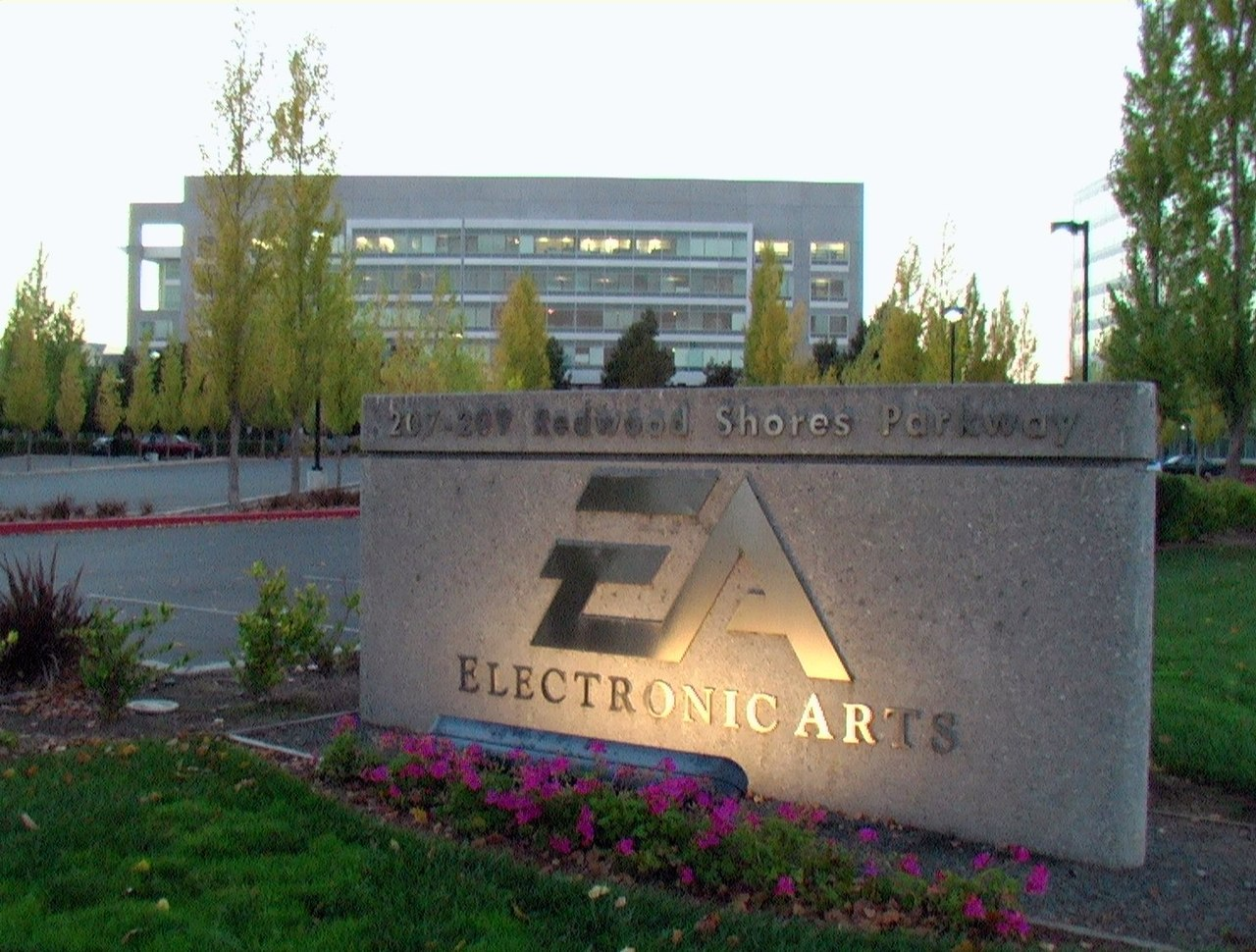
Enlarge/ Some of the executives in this building may be getting less money than they expected this year, thanks to a shareholder vote.
A significant majority of Electronic Arts shareholders voted against the company’s executive compensation plans late last week. The vote follows a pressure campaign from activist investor groups against what they see as excessive bonuses for executives at the company.
So-called “say-on-pay” votes rarely fail when put before shareholders of major publicly held companies; a recent Harvard Business School study showed well below 3 percent of such votes failing in the last decade or so. And while the results of the vote aren’t binding on the company’s board of directors, they would have to overrule a full 68 percent of the company’s voting shares that rejected the pay plan.
The rejected payment plan included a proposed $21.37 million in total compensation for CEO Andrew Wilson in the 2020 fiscal year, up from $18.3 million in 2019. Other executives were set to see much larger bumps, including CFO Blake Jorgensen ($9.41 million in 2019 to $19.5 million in 2020) and Chief Studios Officer Laura Miele ($6.95 million to $16.1 million), and CTO Kenneth Moss ($6.95 million to $14.2 million).
An assortment of investor groups rallied against EA’s proposed compensation plan ahead of the vote, including influential proxy vote advisors Institutional Shareholder Services and union-affiliated CtW Investment Group. Public employee retirement funds in New York and California followed those groups’ lead in voting against the proposal, helping lead to its defeat.
“Shareholders issued a resounding rebuke of Electronic Arts’ deeply flawed executive pay practices that does not incentivize executives to create long-term value,” CtW Executive Director Dieter Waizenegger said in a statement. “This vote is a clarion call for the board to stop piling awards on top of awards for top executives and make sure that the company develops a pay philosophy that is focused on talent development and retention throughout all levels of the company.”
Earlier this year, CtW also led a public campaign against what it says is excessive executive pay at Activision Blizzard, including nearly $30 million in compensation for CEO Bobby Kotick. While Activision Blizzard’s compensation plan passed earlier this summer, it did so with the support of less than 60 percent of all voting shares, a record low for the company.
The moves against video game executive pay come as employees at Activision Blizzard have banded together to share anonymous salary information, as first reported by Bloomberg News. The results of that survey show vast wage disparities across, and even within, different roles and demographic groups in the company.
According to public disclosures for 2019, Kotick’s compensation was 319 times the median salary of an Activision employee, while Wilson’s was 200 times the median EA employee salary. That’s compared to an average CEO-to-median-worker ratio of 264-to-1 for the S&P 500, according to data collected by the AFL-CIO.
https://arstechnica.com/?p=1698188
Mission to Mars: Hilary Swank leads an elite team in trailer for Away
[embedded content]
Hillary Swank stars as an elite astronaut preparing for a crewed mission to Mars in the new Netflix sci-fi drama series Away.
An elite international team of astronauts must leave family and friends behind for a three-year crewed mission to Mars in Away, a new science fiction drama from Netflix, starring Hilary Swank. Created by Andrew Hinderaker (Penny Dreadful), the 10-episode series was inspired by a 2014 Esquire article by Chris Jones about astronaut Scott Kelly’s year-long sojourn aboard the International Space Station with a Russian cosmonaut—the longest space mission in American history.
Per the official synopsis:
Away is a thrilling, emotional drama on an epic scale that celebrates the incredible advancements humans can achieve and the personal sacrifices they must make along the way. As American astronaut Emma Green (Hilary Swank, I Am Mother, Boys Don’t Cry) prepares to lead an international crew on the first mission to Mars, she must reconcile her decision to leave behind her husband (Josh Charles, The Good Wife) and teenage daughter (Talitha Bateman, Countdown) when they need her the most. As the crew’s journey into space intensifies, their personal dynamics and the effects of being away from their loved ones back on Earth become increasingly complex. Away shows that sometimes to reach for the stars, we must leave home behind.
The trailer opens with Emma’s NASA engineer husband Matt playing the opening bars of Claude Debussy’s “Clair de Lune” on a piano, as she presents their daughter Alexis with a gift: a necklace with three stones, representing Earth, the Moon, and Mars. “And the string is me making my way back to you. So just remember, the further away I get, I’m actually getting closer to being back to you.”
She also assures Matt that it’s only a three-year mission.
“OK, I guess I won’t miss you,” he says.
The liftoff seems to go smoothly, with people watching the live feed from all over the world, and Emma’s team settles in. Misha Popov (Mark Ivanir, For All Mankind) is a Russian cosmonaut and engineer; Ram Arya (Ray Panthaki, 28 Days Later) is a fighter pilot from India; Lu Wang (Vivian Wu, The Pillow Book) is a chemist from China; and Dr. Kwesi Weisberg-Abban (Ato Essandoh, Altered Carbon, Tales From the Loop) is an esteemed botanist from Great Britain.
But all is not well back home, as we see Matt collapse suddenly in the kitchen and end up in the hospital. Emma berates herself for not being back home with her family, prompting a rebuke from Ram: “You think you’re the only one haunted by the sacrifices you made to get here?” And soon trouble arises aboard their spacecraft, too, with an unexpected fire. Apparently Emma freezes, damaging the relationship with her crewmates. So Emma will have to earn back their trust, since the only way this mission will be a success is if they all work together.
Away debuts on Netflix on September 4, 2020.
Emma Green (Hilary Swank) is chosen for an elite crewed mission to Mars.
It means being separated from her daughter, Alexis (Talitha Bateman).
YouTube/Netflix
And also her husband Matt (Josh Charles).
YouTube/Netflix
We have liftoff!
YouTube/Netflix
Game faces on.
YouTube/Netflix
A crowd gathers at the Eiffel Tower in Paris to watch the launch.
YouTube/Netflix
Watching the launch in India.
YouTube/Netflix
A launch is even more stressful if it’s your mom strapped inside the rocket.
YouTube/Netflix
Mark Ivanir plays fellow mission member Misha Popov.
YouTube/Netflix
Vivian Wu plays mission member Lu Wang.
YouTube/Netflix
Ray Panthaki plays mission member Ram Arya.
YouTube/Netflix
Ato Essandoh as mission member Dr. Kwesi Weisberg-Abban.
YouTube/Netflix
Matt ends up in the hospital.
YouTube/Netflix
Emma grieves because she can’t be with her family.
Lest we forget: Mark 75 years of the atomic bomb with the Ars watch list
Enlarge/ Ars marks the 75th anniversary of the nuclear bomb with a look at how the complicated legacy of this world-altering event has been reflected in film and television.
This year marks the 75th anniversary of the first atomic bomb. Just before sunrise on July 16, 1945, in a secluded spot in a central New Mexican desert, a prototype bomb nicknamed “Gadget” was hoisted to the top of a 100-foot tower and detonated. The blast vaporized the steel tower and produced a mushroom cloud rising to more than 38,000 feet. The heat from the explosion melted the sandy soil around the tower into a mildly radioactive glassy crust now known as “trinitite.” And the shock wave broke windows as far as 120 miles away.
After the Trinity test, Richard Feynman recalled finding his colleague, Robert Wilson, sitting despondently amid the celebration. “It’s a terrible thing that we made,” Feynman remembered him saying. Hans Bethe famously observed, “The physicists have known sin. And this is a knowledge which they cannot lose.” It’s often said that physicists became so intent on the intellectual challenge of building an atomic bomb that they lost sight of the profound implications of what they were creating.
Those implications became all too clear on August 6, 1945, when a gun-triggered fission bomb dubbed “Little Boy” fell on Hiroshima, killing an estimated 70,000 to 130,000 people. Three days later, the implosion-triggered “Fat Man” was dropped on Nagasaki, adding another 45,000 human casualties. The United States won the war but at a horrific cost. The world has been haunted by the prospect of a devastating nuclear apocalypse ever since—and so has TV and the movies. So to mark this somber occasion, we’ve compiled a watch list of films and shows that we feel best reflect the complicated legacy of the atomic bomb.
(Some spoilers below.)
Enlarge/ Brian Donlevy, Henry O’Neill, Joseph Calleia, and Hume Cronyn prepare to test the first atomic bomb in The Beginning or the End
This docudrama might not be the best cinematic treatment of the development of the atomic bomb, but it has the distinction of being the first, released just two years after the deployment of “Fat Man” and “Little Boy” against Japan. Actress Donna Reed had the idea for the film after conferring with her high school science teacher, who worked as a chemist at Oak Ridge National Laboratory. Major General Leslie R. Groves Jr. (played by Brian Donlevy in the film) served as a military consultant, and President Harry Truman himself provided the title after a meeting with Reed and producer Samuel Marx. “Tell the people of this nation that for them it is the beginning or the end,” Truman purportedly said.
The filmmakers did their best to retain historically accurate details, and nine of the actors who played the crew of the Enola Gay were World War II veterans. But a scene showing the bomber maneuvering through bursting anti-aircraft shells was inaccurate, and many of the technical details of the atomic bomb were still classified at the time, so those details were highly inaccurate. The film’s references to leaflets being dropped on Hiroshima and Nagasaki to warn citizens 10 days before the attack was also fictional. Also, some of the central scientists, including Niels Bohr, refused to grant permission to be depicted in the film (a legal requirement at the time), forcing rewrites.
Hollywood censors insisted on a few cuts, and there was also political meddling. Eleanor Roosevelt objected to the casting of Lionel Barrymore because he had spoken negatively about her husband a few years before. (The actor was replaced by Godfrey Tearle). And an entirely fictional scene showing Truman agonizing over the decision to drop the bomb was added. With all that external meddling, it’s no wonder that the final film proved disappointing and smacked of state-sponsored propaganda. None other than the real Robert Oppenheimer (played by Hume Cronyn in the film) criticized the script and characters, which he deemed “stilted, lifeless, and without purpose or insight.” (Tell us how you really feel, Oppie.)
Enlarge/Godzilla director Ishirō Honda wanted his monster to “possess the terrifying characteristics of an atomic bomb.”
This is the undisputed king of monster movies. An ancient sea creature is awakened from the ocean depths by underwater tests of a hydrogen bomb, stomping local villages into oblivion and unleashing its deadly atomic breath on those who try to stop it. While the monster is ultimately defeated, Dr. Kyohei Yamane (Takashi Shimura) predicts that another Godzilla could arise if mankind continues to test nuclear weapons. Audiences loved the monster so much that Godzilla was recast as a hero in many later films in the franchise.
The film was intended almost from the start to be a metaphor for the terror unleashed on the world by the bombing of Hiroshima and Nagasaki—nature’s way of taking revenge on man for his destructive creation. “If Godzilla had been a dinosaur or some other animal, he would have been killed by just one cannonball,” director Ishirō Honda once said. “But if he were equal to an atomic bomb, we wouldn’t know what to do. So, I took the characteristics of an atomic bomb and applied them to Godzilla.”
Pro tip: don’t confuse the original Godzilla with the 1956 American version, Godzilla, King of the Monsters!, which is the version most of us watched as kids because the original wasn’t available in North America until 2004. (That includes Steven Spielberg, who credits the film for inspiring him to make Jurassic Park.) This heavily edited version of the earlier film is shorter and includes awkward new footage of Raymond Burr acting opposite body doubles to make it seem like he had been part of the original. Most of the political themes were also cut from this version. Honda was apparently amused by the changes, given that he had been “trying to imitate American monster movies.”
Enlarge/ In Hiroshima Mon Amour, the bombing of Hiroshima is a metaphor for the wrenching end of an affair.
This is the debut feature film of French director Alain Resnais and is considered a classic of French New Wave cinema. It was originally supposed to be a short documentary of the atomic bomb, but Resnais couldn’t figure out what to do with the material to set it apart from his 1956 Holocaust documentary (Night and Fog). He joked that he needed novelist Marguerite Duras to write the screenplay—and Duras helpfully obliged, snagging an Oscar nomination for her trouble.
The entire film consists of a series of conversations between a French actress identified only as “Her” (Emmanuelle Riva) and a Japanese architect, “Him” (Eiji Okada), at the end of their brief affair. The actress compares their failed relationship to the bombing of Hiroshima, something that resonates with the architect, who had served in the Imperial Japanese Army and lost his family in the Hiroshima bombing. His memories are captured via very brief flashback sequences intercut into the present scenes—one of Resnais’ experimental innovations. When it premiered at the 1959 Cannes Film Festival, Hiroshima was sadly excluded from the official selection to avoid offending the US government, given its thematic focus on nuclear bombs.
https://arstechnica.com/?p=1687982
How the MUGEN community built the ultimate fighting game crossover
Enlarge/ Admit it, you’ve always wondered if Goku could beat Ronald McDonald in a fight.
The question, “Who would win in a fight?” is the root of many fierce debates throughout the history of pop culture. The notion of pitting characters from different properties and different media against one another is exciting to discuss. And when it comes to letting fans live out these arguments, there are few better outlets than fighting games.
Even within a genre known for character-merging crossovers, there’s one two-decade-old game that reigns supreme when it comes to pitting a wide variety of characters against one another. That program is MUGEN, derived from the Japanese word for “infinite,” which is an appropriate name for a program that provides near limitless potential for players to create new fighting games and characters.
MUGEN began life just before the turn of the century as a PC-based side-scrolling shoot-‘em-up title, created by a small company called Elecbyte. The team was originally experimenting with creating an engine to handle the rigors of so-called shmup games but found that it just wasn’t living up to what they had hoped to create. Taking inspiration from a PC Korean Street Fighter 2 hack known as SFIBM, Elecbyte decided to change course from a shooter to a 2D fighting game engine.
The first public MS-DOS beta release of MUGEN came on July 27, 1999. This early release differed from most fighting games, though, by offering the only “official” character, Kung Fu Man, and a single stage. Everything else, from additional characters to even title-screen art, would have to be supplied by the users themselves, most often through files shared via Internet communities. For the first time, fans of fighting games weren’t just allowed but expected to create their own fighters and matchups.
Building a game-building community
Though you don’t need programming knowledge to create a MUGEN character, the process can still be time-intensive, especially if you’re creating your custom art. Over the years, fighter-creation software like 2005’s Fighter Factory has popped up to help facilitate this process. These third-party programs allow creators to import either their own hand-drawn sprites or images ripped from existing sprite-based games (making good use of the various sprite sheets that littered the Internet even since the late ’90s). With art in hand, Fighter Factory let users tweak values, line up the sprites for animations, and make everything feel just right before exporting the generated files to create fully animated MUGEN characters.
Players have also tasked themselves with MUGEN’s core logic and gameplay. In the early years, the AI for MUGEN‘s computer-controlled opponents was rather simple, akin to a new player just button-mashing different commands at random without any coherent strategy. In the decades since the game’s launch, the community has dived deeper into the program’s potential, programming more robust and intricate behaviors for the AI and leading to far more exciting and difficult matches with the computer.
Even when working with existing characters, creating MUGEN fighters can be a lot of work.
Fans have to create individual sprites for a wide variety of moves required for each character.
Hyper DBZ stretches the MUGEN engine to its limit
Not a surprising outcome.
As MUGEN became more stable and as word of mouth spread farther, communities continued to expand around the game, bringing creators and players together across the Internet. Many coders and artists interested in the game gathered at The Mugen Fighters Guild, a forum that continues to this day.
Creating polished and professional-level fighters in MUGEN takes a lot of effort and time, and these communities have proven instrumental in facilitating these projects. Hyper Dragonball Z is one particularly polished example of a MUGEN project, packed with expertly done custom sprites and stages that faithfully capture the characters and fights of the show. What started as an April Fool’s Day joke from three creators is now on its fifth version with upwards of 20 characters and tons of custom code work.
Iced, one of the creators of Hyper DBZ and an admin at MugenGuild, said that “games like HDBZ and The Black Heart (another popular MUGEN fan project) push the limits of the engine itself… At the same time you can download some kid’s original character made in MSPaint that took him two days to make. And that’s important as well, as that kid that made a random MSPaint character can get a taste for pixel art and keep working on it, maybe one day making his own full game.”
At this point, MUGEN creators spend a good deal of time fighting with old technology, troubleshooting and coding their way around limitations of an aging engine that’s no longer receiving official updates. For example, one of HDBZ’s standout features, the extravagant finisher cut scenes, were not originally intended to be a part of MUGEN.
“Broke and bent”
“We broke and bent the throw system to make it happen, changing the original toolset designed to code short throws so that they are doing things like Goku doing his genkidama, or Frieza summoning his army to beat up the opponent before throwing a giant death ball and erasing them,” he said. “Those types of coding moves are pretty complex, and sometimes we break them or they bug out unexpectedly, so they took a ton of work… We had a lot of issues making sure that other characters can’t break out of these.”
Felipe Xavier de Freitas (aka FXFreitas), the main sprite artist on the fan project Mega Man X: Fighting Arena, explained just how difficult building a MUGEN character can be. “The most complex [aspect] in my opinion is that almost every piece of content in the game has to be made from scratch, he said. “The source game is a 2D shooting-platform game, so we have to convert everything into a fighting-game style, making custom sprites, looking for good references or even making our own playstyle for some characters and deal with the limitations of the engine.”
Even using characters from existing games sometimes doesn’t save much effort, Xavier said. Mega Man X4 character Iris, for example, has a limited number of “official” sprites to be pulled from the original game. To fill in the animations for a standard fighting-game character’s set of unique moves and attacks, a project artist has to create additional sprites from scratch.
Making sure that these new assets fit in with the art style of the original sprites, and can transition smoothly into and out of previously existing sprites, is not a simple process. Even with a character like Zero, who has a vast trove of official sprites, MUGEN creators still make a point to create brand new moves and sprites unique to their project.
https://arstechnica.com/?p=1697826
Xbox Series S outed by next-gen controller leak—and it’s legit
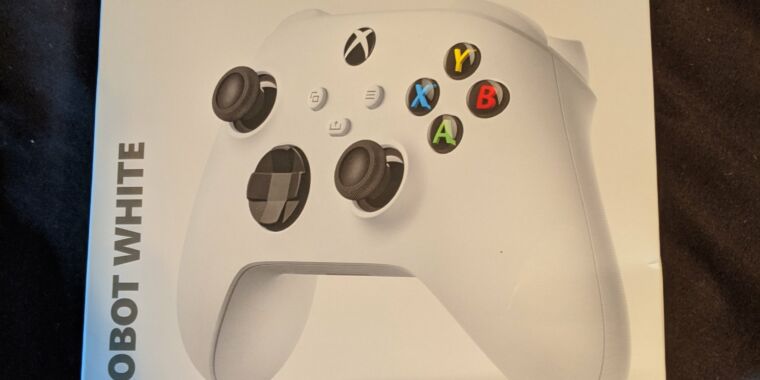
A new controller for a system that hasn’t launched yet? That’s interesting enough, sure. But the news comes when you turn the box.
Notice “Xbox Series X | S” as a descriptor? That is legitimate.
The controller works with existing Xbox One consoles, and one owner we’ve gotten in touch with, who goes by Zak S on Twitter, has offered praise: “The d-pad is one of my favorite parts to it.”
A second box was found in the wild.
It, too, includes mention of the unannounced Xbox Series S.
When contacted directly by Ars Technica, Zak S forwarded us images from the included manual. These include an apparent image of Xbox Series X, but not older consoles (or the still unseen Series S).
The other side of the instruction manual.
The next version of the standard, cross-console Xbox controller has been spotted in the wild, ahead of its official retail announcement. But the two leaked controllers we’ve seen thus far are even more intriguing because of something they have in common: an apparently official mention of “Xbox Series S” as an additional Microsoft next-gen console.
Ars Technica can confirm that this is indeed the name of an upcoming, unannounced Microsoft product, based on conversations with people familiar with Microsoft’s hardware plans. The Series S will apparently exist alongside the well-publicized Xbox Series X, which still doesn’t have a publicly known date or price.
S marks the spot—but questions remain
The controller itself was previously announced alongside Xbox Series X’s reveal during the December 2019 broadcast of The Game Awards. While it bears a strong resemblance to the existing Xbox One controller, its general mold has been shrunken to better support a wider range of hand sizes. Functionally, it’s identical, other than a new “share” button, while its d-pad has been updated to resemble one of the d-pad options found in the first-party Xbox Elite Controller line. One owner of the new controller, who goes by Zak S on Twitter, pointed specifically to the updated d-pad as “one of [his] favorite parts.”
Zak S was kind enough to directly send Ars Technica photos of the new controller’s instruction manual, which shows the power button of a console that looks like Xbox Series X, along with images of a laptop and a smartphone. These explain how to sync the new controller with compatible hardware, but the manual doesn’t show older Xbox One models, nor does it show a possible alternate or smaller console design for Series S. Whether that means Series S will have the same monolithic shape as Series X remains to be seen.
When shown photos of the leaked controller, Ars’s sources would go no further than confirming the existence of Xbox Series S as a product. We’re still left assuming that it lines up with over a year of rumors about the codenamed “Lockhart” console, which would come in at a lower price than Xbox Series X and play its software with specific performance downgrades—perhaps a 1080p-friendly version of XSX’s 4K resolution and “Velocity Architecture” aspirations, or a more direct focus on Game Pass-enabled xCloud game streaming.