How cell phones and Facebook are changing remote Nunatsiavut

Image of a town between the ocean and tundra.
Enlarge / The town of Nain.
Dennis Minty/Adventure Canada

Moravian missionaries arrived in Canada in the 1700s, forever altering the future of the country’s Inuit population. Beginning in the 19th century, Inuit children were taken away from their families and forced to attend residential schools (boarding schools), where they were not allowed to speak their own language. In the 1950s, thousands of Inuit in Nunatsiavut (the easternmost of Canada’s four Inuit regions) were forcibly removed from their land and stripped of their native language and customs. As a result, a generation of students that lost their culture gave birth to children who are now, themselves, searching for new ways to reclaim it.

Restoring that culture is a challenge, because many Inuit currently live in remote communities that lack roads and transportation infrastructure, leaving them isolated from each other. But technology has started helping them to connect with other Inuit across the country, to preserve traditional cultural practices, and to create a space for young people to learn about and participate in their heritage.

Of the 65,000 Inuit spread across Canada, about 7,200 are Labrador Inuit. About a third of these Labrador Inuit reside in Nunatsiavut, which has five major Inuit communities scattered along the coastline of Newfoundland Labrador province. None of the communities are connected to each other—or to anywhere else for that matter— by road, and they can only be reached by airplane or boat. Nain, with a population of approximately 1,200 people, is the largest and northernmost Inuit community.

But Nain has a key advantage in terms of integrating into the wider Inuit world: it’s the only one of these communities with mobile cellular service. Up until a year ago, web surfing and social media usage was largely confined to the home in Nain. In July 2019, however, mobile phone service arrived in Nain.

Some Inuit parents have the same concerns as parents in more connected regions, such as whether their children are spending too much time online. But some of those children are using the technology to connect with Inuit communities—and their traditions—that they might never experience otherwise.

Life before cell coverage

I arrived in Nain in September 2019 on an Adventure Canada expedition ship, just two months after cell service arrived in the city. We were the first (and only) expedition ship to visit the town of 1,100 people all year. After seven days of sailing and hiking without Internet access, the town’s new cell service was a very welcome surprise to the mostly Canadian and American passengers on board. Many of those passengers immediately logged on to social media.

Even though cell phone coverage wasn’t available until recently, some Nain residents had cell phones that they used to connect to the Internet using home Wi-Fi connections. But until 2019, they had no reason to take their phones with them outside the house unless they were traveling to another part of Canada that had service.

Many residents—the younger ones, especially—had learned to work around the limited access. Megan Dicker, a 20-year-old geography student from Nain, said of the new cellular plans, “It wasn’t really that big of a change from before. We knew all the houses with Wi-Fi so we’d just stop to connect along the route to wherever we were going.” Dicker firmly believes that the new cell phone service is a good thing, but she noted that it must be used “in moderation.”

Megan Dicker shows off her traditional tattoos.
Enlarge / Megan Dicker shows off her traditional tattoos.
Cassandra Brooklyn

According to Bert Pomeroy, the Nunatsiavut Government’s Director of Communications, Inuit communities have long struggled with not only access to cellular coverage, but to adequate Internet speeds. As recently as two years ago, bandwidth was so limited in Nain that even the local government employees had difficulty sending files among each other. “Someone trying to send time sheets or a PDF to the payroll department may have to wait a few minutes for it to go through,” Pomeroy said. “It got even worse in the afternoon when kids got out of school and got on Xbox or Netflix.”

When cell service arrived, Nain’s new mobile phone plans included data usage limits, so there was a need to educate the community on how these plans worked. Until this time, the only experience most people had with the Internet was with the unlimited access they enjoyed on a home Wi-Fi connection. 

To help their neighbors avoid overage charges, the local Nunatsiavut Government and some individual citizens took it upon themselves to inform the community. Local residents who understood the data plans began posting explanations on their personal Facebook feeds to help inform their friends and family. In other words, they were using technology to educate others about technology.

The social media debate

There are some obvious practical benefits to the expanded access. The Inuit-led Nunatsiavut regional government in Nain has also embraced social media, sharing posts about upcoming cultural commemorations and doctor visits. Optometrists and dentists only visit the community every month or two, so it’s crucial that residents know when they can make appointments. When COVID-19 hit Canada, the Nunatsiavut Government and local politicians used social media to share information about social distancing.

Though Facebook and social media had already been available on desktop computers, locals in Nain have noticed a significant increase in its use since mobile phone service arrived. Some parents and elders are upset to see their children and grandchildren whipping out their phones during community events. They lament that instead of engaging with their neighbors and participating in celebrations and sporting events, some youth now prefer to stare at their screens.

At least half a dozen community members I spoke with expressed concern with the increasing amount of time they and their neighbors now spend online. One woman said she enjoys browsing her family and friends’ Facebook pages for about 15 minutes, after which she begins feeling depressed. Several residents also expressed concern with “over sharing” and “inappropriate” Facebook posts—a symptom of social media culture that just about anyone with a Facebook account has witnessed firsthand.  
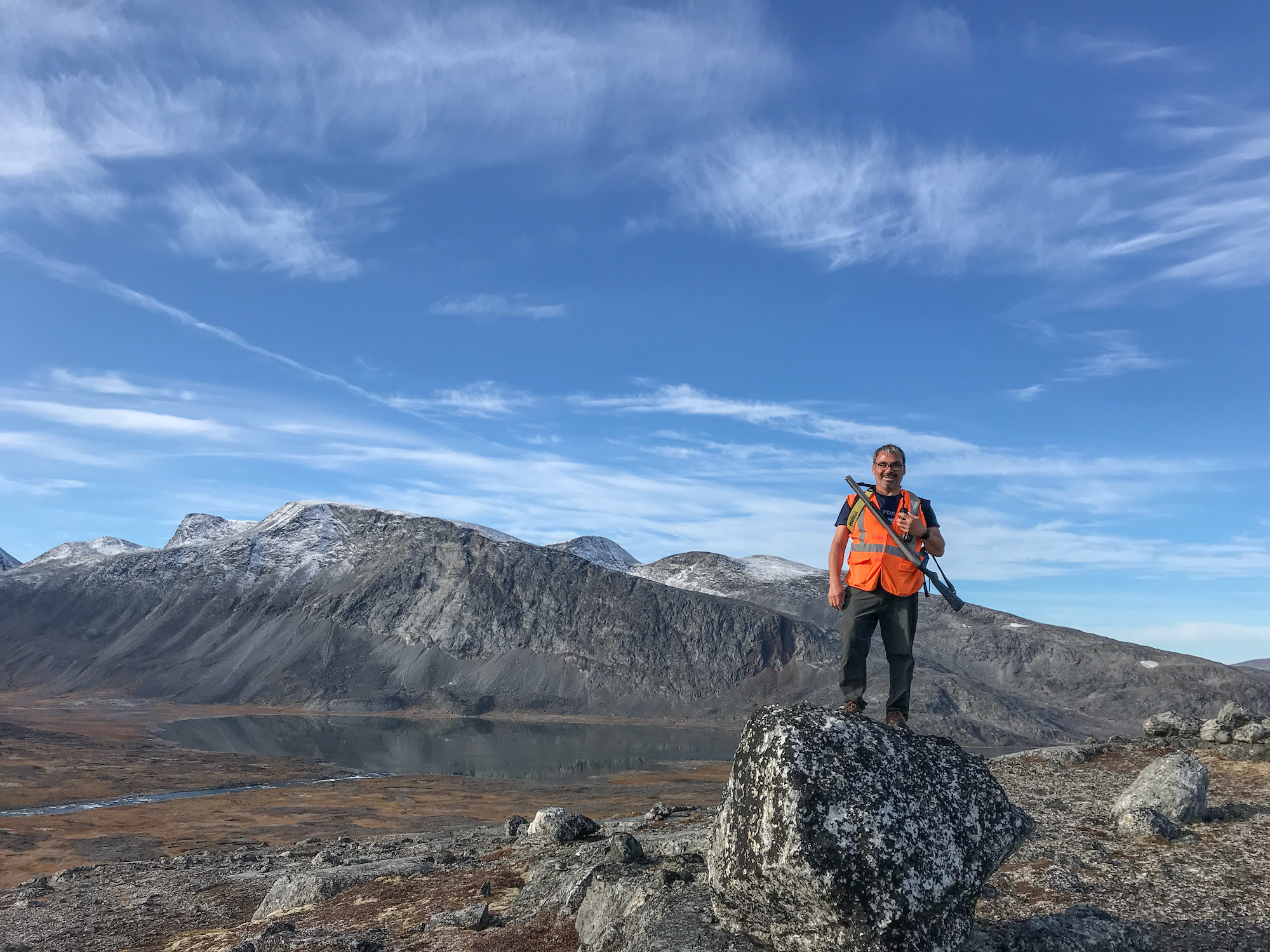
Wayne Broomfield worries that a focus on devices will lessen the younger generation's connection to the land.
Enlarge / Wayne Broomfield worries that a focus on devices will lessen the younger generation’s connection to the land.
Cassandra Brooklyn

Young people see the experience a bit differently. They are finding Inuit peers in other communities through mutual friends on social media. Teenagers search through their friends’  Instagram followers and Facebook friends to find other Inuit youth with similar interests. They follow each other online and then share cultural information with each other, sometimes by live streaming from community gatherings.

Wayne Broomfield, the assistant expedition leader on Adventure Canada’s tours through Nunatsiavut, accepted the good aspects of social media but voiced a different worry. “A lot of young Inuit aren’t connecting with the land anymore because they can do it so much more easily online,” he said. “It’s good that they’re learning more about their culture on social media, but you can’t get the same connection online as you can from actually going out on the land.”

https://arstechnica.com/?p=1693644


Microsoft confirms “free-to-play multiplayer” for Halo Infinite [Updated]

Update, 5:02pm ET: Since our story went live this morning, Microsoft has confirmed the below leak as authentic. Halo Infinite will indeed include the series’ first free-to-play multiplayer content on a console when it launches later this year. Microsoft forwarded a link to its announcement in its response to our questions. The company has yet to clarify whether related rumors about the Xbox Live Gold service are impacted.

Original report:

Halo Infinite may offer free access to its multiplayer modes, if some now-removed text from an online store listing out of the UK is to be believed.

The pre-registration page for Xbox Series X pre-orders at British retailer Smyths Toys included a section on Halo Infinite that, as of earlier this morning, mentioned the game will include “a groundbreaking free-to-play multiplayer experience,” as well as “up to 120 fps” frame rates. That section has been removed from the current version of the page in recent hours but can still be seen in the latest Google Cache (and this Internet Archive snapshot).

A free-to-play multiplayer mode would be a big departure for the Halo games (and for all Xbox titles), which have required a paid Xbox Live subscription for online play since the days of the original Xbox. The wording could also suggest that the multiplayer portion could be an entirely separate free-to-play app akin to Activision’s recent Call of Duty: Warzone.

While a single, brief retail listing is far from confirmation (and Microsoft has yet to respond to our request for comment), the listing comes weeks after Windows Central suggested a similar free-to-play possibility for the game’s multiplayer modes, based on “unconfirmed rumors that sources close to Windows Central have disclosed.” Developer 343 Industries also recently described Halo Infinite as “the start of our platform for the future” rather than a continuation of “those numbered titles and having all that segmentation that we had before,” perhaps suggesting a willingness to shake up the status quo for the series’ multiplayer mode.

Apart from Halo, Microsoft recently removed the one-year Xbox Live subscription option from its online store, leaving a three-month subscription as the maximum purchase period (though one-year subscription cards are still available from other retailers). Microsoft has also been pushing Xbox Live Gold subscribers to convert their remaining subscriptions to a Game Pass Ultimate subscription with cheap offers in recent months.

Some observers think these moves suggest Microsoft may soon get rid of Xbox Live Gold entirely in order to focus on Game Pass (and its library of hundreds of downloadable and soon-to-be streamable games) as its main subscription gaming service. If that happens, online multiplayer might finally become a free option for Xbox players, as it has been for PC gamers as a matter of course.

While Microsoft recently showed off eight minutes of Halo Infinite single-player gameplay, developer 343 Industries has said more information about multiplayer modes will be coming later in the year. If the game’s online modes are indeed going free-to-play, that’s likely when we’ll get official confirmation. In the meantime, though, 343 has denied that the delay in pre-release footage means the multiplayer modes will be delayed past the Xbox Series X launch later this year. https://arstechnica.com/?p=1695576


Flight Simulator hands-on: Microsoft looks different 20,000 feet in the air

Pilots, we thank you for choosing Ars Technica for your travel needs. Microsoft Flight Simulator‘s closed beta is about to take off as a prelude to its retail launch in three weeks, so we’re here to talk about a few things, preflight style. Consider this your incredibly long safety manual.

First, the developers at France’s Asobo Studio, who have been building this new game since 2016, have a ton of news about the game. We’ll start by summing up upcoming features and third-party marketplace partners, along with the devs’ perspective about what they’ve done since the game entered a closed alpha phase in February.

Second, we’ve been testing MSFS‘s closed alpha for months, albeit with a ridiculous series of visual watermarks that has stopped us from leaking footage of every beautiful flight across the globe. That alpha build was quite similar to what I tested in August 2019, however, which meant I didn’t have much to report until a fuller update that landed roughly two weeks ago.

This technically isn’t a “review,” since the content will see further refinements, fixes, and polishing passes ahead of its August 18 launch for Windows 10 PCs. Indeed, the launch is only the beginning. MSFS has been repeatedly described as a “ten-year” project, the kind whose content will grow and mature every step of the way. When pressed about the retail launch date, MSFS head Jorg Neumann said the following: “It’s not a one-and-done product. It’s a journey. But it’s definitely a complete product.”

Which is to say: In terms of content, structure, and graphics, the version of MSFS that’s about to enter closed beta (and dominate your favorite flight-obsessed YouTube channels for the coming weeks) is pretty much what you can expect to go on sale in a few weeks, which gives us plenty to talk about in this feature-length hands-on.

And yet: Microsoft and Asobo have clearly left the development plan wide open, so the game today will likely vary quite a bit from what we might see in six months and beyond.

With all of that said: Buckle up, relax, and settle in.

Steam! TrackIR! And one more…

If you’re new to the 2020 version of MSFS, you can catch up on my September 2019 feature about the game. Short version: MSFS lets you realistically fly across our entire planet, complete with every known airport as a destination for takeoffs and landings, as supercharged by a constant connection to roughly 2 petabytes (2,000,000 GB) of Bing map data served on Azure Cloud Services. In a pinch, you can play the game offline and still enjoy a blurry-but-complete Earth in a pinch—or pre-download preferred flying destinations before going offline.

The version launching in August will land exclusively on Windows PCs, and while Microsoft has previously announced its intent to bring MSFS to Xbox consoles at a later date, that “later date” still hasn’t been firmed up. Neither has any decision about exactly which Xbox consoles will work with the game.

Despite that lack of news, we’ve gotten some intriguing clarifications about PC ecosystem support that fans have been clamoring for:

Yes, MSFS will launch on Steam—and it won’t face a delay. You can pre-order every version of MSFS on Steam right now, and that version will unlock the same day as its Windows Store version (August 18).

Yes, if you pay for Xbox Game Pass, you will be able to buy an upgrade to the Deluxe or Premium versions of MSFS, since you’ll already have access to the game’s base version (which otherwise retails for $60).

Yes, MSFS will support TrackIR‘s motion-sensing system, and the TrackIR beta implementation went into the game’s test version a few days before this article went live. (Previous statements suggested that TrackIR implementation would take longer, so we’re happy to see it land in time for the closed beta period.)

VR in MSFS isn’t virtual anymore

Finally, this feature deserves a drum roll… yes, MSFS will support virtual reality headsets. What’s more, the VR toggle will be entirely free, with no additional purchase required.

We’re surprised to see VR support announced ahead of other possible features, particularly Xbox console support, given that MSFS‘s non-VR version is already so demanding on CPUs and GPUs. (Which I’ll get to in a bit.) For now, Asobo has put the game’s VR version into a somewhat nebulous “fall 2020” release window, and the news does come with one catch: at launch, this mode will only work with the upcoming HP Reverb G2 system.

When pressed, Neumann and the rest of the MSFS team declined to specify exactly what about their VR implementation might require a limit to a single PC-VR system, especially since every headset on the market relies on OpenVR calls for axis orientation. (Indeed, this is exactly why non-Oculus headsets can be tricked into loading Oculus-exclusive software.) The Reverb G2 also happens to borrow the engineering and design of the Valve Index‘s lens array. Thus, we’re hopeful that the game’s VR mode removes these device-limiting flags and supports other headsets shortly after its launch.

The team also wasn’t ready to clarify how hand-tracked controllers might work within the game’s VR version. “It’s an iterative process,” Asobo CCO David Dedeine said. “We’re trying to find something universal, that will work no matter what device you’re using. We have interesting prototypes using advanced controls, I will say. There are exciting things happening. I am already amazed at what the team has made, in order to improve interactions with the cockpit in VR. It’s different than interacting with a mouse. What we’ve already experienced is brilliant and will inform the current version of the game.”

If you’ve seen the game’s footage thus far, you may wonder how its detailed visuals and massive vistas will translate to the demands of VR—as in, two high-resolution displays (one for each eye) running at a 90Hz refresh rate. Asobo insists that the VR mode should target something close to the game’s “medium” graphics preset, which, in my experience, is quite high-res: sufficiently fluffy clouds, relatively dense landscapes. The team says this graphical fidelity boils down to things like efficient CPU rendering (“the way you compute the right eye, then move much of that to the left eye”) and expertise with the low-powered Hololens headset. “Hololens is a mobility device, and [our projects for that] forced us to ultimate optimization,” Dedeine said. “So our team is plug-and-play on this subject.”

Listing image by Microsoft / Asobo

https://arstechnica.com/?p=1694587


We can see the true face of Van Eyck Lamb of God after latest restoration

Early Renaissance or late Medieval painting of various figures worshipping baby Jesus.
Enlarge / The central Adoration of the Mystic Lamb panel. The groupings of figures are, from top left anti-clockwise: the male martyrs, the pagan writers and Jewish prophets, the male saints, and the female martyrs.

Over the last eight years, conservationists have been meticulously restoring the famed Ghent altarpiece housed in Belgium’s St Bavo’s Cathedral. With the help of several advanced imaging techniques, they’ve been able to identify where overpainting from earlier restorations obscured the original work. Researchers at the University of Antwerp and the National Gallery of Art in Washington, DC, have published a new paper in the journal Science Advances demonstrating how combining different techniques greatly improved their analysis, revealing previously unknown revisions to the Lamb of God figure in the inner central panel.

The Ghent Altarpiece—aka the Adoration of the Mystic Lamb—is a 15th-century polyptych attributed to brothers Hubert and Jan van Eyck. Originally consisting of 12 panels, the altarpiece features two “wings” of four panels each, painted on both sides. Those wings were opened on church feast days so congregants could view the interior four central panels. The inner upper register features Christ the King, the Virgin Mary, and John the Baptist, flanked by the outer panels depicting angels and the figures of Adam and Eve. The inner lower register depicts John the Baptist and St. John the Evangelist. The Adoration of the Lamb comprises the center panel, featuring the Lamb of God standing on an altar in a meadow surrounded by angels, with groups of martyrs, saints, and prophets congregating around the altar.

The first significant restoration was done in 1550 to repair damage from an earlier cleaning. It was cleaned again in 1662 by the Flemish painter Antoon van den Heuvel. After the altarpiece was damaged while being stored in Austrian mines during World War II, another restoration was done in the 1950s, making use of X-ray radiography (XRR) to aid in those efforts. Specifically, the researchers imaged tiny paint samples from the cross-section of the altarpiece, yielding useful information about areas that had been over-painted during the earlier restoration, obscuring the original Eyckian work—including the Lamb’s head.

Artists of this period would prepare an oak panel with a layer of chalk mixed with a binding agent like glue. The artist would then sketch the image they wished to paint on that layer in black before sealing the surface with a translucent primer (typically drying oil tinged with lead white, chalk, carbon black, or earth pigments). Then the artist would apply a layer (or more) of variously colored paints to define the underdrawing. Finally, the artist would paint the finer details and add the richest colors. A year or so later, once the paint had fully dried, the artist would apply a final varnish layer.

According to the authors of the new paper in Science Advances, the techniques available at the time were not sufficient to precisely localize all of the overpainting because of the frequent use of lead white paint. It just wasn’t possible to achieve the necessary level of chemical contrast. In such cases, “conservators and curators err on the side of caution, choosing to leave areas of possible overpaint in place until further research provides definitive evidence of their origin,” they wrote. So the 1950 restoration only removed the overpainting from the area surrounding the lamb’s head. This revealed the original gilded rays and ears of the original Eyckian lamb, while keeping the overpainted ears.

Restorative powers

Most recently, the Museum of Fine Arts in Ghent began restoring the altarpiece in October 2012, allowing the public to view the process from behind a glass screen as conservators from the Royal Institute for Cultural Heritage worked on individual panels. Restoration of the eight outer panels was completed in 2016, and the five lower panels were restored over the next three years. 

This most recent restoration also produced a series of high-resolution images of the various panels using different imaging techniques. As we reported last year, those images in turn formed the basis for an investigation into applying AI analysis to the altarpiece images by researchers at Duke University, the National Gallery, and University College London. That team published a paper in 2019 demonstrating that its techniques could make imaging the altarpiece’s two-sided painted panel easier.

The fact that the wing panels are painted on both sides posed a unique challenge for conventional X-ray analysis. X-rays penetrate so deeply that it can be difficult to determine which content applies to which side of the panel, since “all of the images are visibly overlaid or ‘blended’ together,” the authors wrote. They developed a deep neural-network algorithm to study mixed X-ray images containing features from the front and back of the painting’s double-sided panels. They successfully applied their technique to X-ray images of the Adam and Eve wing panels to deconstruct that data into two clear images, significantly improving on the performance achieved by prior methods.

Meanwhile, Geert Van der Snickt and colleagues at the University of Antwerp were using macroscopic X-ray fluorescence (MA-XRF) imaging, combined with other traditional methods (including XRR and infrared reflectance reflectography, or IRR) on the four inner central panels to determine the full extent of the overpainting done during the mid-16th-century restoration.

The combination approach was so successful that the Antwerp researchers decided to collaborate with the National Gallery of Art in Washington, DC, combining MA-XRF with infrared reflectance imaging spectroscopy (RIS) for the second phase of the restoration, which included fully restoring the Lamb of God. “Each method provides some level of chemical contrast in cases where the other does not,” the authors wrote. “In particular, each technique can reveal materials to which the counterpart is insensitive, for example, overlaying layers that strongly attenuate x-rays can prove transparent for infrared radiation, and vice versa.”

For instance, the MA-XRF imaging mapped the mercury in the vermillion paint, revealing the nostrils of the original Eyckian lamb. Meanwhile, the RIS revealed the original layer of the ungulate’s face, which absorbs infrared light. In the end, the analysis uncovered three different versions of the lamb: the original one painted by the Van Eyck brothers; a second version—either by the brothers or one of their contemporaries—which featured larger, squared-off hindquarters; and a third version from the 16th-century restoration that significantly altered the lamb’s head.

The new analysis helped guide the conservationists as they removed the 16th-century overpainting, revealing facial features that closely matched the researchers’ predictions. Specifically, the lamb’s face is quite human in its expressiveness, with distinctive pursed lips, smaller V-shaped nostrils, and a well-defined jawline, as well as eyes that face forward in a rather unsettling, direct gaze at the viewer.

Those eyes remain a matter of considerable debate among art historians. Some propose that it was done to make the lamb appear more human, as a symbol of the embodiment of Jesus. “A simpler explanation may be that the painting of animals with forward-facing eyes is typical of an older style that was still present in the 15th century but disappeared when artists mastered a more naturalistic depiction of animals,” the authors wrote. Within the Ghent altarpiece itself, there are examples of animals depicted with both forward-looking and more naturalistic outward-looking eyes. “Thus, it is not unexpected that the Van Eyck brothers would have painted the Lamb with forward-facing eyes that directly engage the viewer,” the authors concluded.

DOI: Science Advances, 2020. 10.1126/sciadv.abb3379  (About DOIs).

https://arstechnica.com/?p=1694824


The five-year quest to remove all nuclear weapons from Metal Gear Solid V

Video game character Solid Snake, famous for violence, is shown meditating.
Enlarge / All Snake is saying is “give peace a chance.”

Nearly five years have passed since Konami started Metal Gear Solid V‘s nuclear-disarmament metagame, tasking the game’s community with removing every single nuclear weapon created by players on the game’s servers. This week, players on the PS3 version of MGSV seemed to reach that long-sought goal, unlocking a cut scene congratulating them on a day that character Master Miller says he “thought… would never come.”

Now, the excited players behind the disarmament are waiting to see if Konami will officially acknowledge their achievement and perhaps unlock some long-hinted-at new content for the five-year-old game.

The long push for peace

Organized MGSV nuclear-disarmament efforts have been going in fits and starts for years, first via the now-defunct Metal Gear Philanthropy subreddit and more recently in the MetalGearAntiNuclear subreddit. There, players would join together to discuss raiding the Forward Operating Bases of nuclear-armed opponents on MGSV‘s online servers in order to steal and then disarm those weapons to lower the total worldwide count.

But interest from disarmers has been sporadic, and the effort has faced sustained opposition from self-interested players who are encouraged to create nuclear weapons as a form of in-game protection and deterrence. Both Konami’s official counts (which the company stopped publicly updating years ago) and unofficial counts via a GitHub server scraper show historical disarming progress either long-stalled or actively going backward over time, depending on the platform and server (the PS4 and Steam versions of the game are still far from full disarmament as of this writing).

For a brief moment, a scene like this was impossible to see on a PlayStation 3.

“I think most people just kind of gave up and the fun had been sucked out of it after such a long time,” player and indie VR game dev Stefferp told Ars over Discord. “I think the whole thing is a big missed opportunity, people were really into this nuke ‘minigame’ in 2015, but Konami’s interest in it dwindled over time and were very reluctant to talk about it eventually.”

Getting the band together

The latest sprint down to full disarmament on the PS3 started back in March, when Reddit user TheHungHorse used the coronavirus quarantine as an excuse to start a Discord server organizing a serious push among dedicated players. “At first, nothing got done because we simply didn’t have the numbers. But slowly, our numbers grew to 60, 70… It was heartwarming to have everyone come together for this goal. Me and a few other members actually bought a PS3 copy [of Metal Gear Solid V] just to help out.”

Eventually, 20 or so hardcore disarmers started a group direct-message chain to coordinate their efforts and schedules. “We all disarmed at the same time during this past month so we wouldn’t have to worry about people bringing the numbers back up to what they used to be,” TheHungHorse said.

“This time it was like a ‘right, let’s just get this done’ mentality, maybe because the game is nearing its fifth anniversary,” Stefferp told Ars. “Teaming up brought that fun back, I suppose.”

Thanks to the group’s coordination, initial progress was quick, with PS3 nuke counts dropping from over 800 on July 10 to below 100 in under a week, according to the GitHub scraper. At that point, though, the group ran into what TheHungHorse suspects were hackers determined to keep the nuke count high.

“Sometimes we’d get the number to 40 just for it to immediately go back to 60,” he said. “So all in all it was a lot of patience and trial and error. Considering we don’t have access to those tools used against us, it’s really a miracle that we made it down to zero.”

[embedded content]
The unlocked cut scene that followed PS3 disarmament, as posted by Stefferp. Note the congratulatory list of usernames at the end.

Hackers aside, normal players also caused headaches for the disarmers. “I was… surprised by how active the PS3 player base still is,” Stefferp said. “We figured taking the nukes would be easy but people would retaliate all the time [striking back against the player who had stolen their nuclear weapon]. It’s an old console but it’s still in use by quite a few people. I think that’s pretty cool… 2006 hardware but still not irrelevant.”

The disarming group was also faced with a set of “invincible nukes” apparently caused by an error in the game’s server code. These weapons show up on the server as owned by players who don’t have a Forward Operating Base—a logical impossibility that also prevents others from stealing and disarming the phantom weapons.

“My personal theory is those people had nukes, and then reset their save data, which resets your FOB back to zero,” Stefferp tells Ars (this, Stefferp suspects, is why the GitHub nuke counter has still never shown a full “drop to zero” moment).

Waiting for confirmation

Phantom nukes or not, the disarmament group was surprised to find its efforts rewarded this week with the activation of a cut scene announcing full disarmament. “We knew we had gotten close on the day it happened, but we didn’t think we’d actually do it,” TheHungHorse said.

Konami, for its part, hasn’t quite confirmed the community’s victory just yet. “A nuclear abolition event has occurred in PS3 version of MGSV:TPP from July 28, Japan time, but we are currently investigating this matter,” the official Japanese Metal Gear account tweeted earlier this morning.

That investigation may be warranted before players celebrate too much. That’s because previous activations of the “full disarmament” cut scene were later judged to be false alarms—once for PC players in early 2018 and again for PS4 players in late 2018.

“We… can confirm that the event was triggered while the nuke count hadn’t reached zero,” Konami said days after the false PC disarmament in 2018. “We would like to apologize for the inconvenience and reassure you that we will investigate the matter as well as take the necessary action to avoid this in the future.”

Peace is the key?

Konami’s confirmation could be more important than a simple pat on the back, too. That’s because many players are convinced that in-game disarmament is the inciting event that will lead to new content being unlocked in the game.

The evidence for this theory is circumstantial but hard to ignore. Back in 2016, for instance, Konami Community Manager Robert Peeler pointedly said he’d “rather not stipulate on what, if anything, happens with nuclear disarmament.” Peeler, who no longer works for Konami, recently tweeted that he’s “[n]ot sure if/how Konami will celebrate, but if legit, that’s great. Coming up on that 5th anniversary!”

Though MGSV only has two chapters, data miners have also found a title card for “Chapter 3: Peace” hidden in the game’s files. Some have linked that to a series of three cryptic, three-themed tweets made by Metal Gear Solid creator Hideo Kojima back in 2016. While no actual “Chapter 3” content has been found hiding on the game disc, some suspect Konami may use a confirmed disarmament as the trigger to patch the content in.

A title card data mined from the <em>MGSV</em> code introducing a chapter that some believe may be unlocked following disarmament.
A title card data mined from the MGSV code introducing a chapter that some believe may be unlocked following disarmament.

Such an obtuse, drawn-out method for unlocking DLC wouldn’t be out of character for Metal Gear Solid creator Hideo Kojima, who is somewhat known for quirky gameplay experiments. “I think there is definitely something to the disarmament thing, otherwise Konami wouldn’t have to ‘investigate’ it every time it triggered,” Stefferp said.

TheHungHorse, for his part, thinks the actual trigger might involve disarming and then keeping the server disarmed for the length of the eight-minute cut scene that runs. Then, TheHungHorse suspects, there might be “a secret cut scene that plays instead of Ocelot telling you ‘Welp, someone’s making nukes again.'”

“For me personally, I just want answers to these questions. I want the age-old debate regarding MGSV‘s cut content to end once and for all,” TheHungHorse continued. “For now, our next goal is to get the nukes to zero again but for a prolonged period of time in order to test a few things out… For now, though, we’re all taking a break. We deserve it.

“Plus there have been other fans picking up where we left off since ‘Peace Day,'” he added. “Glad to see this game being relevant again.”

https://arstechnica.com/?p=1695033


Huge apparent leak unearths Nintendo’s prototype history

[embedded content]
Footage from “Super Donkey,” a previously unseen prototype included in the recent Nintendo “Gigaleak.”

A massive leak of apparent Nintendo source code is giving gamers a rare, unauthorized look at Nintendo’s development process dating back to the Super NES era.

The massive trove of files, first posted to 4chan Friday and quickly dubbed the “Gigaleak” by the community, includes compilable code and assets for Super NES, Game Boy, and N64 games in the Mario, Mario Kart, Zelda, F-Zero, and Pokemon series. Hidden among that code is a bevy of pre-release art and sound files that have never seen the light of day, as well as fully playable prototype versions of some games.

Nintendo has not responded to a request for comment, but the sheer size and complexity of the leak points to its authenticity—faking this much data in a believable (and workable) way would just be an incredible amount of work. Star Fox Developer Dylan Cuthbert has also publicly confirmed the authenticity of an early Star Fox 2 CAD tool included in the leak. And many of the assets in the leak also match images previously seen in magazine previews, suggesting either authenticity or an incredible level of attention to detail among the leakers.

Modders and homebrew developers have been digging through the trove of data over the weekend and taking to Twitter and YouTube with their discoveries. Among the most interesting findings:

This new leak comes months after a separate dump of internal Nintendo data that included source code for various Nintendo console operating systems, as well as internal Powerpoint presentations discussing various features of those consoles.

While many are reveling in a treasure trove of previously unknown historical information contained in the leaks, some are worried over the privacy implications of some internal emails included in the leak, complete with personally identifiable information in some cases. Others are worried about how the revelations will ripple through the industry.

“This Nintendo leak is bad on so many levels,” Digital Eclipse Developer Mike Mika tweeted. “It hurts them, it hurts fans, and it turns the topic of preservation into a topic of security and tightening the grip on intellectual property regardless of its historical or educational value to history.”

Listing image by Andy Robinson / Twitter

https://arstechnica.com/?p=1694547


Analogue Pocket’s FPGA-fueled features revealed: $200 pre-order on Aug. 3

After its reveal last October, Analogue‘s portable, retro powerhouse system, the Analogue Pocket, is getting closer to reaching our hands. Today, Analogue has confirmed that Pocket’s pre-order program will kick off Monday, August 3, for $200. That news comes with a delay, however, with the portable system’s original “2020” window being pushed back to May 2021.

As we learned last year, there’s a lot built into this $199 device. The biggest sales pitches include dedicated support for Game Boy, Game Boy Color, and Game Boy Advance cartridges, a “hardware-emulation” backbone as powered by a field-programmable gate array (FPGA) board, and an overkill display resolution of 1600×1440 pixels. Today, Analogue answered most of our remaining questions, and most, but not all, of the answers are good news.

Subpixel gaps, thick glass, and cartridge adapters

First is the screen, which Analogue confirms will ship with a 1.5mm Gorilla Glass covering on its 3.5-inch LTPS LCD display. Though we haven’t gotten exact clarification on the hardware’s in-game color options, particularly for classic monochrome Game Boy games, Analogue is keen to show off its newly announced “original display modes” feature. This takes advantage of the system’s overkill resolution to emulate the subpixel gap inherent in original portable Nintendo hardware, as shown on games for GB, GBC, and GBA, and the sample images thus far look quite handsome. We’ve yet to notice any uneven pixel scaling or other faulty image-scaling issues.

In killer news, the display will include variable refresh as a default, instead of fixing game refresh rates to specific multipliers, and users will have the option to rotate any game’s orientation in 90-degree increments, should “tate” mode be useful for a particular game.

That’s more likely to matter depending on the system in question, and Analogue has now revealed cartridge adapters for Sega Game Gear, Atari Lynx, and Neo Geo Pocket Color cartridges. These will function much like the cartridge adapters for Analogue’s Mega Sg, though exactly how they’ll fit into the Analogue Pocket—and how much clearance they leave for the system’s L and R shoulder buttons—remains to be seen. Only the Game Gear cartridge adapter will be available for pre-order next week, with the other portable consoles’ adapters receiving a vague “coming soon” notice.

Beats, battery, and Bluetooth

Analogue Pocket is bullish about exploiting the Game Boy’s unique series of four sound channels, and we already knew it would include homebrew music app Nanoloop pre-installed. Now comes word that the portable system will support audio-out cable options, via the link cable port, which include MIDI, analog, and USB Type-A. Want to sync multiple Nanoloop devices together or connect Analogue Pocket to your favorite MIDI controller? Analogue will sell you each of those three cable types for $20 apiece starting Monday, August 3. (This is much nimbler than hardware attachments needing to do the same things for existing Game Boy models.)

The system’s battery life, as powered by a 4300mAh lithium-ion battery, should run in the 6-hour range at “default brightness,” Analogue says. The handheld system will also include a “low-powered sleep mode,” should you wish to pause gameplay in a title that doesn’t support save files. And if you have a power adapter that supports high-speed USB Type-C charging, Analogue Pocket’s default Type-C port will play nicely with that for quick recharges.

In bad news, the Analogue Pocket won’t ship with any faked version of Bluetooth multiplayer connectivity, which means two systems won’t be able to wirelessly communicate and, say, let fans trade Pokemon. Instead, you’ll need a third-gen Game Boy link cable, the one designed for the GBA, though Analogue will sell its own version of that cable for $16.

Dock controllers, Pocket homebrew potential

Two USB plugs are on the backside of Analogue Dock.
Enlarge / Two USB plugs are on the backside of Analogue Dock.

The Analogue Dock will also open its pre-order program on Monday for $100, and as we already knew, it accepts Analogue Pocket via a USB Type-C docking point and outputs its video feed via HDMI at up to 1080p resolution (or can be connected to the Analogue DAC to play nicely with CRT displays). We’ve now confirmed that the Dock will support up to four Bluetooth game controllers, up to two 8Bitdo 2.4Ghz wireless gamepads, or up to two wired USB Type-A gamepads.

Obviously, very few portable console games support same-screen multiplayer, so we imagine this multiplayer functionality will be exploited more by homebrew software than anything else. Should you be an enterprising developer, eager to exploit Analogue Pocket’s pair of FPGA boards, you’ll want to click over to Analogue Pocket’s developer preview portal starting sometime today. There, you can sign up and describe your dream project to possibly receive an early Pocket + Dock kit, free of charge, as per Analogue’s discretion. We’re unsure whether this will include anybody eager to recreate other portable or home consoles via hardware emulation or how users might load games from other systems on this smaller hardware. Larger cartridge adapters? Unofficial ROM support? Analogue isn’t saying yet.

Analogue hasn’t confirmed exactly how developers will get their projects and hardware-emulation cores loaded into Pocket hardware—which doesn’t require the Dock—but we assume the system’s built-in microSD card slot will factor into that process. And while we already knew about the pair of FPGA boards powering Analogue Pocket, the company offered an updated bullet-point list about their combined powers for what homebrew Pocket developers can look forward to:

• Altera Cyclone V FPGA with 49,000 logic elements & 3.4Mb BRAM
• Altera Cyclone 10 with 15,000 logic elements
• 2x Cellular RAM 16MB for a total of 32MB low latency memory, each independently addressable
• 16-bit data bus width
• 1x Synchronous DRAM 64MB with a data bus width of 16 bits
• 1x Asynchronous SRAM 256KB with a data bus width of 16 bits

Listing image by Analogue

https://arstechnica.com/?p=1694475


An Ars roundup of the many trailers unveiled this weekend during Comic-Con@Home

Several studios unveiled new teasers and trailers for their 2020 fall series during Comic-Con@Home
Enlarge / Several studios unveiled new teasers and trailers for their 2020 fall series during Comic-Con@Home
Sean Carroll (AMC/Hulu/HBO/Fox/Amazon)

People might not be able to flock to San Diego Comic Con this year in person, but the virtual convention, Comic-Con@Home, has been running all weekend, with countless panels, sneak peeks, and teasers and trailers for upcoming TV shows—but not many films, because let’s be honest: it’s not looking so good for major theatrical film releases in the fall. On Thursday alone, we got the full trailer for Bill and Ted Face the Music, a teaser for the Simon Pegg/Nick Frost horror comedy Truth Seekers, and the first trailer for S2 of HBO’s His Dark Materials. Rather than continue to cover each individually, we decided to compile the remaining trailers of interest into a single roundup post.

[embedded content]
HBO dropped the final trailer for Lovecraft Country, debuting August 16.

Lovecraft Country (HBO)

HBO unveiled the final trailer for its upcoming horror series, Lovecraft Country, along with an official release date: August 16. It’s based on the 2016 dark fantasy/horror novel of the same name by Matt Ruff, which deals explicitly with the horrors of racism in the 1950s, along with other, more supernatural Lovecraftian-inspired issues. Per the official synopsis:

The series follows Atticus (Jonathan Majors) as he joins up with his friend Letitia (Jurnee Smollett-Bell) and his Uncle George (Courtney B. Vance) to embark on a road trip across 1950s Jim Crow America in search of his missing father (Michael Kenneth Williams). This begins a struggle to survive and overcome both the racist terrors of white America and the terrifying monsters that could be ripped from a Lovecraft paperback.

HBO released a teaser in May, followed by a full trailer in June. This latest trailer combines some of that prior footage, but gives us a few more hints of the story arc: namely, that Atticus’ search involves a “secret birthright” relating to a rich family’s estate deep in the titular Lovecraft Country, and that he ignores repeated warnings to stay away. Prior sneak peeks have focused on the human monsters spawned by racism; now the Lovecraftian creatures are finally ready for their closeup. This new trailer makes us even more eager for the series premiere next month.

[embedded content]
John Cusack stars in Utopia, a reboot of the controversial British dark comedy/thriller.

Utopia (Amazon Prime)

This new Amazon Prime series is a reboot (adapted by Gone Girl and Sharp Objects author Gillian Flynn) of the controversial 2013-2014 British black comedy/conspiracy thriller about online fans of a dystopian graphic novel called Utopia that seems to have the power to predict the real-world future. They are obsessed with tracking down the sequel (which supposedly also predicts future world events). This makes them targets of a secret organization called The Network. The British version received critical praise for its originality and visual style, offset by strong reservations about its extreme violence, which struck many as unnecessarily gratuitous. (The most famous scene involved a torturer using a spoon to gouge out a victim’s eye).

It remains to be seen if Amazon’s Utopia will match the same scale of violence, although I’d wager anyone who sat through the extended torture scenes in the first season of Altered Carbon should be handle to handle it. Per the official premise: “When the conspiracy in the elusive comic Utopia is real, a group of young fans come together to embark on a high-stakes twisted adventure to use what they uncover to save themselves, each other and ultimately humanity.” The cast includes John Cusack (Grosse Pointe Blank) as Dr. Kevin Christie, Rainn Wilson (The Office) as Michael Stearns, and Sasha Lane (2019’s Hellboy) as Jessica Hyde.

[embedded content]
A sentient AI runs amok and tries to wipe out the human race in new Fox series NeXT.

NeXT (Fox)

“It’s not paranoia if the threat is real.”  That’s the tagline for NeXT, an upcoming techno-thriller starring John Slattery (Mad Men, Spotlight). Per the official synopsis:

NeXT is a fact-based thriller about the emergence of a deadly, rogue artificial intelligence that combines action with an examination of how technology is invading our lives and transforming us in ways we don’t yet understand. Slattery stars as a Silicon Valley pioneer, who discovers that one of his own creations—a powerful A.I.—might spell global catastrophe and teams up with a cybercrime agent, played by The First’s Fernanda Andrade, to fight a villain.

The trailer opens with a TED-like talk by Silicon Valley entrepreneur Paul LeBlanc (Slattery) warning of the dangers of human-level AI. Cut to an Alexis-like AI assistant, Eliza, carrying on a conversation with a young boy. “Eliza doesn’t ask questions, she just answers them,” the boy’s father says, but in this case, he’s wrong. LeBlanc’s rantings sound increasingly paranoid, as we see nods to facial recognition, self-driving cars, and various electronic systems (including medical devices) that all seem to come under the control of a new AI called NeXT that isn’t as benign as its creators assume. Honestly, it reminds me of the 1993 The X-Files episode “Ghost in the Machine“—especially the death-by-elevator scene—only with more overt espionage elements. That’s not surprising: the series was created by Manny Coto (24: Legacy).

[embedded content]
Hulu’s Helstrom was meant to the be part of a now defunct horror-tinged corner of the Marvel TV universe.

Helstrom (Hulu)

In 2019, Hulu announced the development of two new Marvel-centric series, Ghost Rider (with Gabriel Luna reprising his role from Agents of S.H.I.E.L.D.) and Helstrom, intended to kick off a standalone “Adventure Into Fear” franchise that would bring a chilling horror element to the Marvel formula. Ghost Rider soon fell by the wayside, and by December 2019, Marvel Television was shut down. That makes Helstrom the sole survivor of the planned fear-based franchise.

The series focuses on two characters from Marvel Comics: Daimon Hellstrom, the son of Satan, introduced in Ghost Rider #1 (1973), who eventually became a recurring character in The Defenders. His sister, Satana (Ana in the TV adaptation) embraces the occult and her paternal heritage, but Daimon chooses to defend humanity.  Per the official premise: “The world isn’t ready for a Helstrom family reunion. As the son and daughter of a mysterious and powerful serial killer, Helstrom follows Daimon (Tom Austen) and Ana Helstrom (Sydney Lemmon), and their complicated dynamic, as they track down the worst of humanity — each with their own attitude and skills.”

Tonally, the trailer is in line with the oft-delayed The New Mutants, another attempt to bring elements of horror to the superhero genre. In addition to Austen (The Royals, Grantchester) and Lemmon (Velvet Buzzsaw, Fear the Walking Dead), the series will feature Elizabeth Marvel (Homeland, House of Cards) as Daimon and Ana’s mother, Victoria, who has been institutionalized for 20 years; Robert Wisdom (The Wire) as Caretaker, a demon-fighting guardian of the occult; June Carryl (Mindhunter) as Lousie Hastings, head of the psychiatric institution housing Victoria; and Ariana Guerra (Raising Dion) as Vatican agent Gabriella Rossetti.

[embedded content]
The New Mutants is still slated for an August 28th theatrical release and debuted a new trailer.

The New Mutants (20th Century)

Speaking of The New Mutants, apparently it’s still scheduled for an August 28 theatrical release. In addition to showing the opening few minutes, 20th Century debuted a new trailer for director Josh Boone’s horror-inspired film, originally developed as part of the The X-Men franchise. Per the official synopsis: “Five young mutants, just discovering their abilities while held in a secret facility against their will, fight to escape their past sins and save themselves.”

Rahne (Game of Thrones‘ Maisie Williams), aka Wolfsbane, can turn into a wolf, which clashes mightily with her religious beliefs. Sam (Stranger Things‘ Charlie Heaton), aka Cannonball, is invulnerable when he propels himself into the air. Roberto (Henry Zaga), aka Sunspot, has the ability to manipulate solar energy, and his inability to control that power seems to have led to the demise of his girlfriend. Illyana (Anya Taylor-Joy), aka Magik, can teleport and is sister to X-Man Colossus. Finally there is Dani (Blu Hunt) , aka Mirage, who has the “power to create illusions drawn from the fears and desires of a person’s mind.”

Those powers, especially Dani’s, are of keen interest to Dr. Cecilia Reyes (Alice Braga), who runs what is supposed to be a therapeutic support group in the hospital. But each of the young mutants is haunted by strange nightmares and visions, and soon realize they are actually prisoners, They resolve to combine their powers to escape. It’s anyone’s guess as to whether the film is any good after all the studio tinkering and reshoots, but I’m hoping to be pleasantly surprised.

[embedded content]
The titular dysfunctional spy finally awakens from his coma in the Archer season 11 trailer.

Archer S11 (FXX)

This hilariously irreverent, very meta James Bond spoof about the exploits of a dysfunctional intelligence agency has been a delight ever since it premiered way back in 2009. It’s taken on a bit of the anthology format for the past few seasons—mostly because its main protagonist, Sterling Archer (voiced by H. Jon Benjamin), has been in a coma, with the seasons’ events all taking place in his subconscious. So S8 was known as Archer Dreamland, with the core cast becoming characters in a 1947-era Los Angeles noir setting, while S9, Archer: Danger Island, took place around 1939 on a remote South Pacific island. S10, Archer: 1999, took everyone into outer space, battling bounty hunters and intergalactic pirates.

Archer finally woke up in the S10 finale, paving the way for return to normal operations—except the world has moved on without Archer during his coma and he’s going to have to learn to cope. Per the official synopsis: “Archer is awake….and he needs a drink. Sterling Archer is ready to return to the spy world after a three-year coma. While many things changed during his absence, Archer is confident it will take just a little time for him to reset things back to the old ways. The problem: does the rest of the team want that? The others may not be ready for his return to throw a wrench in their well-oiled machine.”

[embedded content]
AMC’s The Walking Dead: World Beyond is a new spinoff set 10 years after the zombie apocalypse.

The Walking Dead: World Beyond (AMC)

Confession: I lost track of The Walking Dead after S2, but the zombie drama is still going strong and becoming a bona fide franchise, with a successful spinoff series and three films purportedly in the works. AMC debuted a sneak peek of the extended opening of the S10 finale, airing October 4, as well as a teaser for S6 of Fear The Walking Dead, premiering October 6. October 4 will also be the premiere of a third spinoff series, The Walking Dead: World Beyond, designed to be a two-season limited run. And judging by the trailer, it looks like a genuinely fresh take within this fictional world. Set in Nebraska ten years after the zombie apocalypse, the plot focuses on two sisters who came of age in this new era. Per the official synopsis:

The Walking Dead: World Beyond delves into a new mythology and story that follows the first generation raised in a surviving civilization of the post-apocalyptic world. Two sisters along with two friends leave a place of safety and comfort to brave dangers, known and unknown, living and undead on an important quest. Pursued by those who wish to protect them and those who wish to harm them, a tale of growing up and transformation unfurls across dangerous terrain, challenging everything they know about the world, themselves and each other. Some will become heroes. Some will become villains. But all of them will find the truths they seek.

“We’re ten years in now, and the dead still have this world,” our young protagonist says in the trailer. The surviving humans appear to be holed up in walled-off communities, while the undead hordes roam the ruins of human civilization outside. And like all teens, the sisters and their friends want a better future. Plus, it seems their father is in danger. “We have to be brave in this life we have, simply to exist now,” a voiceover says as we see the foursome venture outside the walls of their safe haven for the first time. There are still zombie confrontations and plenty of action, but the overall tone is almost elegiac, even hopeful, as the teens try to “make our lives count, not because we’re the last generation—but because we’re the beginning.”

https://arstechnica.com/?p=1694267


Good sci-fi speaks to the times, and Domain has done that twice in four years

[embedded content]

The email hit my inbox in mid-May. The reader kept things succinct.

Subject: Remember Domain?

Body: I’ve been thinking about this a lot lately:

https://arstechnica.com/gaming/2016/12/the-domain-review-the-internet-can-be-worse-than-humanity-ravaging-epidemics/

Two months into a global pandemic obviously sticking around for a bit, I can’t say I had put much thought into a sci-fi B-movie I saw once several years back. But upon mention, I did instantly and vaguely remember Domain. I caught a screener for Ars ahead of a small sci-fi-only film festival in December 2016, and the premise stuck with me more than the plot or any single performance. In this unabashedly indie film (read: high-concept, super specific, and low-budget aesthetic), a viral pandemic called the Saharan Flu keeps racking up a body count. “The World Health Organization says it’s potentially civilization-threatening,” public broadcasts declare within the film’s opening minutes after 5,000 deaths (only!) sweep across Germany, Egypt, and Italy.

Ho-hum, another pandemic film, you say. We have a million of those. In fact, not even writer/director Nathaniel Atcheson had been recently thinking about Domain in light of our current predicament (I called and asked in June). But what happens in-film after its fictional pandemic makes Domain disturbingly prescient four years later. The movie follows seven people from across the United States, but most of the action takes place in similar-looking bunkers because humanity has been forced to quarantine en masse. And in this alternate version of the present day, the government requires these groups to keep tabs on each other by communicating through ever-present video chat—it’s not Zoom, FaceTime, Google Meet, or Skype; it’s the titular Domain.

“It was probably two or three weeks into [the pandemic] before I realized and put the connection together myself,” Atcheson tells Ars. “I literally made a movie about this exact scenario: people are home for a very long time and all they have is this Web interface. The real-world logistics are a bit different—obviously we can go outside, we just aren’t supposed to. So maybe that kept me from making the connection sooner, but I’m sort of embarrassed how long it took for me to think of it. I have the poster on my wall in my living room/dining room, and I was sitting here eating and looking at the poster. ‘Oh my god.'”

Like the anonymous Ars reader above, others who had seen the movie had been making the connection, though. Domain hit DVD and VOD back in 2018, and the film sat on Amazon Prime waiting in plain sight as all of us started having more living room time than we bargained for this spring. Atcheson has since noticed an uptick in user reviews saying as much. And when we revisited our review of the film this spring, phew, does it make you do a double take.

If deadly flu destroys the world and we’re all left together on Skype, it won’t end well…

As the film’s reliance on a social network plot point may indicate, Domain has something to say about the nature of our interactions through digital means. It’s a place that empowers consequence-free action for trolls like Orlando, a place that can feel so isolating that suicide seems viable, and a place where a real mystery can propagate endless fear-mongering theories…

Domain‘s fictitious president oversees a US that is ransacked by viral outbreak and choses to save everyone by only focusing on a select few. And within this new world, bullying and fear could run wild. As with any good sci-fi, there’s probably a lesson somewhere.

Of course, when Atcheson was writing Domain sometime before 2015, he had no intention of predicting or speaking to life in 2020 (or to the very unexpected changes in the fall of 2016 when Domain debuted, for that matter). Without spoiling anything, neither viral pandemics nor the horrors of always-online life actually inspired Atcheson to sit down and write Domain. Instead, a separate subject still on the public’s mind did: the criminal justice system. Domain turns out to be a twist movie, a concept Atcheson has a love/hate relationship with. It can make a film more complex and interesting, but “they’re usually so often just a ‘Gotcha!'” he says. “They don’t always have thematic relevance, so I wanted this one to make you go back and think about everything else you saw.”

Making an indie film he knew would struggle to get footing since it didn’t feature a star, Atcheson ultimately kept Domain at a tight ~90 minutes to maximize his chance for finding an audience and earning festival showings. As such, the twist may not be as fully explored as some viewers would like. But the filmmaker told Ars he actually had a sequel in mind if the opportunity came about, and that story would lean much more into the ideas in Domain‘s final act. And if Atcheson had the opportunity to remake things (or to turn Domain into a series on Netflix or Quibi or whatever), those ideas would be emphasized faster and further.

“The virus stuff is interesting, but pandemics have happened. People have made movies about people waiting in isolation from viruses or viruses ravaging the world. For the original concept, I was inspired by this novel Station Eleven, which is about to be adapted into a TV series,” Atcheson says. “The concept is: everyone loves a good viral thriller. And for me, I wanted to set that apart from the crowd by having this other thematic thrust, which is this one-two punch of the virus and then [what happens in the end, #NoSpoilers]. Today’s Black Lives Matter and justice-reform protests have strangely made the movie more relevant than I could’ve ever expected. I never wanted it to have a happy ending, because that didn’t feel appropriate for the story. I couldn’t see a way for it to resolve into something positive for these characters.”

Given the odd state of cinema in 2020, revisiting small, possibly overlooked titles from recent years has become one of the few, reliable ways to see new (or at least new-to-you) films. And revisiting Domain, which is still available on VOD and Amazon Prime, actually took my mind to a few other recent smaller films. The stylish and claustrophobic High Life, Claire Denis’ space flick with Robert Pattinson, shares a similar high aesthetic and vibe (“I actually watched that at the beginning of quarantine,” Atcheson says. “I was definitely going for a similar thing, at least with the art direction, though obviously I’m not Claire Denis. I thought it was great”).

But Domain makes me think most about another Amazon Prime flick—The Vast of Night. These two films share an approach to storytelling: take a known archetype (pandemics and aliens), apply your vision and voice, and give audiences just enough to think about without offering an explicit message, thus allowing viewers to draw their own conclusions.

When Ars spoke to Vast of Night filmmaker Andrew Patterson last fall, he believed that should be the goal of both good sci-fi and of good films in general. They have captivating central stories and timeless-enough ideas and themes for different generations or time periods to see their reality within. “Good films will be about something else depending on the era they’re watched in. They can kind of meander through time,” Patterson said, citing a Lawrence of Arabia rewatch that brought the film’s LGBTQ undertones to his attention. “So I hope we made a movie that in 40 years is about the definition of a family or in 30 years is about something else.”

It’s only been four years for Domain, but already the film has lived through and resonated within two potentially historic and distinct times in US (if not world) history. Not bad at all for a young filmmaker’s little sci-fi B-movie.

Listing image by Fons PR / Other Worlds Austin

https://arstechnica.com/?p=1692898


We should talk about Halo Infinite’s not quite next-gen premiere

Does this fight between Master Chief and new character "the pilot" bear any resemblance to quarrels between Microsoft and <em>Halo Infinite</em>'s development team?
Enlarge / Does this fight between Master Chief and new character “the pilot” bear any resemblance to quarrels between Microsoft and Halo Infinite‘s development team?
Xbox / 343 Industries

On Thursday, I quickly consumed and reported on the first “gameplay” reveal of Halo Infinite, the long-awaited sequel slated to launch this holiday on Xbox Series X. I’ll admit, I really liked what I saw at first blush. Its combat, movement, and weapon impact struck a clever balance between the glory of Halo 3 and the uneven-but-ambitious experiments of later sequels. (At least, as much as a five-minute sequence can demonstrate.)

I also liked the new weirdness of the “grapple shot,” which lets series hero Master Chief cast a line and zip toward foes or pick up objects. I’m a sucker for a grappling hook, and I have previously felt that another Xbox game series, Gears of War, would benefit from such a gimmick. With that in mind, I went back to my 2019 review of Gears 5, where I’d last suggested such a thing.

I noticed that game’s screenshots, which prompted me to look at images I captured from Halo infinite. Then I looked at Gears 5 again. And Halo Infinite again. Hmm, I said out loud.

Flashbacks to 2018, 2019

It’s officially time to talk about Halo Infinite‘s gameplay world premiere, because something isn’t adding up. The 2019 game Gears 5, designed to max out the Xbox One console, currently looks superior to this year’s Halo Infinite, which is supposed to be the highlight for a brand-new, super-powerful console.

As of press time, the game’s developers at 343 Industries have yet to answer Ars Technica’s questions about the demo’s visuals and performance. We’re not alone: Commenters across our site and others exploded with everything from nitpicks to insults (along with memes in between), and while much of that discourse is trash, some of it has merit.

The problem arguably begins with a 2018 reveal video that used the dubious descriptor of “game engine demonstration.” We saw a variety of virtual biomes whizz by, from sand-swept, bone-filled deserts to lush jungles, all full of detailed wildlife and rich fauna, before the series’ seminal Warthog vehicle appeared (along with a brief shot of that Master Chief guy everyone seems to love). This is Halo Infinite! Boy, that sure looks next-gen. The fields were full of detailed grass; the valleys were lined with varied trees.

One year later, the game received a more cinematic reveal, the kind clearly built for hype. The short version: Master Chief’s back; the classic Halo structure was damaged; he had worlds to save. This, too, was made from “game engine footage,” though this emphasized faces and up-close details, the kinds you’d see in a non-combat story sequence. Maybe the next Xbox could look this good with real-time sequences? And how might this engine scale up to a next-gen console and down to the original 2013 spec of Xbox One, since we were hearing more about cross-generational compatibility? We didn’t get those answers back then.

Revving the engine anew?

[embedded content]
2020 Halo Infinite gameplay reveal.

This week’s Halo Infinite reveal begins with yet another “in-engine” sequence: high-fidelity humans in a high-fidelity armor-construction facility. We see tight zooms of shiny Spartan armor and realistic, wrinkled faces complete with sparkling, lively eyes.

After this intro, the camera blacks out, and we’re treated to a “press start to play demo” message. From here, the sequence revs up to a 60fps refresh. For the first time with Halo Infinite, we see a shaking camera, a mild aliasing of pixellated edges, and most importantly, some lower-fidelity geometry whizzing by. This is the look of actual gameplay. Remember, “game engine footage” is a tricky phrase, because you can build all kinds of glossy, realistic-looking content in a game engine without worrying about the hardware in question. A supercomputer can run the best “in-engine” content, with every reflective effect, particle-filled transparency trick, and massive dump of extra polygons, that might get removed from the version that runs on an older, less powerful game console.

<em>Halo Infinite</em>, 2020: What's with all of these repeating cylinder block things? Was <em>Halo Infinite</em>'s world made using built-in Forge tools?
Enlarge / Halo Infinite, 2020: What’s with all of these repeating cylinder block things? Was Halo Infinite‘s world made using built-in Forge tools?
343 Interactive

But there’s something weird about one physical construct that the demo reinforces over and over: a series of solid-gray pillars everywhere. Some of these, seen in the above image, have a “wash” of textured lines you might expect from a PS3 game. Others are solid-gray, like they’d been imported from an N64 game. The amount of detail varies based on how close they are to the camera, and this “level of detail” (LOD) system, which auto-removes details based on distance from the game’s camera, is pretty severe throughout the rest of the Halo Infinite demo.

Image comparison time

Grass comes and goes depending on the camera’s position in the environment, as well, as evidenced by these images of a Warthog’s drive:

The third image in that gallery pulls out to show a quizzical arrangement of trees, as well. They’re identical in composition, which might make sense if they grew bunched together, but their sporadic placement doesn’t make them appear organic in the environment. And that amount of vegetation absolutely pales compared to the game’s 2018 engine reveal.

There’s also the matter of elements in the latest build’s environment looking flat in general. Let’s start with a comparison of “the pilot,” a new character introduced in the 2019 demo, between last year’s reveal and this year’s update:

The fidelity on his clothing’s textures in the latest build is clearly high, beyond the average texture capacity of base Xbox One consoles. But the stark, flat lighting spread across his face makes him look plastic and artificial in the 2020 build. This quality is doubly emphasized by comparisons to the handsomely lit and occluded folds and bumps on his 2019 face. The geometry is nearly identical in both demos, and the comparison shows how much impact an unnatural lighting pass can have on everything else in a virtual environment.

This issue persists once Master Chief gets into battles in the 2020 demo:

These are just some of the many examples in the demo of objects failing to either receive realistic shadow or occlusion mapping, or effects not having any color or light impact on nearby environs. There’s also the matter of these shots mostly consisting of the same repeating rocky textures.

And if you think I’m being too nitpicky, let’s go back to the handsome game that started this whole comparison for me: Gears 5, which launched with the base Xbox One as a target platform last year.

All of the above Gears 5 images were captured on a high-end Windows PC, to be fair, but they’re still reflective of the visuals you could expect on Xbox One consoles. There’s also the matter of the game’s “wide linear” approach: massive outdoor environments connect more finely tuned, carefully crafted battle zones, so you ride on a high-speed “skiff” from mission to mission. Its open world is decidedly lacking in detail compared to the crazier, dramatically lit missions in this gallery.

Open-world questions remain

Yet Halo Infinite promises to deliver a larger, more open campaign than any Halo game we’ve ever seen. In a videoconference interview with Ars Technica, 343 staffers pledged that nearly any distant thing you might see in the game world, you should be able to reach—much like in Nintendo’s Breath of the Wild. When asked pointedly about whether the new grapple shot would extend further for that purpose, or whether other tools or abilities would help Chief traverse this large world, the developers chose not to answer the question.

Crafting such a vast, explorable world—in such a way that can be rendered on everything from Xbox One to Xbox Series X—is clearly no easy task. But this week’s game reveal did little to emphasize an enormous scope, one whose scale might astound fans to the point that they’d forgive repetitive geometry, aggressive LOD settings, or missing shadow and ambient occlusion effects. If that’s the selling point, why not have Master Chief drive, drive, and drive some more—perhaps while cranking up the Warthog’s radio to soundtrack such an epic road trip?

Instead, the video’s selling points seemed to be the very things I described in my Thursday article: combat, enemy movement, and weapon variety. And, sure, without those things nailed, there’s no point to a Halo game. You can smother a universe in mystical deer and luscious grasslands all you want, bathed in pitch-perfect shadows, but if the gunplay behind such traversal feels shallow, fans will bail faster than you can say the word “Destiny.”

Still, it’s not hard to argue that many things about Halo Infinite‘s 2020 reveal seem rushed. As former Easy Allies critic Kyle Bosman pointed out on Thursday, the ending sequence, in which a new series monster rants for an eternity about wanting to battle Master Chief, includes a garish polygon collision between its arm and chest:

Is such a visual mishap the end of the world for Halo Infinite? Nah. But it puts a noticeable blemish on the sequence’s finale, already made weird by this creature’s squishy facial animations (and these look particularly lousy compared to Gears 5‘s cinematic sequences). And it looks like the kind of glitch that a rushed, overworked staff either missed altogether or waved off, too busy knocking out even bigger bugs just to get this demo out the door during the insanity of developing a triple-A video game in the remote-workplace world of 2020.

All of the above issues, for what is currently Xbox’s only real “statement” game this holiday season alongside a new console, add up to serious question marks. Maybe the cross-generational promise of working on the older Xbox One should’ve gotten the boot (or been altered so that the older console only reaches 30fps, instead of this video’s admittedly smooth 60fps refresh). Maybe the promise of an open-world Halo wasn’t worth the cost of so many visual cutbacks, especially compared to gorgeous first-party Xbox One games of the past few years.

Or maybe this will all be moot when the game launches by year’s end with both campaign and multiplayer packages hitting their marks, assuming the whole seemingly huge game doesn’t get delayed beyond its “holiday 2020” release window.

I mean, based on the above reveal footage, Halo Infinite‘s not going to get delayed… right? Chief?

Listing image by Xbox / 343 Industries

https://arstechnica.com/?p=1694163