Review: Charlize Theron shines as a world-weary immortal in The Old Guard

Four immortal warriors who have secretly protected humanity for centuries become targeted by a corporate CEO keen on extracting and marketing the key to their mysterious powers—just as a new immortal emerges to join their ranks—in The Old Guard. It’s the latest action thriller from Netflix, starring Charlize Theron, and very much in the same vein as the Chris Hemsworth vehicle Extraction, which the streaming platform r earlier this year. But in this case, The Old Guard is a solid, entertaining action thriller whose individual parts, while strong, don’t quite add up to a compelling whole.

(Some spoilers below, but no major twists revealed.)

Directed by Gina Prince-Bythewood (Love and Basketball), the film is an adaptation of the comic of the same name by Eisner-award-winning author Greg Rucka (Lazarus, Wonder Woman), with art by Leandro Fernández (Deadpool, Punisher: MAX). The main protagonist is Andromache of Scythia (Theron), aka Andy, who has been trapped in an immortal life for centuries for reasons that are never explained. The term “immortal” isn’t entirely accurate, since these people do eventually die; one day, in some unforeseen future, their bodies will simply stop regenerating as mysteriously as they started. But by typical human lifespan standards, they’re pretty much immortal.

Along with a few of her fellow immortals—including Joe (Marwan Kenzari) and Nicky (Luca Marinelli), who once fought on opposite sides during the Crusades—Andy takes on high-risk assignments for well-heeled clients over the centuries. The immortals also face a different kind of challenge: remaining incognito in the selfie-obsessed 21st century, where everyone documents everything. In an early scene, we see Andy offer to take a photograph for a group of tourists—the better to delete one of their images that captures her in the background. “Throughout history, we’ve protected this world, fighting in the shadows,” Andy says. “But it’s nearly impossible to disappear in the world we live in today.”

As Andy begins training a young, new immortal named Nile (KiKi Layne, If Beale Street Could Talk), the immortals faces a new threat. After taking on an emergency mission, their extraordinary abilities are suddenly exposed. This makes them targets for a wealthy businessman named Merrick (Harry Melling) who learns of their existence and wants to gain eternal life for himself. The film also stars Chiwetel Ejiofor (12 Years a Slave) as Copley, who has been tracking Andy and company’s activities over the centuries for his own mysterious reasons.

Theron is terrific as Andy. Not only is she physically capable of convincing stunt work, and hence is entirely believable as an action hero (cf. Atomic Blonde, Mad Max: Fury Road), she also brings just the right touch of world-weary resignation to the role. As the oldest of the immortals, she has seen more and lost more than all the others, and she has started questioning whether all those centuries of fighting has had any positive effect at all. “We’ve done nothing,” she tells the group at one point. “The world isn’t getting better. It’s getting worse.” A botched mission in Sudan doesn’t improve her mindset.

Layne holds her own as Nile, the newest addition to the group. She is a Marine who gets her throat cut by an enemy combatant on active duty and should have died. Instead, she recovers completely, with not even a scar to show for it. This makes her an outcast in her own unit and a target for military testing until Andy kidnaps her right before she’s transferred. The rest of the cast members give competent performances, too, but they are hampered by thin, underwritten roles that do little more than sketch out their characters. Melling in particular is stuck playing a one-note villain. Even Andy, the film’s main protagonist, only gets a few perfunctory flashbacks as her back story.

What Prince-Blythewood does best here is sketch out the present strong bonds between the immortals. There’s a lovely scene early on where one of Andy’s cohorts gives her a piece of baklava he’s brought from his last mission. She eats it slowly, savoring all the flavors, and correctly guesses he got it in eastern Turkey. It’s a longstanding game between them. The action sequences are well done—although they don’t quite rise to the high-octane levels of those in Extraction—and there are a couple of good plot developments, although events mostly play out as expected. And like Extraction, the film tries to include more thoughtful moments between the action.

So it’s hard to put a finger on precisely why, in the end, The Old Guard doesn’t quite rise to meet its ambitious goals. Perhaps it’s because we’ve seen this story of world-weary immortals before (e.g., Highlander and, more recently, Logan), so the obligatory rumination on longevity doesn’t come across as particularly profound or insightful. Or perhaps it’s because, despite portentous foreshadowing, the emotional stakes just don’t seem to be all that high. That said, The Old Guard is still plenty entertaining, even if it isn’t likely to stick with you for long after the credits roll.

The Old Guard is now streaming on Netflix.

[embedded content]
Charlize Theron and KiKi Layne star as immortals in The Old Guard, now streaming on Netflix.

Listing image by Netflix

https://arstechnica.com/?p=1690491


For the second time this year, Amazon Games puts a new title into hiding

An ominous explosion of a previous release window, as seen in this <em>New World</em> obelisk.
Enlarge / An ominous explosion of a previous release window, as seen in this New World obelisk.
Amazon Games

After years of fumbling with game launches, mostly in the mobile and free-to-play sector, Amazon Game Studios seemed poised to make a splash in 2020 with two major new games with heavy online components. Today, that count drops back to zero.

New World, a fantasy MMO that revolves around colonizing a new continent, has seen its public launch pushed back from August 25 to “Spring 2021.” The news came in a Friday update at the game’s blog from studio director Richard Lawrence, who cited the current game’s lack of “middle and endgame experiences” as a reason for the multi-month delay.

Helping players “understand”

This delay means the studio’s original plans for a “closed beta” test, set to launch by “July 2020,” have been canceled; that test would have been available exclusively to paying pre-order customers. In a way, this is still happening: paying customers will still be allowed into the game’s “closed alpha” test on the original retail launch date of August 25, but only for a brief testing period. Lawrence didn’t clarify how long this testing period will last, but he did tell fans that such a test will help players “understand why we want to take the extra time to make this experience the best it can be at release.”

[embedded content]
New World‘s June 2020 trailer, before its release date was adjusted.

In isolation, this week’s delay may seem standard-issue in the game industry, especially when luminaries like Shigeru Miyamoto are credited with quotes like, “A delayed game is eventually good, but a rushed game is forever bad.”

But Amazon Games is now 0-for-2 with game launches this year, as its May launch of the action-MOBA Crucible was summarily delisted from Steam less than two months after its public bow. That game continues to operate in a closed-beta, invite-only state, and it received a hearty update for its small population last week, complete with its first voice-chat feature—though the developers still haven’t announced plans to introduce text chat, a feature that is arguably better suited for the random online matchmaking inherent in MOBA games.

The fact that a brand-new MMO could get this close to launching without significant endgame content may seem surprising to fans of series like World of WarCraft. But this issue has plagued a few notable game-as-a-service launches in recent memory, particularly the first Destiny in 2014 and Anthem in 2019. BioWare fans are still waiting, by the way, for more updates on its overhaul plans for Anthem to bear fruit; the last we heard was a vague May announcement about slow progress on that front.

https://arstechnica.com/?p=1690853


Unreal’s new iPhone app does live motion capture with Face ID sensors

Unreal Engine developer Epic Games has released Live Link Face, an iPhone app that uses the front-facing 3D sensors in the phone to do live motion capture for facial animations in 3D projects like video games, animations, or films.

The app uses tools from Apple’s ARKit framework and the iPhone’s TrueDepth sensor array to stream live motion capture from an actor looking at the phone to 3D characters in Unreal Engine running on a nearby workstation. It captures facial expressions as well as head and neck rotation.

Live Link Face can stream to multiple machines at once, and “robust timecode support and precise frame accuracy enable seamless synchronization with other stage components like cameras and body motion capture,” according to Epic’s blog post announcing the app. Users get a CSV of raw blendshape data and an MOV from the phone’s front-facing video camera, with timecodes.

To many, the iPhone’s TrueDepth sensor array seemed like a solution in search of a problem—Touch ID worked just fine for most peoples’ purposes in earlier iPhones, and there weren’t many clear applications of the technology besides Face ID. Sure, there were Animojis, and a lot of people enjoy them—but most wouldn’t say they single-handedly justify the technology.

But here’s a clear selling point, albeit for a narrow audience: indie game developers and filmmakers can use apps like this on the iPhone for motion capture, bringing virtual characters to life with the facial expressions and other motions of real human actors. That’s something that traditionally involved expensively equipped studios that are out of reach for all but the big players.

The motion capture the iPhone’s sensors can manage is not as accurate as what’s used by triple-A game development studios or major motion pictures, of course, so those high-end studios won’t be dropping their kitted-out mo-cap studios for iPhones right now. But now, individual creators and smaller teams can do something that was cost-prohibitive before.

That’s not really a consumer use case, per se, though. So far, these sensors have mainly been used by Apple and third-party app developers to make AR apps and photo filters more accurate.

Apple recently added a lidar sensor to the iPad Pro, and rumors abound on the Internet that it will make its way to top iPhone models, too. While the iPad Pro’s rear sensors use a different technology than the front-facing TrueDepth array, it can generate a similar result. Apple has already demonstrated the iPad Pro’s rear sensors recording motion capture from a person—albeit the person’s whole body, not their face.

For those not familiar, Unreal Engine began life as a graphics engine used by triple-A video game studios for titles like Gears of War and Mass Effect, and it has evolved over time to be used by indies and in other situations like filmmaking, architecture, and design. It competes with another popular engine called Unity, as well as in-house tools developed by various studios.

Listing image by Epic Games

https://arstechnica.com/?p=1690496


Valve secrets spill over—including Half-Life 3—in new Steam documentary app

The Final Hours of Half-Life: Alyx is now live on Steam as a $10 download, and it’s a phenomenal look at the underbelly of Valve video game development, told with a wealth of inside access and a host of multimedia goodies.

The project, as led by journalist Geoff Keighley, is a years-in-the-making look at Valve’s journey to release a new Half-Life game, complete with stories about other attempts that never got off the ground. Separated into 12 “chapters,” the app is predominately driven by Keighley’s text, full of interviews and quotes, and every page comes with embedded image galleries and pictures to drive each point home.

Get ready for a Borealis-load of Valve secrets

The app’s biggest dirt is arguably its confirmation of exactly what started and stopped within Valve on the way to getting Half-Life: Alyx out the door this March. That includes information on Half-Life 3—and it is a much firmer account of Valve’s history than what IGN reported earlier this year.

As described, however, this “HL3,” which began life in the early ’10s, would have been very different from what fans might have expected from a full-fledged Half-Life sequel. Inspired by Left 4 Dead, this non-VR version of Half-Life would have revolved around combat sequences through procedurally generated towers and buildings, chained together by crafted plot events.

A more plot-centric Half-Life project emerged within Valve in 2015, led in part by former series scribe Marc Laidlaw: a VR-exclusive game codenamed Borealis. (This followed the prototyping of a Half-Life arcade shooter, simply titled Shooter, that was made for possible inclusion in Valve’s VR toy kit The Lab, only to be canceled; we’ve reported on that one previously.)

Borealis would have taken place entirely on the boat of the same name while players “ricocheted in time back and forth” between various points in the Half-Life universe, including the series’ Seven Hour War. If that sounds familiar, its concept resembles the story Laidlaw eventually posted for fans, which many took to resemble his vision for a “Half-Life 3.” He left Valve shortly after the prototype failed to “gain traction,” Keighley writes.

Shortly before ground was broken on what became Half-Life: Alyx, Valve also had a “mini team” begin prototyping a Left 4 Dead sequel in late 2015, which was also shelved after “months of work.” (Its codename was “Hot Dog,” if you want to start digging through old Source Engine files for hints of it.) And other sections of the app talk about other canceled Valve games, including Left 4 Dead 3 (not to be confused with “Hot Dog”) and new, codenamed games like “A.R.T.I.” and “RPG.” (Today’s report also acknowledges a Half-Life 2: Episode 3 project that stalled when its team members shifted to help ship the first Left 4 Dead game.)

“The highest-paid blog post writers”

Keighley’s account of Valve’s history is blunt about the studio’s lack of significant game launches during the ’10s and about the issues they had in common—particularly that they all pulled the in-development Source 2 engine in different directions. “We sort of became the highest-paid blog post writers of all time,” longtime Valve writer Jay Pinkerton admits, while other staffers talk frankly about the studio’s reputation for spinning up multiple small projects and then watching them fall apart internally.

“We sort of had to collectively admit we were wrong on the premise that you will be happiest if you work on something you personally want to work on the most,” Valve developer Robin Walker tells Keighley, soundly rejecting the ethos that Valve has publicly carried as a torch for some time. The studio used a new Half-Life project as a way to focus the entire studio—even though, as we’ve previously reported, that project began life with more modest expectations in terms of length and content.

From there, Half-Life: Alyx‘s story picks up steam, intertwined with the studio’s vision for building VR hardware and experiences. The whole thing is a spoiler-filled exploration of how HL:A took shape, but most interesting is that the game’s biggest internal test ended with fellow Valve staffers giving a big thumbs-down to the ending. The production team sought permission to rebuild the narrative arc with a stunning ending, and Valve boss Gabe Newell greenlighted the shift, knowing it would delay HL:A‘s launch outside of the Valve Index hardware launch (which everyone had hoped would happen side-by-side).

And, yes, we finally have confirmation of what those two other VR games were that Newell bullishly announced in 2017: the aforementioned “A.R.T.I.” project, and something codenamed SimTrek, which Keighley only says was built in part by members of the original Kerbal Space Program team. Today’s news doesn’t clarify whether those projects may come back to life, however, and it doesn’t exactly say what may happen to In The Valley Of The Gods, a game absorbed as a Valve project when the studio acquired Campo Santo in 2018.

The rest of the app is a doozy in terms of Valve history—including tantalizing hints about Valve’s vision for brain-connected hardware—so you’ll have to head to Keighley’s app, available now for $10 on Steam, to learn the rest and get access to exclusive galleries, prototype videos, and multimedia toys, including the above interactive tour of one floor of Valve’s headquarters in Bellevue, Washington. And while the app doesn’t end with a promise of more Half-Life games to come, it strongly suggests such a future: “We’re not afraid of Half-Life no more,” one Valve staffer suggests. (And whether that project may come in VR or not remains to be seen.)

Listing image by Geoff Keighley

https://arstechnica.com/?p=1690512


The return of the $70 video game has been a long time coming

Last week, 2K made waves by becoming the first publisher to set a $70 asking price for a big-budget game on the next generation of consoles. NBA2K21 will cost the now-standard $60 on the Xbox One and PlayStation 4, but 2K will ask $10 more for the upcoming Xbox Series X and PlayStation 5 versions of the game (a $100 “Mamba Forever Edition” gives players access to current-generation and next-generation versions in a single bundle).

It remains to be seen if other publishers will follow 2K’s lead and make $70 a new de facto standard for big-budget console game pricing. But while $70 would match the high-water mark for nominal game pricing, it wouldn’t be a historically high asking price in terms of actual value. Thanks to inflation and changes in game distribution, in fact, the current ceiling for game prices has never been lower.

The data

To measure how the actual asking price for console games has changed over time, we relied primarily on scanned catalogs and retail advertising fliers we found online. While this information was easier to find for some years than others, we were still able to gather data for 20 distinct years across the last four decades. We then adjusted those nominal prices to constant 2020 dollars using the Bureau of Labor Statistics’ CPI inflation calculator.

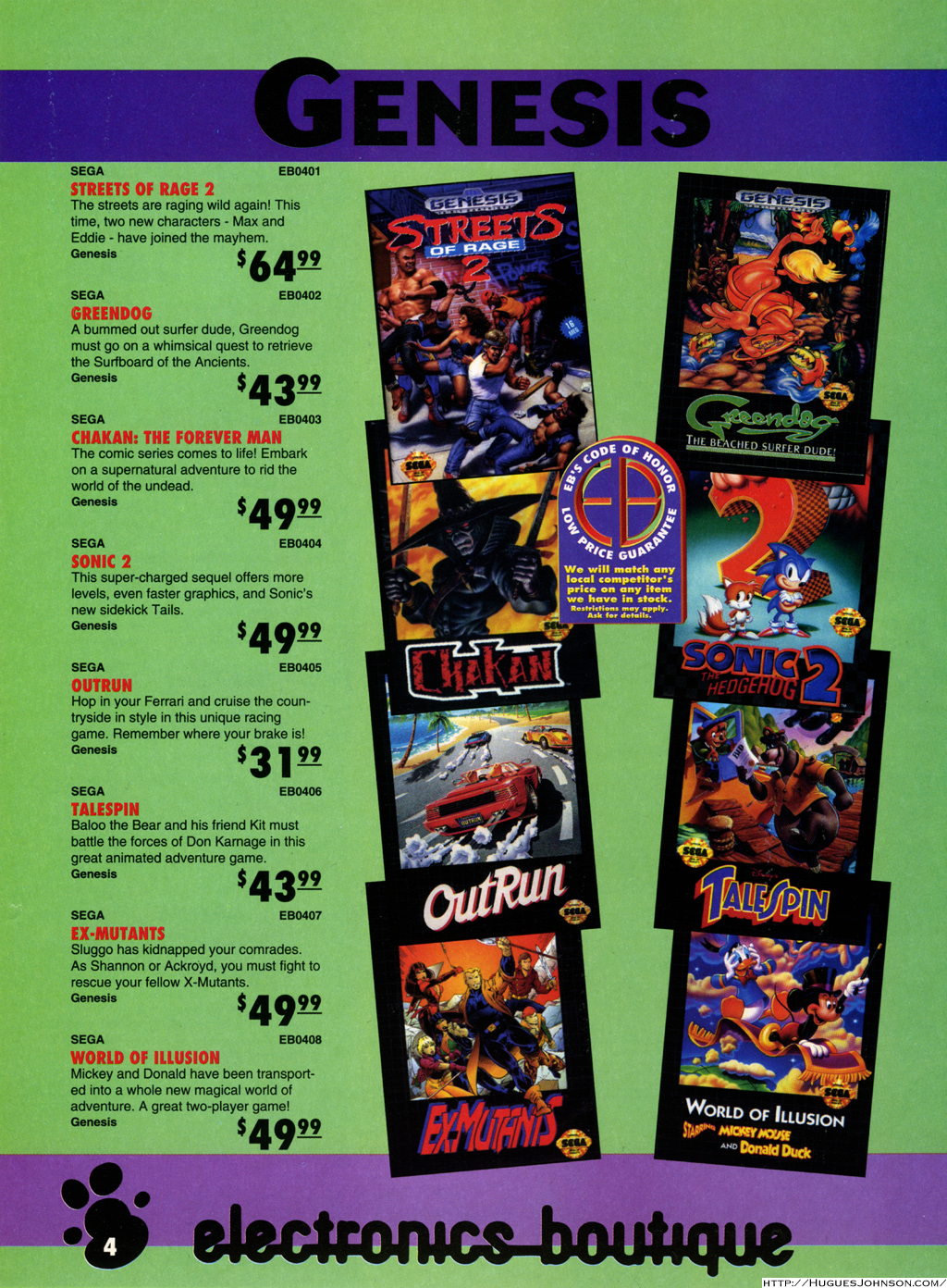
To avoid the influence of low-priced bargain bin games or retailer discounts, we focused on the highest asking prices for individual games we could find in each year (collector’s editions excluded). But to avoid undue skewing from outliers like the $100 Genesis version of Virtua Racing, we averaged the highest top-level asking price we could find for a “basket” of games representing up to eight different genres. So for NES prices in 1988, the $49.99 top asking price for Blades of Steel in the Sports slot was partially balanced out by the $34.99 top asking price for The Karate Kid in the “fighting/brawler” slot.

I’m old enough to remember $70 cartridges

The resulting data is a little noisy from year to year, depending on which specific games were included on extant advertisements we could track down. Over time, though, the pricing trends are still pretty easy to spot.

While nominal cartridge game prices in the early ’80s topped out at $30 to $40, inflation makes that the equivalent of $80 to $100 per game these days. Nominal prices stayed relatively flat into the late ’80s as the industry started recovering from the great crash, but inflation brought the actual value down a bit in constant dollars.

As the industry transitioned into 16-bit cartridges in the ’90s, though, nominal prices for top-end games rose quickly past $60 in nominal dollars and $110 in 2020 dollars. That’s in large part because of the expensive ROM storage and co-processors often included in games of the day. By 1997, late-era SNES and early-era N64 games were routinely selling for $69.99 at many retailers, the highest nominal prices the industry has generally seen and still the equivalent of over $110 in today’s dollars.

An optical disc plateau

The late-’90s transition to disc-based games relieved a lot of the cost pressure on physical game production, which translated to generally lower prices for consumers. But that pricing transition didn’t happen immediately. Early Saturn and PlayStation games in 1996 would regularly sell for $59.99 or more, translating to about $100 in 2020 dollars.

Disc prices settled down to a more reasonable $49.99 soon after that, setting a functional nominal price ceiling that would remain until the mid ’00s. It wasn’t until the Xbox 360 and PlayStation 3 hit the scene that top asking prices started increasing to $59.99. And that’s the de facto ceiling that has remained in place to this day, even as digital downloads and the explosion of indie games has meant many titles now launch at well below this price.

Adjusting for inflation, we can see the actual (2020 dollar) value of top-end disc-based games plateaued right around $70 for almost a decade through in the ’00s and early ’10s. Inflation has slowly eroded that value in the last decade, though, to the point where a $10 increase like the one for NBA2K21 merely gets games to the same actual price point as they enjoyed earlier in the century.

It’s time

As the “real value” of big-budget games has increased, publishers have looked for new ways to squeeze more money out of the average player. Trends like collector’s editions, widespread downloadable content, season pass subscriptions, and annoying microtransactions have meant some players already spend much more than $60 for a single top-end title.

Raising a game’s basic asking price to $70 won’t eliminate publishers’ need or desire to exploit these further revenue streams. But it may help make up for the bottom-line deficits brought on by ballooning development costs for graphically intensive titles in the consoles’ coming ray-tracing era.

Those additional costs may be hard for many gamers to swallow, just as similar increases for streaming video subscription services have been over the years. That’s especially true now that there’s so much gaming competition from lower-cost and even high-quality free-to-play titles.

But a bump to $70 would not be a historically unprecedented increase in console gaming’s price ceiling. Accounting for inflation, in fact, it would merely bring those prices back in line with the recent historical average—something to keep in mind as you prepare for a new, seemingly costlier generation of console hardware.

Listing image by Hughes Johnson

https://arstechnica.com/?p=1690243


First teaser for The Boys S2 promises another wild and bloody ride

[embedded content]
Our vigilantes are on the run from Homelander (Antony Starr) and the rest of the Seven in the second season of Amazon Prime’s The Boys.

The war between corrupt, evil superheroes and a ragtag band of vigilantes out to expose their true nature and curb the power of “super” in society will escalate dramatically, judging by the first teaser for S2 of The Boys. The Amazon Prime series—one of the most-watched on the streaming platform when it debuted last year—is based on the comics of the same name by Garth Ennis and Darick Robertson.

(S1 spoilers below.)

The Boys is set in a fictional universe where superheroes are real but corrupted by corporate interests and a toxic celebrity-obsessed culture. Billy Butcher (Karl Urban) is a self-appointed vigilante intent on checking the bad behavior of the so-called “supes”—especially The Seven, the most elite superhero squad and, hence, the most corrupt. Butcher especially hates Seven leader Homelander (Antony Starr), a psychopath who raped his now-dead wife. Butcher recruits an equally traumatized young man named Hugh “Hughie” Campbell (Jack Quaid, son of Dennis) to help in his revenge, after another Seven member, A-Train (Jessie T. Usher) used his super-speed to literally run through Hughie’s girlfriend, killing her instantly.

At the same time, an idealistic young woman with powers, Starlight (Erin Moriarty), has just joined the ranks of The Seven, but the harsh reality of her coveted position doesn’t match up to her dreams. In addition to Homelander and A-Train, her new super-cohorts include The Deep (Chace Crawford) who can breathe underwater and converse with the creatures there; Queen Maeve (Dominique McElligott), who is burnt out and disillusioned with the superhero life; Black Noir (Nathan Mitchell), who has superhuman strength and rarely speaks; and Translucent (Alex Hassell), who turns invisible by changing his skin into a carbon meta-material that warps light around him. He’s not above taking advantage of that ability to indulge his perverse voyeuristic tendencies.

In the first season, Butcher and Hughie join forces with Marvin, aka Mother’s Milk (Laz Alonso), Frenchie (Tomer Capon), and Kimiko, aka The Female (Karen Fukuhara). She has enhanced strength and healing abilities thanks to being injected with a performance-enhancing substance called Compound-V. The Boys track the source of the compound back to Vought International, the parent corporation behind the Seven, which has been using it to create more superheroes. But someone else has gotten their hands on Compound-V and is using it to create superpowered terrorists.

The S1 finale ended with a major cliffhanger: Butcher, intent on blowing himself up and taking Homelander with him, changes his mind when the psychotic superhero tells him he has discovered that Butcher’s ex-wife, Becca, is still alive—and raising her son, the result of her rape by Homelander.

In my review last year, I called S1 of The Boys “a wickedly funny, darkly irreverent adaptation” and “ideal late-summer therapy for anyone who has grown a bit weary of the constant onslaught of superhero movies.” Judging by the first teaser, S2 promises to be just as bloody, brilliant, and downright bonkers as the first. Per the official premise:

Butcher, Hughie and the team reel from their losses in Season 1. On the run from the law, they struggle to fight back against the Superheroes. As Vought, the company that manages the heroes, cashes in on the panic over the threat of Supervillains, and a new hero, Stormfront, shakes up the company and challenges an already unstable Homelander.

There aren’t many additional details in the teaser, which opens as our (anti)heroes watch a TV announcement of an interstate manhunt for Butcher and his “known associates,” which is an aggressive media campaign spearheaded by Homelander, of course. “We are famous now!” Frenchie declares. Butcher appears to be on the run, but it isn’t long before he rejoins The Boys. The Seven are still making public appearances because “the world still needs superheroes”—and the public mostly doesn’t know what jerks these particular “heroes” really are.

We get our first glimpse of Stormfront, a new female member of The Seven, most likely to replace the late Translucent. Homelander is still bullying the rest of The Seven behind the scenes, and his psychopathic tendencies are starting to bleed into the public sphere. When a random man in the crowd flips him off, he zaps the offender into oblivion with his laser eyes. And he proves to a terrible father to the young son he sired with Butcher’s ex-wife: we see him smiling with the boy on the roof of a house before pushing the kid off and letting him fall (presumably Homelander is trying to teach the little dude to fly).

The Boys S2 debuts on Amazon Prime on September 4, 2020.

Listing image by YouTube/Amazon Prime

https://arstechnica.com/?p=1690342


Superpowered siblings time travel to save the world in Umbrella Academy S2 trailer

[embedded content]
The Hargreeves siblings are scattered in time and must reunite to stop the apocalypse in the second season of The Umbrella Academy.

A group of dysfunctional siblings with superpowers travels back in time to the 1960s in the hope of warding off the apocalypse in the official trailer for the second season of The Umbrella Academy. The Netflix series is an adaptation of the award-winning Dark Horse Comics series of the same name created by Gerard Way and illustrated by Gabriel Bá.

(Spoilers for S1 below.)

The comics are set in an alternate 1977 (the year Way was born) in which President John F. Kennedy was never assassinated. The Monocle, an alien disguised as billionaire industrialist Sir Reginald Hargreeves, adopts seven surviving children out of 43 mysteriously born to random women who had not been pregnant the day before. The children are raised at Hargreeves’ Umbrella Academy and become a family of superheroes with special powers. But it’s a dysfunctional arrangement, and the family members ultimately disband, only reuniting as adults when Hargreeves dies.

In the Netflix adaptation, the 43 mysterious babies are born on the same day in 1989 instead of 1977, but otherwise the basic premise remains intact. Number One, Luther (Tom Hopper), is Spaceboy, mostly because he wants to be an astronaut; he also is super strong. When he was critically injured on a mission, his father injected him with a lifesaving serum with an unfortunate side effect: it turned his upper body into that of an ape. Number Two, Diego (David Castañeda), aka The Kraken, specializes in knife-throwing and can hold his breath for a really long time.

Number Three, Allison (Emmy Raver-Lampman), is The Rumor, who can manipulate reality with her lies. Number Four, Klaus (Robert Sheehan), is The Seance, a flamboyantly charming telekinetic who can communicate with the dead—resorting to drugs as an adult to silence those voices. Among the dead: Number Six, Ben (Justin H. Min), aka The Horror, whose power as a child was the ability to summon tentacled Lovecraftian monsters from other dimensions through his body until his untimely demise.

Then there’s Number Seven, Vanya (Ellen Page), who apparently has no superpowers, although we eventually learn she is most powerful of all and can use the energy of sound waves to destructive ends. Sir Reginald had lied to her about her abilities and kept her medicated most of her life because, well, she kept killing the nannies in her toddler fits of rage. Papa Hargreeves eventually created a robot mother, Grace (Jordan Claire Robbins) to look after his charges. Vanya is also a master violinist—hence her nickname, The White Violin.

Finally, there is Number Five (Aidan Gallagher), aka The Boy, who can teleport through time and space. He still has the form of a boy, thanks to getting stuck in the future for many years and then escaping back to the present. He recruits his siblings to help him avert the apocalypse, which will occur in eight days. But he’s also being hunted by a couple of assassins from the future, courtesy of a group called the Commission, who send people back in time to kill historical figures. And the siblings also have the mystery of their father’s death to contend with.

I am obligated to say that Ars’ Sam Machkovech was not a fan of the first season. “Between a total plot rewrite, questionable casting, and abysmal pacing, this series lands pretty low on Netflix’s all-time adaptation list in terms of quality and watchability,” he wrote in his review, concluding, “By trying to break down the original series’ unexplained archetypes, it creates more obnoxiously massive logic jumps and plot holes than the original, tidy comic ever did.”

I disagree with that assessment (tastes are subjective, after all). Sure, the series drags a bit in the earlier episodes, but I appreciated the attempts to flesh out the characters as adults and explore their damaged relationships with each other. And that slow burn pays off handsomely in the last few episodes as the season builds to its explosive climax.

(S1 finale spoilers below the gallery. Stop reading if you have yet to see it.)

S1 ends on a cliffhanger, after Vanya rediscovers her powers and destroys the Moon with the acoustic energy she accumulates playing the violin in a concert at the Icarus Theater. As the Moon’s fragments rain down on Earth, marking the start of the apocalypse, Five offers to bring his siblings back with him in time, so they can once again try to avert the destruction of the world. The finale ends with the group’s time jump.

Apparently, the jump didn’t go smoothly. Per the S2 official synopsis: “Blasted back in time to 1960s Dallas, the scattered siblings build new lives for themselves—until a new doomsday threat pulls them back together.”

A mushroom cloud? Oh, snap

The trailer opens right after the time jump, with Five ending up alone and calling for Luther and Diego. He’s landed in the middle of a war zone, however, with tanks and soldiers. “This can’t be right,” he says. “What the hell did we do now?” Apparently, they do not successfully escape the apocalypse, since the very next shot is all the siblings standing in the street, helplessly watching a nuclear mushroom cloud rise into the sky. It’s the end of the world, November 25, 1963. Five landed in Dallas 10 days earlier. At least that’s what he is told by a knowledgable bearded bystander, and his immediate goal is to find his family.

Klaus has become a cult leader with hordes of followers, while Allison must deal with the realities of segregation and the overt racism characteristic of the era. Luther is the champion of an underground fight club, while Diego seems to be in a psych ward. We catch a glimpse of Vanya driving a car, and Ben is there, too, because (Klaus’ cheeky denial to the contrary) apparently ghosts can time travel. Eventually, the siblings regroup, which is when Five tells them they “brought the end of the world back here with us.” You can’t escape your apocalyptic destiny, it seems. “My cult is going to be so pissed,” Klaus moans. “I told them we had until 2019.”

The end of the world is connected to the plot to assassinate JFK—this is Dallas in November 1963, after all, and in the alternate timeline of the comics, that assassination never happened. Since the Hargreeves siblings aren’t supposed to be there, perhaps their presence has changed the timeline. Or maybe it’s the weird blond trio of assassins sent by the futurist Commission, who will hunt the siblings down “whenever and wherever we go,” according to Five.

It looks like we’ll also be seeing Shubunkin Goldfish of the Temps Aeternalis, an agency that preserves the time continuum. (In the comics, he recruits Five to assassinate Kennedy, but Five refuses.) There’s one final surprise: a younger Reginald Hargreeves, monocle intact, reunited with the superpowered team he tried to build in the future. All in all, the second season looks like it will be entertaining.

The Umbrella Academy S2 drops on Netflix on July 31, 2020.

Listing image by YouTube/Netflix

https://arstechnica.com/?p=1690168


Scrabble players move toward banning 200+ slurs from tournament play

I had to squint to make sure there weren't any offensive words in this illustrative photo.
Enlarge / I had to squint to make sure there weren’t any offensive words in this illustrative photo.

The North American Scrabble Players Association (NASPA) seems poised to remove hundreds of offensive slurs from tournament-level Scrabble play. The proposed move is part of an effort by the group to “support Black Lives Matter and bring justice to our world,” as organization CEO John Chew put it in a recent newsletter.

Hasbro, which publishes Scrabble, told The New York Times that NASPA has “agreed to remove all slurs from their word list for Scrabble tournament play, which is managed solely by NASPA and available only to members.” The company said it will also be updating the game’s rules “to make clear that slurs are not permissible in any form of the game.”

But after weeks of debate, NASPA’s 12-person advisory board hasn’t yet officially voted on the proposal to ban over 200 offensive slurs and variations from tournament play. That vote is set for later this week.

“I have felt for a long time that there are some words in our lexicon that we hang onto in the mistaken belief that our spelling them with tiles on a board strips them of their power to cause harm,” Chew said in a message to the NASPA Advisory Board urging the removal.

What’s offensive?

The argument over whether “offensive” words have a place in Scrabble is not a new one. In the mid-’90s, Hasbro faced outside pressure when the Anti-Defamation League publicly took issue with a number of words that are noted as offensive in the Official Scrabble Players Dictionary (which itself collected words published in other major dictionaries, including those marked as offensive in those source texts).

“They are literally playing games with hate by supplying legitimacy to such historically hateful and personally hurtful terms in a book that serves as a parlor game guide, very often by impressionable young people,” ADL spokeswoman Myrna Shinbaum said at the time.

What sort of offensive filth might this child be exposed to on the <em>Scrabble</em> board?
Enlarge / What sort of offensive filth might this child be exposed to on the Scrabble board?

As a compromise, Hasbro and Merriam-Webster agreed to remove hundreds of offensive words from the game’s official published dictionary in 1994. Club and tournament players, meanwhile, would continue to use an expanded word list that kept all offensive words as valid plays (this extremely NSFW list, which is more expansive than the list of slurs NASPA is considering, keeps track of all the tournament-playable words missing from the official dictionary).

While the ’90s Scrabble word removal included a wide range of offensive terms, the recent NASPA discussion has focused exclusively on words “which are primarily used as slurs… words that are used to label someone as being of less value than the speaker based on some innate trait such as gender, race or sexual orientation.” Words that are “used to cause offense on scatological, prurient, profane or other grounds” are not under discussion this time around. NASPA publishes an obfuscated, anagrammed list of which offensive words fall into each category.

Is it a slur or just a “string of letters”?

NASPA members have been discussing the proposed slur removal in a private Facebook group for weeks, with fervent arguments on both sides of the issue. Those arguing for keeping the words in the game generally feel that, in the context of Scrabble, these words are merely “strings of letters” that get converted to in-game points, completely divorced from any meaning they may have in the real world.

“The spoken word can be offensive,” Connecticut player Benjamin Bloom said in an interview with Slate, but “a random string of tiles on a 15-by-15 Scrabble board should never offend anyone.”

On the other side, players argue that it’s not a major inconvenience to unlearn a few hundred words—which generally don’t come up much in high-level Scrabble play—from a list that includes over 192,000 acceptable plays. That’s especially true if using those words might cause offense to existing players or deter new players from joining the competitive Scrabble community.

Some also argued that playing offensive words can make tournament players “look like a group of rude bigots” to casual viewers or passersby that might view the game board. That’s what happened in 2010, when a Cleveland area newspaper had to write an apology after using a photograph of a board from a local tournament containing a slur. Players in tournaments broadcast on ESPN have also been asked to avoid playing offensive words in the past.

“When we play a slur, we are declaring that our desire to score points in a word game is of more value to us than the slur’s broader function as a way to oppress a group of people,” Chen wrote in his letter to NASPA members. “I don’t think that this is the time for us to be contributing divisively to the world’s problems.”

The Scrabble controversy follows last month’s decision by Hasbro subsidiary Wizards of the Coast to ban seven Magic: the Gathering cards with racist imagery or connotations from tournament-level play.

If NASPA votes to remove slurs from its wordlist later this week, the decision will go into effect in tournaments starting on September 1.

https://arstechnica.com/?p=1690139


Amazon Prime Video will finally offer one of Netflix’s most basic features

Screenshot of Amazon.com user interface.
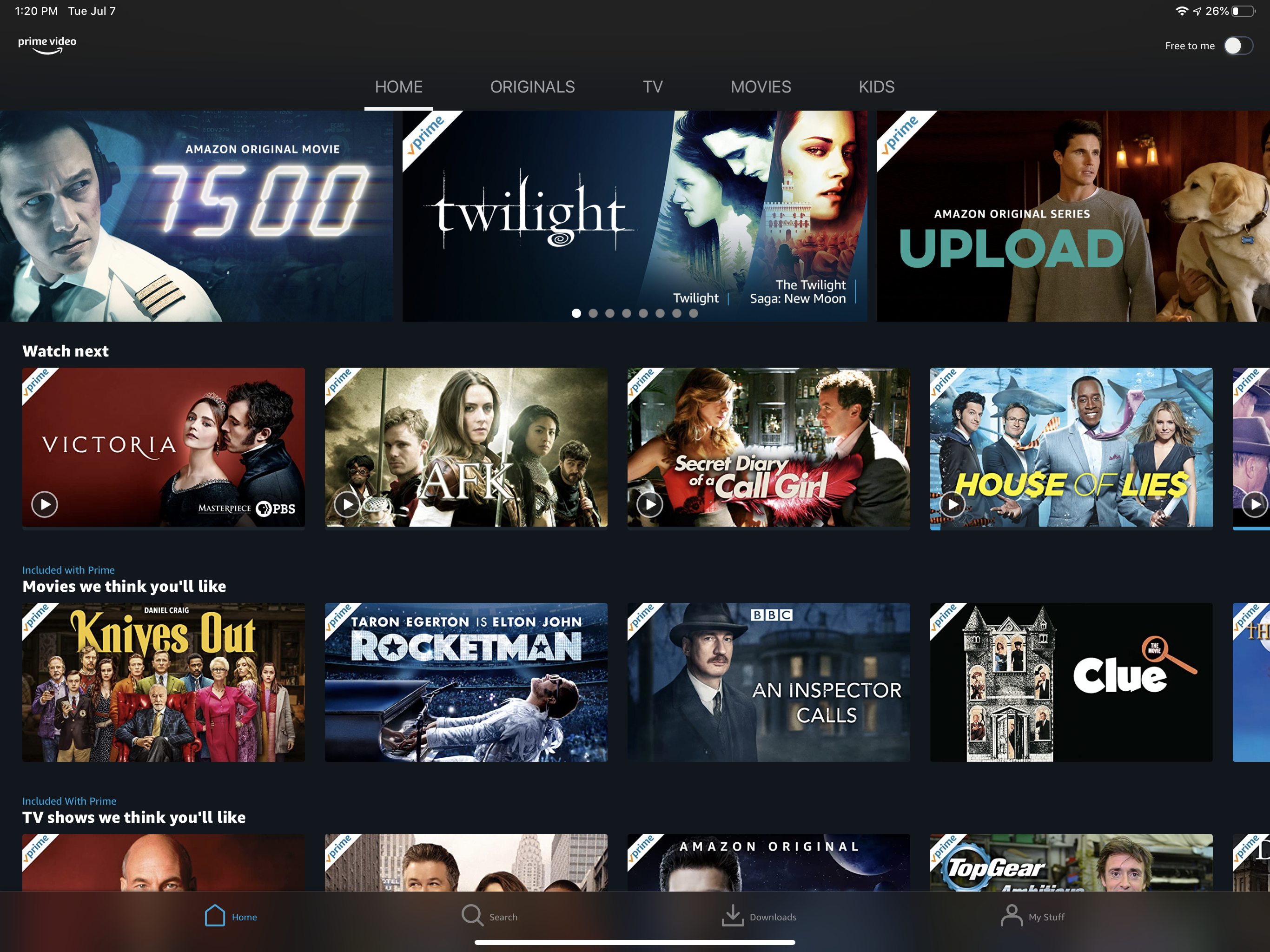
Enlarge / Amazon Prime Video on an iPad Pro.

At long last, Amazon Prime Video is catching up to competitors like Netflix, Hulu, and Disney+ with a key feature: user profiles. The feature is rolling out in the mobile and set-top box versions of the Prime Video app starting today.

The feature allows multiple people sharing an Amazon Prime subscription to maintain separate watch histories and watch lists. Additionally, Amazon has made a distinction between user profiles for kids and profiles for adults, with different rules. Users can configure up to six profiles in any mix of children’s and adults’ profiles. All this is rolling out starting today, but it won’t reach all users right away.

According to TechCrunch, multiple user profiles were supported in India and Africa previously, and they are only now making their way to the rest of the world, including the United States. The rollout brings Amazon closer to feature parity with Netflix and other big streaming players. The bulk of major apps in this space offered this feature, but there are some outliers—like CBS All Access.

Some of those other streaming services offer robust parental controls, so Amazon is leaning into that with these changes as well. Individual profiles can be flagged as a kids’ profile. That profile will only see recommendations or search results of TV shows and films that are age-appropriate (12 and under), and kids won’t be able to make purchases. Amazon is including a number of other options for filtering content like this, including the ability to restrict content on a per-device basis.

Amazon is making these changes amidst rising competition. Disney+ has seen massive growth in recent months, and Netflix seems to be faring well, too. Big new entrants to the market with massive libraries of exclusive content, like HBO Max and Peacock, are also hitting the scene, which puts pressure on Prime Video to offer competitive features and content.

In terms of content, Amazon is working on a Lord of the Rings TV series, and it just released a new season of Hanna. The industry giant is also developing a TV series based on the video game franchise Fallout from some of the writers behind HBO’s Westworld.

https://arstechnica.com/?p=1689813


Sega’s next retro hardware is a 1/6th-scale multi-game arcade cabinet

After the release of the Genesis Mini and the recent announcement of the Game Gear Mini, Sega doesn’t show any signs of slowing down its plans for miniature retro hardware releases. The company’s next entry in the space is the newly announced Astro City Mini, a tiny arcade cabinet set to sport 36 Sega arcade titles.

Japanese site Game Watch was the first to post details about the cabinet overnight, but its story came down quickly (perhaps due to a timing miscommunication with Sega?). That didn’t stop other sites from capturing the relevant details, though.

According to those reports, the Astro City Mini will launch by the end of 2020 in Japan for an asking price of ¥12,800 (about $119). The chassis itself will be at one-sixth scale to an actual Astro City cabinet (5.1×6.7×6.7 inches, or 13×17×17cm), suggesting the original cabinet’s 29-inch screen will be reduced to a roughly 4.8-inch diagonal LCD.

The joystick and six-button control will reportedly be at one-half scale, though, for increased comfort. And that joystick will reportedly sport an eight-way digital switch, which should be a huge improvement over the squishier analog joystick found on 2018’s Neo Geo Mini.

Thus far, Sega has announced 10 of the system’s 36 games, with more announcements planned throughout the summer:

  • Alien Storm
  • Alien Syndrome
  • Altered Beast
  • Columns II
  • Dark Edge
  • Fantasy Zone
  • Golden Axe
  • Golden Axe: Revenge of Death Adder
  • Tant-R
  • Virtua Fighter

The unit will take micro-USB power, support HDMI output to a big-screen TV, and support basic emulation functions like save states. Attachable USB control pads (sold separately) will allow up to three people to play on the same mini-cabinet. Any plans for release outside of Japan have yet to be announced.

First released to Japanese arcades in 1993, Sega’s Astro City was a successor to the smaller 1988 Aero City cabinet. The extremely popular universal cabinet design, which works with a wide variety of interchangeable JAMMA arcade boards, can still be found in the “retro” sections of many Japanese arcades to this day, https://arstechnica.com/?p=1689794