Kang the Conqueror is shattering timelines in new Quantumania trailer

[embedded content]
Latest trailer for Ant-Man and the Wasp: Quantumania.

Marvel has been notably restrained about its marketing for Ant-Man and the Wasp: Quantumania. The film will be released in February, and we’ve had just a few sneak peeks and exactly one trailer over the last few months that told us very little about what to expect. Now we finally have the latest trailer, and it’s an eye-popping visual extravaganza in which Scott Lang (Paul Rudd) faces off against Kang the Conqueror (Jonathan Majors) in an epic battle in the Quantum Realm. And we catch a glimpse of MODOK for good measure.

As we’ve reported previously, the release of Black Panther: Wakanda Forever marked the end of Phase Four of what’s officially being called The Multiverse Saga (encompassing Phases Four, Five, and Six). Quantumania kicks off Phase Five. Per the official premise:

Superhero partners Scott Lang and Hope Van Dyne (Evangeline Lilly) return to continue their adventures as Ant-Man and the Wasp. Together with Hope’s parents Hank Pym (Michael Douglas) and Janet Van Dyne (Michelle Pfeiffer), the family finds themselves exploring the Quantum Realm, interacting with strange new creatures, and embarking on an adventure that will push them beyond the limits of what they thought was possible.

We met a version of Kang in the first season of Loki: He Who Remains, the creator of the Time Variance Authority. Quantumania features a different version from another timeline who has been trapped in the Quantum Realm. Kathryn Newton plays 18-year-old Cassie Lang. Randall Park reprises his role as FBI Agent Jimmy Woo, and Gregg Turkington is back as Dale, the Baskin-Robbins manager from 2015’s Ant-Man.

David Dastmalchian—who played Kurt in the first two Ant-Man films—appears as Veb, with William Jackson Harper playing Quaz. Katy O’Brian plays Jentorra, the warrior leader of the Freedom Fighters in the Quantum Realm, while Cory Stoll plays MODOK, having previously appeared in Ant-Man as Darren Cross/YellowJacket. Finally, Bill Murray plays Lord Krylar, governor of a community called Axia in the Quantum Realm. And apparently he has a history with Janet, who spent 30 years trapped there herself. Janet clearly has her secrets.

A MODOK sighting.
Enlarge / A MODOK sighting.
YouTube/Marvel Studios

We learned from the trailer in October that Scott had become a bit of a superhero celebrity (although frequently mistaken for Spider-Man) and written an autobiography (Look Out for the Little Guy) offering his version of events in the battle against Thanos in Avengers: Endgame. Cassie has developed into a budding young scientist, fascinated by Hank Pym’s old notes, and builds “a satellite for deep space, but quantum”—essentially sending a signal to the Quantum Realm. Janet tells her to turn it off immediately, but the warning comes too late. The entire family goes subatomic, and Kang promises to return them home… for a price.

Recall that Scott spent five years trapped in the Quantum Realm and thus missed a big chunk of daughter Cassie’s childhood. That’s the vulnerability that Kang exploits in this new trailer, offering Scott a second chance in the form of more time. “You’ve lost a lot of time, like me,” Kang says. “We can help each other with that.” Janet once again gives a warning that apparently goes unheeded, telling Scott that Kang can “rewrite existence and shatter timelines.”

It doesn’t take long for Kang to become a serious threat. He taunts Scott during their battle that he can’t win. Scott replies that they both just have to lose. One suspects Ant-Man will live to fight another day. And some version of Kang will most definitely be back since Marvel CEO Kevin Feige has said that Quantumania will be “a direct line” to Avengers: The Kang Dynasty, the Phase Five film slated for release in 2025. (The new trailer’s tagline: “Witness the beginning of a new dynasty.”)

Ant-Man and the Wasp: Quantumania hits theaters on February 17, 2023.

Listing image by YouTube/Marvel Studios

https://arstechnica.com/?p=1908819



A humble request for more weird Nintendo Switch controllers

Nyxi's GameCube-style button layout shows how much more we could be doing with Joy-Cons.
Enlarge / Nyxi’s GameCube-style button layout shows how much more we could be doing with Joy-Cons.


In 2018, when Nintendo released its official wireless NES controllers for the Switch, we talked about how nice it would be to see “Joy-Con options that offer a split-handed version of the GameCube control scheme, for instance.” Just over four years later, peripheral maker Nyxi Gaming is doing what Nintendon’t with the Nyxi Wizard, a set of two Joy-Cons that takes obvious inspiration from the GameCube’s iconic controller. And the release got us thinking about what other unique Switch Joy-Con designs deserve to see the light of day.

Nyxi’s product page makes a lot out of the Wizard’s special features, including “adjustable turbo and mapping functions,” light-up face buttons, and Hall Effect joysticks that they promise will “never develop drift in a lifetime.” But it’s the unique GameCube-style button layout that caught our eye, complete with a huge, central green A button orbited by weird, bean-shaped X and Y buttons and a tiny auxiliary B button.

This isn’t the first GameCube-style controller released for the Switch, of course. Nintendo released an official GameCube controller adapter years ago and even sells new wired GameCube controllers to go with them. On the third-party side, PowerA offers a wireless “GameCube Style” option for players who trained their muscle memory on Super Smash Bros. Melee.

The Nyxi Wizard stands apart from those previous efforts, though, by taking advantage of the Switch’s modular split Joy-Con design. That means the Wizard can be used wirelessly (even in two hands held far apart, if you want) or slid onto the sides of the Switch tablet for used in portable mode (this GameCube-style Joy-Con from an off-brand Chinese manufacturer does something similar). You can even mix and match the Wizard with other joy-con options, making use of the GameCube-style face buttons on the right and your preferred analog stick or D-pad on the left, for instance.

We want options

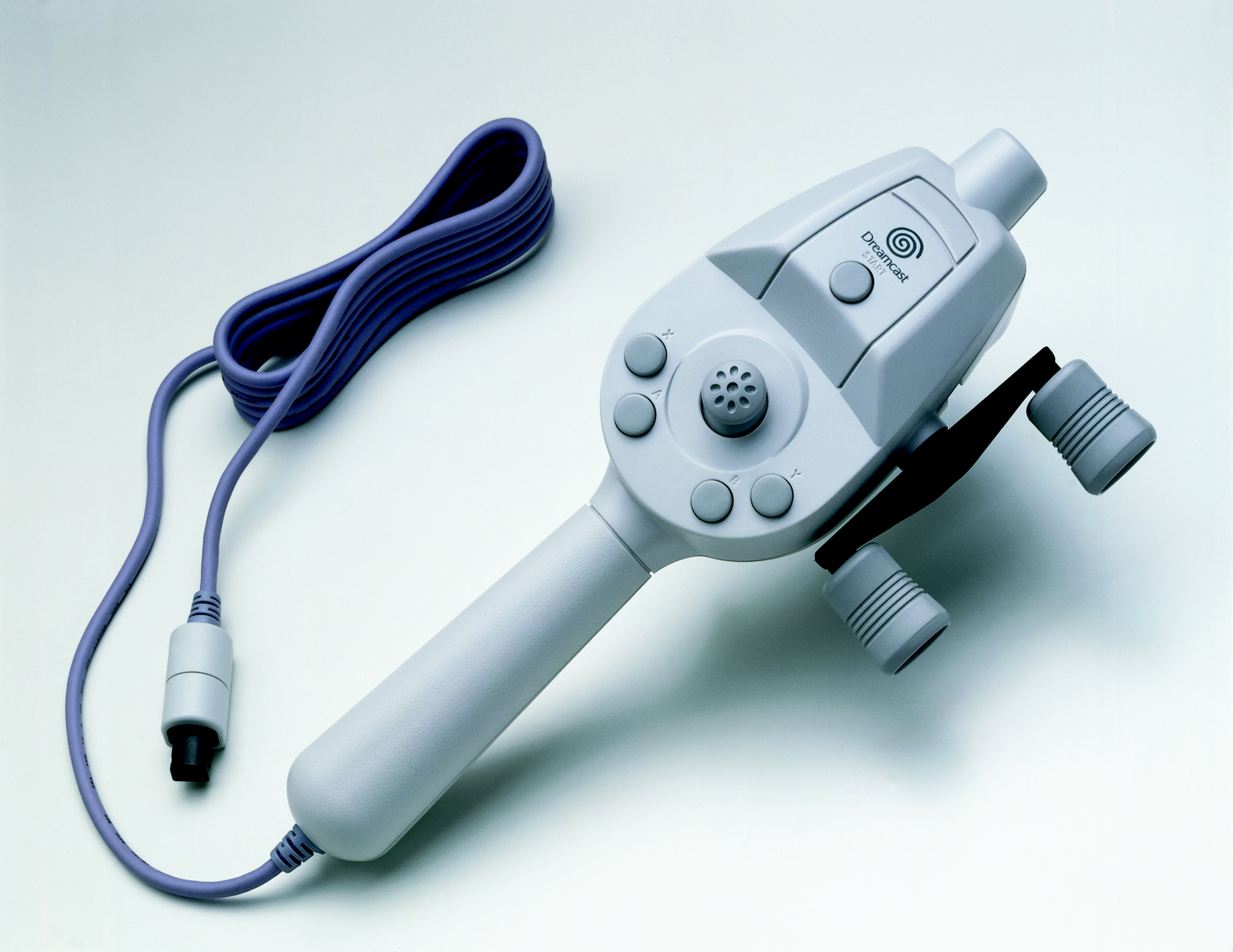
If the Dreamcast could get a fishing controller, surely the Switch can get a fishing Joy-Con...
Enlarge / If the Dreamcast could get a fishing controller, surely the Switch can get a fishing Joy-Con…

This kind of snap-on modularity has been a hidden-in-plain-sight potential strength for the Switch since its release, allowing for the kind of control customization that portable game systems usually struggle with. Joy-Con makers have seemed reluctant to take full advantage of the freedom granted by this modular design, though. Instead, we’ve received an array of third-party Joy-Cons that make only minor changes to the standard design, usually focusing on a better D-pad and/or improved ergonomics better suited for adult-size hands.

While these improvements are nice, we’d still love to see some Joy-Con options that get a bit more “out there” with the controls. Where’s our Joy-Con with a thumb-sized trackball for quicker aiming in first-person shooters? Where’s the Steam Controller-style Joy-Con with a touch-sensitive thumbpad for point-and-click mouse-pointer movement? Where’s our custom spinner-dial Joy-Con for use with games like Atari 50 or Arkanoid: Eternal Battle?

The Nintendo DS era saw some unique controllers that connected through the GBA cartridge slot.
Enlarge / The Nintendo DS era saw some unique controllers that connected through the GBA cartridge slot.

Custom Joy-Cons could get even wilder than that. How about a Joy-Con with PS2-style pressure-sensitive buttons? How about one with a miniature keyboard for sending in-game text messages, a la everyone’s favorite oversized GameCube controller (this comes close but can’t be used in portable mode)? How about a Joy-Con with a built-in microphone for talking to Pikachu or a Playdate-style crank for… all those games that require a crank (RIP Dreamcast fishing controller)?

Would Nintendo actually allow officially licensed Joy-Cons that deviate so far from the standard set of Switch controls? Probably not. Would any or all of these control options be economically viable as actual products? Also probably not.

Still, we can’t help but hope that the powers-that-be show a bit more imagination when it comes to the endless-possibility space that is the Switch’s detachable Joy-Cons. The snap-on modularity of the Switch could usher in a new era of innovative controller design that we haven’t seen since the days of the Power Glove, the Miracle Piano Teaching System, and the Guitar Hero DS controller.

Nintendo’s cardboard Labo line showed that the company isn’t above this kind of control experimentation when it suits them. A GameCube button layout could be just the beginning. From this starting point, let a thousand weird Switch controllers bloom!

https://arstechnica.com/?p=1908901


Ancient Roman concrete could self-heal thanks to “hot mixing” with quicklime

The Privernum archeological area
Enlarge / A new analysis of ancient Roman concrete samples from the Privernum site yields fresh insights into manufacturing process.

The famous Pantheon in Rome boasts the world’s largest unreinforced concrete dome—an architectural marvel that has endured for millennia, thanks to the incredible durability of ancient Roman concrete. For decades, scientists have been trying to determine precisely what makes the material so durable. A new analysis of samples taken from the concrete walls of the Privernum archaeological site near Rome has yielded insights into those elusive manufacturing secrets. It seems the Romans employed “hot mixing” with quicklime, among other strategies, that gave the material self-healing functionality, according to a new paper published in the journal Science Advances.

As we’ve reported previously, like today’s Portland cement (a basic ingredient of modern concrete), ancient Roman concrete was basically a mix of a semi-liquid mortar and aggregate. Portland cement is typically made by heating limestone and clay (as well as sandstone, ash, chalk, and iron) in a kiln. The resulting clinker is then ground into a fine powder, with just a touch of added gypsum—the better to achieve a smooth, flat surface. But the aggregate used to make Roman concrete was made up of fist-sized pieces of stone or bricks.

In his treatise De architectura (circa 30 CE), the Roman architect and engineer Vitruvius wrote about how to build concrete walls for funerary structures that could endure for a long time without falling into ruins. He recommended the walls be at least two feet thick, made of either “squared red stone or of brick or lava laid in courses.” The brick or volcanic rock aggregate should be bound with mortar composed of hydrated lime and porous fragments of glass and crystals from volcanic eruptions (known as volcanic tephra).

Admir Masic, an environment engineer at MIT, has studied ancient Roman concrete for several years. For instance, in 2019, Masic and two colleagues (MIT’s Janille Maragh and Harvard’s James Weaver) pioneered a new set of tools for analyzing Roman concrete samples from Privernum at multiple length scales—notably  Raman spectroscopy for chemical profiling and multi-detector energy dispersive spectroscopy (EDS) for phase mapping of the material.

Masic was also a co-author of a 2021 study analyzing samples of the ancient concrete used to build a 2,000-year-old mausoleum along the Appian Way in Rome known as the Tomb of Caecilia Metella, a noblewoman who lived in the first century CE. It’s widely considered one of the best-preserved monuments on the Appian Way. They used the Advanced Light Source to identify the many different minerals contained in the samples and their orientation, as well as scanning electron microscopy.

They discovered that the tomb’s mortar was similar to the walls of the Markets of Trajan: volcanic tephra from the Pozzolane Rosse pyroclastic flow, binding together large chunks of brick and lava aggregate. However, the tephra used in the tomb’s mortar contained much more potassium-rich leucite. The potassium in the mortar dissolved in turn and effectively reconfigured the binding phase. Some parts remained intact after more than 2,000 years, while other areas looked wispier and showed some signs of splitting. In fact, the structure somewhat resembled nanocrystals. So the interfacial zones constantly evolve through long-term remodeling, reinforcing those interfacial zones.

Raman microscopy on Roman concrete in Admir Masic's lab
Enlarge / Raman microscopy on Roman concrete in Admir Masic’s lab

For this latest study, Masic wanted to take a closer look at strange white mineral chunks known as “lime clasts,” which others had largely dismissed as resulting from subpar raw materials or poor mixing. “The idea that the presence of these lime clasts was simply attributed to low quality control always bothered me,” said Masic. “If the Romans put so much effort into making an outstanding construction material, following all of the detailed recipes that had been optimized over the course of many centuries, why would they put so little effort into ensuring the production of a well-mixed final product? There has to be more to this story.”

It was believed that the Romans combined water with lime to make a highly chemically reactive paste (slaking), but this wouldn’t explain the lime clasts. Masic thought they might have used the even more reactive quicklime (possibly in combination with slaked lime), and his suspicion was born out by the lab’s analysis with chemical mapping and multi-scale imaging tools. The clasts were different forms of calcium carbonate, and spectroscopic analysis showed those clasts had formed at extremely high temperatures—aka hot mixing.

“The benefits of hot mixing are twofold,” Masic said. “First, when the overall concrete is heated to high temperatures, it allows chemistries that are not possible if you only used slaked lime, producing high-temperature-associated compounds that would not otherwise form. Second, this increased temperature significantly reduces curing and setting times since all the reactions are accelerated, allowing for much faster construction.”

It also seems to impart self-healing capabilities. Per Masic, when cracks begin to form in the concrete, they are more likely to move through the lime clasts. The clasts can then react with water, producing a solution saturated with calcium. That solution can either recrystallize as calcium carbonate to fill the cracks or react with the pozzolanic components to strengthen the composite material.

Masic et al. found evidence of calcite-filled cracks in other samples of Roman concrete, supporting their hypothesis. They also created concrete samples in the lab with a hot mixing process, using ancient and modern recipes, then deliberately cracked the samples and ran water through them. They found that the cracks in the samples made with hot-mixed quicklime healed completely within two weeks, while the cracks never healed in the samples without quicklime.

DOI: Science Advances, 2022. 10.1126/sciadv.add1602  (About DOIs).

https://arstechnica.com/?p=1908331


Microsoft admits it should not have argued the FTC is unconstitutional

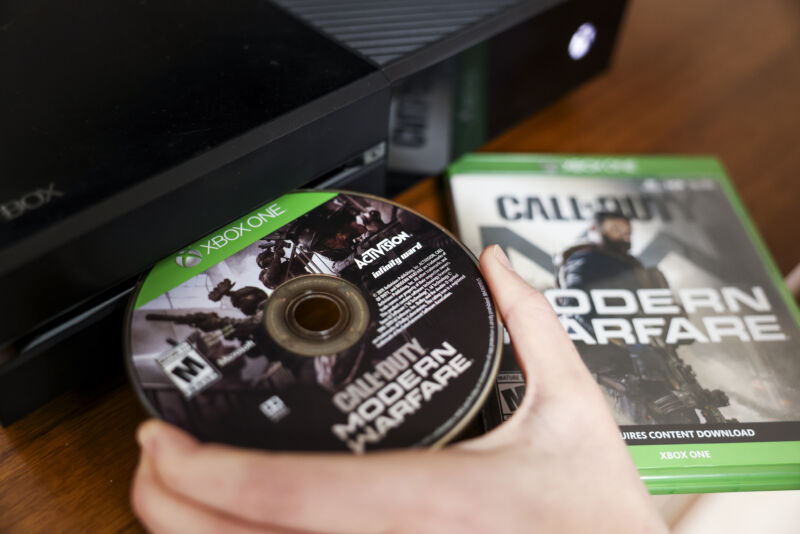
Hand loading Call of Duty Modern Warfare into an Xbox
Enlarge / Microsoft’s arguments against the FTC’s halting of its Activision Blizzard purchase now rely more on Call of Duty than constitutional authority and corporate civil rights.
Michael Ciaglo/Bloomberg via Getty Images

Microsoft has amended its response to the Federal Trade Commission’s suit trying to halt a $69 billion purchase of Activision Blizzard, no longer claiming the FTC is unconstitutional by nature and denying the company its 5th Amendment rights.

David Cuddy, public affairs spokesperson for Microsoft, told Axios’ Stephen Totilo that the company “put all potential arguments on the table internally and should have dropped these defenses before we filed. The FTC has an important mission to protect competition and consumers, and we quickly updated our response to omit language suggesting otherwise based on the Constitution,” Cuddy told Axios.

Microsoft’s original Federal Trade Commission response (PDF) stated that proceedings against Microsoft were invalid “because the structure of the Commission as an independent agency that wields significant executive power, and the associated constraints on removal of the Commissioners and other Commission officials, violates Article II of the US Constitution and the separation of powers.” Another point claimed that the use of an Administrative Law Judge, rather than a typical judge with a lifetime appointment, was a violation of Article III.

Building on those claims, Microsoft had also claimed that the FTC’s procedures, the nature of its administrative proceedings, and the commission having purportedly “prejudged the merits” of its case, Microsoft’s rights to due process under the 5th Amendment were violated.

Microsoft’s amended response (PDF) removes the constitutional claims from its counterarguments. It sticks to the software giant’s broader claims that acquiring Activision would not lock down gaming subscription services or cloud gaming services, that it has made offers to license games like Call of Duty to Nintendo, Valve, and other platforms, and that the FTC’s claims are “too speculative” and not actionable.

Activision, which made identical arguments about its constitutional rights under FTC investigation and procedure in its initial response, will also drop that aspect, according to Axios.

Familiar and timely arguments

The companies’ pushback against regulatory authority comes as the US Supreme Court considers cases that could give companies more power to pursue constitutional defenses against regulatory agencies. Axon Enterprise v. Federal Trade Commission involves a body camera company that had its acquisition of a competitor investigated by the FTC. Axon filed for an injunction and claimed the FTC and its adjudication process were unconstitutional, arguments echoed in part in Microsoft’s original response.

Microsoft, a company deeply familiar with the FTC’s scope and procedures, has more broadly sought to position itself as more of a scrappy underdog in certain game markets than an anti-competitive force. In The Wall Street Journal, Microsoft Vice Chair and President Brad Smith described his company as third-place in the console market, a barely relevant player in mobile gaming, and simply the first major company to innovate around monthly game subscriptions.

Microsoft and Activision Blizzard face numerous other claims of unfair practices. Call of Duty gamers sued Microsoft in late December, claiming its acquisition would allow it to “foreclose rivals, limit output, reduce consumer choice, raise prices, and further inhibit competition.” The European Commission is investigating the deal, and the UK’s Competition and Markets Authority has opened a “Phase 2” investigation.

https://arstechnica.com/?p=1908312


AMD’s new RDNA 3 GPUs will compete with Nvidia for mid-range gaming laptops

AMD is announcing at CES several RDNA 3-based GPUs for laptops.
Enlarge / AMD is announcing at CES several RDNA 3-based GPUs for laptops.

AMD announced at CES this week several new laptop GPU models to go along with updates to the company’s desktop and laptop CPU lineups. Although not as wide-ranging as Nvidia’s laptop GPU announcements earlier in the week, all of these graphics chips target low-end-to-mid-range gaming laptops and mobile workstations, which data suggests is what most people are buying when they shop for those kinds of PCs.

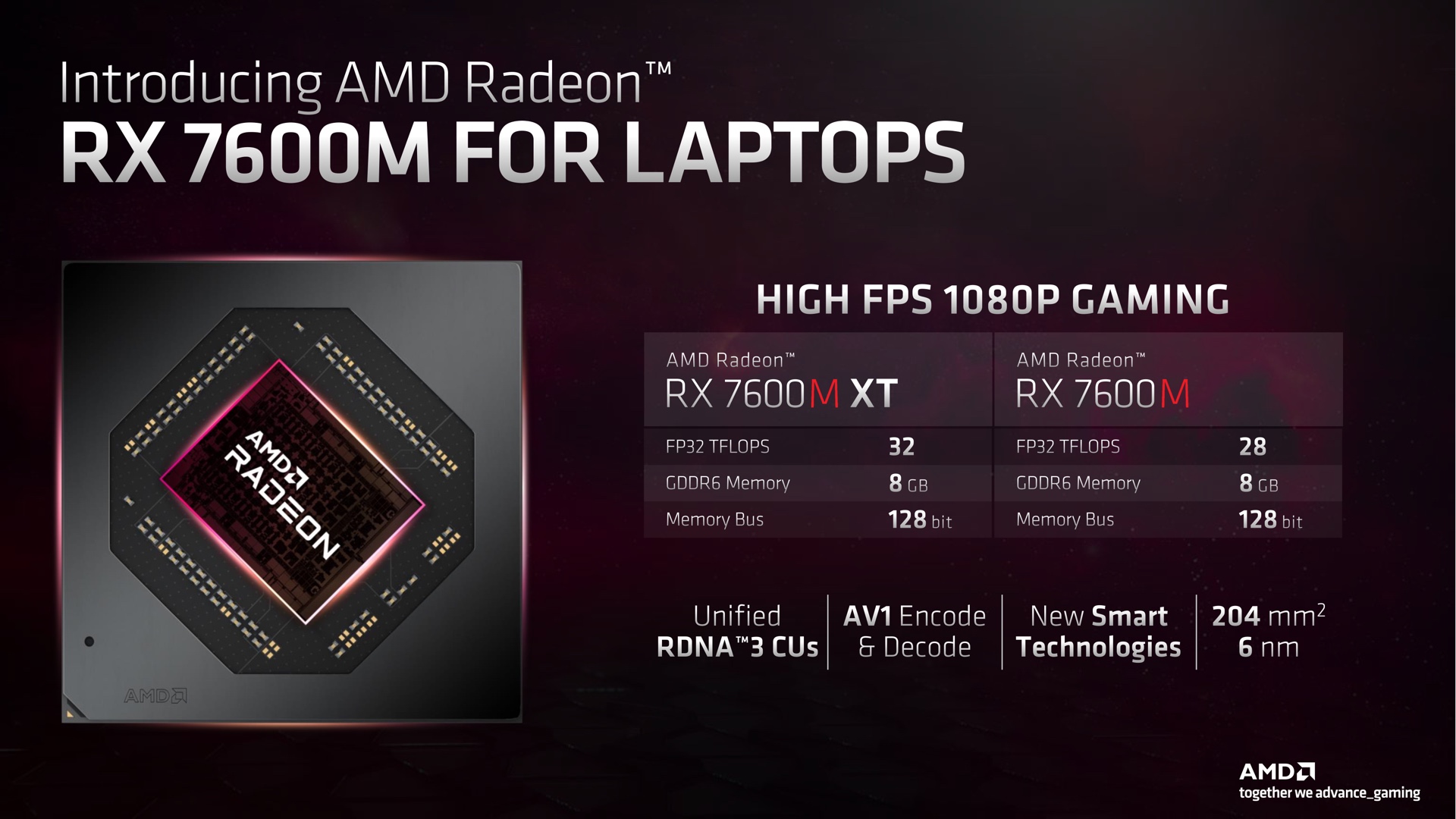
AMD announced seven GPUs, four of which are new RDNA 3-based models in the mid-range 7600 and 7700 series (the other three are spec tweaks for existing low-end RDNA 2 laptop GPUs). The 7600 and 7700 series support the same core features of other RDNA 3 GPUs, including improved ray-tracing performance and hardware-accelerated encoding and decoding of the AV1 video codec. All four GPUs will be available in laptops beginning in February.

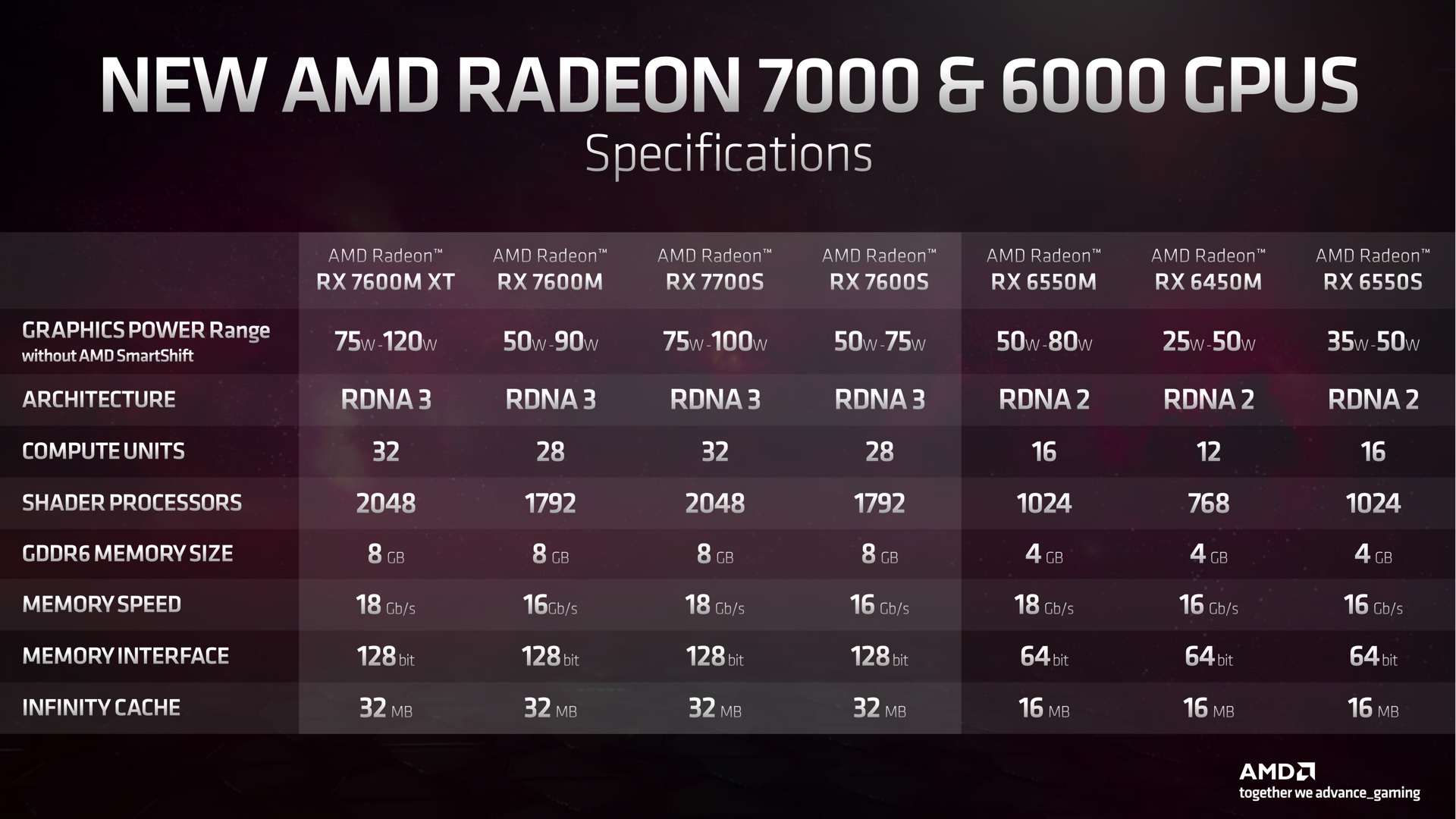
The full range of new (and new-ish) GPUs.
Enlarge / The full range of new (and new-ish) GPUs.

There are two new GPUs here, available in four configurations. One GPU has 32 of AMD’s compute units (CUs), 2,048 shaders, and an 18Gbps memory speed. The second GPU drops to 28 CUs, 1,792 shaders, and a 16Gbps memory speed. Both GPUs share an 8GB pool of GDDR6 memory, a 128-bit memory interface, and 32MB of AMD’s Infinity Cache.

The 32 CU chip will be sold as both the RX 7600M XT and the RX 7700S. The 28 CU chip will be sold as the RX 7600M and RX 7600S. The difference between the M and the S series is that the S GPUs have a slightly lower maximum power range than the M chips, meaning that they can fit into smaller laptops with less-capable coolers but also indicating that they may run at lower peak and sustained clock speeds to compensate.

AMD compared the 7600M XT favorably to the desktop version of Nvidia’s GeForce RTX 3060, showing it beating the 3060 (as well as the old RX 6600M) by a decent margin in a wide range of games. That’s all well and good, though one could argue that comparing a laptop GPU to other laptop GPUs might be more relevant for potential buyers.

As for the S-series, AMD showed the 7700S beating the previous-generation 6700S but offered no direct comparisons to any Nvidia GPUs. AMD also showed results for a mostly different set of games, making comparisons between the 7700S and 7600M XT difficult—the handful of games that were run on both GPUs showed nearly identical results at the same 1080p graphics settings, though.

The dedicated RDNA 3 GPUs will also be joined by an as-yet-unnamed RDNA 3-based integrated GPU in Ryzen 7040 processors. With up to 12 CUs and its reliance on shared system memory, it will fall far short of the 7600S or 7600M, but it should still be a solid step up from older AMD integrated GPUs or Intel’s aging Iris Xe integrated GPU.

AMD hasn’t announced any high-end laptop GPU to compete with the RTX 4080 and 4090-series laptop GPUs that Nvidia announced earlier this week.

Nvidia may also be able to press the power efficiency advantage that the RTX 4000 series has over the RDNA 3-based GPUs in our testing of the desktop versions. Nvidia teased a 40 W RTX 4000 laptop GPU with the same performance as a laptop RTX 3070, while AMD is talking about mid-range GPUs with power figures in the 50 to 120 W range. That said, we’ll need to wait and see how these GPUs compare in actual laptop designs, where performance can differ quite a bit between laptops with the same components based on how the laptops are designed.

Of the three RDNA 2-based GPUs AMD introduced, the RX 6550M and RX 6450M are barely improved versions of the existing RX 6500 and RX 6400, respectively. The CU counts, 4GB memory size, 64-bit memory interface, and all the other most important hardware specs are the same. Both serve as low-end, better-than-integrated GPUs for budget gaming laptops.

The third RDNA 2 GPU is the RX 6550S, which like the other S-series GPUs is just a version of the RX 6550M with a lower minimum power limit (35 W, down from 50 W) that will help it fit into smaller designs.

Listing image by AMD

https://arstechnica.com/?p=1907935


Move over, Nvidia: Some AMD 7900 XTX GPUs are having their own heat issues

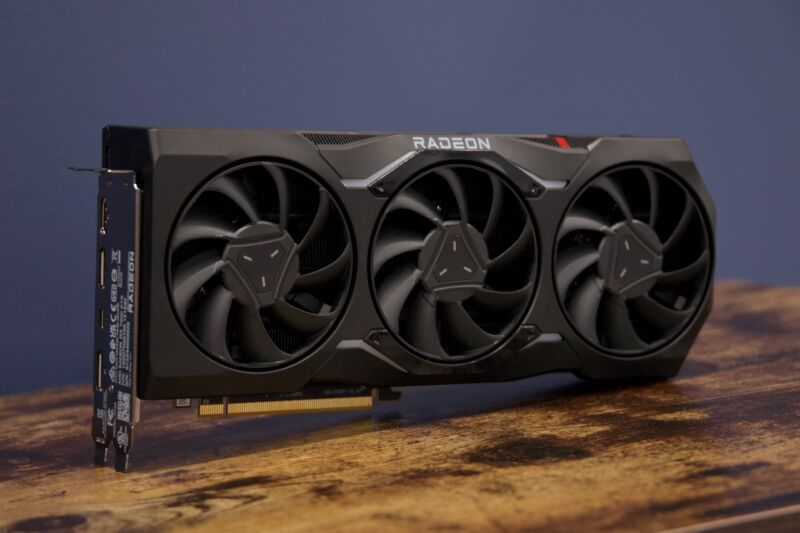
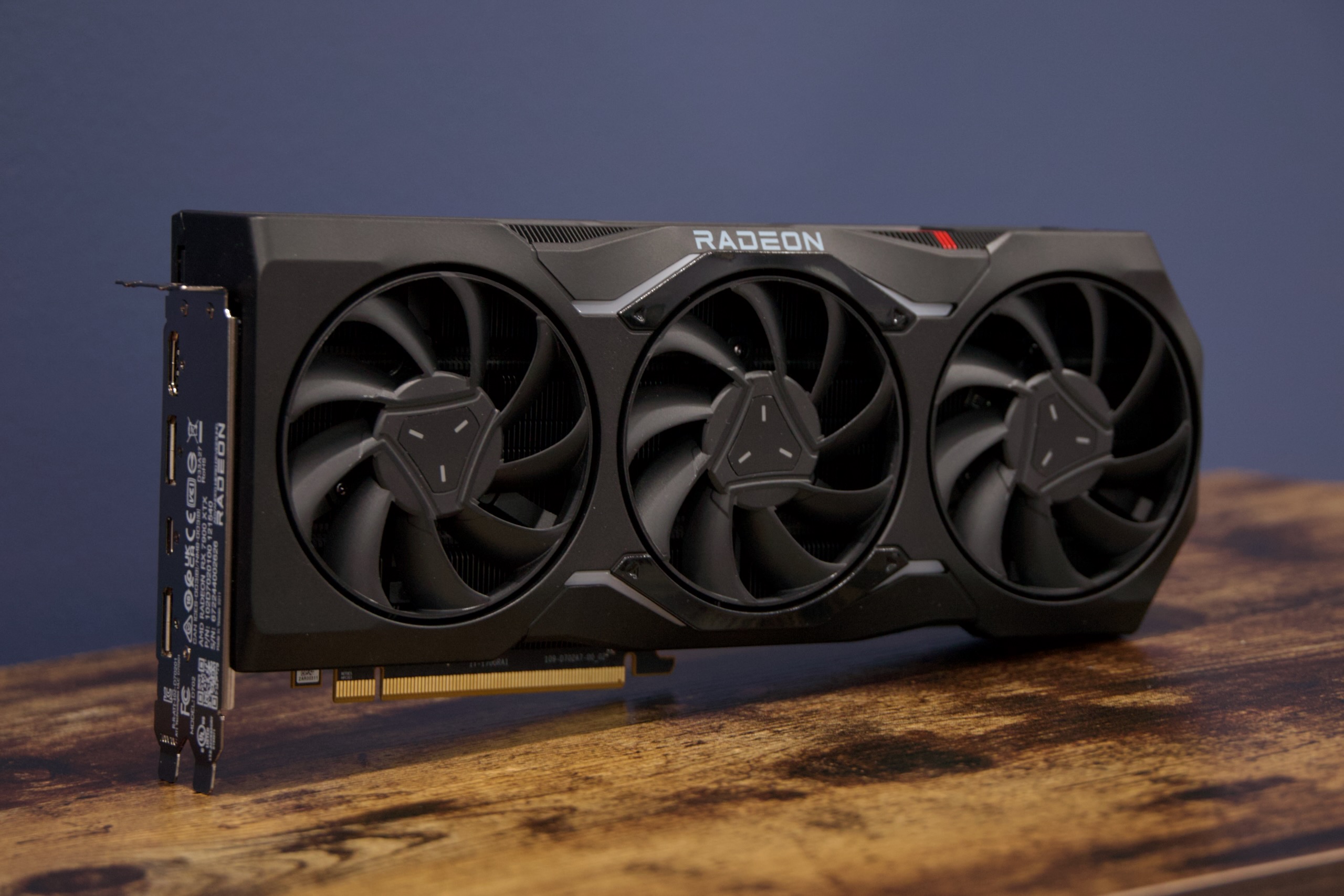
The Radeon RX 7900 XTX's three-fan cooler.
Enlarge / The Radeon RX 7900 XTX’s three-fan cooler.
Andrew Cunningham

Nvidia’s GeForce RTX 4090 has been through the PR wringer for the last few months because of problems with its power connector, but AMD’s newest Radeon cards are proving capable of having issues, too. Some users have been complaining of overheating and thermal throttling in their RX 7900 XTX GPUs, and AMD confirmed that there was an issue in a statement to Tom’s Hardware today.

“We are working to determine the root cause of the unexpected throttling experienced by some while using the AMD Radeon RX 7900 XTX graphics cards made by AMD,” the statement reads. “Based on our observations to-date, we believe the issue relates to the thermal solution used in the AMD reference design and appears to be present in a limited number of the cards sold.”

Independent testing suggests that the overheating issue may be caused by a faulty vapor chamber in the GPU cooler. The problem only appears to affect 7900 XTX models using AMD’s reference design, including its fan and heatsink. ASRock, Gigabyte, PowerColor, XFX, and others all offer versions of the XTX with AMD’s reference cooler alongside its own custom-designed versions. Versions with custom coolers shouldn’t be affected by this specific problem.

The marginally cheaper RX 7900 XT also doesn’t appear to be affected. If you have problems with your RX 7900 XTX, AMD says you should contact its customer support department.

We didn’t observe higher-than-expected temperatures in our review of the RX 7900 XTX, which backs up the assertion that not all cards are affected. When you can find it at its $999 MSRP, the card is a solid performer at 4K and what passes for a good value in today’s high-end GPU market. But as with the RTX 4080 and RTX 4090 before it, most MSRP cards are out of stock, and the few that are in stock are selling for much higher prices.

https://arstechnica.com/?p=1907652


Ars readers gave over $31,500 in our 2022 Charity Drive

Giving a little joy.
Enlarge / Giving a little joy.


Last month, we asked readers to donate to a couple of good causes in our 2022 Charity Drive sweepstakes. And boy, did you deliver. With the drive now complete and the donations all tallied, we can report that Ars Technica readers gave an incredible $31,656.07 to Child’s Play and the Electronic Frontier Foundation last month. That doesn’t set a new record, but it raises our total Ars Charity Drive donation haul since 2007 to over $465,000. Well done, Arsians!

Thanks to everyone who gave whatever they could. We’re still early in the process of selecting and notifying winners of our swag giveaway, so don’t fret if you haven’t heard if you’re a winner yet. In the meantime, enjoy these quick stats from the 2021 drive.

  • 2022 Fundraising total: $31,656.07
    • Total given to Child’s Play: $13,591.62
    • Total given to the EFF: $18,064.45
  • Number of individual donations: 329
    • Child’s Play donations: 167
    • EFF donations: 162
  • Average donation: $96.22
    • Child’s Play average donation: $81.39
    • EFF average donation: $66.95
  • Median donation: $51.69
    • Median Child’s Play donation: $50.00
    • Median EFF donation: $66.95
  • Top single donation: $1,200 (to EFF)
  • Donations of $1,000 or more: 5
  • Donations of $100 or more: 115
  • $5 or less donations: 9 (every little bit helps!)
  • Total charity donations from Ars Technica drives since 2007 (approximate): $466,782.90
    • 2022: $31,656.07
    • 2021: $40,261.71
    • 2020: $58,758.11
    • 2019: $33,181.11
    • 2018: $20,210.66
    • 2017: $36,012.37
    • 2016: $38,738.11
    • 2015: $38,861.06
    • 2014: $25,094.31
    • 2013: $23,570.13
    • 2012: $28,713.52
    • 2011: ~$26,000
    • 2010: ~$24,000
    • 2009: ~$17,000
    • 2008: ~$12,000
    • 2007: ~$10,000

https://arstechnica.com/?p=1907654


Nvidia announces GeForce RTX 4070 Ti, launching January 5 for $799

The RTX 4070 Ti.
Enlarge / The RTX 4070 Ti.

It’s still not what most people would consider “affordable,” but if you want to get into Nvidia’s GeForce RTX 4000 series for less than $1,000, you’ll have a chance in a couple of days. The company’s GeForce RTX 4070 Ti will launch on January 5 starting at $799, $400 less than the MSRP of the RTX 4080 and $100 less than the originally planned 12GB version of the 4080.

As regulatory filings previously indicated, the RTX 4070 Ti is identical to the canceled 12GB version of the RTX 4080, which Nvidia “unlaunched” via a terse press release after widespread complaints about its branding and positioning. The 4070 Ti includes 12GB of GDDR6X memory on a 192-bit memory bus, plus 7,680 of Nvidia’s CUDA cores, and it can consume up to 285 W of power (though Nvidia says average power draw when gaming is closer to 226 W).

Comparing spec sheets, the 4070 Ti on paper is a little less than half of an RTX 4090, which includes 24GB of RAM on a 384-bit memory bus and 16,384 CUDA cores. It’s a bit closer to the RTX 4080, which has 16GB of memory on a 256-bit bus and 9,728 CUDA cores.

Like the RTX 4090 and 4080, the RTX 4070 Ti is based on Nvidia’s Lovelace architecture and supports Nvidia’s new DLSS 3 features for AI-accelerated resolution and frame rate boosting, plus encoding support for the AV1 video codec. Nvidia’s press release positions the card as “a great max settings 1440p gaming GPU,” though if (as Nvidia claims) the card is faster than an RTX 3090 Ti, it should be a decent 4K performer, too, especially with DLSS enabled.

Changing the 12GB RTX 4080’s branding midstream pushed the launch back from November to January, as Nvidia and its partners needed to trash and redo previously manufactured packaging and other materials. While we at least have a $100 price drop to show for the extra wait, Nvidia’s other 4000-series GPUs have been difficult-to-impossible to find at their officially announced retail prices, even as higher-priced versions from Nvidia’s partners have sat on shelves.

https://arstechnica.com/?p=1907191


Final reminder: Donate today to win swag in our annual Charity Drive sweepstakes

Final reminder: Donate today to win swag in our annual Charity Drive sweepstakes
Aurich Lawson | Getty Images


If you were too distracted over the holiday break reading about Ars’ favorite games of 2022 to donate to this year’s Ars Technica Charity Drive sweepstakes, don’t worry. You still have one final opportunity to donate to a good cause and get a chance to win your share of over $2,000 worth of swag (no purchase necessary to win).

So far this year, more than 250 readers have donated nearly $27,000 to either the Electronic Frontier Foundation or Child’s Play as part of the charity drive (the EFF is now leading in the donation totals by about $3,000, for what it’s worth). That’s a long way from 2020’s record annual haul of over $58,000, but there’s still time until the Charity Drive wraps up at the end of the day.

If you’ve been putting your donation off, today is your last chance to donate for the sweepstakes. Do yourself and the charities involved a favor and give now. Don’t put it off until the end of the day and end up kicking yourself for not participating.

See below for instructions on how to enter and check out the Charity Drive kickoff post for a complete list of available prizes.

How it works

Donating is easy. Simply donate to Child’s Play using PayPal or a credit card or donate to the EFF using PayPal, credit card, or bitcoin. You can also support Child’s Play directly by picking an item from the Amazon wish list of a specific hospital on the charity’s donation page. Donate as much or as little as you feel comfortable with—every bit helps.

Once that’s done, it’s time to register your entry in our sweepstakes. Just grab a digital copy of your receipt (a forwarded email, a screenshot, or simply a cut-and-paste of the text) and send it to ArsCharityDrive@gmail.com with your name, postal address, daytime telephone number, and email address by 11:59 pm ET Tuesday, January 3, 2022. (One entry per person, and each person can only win up to one prize. US residents only. NO PURCHASE NECESSARY. See official rules for more information, including how to enter without making a donation. Also, refer to the Ars Technica privacy policy.)

We’ll then contact the winners and have them choose their prize by January 31 (choosing takes place in the order the winners are drawn). Good luck!

https://arstechnica.com/?p=1907164


Maybe Edward the Black Prince didn’t die from chronic dysentery after all

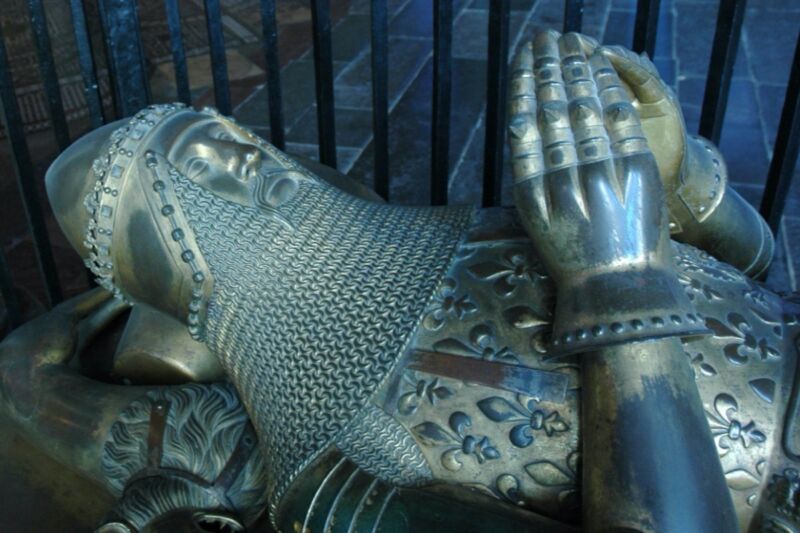
Effigy of Edward of Woodstock, aka the Black Prince, in Canterbury Cathedral.
Enlarge / Effigy of Edward of Woodstock, aka the Black Prince, in Canterbury Cathedral.
There’s rarely time to write about every cool science-y story that comes our way. So this year, we’re once again running a special Twelve Days of Christmas series of posts, highlighting one science story that fell through the cracks in 2022, each day from December 25 through January 5. Today: A military historian argues that Edward the Black Prince died of malaria and inflammatory bowel disease—not chronic dysentery, as previously believed.

Edward of Woodstock, known as the Black Prince, was a formidable mid-14th century warrior who emerged from multiple battles relatively unscathed—only to be felled by disease at the relatively young age of 45. Historians have long believed he died of chronic dysentery, but James Robert Anderson, a military historian with 21 Engineer Regiment, believes the Black Prince was more likely brought down by malaria or inflammatory bowel disease. He and his co-authors made their case in a short December paper published in the journal BMJ Military Health.

“There are several diverse infections or inflammatory conditions that may have led to his demise,” Anderson et al. wrote. “These might include malaria, brucellosis, inflammatory bowel disease, or long term complications of acute dysentery. However, chronic dysentery is probably unlikely.”

As we’ve reported previously, Edward of Woodstock was the eldest son of King Edward III and heir apparent to the throne. He was educated in philosophy and logic and well-trained in the art of war—skills that proved useful in this particular period of the Hundred Years’ War, when invasion by the French was a constant threat.

Edward’s first foray into battle was at the vanguard of the famous Battle of Crécy in 1346, when he was just 16. Beset by a dangerous counterattack, the young knight sent word to his father requesting reinforcements. Edward III declined the request, insisting he wanted his son to “prove his spurs” in battle. The young prince prevailed, launching an impressive military career. One of his biggest victories was the 1356 Battle of Poitiers, where he and his men routed the French army and captured King John II of France.

Historians disagree about how he came to be called the Black Prince. The first known reference to Edward as the Black Prince is in two manuscript notes by the 16th-century poet and historian John Leland. Shakespeare refers to him as “that black name, Edward, Black Prince of Wales” in Henry V, written circa 1599, and includes a reference in Richard III (circa 1595). So the moniker was well established by the end of the 16th century.

One popular theory is that Edward wore black armor into battle; there is one French account describing him as being clad en armure noir en fer bruni (“in black armor of burnished steel”). But otherwise, the evidence for this is scant. The other hypothesis is that the name derives from Edward’s well-documented reputation for brutality in battle. In England, of course, he was lauded as the epitome of noble chivalry, but the French in Aquitaine held a very different view.

Edward’s health declined rapidly once he returned to England in 1371. He died on June 8, 1376, at the Palace of Westminster. Historians have long held that he suffered from violent dysentery and sometimes fainted from the attacks. There are accounts of dysentery dating all the way back to Hippocrates, sometimes called the “bloody flux” because the main symptom is bloody diarrhea—usually accompanied by fever and abdominal pain, and often leading to dehydration. Dysentery was rampant in the Middle Ages, felling multiple monarchs: Henry the Young King (1183), John, King of England (1216), Louis IX of France (1270), Edward I of England (1307), Philip V of France (1322), and Henry V of England (1422).

https://arstechnica.com/?p=1907112