Not a lot of sourdough starters: Our brief escapes amid continued COVID chaos

Let’s not mince words: 2020 has been an extremely tough hang. It sucks, frankly. We’re three months into a viral pandemic that continues to kill thousands of individuals both in the United States and abroad, and now numerous instances of police violence against black Americans have urged protesters to take to the streets despite the underlying health risk (and the potential for more violent interactions with law enforcement). To make matters worse, no one still has any idea what a post-pandemic society will look like.

Our lives have inevitably changed forever, and we haven’t even hit July. So, occasionally, we all need whatever bit of temporary respite we can find. COVID-19 has, naturally, also halted some of the most basic kinds of past hobbies—playing sports, eating out or having guests over, traveling, etc. But it hasn’t drained every ounce of relaxation from the world yet, judging at least by some of the weekend hobbies still being clutched tightly around the Orbital HQ.

Hickory, oak, or mesquite tonight?

I’m a serial hobbyist, taking up new pastimes and then giving them up when I get tired of them. Hence my coin collection that has been untouched for most of the past decade and the empty fishtanks in my garage. But one hobby I’ve held on to, and have invested more time into, since the pandemic reared its ugly head in the US: smoking meat.

I purchased a kamado grill in 2008, and over the past 12 years, I have been honing my grilling and smoking skills. In addition to the lump hardwood charcoal, I keep cherry, apple, hickory, oak, and mesquite on hand. Although I have a couple of store-bought rubs (one from Moonlite Bar-B-Q in Owensboro, Kentucky, and one from The Loveless Cafe in Nashville), I prefer to make my own using Alton Brown’s 8+3+1+1 formulation.

I’m no expert, but I have seen some recent improvements recently. First, I make sure to brine my poultry. I’ve made this recipe for bacon-wrapped turkey tenderloin twice in the last couple of months, and the brine mitigates against my biggest problem with smoked turkey breast—dryness.

Second, I’ve cut back on the amount of smoke. I try to use just enough so that the smoke from the added wood chunks dissipates about one-third of the way through the cook time. That results in a great balance between the flavor of the meat and smokiness.

Since the pandemic started, I’ve smoked turkey breast, pork shoulder, chicken wings, and a chuck roast. The chuck roast was amazing—it was about 3.2lb and took 7.5 hours of smoking, including spritzing it with beef broth throughout the first three hours on the smoker. The result could be best described as “pulled beef.”

The other advantage of smoking is that it’s time consuming, giving me something to do on a Saturday when I’d otherwise be at a local rugby pitch coaching a referee or watching one of my kids play. That’s what I’ll be doing this weekend, in fact. I have two racks of St. Louis Ribs that are going to be spending the day on the smoker. Here’s the recipe if you’re interested.

—Eric Bangeman, Managing Editor

A bike of roughly the same vintage as the author's normal ride.
Enlarge / A bike of roughly the same vintage as the author’s normal ride.

Finding time for elbow (bike) grease

One of my hobbies is cycling, but the pandemic has caused me to add a related project: rebuilding an old bike. Over 25 years and many thousands of miles ago, I bought a Trek 1200 road bike. Over time and a number of moves, things got knocked a bit out of alignment, and crowded New York City apartments made it hard to do basic maintenance. With all those miles, a few of the parts were due for replacement. It still worked, but not especially smoothly.

So, a couple of years back, I got a modern replacement, which was incredibly smooth. But I kept the old one around for cases where I didn’t want to risk my latest and greatest. And in the naive hope I might have some time to spare during the pandemic, I found a reasonably priced set of parts for it on eBay. Would it be possible to buy a tolerable new bike for the amount of money I’m spending to refurb the 1200? Probably. But all those miles left me with a bit of an attachment to the old ride.

I’m now about halfway through putting together my hybrid of new and old. Hopefully in a month or so, I’ll be able to take it for a ride—and it’ll be as smooth as when I first bought it.

—John Timmer, Science Editor

Listing image by Joanna Opaskar

https://arstechnica.com/?p=1683626


Jedi Temple Challenge brings out your inner pint-sized Padawan wannabe

A young contestant swings across a padded foam chasm in an attempt to be the first team to obtain and assemble four lightsaber pieces.
Enlarge / A young contestant swings across a padded foam chasm in an attempt to be the first team to obtain and assemble four lightsaber pieces.

This week a new kid-friendly game show, Star Wars: Jedi Temple Challenge, made its debut on YouTube. The premise is simple: what if we make something like all those Nickelodeon game shows ’80s and ’90s kids grew up on but high-budget and Star Wars themed? To which I thought: yes, please!

Decades ago, Nickelodeon owned the kids’ game show space. The popularity of Double Dare (1986-1993) begat Guts (1992-1995) and, one year later, my personal favorite, Legends of the Hidden Temple, which has more than a little bit in common with the Jedi Temple Challenge.

The similarities are not accidental. The official Star Wars website itself describes Jedi Temple Challenge as “an homage to the kids’ cable game shows that dominated the air waves in the 1990s.”

Legends of the Hidden Jedi Temple

Really, I was already too old for Legends of the Hidden Temple when it premiered in 1993. I could too easily see its patterns, feel the transparency of its construction, and sense that watching it was something I shouldn’t admit aloud in the harsh social environment of junior high.

And yet: oh how I wanted to be the right age for it! Too tall and too heavy by far for those sets, with no sibling or cousin I could partner with, I still imagined myself swinging across the moat, dodging through the temple, and putting that damn silver monkey together (that’s the bottom, how can you not see it’s the—no, you know what, nevermind) to emerge victorious with whatever fancy toy and vacation prize were on offer.

If I was too old for that show in the 1990s, 27 years later I am certainly well outside of the intended audience for Jedi Temple Challenge. My opinions on it, as such, may not be fully reflective of the experience. How fortunate, then, that I have a member of the target audience at home to watch the show with me.

My daughter is almost 7 and has just wrapped up her last week of first grade. She inherited from her father a deep love of game shows and from both of us a love of video games and nerd media, including Star Wars. So I sat down on the couch with her to watch the first episode of Jedi Temple Challenge and told her she could help me tell other families if they should watch it, too. At the end of the first episode, she announced, “I want to watch the next one!” and promptly plucked the remote from my hand to hit play.

“So that’s a ‘Yes’ on ‘Should other families watch it?'”

“Yes,” she agreed.

Strength, Knowledge, Bravery

Jedi Temple Challenge has three teams of two kids each competing in three stages. One team is eliminated at the end of each stage, leaving the last pair of contestants to face the challenge of the Jedi temple itself.

Host Ahmed Best—yes, that Ahmed Best—introduces the contestants and guides them through the challenges while joined by a kid-friendly, mild smart-aleck droid companion. Best is an able host, exactly affable enough without feeling forced, which highlights just how badly he was served by the prequel films.

Happily, although my daughter has seen the movies, she does not make the connection to Jar-Jar, and simply says, “I like him, he seems nice,” before the show moves on.

The first challenge is bravery, and it puts all three teams in the same obstacle course: a large set styled to appear outdoors in a forest environment not unlike Endor. Each team has to complete four tasks. The first two teams to do so advance, and the last team is eliminated.

The design of the obstacle course creates a significant advantage for older, taller kids. The two episodes we watched each featured one team of two 10-year-old contestants playing against teams of kids aged 12-14. In both episodes, the youngest pair had the hardest time with the height-related sections of obstacle course (although in one of the two, the youngest younglings nonetheless managed to advance).

Knowledge can be dull

After the obstacle course comes a knowledge section, in which the two remaining teams move to a spaceship set and have to listen to a story told to them. After hearing the story, they face a challenge most adult viewers will peg as being functionally a comprehension exercise straight out of grade school and its standardized tests. But it’s significantly cooler because it’s Star Wars.

From where I sat, the knowledge section seemed by far the hardest and also the slowest. The kids hear the story exactly once, without themselves reading it, and while some of the details they are asked to recall are fairly straightforward, others are pieces that would be easy to miss. The knowledge section is also the most susceptible to dragging, as it lacks the physicality of the other acts and can result in a condition where nobody knows the correct answer, much like that deer-in-headlights Jeopardy! moment when no contestant buzzes in.

“Do you think the part with the story looks easy or hard?” I asked my daughter.

“Easy,” she informed me, witheringly.

“Did you remember everything the story said?”

“Yes!” she insisted. (This was a blatant lie.)

Temptation

Once one team reaches five correct answers, they get to advance to the titular temple challenge. In both episodes we watched, the sequence of challenges inside the temple was identical.

The most interesting challenge comes about a third of the way through: a Keep Talking and Nobody Explodes-style puzzle where the children are separated and one can see the answer, but the other can manipulate the pieces.

The sigils on the pieces themselves are tricky to describe, and when children try it under pressure, their attempts—”the one like a rectangle with lines”—can be vague. So while the kids frustrate each other, the Dark Side calls them—literally. By name. Each partner has access to a glowing red kiosk that calls them by name, challenges them, taunts them slightly, and tries to undermine them the more they ignore it.

Touching the Dark Side crystal allows the players to bypass the puzzle, with the warning that giving in to the Dark Side may make later tasks more challenging. In one episode, the team persevered without giving in. In the other, one player made the strategic decision that they were using too much time on the one puzzle and should bypass it in an attempt to make up the time later. Strategically, this appeared to be the correct call, I mused aloud, and probably if anything they should have done it sooner than they did.

My daughter, on the other hand, was properly repulsed as any good junior Jedi would be. She responded with a scandalized, “NO!” when I asked if she would have listened to the Dark Side.

But is it fun?

You can’t beat the production values Disney brings to its Star Wars programming, and Jedi Temple Challenge is no exception. But do all the costumes, tech, fancy interactive sets, and slick editing make the show entertaining for its actual target audience?

“Yes yes yes,” my daughter tells me. “I thought the temple looked interesting!

“I like the obstacle course best,” she added, before trying to replicate its jumps on our new living room sofa (“Please stop, baby.”). “But in the second episode, it was boring that the purple team lost and that every team lost.”

So what’s your verdict, kiddo?

“I would tell other kids that it’s a great show.” And like all of us, she mostly imagines herself inside it. “If I went, who would I go with?”

“Not your brother,” I said, referring to our barely verbal toddler in diapers. “He’s too young.”

“But I want to be on that show! How old do you have to be?”

“Probably 10, it looks like.”

“Booooo,” she sulked.

The first two episodes of Jedi Temple Challenge are currently available to stream for free on the Star Wars Kids YouTube channel. The eight remaining episodes in the first season will be added weekly.

[embedded content]
The first episode of Star Wars: Jedi Temple Challenge.

https://arstechnica.com/?p=1683008


The Last of Us Part 2 review: A less confident, less focused sequel

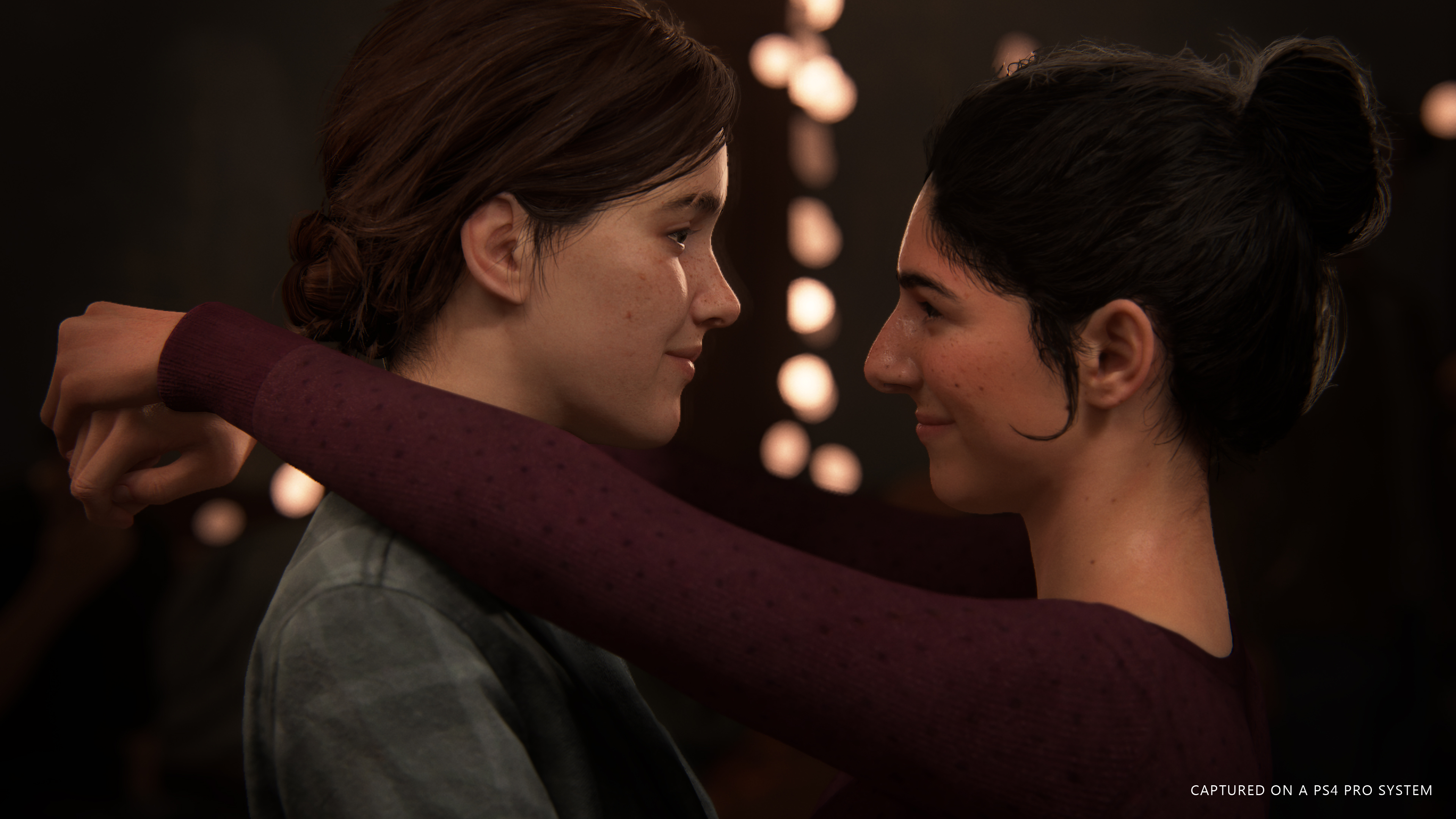
Ellie mimics the face I made in reaction to some of the more perplexing moments in the story.
Enlarge / Ellie mimics the face I made in reaction to some of the more perplexing moments in the story.

From a narrative perspective, there’s no real need for The Last of Us Part 2 to exist. The gripping, tightly paced, very human tale told by the first game is an almost perfect example of self-contained video game storytelling. That game’s ending—where the “hero” condemns the world to continuing disaster out of love for a companion he has slowly grown to love like a daughter, all while betraying her wishes and shielding her from the truth—is a deeply affecting and thought-provoking moment that has resonated with gamers for seven years now. The idea of adding anything to that quietly confident, freestanding narrative package feels superfluous at best and gratuitous at worst.

But the difference between a happy ending and a sad one often depends on when you decide to stop telling the story. And it would admittedly be something of a waste to condemn The Last of Us’ top-notch world building to a single short game. Thus, we now have The Last of Us Part 2, a game that can’t seem to decide if it wants to continue the core story of the first game or pull the camera back to provide a wider view of a fallen world still ravaged by the threat of the zombie-like Infected.

Nothing good can last

Things pick up four years after the events of the first game in the amazingly calm settlement of Jackson, Wyoming. After the almost overwhelming death and decay of the first game, it’s a shock to be thrown into a thriving community full of electricity, commerce, gossip, food and drink, and even happily playing children. Small groups still regularly patrol the perimeter to keep the Infected at bay, but humanity, it seems, has gained a bucolic foothold.

The sense of a slowly returning normalcy is made all the more bittersweet because we know Ellie is fated not to enjoy it for long. The Ellie we see here is no longer the sweet, energetic, eager pre-adolescent who forged an endearing bond with gruff Joel through the first game, either. Time and knowledge have made her harder, more reserved, and more unforgiving than ever. By the time external circumstances and a drive for vengeance force her out of the comfort of Jackson and into a dangerous, murderous trek to Seattle, it’s not exactly a surprise.

We do get occasional glimpses of the old Ellie, especially when she’s taking her first tentative steps into a truly adult relationship. Love interest Dina is a gently teasing foil for Ellie’s developing affections here, and their extended casual banter during the trip to Seattle brings to mind some of the best bonding moments between Ellie and Joel in the last game.

These conversations take place amid the beautiful desolation of a city that has quickly been retaken by the nature surrounding it—a “Nature is healing” meme made vividly real. The environmental design in Part 2 is top notch, with every single location feeling like an actual, inhabited place that was fully built and then slowly left to rot. I could aimlessly wander the beautiful desolation for hours, picking out ominous touches of environmental storytelling even if I wasn’t scrounging for materials to ensure my in-game survival.

https://arstechnica.com/?p=1682877


Sony finally reveals PlayStation 5 hardware—and a discless “Digital Edition”

Shortly after Sony’s hour-long reveal of new video games slated to launch on PlayStation 5, the company took the wraps off of a major component of its new console: the hardware itself.

What’s more, fans learned that Sony had a secret up its sleeve on the hardware side, unannounced until today: a “Digital Edition” version of the hardware. Though the video reveal didn’t include any narration to confirm, this version of PlayStation 5 will ship without a disc drive—perhaps to drive down the console’s cost, as Microsoft attempted to do with last year’s All-Digital Xbox One S.

The console’s reveal did not include a price point or release date. This leaves us wondering exactly how much the PlayStation 5 Digital Edition might drive the price down—especially with reports suggesting that the console’s build price will be no lower than $450. Removing a Blu-ray disc drive may very well help in that respect, for those consumers who prefer buying their games digitally anyway.

As we predicted after the DualSense controller reveal from earlier this year, PlayStation 5’s design is primarily white with black accents and hints of blue LED light. Interestingly, the system in no way resembles the console’s leaked debug hardware, which sported a striking V design. Instead, this unified design is quite tall; the disc-drive slot in the standard console SKU suggests that the system as a whole is a little taller than the diameter of three Blu-ray discs, or somewhere in the range of 15 inches. Exactly how PS5’s bulk will compare to the giant brick that is Xbox Series X remains to be seen.

Other than a series of official peripherals—and Sony’s choice to reveal a media remote before a new PlayStation VR headset—this reveal didn’t show us much about the console that we didn’t already know. One exception, at least, is a peek at two front-of-console slots: one USB Type-A, one USB Type-C. The console’s front also has two tiny slots that could be anything: LEDs, expansion ports, whatever. We look forward to more information on these front-of-console ports soon, if not how its backside looks in terms of support for things like audio connections.

Update, 6pm ET: And now we know what it looks like sideways, should you be concerned about the device’s vertical orientation. Behold:

Listing image by Sony Interactive Entertainment

https://arstechnica.com/?p=1683205


Spider-Man, Ratchet and Clank, Gran Turismo, and more are coming to PS5

Nearly three months after laying out some of the PlayStation 5’s technological underpinnings, Sony today offered its first extended look at actual games running on the upcoming hardware during a live event.

The event started off with a glimpse of an “expanded and enhanced” version of Grand Theft Auto V, which is coming to the PlayStation 5 in 2021, in case you need an excuse to buy the game again. PlayStation 5 owners will also get GTA Online free at launch in 2021, while PS4 owners of GTAV will get $1 million in monthly online GTA Cash every month until the PS5 version launches.

A follow-up to last year’s Spider-Man featuring Miles Morales will be hitting the PS5 in 2020’s holiday season. “A hero is just someone who doesn’t give up,” an unseen narrator says over the footage. “Your dad said that. He was right. Now it’s your turn. Go be a hero, Miles.”

Though the footage shown is tagged with a “captured on PS5” tag (and a “Be greater, be yourself” slogan), it’s unclear if the game will also be available on older PS4 systems.

Polyphony Digital’s Kazunori Yamauchi says a new PlayStation 5 Gran Turismo “should make fans very happy, especially with campaign mode.” The game looks very much like a graphically enhanced edition of the racing simulation we’ve known and loved for decades.

Ratchet and Clank are back for more madcap run-and-gun mayhem in Rift Apart, a game that seems focused on warping quickly between dimensions that are randomly collapsing in on one another. The trailer shows the duo riding dragons, facing pirates, sliding down futuristic buildings, and more. And one dimension even features a female member of Ratchet’s species, which is sure to satisfy a particular type of fan.

Square Enix and Luminous Productions are designing Project Athia “exclusively for PlayStation 5.” It’s sold as a game “where resolve will be tested, truths will be questioned, and devotions will be doubted, she will rise.” The “she” here is a woman with a flowing cape and the ability to jump really quickly and far between some exquisite rocky ledges amid giant, fire-breathing dragons.

Annapurna’s Stray seems to be the story of a cat stuck in a city filled with humanoid robots. Look for it in 2021.

Housemarque and PlayStation Studios are working on Returnal, a new PS4 exclusive franchise focused on reliving an endless cycle of death amid a crash on an alien planet. “Each time I awake, this planet seems somehow different,” the protagonist says, suggesting something of a roguelike randomization element. “Even death is no escape… My only hope is to break the cycle before the cycle breaks me.”

Sackboy returns

LittleBigPlanet’s Sackboy will star in A Big Adventure on the PS5. An isometric platformer that’s very reminiscent of Super Lucky’s Tale at a glance, the trailer shows off family-friendly, four-player simultaneous action.

Destruction Allstars looks to be a Rocket League-style arcade driving competition that focuses more on destruction and explosions than hitting a ball around. Colorful, Overwatch-style characters can also leave their cars for melee combat and rocket jumps.

The developers at Ember Lab promise that Kena: Bridge of Spirits features “themes of personal growth and redemption.” The action-adventure gameplay looks to involve small fuzzy creatures solving puzzles and attacking enemies, along with a magical staff that can bring new growth back to destroyed land.

A fully animated 2D trailer follows bird-like creatures dealing with self-doubt and big drama in Goodbye Volcano High. “Sometimes I feel like I’m just on the edge of great things,” the narrator says. “Something’s holding me back. Maybe it’s just nerves. Maybe it’s the fear I’ll never be as good as what I imagine… But if we’ve got nothing else to lose, might as well jump.” Look for it in 2021.

Lorne Lanning returns to the land of Oddworld for Soulstorm, a game he says he’s been “dying to make,” where “Rescuing is rewarding, dying is devastatingly hilarious.” Abe is back, after having led his race out of slavery. But now, he learns, “you may have escaped, but the fate of your entire people depends on you.” Brief glimpses of gameplay show intense 2D platforming, large explosions, and apparent control of multiple characters at once.

GhostWire: Tokyo will let players “see, hear, and feel the charm of Tokyo in a way you’ve never experienced before,” according to its creator. The supernatural thriller features ghostly, faceless enemies and plenty of magical effects emanating from a pair of hands in a first-person perspective. It’s coming in 2021.

Superbrothers’ The Far Shore goes on sale in 2020’s holiday season, and it evokes feelings of loneliness and isolation amid years-long space journeys to desolate planets.

Also for 2020, Gearbox and Counterplay Games are bringing Godfall, which looks to be a generic fantasy slasher with a driving hip-hop soundtrack in its trailer.

Solar Ash, coming in 2021, evokes Hyper Light Drifter in its gravity-bending, day-glo visuals. The game tells players that “the void is calling,” then leaves your long-caped protagonist (you) to skate across colorful vistas.

Hitmen, Octodads, and Astro Boys

Judging by its trailer, Hitman 3 is unsurprisingly going to involve a lot of sneaking up on people and killing them. “Death awaits” in January 2021.

In Astro’s Playroom, the happy-go-lucky characters of Astro Bot return for a new platformer that looks like it doesn’t require a VR headset this time around.

NBA 2K21, coming in fall 2020, looks to be, by all indications, a basketball game.

The makers of Octodad invite you to the island of Bugsnax, an adventure that seems focused on pieces of food that get up and walk around like insects. The trailer features an absolutely adorable tiny strawberry that gets up and crawls around saying “Starby” all the while. It’s coming in 2020’s holiday season.

A brand-new Demon’s Souls game features giant dragons and limp corpses hanging from their talons in roughly equal measure, judging by the trailer. Some breathtaking fog effects sit over a world being engulfed in darkness, featuring the usual rogue’s gallery of armored knights, reanimated skeletons, and the like.

Bethesda Softworks’ Deathloop is a first-person shooter focused on “rival assassins caught in a time loop.” There’s a real Dishonored vibe to the action, with telekenetic powers and old-school weaponry on display in equal measure. “Every loop I’m learning a little more, piecing together a little bit more of the puzzle,” the protagonist says over the trailer. But “eventually, inevitably, I will break this fucking loop.”

Zero Resident Dawn

“His story comes to a close” in Village, 2021’s addition to the Resident Evil series. After the trailer opens with a creepy tale about a little girl who gets lost in the woods, we see flashes of a horrific monster stalking an older man in a wooden shack. Next: the ornate castles, snowy forests, and undead people in out-of-date couture. The confusing trailer concludes with Chris Redfield showing up to apologize to Ethan.

Pragmata, a brand-new IP from Capcom, features a heavily suited astronaut rescuing a little (seemingly robotic) girl and her holographic cat, then getting flung onto the Moon somehow. The teaser hints that they’re struggling to return to Earth.

The software presentation concluded with Horizon: Forbidden West, featuring Aloy heading west to “a far-future America.” She rides across beaches, climbs snowy peaks, trudges through deserts, and talks about stopping more ecological calamity, of course. “There’s nothing I wouldn’t do to save this world,” she intones. “If I fail, there will be no one else to stop what’s coming.” The usual giant mechanical beasts look more detailed than ever this time around.

[embedded content]

Sam Machkovech contributed to this report.

Listing image by Sony / Aurich Lawson

https://arstechnica.com/?p=1683172


Ubisoft’s next open-world game leaks as an unfinished prototype on Stadia

At last year’s E3, Ubisoft offered a vague teaser video about a new open-world gaming series: Gods and Monsters. While it was slated to launch earlier this year on various platforms, Ubisoft chose to delay the game, along with many others, to later in 2020. We wondered whether this month’s deluge of E3-like streamed videos would include a look at how the game is shaping up.

Instead, our first look at the game comes from a different “video streaming” source: an accidental leak of a playable build, hosted by Google Stadia.

Users across multiple Stadia territories reported finding a game in its store interface on Thursday simply named Orpheus, which could be claimed for “$0.00.” Once claimed and bound to their accounts, users were greeted with a clear Gods and Monsters title screen, then dumped into a prototype interface with options for “Play” and “Play Dungeon.” (The game has since disappeared for anyone who had claimed it.)

The former option boots players into a hall that largely resembles a scene from Assassin’s Creed Odyssey, complete with a large, recognizable rug, and it goes on to reuse many other Odyssey assets, including menus, sounds, a “bulletin board” of quests, and fonts. This may be due to that game’s development team leading G&M‘s development, but it also makes quite apparent that G&M will follow in the AC series’ footsteps, in terms of open-world traversal and completing a variety of primary and secondary quests along the way.

After interacting with a placeholder version of the Greek god Hermes, made up entirely of white blocks, the game’s protagonist is free to jump off this zone’s starting tower, which leads to a massive outdoor world of trees, rivers, and lakes that more resembles Legend of Zelda: Breath of the Wild. This area’s mechanics are limited, so all players can do is jump around, activate a “double jump,” and use a wall-climbing system. When players latch onto walls, a circular stamina meter appears—and it shamelessly resembles the exact same climbing system from BotW.

The “Play Dungeon” option loads an unfinished, open-space area with some climbing, running, and jumping, along with at least one massive melee weapon and one bow-and-arrow puzzle. This zone also has a variety of white-block placeholder geometry, particularly in the archery puzzle’s targets.

When testing on the cloud goes wrong

This can’t be the way Ubisoft intended to reveal G&M‘s gameplay to the world (which, up until today, had only appeared in “sweetened” images provided directly by Ubisoft last summer). But this weird launch of an early prototype is likely indicative of the realities of game development in 2020, where companies are coming up with inventive ways to conduct QA tests outside of traditional offices.

Stadia may very well be an ideal environment to launch, test, and compare various builds of in-development games, instead of expecting larger fleets of QA testers to have a variety of debug kits and other hardware at their home offices. Destiny 2 studio Bungie said exactly this during a March interview, telling IGN, “Getting playtests at scale is a hard thing to do—a lot of bandwidth involved—so [Stadia has] been collaborating with us to set that up, and that looks like it’s going to be a really amazing solution for us.”

But all of that goes out the window if the wrong build of a game is deployed or made public due to anything ranging from an error on Stadia’s side to someone at Ubisoft tapping the wrong “publish” button—and as of press time, it’s unclear where the blame lies for this prototype’s early publication. For this to happen to Ubisoft is particularly bad news for Stadia, since Ubisoft has remained one of the streaming platform’s more bullish partners in terms of games published there. (Other third parties have begun publicly shrugging their shoulders at Stadia’s bottom-line impact.)

Neither Ubisoft nor Google’s Stadia team immediately responded to questions about the leaked prototype.

Listing image by YouTube / Regorsnas

https://arstechnica.com/?p=1683151


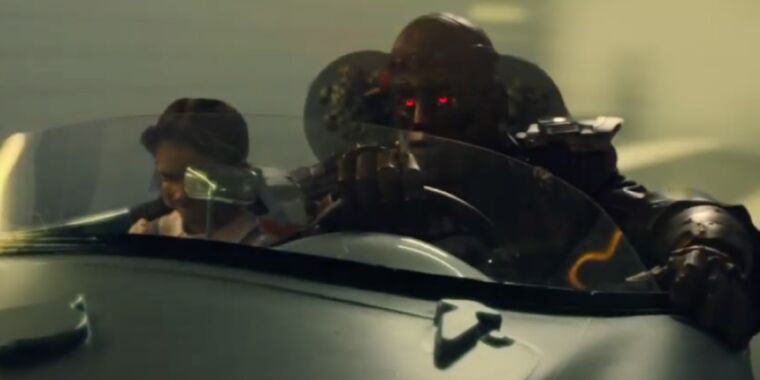
Delightfully bonkers Doom Patrol is coming back for a second season

[embedded content]
Doom Patrol returns later this month for a second season on both HBO Max and DC Universe.

Chances are you missed Doom Patrol when it debuted last year, due to the fact that it aired exclusively on the DC Universe streaming platform. (It’s based on the DC Comics superhero team of the same name.) That’s a shame, because it proved to be a delightfully bonkers show about a “found family” of superhero misfits. For its forthcoming second season, the show will air both on DC Universe and HBO Max, hopefully expanding its audience. Judging by the official trailer, we’re in for another crazy ride.

(Some S1 spoilers below.)

Timothy Dalton plays Niles Caulder, aka The Chief, a medical doctor who saved the lives of the various Doom Patrol members and lets them stay in his mansion. His Manor of Misfits includes Jane, aka Crazy Jane (Diane Guerrero), whose childhood trauma resulted in 64 distinct personalities, each with its own powers. Rita (April Bowlby), aka Elasti-Woman, is a former actress with stretchy, elastic properties she can’t really control, thanks to being exposed to a toxic gas that altered her cellular structure. Larry Trainor, aka Negative Man, is a US Air Force pilot who has a “negative energy entity” inside him, and must be swathed in bandages to keep radioactivity from seeping out of his body. (Matt Bomer plays Trainor without the bandages, while Matthew Zuk takes on the bandaged role.)

Cliff Steele, aka Robotman, is a former NASCAR driver whose brain was transplanted into a robot body after a horrific crash. (Brendan Fraser plays the human Cliff, and Riley Shanahan plays the robot version.) Finally, there is Vic, aka Cyborg (Joivan Wade), whose father gave him cybernetic enhancements to save his life after an accident. Together, they make up the titular Doom Patrol.

There’s also Animal-Vegetable-Mineral Man (he’s a mismatched fusion of all three); a superpowered bounty hunter who tracks people down by eating their facial hair; and a metahuman superhero named Flex Mentallo who can alter reality by flexing his muscles—because why the hell not? This is a show with a talking cockroach, time travel, a talking horse/oracle named Baphomet, a cross-dressing cabaret singer, world-destroying interdimensional entities, a farting goat, and sentient Nazi puppets, after all. Doom Patrol goes all in on the crazy train, and somehow makes it work.

In S1, the team faced arch-villain Eric Morden, aka Mr. Nobody (Alan Tudyk), who can travel through dimensions and alter reality, frequently breaking the fourth wall—as the only character who’s aware he is on a TV show—to narrate the action, thereby manipulating events to his liking. Mr. Nobody kidnaps Caulder and holds him captive in a dimension called the “White Space,” and the Doom Patrol spends most of the first season trying to rescue him, wrestling with their personal demons along the way.

In the end, the Doom Patrol defeats Mr. Nobody, but they also discover that The Chief is the one responsible for all the tragedies that gave them each their powers. Let’s just say the team is dealing with some intense feelings of betrayal right now. Caulder had his reasons: he has a super-powered daughter, Dorothy Spinner, who is deeply troubled, and his actions were a means of trying to extend his own life as much as possible so he could continue to protect her. Oh, and the entire team, except for Larry, is now the size of a cockroach. For reasons.

Judging by the S2 trailer, Dorothy is going to be the season’s Big Bad, as Caulder admits he can’t control his daughter (her mother is an immortal cave woman), and begs the team to help. (“She will unleash hell on Earth.”) In the comics, the character has the power to bring her imaginary friends to life, and we see Dorothy appear to do just that here.  A pint-sized Robotman gets the better of an attacking giant rat. We see Rita trying to control her elastic powers in hopes of becoming a true superhero. And we meet a few more of Jane’s personalities.  “Those annoying feckless losers I live with are my family,” Jane says. “They may be spineless but I know deep down they all care about me.”

The first three episodes of Doom Patrol will drop on July 25, 2020, on both HBO Max and DC Universe. After that, there will be a new episode each week for the next six weeks.

Listing image by YouTube/HBO Max

https://arstechnica.com/?p=1682815


Destiny 3 may never exist—to that end, the series will wipe older campaign content

Promotional images for Destiny expansions.
Enlarge / Expansions will continue apace for Destiny 2, since the studio has no plans to make a Destiny 3 at this time.

After revealing the next regularly scheduled Destiny 2 expansion pack, launching on September 22, the game’s creators at Bungie used the Tuesday opportunity to describe a three-year plan for the series. On the eve of a new console generation, fans might have expected teases for a brand-new, next-gen sequel. Bungie put such questions to rest conclusively: “We don’t believe a sequel is the right direction for the game.”

Instead, Destiny 2 will persist for the foreseeable future as a cross-console product, upgraded to run at higher resolutions (up to 4K) and higher frame rates (60 fps) on PlayStation 5 and Xbox Series X and designed to transfer all purchases and progress from older systems to newer ones. As of press time, Bungie has only confirmed that purchases on PlayStation 4 will transfer to PS5, while purchases made for the Xbox family of consoles will support “smart delivery” to automatically transfer to XSX. And if you jump to a newer console and still have friends on the older one, you can continue matchmaking together (as in, XB1 and XSX, or PS4 and PS5; Destiny 2 still does not support cross-platform play, but Bungie has finally hinted that this may change as soon as 2021.)

However, Bungie has not yet clarified whether cross-save progress, entitlements, and purchases will all cleanly move to next-gen consoles. Want to take your purchases and content from PS4 to Xbox Series X? Or did you pay for content on PC or Stadia and want to continue with the Beyond Light expansion content on PlayStation 5? Cross-save has worked this way in the past, but Bungie has yet to clarify whether a new generation of consoles will work this way.

Into the vault

Bungie was more forthcoming about a staggering plan to revamp the game as we know it, which it’s calling the Destiny Content Vault (DCV). From here on out, every major Destiny 2 content update will cycle old content (including Destiny 1 locations and raids) back into Destiny 2… and it will delete existing content, including campaign missions.

Driving today's point home, Bungie released this preview of the future <em>Destiny 2</em> map, complete with older destinations being deleted entirely.
Enlarge / Driving today’s point home, Bungie released this preview of the future Destiny 2 map, complete with older destinations being deleted entirely.

The first DCV turnover will wipe a whopping four destinations, and their campaign content, from the Destiny 2 client, both in solo and co-op modes: Io, Titan, Mercury, and Mars. This move will effectively destroy the existing campaign progression track for the base game and its Curse of Osiris and Warmind expansions—coincidentally, this is the very content used to tease new players to try the game in last year’s free-to-play transition. (Bungie has hinted to any removed content returning in future updates, as well.) Since the game works as a live product, their original forms will not exist in any “offline” mode for new players to access and catch up with the series’ plot. Destiny 2‘s September wipe will also remove the Leviathan raid.

Bungie’s consolation to fans of older content is a return of Destiny 1‘s Cosmodrome starting this September, though it will launch at that time in a limited fashion; its strikes and other content or zones won’t show up in Destiny 2 until later in the game’s 13th “season.” In September, Cosmodrome will include a campaign path “to expand the new Guardian origin story to the world of Destiny.”

Bungie’s explanation for this shift is player metrics. As one example, only 0.3 percent of all recent connected players accessed Warmind’s campaign content, even though that content accounts for 5 percent of the game’s installable size, Bungie’s announcement claims. The announcement goes on to say that Destiny 2‘s sprawling game client, currently above 100GB, takes too long for Bungie to reliably patch, test, and update. As the game grows, the number of moving pieces involved to push an update takes days, not hours, the studio says. (Bungie has made such points in the past, and those statments made us wonder whether something else was to blame.)

The content that Bungie wants to send to the DCV “isn’t relevant anymore—and can’t remain relevant—as we evolve the world and introduce new experiences that will take center stage instead.” The studio continues down this rhetorical track by saying, “Maintaining that much content in perpetuity slows down our ability to update the game with fresh experiences, reduces our ability to innovate, and delays our reaction to community feedback.” Which makes us wonder: why not, uh, just shelve so much older content so fans can continue to access it, then make a start-from-scratch sequel?

Bungie seems to regret doing just that with its jump from D1 to D2, though:

We left behind all of Destiny 1‘s content and many of the features players grew to love. We believe now that it was a mistake to create a situation that fractured the community, reset player progress, and set the player experience back in ways that took us a full year to recover from and repair. It’s a mistake we don’t want to repeat by making a Destiny 3.

Bungie’s update doesn’t mention how D2 skirted around the idea of player progression from D1 by having its plot nuke the original game in its entirety. Why worry about progress if all your favorite guns no longer exist? We’d like to think Bungie could implement a wiser move-to-a-sequel path this many years later, but the studio is clearly not bullish to try that route. When the developer overtook control of the series from Activision in early 2019, reporters like Bloomberg’s Jason Schreier claimed that Bungie wanted to avoid fracturing its playerbase with continued sequel releases.

The developer’s metrics may very well bear out, in terms of keeping D2‘s most interested players seeded with brand-new and higher-level content instead of dealing with the bloat of barely used campaign content of old (and it may mean last year’s F2P transition didn’t entice new players to try the older campaign content, after all). We wonder how long it will take for this MMO-ization of D2‘s world content, complete with older destinations being destroyed (perhaps for the sake of the plot) and ultimately driving fans to demand a vanilla client launch. Such a development would make an alliance with Blizzard-Activision more lucrative, but alas.

https://arstechnica.com/?p=1682469


Despite 100GB video games, average download times are decreasing

Anyone who downloads games regularly probably has a complaint about just how long it takes to download some of the bigger big-budget titles these days. Unless you want to buy your games on a physical disc or cartridge (or use a streaming gaming service), playing a new game these days means budgeting time for the raw files to get onto your system from centralized servers.

At a quick glance, it can feel like this problem is getting worse over time. Take a look at Red Dead Redemption 2 and Final Fantasy VII, for instance; two recent high-profile games that each push past a whopping 85GB for their PS4 downloads. The coming release of The Last of Us Part 2 continues the trend, with marketing materials warning that players will need 100GB of hard drive space. That’s a big change from 2013, when a 50GB PS4 game download was considered shockingly large.

Those examples notwithstanding, though, the data shows that US console gamers are generally spending less time than ever downloading popular console games. In fact, an analysis conducted by Ars confirms that average broadband download speeds in the United States have been increasing faster than average game sizes for years now.

The data

To get a handle on the relative shape of modern game download times, first we needed reliable data on just how fast broadband speeds have been over the years. Ookla’s Speedtest Global Index provides a great breakdown for this, with data broken out by country and by mobile versus broadband use cases. And Ookla measures the actual bandwidth experienced by users, not the “advertised” bandwidth hyped by the ISPs.

Then we had to figure out just how many gigabytes make up an average modern game these days. For this, we relied on Sony’s own regularly updated list of top-selling PlayStation software. For each year, we used each platform’s top-10 best-selling games for December as a reasonably representative cross-section of the console’s software library for that year (for 2020, we used the list of top sellers for April).

This number doesn’t include the size of any subsequent patches or DLC that might be needed to play the game, and download sizes for games on other platforms may look somewhat different. Still, it provides a good baseline look at how game size has changed over time.

The results

Data in hand, we can see some broad trends in the relative growth of download speed and game size going back to middle of the PS3 era. Back then, the size of top-selling downloads increased sixfold from 2011 to 2015 (Fig. 2). This seems to reflect a transition from players primarily downloading smaller indie darlings to the growing popularity of “full game downloads” for retail releases like the 27GB The Last of Us and the 24GB Destiny (Fig. 4).

But average broadband speeds in the US only increased threefold in the same time period, meaning total download times for games shot up after 2011* (Fig. 1). While things started to balance out again by 2016, the noisy data doesn’t exactly paint a great picture for time spent waiting for games downloads on the PS3.

While <em>The Last of Us Part 2</em> might be pushing 100GB to download, generally increasing broadband speeds could still leave you smiling.
Enlarge / While The Last of Us Part 2 might be pushing 100GB to download, generally increasing broadband speeds could still leave you smiling.

Going into the PS4 era, though, things shook out quite differently. From 2013 to 2015, the growth in broadband speed and PS4 game size matched each other almost perfectly (Fig. 3). Then the growth of top-selling PS4 games starts to plateau a bit, thanks in large part to a functional “ceiling” of a 50GB file size for games packaged on a single Blu-ray disc. The few outliers that blow past that mark only have a small impact on the average, which has topped out just under 50GB in recent years.

Average broadband speeds in the US, meanwhile, have continued growing faster and faster since 2015 (Fig. 5), easily outpacing game-size growth. As a result, average download times* for PS4 games have come down over the years, even as game sizes have generally increased.

(* – The “idealized” game download time metric used in these charts is a very rough estimate made by dividing the raw file size by the reported average bandwidth across the country. Actual results can vary widely based on congestion on Sony’s servers and day-to-day performance of the user’s specific connection.)

The future

It’s too early to say for sure if games on the PS5 and Xbox Series X will be considerably larger than those on current consoles. Based on recent history, though—and the increasing detail of scenes like those in Epic’s recent Unreal Engine 5 demo—we can only imagine console games will routinely blast past a single Blu-ray disc’s de facto 50GB soft limit in the near future.

That said, recent data also shows that these increasing file sizes don’t necessarily mean increased download times for console gamers. In recent years, broadband infrastructure in the United States seems to generally be keeping pace with (or surpassing) the raw data needs of modern gaming downloads.

Those kinds of averages are of limited use to players stuck on low-speed broadband, of course, whether due to price or sheer lack of availability, especially in the rural parts of the country. And those increasingly massive games are going to have to be stored on increasingly pricey high-speed storage in the next console generation and fit through sometimes stringent data caps, which could be an even greater concern than download times for some.

Taken as a whole, though, the data suggests the hassle of waiting for a new game to download has actually been decreasing over time. Something to think about as you wait for The Last of Us Part 2 to filter down to your hard drive in the near future.

Listing image by Aurich Lawson / Getty / Naughty Dog

https://arstechnica.com/?p=1682463


Sony’s Back Button Attachment is finally back in stock, so here’s our review

For all the ways the PlayStation 4 has bested the Xbox One over the past decade, Microsoft has long had the advantage of selling an official enhanced controller. Its Elite series of gamepads come with extra inputs, swappable button layouts, adjustable trigger sensitivity, and other tricks that can give more dedicated Xbox One players a competitive edge.

Sony, meanwhile, has relegated these kinds of accessories to outside manufacturers like Scuf and Astro, whose “premium” controllers have largely been fine, but they can’t quite provide the feature set or sense of harmony that a full-on first-party pro controller could.

The DualShock 4 Back Button Attachment isn’t quite that. It doesn’t have “hair trigger locks,” interchangeable joysticks, or many other special features. But it does add the most immediately useful piece of any enhanced controller: two mappable rear paddles, which can duplicate any pair of buttons on the DualShock 4 proper. The idea is to give you quicker or more convenient access to inputs you frequently use in certain games. Because the device is so minimalist, it’s highly affordable—at $30, it’s multiple times cheaper than most pro controllers, even factoring in the cost of a DualShock 4 itself.

Crucially, it’s also available. Sony initially launched the DualShock 4 Back Button Attachment all the way back in January, but the accessory sold out after a few weeks and was almost completely unavailable for several months. We’re posting this review today, after five months of regular use, because retailers only just started to restock the device over the past week. Even now, availability is spotty at some stores.

Still, now that buying one is at least feasible, the DualShock 4 Back Button Attachment is worth a look for a good swath of PlayStation 4 owners. While it can’t match the flexibility of a true pro controller, it carves out a place in the middle ground for those who want more from their PS4 controller but don’t want to pay the price of a second console to get it.

Table of Contents

Setup and how it works

Sony DualShock 4 Back Button Attachment product image

Sony DualShock 4 Back Button Attachment

(Ars Technica may earn compensation for sales from links on this post through affiliate programs.)

In general, the Back Button Attachment is as straightforward as its name suggests. It snaps onto any official DualShock 4 controller through the gamepad’s audio jack. It’s not too much of a nuisance to connect, but it will likely require some fiddling at first: instead of sliding naturally into place, the attachment puts its connectors on a swivel, which you need to line up with the controller’s 3.5mm jack and EXT port before firmly pressing the whole thing into place. It’s far from ideal, but it shouldn’t take more than a few tries to get the hang of it. From there, the attachment runs off the DualShock 4’s built-in battery and behaves like a part of the controller itself.

Once you’ve connected the Back Button Attachment, its small circular display lights up, and you’re free to assign each rear paddle to an existing button on the controller. The interface technically uses an OLED panel, which helps conserve power, but it’s not flashy—all text is displayed in a simple black and white.

Programming the rear paddles is quick and painless. There are 16 potential bindings in total, covering every individual input on the controller besides Share, the PS button, and the touchpad. (One binding lets you set a back button to do nothing.) You hold the bottom of the OLED panel for about a second to enter the binding mode, cycle through each input using the corresponding paddle you wish to customize, then press the panel again to lock the profile into place. The Back Button Attachment supports up to three profiles in total, which you can swap through with a double press of the OLED display.

These profiles are saved to the Back Button Attachment itself, so you can connect the device to a secondary DualShock 4 and pick up right where you left off. Once each back button is assigned an input, the accessory behaves like a native extension of the controller, so there’s no additional friction when using the gamepad with a PC. With services like Steam or Google Stadia, both of which officially support the DualShock 4, I was able to instantly use the back buttons just as I would on the PlayStation 4, with no additional button delay.

With a non-DualShock-compatible client like the Epic Games Store, however, I still needed to download an emulation program like DS4Windows to get games to recognize the gamepad—just as I would without the attachment equipped. Even then, store exclusives like Control still wouldn’t recognize PlayStation UI elements, so “B” and “A” existed in-game where O and X should be. All of this is just to reiterate how seamlessly the attachment works with the controller; once attached, it effectively becomes just another part of the DualShock 4, with all the ups and downs that implies.

There are a few ways Sony could have expanded the capabilities here. The attachment doesn’t provide any buzz or physical feedback when you’ve swapped between profiles, for one, so you typically have to turn the controller around to ensure you’re on the right settings. If you skip past the input you want to assign, you can’t scroll back, so you have to hit the corresponding back button another 16 times. There’s also no way to assign button combinations to a single paddle; admittedly, this could introduce issues for things like online fighting games, but it could still streamline play in games that rely on more complex inputs. (Other devices have just about let this genie out of the bottle anyway.) The focus on simplicity means there’s no way to tie profiles to specific games, either; this isn’t common in other console-based pro controllers, but it would be nice to launch Gran Turismo Sport and have the attachment know to switch back to the button profile I only use with that game.

All that said, there’s zero lag in assigning inputs and swapping through profiles, and it’s always dead simple to comprehend what the Back Button Attachment is doing at any given time. This is a no-frills device that does exactly what it promises, even if it only promises the fundamentals.

Comfort

That would be moot if the Back Button Attachment wasn’t comfortable to use over extended play sessions. You can definitely feel it when it’s attached: it adds a barely noticeable 25g of extra weight—the controller weighs 210g on its own—but it covers just under half of the DualShock 4’s back. It’s almost entirely made of plastic, so it feels like a $30 accessory in that regard, but the finish is smooth and easy to keep your fingers against.

The circular OLED display introduces a good chunk of surface area to both sides of the controller, but in practice it rarely gets in the way unless you have seriously large hands. (Mine are already on the larger side, and I had no issues.) In general, the attachment hugs the DualShock 4 in a way that prevents it from ever touching the ground while the controller is rested on a flat surface.

The back buttons stretch out to the edge of the gamepad’s grips, with the actual clickable surface located toward the ends of each paddle, meeting your ring or middle fingers where they naturally sit. The elongated design and firm buttons make it difficult to register any accidental presses. The buttons themselves don’t have a deep sense of travel—you’d never want them to replace the L2/R2 trigger buttons in a first-person shooter—but they’re not stiff. Each actuation is fast and clicky.

Any discomfort will come from how far the Back Button Attachment is raised off the DualShock 4’s back. It’s a tough balance: Sony has to give this design enough space to register presses comfortably, but in doing so it must raise and stretch out your ring or middle finger—depending on your grip—slightly more than usual. For the most part, Sony finds a good middle ground; my fingers never felt seriously strained, even after several hours of continuous play. But it is different, and for games that don’t benefit from the extra buttons, a standard DualShock 4 will likely be more comfortable over time.

It’s not a fair comparison, but the Xbox Elite Series 2 is tangibly more agreeable in this regard. All button mapping for that gamepad is done through an outside app, so there’s no need to have the back buttons connected to a bulky module. This allows the Elite’s back buttons to be smaller and rest in a natural spot on the controller’s grips, without the need to position your fingers differently than you would otherwise.

But again, the Elite costs $180, and the Back Button Attachment costs $30. The latter is still more than fine, both responsive and unobtrusive enough. It doesn’t feel flimsy or likely to break despite being plastic, and the fact that it doesn’t sacrifice the DualShock 4’s audio jack is great.

A quick note on battery life

It’s difficult to perform a standardized battery test on a device like this, since the way everyone uses the Back Button Attachment will differ. My method consisted of playing two games that relied on frequent use of the rear paddles (F1 2019 and Destiny 2) as continuously as possible. Any time I took a breather, I kept markers of exactly what times I stopped and restarted. I ran through the process a couple of times to at least somewhat account for unforeseen variances, though both tests resulted in similar figures.

The takeaway is that the Back Button Attachment does cause a slight drop in battery life, but likely not enough to be immediately noticeable unless you’re specifically paying attention to it. With the Back Button Attachment on, my DualShock 4 averaged 15 hours and 15 minutes of battery life. Without it, that figure jumped up to 16 hours and 50 minutes—about a 10-percent increase. Again, I can’t be too declarative since I wasn’t using a brand-new controller. But it makes sense that adding a relatively low-power accessory would cause a relatively low dip in overall battery life.

Listing image by Jeff Dunn

https://arstechnica.com/?p=1681836