HBO’s latest terrifying trailer for Lovecraft Country couldn’t be more timely
[embedded content]
HBO’s new horror series Lovecraft Country is adapted from the novel by Matt Ruff.
With impeccable timing, HBO has dropped a new trailer for its upcoming horror series, Lovecraft Country. The series is based on the 2016 dark fantasy/horror novel, of the same name by Matt Ruff, which deals explicitly with the horrors of racism in the 1950s, along with other, more supernatural issues.
As we previously reported, Ruff also found inspiration in a 2006 essay by Pam Noles describing what it was like growing up being both black and, well, a hardcore nerd. Lovecraft Country is a gripping, extremely powerful read, which is why it was one of my choices for the Ars summer reading guide. The book’s protagonist is a black veteran of the Korean War and science fiction fan named Atticus, who embarks on a perilous road trip from his home on Chicago’s South Side to a small town in rural Massachusetts. He’s looking for his estranged father, who purportedly vanished after encountering a well-dressed man driving a silver Cadillac.
Atticus’ Uncle George and childhood friend/fellow sci-fi buff, Letitia (aka Leti), comes along for the ride. Because their journey is inspired by Lovecraft, they naturally encounter all kinds of arcane rituals, magic, shape-shifters, monsters, and an alternate reality or two along the way. HBO seems to be sticking pretty closely to the novel, if the official synopsis is any indication:
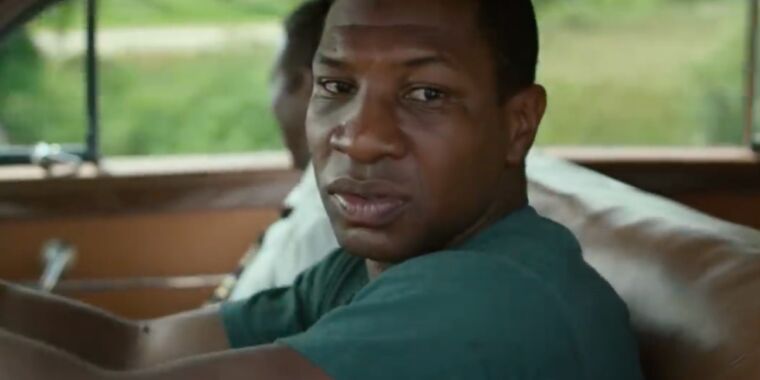
The series follows Atticus (Jonathan Majors) as he joins up with his friend Letitia (Jurnee Smollett-Bell) and his Uncle George (Courtney B. Vance) to embark on a road trip across 1950s Jim Crow America in search of his missing father (Michael Kenneth Williams). This begins a struggle to survive and overcome both the racist terrors of white America and the terrifying monsters that could be ripped from a Lovecraft paperback.
The first trailer dropped last month, essentially illustrating that premise and introducing us to the three main characters as they head out for their road trip. But we didn’t get many details, apart from dimly lit shots of monsters on the attack, and a few brief Jim Crow-era scenes of escalating racially charged violence.
Meet Atticus (Jonathan Majors).
He’s a veteran who’s seen some combat horrors in his time.
YouTube/HBO
Planning a road trip through “Lovecraft Country” from Chicago’s South Side to New England.
YouTube/HBO
Guilty of driving while black.
YouTube/HBO
Atticus senses trouble.
The group has picked up a threatening police tail.
YouTube/HBO
Letitia (Jurnee Smollett-Bell) thinks it might be time to floor it.
YouTube/HBO
There are also unnamed horrors in the woods.
YouTube/HBO
Waking up from a nightmare, perhaps?
YouTube/HBO
Yikes! Is this nightmare real?
YouTube/HBO
An all-too-familiar sight in the 1950s.
YouTube/HBO
Preparing their defense.
YouTube/HBO
An officer takes aim.
YouTube/HBO
Seeing ghosts?
YouTube/HBO
Something terrible is probably lurking within the walls of this lovely New England mansion.
YouTube/HBO
Hey, cool orrery!
YouTube/HBO
Let’s hope the orrery survives this little implosion.
YouTube/HBO
This latest trailer fleshes things out a bit more, and really conveys the overall flavor and tone of the series. We open with Atticus and Letitia walking down a country road, as he waxes poetic about his love of stories. “Heroes go on adventures in other worlds, defy insurmountable odds,” he says, as we get a quick flashback of him as a soldier on the battlefield. “Stories are like a living thing.”
We learn more about the letter Atticus received from his missing father: his father writes that he has a secret birthright that has been kept from him, in Lovecraft Country. Uncle George, as publisher of a “safe travel guide” for black people traveling through the country, plots out their route, but cautions that he’s heard strange stories of travelers being attacked in the surrounding woods. Cut to a night scene in the woods, and a creepy black mass hurtling along the ground toward the trio.
Their journey takes them through towns where the white folk really don’t like “outsiders,” and they encounter plenty of racially motivated violence, from civilians and the police. But there are also gruesome monsters lurking in the dark. “I know we are all supposed to go through trials and tribulations,” a terrified Letitia prays while taking refuge in a church. “But this world is haunting us.” Yes indeed.
There’s no official premiere date as yet but Lovecraft Country is set to debut on HBO this August. The events of the past week, and ongoing protests, should be evidence enough that the topic and themes the series will explore remain as relevant as ever.
Family affairs: Everyone learns they can’t go home again in Killing Eve S3
After being shot and left for dead by Villanelle, Eve (Sandra Oh) is now working in the kitchen of a Korean restaurant.
BBC America
She’s trying to patch up her marriage to Niko (Owen McDonnell), who is recovering from PTSD.
BBC America
Villanelle (Jodie Comer) on her wedding day, to a wealthy heiress in Spain.
BBC America
Villanelle’s former mentor, Dasha (Harriet Walter) shows up unannounced.
BBC America
Villanelle and Dasha have some issues to work through.
BBC America
Meanwhile, Eve’s former boss Carolyn (Fiona Shaw) isn’t in good favor at MI6.
BBC America
Another MI6 supervisor, Paul (Steve Pemberton) is vying for control of the division.
BBC America
Carolyn finds an ally in MI6 agent Mo Jafari (Raj Bajaj).
BBC America
Carolyn’s son, Kenny (Sean Delaney) has left MI6 and is now an investigative journalist with The Bitter Pill.
BBC America
Eve finds her own ally in Kenny’s new boss, Jamie (Danny Sapani)
BBC America
Yeah, Konstantin (Kim Bodnia) is still around, with his own agenda.
BBC America
Villanelle is less than pleased when Konstantin comes to call.
BBC America
Villanelle’s latest kill takes a page from Dasha’s old playbook.
BBC America
Villanelle wants to be a Keeper with The Twelve.
BBC America
Villanelle tracks down Eve during a London visit.
BBC America
A violent fight leads to a passionate kiss.
BBC America
Killing Eve burst onto the scene in 2018 to rave reviews, as viewers and critics alike were enthralled by the sexually charged cat-and-mouse game playing out between MI6 agent Eve (Sandra Oh) and expert assassin Villanelle (Jodie Comer). Alas, while S2 had some powerful moments, overall it lacked the same taut, addictive focus. But the series came back strong for its third season, fleshing out the story in some fresh, fascinating ways. Small wonder it’s already been renewed for a fourth season.
(A couple of major spoilers below for first six episodes of S3—we’ll give you a heads-up when we get there—but no major reveals for the final two episodes.)
As S3 opened, we learned that Eve survived being shot by Villanelle in the S2 finale (duh). She is keeping a low profile, working in the kitchen of a dumpling eatery in London, and living on a shocking amount of junk food in her dismal flat. Her long-suffering math teacher husband Niko (Owen McDonnell) also survived his encounter with Villanelle in S2 (although his fellow teacher, Gemma, did not). He is now an in-patient being treated for PTSD, and unreceptive to Eve’s efforts to reconnect.
Meanwhile, Villanelle is marrying a wealthy heiress, but her plans for a life of semi-retired luxury are upended by the appearance of Dasha (Harriet Walter), her former mentor from Russia. She gets sucked back into working for the shadowy organization known as the Twelve in exchange for a promotion to “Keeper” (aka upper management).
Eve’s former supervisor, Carolyn (Fiona Shaw), is out of favor at MI6, with an irritating rival named Paul (Steve Pemberton) challenging her former dominance over her division. Carolyn’s estranged son, Kenny (Sean Delaney), has left MI6 and is working as an investigative journalist for an outlet called The Bitter Pill, while her former Russian paramour, Konstantin (Kim Bodnia), is plotting to flee the country with his now-teenaged daughter, Irina (Yuli Lagodinsky).
In my review of the first S3 episode, I noted that the series faced a major challenge in its third installment, as viewers have come to expect shocking twists, thereby making it harder to achieve that element of surprise. “I trust that the writers and new showrunner Suzanne Heathcote have plenty of exciting twists and suspenseful moments in store for us [in S3],” I concluded. “But at some point, the basic premise—already wearing a bit thin—will run out of steam altogether. And then the real question becomes, where does the series go from there?”
Well, I’m pleased to report that S3 successfully met that challenge, mostly by changing the focus a bit. Keeping Eve and Villanelle (mostly) apart was a good creative strategy, even more so now that we’ve moved well beyond the “who’s the predator, who’s the prey” dynamic of S1. This third season is really about family, as every major character must grapple with the high personal cost of their decisions thus far.
(Warning: major spoilers begin below this gallery!)
Villanelle has that magic touch with children.
Gemma Whelan plays Carolyn’s daughter (and Kenny’s sister) Geraldine, who tries to repair her relationship with her mother.
BBC America
You may remember Konstantin’s strong-willed daughter, Irina (Yuli Lagodinsky) from S1.
BBC America
Niko moves back to Poland and his roots.
BBC America
Villanelle does a favor for Konstantin in exchange for information about her biological family.
BBC America
Meanwhile, Dasha has her sights set on Niko.
BBC America
Eve witnesses the attack.
BBC America
Niko survives, but rejects Eve.
BBC America
Eve confronts Dasha about the attack on Niko.
BBC America
Villanelle looks over family pictures with her brother Pyotr (Rob Feldman).
BBC America
She bonds with half-brother Bor’ka (Temirlan Blaev), who is obsessed with Elton John, at the local Harvest Festival.
BBC America
Her mother, Tatiana (Evgenia Dodina), insists she leave: “Do not bring your darkness into this house.”
BBC America
Villanelle’s revenge.
BBC America
Eve still clings to the futile hope that she can fix her marriage, unable to see just how damaged and shattered Niko has become after all she’s put him through by exposing him to the risks inherent in her job. Those risks are only heightened when Villanelle discovers she’s still alive and her obsession with Eve rekindles anew. But our favorite assassin is also confronting her own past in Dasha—the woman who turned her into the “perfect killing machine” and then betrayed her—and in a sudden desire to seek out the mother who abandoned her to an orphanage as a child.
Carolyn suffers a devastating loss when Kenny (allegedly) commits suicide by jumping off the roof of his office building at the end of the first episode. She’s a woman who has spent a lifetime suppressing any genuine emotion, who must now deal with her estranged touchy-feely daughter, Geraldine (Gemma Whelan), seeking to bond in their shared grief. Konstantin is trying to keep his daughter safe, only to realize she has her own inner darkness, exacerbated by his constant absence, the nature of his work, and Villanelle’s pernicious influence.
As always, all the performances are spectacular. Most of the attention has a focused on Oh and Comer, and rightly so. Villanelle is just as outrageously unpredictable and charming (in a deadly psychopath way) as ever, with even more spectacularly outré outfits. You never want to take your eyes off her; no wonder Eve remains obsessed.
But the supporting cast is every bit as strong, particularly Shaw and Bodnia, who quite possibly has the richest, most expressive laugh on TV these days. Among the new faces for S3, Harriet Walter is a sheer delight as Dasha, a chain-smoking, raspy-voiced former Olympic gymnast turned brutal assassin for the Twelve (and trainer of the the next generation of brutal female assassins). Game of Thrones fans will recognize Whelan from her days playing Yara Greyjoy, and she is given ample opportunity here to display her impressive range as an actress. And I loved seeing Lagodinsky return as Konstantin’s precocious, sarcastic, tough-minded daughter Irina.
The plotting is much tighter than last season—especially the final two episodes, as Eve pursues Villanelle by following the bodies piling up along the way—and while Villanelle’s kills don’t quite measure up to the macabre creativity she employed in the first two seasons, the S3 writers manage to pull off one very good twist. Concerned that Villanelle is once again behaving erratically because of her Eve obsession, the Twelve asks Dasha to intervene. Dasha decides to drive a wedge between the two women by killing Niko and framing Villanelle—making sure that Eve arrives at the Polish farm where he’s been working just in time to see it happen.
Eve tracks down Villanelle.
BBC America
Konstantin has plans to flee with Irina.
BBC America
Villanelle is a bad influence on Irina.
BBC America
Hélène (Camille Cottin) is a member of The Twelve.
BBC America
Villanelle does not hug.
BBC America
Yet another assignment, this time with fellow assassin Rhian (Alexandra Roach).
BBC America
Tensions are rising between Villanelle and Dasha.
BBC America
A hit at a golf resort in Aberdeen.
BBC America
Eve finds Dasha.
BBC America
Konstantin collapses at a train station.
BBC America
Paul might have his own plan in place.
BBC America
Carolyn faces off with Villanelle.
BBC America
Eve finds Villanelle.
BBC America
The happy couple, together again.
BBC America
It’s genuinely shocking in a way that Kenny’s death, while tragic, is not, thanks to some very clever editing. Unfortunately, the writers then blinked: Niko barely survives, although he (understandably) severs ties completely with Eve when she comes to see him in the hospital. I love the character, but it does undercut the power of the attack. I guess the writers are keeping their S4 options open where Eve and Niko are concerned.
By far the best single episode is “Are You From Pinner,” in which Villanelle visits her hometown in Russia and reconnects with her biological family, especially her brother Pyotr (Rob Feldman) and her coldly distant mother, Tatiana (Evgenia Dodina). Comer’s social awkwardness and discomfort with even small affections contrast sharply with the loud and boisterously enthusiastic family members. She tries to join in on a post-dinner singalong to Elton John’s “Crocodile Rock,” to comic effect, and watching her intensely compete in the dung-flinging competition at the local Harvest Festival—and her euphoria when she wins—is both hilarious and strangely touching.
Villanelle is trying so very hard to belong, even briefly bonding with her young half-brother Bor’ka (Temirlan Blaev), but she is far too damaged. And it is inevitable that the equally damaged Tatiana will reject her, telling her to leave and not bring her “darkness” into their house. Of course, Villanelle takes her revenge.
Killing Eve is based on Luke Jennings’ 2018 thriller Codename Villanelle, a compilation of four e-book novellas he published from 2014-2016. He published a sequel in 2019, Killing Eve: No Tomorrow, but despite Eve’s prominence in that title, Villanelle was clearly conceived as the central figure. So maybe it’s not surprising that we spend far more time on her backstory and family of origin issues than on Eve’s in S3, which makes Eve’s own journey back to Villanelle over the course of the season less impactful in comparison. The first two seasons did a better job balancing the focus between the two.
But that’s a minor quibble with an otherwise excellent season. These two women are clearly damaged in similar ways, with a shared social and emotional awkwardness, and morbid/violent bent. It’s just that Villanelle’s tendencies were encouraged and exploited via extreme physical and mental abuse, while Eve managed to channel her darker tendencies into her government work, and found some semblance of a family with Niko—at least until Villanelle burst into her life. But we still have little idea what Eve’s own early family life was like, or how it shaped her.
Here’s hoping that will be a major angle of exploration for S4, when Laura Neal replaces Heathcote as showrunner. Delving into how Eve and Villanelle have shaped and changed each other over three seasons would be another promising narrative vein to mine. Perhaps these two women can eventually find the families they have lost with each other, in their own uniquely twisted way.
Listing image by BBC America
https://arstechnica.com/?p=1680103
The Last of Us Pt. 2 hands-on: You can’t pet the dog—but you can expect terror
Ahead of our June 12 review of The Last of Us Pt. 2, Naughty Dog has given us the green light to describe a small portion of the PlayStation 4 game. The content in question is a 1.5-hour mission that takes place roughly 12 hours into the full campaign.
For many games, this would be an inconsequential way to set fans’ expectations of what’s to come. Think of a Halo game, where the shooty-shoot in a later mission is representative of the whole game. Standard game-preview stuff, you might say.
TLOU2‘s infected are only a fraction of what you’ll have to fear when you play as Ellie starting June 12.
Sony Interactive Entertainment / Naughty Dog
In The Last of Us Pt. 2, Vita does not necessarily mean “life.”
Sony Interactive Entertainment / Naughty Dog
Spores in the air are usually a bad sign.
Sony Interactive Entertainment / Naughty Dog
Its hunger doesn’t appear to be sated.
Sony Interactive Entertainment / Naughty Dog
Press square to… not die.
Sony Interactive Entertainment / Naughty Dog
Battle in the abandoned newspaper office goes awry.
Sony Interactive Entertainment / Naughty Dog
When dogs appear, your “sense” ability also shows the trail of your scent. You’ll need to either reposition widely out of your current radius or throw an object to get the dog off your scent.
Sony Interactive Entertainment / Naughty Dog
Swimming is new to the game, but the mission described in the below article doesn’t use it much.
Sony Interactive Entertainment / Naughty Dog
Add a temporary silencer to your pistol for more stealth options.
Sony Interactive Entertainment / Naughty Dog
(Soon to be) ARROWED!!!
Sony Interactive Entertainment / Naughty Dog
The Last of Us Pt. 2 is not necessarily that kind of video game. Using this preview to make that point is difficult, as Naughty Dog has held members of the press to an incredibly high standard of secrecy, enough to make me debate whether to post this impressions article at all. Ultimately, I can say quite a bit about this game by pointing out what I cannot mention, and why the “allowed” content makes me excited to share more about this game with you. Smarter readers may very well notice what I mention about this single mission and read between the lines. (This is a particularly safe article to read if you’re spoiler-averse.)
With those caveats in mind, grab your spiked bat and crawl through rainy Seattle with me.
Caveats: Many questions remain unanswered (for now)
The spoiler-restriction list for this single mission is pretty massive. We can tell you that Ellie, the prior game’s companion/protagonist, is the lead character in this mission and that she travels alone to infiltrate a hospital in post-apocalyptic Seattle. Her mission is to confront someone named Nora (you may have seen this character in a TLOU2 trailer).
What is Ellie doing in Seattle? How did she get there? Who is Nora? What does Ellie want with her? What has Ellie been up to in the years since the events of the original PlayStation 3 game? Who else does she know in Seattle right now?
Not only can I not answer those questions, I also can’t clarify the way that Naughty Dog tells this story within the confines of this game. I would like to, but I cannot.
Instead, I can describe a mission that is largely divorced from the game’s plot—and feels, quite honestly, like the kind of vertical gameplay slice you might expect at a “spoiler-free” press event months before a game’s launch.
Seattle: So authentic, you’ll check for your ORCA card
A few samples of the Seattle skyline and environs as captured from a recent TLOU2 reveal video. (Most of these images do not match with the described mission.)
A major downtown corridor.
We see Ellie ride on horseback through this Seattle zone, suggesting that it’s a significant one within the game.
Sony Interactive Entertainment / Naughty Dog
See, it doesn’t always rain in Seattle.
Triangulate your position in virtual Pioneer Square the same way you might in real-life Seattle: by looking for the King Street Station tower.
The first thing I can describe is the mission’s relatively accurate portrayal of my hometown, Seattle. This many years after an infection took hold of the world, Seattle’s downtown core has become overrun with native, local foliage, which Naughty Dog uses to both show off the company’s impressive leaf-rendering system and to organically block out your routes. That means we only see a few facsimiles of modern-day Seattle landmarks, including the mission’s starting point of the Paramount Theater, a collapsed version of the Washington State Convention Center, and an eventual march to the cobblestone streets of Pioneer Square.
When these moments emerge, Naughty Dog proves itself adept at combining real-life topography and interesting gameplay moments. The convention center’s architecture, full of bulging, rectangular concrete blocks, becomes a perilous series of leaps for Ellie. And the vines-and-trees overgrowth of Pioneer Square transforms one of its bigger parks into a creepy stage of combat theater.
Between these landmarks, Ellie progresses through this mission in mostly linear fashion, often because a path she takes includes some form of “barricade this door behind me” to limit how many dangerous forces can sneak up on her six. These include: mutated people who were overtaken by a virus and shamble in zombie-like fashion; surviving humans who have joined an organized militia, the Washington Liberation Front (whose members adapt its acronym, WLF, to call themselves “wolves”); and a mysterious contingent of surviving humans known as “Scars” who emerge for the first time in this mission. At this point in the game, Ellie doesn’t quite understand either of these organizations’ driving principles, though the mission in question includes various hand-written notes about tensions between the two groups—along with tragic letters that never made their way to loved ones.
Some parts of the mission terrifically tell the story of human society screeching to a halt. In one particularly harrowing battle against zombies, Ellie must sneak and crawl through an abandoned newspaper office, which is occupied by an advanced form of the game’s infected—a class of monster that moves quickly and defaults to dodging and triangulating around Ellie instead of either stupidly shambling or directly rushing. With no electricity, Ellie must rely on her shoulder flashlight and the dim light through windows to navigate this office environment, whose cubicles and editors’ offices look like everyone took a day off of work only yesterday. Photo frames, awards, and plaques can be found everywhere, along with faded crawls of text on walls telling the newspaper’s history.
Familiar combat in new locales
Ellie’s battling arsenal hasn’t evolved too drastically from the original game. By this point in TLOU2, Ellie’s gun selection has expanded to include a pistol, a revolver, a shotgun, and a hunting rifle, and she also carries a bow, three types of bombs (proximity mine, throwable “spike” ball, molotov cocktail), a throwable bludgeoning implement (brick or bottle), and whatever melee object she might find on the ground (stick, machete, etc).
A peek at the game’s weapon-upgrade interface.
Sony Interactive Entertainment / Naughty Dog
Once you pick a weapon, you get a better description of each upgrade and its cost in “gears.”
Personal upgrades, which are now divided into five skill trees.
Crafting on the fly. Explosive arrows are new to TLOU2.
You can also spend resources on a makeshift pistol silencer, which, by default, burns up after three pistol shots.
The weapon-selection interface revolves around the d-pad.
This arrow is about to go boom.
Arrow went boom.
Like in the first game, Ellie can find crafting tables that let her spend “gears” on weapon-specific upgrades. She can also still spend “pills” on upgrading her personal abilities, though she gets more new upgrade options in the latter category, all aided by new “training manuals.” Find a manual in a tucked-away corner of the game, and you’ll get access to a new skill tree; its perks and buffs must be unlocked in order, so you can’t access the handy “stealth kills are 100% faster” perk until you spend pills on its category’s four other upgrades. At this point in the game, Ellie can access up to five skill trees: survival, crafting, stealth, precision, and explosives.
Since those gear and pill currencies are relatively limited, TLOU2‘s missions (including this one) organically nudge players into combing every corner of every abandoned building in hopes of finding more. Buildings are also littered with ammo and crafting supplies, used to resupply things like health kits, bombs, and a new pistol-silencer add-on. Whether you’ll need all of those battle-specific supplies depends on your play style and chosen difficulty.
Case in point: the final part of this mission, in which Ellie reaches a WLF-fortified hospital, includes a few paths to its second floor, which is your end goal. On “normal” difficulty, I tried this mission in two ways, and one of them was a violent, guns-blazing blowout. Normal difficulty includes enough ammunition pickups that you can battle like this roughly 20% of the time and not worry about running out of ammo for your five primary weapons. Bump the difficulty higher, however, and this becomes a tougher proposition.
No, you cannot pet the dog
My other tactical approach, then, included my sneaking to a nicely fortified point of cover where I had solid walls 270 degrees behind me and three points of cover to shift to. Once there, I was able to line up enemies one at a time and pick them off with my two silent weapons: a silenced pistol and a bow. Each time I took someone out, another enemy wandered toward the new dead body, started muttering in horror, and stood still long enough for me to pick them off. And each time, the new straggler walked up and fearfully uttered that person’s name. (Apparently, Naughty Dog had its voice actors recite a ton of names, to be cycled through randomly.)
Thus, I’m afraid I must report that TLOU2 doesn’t magically resolve how easy it is to “cheese” through stealth-battle scenarios, at least in certain battling scenarios. The aforementioned zombie battle in an abandoned newspaper office is an example of a more satisfying and terrifying sequence, as is your first major battle against Scar warriors in an overgrown Pioneer Square. The latter sees those troops flank and circle to annoy you with their bows and arrows. The hospital mission, at least, employs the game’s new dog-hunting system, where humans will patrol a zone with a dog at their side—and this adds a new element to Ellie’s “sense” system, of showing her scent as a trail of her most recent steps. If you sneak carelessly near a dog, it will perk up, bark, and move on your position incredibly quickly.
By this point in the game, I figured out the best way to deal with dogs as a threat: kill their owners from a distance with an arrow or silenced bullet. But be warned: this plays out in a pretty messed-up fashion. This tactic consistently stops dogs in their tracks as they huddle by their former master’s side in utter confusion and begin whining. Killing a dog first, on the other hand, will make its owner yell the dog’s name out and direct more militia members to wherever the shot came from. Either way, TLOU2‘s dogs are too aggressive to be left alive. You can’t toss them a treat or entice them to join your side. The game forces you to kill virtual hunting dogs, on top of killing virtual humans.
Curiously, Naughty Dog’s preview agreement lets us talk about a specific battle that you may have already seen: the “parking garage” sequence, which I’ve embedded below.
[embedded content]
The Last of Us Pt. 2, E3 2018 reveal. Jump to the 5:35 mark to see the content mentioned in the article.
I embedded that video because what you see here is by-and-large what I experienced in the final game. Contextual moments in a battle mean that you may very well be shoved against nearby objects, like a car, as foes try to choke you out. The melee system includes a smooth “L1 to dodge” system whose animations mostly flow in smooth, dramatic fashion (with exceptions, of course). Taking an arrow to the shoulder or chest will make you bleed out until you yank the arrow. Camera-angle pans within a battle look this dramatic and professional. And fatal blows and cuts to enemies really are this gut-wrenching to experience.
When Ars reported on this reveal in 2018, I wondered how faked this sequence was. A few moments in the above video, particularly a militia member kicking a dead body, never play out. Others are reshuffled to make the actual sequence more dramatic. Otherwise, it’s legit. Hiding under a car with a finger on the trigger; contending with multiple melee foes simultaneously; operating within organically lit environments in a post-electricity world: they’re all in the final game.
I keep coming back to a sense of hype payoff when I think about the hospital-related mission I’m allowed to talk about. TLOU2‘s combat isn’t a mechanical revolution compared to the original game. Instead, it’s been smoothed over with eye-bulging surprises and cinematic touches that deliver some of the most memorable combat moments I’ve seen in the well-trodden brutal-adventure genre. Our opinions about how those fit into Naughty Dog’s complete package will have to wait until our feature-length review goes live on June 12.
Listing image by Sony Interactive Entertainment / Naughty Dog
https://arstechnica.com/?p=1680217
New study challenges popular “collapse” hypothesis for Easter Island
Enlarge/ Moai statues in a row, Ahu Tongariki, Easter Island, Chile.
De Agostini Picture Library/Getty Images
In his bestselling 2005 book Collapse, Jared Diamond offered the societal collapse of Easter Island (aka Rapa Nui), around 1600, as a cautionary tale. Diamond essentially argued that the destruction of the island’s ecological environment triggered a downward spiral of internal warfare, population decline, and cannibalism, resulting in an eventual breakdown of social and political structures. It’s a narrative that is now being challenged by a team of researchers who have been studying the island’s archaeology and cultural history for many years now.
In a new paper published in the Journal of Archaeological Science, the researchers offer intriguing evidence that suggests the people of Rapa Nui continued to thrive well after 1600. The authors suggest this warrants a rethinking of the popular narrative that the island was destitute when Europeans arrived in 1722.
“The degree to which their cultural heritage was passed on—and is still present today through language, arts, and cultural practices—is quite notable and impressive,” co-author Robert DiNapoli, a doctoral student in anthropology at the University of Oregon, told Sapiens. “This degree of resilience has been overlooked due to the collapse narrative and deserves recognition.”
Easter Island is famous for its giant monumental statues, called moai, built by early inhabitants some 800 years ago. Scholars have puzzled over the moai on Easter Island for decades, pondering their cultural significance, as well as how a Stone Age culture managed to carve and transport statues weighing as much as 92 tons. The moai were typically mounted on platforms called ahu.
Enlarge/ Easter Island—known as Rapa Nui by its indigenous people—features many human-like statues distributed across the isle.
Back in 2012, Carl Lipo of Binghamton University and his colleague, Terry Hunt of the University of Arizona, showed that you could transport a 10-foot, 5-ton moai a few hundred yards with just 18 people and three strong ropes by employing a rocking motion. In 2018, Lipo proposed an intriguing hypothesis for how the islanders placed red hats on top of some moai; those can weigh up to 13 tons. He suggested the inhabitants used ropes to roll the hats up a ramp. And as we reported last year, Lipo and his team concluded (based on quantitative spatial modeling) that the islanders likely chose the statues’ locations based on the availability of fresh water sources, per their 2019 paper in PLOS One.
For this latest study, Lipo and his colleagues have turned their attention to establishing a better chronology of human occupation of Rapa Nui. While it’s generally agreed that people arrived in Eastern Polynesia and on Rapa Nui sometime in the late 12th century or early 13th century, “We don’t really know very much about the timing and tempo of events related to ahu construction and moai transport,” Lipo told Ars. “We generally know that these kinds of constructions happened sometime prior to Europeans, but exactly how these events played out has been fuzzy.”
The team applied a Bayesian model-based method to existing radiocarbon dates collected from prior excavations at 11 different sites with ahu. The model also integrated the order and position of the island’s distinctive architecture, as well as ethnohistoric accounts, thereby quantifying the onset of monument construction, the rate at which it occurred, and when it likely ended. This allowed the researchers to test Diamond’s “collapse” hypothesis by building a more precise timeline of when construction took place at each of the sites.
“Our results demonstrate a lack of evidence for a pre-contact ‘collapse’ and instead offer strong support for a new emerging model of resilient communities that continued their long-term traditions despite the impacts of European arrival,” the authors wrote. Furthermore, “Methodologically, our model-based approach to testing hypotheses regarding the chronology of collapse can be extended to other case studies around the world where similar debates remain difficult to resolve.”
The work has met with some mixed opinions from Lipo’s fellow archaeologists. “Their work adds to the growing body of evidence that has accumulated over the last 10 years that the previous narratives of collapse on Easter Island are not correct—and need to be rethought,” Seth Quintus, an anthropologist at the University of Hawai’i, Mānoa, told Sapiens. Quintus is not involved with Lipo’s study.
However, UCLA archaeologist Jo Anne Van Tilburg—also not involved with the study—expressed skepticism. “The collapse narrative as these authors describe it is a straw man they have set up that does not accurately reflect the actual hypothesis,” Van Tilburg told Sapiens. She thinks Diamond’s collapse hypothesis is still a viable option, arguing that his hypothesis was not based on a single collapse event but on a series of events that led to the destruction of the social structure, aggravated further by the arrival of European explorers.
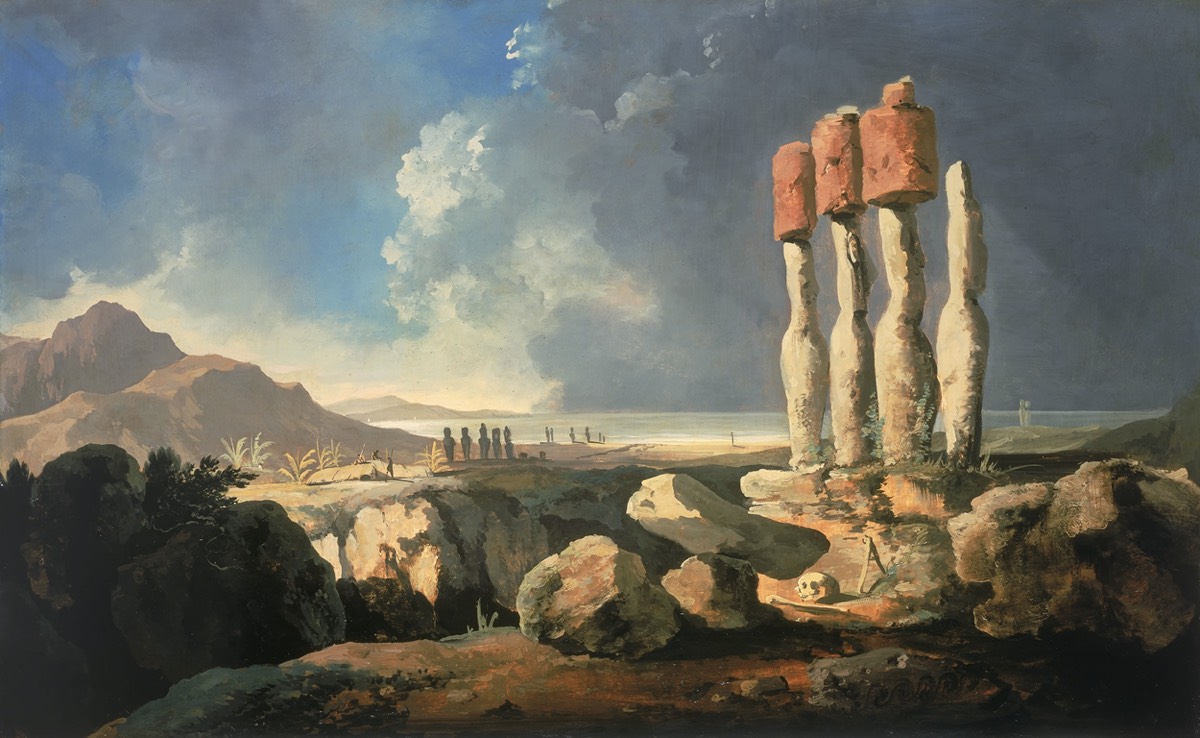
Enlarge/A View of the Monuments of Easter Island, Rapanui, circa 1775–1776 by William Hodges.
National Maritime Museum/Public domain
Lipo acknowledges that some critics have suggested his team cherry-picked its radiocarbon dating, which he dismisses as “simply baloney and misinformed thinking.” According to Lipo, some radiocarbon samples can be biased due to issues with “old carbon”: that is, the samples were taken from chunks of burned wood or charcoal, for instance. “Some parts of trees can be far older than others due to the fact that they grew when the tree was just starting,” he said, which can skew radiocarbon dating results.
So he and his team filtered their radiocarbon samples to just those they were confident related to human occupation and human-related events, meaning they analyzed a smaller subset of all the available ages—not an unusual strategy. And the results for colonization estimates are about the same as before.
Other critics have insisted that there must be a period of time that predates the earliest radiocarbon age that anyone has yet found. “This is an argument based on the lack of evidence—i.e., that something happened for which we will never have a record,” said Lipo. “As scientists, our strategy has been to explain the evidence we find, which means explaining the archaeological record (and the radiocarbon ages) that we have available. Speculating something that is inherently unknowable and invisible is a matter of faith rather than science.”
In addition, because of the island’s small size, Lipo says that human impact would have been “pretty much instantaneous.” So “unless people got to the island and hid in a single cave for centuries, we would have evidence to show their impact,” he added.
On the other end of the chronology, Lipo says his team has seen less push back. “Others are starting to demonstrate that ahu construction, moai carving, and other activities continued not only up until European arrival in 1722 but also past that point in time,” he said. “The entire notion that all of the activity related to the construction and use of monumental architecture ceased at some point in the late 17th century simply has no empirical basis.”
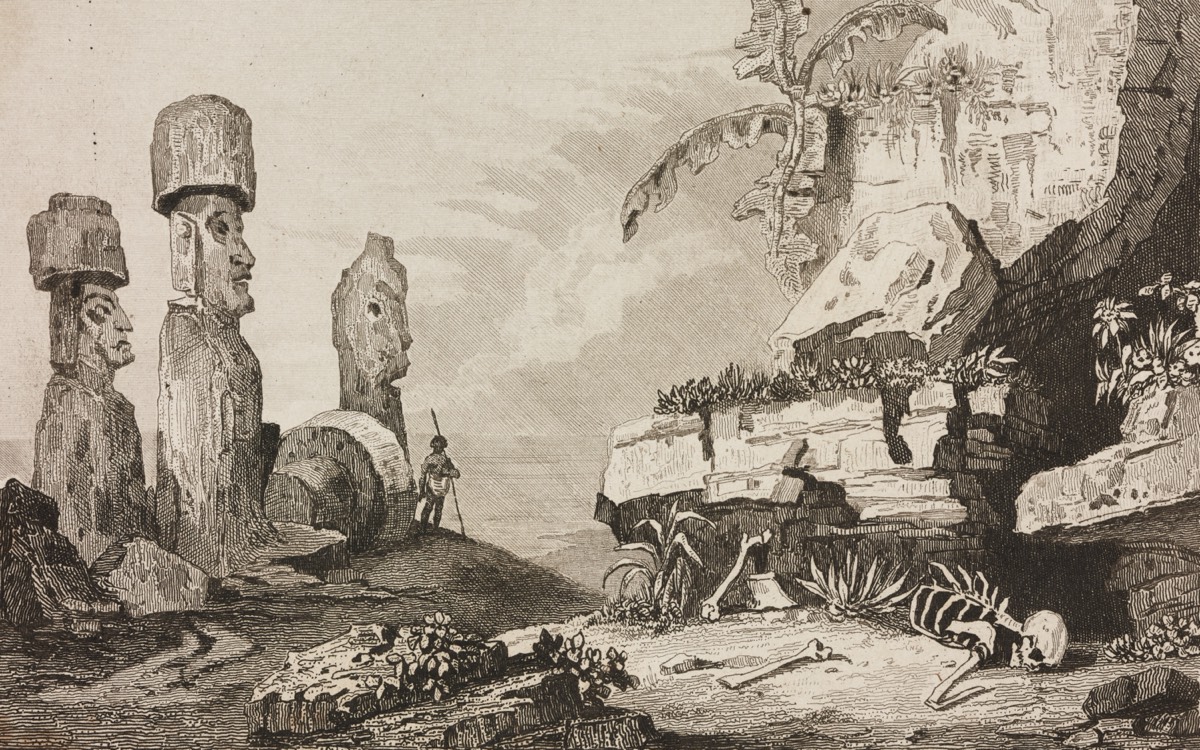
De Agostini Picture Library Contributor/Getty Images
As for Tilburg’s “straw man,” accusation, Lipo isn’t having it. “Calling something a ‘straw man’ hypothesis is one way of changing one’s narrative to say that ‘we have been saying that all along,'” he said. “It’s a specious statement and entirely misleading.” He counter-argues that Diamond’s “evidence” for the collapse argument was quite specific: the arrival of people on the island as early as 700 CE, an “ecological paradise” that existed when humans arrived, massive population sizes (up to 30,000), evidence of erosion, overfishing, widespread group-level warfare, and cannibalism.
“Our work has consisted of just examining the archaeological evidence that should be apparent to support his claims,” said Lipo. “We have simply a lack of anything remotely like what Diamond has said. Instead, we have learned that his reasoning is based on a deeply flawed misunderstanding of the historical record of the island (particularly the impact of post-European conditions) as well as poor assumptions about human behavior in general.”
At the moment, field work is not possible given the ongoing global pandemic. But Lipo and his colleagues plan to continue their studies of Easter Island, testing hypotheses with data generated from the record through additional fieldwork, remote sensing, and artifact analysis. According to Lipo, they will be expanding their analyses to focus more on explaining why the communities on Rapa Nui worked together so consistently to create the island’s spectacular architecture.
“Diamond (and others) tend to cast statue construction as just a ‘cultural’ thing that got out of control,” said Lipo. “But we haven’t found that answer to be very satisfying. Why Rapa Nui and not elsewhere across the Pacific? Why do it in the first place, and then why keep doing it over and over? Figuring this out is essential if we are really going to solve the ‘mystery’ of Easter Island.”
One Zoom to rule them all: Lord of the Rings cast reunites to share memories
[embedded content]
One Zoom to rule them all
For the first time in a long while, every actor who played a member of The Lord of the Rings’ fellowship reunited (along with other former cast members) to discuss their memories of shooting the hugely popular 2000s films, do line readings, and crack jokes. The 50-minute reunion was published on YouTube yesterday.
It’s part of a series hosted by actor Josh Gad, each episode of which is a reunion via Zoom meeting to raise money for a charity that is working on some aspect of COVID-19 relief. At the time of this writing, this particular video has raised just over $83,000 for No Kid Hungry.
Much of the Zoom chat is staged and heavily edited, but there are some good moments and interesting insights to be found for fans of the film trilogy.
Some of it retreads things dedicated fans already knew—for example, that Viggo Mortensen joined the cast as Aragorn after production had already started. (A younger, Irish actor named Stuart Townsend was originally cast, but he “didn’t work out,” according to director Peter Jackson.) But even those who watched all the behind-the-scenes videos on the DVD releases and the like will probably learn a new thing or two.
As cast members joined one by one via Zoom dial-in, Gad asked questions about casting, behind-the-scenes stories, the writing process and adapting from Tolkien, and more. Starting around 25 minutes in, the conversation mostly centers around cast members doing readings of famous scenes from the movies together.
A bit later, composer Howard Shore joins to briefly discuss his work on the films, and New Zealand film director Taika Waititi dials in to ask Lord of the Rings trivia questions. The call concluded with Gad asking each cast member what the Lord of the Rings means to them and with Pippin actor Billy Boyd singing his character’s song from The Return of the King.
The video is clearly meant as a chance to enjoy some positivity in difficult times, and it’s worth a watch for hardcore fans of the franchise. Since it’s so lengthy, here are some timestamps for highlights we appreciated:
6:20: Ian McKellan enters with a rousing performance
9:10: What it was like to adapt Tolkien as a writer
10:40: How Viggo Mortensen was cast amid a crisis with the studio
14:40: Andy Serkis shares stories about playing Gollum/Smeagol
19:50: Sean Astin talks about playing GoldenEye with Sean Bean, who is in the movie GoldenEye
24:20: Karl Urban discusses his first day on the Helm’s Deep set
25:00: The cast begins reciting scenes from the movie; Sir Ian McKellan discusses his first and last scenes shot on set
25:47: Various cast members don props they kept from the shoot over the years
31:10: The cast talks about how hard it was to learn Elvish
32:48: Everything related to Boromir’s Mordor meme
37:40: Howard Shore and Peter Jackson discuss Shore’s work scoring the films
39:50: Taika Waititi asks questions
42:55: The cast shares what The Lord of the Rings means to each of them
46:20: Billy Boyd sings Pippin’s song from The Return of the King
Good podcast vibes for the nerdy set: Our recent faves in science, research
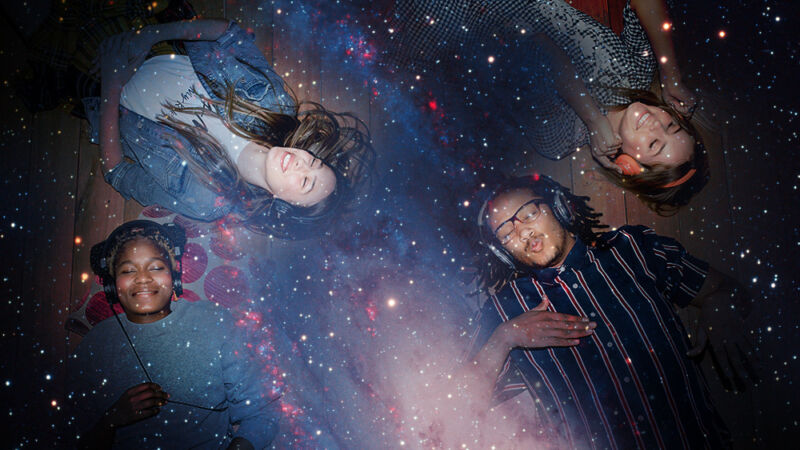
Enlarge/ Ars’ creative director Aurich Lawson describes this image as: “good vibes, friends, and listening to the reaches of space.” We like to think that fits well with our latest podcast recommendations.
In some ways, podcasts are among the most quarantine-proof forms of entertainment right now. Maybe some bigger hosts have been forced to move their microphones and wall padding to a home office, or they’re now hiding in closets for better sound quality (but not as an anxious reaction to terrifying and confusing news headlines).
But that doesn’t mean all podcasts currently in production are a perfect fit for a nerd’s listening diet, whether because they’re too flippant or too doom-and-gloom. In my case, at least, I seek a mix of emotional support, comfort, and normalcy in my regular podcast library. Hence, I’m recommending the five podcasts below as my favorites if you’re looking for that much-needed connection to the outside world. (These are in addition to other podcasts I’ve previously recommended at Ars.)
My latest selections tell uplifting stories; they feature friends talking about things they love; and while they’ve had to adapt to keep their hosts safe from COVID-19, they’ve held onto the joy and optimism that drew me to them in the first place. All of these podcasts have new, regularly updated episodes in common, and all of them revolve around research and science.
A Way with Words
Let’s start with a podcast that literally helps me get out of bed. A Way with Words is an upbeat call-in show about how people use language. Hosts Grant Barrett and Martha Barnette answer questions from listeners across North America about odd words and phrases. Callers can be anyone from any background, from recent immigrants looking for a better grasp on the nuances of English prepositions, to a child pondering the distinction between “barely” and “nearly,” to a person from one state who just moved to another and discovered that nobody in their new hometown knows a phrase they grew up with. “They looked at me like I had two heads” is a common sentiment among A Way with Words callers, yet Grant and Martha expertly dispel that feeling of alienation with good humor and meticulously researched facts about the regional distribution of words.
Between callers, Grant and Martha trade fun language facts they’ve recently learned. These include a recent story about Hungarian popular humor centered around the “aggressive piglet joke” and a conversation about what members of hobbyist groups call themselves, including “AFoL” for an Adult Fan of Lego. They also review books, give occasional writing advice, and solve brainteasers presented by co-host John Chaneski. A Way with Words overflows with get-up-and-go morning radio energy, and waking up on Monday morning with a new episode (or a rerun from its extensive archive) on my phone to accompany me through my day is always a treat.
Lexitecture
Like A Way with Words, Lexitecture is full of deep dives into the complicated histories of words and phrases, albeit with arguably a more focused approach. Its hosts, longtime friends Ryan and Amy, each present one word per episode that’s been on their minds lately, along with what they’ve learned about it from the Oxford English Dictionary, Etymonline, and more specialized linguistic resources. They follow their chosen words on meandering historical journeys, puzzling out the stories of how the words’ meanings have changed since being introduced to English.
The best moments in Lexitecture are when Amy and Ryan discover that their words are distant etymological cousins, or discover how their own distinct linguistic experiences (Ryan is Canadian; Amy is Scottish) affect their expectations of a word’s history, or marvel at how the juxtaposition of two independently chosen words create a perfect episode title. This includes recent episodes “Inertia Device” (in which we learn that a “device” was originally a thing that was devised) and “Swear Method” (which gives us a hilarious title in addition to the fascinating story of how “swear” evolved from a word associated with making promises to one associated with taboo words).
Lexitecture invites fans to very seriously engage with the hosts, whether by inviting them to respond to episodes on social media or asking them to suggest new words for the occasional Listener Wordstravaganza. I appreciate that bold stance toward their rapport with fans, especially right now.
99% Invisible
99% Invisible is a long-running Radiotopia podcast about the design of everyday things and cultural artifacts, from the history of toilet paper and department-store mannequins to the architecture of shade and the economics of chili peppers. Host Roman Mars and a rotating cast of writers and producers explore the subtle details of design choices that listeners may never have noticed before, as well as the historical motivations and social implications of those choices. This is occasionally a heavier podcast, dealing as it does with issues of social and economic inequality related to design, as in their recent episode on the effects of COVID-19 on urban homeless communities. But on the whole, it’s a great listen for moments when you need something to focus on.
Recent 99% Invisible episodes have dealt with issues related to the pandemic, but the podcast has also just begun a second season of its “Articles of Interest” miniseries, in which producer Avery Trufelman investigates the history of fashion design. The show also has a new book, The 99% Invisible City, available for preorder.
Supermassive
Is news from Earth getting depressing? Let’s learn about cool stuff in space instead. (You know, when you’re not reading or watching Ars Technica’s own coverage of the topic.)
In the Royal Astronomical Society’s Supermassive Podcast, which was launched earlier this year to celebrate the 200th anniversary of the founding of the RAS, science journalist Izzie Clarke and Oxford astrophysicist Becky Smethurst discuss astronomy topics from the weather in space (including which planets besides Earth have auroras) to accessible explanations of Einstein’s theory of relativity. In between, they interview other space scientists about their research and let Northern Hemisphere viewers know about exciting things they can see in their own night skies, including the recent Lyrid meteor shower. This month’s episode is about exoplanets.
Sidedoor
If you want an escape from the everyday that doesn’t go quite as far as deep space, try the Smithsonian Institution’s Sidedoor. Host Lizzie Peabody takes listeners behind the scenes of the Smithsonian’s museums, using exhibits and interviewing curators to tell gripping tales of science and history. Standout episodes cover the history of American homebrewed beer, the Apollo 12 mission (released on Apollo 12’s 50th anniversary), and the awe-inspiring migration of monarch butterflies. If you like science and history podcasts, you will fall in love with Sidedoor.
Podcasts are a wonderful way to stay motivated and keep yourself company in a scary and frustrating world. We’d love to hear what your favorite episodes of these podcasts are, and what other podcasts are helping you keep going.
https://arstechnica.com/?p=1679856
Dearth of women in classic Hollywood was result of studio system, study finds
Enlarge/ Olivia de Havilland—pictured here as Melanie Hamliton in the 1939 Oscar-Winning film Gone with the Wind—successfully sued Warner Bros. in 1943 to free herself from her studio contract. The groundbreaking lawsuit contributed to the breakup of the Hollywood studio system.
YouTube/MGM
The so-called Golden Age of Hollywood produced some of the most memorable films ever made, from 1927’s The Jazz Singer to Gone With the Wind (1939) and Citizen Kane (1941). But it wasn’t so golden for women in the film industry, according to a recent paper published in PLOS One that analyzed a century’s worth of data and concluded that the rise of the infamous studio system produced severe gender inequality. Female representation started rising again in the 1950s, after two pivotal lawsuits effectively broke the studios’ stranglehold on the industry.
Lead author Luis Amaral, of Northwestern University, is a physicist by training, specializing in the study of complex systems. This latest work builds on a 2015 study that he co-authored, examining correlations between production budget, box office gross, and total number of user votes for films on the Internet Movie Database (IMDB). That study concluded that the total number of IMDB votes was a strong indicator of a given film’s prominence or notability.
Three years ago, co-author Murielle Dunande, then a high school student spending her summer break in Amaral’s lab, proposed a study of the representation of women in the movies. Initially, she focused on films in the 1960s, but Amaral thought it would be interesting to go back to the birth of the film industry to better understand the historical origins of the gender disparity.
Amaral et al. used data from IMDB, and focused on US films. The IMDB data proved as good, if not better, than the data collected in the American Film Institute Archive, generally considered the gold standard for such records. All told, they analyzed 26,000 movies produced between 1910 and 2010, across all genres (Westerns, musicals, comedy, horror, fantasy, science fiction, action/adventure, romance, etc.), specifically measuring how many women worked in four capacities: as actors, directors, screenwriters, or producers.
Enlarge/ Historical trends of gender imbalance in the U.S. movie industry.
Amaral et al, PLOS ONE 2020 (CC BY)
The resulting graphs show a sharp U-shaped pattern, whereby roles for women increased in the first ten years of the 100-year period, and then sharply dropped after 1920. From 1910 to 1920, women accounted for 40 percent of casts, wrote 20 percent of the movies, and produced and directed 5 percent. By 1930, in just ten years, women in casts had dropped by half, and the the number of women producing and directing was nearly zero.
Female representation didn’t start rising until 1950, steadily increasing through 2010. “This is astonishing,” said Amaral. “These things do not happen by accident. They happen because someone is deciding to do things in that way.”
The researchers also factored in as many other variables that they could think of that might have influenced those trends: female representation in the workforce, growth of the industry, GDP growth, the popularity of certain genres, and so forth. “None of them had any impact,” said Amaral. “The things that had an impact on what we saw was changing concentration in the industry, and whether the producers and directors were male or female.”
The pattern they found in the data reminded Amaral of what had happened in the software industry, where women were far more common in the early 1980s, before the industry consolidated and became dominated by just a few players, most notably Microsoft and Apple. In fact, women have a long history working as wartime code-breakers and computer scientists—including Grace Hopper and Margaret Hamilton, among many others—arguably running all the way back to Ada Lovelace.
“It drives me crazy,” Amaral told Ars. “So many people have a very poor knowledge of history, So they make statements like, ‘Oh, all the great computer scientists are men.’ No, they aren’t. There were a lot of women before. So how can you say that? Are you ignorant or dishonest? But that argument never seems to go away.”
Enlarge/ A Colossus Mark 2 computer being operated by Dorothy Du Boisson (left) and Elsie Booker in 1943.
Wikimedia Commons/Public domain
Amaral had long pondered the possibility of looking at gender imbalance in a field where arguments about innate ability or natural interest, based on longstanding cultural stereotypes, would (or at least should) be irrelevant. The film industry seemed like a good candidate, since women are generally considered to be interested in the arts, acting, singing, dancing, and the like. “If there is an interest deficit it’s on the side of men,” said Amaral. There’s no lack of talent, either; it’s easy to point to highly accomplished and prominent women in film. So one would expect there to be gender parity, and yet, there is not.
According to Amaral, the US film industry experienced a boom after World War I, because there was no longer much competition from Europe. Those with deeper pockets, and/or better access to capital, began buying other studios, not to mention distribution companies and movie theaters, resulting in a vertical integration where the major studios controlled every aspect of the business. “You made the movies, you distributed the movies, you owned the theaters where the movies were shown,” said Amaral. “So if you wanted to kick out competitors, it was very easy. You just refused to distribute or show their movies.”
Once power became concentrated in a few studios, female representation declined sharply, according to Amaral. “As the studio system lasted, more and more movies were being produced by fewer and fewer players, and these fewer players had more control over everything,” he said. Women received fewer jobs, since male producers hired male directors and male writers.
“There is a connection between increased concentration of power and decreased participation of women.”
Exactly how the studio system foundered is a complicated question, but it’s generally agreed that there were two especially pivotal events that contributed to its downfall. The first was a 1943 lawsuit brought by actress Olivia de Havilland against Warner Bros., seeking to be released from her contract. Bette Davis had mounted a similar legal challenge against Warner Bros. in 1937 and lost. But de Havilland prevailed, resulting in what is still colloquially known as the De Havilland Law in California (Labor Code Section 2855). Although the actress was essentially blacklisted by the studios in revenge for a couple of years, her sister and fellow actress Joan Fontaine once remarked, “Hollywood owes Olivia a great deal.”
Just six years later, the US federal government brought an antitrust lawsuit, known as the Paramount case, arguing that studios shouldn’t be able to both produce and distribute their films and own the theaters in which they were shown. The studios ultimately lost that case when the US Supreme Court ruled against them in May 1948. And once Howard Hughes, who owned a controlling interest in RKO (one of the smaller studios), entered into a consent decree with the federal government to separate the production/distribution and exhibition facets of RKO’s business, the other studios’ counter-arguments fell apart.
“When the studio systems was forced to de-integrate to some extent, many movie stars became producers and directors, and I think that opened the door to greater diversity,” said Amaral. “The legal changes took power away from a handful of men and gave more people the power to start changing the industry.”
He cites the 1980 film 9 to 5 as an example, arguing that it likely would not have been made without Jane Fonda’s star power clout at the time. (Fonda had recently formed her own production company.) In short, “There is a connection between increased concentration of power and decreased participation of women,” said Amaral, adding that the same holds true, a hundredfold, for racial diversity in the film industry.
The Ars verdict is in: Space Force is the best new series of 2020 (so far)
Earlier this week, Ars Senior Space Editor Eric Berger explored the space-tech accuracy of Netflix’s new series Space Force. Now that its first season is in its entirety, the Ars culture section split up the duties of reviewing its fun, humor, and watchability. If you’re looking for a TL;DR: We all like it for different reasons, and we think it’s a sharp comedy in ways Ars readers will both appreciate and be surprised by. We’ve managed to leave everything below mostly spoiler-free, with the exception of a couple of jokes and plot points used to clarify our opinions.
John Malkovich, left, and Steve Carell, right, have a lot of bad news to endure during Space Force‘s first ten-episode season, now live on Netflix.
Carell’s General Mark Naird and his wife Maggie (Lisa Kudrow) celebrate his long-awaited promotion.
Mark’s chief rival is General Kick Grabaston (Noah Emmerich).
Jane Lynch plays the Chief of Naval Operations. Never acknowledge her gender.
Malkovich steals the show as Dr. Adrian Mallory.
Naird’s secretary, Brad (Don Lake), is just a one-star general.
Ben Schwarz plays obnoxious “social media manager” F. Tony Scarapiducci.
Helicopter pilot Angela Ali (Tawny Newsome) aspires to head the first space mission.
A preliminary test does not go well.
Ginger Gonzaga does a dead-on AOC impression as Congresswoman Anabela Ysidro-Campos.
R.I.P. Fred Willard, who plays Fred Naird, Mark’s father.
Mark helps his daughter Erin (Diana Silvers) with her trig homework.
Onward, Space Force!
Returning to TV comedy for the first time since The Office wrapped seven years ago, Steve Carell plays a general assigned the unenviable task of founding a new military branch in the new Netflix comedy series Space Force. And the Ars staff verdict is in: the series is a winner, eminently bingeable, and our favorite new show of 2020 so far.
Created by Carell and Greg Daniels (who also created Parks and Recreation and the new comedy series Upload), Space Force was inspired in part by the Trump administration’s announcement that it would establish a national Space Force. The impressive cast also includes John Malkovich (The New Pope), Ben Schwartz (Jean-Ralphio from Parks and Recreation), Jimmy O. Yang (Silicon Valley, Crazy Rich Asians), Noah Emmerich (The Americans), Lisa Kudrow (Friends), and Jane Lynch (Glee, Marvelous Mrs. Maisel), among others.
Carell plays four-star general Mark Naird, a decorated pilot with dreams of running the Air Force. But his dreams for promotion are dashed when he is tapped instead to lead the newly formed sixth branch of the US Armed Forces: Space Force. Ever the good soldier, Mark uproots his family and moves to a remote base in Colorado where he and a colorful team of scientists and aspiring “Spacemen” struggle to meet the White House insistence on getting American boots on the Moon (again) by 2024, to achieve total space dominance.
Real stuff, real straightforward comedy
Part of what I, a Scrantonite, loved about The Office is how it mined comedy from the mundanity of everyday life. And part of what I love about Space Force is that Greg Daniels seems to have applied a lesson from those Dunder Mifflin days. In this show, many (many) laughs come from the absurdity of our current moment being played off as mundane.
The pilot alone contains an astonishing amount of this dynamic, as Daniels has plucked genuine details from NASA, private space, and the current administration and just plopped it into the script—no punchline commentary needed. (The show is very much not Veep and not interested in politically conscious comedy; you’ll notice someone in particular is only referred to as POTUS.) Mark Naird (Carell) disses his four-star general rival Kick Grabaston (Noah Emmerich) by referencing bloated government contract bidding. He has to clarify his passionate “Boots on the Moon” recruitment pitch by noting he means American feet in boots, “can’t be certain where the boots are made—could be Mexico, could be Portugal.” And at the meeting that kickstarts the series, the secretary of defense tells the assembled Joint Chief leaders the info they’re about to receive will be tweeted within the next five minutes.
The most on-the-nose political parody this show offers comes from an AOC-inspired congresswoman focused on cutting down overspending, but Space Force largely doesn’t want to hammer any one particular person or group in DC. Instead, Daniels and co. use the real world’s most unreal details—an insistence on reaching the Moon by 2024, the struggle to brand Space Force from uniforms to terminology (“Air Force has Airmen, Space Force has Spacemen—nothing comical about it,” Naird says)—to ground the absurdity of this office place and these characters.
Of course, it makes sense that this Space Force would need a dedicated social media pro who can explain to Naird how to dunk on fast food brands on Twitter. And naturally there’s an assigned Russian Cosmonauts representative to help forge a better working relationship between these two “friendly” space collaborators (“Your president has asked for good working relations between the US and Russia,” Yuri (Alex Sparrow) tells Naird. “C’mon, we’re not China here?”).
As Ars’ Senior Space Editor Eric Berger hinted earlier this week, perhaps the best (and saddest) realization of this “real detail as comedic straight man” ethos is John Malkovich’s Dr. Adrian Mallory, chief scientist for Space Force. Again and again, he deadpans scientific advice and analysis for the various situations and decisions facing Space Force, and he’s almost universally dismissed initially. “As a scientist you have a loyalty to reason, which makes you a little untrustworthy,” Naird tells him. Clearly, the world of Space Force had reason to march for science, too.
Without any spoilers, Naird and the Space Force do occasionally come to the light and recognize the value in rigorously informed and researched science and in evidence-based decision-making. Given how much this show mines out of facts, I suppose the writers’ room wanted to remind us the most fun new show of 2020 is still, in the end, fiction.
The resulting series doesn’t waste time forcing those expectations to drop and give 20. Instead of a multi-camera, mockumentary format that hinges on cringe, Space Force pulls its cameras back in dramatic fashion and tells different kinds of comedy stories: about family, bureaucracy, and overcoming the odds.
One Space Force quality you’ll recognize from a series like The Office is its focus on bumbling fools, to which I say, big whoop. That’s like being surprised when a new romantic partner tells you that they, too, like pizza. Then again, Carell’s latest bumbling fool lands somewhere that, on paper, sounds like a middle manager in Scranton, Pennsylvania. General Mark Naird has been appointed to lead an upstart, lower-rung US military division, and while the series is gracious enough to give his division a one-lower punching bag for comedy’s sake, he’s otherwise set up to be the under-equipped dope, always chasing something that resembles success.
Space Force spreads its supporting cast out quite differently, which gives Carell a little more room to work with as a believable military leader. The series’ other major dopes, including an obnoxious “social media manager” (Ben Schwarz), a shameless Russian spy (Alex Sparrow, Lifetime’s Unreal), and an all-but-useless secretary (Don Lake, Best in Show), are firm reminders that Naird has gotten this far in part because of his endless well of patience on the way to the top.
But their comic relief pales compared to Naird’s required work alongside legitimately principled and invested people, including a lead engineer who has the timing and input of your average Ars reader (Jimmy O. Yang), a young captain who is equal parts eager-to-please and over-her-head (Tawny Newsome, Brockmire), and the scene-stealing John Malkovich as Dr. Adrian Mallory. These cast members do a great job reminding Naird about the logical and reasonable ideas that audience members might yell at the screen while he otherwise takes a brash, brute-force approach to putting more Americans on the Moon.
Without a fake documentary crew to acknowledge and break the fourth wall with, Carell’s comedy chops go in a different direction: the self-deprecating genius of Bob Newhart. Carell’s general stews in his mistakes. He lets long pauses pass while the reality of his blunders sets in, before offering “wait… wait… now” kinds of punchlines (sometimes as whispers, sometimes as screams, always pitch-perfect). And Malkovich is equipped to play along with these pauses, sometimes killing with kindness. When a reporter asks Naird what makes their working relationship function, Naird replies, “Trust. [pause] And mutual respect.” Mallory waits a beat, then adds, “Certainly, trust,” with a gentle nod.
Newhart’s comedy stylings always felt like an odd fit for his TV era’s constant laugh tracks, so it’s delightful to see his model of dry, deadpan comedy land in a series that makes sense for his perspective: optimism and persistence through the natural stumbles of life… just, you know, cranked up to 11 when lives, budgets, and chimpanzees are on the line.
Sony’s painfully slow drip of PlayStation 5 information may finally open wide next week. The game publisher has scheduled a livestreaming event for Thursday, June 4 that will give fans their first peek at PlayStation 5’s upcoming game library.
A blog post from Sony Interactive Entertainment CEO Jim Ryan confirmed that the event will include “a first look at the games you’ll be playing after PlayStation 5 launches this holiday.” Ryan told fans to expect this video presentation to last “a bit more than an hour.”
Even before this June 4 presentation begins at 4pm ET, we have a major question: Will we see any first-party games, the ones that will likely be PlayStation 5 exclusives for some time? Ryan’s blog post didn’t clarify. His description of participating game developers was vague: “The games coming to PS5 represent the best in the industry from innovative studios that span the globe. Studios, both larger and smaller, those newer and those more established, all have been hard at work developing games that will showcase the potential of the hardware.” Sony representatives did not immediately answer our questions about first-party software.
Either way, Sony has been careful to hold back PlayStation 5 software reveals thus far, and we wonder how next week’s major reveal will compare to Microsoft’s own “first look at Xbox Series X games” event went earlier in May. That event revolved around third-party games, many of which were not only newly revealed but almost entirely unanticipated. The Xbox event’s exception, a teased look at Assassin’s Creed Valhalla “gameplay,” wound up looking very little like a playable game.
Not expecting price just yet
Sony’s announcement post acknowledged PlayStation 5’s drip-feed of information thus far, pointing out, “What is a launch without games?” So far, we’ve gotten a look at the console’s new controller, a “deep dive” on the system architecture that included some (but not all) of the system’s tech specs, and a weird CES keynote moment that revealed the console’s logo and nothing else. And Jim Ryan was careful to emphasize that, “rest assured, after next week’s showcase, we will still have much to share with you.” (Our translation: Fans will still have to wait to see the console’s design, price, and release date.)
Whether or not first-party software shows up for the hour-plus event on Thursday, consider this the beginning of a big guessing game. Which third-party game studios will join Sony on their virtual stage, with announcements they’d previously scheduled for the now-canceled E3? Which crazy rumors up until now will come true? What kind of surprises should we expect? And what games will be saved for later, or for other companies’ major streaming-only events, through the rest of the summer (particularly Xbox’s own first-party-focused presentation, which is currently slated for July)?
We’ve only seen a few first-party teases thus far. Sony’s own proclamations about solid state drives previously used the PS4 build of Marvel’s Spider-man to make their point, which seems like a not-so-subtle hint of next-gen Spider-man gaming to come. An advertisement about a racing wheel product earlier this month mentioned an unannounced Gran Turismo 7, which the wheel manufacturer backpedaled on (but didn’t deny that the game may exist).
https://arstechnica.com/?p=1679773
US court grants permission to recover Marconi telegraph from Titanic wreckage
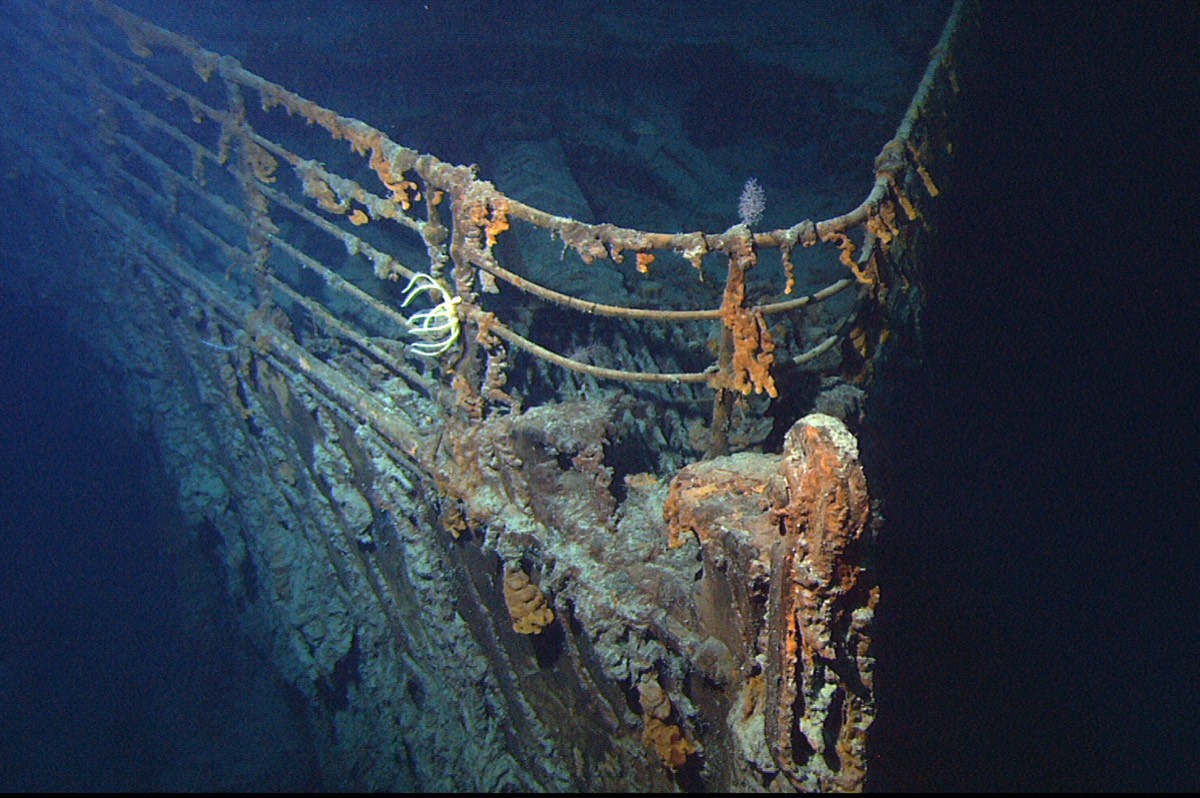
Enlarge/ View of the bow of the RMS Titanic photographed in June 2004 by the ROV Hercules during an expedition returning to the shipwreck.
When RMS Titanic struck an iceberg on April 14, 1912, crew members sent out numerous distress signals to any other ships in the vicinity using what was then a relatively new technology: a Marconi wireless telegraph system. More than 1,500 passengers and crew perished when the ship sank a few hours later. Now, in what is likely to be a controversial decision, a federal judge has approved a salvage operation to retrieve the telegraph from the deteriorating wreckage, The Boston Globe has reported.
Lawyers for the company RMS Titanic Inc.—which owns more than 5,000 artifacts salvaged from the wreck—filed a request in US District Court in Alexandria, Virginia, arguing that the wireless telegraph should be salvaged because the ship’s remains are likely to collapse sometime in the next several years, rendering “the world’s most famous radio” inaccessible. US District Judge Rebecca Beach Smith concurred in her ruling, noting that salvaging the telegraph “will contribute to the legacy left by the indelible loss of the Titanic, those who survived, and those who gave their lives in the sinking.”
However, the National Oceanic and Atmospheric Administration (NOAA) is fiercely opposed to the salvage mission. The agency argues in court documents that the telegraph should be left undisturbed, since it is likely to be surrounded “by the mortal remains of more than 1500 people.” Judge Smith countered in her decision that the proposed expedition meets international requirements: for instance, it is justified on scientific and cultural grounds and has taken into account any potential damage to the wreck.
Titanic is by far the most famous historical shipwreck—even before James Cameron’s blockbuster 1997 film. Something about the tragedy holds an enduring fascination in the popular imagination. The ship set out on her maiden voyage to much fanfare on April 10, 1912. Cameron’s film recreated with impressive detail many of the liner’s luxurious features, including the grand staircase, opulent dining room, and gymnasium.
There was also a wireless telegraph system on board, courtesy of the Marconi International Marine Communication Company, capable of transmitting radio signals over a radius of 350 miles (563 kilometers). Although its purpose was mostly to send so-called “marconigrams” for the ship’s wealthiest first-class passengers, operators Jack Phillips and Harold Bride also handled any messages from other ships—notably weather reports and ice warnings.
Enlarge/ RMS Titanic departing Southampton on April 10, 1912.
Radiotelegraphy was very much still a novelty at the time, although the very first rudimentary telegraph dates back to 1837. That’s when British physicists William F. Cooke and Charles Wheatstone developed a simple electrical switch with a pair of contact wires, controlled by a metal key. Pressing up and down on the key connected or disconnected the electrical circuit, transmitting the signal as a series of electric pulses, according to a predetermined code.
Within two years, their system was being used to send messages between local railway stations as much as 29 kilometers apart. (British police relied on the telegraph to help capture fugitive murderer John Tawell in 1845.) The Cooke-Wheatstone approach was ultimately superseded by the telegraph system created by the American inventor Samuel Morse, who also invented Morse Code.
But the Morse telegraph still required cables to function. The discovery of radio waves—first predicted by James Clerk Maxwell in 1867 and experimentally generated by Heinrich Hertz in 1887—opened up a whole new era for the telegraph. Italian inventor Guglielmo Marconi was among the most noteworthy pioneers, developing practical radio transmitters (initially simple spark-gap transmitters) and receivers in 1894-1895.
Marconi kept improving on his devices, achieving ever-greater distances, and eventually moved to England to continue his work when it failed to attract attention and funding from the Italian government. Marconi successfully sent the first wireless telegraphic signals across the Atlantic Ocean in 1901.
That brings us back to Titanic, which met its doom just four days into the Atlantic crossing, roughly 375 miles (600 kilometers) south of Newfoundland. (In an odd historical twist, Marconi had been offered free passage on Titanic‘s maiden voyage but opted to travel on the Lusitania a few days earlier.) Phillips and Bride had been receiving ice warnings from other ships all day, beginning at 9:00am with reports of “bergs and growlers.” Captain Edward Smith shifted course a bit further south in response, but he didn’t reduce speed.
By late afternoon, the SS Californian had sent messages regarding “much heavy pack ice and great number large icebergs.” Alas, Captain Smith never received those later messages, apparently because an overworked Phillips was frantically trying to catch up on passenger marconigrams after a breakdown of the equipment the day before. In fact, Phillips’ response to the Californian‘s final warning was a frustrated, “Shut up! Shut up! I’m working Cape Race!” (referring to the relay station at Cape Race, Newfoundland). The Californian‘s radio operator then shut the system down for the night and retired to quarters.
Enlarge/ Marconi company receiving equipment for a 5 kilowatt ocean-liner station.
At 11:40pm ship’s time on April 14, Titanic hit that infamous iceberg and began taking on water, flooding five of its 16 watertight compartments, thereby sealing its fate. As the lower compartments of the ship filled with water and the crew rushed to evacuate as many passengers as possible into the limited number of lifeboats before the ship sank, the wireless telegraph operator sent out a series of increasingly frantic Morse Code messages, including what has become the world’s best known distress signal: dot dot dot dash dash dash dot dot dot (SOS). Only around 710 of those on board survived the sinking.
Titanic remained undiscovered at the bottom of the Atlantic Ocean until an expedition led by Jean-Louis Michel and Robert Ballard reached the wreck on September 1, 1985. The ship split apart as it sank, with the bow and stern sections lying roughly one-third of a mile apart. The bow proved to be surprisingly intact, while the stern showed severe structural damage, likely flattened from the impact as it hit the ocean floor. There is a debris field spanning a 5×3-mile area, filled with furniture fragments, dinnerware, shoes and boots, and other personal items.
Enlarge/ An illustration of the RMS Titanic Inc.’s plan to recover the Marconi wireless telegraph equipment from inside the shipwreck.
Court records/RMS Titanic Inc.
Many thousands of surviving artifacts have been salvaged over the years by various groups and have subsequently featured in touring expeditions. But this practice is not without controversy, particularly concerning the salvaging activities of RMS Titanic Inc. There are those who want to recover and preserve as many artifacts as possible for posterity (“conservationists”), while a rival group, including Ballard, considers any disturbance of the wreck to be a disrespectful violation (“protectionists”).
The conservationists have won out in recent years, despite the fact that RMS Titanic Inc. apparently destroyed the ship’s crow’s nest when it retrieved Titanic‘s bell. But the wreck has been deteriorating badly, and not just from accidental damage by salvage operations. (A two-person submersible crashed into the wreck just last year.) Deterioration is also due to iron-munching bacteria feasting on the ship’s hull. So there’s a sense of urgency driving salvage efforts.
This latest ruling is bound to generate more controversy, given that the expedition’s plans call for “surgically” removing the telegraph from the hull, risking further damage. (It’s believed that the telegraph is located in a deck house near the grand staircase.) According to an Associated Press report, the company’s 60-page plan calls for an uncrewed submersible to pass through a skylight. If that doesn’t work, the expedition would cut through the roof, which is already heavily corroded. Then a “suction dredge” will remove any loose silt, and the submersible’s arms will cut through any electrical cords.
Slated for August of this year, the team intends to take the opportunity to evaluate how well the wreckage is holding up, with particular attention on that part of the wreck housing the Marconi telegraph, according to oceanographer and Titanic expert David Gallo. Now retired from the Woods Hole Oceanographic Institution, Gallo is a consultant to RMS Titanic Inc.
“Previously, entering the hull of Titanic, cutting into the hull, or removing items from the hull were strictly prohibited,” Gallo told The Boston Globe. “If we agree that the telegraph is in imminent danger of being lost forever, and if we agree that the telegraph can be extracted surgically without unnecessary damage to the Titanic, we will be prepared to do so.”