Archaeologists may have found William Wallace’s hidden fortress

The 1995 film <em>Braveheart,</em> starring Mel Gibson as the medieval Scottish knight Sir William Wallace, turns 25 this month. Archaeologists think they may have located the hidden fort he used during his battles against the English.
Enlarge / The 1995 film Braveheart, starring Mel Gibson as the medieval Scottish knight Sir William Wallace, turns 25 this month. Archaeologists think they may have located the hidden fort he used during his battles against the English.
Paramount Pictures

William Wallace, the Scottish knight who emerged as a military leader during the First War of Scottish Independence in the late 13th century, has become a household name thanks to Mel Gibson’s blockbuster film Braveheart, which celebrates its 25th anniversary this month. Wallace’s rebellion began with the murder of the High Sheriff of Lanark in May 1297, and he conducted several successful raids before achieving a stunning upset victory against English troops at the Battle of Stirling Bridge. He was particularly known for his strategic use of terrain, and legend holds that he conducted at least one raid from a hidden fort somewhere in the vicinity of Dumfriesshire.

There is mention of the fort in The New Statistical Account of Scotland (published between 1834 and 1845). It said the fort adjoined a glade called Torlinn, commanded “an extensive view of the south,” and was protected on three sides by two branches of a steep ravine and a large ditch. In 1297, Wallace supposedly holed up in the fort with 16 men, “with whom he sallied forth to annoy the English garrison under Greystock and Sir Hugh of Moreland.”

Now Forestry Journal has announced that archaeologists may have discovered the site of Wallace’s hidden fort. Matt Ritchie is an archaeologist with Forestry and Land Scotland (FLS), who has been working with an organization called Skyscape Survey to develop a drone-based method to conduct photogrammetric surveys. This involves using remote-controlled drones to take hundreds of photographs from the air, then stitching them together with the help of point-matching software.

The resulting 3D terrain model is free of scrub and ground vegetation, according to Ritchie, and also has highly refined details about heights. “It’s a fascinating and revealing technique that really begins to open up the landscape, and this seemed like an ideal site to investigate,” said Ritchie of the choice to map the Dumfriesshire site believed to be the location of Wallace’s hidden fort. “There isn’t much evidence on the surface, but the rampart and topography matches the historic description very well. Our new 3D model enables the massive rampart of the fort to really stand out, and the deep gullies of the two linns to be appreciated.”

“It must have been the ‘strong place of defence’ described by the account, the rampart topped with a timber palisade and enclosing timber buildings built to house the soldiers and their horses,” said Ritchie. “But could the fort really have been built by William Wallace and his men? I’d like to think so— and, either way, the survey has added a new chapter to an old story.”

As for the “annoyance” Wallace purportedly organized from the fort, it went well for him and his men:

Having taken some of their horses, Wallace was pursued to Tor-head by Moreland, who, in the encounter which ensued, was slain, with several of his followers. Greystock, enraged at this defeat, and strengthened by fresh supplies from England, immediately proceeded to attack Wallace with 300 men. Overpowered by numbers, he fell back among the hills; and being joined by Sir John Graham of Dundaff with thirty men, and Kirkpatrick, his kinsman, with twenty of his retainers, was overtaken on the north border of the lands of Holehouse, near the bottom of Queensberry, where a general engagement took place. Greystock fell; the victory was complete; and the survivors seeking shelter in the wood from which they had pursued the Scots. Wallace reached Lochmaben before them, and took possession of the castle.

Such military victories proved to be short-lived. Wallace was soundly defeated at the Battle of Falkirk in July 1298 and resigned as Guardian of Scotland soon after.

History (and, to a less accurate extent, Gibson’s film) has recorded Wallace’s tragically gruesome end. He was captured on August 5, 1305 thanks to the betrayal of a loyalist Scottish knight named John de Menteith and was tried for treason. His response: “I could not be a traitor to Edward, for I was never his subject.”

He was found guilty and was condemned to be hanged, drawn, and quartered. In other words, he was stripped naked and dragged behind a horse to the execution site. There, he was hanged, cut loose while still alive, his penis and testicles were cut off, and he was disemboweled. The executioners burned his bowels in front of him, then beheaded Wallace and cut him into four pieces. His head was dipped in tar and placed on a pike as a warning to anyone even contemplating rebelling against the English king.

It was a terrible way to die. Best to focus on Wallace’s few military victories and ruminate on the words engraved on a memorial plaque on a wall of St. Bartholomew’s Hospital, near the execution site: “I tell you the truth. Freedom is what is best. Sons, never live life like slaves.”

https://arstechnica.com/?p=1677480


Naughty Dog uses new Twitter feature to block Last of Us Part II spoilers

Earlier this week, Twitter started rolling out a new feature to “a small % globally” of its users—namely, the ability to limit tweet replies to people tagged in the original tweet. That’s nice for arranging more limited public conversations, but it also has an interesting side effect: if you don’t tag anyone in your tweet, then absolutely no one can reply.

Some lucky Twitter users are already using this new feature for gimmicky jokes, tweeting out intentionally trolly messages with blocked replies and letting followers stew in their inability to answer back. But The Last of Us developer Naughty Dog seems to be using the feature for a more noble purpose: blocking the spread of spoilers for the upcoming The Last of Us Part II.

Ever since major plot spoilers for the game leaked onto the Internet via a debug build earlier this month, every one of Naughty Dog’s social media posts has been bombarded with hundreds of trolls posting references to the footage. Yesterday’s tweet from the company, sharing a promotional image for the game, avoided this fate simply because replies were not allowed by the system (as noted by the message “A conversation between @Naughty_Dog and people they mentioned in this Tweet” appearing at the bottom).

This isn’t totally new territory for Naughty Dog. The company also turned off comments for a YouTube video earlier this month discussing the completion of the game’s development. The official PlayStation YouTube account has similarly disabled comments for every Last of Us Part II-related video posted since the leak, even as commenting has remained active for other new videos on the channel. And Facebook comments for both brands have long been routinely pruned of trolling and other unproductive content.

Still, this is new territory for Twitter, which has long struggled with questions of how stringently it moderates harassment and misinformation while facing “free speech” complaints from critics on the other side. Once this feature is rolled out widely, we imagine Naughty Dog will only be among the first of many brands to limit Twitter replies during times when followers are being “unruly.”

After an early April delay due to coronavirus-related logistical issues, The Last of Us Part II is now set for a June 19 release. https://arstechnica.com/?p=1678200


After watching 50,000 hours of Pac-Man, Nvidia’s AI generated a playable clone

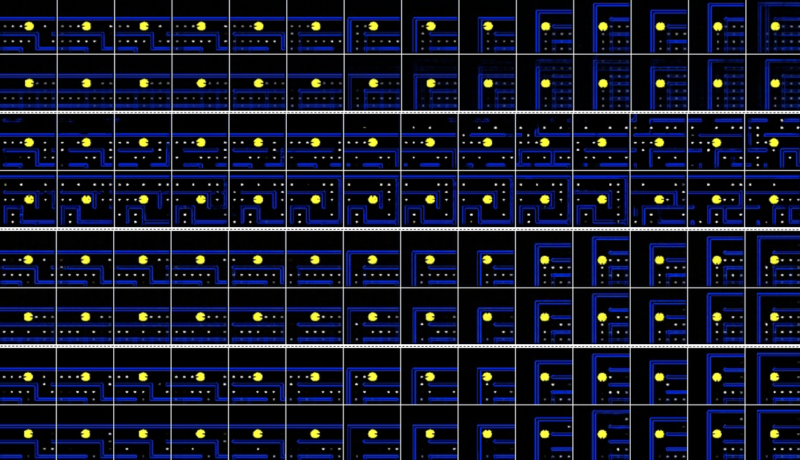
To rebuild <em>Pac-Man</em>, you must watch a lot of <em>Pac-Man</em>.
Enlarge / To rebuild Pac-Man, you must watch a lot of Pac-Man.
Nvidia / Bandai-Namco

You may be familiar with the Infinite Monkey Theorem, an oft-cited (and often incorrectly quoted) claim that thousands of monkeys could bang on thousands of typewriters and eventually produce a work of art equivalent to William Shakespeare. (Yes, Simpsons did it.)

This week, Nvidia confirms that it has taken this theory quite seriously with its own twist: an army of AI routines, dubbed GameGAN (short for “generative adversarial networks”), trained to build a playable video game from scratch. More precisely, they’ve chosen one of the industry’s biggest, most recognizable games, celebrating its 40th anniversary today: Pac-Man.

If you’ve seen other farms of computers trained on existing games, this has usually come in the form of them learning how to play the game in question. After watching thousands of hours of a particular game and tracking the most successful moves and reactions in the course of a versus match, these AI routines can then control games, repeat and juggle thousands of strategies, and battle humans. (Sometimes the results go well for the computers, but not always.)

Nvidia’s latest experiment starts in similar fashion, as its AI research team trained a farm of four computers—each equipped with a Quadro GV100 workstation-grade GPU—on 50,000 hours of Pac-Man gameplay. That gameplay, conveniently enough, was also played by a separate AI. Trained on this footage, the computers in question then turned around and created their own identical-looking clone… with some exceptions.

Watch Pac-Man, write Pac-Man

“Our AI didn’t see any of [Pac-Man‘s] code, just pixels coming out of the game engine,” Nvidia representative Hector Marinez said to Ars Technica. “By watching this, it learned the rules.” Those included specifics like: Pac-Man’s speed, movement abilities, and inability to go through walls; the four ghosts’ movement patterns; what happens when Pac-Man eats a power pellet; and what happens when ghosts touch Pac-Man, super-charged or otherwise.

“Any of us could watch hours of people playing Pac-Man, and from that, you could potentially write your own Pac-Man game, just by observing the rules,” Marinez said. “That’s what this AI has done.”

[embedded content]
GameGAN: PAC-MAN Re-created with AI by NVIDIA

Marinez and the rest of Nvidia’s available researchers did not clarify exactly what coding subroutine drove this AI’s ability to write executable code of its own, nor whether it leaned on existing game engines. (After all, if simply watching hours of Pac-Man could teach me how to code video games by hand, I would have a very different career.) Eventually, they handed us a copy of the associated paper that explains how Nvidia’s research team pulled it off. It’s… complicated. The quickest description is a series of three modules (memory, dynamics engine, and rendering engine) that run as neural networks.

The available researchers also admitted that Nvidia’s existing model suffers from fidelity issues. The below gameplay maxes out at roughly 128×128 pixel resolution, which runs at roughly 50 frames per second, below the series’ 60fps standard.

Nvidia says this playable version of Pac-Man will be made available to the public “this summer,” though the company would not clarify whether it would be distributed as a downloadable executable or served via a restricted cloud-gaming service like Nvidia’s GeForce Now.

In our interview, Nvidia suggested how this technology might some day revolutionize the work pipeline of a video game studio. The representatives didn’t do much to back up their bold claim that “there’s a straight line from Pac-Man to having GameGAN produce games and simulations” of the same quality as modern 3D mega-hits. But the team’s researchers were bullish on AI-driven routines possibly aiding the development of massive virtual worlds as tools to be directed by human staffers.

“We’ve created an AI agent that can learn the rules of the game just by observing it,” one Nvidia representative said. “Before you create a tool that puts content into the game, it needs to understand the rules.” They went on to discuss the wealth of assets (characters, buildings, vehicles) you might expect in a massive open-world game—which need to first be designed and then coded to react realistically to the game world around them. “Think of Grand Theft Auto V. Thousands of artists worked over many years to produce those worlds. Any tools to assist in generating that content would be very valuable.”

Full pretzel fidelity, some day?

But Nvidia didn’t offer a guess or estimate of how much a farm of computers would have to scale up to study and examine real-time gameplay of 3D games, let alone the kinds of videotaped, real-world environment study that the company could use to build smarter, more responsive real-world robots. It needed 50,000 hours to interpret a single Pac-Man maze, and again, that was choked up in terms of fidelity; one researcher admitted that higher resolutions are “still an open challenge for these kinds of networks.” How many equivalent processing hours will be needed to recreate a dated 3D game like Grand Theft Auto: San Andreas, let alone best-in-class 3D worlds?

We’re not the kinds to say it can’t be done. But while the cutting-edge idea has us intrigued, we’re going to reserve our excitement until we see a full-resolution version of Q-Bert get its own GameGAN translation. (Really, even the four-puzzle upgrade of Ms. Pac-Man would be a good start. Maybe in time for its 40th anniversary in 2022?)

https://arstechnica.com/?p=1678052


With theaters still closed, Warner Bros. drops latest Tenet trailer in Fortnite

[embedded content]
John David Washington and Robert Pattinson star in Christopher Nolan’s forthcoming new film, Tenet.

With cinemas shut down all over the world for months, all eyes have turned to July, when two major studio releases are set to debut: Disney’s Mulan (bumped from its original March release), and Director Christopher Nolan’s highly anticipated sci-fi thriller, Tenet. It looks like Warner Bros. is boldly sticking with the latter film’s planned July 17 release date, despite all the pandemic-fueled uncertainty. The studio just dropped a new trailer, which made its debut in an unusual medium: playing every top of the hour in the popular battle royale game Fortnite. 

We know very little about the film, not even the usual carefully crafted official premise, although the film’s title is a palindrome, meaning it reads the same backward and forward—a subtle clue. Nolan has kept any additional details (including character names) tightly under wraps. It stars John David Washington (Ballers, BlacKkKlansman) and Robert Pattinson (Twilight franchise, The Lighthouse). The film also features Kenneth Branagh (Murder on the Orient Express), Michael Caine (Inception, Interstellar), Clémence Poésy (Fleur Delacour in the Harry Potter films), Himesh Patel (Yesterday), Elizabeth Debicki (The Man from U.N.C.L.E.), Martin Donovan (Ant-Man), Aaron Taylor-Johnson (Kick-ass), and Indian film stars Dimple Kapadia and Denzil Smith.

The first trailer dropped last December. As I wrote at the time, “Fresh off his Oscar-nominated World War II drama, Dunkirk, Nolan seems to be returning to his high-concept sci-fi roots with Tenet.” That trailer opened with a shot of two men rappelling up a building, in seeming defiance of the laws of physics. “We all believe we’d run into the burning building,” a voiceover tells us. “But until we feel that heat, we can never know.”

Here’s what we know so far. A man (Washington) undergoes what appears to be a grueling trial to join an elite international team of spies, ending with a choice: give up his colleagues, or die. He chooses death and wakes up in a hospital to learn he has passed the test. The man’s new assignment: prevent World War III and save the world—not from nuclear holocaust, but from “something worse.” He’s given one code word, “tenet,” to open the necessary doors.

If you were hoping for a little more information, count those hopes dashed. This latest trailer has plenty of action and excitement as well as lots of new footage—including a lot more Pattinson—but not much in the way of revelatory details. “He can communicate with the future,” we hear one man say, presumably referring to Washington’s character. But it’s not time travel, exactly—more like “inversion.”

We do learn a little bit more about the strange artifact briefly glimpsed in the first trailer. When Washington shoots at it, the bullets are absorbed. “You’re not shooting the bullet—you’re catching it,” Poésy’s scientist tells him. There are people in the future who need “tenet,” we are told, and it looks like they might be saved “in the here and now” by reversing the flow of time. But there are bound to be some mind-boggling consequences to doing that. All in all, it looks very Christopher Nolan, and here’s hoping enough theaters reopen in time for its release.

Tenet is still scheduled to hit theaters on July 17, 2020—coronavirus willing.

Listing image by YouTube/Warner Bros.

https://arstechnica.com/?p=1678071


Charlize Theron is a badass immortal in action-packed The Old Guard trailer

[embedded content]
Charlize Theron stars in the film adaptation of The Old Guard, coming soon to Netflix.

Charlize Theron is one of those actresses whose beauty seems to defy the passage of time, and in The Old Guard, a new blockbuster action movie coming to Netflix, she plays a literal immortal. Just think more mercenary-for-hire than Highlander, although there are likely to be thematic similarities with the latter. The streaming giant seems to be leaning hard into action movies with big-name stars, given this film and last month’s megahit, Extraction, starring Chris Hemsworth.

(Mild spoilers for the comics below.)

Directed by Gina Prince-Bythewood (Love and Basketball), the film is an adaptation of the comic of the same name by Eisner-award-winning author Greg Rucka (Lazarus, Wonder Woman), with art by Leandro Fernández (Deadpool, Punisher: MAX). The main protagonist is Andromache of Scythia, aka Andy, who is trapped in an immortal life for centuries, for some mysterious reason.

Along with a few fellow immortals—including Joe and Nicky, who fought on opposite sides during the Crusades—she takes on high-risk assignments for well-heeled clients over the centuries. As Andy begins training a young, new immortal named Nile, the group faces a new threat in the form of a wealthy businessman who learns of their existence and wants to gain eternal life for himself.

Rucka wrote the screenplay himself, so we can assume the film will do his work justice. Per the official premise:

Forever is harder than it looks. Led by a warrior named Andy (Theron), a covert group of tight-knit mercenaries with a mysterious inability to die have fought to protect the mortal world for centuries. But when the team is recruited to take on an emergency mission and their extraordinary abilities are suddenly exposed, it’s up to Andy and Nile (KiKi Layne, If Beale Street Could Talk), the newest soldier to join their ranks, to help the group eliminate the threat of those who seek to replicate and monetize their power by any means necessary.

The trailer opens with the voice of Andy introducing herself to Nile as the leader of an elite group of fighters (“like you”) with “an extremely rare skill set.” Cut to a scene where Andy and her three companions are mercilessly gunned down by masked soldiers—and rise back up to take revenge. “Let’s just say we’re very hard to kill,” Andy says. Nile proves to be a promising recruit, and her rapid-healing powers develop fast. But are Andy et al. the good guys or the bad guys? “Depends on the century,” Joe (Marwan Kenzari, Murder on the Orient Express) replies.

We see a big board of clips documenting the group’s past exploits throughout history. For instance, we see that Andy saved a young girl in 1918. But immortality doesn’t mean their lives are free of pain: “Just because we keep living doesn’t mean we stop hurting,” Booker (Matthias Schoenaerts, The Danish Girl) ruefully admits.

They also face a different kind of challenge: remaining incognito in the selfie-obsessed 21st century, where everyone documents everything. “Throughout history, we’ve protected this world, fighting in the shadows,” Andy says, as we see her offer to take a photograph for a group of tourists—the better to delete one of their images that captures her in the background. “But it’s nearly impossible to disappear in the world we live in today.”

The film also stars Luca Marinelli (Trust, Martin Eden) as Nicky and Chiwetel Ejiofor (12 Years a Slave, Doctor Strange) as Copley, who seeks to capture the immortals so they can be weaponized. There’s also an appearance by Harry Melling, who played Dudley Dursley in the Harry Potter franchise, although the actor has lost so much weight since then, he’s well-nigh unrecognizable. He seems to be playing an evil scientist on Team Copley: “If we can unlock their genetic code the entire world will be begging us for the key,” he says.

Rucka’s comic ended with a major betrayal and a cliffhanger, and if the film adaptation follows suit, we could be looking at an eventual sequel—especially if Theron proves to be as big of a draw as Hemsworth in Extraction. The Old Guard debuts on Netflix on July 10, 2020.

Listing image by YouTube/Netflix

https://arstechnica.com/?p=1677968


X-rays reveal the key to preserving Edvard Munch’s The Scream

Edvard Munch's 1910 version of <em>The Scream</em> shows signs of degradation. New synchrotron radiation analysis provides a key to its preservation.
Enlarge / Edvard Munch’s 1910 version of The Scream shows signs of degradation. New synchrotron radiation analysis provides a key to its preservation.
Edvard Munch / Aurich Lawson

Edvard Munch’s The Scream is one of the most iconic paintings of the modern era, inspiring silkscreen prints by Andy Warhol, the killer’s mask in the 1996 film Scream, and the appearance of an alien race known as The Silence in Doctor Who, among other pop culture tributes. But the canvas is showing alarming signs of degradation. That damage is not the result of exposure to light, but humidity—specifically, from the breath of museum visitors, perhaps as they lean in to take a closer look at the master’s brushstrokes. That’s the conclusion of a new study in the journal Science Advances by an international team of scientists hailing from Belgium, Italy, the US, and Brazil.

There are actually several versions of The Scream, each unique: two paintings—one painted in 1893, and another version painted around 1910—plus two pastels, a number of lithographic prints, and a handful of drawings and sketches. The inspiration for the painting was a particularly spectacular sunset that the artist witnessed while out for a walk. Munch noted the incident in a January 22, 1892 diary entry:

One evening I was walking along a path, the city was on one side and the fjord below. I felt tired and ill. I stopped and looked out over the fjord—the sun was setting, and the clouds turning blood red. I sensed a scream passing through nature; it seemed to me that I heard the scream. I painted this picture, painted the clouds as actual blood. The color shrieked. This became The Scream.

Some astronomers believe this sunset was likely an after-effect of the 1883 eruption of Mount Krakatoa in Indonesia; reports of similarly intense sunsets were made in several parts of the Western Hemisphere during several months in 1883 and 1884. Other scholars dismiss this notion, arguing that Munch was not known for painting literal renderings of things he had seen. An alternative explanation is that the red skies were the result of nacreous clouds common to that particular latitude. But the spot where Munch most likely witnessed the sunset has been identified: a road overlooking Oslo from the hill of Ekeberg.

The 1893 version of The Scream was stolen from the National Gallery of Norway in Oslo in 1994, where it had been moved to a new gallery as part of the festivities surrounding the 1994 Winter Olympics. (To add insult to injury, the thieves left a note: “Thanks for the poor security.”) The gallery refused to pay the ransom, the thieves were eventually caught, and the painting was recovered a few months later.

In 2004, masked gunmen stole the 1910 version of The Scream from the Munch Museum in Oslo, along with Munch’s Madonna. Although several men were convicted for the crime, the paintings were not recovered until August 2006. Both had suffered minor damage; the Madonna had several small tears, and The Scream showed signs of moisture damage in the lower right-hand corner.

Even before the robbery, however, the canvas had shown signs of degradation. According to the authors of this latest paper, “Munch experimented with the use of diverse binding media (tempera, oil, and pastel) in mixtures with brilliant and bold synthetic pigments… to make ‘colors screaming’ by combinations of brightly saturated contrasting colors and variations in the degree of glossiness of their surfaces.” But these materials also present a challenge for conservationists, since the materials tend to undergo color changes and structural damage due to photochemical reactions.

In the 1910 version of The Scream, for example, the bright yellow paint in the sunset background and the screaming figure’s neck area have shifted to an off-white color, while the thick yellow paint for the lake above the figure’s head is flaking off. That’s why it’s rarely displayed these days, kept safe in a protected storage area with carefully controlled lighting conditions, temperature, and humidity.

In 2010, scientists analyzed the composition of the 1893 and 1910 versions of The Scream and found the pigments used included cadmium yellow, vermillion, ultramarine, and viridian, all common in the 19th century. There have also been multiple studies (using various methods) of degradation of cadmium yellow pigments in particular in paintings by Henri Matisse and Vincent van Gogh. It is Munch’s choice of cadmium yellow that poses the biggest challenge, according to the authors of this latest paper.  

“It turned out that rather than use pure cadmium sulphide as he should have done, apparently he also used a dirty version, a not very clean version that contained chlorides,” co-author Koen Janssens of the University of Antwerp told The Guardian. “I don’t think it was an intentional use. I think he just bought a not very high level of paint. This is 1910 and at that point the chemical industry producing the chemical pigments is there but it doesn’t mean they have the quality control of today.”

Janssens and his colleagues relied on the ID21 beamline at the European Synchrotron Radiation Facility (ESRF) in Grenoble, France, to further examine the paints Munch used. Synchrotron radiation is a thin beam of very high-intensity X-rays generated within a particle accelerator. Electrons are fired into a linear accelerator to boost their speeds and then injected into a storage ring. They zoom through the ring at near-light speed, as a series of magnets bend and focus the electrons. In the process, they give off X-rays, which can then be focused down beamlines. This is useful for analyzing structure because in general, the shorter the wavelength used (and the higher the energy of the light), the finer the details one can image and/or analyze.

“When people breathe, they produce moisture and they exude chlorides.”

The scientists conducted luminescence imaging of the canvas to see where the worst paint degradation was occurring. They were able to do so on site at the museum, thanks to a portable mobile spectroscopic platform. Then they used the ESRF beam line to analyze tiny fragments (microflakes) of paint in Munch’s brushstrokes from those regions, as well as an original tube of cadmium yellow he used. They also analyzed samples of artificially aged paint mockups for control purposes.

The results: “The synchrotron micro-analyses allowed us to pinpoint the main reason that made the painting decline, which is moisture,” said co-author Letizia Monico of the CNR in Italy. “We also found that the impact of light in the paint is minor. I am very pleased that our study could contribute to preserve this famous masterpiece.”

The findings suggest that better control of humidity is the key to preserving the canvas for future generations. “You have to start working with the relative humidity in the museum, or isolate the public from the painting, or painting from the public, let’s say, in a way that the public can appreciate it but they are not breathing on the surface of the painting,” Janssens told The Guardian. “When people breathe, they produce moisture and they exude chlorides, so in general with paintings it is not too good to be close too much to the breath of all the passersby.”

That’s not an issue at the moment, with museums around the world temporarily closed because of the coronavirus pandemic. But the Munch Museum is scheduled to reopen on June 15, and when it does, Janssens et al. advise future visitors to maintain a safe distance. There is no need to reduce light levels any further, since the study showed that light is not the primary culprit for the degradation. But given the ongoing threat moisture poses, the authors recommended that the museum lower the relative humidity a bit below the current 50 percent. Alas, nothing can be done about the water damage in the painting’s bottom-left corner, the result of the robbery.

DOI: Science Advances, 2020. 10.1126/sciadv.aay3514  (About DOIs).

https://arstechnica.com/?p=1677689


G2A confirms stolen game key sales, pays $40,000 to Factorio devs

Floating in a sea of question marks is actually a good look for G2A, given the circumstances.
Enlarge / Floating in a sea of question marks is actually a good look for G2A, given the circumstances.

After years of controversy, gray-market game key marketplace G2A has admitted to what it has long been accused of by angry game developers: profiting from the sale of illegitimate download keys—at least in one specific instance.

In a blog post yesterday, G2A confirmed that 198 copies of Factorio sold on G2A in early 2016 were indeed obtained illegitimately. G2A says it will pay Factorio developer Wube 10 times the “bank-initiated refund costs” it incurred for those fraudulent purchases, or roughly $40,000.

But the discovery and confirmation of the fraudulent keys in this one specific case come only after years of controversy and argument over the role of the marketplace.

A long history of alleged fraud

G2A allows its users to take game keys obtained from outside sources—such as bundles or third-party online stores—and resell them for a price they set themselves. But developers have long said that many of those games’ keys come from purchases made on other platforms with stolen credit cards.

These users then allegedly use G2A to sell those keys for cash (usually at well below the going rate), effectively laundering the purchases before the illicit charges are discovered. While G2A pockets a portion of these illegitimate sales, the original developer is stuck paying for the credit card “chargeback” fees associated with them.

The issue of stolen-key reselling started gaining prominence in the industry in 2016, when indie game developer TinyBuild said it had lost $450,000 in sales to fraudsters abetted by G2A. “Websites like G2A are facilitating a fraud-fueled economy where key resellers are being hit with tons of stolen credit card transactions and these websites are now growing rapidly due to low pricing of game keys,” TinyBuild CEO Alex Nichiporchik wrote at the time.

G2A responded strongly, asking Tiny Build to provide “the list of the keys they deemed without any verification as stolen.” But TinyBuild said it would take “a ton of time on micromanaging this” to separate out all the illicit keys from legitimate keys purchased through bundles and giveaways. And Nichiporchik said he didn’t trust G2A enough to work with them on the case anyway.

“Everybody knows their reputation,” he told Polygon in 2016. “Why would anyone even consider giving them a list of keys to ‘verify’? I believe they’d just resell those keys and make more money off of it.” That reputation was a big part of the reason Gearbox ended its partnership with G2A in 2017.

Vlambeer founder Rami Ismail summed up the general industry consensus around G2A in a 2019 tweet: “If you can’t afford or don’t want to buy our games full-price, please pirate them rather than buying them from a key reseller,” he wrote. “These sites cost us so much potential dev time in customer service, investigating fake key requests, figuring out credit card chargebacks, and more.”

Wube “satisfied with the results”

In the years since TinyBuild’s accusation, G2A has offered a few potential solutions for developers to deal with alleged fraud problems. These include G2A Direct—a program that gives developers additional monitoring capabilities and a 10% cut of each sale—and G2A Pay—a retailer-controlled payment processor that offers “chargeback protection.” But these solutions have gotten little traction with developers who still don’t trust the site and are wary to work with it more closely (and offer it credibility) just to be protected from fraud.

So we come to last year, when G2A made a limited time offer that it said was “[putting] all cards on the table. We will pay developers 10 times the money they lost on chargebacks after their illegally obtained keys were sold on G2A. The idea is simple: developers just need to prove such a thing actually happened on their stores.”

Factorio developer Wube was the only company to take G2A up on that offer, the retailer said. And though G2A initially offered to pay the full costs for a “reputable and independent auditing company” to conduct that investigation, it eventually decided to conduct the investigation itself after none of the auditors it approached “would meet our agreed requirements.”

“Major auditors, as a matter of general policy, are unwilling to communicate the findings of their private audits in public,” G2A said in a statement to Kotaku. “Clearly, it was imperative for both G2A and Wube to make the results of this investigation public. Therefore, in the interests of reaching a resolution as quickly as possible, we offered to conduct the investigation ourselves.”

Wube, for its part, told GamesIndustry.biz that it was happy with the process. “They produced quite a detailed report of the keys, who sold them, what dates and times they were sold,” Wube PR, Community and Support Manager Scott Klonan told the site. “I thought they probably wouldn’t fake it, especially since it’s still over half of the keys we sent. We are satisfied with the results.”

That said, Klonan said going through such a cumbersome audit process was only worth it because of the temporary ten-times multiplier G2A offered for such confirmed fraud last year. “The amount of time it takes and administrative dealings to get this refund, it’s probably not worth the monetary compensation if it was not 10x,” he said.

Wube also owned up to its own role in the fraudulent sales to GI.biz, saying that direct sales through its site in 2016 were less secure than those on other platforms. Since Wube switched to using the Humble Store widget for its direct sales and started restricting its once-prolific key giveaways, Klonan said fraudulent sales on G2A “stopped completely.”

“In the end, contacting G2A is treating a symptom of people stealing keys,” he says. “The best way to combat that is to cut it at the source.”

https://arstechnica.com/?p=1677788


The “Snyder cut” exists: Justice League re-shoot coming to HBO Max in 2021

From hashtag to reality: the "Snyder cut" is coming.
Enlarge / From hashtag to reality: the “Snyder cut” is coming.

After years of fan demands—and then months of rumors and teases—the news is official: the 2017 DC Comics film Justice League is returning as a “director’s cut” in 2021, and the whole campaign will revolve around its original director, Zack Snyder, overhauling and stretching the story and runtime to a whopping four-hour version.

HBO Max, the streaming platform slated to launch next week, confirmed the news by shamelessly employing the oft-used #releasethesnydercut hashtag that DC Comics fans have used for years. The original film hit theaters in November 2017 after its production was halted and overhauled by interim director Joss Whedon, who took over when Snyder left the production due to a family tragedy. Since then, fans have wondered what shape the film might have taken if it were completed by its original director.

A massive Hollywood Reporter article on today’s news confirms that Snyder’s original vision was indeed quite different. His plans for a four-hour behemoth were unsurprisingly squashed by Warner Bros.’s powers that be, and his original rough cut—submitted in January 2017 and close to the 2.5-hour range—was rejected as well. Snyder exited the production shortly after, and Whedon stepped in to direct new filming and put his touch on the production and script.

To clarify our stance on this: we’re still not sure what this so-called legion of fans is smoking (and rarely trust Twitter hashtags as true indicators of fan interest, owing to the platform’s vulnerability to inauthentic actors). As I wrote in November 2017, Whedon’s touch might have been the only saving grace of the otherwise messy film:

I feel bad pointing out certain issues in the film as a comparison [between two directors], buuuut… in some parts of the film, you can clearly see step-in director Joss Whedon applying his non-crappy touch. Conversations between Affleck and Gadot toward the film’s end are among the most touching for either character since the actors started out at DC, and they, like some other good dialogue scenes, have all the hallmarks of a Whedon production, in terms of camera angle, distance, and conversational cadence. Conversely, the film’s all-over-the-map, jumping-between-scenes madness reeks of Snyder’s insipid filmmaking approach.

Curiously, Snyder confirmed to THR that he’s never seen the version that landed in theaters across the globe: “You probably saw one-fourth of what I did.” Momentum began growing over the past year, and the combined forces of WarnerMedia—eager to generate content for its upcoming HBO Max platform and to come up with something doable during a massive Hollywood shutdown—moved forward on a plan to execute Snyder’s original vision for the film. HBO Max will allow the combined companies to launch the film in a possible multipart format, though WarnerMedia wasn’t ready to confirm exactly how the “Snyder cut” will debut just yet or any clearer release estimate than “2021.”

For now, Snyder and his crew are only beginning “talks with post-production houses” to figure out how to stitch together the unshot and unfinished content needed to alter and expand the theatrical version. Conversations with the original cast began in April to figure out if and how they may need to participate in re-shoots of various scenes—meaning, yes, we may all see more “Batfleck” after all, even though Robert Pattinson has since become DC Comics’ official new Batman in terms of the film universe. https://arstechnica.com/?p=1677555


Review: Snowpiercer starts slow and builds to intense cliffhanger finale

Snowpiercer debuted Sunday night on TNT, and Deadline reports more than 3 million viewers tuned in, making it the cable network’s best showing since its adaptation of The Alienist in 2018. Whether those viewers will stick around for all 10 episodes of this first season remains to be seen. This is one of those slow-burn shows that takes a while to build, which could try viewers’ patience. But that patience is rewarded when everything kicks into high gear for the final few episodes, ending on one last cliffhanger twist.

(Mild spoilers below, but no major reveals.)

Snowpiercer is essentially a reboot of the critically acclaimed 2013 film by Oscar-winning director Bong Joon-ho (Parasite), fleshed out into a full-length series. Bong’s film itself was an adaptation of a 1982 French graphic novel Le Transperceneige, about remnants of humanity trying to survive an ice age inside a 1,001-car train. The train is run by a reclusive transportation magnate named Mr. Wilford, who has separated the passengers according to class and has a nefarious plan to ensure life on the train remains sustainable.

The film starred Chris Evans as revolutionary leader Curtis, with Tilda Swinton as second-in-command Minister Mason. Bong shot much of it on a specially constructed set: a train mounted on a giant gyroscopic gimbal, the better to mimic the movements of an actual train. Snowpiercer earned critical raves and went on to gross $86 million worldwide against a roughly $40 million production budget.

TNT’s series is set seven years after the climate catastrophe that produced the ice age. Daveed Diggs (Hamilton, Blindspotting) plays Andre Layton, a prisoner at the tail end of the train who gets caught up in a revolutionary struggle against the imposed social hierarchy abroad Snowpiercer. Jennifer Connelly (Alita: Battle Angel) co-stars as first-class passenger Melanie Cavill, who is the Voice of the Train, responsible for daily public announcements and the train’s smooth operation (both mechanically and socially). The show’s large ensemble cast also includes Alison Wright (The Americans, Castle Rock) as Lilah Anderson, who works in the train’s spa, and Mickey Sumner (The Borgias, and daughter of musician Sting) as brakeman Bess Till, whose recent move to second class to be with her romantic partner is threatened when she starts to question the train’s status quo.

Bong Joon-ho’s film is a juggernaut of almost nonstop action, as the lowest-class passengers revolt and fight their way to the head of the train, with Curtis leading the way. The TV adaptation necessarily takes a more leisurely approach, given S1’s 10 episodes, fleshing out the details of life aboard the train, along with bits of expository backstory. And it introduces an onboard mystery: Layton is tapped to investigate a brutal murder that just might be the work of a serial killer—like a dystopian version of Murder on the Orient Express.

I enjoyed how the series spent time on many of the day-to-day details of life aboard Snowpiercer in all the classes, from dealing with energy limitations and unexpected constraints on food sources to the black-market bartering and drug trade and various interpersonal conflicts among passengers. So-called “Tailies”—the unticketed refugees in the tail of the train—are punished for insubordination by having an arm stuck through a portal into the cold outside until it freezes solid and is shattered off. There’s also a prison car whose occupants are kept in suspension, although the drug used to maintain that state has some serious side effects.

It’s the cast that ultimately makes Snowpiercer work, most notably Jennifer Connelly as Melanie, whose brisk, professional, tightly controlled veneer is gradually stripped away to reveal a woman haunted by personal loss and the hard decisions she’s had to make to keep the train running for seven years. Snowpiercer presents one continuous Trolley Problem, where those in charge must regularly consider sacrificing a few—sometimes quite a few—lives to save everyone else. Needless to say, the first-class passengers rarely have to make those sacrifices.

Equally compelling is Wright’s scheming, manipulative Lilah, who has an unhealthy obsession with the mythic Mr. Wilford and a chilling ruthlessness when it comes to maintaining order. She would like nothing more than to replace Melanie as the Voice of the Train, and she isn’t above exploiting the building unrest to achieve that goal. Summer brings just the right blend of toughness and vulnerability to Bess Till. Diggs has a tougher job making Layton likeable; he’s a bit preachy and self-righteous. But his affection for a young boy named Miles (Jaylin Fletcher), and Miles’ foster mother Josie (Katie McGuinness), softens the character considerably.

The show has a few cons. The obligatory voiceovers before each episode can get annoying, and the dialogue is a bit hackneyed in places. Plus, the murder-mystery subplot isn’t particularly compelling and is mostly an excuse to get Layton out of the tail so he can do a bit of reconnaissance on behalf of the brewing rebellion.

On the whole, however, this is a solid, entertaining series that sets the stage for an even stronger second season. TNT greenlighted a second season before the pilot premiered, hence the cliffhanger finale, although it might be a while before we can continue the story. Production of S2 began last October, and principal photography was nearly complete when the production was forced to shut down in March due to the COVID-19 pandemic.

New episodes of Snowpiercer will air Sunday nights at 9pm ET on TNT.

Listing image by TNT

https://arstechnica.com/?p=1676632


The sprawling, must-read history of Maxis’ former “serious games” division

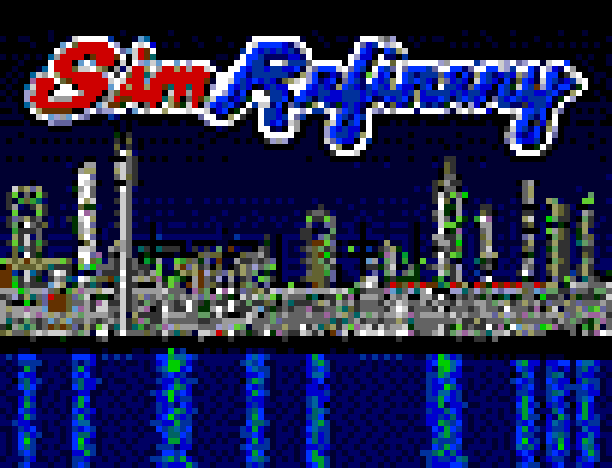
Heavily pixelated screenshot from video game.
Until someone emerges with SimRefinery‘s original code, this ancient title screen—and today’s massive feature about its history—is all Maxis Business Simulations left the world.

At Ars Technica, when we notice multiple staffers go silent at the same time to read another site’s article in its entirety, that flips a rare switch: time to tell our readers to click somewhere other than Ars (perish the thought) and give someone else some much-deserved clicks.

Today’s jaw-dropping, gotta-read-it candidate comes from a rarity in the modern publishing world: a self-published, years-in-the-making report on the history of a major, long-shuttered game studio from the glory days of early ’90s computer games. In other words, it’s our jam.

Specifically, this feature—written and researched by Washington, DC-based reporter, game historian, and librarian Phil “Shadsy” Salvador—covers the life and death of Maxis Business Simulations (MBS), which began life in 1992 as an official division of the game studio behind SimCity. After four years of reporting, Salvador has emerged with insights and quotes from every major player (meaning, yes, SimCity creator Will Wright is here). Crucially, the article includes a wealth of stories and insights gathered from MBS co-founder John Hiles, who passed away in 2016.

The MBS story begins with incredible serendipity. Hiles struggled to make a legitimate computer-driven business out of agent-based modeling as early as the mid-’80s, but his pie-in-the-sky thinking and infectious spirit kept him in search of an ideal partner. He found one in Maxis, whose debut PC game exploded so quickly that its staff struggled with requests from big businesses: they wanted their own SimCity-like games to be used for training and data analysis, and they were willing to pay.

With a handshake, Maxis got to offload a shaky business proposition—as Wright once said, “I know how pathetic [SimCity‘s] simulations are, really, compared to reality”—while Hiles finally got the thing his existing company, Delta Logic, was sorely missing: in a single word, “fun.”

Thus, Maxis acquired and renamed Delta Logic to Maxis Business Simulations, which operated for two years before spinning off to its own company (renamed Thinking Tools Inc.). And Salvador does a brilliant job connecting the throughline of everything relevant here: the rising hunger for PC video games, the mix of curiosity and skepticism applied to computer “simulation” games by larger industries, and the venture capital-driven march toward profits that ultimately doomed the company that MBS eventually became.

Sadly, it also confirms why we have seen so little of MBS/Thinking Tools’ output: because the remaining staffers, having been screwed out of things like a tidy transition to a new company or severance packages, marked the end of Thinking Tools’ existence in late 1998 with a massive bonfire. Every design document, every floppy disk, and every proof of their output went up in flames in Monterey, California. (Our game-archivist brains went into convulsions upon seeing this detail, but then our bureaucracy-hating hearts figuratively poured some gas onto the fire in solidarity.)

Though the above gallery includes examples of how desert-dry Thinking Tools’ software turned out to be, the full, feature-length story is a lot less dry than its subject matter might lead you to believe. Carve some time to check out Salvador’s incredible report, then hop from there to read other deep-dive, software-history content he’s posted at his personal site, Obscuritory. https://arstechnica.com/?p=1677216