Apple battles Ableton Live with new Logic Pro X 10.5 features

Today, Apple announced Logic Pro X 10.5, a major update to its popular digital audio workstation (DAW) for macOS. Key new features include a pro version of Live Loops, a new drum-machine-like tool (Step Sequencer) for making drum beats and other sounds, and some significant updates to the Sampler tool.

Taking a page right out of competing DAW Ableton Live’s book, Live Loops offers a grid-based approach to plotting out loops and samples. Apple also introduced a new feature called Remix FX that allows application of filters in a way that works for live performance. Live performance is something most music producers feel competing DAW Ableton Live excels at, compared to Logic, so this reads as an effort to close that gap.

The Sampler tool has been updated with a new interface and some small new features. The company also offers Quick Sampler here, a tool that lets you pull audio samples from places like the Voice Memos app (and elsewhere) and turn them into playable instruments within Logic.

The new Step Sequencer is a tool “inspired by classic drum machine workflows,” but it’s not just for drum sounds. It allows tweaking velocity, repeat, gate, skip, playback direction, and randomization for the individual components of the composition you’re working on.

All in all, Apple called this “the biggest update” since “the launch of Logic Pro X.” The new features appear intended to bolster Logic Pro X’s competition with other popular DAWs like Ableton Live, which excels at live performance and electronic music production.

Even though Logic has sometimes lagged behind competitors in terms of some use cases like those, Logic’s strengths have long been highly optimized for Mac performance, affordability, a strong user interface, and a particularly strong library of sounds and loops out of the box.

Here are the full release notes from Logic Pro X 10.5:

Live Loops

• Compose music by arranging and triggering cells in a grid using loops, samples, and your recordings
• Perform and capture freeform arrangement ideas into the tracks area
• Add Remix FX to perform creative effects like filters, gates, repeaters, and bitcrusher
• Use Logic Remote on your iPad or iPhone to perform Live Loops and Remix FX using Multi-Touch gestures to trigger several loops or effects simultaneously

Sampler

• Create and edit sophisticated multi-sampled instruments using a drag and drop workflow
• New modern design provides synthesis, mapping, and zone editing in a single window interface
• Integrated zone editor offers detailed control over start, end and loop points
• Mapping editor enables fast and flexible assignment of samples across the keyboard
• Flex Time has been integrated into Sampler allowing sounds to be played at the same length, regardless of pitch
• Auto Sampler automates the process of converting MIDI-enabled hardware and software instruments into Sampler instruments
• Supports all existing EXS24 instruments

Quick Sampler

• Import a single audio file to instantly build a playable sample instrument
• Quick Sampler automatically identifies the root note and optimal loop points and matches your project tempo
• Use Slice mode to chop a vocal or drum sample into multiple slices that can be triggered on a keyboard
• Record live samples using a microphone, external hardware, or from any track or bus

Drum Machine Designer

• Use Drum Machine Designer to build custom drum kits by dragging and organizing samples
• Directly access Quick Sampler or Drum Synth controls on any pad
• Easily assign any instrument or third-party plug-in to a pad
• Perform any sound chromatically to create bass lines or other melodic parts

Step Sequencer

• Build your own beats, melodies and effect automation using an interface inspired by classic drum machine workflows
• Create and edit patterns with discrete control over velocity, repeat, chance, offset, step rate, skip and tie for each row
• Use any patch as a sound source, including custom kits made with Quick Sampler and Drum Machine Designer
• Includes a library of over 150 rhythmic and melodic patterns

More content

• Over 2,500 new loops in a variety of instruments and genres covering modern and classic hip-hop, electro house, reggaeton, future bass, techno, and transition effects
• 17 Live Loops starter grids covering a range of electronic and hip-hop genres
• More than 70 new Drum Machine Designer kits
• Over 1,500 new patches
• Original multi-track project of Billie Eilish “Ocean Eyes”

Additional features

• The Drum Synth plugin generates synthesized kicks, snares, toms, and hi-hats with dedicated sound shaping controls
• Individual or multiple audio files or software instrument regions can be dragged into an empty track header to provide instant options for creating Sampler, Quick Sampler, Drum Machine Designer, or Alchemy instruments
• Multiple additional enhancements and stability improvements

Listing image by Apple

https://arstechnica.com/?p=1675062


Good timing: Jordan Peele’s Twilight Zone S2 trailer drops on Twilight Zone Day

[embedded content]
The Twilight Zone season 2 trailer.

It’s national Twilight Zone Day (no one knows why), and what better way to mark the occasion than with the official trailer for the second season of Jordan Peele’s reboot of The Twilight Zone? We got our first look at still photos a few days ago, and, combined with the trailer, we’re optimistic that Peele can pull off another strong season and do this classic science fiction series proud.

(Some spoilers for S1 below.)

Rod Serling created the original Twilight Zone anthology series for CBS in 1959, and it was an instant hit with viewers. Serling was a fan of both pulp fiction and science fiction, and he combined those passions with a strong interest in social commentary on topics such as nuclear war and McCarthyism. And he loved a good twist ending. The series was successfully revived in the 1980s and again (less successfully) in 2002. There was also a 1983 feature film, notorious because star Vic Morrow and two child actors were killed in a freak helicopter accident during filming.

The first season of Peele’s latest reboot stayed pretty true to the spirit of the original series, including a remake of the classic episode, “Nightmare at 20,000 Feet,” starring Adam Scott, which first aired in 1963 and is based on a short story by sci-fi author and screenwriter Richard Matheson. In fact, the finale was a meta-episode, “Blurryman,” that featured a young screenwriter named Sophie who finds herself inside an iconic 1959 episode (“Time Enough at Last“). She discovers that the “Blurryman” she has been seeing throughout the episode is Serling himself, who leads her through a door into the Twilight Zone.

S1 had its share of darkly morbid delights, with several strong episodes, most notably the heartbreaking “Replay.” And let’s be frank, Peele’s narration as host is better than Serling’s stiff, clipped delivery, for all the latter’s nostalgic charms. In addition to Scott, the all-star cast included Steven Yeun, Greg Kinnear, Kumail Nanjiani, John Cho, Sanaa Lathan, Ginnifer Goodwin, Seth Rogen, Zazie Beetz, John Larroquette, and Tracy Morgan, among others. Nanjiani was nominated for an Emmy for his performance in the pilot episode, “The Comedian.”

The second season will boast its own impressive slate of all-stars anchoring each episode. The roster includes Morena Baccarin, Kylie Bunbury, Jenna Elfman, Ethan Embry, Sky Ferreira, Tavi Gevinson, Topher Grace, Tony Hale, Gillian Jacobs, David Krumholtz, Thomas Lennon, Sophia Macy, Natalie Martinez, Joel McHale, Christopher Meloni, Gretchen Mol, Paula Newsome, Billy Porter, Jimmi Simpson, Jurnee Smollett-Bell, Daniel Sunjata, and Damon Wayans Jr., among others.

According to CBS All Access, “The series’ second season uses introspection and self-exploration to usher viewers into a dimension filled with endless possibilities.” So the trailer opens with an ominous voiceover intoning, “You are not who you appear to be.” There’s a lot of spooky music and a rapid montage of visually striking scenes, with little sense of any coherent narrative—it is an anthology series, after all, and no information has been released yet, other than cast members and titles for the season’s 10 episodes. S2 definitely looks terrific. And the theme of identity and self-exploration comes back in a haunting reprise at the trailer’s end, as we hear a woman say, “I’m not what I started as. Whatever I am, it’s something new.”

The Twilight Zone S2 premieres on CBS All Access June 25, 2020. While CBS released S1 episodes week by week, for S2, the network will drop all the episodes at once.

Listing image by YouTube/CBS All Access

https://arstechnica.com/?p=1674921


When AI takes on Eurovision: Can a computer write a hit song?

Robots are everywhere these days.
Enlarge / Robots are everywhere these days.

Imagine assembling a crack team of musicologists to compose the perfect Eurovision hit, only to end up with a song that crescendos as a robotic voice urges listeners to “kill the government, kill the system.”

That was the experience of a team of Dutch academics who, after an experiment in songwriting using artificial intelligence algorithms, inadvertently created a new musical genre: Eurovision Technofear.

The team—Can AI Kick It—used AI techniques to generate a hit predictor based on the melodies and rhythms of more than 200 classics from the Eurovision Song Contest, an annual celebration of pop music and kitsch. These included Abba’s “Waterloo” (Sweden’s 1974 winner) and Loreen’s “Euphoria” (2012, also Sweden).

But to generate the lyrics for the song “Abuss,” which the team members hoped to enter in the inaugural AI Song Contest this year, they also used a separate AI system—one based on the social-media platform Reddit. It was this that resulted in a rallying cry for a revolution.

Like the notorious Tay chatbot developed by Microsoft in 2016 that started spewing racist and sexist sentiments after being trained on Twitter, the fault lay with the human sources of data, not the algorithms.

“We do not condone these lyrics!” stresses Janne Spijkervet, a student who worked with Can AI Kick It and ran the lyric generator. She says the Dutch team nevertheless decided to keep the anarchist sentiment to show the perils of applying AI even to the relatively risk-free environment of Europop.

An Australian entry has the same sheen of a chart-topping dance hit but with a distorted AI-generated chorus of koalas, kookaburras, and Tasmanian devils.

The use of AI in music composition is now on the cusp of the mainstream as more musicians and songwriters look for tools that inspire different types of music. The AI Song Contest, organized by Dutch broadcaster VPRO, is one of the first events to take the process of using algorithms to compose original music out of academia and avant-garde experimentation and into the commercial world.

The competition is inspired by Eurovision and has gained greater prominence since the cult event, which was due to take place in Rotterdam this month, was cancelled due to the coronavirus pandemic. The European Broadcasting Union, which organizes the 64-year-old contest, has endorsed the computer-based version and will act as a vote supervisor.

The AI version is a much smaller affair, with only 13 entries in its first incarnation (compared with the 41 countries that were due to compete in Rotterdam). However, the quirks of the original contest have come to the fore in the AI world as well. Alongside “Abuss,” which its creators describe as atonal and creepy, sits an Australian entry with the same sheen as a chart-topping dance hit but with a distorted and subliminal AI-generated chorus of koalas, kookaburras, and Tasmanian devils.

Meanwhile, the song “I’ll Marry You, Punk Come,” composed by German team Dadabots x Portrait XO, used seven neural networks in its creation. The resulting piece of music blends lyrics from babble generated from 1950s acapella music with AI-generated death-metal vocal styles and a chromatic bass line spat out of a neural network trained on Bach’s canon.

The contest will be judged along the same lines as the established competition with a public vote tallied against the opinions of a panel of expert judges. Ed Newton-Rex, who founded the British AI compositional startup Jukedeck, is one of them. He explains that the panel will be looking at the process of how machine learning was applied as well as creative uses of algorithms—such as the “koala synth”—and the quality of the song. The judges will also be asked to factor “Eurovisioness” into their thinking, although he admits, “I have no idea what that means.”

VPRO does not expect “billions of people” to tune into the event but says that many Eurovision fans will follow the livestreamed announcement of the winner on May 12. The hope is that the computer version could itself prove a hit and pave the way for AI to influence Eurovision proper through song composition or, over time, robotic performance. “That is my dream,” says Karen Van Dijk, the VPRO producer who came up with the concept.

https://arstechnica.com/?p=1674856


Beyond Netflix and Spotify, what subscriptions are worth keeping in quarantine?

A shift key on this keyboard has been replaced with a red subscribe key.
Enlarge / Would not recommend this keyboard setup given our impulse control.

Two seismic forces combined in the spring of 2020 and caused us all to reevaluate our choices: the COVID-19 pandemic… and the last decade’s slow, inevitable march toward the disappearance of ownership. We no longer own records; we subscribe to Spotify or Apple Music. We don’t purchase DVDs; we pay Netflix, Disney, or Amazon a monthly fee and save some shelf space. Google Stadia would like you to stream games in exchange for a recurring payment. Apple will let you take the same approach to your phone, and it’s not hard to imagine a future where you skip having a car in the garage and instead pay regularly for access to an autonomous chariot that only shows up when you need it. (We can all agree to blame Adobe, which shifted from Creative Suite to Creative Cloud seven years ago this month.)

While there’s never a bad time to assess your monthly subscriptions and trim the fat (read: that magazine your parents once gifted you but… wait, I pay how much annually for Sports Illustrated now?!), entering the third month of sheltering at home feels like an apt moment to potentially save a few bucks. At the same time, comfort of any kind now comes at a premium, and maybe watching your dog rip into a Bark Box will genuinely make you feel better.

There’s a service for almost everything these days (like martial arts films? Try Hi-Yah!), and some feel almost mandatory (a TV/film service like Netflix or Disney+, music streaming from Spotify or Apple). So beyond the obvious, what services remain worth clinging to at the moment?

[embedded content]
Can we interest you in David Attenborough talking about ants? What about light? Maybe the ocean, instead?

Docs for the curious streamer

I’m a big ol’ documentary nerd—so although in theory I subscribe to CuriosityStream ($12/year introductory offer) for the kids, and they do watch it pretty frequently, I’m the biggest consumer in the house by far. The quality of the documentaries varies, but there are tons of them, and these films rotate through the service on a regular basis.

On the top end, you’ll get plenty of nature documentaries voiced over by Sir David Attenborough and their equivalents in space, science, and history. You’ll also get stuff produced by outfits you never heard of, featuring interviews with academics who clearly have no idea what to do with a camera pointed at them. (Even these titles have a charm of their own.) On the bottom end, there are some heavy-on-the-animation shorts that aren’t all that great—but they’re the exceptions, not the rule.

If you’re into British television—particularly older British television—Acorn (~$6/month) is also a good niche buy. My parents watch far more of Acorn than I do, but they absolutely swear by it.
—Jim Salter, Technology Reporter

Here's Vagabon at SXSW in simpler times (2017... though she does have a new Sirius XMU session episode available on demand).
Enlarge / Here’s Vagabon at SXSW in simpler times (2017… though she does have a new Sirius XMU session episode available on demand).
Nathan Mattise

The subscription sound

Ever since my last few years of undergrad, live music has been a staple of my life. I’d travel from Syracuse to every neighboring campus with decent concert bookers and make the trek to New York City a few times a year. And from there, I ended up living (and regularly reviewing concerts) in San Francisco, New Orleans, and Austin. I’ve probably averaged at least one concert a month since 2007, if not a little more. So when SXSW was canceled, losing the chance to see six, seven, eight different bands a day stung.

All of the subscriptions that have been keeping me sane ever since then do it sonically. Music discovery in 2020 remains a hellish experience—a lot of music presses have been slashed or shuttered, music blogs have sputtered, and most digital services seem happy to rely on algorithms that surface more of what you already know and do so in puzzling ways (what do Hurray for the Riff Raff and Angel Olsen have in common, Spotify? Just that they’re acts with women singers?). So although radio isn’t perfect in a post-WOXY world, I find Sirius XM ($8.25/month for the first year) offers enough variety and enough of a human touch to keep pace with my curiosity. Its app can be a bit frustrating—why can I only get the last two episodes of Carles’ short-form audio think pieces on Hipster Runoff Blog Radio?—but if I’m not driving much these days, it’s nice to get that same thoughtfully curated mix on demand at home, too.

To that end, I’d also shout out a “subscription” (or membership, donation, whatever) to local radio. New Orleans’ community radio station, WWOZ, just dug into its archives to put together two weeks of past Jazz Fest performances, including rare and historic sets like Ella Fitzgerald dueting with Stevie Wonder in 1977 or Bruce Springsteen at the first fest post-Katrina. And in Austin, contributing to KUTX comes with the added benefit of supporting the NPR affiliate’s news arm, KUT. Because if I’m stuck home with no SXSW, I’d like to stay on top of how this virus plays out in my neighborhood.
—Nathan Mattise, Features Editor

https://arstechnica.com/?p=1674497


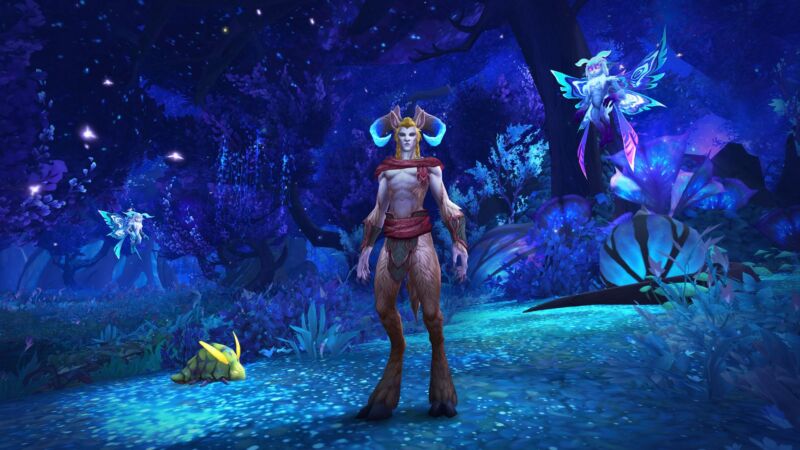
How World of Warcraft has evolved with the Internet

How World of Warcraft has evolved with the Internet

“Games are very rapidly solved these days,” says Ion Hazzikostas, the game director of World of Warcraft.

Hazzikostas, known to the World of Warcraft community as Watcher, has developed the 16-year-old massively multiplayer online role-playing game since 2008. On a call with WIRED, he reminisced about how, early in the history of games, before raid walk-through videos, data-mining dumps, and Easter egg maps, opacity was a double-edged sword. To explain, he swerved over to Street Fighter.

“You’d have a whole competitive hierarchy in a local arcade, a local videogame store, where there was some character that was perceived as the best or the strongest because some person in the neighborhood was great with them,” he says. But in the next town over, arcade regulars battled with different tricks, different strategies, a different hierarchy of characters. Information was fragmented, localized.

“The reality is that almost everybody was playing the game wrong,” says Hazzikostas.

These days, before a new Street Fighter releases players have researched and number-crunched with the gusto of a rocket science research lab, assembling tier lists and theorizing optimal move combos immediately posted on Reddit and YouTube. “The internet as a whole, the world as a whole, has refined the process of accelerating and socializing information, figuring out problems.” For Hazzikostas, tasked with stretching World of Warcraft into a larger and larger virtual universe, and sustaining an increasingly elusive sense of awe, that accessibility of information is both a curse and a blessing.

In its early days—fittingly for the fantasy genre—World of Warcraft’s magic was deeply intertwined with its sense of mystery. It was countless gamers’ first MMORPG; back then, the pull it had on millions of players was in part due to the vastness of its world and the long, rocky path to top level glory. To find a party, you’d stand in the city center and /shout until someone agreed to come with you. To teleport to another city, you’d track down and pay a mage. To attempt a raid, groups of dedicated players relied on the age-old method of trial and error. (This contributed to the viral “Leeroy Jenkins” meme, in which a player of that name abruptly sprints into a dungeon midway through a meticulous strategy explanation.)

“There were no rules. There was no right or wrong way to play. Just you and your pet wolf, as a hunter, trying to make your way in the world and figure things out from there,” says Hazzikostas.

Swimming around in this deep, cloudy sea, players had to search blindly for open hands to hold. This feeling of being teleported into an antagonistic, unknowable world forced players to use each other as buoys.

After 30 minutes of yelling “LFG SHAMAN LVL 40” before landing in a party, Hazzikostas says, players were “much more likely to be tolerant of each other’s faults. You probably weren’t going to kick your healer who made a mistake from the group, because then you’d be back to spamming chat for 30 more minutes.” If the healer kept everyone alive and was even a little nice, you’d be more likely to add them to your friends list for faster leveling next time. Strong networks of friends emerged from this, players who’d shift from discussing spell rotations to significant others, in text chat, third-party voice chat, or over the phone.

“There’s an inverse relationship between friction and the strength of bonds that are formed as a result of that friction or to overcome that friction,” says Hazzikostas.

Streamlined

Over the course of its life, World of Warcraft, like other still-relevant MMORPGs, has streamlined. Developers smoothed out the bumps slowing down players’ pathways to the high-octane stuff—live-or-die raids and fanciful new landscapes—with automatic party-finders, quest markers, simplified gameplay systems and the like. Leveling is fast, and is slated to become 60 or 70 percent faster with World of Warcraft’s upcoming Shadowlands expansion. Players led much of this change, with aggressively aggregated information on forums, wikis, and walkthroughs, and the culture of optimized grinding that’s now become the norm.

“Epic raid bosses were something only a small percentage of the playerbase got to experience,” says Hazzikostas of the early days of World of Warcraft. “Today, a large share—something like over half—were able to defeat the biggest multiplayer raid encounters the game has.”

World of Warcraft players are much, much better than they were back in the game’s early days. “Today, people are almost trained to min-max,” says Hazzikostas, referring to the play strategy of minimizing weaknesses and maximizing strengths. “The community pushes people in that direction, especially socially. Even if it’s not your preferred playstyle, the people who may want you in your group or may not, are holding you to some of those standards. Once it’s knowable, you’re expected to know.” The answer to any mystery is a Google search away.

Nobody would trade the accessibility of information today for half a year stuck below level 40. But the resulting game—and the MMORPG genre, which took cues from World of Warcraft’s success—started to feel a little mercenary starting in the late aughts. The game is more casual, because both developers and players made it that way, so building player-to-player connections isn’t as vital. Although World of Warcraft included level-syncing and server-hopping to make it easier to play with preexisting friends, online strangers plugged into a party here or there became disposable.

Classic

In August 2019, a litmus test launched for how player behavior has changed over World of Warcraft’s lifetime. World of Warcraft Classic is a separate game capturing World of Warcraft as it was close to its release in 2006. Gameplay is fantastically inefficient. (“Meditative,” says Hazzikostas). To get somewhere, you probably have to hoof it. To track down the troll you’re supposed to give the tiger skins to, you have to run around and search. Even though ample guides and walkthroughs exist for World of Warcraft Classic, the game simply isn’t made to be blasted through at top speed. As a result, questing feels less like a means to an end than an end in itself.

Personally, I can’t play World of Warcraft Classic without add-ons—modern overlays that bring quality-of-life changes to the interface. On a second monitor, I Google specialized maps and leveling guides while ping-ponging my character from quest to quest with the other hand, never interacting with strangers. Every now and then, while I’m swinging an ax against a raptor, a player might come up and ask whether I can help them complete the same quest. We ax down five or eight more raptors, and when we’re done, we part ways.

When I told Hazzikostas that World of Warcraft Classic felt lonely, he described how, back in the day, much of the novelty of the game was the ability to talk to strangers online. He recalled his first time doing so, while running a dungeon, and the Texan and English accents he encountered over voice chat. “Today, that’s the default,” he says. “Today, almost every multiplayer console or PC game has voice chat, friend lists, social networking systems built into it. They’re almost inescapable. That’s not a unique selling point of World of Warcraft.”

Although there isn’t the same desperation to connect, and challenges are deconstructed the day they’re released, the core of original World of Warcraft still holds up in World of Warcraft Classic, depending on what you define as the core. It’s still a place where people gather, a fantasy-washed social media network. It’s a slow-paced role-playing game with an ambient social element. And if you’re playing with established friends, there’s still the potential for an emotional buy-in.

“It’s amazing how some of the old tropes you never quite get away from,” says Hazzikostas. “I actually have a coworker who was one of the original developers on a World of Warcraft, whose name you’d definitely recognize if I said it, whose own personal WoW Classic group split up at level 60 over loot drama in Blackrock. This is a group of developers who played the game 15 years ago, worked on the game 15 years ago.”

“Unexplored spaces”

When I asked Hazzikostas what sort of MMORPG he most wanted to exist if he wasn’t working on World of Warcraft, he paused for a second to think. “Something that surprises me, anew with the promise of unexplored spaces,” he said. “One of the biggest things that’s exciting about the concept of an MMO is going into an unexplored, undiscovered world. It’s almost the promise of something that somehow breaks all the rules we were talking about when it comes to how players understand and deconstruct systems.”

Citing Sword Art Online and Ready Player One, Hazzikostas described how today, with so much being knowable or seconds away from known, the core escapist fantasy behind the MMORPG genre is going somewhere so vast that it contains things we can’t even imagine.

“We have an incredibly passionate community we couldn’t be more grateful for, but we’re still always chasing that mystery, that fantasy of the unexplored and undiscovered.”

This story originally appeared on wired.com.

https://arstechnica.com/?p=1674470


Review: Airplane passengers must outrace a killer sun in Into the Night

[embedded content]
Series creator Jason George based the new Netflix series Into the Night on a 2015 Polish science fiction novel.

The glorious sight of the sun’s rays peeking over the horizon as it rises has inspired mankind for millennia. But what if the sun brought death, literally killing people where they stand? That’s the premise behind the pulse-pounding Belgian science fiction drama, Into the Night, that recently debuted on Netflix. It’s a fast-paced, engrossing, and enormously entertaining series that will definitely leave you wanting more.

(Some spoilers below, mostly for the novel.)

The series is based on a 2015 novel called The Old Axolotl, by the visionary Polish science fiction writer Jacek Dukaj, who has been compared to his compatriot, Stanislaw Lem. The novel exists entirely in digital format, designed to be read solely on tablets, smartphones, e-readers, and computers. While most e-books simply recreate the printed text in an electronic medium, Dukaj designed his novel to be something more.

There’s the central narrative text, of course (more about that below), but much of the background information—the traditional world-building, if you will—is contained in detailed footnotes, which readers can access via hyperlinks. There is also a lot of multimedia incorporated into the book, including stunning illustrations by Maciej Panasiuk (you can see some of them here), and 3D-printable designs and diagrams for futuristic robots depicted in the novel.

The Old Axolotl opens on a typical day on Earth, until a mysterious “neutron wave” sweeps across the globe, instantly killing every living thing (all organic life) in its path. A very few people had just enough time to upload their consciousness into a virtual reality game called InSoul3—essentially Second Life (it’s an outdated and unpopular gaming platform before the catastrophe). Those who survived beyond the immediate upload managed to jump into so-called “mechs.” They are, in essence, machines merged with human consciousness, albeit an incomplete version of that consciousness. They are something new.

On the face of it, the novel fits right into the current TV landscape, where recent shows like Westworld, Altered Carbon, Devs, and even the new comedy Upload, have all explored the same fundamental theme of what it means to be a human, as compared to, say, a machine or AI/avatar with human consciousness. But do we really need a Belgian version of those shows?

In the case of Into the Night, the answer is yes, although what makes it so utterly compelling is the fact that it focuses entirely on the moments before and immediately after the initial catastrophic event, following a small group of people just trying to survive. That makes it almost a prequel to Dukaj’s novel. (Dukaj served as an executive producer on the show.) Per the official premise: “Passengers and crew aboard a hijacked overnight flight scramble to outrace the sun as a mysterious cosmic event wreaks havoc on the world below.”

Sylvie (Pauline Etienne) is a former military helicopter pilot who is grieving for her recently deceased partner. Her fellow passengers on a red-eye flight to Moscow include social influencer and Internet celebrity Ines (Alba Gaïa Bellugi); a lovelorn security guard named Rik (Jan Bijvoet); a homecare nurse named Laura (Babetida Sadjo); a mysterious Turk named Ayaz (Mehmet Kurtuluş); a mechanic named Jakub (Ksawery Szlenkier); and a Russian mother, Zara (Regina Bikkinina), who is traveling to Moscow to get life-saving medical treatment for her young son Dominic. There is also the co-pilot, Mathieu (Laurent Capelluto) and flight attendant Gabrielle (Astrid Whettnall).

Troubling signs appear just as the plane is boarding, as Ines notices strange messages on her social media feeds, and TVs in the terminal begin showing live footage of people falling dead in their tracks around the world as the sun rises. A NATO officer, Terenzio (Stéfano Cassetti), sees the news and panics (“Time’s up”), grabbing a rifle from an airport security officer and forcing his way onto the plane. Mathieu takes off at gunpoint, even though the pilot and other flight attendant have yet to board. Terenzio tells everyone on board that he is saving their lives, insisting they fly west, away from the rising sun.

And so begins a breathless race against time to reach an underground military bunker—one of the few places these last humans might shield themselves from whatever is killing all organic life on Earth. (It’s never explained in detail.) Along the way, they must contend with refueling challenges, irradiated food, hidden agendas, and the many frailties of human nature. They are all strangers, after all, so there are naturally some trust issues on board.

The story zips along at breakneck speed, but series creator Jason George doesn’t sacrifice character development; that’s the advantage of making this a six-episode series rather than a standalone film. These feel like real people, with believable backstories, and the tensions and conflicts that inevitably arise ring true—as do the small but vital moments of grace. Netflix has yet to announce whether or not there will be a second season. Personally, I’m torn. This first installment is so, so good, but I just don’t know where the series would take us from here. If it follows the novel, we’re headed into digital upload territory, which would make for a very different kind of show.

Into the Night is currently streaming on Netflix, and it’s an easy, satisfying binge-watch. In French with English subtitles.

Listing image by Netflix

https://arstechnica.com/?p=1674302


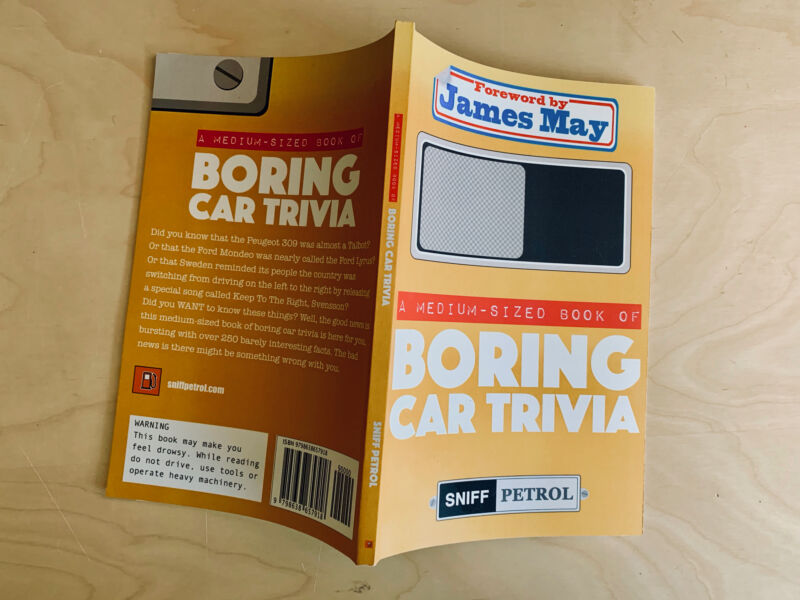
Sniff Petrol’s wonderfully interesting book of boring car facts: A review

A book sits on a desk
Enlarge / Yes that’s a door handle on the front cover, but do you know which door handle?
Jonathan Gitlin

If you’re the sort of person who reads Ars Technica, there’s a good chance you appreciate the finer details in life. You know, the tiny nuggets of information other people might leave out, like a 12-part history of the Amiga, told over more than a decade, or just why the kerning in the OS X Terminal was so objectionable. If you’re feeling seen right now, and you’re looking to amass more obscure facts that you can use to educate the normies in your life, do I have the book for you. It’s called A Medium-Sized Book of Boring Car Trivia, and it’s written by Sniff Petrol, aka Richard Porter, a British automotive journalist and writer whose work you almost certainly know from Top Gear and The Grand Tour, even if you didn’t know that you knew that. (See? Another way to “well, actually” your less erudite friends.)

The experience of reading this book was a little like the first time I played Forza or Gran Turismo online. Up until then, I thought I was pretty good, but realized quickly there are some true aliens out there, with skills that are the benchmark to aspire to. When it comes to knowing random car facts, Porter is up there.

Some of the trivia is recent, like the fact that Jaguar’s current supercharged V6 actually uses the same engine block as the V8, just with two cylinders blanked off. That’s either a wonderful example of British engineering efficiency or of its audaciously cheeky laziness. Maybe both. Other facts date back a bit, like explaining how you can tell the true color of a 1996 Volkswagen Polo Harlequin, seen below:

VW made 3,100 of these multicolored Polo Harlequins. Each one started life on the production line as one of the four individual colors, before panels started being swapped. You'll have to read <em>Boring Car Trivia</em> to find out how you can tell what that starting color was.
Enlarge / VW made 3,100 of these multicolored Polo Harlequins. Each one started life on the production line as one of the four individual colors, before panels started being swapped. You’ll have to read Boring Car Trivia to find out how you can tell what that starting color was.
Volkswagen

A whole section is devoted to car names. Many of these anecdotes involve fights between car companies, like when Porsche told Aston Martin it couldn’t use “GT3” for a spicy variant of the Vantage, so the latter called its car a GT12 because that was four times better. Porter also explains acronyms, like the XJ that Jaguar uses for its sedans or what Mitsubishi actually meant by i-MiEV.

Other facts are perhaps even more obscure. Apparently, Ford once got stuck with a thousand actual ponies that it tried to use as an incentive to sell Edsels, but everyone wanted the $200 cash alternative instead. And there are several descriptions of long-lost (and occasionally even found) prototypes, like a V12-engined Range Rover P38A or a pair of mid-engined Group B Peugeot 205 Ti homologation specials, one fitted with a Lotus active suspension system, that disappeared into General Motors for 30 years before being auctioned off in 2018.

As you’ll no doubt appreciate after hearing just a few of those snippets, one complaint you could level at A Medium-Sized Book of Boring Car Trivia is that the title is inaccurate. At 101 pages, we can quibble over whether Porter’s book is short or medium; more importantly, I think you’ll agree the random facts it contains are anything but boring. If you’re looking for a Mother’s Day present for the matriarch who’s also a petrolhead (or maybe just something to while away the time in lockdown), I highly recommend it. (It’s also less than $6, if that helps.)

https://arstechnica.com/?p=1674542


Prince of Persia concept video appears—and confirms why series has been dormant

Promotional image for never-made video game.
Enlarge / What could have been.

The classic computer gaming series Prince of Persia has enjoyed a long, healthy life as a fan favorite—both in its ’80s side-scrolling form and its mid-’00s rebirth as a 3D series. But after 2010’s PoP: The Forgotten Sands, the series’ newer handlers at Ubisoft remained mum about why PoP‘s 3D fork stopped getting sequels or “HD” re-releases.

That changed this week with the discovery of a polished concept video titled Prince of Persia: Redemption. This three-minute video of flashy combat and collapsing buildings was published on YouTube all the way back in 2012—and remained undiscovered by fans, along with former Ubisoft developers, until Wednesday.

Former Ubisoft animator Jonathan Cooper took the video’s fresh discovery as an opportunity to confirm its  authenticity. He posted on Twitter that the Redemption video was formally developed in-house at Ubisoft as a “pre-rendered game pitch,” and an eagle-eyed series fan at ResetERA was able to date its development as a one-year effort at Ubisoft Montreal between 2010 and 2011.

Cooper continued on Twitter to answer the obvious question from fans: what happened to this game, let alone Ubisoft’s PoP series entirely? Cooper wrote:

Sadly Ubisoft are generally quicker to cancel Prince of Persia games than others IPs because AFAIK original creator Jordan Mechner still holds license rights so the profit margins are lower. Would love to see a new one though. I’ve always wanted a PoP set in contemporary Iran.

Ars Technica has reached out to Mechner to ask for his take on this canceled Ubisoft game and any others that may have come and gone. We will update this report with any response.

Badly timed Dagger

Today’s tweets hint at another wrinkle in Ubisoft’s decision-making: its Assassin’s Creed series, which uses many of PoP‘s 3D innovations while adding its own concepts and lore. Cooper noted that this Redemption footage “inspired our own pitch for Assassin’s Creed 3.” That game launched in October 2012, roughly eight months after this Redemption video was first uploaded to YouTube.

Ubisoft has maintained its licensing agreement with Mechner since 2010’s Forgotten Sands for the sake of publishing “non-major” games in the series. These include a 2018 “endless runner” game for smartphones and a VR-exclusive “escape room” experience, PoP: The Dagger of Time, which was slated to launch in “Spring 2020” at public VR play centers weeks before COVID-19 outbreaks changed those plans.

If you’re wondering, we’ve yet to see Jake Gyllenhaal respond to today’s news. The award-winning actor took the Prince of Persia series to the big screen in a 2010 film that raked in a hearty global box office haul despite middling reviews. (In the years since, game-film adaptations have enjoyed a much better reputation.)

In some ways, the newly discovered video looks quite ambitious for that era’s Xbox 360 and PlayStation 3 consoles, particularly in terms of intense alpha effects like thick clouds of particles and flames. (That’s the beauty of “target game footage”: it can lock to 60 frames per second, crank up high shadow resolutions, and add other beautiful tricks without having to follow through on those things in the actual game!) Yet the footage’s emphasis on “ghost” images of the hero and his foes, along with deforming and collapsing buildings all around, was indeed on par with that console era’s final wave of performance titans, particularly the destructible terrain of games like Split/Second and Motorstorm: Apocalypse. Even so, Ubisoft’s Assassin’s Creed 3, released around the same time, didn’t try to match the technical chops of this ambitious concept video.

It’s unclear whether the Redemption “target game footage” was publicly viewable as far back as 2012 or whether it hid as a “private” or “unlisted” video up until this week’s wider discovery. Before commenters began piling onto the video this week to express shock at its existence, the video included a visible comment from a Ubisoft developer dated 2018, simply exclaiming, “Where did you get that?!” https://arstechnica.com/?p=1673844


Boots on the Moon! Netflix drops official Space Force trailer

[embedded content]
Steve Carell stars in the new Netflix satirical comedy Space Force.

A newly minted four-star general is assigned the thankless task of establishing the sixth branch of the United States Armed Forces in Netflix’s highly anticipated new satirical comedy series, Space Force, starring Steve Carell. Netflix just dropped the official trailer, showcasing an all-star cast and all the sharp, witty writing one would expect from the creators of the US version of The Office.

Created by Carell and Greg Daniels (who also created Parks and Recreation and the new comedy series Upload), Space Force was inspired in part by the Trump administration’s announcement that it would establish a national Space Force. (The real-life new branch successfully launched an Atlas V rocket in late March.) The cast also includes John Malkovich (The New Pope), Ben Schwartz (Jean-Ralphio from Parks and Recreation), Jimmy O. Yang (Silicon Valley, Crazy Rich Asians), Noah Emmerich (The Americans), Lisa Kudrow (Friends), and Jane Lynch (Glee, Marvelous Mrs. Maisel), among others.

Per the official premise:

A decorated pilot with dreams of running the Air Force, four-star general Mark R. Naird (Steve Carell) is thrown for a loop when he finds himself tapped to lead the newly formed sixth branch of the US Armed Forces: Space Force. Skeptical but dedicated, Mark uproots his family and moves to a remote base in Colorado where he and a colorful team of scientists and “Spacemen” are tasked by the White House with getting American boots on the moon (again) in a hurry and achieving total space dominance.

The trailer opens with Mark, freshly promoted, attending a meeting of the Joint Chiefs of Staff where he learns that the president wants “complete space dominance” and is, therefore, establishing a new branch of the military: Space Force. And Mark, who initially thinks it’s a joke, gets stuck with the assignment to establish the new branch. Let’s just say it was not the promotion he was hoping for.

Nonetheless, he’s a good soldier (or airman) and throws himself into the project. “There will be setbacks, but greatness was never won without sacrifice,” he nobly declares. Fine words, but can he navigate the political waters when his archrival, General Kick Grabaston (Noah Emmerich), among others, is rooting for him to fail? Mark’s chief scientist, Dr. Adrian Mallory (Malkovich), has a pacifist bent not entirely suited to a military branch (“Space should be a zone of wonder, not of conflict and death”).

“As a scientist you have a loyalty to reason, which makes you a little untrustworthy,” Mark tells Dr. Mallory.

Clearly there are going to be setbacks, since we see that a test of a prototype, worth at least “four middle schools,” does not go well. There’s an obvious parody of US Rep. Alexandria Ocasio-Cortez (aka AOC) in a shot of a congressional hearing. On a personal level, Mark’s teenage daughter, Erin (Diana Silvers), isn’t adjusting to her new life in Colorado particularly well (“Got suspended. Gave a teacher the finger”). At least Carell gets a chance to show off his deadpan comedic chops by singing and dancing alone in his office to the Beach Boys. That’s one way to deal with all the stress.

Space Force will begin streaming on Netflix on May 29, 2020.

Listing image by Netflix

https://arstechnica.com/?p=1673430


The Half-Life effect on PC-VR is the biggest Steam has ever seen

An array of VR devices lined up on concrete.
Enlarge / How’d the Half-Life: Alyx bump work out for SteamVR adoption?
Sam Machkovech / Aurich Lawson

On Friday, Valve revealed the biggest jump ever in virtual reality use on its SteamVR platform: a 0.62 percent increase of all Steam users. This jump between March and April 2020, unsurprisingly, coincides with the first Steam Hardware Survey to include players of the megaton VR exclusive Half-Life: Alyx.

If that percentage tally sounds ridiculously low, remember that the last public announcement of all Steam users came in January 2019, at a count of 90 million. That number has likely grown quite a bit since then, owing to factors like free-to-play games attracting more users over that 15-month span. If we agree with estimates like Road to VR’s count of roughly 141 million Steam users in April 2020 (as determined by an exponential trendline with an r-squared factor of 0.922), then that “0.62 percent increase” would mean a one-month jump of over 870,000 active VR users.

The previous record-holder for a one-month jump in SteamVR users came in January 2020, which saw a spike of roughly 0.22 percent. This notable jump in sales followed Valve’s Half-Life: Alyx unveil in late November 2019. The April 2020 figure, on the other hand, tracks anyone who had connected a SteamVR-compatible headset to their computer at any point in the 30 days leading to the “early April” period of Steam’s automatic survey-gathering process (for users who opt into the survey). So that period would include HL:A‘s release as a playable game on March 23. With HL:A in the mix, the one-month jump in percentage points was nearly triple the previous record-holder.

The percentages for these VR headsets are specifically a subset of all SteamVR users, as tracked in early April 2020. The bottom-most percentage is a reminder that SteamVR adoption is still a sliver of the <em>total</em> Steam userbase, which Valve doesn't regularly offer a public estimate of.
The percentages for these VR headsets are specifically a subset of all SteamVR users, as tracked in early April 2020. The bottom-most percentage is a reminder that SteamVR adoption is still a sliver of the total Steam userbase, which Valve doesn’t regularly offer a public estimate of.

Valve’s hardware survey also breaks down which VR systems are favored by SteamVR users, and the original HTC Vive has the apparent lead in the early-April survey. That headset is used by roughly 0.50 percent of all Steam users, a figure that may very well be boosted by the Vive’s compatibility with the Valve Index Controllers. While HL:A is compatible with every hand-tracked VR controller system on SteamVR, Valve has been keen to advertise its new controllers, which can be purchased separately, as an ideal option. These are not compatible with anything in the Oculus or Windows Mixed Reality ecosystem. (Valve’s hardware survey doesn’t specify Index Controller use.)

With all its headsets combined, Oculus has the clear lead in SteamVR use, totaling roughly 0.86 percent of all Steam users in early April (roughly 1.2 million people, as per the Road to VR estimate). Interestingly, we also see in that period that its Rift S headset was used by over three times as many SteamVR players as its Quest headset, despite Quest receiving a nifty “Oculus Link” update to make it play nicely with SteamVR. These Oculus figures are less conclusive than other platforms, since a substantial percentage of Oculus headset users may never use any storefronts outside of the official Oculus apps.

While Windows Mixed Reality has a broad ecosystem of headsets, made by a variety of manufacturers such as Samsung and HP, its cut of the SteamVR pie is slim: only 0.16 percent of all SteamVR users, roughly 225,000 players, in terms of “active” users in early April. Valve doesn’t break down which particular WMR headsets are in the lead in that niche, but it’s reasonable to assume that no single manufacturer can lay claim to more than 80 percent of that total, if not much less. Either way, the Valve Index, which is both quite expensive and frequently sold out since its June 2019 launch, has already surpassed the WMR ecosystem, totaling 0.22 percent of all SteamVR users during that survey’s period.

What could have been

Valve also counts the sliver of users who have figured out how to connect PlayStation VR hardware to Windows 10 PCs—a move we don’t necessarily recommend, particularly for a game like Half-Life: Alyx, but, hey, more power to those who’ve tried it. The figure is a reminder that Sony’s last official PSVR sales tally was “over 5 million,” as announced at CES 2020.

These survey results could have played out differently if Valve and Oculus alike hadn’t struggled to keep up with VR headset sales demand; both companies’ flagship VR systems have been sold out or back-ordered at major retailers for months, particularly while anticipation for Half-Life: Alyx began mounting. As of press time, it’s still impossible to buy systems from either company directly from their site and expect immediate shipment; Oculus lists nothing but “sold out” notices for all of its kits, while Valve lists a minimum wait of eight weeks for any Index-affiliated hardware.

https://arstechnica.com/?p=1673217