Ancient Chinese text reveals earliest-known record of a candidate aurora
Enlarge/ Auroral display over snow-capped mountains in Hangzhou, China.
Liu Míng Sun/EyeEm/Getty Images
There’s rarely time to write about every cool science-y story that comes our way. So this year, we’re once again running a special Twelve Days of Christmas series of posts, highlighting one science story that fell through the cracks in 2022, each day from December 25 through January 5. Today: New analysis of an ancient Chinese text revealed the earliest candidate aurora yet found, predating the next oldest by three centuries.
A pair of researchers has identified the earliest description, in an ancient Chinese text, of a candidate aurora yet found, according to an April paper published in the journal Advances in Space Research. The authors peg the likely date of the event to either 977 or 957 BCE. The next-earliest description of a candidate aurora is found on Assyrian cuneiform tablets dated between 679-655 BCE, three centuries later.
As we’ve reported previously, the spectacular kaleidoscopic effects of the so-called northern lights (or southern lights if they are in the Southern Hemisphere) are the result of charged particles from the Sun being dumped into the Earth’s magnetosphere, where they collide with oxygen and nitrogen molecules—an interaction that excites those molecules and makes them glow. Auroras typically present as shimmering ribbons in the sky, with green, purple, blue, and yellow hues.
There are different kinds of auroral displays, such as “diffuse” auroras (a faint glow near the horizon), rarer “picket fence” and “dune” displays, and “discrete aurora arcs”—the most intense variety, which appear in the sky as shimmering, undulating curtains of light. Discrete aurora arcs can be so bright, it’s possible to read a newspaper by their light. That was the case in August and September 1859, when there was a major geomagnetic storm—aka, the Carrington Event, the largest ever recorded—that produced dazzling auroras visible throughout the US, Europe, Japan, and Australia.
The Bamboo Annals is a chronicle of ancient China, written on bamboo strips, that begins with the age of the Yellow Emperor and runs through the so-called Warring States period (5th century–221 BCE), when rival states were engaged in intense competition. It ended when the state of Qin unified the states. The original text of the Bamboo Annals was buried with King Xiang of Wei, who died in 296 BCE, and wasn’t discovered until 281 CE, thus surviving Emperor Qin Shi Huang’s burning of the books in 212 BCE (not to mention burying hundreds of Confucian scholars alive).
<a href="https://rassegna.lbit-solution.it/wp-content/uploads/2023/01/ancient-chinese-text-reveals-earliest-known-record-of-a-candidate-aurora-2.jpg" class="enlarge" data-height="819" data-width="1200" alt="Variant fragments of the Bamboo Annals.”><img alt="Variant fragments of the Bamboo Annals.” src=”https://rassegna.lbit-solution.it/wp-content/uploads/2023/01/ancient-chinese-text-reveals-earliest-known-record-of-a-candidate-aurora-1.jpg” width=”640″ height=”437″ srcset=”https://rassegna.lbit-solution.it/wp-content/uploads/2023/01/ancient-chinese-text-reveals-earliest-known-record-of-a-candidate-aurora-2.jpg 2x”>
The original text consisted of 13 scrolls that were lost during the Song dynasty (960–1279 CE). There are two versions of the Bamboo Annals still in existence. One is known as the “current text,” consisting of two scrolls printed in the late 16th century. Many scholars believe this text is a forgery, given the many discrepancies between its text and portions of the original quoted in older books, although some scholars have argued that some parts might be faithful to the original text. The other version is known as the “ancient text,” and was pieced together by studying the aforementioned quoted portions found in older books, especially two dating back to the early 8th century CE.
Independent researcher Marinus Anthony van der Sluijs and Hisashi Hayakawa of Nagoya University relied on the ancient text for their new analysis. This text describes the appearance of a “five-colored light” visible in the northern part of the night sky toward the end of the reign of King Zhao of the Zhou dynasty. Auroras tend to only be visible in polar regions because the particles follow the Earth’s magnetic field lines, which fan out from the vicinity of the poles. But powerful geomagnetic storms can cause the auroral ovals to expand into lower latitudes, often accompanied by multicolored lights. Per the authors, during the 10th century BCE, Earth’s north magnetic pole was about 15 degrees closer to central China than today, so the people there may well have witnessed such displays.
While this is technically an unconfirmed candidate aurora, “The explicit mention of nighttime observation rules out daytime manifestations of atmospheric optics, which sometimes mimic candidate events,” the authors wrote. Furthermore, “The occurrence of a multicolored phenomenon in the northern sky during the nighttime is consistent with visual auroral displays in mid-latitude regions.” According to van der Sluijs and Hayakawa, the 16th century current text’s translation of the passage in question described the event as a “comet,” rather than a “five-colored light,” which is why the candidate aurora has not been identified until now.
TV Technica 2022: These were our favorite shows and binges of the year
Aurich Lawson | Getty Images
Warning: Although we’ve done our best to avoid spoiling anything too major, please note this list does include a few specific references to several of the listed shows.
It’s been another banner year for television, in which streaming continued to dominate with a vengeance, giving us spy thrillers, science fiction, fantasy, comedy, tormented superheroes, gritty inner-city drama, and feel-good dramedy. In fact, this is the first year without a single major network series on the Ars year-end list.
Who knows how long this cornucopia of creative goodness will last? Nearly every major streamer, including Netflix, reported at least some losses in 2022, and the outlook for next year is cloudy at best. Budgets are getting slashed, streamers are consolidating, and promising shows are being canceled left and right as streaming services adapt to the changing market environment. For now, at least, we are still reaping the benefits of past years’ investments. Our top TV picks for 2022 are listed below, in no particular order. Be sure to weigh in with your own favorite 2022 shows in the comments.
House of the Dragon
Making a prequel to a beloved series is never easy, especially when it’s a prequel to one of the most influential blockbuster series of the last decade—one that whiffed its finale so badly that it alienated some of its most devoted fans. HBO’s House of the Dragon rose to the challenge, debuting in August with a solid, promising pilot episode. The remainder of the season lived up to that initial promise.
The series is set about 200 years before the events of Game of Thrones and chronicles the beginning of the end of House Targaryen’s reign. The primary source material is Fire and Blood, a fictional history of the Targaryen kings written by George R.R. Martin. As book readers know, those events culminated in a civil war and the extinction of the dragons—at least until Daenerys Targaryen came along. It’s King Viserys I Targaryen’s (Paddy Considine) fateful decision to name his fierce dragon-rider daughter Rhaenyra (Milly Alcock) as his heir—passing over his brother and heir presumptive Daemon (Matt Smith)—that sets events in motion. As Rhaenys Velaryon (Eve Best)—aka the “Queen Who Never Was,” because she was passed over when Viserys was crowned—knows all too well, “Men would sooner put the realm to the torch than see a woman ascend the Iron Throne.”
House of the Dragon lacks the sweeping epic scope and multiple storylines of Game of Thrones, focusing instead on exploring the complex core relationships and family dynamics that will ultimately lead to civil war. The first season spans many years and makes some pretty significant time jumps—which in turn required replacing the younger actors as their characters aged. For instance, Emma D’Arcy plays the older version of Rhaenyra. Perhaps it might have been better to simply compress the timeline, or spread out the events over two seasons, but then the pacing might have lagged. And the time jumps aren’t especially jarring until the latter episodes, when one is tempted to hit pause and draw up a genealogical chart to keep track of all the incestuous marriages and generations of silver-haired offspring.
It’s still a compelling, entertaining series, with plenty of personal conflict and political intrigue, plus dragons galore. House has an especially gifted stellar cast, and yet somehow Matt Smith steals every scene as Daemon—even when he’s just standing around smirking. And his chemistry with D’Arcy goes a long way toward off-setting the squick factor of their eventual coupling and marriage. The S1 finale brought Westeros to the brink of civil war, and we can’t wait for S2 to watch that conflict play out.
—Jennifer Ouellette
https://arstechnica.com/?p=1901866
Ars Technica’s favorite films in 2022
Aurich Lawson | Getty Images
In 2022, film lovers weary of two years of a raging pandemic started gingerly dipping their toes back into the theatrical movie experience. And while the pickings might have been a bit slimmer than in pre-pandemic years, there were still plenty of tantalizing options, from the usual blockbuster superhero movies from the Marvel and DC cinematic universes, to quirky indie features and surprise gems from Netflix.
We’re once again opting for an unranked list, with the exception of our “year’s best” vote at the very end so you might look over the variety of genres and options and possibly add surprises to your eventual watchlist. As ever, we invite you to head to the comments and add your own suggestions for films released in 2022.
<a href="https://rassegna.lbit-solution.it/wp-content/uploads/2022/12/ars-technicas-favorite-films-in-2022-3.jpg" class="enlarge" data-height="800" data-width="1200" alt="Things get weird when two strangers double-book a rental home in Barbarian. “><img alt="Things get weird when two strangers double-book a rental home in Barbarian. ” src=”https://rassegna.lbit-solution.it/wp-content/uploads/2022/12/ars-technicas-favorite-films-in-2022-1.jpg” width=”640″ height=”427″ srcset=”https://rassegna.lbit-solution.it/wp-content/uploads/2022/12/ars-technicas-favorite-films-in-2022-3.jpg 2x”>
Enlarge/ Things get weird when two strangers double-book a rental home in Barbarian.
20th Century Studios
Barbarian
Don’t watch the trailer, don’t even read a synopsis—just watch this movie.
Such was the advice I got before watching this year’s buzzy horror film Barbarian, and I’m glad I took it. It’s advice I’d extend to anyone reading this—if you enjoy horror, don’t even read the rest of this blurb. Just watch it—you can stream it on HBO Max right now.
But okay, for those who need a little more convincing, I’ll give the lightest of introductions. The film opens on a woman checking into a rental home in Detroit—until she realizes it has been double-booked and is already being occupied. She decides to stay the night anyway. Things get weird. Then they get weirder.
That’s about all I’m willing to give up here. At no point during my viewing did I know where the film was heading next, and I think that’s the best way to experience this movie. Barbarian is one of those wild-ride horror romps that’s best enjoyed with similarly uninitiated friends—everyone squirming and exclaiming and jumping out of their seats together as the craziness unfolds.
The movie has its fair share of chills and thrills, sure, but it’s also hilarious—it gave me the biggest, most genuine belly laughs of any film I saw all year. A respectable amount of good horror films came out in 2022, but if you’re looking for the best, look no further.
—Aaron Zimmerman
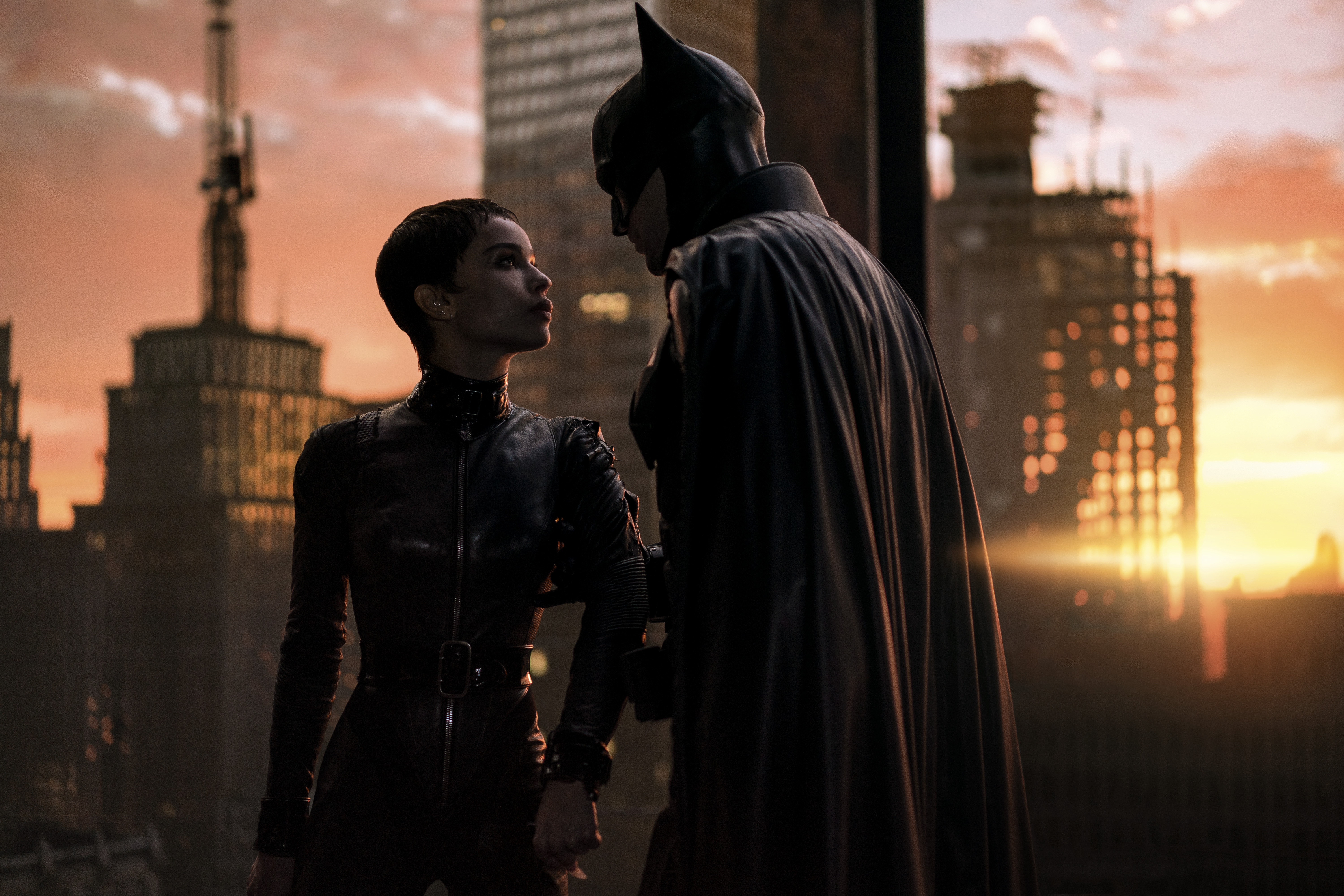
<a href="https://cdn.arstechnica.net/wp-content/uploads/2022/02/rev-1-TBM-56056JOrv4_High_Res_JPEG.jpeg" class="enlarge" data-height="4000" data-width="6000" alt="Selina Kyle (Zoë Kravitz) and Batman (Robert Pattinson) lead the long-but-enjoyable proceedings of The Batman.”><img alt="Selina Kyle (Zoë Kravitz) and Batman (Robert Pattinson) lead the long-but-enjoyable proceedings of The Batman.” src=”https://rassegna.lbit-solution.it/wp-content/uploads/2022/12/ars-technicas-favorite-films-in-2022-2.jpg” width=”640″ height=”427″ srcset=”https://rassegna.lbit-solution.it/wp-content/uploads/2022/12/ars-technicas-favorite-films-in-2022-4.jpg 2x”>
Enlarge/ Selina Kyle (Zoë Kravitz) and Batman (Robert Pattinson) lead the long-but-enjoyable proceedings of The Batman.
The Batman
The Batman is a DC Comics film for people who watch way too many movies. Director and co-writer Matt Reeves (War for the Planet of the Apes) has concocted an intoxicating mix of indulgence, pulp, bombast, and vulnerability that absolutely answers the question of why the world needs another Batman film. Even better, Robert Pattinson (The Lighthouse) resurrects a role that has been otherwise run into the ground. Better than Michael Keaton? Oof, that’s a coin flip. Best Batman actor since Keaton? Absolutely.
What Reeves is really interested in is showing us a very different kind of Bruce Wayne than in other films: millennial, rich, sullen, ineffectual, and bewildered. Other Batman actors have shrugged off the weirdness of a rich man turned masked vigilante, but Pattinson convincingly wrestles with his inherited privilege—making Wayne more likable and empathetic as a result.
It’s not a perfect Batman production. You’ll have to endure roughly 15 minutes of aggressively grim, dark tone setting before Reeves and Pattinson settle into their vengeance-filled Batusi dance. And Reeves absolutely loses control of his Batmobile by the film’s end, especially as he fakes viewers out with one ending in order to lead them through an overlong, undramatic coda. But I’m not sure a “producer’s cut,” which would strip The Batman of its most indulgent tendencies, would make this a better film, and I applaud DC for letting Reeves go wild. The result makes Batman fascinating and tangible all over again, much like when filmmaker Tim Burton and Keaton reimagined the character in the wake of the over-the-top ’60s TV series.
—Sam Machkovech
https://arstechnica.com/?p=1903083
Ars Technica’s best video games of 2022
Collage by Aurich Lawson
Before we get on to the list, don’t miss this year’s Ars Technica Charity Drive sweepstakes. You can win part of nearly $2,000 in prizes, including limited-edition gaming collectibles, all while helping out a good cause. Entries are due by January 3, 2023, and there’s no purchase necessary. Thanks in advance for your entry!
2022 was a bit of a weird year for video games. For a start, quite possibly the most anticipated game of the year came out in March, well ahead of the usual holiday season rush of releases. But that holiday rush was itself muted this year, thanks to delays of big-name franchises from Diablo to Starfield to The Legend of Zelda.
That’s led some commentators to call 2022 a “slow year” for a games industry still recovering from the development chaos of COVID. And it’s true; we did have some collective trouble getting to our usual selection of 20 games for this year’s best games list, a possible sign that there were fewer “obvious” picks than usual.
Looking over the selections that did make the 2022 list, though, it’s hard to feel like the collective industry has let us down in any way. The relative lack of big-budget blockbusters allowed plenty of independent games a chance to shine, including those that made this list on the strength of brave new ideas in gameplay or storytelling. All told, the games listed below will stick with us for a long time and speak highly of the game industry’s continuing creativity and resilience.
This year we chose to list our gaming picks in alphabetical order, with a single “Game of the Year” pick at the end. Here they are.
Atari 50: the Anniversary Celebration
Digital Eclipse; Windows, Switch, PlayStation 4/5, Xbox One/Series, Atari VCS
It’s rare for a compilation of retro games to be considered for Ars’ annual Game of the Year list. It’s unprecedented for such a game to actually win one of our coveted spots. But Atari 50 does a couple of crucial things to separate itself from the countless classic game emulation collections that have proliferated over the years.
<a href="https://rassegna.lbit-solution.it/wp-content/uploads/2022/12/ars-technicas-best-video-games-of-2022-3.jpg" class="enlarge" data-height="720" data-width="1280" alt="A fast-paced take on Atari's Lunar Lander, as seen in Vctr Sctr.”><img alt="A fast-paced take on Atari's Lunar Lander, as seen in Vctr Sctr.” src=”https://rassegna.lbit-solution.it/wp-content/uploads/2022/12/ars-technicas-best-video-games-of-2022-1.jpg” width=”640″ height=”360″ srcset=”https://rassegna.lbit-solution.it/wp-content/uploads/2022/12/ars-technicas-best-video-games-of-2022-3.jpg 2x”>
Enlarge/ A fast-paced take on Atari’s Lunar Lander, as seen in Vctr Sctr.
The first is an intense focus on supplementary materials. Atari 50 is packed with video interviews, design documents, contemporaneous advertisements, trivia, quotes, and more. It all gives crucial context to Atari’s 50-year history, and makes even the least playable games in the collection more interesting from a historical perspective. The “timeline” presentation is also top-notch, making the entire product feel more like an interactive museum than a simple collection of old titles.
Atari 50 also shines in its half-dozen “reimagined” versions of a few Atari classics. These feature updated graphics, sound, and gameplay that takes advantage of decades of advances in game design and technology, giving old concepts fresh life for a new audience. While these offerings aren’t all winners, the addictive action of Vctr Sctr alone is enough to warm the heart of any old-school arcade game fan.
-Kyle Orland
Cult of the Lamb
Massive Monster; Windows, Mac, Switch, PlayStation 4/5, Xbox One/Series
Here’s a weird statement: There aren’t enough cult simulators out there. There are, however, plenty of roguelites. Cult of the Lamb is both, and while it’s a good roguelite, it’s the cult simulator part of the package that made it stand out this year.
<a href="https://cdn.arstechnica.net/wp-content/uploads/2022/06/20220621170241_1.jpg" class="enlarge" data-height="2160" data-width="3840" alt="You know the boss-battling drill—avoid ranged and melee attacks while countering with your own. So far, the demonic beasts we've battled in Cult of the Lamb strike a solid balance between hand-drawn frames of animation and stretchy vector effects.”><img alt="You know the boss-battling drill—avoid ranged and melee attacks while countering with your own. So far, the demonic beasts we've battled in Cult of the Lamb strike a solid balance between hand-drawn frames of animation and stretchy vector effects.” src=”https://rassegna.lbit-solution.it/wp-content/uploads/2022/12/ars-technicas-best-video-games-of-2022-2.jpg” width=”640″ height=”360″ srcset=”https://rassegna.lbit-solution.it/wp-content/uploads/2022/12/ars-technicas-best-video-games-of-2022-4.jpg 2x”>
Enlarge/ You know the boss-battling drill—avoid ranged and melee attacks while countering with your own. So far, the demonic beasts we’ve battled in Cult of the Lamb strike a solid balance between hand-drawn frames of animation and stretchy vector effects.
The combat portions of the game play like a more forgiving and accessible cousin to the indie classic Binding of Isaac. The dodge-and-slash action on offer here is tight though nothing too original. But you’ll spend at least as much time in a town-building loop in which you’ll produce and harvest resources, perform favor quests for townspeople, and manage your cult’s general happiness and productivity—all while delivering sermons, silencing heretics, and performing anthropomorphic animal sacrifices.
There are dashes of Animal Crossing, Stardew Valley, and even Peter Molyneux’s Black and White in here. It’s all quite fun, but the cartoonish vision of running a cult in a world of Lovecraftian horrors is what really sells the game.
The art is top-notch, the music will get stuck in your head (in a good way), and the progression systems are just the right amount of addictive. Cult of the Lamb doesn’t reinvent a single wheel, but it’s a delicious cocktail of some of the best indie gaming has had to offer over the past few years—whether we’re talking about roguelite dungeon crawlers or the cozy game phenomenon.
In other words, it’s a “greatest hits” of popular indie game mechanics with a hilarious and original theme. As such, it’s worthy of your devotion.
-Samuel Axon
Dwarf Fortress
Bay 12 Games; Windows
The version of Dwarf Fortress that has existed for the last 16 years has been, well, off-putting. The default graphics were colored ASCII characters; onboarding relied on wikis and painful trial-and-error; and the inherent difficulty was also the game’s rallying cry: “Losing is fun.”
<a href="https://cdn.arstechnica.net/wp-content/uploads/2022/10/df1.png" class="enlarge" data-height="1080" data-width="1920" alt="The optional tutorial prompt that appears when starting Dwarf Fortress‘ Steam edition. A mineral-rich region of this world could be yours.”><img alt="The optional tutorial prompt that appears when starting Dwarf Fortress‘ Steam edition. A mineral-rich region of this world could be yours.” src=”https://rassegna.lbit-solution.it/wp-content/uploads/2022/12/ars-technicas-best-video-games-of-2022.png” width=”640″ height=”360″ srcset=”https://rassegna.lbit-solution.it/wp-content/uploads/2022/12/ars-technicas-best-video-games-of-2022-2.png 2x”>
Enlarge/ The optional tutorial prompt that appears when starting Dwarf Fortress‘ Steam edition. A mineral-rich region of this world could be yours.
Bay 12 Games / Steam
Still, Dwarf Fortress’unmatched complexity and epic storytelling potential gave it a devoted following and kept the game funded with donations—but barely. That makes the game’s modern-day “debut”—with 16-bit-style graphics, a wonderful soundtrack, tutorials, and optimized shortcuts—something of an invitation to newcomers. It’s also a chance for longtime fans to show their love for Zach and Tarn Adams, the brothers who have kept this crazy simulation running without ever actively selling the game.
The new, commercial version of Dwarf Fortress released this year is much easier to dig than the old version. Now, after your first few attempts at the game, you’re more likely to be left with a question like, “How do you find an encampment with sand that also has enough minerals?” rather than “What was that red Turkish-looking symbol and how did it kill my hunter?”
Yet despite the spit-shine, the tremendously deep systems and procedurally-generated mythical chaos are all still here, just with more reasonable ways of accessing and understanding them. (Which leads to another potential question: “Why does that cat get morose when it thinks about tables?”) This new version of Dwarf Fortress only adds to the charm of this already-impressive work and will hopefully bring the game to a wider audience that can better sustain it. We’ll all be better for it.
-Kevin Purdy
God of War: Ragnarok
Sony Santa Monica Studio; PS4/5
After four years, Ragnarok could have just provided more of the “Dad of Boy”-style God of War that we remembered and loved back in 2018. That game probably would have been in contention for a spot on this list.
<a href="https://cdn.arstechnica.net/wp-content/uploads/2021/09/Screenshot-8456.png" class="enlarge" data-height="2160" data-width="3840" alt="Kratos, looking over his soon-to-be-bloody domain in God of War: Ragnarok.”><img alt="Kratos, looking over his soon-to-be-bloody domain in God of War: Ragnarok.” src=”https://rassegna.lbit-solution.it/wp-content/uploads/2022/12/ars-technicas-best-video-games-of-2022-1.png” width=”640″ height=”360″ srcset=”https://rassegna.lbit-solution.it/wp-content/uploads/2022/12/ars-technicas-best-video-games-of-2022-3.png 2x”>
Enlarge/ Kratos, looking over his soon-to-be-bloody domain in God of War: Ragnarok.
And yes, at its core, much of the gameplay and many of the environments in this sequel will feel familiar to fans of its predecessor. That’s not a bad thing; Ragnarok’s combat systems are as deep as ever, to the point that major new fighting options were being introduced nearly 20 hours into my playthrough.
But Ragnaork also stands on its own, thanks in no small part to its supporting characters. The Norse pantheon implied by the game’s title ably steals the show, trading subtle barbs and mythological drama throughout some delightful, scenery-chewing performances. While the relationship between Kratos and his pre-teen son Atreus doesn’t quite tug on the heartstrings this time around, there are enough intriguing side stories to cover up this relative deficiency.
The sequel does a good job with its varied pacing, too, switching to the nimble, bow-equipped Atreus or to extended puzzle-solving sections before Kratos’ standard axe-and-chain-swinging gameplay can feel too tiresome. And the wonderfully ornate environments shine through, especially on the PlayStation 5, practically begging you to explore every corner for plenty of hidden paths and storylines. Touches like that help push this sequel onto our list, even if it doesn’t quite live up to its predecessor.
-Kyle Orland
https://arstechnica.com/?p=1906399
New GeForce RTX 3050 variant offers the same performance but lower power use
Nvidia’s GeForce RTX 3050 is no one’s idea of a powerhouse, but it’s a decent 1080p GPU and it’s still the cheapest way to buy into Nvidia’s RTX 3000-series ecosystem if you want DLSS 2.0 support or Nvidia’s ray-tracing implementation. MSI has published specs for a revised version of one of its RTX 3050 GPUs (via VideoCardz), advertising the same general features and performance levels but lowering the power consumption estimate by 15 W.
The lower power consumption appears to come from the GPU’s use of a smaller graphics die, called GA107. Older RTX 3050s use the same GA106 die as the RTX 3060 series, but with many of that die’s 3,840 CUDA cores switched off. This can allow Nvidia to reuse partially defective GA106 dies, but as chip yields improve and the number of defective dies decreases, it either means shipping fewer RTX 3050s or putting perfectly good chips in cheaper GPUs. The GA107 die includes a maximum of 2,560 CUDA cores, and it apparently needs a bit less power than a GA106 die with the exact same number of cores enabled.
The two MSI cards in question otherwise have almost exactly the same specs, power consumption aside: an 1807 MHz boost clock, 14 Gbps of memory bandwidth thanks to GDDR6 on a 128-bit memory interface, and 2,560 CUDA cores. One other change is that the newer revision has two DisplayPorts and two HDMI ports, rather than three DisplayPorts and one HDMI port, a small change that most likely has nothing to do with the GPU change. Another is that the card now requires a 6-pin power plug, rather than an 8-pin plug.
Slightly lower power use is a good thing, but this new RTX 3050 card still requires up to 115 W of power, which is well above the 75 W max amount of power that can be provided to any expansion card through a PCI Express slot without requiring an extra power connector. GPUs without a power connector are vanishingly rare, but they’re still of interest for people upgrading a super-small PC or a cheap box from HP or Dell with a low-capacity power supply and no 6- or 8-pin power connector.
Usually, these quiet GPU refreshes eventually become the default configurations, and older revisions are phased out over time as supplies dry up—this has happened with the “lite hash rate” (LHR) versions of RTX 3080 and 3070 GPUs, the GDDR6 version of the GTX 1650, and the RTX 2060 with 12GB of RAM instead of 6GB, among others. We’d expect this to happen with the RTX 3050, eventually, but for now expect most cards to continue using the partially-disabled GA106 die.
https://arstechnica.com/?p=1906816
Leaker posts an early, canceled 2D version of the infamous Duke Nukem Forever
Duke Nukem Forever is infamous among PC gamers of a certain age for its long and tortured development cycle. Fifteen years passed between the release of Duke Nukem 3D in 1996 and the eventual release of Forever in 2011, and in that time the game went through many permutations and development teams.
Earlier this year, a 4chan leaker called x0r_jmp leaked a 3D build of the game from circa 2001 (we played it). This week, the same leaker has shared an even older piece of the puzzle: a playable version of a 1996-era 2D iteration of Duke Nukem Forever. Screenshots and gameplay video show a game that looks a lot like the first two 2D Duke Nukem games, but with an updated visual style that tosses pixel art in favor of trendy 3D rendering.
This is the first time that a playable version of this game has been available, but it’s not the first time we’ve seen the 2D version of DNF. Scott Miller, founder of original Duke Nukem developer Apogee Software, ran an interview with developer Darrin Hurd back in August that talked about the origins of the 2D version of Duke Nukem Forever. (This interview, as well as the included screenshots, would seem to confirm this leak’s authenticity.)
Hurd says that the game’s look came from rendering Duke Nukem 3D as 2D sprites, which would explain why the game more closely resembles 1994’s Donkey Kong Country than the pixel art of the original Duke Nukem games. He also explained how the Duke Nukem Forever project got its name; perhaps unsurprisingly for anyone familiar with Duke Nukem‘s comedic stylings, it involves a boob joke.
“It was originally a bit of a pun,” Hurd said. “The main protagonist in our [first] game [for Apogee] was a female Russian soldier called Eva… So when we as a group were coming up with a name, we thought it would be funny if Duke fell for Eva and her massive assets, and given this was the 4th installation of Duke, the name “Duke Nukem 4 Eva” was born. Over time the 4Eva eventually transformed to Forever.”
Hurd said that the 2D version of Duke Nukem Forever was canceled mainly because of the rising popularity of 3D games, including Duke Nukem 3D. It might be hard to believe given the success of 2D games like Shovel Knight, Super Meat Boy, Cuphead, and Hollow Knight, but in the mid-to-late-90s PC Games like Quake and 3D-capable home consoles like the first PlayStation and Nintendo 64 created a clear separation: 3D was the wave of the future, and 2D games were relics of the past.
Neither leaked version of DNF has much at all to do with the version that Gearbox Software eventually released to brutal reviews in 2011. But taken all together, the three versions of the game do make one thing clear: Duke Nukem Forever has much more entertainment value as a story than it does as a video game.
Listing image by Apogee Enterprises
https://arstechnica.com/?p=1906776
2022 in GPUs: The shortage ends, but higher prices seem here to stay
Enlarge/ From left to right and largest to smallest: GeForce RTX 4080 (which is the same physical size as the RTX 4090), Radeon RX 7900 XTX, and Radeon RX 7900 XT.
Andrew Cunningham
In 2021, the biggest story about GPUs was that you mostly just couldn’t buy them, not without paying scalper-inflated prices on eBay or learning to navigate a maze of stock-tracking websites or Discords.
The good news is that the stock situation improved a lot in 2022. A cryptocurrency crash and a falloff in PC sales reduced the demand for GPUs, which in turn made them less profitable for scalpers, which in turn improved the stock situation. It’s currently possible to visit an online store and buy many GPUs for an amount that at least gets kind-of-sort-of close to their original list price.
The bad news is that the aftereffects of the GPU shortage still linger, mainly in the form of inflated prices. We can hope that these come down in 2023, but so far, there is little sign of that happening.
Budget GPUs are in a sad state
You can still find GPUs at and under $200 if you’re looking for basic, better-than-integrated performance in older and lower-end games that you’ll mostly run at or below 1080p.
But performance in this category has moved very little over the last three or four years. Nvidia seems content to serve this low-end slice of the gaming market with the same GeForce GTX 1650 GPU it introduced in 2019, a card that continues to stubbornly hover in the $150-to-$200 price window despite its age. AMD and Intel have both released new cards for the sub-$200 market in the last year, and those cards can sometimes beat the GTX 1650’s performance. But these cards are also flawed in some hard-to-ignore ways.
AMD’s RX 6500 XT was originally a laptop GPU that was adapted for desktops, and as a result, it supports fewer displays than other GPUs in the RX 6000 series, it’s missing hardware video encoding support, and its performance in older PCI Express 3.0-capable PCs is poor because it only provides four lanes of PCIe bandwidth in the first place. Intel’s Arc A380 has great video encoding support (including for the AV1 video codec), but like other Arc cards, its drivers are rough around the edges, and performance in older games can be spotty.
If superior GPUs like Nvidia’s RTX 3050 series and AMD’s RX 6600 series drop down into the $200-and-under range soon, we’ll be feeling a lot better about the state of budget GPUs (the RX 6600 is getting awful close, with prices falling into the $220-250 range for some models depending on the sale). Those GPUs still come with compromises, like mediocre ray-tracing performance and a more hit-or-miss experience at resolutions above 1080p, but it’ll be nice to put the GTX 1650 firmly in the rear-view.
For the best GPUs, $1,000 and up is the new normal
Enlarge/ Nvidia’s hefty RTX 4090 GPU also has a hefty $1,600 price tag, and you’ll pay more than that to actually buy the GPU right now.
Sam Machkovech
Shifting to the other extreme of the market, it used to be that GPUs with four-digit price tags were mostly ignorable by normal people. Halo products like Nvidia’s Titan GPUs performed well, sure, but why pay all that money when cheaper xx80 and xx70-series GPUs could give you a large percentage of that performance for a small percentage of the price?
The story of this generation’s midrange cards still has yet to be written, but so far, the high-end cards in the RTX 4000 series and the RX 7000 series have been listed for much more than their predecessors. The $1,200 RTX 4080 is a huge jump from the $700 Nvidia originally advertised for the RTX 3080 and 2080. If the newly rebranded 4070 Ti launches at $900 as is currently rumored (and was originally planned, back when it was called the “RTX 4080 12GB”), that will be a substantial hike over the $500-to-$600 launch prices of cards like the RTX 2070, RTX 3070, and RTX 3070 Ti.
All of these prices are made much worse by the fact that you can’t find RTX 4080 or 4090 cards anywhere close to their launch MSRPs right now.
Things look marginally less exorbitant on AMD’s side, where the top-tier RX 7900 XTX launched for the same $999 price as last-generation’s top-tier RX 6900 XT did. But where the 6900 XT was accompanied by an RX 6800 XT that provided most of the performance for $649, the 7900 XTX’s little sibling is an $899 RX 7900 XT that actually gives you less performance-per-dollar than the XTX. Both cards still undercut Nvidia’s pricing for the RTX 4000 series, but that’s more about how expensive the 4090 and 4080 are than it is about the value AMD is providing.
Nvidia CEO Jensen Huang said that these higher prices are here to stay, courtesy of the increased costs associated with designing and manufacturing these GPUs. Obviously, Huang is not an impartial observer here—he is materially invested in keeping the prices of his GPUs high, especially as Nvidia’s finances have suffered. But there’s some truth to what he’s saying: cutting-edge manufacturing processes are expensive, Nvidia is fighting AMD, Apple, and all kinds of other chip designers for TSMC’s production capacity, and gigantic monolithic chips like the RTX 4000 GPUs are going to have lower yields than smaller, less-complex processor dies.
https://arstechnica.com/?p=1906246
Video games in 2022: Massive mergers and peculiar portables
Aurich Lawson | Getty Images
Before we get on to the list, don’t miss this year’s Ars Technica Charity Drive sweepstakes. You can win part of nearly $2,000 in prizes, including limited-edition gaming collectibles, all while helping out a good cause. Entries are due by January 3, 2023, and there’s no purchase necessary. Thanks in advance for your entry!
Gamers, and the game industry as a whole, can be a little too focused on what’s next. Newly released blockbusters can fade from the public consciousness in a matter of days, while the “next generation” of console hardware or a highly anticipated, years-in-the-making sequel can dominate the headlines.
In that kind of environment, it can be useful to review the major trends shaping the industry over a period longer than a few days. Looking back at the big gaming news of 2022, a few clear storylines emerge.
2022 was the year that this started to change in a big way, as a number of companies pushed some decidedly off-kilter gaming portables. It started with the Analogue Pocket, which technically launched in late 2021 but started shipping in great numbers to pre-order customers this year. Out of the box, the Pocket’s solid industrial design and high-end screen make it great for replaying thousands of cartridges from Nintendo’s classic Game Boy and Game Boy Advance lines. But it was the introduction of new emulation cores this year that really turned this FPGA device into a must-have for retro gamers.
This year also saw a couple of companies releasing dedicated portable hardware focused on the streaming gaming market. Logitech’s G Cloud and Razer’s Edge 5G pair generic dual-stick controls alongside a generic, Qualcomm-powered Android device, allowing for easy access to various streaming services and classic emulators. It’s too early to say whether these devices will find a significant market that’s not served by existing smartphone controller attachments. Regardless, their mere existence helps cement the fact that handheld gaming in 2022 is not just for Nintendo anymore.
NFTs? Gamers say “No f’ing thanks”
<a href="https://cdn.arstechnica.net/wp-content/uploads/2021/11/axie.png" class="enlarge" data-height="999" data-width="1600" alt="NFT games like Axie Infinity served as a proof-of-concept for the "pay-to-earn" model.”><img alt="NFT games like Axie Infinity served as a proof-of-concept for the "pay-to-earn" model.” src=”https://rassegna.lbit-solution.it/wp-content/uploads/2022/12/video-games-in-2022-massive-mergers-and-peculiar-portables-1.png” width=”640″ height=”400″ srcset=”https://rassegna.lbit-solution.it/wp-content/uploads/2022/12/video-games-in-2022-massive-mergers-and-peculiar-portables-3.png 2x”>
Enlarge/ NFT games like Axie Infinity served as a proof-of-concept for the “pay-to-earn” model.
NFT gaming still has plenty of proponents, and there will still be investors willing to place large monetary bets on the still-unproven space in 2023. But as the year concludes, there are fewer and fewer people who seem publicly confident that blockchain-based gaming items will power the “next big thing” in the industry.
https://arstechnica.com/?p=1906214
J. Robert Oppenheimer cleared of “black mark” against his name after 68 years
Enlarge/ A young J. Robert Oppenheimer in April 1945. He led the Manhattan Project during World War II to develop the first atomic bomb.
Getty Images
There’s rarely time to write about every cool science-y story that comes our way. So this year, we’re once again running a special Twelve Days of Christmas series of posts, highlighting one science story that fell through the cracks in 2022, each day from December 25 through January 5. Today: The US Secretary of Energy finally nullified the 1954 revocation of J. Robert Oppenheimer’s security clearance, acknowledging that the controversial decision resulted from a “flawed process” that violated its own regulations.
Nearly 70 years after having his security clearance revoked by the Atomic Energy Commission (AEC) due to suspicion of being a Soviet spy, Manhattan Project physicist J. Robert Oppenheimer has finally received some form of justice just in time for Christmas, according to a December 16 article in the New York Times. US Secretary of Energy Jennifer M. Granholm released a statement nullifying the controversial decision that badly tarnished the late physicist’s reputation, declaring it to be the result of a “flawed process” that violated the AEC’s own regulations.
Science historian Alex Wellerstein of Stevens Institute of Technology told the New York Times that the exoneration was long overdue. “I’m sure it doesn’t go as far as Oppenheimer and his family would have wanted,” he said. “But it goes pretty far. The injustice done to Oppenheimer doesn’t get undone by this. But it’s nice to see some response and reconciliation even if it’s decades too late.”
Oppenheimer was born in New York City to German Jewish immigrants and studied physics under Ernest Rutherford at Cambridge, before earning his PhD from the University of Gottingen in 1927 under Max Born. He eventually joined the faculty at the University of California, Berkeley. When President Franklin D. Roosevelt approved the Manhattan Project and tapped Major General Leslie R. Groves to head it, Groves in turn chose Oppenheimer to lead the secret weapons laboratory in Los Alamos, New Mexico. True, Oppenheimer had left-wing political views, and hadn’t won a Nobel Prize (although he was nominated several times). But Groves felt the physicist had the breadth of knowledge to bring together physicists, chemists, engineers, and metallurgists, among other disciplines whose expertise would be crucial to the success of the project.
Enlarge/ Maj. Gen. Leslie R. Groves (r), and J. Robert Oppenheimer view the base of the steel tower on which the first atomic bomb hung when tested near Alamogordo, New Mexico, in July 1945. The intense heat of the bomb melted the tower, and seared the surrounding sands into jade green glass-like cinders.
Getty Images
And the project did succeed. Just before sunrise on July 16, 1945, at the secluded Alamogordo Bombing Range in the Central New Mexican desert, a prototype nuclear bomb nicknamed “Gadget” was hoisted to the top of a 100-foot tower and detonated. The blast vaporized the steel tower and produced a mushroom cloud rising to more than 38,000 feet. The heat from the explosion melted the sandy soil around the tower into a mildly radioactive, glassy crust now known as trinitite. The shock wave was powerful enough to break windows 120 miles away. Oppenheimer later recalled that it reminded him of a phrase from the Bhagavad Gita: “Now I am become Death, destroyer of worlds.”
The implications of the so-called Trinity Test became all too clear on August 6, 1945, when a gun-triggered fission bomb dubbed “Little Boy” fell on Hiroshima, killing an estimated 70,000 to 130,000 people. Three days later, the implosion-triggered “Fat Man” was dropped on Nagasaki, adding another 45,000 human casualties. The United States won the war but at a horrific cost.
Physicists became national heroes, and Oppenheimer became chairman of the AEC. But suspicion over his Communist ties grew stronger, culminating in the infamous 1954 security hearings to determine whether he was guilty of treason. This was at the onset of the McCarthy era, with its paranoid emphasis on rooting out “subversives.” As chair of the Senate Investigations Subcommittee, Senator Joseph McCarthy unveiled a new policy under which a government employee not only had to be judged “loyal,” but his or her background had to be “clearly consistent with the interests of national security.”
Oppenheimer had several Communist acquaintances dating back to the 1930s—including his mistress, Jean Tatlock, who committed suicide in January 1944—and had even implicated some of his friends as Soviet agents under pressure during a 1942 inquiry. He later admitted that testimony had been a “tissue of lies.” In fact, Oppenheimer was the only person who had been approached by Haakon Chevalier, a Berkeley professor of French literature, at a private dinner at Oppenheimer’s house. At the time Groves interceded on Oppenheimer’s behalf, deeming him “absolutely essential” to the success of the Manhattan Project. The “Chevalier incident” was cited as evidence against him during the 1954 hearings. Oppenheimer’s outspoken opposition to the hydrogen bomb did little to allay suspicion.
During the hearings, Edward Teller—who had clashed with Oppenheimer over developing the hydrogen bomb—testified against his former colleagu, telling the commission, “I would prefer to see the vital interests of this country in hands that I understand better and therefore trust more.” Many scientists felt this was an unforgivable betrayal of a colleague, and ostracized Teller from their ranks. Oppenheimer himself denied being a member of the Communist Party, but admitted to being a “fellow traveler,” in that he agreed with many of its goals.
The AEC found Oppenheimer innocent of treason, but ruled he was “not reliable or trustworthy” and thus should not have access to military secrets. His security clearance was revoked on the grounds of “fundamental defects of character,” and for Communist associations “far beyond the tolerable limits of prudence and self-restraint” expected of those holding high government positions.
Enlarge/ Attorney H. Maass, chairman of the Board of Trustees of the Institute of Advanced Study at Princeton, talks to reporters on April 13, 1954, prior to the hearings: “I hope and think he will be cleared.”
Getty Images
The lone dissenting opinion among the members of the AEC came from Commissioner Henry DeWolf Smyth, who found no evidence that Oppenheimer had ever divulged secret information during nearly 11 years of constant surveillance. Smyth, a physics professor at Princeton University, believed the charges against Oppenheimer were supplemented by “enthusiastic amateur help from powerful personal enemies,” and concluded that, far from being a Communist subversive, the physicist was “an able, imaginative human being with normal human weaknesses and failings.” Einstein and 25 Princeton colleagues joined the Federation of American Scientists in protesting the AEC’s decision.
But the damage had been done. Oppenheimer didn’t lose his post-war position at the Institute for Advanced Study at Princeton, but he was in academic exile from his former prominent career in government and science policy. By many accounts, he was a broken man after the hearings, although he had enough fire left to strenuously object to a 1964 play dramatizing the hearings: “The whole damn thing was a farce and these people are trying to make a tragedy out of it.”
A partial rehabilitation of his reputation began in 1963, when Oppenheimer was chosen as recipient of the Enrico Fermi Award—nominated by none other than Teller. (President John F. Kennedy was supposed to present the award but was assassinated later that year; his successor, Lyndon B. Johnson, presented it instead.) Oppenheimer died of cancer in 1967.
Science historians have long argued that the revocation of Oppenheimer’s security clearance should be overturned. In 2014, several transcripts from the 1954 hearings were declassified, revealing no damning evidence against the late physicist. Rather, the testimony tended to exonerate him. “It’s hard to see why it was classified,” Cornell University historian Richard Polenberg told the New York Times at the time. “It’s hard to see a principle here—except that some of the testimony was sympathetic to Oppenheimer, some of it very sympathetic.”
Enlarge/ US President Lyndon B. Johnson (left) presents the Enrico Fermi Award to J. Robert Oppenheimer at The White House, December 2, 1963. Nine years earlier Oppenheimer had been stripped of his security clearance.
Getty Images
So Granholm’s statement is a welcome development, albeit 68 years late. Here is the full text of that statement:
Dr. J. Robert Oppenheimer occupies a central role in our history for leading the nation’s atomic efforts during World War II and planting the seeds for the Department of Energy’s national laboratories—the crown jewels of the American research and innovation ecosystem.
In 1954, the Atomic Energy Commission revoked Dr. Oppenheimer’s security clearance through a flawed process that violated the Commission’s own regulations. As time has passed, more evidence has come to light of the bias and unfairness of the process that Dr. Oppenheimer was subjected to while the evidence of his loyalty and love of country have only been further affirmed. The Atomic Energy Commission even selected Dr. Oppenheimer in 1963 for its prestigious Enrico Fermi Award citing his “scientific and administrative leadership not only in the development of the atomic bomb, but also in establishing the groundwork for the many peaceful applications of atomic energy.”
The Department of Energy has previously recognized J. Robert Oppenheimer in other ways including the creation of the Oppenheimer Science and Energy Leadership Program in 2017 to support early and mid-career scientists and engineers to “carry on [Dr. Oppenheimer’s] legacy of science serving society.”
As a successor agency to the Atomic Energy Commission, the Department of Energy has been entrusted with the responsibility to correct the historical record and honor Dr. Oppenheimer’s profound contributions to our national defense and the scientific enterprise at large. Today, I am pleased to announce the Department of Energy has vacated the Atomic Energy Commission’s 1954 decision In the Matter of J. Robert Oppenheimer.
“I’m overwhelmed with emotion,” Kai Bird, co-author with Martin J. Sherwin of the 2005 Pulitzer Prize-winning Oppenheimer biography.American Prometheus, told the New York Times. “History matters and what was done to Oppenheimer in 1954 was a travesty, a black mark on the honor of the nation. Students of American history will now be able to read the last chapter and see that what was done to Oppenheimer in that kangaroo court proceeding was not the last word.”
The day after Granholm’s announcement, the first official trailer dropped for Christopher Nolan’s forthcoming film, Oppenheimer, based on American Prometheus. Cillian Murphy stars as Oppenheimer, flanked by an all-star cast that includes Emily Blunt, Matt Damon, Robert Downey, Jr., Florence Pugh, Kenneth Branagh, Josh Hartnett, David Krumholtz, and Matthew Modine. The trailer naturally focuses on the drama surrounding the birth of the atomic bomb, but if the film follows the arc of the book, Oppenheimer’s fall from grace will also feature prominently.
[embedded content]
Official trailer for Oppenheimer, coming to theaters on July 21, 2023.
https://arstechnica.com/?p=1905727
Driver updates will fix abnormally high power use for AMD’s new RX 7900 GPUs
AMD’s Radeon RX 7900 XTX and 7900 XT GPUs are still fresh, and as with most products based on new architectures, there are some early bugs to work out.
A driver update released earlier this week (version 22.12.2, the second driver release for the RX 7900-series in as many weeks) addresses high power use during video playback when using the cards’ built-in media decoding hardware. Other problems have been acknowledged but not fixed yet, including “high idle power […] when using select high resolution and high refresh rate displays.”
German review site Computerbase (via Tom’s Hardware) noticed these issues and others when testing the cards; the site also measured significantly higher power consumption than the RX 6900 series and Nvidia’s GeForce RTX 3000 and 4000 series cards when sitting idle at the Windows desktop with a pair of connected 60 Hz 4K monitors.
The new drivers’ release notes don’t mention high power use in multi-monitor setups, but they mention a few other problems with these configurations. The drivers fix crashing issues that can affect systems with four monitors connected, and they acknowledge (but do not fix) app crashes that can occur when using Radeon Super Resolution (RSR) and video stuttering issues that can occur when multiple monitors are connected.
While AMD promised “further power efficiency improvements” for the GPUs in “future [driver] releases,” the company didn’t provide more information on what specific problems it was planning to fix or how much those fixes would help reduce power consumption. Our review found that the RX 7900 GPUs typically consume as much or slightly more power than Nvidia’s competing RTX 4080 while gaming. However, the drivers seem to focus mostly on reducing power in cases where it’s supposed to be low, like when it’s decoding video or rendering the Windows desktop.