Indulge your morbid curiosity about the pandemic with these ten films
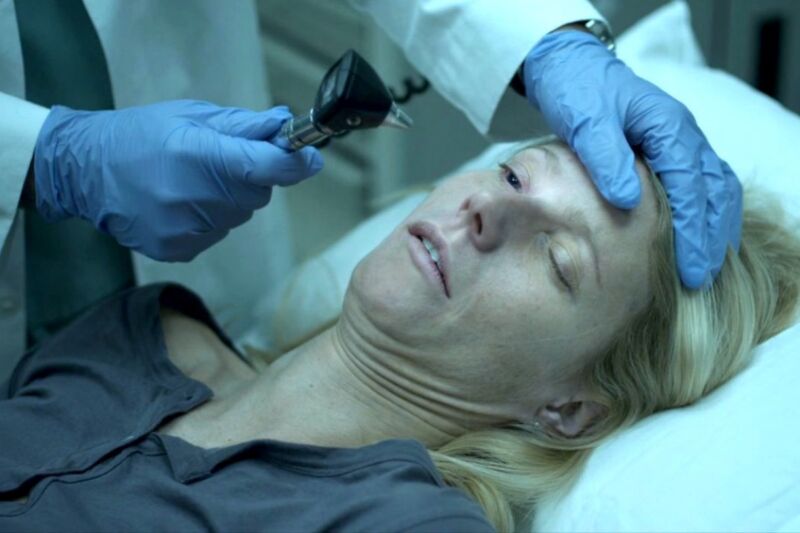
Gwyneth Paltrow had a brief but highly significant appearance in the 2011 film <em>Contagion</em>, which has experienced a surge of popularity in the midst of the current coronavirus outbreak.
Enlarge / Gwyneth Paltrow had a brief but highly significant appearance in the 2011 film Contagion, which has experienced a surge of popularity in the midst of the current coronavirus outbreak.
Warner Bros.

As the coronavirus spread rapidly around the world, and more people became aware of the serious threat it posed, the 2011 film Contagion experienced a sudden resurgence in popularity. The Steven Soderbergh-directed thriller moved from 270th place pre-pandemic on the most-watched list of Warner Bros. movies to second place in just a few months. The biggest spike in Google searches occurred on March 11, the same day President Trump announced a travel ban on Europe, peaking again three days later, when the ban was extended to the United Kingdom.

This struck Coltan Scrivner, a  graduate student at the University of Chicago specializing in the study of morbid curiosity, as remarkable, especially when he noted a similar spike in popularity for the 1995 film Outbreak. Why would people seek out the very kinds of films and TV shows that someone feeling threatened by a pandemic might be expected to avoid? He conducted an online survey to learn more. The result is a forthcoming article in the journal Evolutionary Studies in Imaginative Culture.

Scrivner’s hypothesis is that such “morbidly curious” behavior is an evolved response mechanism for dealing with threats by learning from imagined experiences. “We might reason that these search terms spiked in popularity because people were trying to learn more about the coronavirus outbreak in response to its recent impact on their daily life around that time,” he wrote in his paper. “The shutting of international borders may have signaled to the American consciousness that the coronavirus was, in fact, a real threat.” And part of the human impulse to prepare for said threat would be to learn more about it—including seeking out fictional representations of said threat.

His hypothesis is similar to the work of Mathias Clasen of Aarhus University in Denmark, author of Why Horror Seduces, who specializes in studying our response to horror in books, film, video games, and other forms of entertainment. Clasen’s core hypothesis is that horror exploits the evolved fear system. In other words, we seek out being afraid in controlled settings as a means of confronting our fears in a safe environment. It helps us challenge our limits, practice coping mechanisms, and learn how to better regulate our fear. The same could be true for the sudden spike in interest in pandemic-related entertainment.

Correlation between trait morbid curiosity and interest in watching a movie or a TV show from each genre in the next week, compared to usual.
Enlarge / Correlation between trait morbid curiosity and interest in watching a movie or a TV show from each genre in the next week, compared to usual.
Coltan Scrivner

One of the first things Scrivner did when he began studying morbid curiosity was to come up with a validated scale by which to make assessments. He found that most people cluster into four types of morbid curiosity: violence, supernatural dangers, body horrors (such as a pandemic), and the minds and motives of dangerous people, characteristic of the true crime genre. So Scrivner already had a valid metric on hand when he had the idea to conduct an online survey examining how the current coronavirus-driven pandemic was influencing people’s choices in film and TV programs.

Scrivner recruited 126 participants to complete his Morbid Curiosity scale and then answer questions about how interested they were in the coronavirus, and their current level of interest, compared to normal, in six different film and TV genres: scary/supernatural, mystery/thriller, pandemic/virus, romance, action/adventure, and comedy. He found that those who ranked higher on the morbid curiosity scale tended to seek out not just pandemic movies during this current outbreak, but also films and TV shows in the scary/supernatural and mystery/thriller categories.

This was just a quick initial study, and Scrivner plans to refine his approach in the coming months, collaborating with Clasen, among others. In the meantime, we asked Scrivner to provide a list of ten recommended pandemic-related films—some obvious choices, some less so—for Ars readers who feel inclined to indulge their morbid curiosity. They’re presented below, divided into five sub-groups with two representative films in each: pandemic, lab accident/zombies, quarantine, fear of the outdoors, and comic relief.

(Mostly mild spoilers below.)

Pandemic

<em>Contagion</em> (2011) was inspired by real-world pandemics like the 2002-2004 SARS outbreak and the 2009 flu pandemic.
Enlarge / Contagion (2011) was inspired by real-world pandemics like the 2002-2004 SARS outbreak and the 2009 flu pandemic.
Warner Bros.

Contagion

This is an obvious choice, since it inspired Scrivner’s study in the first place. The real-world parallels are striking. Contagion deals with a fictional respiratory virus (originating in China) similar to the flu—but more contagious and much more deadly. It spreads rapidly through city after city, leading to widespread government quarantines and, eventually, a breakdown of social norms as people succumb to fear and hysteria and resort to looting and violence. It has been praised for its remarkable scientific accuracy, both in its depiction of the virus and how it spreads and in the race to develop an effective vaccine. (Granted, they discover the vaccine far more quickly than usually happens in the real world. Chalk it up to “Hollywood time.”)

Dustin Hoffman stars in <em>Outbreak</em> (1995), about the lengths to which humanity is willing to go to contain the spread of a fictional Ebola-like Motaba virus.
Enlarge / Dustin Hoffman stars in Outbreak (1995), about the lengths to which humanity is willing to go to contain the spread of a fictional Ebola-like Motaba virus.
Warner Bros.

Outbreak

Outbreak deals with the re-emergence of a deadly virus called Motaba, 28 years after it first appeared in an African jungle, infecting US soldiers. The US military destroyed the camp to conceal evidence of the virus, and when it re-emerges in Zaire, a series of bad human decisions—from stubborn denial that it could spread, to crass opportunism—cause it to spread. The deadliest outbreak hits the fictional town of Cedar Creek, California. The military declares martial law in the town as scientists race to develop a cure, even as a nefarious major-general plots to develop the virus as a biological weapon.

From Scrivner’s perspective, both of these films provide a way to explore how humans actually behave during a global pandemic. “How are people quarantining themselves? What are governments doing?” he said. He admits to being “shocked” at how well Contagion in particular portrayed “how people would freak out, and how they would buy into these miracle cures,” as well as the spread of misinformation and conspiracy theories over blogs and social media.

Lab accidents/zombies

Four survivors of a deadly pandemic struggle to adapt to their drastically altered lives in <em>28 Days Later</em> (2002). It spawned a sequel, <em>28 Weeks Later</em> (2007), in which NATO military forces fight to protect a safe zone in London.
Enlarge / Four survivors of a deadly pandemic struggle to adapt to their drastically altered lives in 28 Days Later (2002). It spawned a sequel, 28 Weeks Later (2007), in which NATO military forces fight to protect a safe zone in London.
Fox Searchlight

28 Days Later and 28 Weeks Later

The 2002 film is often credited with sparking the 21st-century revival of the zombie genre, along with Resident Evil, released the same year. A highly contagious “Rage Virus” is accidentally released from a lab in Cambridge, England. Those infected turn into violent, mindless monsters who brutally attack the uninfected—so-called “fast zombies.” Transmitted by bites, scratches, or even just by getting a drop of infected blood in one’s mouth, the virus spreads rapidly, effectively collapsing society. A bicycle courier awakens from a coma 28 days later to find London mostly deserted, apart from a handful of survivors fleeing the infected hordes, and joins them in the pursuit of safety.

“I think the human mind deals with the dynamics of a zombie outbreak in ways that are very similar to the way we deal with any kind of infectious outbreak,” Scrivner said of this category. “Zombies give off cues of disgust, of infection. Their skin is kind of flaking, they’re doing things that are irrational.” Because most zombie movies start off with a virus as the point of origin, he narrowed the category down to zombie outbreaks that originated in laboratory accidents.

An amnesiac and a band of commandos try to contain an outbreak of the T-virus in <em>Resident Evil</em> (2002)
Enlarge / An amnesiac and a band of commandos try to contain an outbreak of the T-virus in Resident Evil (2002)
Constantin Film

Resident Evil

This is the first (loose) film adaption of the video game series of the same name, in which a young woman with amnesia joins up with a band of commandos to contain a deadly outbreak of the fictional genetically engineered “T-virus.” She is the sole survivor of the original outbreak in an underground genetic research lab known as the Hive, which turned the staff into zombies. The mission is to break into the Hive, shut down the lab’s supercomputer, and close the facility before the virus threatens to overrun the entire Earth.

Just as the virus in 28 Days Later was the result of a lab accident, jumping from monkeys to people, in Resident Evil, a corporation develops an immune-system-boosting virus that mutates and then gets out into the population when it is purposely released by a thief. “These films speak to people’s curiosity about, what would this look like if this was a lab accident?” said Scrivner. “And again, what do people do? Do they cooperate? Do they not cooperate when facing a universal threat? We’re interested in how people are going to behave, because it’s one more variable we have to control for that we’re not used to controlling for in our daily lives.”

Quarantine

<em>10 Cloverfield Lane</em> (2016) is the second installment in the franchise, in which a young woman is trapped in an underground bunker with two other survivors of a catastrophic event that has rendered the surface uninhabitable.
Enlarge / 10 Cloverfield Lane (2016) is the second installment in the franchise, in which a young woman is trapped in an underground bunker with two other survivors of a catastrophic event that has rendered the surface uninhabitable.

10 Cloverfield Lane

This is the second installment in the popular Cloverfield franchise. The original 2008 film featured a Godzilla-like monster attacking New York City, releasing parasites that bit people, causing them to bleed from the eyes and then, well, explode. The US military attempts to destroy the monster by bombing Manhattan to bits. 10 Cloverfield Lane takes place in rural Louisiana, where a young woman wakes up from a car crash and finds herself in an underground bunker with two men. They tell her it’s not safe to go above ground, since the air is filled with radiation from a recent nuclear or chemical attack. Three relative strangers cooped up underground indefinitely to avoid an unseen danger, who don’t entirely trust each other? That’s a recipe for disaster.

“These people have no idea what’s going on outside. They don’t know if there’s a nuclear fallout, if it’s a virus,” said Scrivner. “It gives you this scenario in which you’re stuck in a place, and you can’t leave. I’m guessing this is the first time in many people’s lives that they’ve been quarantined, so it’s a scenario that people are really interested in learning about. What is it supposed to look like when people are quarantined? What are the possible variables?” (Spoiler alert: the biggest variable is aliens.)

Local residents are sealed into their flats for mysterious reasons as figures in hazmat suits patrol outside in the British thriller <em>Containment</em> (2015).
Enlarge / Local residents are sealed into their flats for mysterious reasons as figures in hazmat suits patrol outside in the British thriller Containment (2015).
Bill Bravo Films

Containment

Those Brits certainly have a knack for making taut, psychological thrillers about ordinary people dealing with extraordinary circumstances. Containment takes place in a council block of apartments (flats) in Southampton. The residents wake up one morning to find they have been sealed inside their homes, with no electricity or running water and no way to communicate with the world outside. They can see people in hazmat suits patrolling the grounds through their windows, however, and there is a voice over the intercom repeatedly telling them to stay calm and stay indoors.

“Containment is about a virus, about people who find they are quarantined inside their apartments,” said Scrivner. “So they start to get a little stir crazy and decide to cooperate to break out of their own apartments.” Sure, it’s breaking quarantine and putting lives at risk (not just their own), but as we’ve seen in our current pandemic, fear and panic can bring out the worst in people, causing them to behave irrationally—and often violently.

Fear of outdoors

As a contagious outbreak ravages the world, a small group of survivors secludes themselves deep in the woods in <em>It Comes at Night</em> (2017).
Enlarge / As a contagious outbreak ravages the world, a small group of survivors secludes themselves deep in the woods in It Comes at Night (2017).

It Comes at Night

It Comes at Night is another scenario in which a highly contagious virus has spread around the world. Two families seclude themselves in a house deep in the woods for safety, reasoning that their chances of survival are better if they combine their resources. But there are some strange rules: the home’s only entrance must be kept locked, and only one man has the key; and nighttime excursions into the woods must be kept to a bare minimum, due to some unknown threat. The disease finds them anyway, and as family members begin to sicken, the tensions erupt into violent conflict.

“A lot of people right now are afraid to go outdoors, especially if they’re more susceptible and/or in a higher risk category,” said Scrivner. “It’s actually not clear what [the film] is about, but when you go outside, especially at night, you tend to disappear or die. So this movie is really about the fear of the unknown. It provides another scenario of people being quarantined, but it’s not that they can’t go outside; they’re afraid to go outside.”

A man must deal with the potential end of all humanity in the Spanish science fiction thriller <em>The Last Days</em> (<em>Los Últimos Días</em>) (2013).
Enlarge / A man must deal with the potential end of all humanity in the Spanish science fiction thriller The Last Days (Los Últimos Días) (2013).
Morena Films

The Last Days

The Last Days (Los Últimos Días) is a Spanish film set in Barcelona, a city ravaged by some mysterious catastrophic event that is never specified. The survivors hole up in apartment buildings and must forage for food and supplies, digging tunnels to move from building to building. A good chunk of the film is told in flashbacks, which show more and more people succumbing to a behavioral phenomenon dubbed “the Panic.” With supplies scarce, and people increasingly desperate, they start to turn on each other.

“Once again, people are afraid to go outside, and the reason is that there’s been some kind of pandemic,” said Scrivner. “This virus caused people to have extreme agoraphobia, so when they go outside they panic, go into seizures, and die.”

Comic relief

Classic zom-com <em>Shaun of the Dead</em> (2004) is the first film in Simon Pegg and Edgar Wright's <em>Three Flavours Cornetto</em> trilogy.
Enlarge / Classic zom-com Shaun of the Dead (2004) is the first film in Simon Pegg and Edgar Wright’s Three Flavours Cornetto trilogy.

Shaun of the Dead

Shaun of the Dead is a straight-up spoof of classic George Romero zombie movies, and upon release, became an instant classic of the “zom-com” genre. Best mates Shaun (Simon Pegg) and Ed (Nick Frost) find themselves facing a zombie outbreak and decide to collect Shaun’s mom and ex girlfriend Liz and take refuge in their favorite local pub, the Winchester. But they must fight through hordes of ravenous zombies each step of the way. Needless to say, things do not go according to plan. There are loads of sly references to other zombie films, including 28 Days Later and its rage virus.

When the coronavirus outbreak hit London, triggering social distancing measures, Pegg and Frost reunited for a spoof video, dispensing sage advice (video embedded below). First and foremost: “Do not go to the pub.” It didn’t work out so well last time.

In <em>Mayhem</em> (2017), the fictional "Red Eye" virus infects people's neural pathways to remove inhibitions, causing them to act on their darkest impulses.
Enlarge / In Mayhem (2017), the fictional “Red Eye” virus infects people’s neural pathways to remove inhibitions, causing them to act on their darkest impulses.
RLJE Films

Mayhem

Mayhem first made waves at the 2017 SXSW film festival, charming audiences with its sharply witty (if a bit gory) premise. There is a highly contagious “Red Eye” virus spreading around the world. While the virus is not lethal and doesn’t turn people into zombies, it does compel them to act out their darkest impulses. “It basically shuts down parts of your prefrontal cortex so that you have no more inhibitions,” said Scrivner. “So you act out very aggressively towards everything.”

The virus hits an office building, and everyone inside is put under immediate quarantine. A falsely accused, just-fired corporate lawyer and one of his firm’s desperate clients, whose insurance claim has just been denied, resolve to take advantage of the situation. Together they fight their way to the top floor executive suites to demand restitution.

The comic relief category garnered by far the most interest among average participants in Scrivner’s study, as opposed to those who scored high on the morbid curiosity scale. It’s a way of dealing with a threat by finding a way to make fun of it, thereby relieving one’s anxiety. “It makes intuitive sense,” said Scrivner. “What do you do when you’re feeling stressed or anxious about something? You watch something funny. I thought people who are less morbidly curious, but still a little interested in pandemics, would enjoy these two movies.”

What, no Zombieland? Feel free to toss that 2009 film and its 2019 sequel, Zombieland: Double Tap, into the lineup for a little extra comic relief.

[embedded content]
Original Shaun of the Dead co-stars Simon Pegg and Nick Frost reunite to give coronavirus advice.

https://arstechnica.com/?p=1669122


It’s a wonderful afterlife: smart, funny Upload is a sheer delight

Screenshot from Upload trailer
Enlarge / Nathan (Robbie Amell) is impressed with the digital afterlife service so far on Upload, now streaming on Amazon Prime.
YouTube/Amazon Studios

A cocky tech-bro discovers that living forever in a digital afterlife isn’t quite the paradise he’d envisioned in Upload, a new comedy series from Amazon Prime Video. When the trailer first dropped in March, I pointed out the strong The Good Place vibes, which set a very high bar for any new comedy dealing with the afterlife. Fortunately, Upload is a sheer delight in its own right: smart, funny, warm-hearted, and perfectly paced, trading in The Good Place‘s witty takes on moral philosophy for more of an emphasis on class-based social hierarchies.

(Some spoilers below.)

Series creator Greg Daniels—best known for his work on The Office, Parks and Recreation, and King of the Hill—purportedly came up with the concept many years ago while working as a staff writer on Saturday Night Live, although Amazon didn’t green-light the pilot until 2017, ordering a full ten-episode series the following year. It’s definitely got something of that Parks and Recreation vibe. Per the official premise: “In the near future, people who are near death can be ‘uploaded’ into virtual reality environments. Cash-strapped Nora works customer service for the luxurious ‘Lakeview’ digital afterlife. When party-boy/coder Nathan’s car crashes, his girlfriend uploads him into Nora’s VR world.”

Robbie Amell (Code 8) plays Nathan,  who is on the verge of closing a huge business deal with his friend and business partner, Jamie (Jordan Johnson-Hinds, Blindspot).  But then his self-driving car malfunctions and crashes, landing Nathan on a hospital gurney, in critical condition. His wealthy girlfriend Ingrid (Allegra Edwards, Briarpatch) urges him to take the “upload” option over surgery. “We could be together forever!” she enthuses. Nathan is less keen: “Forever is just soooo long.” But he ends up taking the upload anyway and wakes up in a virtual apartment. “This is the first day of the rest of your afterlife,” Nora (Andy Allo, Chicago Fire) calmly assures him.

There are myriad advantages to a digital afterlife, Nathan discovers, like being able to change the weather and associated landscape outside one’s window just by turning a knob. He feels freer to make some daring virtual fashion choices, with Ingrid’s input. He even manages to make a couple of unlikely friends: Dylan (Rhys Slack, Legends of Tomorrow), who died when he was on the verge of puberty and whose family refuses to upgrade his avatar to an adult body; and Luke (Kevin Bigley, Sirens), a veteran who is having some trouble adjusting to his digital afterlife.

But there are also drawbacks. The complimentary breakfast is only served in a limited time frame. (“It’s not even real food!” Nathan laments when the contents of his plate automatically vanish before he has a chance to virtually eat them.) Plus, Lakeview’s staff counselor insists on chatting with him through a golden retriever avatar. (“It’s only weird if you make it weird.”)

Also, Ingrid controls the purse strings—Nathan can’t even access the mini-bar in his room since it requires an In-App purchase and the passcode—and isn’t above occasionally exploiting that advantage to get Nathan to do what she wants. He begins to suspect his death may not have been an accident. And his burgeoning friendship with his “angel,” Nora, might just be developing into something more.

Keeping it real

The series presented an unusual challenge for VFX supervisor Marshall Krasser (whose many credits include Galaxy Quest), since there are plenty of digital effects—around 25 minutes’ worth in the pilot alone—yet Daniels was adamant that the effects should never detract from the story. Scenes set in the meat world (New York and Los Angeles, respectively) had to tread a fine line between recognizable realism and believable near-futuristic technology, such as self-driving cars and bicycles.

“Everything we did was to help sell the future,” Krasser told Ars. For instance people use holographic wrist phones in lieu of cell phones, all of which had to be hand-tracked. “Basically, the actor would keep their hand in that position, which is probably unconformable for that long period of time,” said Krasser. “Then we would lock it in, track it, and add it in digitally.”  A robot arm serving as a cashier in a convenience store was an entirely digital effect (no animatronics), and the initial version was such a winsome character that Daniels requested it be toned down to keep the scene more grounded in reality.

For a scene in the pilot where Nathan is pulled over by a traffic cop—actually a drone, with the officer communicating electronically via  screen—the team digitally recreated the Los Angeles background rather than try to shoot on location, when timeline anachronisms could creep in. For the New York scenes, Krasser’s team looked up the city’s construction plans for the future and tried to incorporate those into their depictions.

Meanwhile, the digital afterlife was designed to look almost hyper-real, with a touch of the “uncanny valley” effect so viewers have the sense that things are just a little bit off.  “When we’re in the ‘real world,’ there’s more handheld [camerawork], and when we moved into the digital world, we went with slow-moving shots, pans, and tilts,” said Krasser. “Greg wanted to establish the idea that the real world now was a dirty, gritty place, whereas the afterlife was a beautiful place where things are clean, crisp, and worry-free.” One running joke is that several elderly female Lakeview residents requested avatars based on how they looked in their youth. So their avatars are rendered in black and white, which required a great deal of rotoscoping on the part of the animators.

In a later episode, there’s a scene where the digital afterlife’s server degrades to the point where all the Lakeview residents are rendered in 1980s style computer graphics. (Krasser said he was particularly inspired by the music video for Dire Straits’ “Money for Nothing.“) “We could have just gone with de-rezzing, where everything is all pixelated, but where’s the humor in that?” he said. Instead, he opted for simplified caricatures of the actors, basing the animations on the actors’ movements and reactions (without resorting to motion capture).

The memorable characters and terrific performances across the board are the series’ greatest strengths. The versatile Amell has already demonstrated his action/thriller abilities with Code 8. He’s equally adept at comic timing, making Nathan—who could have just been another obnoxious tech-bro—a charming, warm, and likable character, despite his obvious flaws. He has great chemistry with Allo’s Nora. Bigley steals nearly every scene he’s in as Luke, whose emotional immaturity finds a match in the eternally pubescent Dylan—a standout performance from relative newcomer Slack. And it would have been so easy to let Ingrid just be a shallow, vain entitled rich girl, but the script and Edwards’ nuanced performance keep her from becoming pure caricature.

Upload is currently streaming on Amazon Prime Video, and it’s eminently bingeable. The cliffhanger finale will definitely leave you wanting more.

https://arstechnica.com/?p=1672123


SXSW on Amazon—French electronica, Dark Web subcultures, and two great shorts

Fire up Amazon Prime in a browser, and here's the landing page for the platform's partnership with SXSW.
Enlarge / Fire up Amazon Prime in a browser, and here’s the landing page for the platform’s partnership with SXSW.

When Austin, Texas, Mayor Steve Adler took to the podium on March 6 and effectively prevented South by Southwest from happening with a new city health order, the longtime film and music festival simply became the first of what would be many COVID-19-related live-event cancellations. Given the late-breaking nature of this one—SXSW was scheduled to start the week after, on March 13—organizers suddenly had to scramble. And when it came to the film portion, SXSW officially settled on transitioning to an entirely digital experience.

Partnering with entities like Mailchimp (shorts-only) and Amazon (any film willing), any project selected for the festival was invited to become available digitally for a limited time so all that hard work could still find an audience this spring. The resulting Amazon initiative started this past week and runs through Wednesday, May 6, no Prime subscription required.

Ultimately… the selection feels a little lacking. Major studio films like Judd Apatow’s The King of Staten Island declined in favor of forging their own path (that one will go straight to VOD this summer with a theatrical run out of the question), and smaller but compelling movies like the arcade-documentary Insert Coin have kept the rights to their debuts for now in the hopes that a festival season will still exist later in 2020 (since a good debut there can help facilitate lucrative distribution deals and theatrical runs if all goes according to plan). As more film festivals face this reality—Tribeca is already digital, Canada’s Fantasia Festival just announced its intention to do the same—hopefully the industry warms up to the idea.

In total, the Amazon/SXSW initiative hosts only seven feature films out of the originally planned 125-titles-plus feature-film lineup. Even so, there are a few unique offerings (plus Amazon series’ Tales from the Loop, which debuted in full shortly after it was supposed to originally screen at SXSW) worth queuing up for a weekend in these quaran-times. And we’re only counting the stuff we’ve been able to watch so far: Shudder documentary series Cursed Films, about doomed horror productions, has gotten good buzz, and Selfie sounds like ideal satire for these Internet-times.

Le Choc du Futur: Jodorowsky’s tune

Le Choc du Futur, like any film focused on a fictional musician, has a big challenge right off the bat—the song this person or group will inevitably perform/write/release has to be good, or at least believably good within the film’s world. (That Thing You Do would have simply crashed without the late Fountains of Wayne songwriter Adam Schlesinger penning the catchy title track, for instance.) Here, young composer/musician Ana (played by Alma Jodorowsky, granddaughter of the would-be Dune filmmaker) writes commercial jingles and does masseuse work on the side to make ends meet, but she really wants to be a full-time recording artist writing a brand of electronica not really popular at the time. Fortunately, her manager has gotten a local record producer to RSVP to Ana’s next house party, so the young musician just needs to get her tape together quickly so she can get it in front of industry ears. A new, cutting-edge Roland CR-78 factors prominently.

Whether or not Ana’s song succeeds, Le Choc du Futur does in this aspect—the film’s central track (called “Future Shock“) eventually sounds like “Chromatics or Electric Youth, lite,” a laid-back, atmospheric synth song you might come across on a site like Gorilla vs. Bear. Just as important for this story, it feels totally believable as what an early, DIY electronic musician might gravitate toward, and the song particularly flows well from what we see of Ana’s tastes and stylings. Her initial sonic doodles in the film kinda, sorta resemble S U R V I V E (of Stranger Things soundtrack fame), then a wise old French hipster friend who evidently does home vinyl delivery later introduces her to early electronic-y acts like Throbbing Gristle, Suicide, and The Human League. Together, these impulses push Ana to more melodic, pop-oriented synth compositions. The result is something you could hear at a house party or chic retail shop in 2019 (back when those experiences existed) or in 1970s Parisian apartments of the young and trendy.

[embedded content]
A fictional song, but realistically enjoyable. (Director Marc Collin is also an established French musician, and he recorded this track alongside musician Clara Luciani, who portrays the singer in this film.)

As for the film at large, my partner walked in mid-way through and perhaps summed up Le Choc du Futur for a non-zero portion of Amazon/SXSW’s potential audience: “This seems so pretentious.” She didn’t even hear director Marc Collin‘s plot description in the film intro, either (“A young woman invents a new way of doing music in Paris in the late 1970s. They’ll call it electronic music 10 years later, but she has to convince people she saw the future”). The dialogue can be a bit over the top, though some of that may be lost in the transition; Ana’s commercial jingle agent expresses his skepticism of electronic music as such: “I know what a stupid beatbox is for. You think it’s going to replace a live drummer? The sound? The energy? You believe there won’t be studios anymore? Musicians? There’s just gonna be this poor guy alone doing music in his home?” Scenes do tend to linger in silence or soft soundtracking often, and the film’s overall pacing can be slow. Musicians creating doesn’t make for really compelling action sequences, after all (montages include Ana in headphones looking at her synth while internalizing her melodic ideas). And if someone playing music for another person who is close by and staring as if they’re a CBS Sunday Morning interviewer makes you uncomfortable, Le Choc du Futur is not for you.

But for me, a self-identified music nerd, things generally worked. Le Choc du Futur‘s aesthetic may ultimately be the point more so than its story, and I’ve found myself queuing up its soundtrack on Spotify more than once in the last few days. Think of it as one long, narrative electronic music video, perhaps, and choose whether or not to hit “Play” accordingly.

https://arstechnica.com/?p=1672533


Review: Sagrada, a top dice-drafting board game, goes digital

Sagrada on Steam.
Enlarge / Sagrada on Steam.
Welcome to Ars Cardboard, our weekend look at tabletop games! Check out our complete board gaming coverage at cardboard.arstechnica.com.

Sagrada is one of the best dice-drafting games on the market. It makes excellent use of the inherent randomness of dice while still providing copious opportunities for strategic thinking and long-term planning. It’s also a visually appealing game, easy to learn but displaying more depth the more you play it—especially by making players think about how early choices may restrict their options later. And it’s about building stained-glass windows. Delightful.

These days, there’s a digital version of Sagrada out from Dire Wolf Digital, maker of several of the best digital board game adaptations on the market (including 2019’s Raiders of the North Sea and Yellow & Yangtze, which were both on my list of the best board game apps of 2019).

The base game of Sagrada allows two to four players to collect dice that are then placed on their individual 4×5 grids. Some spaces show specific colors or die values (but not both) that you must match in order to place something there. The game lasts ten rounds. In each round, the start player will roll two dice per player plus one more, after which the players choose dice in a snake draft (so, with three players, the players would draft in order 1-2-3 and then 3-2-1) and place them on their boards.

There are limits, though. The first die you place must be somewhere on one of the 12 edge spaces; all dice afterwards must be placed orthogonally or diagonally adjacent to a die you’ve already placed. You can’t place two dice of the same color or same value next to each other, and you have to match anything already printed on your screen.

There are also three Tools available in each game, each of which costs you one or two favor tokens to use (you’ll probably get to use them a maximum of three times, if that). The Tools let you do something that would otherwise violate the rules—moving a die you’ve already placed, ignoring a color restriction on your screen, or flipping a die to its opposite face value, for example.

Each player gets a private objective at the start of the game, which awards points equal to the sum of the face values of all their placed dice of one specific color. Then, all players score the game’s three public objectives, which reward you for avoiding repeat colors or values in rows or columns, or for how many pairs of dice you have with specific values (1-2, 3-4, or 5-6), or for how many times you put dice of the same color diagonally adjacent to each other. You lose one point for each unfilled space on your grid.

The app gets all of the salient information on to one screen for you to see at a glance, with icons rather than text representing the various end-game bonuses and the three tools available to use in that game. You can see text descriptions on Steam by moving the cursor over each item, at which point you get the full text from the card in the physical game. Once you’ve played a few times, the icons for the objectives are easy to grasp at a glance. (The icons for the tools are a bit more arcane; even after multiple plays, I generally didn’t remember what those icons meant.)

The app offers local pass-and-play, local play versus AI opponents, and asynchronous online play. The AI opponents are fair, coming in three levels but with the medium players closer to “easy” and the hard AI players good but inconsistent, sometimes missing opportunities to use tools or take dice late in the game that might score an additional objective. Online play has been scant during Early Access testing but the app itself works fine, with options for private and public games and notifications when it’s your turn.

Sagrada itself is very color-centric, making the app visually appealing with its cute-but-functional animations. (The app also offers a Color-Blind Mode where each color has a unique pattern on it.) The most useful function by far is the way the app tells you when and where you have a legal play, although the key decision is really which space will be most advantageous without restricting future dice placements.

Dire Wolf’s board game apps have just about all been outstanding—the only ones I don’t care for are the ones where I don’t like the underlying game. Sagrada is another hit, maybe the company’s best yet because the game itself was already so good.

https://arstechnica.com/?p=1672497


First trailer for HBO’s Lovecraft Country blends eldritch horrors and racism

[embedded content]
Jordan Peele and J.J. Abrams are among the executive producers of HBO’s Lovecraft Country.

H.P. Lovecraft is having a moment. January brought us Richard Stanley’s surreal film, Color Out of Space, an adaptation of the short story of the same name, in which a family on a farm encounters a glowing purple meteorite with typically horrific Lovecraftian consequences. Stanley’s film adaptation of The Dunwich Horror is rumored to be in development, the second in a planned trilogy. And now HBO has dropped the first trailer for a new series partly inspired by the works of the Cthulhu-loving horror master, called Lovecraft Country.

The series is based on the 2016 dark fantasy/horror novel, Lovecraft Country, by Matt Ruff, who also found inspiration in a 2006 essay by Pam Noles describing what it was like growing up being both black and, well, a hardcore nerd. The protagonist is a black veteran of the Korean War and science fiction fan named Atticus, who embarks on a perilous road trip from his home on Chicago’s South Side to a small town in rural Massachusetts. He’s looking for his estranged father, who purportedly vanished after encountering a well-dressed man driving a silver Cadillac.

Atticus’ Uncle George and childhood friend/fellow sci-fi buff, Leti, come along for the ride. This being inspired by Lovecraft, naturally they encounter all kinds of arcane rituals, magic, shape-shifters, monsters, and an alternate reality or two along the way.

What makes Ruff’s novel so ingeniously subversive is how it reflects the horrors of racism in the United States in the supernatural horrors conjured by a novelist famous for his extreme racist views. As Ars’ Peter Opasker noted in his review of Color out of Space, one reason Lovecraft has proven so difficult to adapt for modern audiences is “because he was super-racist. Like, even other racists at the time would say, ‘Jesus, dude, chill.'” As Cory Doctorow observed at Boing Boing, “These characters… don’t need Elder Gods to experience horror. They live it in their daily lives, through harassment, violence, expropriation, and the legacy of slavery that is anything but ancient history for them.”

HBO’s 10-episode adaptation seems to be hewing pretty closely to those themes. Per the official synopsis:

The series follows Atticus [Black] (Jonathan Majors) as he joins up with his friend Letitia (Jurnee Smollett-Bell) and his Uncle George (Courtney B. Vance) to embark on a road trip across 1950s Jim Crow America in search of his missing father (Michael Kenneth Williams). This begins a struggle to survive and overcome both the racist terrors of white America and the terrifying monsters that could be ripped from a Lovecraft paperback.

The trailer opens with Atticus on a bus, returning home to Chicago, where he’s welcomed with open arms. We see him reunite with Leti and then discover that his father, Montrose (Michael K. Williams, aka Omar from The Wire), has gone missing. But Atticus receives a letter from his father asking to meet him in a remote location deep in “Lovecraft Country.” It’s a dangerous place, and not just because of the rampant racism, courtesy of a secret order known as the Sons of Adam. We are treated to dimly lit scenes of monsters on the attack, along with Jim Crow-era scenes of escalating racially charged violence. One might conclude, along with Leti: “I thought the world was one way and found out it isn’t.”

Lovecraft Country premieres on HBO in August 2020.

Listing image by YouTube/HBO

https://arstechnica.com/?p=1672724


Zachary Quinto’s child-snatching psychic vampire is back in NOS4A2 S2

[embedded content]
Ashleigh Cummings and Zachary Quinto return as Vic McQueen and Charlie Manx, respectively, in the second season of AMC’s NOS4A2, adapted from the Joe Hill novel.

AMC’s NOS4A2 flew under the radar for many viewers last summer, struggling to compete in a crowded seasonal market for film and television. That’s too bad, because it’s a great show. In my review last year, I called it a “haunting fable” that is “as much a depiction of the potentially destructive nature of artistic gifts as it is about the tragedy of dreams deferred—just all draped in supernatural trappings.” The first trailer for S2 has dropped in the middle of a global pandemic, and with less competition, hopefully more people will discover this gem.

(Some spoilers for book and S1 below.)

The series is an adaptation of the 2013 award-winning horror novel of the same name by Joe Hill. It’s about a woman named Vic McQueen with a gift for finding lost things. She’s one of a rare group of people known as “strong creatives,” capable of tearing through the fabric that separates the physical world from the world of thought and imagination (their personal “inscapes”) with the help of a talisman-like object dubbed a “knife.” For Vic, her knife is her motorcycle (a bicycle when she’s younger); for a troubled young woman named Maggie, it’s a bag of Scrabble tiles. And for psychic “vampire”/child abductor Charlie Manx, it’s a 1938 Rolls-Royce Wraith.

But there’s a cost to using their creative gifts: Maggie stutters, Vic’s eye weeps blood, and Manx? Well, he wields his power at the cost of his soul. In order to maintain his youthful appearance, he must “feed” off the souls of the kidnapped children, transforming them into little monsters and trapping what’s left of them in a dimension in his imagination called Christmasland. The novel moves back and forth between multiple time periods: Vic as a young girl in 1986, Vic as a rebellious teenager in 1996, and an older Vic with a son in 2008 and 2012. Naturally Manx eventually targets her son, and Vic must defeat him once and for all to save the boy—at great personal cost.

Showrunner Jami O’Brien’s adaptation divides the timelines in Hill’s sprawling novel so that the first season focused on Vic’s (Ashleigh Cummings) teen years and her first showdown with Charlie Manx (Zachary Quinto). He kept most of the key elements intact, adding in a few new characters, fleshing out backstories, and taking viewers into Manx’s Christmasland inscape itself for a few key scenes. (In the book, we don’t visit Christmasland until the climactic showdown between Vic and Manx.)

The other half of Hill’s novel follows Vic as an adult, now married to a garage owner named Lou Carmody with a son of her own, named Bruce Wayne (yes really—Lou is a big superhero fan). She thinks she is free of Manx after setting fire to his “knife,” the Wraith, and landing him in the ICU in a coma, weakening by the day. But her peaceful existence is interrupted by a series of creepy phone calls from the children of Christmasland, warning her of Manx’s imminent return. Unbeknownst to Vic, the Wraith has been restored by an unsuspecting mechanic, reviving Manx, who breaks out of the hospital and is soon up to his old child-snatching ways. And this time his sights are set on Vic’s son—his revenge for Vic nearly killing him all those years ago.

S2 looks like it will once again keep the key elements of Hill’s novel largely intact, although there are bound to be a few tweaks based, in part, on how O’Brien adapted the first season. Jahkara Smith returns as Maggie, still clinging to those prophetic Scrabble tiles, and judging from the S2 episode titles, we will also be seeing more of Vic’s alcoholic, wife-beating father, Chris McQueen (Ebon Moss-Bachrach). We only saw Lou Carmody (Jonathan Langdon) briefly in the S1 finale, but as Vic’s S2 husband, he’s been upped to series regular, along with Ashley Romans as FBI psychologist Tabitha Hutter.

As the trailer opens, we see Vic hard at work painting cool designs in Lou’s garage, with glimpses of Lou and Wayne. Cut to a mangled Manx on a respirator in the ICU.  Then the creepy phone calls start and Vic starts chugging down the booze, with a glimpse of Maggie having a seizure in response (one assumes) to her latest troubling vision. Manx escapes and finds a new victim to help restore him to youth and vigor (“Are you ready for the ride of your life?”), as Vic vows to kill him once and for all this time.

Things are definitely going to get violent—Vic gets knocked out at one point, and Manx has a new accomplice who takes on the over-sized Lou. And we get a glimpse of Manx’s daughter Millie (Mattea Conforti), leader of all the demon kids in Christmasland and a big fan of playing the deadly game of “Scissors for the Drifter.” I’d say it’s pretty much certain that the final confrontation between Vic and Manx will take place in Christmasland (as it does in the novel). “You can’t have Wayne,” we see a determined Vic declare at the trailer’s end. “I will stop you even if it kills me.” It just might.

The second season of NOS4A2 debuts June 21, 2020, on AMC and BBC America.

Listing image by YouTube/AMC

https://arstechnica.com/?p=1672527


Sony says major The Last of Us Part 2 leak didn’t come from employee [Updated]

Update (May 1): In a follow-up statement provided to Ars, a Sony Interactive Entertainment rep said the company had “identified the primary individuals responsible for the unauthorized release of TLOU2 assets. They are not affiliated with Naughty Dog or SIE. We are unable to comment further because the information is subject to an ongoing investigation. We’re looking forward to when The Last of Us Part II will be in your hands and can’t wait for you to enjoy the full experience on June 19.”

Original Story:

Don’t worry, this post and the above pictures don’t include any spoiler details.

When Sony and Naughty Dog said they were delaying The Last of Us Part 2 indefinitely a few weeks ago, it was in part to make sure that “everyone gets to play [the game] around the same time, ensuring that we’re doing everything possible to preserve the best experience for everyone.” That intent has taken on a new and more ironic meaning today, though, as videos containing massive apparent spoilers for the game have leaked on the Internet—and on the same day that Sony finally confirms the game’s June 19 release date.

While Sunday night’s original YouTube and Reddit postings broadcasting the spoilers have already been taken down, mirrored copies are still relatively easy to find if you’re looking (or even if you’re not looking, depending on how much trolling you’re usually exposed to online). The lengthy video clips show an apparent debug build of the game, including cut scenes and gameplay from the beginning to right up near the end of the narrative. They include significant details about the fate and relationships of major franchise characters as well as previously unrevealed details about gameplay and perspective.

Sony representatives were not immediately available to comment on the apparent leak, though the company has apparently been issuing takedown requests for the footage across platforms. After saying earlier this month that the game was “nearly done with development,” the game was “indefinitely” delayed. That changed hours after news of the game’s leaks began mounting on Monday, though Sony and Naughty Dog didn’t acknowledge the leak in today’s blog post.

Instead, Sony Interactive Entertainment executive Hermen Hulst cited “an ease in the global distribution environment”—and gave another PlayStation-exclusive game, Ghost of Tsushima, a new release date of July 17, as well.

[Update: In a statement provided to Ars Technica, a Sony Interactive Entertainment said “We’re disappointed that anyone would release unauthorized pre-launch footage of The Last of Us Part II, disrupt years of Naughty Dog’s hard work and ruin the experience for fans worldwide. We want everyone to have the opportunity to play The Last of Us Part II at the same time and ask that viewing or sharing of the unauthorized footage be avoided.”

In a separate statement on Twitter, Naughty Dog wrote: “We know the last few days have been incredibly difficult for you. We feel the same. It’s disappointing to see the release and sharing of pre-release footage from development. Do your best to avoid spoilers and we ask that you don’t spoil it for others. The Last of Us Part II will be in your hands soon. No matter what you see and hear, the final experience will be worth it.”]

What now?

The leaks could be a massive blow to a game that relies on surprise and careful pacing to give maximum impact to major plot points. Already, forum goers and social media chatterers are analyzing the videos and text synopses of the major narrative beats, giving their summary reviews of a disjointed story that they’ve experienced in a completely bastardized format.

While most players feel that spoilers can completely ruin their enjoyment of a narrative experience (as the name suggests), there’s actually some research suggesting that going in with a spoiler can actually increase your enjoyment of a story. But that hasn’t stopped game makers from struggling to maintain the surprise after major game details leak online. In some cases, that even means threatening YouTube takedown notices for spoilers posted by players after a game’s actual launch. For those who want to try to dodge what is sure to be widespread online discussion of plot details, The Last of Us subreddit recommends using a Spoiler Protection browser extension loaded with a number of game-related keywords.

The Last of Us: Part 2 co-writer Halley Gross previously talked to Ars about the game’s focus on a traumatic experience for Ellie, and her process of “dealing with that trauma, negotiating that trauma, and how that trauma evolves her.”

https://arstechnica.com/?p=1671261


War Stories: How Prince of Persia slew the Apple II’s memory limitations

[embedded content]
Video shot by Justin Wolfson, edited by Parker Dixon. Click here for transcript.

I remember a lot of things about the summer of 1991 (like sneaking into the theater to watch Don’t Tell Mom the Babysitter’s Dead because my parents absolutely did not approve of movies that so clearly showed teenage disrespect for authority), but the thing I remember most about that summer is spending countless sun-dappled afternoon hours staring at a rotoscoped little dude on my computer screen as he died a million deaths. Sometimes he’d fall. Sometimes he’d be impaled by spikes. Sometimes he’d be chomped in half by giant steel jaws. And sometimes he’d collapse into a bleeding pile after crossing swords with pixellated bad guys.

It was, for me, the summer of Prince of Persia—and I was completely entranced.

Created by Jordan Mechner a couple of years earlier in 1989 for the Apple II, the MS-DOS port of PoP came thundering onto shelves near the end of 1990, just as the Apple II platform was gasping its last breath as a viable gaming platform. Mechner had quite famously spent literally years working on the game’s animations, tracing them from videotaped recordings of his brother (also of Errol Flynn, interestingly enough), but I didn’t learn about any of that until some time later. All I knew was that from the moment that game came into my life—likely purchased from our friendly neighborhood Babbage’s—I was hooked.

In ancient Persia…

Mechner’s game had a long road from development to the screen, but what I learned from our interview with the man is just how much the Apple II’s memory limitations shaped the game’s final form—even though none of those limitations applied to the platform on which I (and the majority of players, going by sales numbers) first experienced PoP.

The biggest impact was that up until the tail end of development, PoP was going to be a largely solitary experience, with a non-violent character platforming his way through a series of dungeons to rescue the princess. The available RAM was simply too sparse to include any additional characters with their own animations and sound effects that would eat precious bytes. But one afternoon, after repeated prodding by another developer with whom Mechner was sharing office space, Mechner took advantage of some 6502 assembly instructions and coded up a bit-shifted bad guy that used the protagonist’s animations and sounds—and suddenly the game had a real antagonist.

It was the kick needed to transform an interesting but not terribly exciting platformer prototype into a focused gaming experience, and it led Mechner to pull out all the stops and pull together the additional memory needed for a few more sword-swinging bad guys. He scavenged precious bytes from unused system locations, and, as they say, the rest is history.

Founding a dynasty

PoP went on to become one of the most revered classic games of all time, with ports to more than a dozen platforms and multiple sequels (though the standout game in the series is probably 2003’s Sands of Time, which Mechner was involved with and which influenced a lot of ’00s-era game design). It’s a storied game with a storied history, and it’s difficult to find a gamer who lived through the 1990s who hasn’t played a game in the series.

Watching this video come together meant a lot to me, because as with so many classic gaming titles, just seeing the images and hearing the sounds evokes memories of long, lazy summer vacation days, where the only decision I had to make was how long I wanted to play on the computer before meeting up with my buddies at the neighborhood swimming pool. Retrogaming is a powerful thing, and anyone who argues that games aren’t legitimately art is either dead inside or a total idiot.

Ars would like to extend a special thanks to Jordan Mechner for the extensive assistance he provided in making sure we got the technical details of this video right (especially the assembly language part!). Videos like these wouldn’t be possible without enthusiastic developer support, and we’re grateful he’s still excited to talk about old games with us.

(Speaking of Mechner: the book he mentions near the end of the video, The Making of Prince of Persia: Journals 1985-1993, should be available for pre-orders on Amazon starting today. If you’re a fan of the game, this would make an excellent addition to your library!)

https://arstechnica.com/?p=1660892


It’s one last time-traveling mission for Agents of S.H.I.E.L.D. in S7 trailer

[embedded content]
Phil Coulson and the gang are back for one final season of Marvel’s Agents of S.H.I.E.L.D.

Another Marvel era is ending as Agents of S.H.I.E.L.D. gears up for its seventh, and final, 13-episode season on ABC. The spin-off series created by The Avengers writer and Director Joss Whedon brought Agent Phil Coulson (Clark Gregg) back from the dead to lead an elite squad of agents to take on the terrorist group Hydra, eventually incorporating a superhuman race called Inhumans into the storyline. The official trailer has now been released, giving us a better look at what’s in store for Coulson and his team on their final mission.

(Warning: some major spoilers for S5 and S6 below.)

Many cast and crew members expected Agents of S.H.I.E.L.D. to end after S5, especially since Gregg’s beloved Coulson character died (again) in the finale, spending his last days alone on a romantic tropical beach in Tahiti with May (Ming-Na Wen). Instead, ABC renewed it for a shortened sixth season of 13 episodes, adding a surprise renewal for a seventh and final season before S6 had been released.

S6 found our heroes battling the “Shrike,” planet-invading parasites that enter human hosts and cause them to explode into crystalline structures. Gregg returned as “Sarge,” a hardened, bounty-hunter version of Coulson created on another planet in the past when the three Monoliths (representing space, time, and creation) exploded. He was actually a non-corporeal being who confused his own memories with those of Coulson when he took on the latter’s form.

Complicating matters was another non-corporeal being, Izel (Karolina Wydra), who sought to possess the Monoliths’ energy for herself. There were also some aliens called Chronicoms seeking Fitz and Simmons’ help in solving the problem of time travel so they could save their home planet, Chronyca-2—until there was an internal coup and their focus changed to taking over Earth as their Chronyca-3.

The S.H.I.E.L.D. team ultimately defeated the Shrike invasion, Izel, and Sarge, but at great cost: May was fatally wounded. In desperation, our heroes placed May in a stasis pod, and an upgraded, time-traveling version of their ship, the Zephyr One, zapped them several decades into the past, where they are trapped going into S7. Meanwhile, Simmons built a Life Model Decoy of Coulson, replete with knowledge about the entire history of S.H.I.E.L.D., to help them navigate through history and hopefully save the future once and for all.

Per the official S7 premise: “Coulson and the Agents of S.H.I.E.L.D. are thrust backward in time and stranded in 1931 New York City. With the all-new Zephyr set to time-jump at any moment, the team must hurry to find out exactly what happened. If they fail, it would mean disaster for the past, present and future of the world.” Unlike S6, which avoided any MCU references to Avengers: Infinity War or Endgame in favor of telling its own story, showrunners Jed Whedon and Maurissa Tancharoen have said that S7 will incorporate a tie-in to the MCU. It’s anybody’s guess what that might be.

The main cast members from S6 have all returned for this final season: not just Gregg’s Coulson and Ming-Na Wen’s May, but also Elizabeth Henstridge (Jemma Simmons), Iain De Caestecker (Leo Fitz), Chloe Bennet (Daisy Johnson, aka Quake), Henry Simmons (Mack), Natalia Cordova-Buckley (Yo-Yo), and Jeff Ward (Deke). There are also expected cameos from Hayley Atwell and Enver Gjokaj as Agent Peggy Carter and her colleague/paramour Daniel Sousa, along with Patrick Warburton as Rick Stoner, the first director of S.H.I.E.L.D. in the comics, before Nick Fury replaced him. (He appeared briefly in hologram form in S5.)

The trailer opens in 1930s New York City, with local police officers waiting in a discreet location for what appears to be a payoff. “When he gets here, just count the dough, let me do the talking,” their leader says. Instead, three Chronicoms arrive. The officer tells them to beat it, lest he make them regret they were ever born. “Chronicoms are not born,” the lead Chronicom replies. The supporting police officers are summarily killed, and their leader has his face erased—stolen, actually, by the very painful application of a piece of advanced Chronicom technology.

The Chronicoms seem to have followed our S.H.I.E.L.D. team to the past in hopes of preventing them from foiling the planned Chronicom invasion of Earth. We get a rapid series of images of what this last mission entails, with LMD Coulson on hand to help guide our heroes through the covert agency’s long secret history—and occasionally channel his inner 1930s gangster to defend the team from Chronicom attacks. Daisy gets in a few good quakes, and a revived May gets to kick some villain butt. But in a truly ironic twist, the team might have to save Hydra in order to save S.H.I.E.L.D. and preserve the future.

We likely won’t be limited to 1931 (before the establishing of S.H.I.E.L.D.) for the entire season, since the arc is expected to explore the entire history of the agency. Poster art released last week showed cast members in various retro fashion styles typically associated with the World War II era, the 1950s, and the 1970s.

The final season of Agents of S.H.I.E.L.D. premieres on May 27, 2020, on ABC.

Listing image by YouTube/Marvel Entertainment

https://arstechnica.com/?p=1671877


Stadia’s latest woe: Its PUBG port is overrun with official, crappy bots

Promotional image from video game Playerunknown's Battlegrounds combined with multiple cartoon robots.
Enlarge / This is what PUBG on console feels like right now. At least, without the “hookers and blackjack.” Sorry, Bender army.

This week, Google Stadia emerged with a surprise announcement of a pretty big game launching immediately: Playerunknown’s Battlegrounds (PUBG). Say what you will about the game’s age or its arguably dated take on battle royale, but PUBG still enjoys a healthy population of PC and console players. And now, it’s included with paid Stadia Pro subscriptions (which includes the new two-month trials that dropped earlier this month) and supports cross-play with a healthy population of Xbox One and PlayStation 4 players.

But what could have been a no-brainer blip of good Stadia news has been bungled by a design decision that’s sparking frustration and annoyance and is even affecting the existing console versions: new, stupid, spawn-out-of-nowhere bots.

98 problems, and a bot is… all of them

After hearing reports about a surprising bot influx on Tuesday, I booted PUBG using my Stadia Pro account on a laptop to confirm the bad news. I took an angry Redditor’s advice and jumped into a less popular matchmaking queue in order to guarantee I’d run into at least a few bots: a “first-person” solo-battling queue on the newly reworked Vikendi map.

After waiting roughly four minutes, I entered a pre-battle lobby with only one apparent human rival (you can tell based on who’s running around and throwing snowballs). Then the usual PUBG battling began: you skydive onto an island, pick up scattered supplies, and run toward an ever-shrinking central point.

Things were weird before I even put on my virtual parachute. Each match begins on a plane that flies over the battling map, and you get visual feedback for who’s jumping off and where. But in my first Stadia test, I only noticed one opponent jump off my plane, not dozens. Hmm.

Nobody apparently took a parachute anywhere near my starting zone, and with headphones on, I didn’t hear any footsteps or vehicles as I began amassing loot and preparing for an eventual showdown with someone. But who? The first answer came in the form of an explosion of bullets from a lightly occluded patch of trees half a klick away.

Here’s how dumb this bot was: the time I needed to triangulate the shot, get the foe in my sights, fire, realize I hadn’t put any bullets into my gun, reload, aim, and actually confirm my kill would have been enough for any human player to shoot me down three times over. I could see the bot mostly standing still in the distance while it pumped round after round in my direction. When I eventually looted its corpse (marked with a username with an underscore in it—an apparent tell of an official bot), I confirmed my suspicions: it was shooting an unwieldy SMG without a scope and, therefore, had no realistic chance of accurately taking me out from its distance. (It also had a massive inventory of health items, in spite of spawning and attacking nowhere near any lootable buildings.)

Its AI-driven decision to shoot roughly eight bullets a second with that pepper-spraying gun (in a stupid display of “HEY, OVER HERE, GUYS!”) while standing still had me howling: even noobs don’t play PUBG like that.

I moved on to loot another nearby building, at which point a bot appeared from out of nowhere, with zero audible footsteps leading up to its appearance, and struck me down. In a normal PUBG match, this would be the point where I could either pull up a “deathcam” view of my demise or “spectate” that player’s continued run through the island. I couldn’t select “deathcam,” however, while “spectate” instead loaded the viewpoint of the only other human player in my match.

Every opponent this player faced had at least one underscore in its username and would appear in all kinds of random ways. Some could be seen running in stuttering patterns on the horizon. Others opened fire wildly, exposing themselves as open targets. Still others zig-zagged backwards into the poison cloud with no apparent rhyme or reason—and certainly not in careful, “circle around for a safer path” strategies. At one point, a bot appeared behind the person I was spectating on top of a hill with a ridiculous upper-ground angle; the human I was watching didn’t notice this, stood still in a hiding point to peek at other bots, and was never shot. Meanwhile, two other bots in the distance ran next to each other without exchanging a single bullet.

A bot did eventually take this human down, at which point I got to watch the remaining two bots shoot each other to death—slowly and inaccurately, despite the spectator camera at this point showing that each bot had perfect aim on its target.

Caught watching paint dry

I joined one more match this way, waited five minutes in a queue, and was booted into a match where I was the only human player. I watched the “kill feed” in the top-right whittle down with AI bots killing each other, with each username containing an underscore. I amassed four kills by taking out bots who magically appeared somehow (again, zero skydivers followed me to my ridiculous corner of the map). Then, once more, an out-of-nowhere bot appeared within a few meters and killed me. Had I put forth any effort in these mostly bot matches, I would’ve probably fared better, but I was almost instantly bored with this proposition: a wholly unfair slew of stupid bots, who would either give me mindless target practice or would pop up around a corner and insta-kill me.

Then I wondered: is this the normal bot population I should expect, especially in a game that supports crossplay? I went back to the livid “PUBG on consoles” community on Reddit, where I learned something that Stadia’s PUBG build doesn’t communicate: you can’t join XB1 and PS4 instances unless you hook up a gamepad. It’s a reasonable limit in a world where mouse-and-keyboard players enjoy an assumed matchmaking edge. But why did I need to dig through angry Reddit posts to learn that, instead of getting a tidy, official notice within PUBG or the pre-game Stadia loading screens? Shouldn’t Stadia be eager to hide any evidence that its userbase is scant?

With a gamepad hooked up, I jumped into a more popular “third-person” server queue, where my session began almost instantly and was populated with roughly 20 other snowball-throwing lobby members. I waited a second to parachute, began free falling, and looked around: I could see five parachuters and skydivers in my general vicinity. After eight minutes of lonely looting and car-driving, I spied an opponent standing mostly still between some trees. Without a sniper rifle, I had to settle on a scoped semi-automatic rifle and pump a few rounds into this opponent, who didn’t bother dashing behind trees or cover after taking a couple of bullets. Target down. The username had an underscore.

I lived for another five minutes, killing two apparent human users along the way (I was actually trying this time) before dying as the 11th-ranked player out of 99. I spectated my killer from that point forward, and his next kill, the #10 player, was a bot standing entirely still inside of a small shack, staring away from both the open door and open window that exposed it. I ranked one spot below a bot who was caught watching paint dry. Cool.

“Positive or negative effects”

The PUBG-on-consoles community was warned about this change on Friday in an official developer letter. As PUBG Corp’s Joon H. Choi wrote:

We’ve seen the general skill level of our players grow significantly over the last 3 years. While PUBG veterans continue to hone their skills and improve, we’re seeing more often that many newer players are being eliminated early with no kills—and oftentimes with no damage dealt. You’ve been telling us for a while that the widening skill gap is creating a more and more challenging environment for some of our players and we’re now ready to talk about our plan to help this. In an effort to provide more ways for players to hone their skills and be able to fully enjoy what PUBG has to offer, we’ve decided to introduce bots with Update 7.1. Bots can have both positive or negative effects on a game depending on how well it is programmed.

No kidding.

The letter goes to great lengths to describe how “much attention” the devs devoted to the bots’ shooting and movement—which my experience summarily disproved. It contains zero acknowledgement of how or why these bots spawn out of nowhere. What about the crucial visual and audio feedback a PUBG player employs in its initial drop? What about the fact that human players have to hop into loud vehicles in order to have anywhere near as much map mobility—and thus contribute to the audio and visual landscape of an average PUBG match, which is now reduced by a bot population?

PUBG began life as a brainchild of Brendan Greene, a modder who cut his teeth on the hyper-realistic likes of ARMA III. Even with quality-of-life updates and console-friendly tweaks over the years, PUBG has always been the slow-and-realistic yin to Apex Legends and Fortnite‘s yang. The game isn’t doing Fortnite numbers necessarily, arguably because the game still requires a $30ish retail purchase to get in, as opposed to other battle royale games offering a free-to-play entry point. Yet it’s still hooking players by adhering to its “git gud” mentality. Just on Steam alone, it reached over 500,000 concurrent players today—today’s high for a paid Steam game.

As of press time, we can’t find conclusive evidence that this bot update will ever reach the PC version; other outlets have hinted to the possibility, but none has cited a PUBG Corp statement. But the horrible experience we’ve had with these bots, echoed by other angry users, doesn’t appear to be getting through to the PUBG powers that be. In a Wednesday update on Reddit, PUBG Corp doubled down on its use of bots in general console matchmaking, telling fans: “We obviously do not want matches being overrun by bots, but we need to be careful to not quickly rush a change without getting more data during peak hours this evening.” The devs then practically begged their fans to “please continue to play the game” to contribute to their data-digging effort.

Multiple questions in the Reddit thread asking why PUBG Corp didn’t test the bots in a sandboxed test server build of the game—available on both XB1 and PS4—remain unanswered as of press time. While PUBG Corp has assured fans that they can expect bot-free matchmaking in the consoles’ “ranked” tiers, these are currently closed, with a vague estimate of their relaunch in “May.” PUBG Corp could very well undo all of these bot-related changes in a follow-up update, but for now, the company sure doesn’t seem to be getting the point of what has differentiated PUBG enough to keep it popular for this many years.

https://arstechnica.com/?p=1671903