Japanese game historians share 100 Super Famicoms with quarantined families
What good is a stack of 100 Super Famicoms if you can’t share them with families stuck at home?
Each family will also get a copy of Super Donkey Kong and Final Fantasy VI.
Volunteers hard at work sorting and disinfecting the classic consoles.
More cleaning work.
JARGA’s warehouse of games and consoles is a classic gaming fan’s dream.
Another view of the JARGA collection.
Just throw that Atari 7800 box anywhere…
With families all over the world stuck inside under stay-at-home orders, we’re all looking for new ways to keep busy and stay entertained without going out. The Japan Retro Game Association (JARGA) is doing its part to help with Japan’s quarantine orders, setting aside 100 Super Famicom systems (Super NES in the West) as “emergency supplies” to ship to families “so that people in their 30s and 40s will be hooked on the game when many children are waiting at home due to the new coronavirus.”
In the blog post announcing the program (Google Translate—via Cheesemeister), JARGA says the cleaned and sterilized systems might have some cosmetic wear and tear, but they’re guaranteed to work for at least a week after shipment. Each shipment comes with a console along with the necessary cables, one controller, and two games: Super Donkey Kong (aka Donkey Kong Country) and Final Fantasy VI (originally released as Final Fantasy III in the West). “Both are easy to play and I think they are masterpieces that even beginners can enjoy,” the organization writes.
JARGA asks that Japanese families requesting a share of this classic game bounty have a child under the age of 16 in the house and the ability to pay a small shipping fee. Recipients will also need a TV with RCA yellow/red/white input jacks, and JARGA suggests via Twitter that such TVs can be found for cheap at Japanese secondhand stores.
“Various masterpiece game software can be purchased at online shopping and retro game stores,” JARGA adds in the blog post. “We hope you will have a fun time [using these games] as a communication tool for parents and children.”
Since 2011, JARGA has been working “to leave [the] history of Japanese home consoles and game software for posterity as a cultural heritage.” JARGA member Kiyofumi Fukui’s collection of over 15,000 games was recently surpassed by the 20,000+ game collection of Texas’ Antonio Monteiro, recognized by Guinness World Records.
Japanese families have until the end of the day Sunday, April 26 to request their systems.
https://arstechnica.com/?p=1670929
Fallout 76’s “Wastelanders” expansion makes West Virginia feel like home
A human being? In my Fallout 76? It’s more likely than you think.
So advanced that the terminals float on their own!
Weird flex but OK.
Thanks for all those stashes.
Happy hour.
Ready to meet some new friends.
When in doubt, head for the bar.
Take me home, country roads.
Putting on a show for my scorched supporters.
When Fallout 76 launched in late 2018, it wasn’t exactly a flawless experience, as publisher Bethesda would be the first to admit. It was buggy and glitchy, the online experience was inconsistent and subpar, and worst of all, the wasteland felt empty without the series’ classic NPC personalities and meaningful dialogue options.
A lot can change in a year and a half. Since its haphazard launch, Fallout 76 has received a number of quality-of-life updates and even got its own battle royale mode. But the always-online post-apocalyptic RPG’s actual saving grace might just be Wastelanders, a free, massive expansion that went live last week. Wastelanders brings living, breathing characters back to the Appalachian wastes, and suddenly West Virginia is a lot less lonely.
People who need non-player people
Of course, this expansion does a lot more than simply sprinkle a fresh helping of NPCs throughout the enormous map. Wastelanders also comes with new quests, including a core storyline that drives the narrative forward. Canonically, it takes place one year after Vault 76 reopened, and people are just starting to return to Appalachia. There are NPCs to befriend, factions to join, and dialogue trees to navigate, complete with the series’ trademark skill-check chat options.
It’s a massive undertaking, but it’s also exactly what the game needed to stay alive.
After 80 hours with Fallout 76 in the months after launch, I wanted to start fresh with Wastelanders, so I created a new character and hit the ground running. Fresh from Vault 76, I was startled to run into a couple of NPCs right off the bat—two women chasing a rumor about a hidden treasure somewhere in the wasteland. It actually took me a second to realize these weren’t other player characters; I hadn’t expected to run into the expansion’s major feature so soon after starting.
Though the encounter was brief, it set the stage for the next dozen or so hours in Appalachia. I was constantly finding myself startled and pleasantly surprised to find random characters in burned-out buildings, basements, or responder headquarters. You don’t have to create a new character and start from scratch to enjoy Wastelanders’ benefits; the new quest pops up as soon as you load an old save. What I found interesting when playing from the beginning, however, was how the addition of NPCs changed the dynamic of those early missions. Previously, you knew you were only ever going to find corpses and bots; now you’ll actually run into living people along the way.
Though many of the NPCs will only make a brief appearance in your journey, you’ll spend a lot of time with two characters in particular: Duchess and Mort. Duchess is the bartender at the Wayward, an establishment that sprang up near Vault 76. Serving up hard drinks and attitude, Duchess is a key player in the search for this mysterious treasure everyone’s talking about.
Then there’s Mort, a ghoul who frequents the Wayward and is happy to share his knowledge about the inner workings of the wasteland. They’re both great, but Mort is quickly becoming one of my favorite characters in Fallout lore. His unflinching attitude about his, uh, lack of a face and his humorous instructions about building structures inject some much-needed humor into Fallout 76.
Group and technical issues
Having more wastelanders around is a refreshing change of pace, but Fallout 76 really clicked for me when I ran into an important character whose presence was only made known by notes and holotapes before the update. Suddenly, all of those lonely earlier missions seemed worth it; there was a “human” light at the end of the tunnel.
This also drove home what a major overhaul Wastelanders is—it completely changes the tone of the game. Instead of wandering through a nuclear ruin full of corpses and monsters, there are these little pockets of hope everywhere. When there are other survivors, everything is different; you never know what you’ll find.
[embedded content]
Speaking of survivors, Fallout 76 brings back the faction system from previous games, allowing you to earn loyalty with certain groups based on your actions. These groups, the Settlers and the Raiders, will provide additional objectives and lead you to revamped locations, should you choose to help them out. A side effect of Fallout 76’s original lack of NPCs was the lack of meaningful choices; now your actions directly affect your standing with other wastelanders.
While Wastelanders is ideal for players who spend a good portion of their time solo, it can make things a little awkward while in a group. There are times when only one person can enter a structure to experience a plot point, so you and your buddies won’t be experiencing the new main quest at the same pace. There are still plenty of timed quests to play with your friends, though, including a couple of new events.
After so much time away, I had hoped that Fallout 76 would be a smoother experience, technically speaking. I was fairly forgiving of its warts at launch—most games aren’t perfect at launch these days, especially ones with heavy online components. However, a year and a half later, I’m still encountering some of the same technical issues.
There are still audio problems, with sound disappearing from the game entirely no matter how much I fiddle with the controls. Load times continue to be excessive at regular intervals. I was completely booted from the server once. Then there were smaller bugs, like computer terminals floating in midair.
Sure, it’s still a little janky, but overall Fallout 76 almost feels like a new game with the Wastelanders expansion. This injection of new content is exactly what was needed to make 76 feel like an actual Fallout title rather than an experiment in always-online mechanics.
I’m not even close to seeing everything Wastelanders has to offer, but I’m ready to discover more. After being “clean” from Fallout 76 for over a year, I’m fully back in—collecting and scrapping every bit of junk I can find, crafting new weapons and armor, building up my campsite, and documenting the process via the in-game photo mode. You have to be prepared for anything, after all; you never know who you might run into around the wasteland.
Fallout 76: Wastelanders is available now as a free update for those who already own the base game.
https://arstechnica.com/?p=1670826
160,000 Nintendo accounts were compromised—including one of ours [Updated]
Enlarge/ It’s-a me, your Nintendo account’s hijacker!
Throughout the month of April, and particularly this weekend, users of online Nintendo accounts on devices like the Switch have reported receiving email notices that their accounts have been accessed by outside parties. Our ability to verify these claims was bolstered by an unfortunate intrusion on Monday: the hijacking of an Ars Technica staffer’s account.
Roughly one hour before this article’s publication, Reviews Editor Ron Amadeo received a plain-text email notice from Nintendo, titled simply, “[Nintendo Account] New Sign-In.” The notice included the following sign-in details: a 5:25pm ET timestamp; the sign-in taking place via the Firefox browser (which Amadeo says “is not even installed” on any devices he used today), and a location estimate of “United States,” which the email says is “estimated based on the IP address used.” IP addresses generally pin users down to the county level when traced in the United States, and they are often as specific as individual cities or states.
The email caught Amadeo’s attention in part because all of his Nintendo devices are, in his words, “collecting dust.” Our cursory research for other affected users brought up threads on Reddit, Twitter, and ResetERA. One Twitter thread included a questionnaire with questions about possible account variables: whether users had logged in to the service via a website (which Amadeo had not), whether users had tied their Epic Games or Fortnite credentials to the service (Amadeo had not), and other questions. He did answer “yes” to one question, which over 90 percent of respondents had, as well: use of the Nintendo Network ID service. (Amadeo had used this for Nintendo’s previous home console, the Wii U.)
Nintendo did not immediately respond to Ars Technica’s questions about the source of the breach or about what credentials and personal details may have been accessed by intruders. Thus, we are unsure whether unauthorized logins are thanks to leaked passwords or what other personal details may have leaked (including email addresses, home addresses, phone numbers, usernames, credit cards, or PayPal account information).
In the meantime, we strongly urge anyone who has ever used an online Nintendo service to log in to Nintendo’s accounts portal in order to change their passwords, unlink payment credentials, and enable two-factor authentication (2FA). All of these steps can be conducted at the “security” sub-page, whose URL is https://accounts.nintendo.com/security. This also includes a convenient “sign-in history” page. (After logging in to his account to do all of the above, Amadeo said he couldn’t recall whether he’d used his Nintendo account password elsewhere but that he believed it was unique.)
It’s not like an attacker could do anything to me, though, right?
Even if this intrusion is incredibly limited, users should be careful.
Amadeo reported this intrusion with a shoulder shrug, noting that the credit card attached to his account was already expired. “What can [a hijacker] even do? Even if there’s a valid credit card, I don’t think you could register a new Switch to my account and start buying games.” This assumption is fueled, in part, by Nintendo’s draconian stance on putting a single account’s credentials onto multiple consoles.
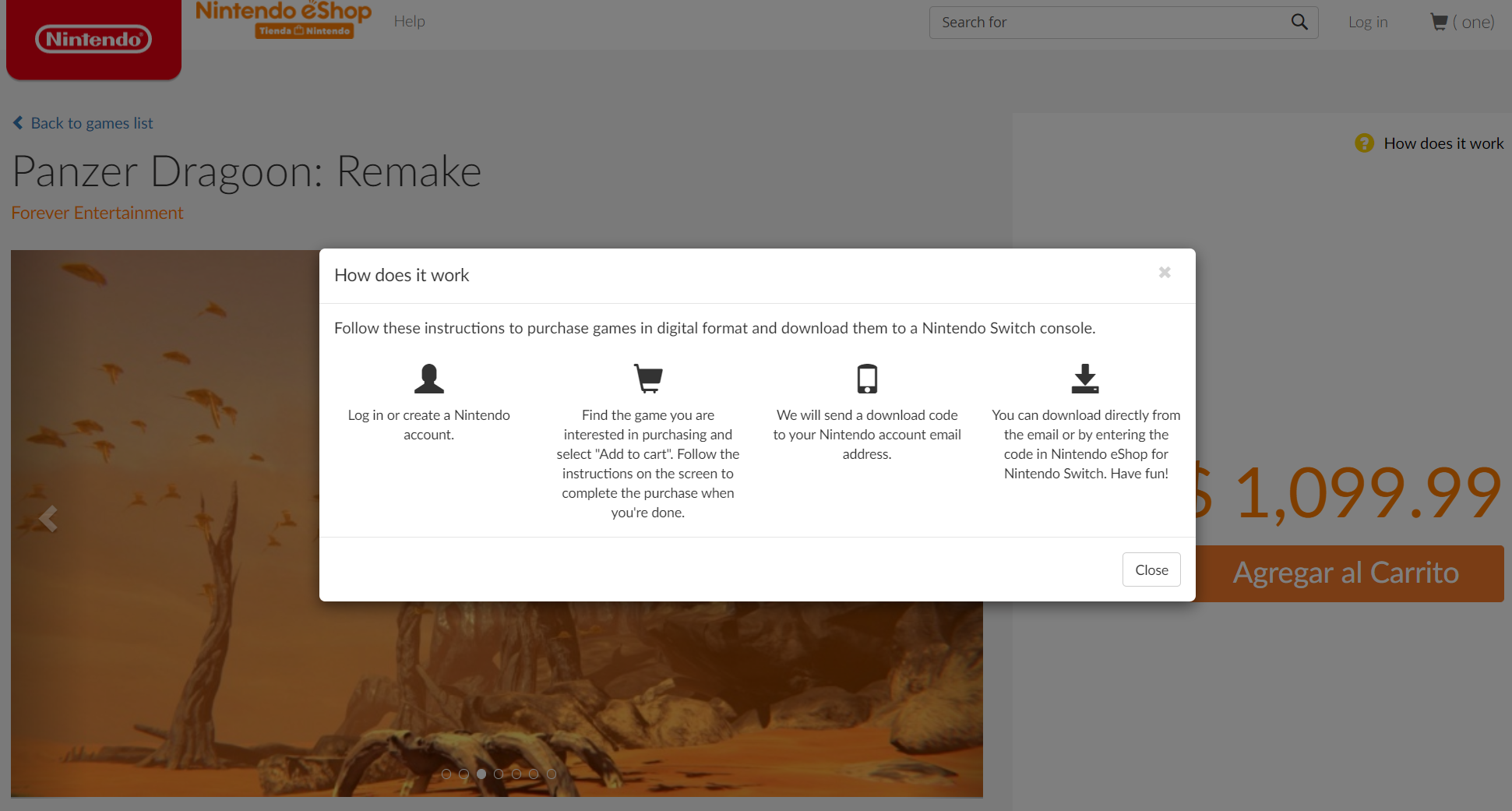
Enlarge/ Google’s automatic translation of the “how to buy” instructions at the Brazilian Nintendo eShop. The game in the background, Panzer Dragoon: Remake, costs roughly $21 in US currency.
Nintendo Brazil
But with a Nintendo account, the possibilities open a bit wider if any valid payment credentials have been saved. This is because of how Nintendo “eShop” purchases work in certain regions of the world. In many territories, you can use the eShop on a Web browser, but this will only allow you to make purchases to the sole Nintendo Switch assigned to your account. Change the eShop region to somewhere like Brazil, on the other hand, and you’ll have the option to buy games’ codes—which you can then email, share, and otherwise claim on any other Nintendo Switch’s account.
All of this assumes that this round of Nintendo account hijackers either harvested usernames and their matching passwords (which is bad) or found a way to log in to users’ accounts without any passwords attached (which is much worse). The potential harm only gets worse if the leak includes payment credentials or home addresses and phone numbers—but we’re still waiting to hear whether those leaked.
Update, April 21: Hours after the company’s European arm issued a statement to Eurogamer, formally asking all of its users to turn on 2FA, a Nintendo of America representative offered a nearly identical statement to Ars Technica:
We are aware of reports of unauthorized access to some Nintendo Accounts and we are investigating the situation. In the meantime, we recommend that users enable two-step verification for their Nintendo Account as instructed here: https://en-americas-support.nintendo.com/app/answers/detail/a_id/27496. If any users become aware of unauthorized activity, we encourage them to take the steps outlined at https://en-americas-support.nintendo.com/app/answers/detail/a_id/47194 or visit https://support.nintendo.com for general support.
Click here for Nintendo of America’s official guidance about turning on 2FA via Google Authenticator (that method also works with other authentication apps). Nintendo of America did not offer answers to our questions about the nature of the breach or how Nintendo is planning to address it.
Update, April 24: Nintendo has now issued a statement (Google Translate) confirming up to 160,000 Nintendo Accounts have been affected by the recent breach. Nicknames, date of birth, gender, country/region, and email address information may have been viewable by hackers, the company says. There’s no indication that credit card information was visible to hackers, though, even as some accounts may have seen illegitimate purchases through linked payment information.
Nintendo says it has discontinued the ability to link outdated Nintendo Network IDs to Nintendo accounts, which appears to have been the main vector for the credential-stuffing attacks. Compromised Nintendo Network IDs will have their passwords reset automatically.
Developed through the National Deaf Center (NDC) in Austin, Texas, Deafverse is a browser-based ongoing-narrative adventure about navigating the world as a deaf teenager. Designed first and foremost (but not exclusively) for classroom use, the game seeks to educate and enlighten players about deaf culture through collaborative play and discussion. Players learn about the real-life challenges of deafness in a safe and sincere way designed by and for the deaf community.
Deriving inspiration from choose-your-own-adventure books and games, Deafverse merges aspects of point-and-click sci-fi and fantasy stories from the 1980s and ’90s with contemporary standards for accessibility to make something that is as educational as it is engaging.
Telling our own stories
“In deaf culture, we have a very strong culture of telling our own community stories,” Kent Turner, gaming coordinator at the National Deaf Center, told Ars Technica. “We love to share stories, and it’s a very small community, and our language is unique to us. So I wanted to develop a game that really incorporated those values of deaf culture.”
Turner, a former teacher with a master’s degree in game-based learning, derived much of Deafverse‘s design from his experience “gamifying” his classroom. There, he used a points system akin to Dungeons & Dragons to reward students for completing homework, doing well in class, and so on.
Deafverse marries that idea with a story-centered approach akin to King’s Quest and The Secret of Monkey Island. Players face common hurdles among the deaf community—like requesting an interpreter or just speaking up for themselves in a tough situation—and examine the issues involved through branching conversations and intuitive puzzles.
“‘Choose your own adventure’ is a model of storytelling that, historically, has been text-based, and American Sign Language isn’t really deliverable, so to speak, over text,” Turner said. “So, we have an actor who uses sign language and narrates the story and events using ASL. It also provides the text version as well, for those [who are] not fluent in sign language. We also have audio voiceover as another accessibility feature, and that really overlaps with the gaming features of picking your own adventure and figuring out what happens next in the story.”
Empowerment is the central focus—encouraging players to make their own choices and learn from the consequences. Even if things go sideways, the game creates an opportunity to discuss the hows and whys of what happened with other players, playing into the word-of-mouth storytelling that’s at the foundation of deaf community.
Modeling the real deaf experience
Deafverse went through a range of beta tests conducted through partnered schools before the first episode, about self-advocacy, became publicly available in September 2019. Built and rebuilt based on student feedback, the game is now effectively in its third iteration, and its increased interactive elements and animations make the universe feel immersive.
“In terms of building and designing the game with different layers of gaming concepts, we got some inspiration from stories like The Matrix,” Turner explains. “You know, plugging into and experiencing things in that world, but then you have to come out and come back into the real world. So that’s given us some ideas about how to build out into the future.”
Enlarge/ It’s like taking the red pill, just without all the side effects like waking into a dystopian wasteland ruled by machines.
Although Deafverse is primarily designed for deaf teenagers of high school age (in service of the NDC’s primary goal of supporting deaf young people’s transition into active employment), much of its subject matter is useful for anyone who wants to learn about deafness. Using federal funding through the NDC, the Deafverse development team was able to cast a wide net for research on ways deaf young people are and are not succeeding after their teen years. The findings, Turner says, were cross-checked against a set list of broad learning outcomes to create a game that teaches lessons while still being true to life.
But Deafverse is also about connecting to those who may feel isolated. Pop culture’s rare, usually inaccurate depictions of deafness are often not much help in that regard.
“My two favorite examples are, first, people who can’t sign or they use a different version of sign language that we can’t understand,” William Albright, senior software engineer on Deafverse, said of some common “deafness in pop culture” tropes. “And then, when a deaf character is chatting with other people in a movie, and the person is hearing and they speak back to the deaf person. It’s not what really happens in our life. If we can’t hear them, if a hearing person speaks to me, I sort of shut down and run away because it’s not that easy for me to engage with them as they often show in a movie or a TV show.”
As a way of addressing these issues, Deafverse is serving as a benchmark of sorts for overall accessibility within the games industry. While standards are much better than they were, there’s still a lot of room for improvement, not least in basic aspects like uniformity among subtitling and options available. Making Deafverse has involved incorporating as many variations of sign language as possible, so anyone who speaks it at any level can use it.
“We didn’t want to use American Sign Language the entire time because we didn’t want people to feel like, ‘Oh, I don’t sign like so and so,’ or ‘I don’t sign at all, I can’t play,'” Albright said. “We want them to feel like they have options of accessibility, and we’ve really tried to keep that key. When advertising the game, if you look at the video, it does look like it’s only for kids who were born and raised in the deaf community, went to a deaf school, and only used sign language their whole life. So we try to counter that by really emphasizing that it’s accessible to all hearing levels and all different types of diverse deaf people within our community.”
Breaking through with students and teachers
Although games are becoming more and more common within a school setting (major releases like Minecraft and Assassin’s Creed have specificversions available for teaching), there’s still a looming skepticism toward their wider usage in education. Deafverse, however, has been met with open arms by teachers relieved to have such a wide-ranging resource. Students, meanwhile, have almost uniformly reported a growth in confidence in surveys conducted after playing the game. More than that, there are also small but valuable knock-on effects for players, like understanding proper signing etiquette by following the narrator.
Enlarge/ A cyber-suit isn’t necessary to play Deafverse, but it doesn’t hurt, either.
“I’m continually surprised at how positive people are receiving Deafverse,” Turner said. “I mean, we get so many positive comments about how great it is… The teachers are really able to take it and run with it, and often students will play Deafverse on their own.”
With the first episode of Deafverse a success, a total of four more episodes have been planned, each tackling one of the NDC’s “pre-employment transitional services.” The second, due sometime in 2020, will tackle entering the workplace; it will look at interviewing and resume writing while building on the communication “soft skills” from the first episode.
Developers are currently ironing out remaining minor issues with the engine and getting the upcoming achievement systems for tracking progress ready for roll out. In the long term, the team hopes to be able to make the jump to mobile and deepen the branching storylines that can make Deafverse feel so dynamic.
“Right now, the story is told through very basic ‘if’ and ‘then’ statements,” Turner explained. “It’s pretty basic, as we have it. We do want to add some more features like conditional branching… so when a player makes a decision here it’ll impact something later down in the story again.”
“The branching increase[s] the value for players, who can play it repeatedly and have all kinds of different things happen because of one choice,” Albright added. “The game [currently] feels more linear: you make one decision and it will tell you to keep navigating down the same road. So we are planning to branch out and give people different results, so not everybody comes to the same conclusion at the end.”
“We’re looking forward to providing that versatile experience for our players as we move through the development.”
Special thanks to interpreter Amanda Katz who was an immense help in translating many of the interviews in this piece from sign language.
The train’s social order is threatened in latest Snowpiercer trailer
[embedded content]
Daveed Diggs and Jennifer Connelly star in the new TNT series Snowpiercer.
Earlier this month, TNT announced it would be moving up the release of its new science fiction series, Snowpiercer, by a couple of weeks in the wake of the ongoing coronavirus pandemic. And now we have a new full trailer to give us a closer look at what we can expect: essentially a reboot of the critically acclaimed 2013 film by Oscar-winning director Bong Joon-ho (Parasite), fleshed out into a full-length series.
Bong’s film itself was an adaptation of a 1982 French graphic novel Le Transperceneige, about remnants of humanity trying to survive an ice age inside a 1,001-car train. The train is run by a reclusive transportation magnate named Mr. Wilford, who has separated the passengers according to class and has a nefarious plan to ensure life on the train remains sustainable.
The film starred Chris Evans as revolutionary leader Curtis, with Tilda Swinton as second-in-command Minister Mason. Bong shot much of it on a specially constructed set: a train mounted on a giant gyroscopic gimbal, the better to mimic the movements of an actual train. Snowpiercer earned critical raves and went on to gross $86 million worldwide against a roughly $40 million production budget.
TNT’s series is set seven years after the climate catastrophe that produced the ice age. Daveed Diggs (Hamilton, Blindspotting) plays Layton Well, a prisoner at the tail end of the train who spends much of his time sniffing Chronole (basically industrial waste) until he gets caught up in a revolutionary struggle against the imposed social hierarchy abroad Snowpiercer. Jennifer Connelly (Alita: Battle Angel) co-stars as first-class passenger Melanie Cavill, who is the Voice of the Train, responsible for daily public announcements. The show’s large ensemble cast also includes Mickey Sumner (The Borgias, also daughter of musician Sting) as brakeman Bess Till, who stumbles upon a mystery that threatens the train’s status quo.
A new day dawns abroad Snowpiercer.
Rise and shine!
YouTube/TNT
Upper-class passengers convene.
YouTube/TNT
Time for school.
YouTube/TNT
Work is one of Mr. Wilford’s three principles (along with honor and order).
YouTube/TNT
Onboard evening entertainment.
YouTube/TNT
Jennifer Connelly’s Melanie is the Voice of the Train.
YouTube/TNT
Alison Wright plays Lilah Anderson. She works in the train’s nail salon.
YouTube/TNT
The lower classes in the rear cars of the train have a much harder existence.
YouTube/TNT
Daveed Diggs plays Layton Well, a drug addict and prisoner at the back of the train.
YouTube/TNT
Rebellion is brewing.
YouTube/TNT
Dangerous ideas are spreading up-train.
YouTube/TNT
Layton finds his inner rebel.
A scene of carnage.
YouTube/TNT
The first teaser dropped in January, providing snippets of life aboard the fictional train. We saw the opulent first-class accommodations and children in a classroom being indoctrinated, chanting praise to the great Mr. Wilford and “to the engine eternal!” There were lots of impressive shots of the train racing through a desolate frozen landscape and hints of a brewing rebellion.
The new trailer opens with the by-now-familiar panoramic shot of the train speeding through ice and snow as the sun rises. Melanie wishes the passengers a good morning, along with the daily weather report: outside temperatures of -119 degrees Celsius (or about -182 degrees Fahrenheit). “We are seven years, eight months, and 13 days from departure,” she intones. We see Lilah Anderson (Alison Wright), who works in the train’s nail salon, addressing the privileged passengers in the upper classes, reminding them that Mr. Wilford runs the train on three principles: “work, honor, and order.”
But that order is in danger of unraveling, thanks to rising tensions in the lower-class cars. “They keep pushing, and it’s time we push back,” one of the rabble-rousers declares. We already know Layton gets drawn into that rebellion, and based on a brief shot of carnage, the inevitable clash doesn’t go well for the lower-class passengers. The trailer ends with Melanie musing, “Sometimes you have to lose something to find it again. Once you pass through that door, there’s no turning back. “
Snowpiercer debuts on TNT on May 17, 2020, in the United States and on Netflix outside of the US and China.
Disney+ is giving us a peek behind the curtain of Mandalorian’s first season
[embedded content]
Trailer for Disney Gallery: The Mandalorian, debuting on Disney+ on May 4, 2020.
There are still several more months until season two of The Mandalorian hits Disney+ in October (assuming everything stays on schedule), but to tide us over, the Mouse House has released a trailer for Disney Gallery: The Mandalorian. The eight-episode documentary series will explore multiple facets of the production of this first live-action Star Wars television show.
Disney+ announced the documentary series earlier this month. “Disney Gallery: The Mandalorian is an opportunity for fans of the show to take a look inside and get to see a different perspective, and perhaps a greater understanding, of how The Mandalorian came together and some of the incredibly talented contributors throughout Season 1,” executive producer Jon Favreau said in a statement at the time. “We had a great experience making the show, and we’re looking forward to sharing it with you.”
Per the official synopsis: “The Mandalorian is set after the fall of the Empire and before the emergence of the First Order. We follow the travails of a lone gunfighter in the outer reaches of the galaxy far from the authority of the New Republic.” The premise is that after the defeat of the Empire in Return of the Jedi, there was a period of chaos and lawlessness as a new government struggled to emerge from the wreckage.
Pedro Pascal took top billing as Din Djarin, the titular Mandalorian, joined by Werner Herzog as “The Client”; Gina Carano as Cara Dune, a former Rebel Shock Trooper; Carl Weathers as Greef Carga, leader of a bounty-hunter guild; Giancarlo Esposito as former Empire governor Moff Gideon; Taika Waititi, who voices the droid IG-11; and Ming-Na Wen as assassin Fennec Shand, among others. The Internet (and Herzog, apparently) soon fell in love with its breakout star: “Baby Yoda,” formally known as The Child (since he isn’t the Yoda, just an infant of the same species), played by a variety of puppeteers.
Executive Producer Jon Favreau on set.
YouTube/Star Wars/Disney+
Stormtrooper extras are all smiles until the camera rolls.
YouTube/Star Wars/Disney+
YouTube/Star Wars/Disney+
Executing a few fighting moves in front of a green screen.
YouTube/Star Wars/Disney+
Going into hyperdrive on set.
YouTube/Star Wars/Disney+
Building models was a big part of the series’s production.
YouTube/Star Wars/Disney+
Setting up a shot, pre-CGI.
YouTube/Star Wars/Disney+
The final shot, fully rendered.
YouTube/Star Wars/Disney+
A Taika Waititi sighting! He voices the droid IG-11.
YouTube/Star Wars/Disney+
Setting up IG-11 for its big shootout scene.
YouTube/Star Wars/Disney+
A crewman operates IG-11.
YouTube/Star Wars/Disney+
The final scene.
YouTube/Star Wars/Disney+
The Chlld, nicknamed “Baby Yoda” by an adoring Internet, was a functioning puppet.
YouTube/Star Wars/Disney+
Making Baby Yoda walk.
YouTube/Star Wars/Disney+
Taking a breather between takes.
YouTube/Star Wars/Disney+
Bonding with a young actor on set.
YouTube/Star Wars/Disney+
Trying Mand’s helmet on for size.
YouTube/Star Wars/Disney+
Roundtable participants pause for a selfie.
YouTube/Star Wars/Disney+
One last shot at sunset.
YouTube/Star Wars/Disney+
No doubt reflecting on a job well done.
YouTube/Star Wars/Disney+
Ars’ Sam Machkovech raved about the season’s premiere episode last November, praising “the balance of practical effects, carefully molded alien costumes, and intentionally cheeseball CGI.” He added: “Those brief CGI moments are forgivable in light of gorgeous set design, a John Williams-caliber score of brand-new compositions, and a cast of actors who savor their pauses, beats, and moments to simmer in tension (both for action and comedy’s sake).”
Even though it hadn’t yet concluded by year’s end, the series easily landed a spot on our top TV shows of 2019. “Creator Jon Favreau’s brainchild has proven to be a killer vehicle for the most Star Trek-like storytelling yet in a live-action Star Wars product,” Machkovech wrote. “Even better, its freak-of-the-week and brand-new-planet progression has been paired with a proper samurai story, as anchored by the religious, fervent, and conflicted Mando himself.
We get several tantalizing glimpses of how the series was brought to such vivid life in the trailer for Disney Gallery: The Mandalorian. That includes a roundtable discussion with Favreau, Waititi, and several other team members reflecting on their experiences during the shoot. There are shots of the manual operation of the droid IG-11 during that infamous shootout scene; the Mandalorian (either Pascal or a stuntman, who can tell with the helmet on) executing a few fighting moves for the green screen; and a glimpse of Baby Yoda revealing the people behind the puppet, among other highlights. All in all, it looks like a satisfying series, although we wish it was being released all at once rather than in weekly installments.
Disney Gallery: The Mandalorian debuts on Disney+ on May 4, 2020. New episodes will stream every Friday. May the Fourth be with you!
Listing image by YouTube/Star Wars/Disney+
https://arstechnica.com/?p=1670402
Valve confirms code leak for two online games, offers assurances for one of them
Enlarge/ Valve’s cagey response to news of a code leak may not be great news for fans of Team Fortress 2.
A major source code leak for Valve’s biggest competitive PC multiplayer games—Counter-Strike: Global Offensive and Team Fortress 2—began making the rounds late Tuesday. Amid worries that this code leak for active, online games would lead to hackers finding exploits and developing remote code executions (RCEs), Valve issued a statement on Wednesday that such worries were moot.
There’s a catch, however. In an emailed statement to Ars Technica about the nature of the leak, Valve only offered a statement about CS:GO:
We have reviewed the leaked code and believe it to be a reposting of a limited CS:GO engine code depot released to partners in late 2017, and originally leaked in 2018. From this review, we have not found any reason for players to be alarmed or avoid the current builds (as always, playing on the official servers is recommended for greatest security). We will continue to investigate the situation and will update news outlets and players if we find anything to prove otherwise. In the meantime, if anyone has more information about the leak, the Valve security page (https://www.valvesoftware.com/en/security) describes how best to report that information.
(To clarify: Valve’s Source Engine emerged in 2004 as the framework for a different version of Counter-Strike. Before Valve launched any games with that engine, its source code leaked. This week’s news is about an entirely different leak, which Valve claims first took place in 2018.)
Valve’s representatives did not answer our questions about the lack of TF2 in this statement—or whether existing TF2 players should be concerned or change their play patterns in any way. In terms of Valve’s official social media channels, its official @csgo account posted the above statement on Wednesday as a thread, while the official @teamfortress account hasn’t posted an update since August 2019.
Thanks to this vacuum of official word on TF2‘s state, fans are left to refer to panicky responses from major voices in the TF2 community. In particular, two popular, community-run server hubs, Redsun.tf and Creators.tf, have temporarily shut down their operations due to “the uncertainty surrounding security of our infrastructure, as well as a potential for damage to be caused to your computer.” In Redsun’s case, a widely circulated comment from one of its moderators says that their team is waiting for “Valve [to] give us the clear” before resuming operations.
Valve could go a long way toward dispelling fears by speaking directly to the leaked code’s references to TF2. Valve’s Source Engine base breaks into various branches, and while this leaked branch is, as Valve describes, a CS:GO code depot, it includes references to TF2—which one Ars Technica source claims date back to a 2011 build of TF2. Whether that dated, TF2-specific code could be exploited for the sake of RCEs in the current build of TF2 is unclear.
By Wednesday evening, online chatter about possible, live TF2 exploits came and went without apparent proof of anything in the wild. This prompted Garry’s Mod creator Garry Newman to cast doubt on any major vulnerability in the root Source engine—which would affect his popular mod—and asked fans to reach out if they learned of any major vulnerabilities or exploits.
In the meantime, the best bet for interested TF2 players is to operate with an abundance of caution and keep your eyes tuned to server hubs like the ones mentioned above. Until those fans are ready to resume TF2‘s hotly contested Payload matches, you should probably look elsewhere.
https://arstechnica.com/?p=1670330
You can get Nvidia’s “RTX Voice” noise filtering without a pricey RTX card
Enlarge/ Despite the name, you don’t actually need an RTX-branded card like this one to run “RTX Voice” background noise cancellation.
Earlier this month, Nvidia launched RTX Voice, a beta plugin that “leverages NVIDIA RTX GPUs and their AI capabilities to remove distracting background noise from your broadcasts and voice chats,” as Nvidia put it in its announcement. But despite the “RTX” branding, Ars testing confirms that the feature also works perfectly well on older GTX-level graphics cards. And despite that finding, Nvidia’s installer refuses to allow the app on systems with non-RTX cards, unless the user performs some unintended config-file tinkering.
First, the good news: Nvidia’s GTX Voice technology actually works really well. As you can hear in the test sample below, turning on the feature filters out almost all of the mechanical keyboard clicking picked up by a standard webcam microphone. That’s likely to be an especially useful feature for anyone who has tried typing notes during a Zoom video call or dealt with kids screaming in other rooms during the same.
An Ars Technica test of Nvidia’s “RTX Voice” beta, running on a GTX 1060 graphics card.
Now for the more questionable news: the “RTX” in “RTX Voice” seems to be a marketing misnomer. We know this only because of a workaround (seemingly first disclosed publicly by a Guru3D forum poster) that tricks the RTX Voice installer into working on a system with an older Nvidia graphics card. The process is as simple as running the installer, editing out a few lines from a temporary configuration file it creates, and then running the installer again without the “constraint” check active.
Ars tested this method with an older gaming rig running a GTX 1060 video card. The successful results on that machine (which you can hear above) were indistinguishable from similar tests run on a more modern system with an RTX 2080.
What’s more, the Windows system monitor only topped out at about 3-percent usage while actively running the RTX Voice noise cancellation on a GTX 1060. That suggests the older CUDA cores on the 1060 (and other older Nvidia cards) are more than enough to handle this feature and that the more advanced tensor cores in the RTX lineup aren’t absolutely necessary for “RTX Voice.”
More like “GTX Voice”
It’s possible that older Nvidia GPUs may suffer more when running RTX Voice while the GPU is under heavy load from other video processing work. While the low GPU usage numbers in our test suggest any such impact won’t be significant, we haven’t performed comprehensive testing to substantiate this.
That said, it seems odd to completely bar non-RTX users from even trying out the beta on their systems (perhaps with an install-time warning) in order to judge the potential performance impact on their own. Over at Guru3D, users are reporting success running RTX Voice on Nvidia’s 10XX and 16XX series cards, with more mixed results on the 9XX-series.
Nvidia was not able to respond to a request for comment as of press time (and we’ll be sure to update if and when they do). But the company’s announcement earlier this month suggested that the beta feature had been rolled out earlier than expected.
“Like many of you, we’re all trying to adjust to our new normal. Our homes are now a shared office, streaming studio, and gaming den all in one,” staffer “Tim@Nvidia” wrote. “We’ve been silently working away on RTX Voice —our noise-cancelling app—but wanted to get this in your hands as soon as possible via an early-access community beta. The product is still in development, but we hope you find it useful!”
Development beta or not, for now it appears that limiting RTX Voice only to Nvidia’s priciest graphics cards is a move that’s being driven more by marketing than by any technical concerns. But Nvidia could still patch out this workaround at any moment, so if you want to RTX Voice on a GTX card, download the current beta build (V 0.5.12.6) as soon as you can.
https://arstechnica.com/?p=1670164
Google wins victory royale over Epic Games, snags Fortnite for Google Play
Enlarge/ Artist’s conception of the experience of installing Fortnite on Android before today.
It’s now been over 18 months since Epic Games shook up the mobile-gaming market by refusing to release the Android version of Fortnite: Battle Royale on the Google Play store. At the time, Epic was explicit that avoiding Google’s 30 percent “store tax” was part of its motivation for the decision.
The reason for the move, the company says in a statement provided to Ars Technica, is because of a “basic realization”:
Google puts software downloadable outside of Google Play at a disadvantage, through technical and business measures such as scary, repetitive security pop-ups for downloaded and updated software, restrictive manufacturer and carrier agreements and dealings, Google public relations characterizing third-party software sources as malware, and new efforts such as Google Play Protect to outright block software obtained outside the Google Play store.
Portions of that statement could refer to a security-related spat between Google and Epic from just after the game’s Android launch. There, Epic fixed a potential Android Fortnite installer vulnerability after being alerted to it privately by Google.
But when Google disclosed the (former) vulnerability a week after the fix was released, Epic said “it was irresponsible of Google to publicly disclose the technical details of the flaw so quickly, while many installations had not yet been updated and were still vulnerable.” Epic also characterized the disclosure as part of Google’s “counter-PR efforts against Epic’s distribution of Fortnite outside of Google Play.”
Installing Fortnite outside of the Google Play store can require users to tinker with their phone’s security settings, and it usually presents users with a bevy of warnings about the dangers of installing apps from “unknown sources.” That said, such “unknown source” installations are a main vector for Android malware to spread, so it’s not like Fortnite is being singled out for no reason here. Then again, there’s plenty of malware to be found on the Google Play store, as well.
Since Fortnite launch in August 2018, Google has included a special message for users who search for the game on the Google Play store, warning them that the game is not available.
“We hope that Google will revise its policies and business dealings in the near future, so that all developers are free to reach and engage in commerce with customers on Android and in the Play Store through open services, including payment services, that can compete on a level playing field,” Epic said in its statement on the matter.
Here’s why “baking” damaged reel-to-reel tapes renders them playable again
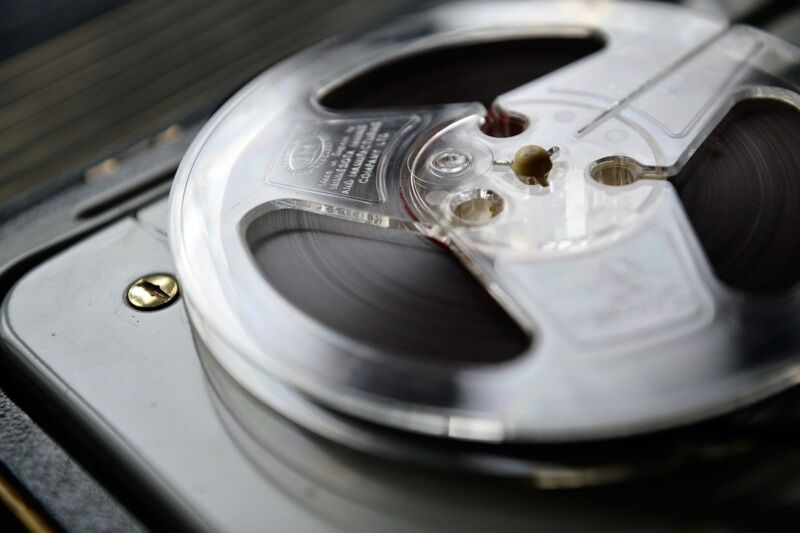
Enlarge/ Audio buffs are rediscovering the sound quality of reel-to-reel tapes. Chemists at the Library of Congress are studying why the tapes tend to degrade over time and why baking them can often reverse the damage.
Reel-to-reel tapes are experiencing a resurgence of interest among audio buffs, but they are prone to degradation, which has been a topic of active research for many years. It’s well known that applying heat can often reverse the damage sufficiently to enable playback, usually by baking the tapes in an oven. Now scientists at the US Library of Congress have determined precisely why this method seems to work, presenting their findings earlier this month on the American Chemical Society’s SciMeetings online platform.
Project leader Andrew Davis is a polymer chemist who works in the LOC’s preservation research and testing division. The LOC’s mission is to ensure its collections continue to be accessible to the public, either in their original or reformatted mediums. The R&D division is responsible for providing the scientific groundwork for that mission, similar to how the Smithsonian Institute employs research scientists to maintain its collections.
“We span everything from simple analytical tests, like determining the kind of ink used on paper, to testing all building and construction materials, and ensuring the stickers on the barcodes don’t damage books,” Davis told Ars.
Davis emphasizes that the audiotape collection is well-maintained and tapes are not literally decaying on the shelves as I type; he works to ensure that they remain in good condition. While the LOC continues to digitize its vast collection, there is still a large number of tapes in the archives that are still in their original format. They are simply obscure enough that they might only be digitized if the LOC receives a request to listen to them.
Even for those with a digital copy, preserving the originals as long as possible is still important. “It’s not impossible that the digitized version might disappear, might get corrupted, or might become inaccessible 10 to 20 years from now,” Davis said. “If you have that physical object, that’s always something you can come back and re-listen to, or reprocess, if the need arises.”
Baking
Davis was visiting one of the LOC’s offsite facilities, the Audio Preservation Consideration Center in Culpeper, Virginia, when the issue of degraded reel-to-reel tapes came up in the discussion. The primary culprit for the degradation is known as “sticky shed syndrome,” in which the binders used in a magnetic tape to hold the iron oxide casing to the plastic carrier deteriorate. They form a sticky residue that can damage both the tape and playback equipment.
He found that the LOC’s audio curators had various methods on the best ways to bake a degraded reel-to-reel tape, and he also learned that heat-treated tapes will quickly revert back to their degraded condition if they aren’t immediately processed.
“It became very clear that no one really understood the underlying mechanisms of how that thermal treatment worked,” said Davis. Fortunately, his division has a collection of tapes set aside specifically for scientific research, making it possible to conduct even destructive scientific tests. He used small samples from those tapes for this particular project.
The Library of Congress has a vast archive of reel-to-reel tapes it’s responsible for conserving.
Andrew R. Davis
Polymer chemist Andrew Davis browses the archived tapes.
Andrew R. Davis
Davis and a colleague test an old reel-to-reel tape.
Andrew R. Davis
A reel-to-reel tape on deck.
Andrew R. Davis
A brown “sticky shed” residue on an unplayable reel-to-reel tape accumulates at a playback machine’s contact points. The residue disappears upon heating.
Andrew R. Davis
Looking at samples under an electron microscope reveals the difference between baked and unbaked.
Andrew R. Davis
Spectrocsopic analysis of a reel-to-reel tape.
Andrew R. Davis
The first stage naturally involved baking the tape samples. While there is an obscure account from a 1990s audio magazine of a DIY hack using a hairdryer attached to a cardboard box to bake degraded reel-to-reel tapes, and Davis has been asked if a toaster over would suffice, he is skeptical that these were ever common methods. “I think most people use well-controlled laboratory-grade circulating convection ovens when they do this,” he said.
Davis also subjected the samples to other, more cutting-edge analysis techniques, such as scanning calorimetry to measure changes in temperature. (It’s a sophisticated version of the old chemistry-class trick of putting ice in a styrofoam cup and poking a thermometer through the top to make a calorimeter.) Samples were subjected to heat stage microscopy, which involves placing a hot plate under a microscope sample to monitor small microscopic changes in the material as it heats up over time. “We can’t do that in an oven because it’s dark and we can’t see anything,” he said.
He also artificially aged some of the samples in a special environmentally controlled chamber, ramping up the heat and humidity to accelerate the natural aging process. “A lot of degradation processes occur over decades or centuries, and we don’t always have that long to wait [to decide on a particular course of action],” said Davis. “This way we can mimic and predict what would happen over much longer time scales.”
Sweet spot
His experiments showed that, when a degraded reel-to-reel tape is heated, the sticky residues melt back onto the bulk polymer layer, rendering the tape playable once again. That’s why 130°F is the sweet spot for baking degraded tapes; it’s the melting point for the residues. “If you go any lower than that, nothing is going to happen,” Davis said. However, he also found that there is no single component that accounts for tape degradation, and the sticky residues don’t just form on the binder layer.
“This research also confirmed what we heard from audio technicians, that thermally treated tapes that were wound on reels reverted to a visibly deteriorated condition within a few weeks,” said Davis. “Surprisingly, we found that when our small unwound test samples of tape were thermally treated, they appeared to be optically fine even after weeks. Clearly being wound has some effect on the tapes.”
That is the next stage of research, and Davis actually set up a range of samples with different treatments that he was monitoring right up until shelter-at-home policies went into effect in the Washington, DC, area. He hasn’t been able to return to his lab to check on them but is hopeful that, once the lockdowns lift, there will some intriguing experimental results on that score. Beyond that, Davis hopes to extend his experiments to enclosed magnetic media, such as cassette and VHS tapes.