Review: Killing Eve returns with a solid S3 premiere and an unexpected loss

[embedded content]
Sandra Oh and Jodie Comer return for third season of BBC America’s Killing Eve.

The sexually charged cat-and-mouse game between a serial killer and an MI6 agent picks up anew in the S3 premiere of Killing Eve, as Jodie Comer’s Villanelle and Sandra Oh’s titular Eve regroup from the fallout of their last brutal encounter. There’s probably only so much drama you can milk out of their dysfunctional obsession with each other after this season, but judging by the premiere episode, we’re in for another wild ride.

(Spoilers for first two seasons below; mild spoilers for first S3 episode.)

Based on Luke Jennings’ series of thriller novellas, Codename Villanelle, Killing Eve features a self-described psychopathic killer for hire named Villanelle (Comer), who is so good at her job that she frankly starts to be a bit reckless with her assassinations, much to the consternation of her handler, Konstantin (Kim Bodnia). Her string of corpses catches the attention of an MI5 officer named Eve Polastri (Oh), who is obsessed with female killers and correctly guesses there is a new player among their ranks. Eve’s insight earns her a spot on a top-secret MI6 team led by Carolyn Martens (Fiona Shaw).

The strangely perverse attraction the two women feel toward each other drives the dramatic tension in Killing Eve, leading to a sexually charged cat-and-mouse game where it’s not entirely clear who is the predator and who is the prey. Each sees a bit of herself in the other—and that naturally causes serious conflict between Eve and her long-suffering husband, Niko (Owen McDonnell). The first season ended with a bona fide cliffhanger: when the two women finally meet, they curl up on Villanelle’s bed for what the killer thinks will be a romantic interlude. Eve stabs her with a knife and flees, leaving Villanelle to bleed out (or so she thinks).

The second-season opener finds Villanelle in a Paris hospital as Eve unsuccessfully tries to find her, before being called back to London to rejoin her MI6 team to track a new female serial killer, nicknamed the Ghost. Eventually, Villanelle and Eve join forces to find out what tech-company heir Aaron Peel (Henry Lloyd-Hughes) has to do with the string of assassinations. And in the season finale, Villanelle manipulates Eve into making her first kill. When Eve is horrified rather than elated by the act—they are not, as Villanelle believes, entirely “the same”—the assassin takes her revenge, shooting Eve amid Roman ruins and leaving her for dead.

S2 opened right after Eve stabbed Villanelle and dealt with the immediate aftermath for both women. S3 jumps ahead by what appears to be several months. Eve is alive—how could she not be?—but it’s unclear how she survived, other than being told she was lucky somebody found her among those Roman ruins when they did. Eve is now working in the kitchen of a dumpling eatery in London (the better to keep a low profile) and living on a shocking amount of junk food in her dismal flat. Her long-suffering math teacher husband Niko survived his encounter with Villanelle in S2 (although his fellow teacher, Gemma, did not). He is now an in-patient being treated for PTSD.

Meanwhile, Villanelle is living the high life in a lavish Spanish villa, having latched onto a wealthy heiress. We first see her on their wedding day. Watching her try (and fail) to convey genuine emotion during the traditional wedding reception speeches—and the reactions of the puzzled guests, who sense something is off but can’t quite pinpoint what that might be—is a high point of the episode. Villanelle’s plans for a life of semi-retired luxury are upended by the appearance of Dasha (Harriet Walter), her former mentor from Russia. Konstantin is also back in the picture; he might just be Villanelle’s longest relationship, to his continued peril.

The official S3 synopsis referred to “a shocking and personal death” that serves to set Eve and Villanelle on another collision course. That demise occurs at the end of the premiere episode. While it’s certainly going to have major repercussions for several main characters, I’m not sure one could consider it shocking—certainly not by Killing Eve standards.

The inability to shock is, frankly, the main challenge the show now faces. S1 was stellar, and it constantly shocked and astonished us, precisely because the twisted Eve/Villanelle dynamic was so surprising and fresh. S2 was very strong but not quite as unpredictably exhilarating, despite some very clever plot twists in the final few episodes. By now we’ve been conditioned to expect those kinds of shocks, which paradoxically makes them less effective.

Don’t get me wrong—this first S3 episode has all the elements we’ve loved about the series from the start, including even more spectacular outfits for Villanelle. She is just as outrageously unpredictable and charming (in a deadly psychopath way) as ever, thanks to a brilliant performance by Comer. You never want to take your eyes off her; no wonder Eve remains obsessed. I trust that the writers and new showrunner Suzanne Heathcote have plenty of exciting twists and suspenseful moments in store for us. But at some point, the basic premise—already wearing a bit thin—will run out of steam altogether. And then the real question becomes, where does the series go from there?

Listing image by BBC America

https://arstechnica.com/?p=1667678



Digital hoarders: “Our terabytes are put to use for the betterment of mankind”

[embedded content]
Think we prefer the album version, but OK, sure Top of the Pops

Today perhaps more than ever, data is ephemeral. Despite Stephen Hawking’s late-in-life revelation that information can never truly be destroyed, it can absolutely disappear from public access without leaving a trace.

It’s not just analogue data, either. Just as books go out of print, websites can drop offline, taking with them the wealth of knowledge, opinions, and facts they contain. (You won’t find the complete herb archives of old Deadspin on that site, for instance.) And in an era where updates to stories or songs or short-form videos happen with the ease of a click, edits happen and often leave no indication of what came before. There is an entire generation of adults who are unaware that a certain firefight in the Mos Eisley Cantina was a cold-blooded murder, for instance.

So on any given day, 19-year-old Peter Hanrahan now spends his evenings binging on chart-topping radio shows from the 1960s. A student from the North of England, he recently started collecting episodes of Top of The Pops—a British chart music show which ran between 1964 and 2006—after seeing the 2019 Tarantino flick, Once Upon a Time In Hollywood.

“I was searching for TOTP episodes as I found that there was a severe lack of them available on YouTube, the BBC iPlayer, or any other radio shows,” he tells Ars. “But I wanted to experience what it would have been like back then and searching because of how atmospheric the radio was in Once Upon A Time in Hollywood. It’s been another way to discover music from that era.”

If Hanrahan merely wanted to experience more ‘60s British chart-toppers, of course, he could’ve simply run to Spotify. But he wants the experience of TV as it was recorded back in the day—including live studio audiences, lip sync controversies, and alleged sex offenders.

Naturally, YouTube does have many old episodes, but the BBC has tried taking down ones featuring Jimmy Savile or Gary Glitter, for instance. Today it’s far from a complete TOTP library with only a fraction of the episodes Hanrahan is looking for accessible on the platform. YouTube is also quick to respond to takedown notices, and episodes which are currently there one day can disappear the next.

His next stop is archive.org, the venerable non-profit library which boasts a tremendous 411 billion archived web pages, 23 million books, 5.5 million movies and a variety of other data. Often they will have what Hanrahan needs, but if not, his next stop is an obscure corner of reddit, where it is just possible that someone, somewhere, will have a copy saved.

It’s taken Hanrahan a long time to find and obtain them, but his work, trawling the edges of the Internet and connecting with real people, is finally paying off. In his first year as a self-confessed hoarder, Hanrahan had collected more than than a terabyte of data.

This impermanence of information, of course, goes far beyond old British radio. And luckily for future generations, the itch to seek it out, collect it, and store it goes beyond Hanrahan, too. It’s a sentiment currently driving thousands of individuals to band together online in the communal pursuit of archiving old media of all sorts. This ain’t the grant-and-partnerships-funded well-coordinated operation of the Internet Archive; it’s the individual-obsession-driven r/Datahoarder.

There’s a subreddit for everything

In 2020, the r/Datahoarder community on reddit is almost 200,000 members strong, with around 1,000 or so idling or posting in the subreddit at any time. The communal purpose here is exactly what it sounds like: these amateur archivists set out to collect and capture data and to preserve it for record, reference, and future reading. Often, the goal is to retain this information both online and off, through physical media or terabytes of personal harddrives and storage. In a way, you can think of r/Datahoarder like thousands of haphazard individual Internet Archives—though each member tends to have a few specific niche areas of focus.

On r/Datahoarder, you’ll find people storing data on everything from YouTube videos to game install discs. One person was even planning to copy all Australia-based websites even as the country burned in the worst wildfires in history. The post was deleted after it was pointed out that the physical servers for Australian websites are located outside the country. They’re safe for now—phew.

Some users archive every website they visit or service they use, and the gamut of media includes virtually everything: movies, music, and porn are all popular.

And for future historians, every tweet, every livestream, every TV and news show of the recent and ongoing Hong Kong democracy movement has been squirrelled away by a few dedicated users. Already it’s proving useful to at least one academic who visited r/DataHoarder seeking research material for their Sociology master’s thesis on the Hong Kong protests.

Any hardware is welcome. While many users boast huge storage racks of expensive equipment, even humble Raspberry Pis are routinely kitted out with oversized drives and employed as real-time reddit-scrapers. That embarrassing 3am post about how you really need to get back with your ex? You may have deleted it within seconds of posting, but it’s almost guaranteed that there are multiple copies in private archives—available to your ex on request.

1990’s era mass storage devices such as the Iomega Zip Drive occasionally float to the surface of the sub, as their owners rediscover them from a cupboard under the stairs, prompting discussion on drivers, recovery methods, file formats, and readability.

The desire to save information for posterity seems to be almost universal, but manifests in different ways according to each hoarder’s own interest. Scroll through the boards and you’ll find archived websites offering customization for Windows 98 machines and novelty cursors. You’ll find users on a mission to preserve the entire Internet of a single country at a given point in time. You’ll find users whose particular obsession is satellite weather forecasts for Japan, or silent movies.

As you might guess based on a collection of highly motivated and obsessed tech users, r/Datahoarder started first as a single IRC chat channel on freenode. Eventually, the community transitioned to the still-in-occasional-use r/datahoarders, with r/datahoarder being brought into existence four years ago. There is also a separate exchange subreddit, r/DHExchange, where members attempt to fill gaps in their collections.

Discussion these days is typically highly technical, largely revolving around efficient means of storing or hoarding vast quantities of data gleaned from online and elsewhere. Users want to get advice on hard drive arrays running into the hundreds of terabytes, mass storage options in the cloud, and the astonishing costs associated with archiving otherwise forgotten older media like broadcasts, music, journals, and webpages.

Hanrahan didn’t get involved out of his love of the 1960s musical zeitgeist—old British music acts are only the latest archival effort he’s undertaking. In real life, Hanrahan has 12 drawers of color-coordinated Lego bricks he uses frequently and an extensive vinyl collection, which includes everything from the original The Good, The Bad, and The Ugly soundtrack to music from Red Dead Redemption II. Perhaps unsurprisingly, he also maintains a large digital games library.

“It started out as me compiling together stuff that I think is relatively hard to find, and just some cool stuff I find, like old commercials and TV intros like ABC’s,” he said.

As a small and whimsical fish in the data hoarding pool, Hanrahan’s storage isn’t extensive but is still considerably more than what most users would have on their home systems. His storage capacity is 6 TB, with 3 TB given over to backups. He spends an additional £100 (roughly $130) on two 1TB drives each time he starts to run out of space. He even keeps additional drives containing his most valued data at another family member’s house and updates his hoard yearly.

No, not that kind of hoarder. <a href="https://www.aetv.com/shows/hoarders">Save that for AMC</a>.
Enlarge / No, not that kind of hoarder. Save that for AMC.
Kurt Wittman/Education Images/Universal Images Group via Getty Images

A brief history of archiving impulses

The urge to store rare or useful recordings and information has been going on for as long as humans have had the means at their disposal. The first archives of written material started appearing at around 3500 BC—not long after the invention of writing, and the Great Library of Alexandria was founded with the aim of acquiring and hoarding the best and most authoritative copies of every piece of work ever produced, employing scribes to hand copy onto the finest parchment available—the ancient equivalent of 8K UltraHD blu ray rips.

It wasn’t until the 1970, with the phenomenal success of the compact cassette tape that amateur archiving of popular live media became possible. Teenagers in their bedrooms would record live radio shows as they aired with the latest pop songs from pirate radio stations. By 1974, Billboard magazine reported that over 40 percent of all age groups recorded live shows from the radio, with a corresponding drop in the number of prerecorded tapes being purchased. Home taping is killing the music industry? This is where it started. Tapes were recorded and recorded again, before being condemned to disposal or a purgatory of eternal storage in a slowly yellowing plastic case, or at the back of a kitchen drawer.

The advent of Betamax and VHS soon gave hoarders a new tool. Live and pre-recorded TV shows and movies became available to watch on demand from the users’ own personal libraries. As with cassette tapes, most recorded shows were later recorded over to make room for the next episode of The Bob Newhart Show or All In The Family. What most people had in mind was not a permanent archive—it was the convenience of being able to watch or listen to the latest installment of a favorite soap when it suited them.

But as VCRs gave way to DVD players, then to DVDRs, TiVo boxes, and eventually the streaming landscape we know and love today, VHS tapes suffered the same fate as cassettes. Broadcast TV, like radio, has largely been lost to the mists of time unless the creators and rights holders put in the effort to create and securely store backups.

For instance, Doctor Who is one one British television’s most successful exports, and at its peak popularity in 1982, the show was being watched by a global audience of 98 million people. Today, the fandom is obsessive—poring over the tiniest plot details, stockpiling episodes, and arguing over which of the Doctor’s 13 incarnations was the greatest.

But between its initial broadcast in 1967 and 1978, the BBC routinely deleted its programming after it had been broadcast in the belief that there was no practical value to keeping copies. Nine years of beloved Doctor Who episodes are missing. Some clips survive and occasionally, a full episode will turn up, courtesy of a foreign network which found the original two inch tape in a box down the side of the couch, but most of Doctor Who‘s earliest broadcasts are gone for good.

Listing image by MARTIN BUREAU/AFP via Getty Images

https://arstechnica.com/?p=1667508


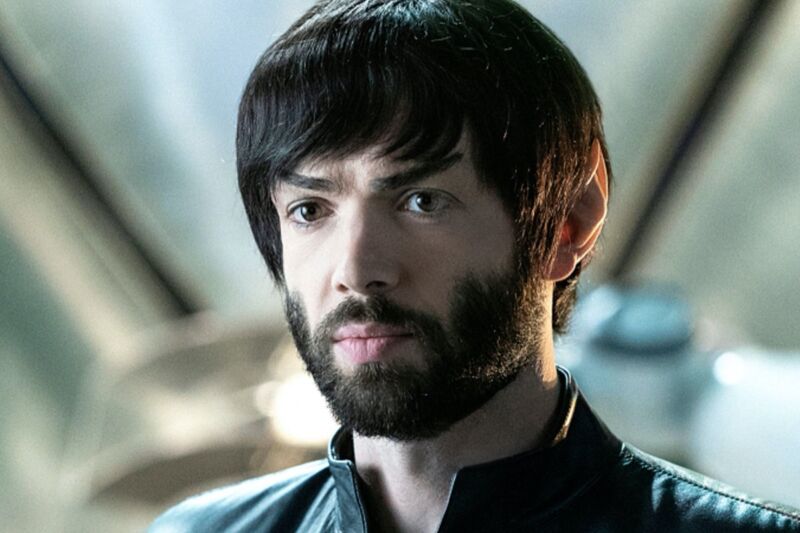
Actor Ethan Peck talks taking on iconic role of Spock for Star Trek: Discovery S2

Ethan Peck took on the iconic role of Spock for the second season of <em>Star Trek: Discovery</em>
Enlarge / Ethan Peck took on the iconic role of Spock for the second season of Star Trek: Discovery
CBS All Access

Star Trek: Discovery takes an admittedly leisurely approach to storytelling, particularly in S1, but that’s frankly part of its appeal. It’s very much a character-driven show,  taking the time to explore complex emotions and relationships. As we wrote in our year-end roundup, “When Discovery shines, it’s like a supernova against the night sky—and much of that light comes from the stellar cast.” One of of those sources of light is actor Ethan Peck, who plays Spock on the series. Peck recently sat down with Ars Technica to talk about the challenge of stepping into some pretty big shoes to portray the canonical character.

(Some spoilers for first two seasons of Star Trek: Discovery below.)

Discovery is a prequel to the original Star Trek, set roughly 10 years before Captain James T. Kirk and his intrepid crew took over the USS Enterprise and boldly went where no man had gone before. It stars Sonequa Martin-Green as Michael Burnham, an orphaned human raised on the planet Vulcan by none other than Sarek (James Frain) and his human wife, Amanda Grayson (Mia Kirshner)—aka, Spock’s parents, which makes her Spock’s adoptive sister. (Certain purists might object that this violates Star Trek canon; Ars’ own Kate Cox prefers to call it “sanctioned fanfic. There was undefined room around the edges to fill in, so they did.”)

In S1, Michael has a promising career as first officer of the USS Shenzhou under Captain Philippa Georgiou (Michelle Yeoh)—until a desperate act to prevent a war with a united Klingon race drives her to defy orders and essentially commit mutiny. Lots of casualties ensued. The season’s broad narrative arc is partly her redemption story, as she joins the crew of the USS Discovery at the behest of Captain Gabriel Lorca (Jason Isaacs). The rest of it involves fighting the Klingons and traveling to a mirror universe, with some pretty major consequences. The final shot showed Discovery meeting up with the USS Enterprise, no doubt igniting excited “squees!” from diehard fans.

For the second season, Christopher Pike (Anson Mount) has temporarily replaced Lorca as captain of the Discovery, while the Enterprise is undergoing repairs. There was more of a return to the classic standalone episode structure, with a season-long arc involving mysterious appearances of a “Red Angel” and a rogue Starfleet AI called Control who seeks to wipe out all sentient life in the universe. That’s where Spock comes in: he has had recurrent visions of the Red Angel since childhood, and teams up with his estranged sister, Michael, and the rest of the Discovery crew to foil Control’s nefarious plan.

First Officer Saru (Doug Jones), Spock (Ethan Peck), Science Specialist Michael (Sonequa Martin Green), and Captain Christopher Pike (Anson Mount) on the USS <em>Discovery</em> (NCC-1031).
Enlarge / First Officer Saru (Doug Jones), Spock (Ethan Peck), Science Specialist Michael (Sonequa Martin Green), and Captain Christopher Pike (Anson Mount) on the USS Discovery (NCC-1031).
CBS All Access

Peck readily admits to feeling considerable trepidation about taking on such an iconic role, following in the footsteps not just of the original Spock, the legendary Leonard Nimoy, but also Zachary Quinto, who portrays the Vulcan in J.J. Abrams’ rebooted film franchise. “I was initially kind of in denial about it, because you never expect that kind of role to come around,” Peck told Ars.

Once he snagged the role, “I had to overcome a lot of self-doubt,” he said. “I wasn’t sure I was ready to take on that much responsibility. I knew it could change my life dramatically. On the one hand, I’d dreamed of something like this. On the other, when you get your dreams, that’s when the real work begins, and you have to figure out what you’re made of.”

Fortunately, the actor thrives on tackling difficult challenges, and rose to the occasion. He found inspiration in past Spock portrayals, and in the 1984 film, Starman, which starred Jeff Bridges as an alien grappling with his new human body and the messy world of human emotions.  And as he settled into the character, a bit of Spock started to rub off on him, particularly when it came to wasting mental energy on self-doubt.

“I realized Spock would never think this way,” he said. “With Spock I learned the importance of honing your own programming. There was a culling of thoughts that were bad for my preparation for the role. That really came from always thinking, ‘What would Spock do?’ As an actor, you have to weasel your way into minds that are not your own.”

“What makes Spock so compelling is the perpetual conflict within him.”

Part of that challenge lies in conveying emotion and Spock’s essential human side, when the character is famous for being logical, precise, and distrustful of emotion. Nimoy was a master of the expressively arched eyebrow. While Peck says he, too, has “articulate eyebrows,” he was hampered in exploiting that feature by the fact that his makeup called for “eyebrow blockers”: a prosthetic placed over his actual eyebrows, in lieu of shaving them into the classic Vulcan shape. “I had to make sure I raised my eyebrow enough every time I had to do that,” he said.

Instead, he focused on the eyes and vocal cadences to emphasize the character’s thoughtfulness and introspection. “What makes Spock so compelling is the perpetual conflict within him,” said Peck. “The conflict between logic and emotion, between Vulcan and human. I always saw in Nimoy’s eyes a depth of understanding of the emotion around him, and an empathy with those around him. That wasn’t always communicated verbally. But you see it in the time he takes to consider moments or situations. That, I think, expresses his humanity very well.”

The gradual humanization of Spock arguably began in the 1980s with Star Trek IV: The Voyage Home (1986) after (spoiler alert!) Spock’s death and resurrection, becoming more pronounced in the Abrams franchise. Discovery‘s incarnation of Spock is probably the most humanized to date, best characterized by his difficult relationship with his estranged adoptive sister Michael—a key thematic arc for the season. We don’t actually meet Spock until well into S2, when Michael finds him on Vulcan, psychologically tormented by the return of his childhood visions of the Red Angel.

The relationship between Spock and his adoptive sister Michael is a key means of exploring his humanity.
Enlarge / The relationship between Spock and his adoptive sister Michael is a key means of exploring his humanity.
CBS All Access

“As I understood it, Spock had spent so much time compartmentalizing his humanity that it was now harming him,” said Peck. “I think Michael really teaches Spock about his humanity. Her childhood of abandonment of him is what forces him to close off his feelings, plus he’s raised on a planet that’s not accepting of emotion. So when they do  reconnect, it’s a bit of a re-education that emotion and instinct give us something above pure logic.” In other words, Michael helps him to become the best version of his dual-natured self.

Alas, Spock seems unlikely to play a role in Star Trek: Discovery‘s forthcoming third season, since in the S2 finale, the spaceship was forced to travel over 900 years into the future to defeat Control. Spock was unable to join Michael and the rest of the crew on that journey, if for no other reason than to preserve the canonical timeline. The good news is that a spinoff series featuring Pike, Number One (Rebecca Romijin), and Spock, together on board the USS Enterprise, is already in development— likely also a prequel to TOS, given what we know of Pike’s ultimate fate.

While there’s no guarantee such a series will eventually transpire, and the current pandemic has put the brakes on everything in Hollywood for the time being, Peck would be delighted to reprise the role, relishing the opportunity to further explore the character’s inner world. “I would love to continue playing this character and being a part of this world,” he said. “Sure, I am biased by now because I’m part of it, and I’ve drunk the Kool-Aid, but there’s almost something religious about Star Trek. Its ideology provides a hope that people can hold onto. Just look at the community it’s created. It celebrates what makes us special as human beings, illuminates what makes us great.”

Maybe we need Star Trek now more than ever. So go on, get your Trek on this weekend with a Star Trek: Discovery marathon. It’s still streaming on CBS All Access, along with Picard and seasons past.

https://arstechnica.com/?p=1667531


Disney’s CGI-remake-mania continues with a live-action fox as Robin Hood

Disney has yet to formally announce a remake of 1973's <em>Robin Hood</em>, but THR has confirmed it's being made. In the meantime, we've come up with our own guess of how the reported film, a "hybrid" of live-action footage and CGI characters, will look in action.
Enlarge / Disney has yet to formally announce a remake of 1973’s Robin Hood, but THR has confirmed it’s being made. In the meantime, we’ve come up with our own guess of how the reported film, a “hybrid” of live-action footage and CGI characters, will look in action.
Getty / Aurich Lawson

The Walt Disney Company has now remade nearly a dozen animated classics as feature-length, live-action films—and that’s not counting spinoffs (Maleficent), semi-sequels (102 Dalmations), or completed films yet to reach theaters (Mulan). Unsurprisingly, Disney isn’t stopping there, and its next expected remake will be part of another new trend for the company: a straight-to-Disney+ launch plan.

The Hollywood Reporter had Friday’s scoop: Disney has begun pre-production on a live-action, CGI-filled remake of 1973’s Robin Hood. Since the film’s planning was reportedly finalized before a wave of set shutdowns across Hollywood, major details such as casting decisions and timeline estimates are not yet available. So far, only a director (Blindspotting‘s Carlos Lopez Estrada) and a writer (Kari Granlund, from last year’s Lady and the Tramp remake) are attached.

THR believes this remake will play out as a musical, much like the first Disney version, and will star “anthropomorphic” animals “in a live-action/CGI hybrid format.” It has not confirmed whether fans should expect the same casting of animal species to key roles, including Robin Hood and Maid Marian as foxes, Friar Tuck as a badger, and Little John as a shameless repeat of the popular Baloo from 1967’s Jungle Book. (THR also didn’t have any comment on whether to expect these remade CGI animals to wear tights or otherwise become enduring sex symbols for a generation.)

The new film’s mix of live-action and CGI footage won’t be the first of its kind for a Disney remake launching on Disney+; that honor goes to 2019’s Lady and the Tramp remake. However, that remake leaned on its source material’s inclusion of human characters to balance out its issues with the uncanny valley. Should Robin Hood try to do the same, it will require some heavy lifting in the rewrite department. Otherwise, a fully CGI cast will put this straight-to-streaming film’s effects pipeline through serious scrutiny, especially if it doesn’t receive the same holy-cow effects budget that was given to 2019’s gorgeous-but-uneven Lion King remake.

But the 2016 Jungle Book CGI remake is an example of how a live-action Robin Hood could very well succeed—especially if it nails its casting for key, humorous characters. Christopher Walken and Bill Murray did well to recapture their source cartoon’s levity, and Robin Hood‘s enduring popularity—especially during the VHS era, which put the film into countless families’ VCRs—would be paid forward handsomely by a cast that understands the fun of song-and-dance sequences like “Oo De Lally.”

https://arstechnica.com/?p=1667559


Study with jazz improv musicians sheds light on creativity and the brain

Popular myth associates creativity with the right side of the brain, but expert jazz musicians, like Pat Metheny, may actually rely more on the left side of the brain when improvising.
Enlarge / Popular myth associates creativity with the right side of the brain, but expert jazz musicians, like Pat Metheny, may actually rely more on the left side of the brain when improvising.
Roberto Panucci/Corbis/Getty Images

There’s a popular myth that divides people into “left brain” and “right brain” categories, whereby the former are analytical and logical, while the latter are creative and innovative. The reality, of course, is much more complicated than that, and a new brain-imaging study of improvisational jazz guitarists is a useful case in point. Researchers at Drexel University found that while the right hemisphere is associated with creativity in fairly inexperienced jazz musicians, experts with high mastery of improvisational skills actually rely primarily on the left hemisphere of the brain. They described their results in a recent paper in the journal NeuroImage.

Co-author David Rosen is a musician and scientist who started playing the piano at age eight before picking up the bass guitar in high school. (Rosen’s band, Nakama, has just released a new EP, for those looking to explore some new musical vibes while we’re all under isolation orders.) Because improvisation—defined as “the spontaneous invention of melodic solo lines or accompaniment parts”—is a defining feature of jazz, Rosen thought it would provide an excellent opportunity to explore the brain’s role not just in creativity, but more broadly in musical perception and expression.

“I think there are a lot of interesting questions to ask about [musical] perception, both for people who are listening to music and people who are performing music,” Rosen told Ars. “The brain is the part that makes us most human and lets us feel those emotions. It’s almost not possible to quantify the altered state we get into when we’re performing or listening to the music we like the most and that means the most to us as individuals. Ultimately, we’re trying to ask very focused scientific questions about pieces of what it means to share in that musical experience.”

In the zone

Jazz musicians often talk about moments during live performances when all the band members are “in the zone,” so to speak, reacting and responding to each other, instead of being more internally focused on their own independent creative choices. That, for Rosen, is the essence of improvisation.

“Mastery in jazz is very much dependent on one’s ability to improvise in all different kinds of scenarios with different musicians all the time,” said Rosen. “And improvising in jazz is really difficult because of how many different chords there are. The chord sequences can be pretty complex, with changes happening really fast.” From a neuroscience perspective, that’s the sort of task that places a heavy cognitive load on the brain, yet master jazz musicians can perform this demanding task in real time thanks to years and years of rigorous training.

A jazz guitar player improvising while his brain activity (EEG) is recorded.
Enlarge / A jazz guitar player improvising while his brain activity (EEG) is recorded.
Drexel University

Exactly how does one go about measuring a nebulous concept like “creativity” with any degree of robustness? Rosen et al. used a well-established method known as the “consensual assessment technique” for their study, in which experts review material—whether it is music, film, and so forth—on different kinds of scales. In this case, a panel of four expert musicians and teachers assessed how creative the subjects’ improvisations were, the aesthetic appeal of the performances, and the subjects’ technical proficiency.

All three measurements were collected independently and proved to be highly correlated, giving the team a measurable quality score for the experiment. As for the expert panelists, their “inter-rater reliability” across all three scales was very high. “So we have some indication that these people are consistent in their measures,” said Rosen. “Without that reliability, we would just be saying, ‘OK, score random people’s opinions.'”

Thirty-two jazz guitarists—some highly experienced, some relative novices—participated in the study. Each subject was asked to improvise to six jazz lead sheets while hooked up to an EEG machine. Their playing was accompanied by programmed drums, bass, and piano. The resulting 192 recordings were then played back to the expert panel, who evaluated them for creativity and other associated qualities. Then Rosen et al. compared the highest and lowest rated recordings with the recorded EEGs to see which areas of the brain showed more activity.

The initial results showed that there was more left-brain activity for highly rated performances on the creativity scale, with greater right-hemisphere activity for those performances with lower ratings. According to Rosen, that finding makes sense once one factors in a musician’s degree of experience.

While the right brain is associated with things like conscious control and motor planning, the left side of the brain is generally more engaged during habitual or routine tasks. “If you do something over and over and over again, you’re going to become really good at that task,” said Rosen. “But that might not necessarily tell us when the expert is having a novel or creative experience while they’re doing the task. In our behavioral models, we saw that expertise was contributing quite a bit of variance in predicting the scores of the improvisation ratings.”

If expertise was the primary driver behind the observed effect, then when the team statistically controlled for level of expertise (particularly when it came to public performance), they should have found little difference in the brain scan data. Instead, there were significant differences in the right-hemisphere brain activity (especially the frontal region) between performances rated highly creative and those that received lower creativity ratings.

In short, experts were rated the highest by the panel even though they were approaching the task of jazz improvisation with the most habitual routines. Rosen attributes this in part to the fact that a novice must go through 16 bars of music on a lead sheet quarter by quarter, for instance, whereas an expert will be able to find patterns, like a two-five-one progression. “That allows them to approach the test with a reduced level of that cognitive control,” he said. So creativity is associated with the right hemisphere when we’re dealing with an unfamiliar situation and associated with the left hemisphere when we are highly experienced with the task at hand.

“If creativity is defined in terms of the quality of a product, such as a song, invention, poem, or painting, then the left hemisphere plays a key role,” said Rosen’s co-author, John Kounios, director of Drexel’s applied and cognitive brain sciences program. “However, if creativity is understood as a person’s ability to deal with novel, unfamiliar situations, as is the case for novice improvisers, then the right hemisphere plays the leading role.”

A dual process

This experiment will feed into a growing body of research at Rosen’s new music technology startup venture, Secret Chord Laboratories, which develops software to predict the response listeners will have to a given piece of music. The company is currently targeting the recording industry, which is always looking for the next hit single. (Rosen describes its mission as “an interdisciplinary exploration of the neuroscience of music.”)

The core technology grew out of an earlier study Rosen did with Georgetown University’s Scott Miles on music perception examining what, if any, patterns of sound produce a pleasure response in the brain. They looked at Hot 100 songs on the Billboard charts, from “Johnny B. Goode” in 1958 through Nirvana’s “Smells Like Teen Spirit” in 1991. “We analyzed every single chord of every one of those songs, and we did a statistical test to see if those charting in the top quartile had a different level of what we call ‘familiar surprise,’ in terms of the harmonic structure,” said Rosen.

They found that the most popular songs had a high level of harmonic surprise, defined as points where the music deviates from listener expectations—the use of relatively rare chords in verses, for example, instead of just sticking with, say, the standard C-major chord progression (C, G, F). The best songs follow up that harmonic surprise with a catchy common chorus. The resulting patents—since expanded to include rhythm, melody, timbre, and lyrics, as well as harmonies—led to the formation of the company.

Rosen and his colleagues next plan to analyze the jazz guitarist data to examine the neural correlates of so-called “flow states.” He also thinks it might be possible to design an experiment to test his hypothesis that jazz musicians engage in a form of “switching,” amassing various tricks and techniques they can use if they become momentarily at a loss during an improvisational performance. “Once we can have people back in the labs again, we could throw in really weird chords, or have music that doesn’t match the lead sheet, to see how quickly they respond to being thrown off,” he said.

“My hypothesis is that [experts] would be able to revert back to the brain state they were in before more quickly than a novice would be able to,” said Rosen. “The dual process is not just that novices use all control and executive functioning and that experts use none. It’s about the interaction of those systems, and which ones are predominant in the different levels of expertise.”

DOI: NeuroImage, 2020. 10.1016/j.neuroimage.2020.116632  (About DOIs).

https://arstechnica.com/?p=1666696


Amid in-game Hong Kong protests, Chinese retailers drop Animal Crossing sales

Chinese online retailers are cracking down on third-party sales of imported copies of Animal Crossing: New Horizons. The move comes as the game has become a popular virtual spot for anti-government protests amid coronavirus-induced lockdowns.

Reuters reports that popular gray market Chinese e-commerce sites Pinduoduo and Taobao have taken down all listings for Animal Crossing as of this morning. Chinese tech site Pingwest reports that the two retailers sent messages to their resellers late Thursday notifying them of the ban. The Chinese government hasn’t issued a statement regarding the game, though a directive from government officials seems the most likely reason for the sudden move.

A licensed Chinese version of the Switch launched late last year through local partner Tencent after the lifting of an outright game console ban in 2015. That version of the system can currently play three Mario-themed games officially licensed for the Chinese market, as well as imported international Switch cartridges, but it can’t access the system’s online features.

But many Chinese gamers have taken to importing fully featured international versions of the system through online resellers. Import prices for those consoles, and for accessories like Ring Fit Adventure, have skyrocketed on Chinese retail sites in recent weeks, mirroring supply shortages in other markets.

As industry analyst Daniel Ahmad notes on Twitter, sites like Taobao have officially banned third-party sales of imported video games since 2017. But that ban is usually lightly enforced and only becomes operative if, as Ahmad puts it, “the game has content or user-generated content that is deemed to be too offensive or violent” or “the game has become very popular and caught the attention of regulators.”

No censorship on this island

Both of those issues seem to apply to Animal Crossing. In recent weeks, the game has become a popular virtual location for pro-democracy protesters who have seen coronavirus restrictions limit their ability to host crowded street protests. Offline players can create elaborate signs, clothing, and other imagery that can, and is, easily shared on social media, as you can see in the above gallery. Online players, meanwhile, can invite other users to their islands to take part in virtual protest actions in miniature.

“Animal Crossing is a place without political censorship, so it is a good place to continue our fight,” pro-democracy activist Joshua Wong told Wired UK earlier this week. “Even lawmakers in Hong Kong are playing this game,” he added.

While these online retail restrictions seem to be stricter than normally applied for the Chinese market, they fall well short of a full-fledged ban of the game. Imported systems can still download the title from Nintendo’s eShop by easily setting up an international account, and some brick-and-mortar retailers may also sell the imported cartridge. Some online resellers also seem to be avoiding the restrictions with listings that don’t mention the game by name in order to arrange a sale through private messaging.

China has not yet taken the more extreme step of blocking direct access to Nintendo’s online servers from the country. That would block downloads of Animal Crossing and other Switch games as well as online play for imported systems, though players could potentially get around that with a VPN. Such a major move could anger Chinese Switch gamers whose imports have been treated mostly with benign neglect thus far. It also could anger Nintendo and imperil the company’s lucrative arrangement with Tencent, which is sharing in millions of official console sales in the country.

China’s Ministry of Culture has long put forward restrictions on games that pose a “serious threat to the moral standards of society,” as it put things when banning Mafia-related games in 2009. More recently, pandemic-simulation game Plague Inc. was removed from the Chinese iOS App Store because it “includes content that is illegal in China as determined by the Cyberspace Administration of China.”

Listing image by Joshua Wong

https://arstechnica.com/?p=1667403


Disney+ surpasses 50 million subscribers in just 5 months

Screenshot from Trailer for upcoming series The Mandalorian.
Enlarge / Pedro Pascal as The Mandalorian on Disney+.

This week, Disney announced a new milestone for its Disney+ streaming video service: 50 million subscribers just five months after the service’s initial launch.

That seems to be many more subscribers than Disney’s own Hulu service, which as of the end of last year clocked in at just over 30 million, and three times the combined subscribers for CBS All Access and Showtime as of January—though none of those services are available in as many countries and regions as Disney+. You might compare Disney+ instead with the more global Netflix, which has 167 million subscribers.

Still, Netflix has been building that subscriber base over many years. Disney has reached 50 million in just a few months. In February, Disney reported 29 million, so those subscribers have nearly doubled in just a few short months. The service may have gotten a boost from users who are consuming more home entertainment amid shelter-in-place orders right now—and that might suggest that the above numbers from a few months ago for CBS, Netflix, and Hulu might be notably behind current figures.

Disney recently released some films that were supposed to be getting theatrical releases on Disney+ instead as a way to distribute them as movie theaters closed in response to the COVID-19 pandemic.

According to Deadline, Disney’s target is 60 to 90 million subscribers worldwide by 2024. Disney+ initially launched in the United States, Canada, and the Netherlands. As of today, it’s available in all of the following countries and territories:

  • Australia
  • Austria
  • Canada
  • Channel Islands
  • France
  • Germany
  • India
  • Ireland
  • Isle of Man
  • Italy
  • Netherlands
  • New Zealand
  • Puerto Rico
  • Spain
  • Switzerland
  • United Kingdom
  • United States

Clearly, there are many regions left for Disney+ to expand into, and since the service has reached 50 million subscribers in just the above, it now appears possible that we’ll learn before long that Disney itself underestimated the service’s potential when it set that 60-to-90-million-by-2024 goal.

However, we should note that more competition is on the horizon. NBC Universal plans a streaming service called Peacock, and another major content conglomerate (WarnerMedia) plans to launch HBO Max next month.

Whereas early streaming service successes like Netflix and Hulu first looked like aggregators of content from the companies that produced and distributed that content in more traditional channels, the industry now demonstrates a clear trend towards content owners banding together into conglomerates that run their own streaming services rather than licensing said content to Netflix or its ilk. And to that point, Netflix has seen that writing on the wall and increasingly pivoted toward making its own content to eventually replace licensing and distribution agreements.

The apparent endgame seems to be shaping up to be something not unlike traditional cable but distributed over IP and unbundled, with far fewer ads, no or decidedly different dedicated hardware, reduced live content, and less financial emphasis on sports network subsidies.

https://arstechnica.com/?p=1667218


HBO’s streaming apps will soon stop working on older Apple TVs

The fourth-generation Apple TV (left) next to the third-gen model.

Second- and third-generation Apple TV streaming boxes will no longer be able to stream content from HBO Go and HBO Now after the end of April, according to a pair of HBO support documents. The documents were uncovered today by MacRumors.

The two streaming apps affected are HBO Go, the additive over-the-top (OTT) streaming service HBO provides to traditional cable subscribers, and HBO Now, the cable-free streaming platform for cordcutters. The support websites for both were each updated with identical support pages titled “Apple TV (2nd and 3rd gen): Changes to device support,” saying:

In order to provide the best streaming experience, we need to make some changes to our supported devices list. Starting on April 30, 2020, HBO GO will no longer be available on the Apple TV (2nd and 3rd generation).

The post goes on to provide instructions that readers can follow to identify which Apple TV model they have followed by a series of bullet points listing ways to access HBO’s content on those devices even though the apps will stop working.

Those methods include using AirPlay to stream content to the Apple TV from a Mac or iOS device that is still supported, connecting to another supported device via an HDMI cable, using Chromecast, or simply streaming HBO Now on another supported device like a modern Apple TV, Roku box, or game console.

The second- and third-generation Apple TV boxes were released in 2010 and 2012, respectively. Users had already seen some services shut down on those machines, the last of which was sold in Apple Stores in 2016. Apple has since launched two more iterations of the Apple TV: an HD model in 2015 and a 4K one in 2017.

The 2015 and 2017 models run tvOS and have an app store, while the second- and third-generation models that HBO is addressing today do not. The company continues to offer apps for the tvOS Apple TV models.

https://arstechnica.com/?p=1666892


Stadia launches free tier including two-month trial of Stadia Pro

Nearly five months after its paid launch, Google’s Stadia streaming-games service is finally rolling out a (relatively) simple way to try it out for free. Curious new users no longer have to pay $130 upfront or a $10 monthly fee (or rely on an invite code from a Premiere Edition subscriber) to try the service.

Google announced today that it would be rolling out free access to Stadia across 14 countries over the next 48 hours. Anyone with a Gmail address should soon be able to sign up for Stadia at its website or through the mobile app on Android or iOS. Despite this morning’s announcement, that free offer wasn’t available via the website in the United States as of press time, though Android users are reporting the ability to sign up through the app.

Those new signups will include two free months of Stadia Pro, which includes instant streaming access to nine games:

  • Destiny 2: The Collection
  • Grid
  • Gylt
  • SteamWorld Dig 2
  • SteamWorld Quest: Hand of Gilgamech
  • Serious Sam Collection
  • Spitlings
  • Stacks on Stacks (on Stacks)
  • Thumper

(An Ars analysis from January found only a few thousand players had accessed that month’s free edition of Thumper on their Stadia Pro accounts.)

New Stadia signups will have to opt out of their Stadia Pro subscriptions to avoid a $10 monthly fee after the trial is up. At that point, they will lose access to their Pro-tier freebies and discounts. Games purchased individually during the free Pro trial (including those with Pro-tier discounts) can still be played after dropping to the free tier, though. Current Stadia Pro subscribers will not be charged for their next two months as well.

Free-tier players are limited to 1080p streaming resolution and stereo sound, losing out on the 4K resolution, 5.1 surround sound, and HDR colors available to Pro-level subscribers (local bandwidth permitting). Google also says it will be setting all players to 1080p resolution by default to limit overall bandwidth usage—Pro players will have to adjust their settings in the Stadia app to get a full 4K experience.

Free players can stream individually purchased games to any PC or laptop computer with the Chrome browser, but they will need to purchase a Chromecast Ultra and Stadia Controller in order to play on a TV directly. For mobile play, Stadia users need one of a limited selection of Android phones:

Stadia gameplay on iOS devices is currently in beta testing and is expected to launch sometime in the second quarter of 2020, according to a SlashGear report.

Since launching with 22 titles in November, Stadia’s selection of available games has expanded slowly to a current 38 titles (not counting DLC and special “editions” of base games). Of those, only two—Doom Eternal and Stacks on Stacks (on Stacks)—originally launched on other platforms in 2020. Three others—Lost Words: Beyond the Page, Spitlings, and Gylt—are currently exclusive to Stadia, with more exclusives planned throughout the year.

Google Stadia’s free offering brings it to relative parity with Nvidia’s competing GeForce Now streaming service, which quickly attracted over a million users after launching with a free-access tier in February (though GeForce Now limits free users to one-hour sessions after a 90-day trial). GeForce Now lets users access a library of hundreds of games you’ve already purchased from other platforms, hosted on and streaming from Nvidia’s remote servers, though some publishers are bristling at being included.

Listing image by Kyle Orland

https://arstechnica.com/?p=1666883


You can help medical science just by playing a new Borderlands mini-game

Players can help biomedical research by playing a new color-matching mini-game introduced in Borderlands 3 this week. “Borderlands Science” basically tricks human players into solving complex genetic alignment problems that can be intuitive for humans but difficult for computer algorithms.

The mini-game is a joint effort between Borderlands maker Gearbox and scientists at McGill University, UC San Diego’s Microsetta Initiative, and the Massively Multiplayer Online Science group. “The first time I met with [Gearbox founder] Randy Pitchford and [Producer] Aaron Thibault to discuss this crazy idea was 5 years ago at GDC,” MMOS founder Attila Szantner said in a blog post. “Since then we have been working together with the Gearbox team to realize this project.”

How does it work?

The process starts with DNA sequences from some of the trillions of microbes in the human gut. Researchers want to arrange those sequences to figure out which of these microbes are genetically similar to each other. That can help indicate which genetic lines of microbes are associated with certain diseases.

Finding the optimal alignment between two related genomes can be difficult, though, because evolutionary distance leads to gaps and mismatches in those DNA sequences. When heuristic computer algorithms try to account for these issues, they tend to get stuck at suboptimal solutions. In these computer-fooling cases, a single alignment shift in any direction will only make things worse, even if a few moves to one side or another might make things much better.

Enter humans, with brains that have evolved over millennia to become efficient pattern-matching machines. By converting DNA sequences to lines of colored blocks, “Borderlands Science” asks players to find their own optimal base pair alignments, minimizing gaps and maximizing matches according to a scoring algorithm (gaps are worse than mismatches, generally). As competitive players find new “high scores” in these patterns, they’re also training a machine-learning AI in new principles for finding optimal solutions on its own.

Using gamers for medical research in this way isn’t an entirely new concept: McGill University’s Phylo, which has been free to play online since 2010, uses the same basic premise to get thousand of players to help sequence viruses. But Gearbox’s Borderlands Science implementation adds a bit of game industry polish and interface refinement to the idea. It also incentivizes millions of Borderlands players to take part in the research by giving them free in-game items and rewards just for playing.

“Combined with classical algorithms, crowd computing techniques can be successfully used to help improving the accuracy of [multiple-sequence alignment],” McGill University researchers wrote in a 2012 paper on Phylo. “Our results show that solutions submitted contributed to improving the accuracy of up to 70% of the alignment blocks considered… This suggests that citizen science approaches can be used to exploit the billions of ‘human-brain peta-flops’ of computation that are spent every day playing games.”

[embedded content]
Mayim Bialik gives a simple introduction to how “Borderland Science” works.

John Timmer contributed to this report

https://arstechnica.com/?p=1666830