New Peninsula trailer looks just as thrilling as its zombie predecessor

[embedded content]
Trailer for Peninsula.

Fans of the zombie genre (and Asian cinema) are no doubt familiar with the 2016 Korean zombie horror film, Train to Busan, in which passengers aboard a speeding train must fight off ravenous zombies to survive long enough to reach their destination—and safety. Now we have the first trailer for a follow-up film, Train to Busan Presents: Peninsula, produced by James Wan (Insidious, Aquaman), and it looks like it will be just as much of a thrill-ride as its predecessor.

(Some spoilers for the 2016 film and animated prequel below.)

Directed by Yeon Sang-ho, the original Train to Busan might be described as Snowpiercer with zombies, with a dash of World War Z and Mad Max: Fury Road thrown in for good measure. But that doesn’t really do the film justice. Gong Yoo stars as Seok-woo, a divorced, workaholic fund manager who missed his daughter Su-an’s singing recital and decides to take her to visit her mother in Busan for her birthday to make it up to her.

Just as the train is pulling out of the station, a young woman jumps aboard, already infected with a strange sickness. She turns into a zombie, and, well, you know how this goes: the plague spreads rapidly throughout the train. The survivors do their best to stick together against the zombie horde but must contend with inevitable complications—such as having to change trains at a station overrun with the undead.

The film earned largely rave reviews from critics—Edgar Wright, who directed the 2004 zom-com Shaun of the Dead, called it “the best zombie movie I’ve seen in forever” on Twitter—and it grossed $93 million globally. What set Train to Busan apart from typical zombie fare was the skillful mix of well-drawn characters and social commentary—something at which Korean entertainment currently excels (see: Parasite, Kingdom). It let audiences witness the rapid spread of the disease along with the passengers as the train passed through city after infected city.

I especially appreciated how well it captures the complexities of human nature in the midst of a terrifying epidemic, with people behaving both altruistically and selfishly (the latter often to the detriment of survival). For example, surviving passengers holed up in a train car refuse to let other survivors in, leading to the death of one of a pair of elderly sisters. The remaining sister deliberately lets the zombies into the car in revenge. But for every character who escapes by ruthlessly pushing someone else into a zombie’s path, there are those who nobly sacrifice themselves so that others may live—the best and worse of humanity.

Just a few months after Train to Busan hit theaters, Yeon Sang-ho released a critically acclaimed animated prequel, Seoul Station. Set in the same fictional universe, it tells the story of a young runaway girl, Hye-Sun (Shim Eun-kyung) struggling to escape her life as a sex worker, just as a zombie outbreak hits the city.

Peninsula is also set in that universe, although Yeon has emphasized that it is not a sequel, and it features entirely new characters and a new storyline. Per the official premise: “Four years after the events of Train to Busan, there is nothing left of Korea except its geography. A crew on a retrieval mission comes under attack and, in the process, discovers more survivors.”

The trailer makes clear that the zombie outbreak has devastated the region, which has been largely abandoned to the undead. A soldier who survived, Jeong-seok (Gang Dong-won) is part of the covert military operation returning to the infected zone, one assumes for scavenging purposes. Many of the human survivors they encounter seem to have largely gone feral, forcing people to fight to the death against zombies. The corpses hanging from the rafters suggest refusing to fight is only a slightly better option. There are literally only two lines of dialogue in the trailer: a panicked soldier screaming “Block the entrance!” and a little girl asking Jeong-seok if he was scared. But who needs dialogue with all that heart-pumping action? It remains to be seen whether the sequel will have the same depth and heart of its predecessors.

Train to Busan Presents: Peninsula was originally slated for release August 12, 2020, but that’s currently up in the air due to the ongoing coronavirus pandemic. Fingers crossed that theaters might open again before them. Meanwhile, if Korean zombie horror is your jam, you can always watch (or rewatch) Train to Busan, Seoul Station, or even the fantastic Netflix series Kingdom while you’re waiting.

Listing image by Well Go USA Entertainment

https://arstechnica.com/?p=1665388


The Last of Us Part II is “nearly done.” So why is it being delayed?

Sony and Naughty Dog have decided to delay The Last of Us: Part II “until further notice” just weeks before a previously planned May 29 rollout. But in what may be an industry first, those companies say the cause of the delay isn’t a need for more development time. Instead, it’s because of what Sony calls a “global crisis… preventing us from providing the launch experience our players deserve.”

Games are delayed all the time, even shortly before their planned launch, in order to give developers more time to polish up their work. But Naughty Dog says that it is “nearly done with development” of The Last of Us Part II and “in the midst of fixing our final bugs.” An unnamed Naughty Dog developer also told Kotaku that the game is “nearly done and ready to go.”

The problem, it seems, is in getting that nearly complete game to potential players in a safe and efficient way. “Even with us finishing the game, we were faced with the reality that due to logistics beyond our control, we couldn’t launch The Last of Us Part II to our satisfaction,” Naughty Dog wrote in a tweet. “We want to make sure everyone plays The Last of Us Part II around the same time, ensuring that we’re doing everything possible to preserve the best experience for everyone. This means delaying the game until such a time where we can solve these logistic issues.”

Logistics are lacking

In one sense, this seems like the perfect time to launch a high-profile game like The Last of Us Part II. Gaming platforms are reporting record usage as populations worldwide are being ordered or urged to stay at home to limit the spread of the novel coronavirus.

But that’s only a positive if people can actually get your game. And despite the rising importance of game downloads on consoles, in the last four fiscal quarters anywhere between 47 to 63 percent of full-game software sales on the PS4 have come in the form of physical discs, according to Sony’s earnings reports.

Those disc-bound players wouldn’t be left totally in the lurch in the event of a launch amid quarantine. While GameStop has now closed all of its storefronts to regular foot traffic (a move that came only after Doom Eternal and Animal Crossing: New Horizons were out the door, we’ll note), it still offers curbside pickup in many locations. Amazon and other online retailers are also still delivering new game discs to gamers’ doors, though such shipments have been delayed of late as those retailers prioritize delivery of more crucial supplies. And then there’s the issues inherent in just shipping those millions of discs to suppliers around the world amid a pandemic.

That might not seem very important to the roughly half of PS4 gamers who simply want to download a copy of The Last of Us Part II without leaving the house. But physical shortages and shipping delays of even a few days could be vastly frustrating to players that can’t or won’t download the game. Such players would be forced to dodge spoilers, tune out social media chatter, and ignore Twitch streamers talking excitedly about a game that they can’t get their hands on just yet.

Some publishers have made these kinds of time-staggered launches work to their advantage—see the pre-launch “full trial” downloads available on EA Access, for one example. Still, the prospect of physical disc players needing to wait in the cold is probably why Naughty Dog said a delay is “what’s best and fair to all of our players.”

Efficient player access aside, launching a physical game in this retail environment is probably not ideal from the publisher’s point of view, either. With shoppers not even allowed to step into “non-essential” stores in many locales, Sony loses the potential impact of point-of-purchase advertising displays, newspaper mailers, and simple impulse buys from brick-and-mortar browsers. That might not be “the launch experience our players deserve,” as Sony put it, but it’s definitely not the marketing experience that Sony envisioned.

While Naughty Dog says it’s “hoping that this won’t be a long delay,” it’s still a very open question when post-quarantine logistics will be “normal” enough for Sony’s liking. Microsoft and Sony are still confident they can launch major console hardware by this holiday season, though. Until that changes, a 2020 launch for The Last of Us Part II still seems in the cards.

Listing image by Naughty Dog

https://arstechnica.com/?p=1665371


No joke: Rick and Morty has a new trailer; second half of S4 will air May 3

[embedded content]
The last five episodes of Rick and Morty S4 will air a bit earlier than fans expected.

Just a few days after dropping a special samurai-themed Rick and Morty episode, “Samurai and Shogun,” Adult Swim has given us the trailer for the hotly anticipated second half of the popular animated series, along with a release date: May 3. That should delight hardcore fans, who had feared the release of the special episode meant a longer wait for the regular series’ return.

(A few mild spoilers for prior seasons below.)

The first five episodes of S4 aired last November and December, and they featured Rick and Morty harvesting “death crystals” that predict various outcomes for one’s demise; teaming up with Mr. Poopybutthole and “Elon Tusk” for a heist; freeing horny dragons from the Wizard who enslaved them; and battling time-traveling alien snakes, among other adventures. As always, pop-culture references abounded, riffing on the films Edge of Tomorrow, One Flew Over the Cuckoo’s Nest, Akira, Battlestar Galactica, and Terminator, for instance.

Rick and Morty creators Justin Roiland and Dan Harmon weren’t directly involved with the creation of “Samurai and Shogun”—they’ve had their hands full wrapping S4 and making a new animated series for Hulu, Solar Opposites. The five-minute short is a clever send-up of classic samurai films, such as those directed by the legendary Akira Kurosawa. Jason DeMarco, SVP and creative director on-air for Adult Swim, also cited the classic manga, anime, and film franchise Lone Wolf and Cub, in which a samurai is charged with protecting a young boy, as a primary influence. (The same franchise was also an inspiration for The Mandalorian.) DeMarco did hint that five new episodes of S4 were coming, although he didn’t indicate that it would be so soon.

The short opens with Rick, dressed in samurai garb pushing a stroller holding Shogun Morty through a moonlit field, when several portals open up, depositing multiple Ninja Ricks. It’s entirely in Japanese, with broken English subtitles, which just adds to the fun. (“Such a fool you are to kidnap Shogun Morty, the soul to us Ninja Rick!” the eyepatch-wearing leader of the Ninja Ricks declares.) A classic sword fight ensues, with all the torrents of spurting blood one would expect from a Rick and Morty tribute to samurai films.

The new S4 trailer is set to Thin Lizzy’s “The Boys are Back in Town” and is filled with the duo’s usual insanely irreverent sci-fi antics. “Initiate unnecessarily badass suit-up!” Rick commands as he and Morty don mechanized suits to battle a horde of attackers. Speaking of mech-suits, we get a glimpse of Morty’s old dog, Snuffles, battling a cat (also in a mech suit). There’s also a scene of the Citadel of Ricks, hinting that we’ll be getting more Evil Morty, who is their president.

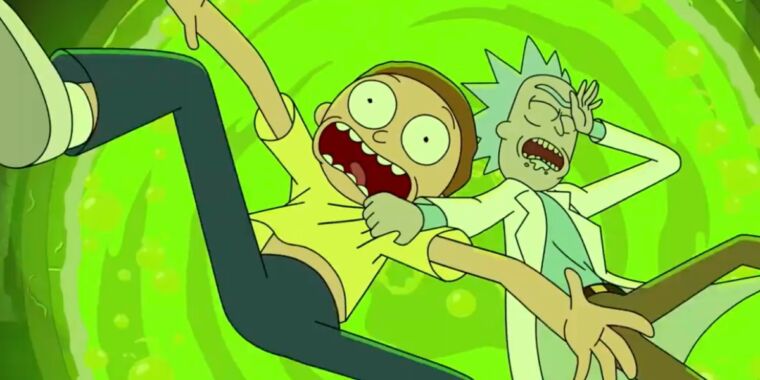
Rick and Morty seem to be on quest to find Morty’s sister, Summer, who has somehow become queen of an alien planet. And—in another throwback to seasons past—we see Summer engaged in a lightsaber battle with her former BFF Tammy. Tammy, you may recall, married Rick’s friend Birdperson (now Phoenixperson) in the S2 finale and turned out to be a secret agent of the Galactic Federation. And of course, there is plenty of child endangerment, with Rick putting his grandson in all manner of perilous situations, advising him at one point, “If anything goes wrong, which it won’t, jump into the same vat of acid I jump into.”

Rick and Morty returns to Adult Swim/The Cartoon Network on May 3, 2020.

[embedded content]
“Samurai & Shogun” (Rick and Morty) | adult swim.

Listing image by YouTube/Adult Swim

https://arstechnica.com/?p=1665021


BBC’s 1957 April Fool’s “spaghetti-tree hoax” is more relevant than ever

[embedded content]
The BBC’s Panorama program spoofed the UK on April 1, 1957, with a segment on the so-called “spaghetti tree hoax.”

We here at Ars do not typically indulge in the online prankery that comes with April Fool’s Day and are even less inclined to do so in the current climate. But it does provide an opportunity to revisit one of the most famous media hoaxes of the 20th century: the so-called “spaghetti-tree hoax,” the result of a two-and-a-half-minute prank segment broadcast on the BBC’s Panorama current-affairs program on April Fool’s Day in 1957. It’s a fun, albeit cautionary, tale of not believing everything you see on television (or read online).

The man largely responsible for the hoax was Austrian-born Panorama cameraman Charles de Jaeger, who liked to play practical jokes. As a kid, one of his school teachers used to tell the class, “Boys, you’re so stupid, you’d believe me if I told you that spaghetti grows on trees.” De Jaeger had always wanted to turn this into an April Fool’s prank, and in 1957, he saw his chance. April Fool’s Day fell on a Monday, the same night Panorama aired. He argued that he could do the shoot cheaply while working on another assignment in Switzerland, and Panorama editor Michael Peacock approved a tiny budget of £100 for the project.

The sequence was shot at a hotel in Castiglione on the shore of Lake Lugano. De Jaeger bought 20 pounds of uncooked homemade spaghetti and hung the strands from the branches of the laurel trees around the lake to make it seem like they were “spaghetti trees.” (Cooked spaghetti just slipped off the branches. De Jaeger had to keep the uncooked fresh spaghetti between damp cloths before shooting to ensure it didn’t dry out.)

Then he hired local women to dress in the Swiss national costume and pretend to “harvest” the spaghetti, filling wicker baskets and then placing the strands out in the sun to “dry.” All the actors were rewarded with a spaghetti feast, which also became part of the final segment.

Most accounts of the hoax point out that in the 1950s, spaghetti was still a fairly exotic food in the UK, as an explanation for why audiences proved so gullible. But Panorama anchor Richard Dimbleby deserved a chunk of the credit for making the segment work. He was a revered and trusted public figure, sort of the Richard Attenborough of the 1950s, with “enough gravitas to float an aircraft carrier,” per Panorama‘s producer, David Wheeler.

So when he authoritatively informed viewers that spaghetti trees were experiencing a bumper crop that year because of an early spring and “the virtual disappearance of the spaghetti weevil,” viewers were inclined to believe him, despite Dimbleby pointedly noting the date as he signed off. I particularly love this bit from the script:

After picking, the spaghetti is laid out to dry in the warm Alpine air. Many people are very puzzled by the fact that spaghetti is produced in such uniform lengths. This is the result of many years of patient endeavor by plant breeders who succeeded in producing the perfect spaghetti.

Peacock hadn’t told his superiors at the BBC that the prank segment was going to air, lest they nix the idea. So the public broadcaster was not prepared for the immediate flood of calls from viewers. Some caught on to the joke, but according to the BBC’s Leonard Miall, “Mainly the calls were requests for the BBC to settle family arguments: the husband knew it must be true that spaghetti grew on a bush because Richard Dimbleby had said so, and the wife knew it was made with flour and water, but neither could convince the other.” A few wanted to know where they could get their own spaghetti tree. BBC operators were told to respond, “Place a sprig of spaghetti in a tin of tomato sauce and hope for the best.”

“I think it was a good idea for people to be aware they couldn’t believe everything they saw on the television.”

The BBC’s own director-general, Sir Ian Jacob, was taken in—at least at first. He and his wife tried to look it up in the Encyclopedia Britannica, only to discover that the encyclopedia at the time didn’t even mention spaghetti. “The spaghetti harvest was a splendid idea, beautifully shot and organized,” he later wrote to De Jaeger. “This item has caused a great deal of delight, one way and another.”

The BBC came in for a fair bit of criticism for its decision to air a prank segment at the end of an otherwise serious news program. But Wheeler, who wrote the script, remained unrepentant, telling the BBC in 2004, “I think it was a good idea for people to be aware they couldn’t believe everything they saw on the television and that they ought to adopt a slightly critical attitude to it.”

The world has changed a lot since 1957, and the rapid spread of misinformation across the Internet, especially via social media, means more people than ever are exposed to pranks, hoaxes, conspiracy theories, and outright lies on a daily basis. In the midst of a pandemic, that can cost lives. There’s now a valid argument to be made that perhaps serious news outlets shouldn’t indulge in such pranks at all, even if it spoils the fun for April Fool’s fans. In that respect, the lessons of the spaghetti tree hoax are more relevant than ever.

Listing image by YouTube/BBC

https://arstechnica.com/?p=1664768


Vivarium’s claustrophobic horror hits a little too close to home right now

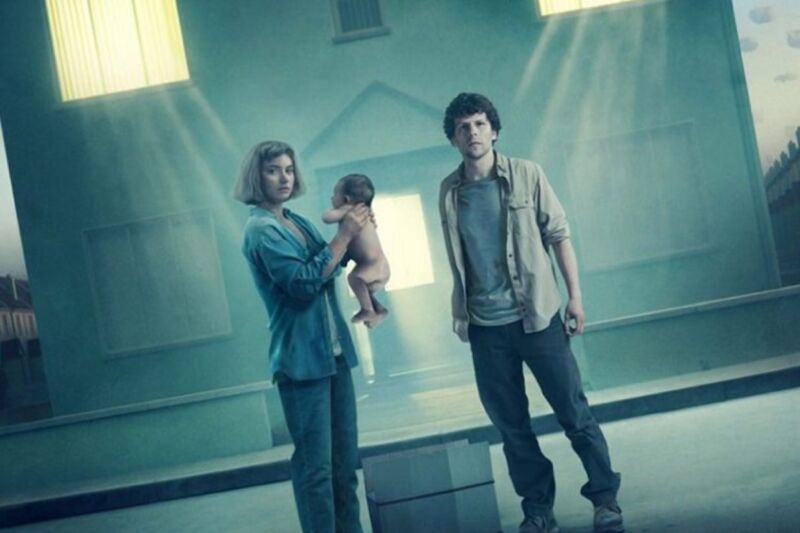
Imogen Poots and Jesse Eisenberg star in <em>Vivarium</em>.
Enlarge / Imogen Poots and Jesse Eisenberg star in Vivarium.

A house-hunting excursion turns into a nightmarish scenario for a young couple in Vivarium, a science fiction horror film directed by Lorcan Finnegan. The film has its strengths, but at a time when half the world is hunkered down in quarantine in the midst of a global pandemic, the claustrophobically surreal premise of two people trapped inside a cookie-cutter house against their will might hit a bit too close to home for comfort.

(Mostly mild spoilers; one major spoiler below the gallery)

Finnegan and screenwriter Garret Shanley made a short film in 2011 called Foxes, about a young couple trapped in an empty housing development. It was inspired, according to Finnegan, by Ireland’s “ghost estates:” the remnants of that country’s construction boom, brought down by the collapse of the housing market and global financial meltdown of 2008. Buyers found themselves trapped in homes they couldn’t unload because their mortgages were underwater. He also found inspiration in a scene from the 1990 Nicolas Roeg film, The Witches (based on the Roald Dahl novel)—namely, a scene where a little girl is trapped inside a painting by a witch, eventually growing old and dying within it.

Vivarium is the full-length feature-film version of that original idea. It premiered last year at the Cannes Film Festival and made its way around the festival circuit before being picked up for distribution by Saban Films. And it has been garnering quite a bit of positive word-of-mouth along the way. Per Wikipedia: “A vivarium is an area, usually enclosed, for keeping and raising animals or plants for observation or research.” It translates into “place of life,” and it can be a small terrarium, for example, or something much larger, like Biosphere 2. It’s pretty obvious that the film’s suburban paradise is meant to be just such a place.

Imogen Poots plays Gemma, who is in a committed relationship with Tom (Jesse Eisenberg). They decide to check out the home options in a wholesome development called Yonder (“It has all you’d need and all you’d want”), and a very creepy real estate agent named Martin (Jonathan Aris) shows them around #9. Yonder is basically a large grid of identical streets filled with identical cookie-cutter houses, with the same cookie-cutter backyards. Martin seems especially keen to show them the nursery, inquiring about their plans for children.

Things take a weird turn when Martin disappears, and Gemma and Tom try to leave. They drive around in circles, always coming back to #9, until night falls and they have no choice but to take shelter in the house. Food and other amenities are regularly delivered in packages, and soon Gemma finds a package with a baby boy inside and an ominous note: “Raise the child and be released.” They are clearly prisoners in Yonder, but they don’t have much of a choice except to comply.

(WARNING: one major spoiler below.)

As I noted when the trailer dropped earlier this year:

[The premise] calls to mind the classic folk song, “Little Boxes,” popularized by Pete Seeger in the 1960s, about cheap, tiny suburban houses “made of ticky-tacky” that “all look just the same.” We’ve seen this sort of cynical take on the conformist horrors of suburbia before: The Stepford Wives (both the 1975 cult horror film and the 2004 comic remake), for instance, or the 2017 Matt Damon black comedy Suburbicon. There’s also the 1999 episode of The X-Files (“Arcadia“), where Mulder and Scully go undercover to investigate strange disappearances in a gated community and quickly run afoul of the homeowner’s association.

There are definitely hints of this in Finnegan’s film, but it’s less of an explicit commentary on the hollowness of that 1950s-era American suburban dream. Yonder, it turns out, is an alien species’ attempt to create a vivarium that mimics that imagined idyllic suburban setting, much like The Matrix was created to lull humans into complacency, the better to control them for nefarious purposes. Why? We get a hint in the opening credits, which depict a cuckoo (the species is a well-known brood parasite) infiltrating another bird’s nest, eventually kicking out the other hatching eggs/baby birds so that mama bird feeds and nurtures the usurper. Martin’s real job is to find young couples, trap them in Yonder, and force them to raise the alien offspring, training them to pass for some semblance of human.

This was also the underlying premise of last year’s Brightburn, which turned the Superman origin story on its head, with the young extraterrestrial boy eventually turning on his adoptive parents and (by extension) the human race. And like Brightburn, Vivarium doesn’t quite measure up to its promising premise, despite some welcome flashes of humor, and a very strong performance from Poots. Her Gemma is both repulsed and protective of The Boy (Senan Jennings) in equal measure—until he reaches full adulthood, that is, and the truth about Yonder is finally revealed. But there are so many dangling questions that are never answered or addressed, and the final surreal sequence isn’t quite enough of a payoff for the viewer.

Jennings recently told Vulture that he deliberately designed the look of the film to induce a kind of low-grade anxiety, particularly the use of mint green in the color scheme. “Taken out of nature, it takes on a very toxic quality,” he said. “It’s like it’s poisonous and also quite institutional, like a hospital or a school.” But that also makes Vivarium rather difficult (and occasionally unpleasant) to watch, particularly at a time when many folks are already feeling anxious and cooped up and craving escapism in their entertainment. It would be interesting to revisit the film a few years from now, to see how well it holds up outside the context of our current predicament.

Vivarium is current streaming on Amazon Prime and VOD.

https://arstechnica.com/?p=1664154


Jedi Academy dev promises to fix mistake that let PC gamers slaughter console players

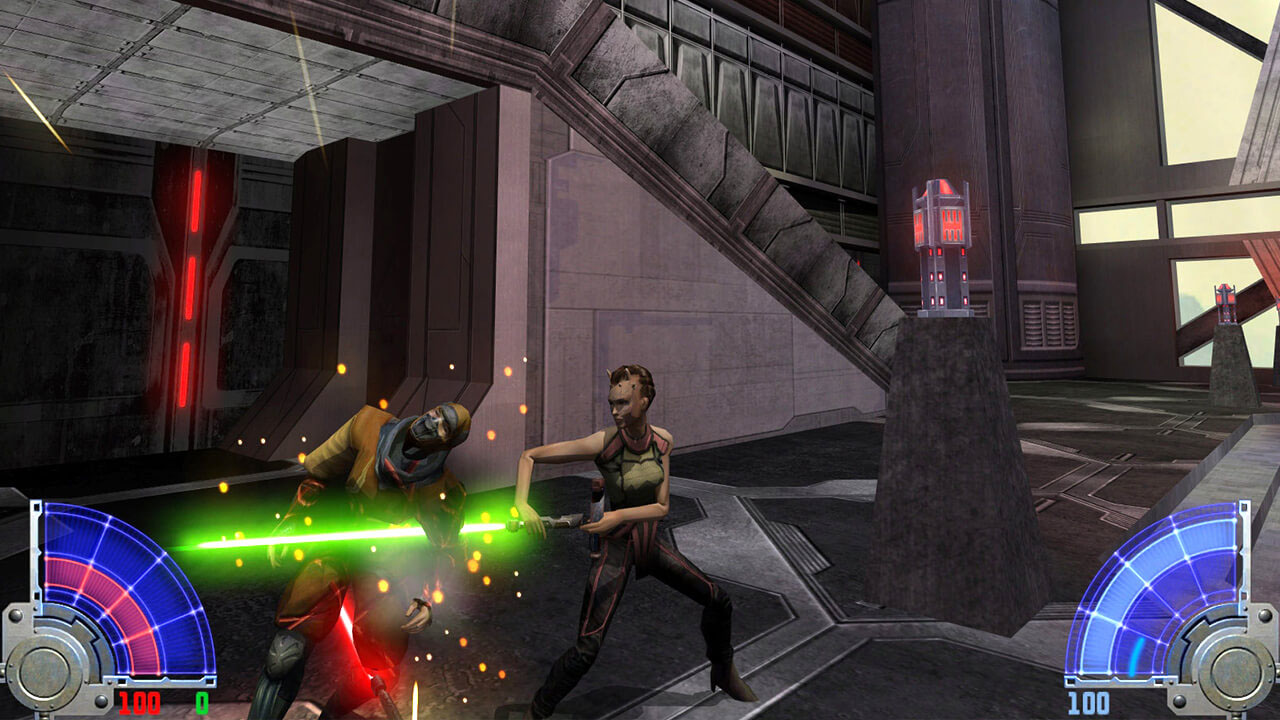
One video game character kills another with a lightsaber.
Enlarge / A single-player screenshot from the Switch version of Jedi Academy.

Just last week, the LucasArts-era PC cult classic Star Wars Jedi Knight: Jedi Academy was ported to PlayStation 4 and Switch. Apart from some iffy menus, it’s largely a decent port with a good control scheme, high-resolution graphics, decent framerates, and all the content present. It even has multiplayer!

But that last point has become something of a problem, as veteran PC players have found a way to enter console lobbies, and they’re crushing the newer Switch and PS4 players.

It’s made possible by the fact that the console ports’ multiplayer servers appear to work the same way as their PC counterparts have for almost two decades, and the IP address for each server is exposed to the user. PC players can use that IP address in the Windows version of the game and join a Switch match. Forums like ResetEra have console players complaining that PC players are trolling them and that the invaders have an unfair advantage.

That’s likely true. PC players have access to additional tools that players of the console version don’t. But Jedi Academy is also a more nuanced and sophisticated game than it appears, and PC players have been building muscle memory for complex maneuvers and developing arcane and difficult-to-execute strategies since 2003. The majority of console players are likely either long-lapsed players, players who didn’t get into multiplayer before, or folks who are new to the game altogether.

Even back in the 2000s, Jedi Academy‘s multiplayer mode was known for a high technical-skill cap and difficult learning curve, even by the standards of other competitive multiplayer games then and today. The PC players still playing today not only broke through the initial barriers to get good; they’ve refined their play over many, many years of practice in a game where the sky is the limit. Debates about optimal input methods aside, it’s no surprise that players on the Switch and PS4 aren’t keeping up.

Ars reached out to Aspyr Media, the studio that ported the game from PC to the console platforms, and the company promised that it will soon “remedy” the “loophole” soon. Here’s the statement:

We’re absolutely thrilled and appreciative of the support that our fan community has given last week’s launch of Star Wars™ Jedi Knight: Jedi Academy on PS4 and Nintendo Switch. We are aware of the current bug that allows multiplayer cross play between PC and console. As with every game we work on, we are fully committed to delivering great gaming experiences for players, which includes a fair playing field for all. A remedy for this loophole is now in the works and will be available soon.

Despite recent pushes for more multiplayer game developers to include crossplay in their titles, this crossplay appears accidental. And it’s admittedly much easier to implement crossplay when you don’t have modern games-as-a-service features like game-specific user profiles, in-game stores, and skill-based matchmaking.

Aspyr hasn’t said when the remedy will come, apart from “soon.”

https://arstechnica.com/?p=1664631


How to play Pokémon Go when everyone’s stuck inside

Promotional image for Pokemon Go.
Enlarge / Remember when Pokemon were allowed to get within 6 feet of each other?

While most game makers are seeing booming usage statistics in the era of coronavirus-induced social distancing, Niantic is in the opposite position. The company’s games—including Pokémon Go, Harry Potter: Wizards Unite, and Ingress—are all built around the idea of leaving the house and meeting up with people in real-world locations.

Now that those things are impossible or discouraged for large portions of the population, Niantic is adjusting its game design philosophy to “embrace real-world gaming from home,” as it says in a blog update today.

“We have always believed that our games can include elements of indoor play that complement the outdoor, exercise and explore DNA of what we build,” the company writes. “Now is the time for us to prioritize this work, with the key challenge of making playing indoors as exciting and innovative as our outdoor gameplay.”

To that end, Niantic will be improving its existing Adventure Sync connection, which lets your mobile device track steps to earn in-game rewards even while you’re not playing. Niantic says it will update that feature “so it works even better with indoor movement and activities” and so “activities like cleaning your house and running on a treadmill count toward game achievements.”

Pokémon Go players will soon also be able to team up for raids without the need to congregate together in a real-world place. Live events like the (sometimes disastrous) Pokémon Go Fest will also be going virtual, with more details to come soon. And the company is “looking into” ways for players to visit favored real-world locations virtually, “until they can once again visit them in person.”

Niantic is also highlighting game-specific changes that make it easier to complete objectives without leaving the house. That includes an earlier Pokémon Go update that heavily reduced the in-game cost of incense and Pokéballs, so players can catch virtual critters without the need to move.

“In areas where it is permitted by local authorities, outdoor walks, practiced with proper social distancing, will continue to be a great way to contribute to physical and mental well being and you’ll still be able to play our games while you do that,” the company said. “The changes we are making offer an alternative when that’s not possible.”

The forced changes are a bit ironic considering Niantic’s ongoing, zero-tolerance battles with automated bots. While many used these unauthorized third-party services to level up quickly without actually playing the game, some used the GPS-spoofing functions to simply find creatures and virtually reach locations that they couldn’t reach in the real world. Now that we’re all stuck inside, though, that aspect of what used to be considered “cheating” is being embraced by Niantic, to a degree.

https://arstechnica.com/?p=1664377


The year of Mario: A ton of classic 3D games reportedly coming to Switch in 2020

Photoshopped image of a video game playing on a incompatible device.
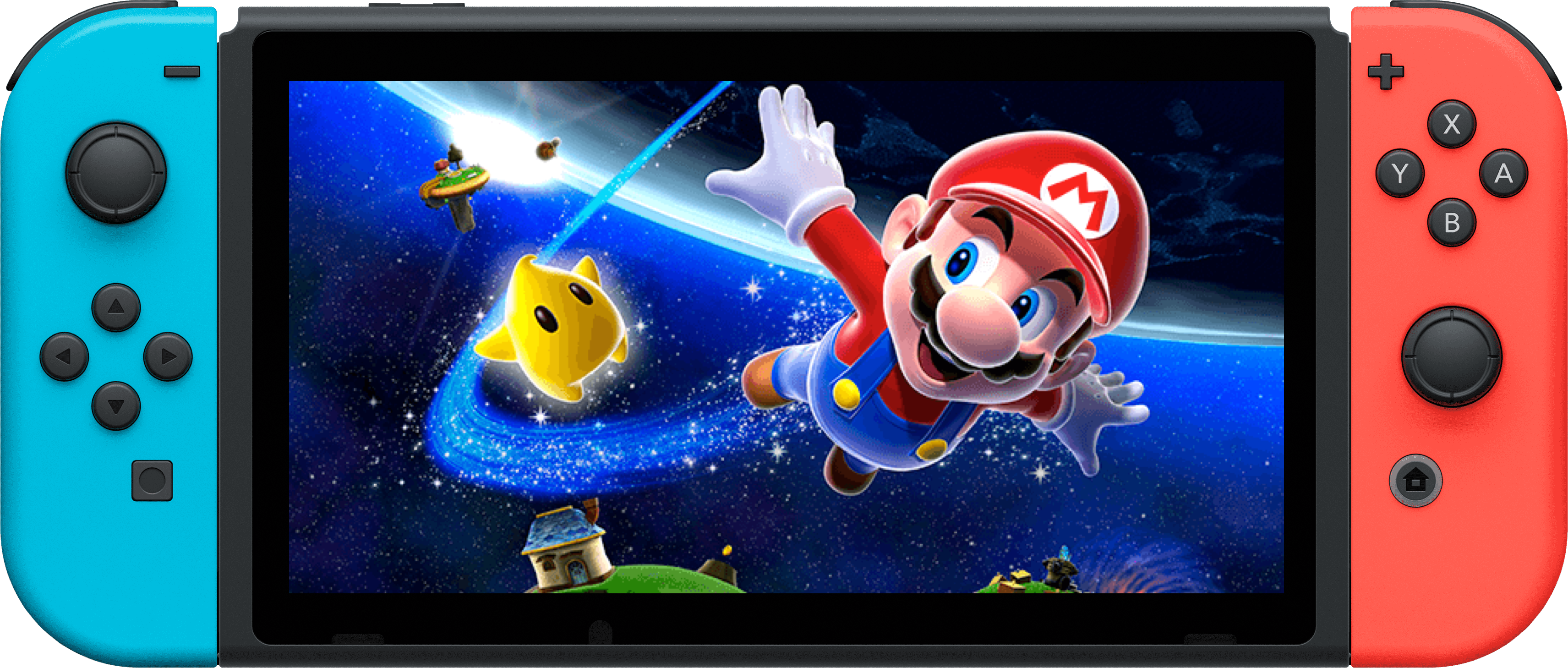
Enlarge / Our own approximation of Super Mario Galaxy on a Switch. Nintendo has yet to confirm a slew of rumors that emerged on Monday morning.
Nintendo / Sam Machkovech

According to a flurry of Monday morning reports, Super Mario is coming back in 2020 in a huge way. And it’s mostly about reliving the Nintendo mascot’s 3D era on Nintendo Switch.

The first rumor domino to fall came from VGC, which pushed forward with a report suggesting “most of Super Mario’s 35-year back catalog” would arrive on Nintendo Switch by the end of 2020, according to “multiple sources.” Nintendo had originally planned to make a physical event out of the announcement during this summer’s E3, VGC reported, but E3 2020 was canceled earlier this month in the wake of organizational woes and coronavirus concerns.

VGC was able to report on one specific game coming to Nintendo Switch, but it wasn’t a remaster. Instead, VGC suggested that the Paper Mario action-RPG series would receive a new entry in 2020.

Soon after, Eurogamer and Gematsu pushed their own reports and named games, also citing “multiple sources.” Eurogamer came forward suggesting Super Mario Galaxy and Super Mario 3D World would receive proper re-releases, while Gematsu added Super Mario 64 and Super Mario Sunshine to the list of expected re-releases. Most classic 3D Mario games have never received a retail or Virtual Console re-release treatment, with Super Mario 64 and its DS remake as exceptions, while the majority of Mario’s 2D exploits are currently available on Switch’s NES and SNES archives, available to paying Nintendo Switch Online subscribers.

Due to the limited nature of these rumors, we’re left wondering exactly what shape these classic Mario games will arrive in. Eurogamer alleges that Super Mario 3D World will launch with “an array of new levels,” but these could either be brand-new or adapted from the similar, 3DS-only entry Super Mario 3D Land (or both). Meanwhile, both Gematsu and Eurogamer mention “high-definition remasters” for older games in the list, but it’s unclear whether these will simply up-res existing assets or include any wholly new content (textures, character models, visual effects).

We’ve already seen what Super Mario Galaxy could look like on Nintendo Switch thanks to a 2018 China-only port of the game for the Nvidia Shield platform; that system’s hardware is nearly identical to Nintendo Switch. That classic game’s newer version mostly looks identical to its Wii predecessor, save a resolution bump, but it also benefits from a complete controller revision—meaning, no more Wii-mote waggle. We hope Nintendo considers the same control tweak for a Switch port.

All of this news makes a certain corporate-synergy sense in 2020, as VGC points to Nintendo’s interest in promoting its relationship with Universal Studios. A series of Super Mario World attractions are set to open at various Universal Studios theme parks (exactly when is unclear, however), while the Super Mario feature-length, CGI film has remained under a veil of secrecy since its 2017 reveal. (Its last release estimate was “2022.”) A huge summer 2020 announcement slew of Switch games would be a great moment for Nintendo and Universal to show more of those properties off. (By then, we hope Lego’s Super Mario series will have launched, as well.)

When asked to comment on Monday’s reports, a Nintendo representative replied via email: “We have nothing to announce on that topic.”

https://arstechnica.com/?p=1664327


Review: elegiac Star Trek: Picard brings all the feels in bittersweet finale

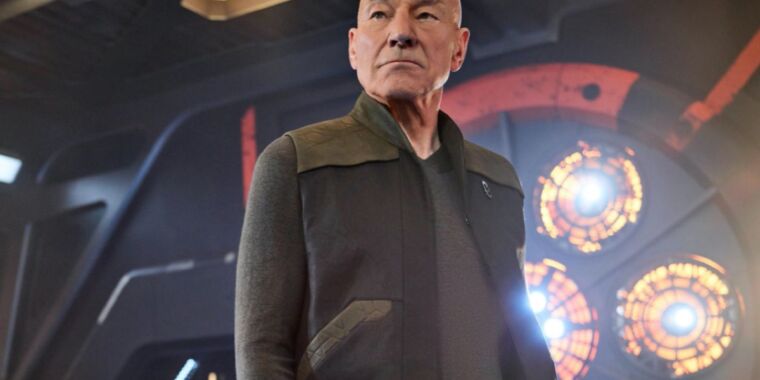
Nobody can deliver lines with Shakespearean gravitas and comforting emotional resonance like Patrick Stewart, which is why the actor—and his famous Star Trek character, Jean-Luc Picard—remain so beloved in the franchise. He gives yet another sublime performance in the new CBS All Access series, Star Trek: Picard, anchoring the larger-than-life stakes of the broader narrative with his intensely personal portrayal of a grief-stricken, disillusioned retired Starfleet admiral who feels the world he once dominated has passed him by.

(Some spoilers below, but no major reveals.)

As Ars’ Kate Cox noted in her review of the pilot episode, the events of 2002’s Star Trek: Nemesis “are the plot and emotional scaffolding over which the initial episode of Picard is draped”—most notably, Data sacrificing his life to save the rest of the Enterprise crew. Honestly, that loss drives the entire season, along with 2009’s Star Trek film reboot of the franchise.

That film set up an alternate timeline, caused by the Romulan star going supernova, in which Picard led a massive humanitarian relocation effort for the roughly 900 million Romulan inhabitants. But then rogue synthetics mysteriously revolted and destroyed the Starfleet armada that had been evacuating the Romulans. Against Picard’s passionate pleas, Starfleet reneged on its humanitarian mission and banned all synthetics, prompting a disillusioned and heartbroken Picard to resign.

Set 20 years after the events of Star Trek: Nemesis, the series opens with Picard having retired to the family vineyard. His bucolic existence is interrupted by the arrival of a mysterious woman named Dahj (Isa Briones), who pleads for his help. Alas, Picard fails to save her: she is killed in front of him by Romulan assassins belonging to a radical sect known as the Zhat Vash. Picard discovers that Dahj was actually a synthetic, technically Data’s “daughter,” and she has a twin sister, Soji, who is also in danger.

Resolved to save Soji, Picard asks Starfleet for a ship, but he’s been gone a long time, and his entreaties are rebuffed. Never one to admit defeat, Picard amasses his own scrappy crew over the next few episodes for his unauthorized rescue mission: Christobal (Santiago Cabrera), a skilled thief and pilot of the ship La Sirena; Raffi (Michelle Hurd), a former Starfleet intelligence officer and recovering addict; Dr. Agnes Jurati (Alison Pill); and a Romulan refugee, Elnor (Evan Evagora).

Meanwhile, Soji is working at a Romulan reclamation site within a decommissioned Borg cube. She becomes romantically involved with a Romulan named Narek (Harry Treadaway), who is secretly a member of the Zhat Vash. His mission is to seduce Soji in an attempt to discover the location of her home planet, with the ultimate goal of destroying all the synthetics there.

Waxing nostalgic

Showrunner (and longtime Star Trek fan) Michael Chabon is perhaps best known as a gifted novelist. So it’s not surprising that Picard has the slow-moving, contemplative feel of a novel, serialized for the small screen. (There actually is an official prequel novel, The Last Best Hope, by Una McCormack, depicting the events that drove Picard to resign from Starfleet after the destruction of Romulus. There is also a six-minute “Short Trek” prequel that details the Martian attack by synthetics.)

In other words, it’s a very deliberate departure from past Star Trek series, including Picard‘s streaming sibling, Star Trek: Discovery. Co-creator Alex Kurtzman has said his goal was to create “a more psychological show, a character study about this man in his emeritus years.” That’s what convinced Patrick Stewart to sign on to reprise his iconic role.

But it’s also what some hardcore Star Trek fans, accustomed to fast-moving, more episodic plots, might find frustrating. It’s a complicated narrative structure, with multiple plot threads and several flashbacks. The tone is darker, and (at least in earlier episodes) more world-weary and cynical, in keeping with the psychological journey of its grief-stricken titular character. Starfleet, and the Federation, which once nobly embraced diversity and unity among species in the galaxy, are now indifferent to the plight of Romulan refugees and openly hostile to synthetics. No wonder the idealistic Picard seems so broken at the outset.

There’s also very little in the way of futuristic technobabble—a hallmark of the franchise since TOS, and a major factor in its enduring popularity. Case in point, courtesy of Kate Cox: “They’ll invent a magic deus ex multitool just to get crises solved and instead go straight to the character reactions.” And several fans have also noted the striking similarity of Picard‘s premise to Mass Effect 2.  Rios’ ship, La Sirena, “even has a very similar internal layout as the Normandy [the Mass Effect] ship,” per Cox.

There is much to like about Picard. I personally appreciated how it stays tightly focused on the characters and the ebb and flow of their inter-relationships. There are plenty of welcome fan-service moments, including cameos by Data (Brent Spiner), William Riker (Jonathan Frakes), and his now-wife, Deanna Troi (Marina Sirtis). Jeri Ryan’s Seven of Nine (from Star Trek: Voyager) is an especially welcome addition to the cast. She’s now a vigilante with a group known as the Fenris Rangers helping those in need—but not above carrying out a bit of personal vengeance should the opportunity present itself.  

By far the best new character is Raffi, whose once-flourishing career was cut short when she backed Picard in his standoff with Starfleet over the plight of the  Romulan refugees. He finds her, years later, drowning her sorrows in drugs and booze. Watching Raffi dig herself out of that hole of despair and start to rebuild her life provides one of the most interesting character arcs of the series. Also: I am here for the spinoff series where Raffi and Seven of Nine roam the universe, dispensing vigilante justice to help the helpless. The two actors have terrific chemistry, and the characters are a natural pairing.

For all its strengths, I ended up liking Picard more than loving it. Picard’s original mission—to rescue Soji—turns into a battle to save an entire race, and those huge stakes just felt a little at odds with the show’s character-driven psychological themes of loss and regretful nostalgia for a world gone by. Also, I would have preferred this to be a one-and-done standalone miniseries, but CBS All Access renewed Star Trek: Picard for a second ten-episode season before the pilot episode had even aired. So naturally, the finale blinked with regard to the fate of Picard himself; they need him for S2. Letting Picard have a fitting end to his legendary life would have been the perfect denouement for the season.

Star Trek: Picard is currently streaming on CBS All Access. The streaming service has made the entire first season available to non-subscribers in the wake of continued “shelter at home” policies during the coronavirus outbreak. So now everyone can binge-watch S1 as we wait for the curve to flatten—and immersing yourself in the show with a binge session is probably the best way to watch it.

Listing image by CBS All Access

https://arstechnica.com/?p=1663048


A Twitch streamer is exposing coronavirus scams live

Kitboga getting ready to out some scammers on Twitch.
Enlarge / Kitboga getting ready to out some scammers on Twitch.

Earlier this week, live on Twitch, the streamer Kitboga attempted to place a wholesale order for an essential oil that, the woman on the phone implied to him, cured COVID-19.

There is, of course, no cure for COVID-19, the disease that has infected hundreds of thousands of people internationally since January. If there were, it wouldn’t consist of oregano oil, cinnamon, clove bud, and eucalyptus essential oils. Kitboga was on the phone with a scammer. Eleven thousand live viewers were watching him expose her.

Using a voice modulator, Kitboga assumed a persona called Barbara “Barbie” Kendal, explaining that he wanted to place a wholesale order for essential oils and distribute it to the Mayo Clinic in Arizona. Kitboga continued to press her for details about the product—How many people has it cured? Can I keep the cure on the countertop? Can I pour the cure into a hot bath after my bridge game?—which she readily answered, never correcting his terminology. The scammer, who said her name was Anne, took down the hospital’s address.

“They should call you Saint Anne,” said Kitboga, eliding the words into the sound of “satan.”

You’d be hard-pressed to find someone who interacts with scam artists more often than Kitboga. Several times a week, Kitboga goes live on Twitch, where an average of 7,000 viewers watch him mercilessly troll the sort of people who tell old ladies in nursing homes that they owe the IRS thousands of dollars—and get their MasterCard number. Under the guise of grandma Edna or valley girl Navaeh, Kitboga might let a scammer posing as an antivirus software salesperson install ransomware onto a computer or explain ad nauseum how to transfer bitcoin to India. Weaving absurd narratives out of these interactions, Kitboga frustrates as much of the scammers’ time as possible before the big reveal: he’s not Barbie, Edna, or Navaeh, and he thinks these people are scumbags.

“You are a liar and a thief. You should be locked up,” he told a COVID-19 scammer earlier this week. Viewers spammed happy alarm bells to his stream’s accompanying chat.

Earlier this month, the Federal Trade Commission issued a notice about coronavirus scams that referenced new robocalls and online offers advertising coronavirus treatments and at-home test kits. Noting that “there currently are no vaccines, pills, potions, lotions, lozenges, or other prescription or over-the-counter products available to treat or cure coronavirus disease 2019 (COVID-19)—online or in stores,” the FTC warned consumers to be on high alert for con artists. Over the last couple of months, digital marketplaces like Amazon have struggled to remove bogus listings for miracle nasal sprays and canine testing kits.

So far, the FTC has issued stern letters to at least seven sellers of products claiming to treat or prevent COVID-19, including N-ergetics, GuruNanda LLC, and Herbal Amy LLC. New York’s attorney general sent conspiracy theorist Alex Jones a cease-and-desist order after he said his toothpaste could be a coronavirus “stopgate.” Bonnie Patten, the executive director of nonprofit watchdog Truth In Advertising, says a huge number of scams have cropped up around COVID-19, particularly in the massive supplement industry. “The FDA has made it fairly clear that, with its limited resources, it’s going to go after companies that are deceptively marketing supplements using disease treatment or specific health claims,” says Patten. To avoid Web crawlers looking for keywords, snake oil companies are implying they can help combat this virus without coming right out and saying so.

A couple of days ago, Kitboga, who keeps his real-life identity and location a secret, trawled Google for coronavirus-related scams. The search turned up an article under the Fox News header—though not on any Fox News site—that read, “While the world is waiting for a vaccine, one mom has found a solution to fight back against the coronavirus outbreak.” While the byline named an actual Fox News editor, the article was fake. It advertised a product called Immunity Blend, which promised to “distribute benefits” to entire households and “protect against environmental threats.” The fake article claimed that “even if you do catch a virus, the symptoms and time it affects you [sic] experience, are greatly reduced.”

Said the mom in the ad, “I am not worried about the coronavirus hitting our family because I have three ways to fight back in just one bottle of botanical oils.”

The concoction contains eucalyptus oil, which the ad claims has been “proven effective” against the swine flu and Herpes type 1. “Could it also kill the 2020 coronavirus?” it asks. The website links to an order form, underneath which a warning in red booms: “Due to global outbreaks and pandemic, demand is HIGH and supply is limited for our Powerful Immunity Blend.” The website and Facebook page, which was created March 16, are still up.

Kitboga's Twitch page.
Enlarge / Kitboga’s Twitch page.

To investigate, Kitboga called a phone number listed on the ad. “I said my boyfriend was coughing up blood and I don’t have the money to go to a doctor,” Kitboga tells Wired. He had put on his valley girl persona. The woman on the line told him that the Immunity Blend would save the boyfriend, Kitboga says. He hung up, shocked. “I didn’t expect them to be so blatant about it.” The company behind Immunity Blend did not respond to Wired’s request for comment.

On-stream the next day, Kitboga called the number again. “I saw the article on Fox about how there was a mom who found a solution for the coronavirus,” said Kitboga in the voice of an elderly man. “Yes,” acknowledged the customer service agent.

“You’ve got to hand it to her. She’s probably very smart. There’s scientists all over the world trying to figure it out. Thankfully she did,” Kitboga said on the stream, raising an eyebrow to his viewers. “I just hope that eventually, she’ll let the government know. Do you have any of that available, the cure?”

“Yes sir, we have it. We have a limited stock, however,” said the customer service agent. The price was $40 per bottle; they only sold packs of five.

On a third call, this time with a different representative, Kitboga asked whether the oil was a vaccine, and finally, the agent corrected him: “It’s an essential oil that’s there to protect you and your immune system.” Still, the rep said, he and his father had been using it with good results.

On his livestreamed calls to scammers, Kitboga tries to remain calm and collected, persisting in his line of questioning to glean as much information as possible. Over the last three years, he’s dealt with scammers who try to squeeze thousands of dollars from old ladies under the false threat of arrest or imprisonment. (In fact, he got into this line of work after a scammer took advantage of his real-life grandmother, who had dementia.) This wave of COVID-19 snake oil, he says, feels different.

“I think a lot of the scams so far are based around the fear and uncertainty of it,” says Kitboga. “I’m not a psychologist, but I imagine you are less likely to make rational decisions when you’re afraid. Obviously there’s lots of fear right now. When the scammers I talk to say things like, ‘Ma’am, if you don’t give me my money back you’ll go to jail’ or ‘I’m calling the police right now,’ they’re trying to put you in that fearful, uncertain situation. In this case, we already are in that situation. So the scammers are one step ahead.”

Kitboga says the next scam to look out for is telemarketers pretending to be government officials. People who don’t know better might give their bank account information to a so-called government official who’s offering to unload a no-strings-attached $1,200 government aid check. He plans to expose them on his Twitch channel when he nails them down.

“When I heard about the stimulus, I started thinking, ‘There are gonna be scammers. Someone’s gonna call and say, ‘We’re the government trying to give you $1,000 or $2,000, and you have to pay us money.”

This story originally appeared on wired.com.

https://arstechnica.com/?p=1663911