Microsoft sued by Call of Duty gamers opposing Activision merger
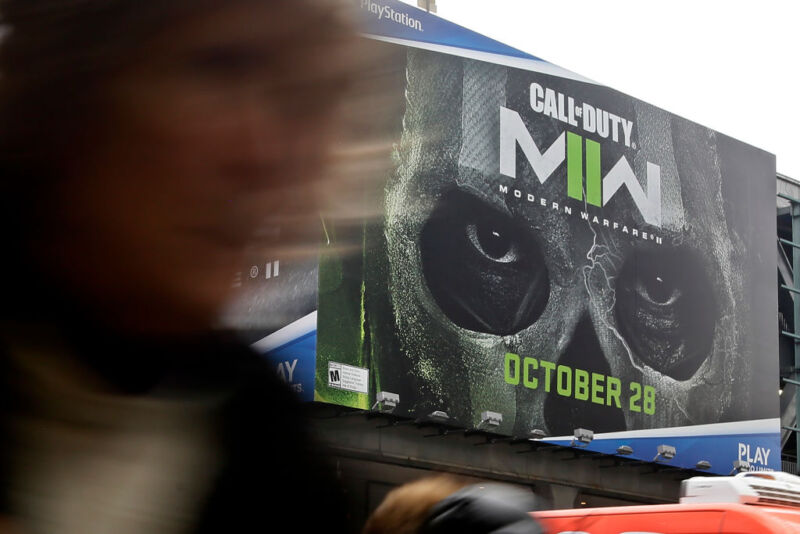
Microsoft sued by Call of Duty gamers opposing Activision merger

About two weeks after the Federal Trade Commission filed a lawsuit to block Microsoft’s acquisition of Activision Blizzard, 10 gamers from California, New Jersey, and New Mexico have banded together to file a lawsuit against Microsoft.

Echoing many of the FTC’s concerns, the gamers are hoping to pressure and prevent Microsoft from closing “the largest tech deal ever in the video gaming market” and, thus, swallowing up its biggest competitor in the game industry.

In their complaint, plaintiffs describe Activision Blizzard as a crucial rival that drives industry-wide innovation and price competition. If the acquisition is allowed, the public could suffer loss and damages because Microsoft would supposedly wield more market power than it already has—suddenly granted “the ability to foreclose rivals, limit output, reduce consumer choice, raise prices, and further inhibit competition.”

Under the Clayton Antitrust Act, consumers have similar rights as industry competitors to oppose acquisitions like this one, allowing courts to weigh anti-competitive harms raised by consumers. The gamers are suing Microsoft for allegedly violating antitrust law, and are deeply worried that their favorite games could soon see prices spike, while games could decrease in overall quality. If the deal goes through, they allege that Microsoft would be positioned to hoard the best talent and most popular games to potentially gain “far-outsized market power.”

A Microsoft spokesperson told Ars that the gamers’ worst fears are not warranted.

“This deal will expand competition and create more opportunities for gamers and game developers as we seek to bring more games to more people,” a Microsoft spokesperson told Ars.

But the FTC seems to agree more with gamers, pointing in a press release to “Microsoft’s record of acquiring and using valuable gaming content to suppress competition from rival consoles.”

“Microsoft has already shown that it can and will withhold content from its gaming rivals,” Holly Vedova, the FTC’s Bureau of Competition director, warned in the press release.

Loyal gamers fear potential monopoly

The people suing bring a unique perspective to the debate over Microsoft’s acquisition of Activision, a deal that Microsoft hopes to close in 2023. In their complaint, they say that gamers are particularly vulnerable to price hikes because Microsoft knows that they’re unlikely to substitute other games for their favorites. That means Microsoft could take beloved titles— like Call of Duty games, which all plaintiffs play—and cut off access to platforms or services outside of Microsoft’s gaming ecosystem.

Microsoft already publicly stated that it would make Call of Duty available on rival consoles from Sony and Nintendo for the next 10 years. But like the FTC, plaintiffs say they’ve seen Microsoft make similar promises before, only to go back on their word once an acquisition is finalized, which it did with Starfield after acquiring ZeniMax Media in 2020.

Plaintiffs also argue that just because Microsoft promises to make a game available on other consoles or gaming systems, that doesn’t mean that it will be available at the same time, of the same quality, or have the same features and upgrades.

Consider, the complaint suggests, if Microsoft used popular Activision titles to boost its dominant position and push competitors out of the emerging cloud-based gaming market—essentially choking out competition in a market before it can even start to flourish. Likewise, any exclusive perks on massively popular games offered only within Microsoft’s gaming ecosystem could drive users away from competing platforms, with the complaint alleging that Microsoft could even “have the ability and incentive to engage in strategies to foreclose Sony.”

One way that game content quality could decrease, the complaint says, is through the gaming industry’s ongoing consolidations. The deal could place Microsoft in a position to attract all the best game developers, potentially starving independent game studios from accessing top talents. In this scenario, the complaint alleges that the industry could suffer from reduced wages, limited mobility, and worse working conditions—with Microsoft in a powerful position to set industry standards.

Ars could not immediately reach lawyers representing gamers suing, but the complaint says that plaintiffs believe that the better future for the gaming industry is one where Activision Blizzard continues existing as a separate market entity, stoking industry-wide competition as one of Microsoft’s only major rivals.

“The competition in the industry brought by Activision Blizzard must be preserved to ensure that the next generation of video game innovation and value are enhanced through competition, not stifled through consolidation,” their complaint states.

Gamers suing have asked a US federal court to declare that Microsoft’s acquisition of Activision Blizzard violates antitrust law. Following in the footsteps of the FTC, they’re fighting to ensure that the merger will be permanently blocked.

https://arstechnica.com/?p=1906278


Study: 2017 rise in teen suicide rates due to seasonal shifts, not 13 Reasons Why

Katherine Langford as Hannah Baker
Enlarge / Katherine Langford starred as Hannah Baker, a teen who dies by suicide, in the controversial Netflix series 13 Reasons Why.

The controversial 2017 Netflix series 13 Reasons Why sparked years of contradictory academic studies on whether the show sparked a rise in teen suicides (suicide contagion, or copycat suicides). Some showed negative impacts, while others found beneficial impacts. The most damning study appeared in 2019, which reported a sharp increase in suicide rates among young people between the ages of 10 and 17 in the months after the first season’s release—although it stopped short of finding a direct causal link between the two. In response, the streaming service edited out the original graphic three-minute bathtub suicide scene that ignited the controversy.

But Dan Romer, a psychologist at the University of Pennsylvania’s Annenberg Public Policy Center who studies media and social influences on adolescent health, was skeptical about that 2019 study. His latest paper on the subject, published in the journal Suicide and Life-Threatening Behavior, found a seasonal pattern to teen suicide rates that seems to coincide with the school year, declining in the summer months. Taking this and other factors into account effectively eliminated the contagion effect reported in the 2019 paper. (For an in-depth look at the controversy and an overview of several of those studies, see my 2021 feature.)

As I’ve written previously, suicide contagion is a phenomenon in which exposure to suicide within a family, among friends, or through the media may be associated with increased suicidal behavior. There have been many studies over the years on suicide contagion—sometimes called the “Werther effect,” after the young protagonist of Johann Wolfgang von Goethe’s 1774 novel, The Sorrows of Young Werther. However, the extent to which fictional portrayals of suicide may contribute to suicide contagion remains a matter of genuine academic debate.

Within weeks of 13 Reasons Why‘s debut on March 31, 2017, mental health professionals began voicing strong objections to the young adult-targeted show, believing the depiction could trigger suicidal thoughts or actions in vulnerable teens. Many expressed concerns that the show glamorized suicide and violated current journalistic guidelines for responsible reporting on suicide. In April 2017, the National Association of School Psychologists released a statement warning about the potential adverse effects of the series, and the organization also sent a letter to school mental health professionals—the first time it has undertaken such an action.

The 2019 study by Jeffrey Bridge of Ohio State University and several other colleagues analyzed the Centers for Disease Control and Prevention’s data on deaths due to suicide for people between 10 and 64 during the period from January 1, 2013, to December 31, 2017.  While they found a 28.9 percent increase, there was a statistically significant increase in suicide rates for boys, but the increase for girls was not statistically significant—counter to the authors’ original hypothesis that the show’s release would have a larger impact on girls than boys.

Romer conducted his own 2019 study in real time as the second season was about to air. (That season dealt with the aftermath of everything that occurred in season one). Those results showed some evidence for beneficial effects, even among some of the more vulnerable viewers. Noting that the findings of Bridge et al. contradicted what we know thus far about suicide contagion, he re-analyzed the same CDC data. Romer thought that the evidence for contagion should have been stronger for girls than boys, given that the show’s suicidal teen protagonist was female.

https://arstechnica.com/?p=1905791


FTC brings a $520 million hammer down on Epic Games for Fortnite complaints

Artist's conception of the FTC standing over a pile of Epic Games fines.
Enlarge / Artist’s conception of the FTC standing over a pile of Epic Games fines.

Epic Games will pay over half a billion dollars to settle two Federal Trade Commission complaints regarding the company’s use of children’s private information and its use of “dark patterns” to encourage accidental in-game purchases. The penalties—which the FTC says are some of the largest imposed in the organization’s history—also come with imposed changes to the way Epic handles purchases and player interactions in its online games.

Copping to COPPA, bringing light to “dark patterns”

The FTC’s first complaint alleged that Fortnite “failed to comply with the COPPA (Children’s Online Privacy Protection Act) Rule’s parental notice, consent, review, and deletion requirements.” The alleged violations included turning voice and text chat features on by default for young players, as well as publicly broadcasting their account names in the game.

Epic has recently changed those policies, implementing default settings for players under 18 that limit chat, hide usernames, and allow joining of parties by “invite only.” Epic also pointed to this month’s rollout of “cabined accounts,” which limits full access to online features for young children’s accounts until they are verified by an adult.

In a separate complaint, the FTC said that Epic often charged Fortnite players for in-game items without their “express informed consent.” The use of “design tricks known as ‘dark patterns'” led to “millions of complaints” to Epic and disputes of unauthorized charges with credit card providers, according to the FTC.

Until late 2018, for instance, Epic automatically stored the credit card information for anyone who made a single purchase in Fortnite and didn’t require the CVV security information for further purchases. That made it easy for many children to make additional purchases without their parents’ consent, according to the FTC.

Epic also drew criticism from the FTC for putting the “Purchase” button for in-game items right next to the “preview styles” button and offering no subsequent purchase confirmation prompt in the case of misplaced clicks. And while Epic introduced an “Undo Purchase” button in July 2019, it was eventually made much less prominent and harder for customers to find.

In response to the FTC’s complaint, Epic says it will now “re-confirm a player’s intent to buy” via a “hold-to-purchase” button on its store pages. The company is also offering instant purchase cancellations and self-service refunds, hopefully obviating the need to go through a credit card company to deal with some complaints. And when a credit card chargeback happens, Epic will no longer automatically assume it is related to fraud and ban the affected account.

A new world of enforcement

According to the FTC investigation, Epic was well aware of what it was doing in both of these cases. By reducing the prominence of the “Undo Purchase” button, for instance, Epic reduced the “net undo rate” by 35 percent, according to an Epic product manager cited in the FTC complaint.

As for COPPA, one unnamed Epic employee cited by the FTC said in an email:

I think you both know this, but our voice and chat controls are total crap as far as kids and parents go. It’s not a good thing. It was on my list a year ago, but never bubbled to the surface. This is one of those things that the company generally has weak will to pursue, but really impacts our overall system and perception. I’ve made a COPPA compliant game and we are far from it, but we don’t need to be that far …

Epic will pay $275 million to the US Treasury to settle the COPPA complaint. An additional $245 million paid for the “dark patterns” complaint will be used to refund affected customers. The four FTC commissioners voted unanimously to impose both penalties.

Beyond Epic, though, the large fines should serve as a warning to other online game developers to take protections like these more seriously. In its blog post regarding the settlements, Epic warns that, while Fortnite is rated T for Teen by the ESRB, developers “can no longer assume [such a rating] won’t be deemed to be directed to children” under COPPA.

Epic also offered other cautions about the new enforcement regime the entire industry will now operate under:

The video game industry is a place of fast-moving innovation, where player expectations are high and new ideas are paramount. Statutes written decades ago don’t specify how gaming ecosystems should operate. The laws have not changed, but their application has evolved and long-standing industry practices are no longer enough. … The old status quo for in-game commerce and privacy has changed, and many developer practices should be reconsidered.”

https://arstechnica.com/?p=1905496


Once a VR true believer, a “wearied” John Carmack leaves Meta

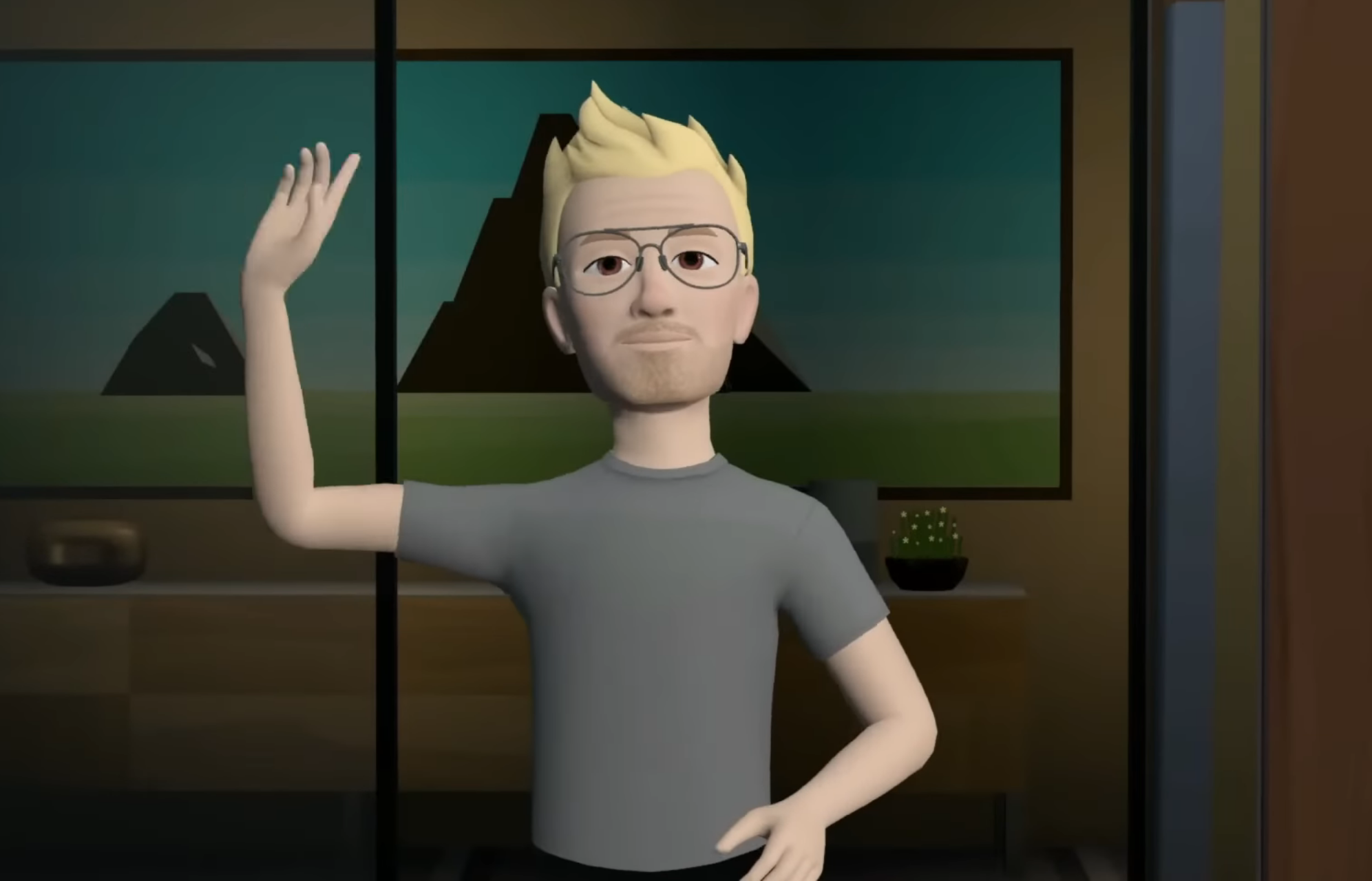
Artist's conception of Carmack's VR avatar waving goodbye to Meta.
Enlarge / Artist’s conception of Carmack’s VR avatar waving goodbye to Meta.

After nearly ten years, John Carmack’s time helping to guide VR hardware efforts at Meta (and at Facebook/Oculus before that) have come to a close. The id Software co-founder and Doom co-creator officially left Meta on Friday night, according to an internal company memo obtained by Insider and confirmed by the New York Times.

Carmack’s departure message serves as a scathing indictment of crippling inefficiency at Meta that he said he was “offended by” and which he compared to a GPU with a measly five percent utilization rate. “We have a ridiculous amount of people and resources, but we constantly self-sabotage and squander effort. There is no way to sugar coat this,” he wrote. “I think our organization is operating at half the effectiveness that would make me happy.”

More personally, Carmack complained that it has been a “struggle” for him to influence Meta’s overall direction and that he’s “wearied of the fight.” Despite his high-ranking “consulting CTO / executive advisor” title, Carmack complained that he is “evidently not persuasive enough” to change Meta’s VR efforts for the better.

If that kind of talk sounds familiar, it might be because Carmack voiced similar complaints in his October Meta Connect keynote. There he talked about his internal efforts to push for the development of a “super cheap, super lightweight” Meta VR headset that could come in at “$250 and 250 grams.” Instead, Meta has put its recent VR hardware efforts behind the heavily overdesigned and $1,500 Quest Pro. “We’re not building that [cheap, light] headset today, but I keep trying,” Carmack said with some exasperation during the keynote.

In his departure message, Carmack had some kind words for the strong-selling Meta Quest 2 headset, which he called a good, successful product that has “[made] the world a better place.” In his October keynote, though, Carmack also bluntly told Meta that “the basic usability of Quest really does need to get better” and that “our app startup times are slow, our transitions are glitchy… We need to make it a whole lot better… much, much faster to get into.”

Oculus CTO John Carmack couldn't walk down the hall of the 2016 Oculus Connect conference without being mobbed by onlookers. He was happy to hold court for long impromptu Q&A sessions.
Enlarge / Oculus CTO John Carmack couldn’t walk down the hall of the 2016 Oculus Connect conference without being mobbed by onlookers. He was happy to hold court for long impromptu Q&A sessions.

Back in late 2021, Carmack also had some words of warning as Facebook changed its named to Meta and pivoted fully behind the amorphous idea of the metaverse. Carmack said we should be wary of “architecture astronauts” who do a lot of high-level hand-waving instead of building viable products that customers find useful.

To that end, Carmack threw down a public gauntlet for his fellow Meta employees, saying that “we should be doing [Facebook Connect] in the metaverse” for the 2022 show. When Carmack showed up in an empty room as an awkward-looking avatar for the 2022 keynote, though, he said up front that “this here, this isn’t really what I meant.”

In an August podcast interview, Carmack said that the nearly $1 billion Meta is losing every month on its VR efforts makes him “sick to [his] stomach… But that’s how they demonstrate commitment to this … Google goes and cancels all these projects, while Meta is really sticking with the funding of VR and AR even further out with it.”

https://arstechnica.com/?p=1905415


Forget The Witcher and Superman: Henry Cavill to lead Warhammer 40K dream project

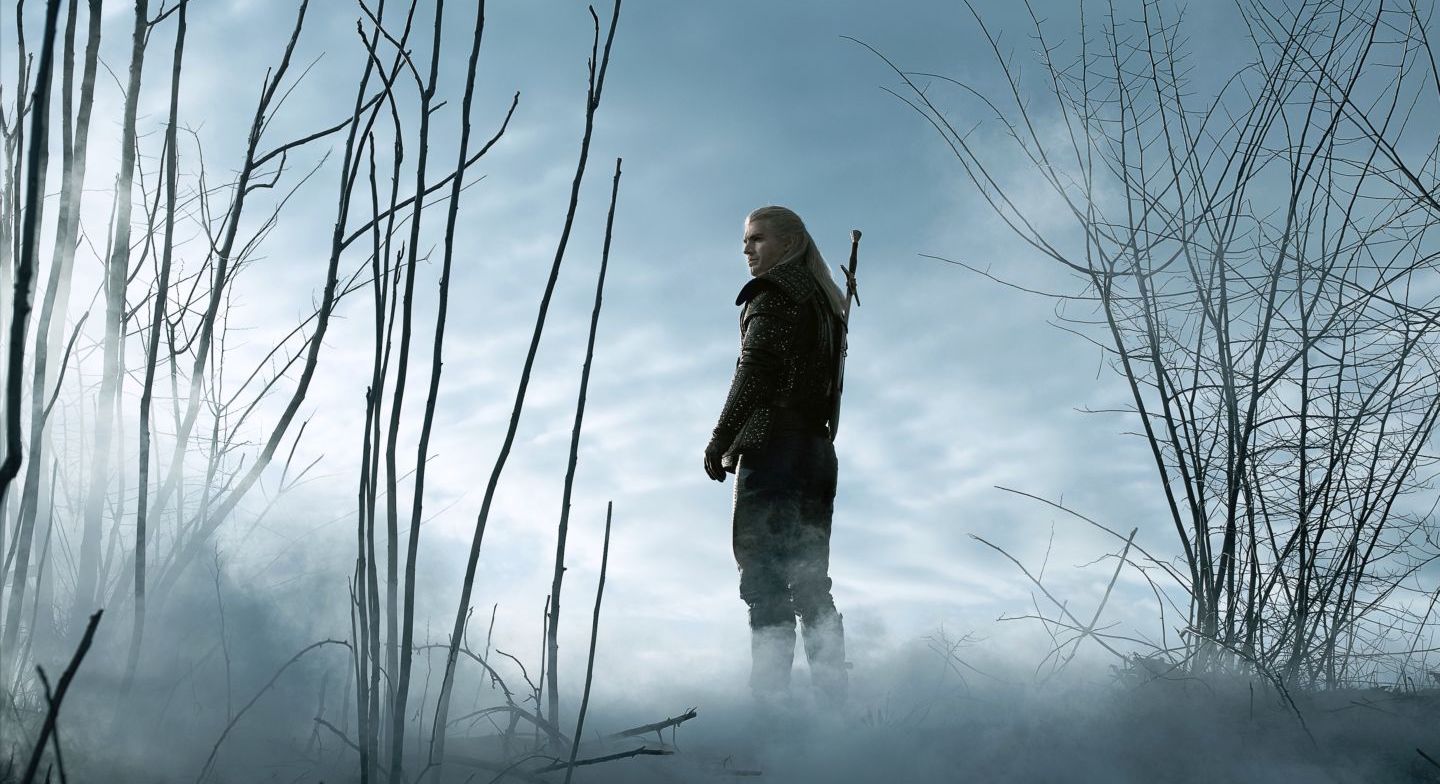
<img src="https://rassegna.lbit-solution.it/wp-content/uploads/2022/12/forget-the-witcher-and-superman-henry-cavill-to-lead-warhammer-40k-dream-project.jpg" alt="Henry Cavill as Geralt from Netflix's The Witcher TV series.”>
Enlarge / Henry Cavill as Geralt from Netflix’s The Witcher TV series.

Amazon has signed a deal with Games Workshop to gain the intellectual property rights that will allow the tech and media giant to make films, TV series, and other content based on the popular Warhammer 40K franchise.

Warhammer 40K has been one of the most popular properties among gamers and others for almost 40 years. It started as a tabletop game but has also spawned numerous popular video games and books over the years.

This news might be interesting enough on its own, but fans of the franchise might also be interested to know that Henry Cavill—the actor who played Geralt in Netflix’s The Witcher series and Superman in the Zack Snyder DC superhero films, among other things—is attached to the project as an actor and executive producer.

Cavill posted a brief teaser to Instagram to announce his involvement:

For 30 years I have dreamt of seeing a Warhammer universe in live action. Now, after 22 years of experience in this industry, I finally feel that I have the skill set and experience to guide a Warhammer Cinematic Universe into life. Partnering with Natalie Viscuso at Vertigo has been a blessing beyond words, without her we might not have found the perfect home at Amazon. And having a home like Amazon will give us the freedom to be true to the massive scope of Warhammer. To all of you Warhammer fans out there, I promise to respect this IP that we love. I promise to bring you something familiar. And I endeavour to bring you something fantastic that is, as of yet, unseen.

Our first steps are to find our Filmmaker/Creator/Writer. Watch this space, my friends.

For The Emperor!

There have been plenty of lackluster adaptations of geeky intellectual properties of late, arguably including Amazon’s The Lord of the Rings and The Wheel of Time. But Cavill’s involvement could help alleviate fans’ concerns, given that Cavill is a dedicated Warhammer 40K geek who has often talked about painting figures and other Warhammer-related activities in interviews.

Cavill recently stepped down from the role of Geralt in The Witcher—to be replaced by The Hunger Games’ Liam Hemsworth. His run as Superman has also ended, according to a recent announcement by DC Studios co-chair James Gunn.

Warhammer 40K is set in the very distant future (the 40K roughly refers to the years when it takes place) that is analogous in some ways to what historians used to refer to as Europe’s Dark Ages. The franchise is the definition of “grimdark,” painting a picture of a universe in which billions toil to serve a God-Emperor and vast, brutal warfare.

The universe is much more expansive than its politics, though, with countless threats to humanity, including Starship Troopers-like insect hordes and space orks, among other beings.

It is not yet known which part of that vast universe and its sprawling timeline across millennia Amazon’s series will take place, but it’s possible Amazon acquired the rights because of the franchise’s Marvel Cinematic Universe-like scale and potential.

https://arstechnica.com/?p=1905293


Steam Deck 2.0 could focus on battery life over better performance

No word on whether the next Steam Deck will help protect the wood on your deck.
Enlarge / No word on whether the next Steam Deck will help protect the wood on your deck.
Sam Machkovech


Now that Valve’s Steam Deck has been technically available for about 10 months (and widely available for about two months), customers are increasingly wondering what Valve might have in store for an inevitable “version 2.0” of the handy PC gaming portable. While some players might be looking for a more powerful “Steam Deck Pro,” hardware designers Lawrence Yang and Pierre-Loup Griffais say that battery life and screen quality are the more likely “pain points” they’d like to address in a new version.

That news comes from a wide-ranging interview with The Verge, where the pair of Valve designers hinted that keeping the same basic spec target for future hardware could be valuable. “Right now, the fact that all the Steam Decks can play the same games and that we have one target for users to understand what kind of performance level to expect when you’re playing and for developers to understand what to target—there’s a lot of value in having that one spec,” Griffais told The Verge.

“I think we’ll opt to keep the one performance level for a little bit longer and only look at changing the performance level when there is a significant gain to be had,” Griffais added.

Right now, it’s hard to argue that putting more powerful processors in a new Steam Deck would lead to a “significant gain” for users. As it stands, there are well over 6,000 Steam titles that have been listed as “Verified” or “Playable” on Steam Deck, which means they have little to no trouble hitting the system’s 1200×800 resolution at a minimum of 30 fps. It’s not just legacy titles getting verified, either; plenty of recent AAA releases like Elden Ring, Spider-Man: Remastered, and Death Stranding: Director’s Cut have been fully Deck Verified.

A higher-end “Steam Deck Pro” might be able to squeeze a slightly higher resolution or frame rate out of some of those games, of course. But as long as a critical mass of games is in a playable form on the hardware, Valve seems less interested in increasing performance and more interested in increasing battery life. We also wouldn’t mind if keeping the specs consistent meant a new Steam Deck could be thinner and/or lighter than the current bulky version, but that’s just pure wish-casting on our part.

Updates past, present, and future

Elsewhere in the Verge interview, the Valve designers revealed somewhat stealthy internal changes they’ve made to recently manufactured Steam Deck units. That includes a change in the adhesive holding the battery in place that should make it easier to remove and replace, improving an issue identified by the teardown specialists at iFixit.

A whiny fan from Delta Electronics in some earlier Steam Deck units has also been replaced in newer units by one with thicker foam padding, which you can buy and install yourself if you have the noisy version. The newest Steam Deck units also improve on the feel of the squishy Steam and Quick Access buttons that sit alongside the screen, the designers said.

Valve has tentative plans to roll out additional Steam Deck features via software updates in the coming months as well. Those include the ability to choose a new Bluetooth profile/codec to reduce wireless audio lag and make use of Bluetooth microphones, to start. Steam Deck users may also soon be able to share power profiles, much like they can currently share customized control profiles for specific games, to help maximize battery life and performance through crowdsourcing.

The Steam Deck’s “trippy” dynamic cloud sync feature—which lets you pick up a game elsewhere as soon as you put the Steam Deck to sleep—will still be up to individual developers to implement, though. There are no plans to require such support as part of Valve’s Deck Verified program, the designers said.

The interview’s most interesting tease, though, concerned the possibility of Valve reviving the defunct Steam Machines line. That could mean new third-party mini-PCs designed to connect to a TV, now running the Steam Deck’s new-and-improved version of SteamOS. While the original Steam Machines effort failed for several reasons, they could well be more successful these days if they integrate the vastly improved game compatibility and feature set that have proven so successful on Steam Deck. https://arstechnica.com/?p=1905326


US lawmakers take aim at gaming’s “harassment and extremism” problem

Sen. Maggie Hassan (D-NH) has asked Valve to addres the prevalence of neo-Nazi accounts and content on its Steam platform.
Enlarge / Sen. Maggie Hassan (D-NH) has asked Valve to addres the prevalence of neo-Nazi accounts and content on its Steam platform.


US Congress members are once again turning their eyes toward the game industry. But this time the focus isn’t on loot boxes, Hong Kong, or even video game violence. Instead, lawmakers want to know what gaming companies are doing about “player reports of harassment and extremism encounters in your online games.”

That language comes from a letter that seven Democratic legislators plan to send later today, as reported by Axios yesterday evening. The lawmakers—including Reps. Lori Trahan (D-MA), Katie Porter (D-CA), and Sen. Ron Wyden (D-Ore.)—are asking for more information on how those reports are handled, what data is collected regarding them, and whether the companies have “safety measures pertaining to anti-harassment and anti-extremism.”

Recipients of the congressional inquiry will reportedly include a veritable who’s who of major video game publishers, including Activision Blizzard, Electronic Arts, Epic, Microsoft, PUBG Corp, Riot Games, Roblox, Sony, Square, Take-Two Interactive, Tencent, Ubisoft, and Valve. Nintendo is notably missing from that list, as are other Asian gaming giants like Bandai Namco, Sega, Capcom, and Nexon (not to mention the American Warner Bros. Interactive). Among Us maker Innersloth will also receive a copy of the letter, an addition that likely reflects that game’s impact rather than the company’s size.

Steam’s neo-Nazi problem?

Ahead from that joint letter, Sen. Maggie Hassan (D-NH) is also taking particular aim at the prevalence of “users displaying and espousing neo-Nazi, extremist, racial supremacist, misogynistic, and other hateful sentiment” on Valve’s Steam platform. In a letter sent to Valve and obtained by Vice, Hassan points to the “pervasive” use of “terms and images commonly associated with neo-Nazi, extremist, and racial supremacist ideologies” on Steam.

“The exposure to explicit, unambiguous, and pervasive symbols, visuals, and words and phrases associated with racial supremacy, neo-Nazism, antisemitism, gender-based violence or harassment, homophobia, and other hateful and harmful ideologies restricts and inhibits many Steam users from participating in communities free of harassing, abusive, and threatening behavior,” Hassan’s letter reads, in part. “Furthermore, allowing racist, extremist, antisemitic, and other hateful ideologies an unimpeded space in which they can flourish online allows for the very real threat of violence in offline, physical spaces.”

Both letters cite a recent report from the Anti-Defamation League, which suggests 15 percent of gamers aged 10–17 and 20 percent of adult gamers were “exposed to white-supremacist ideology and themes” via multiplayer games in 2022. Those numbers both showed stark increases from 2021, according to the report, as did the incidence of “identity-based harassment” against groups like Jewish and Latino gamers.

The letters also come amid the ongoing trial of David DePape, who allegedly attacked House Speaker Nancy Pelosi’s husband at their California home in October. DePape’s writing suggests that the Gamergate movement served as his entry into a world of increasingly paranoid right-wing conspiracies regarding the Pelosis.

While both letters request responses from the companies, neither comes with any explicit threat of follow-up action if those requests are ignored. That said, cooperating with lawmakers’ requests could pay dividends if and when it comes to future hearings, proposed legislation, and/or threats of executive branch actions on these or other issues. https://arstechnica.com/?p=1905219


Amazon Games branches out, announces it will publish the next Tomb Raider

<img src="https://rassegna.lbit-solution.it/wp-content/uploads/2022/12/amazon-games-branches-out-announces-it-will-publish-the-next-tomb-raider.jpg" alt="A screenshot from the most recent main-series Tomb Raider title, 2018's Shadow of the Tomb Raider“>
Enlarge / A screenshot from the most recent main-series Tomb Raider title, 2018’s Shadow of the Tomb Raider

Amazon’s games division will publish the next big Tomb Raider sequel, a press release revealed today.

The game will be developed by Crystal Dynamics—the same studio that made the reboot trilogy that included 2013’s Tomb Raider, 2015’s Rise of the Tomb Raider, and 2018’s Shadow of the Tomb Raider.

Crystal Dynamics used to live under the umbrella of large, Japan-based international publisher Square-Enix, but the parent company sold Crystal Dynamics and the Tomb Raider intellectual property to Swedish holding company Embracer Group earlier this year. That sale also included the Deus Ex, Thief, and Legacy of Kain franchises and associated studios—in other words, most of Square-Enix’s Western studios and properties.

It’s a surprise to see Amazon publishing the next Tomb Raider game because Embracer owns its own publishers of games. But Crystal Dynamics studio head Scot Amos said in a statement that Amazon Games is “uniquely positioned to rewrite what publishing and development collaborations are” and that they share the Tomb Raider team’s “vision, ambitions, and values.” To be clear, though: Amazon is not acquiring Tomb Raider or Crystal Dynamics, it’s just publishing the next game in the franchise.

Amazon Games has made some waves in the past couple of years, but it has largely been in the multiplayer space. Amazon has either developed multiplayer titles in-house (like the MMO New World) or published other studios’ multiplayer games. Previous hits from the company, like the hugely successful localization of the South Korean title Lost Ark, have targeted the same sorts of players who spend their time connecting with multiplayer communities on Twitch.

Given that history, this is the first single-player title announced by Amazon Games. Since Amazon’s previous entries have focused so much on synergizing with Twitch, Tomb Raider is a clear departure. There are popular streamers who play a variety of single-player games (they often go by the label “variety streamers”) but they are far from dominant; Twitch’s most-viewed channels are dominated by players who focus on just one or two online games, like World of Warcraft or Call of Duty: Warzone.

The press release describes some of what we can expect from the next Tomb Raider game, and it sounds like Amazon Games and Crystal Dynamics are looking to give fans of the recent reboot trilogy more of the same. It won’t be another reboot, and it will give players “control of the confident and multidimensional hero Lara Croft in an environment that rewards exploration and creative pathfinding, with mind-bending puzzles to solve, and a wide variety of enemies to face and overcome.”

The game will be developed in Unreal Engine 5 and is purportedly early in development, suggesting that we won’t see a release in the next two years.

https://arstechnica.com/?p=1904944


The day the plastic music died: Epic shutting down Rock Band and other servers

Man singing excitedly at a Rock Band premiere party
Enlarge / A couple of folks absolutely getting down to Rock Band 2 at that game’s 2008 launch party at LA’s Orpheum Theatre.
Getty Images

If you’ve ever wanted to achieve a five-star Expert rating for Dragonforce’s “Through the Fire and Flames,” now’s the time to grab that track for Rock Band 3. Online stores, DLC, and services for that game and 14 others will shut down on January 24 as Epic Games consolidates its online offerings.

Most notable among the games Epic says have “out-of-date online services and servers” are five Rock Band titles: 1-3, The Beatles, and Green Day. Rock Band’s servers have been online since 2007, sending more than 100 million playable versions of over 2,000 songs for people to play on various plastic instruments studded with brightly colored buttons. You’ll still be able to play any songs you’ve downloaded for those titles but no longer be able to connect for new tunes. Those committed to Rock Band 4 can still keep playing online multiplayer, Epic notes.

Another cornerstone of a bygone era, Unreal will lose servers for many of its games. Epic notes that it intends to bring back online features for Unreal Tournament 3, but Gold, II, Tournament 2003 and 2004, and Unreal Tournament: Game of the Year Edition will go dark after the January 24 date.

Epic—aiming to move all its games into its modern, unified Epic Online Services—had a bit more bad news to share for fans of older or quirkier games. The Mac and Linux versions of sentient pigeon visual romance novel Hatoful Boyfriend and Hatoful Boyfriend: Holiday Star are gone from Epic’s store, though owners can still play them. And the online-dependent games DropMix, Unreal Tournament (Alpha), Rock Band Blitz, SingSpace, and the Rock Band Companion app will no longer work after January 24. Battle Breakers, a mobile-based RPG that had already weathered Epic’s long-term war with Apple, will stop working on December 30, though Epic is offering refunds for any in-game purchases made within 180 days of today’s announcement.

If a game has an online component and you can’t create your own servers for it, those servers will disappear at some point. Ubisoft earlier this year announced shutdowns for older Assassin’s Creed, Far Cry, and Splinter Cell games, among others, eliminating multiplayer and forcing owners to activate DLC before their deadline. The developers of Anno 2070 managed to rebuild a copy of their game that worked with new servers, keeping the game alive in most respects.

Nintendo, more aggressively, has previously taken down the online aspects of entire generations of games by killing servers for the Wii and the DS, then the Wii U and 3DS. Hackers managed to work around some of those shutdowns, too.

The online shutdown of Rock Band‘s classic trio may hamper your ability to break out the instruments and try some new tunes, but the games have served their fans far longer than most. Its direct competitor, Guitar Hero, shut down services for Guitar Hero Live in 2018, making 92 percent of its streaming-only songs inaccessible. That move spurred a false advertising lawsuit and, eventually, a refund program.

Then again, Rock Band‘s longevity, and the interconnection of its titles, leaves us with questions. Will you be able to re-download songs you’ve already purchased? If you bought a song for Rock Band 1-3, and you export it to work in 4, could you still re-download it for a future version of 4 you install after the shutdown date? We’ve emailed Epic Games to ask.

Here’s the list of games Epic says will lose their online services on January 24:

  • 1000 Tiny Claws
  • Dance Central 1-3
  • Green Day: Rock Band
  • Monsters (Probably) Stole My Princess
  • Rock Band 1-3
  • The Beatles: Rock Band
  • Supersonic Acrobatic Rocket-Powered Battle-Cars
  • Unreal Gold
  • Unreal II: The Awakening
  • Unreal Tournament 2003
  • Unreal Tournament 2004
  • Unreal Tournament 3
  • Unreal Tournament: Game of the Year Edition

https://arstechnica.com/?p=1904389


Spider-Man: Across the Spider-Verse trailer wows with 6 distinct animation styles

[embedded content]
Miles Morales (Shameik Moore) returns in Spider-Man: Across the Spider-Verse.

Four years after Spider-Man: Into the Spider-Verse, Miles Morales is back and saving the multiverse with all the other incarnations of the superhero in the hotly anticipated sequel, Spider-Man: Across the Spider-Verse.  The first trailer just dropped, and it looks like another trippy, universe-hopping fun ride—hopefully a worthy successor to one of the best films of 2018.

(Spoilers for 2018’s Spider-Man: Into the Spider-Verse below.)

Into the Spider-Verse was the first computer-animated feature film to feature everyone’s favorite web-slinging superhero—in this case, Miles Morales (Shameik Moore), a teenage graffiti artist of Black and Puerto Rican descent. Miles is bitten by the canonical radioactive spider while painting in an abandoned subway station and develops spider-like superpowers. He stumbles onto a plot by Wilson Fisk/Kingpin (Liev Schreiber) to open portals to parallel universes where Fisk’s wife and son are still alive. In Miles’ universe, Peter Parker, aka Spider-Man (Chris Pine), is killed by Fisk, and Miles takes up the Spider-Man mantle.

Miles ultimately saves the day with the help of Spider-Man incarnations from other universes, most notably Gwen Stacy/Spider-Woman (Hailee Steinfeld). Other versions of Peter Parker were played by Jake Johnson, who reluctantly mentors Miles; Peni Parker/SP/dr (Kimiko Glenn) from an anime-inspired parallel universe; Nicholas Cage channeling his best 1930s noir Humphrey Bogart impression; and my personal favorite, Peter Porker, aka Spider-Ham (John Mulaney). In the post-credits, we met Miguel O’Hara, aka Spider-Man 2099 (Oscar Isaac), who plays a major role in Across the Spider-Verse (apparently, the crew nicknamed the character “Property Damage Spider-Man”).

Into the Spider-Verse racked up $375.5 million at the global box office against a $90 million production budget and won an Oscar for Best Animated Feature—the first non-Pixar film to do so since 2011. Even before the film premiered, the word-of-mouth was so positive that Sony started the sequel’s development. Ars’ Sam Machkovech declared Into the Spider-verse to be “easily the best comic-nerd film in years to warmly embrace the kinds of viewers who know their comics canon front and back, all without intimidating the inevitable kid and newbie viewers attracted to this incredibly family-friendly adventure.”

Moore, Steinfeld, and Isaac all reprise their roles, along with Jake Johnson as Peter B. Parker, Miles’ mentor from the 2018 film; Luna Lauren Velez as Rio Morales, Miles’ mother; and Brian Tyree Henry as Miles’ police officer father, Jefferson Davis. New characters include Daniel Kaluuya as Hobie Brown/Spider-Punk (he’s a guitarist in a British punk rock band); Issa Rae as Jessica Drew, a pregnant Spider-Woman from another universe; and Shea Whigham as Gwen’s father, police captain George Stacy.  Per the official premise:

Miles Morales returns for the next chapter of the Oscar winning Spider-Verse saga, Spider-Man: Across the Spider-Verse. After reuniting with Gwen Stacy, Brooklyn’s full-time, friendly neighborhood Spider-Man is catapulted across the Multiverse, where he encounters a team of Spider-People charged with protecting its very existence. But when the heroes clash on how to handle a new threat, Miles finds himself pitted against the other Spiders and must re-define what it means to be a hero so he can save the people he loves most.

A highlight of the new trailer is the six distinct animation styles used for the universe of each incarnation of Spider-Man—very much a deliberate creative choice. For instance, Gwen’s home (Earth-65) has the look and feel of impressionistic watercolors, where the colors shift in response to Gwen’s emotions. (It’s been described as a “three-dimensional mood ring.”) We also glimpse Earth-50101 (aka “Mumbattan,” meshing together Manhattan and Mumbai).

The primary villain this time around is the Spot (Jason Schwartzman), whose body is covered in inter-dimensional portals designed to look like “living ink that had spilled or splattered on a comic artist’s drawing.” Jorma Taccone, who voiced the Green Goblin in the 2018 film, returns in the sequel as the Vulture, sporting a Renaissance-era look inspired by the drawings of Leonardo da Vinci.

The trailer opens with a heart-to-heart between Miles and his mother, as she awkwardly tries (and fails) to correctly use the teen slang of the day. “For years I’ve been taking care of this little boy, making sure he’s loved, that he feels like he belongs wherever he wants to be,” Rio says. But she worries that “they”—presumably the other web-slinger incarnations— won’t look out for Miles the way his family will. She makes him promise that he won’t forget where he came from.

It’s Gwen who lures Miles into this new adventure, involving a bunch of Spider-Man incarnations battling it out in some kind of inter-dimensional space. Apparently, not all of them are the “good guys.” There’s not much detail about the plot, but the animated Stan Lee cameo alone makes this a worthwhile trailer that whets our appetite for the film.

Spider-Man: Across the Spider-Verse hits theaters on June 2, 2023. We can’t wait. Another sequel is already in the works, along with a spinoff featuring Steinfeld and Rae’s incarnations of Spider-Woman, as well as the character of Cindy Moon/Silk.

Listing image by YouTube/Sony Pictures

https://arstechnica.com/?p=1904060