Surprise! Oculus Quest becomes first VR set with native hand tracking—this week

Starting this week, the Oculus Quest VR headset becomes even more tantalizing by adding a feature we’ve never seen ship as a built-in option in a VR system: hand tracking. VR users will be able to put down their controllers and use their fingers to manipulate VR worlds, as tracked by Quest’s array of built-in cameras.

The feature received a tease at October’s Oculus Connect 6 conference and got an “early 2020” launch window from Facebook CEO Mark Zuckerberg. But someone on the Oculus engineering team clearly ignored Lord Zuck in getting this feature out the door a bit early, and it will land in an “experimental” tab in Quest’s settings menus as a free update by week’s end.

Today’s news comes with two important asterisks. First, there’s no fully fledged VR software available for the feature yet. At launch, the experimental feature will only work within Oculus Quest’s root menu, which at least includes photo and multimedia viewing tabs. Within “a week” of the toggle going live, a Software Development Kit (SDK) for Quest hand tracking will go live for Oculus developers, which will allow them to tap into Oculus’ hand-tracking system and potentially implement it in various games and apps.

And second, Oculus is limiting its hand-tracking framework to the Quest ecosystem. This update isn’t coming to the PC-centric Rift or Rift S headsets, and it won’t work if you use Oculus Link to connect a Quest to your favorite PC VR games.

First of its kind, for a reason

Normally in VR, users grab onto controllers full of triggers and buttons. For some VR software, a piece of handheld plastic makes sense: it can sell the sensation of holding a weapon or VR item, and it adds haptic feedback like rumbling when your real-life hand gets near VR objects. But there’s something to be said about lifting your empty hands in the VR sky and seeing your real fingers wiggle, which, based on pre-release tests, we can confirm Oculus Quest hand tracking nails.

We’ve seen hand-tracking experiments on other VR headsets, but these have largely come in the form of proprietary add-ons like Leap Motion, which require additional hardware and a bolted-on rendering pipeline. These systems have been impressive enough as tested at various tech expos, but VR hand tracking has always been underwhelming in execution—just imprecise enough, in terms of recognizing individual fingers and “pinch” gestures, compared to the “it just works” appeal of a compatible controller.

Quest’s native hand-tracking support, on the other hand, taps into the headset’s existing camera array, and it may very well work without adding a processing burden to the system (though we’ll have to wait for the SDK to know for sure). That reduced friction is the best news for a hand-tracking system that, at launch, is admittedly simple and limited.

“Fwshht” like Wolverine, but not yet

Right now, Quest turns your empty hands into laser pointers that can manipulate menus. Leave your hands somewhat open, like you’re about to pinch a pesky fly buzzing around, to make a pointer appear on a distant menu, as aimed by your hands’ orientation. Quickly pinch your index finger and thumb to “click” any menu buttons, or hold your pinch to drag menu elements like a scrolling list or volume slider.

Based on tests in October, we know that the system natively recognizes a few hand gestures, particularly the balling of fists. (In one fantasy-themed test, I could dunk my real-life hands in a vat of virtual goo, then ball my hands into fists to make Wolverine-like blades “fwsshht” out of my virtual knuckles.) But those tests revealed two weaknesses: the inability to recognize hands when they are touching each other, and a relatively narrow “vision cone” for hand tracking. If your hands aren’t front-and-center in your VR field of vision, they’ll vanish and require an awkward moment to reappear.

When I did things the way Oculus wanted me to, at least, the system as tested in October was fast and accurate. I could wave my hands around, then point at distant objects or poke nearby ones and expect instant visual feedback. As a result, I expect the hand-tracking update to be an interesting one for apps outside the gaming ecosystem, from real-life job training simulations to media apps. I doubt that this system will replace controllers in demanding games and apps any time soon, but as an experimental freebie, and one whose simplest use cases actually work, I’m OK with it.

What’s more, this update puts the ball in other VR headset makers’ courts. Valve Index, and most Windows Mixed Reality sets, include a similar array of outward-facing cameras; Oculus’ primary differentiation here is software engineering, not unique cameras. Who’s next to step up to hand tracking?

Listing image by Oculus

https://arstechnica.com/?p=1629935


A new generation ain’t afraid of no ghosts in Ghostbusters: Afterlife trailer

[embedded content]
Finn Wolfhard, Mckenna Grace, and Paul Rudd star in Ghostbusters: Afterlife.

It has been more than 30 years since Bill Murray and Dan Aykroyd first strapped on their proton packs to battle a ghostly infestation in Manhattan in the 1984 blockbuster comedy Ghostbusters. Now the legacy continues. Sony Pictures just dropped the first trailer for Ghostbusters: Afterlife, a sequel directed by Jason Reitman (Juno, Thank You for Smoking), featuring a whole new team.

Reitman is a fitting choice to direct, as he’s the son of Ivan Reitman, director of the 1980s films. You may have glimpsed Jason, his mother, and his sister in the original Ghostbusters as residents who are fleeing their haunted skyscraper. Reitman resisted following in his father’s footsteps for years before finally succumbing to the call. “I’ve always thought of myself as the first Ghostbusters fan, when I was a 6-year-old visiting the set,” Reitman told EW back in January. “This is the next chapter in the original franchise. It is not a reboot. What happened in the ’80s happened in the ’80s, and this is set in the present day.”

Vanity Fair offered a first look at the latest film last week, featuring several stills—including one showing the original Ghostbusters tricked-out ambulance. Per the official synopsis, “A single mother and her two children move to Summerville, Oklahoma, after inheriting property from a previously unknown relative. They discover their family’s legacy to the original Ghostbusters, who have become something of a myth, as many have long since forgotten the events of the ‘Manhattan Crossrip of 1984′”—i.e., the events of the original film. Carrie Coon (The Leftovers) plays mom Callie, while Mckenna Grace (The Haunting of Hill House) plays her science-loving daughter Phoebe. Finn Wolfhard (Stranger Things) plays son Trevor.

“As the family arrives at an old farm, they begin to discover their connection to the original Ghostbusters,” Reitman told Vanity Fair. “Trevor and Phoebe are about to find out who their grandfather was and whether they’re ready to pick up the proton pack themselves.” Among other revealed details, Phoebe will find a device that reads psychokinetic energy. Paul Rudd plays summer school teacher Mr. Grooberson; the Manhattan Crossrip was his most formative childhood memory, and we see his delight at holding a bona fide vintage ghost trap in his hands.

The trailer does not look anything like a Ghostbusters movie when it opens. We see Trevor hanging with some new pals, one of whom asks what the family is doing in Summerville. “Honestly, my mom won’t say it, but we’re completely broke,” he replies, as we see a flashback of Callie wearily pulling an eviction notice off the door of their old home. “And the only thing that’s left in our name is this creepy old farmhouse our grandfather left us in the middle of nowhere.” Then there’s a loud noise from the bottom of the mine shaft they’re sitting above, and a fluorescent green ghostie shoots out into the air.

The family’s arrival seems to have awakened something in the town. As Rudd’s Mr. Grooberson tells Trevor, “Somehow, a town that is nowhere near a tectonic plate, that has no fault lines, no fracking, no loud music even, is shaking on a daily basis.” Then Phoebe finds an old ghost trap, which Grooberson initially mistakes for a replica. “There hasn’t been a ghost sighting in 30 years,” he says to Phoebe, and gives her a crash course on the Manhattan Crossrip. “New York in the ’80s? It was like The Walking Dead.”

The Ghostbuster aspects slowly begin to emerge. “My grandfather died. My mom says we’re just here to pick through the rubble of his life,” Phoebe tells her teacher, right before she discovers all her grandfather’s old Ghostbusters paraphernalia, including the uniforms. Meanwhile, Trevor discovers the Ghostbusters-mobile with its ECTO-1 license plate, outfitted with a handy gunner’s seat and a (functioning) proton pack.

“Call it fate. Call it luck. Call it karma,” a voiceover intones, and it sounds a lot like Bill Murray, aka Peter Venkman himself. “I believe everything happens for a reason.” The original cast is expected to appear in Ghostbusters: Afterlife, including Murray, Sigourney Weaver (as Dana Barrett), Dan Aykroyd (as Ray Stantz), Ernie Hudson (as Winston Zeddemore), and Annie Potts (as Janine Melnitz).

Harold Ramis, who played Egon Spengler, died in 2014, and it’s pretty clear that Spengler is the kids’ recently deceased grandfather. Phoebe finds a collection of spores, molds, and fungus (his favorite hobby), and one of the old uniforms has “Spengler” stitched onto it. That might explain the relatively subdued, more contemplative tone of this first trailer: at once mourning the loss of Ramis and celebrating the legacy he helped create, now handed down to a new generation.

Ghostbusters; Afterlife hits theaters July 10, 2020.

Listing image by Sony Pictures

https://arstechnica.com/?p=1629649


Diana Prince reunites with her long-lost love in first Wonder Woman 1984 trailer

[embedded content]
Gal Gadot reprises her role as everyone’s favorite Amazonian demigod in Wonder Woman 1984.

Diana Prince faces off against two new formidable foes, and reunites with an old love, in the hotly anticipated first trailer for Wonder Woman 1984, with Gal Gadot reprising her titular role. Director Patty Jenkins unveiled the trailer today at Comic Con Experience (CCXP) in Sao Paulo, Brazil.

Inspired by the comic book heroine created by William Moulton Marston in the 1940s for DC Comics, Wonder Woman made her big screen debut in the DCEU with 2016’s Batman v Superman: Dawn of Justice, followed by 2017’s Justice League. The first fell short of box office expectations; the second bombed outright. So when Jenkins took on Wonder Woman’s origin story, she deliberately departed from the grim humorlessness and dark sensibility of those earlier films, bringing a brighter energy and wit to her tale, along with the usual action. That vision paid off: Wonder Woman went on to gross $821 million worldwide, and earned critical raves, making it the most successful of the DCEU films thus far.

Jenkins first broached the possibility of a sequel shortly after the first film’s release in June 2017, and principal photography began a year later. It has been described as a standalone film rather than a direct sequel, “in the same way that Indiana Jones or [James] Bond are, instead of one continuous story that requires many installments.” (That standalone strategy worked well for Warner Bros’  2019 box office smash Joker, which became the first R-rated film to gross over $1 billion worldwide.)

This second film is set almost seventy years after the original film. “In this movie we find [Diana] in 1984 and [she] is quite lonely — she’s lost her friends and doing what she needs to do,” Gadot said at CCXP. “She’s helping mankind and saving them until something crazy happens to her.”

This being the 1980s, Diana is operating in a Cold War scenario, taking on Pedro Pascal’s villainous Maxwell Lord, a shrewd and powerful businessmanan. Kristen Wiig also co-stars as Barbara Ann Minerva, a British archaeologist in the comic books who becomes Wonder Woman’s arch-nemesis Cheetah. Connie Nielsen and Robin Wright reprise their roles as Diana’s mother, Hippolyta, and aunt, Antiope, respectively, in flashbacks to Diana’s Amazonian upbringing on Themyscira.

As New Order’s “Blue Monday” plays in the background, we see Diana having some heart-to-heart girl talk with Wiig’s Minerva about long lost loves, and a glimpse of an old photograph of Steve Trevor.  “My life hasn’t been what you probably think it has,” Diana tells Barbara. “We all have our struggles.” Then trouble breaks out at a local supermall, and Diana intervenes to restore order. Inside the mall there are walls of TVs that just happen to be showing Maxwell Lord giving a motivational pitch. “Life is good but it can be better,” he says. “All you need is to want it. Think about finally having everything you always wanted.”

Lord has had various incarnations in the comics, including one where he had supernatural powers of persuasion. It’s unclear from the trailer what, if any, powers he displays in this film, but there are hints he might play some role in the miraculous reappearance of Steve while Diana is attending a gala. We see Diana and Steve’s emotional reunion, and then a shot of Lord declaring he will now take what he wants in return.

The rest of the trailer is a series of action shots as Diana and Steve work together once again to thwart whatever evil plan is threatening the day—including flashbacks to a young Diana competing in an Amazonian tournament, and a glorious shot of Diana’s iconic golden armor. But we don’t get to see Wiig in full Cheetah mode, which is a shame.

Wonder Woman 1984 hits theaters June 5, 2020. If it’s as successful as its predecessor, we can probably expect a third Wonder Woman film. Jenkins told the Hollywood Reporter earlier this year she has already mapped out the plot for a third installment, in a more contemporary setting.

Listing image by YouTube/Warner Bros

https://arstechnica.com/?p=1629645


A nebbishy bank teller discovers he’s trapped in a video game in Free Guy

[embedded content]
Ryan Reynolds stars in Free Guy.

A lowly bank teller discovers he’s actually a non playable character in an open-world video game in Free Guy, a forthcoming film from 20th Century Fox. Director Shawn Levy debuted the first trailer this weekend at the 2019 Comic Con Experience (CCXP) in Sao Paulo, Brazil, describing it as “a superhero origin story except without the tights, powers, or pre-existing IP,” according to Deadline Hollywood. Stars Ryan Reynolds and Joe Keery (Steve Harrington on Stranger Things) were also on hand for the event.

Per the official synopsis, Free Guy is about “a bank teller who discovers he is actually a background player in an open-world video game, decides to become the hero of his own story…one he rewrites himself. Now in a world where there are no limits, he is determined to be the guy who saves his world his way…before it is too late.”

The trailer opens with cheery bank teller Guy (Reynolds) waking up and heading to work. He remains completely unfazed as he encounters all manner of bizarre occurrences en route: shootouts, explosions, a guy with a flame-thrower, and his pal Joe getting thrown through a storefront window. (“Whoa-ho! Mondays! Amirite, Joe?”)

Guy’s bank gets robbed every day, but this particular day, he decides to fight back, “killing” one of the robbers (“He’s just resting”) and taking possession of the dead man’s glasses. When he walks out of the bank and puts on the glasses, his perspective shifts dramatically: he sees the “world” as it really is—one elaborate video game. The bank heist is just one of the “missions” players undertake in the course of the game.

Guy picks up the ground rules governing the game pretty quickly, starting with a “first aid” token that heals his broken nose. “Is this what recreational drugs feels like?” he asks a random motorist. He also finds an ally in Milly, aka Molotov Girl (Killing Eve‘s Jodie Comer), who is able to move in and out of the game at will. Meanwhile, game developer Antoine (Taika Waititi) has plans to shut the game down, against the objections of a programmer, Keys (Keery). Keys and Milly created the code that resulted in Guy—who is supposed to be a non playable background character—becoming aware of his virtual environment.

At CCXP,  Reynolds described the film as “a modern-day Back to the Future for this generation.” Tonally, I get the comparison, but Free Guy also has recognizable elements from Westworld, The Matrix, Wreck It Ralph, and even the Deadpool movies. “It’s not just spectacle — it’s very much connected to the characters,” Levy said. “It’s the rise of an idealist in a world that is very cynical and dark.” That should make it the perfect vehicle for Reynolds’ sweetly acerbic irreverence.

Free Guy will hit theaters July 3, 2020.

Listing image by YouTube/20th Century Fox

https://arstechnica.com/?p=1629509


The Aeronauts brings the joy and perils of Victorian ballooning to vivid life

Eddie Redmayne and Felicity Jones star in <em>The Aeronauts</em>
Enlarge / Eddie Redmayne and Felicity Jones star in The Aeronauts

Just in time for the holiday season, Amazon Studios has released The Aeronauts, a soaring historical adventure film about the perils faced by a Victorian scientist and a balloonist attempting to fly higher than anyone before them. Granted, the characters might be a bit thinly drawn when it comes to emotional depth, and the earth-bound first act is solid, if unremarkable, period drama. However, once the film (literally) gets off the ground, it blossoms into a gripping, thoroughly entertaining epic tale of survival at punishing altitudes. Above all, the film looks spectacular; every frame is practically a canvas, painted in vibrant, almost Disney-esque hues.

(Some spoilers below.)

The Aeronauts is a fictionalized account of a historic balloon flight by pioneering meteorologist James Glaisher. He and his pilot, Henry Coxwell, made several balloon flights to measure the temperature and humidity of the upper atmosphere between 1862 and 1866. Armed with scientific instruments and bottles of brandy, Glaisher and Coxwell set a world-altitude record, reaching an estimated 38,999 feet (11,887 meters) on September 5, 1862. They were the first men to reach the atmospheric stratosphere, and they did it without the benefit of oxygen tanks, pressure suits, or a pressurized cabin.

During the flight, the men released pigeons at various altitudes to see how well they flew, recalling that those released above the three-mile mark “dropped like a stone.” They would have continued rising and likely died because the valving rope Coxwell needed to manipulate to begin their descent got tangled up with the balloon net. Coxwell had to climb out of the basket and up into the rigging to release the valve with his teeth—his hands were badly frostbitten—in order to begin their descent. By then, Glaisher had passed out. Eventually, the men landed safely (if a bit roughly) about 20 miles from their original launch point.

The film version recreates many of those elements, but while Glaisher is a primary character (played by Eddie Redmayne of The Theory of Everything) in The Aeronauts, writer/director Tom Harper opted to replace Coxwell with a fictional female character, Amelia Wren (Felicity Jones, also of The Theory of Everything). It opens with a frustrated Glaisher trying in vain to convince his scientific colleagues of the potential of ballooning to enable better study of Earth’s atmosphere, resulting in more accurate weather prediction. Meanwhile, a widowed Amelia is facing pressure from her mother and sister to remarry and leave her ballooning adventures with her late husband behind her. When Glaisher offers Amelia a job piloting a balloon higher than anyone has attempted before, she is initially reluctant, but then accepts. They end up facing far more peril than they bargained for.

Up, up, and away

Harper wanted his sky-borne scenes to be as authentic as possible. These were by far the most challenging aspect of the production, since he wanted to shoot his actors in an actual balloon at 2,000 feet. According to co-producer Todd Lieberman, that involved finding someone willing and able to build an 80-foot helium-filled (as opposed to a hot air) balloon—and someone willing and able to fly it. A company called Flying Pictures, headed by Colin Prescot, obliged. Prescot also brought renowned Swedish aeronaut Per Lindstrand aboard to pilot the balloon. (Lindstrand famously made a series of transoceanic hot-air balloon flights in partnership with Sir Richard Branson.)

“I think a balloon of this kind hadn’t been built in over four decades, and this might be the first replica of a period balloon of that era ever built,” said Lieberman.

Every crew member went up in a balloon just to experience what it was like, and Felicity Jones went to Germany for gas-balloon flight training (as well as acrobatics) to prepare for her role as Amelia. For the actual filming at altitude, the pilot crouched low in the basket while cameras mounted on helicopters and drones captured the action. That really is Jones climbing up and sitting on the balloon’s hoop, although she wore a protective harness that was subsequently removed in post-production. As for the scene where Amelia must climb up the side of the ice-encrusted balloon—a stuntwoman actually performed that feat at altitude, with close-ups and other footage for the scene filmed on a sound stage outfitted with a 180-foot crane.

“The hardest part of these ballooning expeditions, we learned, is landing them,” said Lieberman. “The wind dictates where the balloon goes.” The crew relied on WhatsApp group chats and chase vehicles to follow the balloon’s path while it was making its descent to figure out where it was likely to land. “It was a less-than-ideal landing, to say the least, but we got them down safely,” said Lieberman.

“The hardest part of these ballooning expeditions, we learned, is landing them.”

While it wasn’t possible to film at 37,000 feet, the filmmakers went to great lengths to replicate those conditions on set. Redmayne spent some time in an oxygen-deprivation tank to get a feel for the effects of hypoxia. And when shooting the scenes when the balloon was freezing over, part of the set was cooled down to below freezing, while Redmayne and Jones would plunge their hands into buckets of ice before scenes.

“Not only were they acting as if they were freezing,” said Leiberman, “they actually were freezing.”

An amalgamation of history

The Aeronauts takes pains with regard to historical accuracy, although as Lieberman noted, “We weren’t making a documentary.” While Glaisher and Coxwell’s historic feat provided the basis for the main story, many other details of the fictionalized flight were taken from a book of historical ballooning accounts called Falling Upwards by Richard Holmes. Intrepid aeronauts of the past really did make a parachute of the balloon and witness butterflies at surprisingly high altitudes. And per Lieberman, an aeronaut named Charles Green—inventor of the trail rope as an aid to steering and landing a balloon, among other accomplishments—really did summit the side of a balloon, albeit at a lower altitude than is portrayed in the film.

The decision to replace Coxwell with the fictionalized Amelia proved controversial. Tthe Royal Society’s head of library, Keith Moore, told The Daily Telegraph last year, “It’s a great shame that Henry isn’t portrayed because he performed very well and saved the life of a leading scientist,” adding that he wished the film had chosen to include one of the “many deserving female scientists of the period.”

Amelia was actually inspired by several historical female aeronauts, most notably Sophie Blanchard, the first woman to find work as a professional balloonist when her balloonist husband, Jean-Pierre, died. (The account of Amelia’s husband’s death in the film was inspired by the real demise of aviator Thomas Harris in 1824.) The flamboyant couple used dogs at their launches, as portrayed in the film, and often set off fireworks. In fact, that’s how Blanchard died in 1819: during an ascent, one of the fireworks set the balloon on fire. British aeronaut Margaret Graham and American aviator Amelia Earhart were also influential as Harper was developing the character.

“The idea of two scientists sitting in a basket going up and down who shared the same basic outlook on life didn’t hold much tension,” said Lieberman. “So we decided to do an amalgamation: take the best of these different flights from the time period and find a counterpoint to James Glaisher.”

Glaisher really did struggle to raise funding for his expeditions from the Royal Society. His eventual success resulted in his becoming president of the newly formed Royal Meteorological Society just five years after his historic flight with Coxwell. In the end, The Aeronauts is an uplifting story, both literally and figuratively—just as the filmmakers intended.

The Aeronauts is now playing in theaters.

https://arstechnica.com/?p=1627405


Review: Horrified is a terrific family-friendly monster-themed board game

Review: Horrified is a terrific family-friendly monster-themed board game
Welcome to Ars Cardboard, our weekend look at tabletop games! Check out our complete board gaming coverage at cardboard.arstechnica.com.

Some folks use “family game” as a pejorative. Not me. For one thing, I happen to like my family. More importantly, as a player and critic of board games, it is my holy duty to introduce as many games as possible to my family. In the cardboard eschaton, all games shall be family games, because families will play anything and everything together.

With that very important disclaimer out of the way, it’s now time to announce that Prospero Hall’s Horrified is my favorite family game of the year.

Better than Pandemic?

Let me rag on a game that I happen to respect for a minute.

My hang-up with the popular co-op disease-fighting game Pandemic is that it’s always making things harder for its players. To some degree, that’s a surefire formula for a cooperative game, and Pandemic should know; it set the standard for the genre. Every turn you can fix one problem, maybe two, but three new problems spill onto the board. Before long, the game board can look like an overwhelming pile of disease cubes.

But Horrified takes that formula by the neck and gives it a good wringing. The result feels familiar—but the game rewards its players rather than constantly punishing them. In Horrified, you’re the cure, not merely the treatment.

Welcome to the world’s most unfortunate town

Imagine living in a town that’s already hemorrhaging citizens to Dracula when the Creature from the Black Lagoon wades up and starts snacking on picnickers. Also, the Invisible Man is peeping on everybody’s significant other, Frankenstein’s Monster keeps strangling bystanders, the Wolf Man has been fetching femurs that are still attached to their owners, and the Mummy is smashing records for biggest box office flops.

That’s Horrified in a nutshell. Two or three classic monsters are all terrorizing your town at the same time, and it’s your task to defeat, seal away, or cure them before they murder too many of your neighbors. It’s a bad, bad place to live—but at least houses are affordable.

The turn-by-turn procedure here will be familiar to anyone who’s played a cooperative game in the vein of Pandemic. Everyone has their own character, complete with some minor power that defines how they play, like teleporting to a friend’s location or gathering objects from afar. With only a handful of actions, you move about town, collecting items and ushering bystanders safely to their destinations. The danger is that nearby monsters might activate in between each player’s turn. Rather than being inevitable, these appearances are governed by a separate deck. Sometimes a monster will remain stationary, dormant but dangerous. Other times it will sprint across multiple spaces to maul somebody—or even spring special abilities on you.

These monsters are what make Horrified special. They’re each billed as unique, with their own behaviors and means of defeat. In practice, though, some of their traits are closer than they ought to be; expect to see plenty of goals that require you to spend matching items in the monster’s space. But for every disappointing objective, there are two made of sterner stuff. In the midst of gathering items and fleeing from the shadows, you might take a detour to hunt through the swamp to solve a hieroglyphic puzzle at the museum or to prevent Frankenstein’s Monster from reuniting with his Bride, at least until you’ve prepared the perfect first date. The real test is when these challenges are combined. Breaking all of Dracula’s coffins isn’t hard, but braving those hidden vampire lairs while you’re being robbed blind by the Invisible Man and staying far away from the Wolf Man? That’s when things get interesting.

A campy horror yarn for the whole family

The appeal of Horrified is that it’s every bit as easy to explain to newcomers as what I’ve written above. Easier, really. Among experienced players, it might even seem too simple, with only a handful of actions to select from. But everything about it, from its crisp interface to the transparency of its board state, is designed to lure in the unsuspecting.

Consider how campy it is. Rather than shooting for horror, it’s “scary” the way a bad throwback movie is scary, with unconvincing rubber body suits and stilted acting by performers who plainly believe they’re cut out for Broadway instead of this moving picture fad. The colors are bright, and the monster miniatures are posed with exaggerated goofiness. But it’s a trick. Twenty minutes later, you’re sweating the proximity of the Creature to some pedestrians and wondering if you can return those scrolls to the museum in time.

In other words, this game is entirely possible to lose. All those deaths gradually add up, whether they are your own or those of the cardboard townsfolk cowering on the table. Lose too many people and the monsters win. But each loss feels more immediate than a disease cube could ever be. That masticated villager wasn’t a statistic; he was Fritz the Hunchback, at home in the tower but trying to reach the institute for safety. I didn’t quite grasp this until my sister smacked the table in frustration when we lost a villager we’d been guiding across town. By giving those cardboard cutouts a name and a goal, Prospero Hall has made them a little bit more human. Our brains are weird like that.

Not that I should be surprised. Prospero Hall has been doing some great work these past few years, including the board game adaptation of Jaws from earlier this year, and each release only grows more assured and more personal. Horrified continues that tradition. It’s the sort of game you can take to dinner with your extended family. Better yet, it’s one of those rare games everyone will be able to dig into.

https://arstechnica.com/?p=1629383


Halo Reach on PC is the customizable combat we’ve been wanting—but just barely

Back into <em>Reach</em>. This time, on Windows PC.
Enlarge / Back into Reach. This time, on Windows PC.
Xbox Game Studios

Years of teases and waiting have finally ended with this: Halo is back on PC in officially supported fashion.

In particular, this week’s launch of 2011’s Halo Reach on Windows PC is fascinating because of how it compares to the last time Microsoft tried the Halo-on-PC thing. Rewind to 2007, and Microsoft shoved out a Halo 2 port that required both Games For Windows Live and Windows Vista to run—and shipped in mod-unfriendly fashion. It received nary a patch or useful update and left diehard fans scrambling to patch it into decent shape.

Compare that to Halo Reach, which is still a Windows-only game but works on any Microsoft OS from Windows 7 and up and can be purchased either on the Windows Store or Steam. If you pay for Xbox Game Pass on PCs, you get it day-and-date via Windows Store. If you buy it on Steam, meanwhile, you get one heckuva cool option already: total mod support. Simply pick the game’s “cheat detection disabled” option upon boot and you can fiddle with every relevant file (within a “friends-only” online sandbox, which is fair enough).

In spite of some imperfections at launch, Halo Reach‘s PC version is already a testament to a new attitude at Microsoft about PC gaming. (Since Halo Reach is pretty well known, this article focuses squarely on what’s new or different in this PC port.)

There’s a lot of good news, so we’ll start with the bad

For one, Reach has arrived on Windows PCs by itself, which may surprise anyone who sees that it’s part of the Halo: Master Chief Collection—as in the 2014 anthology that landed on Xbox One in 2015 with a crushing, bug-filled thud (but was eventually patched to a pretty shining state, complete with Xbox One X support). Why is this anthology only one game strong on PC, when it’s up to six games on Xbox One consoles?

Xbox Game Studios has made clear that this piecemeal launch on PC is intentional. Instead of dumping multiple games onto Windows PCs simultaneously, the MCC team at 343 Industries is trying to nail one Halo port at a time—and some wonky issues upon Reach‘s launch confirm they’re going the right route. [Update: To clarify, as of press time, fans can either buy Halo Reach by itself for $10 or the complete MCC for $40. The latter will include all other MCC games as they launch, one at a time, over the next year-plus.]

A litany of sound-mixing bugs currently curse every mode in the game, which I was able to replicate by simply playing the campaign, versus, and “Firefight” gauntlet modes. Sometimes, the sound mix goes all over the map, with volume levels surging or plummeting for various elements (speech, music, sound effects) with no rhyme or reason.

There’s also an overly touchy anti-cheat detection system at launch, which punted me from all public matchmaking after only playing one match. A quick perusal of Halo Waypoint, the series’ official forums, suggested I turn off the app that manages my Razer peripherals’ backlit buttons, but this only temporarily fixed my problem. 343i eventually posted an official suggestion that affected players pick the “verify files” option in Steam, which forced a 2GB download (the whole package is roughly 20GB) and got me back online safe and sound ever since. But that suggestion only came via Halo Waypoint, not as an in-game “news feed” update, which could leave less vigilant players wholly offline and annoyed.

And for a customization-hungry crowd like PC players, Halo Reach is currently slight in the options department. Most glaring of all is a lack of discrete visual toggles. You can’t go into the game and pick out levels of anti-aliasing, texture size, ambient occlusion, or even a toggle for bloom lighting effects. The only toggle is “original” or “enhanced” for graphics, and A/B testing of screens in various campaign moments implies that there’s only one change to the “enhanced” half: a more generous level-of-detail (LOD) setting so that distant objects like foliage and certain buildings appear more detailed. And it’s incredibly subtle stuff.

As a personal nitpick: though Halo Reach on Xbox One consoles includes support for split-screen modes, its PC counterpart does not. It’s a glaring omission for a series whose chief Bonnie Ross previously announced that, going forward, all Halo shooters would come with split-screen options by default. I prefer to connect my PC to my living room TV for split-screen gaming whenever possible. In an official statement, a 343i representative told Ars that the team is “investigating possibilities” for split-screen play on PC but wouldn’t confirm anything further than that.

https://arstechnica.com/?p=1628903


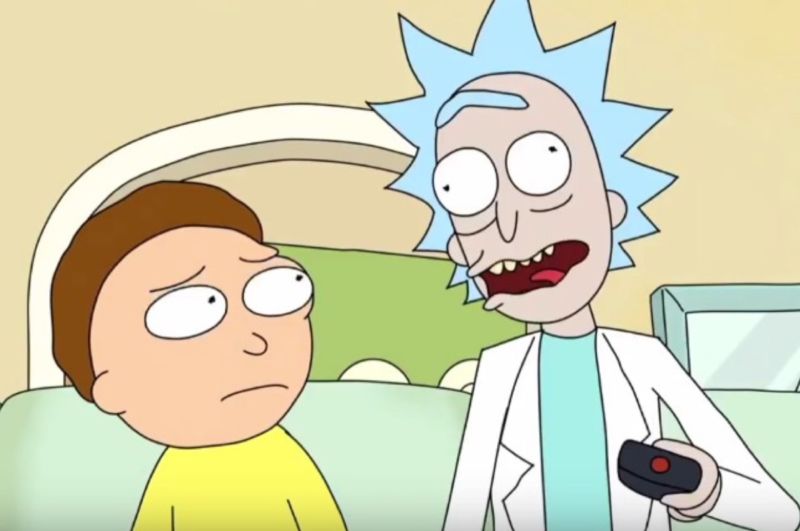
The “burp-talking” in Rick and Morty isn’t as meaningless as you might think

Constant burping is one of the defining features of mad scientist Rick Sanchez on <em>Rick and Morty</em>.
Enlarge / Constant burping is one of the defining features of mad scientist Rick Sanchez on Rick and Morty.
Adult Swim/Comedy Central

Eccentric mad scientist Rick Sanchez, of Rick and Morty fame, is as notorious for his constant mid-speech belching as he is for his brilliantly eccentric inventions—and for routinely dragging grandson Morty into highly dangerous situations. Now, paralinguistic researcher Brooke Kidner of the University of Southern California has made the first acoustical analysis of Rick’s unique speech patterns. She described her work at a meeting of the Acoustical Society of America this week in San Diego.

“Paralinguistics have been shown to carry significant meaning when inserted into conversation, and being able to understand the meanings of these less common sounds can lead to a greater understanding of natural language processing,” Kidner said at a press conference.

Kidner’s unusual study began with a phonetics seminar course at USC, focusing on non-speech sounds that occur in human speech—groans, gasps, sighs, the infamous “Loser!” sneeze, and so forth—and how we attribute meaning to them (sarcasm, for instance). The instructor noted that burps were an example of non-speech sounds with no meaning. Kidner brought up Rick Sanchez’s constant mid-sentence burps in Rick and Morty as a counter-argument, and the instructor encouraged her to investigate further.

Such sounds are technically known as paralanguage (or vocalics), a field pioneered back in the 1950s by George L. Trager, a linguist who worked in the State Department’s Foreign Service Institute. Trager was one of the first to acoustically analyze paralinguistic sounds, producing detailed representations for several, including belching. “He acknowledged that belching is a sound that can be talked through,” Kidner said. “You can still move the articulators in your mouth to try and make an ‘L’ or ‘T’ sound, although it’s easier with vowel sounds.” In other words, you can keep talking mid-burp.

That’s the hallmark of Rick’s speech patterns (“burp-talking”) on Rick and Morty—possible due to alcoholic gastritis, according to one theory, since the character drinks a lot. Series co-creator Justin Roiland voices both main characters and has said that the tic started when he burped accidentally while recording voices for an animated short satirizing Back to the Future. When Rick and Morty was in development, he adapted the burping to Rick’s character, although it took a bit of trial and error before the creators realized the optimal BPM (burps per minute) for that first season. Roiland is not a natural-born belcher, however. “I can’t burp on command,” he told Vice in 2015. “I have to sit there with a low-calorie beer and a bottle of water and blow air into my stomach. It’s disgusting.”

https://arstechnica.com/?p=1626751


Some Stadia games cost more than their downloadable counterparts

Since back in June, Google has been telling us that the publisher-set prices for games on its Stadia streaming service would be “competitive… to what you would see on other platforms.” While that’s been true of the vast majority of games on the service, fans were surprised to find a Stadia price premium for yesterday’s launch of Darksiders Genesis.

The new action-adventure title is currently on sale for $40 on Stadia, compared to a $30 price on other PC platforms (including Steam, GOG, and the Humble Store). Steam players could get an even better deal with a pre-order price of $25.50 for the game. Console versions, which aren’t due until next February, are currently listed at the higher $40 price point on various digital and retail storefronts.

A spokesperson for THQ told Polygon that “THQ doesn’t comment on their price policy.”

While most titles sell for the same price on Stadia and other platforms, there are a few others that currently see a streaming price premium. Just Dance 2020 goes for $50 on the service, compared to $40 on modern consoles (the Wii version has already been reduced to $30 at many retailers). Grid is currently available for $27 as part of a Steam “supersale,” down from the $60 standard price on Stadia (the “Ultimate Edition” of the game is $5 cheaper on Steam even without discounts). And the Platinum Edition of Farming Simulator 19 sold for $40 on Stadia, compared to a $25 to $35 Steam price, before Google added the game to December’s Stadia Pro freebies (and offered refunds to early purchasers).

But there are deals to be had on Stadia, too. Rise of the Tomb Raider: 20 Year Celebration sells for just $30 on the streaming service compared to $60 currently on Steam. Games like Assassin’s Creed Odyssey, Mortal Kombat 11, and Final Fantasy XV were briefly offered at steep discounts for Stadia Pro subscribers when the service launched (those discounts are inactive as of this writing, though. A Google spokesperson said there’s no set length for how long further “frequent” Stadia Pro deals will last going forward). And a $10/month Stadia Pro subscription (which is still the only way to access the service) also provides access to up to four free titles on Stadia.

Listing image by Kyle Orland

https://arstechnica.com/?p=1628895


The full trailer for Disney’s live-action Mulan is here, and it’s breathtaking

[embedded content]
Chinese-American actress Liu Yifei stars in Disney’s live-action Mulan.

Disney has released the full trailer for Mulan, the studio’s live-action remake of its own 1998 animated film. When the first teaser dropped in July, I noted that, while I’m not a huge fan of Disney’s live-action remakes, “this is an effective, sumptuously eye-catching teaser for Mulan.” This latest trailer cements that assessment. It looks gorgeous, very much in the style of a period war drama, and its rumored $300 million production budget shows in every breathtaking shot.

Both films are based on the Chinese legend “The Ballad of Hua Mulan,” which tells the story of a young woman in the Northern Wei era (spanning 386-536 CE) who takes her father’s place when each family is required to provide one male to serve in the emperor’s army. In this version, Hua Mulan is already a well-trained fighter, and she serves for 12 years, with none of her fellow soldiers ever suspecting her true gender.

Disney’s animated film broadly followed the traditional storyline, except Mulan is not well-trained when she first runs away. The film also added a love interest, a goofy dragon representative of the family ancestors named Mushu (hilariously voiced by Eddie Murphy), and a catchy original soundtrack. Mulan was released to critical acclaim, grossing $304 million worldwide and earning Golden Globe and Oscar nominations. In other words, while it didn’t exactly set the box office on fire, it was popular enough to merit a spot on the roster of Disney’s ongoing live-action remakes.

This new live-action version, directed by Niki Caro, also preserves the traditional storyline and several elements of the original film. The matchmaker has just found the free-spirited Hua Mulan (Liu Yifei) a suitable match, and Mulan dutifully tries to learn the arts associated with being the perfect Chinese wife—while secretly practicing martial arts. She’s far better at the latter.

When her famed war veteran father Hua Zhou (Tzi Ma), who has no sons, is conscripted into the Emperor’s army to help ward off Northern invaders led by Böri Khan (Jason Scott Lee), she disguises herself as a man to take her father’s place. Mulan also has a younger sister, Hua Xiu (Xana Tang) in the live-action version, which also includes a new Khan ally: a witch named Xianniang (Gong Li) who can shapeshift into a hawk form.

This new trailer opens with Hua Zhou lecturing his daughter on the importance of being a good Chinese wife. “Do you know why the phoenix sits at the right hand of the emperor?” he says. “She is his guardian. His protector. She is both beautiful and strong. Your job is to bring honor to the family. Do you think you can do that?” We see Khan’s horde in action, leaping up walls and leaving no survivors, and several dramatic shots of the witch Xianniang, who is quite a formidable fighter herself. And we see Mulan running off in the middle of the night to take her father’s place: “It is my duty to protect my family.”

Listing image by YouTube/Disney

https://arstechnica.com/?p=1628233