Robert Krulwich, left, is departing Radiolab after co-hosting the radio series for 15 years with Jad Abumrad, right.
Jad Abumrad / WNYC
Radiolab, the WNYC radio show that became the pop-science cornerstone of most podcast directories throughout the 2010s, announced a major shakeup on Thursday to fans via its official newsletter. Longtime co-host Robert Krulwich will soon leave the show, with his announcement hinting to only a pair of episodes left before he moves on to other independent projects.
In his not-quite-goodbye to fans, Krulwich appears to declare that the series’ producers and staff have succeeded in the mission he’d begun with the series years ago: to create a pipeline (a self-perpetuating one, arguably) for compelling science-based radio accessible to new audiences. After the show caught on with radio listeners nationwide, “the next question we asked ourselves is what’s Radiolab to become, other than the two of us delighting each other?” Krulwich writes. “The answer came literally through the door as one wonderfully talented person after another came and joined us until we now have pretty much the strongest bench in the business, a gang of people who, in their very different ways, have learned to tell stories that grab audiences, sort of like we did but more and more in their own voices with their own musics and their own styles.”
Krulwich then describes a moment from roughly a year ago where it dawned upon him that his time at Radiolab was drawing to a close:
I was sitting in an editorial meeting and it dawned on me (and this was both a pleasant and not-so-pleasant feeling) that I was no longer crucial to what was going on. The room was rich with back and forth, ideas percolating, and if I had tiptoed out, the place would be every bit as vivid as if I’d stayed. I’m not being overly modest here. I was crucial for a long time, but in a healthy system, you make way for the new, the fresh, the untested. From the beginning I’ve been the oldest, 25 years older than Jad who is now almost 20 years older than our youngest reporters. There comes a time—and I think it has come—when you get out of the way and let the future come flooding in. We have a flood of people who are ready to step up and that they came to us, chose us, that we got to teach them what we knew with Jad and Soren and Suzie guiding them—that, I’m now thinking, may be our grandest achievement—that what we started just might endure with different voices, different forms, but true to the idea that complexity can be delicious.
No end date has been announced, with Krulwich hinting to one episode being finalized for “next week” and an eventual super-sized episode about “a world population puzzle” as his remaining Radiolab duties. From there, Krulwich says he’ll work on “new projects, a documentary, a global warming interactive, and more grandpa duty.” The announcement comes with a separate letter from series creator Jad Abumrad, which shows he’s not ready for a complete goodbye: “Radiolab won’t ever really let Robert go. You will still hear him on the show from time to time (that’s how much we love him), and you’ll most certainly hear his influence—his unbridled curiosity and wonder—in each and every Radiolab story yet to come.”
Krulwich has co-hosted the series since 2004, two years after Abumrad created the series as a weekly WNYC series that rounded up reported stories based on particular themes—though not with the scientific leaning that the series eventually became known for. Much of that was due to Krulwich’s background as a science reporter, which he had previously explored in 1999’s science-themed news miniseries Brave New World—a series that arguably received more attention due to its house band, the nerd-pop icons They Might Be Giants.
A chance encounter between the two reporters, separated by 25 years of age, led to collaborations and radio-show experiments, including a historical rumination about Flag Day submitted to, and declined by, Ira Glass’ This American Life. “It was a special class” of “horrible,” Glass told the co-hosts years later. Undeterred, the duo continued collaborating. Krulwich guested on Radiolab for his first time in 2004, and he became the informal co-host in 2004 before joining the team in earnest in 2005.
Radiolab has since exploded as a podcast phenomenon with a variety of official series offshoots, including the Supreme Court-focused More Perfect and 2019’s fascinating Dolly Parton’s America. The original series, like many other modern podcasts, is also known for live-recording events across the United States, sometimes even with live bands guesting with sonic experiments.
https://arstechnica.com/?p=1628339
Amazon’s new fantasy series, Wheel of Time, adds four more cast members
Cover art for the first Wheel of Time novel. Production on the fantasy series began on September 16 of this year.
Amazon Studios has announced four new cast members for The Wheel of Time, the long-awaited TV adaptation of the late Robert Jordan‘s bestselling 14-book series of epic fantasy novels, Deadline Hollywood reports. Clearly, Amazon has joined the hunt for the next Game of Thrones, since within the fantasy genre, Jordan’s series is as popular as George R.R. Martin’s A Song of Ice and Fire. The first season of the TV adaptation started shooting on September 16—coincidentally, the 12th anniversary of Jordan’s death in 2007.
The TV series will center on Moiraine (played by Oscar-nominee Rosamund Pike), a member of a powerful, all-woman organization called the Aes Sedai. (In this world, magic exists, but only certain women can use it—i.e., the members of the Aes Sedai.) She identifies four young people, one of whom could be the reincarnation of a person who, prophecies say, will save or destroy humanity. Together, the youngsters embark on a journey across the world.
As Ars reported earlier this year, the first round of casting included Josha Stradowski as Rand al’Thor, aka The Dragon Reborn, He Who Comes With the Dawn, the Coramoor, Shadowkiller, and who knows how many other monikers. Marcus Rutherford was cast as apprentice blacksmith and dream-walker Perrin Aybara. Zoe Robins plays healer Nynaeve al’Meara, and Madeleine Madden plays the powerful channeler Egwene al’Vere. Finally, Barney Harris was cast as series comic relief Matrim Cauthon.
Enlarge/ (L-R) Alvaro Morte, Hammed Animashaun, Alexandre Willaume, and Johann Myers have been cast in Amazon’s adaptation of Wheel of Time.
Amazon Studios
Hammad Animashaun (Black Mirror) has been cast as Loail, a close friend to Perrin the dream walker and Rand al’Thor. Loail is an ogier, a human-like species described in the books as big, strong, and hairy, which might belie (to the casual observer) their intelligence and peaceful natures. (Ars’ own Lee Hutchinson described the species as “what if you had elves, but they were ogre-sized and looked like ogres.”)
Alexandre Willaume (Tomb Raider) will portray Thom Merrilin, a “Gleeman and adventurer”—basically a traveling bard, playing in villages rather than royal courts, skilled in juggling, fireworks, tumbling, songs, instruments, and so forth. The other two newly announced cast members will play supporting characters. Johann Myers will play the villainous Padan Fain, and Alvaro Morte will play Logain.
https://arstechnica.com/?p=1627681
How “randomizers” are breathing new life into old games
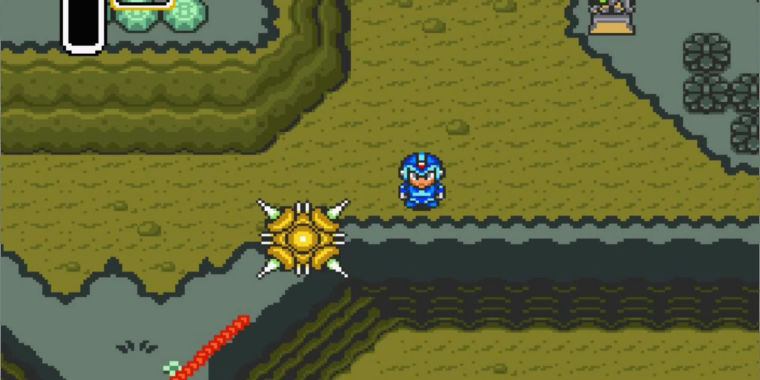
The Link to the Past randomizer can change not only the contents of the chests and rewards in the game but also your character sprite, the enemies that spawn, and the color palette of the world!
Some say that you can’t improve on perfection. The Final Fantasy VI mod, Beyond Chaos, proves you can. Here, Yoshi is the new King of Figaro, and Master Chief is his twin brother.
Using the popular “Universal Pokemon Randomizer,” you too can have Beedrill as a starter Pokemon who knows the Ghost-type move Steel Wing.
With the power of the randomizer, Kent can now live out his secret life wish of being a Bard instead of a Knight in Fire Emblem on GBA!
Like a long-time partner or a favorite pair of socks, there’s comfort to be found in revisiting a familiar game from your youth. There’s a sense of ease knowing what lies inside each treasure chest, which bush an enemy will spring from, or the secret tactic that vanquishes a foe with ease. That calming intimacy makes games like these an easy nostalgic choice when you just want to take a load off.
But what if you want to add some spice back to that familiar experience? After playing a classic game to the point of memorization, how do you recapture the sense of adventure and discovery you experienced the first time you played it? A small but growing community in the retro emulation scene is aiming to answer those questions with a class of mods and hacks called “randomizers.”
Shuffle up and deal
At their most basic level, randomizer mods shuffle the data in a game’s ROM so that each run becomes a new and unpredictable experience. So The Legend of Zelda: A Link to the Past Randomizer could change which items you find in which chests, alter the rewards from dungeon quests, and even replace Link’s sprite for one of the numerous fan-created options (the Mega Man X sprite is a personal favorite). And you can go even further than that, changing the exit locations for various in-game doors or even scattering the boss keys for specific dungeons throughout the world (rather than in the dungeons themselves)!
What started as a small niche has now evolved into its own retrogaming genre. The “BIG List of Video Game Randomizers” website, started back in 2016, now lists hundreds of randomization mods for games from Metroid Prime, Golden Sun, and Earthbound to Faxanadu, Adventure Island, and Doom. The list is still updated weekly with new titles, so if your favorite isn’t listed yet, it may be soon.
Different randomizer mods allow for different levels of randomization, but the idea of mixing up locations of items or discovered skills and abilities is rather standard. Some retain the title’s intended structure but change the rewards and items you find on your journey. Others completely alter the way the game is played.
Two games at once
One of the more extreme randomizers out there actually combines two games in a way that makes you have to beat both over the course of a single playthrough. In the Super Metroid x Link to the Past Randomizer mod, you use special randomized doorways to navigate between the worlds of Hyrule and Zebes, collecting items in one to help you progress further in the other. There is a very real chance that Link’s uncle could give you the high-jump boots that allow Samus to then go claim the Master Sword somewhere deep in Norfair.
Randomizers add near-infinite replayability to tired-old games, with fresh challenges for players to overcome with each playthrough. They test the player’s skill and knowledge of the game instead of simply the muscle memory gained from years of experience. By limiting the player’s ability to rely on their autopilot memory, the focus turns instead to quick adaptation and problem solving.
Deep knowledge of the base game is still useful in a randomizer, though, even if it’s just to help you figure out what new avenues may be open with each new item you find. Perhaps you’ll be forced to fight a difficult foe with more meager resources than you normally would have. Or maybe you’ll be asked to consider keeping a party member with a special skill even though they can barely survive a single hit.
Even if you only have a passing memory of a classic game, there are plenty of resources and guides available to you that can help. These range from beginner’s guides with basic strategies for approaching a randomizer run to full-on trackers that can show you what areas become accessible as you get new items.
I like to watch
I first stumbled on the retro-game-randomizer subculture a couple of years ago, when I popped into a Twitch stream of The Legend of Zelda: A Link to the Past (LttP going forward) that I initially struggled to comprehend. There, I observed a character who was most definitely not Link finding items in chests where they definitely did not belong. A quick trip down the Google-search rabbit hole explained what was going on and cemented my interest in this strange new world of fresh retro gameplay. Since then, I have dabbled in a randomizer for numerous Castlevania titles, Super Metroid,Fire Emblem,Ocarina of Time, and Final Fantasy (4, 5, 6). Each new mod only dug me deeper into the randomizer hole.
When I talk to other people immersed in the randomizer scene, my introduction via Twitch seems far from rare. While a few stumbled on the concept via random Internet searches, most seem to have come across the community in the past year or two by watching livestreams. Those range from smaller streamers and large-scale charity streaming events such as Awesome Games Done Quick, RPG Limit Break, and the recently held Questing For Glory 3 speedrun event just a few weeks back. And with the upcoming Awesome Games Done Quick 2020 scheduled to feature both the LttP and Mario 64 randomizers, a whole new group of watchers will be introduced to these mods.
One of the most popular randomizers streamed today is the fantastic “Free Enterprise” for Final Fantasy IV. Starting off with two random characters, an item, and the airship, you set off on an open-world scavenger hunt to track down the items you need to venture to the moon and defeat Zeromus!
October’s SpeedGaming Live event proved that there could be a potential future in racing randomizers as an esport.
Daily “Link to the Past Rando” races are a familiar site on the various SpeedGaming Twitch channels, with hundreds of viewers watching at a time.
Some of the most popular randomizers—including Super Metroid, Zelda, and the open-world Final Fantasy IV randomizer—have achieved their popularity in large part thanks to the embrace of the speedrunning community. Final Fantasy IV: Free Enterprise is one such randomizer. First released back in 2018, Free Enterprise allows players to break from the strict narrative structure of the original title to take part in an open-world scavenger hunt, searching for the items that will eventually send you to take on the game’s final boss. A month after the mod’s release, Free Enterprise‘s Discord server had more users than the one devoted to speedrunning the original Final Fantasy IV. One year after its release, the game was featured in Awesome Games Done Quick 2019, the largest video game charity event on the planet.
Tournaments and races have become a staple of the randomizer community, with larger events being hosted by a number of organizers, including Challonge, SpeedRunsLive, and SpeedGaming. Back in fall 2017, the organizers of the LttP Rando tournament found demand for their event to be far higher than they anticipated. After their initial 100-competitor cap was filled, they had to set up a 150-person overflow tournament just to satisfy demand. By spring 2018, the same tournament had 512 registered players and likely would have accepted more if the seeding software could support it.
Today, if you stop by SpeedRunsLive, you can expect to see multiple randomizer races going on at any given time, with their largest organized LttP Randomizer tournaments bringing in over 100 players. Daily LttP races on SpeedGaming attract hundreds of viewers regularly, and the annual SpeedGaming Live event featured randomizer tournaments for the first time in October with a prize pool of $3,000.
These numbers aren’t going to give esports behemoths like Fortnite or League of Legends reason to fear, but they at least show the potential for the concept to grow one day from a niche to a potentially lucrative spectator sport.
Audience numbers aside, players, developers, event organizers, and viewers I talked to all agree that this growing class of mods has breathed new life into familiar older titles. The newfound ability to replay an old game and get a new adventure each time recreates that sense of wonder and discovery that we got the first time we popped in the original cartridge or disc.
Nostalgia is a powerful thing, and while randomizers will never fully replace the core experiences with these games we love, they can make them feel fresh and new time and time again.
A special thanks to everyone in the SpeedGaming, RPG Limit Break, Free Enterprise, and LttP Rando communities who were kind enough to answer my questions and share with me their experiences and expertise.
Listing image by Nintendo
https://arstechnica.com/?p=1627227
Natasha Romanoff gets the origin story she deserves in Black Widow trailer
[embedded content]
Natasha Romanoff (Scarlett Johansson) has a score to settle with her past in Marvel’s Black Widow.
Fans of the MCU have been clamoring for a standalone Black Widow movie for years, but the project kept getting pushed to the back burner, since Marvel was so heavily focused on bringing the long-running Avengers story arc to a fitting conclusion with this year’s Avengers: End Game. We now have the first trailer for Black Widow, and it promises to finally give the character the origin story she so richly deserves.
(Some spoilers for Captain America: Civil War and Avengers: End Game below.)
We know that the Russian-born Natasha Romanoff/Black Widow (Scarlett Johansson) was trained as a spy/assassin in a secretive academy known as the Red Room, which disguised itself as a ballet school. All the “Black Widows” were sterilized, so Natasha is unable to bear children. Clint Barton, aka Hawkeye, is sent to take her out and recruits her to S.H.I.E.L.D. instead. The two become fast friends, and both wind up joining the Avengers, giving Natasha a family of sorts. When the group splits in Captain America: Civil War, Natasha initially sides with Tony Stark/Iron Man, even though it pits her against Barton and Steve Rogers. But her loyalties remain divided, and in the battle at Leipzig Airport, she lets Rogers and Bucky Barnes escape.
After “the Snappening,” a devastated Natasha travels to the past and ultimately sacrifices herself on the planet Vormir so Barton can retrieve the Soul Stone. It proved to be a controversial decision with the fans: the barren Natasha dies so Barton can return to his (soon to be un-disintegrated) family, as if all her training and accomplishments meant nothing if she was unable to bear children.
Personally, I understood the character arc. Natasha has always been haunted by her many past misdeeds, saying repeatedly that she has “red” in her “ledger,” her work with the Avengers is a way to right the balance. What better way to clear away all that red ink by making the ultimate sacrifice? I would, however, argue that her death was handled a bit too perfunctorily in Avengers: End Game, overshadowed even more when Tony Stark also sacrifices himself to save the day.
Listing image by YouTube/Marvel Studios
https://arstechnica.com/?p=1627051
Riot Games offers female employees $10 million in settlement
If the mediated proposal is approved by a judge, all current and former female Riot employees who were at the company at any point since November 2014 would be eligible for compensation, amounting to approximately 1,000 women. Those employees would actually split about $6.2 million, after attorneys’ fees and other costs are taken into account. But that still means “no Class Member will receive less than $500 and most Class Members will receive at least $5,000,” according to the court documents, with specific payouts depending on each employee’s tenure and work status.
The proposed settlement document once again summarizes the case against Riot, which was accused of paying women less than similarly situated men, placing women in lower-paying job roles, passing women up for promotions over similarly situated men, and “creating, encouraging and maintaining a work environment that exposes its female employees to discrimination, harassment, and retaliation on the basis of their gender or sex.”
But the settlement also acknowledges “remediation efforts” that Riot made before a lawsuit was ever filed over these issues. Those include “revising its interview and recruiting process to ensure fairness, improving job descriptions and titles to increase transparency, creating an anonymous intake hotline for employees to report discrimination issues, and rolling out mandatory anti-bias training, among other things.”
“We are pleased to share that we’ve finalized the proposed settlement agreement to resolve the class action case against Riot, and settlement paperwork has now been filed by plaintiffs’ counsel,” Riot said in a public statement. “While this is another important step in our journey, it is important to note that the settlement agreement is preliminary and is subject to the Court’s oversight and approval. We look forward to the final resolution of this case and continuing on our path forward.”
The proposed settlement comes as the Tencent-owned Riot embarks on major expansion plans beyond its core League of Legends business. Those plans include a competitive card game, a tactical shooter, a fighting game, a third-person action game, and an animated series set in the LoL universe. https://arstechnica.com/?p=1627047
Video: How Oddworld solved its narrative problems with mind control
Some games entice you into playing them with loud marketing campaigns, sexualized cover art, or the promise of ludicrous over-the-top violence. But then there are games like Lorne Lanning’s Oddworld series—games that don’t lead with muscle- or bikini-clad heroes and defy easy categorization. Games like Oddworld tempt you into playing by promising a different kind of experience. There are guns and violence, sure, but the setting is strange, the plot is filled with gray, and the hero—well, Abe isn’t exactly sexy, or really even, you know, human.
But players who gave the original Oddworld a chance back in 1997 found themselves stumbling through a unique and fascinating world that was equal parts surprising and subversive, and the series has gone on to acquire legitimate cult-success status. With the approaching release of Oddworld: Soulstorm in 2020, we thought it was a good time to pay a visit to Lorne Lanning and his team at Oddworld Inhabitants, and talk about our favorite meat processing factory worker and his long journey from design notebook to screen.
“Write what you know,” they say…
We interviewed Lanning at the Emeryville, CA headquarters of Oddworld Inhabitants, the studio he co-founded with Sherry McKenna in 1994. For Oddworld fans, the office was a magical place, stuffed with the kind of memorabilia that amasses over more than two decades of game design. Lanning walked us through his journey to become a game creator, starting from his poor beginnings in what sounds like an unstable family. He got into video games because his father had a job at Coleco, and Lanning thought gaming would be a good way to meet girls.
Lanning’s ambitions weren’t aimed at the small screen—he had his eyes set on making movies. To pay the bills, he took a job at TRW Aerospace, where he worked on anti-missile defense systems (it was the 1980s, and Reagan’s Strategic Defense Initiative boondoggle was in full swing). His exposure to soul-crushing bureaucracy and supplier management formed the basis for many of the Brazil-seque ideas later presented in the Oddworld games.
But it’s the time Lanning spent at Rhythm and Hues Studios that had the biggest effect on Oddworld—at least the series’ collective look and feel. Working on visual effects set him on the path of visualizing game design in terms of cinema—not just how things were framed on screen, but also the discipline and budgeting style of the movie industry. When Lanning and McKenna (a fellow Rhythm and Hues alum) eventually started their own studio in the 90s, they approached their game and their character designs in the way Hollywood does. This obviously is de rigeur in 2019, but in 1995 when work on Oddworld started, it was most definitely not the industry norm.
Lanning during filming at Oddworld Inhabitants in California.
A long shot of the office. Books and neat knickknacks everywhere!
Hell yes we rented a crane for this.
Long shot of the office looking the other way.
Abe is not sure what’s for lunch.
The reference library was impressive.
Here’s some of the studio’s architectural reference books.
Gothic touches abound.
Stranger danger!
This dude on the shelf here is one of the shamanistic tokens Lanning collected.
The shelves were filled with awards and other cool stuff.
Excellence!
The producer and I both loved this image so much.
The problem
When designing the first Oddworld game, Lanning and his team had to confront an annoying reality of game design—there are only so many ways to interact with the world in a side-scrolling action game, and a lot of those ways involve shooting stuff. And one of the immovable design goals of Oddworld was that protagonist Abe would go through the entire game without being armed—not because of any kind of political stance against guns, but because having Abe unarmed increases the character’s vulnerability in a world that’s already overwhelmingly hostile. A gun would provide an easy solution to many of the game’s problems, and where’s the fun in that?
It took some time to work out a solution, but Lanning the other designers decided that characters like Yoda don’t need guns to solve problems. They instead infused the game with a pastiche of mysticism drawn from a number of different sources, which gave Abe his secret weapon: the ability to possess other characters, including bad guys with guns. This let them then design in some puzzles involving shooting, which the player can solve by finding a bad guy, taking over his body, and having the bad guy shoot his way through the puzzle. To prevent the player from picking up the bad guy’s gun after the puzzle is solved, NPCs violently explode after possession.
An Odd(world) legacy
This video ended up being extremely long in the rough cut because Lanning gave us so much great interview material. We had to trim out quite a bit, but we’ll be producing an extended version if there’s enough interest in this video. There are several rabid Oddworld fans here at the Ars Orbiting HQ, and this video, like several others in the War Stories series, was a passion project with a lot of emotion invested in it (not to mention some custom voiceover lines performed by Lanning just for us!). We hope you enjoy watching it as much as we enjoyed making it.
https://arstechnica.com/?p=1626963
Super Mario Maker 2 becomes Super Zelda Maker with playable Link
Oddly enough, “What would happen if Mario grabbed the Master Sword?” is also the subject of a fanfic I wrote in 1989…
Ba da da daaaaaa.
Piranha plants are no match for swords.
Hammer Bros. suit, eat your heart out.
Collecting far-off coins by hitting them with arrows doesn’t really make sense if you think about it too hard. So don’t think about it too hard.
Somebody set us up the bomb.
What is this, Four Swords Adventure?
Link from the Legend of Zelda series is among the new characters coming to Super Mario Maker 2 in a free downloadable update coming Dec. 5.
At first glance, it may seem like Link, who will only be playable in the Super Mario Bros. game style, is just a rehash of the cosmetic Link Amiibo costume that was available in the first Super Mario Maker on the Wii U. But this version of Link is more than just a visual upgrade, with the ability to attack enemies with sword and dash attacks, block projectiles with a shield, and throw bombs that can destroy blocks. Link can also shoot arrows in three different directions to collect far-off items. Link’s integration into Super Mario Maker follows the addition of a “Dungeon Maker” mode in the recent Switch re-release of The Legend of Zelda: Link’s Awakening. Neither one is quite the full-fledged “Zelda Maker” game some fans have been clamoring for, but it shows Nintendo is at least toying with the idea in a few different ways.
Super Mario Maker 2‘s first major content update will also include a couple of new enemy options (Spike and Pokey), new block types (frozen coins and P-switch blocks) and a super-speed-providing Dash Block in the Super Mario 3D World game style. Nintendo is also introducing a new Ninji Speedruns mode where Nintendo Switch Online subscribers will be able to race online against other players in Nintendo-designed courses that “will be distributed periodically,” according to the trailer.
The update schedule for Super Mario Maker 2 is so far very similar to that for the original Super Mario Maker. That game saw a major update a couple of months after release, adding important new features like checkpoints and discoverability improvements. The first Mario Makerreceived periodic minor updates for about two years after that but only one that really added new content to the game’s level-creation toolset. Here’s hoping Nintendo’s support for the sequel remains more robust.
This week’s content update follows on a previous Super Mario Maker 2 update that finally provided the promised ability to play multiplayer courses with friends.
[embedded content]
https://arstechnica.com/?p=1626259
Never Surrender is a heartfelt tribute to sci-fi action comedy Galaxy Quest
[embedded content]
Trailer for Never Surrender: A Galaxy Quest Documentary.
Galaxy Quest, the glorious 1999 science fiction action comedy starring Tim Allen and Sigourney Weaver (among others), will turn 20 on December 25 of this year. And what better way to celebrate this important milestone than with a documentary feature? Never Surrender: A Galaxy Quest Documentary is an entertaining, heartfelt tribute that comes to us (believe it or not) from the same folks behind the wildly popular online Honest Trailers series.
(Spoilers for Galaxy Quest below.)
The premise of the movie is deceptively simple: what if aliens watched transmissions of a popular science fiction TV show from Earth and thought it was real? An alien race called the Thermians model their entire society on the principles of a fictional Galaxy Quest TV show, building real, functional versions of the spaceship and much of the technology from the series. When their very existence is threatened by a reptilian humanoid general from another species named Roth’h’ar Sarris, they travel to Earth to ask their heroes for help—arriving in the middle of a Galaxy Quest fan convention.
Of course, the heroic crew of the NSEA Protector are in fact washed-up actors, eking out a living making personal appearances and selling autographed photos. Suddenly they find themselves aboard an actual spaceship, facing real peril, and must rise to the occasion to save the day—in essence becoming more like the characters they once played.
Jason Nesmith (Tim Allen) once played Commander Peter Quincy Taggart on the fictional show, and relishes soaking up the the adoration of fans, to the annoyance of his former co-stars. Gwen DeMarco (Sigourney Weaver) is a leggy blonde who played Communications Officer Tawny Madison. Her only job was to repeat the commands of the ship’s computer and show a little cleavage. Alexander Dane (Alan Rickman) played Science Officer Dr. Lazarus, an alien from the Mak’Tar race. He was once an esteemed British thespian who bitterly resents being typecast as an alien, forced to repeat variations on his most famous line at every appearance.
Fred Kwan (Tony Shalhoub) played Tech Sergeant Chen, while Tommy Webber (Daryl “Chill” Mitchell) played child pilot Lt. Laredo, now all grown up. Gate-crashing the signing (and the ensuing adventure) is Guy Fleegman (Sam Rockwell), who once played “Crewman #6” on Episode 81 and was killed in the first 15 minutes. Representing the rabid fandom that has grown around the original Galaxy Quest are a group of teen nerds: Brandon (Justin Long, in his first major film role), Kyle (Jeremy Howard), Hollister (Jonathan Feyer), and Katelyn (Kaitlin Cullum). Snubbed repeatedly by Jason early on, the nerds’ encyclopedic knowledge of the show proves to be invaluable to helping defeat Sarris and bringing the crew safely home.
This fine ship, this fine crew
“I’m not saying that stupid line”
Dreamworks Pictures
Mathesar and his fellow Thermians arrive at the Galaxy Quest convention
Dreamworks Pictures
Arriving on the real Protector II
Dreamworks Pictures
The Thermians in their native form.
Dreamworks Pictures
Tommy/Laredo is apprehensive about being probed.
Dreamworks Pictures
Jason/Captain Taggart takes charge of the command deck.
Dreamworks Pictures
The Protector II takes flight.
Dreamworks Pictures
Negotiations with Sarris, a reptilian humanoid who wants to wipe out the Thermians, go badly.
Dreamworks Pictures
“I have one job on this lousy ship, it’s stupid, but I’m going to do it.”
Dreamworks Pictures
“You have a last name, Guy.” “Do I? DO I?”
Dreamworks Pictures
Local aliens turn vicious, just as Guy predicted. (“Did you guys ever watch the show?”)
Dreamworks Pictures
Jason/Taggart vs. the Rock Monster
Dreamworks Pictures
Fred/Tech Sergeant Chen’s first attempt at the digital conveyor ends badly for a pig lizard.
Dreamworks Pictures
“Oh, that’s not right!”
Dreamworks Pictures
“It’s all real.” “I KNEW IT!”
Dreamworks Pictures
Gwen/Tawny drops a (dubbed out) F-bomb. “This episode was badly written!”
Dreamworks Pictures
“By Grabthar’s hammer, by the sons of Warvan, you shall be avenged.”
Dreamworks Pictures
Nerds can be heroes too.
Dreamworks Pictures
The film is a clear homage to Star Trek, as well as its intensely committed fan base. Fun fact: NTE-3120 is the registration for the Protector, with the letters standing for “Not The Enterprise.” Taggart is modeled after Captain Kirk, and Jason is a William Shatner-esque figure, teased relentlessly for constantly removing his shirt, and performing showy rollouts. (“Does the rolling help?” Gwen caustically asks when Jason does this while exploring an alien plant. When he says it does, she adds, “Where’s your gun?”)
Dr. Lazarus is the Spock-like figure, Laredo evokes ST:TNG‘s Wesley Crusher, Chen is a stand-in for Scotty, Tawny Madison is based on Uhuru, and Guy is a Red Shirt—so he is understandably pretty paranoid whenever there is potential danger. (“I’m expendable! I’m the guy in the episode who dies to prove the situation is serious! I got to get out of here! “) And Star Trek fans were so notoriously geeky about analyzing the most trivial details from the series, they inspired a famous Saturday Night Live sketch, in which a frustrated Shatner berates convention-goers: “Get a life, will you, people?”
Galaxy Quest didn’t exactly bomb at the box office, grossing about $90 million globally and earning mostly positive reviews. But it wasn’t the blockbuster success that it should have been. Galaxy Quest is a rare perfect film: a masterful satire with clever twists, wickedly funny, and so very meta. And it’s stood the test of time, holding up even after multiple re-watchings. What makes it truly great, and so beloved by fans 20 years later, is its obvious deep affection for its targets. Sure, the film pokes fun at the Star Trek franchise: the cheesy tropes, the characters, the actors who play them, and the fandom it has inspired over the years. But it is never mean-spirited, cynical, or condescending.
Jack Bennett, the director of Never Surrender, has brought that same sensibility to the documentary. Screen Junkies—an online movie magazine and YouTube channel, owned and operated by Fandom—earned Internet fame for their snarky Honest Trailer series, mercilessly skewering overwrought film trailers. But they resisted giving Galaxy Quest the Honest Trailer treatment despite repeated requests from viewers over the years, correctly intuiting that it would be gilding the lily, so to speak. (They did finally make one, but it’s not available online as of this writing; it was shown before the screening we attended.) Bennett wisely trades in snark for sincerity for Never Surrender—although there are plenty of laughs and slyly subversive edits to keep the tone from ever becoming saccharine.
A stroll down memory lane
Tim Allen wasn’t the studio’s first choice to play Jason/Taggart. Now it’s hard to imagine anyone else in the role.
YouTube/Screen Junkies
Sigourney Weaver lobbied hard to play Gwen/Lt. Tawny Madison
YouTube/Screen Junkies
Tony Shaloub’s physical comedic gifts made him the perfect Fred/Tech Sergeant Chen
YouTube/Screen Junkies
Enrico Colantoni (Mathesar) invented the Thermian’s peculiar vocal cadences.
YouTube/Screen Junkies
Daryl “Chill” Mitchell (Tommy/Lt Laredo): “I just want to see the director’s cut, because we cussed through that whole movie.”
YouTube/Screen Junkies
Patrick Breen (Quellek), Missi Pyle (Laliari), and Jed Rees (Teb) salute you.
YouTube/Screen Junkies
Sam Rockwell (Guy/Crewman #6) was initially reluctant to take the role.
YouTube/Screen Junkies
Director Dean Parisot replaced Harold Ramis after the latter withdrew from the project.
YouTube/Screen Junkies
Writer Robert Gordon rewrote a spec script (Captain Starshine) by David Howard. The two share writing credits.
YouTube/Screen Junkies
Producer Mark Johnson kept film production on track in the face of innumerable odds.
YouTube/Screen Junkies
Parisot and his cast on set.
YouTube/Screen Junkies
In between takes on set.
YouTube/Screen Junkies
Wil Wheaton (aka Star Trek: TNG‘s Wesley Crusher): “Galaxy Quest was way ahead of its time.”
YouTube/Screen Junkies
Damon Lindelof (Lost, Star Trek, Watchmen): “It is a touchstone for filmmakers of a certain generation.”
YouTube/Screen Junkies
Greg Berlanti, creator of The Flash and Arrow: “I don’t think you could do a film today about a teen nerd and say he was the outcast.”
YouTube/Screen Junkies
Brent Spiner (aka Star Trek: TNG‘s Data): “For the most part, the nerds have inherited the Earth. So they were right.”
YouTube/Screen Junkies
Fans cosplaying Thermians.
YouTube/Screen Junkies
All film documentaries traffic in colorful behind-the-scenes details, and Never Surrender is chock-full of them—some new, some well-known to longtime fans. For instance, Enrico Colantoni reveals that his audition for Mathesar nearly bombed—until he whipped out a bizarre voice he’d been working on that became the model for the Thermians’ unusual vocal inflections. Sigourney Weaver famously drops an F-bomb when Gwen and Jason encounter “the chompers” in the bowels of the Protector II. It was dubbed—badly, on purpose, so you can still read her lips—to be “Screw that!” in the theatrical release, in order to earn a more family-friendly PG rating.
Never Surrender truly shines at revealing the complicated, often contentious process of filmmaking; honestly, it’s a miracle any films get made at all, never mind truly great ones that go on to become widespread beloved cultural touchstones like Galaxy Quest. Harold Ramis was originally hired to direct the film for Dreamworks, but left the project due to creative differences (his vision was considerably more cheesy); Dean Parisot replaced him. The studio considered Robin Williams and Kevin Kline for the role of Jason/Taggart, since at the time Tim Allen was mostly known as a comedian and star of the just-cancelled Home Improvement sitcom. Dreamworks co-founder Steven Spielberg hated the octopus-like designs for the Thermians’ true native form, preferring a more classic “grey alien“—but it was too late to change it.
Any one of these would have resulted in a very different—and I would say, lesser—film. Apparently Dreamworks was shooting Gladiator at the same time, and were too distracted to interfere much with Galaxy Quest.
Several Star Trek actors count themselves among the longstanding fans of Galaxy Quest, including Shatner, Patrick Stewart (Captain Jean-Luc Picard, ST: TNG)—who pronounced it “brilliant”—Jonathan Frakes (Riker, ST: TNG), Tim Russ (Tuvok, ST: Voyager), and George Takei (Sulu on TOS). Two from Star Trek: The Next Generation offer their insights in Never Surrender: Brent Spiner, who played Data, and Wil Wheaton, who played Wesley Crusher. The film has also inspired an entire generation of filmmakers, as Damon Lindelof (Lost, Watchmen, the Star Trek 2009 film) points out. And it’s sweetly gratifying to watch Arrow and The Flash creator Greg Berlanti geek out over his favorite moments, pretty much proving Lindelof’s point.
Best of all, the documentary celebrates the culture of fandom—specifically the positive, uplifting aspects, rather than the toxic cesspool of entitlement that online fandom can sometimes be today. The film devotes a significant amount of screen time to Galaxy Quest fans and cosplayers Harold and Roaxanne Weir, who speak at length about what the film has meant to them, and why they find their cosplay so fulfilling. In one of the most moving scenes, Harold—dressed as Mathesar—gets to meet his hero, Colantoni, who leans into the moment and poses with the entire group of Thermian cosplayers. Truly, as Spiner says, “The nerds have inherited the Earth.”
Listing image by Dreamworks Pictures
https://arstechnica.com/?p=1624381
That time Benjamin Franklin tried (and failed) to electrocute a turkey
Enlarge/ In December 1750, Benjamin Franklin theorized that electricity could be used to tenderize meat, and tried to electrocute a turkey to prove it.
In households across the U.S. today, people are busily preparing the traditional turkey for their Thanksgiving feast—usually in an oven, although more adventurous souls might risk personal injury and opt for a deep-frying method. But when it comes to risky cooking methods, Benjamin Franklin has them beat. The Founding Father once infamously electrocuted himself while trying to kill a turkey with electricity.
Franklin’s explorations into electricity began as he was approaching 40, after he’d already had a thriving career as an entrepreneur in the printing business. His scientific interest was piqued in 1743, when he saw a demonstration by scientist/showman Archibald Spencer, known for performing a variety of amusing parlor tricks involving electricity. He soon struck up a correspondence with a British botanist named Peter Collinson, and began reproducing some of Spencer’s impressive parlor tricks in his own home. “I was never before engaged in any study that so totally engrossed my attention and my time,” he confessed to Collinson in one letter.
Guests at Franklin’s home were frequently recruited for his experiments and practical jokes. For instance, he would have guests rub a tube to create static and then had them kiss, producing an electrical shock. He designed a fake spider suspended by two electrified wires, so that it seemed to swing back and forth of its own accord. And he devised a game dubbed “Treason,” whereby he wired up a portrait of King George so that anyone who touched the monarch’s crown would receive a shock. (“If a ring of persons take a shock among them the experiment is called the Conspiracy,” he wrote.)
Through his experiments, Franklin was able to demonstrate that electricity consisted of a common element he called “electric fire,” arguing that it flowed like a liquid, passing from one body to another. He studied how sparks jumped between charged objects, correctly concluding that lightning was merely a massive electric spark. And he coined several electricity-related terms we still use today: “charging,” “discharging,” “conductor,” and “battery,” for instance.
Enlarge/ Circa 1750: The title page from the 5th edition of Benjamin Franklin’s scientific book Experiments and Observations on Electricity.
MPI/Getty Images
But Franklin had yet to find a practical application for this exciting new phenomenon, which irked him greatly. To that end, he conceived of throwing an electricity-themed dinner party. “A turkey is to be killed for our dinner by the electric shock, and roasted by the electrical jack, before a fire kindled by the electrified bottle,” Franklin wrote to Collinson. Guests would drink their wine from electrically charged glasses so they would receive a subtle shock with every sip.
It’s not clear if Franklin ever hosted such an elaborate dinner party, but we do know that he experimented with electrocuting various fowl using six-gallon Leyden jars. A Leyden jar is basically a glass jar partially filled with water, with a conducting wire sticking out of its cork. The jar was charged by exposing the end of the wire to an electric spark generated by friction—created by, say, rotating a glass plate so that it rubbed against leather pads. There were no standard units of electricity back then, but modern estimates indicate that a pint-sized Leyden jar would have had the energy of about 1 joule.
The electric shock he initially produced was sufficient to kill chickens, but Franklin was chagrined to find that the turkeys would recover from the shock after several minutes. Finally, he combined several Leyden jars to successfully kill a ten-pound turkey, writing to Collinson that “the birds killed in this matter eat uncommonly tender.”
But in December 1750, Franklin learned a hard lesson on the importance of grounding in his electrical experiments. In a letter dated December 25, presumably to his brother, he described yet another attempt to electrocute a turkey to entertain his guests. “I inadvertently took the whole through my own arms and body, by receiving the fire from the united top wires with one hand, while the other held a chain connected with the outsides of both jars,” he wrote.
Enlarge/ A Currier & Ives lithograph of Benjamin Franklin and his son William using a kite and key during a storm to prove that lightning was electricity, June 1752.
Hulton Archive/Getty Images
Guests reported seeing a flash and hearing a loud crack like a pistol firing, and Franklin was momentarily knocked senseless, although apparently he remained on his feet. (“I did not fall, but suppose I should have been knocked down if I had received the stroke in my head,” he wrote.) He found his body shook for several minutes, and described a numbness in his arms and the back of his neck, which wore off by the next morning. There was a telltale swelling on one hand from the shock, and he was sore for several days after. While he gave his brother permission to share his experience with a colleague, James Bowdoin, who also experimented with electricity—primarily as a cautionary tale—Franklin admitted to being ashamed “to have been guilty of so notorious a blunder.”
That didn’t keep Franklin from continuing his electrical investigations. He performed his famous kite-and-key experiment in June 1752, on the outskirts of Philadelphia. He constructed his kite frame out of two strips of cedar nailed together in the shape of an “X,” and stretched a large silk handkerchief across the frame. He attached the key to a long silk string dangling from the kite, attaching the other end to a Leyden jar with a thin metal wire. Then he took the kite into a field during a thunderstorm, standing under a small shed to keep dry. When he saw loose filaments of twine “stand erect,” indicating electrification, he pressed his knuckle to the key and received a small shock, thereby proving that lightning was indeed static electricity. He went on to invent the lightning rod, among other ingenious devices.
As for using electricity to kill and tenderize a turkey, eventually Franklin had done sufficient experiments to provide very specific instructions to two French colleagues, Jacques Barbeu-Dubourg and Thomas-Francois Dalibard, who were quite keen to test his method. His instructions called for six large Leyden jars to kill a ten-pound turkey. He ended his letter with his hard-earned wisdom about the dangers involved: “The one who does the operation must be very aware lest it happen to him, accidentally or inadvertently, to mortify his own flesh instead of that of his hen.”
https://arstechnica.com/?p=1624725
“Out poked two antennae”—crafting an insect-based dinner party
This is the same feeling all those Blue Apron customers get, right?
Jason Plautz
Update: It’s Thanksgiving in the US, meaning most Ars staffers are working on mashed potatoes and only mashed potatoes today. With folks off for the holiday, we’re resurfacing this culinary classic from the archives—a look at a true evening of entomological entertaining. This story first ran in May 2016, and it appears unchanged below.
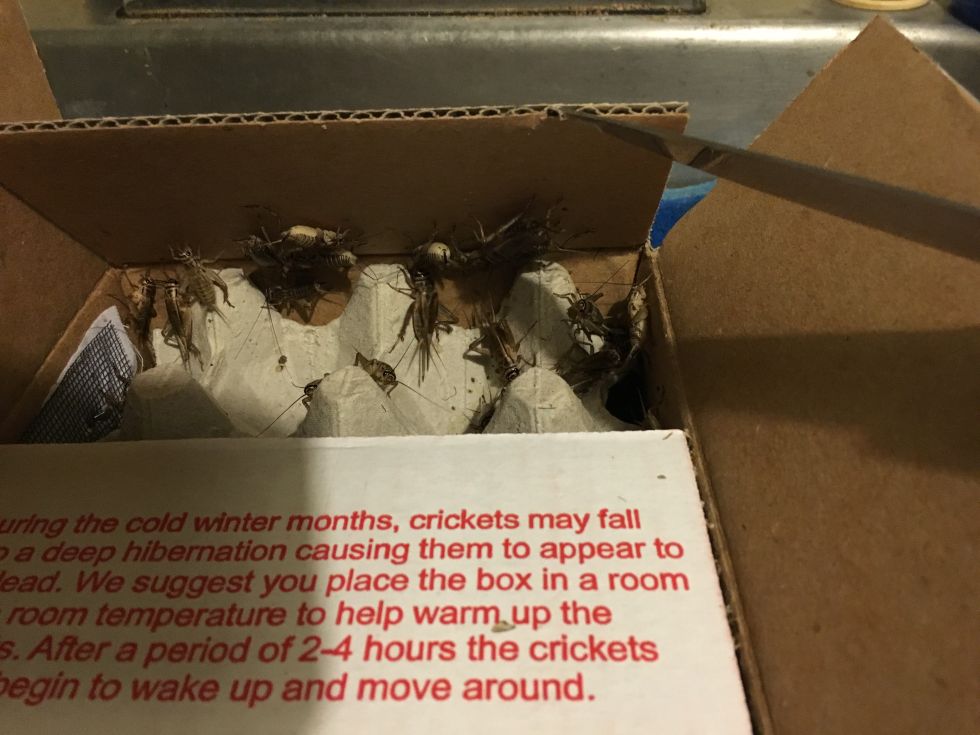
The boxes at my door were plastered with red drawings of bugs and the blunt warning: “Live Insects.” I could hear audible scratching and shuffling—and even what I thought was an errant “chirp”—as I placed them on my kitchen counter.
I slowly opened the first lid. Out poked two antennae, followed by the head of a cricket. I lifted the lid higher and saw dozens of them hopping around. Inside the second box, a thousand mealworms wriggled over an egg crate.
The first ingredients for my dinner party had arrived. Gagging slightly, I moved the boxes to my fridge.
In Western culture, eating insects is most commonly treated more like a stunt than a trend. Think of the dares on Fear Factor or of the gross-out twist in Snowpiercer when the poor find out they’ve been fed smashed insects. In other countries, however, insects aren’t uncommon in tacos or stir fry; sometimes they’re eaten straight out of the bag like potato chips.
“We have in Europe and North America a culture that leads to a lawsuit when you find an insect part in food. It’s ridiculous,” said Tom Turpin, a professor of entomology at Purdue University and a bug chef.
But slowly, entomophagy—eating insects—is catching on. In a 2013 report, the United Nations recognized that, given the food demands of a booming population, insects presented a “significant opportunity.” High in protein but with a small carbon footprint, insects seem like a “superfood’ at a time of increasing scrutiny on the sustainability of the food chain.
In the US today, protein bars and cookies can be baked with cricket flour. High-end chefs like Jose Andres and Rene Redzepi serve up grasshoppers and ants. It may soon be possible to keep a small bug farm in your kitchen, fed only by food waste—and then empty the critters directly into a pan for dinner.
Of course, all this progress continues to run into one small problem: bugs give people the creeps. So to cross that psychological barrier and embrace the food of the future, the recipe is clear. I would make a bug-based dinner of my own and actually convince my friends to eat it.
The first hurdle
I already had a passing familiarity with entomography thanks to Exo, a line of protein bars made with ground-up cricket flour that helped fuel several months of marathon training. My bug-based dinner party would have to go much further than that—we’ll get to those live mealworms in a bit—but cricket flour seemed a good place to start.
It turns out this is exactly what the bar’s creators had in mind.
“If the idea of consuming insects is a challenge already, we need to get [people] over the hurdle in a form that’s recognizable and approachable,” said Kyle Connaughton, a California chef and Exo’s head of R&D.
Connaughton first worked with insects while at England’s Fat Duck, which hosted a Victorian dinner featuring roasted crickets injected with sauces. That’s not exactly mainstream, but a protein bar is already a regular part of many people’s lives.
Exo chose deliberately non-exotic flavors for its bars, things like peanut butter and jelly or cocoa nut. The packaging emphasizes just how much protein each bar contains: 40 crickets’ worth. Each cricket has about twice the protein, by percentage, as beef jerky and just under three times that of chicken.
Enlarge/ As the “chicken of the bug world,” crickets would feature prominently in this meal.
Jason Plautz
Crickets have been described as the “chicken of the bug world”—ubiquitous, easy to cook, providing a good base for other flavors. Since crickets are a popular pet food, the infrastructure for mass production already exists, though not every farm raises food-grade crickets (that is, grown in a manner safe for human consumption and big enough to make them worthwhile).
As an added bonus, Connaughton said, the protein from cricket flour just tastes better than conventional whey or soy protein, which is usually masked with sugary vanilla or fake chocolate. Crickets have an earthy flavor on their own, but Connaughton said that roasting and drying them before grinding brings out “reactive flavors” that deepen the flour’s taste (like the difference between a roast chicken and a boiled one).
Decades ago, sushi was popular in Japan, but it just wouldn’t catch on in America—until a Los Angeles restaurant wrapped up crab and avocado and called it a “California roll.” Exo hopes that cricket bars can do the same for bugs.
If protein bars aren’t your thing, cricket flour is expanding into more foods. Bitty, a New York-based retailer, now offers up cookies and biscuits made with cricket flour. Portland, Oregon-based Cricket Flours sells oatmeal blends with crickets and has partnered with the chain Wayback Burgers to sell a cricket chocolate milkshake.
Considering all this, cricket flour felt like a good way to ease my dinner party guests into the meal. I ordered a box of Exo bars and a bag of cricket flour from Bitty, which promised that it could be swapped into any baked-good recipe. I added both to my growing list of ingredients.