Because Internet makes a linguist’s case for l33t speak, other online-text fads

Linguistics in the Internet age <em>can</em> be fun.
Enlarge / Linguistics in the Internet age can be fun.
Aurich Lawson / Getty Images

The Internet has done good things to the English language.

That’s the most important thing linguist Gretchen McCulloch has to say in her book, Because Internet: Understanding the New Rules of Language. Though many prominent opinion-havers rage about the imminent death of the English language at the hands of emoji-wielding teenagers, the Internet has done no more harm to English than television, radio, or dime novels.

In fact, McCulloch makes a compelling argument that Internet language, and emoji in particular, is restoring life to the relatively emotionless medium of text. For hundreds of years, public writing was limited to formal contexts like newspapers and books, written by educated people using very formal language for the edification of other educated people. Even fiction draws a clear line between informal dialogue and formal narration. On the Internet, on the other hand, the lines are much less clear. Private, informal writing (like shopping lists or notes passed between students at the back of a classroom) is now publicly visible, and the conventions developed by individuals or small groups for writing informally can spread and interact on a global scale. To McCulloch, this is more exciting than it is scary, and reading Because Internet might convince you to feel the same.

Writing like we talk
Gretchen McCulloch

McCulloch describes a variety of conventions Internet users have developed for informal writing, from emoji, which function like punctuation or gestures, to YELLING IN ALL CAPS, misspelling words in ways that reflect their own accents, or s t r e t c h i n g out words with internal spaces to make a point unmistakably clear. Each of these devices mirrors a spoken one, and their use allows Internet users to write in the same way that they talk, thereby expressing themselves more fully and more creatively.

This isn’t some conspiracy on the part of old people.

Even more fascinating, the amount each device is used changes over time in the same way they might in spoken language. It’s a common complaint among younger Internet users that parents are all too eager to end sentences in text messages with periods, sounding serious or even angry all the time as a result. This isn’t some conspiracy on the part of old people, McCulloch explains; people in different age groups tend to start using the Internet at different times and for different reasons, and those reasons show in how they text and tweet. For example, a person who first sent a text message using a flip phone with T9Word might retain some of the “txtspk” abbreviations that were necessary for saving effort and staying under the character limit in this tricky system. A younger person who’s only ever used a smartphone will feel comfortable typing words out in full and considering the emotional weight of every letter and piece of punctuation in a message, including the previously innocuous period.

McCulloch divides Internet users into several generations based on when and why they began using the Internet regularly, from “Old Internet People” who got their start on Usenet and BBSes to the “Post Internet People” who have never known a world without the World Wide Web and are currently spending their formative years on Instagram and Snapchat. In the same way that children and teenagers adopt spoken language conventions from their peer groups, Internet users pick up informal writing conventions from the people they interact with most frequently on their social networks of choice.

Her categories are spot-on: not only do I see myself in the “Full Internet People” who began joining Facebook and Tumblr in high school and college, but my friends and relatives of different Internet generations also see their experiences reflected in her categories.

Linguistics for everyone

In the introduction to Because Internet, McCulloch describes her goal as “writing for the future.” The book was created as not a stodgy treatise written in the English of the past for academics who might see it as some kind of relic. This is a book for anyone who uses English to get excited about, a book that takes advantage of the trends it describes. This doesn’t mean the book is full of emoji adding layers of emotional and social interpretation to each sentence, however; it’s still written in formal standard American English. It does, though, use some typographical conventions that haven’t yet made it into formal style guides, like not capitalizing “Internet.” Even if Facebook and Twitter someday collapse, taking all our wonderful correspondence with them, future linguists will be able to pick up this book and say, “Hey, they really did write like that!” Or even “this is when speech-like writing began to catch on,” as McCulloch suggested in a New York Times editorial.

McCulloch is on a mission to make linguistics relatable—and, hear me out, she’s on a roll in that respect. She does this not only through Because Internet, but also through Lingthusiasm, the podcast she co-hosts with fellow linguist Lauren Gawne. As its name suggests, Lingthusiasm shows off the hosts’ enthusiasm about linguistics and calls on its listeners to get excited about a wide variety of linguistic topics, such as how vowels work, the ways people from different cultures talk about time, and why efforts to create a single world language never catch on. On Lingthusiasm, McCulloch and Gawne dispel myths about language and inspire the kind of excitement that turns curious students into scientists. And in Because Internet, McCulloch continues to demystify and delight.

https://arstechnica.com/?p=1595099


Review: Terminator: Dark Fate provides a fitting coda to first two films

Promotional image for Terminator: Dark Fate.
Enlarge / This one’s for the ladies: Natalia Reyes, Mackenzie Davis, and Linda Hamilton star in Terminator: Dark Fate

That sentient AI from a dystopian future has returned and is still sending terminating robots back in time to take out pesky humans who might one day defeat it in Terminator: Dark Fate. Director Tim Miller’s latest installment is great entertainment and a welcome return to form for the Terminator franchise, featuring a great cast, killer special effects, and nonstop action.

(Some spoilers below.)

While technically the sixth film in the series, Dark Fate has actually been conceived as a direct sequel to the hugely successful first two films: The Terminator and Terminator 2: Judgement Day. So Terminator: Dark Fate pretty much ignores all the other Terminator movies as existing in alternate timelines. Best of all, it reunites stars Arnold Schwarzenegger and Linda Hamilton with James Cameron on board as producer. The film takes place two decades after the events of Terminator 2: Judgment Day. A new, improved Terminator (Gabriel Luna) is sent from the future to take out a young woman named Dani Ramos (Natalia Reyes). A cyborg/human hybrid named Grace (Mackenzie Davis) joins forces with Sarah Connor (Hamilton) and the original Terminator (Schwarzenegger) to protect her.

The film establishes its direct-sequel bona fides right off the bat with a brief but critical scene showing Sarah and her son John relaxing on a Guatemalan beach in 1998, having averted Judgment Day a few years earlier. (Edward Furlong was initially tapped to reprise his role as John Connor, but it ultimately didn’t happen. Instead, Miller used CGI to recreate Furlong’s youthful face from T2.) Cut to 2020 and the arrival in Mexico City of two new visitors from the future: Grace and the Rev-9 Terminator. Grace manages to save Dani from the Rev-9’s initial attack on a factory floor and escape, with the Rev-9 in hot pursuit.

Just when things look dire, Sarah Connor comes to their aid and they hole up off the grid to regroup. Sarah is understandably suspicious of Grace. And Grace comes bearing bad news: “You may have changed the future, but you didn’t change our fate.” Skynet never came into being in the altered future timeline, but an AI designed for cyberwarfare, dubbed Legion, did. And as before, a human resistance formed. Dani will play a key role in that resistance, so naturally Legion wants her dead.

T2 is hands-down one of the best film sequels of all time, and Miller clearly set out to recreate the same magic with a clever mix of old and new. A key part of that formula is upping the stakes with an advanced Terminator model that seems well-nigh impossible to destroy. The Rev-9 merges aspects of both the original and T2‘s liquid metal T-1000: it has an updated underlying endoskeleton, with a “mimetic polyalloy” (almost ferrofluidic) overlay, like skin, that can split off to make the machine doubly lethal. Luna —best known as Ghost Rider on Marvel’s Agents of S.H.I.E.L.D.—brings a ferocious intensity to the role, best exemplified by a scene where he mows through a crowd of Border Patrol agents without ever taking his eyes off his fleeing target, Dani.

Hamilton is better than ever as Sarah Connor, spending nearly a year on a grueling training regimen to get her 60-something body back into fighting shape. Her lean, ripped physique in T2 made her a feminist icon on par with Sigourney Weaver’s Ripley in the Alien franchise. Yet here, she’s still allowed to look every bit her age. This is a weathered, embittered Sarah who has earned every one of those scars and wrinkles and has only grown tougher over the years. She identifies with Dani because she was first targeted for termination around the same age, destined to give birth to a great hero of the resistance. Sarah assumes Dani, too, is only of value or interest because of her womb. Her expression when she learns that Dani is actually destined to lead the human resistance in this new timeline falls somewhere between wonder and regret.

Reyes and Davis are both terrific in their respective roles, and Schwarzenegger once again brings his trademark deadpan delivery. The special effects are great, the pacing is brisk, and the stunts are appropriately over the top—as always, there are plenty of explosions and property damage. If there’s a flaw in this latest film, it’s that everything seems just a little too familiar. Some of that can be chalked up to deliberate callbacks to the earlier films, but it’s also because it’s tough to hew to such a successful formula while still keeping things fresh.

Dark Fate provides a fitting coda to The Terminator and T2 while introducing fresh characters in a new timeline to tee up a possible next film. Alas, the film seems to be under-performing at the US box office this opening weekend, which is no doubt disappointing to those hoping to reinvigorate the franchise. Personally, while I’d love to see the further adventures of Dani, Grace, and Sarah taking on all the Terminators to come—what, you think Legion will give up that easily?—the tried-and-true formula is starting to show its age, and we already had a great TV spinoff with The Sarah Connor Chronicles. Maybe it really is time to put the franchise to rest. At least it would be going out on a high note with Dark Fate.

https://arstechnica.com/?p=1593655


Blizzard president gives vague apology for Hong Kong protest response

The words Free HK have been photoshopped onto the face of a video game character.
Enlarge / Mei from Overwatch has become a grass roots symbol of the Hong Kong protests in the wake of Blizzard’s decision.

Before launching into the weekend-long celebration of Blizzard games that is Blizzcon, company President J. Allen Brack offered a vague on-stage apology for how the company failed to “bring the world together in a tough Hearthstone esports moment about a month ago.”

Though Brack didn’t delve into the details of that “tough… moment,” it’s an obvious reference to the company’s initial one-year ban for pro Hearthstone player Ng “Blitzchung” Wai Chung after he shouted a statement of support for ongoing pro-democracy protests in Hong Kong on a post-match stream. While Blitzchung’s ban was later reduced to a six-month suspension and his tournament winnings restored, the damage was done among a vocal segment of Blizzard’s fan base.

In the wake of the Blitzchung decision, Blizzard was forced to cancel a public promotional event and belatedly punish a college Hearthstone team for a similar on-stream protest. The company faced both a brief employee walkout and admonishment from a bipartisan group of US legislators.

“We moved too quickly in our decision-making, and then, to make matters worse, we were too slow to talk with all of you,” Brack said from the Blizzcon stage this morning. Adding that the company “didn’t live up to the high standards we set for ourselves” and “failed in our purpose,” Brack said, “I am sorry and I accept accountability.”

How that accountability will manifest, and what if any changes were in store for the company, was less clear from Brack’s statement. The executive only offered a vague promise to “do better going forward.” Brack asked the audience to notice “as you walk around this weekend, I hope it’s clear how committed we are to everyone’s right to express themselves in all kinds of ways in all kinds of places. In fact we saw and heard many of you expressing yourself this morning.”

That’s an apparent reference to long-planned protests that are taking place this morning right outside the Anaheim Convention Center where Blizzcon is being held. There, dozens of protesters, who reportedly started setting up last night, are handing out T-shirts featuring Overwatch character (and growing anti-China symbol) Mei and offering support for Hong Kong. A truck carrying pro-democracy and pro-Hong Kong messages has also been seen circling the convention center.

Brack’s stated commitment to let those protesters “express themselves” rings a little hollow, since they are demonstrating on a public sidewalk outside of Blizzard’s control. And though Brack said he was committed to fans expressing themselves “in all kinds of places,” the company’s stance on protest during Blizzard-sponsored esports events seems unchanged from a month ago: “The official broadcast needs to be about the tournament and to be a place where all are welcome. In support of that, we want to keep the official channels focused on the game.”

Brack’s apology was apparently received well inside the convention center, but the lack of specifics or commitments to change any policies seems unlikely to appease those gathering in protest on site and on the #BoycottBlizzard hashtag. We’ll have more reporting on the goings-on at Blizzcon through the coming days. https://arstechnica.com/?p=1595107


Diablo IV is revealed, sure looks like a supercharged Diablo II

During the opening ceremony of Blizzcon 2019, Blizzard Entertainment confirmed the most unsurprising game reveal in the company’s recent history: Diablo IV.

“We’ve had Diablo IV in development for some time,” Blizzard President J. Allen Brack said, following its reveal (which we already suspected). He added that the company wanted to be sure the game was in a playable state before announcing it to the world. Hence, Diablo IV‘s reveal included a lengthy gameplay trailer and a promise that all conference attendees could play the game’s demo during the weekend-long event.

The reveal included confirmation of the week’s many leaks: that the game would revolve around the return of Diablo II‘s villain Lilith; that the new game’s art style would return to a black-brown-and-red motif, a la Diablo II; and that its first three revealed classes would be the barbarian, sorceress, and druid. Game Director Luis Barriga pledged to fully support a more “brutal” take on player-versus-player (PvP) combat, but he didn’t go into further details on how that will operate.

Though Barriga wasn’t ready to reveal a release date or window, he did confirm the game will launch on Windows PC, PlayStation 4, and Xbox One. That chosen series of platforms may peg the game’s launch before 2020’s holiday season, when we expect to see new PlayStation 5 and Xbox Scarlett consoles… or it may simply be a placeholder announcement before Diablo IV winds up on newer consoles, anyway.

[embedded content]
Diablo IV gameplay trailer.

Diablo IV‘s gameplay trailer included hints of new mechanics, particularly the ability to ride horses—and then chain attacks off of horseback, so that a hero can explode in a lightning burst off of its mount to attack nearby enemies. It also included clear callbacks to Diablo II, particularly the animations of loot and gold exploding from dead bodies, not to mention the obvious emphasis on the older games’ color palettes. The trailer’s mix of indoor and outdoor zones still made the most of that limited color palette in terms of biome diversity, while each revealed class already appears to have a mix of screen-clearing and zone-slashing powers, so that each can clear a room of diabolic baddies on its own.

Ars Technica has boots on Blizzcon’s floor, and we’ll be back in the coming days with impressions of how Diablo IV feels compared to other classics in the series. We’ll also see if Blizzard has anything to say about Diablo Immortal, the smartphone-only fork of the series that was revealed to a tepid fan reaction at last year’s Blizzcon event. (Update: The Blizzcon keynote ended without a single mention of Diablo Immortal, though it may receive mentions at various panels through the weekend-long event.)

Listing image by Blizzard Entertainment

https://arstechnica.com/?p=1594989


Nintendo: Switch Lite is expanding the Switch market, especially with women

Since the portable-only Switch Lite was first announced, I’ve heard from quite a few people who wondered why anyone would buy such a “limited” version of the system that can’t be docked to a TV for big-screen play. In its latest quarterly earnings report, though, Nintendo is showing that there is plenty of interest in a Switch that can’t, uh, switch.

Nintendo reports it sold 1.95 million Switch Lite systems worldwide in the system’s first 11 days on store shelves (i.e. through Sept. 30). That’s a pretty good debut, considering Nintendo only sold 2.85 million standard Switch consoles in the three-month period through the end of September.

In a briefing accompanying that report, Nintendo presented an unscaled graph showing Switch Lite sales leveling off a bit in October. More importantly for the company, though, the graph also shows Switch Lite sales adding to sales of the original dockable system rather than replacing them.

“You can see how Nintendo Switch Lite added to sellthrough of Nintendo Switch, which continued at the same steady pace that it had set this summer,” Nintendo President Shuntaro Furukawa said. “Looking at the state of this initial response, I would say Nintendo Switch Lite generating its own demand, without negatively impacting sales trends for Nintendo Switch.”

Digging in a little deeper, Furukawa says online registration data shows a full 43% of customers buying the Switch Lite as their second Switch system. Of the 57% that purchased Switch Lite first, Furukawa says Nintendo is seeing a “higher percentage of female users” than it had for Switch in the past, “signal[ing] further expansion of the female consumer base.”

Nintendo says it has seen “consumers gain deeper understanding of Nintendo Switch Lite when they actually see and hold it.” To that end, it is looking to expand the availability of in-store experiences and other hands-on opportunities to get the Switch Lite in players hands.

Elsewhere in the report, Nintendo notes that a full 63% of its first-party game sales for the six months through September came from games that were released before that period started. Multiple releases from before 2019—including Breath of the Wild, Mario Kart 8 Deluxe, New Super Mario Bros. U Deluxe, super Smash Bros. Ultimate, Pokemon Let’s Go and Super Mario Party— sold over 1 million copies in that six-month period, well after their initial release. That’s a pretty expansive long tail success in a video game market that usually sees the vast majority of sales come in a game’s first month of availability.

https://arstechnica.com/?p=1594949


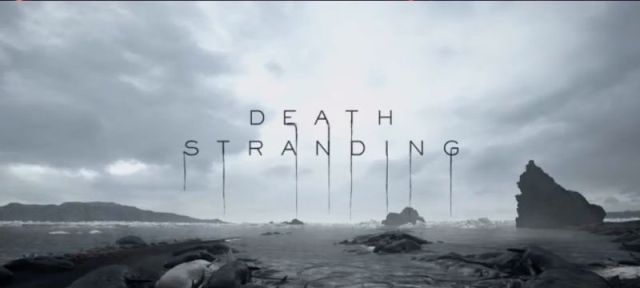
Death Stranding is Kojima unleashed, and it’s as weird as you’d expect

A certain sect of gamer has been waiting for this one <a href='https://arstechnica.com/gaming/2016/06/hideo-kojima-announces-death-stranding-a-first-since-leaving-konami/'>since 2016</a>.
A certain sect of gamer has been waiting for this one since 2016.
Kojima Productions

Death Stranding is Hideo Kojima unleashed.

That sentence carries a lot of weight in the video game universe, where solid personal branding and marketing across decades of Metal Gear titles means Kojima ranks as one of the rare game auteurs players actually know by name. And as much as Kojima used the Metal Gear games to defy both narrative and gameplay conventions, the series still represented a stealth-action box that Kojima found himself straining against over and over again.

Death Stranding once again stands as a bold subversion of expectations from a creator known best for leaning into action heroics. For the vast majority of the game, your protagonist is not a Solid Snake-style hard-bitten action hero. He’s just a guy carrying a comically overloaded backpack across a lot of empty space, focused on a simple but necessary job, for better or worse.

Death Stranding is Kojima’s escape, not just from Metal Gear’s cardboard box but also from the restrictions and recriminations of his former corporate parent Konami. That means the new game lets Kojima take some bold risks, experimenting with gameplay systems that are somehow utterly isolating and deeply connected to other players at the same time. It also means this is Kojima at his most self-indulgent, with a bloated, convoluted mess of a sci-fi story that’s heavy on complication and light on relatable human moments.

Death what-ing?

It’s the near future, and America as it once was has been ravaged by a mysterious event referred to as the Death Stranding. For some reason, the barrier between the world of the living and the dead has been weakened, causing ethereal, usually-invisible-to-most creatures called BTs to roam the Earth. When a BT consumes a dead body, it causes a voidout that utterly destroys everything for a miles-wide radius.

As if that wasn’t enough, BTs surround themselves with timefall, a form of rain that speeds up the flow of time significantly. Years of this timefall has destroyed the communications and transportation infrastructure that used to bind America together across its cities and towns. What remains of the US populace is holed up in remote, disconnected cities called KNOTs, where the populace cowers in fear, dependent on outside deliveries from brave couriers who can withstand the timefall and BTs.

That’s not a bad setup for a new post-apocalyptic universe, all in all. But Kojima can’t leave well enough alone, weighing down this somewhat solid premise with layer after layer of overcomplicated, semi-mystical sci-fi dreck. Simply explaining what’s going on practically requires consulting a glossary of new and bewildering terms.

There are the stillborn bridge babies (BBs) that can let a human sense BTs when they’re connected through a sort of external womb. Except there are also some people who can inherently sense and/or control BTs through a power known as DOOMS (I never really figured out what this acronym stands for). And there are also some people who come back to life after they die, called repatriates, and their blood is apparently toxic to BTs.

Then there are the Beaches, the mystical, personal planes that connect the world of the living and the dead. Everyone has their own private Beach, but they’re also all connected by personal and inanimate relationships, you see. Also some people can go back and forth to different Beaches with little effort. And sometimes people’s souls can be trapped on their Beach, ageless, even if their bodies stay in the real world. Got it?

I’m not going to further belabor this review by explaining cryptobiotes, chiralium, the q-pid necklace, or any of the other new concepts that get thrown at the player with abandon throughout the game. Don’t worry, though, the game takes enormous pains to explain all of this and more in long, discursive cut scenes that go into excruciating detail about how all of these complications work.

I’d estimate at least half of the game’s story scenes are taken up by deep-in-the-weeds theorizing about the history of the Death Stranding, or the metaphysical properties of BBs, or some other esoteric minutiae that doesn’t really affect anything. It’s as if Kojima barfed up an encyclopedia of background material for his apocalyptic fanfic before worrying if anyone was interested in the original story.

Despite all that explaining, the world of Death Stranding never feels cohesive. There’s a strong sense that the writers are making this up as they go, forming a patchwork quilt of scientific-sounding magic that holds together only if you don’t look at it too closely. Even in the run-up to the game’s conclusion, characters are still introducing entirely new theoretical concepts that seem to come completely out of nowhere. Meanwhile, bits that are obviously intended to serve as mysterious twists fall flat thanks to horrible telegraphing and seemingly clueless characters.

Without spoiling anything, I’ll note that Death Stranding’s ending is more or less a two-hour cut scene that tries to explain how the preceding 30+ hours are actually supposed to fit together… yet I still came away scratching my head about what the hell happened.

Help me, Sam Kenobi, you’re my only hope

Into this whole mess drops Sam Porter, a stoic and largely blank-slate courier who serves as the player avatar (we’ll get to talking about the gameplay soon, I swear). Sam can sense BTs and “repatriate” if he dies, so the dying president of the United States begs him to crisscross the country connecting cities in an Internet, but also magic, chiral network called the United Cities of America. Also, if he could deliver some packages along the way and save the president’s daughter who has been captured by terrorists on the West Coast, that would be grand. Thanks!

While the game goes deep on its mystical technobabble, it seems remarkably unconcerned with the interesting questions of how society or government actually functions in this post-apocalyptic world. There’s a president, but she seems to serve as a cult-of-personality totem more than a real leader with power. We never get to see inside these shining KNOTs on a hill, which somehow seem able to operate with some extremely advanced technology despite the destruction of all existing infrastructure. We also don’t get to see inside the homes of the scattered preppers who somehow rode out the post-Death Stranding world outside of the KNOTs.

Instead of holding up a twisted mirror to society, Kojima uses his sci-fi future as a means to let his characters pontificate in extremely direct and unsubtle grand philosophical statements, full of dramatic imagery and botched attempts at symbolism (and occasional memorable imagery). Most of these focus on the need for human connection, a blunt “we live in a society” statement writ large.

“If we don’t come together again, humanity will not survive,” the president says in one characteristically unsubtle statement of the game’s core thesis. “Humans aren’t made to be alone,” another character says at one point, as if it was the most profound thing in the world. “They’re supposed to come together. To help one another.”

The voice and motion capture cast does its best to give this material some life, soldiering on through countless “tell don’t show” diatribes that often focus on their characters’ own out-of-nowhere sci-fi powers. But there’s very little real human drama for the cast to hang their hats on; they’re dealing with an excess of unnatural dialogue to fight through. When the game does attempt to dive into a character’s backstory or motivations, the result is almost always ridiculously overwrought, complete with swelling musical cues that try their best to evoke utterly unearned emotion through ridiculous circumstance.

If you don’t think about it too hard, perhaps you can let the contrived pseudoscientific theories, pop philosophy, and overly direct symbolism wash over you. But if you’re hoping for a coherent, well-told plot full of relatable characters, you have to look elsewhere.

https://arstechnica.com/?p=1594285


Amazon: No more third-party sales of “Nintendo products” without approval

Console game cartridges at RAGE, Record Art Game Emporium, on April 4, 2017, in Dublin, Republic of Ireland. (photo by Sam Mellish / In Pictures via Getty Images Images)
Enlarge / Console game cartridges at RAGE, Record Art Game Emporium, on April 4, 2017, in Dublin, Republic of Ireland. (photo by Sam Mellish / In Pictures via Getty Images Images)

The war over used video game sales has been cool for the past few years, ever since PlayStation 4 and Xbox One embraced unfettered access to disc-based games. But in a Thursday attempt to control the reputation of Nintendo products being sold at Amazon, the debate may rage anew.

Today, Amazon made a stark announcement to its family of third-party product resellers: effective immediately, those sellers can no longer list “Nintendo products” for sale without receiving express approval.

The announcement did not explain whether Nintendo, Amazon, or both companies were responsible for the change. And it did not include a list of affected products or Amazon Standard Identification Numbers (ASINs).

Users in the site’s third-party seller forum have pointed to one commonality among affected items: the product’s producer is listed as “Nintendo.” This affects everything from modern Switch games and consoles to out-of-print cartridges and hardware, but it also leaves third-party makers of Nintendo console games (i.e., Capcom, Ubisoft) unaffected.

Original ASIN

The Amazon notice to resellers reads:

As part of our ongoing efforts to provide the best possible customer experience, we are implementing approval requirements for Nintendo products… Effective on 2019-10-31, you will need approval to list the affected products. If you do not obtain approval to sell these products prior to 2019-10-31, your listings for these products will be removed.

The notice sent to sellers was dated October 31—meaning, the notice’s enforcement period apparently began for some resellers, according to their complaints at an Amazon forum. As of press time, enforcement of the new rules seems scattershot, with some sellers complaining about taken-down ASINs already (after shipping affected stock from various Nintendo console generations to warehouses, no less) while others say their inventory remains untouched.

Thursday’s notice instructs sellers to seek “approval” for affected products before they can be listed in “used” or “collectible” condition. Meanwhile, some sellers say they’re able to list affected products in “new” condition (which is sometimes impossible or unlikely, in the sake of classic and retro Nintendo products).

This follows efforts by Amazon to clamp down on other product categories’ “used” sales. Included in this move are DVDs and Apple products, which now require similar approval processes to move forward. Users on the used-Nintendo forum thread have postulated that counterfeit retro Nintendo cartridges have been an open secret among Amazon sellers for some time.

In an email interview with Ars Technica, Kelsey Lewin, co-owner of used video game chain Pink Gorilla Games, agreed with that possibility. “Every online retailer has an extremely high percentage of bootlegs,” Lewin writes. “I ran an experiment when Gamestop started selling Game Boy Advance games [online] again. I ordered 25 copies of Pokemon Sapphire and Ruby and got 12 bootlegs.” (Lewin added that these counterfeit and reproduction carts “still play just fine,” even if they’re not accurately advertised.)

This doesn’t necessarily explain Amazon’s blanket decision to restrict anything under the “made by Nintendo” sun, however. This decision seems to imply that either Nintendo or Amazon would rather limit all used sales of Nintendo products than build a more focused list of scrutinized software and products. Additionally, Amazon has yet to roll out a similar rule for anything produced by console producers Microsoft or Sony—perhaps, in part, because those companies have wider product catalogs than Nintendo. (Lewin argues that Sony’s PlayStation division would be a great target for such an Amazon restriction, as “the bootleg PS3 controller market is huge.”)

Neither Nintendo nor Amazon representatives immediately responded to Ars Technica’s questions about which company was responsible for the change in policy.

https://arstechnica.com/?p=1594791


For All Mankind imagines a space race that leaves fewer people out

Promotional image for Apple TV show For All Mankind.

At the heart of all good science fiction lies one vast and deceptively simple question: what if? For All Mankind, the latest outing from writer and producer Ron D. Moore, explicitly takes that what if as its core premise and logline, asking: what if the space race never ended?

The show’s first trailer showed us the motivation for continuing the race: what if, at the height of the Cold War, the Soviet Union was first to put a man on the moon? What if Apollo 11, rather than a great leap for mankind, was a footnote in the history books? What would that mean, and what would happen next?

It feels intentional that Apple should launch its new streaming TV service with a show literally about launching, about refusing to accept second place as a loss, about the audacity of reaching for the literal stars. And it seems fitting that the company would have shared the first two episodes of that vision on the larger-than-life IMAX screen at the National Air and Space Museum in Washington, DC, surrounded by actual artifacts of crewed spaceflight on all sides.

Alas that the screening was only two episodes because yours truly left the theater dying to see what comes next.

(Very minor spoilers for the first two episodes of For All Mankind follow.)

Larger than life

It has been 50 years since Neil Armstrong’s “one small step” ricocheted around the world. The men who went to space on Apollo 11 are now iconic and legendary; most people can name either Buzz Aldrin or Neil Armstrong, if not both, even if they can’t remember Michael Collins (who remained in orbit).

Astronauts captivated—continue to captivate—our imagination. A few hundred souls, out of all the billions who have ever lived, have escaped our world, seen it from the outside with their own eyes. The men of Apollo 11 were legends in their own time and in ours. And they, like their mission, are a sideline in For All Mankind, which instead elevates the stories of others to mythic status in their own right.

Instead, as the series begins, the figures looming over it are not those flying high above, but those feuding down below. Our story follows astronaut Ed Baldwin (Joel Kinnaman), a stand-in for real-life Apollo 10 commander Thomas Stafford. Apollo 10 served as a “dress rehearsal” for the eventual Moon landing, with astronauts in a lunar module descending to within about eight miles of the lunar surface before returning to orbit.

In our history, where Apollo 11 was a success, that level of preparation and testing seemed wise. In an alternate history, where Apollo 11 came too late, the choice not to land earlier suddenly looms large, kicking off internecine political conflict at every level.

Baldwin is joined by colleague and foil Gordo Stevens (Michael Dorman), a replacement for real-life Apollo 10 lunar module pilot Eugene Cernan. Where Baldwin is the square-jawed, right-stuff astronaut trope made manifest, Stevens embodies the hard-drinking, philandering, hotshot fighter pilot. Each of the men of course has a wife to match, and the women, too, are foils to each other. Karen Baldwin (Shantel VanSanten) seemingly strives to be the housewife and mother the still-military atmosphere of NASA circa 1969 demands, while Tracy Stevens (Sarah Jones) exhibits markedly less patience for the constraints that life can bring with it.

The plot also makes room for two other threads, both telling the stories of girls and women who chafe against their circumstances. Margo Madison (Wrenn Schmidt) replaces the real-life Poppy Northcutt as the first (and, at the time, only) woman sitting inside mission control during Apollo. Madison is a protégé of Wernher von Braun (Colm Feore), the real-life director of the Marshall Space Flight Center and architect of the Saturn V rocket.

The challenges Madison faces are perhaps the ones you might expect for a woman trying to be taken seriously in an all-male workplace in the 1960s. What you might not expect, however, is the third plot thread, which follows young Aleida Rosales (Olivia Trujillo) and her family as they emigrate from Mexico to Houston in pursuit of the good-old American dream.

Astronaut Ed Baldwin (Joel Kinnaman) flying the Apollo 10 mission.
Enlarge / Astronaut Ed Baldwin (Joel Kinnaman) flying the Apollo 10 mission.

As real as fiction gets

I would be remiss to discuss a show made with the budget and care applied to For All Mankind and not address the obvious hook: the space porn.

The scenes taking place in space, screened at a state-of-the-art IMAX facility, were a joy. Every shot of the Columbia and Eagle gliding silently (yes, silently) through space, of a massive rocket readying for liftoff, of Baldwin and Stevens folded into a lander that would never land, delivers all the wonder that feats of human engineering deserve. And in every element, For All Mankind displays painstaking attention to detail.

“We said from the beginning of the production to all the departments that we thought it was really important for the show to have a sense of authenticity to it, even though you were doing something that was fundamentally not true,” Moore said during a Q&A panel after the screening.

Moore added:

The closer it was to reality, the more likely it was that the audience would go on this journey—take the risk and laugh and cry with the characters along the way. So, every department on the show, in the writers’ room, had researchers and historians. We went back to the original NASA plans whenever possible.

Our production designer, Dan Fisher, who designed all the sets of the show, recreated Mission Control in such exacting detail that even the ceiling tiles [are] the same as the ceiling tiles in the original mission control. When we were on set, we had technical consultants and former astronauts who were actually there, who would walk the cast through how to operate the command module and the lunar module. We had people that would talk to the background players in Mission Control, so that people weren’t just randomly pushing buttons—they knew exactly what the console did and who they were talking to on those headsets, and that permeated the entire production.

The sense of authenticity shoots straight through every scene. Interstitial moments use as much original footage as possible for key political figures such as Presidents John F. Kennedy and Richard M. Nixon, and the soundtrack drips with 1960s rock and pop throughout, helping ground the audience in a strong sense of time and place.

Man on the moon? Eh... what about women?
Enlarge / Man on the moon? Eh… what about women?

What still might be

Moore’s previous work, both in the Star Trek franchise and especially with Battlestar Galactica, makes clear that he does not shy away from the implications of politics in his work. And indeed, both the workaday questions of funding and who saves face, as well as the grander philosophical questions were already on display in just two episodes.

Mankind begins during the early months of the Nixon administration, locked into the Manichean worldview of the Cold War. But in the same way Battlestar was grappling with a post-9/11 world, Mankind is in every way, inescapably, a show made in and about the Trump era. Moore and company ask us in the subtext of almost every single scene not only to grapple with the what ifs underlying US politics and the history of NASA but also something much more profound.

Sometime after the third episode, we know from the trailers, the alternate-universe NASA of For All Mankind is going to try something that our real NASA had already rejected in 1969: admitting women as astronaut candidates (including wronged wife Tracy Stevens).

According to promo photos, at least one of the potential women astronauts in this alternate universe is African-American. In the real world, an American woman would not reach orbit until 1983, when Sally Ride became the first. It also took until 1983 for Guion Bluford, the first black US astronaut, to reach space. (Although NASA was at least thinking about desegregating space in the 1960s.) Almost another decade had to go by before NASA sent a black woman, Mae Jemison, into space on a 1992 mission.

What if we were motivated to try something new and different decades earlier due to an embarrassing Cold War loss?

The show is both “a look at what might have been—and what still might be,” Moore said in introductory remarks, and even in the first two episodes, For All Mankind demands of the viewer a reckoning. The first shots of an eager world watching the Moon landing take place not in Florida, Houston, or Washington, DC, or even in Soviet Russia. They happen in Mexico. In one of the most profoundly human moments of the first episode, a family comes together, speaking subtitled Spanish, to watch one of humanity’s greatest achievements to date and remember.

In the second episode, an influential congressman wants to leverage a disillusioned astronaut into a showboating hearing that will allow him to move the players around Washington like pawns on a chessboard. The astronaut chooses to go to Washington—but then shoulders responsibility and blame himself rather than offloading it onto the congressman’s chosen target.

What if, rather than dodging responsibility, our leaders embraced it?

What if, the show asks us, over and over again, in scene after scene after scene. What if we respected our rivals’ accomplishments and used them to spur our own advancement? What if we expanded our view of who matters? What if duty, honor, and country were genuinely guiding principles?

The pointed parallels are too many to ignore. If For All Mankind is truly a look at what still might be, then it wants us to think beyond space and look around closer to home to consider what that means.

For All Mankind premieres with three episodes on Apple TV+ on Friday, November 1, before moving to a weekly release format for the remainder of the season.

https://arstechnica.com/?p=1592213


HBO Max will bring up the streaming-video rear in May 2020 for $15/mo

HBO Max will bring up the streaming-video rear in May 2020 for $15/mo
WarnerMedia

AT&T Time Warner subsidiary WarnerMedia hosted an hours-long presentation on Tuesday to confirm everything under the sun about HBO Max, the company’s new streaming-video service slated to launch next year. We had already seen a number of announcements about existing and classic series coming to the service, but now we know its launch window and price: $14.99/month, starting in May 2020.

Let’s start with some asterisks on that price point. While $15 is the highest point in the current streaming-video fray, AT&T Time Warner already charges $15/mo for HBO Now, and HBO Max will effectively make the existing service redundant. Should you already pay for HBO as part of an AT&T cable-TV subscription package, you’ll get HBO Max access for free. However, that may not be the case if you pay for HBO through other cable providers; “we are in active discussions with our distributors and look forward to offering their customers seamless access to this great product,” the company said in a statement.

Meanwhile, if you don’t pay for HBO but subscribe to any of AT&T’s “premium video, mobile, and broadband services,” you might be offered free HBO Max service… if you upgrade to a new AT&T bundle package “at no additional charge.” Whether those new bundles will require specific terms or additional purchases remains unclear, however.

After its paid launch in 2020, WarnerMedia plans to launch an “ad-supported” version of HBO Max in 2021, but the company wasn’t ready to reveal how that would work (ie, whether such a product would combine a monthly fee and advertisements a la the ad-supported Hulu tier). In terms of regions, WarnerMedia says HBO Max will premiere in the US in 2020 and will expand to Latin America and Europe by 2025. (Really? No hints about Canada yet?)

House odds

We already knew that HBO Max had secured the streaming rights to TV series like Friends and Fresh Prince of Bel-Air, along with a truckload of content from the likes of BBC America. The past week has seen WarnerMedia announce a bunch of new, original direct-to-Max content, and the company capped off its Tuesday event with a few more announcements.

Arguably the biggest, albeit least surprising, was official word that a previously announced Game of Thrones prequel series has a name: House of the Dragon. As anticipated, this series, which has at least one ten-episode season on order, will be based on the 2018 George R. R. Martin book, Fire & Blood, so it will revolve around the history of House Targaryen 300 years before the events of the primary Game of Thrones book and TV series.

Multiple prequel projects had been rumored, however, and it’s unclear whether to expect others. (In fact, on Tuesday, we heard word that one rumored prequel project was canceled before being officially announced.) WarnerMedia did not confirm whether House of the Dragon, or any of the company’s other freshly announced shows and one-off specials, would be ready in time for the service’s May 2020 launch.

HBO Max finally claimed dibs on Raised by Wolves, a ten-episode TV series from showrunner and Director Ridley Scott, which had originally been pegged as a TNT original series. Meanwhile, the company’s comic-minded teams at DC Entertainment showed up to announce a few live-action HBO Max exclusives, including a high-school drama produced by Elizabeth Banks (Pitch Perfect), a superhero anthology series with criss-crossing tales, and a very vaguely worded “Green Lantern-inspired series.” (This three-series coup, on top of other DC-related exclusives on HBO Max, sure make us wonder how long the standalone DC Universe streaming service will last.)

In addition to today’s list of new series, WarnerMedia announced the following existing series would become streaming exclusives on HBO Max during its “first year” of operation: South Park, Rick & Morty, The O.C., Aqua Teen Hunger Force, Robot Chicken, Space Ghost Coast to Coast, The Bachelor, Impractical Jokers, The Closer, Rizzolli and Isles, Major Crimes, The Alienist, The West Wing, United Shades of America with Kamau Bell, This is Life with Lisa Ling, and Anthony Bourdain: Parts Unknown. Of everything on that list, South Park is arguably the biggest WarnerMedia coup, since that likely means a deal was worked out with Viacom—which already operates CBS All Access, itself a paid streaming-video service.

Really, thinking about the ecosystem of existing streaming services leads us to ask: will HBO Max land with a bang or a thud? By the time May 2020 rolls around, we will have already seen months of activity from this November’s new services, Apple TV+ and Disney+, not to mention the April 2020 launch of NBC Peacock. Will the “costs the same as HBO Now” argument help WarnerMedia’s new service rise to the top of the competitive streaming pool? We suppose that depends on whether potential subscribers have been sharing accounts this whole time. https://arstechnica.com/?p=1593719


An end in Vue: Sony will shutter its streaming video service

A Sony sign at a company HQ
Sony does a lot of things, but the PlayStation brand is a huge part of its profits. Vue? Not so much.

Sony today announced that it will soon shut down PlayStation Vue, its streaming TV service that served as a lighter alternative to traditional cable for live-TV viewers. The company’s short blog post on the subject says that Vue will continue to operate until January 30, 2020, but that it will become inoperable after that date.

“Unfortunately, the highly competitive Pay TV industry, with expensive content and network deals, has been slower to change than we expected,” Sony wrote. “Because of this, we have decided to remain focused on our core gaming business.”

Sony will continue to offer movies and TV episodes for purchase on-demand through the PlayStation Store, however; this closure only affects the live-TV service, which licensed channels traditionally found on cable for streaming in an interface that was available on PlayStation game consoles, Roku, Apple TV, and other platforms.

PlayStation Vue was the first major service of its type when it launched in the United States in 2015. It was followed by offerings from Hulu, YouTube, and others that sought to provide the basic live-TV cable experience streaming over the Internet with more modern interfaces and built-in features like cloud-based DVR and without long-term contract commitments. However, despite its early start, the Vue service lagged competitors in terms of subscribers. And since Sony had less leverage in the entertainment business than say, Disney (which is the majority owner of Hulu), it reportedly found itself paying more than competitors for already extremely pricy content deals with TV networks.

Just a few days ago, a report claimed that Sony had sought to find a buyer for the Vue service, which has never been profitable. Any buyer would have acquired Vue’s subscribers and technology but not necessarily its content agreements, which are difficult to secure. The report indicated that Sony was struggling to find an interested party.

The effort to reimagine the cable bundle for streaming devices has been slow to gain traction even for some of the other top players that have outperformed Vue. As we noted in our previous article on the company’s efforts to sell Vue, the wind seems to be strongly behind a channel-based, a la carte ecosystem of low-priced ($6-15/month) streaming services dedicated primarily to producing and distributing original content rather than licensing entire channels or big content packages from other companies.

Netflix, Amazon, Hulu, HBO, Showtime, CBS, and others have already found varying levels of success with the strategy, and major new competitors like Disney and Comcast/NBC Universal are poised to enter the field soon, as well. Cable subscriptions are also declining, albeit slowly; consumers seem to be voting with their dollars for a different model than traditional live-TV bundles, and Sony seems to have learned that the hard way.

https://arstechnica.com/?p=1593445