Someone paid $95,000 for this pair of jeans recovered from 1857 shipwreck

old pair of jeans looking extremely distressed
Enlarge / Would you pay $95,000 for these jeans? They were salvaged from the wreck of the SS Central America, which sank in 1857.
Holabird Western Americana Collections

A pair of men’s jeans recovered from the wreckage of a 19th-century steamer ship fetched an eye-popping $95,000 at auction last week. Per the auction house description, it’s the earliest known pair of five-button fly, heavy-duty work pants, most likely made by or for Levi Strauss & Company in the 1850s. The pants went down with the SS Central America off the Carolina coast during a hurricane in September 1857 and are remarkably well-preserved, thanks to the anaerobic environment where they were found. Previously, the oldest known pair of Levi’s was found in an abandoned mine shaft and dated back to the 1880s, selling at auction earlier this year for $87,400.

The SS Central America was a 280-foot steamer operating between Central America and the US East Coast in the 1850s. On its ill-fated final voyage, it carried 587 passengers and crew, many of whom had traveled from San Francisco to Panama via another steamship. (This was before the construction of the Panama Canal.) Among its cargo were thousands of freshly minted 1857 Double Eagle coins, along with older gold coins and ingots (gold bricks)—hence its nickname, the “Ship of Gold.”

The voyage started out smoothly enough, but on September 9, 1857, a Category 2 hurricane hit, shredding the ship’s sails. Two days later, it took on water, and the paddle wheels and boiler failed. The sharp drop in steam pressure also shut down both bilge pumps, so both passengers and crew worked strenuously as part of a bucket brigade to fight off the rising water. There was a brief calm, but the crew couldn’t get the boilers restarted, and soon the hurricane was back in full force.

On the morning of September 12, two nearby ships were spotted, and 153 passengers—mostly women and children—were put into lifeboats and were rescued. But the continued strong winds pulled the Central America and its remaining passengers and crew farther away. It sank at 8 pm, killing 425 people still on board. The captain, William Lewis Herndon, nobly went down with his ship. About 50 people were subsequently rescued from the waters—including a man named Ansel Easton, who had been on his honeymoon with his new wife, Adeline. (Luckily, she’d been placed on one of the lifeboats and also survived.) All the gold also went down with the ship, and the sinking was at least partially responsible for the Panic of 1857. Several New York banks on the verge of failing had badly needed that cash influx, which never came.

<a href="https://rassegna.lbit-solution.it/wp-content/uploads/2022/12/someone-paid-95000-for-this-pair-of-jeans-recovered-from-1857-shipwreck-2.jpg" class="enlarge" data-height="764" data-width="1200" alt="Painting depicting the sinking of the SS Central America.”><img alt="Painting depicting the sinking of the SS Central America.” src=”https://rassegna.lbit-solution.it/wp-content/uploads/2022/12/someone-paid-95000-for-this-pair-of-jeans-recovered-from-1857-shipwreck-1.jpg” width=”640″ height=”407″ srcset=”https://rassegna.lbit-solution.it/wp-content/uploads/2022/12/someone-paid-95000-for-this-pair-of-jeans-recovered-from-1857-shipwreck-2.jpg 2x”>
Enlarge / Painting depicting the sinking of the SS Central America.
Public domain

The Central America languished at the bottom of the ocean until 1988, when treasure hunter Tommy Gregory Thompson led an expedition to locate the wreck and recover the gold and other artifacts using remotely operated vehicles (ROVs). The recovered gold has been valued between $100 and $150 million, and the largest piece—an 80-pound gold brick nicknamed “Eureka”—fetched a record $8 million in 2015. Alas, Thompson faced lawsuits from his investors, who claimed they never saw any profits, and he went into hiding in 2012. He was arrested in a Boca Raton hotel in 2015 and ultimately lost his day in court.

The jeans recovered from the wreck were found in the trunk of a San Francisco merchant named John Dement. The design for the classic Levi’s we know and love, with the telltale copper rivets on the pocket corners and base of the button fly, wasn’t patented until 1873, although the company itself was founded in San Francisco in 1853 as a dry goods store. But the auction house noted that in most respects—the style, shape, and size of the buttons—the Central America “miner’s pants” are nearly identical to another pair of old Levi’s. In addition to the mine shaft jeans auctioned earlier his year, Albert Einstein’s Levi’s leather jacket fetched over $110,000 when Christie’s auctioned it in 2016.

Other auctioned items from the SS Central America included the wedding trousseau of the Eastons, various other clothing items, passenger receipts, baggage tags, a brass bell, chamber pots, dishware and cutlery, figurines, ship timbers, a beer bottle, and cabin keys. My personal favorites: an 1849 Colt pocket pistol, a ladies’ douche kit and chastity belt, and Captain Herndon’s personal sextant, a common navigational tool at the time.

https://arstechnica.com/?p=1902328


Dwarf Fortress’ graphical upgrade provides a new way into a wildly wonky game

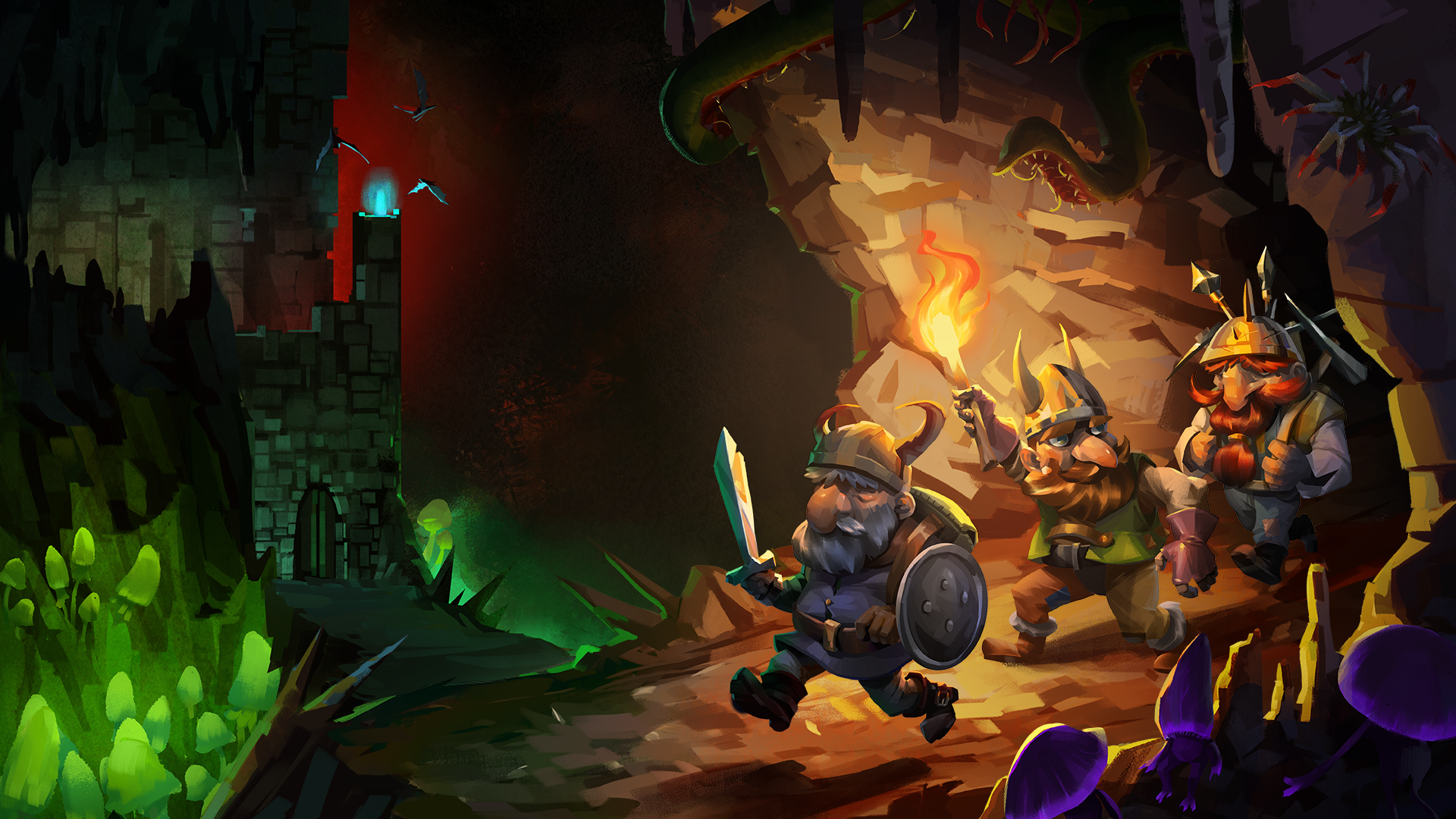
Three dwarves heading into spooky, green-glowing caverns
Enlarge / Not pictured: the things that are far more dangerous to fortress-dwelling dwarves, like poor site planning, miasma, and a lack of drink.

After a long night of playing Dwarf Fortress, I had a concerned look on my face when I finally went to bed. My wife asked what was wrong. “I think I actually want to keep playing this,” I said. I felt a nagging concern for many weeknights to come.

Available tomorrow on Steam and itch.io, the new version of Dwarf Fortress updates the legendary (and legendarily arcane) colony-building roguelike with new pixel-art graphics, music, some (default) keyboard shortcuts, and a beginners’ tutorial. The commercial release aims to do two things: make the game somewhat more accessible and provide Tarn and Zach Adams, the brothers who maintained the game as a free download for 20 years, some financial security.

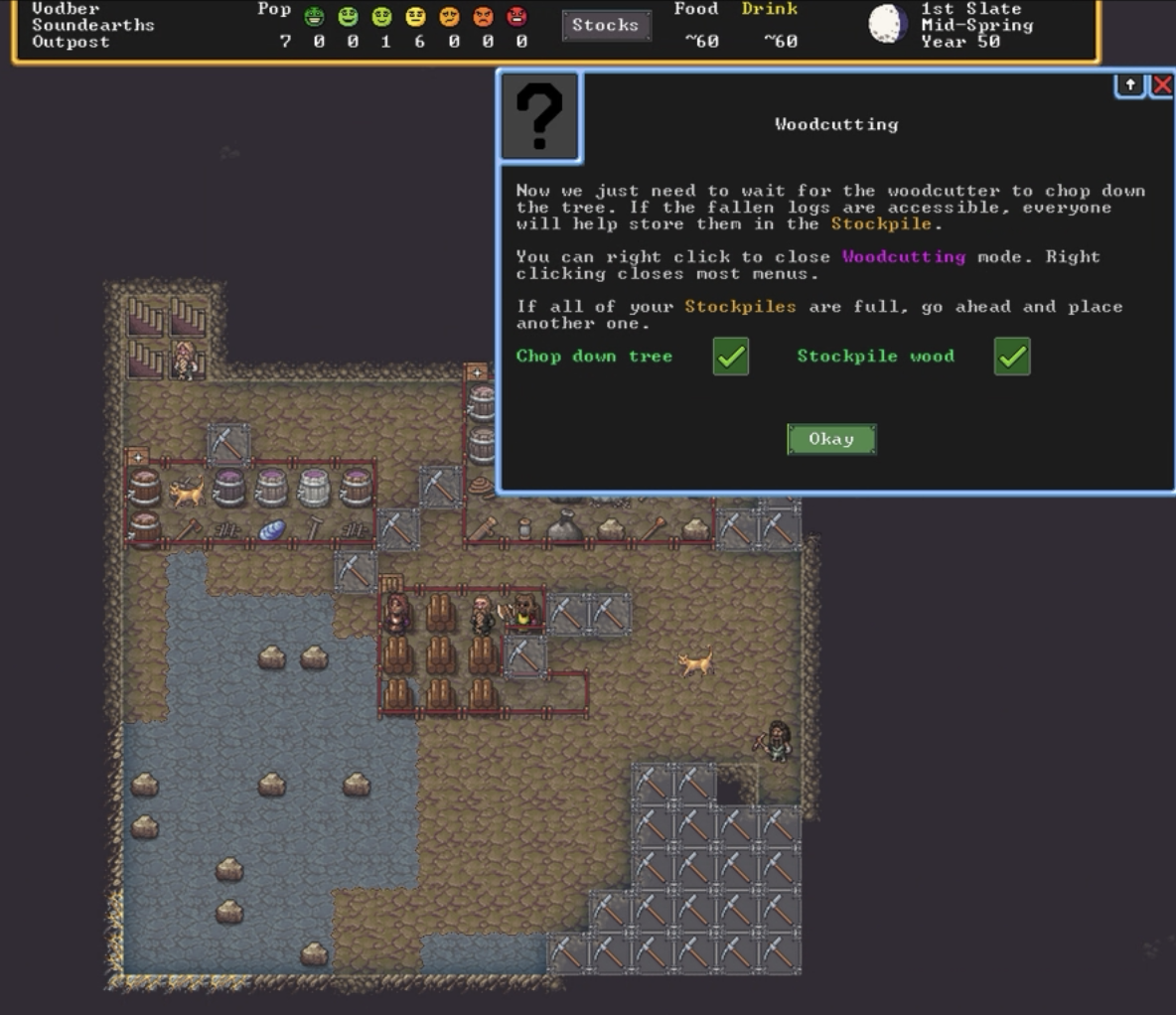
It may look simple, but these tips on how to cut down wood and where to stash it will probably save the average player at least an hour and maybe a couple of failed playthroughs.
Enlarge / It may look simple, but these tips on how to cut down wood and where to stash it will probably save the average player at least an hour and maybe a couple of failed playthroughs.
Kevin Purdy / Kitfox Games

I know it has succeeded at its first job, and I suspect it will hit the second mark, too. I approached the game as a head-first review expedition into likely frustrating territory. Now I find myself distracted from writing about it because I keep thinking about my goblin defense and whether the fisherdwarf might be better assigned to gem crafting.

Getting hooked

Nearly 10 years ago, Ars’ Casey Johnston spent 10 hours trying to burrow into Dwarf Fortress and came out more confused than before. The ASCII-based “graphics” played a significant role in her confusion, but so did the lack of any real onboarding, or even simple explanations or help menus about how things worked. Even after begrudgingly turning to a beginners’ wiki, Johnston found nothing but frustration:

Where’s the command to build a table? Which workshop is the mason’s? How do I figure that out? Should I just build another mason’s workshop because that may be faster than trying to find the right menu to identify the mason’s workshop?

In a few hours’ time—and similarly avoiding the wiki guide until I’d tried going it alone for my first couple of runs—I got further into Dwarf Fortress’ systems than Johnston did with her 10-hour ordeal, and I likely enjoyed it a good deal more. Using the new tutorial modes’ initial placement suggestions and following its section-by-section cues, my first run taught me how to dig down, start a stockpile, assign some simple jobs, build a workshop, and—harkening back to Johnston’s final frustrations—craft and place beds, bins, and tables, made with “non-economic stone.”

One of the badgers that terrorized an early settlement—and his surprisingly rich inner life.
Enlarge / One of the badgers that terrorized an early settlement—and his surprisingly rich inner life.
Kevin Purdy / Kitfox Games

That’s about where the guidance ends, though. The new menus are certainly a lot easier to navigate than the traditional all-text, shortcut-heavy interface (though you can keep using multi-key combinations to craft and assign orders if you like). And the graphics certainly make it a lot easier to notice and address problems. Now, when an angry Giant Badger Boar kills your dogs and maims the one dwarf you have gathering plants outside, the threat actually looks like a badger, not a symbol you’d accidentally type if you held down the Alt key. If you build a barrel, you get something that resembles a barrel, which is no small thing when you’re just getting started in this arcane world.

The newly added music also helps soften the experience for newcomers. It’s intermittent, unobtrusive, and quite lovely and evocative. It seems designed to stave off the eeriness of too much silent strategizing without overstaying its welcome. I can appreciate a game that graphically evokes the 16-bit era without the audio-cue exhaustion common to the JRPGs and simulations of the time.

However gentler the aesthetics and guidance for a newcomer, all the game’s brutally tough and interlocking systems are intact in this update. These systems crunch together in weird and wild ways, fed by the landscape, your recent and long-ago actions, and random numbers behind the scenes.

My first run ended in starvation and rock-bottom morale (“hissy fits” in common wiki language) because farming, butchering, and other procurements aren’t covered in the tutorial. I shut down my second run early after picking a sandy area with an aquifer as a starting zone, thinking it would make glasswork and irrigation easier and being quickly disappointed with this strategy. I was proud on my third run to have started brewing and dispensing drinks (essential to dwarves’ contentment), but I dug too close to a nearby river, and I abandoned that soggy fort as yet another lesson learned.

But I’ll be back. For me, the commercial release of Dwarf Fortress succeeded at transforming the game from a grim, time-killing in-joke for diehards into a viable, if not graceful, challenge. I will start again, I will keep the badgers and floods at bay, and next time, I might have the privilege of failing to a magma monster, an outbreak of disease, or even a miscarriage of dwarf justice.

https://arstechnica.com/?p=1901876


PCI standards group deflects, assigns blame for melting GPU power connectors

Nvidia's 12VHPWR power cable adapter, as shipped with an RTX 4080.
Enlarge / Nvidia’s 12VHPWR power cable adapter, as shipped with an RTX 4080.
Andrew Cunningham

Nvidia’s new RTX 4090 and 4080 GPUs both use a new connector called 12VHPWR to deliver power as a way to satisfy ever-more power-hungry graphics cards without needing to set aside the physical space required for three or four 8-pin power connectors. But that power connector and its specifications weren’t created by Nvidia alone—to ensure interoperability, the spec was developed jointly by the PCI Express Special Interest Group (PCI-SIG), a body that includes Nvidia, AMD, Intel, Arm, IBM, Qualcomm, and others.

But the overheating and melting issues experienced by some RTX 4090 owners recently have apparently prompted the PCI-SIG to clarify exactly which parts of the spec it is and is not responsible for. In a statement reported by Tom’s Hardware, the group sent its members a reminder that they, not the PCI-SIG, were responsible for safety testing products using connector specs like 12VHPWR.

“Members are reminded that PCI-SIG specifications provide necessary technical information for interoperability and do not attempt to address proper design, manufacturing methods, materials, safety testing, safety tolerances, or workmanship,” the statement reads. “When implementing a PCI-SIG specification, Members are responsible for the design, manufacturing, and testing, including safety testing, of their products.”

In other words: the PCI-SIG tells companies how to make their 12VHPWR products work with other companies’ 12VHPWR products, but they’re not involved in the manufacturing or safety testing of any specific 12VHPWR product. This statement appears designed to absolve the PCI-SIG of any blame in the melting-power-connector saga in light of a lawsuit that has been filed against Nvidia over the problem.

Testing from third parties and Nvidia suggests the RTX 4090 GPUs’ overheating power connectors are mostly due to user error rather than a fundamental issue with the design—in most cases, overheating and melting connectors displayed evidence that they had not been fully inserted into the GPUs’ 12VHPWR connector. This problem seems to affect all 12VHPWR cables, whether you’re using an adapter for 8-pin PCIe power cables or a native 12VHPWR cable that runs directly to your power supply, but it also seems to be relatively rare.

Nevertheless, manufacturers could build in more fail-safes to detect improper connections or make it more obvious when a cable is fully inserted and when it isn’t—a larger connector with louder and more easily visible retention clips have helped 6- and 8-pin PCIe power connectors avoid this kind of issue for years. Hopefully we’ll see advancements that help prevent this kind of user error, whether they come from manufacturers or in the form of a spec change from the PCI-SIG. The 12VHPWR connector is likely here to stay, thanks to its inclusion in Intel’s ATX 3.0 spec for PC power supplies.

https://arstechnica.com/?p=1901398


The Callisto Protocol review: A relentless horror spectacle

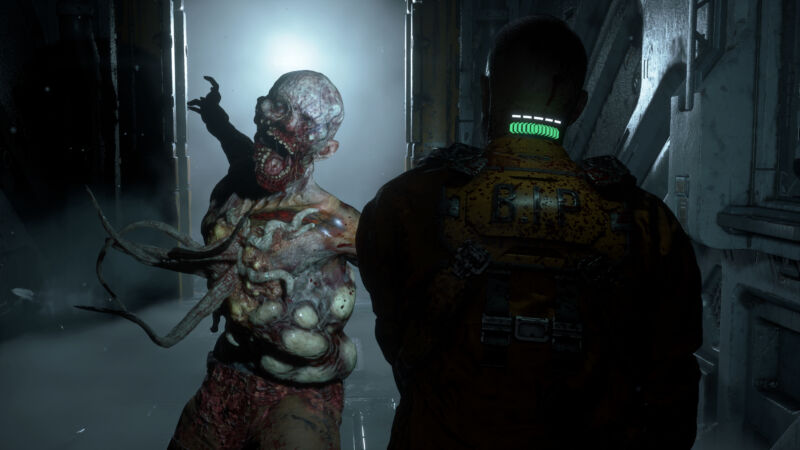
Hello, gorgeous.
Enlarge / Hello, gorgeous.

In the survival-horror genre, building tension and ramping up a sense of dread is the backbone of the experience. As a new sci-fi horror IP coming from the creators of Dead Space, The Callisto Protocol homes in on that creeping sense of unease as it forces you to confront its many grotesque threats head-on. When playing The Callisto Protocol, I always felt on edge, even during moments when I could have let my guard down.

The game takes some strong influences from its spiritual predecessor Dead Space and puts its own spin on a more visceral type of horror experience. That said, The Callisto Protocol‘s influences and genre are abundantly clear, and it occasionally falls back on familiar tropes and some frustrating combat encounters. Still, it maintains its solid, relentless poise as an unnerving yet still thrilling survival-horror game.

Welcome to Black Iron Prison

You play as Jacob Lee (Transformers’ Josh Duhamel), a far-future freelance cargo hauler with a murky past who crash lands on Jupiter’s titular frozen moon. After getting abducted by the ruthless head of security, Captain Ferris (Days Gone’s Sam Witwer), Jacob finds himself trapped in the mysterious and inhumane Black Iron Prison.

Eventually, a mysterious viral outbreak mutates nearly everyone inside, turning them into ravenous monsters called Biophages. Launching an escape with other prisoners, including the enigmatic anti-corporate activist Dani Nakamura (The Boys’ Karen Fukuhara), Jacob delves deep into Black Iron Prison and the moon’s lower depths to uncover what happened and make it out alive.

Right from the start, and despite the grotesque, over-the-top horror setting, there’s a palpable sense of realism to The Callisto Protocol’s story and visuals. This is hard sci-fi through and through, in the vein of Paul W.S. Anderson’s Event Horizon or John Carpenter’s The Thing (or the original Dead Space series, unsurprisingly). The game plays it straight with its unsettling vision of a future gone awry, which provides a rich environment to play in. Aside from rare one-liners, there’s not much levity, which keeps with the game’s bleak narrative and atmosphere.

Remember to breathe.
Enlarge / Remember to breathe.

As a cinematic, story-driven game, The Callisto Protocol keeps its pace and structure tight, focusing on Jacob’s ordeal as he’s ferried to different encounters and events in a mostly linear fashion. Aside from chapter breaks and more in-depth cinematics, you’re always viewing events from Jacob’s perspective. The performances from the main cast do an effective job of selling the plot’s sense of urgency and dark tone. While the story largely keeps its twists subdued and doesn’t venture far from its initial premise by the end of its 12-plus-hour campaign, it still succeeds as a solid vehicle for an intense and brutal horror game.

What truly sells The Callisto Protocol and its setting are the fantastic visuals and sound design. The presentation is incredibly effective at establishing mood, with small details combining together into the most impressive and effective survival-horror tapestry I’ve seen in a long time. This is especially evident in the gruesome design of the Biophages, as well as the numerous, wince-inducing death scenes.

When the visuals and sound design all work in concert, it creates a stark sense of dread and unease that sticks with you to the end. One section had me explore the depths of the prison while the power was fluctuating, creating moments of darkness for the enemies to move around unseen. Just trying to keep track of where these monsters were put me on edge. It was an unnerving section that really showcased the craft of the game’s impressive presentation.

While Black Iron Prison is slightly similar to the USG Ishimura from Dead Space, the setting comes into its own once the game’s scope expands, showcasing fantastic views of the outside frozen lunarscape and the darker depths of Callisto. The game’s linear progression and tight pacing cut down on backtracking. That said, there are still moments where you can venture off and explore hidden rooms, mainly to uncover some intriguing clues and audio logs about Black Iron Prison history and what came before.

https://arstechnica.com/?p=1901330


The Mandalorian season 3 has been delayed—but only a little

<img src="https://rassegna.lbit-solution.it/wp-content/uploads/2022/12/the-mandalorian-season-3-has-been-delayed-but-only-a-little.jpg" alt="A promotional image for the third season of The Mandalorian.”>
Enlarge / A promotional image for the third season of The Mandalorian.

After months of silence about it, Disney has finally revealed the premiere date of the third season of its first live-action Star Wars TV series, The Mandalorian. The new season will premiere on March 1, 2023.

That’s just a little bit later than what Disney said to expect the last time it made an announcement; the release window was announced to be February 2023 in a tweet in May.

Minor premiere date-slipping aside, it has been quite some time since the previous season in either case. The second season premiered back in October 2020. That said, it wouldn’t be accurate to say that it has been more than two years since we last spent time with the show’s two central characters, Mando and Grogu.

That’s because both appeared prominently in The Book of Boba Fett, a limited series that ran from December 2021 through February 2022. In fact, they were so prominent in part of that show that we called it The Mandalorian season 2.5 when we reviewed it.

Expect them to be the main focus of The Mandalorian season three when it premieres March 1, though; that point is driven home by the promotional image shown above and by the plot threads that carry over from The Book of Boba Fett and prior seasons of The Mandalorian.

The Mandalorian received generally positive reviews when it premiered—a stark contrast to the divided responses to most of the recent Star Wars movies. Thus far, the various TV series have been helmed by a different creative team than the movies. Accomplished director Jon Favreau and Star Wars animated series veteran Dave Filoni seem to have done a better job satisfying fans than some of the other directors, producers, and writers of the films.

Disney sought to spin off several additional live-action Star Wars shows from the series, several of which stem from characters who had guest roles in the second season, including the first live-action rendition of Ahsoka Tano from the popular Clone Wars animated series.

Not all of Disney’s now-numerous live-action Star Wars series are Mandalorian spinoffs, though. Earlier this year, Disney+ ran a limited series focused on Obi-Wan Kenobi that took place between the prequel films and the original trilogy. The same goes for the thriller Andor, which just finished its first season to widespread critical acclaim.

https://arstechnica.com/?p=1901454


Disney’s new neural network can change an actor’s age with ease

An example of Disney's FRAN re-aging tech that shows the original image on the left and re-aged rows of older (top) and younger (lower) examples of the same person.
Enlarge / An example of Disney’s FRAN age-changing AI that shows the original image on the left and re-aged rows of older (top, at age 65) and younger (lower, at age 18) examples of the same person.

Disney researchers have created a new neural network that can alter the visual age of actors in TV or film, reports Gizmodo. The technology will allow TV or film producers to make actors appear older or younger using an automated process that will be less costly and time-consuming than previous methods.

Traditionally, when special effects staff on a video or film production need to make an actor look older or younger (a technique Disney calls “re-aging”), they typically either use a 3D scanning and 3D modeling process or a 2D frame-by-frame digital retouching of the actor’s face using tools similar to Photoshop. This process can take weeks or longer, depending on the length of the work.

By contrast, Disney’s new AI technique, called Face Re-aging Network (FRAN), automates the process. Disney calls it “the first practical, fully automatic, and production-ready method for re-aging faces in video images.”

[embedded content]
A research demonstration video for Disney’s re-aging technology.

To build FRAN, Disney researchers randomly generated thousands of examples of synthetically aged faces between ages 18 and 85 using StyleGAN2. With that training data in hand, FRAN learned general principles about how a person’s appearance changes with age. Now that training is complete, it can apply those aging principles to a real actor in motion, frame by frame.

“Our network is trained in a supervised fashion on a large number of face image pairs showing the same synthetic and photorealistic person, labeled with the corresponding source and target ages,” the researchers wrote in a corresponding academic paper. By generating the training data synthetically, they bypassed the “seemingly impossible task” of collecting images depicting “a variety of identities, ages, and ethnicities in different viewpoints.”

The result is what Disney calls a “production ready” solution—which means it creates high-enough quality output to be used in a real film or TV show. It’s possibly the first AI solution of its kind that can dynamically alter an actor’s age on video despite variable expressions, lighting conditions, and viewpoints. The researchers also developed a user-friendly interface for FRAN that will allow artists to easily use the tool in a production environment.

Disney presented the research in a paper titled “Production-Ready Face Re-Aging for Visual Effects” on Wednesday and submitted it for inclusion at the 2022 ACM SIGGRAPH Asia conference in December. The paper’s authors include Gaspard Zoss, Prashanth Chandran, Eftychios Sifakis, Markus Gross, Paulo Gotardo, and Derek Bradley, all affiliated with Disney Research Studios in Zurich, Switzerland.

Considering Disney’s history with inserting computer-generated actors into Star Wars films and TV shows, including some that have been de-aged using CGI, we would not be surprised to see technology similar to FRAN widely used in future Disney productions, although no plans have been announced.

https://arstechnica.com/?p=1901037


Review: Intel’s “Raptor Canyon” NUC is a compact gaming PC without the stress

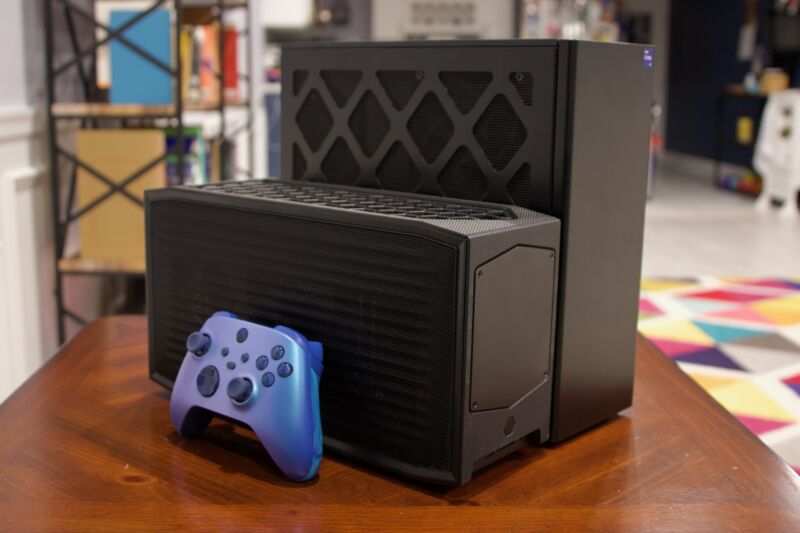
Intel's new "Raptor Canyon" NUC Extreme (rear) is a lot larger but also a lot more capable than previous NUC Extreme boxes (front).
Enlarge / Intel’s new “Raptor Canyon” NUC Extreme (rear) is a lot larger but also a lot more capable than previous NUC Extreme boxes (front).
Andrew Cunningham

Intel’s NUC (Next Unit of Computing) desktops rose to prominence about a decade ago by being small; they were essentially laptops without screens or batteries, crammed inside a tiny box.

But in the years since, Intel has flirted with larger NUCs. They have always been relatively small, but as they graduated from dedicated laptop GPUs to regular dedicated GPUs to even-larger dedicated GPUs, the NUC Extreme PCs have steadily grown to the point that they’re now encroaching on do-it-yourself desktops built around mini ITX motherboards, small SFX power supplies, and other size-conscious components.

Enter “Raptor Canyon,” the latest and largest in Intel’s line of desktop PCs. It replaces the “Dragon Canyon” NUC design and improves upon it by making room for longer triple-slot GPUs—up to 12 inches (or just over 300 mm) long. That’s not enough space for one of Nvidia’s massive RTX 4090 and 4080 cards, but it can fit just about anything else.

Raptor Canyon might appeal to people who want a powerful gaming desktop without putting in the legwork, research, and trial and error that comes with building a computer inside a tiny case. It’s a desktop that won’t make sense for everyone, and there are still some trade-offs you’ll make if you buy it. But the ability to fit more powerful GPUs means it will make a little more sense than the middle-of-the-road Dragon Canyon box did.

Maximizing space

The Raptor Canyon NUC Extreme box is just shy of twice the size of the old NUC Extreme—it looks like two old Dragon Canyon boxes stacked on top of each other. And Intel is using a lot of the same tricks to save space.

The heart of the NUC Extreme is the “Compute Element,” a proprietary motherboard with an LGA 1700 CPU socket, along with room for two laptop-sized DDR5 SODIMM sticks and three PCIe 4.0 M.2 slots for internal SSDs. That Compute Element plugs into the top of a separate proprietary board, which also has a PCIe 5.0 slot on the bottom for connecting the dedicated GPU (the old NUC Extreme also used a go-between board like this, but with the GPU slot next to the Compute Element slot instead of on the opposite side of the board).

Intel makes some allowances for standard parts; the unit’s 750 W power supply appears to be a standard SFX model that could be swapped out for another one, as are the 120 mm case fans that vent hot air out of the system’s left side. The side, top, and bottom panels are all mostly made of mesh for airflow’s sake. Our review unit had three 8-pin PCIe power connectors pre-installed and a 12VHPWR connector rated at 300 W. This isn’t quite enough power for an RTX 4080 or 4090, not that one would physically fit inside the case in the first place.

An audio jack, two USB-A ports, and a USB-C port on the top of the NUC Extreme.
Enlarge / An audio jack, two USB-A ports, and a USB-C port on the top of the NUC Extreme.
Andrew Cunningham

The Compute Element also has the majority of the computer’s ports, aside from the outputs on whatever GPU you use: one 2.5 gigabit Ethernet port, one 10 gigabit Ethernet port, two Thunderbolt 4 ports, audio jacks, an HDMI port (for integrated GPU output), plus six USB-A ports. Headers on the motherboard provide connections for a USB-C port, another pair of USB-A ports, and an audio jack on the top front of the PC for easy access.

One last upgrade over the old Dragon Canyon NUC design (for people who want even more storage than the M.2 slots can provide): An empty drive tray on the computer’s left side can fit a pair of 2.5-inch SATA drives or a single 3.5-inch SATA drive

What Raptor Canyon gains in functionality, it loses in flair. The Dragon Canyon box had some built-in LED lighting in the form of a glowing skull logo on the front (which I could take or leave) and glowing LED strips on the sides and front (which I think look nice). There are no LEDs on Raptor Canyon other than the white one around the power button, and the Compute Element doesn’t appear to include standard 3- or 4-pin RGB headers for people who want to switch the plain 120 mm fans on the side for RGB versions. I like the understated look, but people who want their PCs to light up with LEDs will be disappointed.

https://arstechnica.com/?p=1898102


Latest Super Mario Bros. movie trailer features a bold, new Princess Peach

Wahoo!
Enlarge / Wahoo!


It’s only been a few weeks since the first official trailer for the long-awaited Super Mario Bros. animated movie introduced Chris Pratt’s somewhat distracting voice for Mario. The movie’s second trailer, released today during a Nintendo Direct presentation Tuesday evening, focuses more on supporting characters and a good-versus-evil battle across the wide-ranging Mario universe.

The trailer leads off with Mario entering a massive coliseum and muttering a somber, breathy “let’s-a-go” unlike anything ever heard in a Mario game. He then launches headlong into a battle with Donkey Kong, who casually grabs the plumber by the head and slams him to the ground for a series of slapstick, Smash Bros.-style slaps.

Donkey Kong creator Shigeru Miyamoto notes that Donkey Kong’s design here has been altered for the first time since the ape’s appearance in Donkey Kong Country back in 1994. The new design, which looks a little more rounded and friendlier than usual, is intended to be “reminiscent of the original character,” Miyamoto said.

While Seth Rogen’s DK is practically silent in the trailer, Anya Taylor-Joy’s Princess Peach takes center stage as a confident monarch leading an army of reluctant Toads to battle against Bowser’s oncoming onslaught. “Together, we are going to stop that monster,” Peach says in a fearless, determined voice that starkly contrasts with the usual high-pitched helplessness exhibited by numerous voice actresses over the years.

[embedded content]
Let’s-a-go

The trailer shows Peach effortlessly wielding a battle ax and summoning flames from a fire flower. Mario, meanwhile, provides the requisite pratfalls as he gets pummeled by a Bullet Bill, falls alongside a precarious donut block, and has to remove a Cheep Cheep’s suction-cup grip from his face. Charlie Day’s Luigi is also on hand for a quick scene where he tries to play off the obvious similarities between him and his brother under questioning from a sinister Bowser.

There are a lot of other little touches for Mario fans throughout the trailer, such as glimpses of a Tanooki suit, brief cameos by Cranky Kong and an island full of Yoshis, as well as a brief mention of “a huge universe with a lot of galaxies [emphasis added]” that are all depending on the Mario crew.

But it’s the trailer’s conclusion that leans the heaviest into fan service—an unexplained scene where Mario drives a familiar-looking go-kart down a floating rainbow-colored road alongside dozens of ostensible allies. Mario’s “Wahoo!” following a quick kart-drift at the end of the trailer could be the best take on the character we’ve heard so far from Pratt.

During the short Nintendo Direct presentation, Miyamoto said the movie is “almost finished” but that he’s “not supposed to say anything else about it.” Hopefully, we’ll get a few more glimpses of other corners of Mario’s vast universe of characters and references before the film is due to hit theaters in April.

https://arstechnica.com/?p=1900814


It took nearly 500 years for researchers to crack Charles V’s secret code

Researchers have finally cracked the secret code of this 1547 letter from Holy Roman Emperor Charles V to his ambassador.
Enlarge / Researchers have finally cracked the secret code of this 1547 letter from Holy Roman Emperor Charles V to his ambassador.
Bibliotheque Stanislas de Nancy

In 1547, Holy Roman Emperor Charles V penned a letter to his ambassador, Jean de Saint-Mauris, part of which was written in the ruler’s secret code. Nearly five centuries later, researchers have finally cracked that code, revealing Charles V’s fear of a secret assassination plot and continued tensions with France, despite having signed a peace treaty with the French king a few years earlier.

The future Holy Roman Emperor was born in 1500 to Philip of Hapsburg and Joanna of Trastamara—daughter of Ferdinand II of Aragon and Isabella I of Castile in Spain. She was nicknamed “Joanna the Mad” because of her rumored mental illness and actually gave birth to Charles in a bathroom in the wee hours because she insisted on attending a ball despite clearly having labor pains. Generations of inbreeding conferred on Charles an enlarged jaw (mandibular prognathism), a condition that later became known as “Hapsburg jaw,” since it became even worse in subsequent generations. Charles also suffered from epilepsy and gout; the latter became so severe late in life that he had to be carried around in a sedan chair.

Charles V began inheriting various family titles at a young age, and his dominion eventually encompassed the Holy Roman Empire—which extended from Germany to northern Italy in the early 16th century and included Austrian hereditary lands, the Burgundian states, and the Kingdom of Spain. During his reign, he continued the Spanish colonization of the Americas and embarked on a short-lived German colonization effort, earning the label “the empire on which the sun never sets.” As his health deteriorated, Charles V abdicated as emperor in favor of his brother Ferdinand in 1556, although it was not legally recognized until February 1558. He retired to the Monastery of Yuste in 1557 and died the following September.

Charles V, Holy Roman Emperor, in a portrait by Titian.
Enlarge / Charles V, Holy Roman Emperor, in a portrait by Titian.
Public domain

Charles V’s three-page letter to his ambassador was written against the backdrop of a fierce struggle against the rising Protestant religion—the emperor was a devout Catholic who denounced Martin Luther as an outlaw at the Diet of Worms in 1521—and continued tensions with Francis I of France. Cecile Pierrot, a cryptographer with the Loria laboratory in France, first heard of the letter’s existence at a dinner in 2019 and finally managed to track it down two years later, where it was languishing in the basement of the historic library in Nancy. Pierrot promptly tried to crack the coded portions of that letter by categorizing the various symbols and hunting for telltale patterns.

The task proved rather daunting since the approximately 120 encrypted symbols didn’t employ a simple symbol-to-letter representation. Granted, most represented letters or combinations of letters, per Pierrot, but others represented entire words—for instance, a needle to represent the English King Henry VIII. Vowels that came after consonants were replaced by diacritical marks, except for the letter ‘e’ (the most commonly used letter), which the code makers cleverly avoided using as much as possible. And a few symbols didn’t seem to serve any function at all. “Simply putting it into a computer and telling the computer to work it out would have literally taken longer than the history of the universe,” Pierrot told BBC News.

"The first thing was to categorize the symbols and to look for patterns. But it wasn't simply a case of one symbol representing one letter—it was much more complex."
Enlarge / “The first thing was to categorize the symbols and to look for patterns. But it wasn’t simply a case of one symbol representing one letter—it was much more complex.”
Bibliotheque Stanislas de Nancy

The big break occurred thanks to historian Camille Desenclos, who directed Pierrot to several other coded letters written by, and sent to, the emperor, one of which turned out to have been informally translated. Pierrot described that letter as their “Rosetta Stone,” adding, “It was the key. We would have got there in the end without it, but it saved an awful amount of time.” The team hopes to identify and translate other letters between the two men in the coming years.

So what does the letter say? Pierrot and her colleagues have yet to make their full translation public since an academic paper is in the works. But the letter was written in the wake of Henry VIII’s death a few weeks earlier and a rebellion in Germany by a Protestant group called the Schmalkaldic League. Per Pierrot, Charles V expressed his wish to keep the peace with France in order to focus his resources on fighting the league, hoping to discourage the French and English from coming to the latter’s aid.

Charles V also mentioned a rumor that he was the target of an assassination attempt by an Italian mercenary named Pierre Strozzi, instructing his ambassador to find out as much as possible about the rumor’s veracity. (Apparently, it was idle gossip; no assassination plot was uncovered.) Finally, the emperor concocted a strategic response to the news that his nephew, Ferdinand of Tyrol, had been forced to flee a rebellion in Prague. He instructed Saint-Mauris to spread the word that Ferdinand had left Prague by choice to join his father—Charles V’s brother—on a campaign.

As for how history played out, Francis I died a few weeks after the letter was written, succeeded by his son, Henri II. Charles V eventually beat back the Schmalkaldic League but failed to stamp out Protestantism in Germany—or in France. Henri II formed an alliance with Protestant princes against the emperor in 1552, and Charles V eventually conceded the Peace of Augsburg (signed by his brother Ferdinand in his name) in 1555.

https://arstechnica.com/?p=1900355


Free ray-tracing update will overhaul Portal’s graphics on December 8

Valve’s first-person puzzle-platformer Portal was a genuine phenomenon when it was released back in 2007, and its core gameplay mechanics—solving puzzles and thwarting enemies by shooting interconnected portals onto various surfaces—still hold up today. But the game’s visuals haven’t aged as well, particularly its low-resolution textures; it was built using the same game engine and some of the same assets as 2004’s Half-Life 2, and there’s only so much that a modern GPU can do to spruce it up.

Enter Portal with RTX, a remastering of the game with ray-tracing effects and other improvements that Nvidia says will be available for free to all Portal owners starting on December 8. The update was originally announced in September alongside the RTX 4000-series GPUs. Developed by Lightspeed Studios, Portal with RTX doesn’t just add fancy lighting effects to the original but also includes “hand-crafted hi-res physically-based textures” and “enhanced high-poly models” that substantially overhaul the aging game’s visuals for the modern era.

As a DirectX 9 game from early in the Xbox 360 lifespan, the original Portal runs well on just about anything, including old Intel-integrated GPUs. But Portal RTX‘s system requirements are a lot higher; Nvidia lists the RTX 3060 as the minimum recommended GPU and says it can achieve “playable” 30 FPS frame rates at 1080p with DLSS enabled. Jumping to 60 FPS at 1080p requires an RTX 3080 with DLSS enabled, while hitting 60 FPS at 4K will require at least an RTX 4080 with DLSS 3 enabled. The CPU and RAM requirements also climb along with the GPU requirements (check the Nvidia-provided system requirements table below).

<a href="https://cdn.arstechnica.net/wp-content/uploads/2022/11/portal-rtx-requirements.jpg" class="enlarge" data-height="1080" data-width="1920" alt="Portal with RTX has substantially higher system requirements than the original version of Portal.”><img alt="Portal with RTX has substantially higher system requirements than the original version of Portal.” src=”https://rassegna.lbit-solution.it/wp-content/uploads/2022/11/free-ray-tracing-update-will-overhaul-portals-graphics-on-december-8.jpg” width=”980″ height=”551″>
Enlarge / Portal with RTX has substantially higher system requirements than the original version of Portal.

That said, the game can run on “all ray-tracing compatible GPUs,” including the older RTX 2000-series, AMD’s RX 6000 and RX 7000 series, and Intel’s recently launched Arc A-series GPUs. But the generally high requirements and the reliance on proprietary DLSS upscaling to achieve playable framerates may make it difficult to run on anything other than a modern GeForce GPU.

For anyone who can satisfy the hardware requirements, though, the revamped lighting and textures are a great excuse to revisit (or discover!) the weird world of Portal without also needing to revisit 15-year-old textures, character models, and lighting effects. The Nvidia RTX Remix modding platform used to remaster Portal will also be released to the general public at some point, making it easier to create updated versions of old DirectX 8 and DirectX 9 games with AI-upscaled textures and modern lighting effects.

Listing image by Nvidia

https://arstechnica.com/?p=1900598