Epic seems to have paid $10.5 million for Control’s PC exclusivity
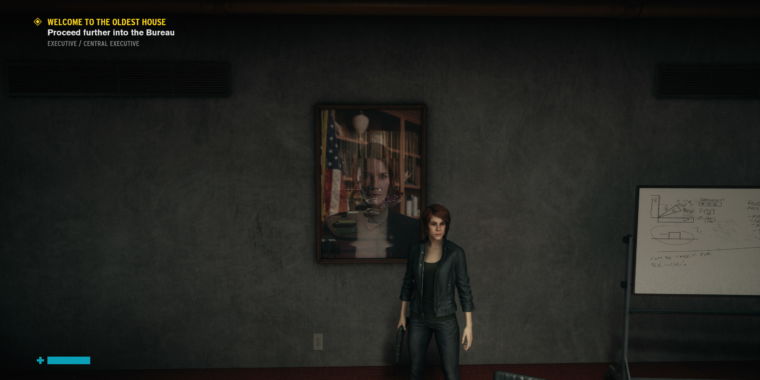
At this point, we know Epic is committed to paying a lot of money for exclusive games to attract players to its Epic Games Store. Now, we seem to know how much it paid up front for at least one of those exclusives: €9.49 million (about $10.45 million at today’s exchange rates).

The EGS exclusive in question is Remedy and 505 Games’ supernatural shooter Control, and the number in question comes buried in an Italian earnings report from 505 Games parent company Digital Bros. (as noticed by analyst Daniel Ahmad). That figure is listed in two tables in the document, corresponding to total revenue from Control and total revenue from the Epic Games Store, both for the period ending June 30, 2019.

“Revenue come[s] from the computer version of Control,” the report reads, according to a rough translation of a portion of the document. “The game was released on August 27 but the structure of the marketplace who requested the PC exclusivity has made possible to gain the revenue starting from this quarter.”

“We don’t comment on the terms of our deals,” an Epic Games representative told GameDaily in response to a request for comment. “Everyone should play Control; it’s really good.”

Back in July, Ooblets developer Glumberland revealed via blog post that the money it received up front from Epic represented “a minimum guarantee on sales that would match what we’d be wanting to earn if we were just selling Ooblets across all the stores.” Epic’s Sergei Galyonkin has also said that Epic’s exclusivity deals tend to be structured as minimum guarantees against future sales.

Assuming Digital Bros. got a similar deal, that means the publisher won’t make any additional money from Epic Games Store sales of Control until it earns back the €9.49 million upfront payment. For context, at $60 per sale and Epic’s standard 88% revenue share, Control would have to sell roughly 200,000 PC copies for Digital Bros. to meet that minimum (or more if the average sales price comes down due to discounts). Guaranteeing that revenue up front, though, helps Digital Bros. avoid uncertainty in its balance sheet and, in turn, helps Epic bring in new customers to its growing storefront.

Back in 2017, Digital Bros. revealed that it would be paying a royalty of 45 percent of net sales from Control to the developers at Remedy. And last month, Remedy CEO Tero Virtala said the company spent between €20 and €30 million ($22 to $33 million) to develop the game, which is also available on Xbox One and PS4.

“It’s been about three years now and at the peak of production we had about 100 developers on average,” Virtala added. “I can’t give you the exact number, but within one-to-two million units, we will have broken even. After that we are profitable.”

The PC version of 505 Games’s co-op adventure Journey to the Savage Planet will also be an Epic Games Store exclusive when it launches next January.

https://arstechnica.com/?p=1572453


Ad Astra: A journey upriver to meet your demons, internal and otherwise

[embedded content]
Brad Pitt stars as an astronaut in search of his long-lost father (Tommy Lee Jones) in Ad Astra.

On its own, the title of this week’s blockbuster release—Ad Astra, Latin for “to the stars”—doesn’t tell you much about what the film is about. The trailers haven’t done much to clarify, promising everything from family drama to violent car chases on the Moon.

None of the details provide much clarity, either. The movie was co-written and directed by James Gray, whose films have tended to be on the critically acclaimed, publicly obscure end of the spectrum and are set in realistic versions of the present. Yet this one is clearly set in a sci-fi future and is loomed over by enormous Hollywood figures including Jones, Pitt, and Donald Sutherland.

The movie holds together much better than that description might suggest. While there’s plenty here to nitpick, the film offers an interesting vision of the future and a plot that enables its focused human drama to become central to that future. What follows is a review that will attempt to spoil nothing that wasn’t already revealed in the trailers.

The First Family of Space Force

The film centers on Brad Pitt’s Roy McBride, an officer in a military organization that seems to be a descendant of the US Space Force. McBride is a highly respected officer in his own right—the film opens with him narrowly escaping death on the job—and the son of one of the Solar System’s great explorers (Tommy Lee Jones’ Clifford McBride) who was lost on an expedition to the outer planets.

The disaster that sets the film in motion is tied to that expedition—and suggests early on that Clifford might not actually be lost. The military sends Roy on a journey to Mars to try to make contact. What follows is a journey both in space-time and in the equally treacherous world of McBride’s own head. The former gives the film an episodic quality, as each step of the journey introduces new environments and characters. That propels the latter, as those steps reveal progressively more about Clifford. This complicates Roy’s view of himself, which developed in part through his father’s absence.

The episodic nature of the journey, along with the growing unease it creates, makes comparisons to Apocalypse Now inevitable. But Ad Astra is exceptional in how many other movies it instantly evokes (as opposed to having those parallels require later reflection). Pitt leaves Earth? 2001. The chaos that leads to a car chase on the Moon? Fury Road. Even Pitt’s emotional journey, mostly conveyed by him staring emotionlessly while processing things, brought to mind Ryan Gosling’s performance as Neil Armstrong in First Man.

This isn’t a bad thing; all of those are excellent movies in their own way, and Ad Astra evokes them rather than copies them. There’s also enough going on that’s uniquely its own that this feeling doesn’t seem intrusive.

The fictional universe this world takes place in is somewhat closer to the present than it is to something like The Expanse. Humans have a permanent presence on the Moon and a toehold on Mars, but the outer Solar System hasn’t seen our presence since the elder McBride’s vanished expedition. Transport is provided primarily by rockets that look like larger versions of some of the hardware we use, complete with strapped-on boosters that fall away on the trip to orbit.

Nitpickers beware

The filmmakers have clearly put effort into getting some of the physics right, despite large stretches of the film taking place in the minuscule gravity of interplanetary space. There’s also some remarkably consistent world building. Some of the procedures of spaceflight in the film were clearly derived from lessons of the elder McBride’s lost mission, but that isn’t obvious until we learn more about the mission halfway through the film.

Despite this care, there are enough glitches here to drive nitpickers nuts. By all appearances, the rockets are using standard chemical propulsion. Yet somehow, they get people to Mars in a matter of weeks, and the outer planets in a few months. There appears to be a vast underground reservoir under a rocket launch site on Mars, its presence left unexplained. Rocket launches don’t always flatten rocket occupants against the nearest seat or wall.

There’s also a few oddities in the plot itself. The writing is excellent in that it generally makes it clear what’s motivating the characters. But there’s not always a clear logical link to the actions those motivations lead to. The character played by Ruth Negga, for example, has a history intertwined with Pitt’s, but it’s not clear why that history would motivate her actions here.

Again, these things won’t dominate the viewing experience unless you’re prone to be bothered by them. For those that can set niggles aside, there’s a lot to Ad Astra. The acting is uniformly excellent, and the immersive, fully cooked special effects enabled a few really standout scenes. Perhaps more importantly, by the middle of the film, I really wanted to see how things turned out. And just as significantly, the results surprised me.

https://arstechnica.com/?p=1569257


How do you manage software and saves on a second Switch? It’s complicated

With the launch of the Switch Lite this week, a lot of families are going to be adding a second, more portable Switch to their household. This is definitely doable, but there are some important caveats to keep in mind, especially if you purchase downloadable games from the eShop.

To help clarify the whole process, here’s a quick run-down of how juggling software and accounts between multiple Switch units works in practice.

Setup and save data transfer

When you first turn on your second Switch, you’re offered the opportunity to import your account and user data created on another Switch. The system will ask if you currently have the Switch from which you want to import data and if you’ll be keeping that original system going forward.

Presuming the answer to both questions is yes, the system will ask you to link the new system to your existing Nintendo account. If that account isn’t linked on the original system, you’ll have the opportunity to do so before continuing. You can also create a new user on the system and link it to a Nintendo Account later.

At this point, Nintendo offers the ability to wirelessly transfer user information and save data from the original Switch to the new system. This seems pretty handy until you discover that “the transferred user and save data will be deleted from the source console.” That’s not ideal unless you plan on getting rid of the original console.

To copy your save data over while keeping it intact on the source console, you can’t just pop out the SD card and copy the files over (that will just earn you a warning saying the SD card is tied to another console and that it will need to be formatted to work on a new one). Instead, you’ll need to sign up for the Nintendo Switch Online service, which includes the ability to transfer cloud saves.

If you only want to perform this transfer once, you can just buy a one-month, $4 subscription and cancel it after you’re done. If you want to juggle save data between the systems in perpetuity, though, you’re better off with the $20 annual subscription (or a $35 family membership if you’re sharing with people using different Nintendo Accounts). That system is pretty seamless—I was able to start a game of Into the Breach on one Switch and start it at the same point on another Switch minutes later without any manual work.

It’s pretty frustrating to have to pay Nintendo and use its server resources for the privilege of simply transferring save data between two Switch consoles. That said, the Nintendo Switch Online service isn’t too cost-prohibitive, and it comes with access to online gameplay and a growing selection of classic NES and SNES titles for download.

Share and share alike

If you enjoy your Switch games on physical cards, sharing them between systems is pretty straightforward. Just pop the card out of one system and pop it in to the other.

If you download your Switch games from the eShop, things are a bit trickier. The good news is that those games are tied to your Nintendo Account, and you’ll be able to redownload them on the new system as long as it’s linked to the same account. The bad news is you have to perform this process manually, starting each download individually from a list on your Account Information page on the eShop. We hope you have a lot of time and/or bandwidth to spare for this cumbersome process.

By default, your new Switch will be designated as a “secondary” console on your Nintendo account, which imposes some important restrictions on how it can access your downloaded game library. For one, every time a secondary console starts a new game, it needs to connect to Nintendo’s servers to “[check] if the software can be played.” If you don’t have an active Internet connection handy at any moment, those digital games are functionally useless on the secondary system.

There is one small workaround to this issue. If you start a game on a secondary console when there’s Wi-Fi available, you can continue playing it even if you go somewhere without an Internet connection. This wrinkle seems to work even if you put the system into “Airplane mode” or if you turn off the screen for “Sleep mode” and resume play later in a different, Internet-free location. Be warned, though: If you close the game and try to start another, you’ll be required to perform the Internet check-in again (and if you turn the Switch off completely or drain the battery, you’re out of luck).

This online check-in is not required on the “primary” console for a Nintendo account. Any user on that system will be able to play games downloaded to that console without a server check-in. So if you have one “on the go” Switch that’s going to be played away from Wi-Fi and another that is usually staying at home, you’ll probably want to make your portable system the “primary” one on your Nintendo account. To do that, you have to deregister the primary system via the eShop or the Nintendo Account website, then register the other system as “primary” through the eShop.

Nintendo also imposes limits on how many systems can access a single downloaded library from a single Nintendo account at the same time. So if I’m playing a downloaded copy of Super Mario Odyssey on a secondary console and someone else starts a downloaded copy of Zelda: Breath of the Wild on the primary console using the same Nintendo Account, an error message will appear on the secondary console: “Play is being suspended. Downloaded software or downloadable content may be being played on another console using the same Nintendo Account.”

There is a way around this in some cases. If you put the primary console into “Airplane mode” before starting a game, it won’t be able to check in with Nintendo’s servers to put a “lock” on your library (but you will still be able to play the game without an online check-in). This method only works for offline single-player games, though; if you want to use any online features on the primary console, you can’t use this trick.

This method also works in reverse. You can start a game on the secondary console, turn on Airplane mode, then start a different downloaded game on the primary console without causing issues. If you try to change games on the secondary console, though, it will require another online check-in that could screw things up.

So if you want to play an online game of Mario Kart 8 Deluxe or Super Smash Bros. Ultimate across both of your Switch consoles, your options are pretty limited. You can start a new Nintendo account for one of the consoles, but you’ll have to repurchase any games you want separately for that account. You can also buy physical game card copies of specific games that you don’t want to trigger the online check.

We’ve tried to make this whole confusing mess as clear as possible here, but we’re sure there will still be questions and edge cases we haven’t addressed. Feel free to leave them in the comments, and we’ll do our best to help you out.

https://arstechnica.com/?p=1572137


Untitled Goose Game review: HONNNNNNK

Untitled Goose Game screenshot
Enlarge / *record scratch* *freeze frame* Yep, that’s me. You’re probably wondering how I ended up in this situation… of being a cantankerous, honking goose.

Ack! The tall human grabbed a broom! HONK!

No, no, no, no, no, run away, run away! I’m gonna lift my worthless wings (curse these loosey-goosey things) and trot away, trot trot trot. Don’t sweep me, ma’am…

OK. Whew. Gosh, in the madness of running away, I forgot that I have her carrot. It’s in my beak.

Why do I have her carrot? I just saw it and grabbed it. That was easy. That was fun.

Hi, I’m a goose, and this is my story

Maybe I should rewind a bit. I have the brain of a goose, after all. How big are geese brains? I don’t know.

I woke up in a quiet little field a little while ago. Green grass, some boulders, some trees. I shook my head from my nap, peeked out from a shrub, and began exploring. That immediately felt fun. (And it looked lovely, too. I took some photos. Don’t ask me how.) I saw a log, and I heard a voice tell me how to lower my neck to go under it. That was easy. Then I saw a tin can, and I got this sneaking sensation that I should bend down again and pick it up with my beak, which was also fun.

Then I saw a gate, but it was bolted shut. Hmm. I could tell I needed to duck my head to pull one post in the grass, then raise my head to yank another post. Clink, clank. Open!

… ha. I said “duck.” That’s a bird joke.

After waddling through the open gate, I heard a rustle of notebook paper, and I realized I had a list. Maybe it was under one of these worthless wings the whole time. Someone wrote on it in nice, cursive handwriting. Was it another goose?

I don’t really have a sense of time, “health,” or limits here. Those giant people who sweep at me with their hands or (ugh, the horror) a broom? They push me away, but I can always waddle back.

Also, I can take my sweet time and ignore the list, but it’s a comforting thing to refer to. It gives me purpose. Sometimes, it’ll tell me to do something simple: pick something up, then drag it somewhere else. These little things always seem to annoy people. Why do I have to be annoying? I don’t know why my list asks me to annoy everyone. My first list suggested that I drag a farmer’s rake into a lake. “Rake in the lake,” ha! Honk! I laughed. I dragged the rake far enough, dropped it into the water, and laughed again.

But other stuff on the list isn’t so clear. It asks me at one point to get the farmer to “wear a sun hat.” I see the farmer, who’s wearing a really small hat, and I see the sun hat, which is out of my reach altogether. Curse these flightless wings.

What else can I do? Think, goose brain, think. After knocking out some simpler tasks on the list, I notice that when I pluck a rose from the farmer’s garden, he keeps bending down to replant the rose. Honk! That’s it! I can reach the hat when he bends down, so I do that, run to some shrubs, and hide by lowering my neck. I am a chameleon. He cannot find me in here.

That is a lie. I am a goose. But the farmer still can’t find me, and thus, he covers his bald head with the sun hat. I hear a “swip” sound of a pencil dragging across my list. Success.

We’re talking about Mr. Rogers’ Neighborhood

[embedded content]
Untitled Goose Game launch trailer.

Whenever a page on my list is mostly filled out, a single, “final” task appears. (If I get hung up on or can’t complete one of the original tasks on a list, that’s OK. Something in this weird universe gives me some leeway.) Finishing this “special” task on each list opens some new door to a new town square, or gathering of people, or some other very non-goose zone. I also get another list of tasks, and they’re also all typically annoying. My brain is feeble, but I can read the room: whatever I’m doing here, it’s not typical goose stuff.

As I’m doing all of this, I hear music. When I see people going about their routines, a floaty piano melody plinks in the background, as if I should notice what they’re doing. And when I alarm someone, the piano ditty sounds a little scarier, like something is about to happen. I’ve always resented that my mother didn’t encourage my artistic side when I was a gosling. I could’ve been great at piano, Mama Goose. But mostly, I like these little piano melodies. They goad me along, like something out of one of those children’s television shows I’ve heard about.

That’s the thing I keep coming back to in my little goose brain: this all feels very whimsical. Being a goose isn’t all it’s cracked up to be. It’s not like something out of these video games that humans play, where you get to honk around, be silly, or fake like, I don’t know, a goat or a ceramic mug. Humans have it pretty lucky.

But when I have these lists magically appear under one of my wings, and I get to take my time figuring out the chain of events I need to pull off with my beak, with no worries about hunger, or survival, or snakes (HONK!), I revert to a simpler time. Everything looks, sounds, and feels like being a gosling again. That’s all I want, and I’ll concede that I didn’t need long to finish my goose quest. But it’ll stay with me for some time.

The Good:

  • You won’t find more pure whimsy in a 2019 game.
  • Puzzles strike a delightful balance between tricky and fair, all while letting players reset and retry in a “Super Meat Boy meets point-and-click puzzlers” way; we’ve really never seen anything like it.
  • House House’s knack for lively, cel-shaded characters looks marvelous in action and nothing like cheap Flash animation (meaning, don’t be fooled by the screenshots, which already look colorful and inviting).
  • Dedicated buttons for honking (which affects gameplay) and flapping your wings (which doesn’t).

The Bad:

  • Untitled Goose Game ends relatively quickly. But even that’s not so bad, considering the game achieves what it needs to in terms of puzzle variety and pitch-perfect annoy-the-humans silliness within its five-hour run.

The Ugly:

  • I’ve yet to find a hidden level where the hero gets revenge on the foie gras industry, which would’ve been nice.

Verdict: Honk! Ahem, I mean, buy.

https://arstechnica.com/?p=1570629


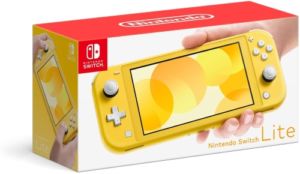
Nintendo Switch Lite is the best portable system Nintendo has ever made

When I first tried the Nintendo Switch nearly three years ago now, I summed up the experience by saying that “Nintendo has made a great portable console that just happens to connect to your TV rather than a great TV console that happens to be portable.” This week’s launch of the Switch Lite really underscores that claim, refining some of the design compromises that were necessary to allow to allow the Switch to… well, switch between TV and portable modes. Thirty years after the launch of the original Game Boy, Nintendo has created what is easily its most compelling portable console yet.

Big things, small packages

Switch Switch Lite
Screen dimensions 6.2″ diagonal; 1280 x 720 resolution 5.5″ diagonal; 1280 x 720 resolution
Unit dimensions 4″ x 9.4 ” x 0.55″ (with Joy-Cons) 3.6″ x 8.2″ x 0.55″
Weight Approximately 0.88 lbs (with Joy-Cons) Approximately 0.61 lbs
Battery life 2.5 to 6.5 hours 3 to 7 hours
Storage 32 GB internal (with SD card expansion slot) 32 GB internal (with SD card expansion slot)
TV connection Yes No
Removable controllers Yes No
Force feedback Yes (“HD rumble”) No
MSRP $300 $200
Nintendo Switch Lite product image

Nintendo Switch Lite

(Ars Technica may earn compensation for sales from links on this post through affiliate programs.)

Some of the most striking differences about the Switch Lite are apparent before you even open the box. The packaging is so small that a standard Switch would have trouble fitting inside, and the massive dock that accompanies the standard system would stand no chance. Inside the box, there’s a Switch Lite, a USB-C wall outlet charger, and a small FCC safety pamphlet. That’s it.

On paper, the differences between the Switch Lite and the original model seem pretty modest. It’s 0.4in (10mm) shorter from top to bottom (a 10% reduction), 1.2” (30mm) narrower side to side (13% reduction) and about 0.27lb (115g) lighter (about 30% reduction). In the hand, though, the difference in bulk is immediately noticeable. This is a system designed, from top to bottom, to be comfortable to hold for long periods of time. The reduced size also helps the unit fit better in a bag or back pocket (though the analog sticks still poke out annoyingly in the latter case).

The slight tackiness of the Lite’s matte finish also makes for a better handheld grip than the smooth plastic finish of the original. And the Switch Lite gains a subtler comfort advantage over the original by being housed in one continuous casing. Getting rid of those removable Joy-Cons—and the fiddly snap-on connection tying them to the main system housing—just makes the Switch Lite feel more solid in the hands.

Portability aside, the biggest improvement on the Switch Lite is the introduction of a traditional d-pad on the left side of the controls. The familiar cross-shaped, digital, directional inputs are the tiniest bit smaller than the ones you might remember from an NES or SNES pad. Regardless, it’s still a head-and-shoulders improvement over the round, disjointed directional buttons on the original Switch Joy-Con. The change causes an instant improvement in any game that requires quick digital precision, from 2D platformers to fighting games to reflex-based puzzle titles.

Aside from the d-pad, the Lite’s other controls are sized and arranged similarly to the original Switch. But because of the system’s reduced height, all of those controls end up pushed 0.4in (10mm) closer to the bottom of the system. That’s not much of an issue when using the left analog stick or face buttons near the top of the system. Using the d-pad or right analog stick, though, is a bit less comfortable than on the original Switch Joy-Cons.

For me, using these “lower row” controls required either crooking my thumbs a bit more tightly than usual, or flaring my hands outward a bit, meaning the bottom corner of the system no longer rested comfortably in the crook of my palm. It’s by no means a huge adjustment—and the Lite’s reduced weight means it’s not an uncomfortable one, even for extended periods. But it is noticeable.

Comparisons and compromises

Losing 0.7in of diagonal screen real estate for the Switch Lite ends up not being a huge sacrifice. In-game characters and text are still easily readable when holding the system a comfortable foot or two from your face. And the screen maintains the same 1280×720 HD resolution as the original Switch, meaning those screen elements end up the tiniest bit sharper in terms of real-world pixels-per-inch. Having such a large, high-definition screen in an extremely thin-and-light portable package is still a wonder after so many years of the low-res DS/3DS line (and having access to quality buttons and joysticks is still a wonder after so many years of mobile phone gaming).

Comparing portable performance, we couldn’t see a difference in frame rates or graphical fidelity between games running on the original Switch and the Switch Lite. Some titles still run at a slightly reduced resolution when compared to a Switch docked to a TV, but it’s the kind of difference that’s practically unnoticeable on the small screen.

The real feature that makes the Switch Lite such a compelling portable package goes beyond the technical and into the games themselves. It starts with the base of Nintendo exclusives like Super Mario Odyssey, Zelda: Breath of the Wild, Mario Kart 8 Deluxe, and Super Smash Bros. Ultimate, each arguably a system seller on its own.

Then there’s a veritable smorgasbord of titles from gaming’s recent and distant past. That includes: passable ports of recent hits like Doom (2016), Dark Souls, and Diablo III; recent indie hits like Celeste and Into the Breach; excellent HD remasters of mid-range retro classics like Katamari Damacy and Lumines; and a slowly growing selection of NES and SNES games available for an incredibly cheap annual subscription. And that just scratches the surface of what’s developed over the last few years into the best collection of portable games ever assembled on a single console. Going fully portable with the Switch Lite does require some compromises. The speakers are a little tinnier than those on the original Switch, and at full volume, the back panel of the machine can start vibrating noticeably. The rear of the Switch Lite also gets slightly warm to the touch after extended use, though the sides where you rest your hands remain cool.

Choosing the Lite means going without the Switch Joy-Con’s controller vibrations, though we went multiple pre-Switch decades without missing those features on portable consoles. The Lite also loses the original Switch’s (flimsy) built-in kickstand, meaning you’ll have to buy your own replacement stand if you want to play with friends on a tabletop (you’ll also need to buy your own Joy-Cons for that eventuality).

All told, these are not major compromises for a system that clocks in at a full $100 less than the original Switch.. The real question is whether you’ll be able to do without the one feature that gave the Switch its name: the ability to connect it to a screen.

Back in an October 2017 investor presentation, Nintendo shared data showing roughly 30 percent of the Switch audience plays “primarily” in handheld/tabletop mode (compared to just under 20 percent that play primarily docked). If you’re in that 30 percent (or feel you might be), the Switch Lite is a no-brainer must-buy system. If you simply must play your Switch games on the big screen at least part of the time, the Switch Lite can still serve as a cheaper, more comfortable secondary console for playing on the go.

The good

  • Lightweight yet solid build quality feels great in your hands
  • D-pad fixes one of the original Switch’s biggest omissions
  • Amazing library of Nintendo exclusives, classic re-releases, third-party ports, and interesting indie hits
  • $100 cheaper than the original Switch

The bad

  • Internal speakers are a little tinny
  • Spacing of lower controls can feel a bit annoying
  • No kickstand or rumbling controllers
  • It’s a Switch that can’t, er, switch to “TV console” mode

The ugly

  • Trying to squeeze the Switch Lite into a standard Switch dock for testing—it can’t be done without sawing off some plastic (and would be pointless in any case)

Verdict: The Switch Lite is by far the best portable system Nintendo has ever made. Buy it unless you can’t imagine losing the ability to play on your TV (in which case, still buy the original Switch).

https://arstechnica.com/?p=1571027


This new eco-friendly game packaging could save tonnes of plastic every year

Sega and Sports Interactive have announced that Football Manager 2020 will be sold in new eco-friendly package that uses much less plastic, and they’re pushing for the rest of the entertainment industry to follow suit.

The new packaging replaces the now-standard plastic DVD case used for most game discs with a folded, reinforced cardboard sleeve made of 100% recycled fiber. The shrinkwrap surrounding that package has also been replaced with a low-density LDPE polyethylene that’s highly recyclable. Even the ink on the cardboard has been changed out for a vegetable-and-water-based version (so it’s technically vegan if you’re desperate for a snack).

The new packaging does cost a bit more to produce—about 20 (British) cents per unit (or 30 percent), according to an open letter from Sports Interactive Studio Director Miles Jacobson. But those costs are somewhat offset by reduced shipping and destruction costs for excess units, he added. And as Spanish footballer Hector Bellerin says in a video accompanying the letter, “if there’s no Earth, there’s no money to spend.”

All told, Jacobson says the new packaging will save 55 grams of plastic per unit, or 20 tonnes across a print run of over 350,000. That’s an extremely tiny dent in the estimated 335 million tonnes of plastic that is produced annually worldwide. But Jacobson hopes it could add up to a sizable dent if the entire industry follows suit for the tens of millions of discs it produces each year (even as digital game downloads become more and more popular).

“We’re not the biggest game in the world,” Jacobson said. “Imagine what happens if every other game, every film company, every music company switches to this packaging… So I’m throwing down the gauntlet here to ALL entertainment companies who use plastic for their Blu Ray, DVD and CD packaging.”

Video game companies have made small moves toward reducing their plastic packaging use in the past. Still, it’s a far cry from the board game industry, where market leader Hasbro recently committed to remove all plastic from packaging by 2022. Meanwhile, the packaging for a tiny Nintendo Switch cartridge is still an ocean of wasted space (and plastic). Microsoft has highlighted the heavily reduced plastic use in the Xbox Adaptive Controller packaging in recent years, hinting that it may hold lessons for the future of its overall packaging design. “Sustainability thinking in our package design, and measuring those results on an annual basis, is a business decision,” Microsoft’s Phil Spencer told Ars. “We were mindful of extra plastic, paper, and material.”

[embedded content]

https://arstechnica.com/?p=1570441


Borderlands 3 is a lot more Borderlands, in ways both good and bad

We’ve had to wait seven years to get a new numbered game in the Borderlands series and almost five years since the (surprisingly fun) Borderlands: The Pre-Sequel that was supposed to hold us over in the interim. Now that we’re a few days past the retail launch (our review codes arriving only hours before the game went on sale) and have plowed a fair share of hours into the game, we’re struck by just how little Borderlands has changed in that intervening time, both for good and for ill.

On the good side, this means that Borderlands 3 still provides the same kind of slick, fast-paced, varied, and just-plain-smooth shooter experience that the series has always provided. As usual, the game provides a seemingly endless variety of weapons that, crucially, all look and feel entirely distinct from one another in a number of ways. Experimenting with new gear to find the correct mix of damage impact, accuracy, magazine size, reload rate, and special abilities is a never-ending and continually fascinating process.

Earning access to a new weapon that fits your style just right still provides that adrenaline hit in a way that can’t be matched by finding yet another identical shotgun in most other shooters. And many guns now have a secondary fire option, greatly increasing the level of personal tuning by offering new pros and cons.

That variety now also seems matched by the game’s environments. The neons and blues of planet Promethea’s urban guerrilla warfare provide a welcome change from the brown and gray desert environments Borderlands is generally known for (Pre-Sequel also showed a lot of promise on this score). Even in the relatively early going, it feels like there’s going to be plenty of new planets and side-quests to keep players busy if they want to hit that rarefied 100% completion.

Vehicle navigation is another treat, with a good variety of zippy ATVs to get you around quickly. These vehicles seem a little overpowered, if anything, with artillery and shielding that can easily barrel through any ground-based enemies. Speaking of overpowered, I’ve had a great time calling in Moze’s special skill to summon a massive bipedal “Iron Bear” mech to make quick work of huge groups of enemies. It’s a great change of pace when you’re tired of dodging incoming fire and hiding behind random bits of cover.

What hasn’t changed at all over the years is Borderlands‘s writing, which alternates artlessly between corny, cringe-y, and “extreme” in the ’90s skateboarder sense of the word. That’s not a huge change from previous games in the series, to be fair, but it comes off as more dated and juvenile with the benefit of seven additional years of perspective.

If you think the word “ass” being used ad nauseam is funny in and of itself or that a guy in his underwear who says “bro” over and over again is the height of comedy, you’ve come to the right place. Otherwise, most of the attempts at character moments feel forced and sophomoric in a way that would probably make the average teenager groan.

Sloppy around the edges

Even a few hours in, Borderlands 3 has shown enough enemy variety to keep the shooting from getting stale, and beasts and humans alike show a great deal of personality in their animation and sound design. These opponents show a decent propensity for finding cover, flanking your position, and even running away for a better vantage point when it suits their strategy. That said, there have been a few situations where I’ve noticed an enemy get confused and simply stand stock still uncovered in the middle of a firefight, only to break out of their revelry once hit with a bullet (at which point it is way too late for them).

That kind of sloppiness around the edges has popped up in a number of ways during our playthrough so far. At one point, our extremely annoying robot companion Claptrap got stuck in a loop repeating the same two quest hints every few seconds, even though the quest was already complete (this required restarting the game to fix). In another firefight, my AI companion ended up firing endlessly into an impervious and inaccessible building where our final opponent had somehow hidden herself (another restart fixed this, but not before I had to complete the entire fight again).

At other points, I’ve seen guide characters simply stop before reaching our destination (only to warp there later without explanation) or had my mini-map disappear from the corner of the screen for an extended periods. And that’s not to mention the choppy frame rates and occasional crashes I’ve seen on the PC build thus far.

Alone, none of these technical issue are mortal sins. Taken together, though, in the span of the game’s opening hours, the whole things feel a bit more unpolished than the long wait would justify.

In the run-up to Borderlands 3‘s release, Gearbox has repeatedly stressed a bevy of “quality of life” interface improvements it has made to the series in the intervening years. And for sure, things like easier access to fast-travel, one-button refills of all available ammo at shops, and the ability to pull yourself up to ledges or slide out of a run are all nice.

But these fixes also highlight the more anachronistic bits that still haven’t been fixed. The map system, for instance, is unable to show more than one objective location at a time. Instead, you’re required to scroll through a list manually. This is a problem when trying to map out the most efficient routes through a quickly growing list of kill-and-fetch quests.

The interface for comparing weapons is also a confusing mess, especially in shops, where seeing how new options compare to your current loot should be a data-visualization priority. Then there’s the way info boxes for new items will often show up at an inflated zoom level when you approach, cutting off important information above or below the border of the screen unless you position your character just right.

These may seem like nitpicks for a game whose core shoot-and-loot loop is just as fun and compelling as ever. But it’s these kinds of little things that are thus far getting in the way of allowing me to completely be reabsorbed by the world of Borderlands. Here’s hoping they end up feeling like niggling issues more than ever-present annoyances by the time my time with the game is complete.

Listing image by Gearbox Software

https://arstechnica.com/?p=1570039


NBC Peacock is Comcast’s dive into the crazy streaming-video fray

An artist's approximation of what today's newly announced <em>Saved by the Bell</em> reboot might look like, since it will include at least some original series actors.
Enlarge / An artist’s approximation of what today’s newly announced Saved by the Bell reboot might look like, since it will include at least some original series actors.
Aurich Lawson / Getty

The streaming fragmentation war continues apace, and today’s new contender comes from Comcast—specifically, its NBCUniversal subsidiary, which finally took the wraps off its NBC Peacock service on Tuesday after months of rumors.

The official site is currently scarce on details, but NBCUniversal has begun distributing a massive list of expected new and legacy series coming to Peacock when it launches in “April 2020.” In all, NBCUniversal estimates “15,000 hours” of content on that day-one launch. No pricing information is yet attached.

To review: Peacock is just the latest to join the likes of existing “mainstream” services Hulu, Netflix, Amazon Video, YouTube TV, and CBS All Access, as well as this November’s Disney+ and Apple TV+ and next year’s HBO Max. That doesn’t even count the proliferation of “niche” streaming services ranging from the anime-focused Crunchyroll to the proudly pretentious Criterion.

Brave old reboots

What makes up so many hours of NBCUniversal content? A brand-new Battlestar Galactica reboot is the obvious excitement point around these parts, of course. The other major sci-fi offering in today’s news is an adaptation of Aldous Huxley’s 1932 novel Brave New World, but its unproven cast and showrunner (David Wiener, who’s worked on a Walking Dead TV spinoff) don’t currently inspire a ton of confidence.

Two other Peacock-exclusive reboots headline today’s news: Saved by the Bell and Punky Brewster. Both promise to bring back those series’ original child stars. In Punky‘s case, actor Soleil Moon Frye returns to the titular role as a “single mom of three.” Meanwhile, Saved by the Bell promises to bring back at least two original actors, and… well, let’s just read the exact series pitch, because you wouldn’t believe me if I paraphrased it:

When California governor Zack Morris gets into hot water for closing too many low-income high schools, he proposes they send the affected students to the highest-performing schools in the state—including Bayside High. The influx of new students gives the overprivileged Bayside kids a much needed and hilarious dose of reality.

(Maybe they should call it Saved by the DeVos?) Weirdly, that series’ description doesn’t mention original Zack actor Mark-Paul Gosselaar, but rather cameo roles from Mario Lopez (Slater) and Elizabeth Berkley (Jessie). Simply for chaos’ sake, I’m going to keep my fingers crossed that they somehow cast Dustin Diamond (Screech) in the new Zack-as-governator role.

The rest of today’s list includes a mix of scripted, talk-show, and “reality” fare, with existing network series AP Bio getting shuffled to the Peacock side of things. Some new shows are simply listed as “pilot,” perhaps indicating that they’ll only get an April 2020 tease before having a fuller slate of episodes revealed later. We also don’t know if the service will dump entire series at launch for the sake of stream-binging or whether Peacock will operate more like a traditional TV network with a once-a-week drop for its comedy and drama series. Really, we have no idea how the service will work—or how parent company Comcast will get Comcastic in terms of required hardware, cable-TV subscriptions, or Comcast member discounts.

Classic series—and a few will have to wait

In terms of legacy series, we have the following list of English-language content expected to launch on Peacock in April. While many of these are NBC classics, a few of these series were made famous on networks like CBS and Fox, but NBCUniversal likely owns the distribution rights.

  • Bates Motel
  • Brooklyn Nine-Nine
  • Cheers
  • Chrisley Knows Best
  • Covert Affairs
  • Downton Abbey
  • Everybody Loves Raymond
  • Frasier
  • Friday Night Lights
  • House
  • Keeping Up with the Kardashians
  • The King of Queens
  • Married… with Children
  • Monk
  • Parenthood
  • Psych
  • The Real Housewives
  • Royal Pains
  • Saturday Night Live
  • Superstore
  • 30 Rock
  • Top Chef
  • Will & Grace

We already knew NBCUniversal was planning its own streaming service, as the company had announced in June that it had secured rights to airing The Office online—taking the series away from its current domestic streaming home of Netflix. Since that deal doesn’t expire until January 2021, today’s announcement confirms that Peacock will have to wait before stomping into Scranton. A similar exclusivity deal will prevent Parks & Recreation from launching on Peacock until October 2020.

One interesting tidbit buried in the news: three film studios are lined up to create “original movies” exclusive to the service. Those are all Comcast subsidiaries: Universal Pictures, Focus Features, and DreamWorks Animation. We can’t imagine Universal will relegate its upcoming Super Mario film to streaming-exclusive status, but we’ll have to wait to hear exactly what films they relegate to the Peacock bin.

All of this comes at almost the perfect corporate timing in terms of Disney acquiring a majority stake in Hulu this May, where series like Brooklyn 99 have resided for some time. Clearly, Comcast took its Hulu stake buyout as an opportunity to build its own rival paid service, and an 11-month period between series development and launch is standard for network television.

https://arstechnica.com/?p=1569551


Oh, frak: There’s another Battlestar Galactica reboot coming

The Battlestar Galactica cast as "The Last Supper" from 2007.
Enlarge / The Battlestar Galactica cast as “The Last Supper” from 2007.

Battlestar Galactica is coming back. Again.

The reboot of the series was announced today for Comcast’s upcoming NBCUniversal streaming service, Peacock, The Hollywood Reporter reports today.

The original Battlestar Galactica was on the air for all of one season, running from fall 1978 to spring 1979. A 2003 miniseries revisiting the core concept⁠—robots called Cylons are coming to kill us all, and that’s Very Bad⁠—served as the backdoor pilot to an eventual four-season run on the SyFy basic cable network (then called Sci Fi). The reboot series, which ran from 2004 to 2008, proved divisive among fans, inspiring passionate responses to both undeniably strong and extremely questionable writing choices throughout its run.

The new show will be “an updated, more modern look at the world” based on the 2004 edition, THR says, not the 1978 original. The show will be helmed by Sam Esmail, who is best known as the creator of Mr. Robot. The final season of Mr. Robot will be airing this fall, freeing Esmail up for other projects. He will reportedly also be heading up two other series for the streaming service, including an adaptation of the classic 1927 film Metropolis.

In a tweet posted after this story was originally written, Esmail clarified that the show is not a straight remake but instead something of a spinoff, “because… why mess with perfection? Instead, we’ll explore a new story within the mythology while staying true to the spirit of Battlestar. So say we all!”

You may now feel free to relitigate the pros and cons of the 2004 series in the comments. (The cast was perfect. Fight me.)

https://arstechnica.com/?p=1569527


Devs restore Modern Warfare’s mini-map after two days of beta backlash

How am I supposed to see around that tank like I have X-ray vision without my mini-map?
Enlarge / How am I supposed to see around that tank like I have X-ray vision without my mini-map?

After years of annualized releases, you might think the basic elements of Call of Duty—like the user interface and heads-up display—would be pretty standardized by now. But this weekend’s PS4 beta test for the new Call of Duty: Modern Warfare has been generating controversy thanks to its off-again, on-again, changed-again relationship with the mini-map.

Activision announced back in August that Modern Warfare would be the first game in the franchise since 2007’s original Modern Warfare to get rid of the mini-map in multiplayer. It was a bid to add more “realism” to the game, and the game’s beta test this weekend was most players’ first chance to see how that change affected the multiplayer showdowns. Without a mini-map to give players quick situational awareness, many pros found the new Modern Warfare felt too slow and cautious.

“No Minimap in Call Of Duty = Everyone on the map playing turtle,” FaZe Clan CoD pro Austin “Pamaj” Pamajewon tweeted about the move. “We need Minimap. Ain’t the same.” Matthew ‘Skrapz’ Marshall echoed the same sentiment in a short video rant (NSFW audio): “What is this? 98% of my gameplay is the fucking minimap! I can’t even play pubs! CoD needs it bro. Bad idea.”

Those thoughts just scratch the surface of the immediate pushback. An informal poll of Trevor “TmarTn” Martin’s Twitter followers found 76 percent wanted the mini-map back after over 25,000 votes.

The reaction didn’t go unnoticed. “Let’s talk about minimap. We hear you loud and clear,” Infinity Ward Senior Communications Manager Ashton Williams wrote on Reddit Thursday, after the start of the Early Access beta. “Along with your feedback and the data we’re continuously collecting, we’ll be experimenting internally with a few different options and will keep you updated if we make any changes that you might see during the Beta.”

That wasn’t just idle chatter, either. By Saturday, the mini-map had been turned back on, but with a slight twist in that it did “not display enemy fire.” That’s not a small change, either: the telltale red dots that show on a mini-map whenever an opponent shoots a non-silenced gun have been key to planning tactics and positioning in a fast-paced firefight. For Monday, the last day of the open beta, the developers went a step further in the UI tweaking and “[turned] off outlines that exist on your teammates within the world.”

“We’re still looking at different ways to work with the minimap, team outlines, and the compass,” Williams tweeted Friday evening, before the revised mini-map relaunched. “Let’s see how tomorrow goes and rest of the beta for weekend two.”

“We’ve been reading through your comments not only about the map itself, but also the compass and other UI elements on screen,” Williams added on Reddit Sunday, after the revised mini-map was live. “Reading your feedback has brought up some very insightful conversations here at the studio, so again, thank you.”

While many online beta tests simply serve as a glorified demo for a nearly finished game, this is the kind of base level gameplay tinkering that the concept was really designed for. It will be interesting to see how Infinity Ward synthesizes all the data and feedback from this A/B testing for Modern Warfare‘s launch October 25.

https://arstechnica.com/?p=1568853