How a basement hacker transformed Donkey Kong for the Atari 2600

[UNVERIFIED CONTENT] Atari CX2600A from the year 1980 made in Hong Kong.
Enlarge / If you’re unfamiliar with the name, “Atari 2600,” fellow kids, have a gander at this piece of hardware. (It actually worked, promise.)
Wahyu Ichwandardi / Getty Images
The following excerpt comes from Arcade Perfect: How Pac-Man, Mortal Kombat, and Other Coin-Op Classics Invaded the Living Room by David L. Craddock.

Sickly green light washed over the stubble and pale complexion of the man hunched in front of his computer monitor. Beside it sat a television, black except for five horizontal, crimson-colored bands running from top to bottom like lines on notebook paper.

Garry Kitchen closed his eyes, but the straight red lines were burned into the backs of his eyelids. Behind him came a steady pounding: pound—pound-pound-pound. He didn’t rise to the bait. He knew what he’d see. On the arcade cabinet’s screen, a giant ape the size of King Kong had just scaled a construction site made of straight red girders. With every stomp, the platforms had twisted and bent until they were slanted like ramps. Standing tall at the top, the ape intoned his grating, mechanical laugh.

Kitchen gritted his teeth. His replica of the construction site was almost perfect. Steel girders, a flaming barrel, a little man in red-and-blue overalls, an ape at the top.

There was just one glaring, maddening difference. His platforms refused to bend. That was going to be a problem.

Garry Kitchen watched the success of Mattel’s electronic games with interest. Just a few years ago he’d been a college kid chasing an art degree and working part-time at Wickstead Design Associates, a firm that built consumer products like calculators and other digital electronics.

“I ended up getting involved in microprocessor engineering because I kind of had to,” Kitchen recalled. “During this time period, I’d switched from art in school to electrical engineering. I was learning engineering on the job, so why not finish my degree in engineering? We were a small company, I got dragged into doing work of a much higher caliber out of necessity. There was one guy who could, but he wasn’t available.”

By 1978, consumer electronics were evolving from handheld electronics to Atari’s 2600 machine. While Atari had started out as the sole manufacturer of games for its console, Activision opened that December and developed games for personal computers and the 2600—a tacit admission to developers everywhere that anyone could write games for Atari hardware. Kitchen went to his bosses at Wickstead Design Associates and made his case.

“Look, electronic toys are being hurt in the marketplace by video games,” he said. They stared blankly. Video games? Kitchen pressed on: “Everybody’s jumping on this Atari thing. We should look into it.”

Kitchen asked around and received little feedback. Atari couldn’t stop Activision and other studios from making games for its device, but it didn’t have to help. There was no software development kit, no prototype console designed to write and test code. Activision’s founders only knew how to make games for the 2600 because they’d worked with it while at the company.

By that time, Kitchen had flipped his schedule, working at WDA full-time and taking engineering classes at night. He wasn’t making much money, pulling in $11,000 a year, but he enjoyed waking up every morning to solve new problems. Developing games for the 2600 was his latest and greatest challenge. Kitchen scraped together $1200 for an Apple II—the most expensive of 1977’s “holy trinity” of personal computers, including the Commodore PET and Radio Shack TRS-80—and dissected his new machine to learn its ins and outs. It ran on a 6502 8-bit processor, which he picked up on quickly having worked with microprocessors on electronic toys.

Once he wrote code, he knew he’d have to find a way to put it on an Atari 2600 cartridge. His solution was a custom-made board with a chip he’d soldered on to play Atari ROMs. Testing code required him to run a ribbon cable from the chip on his board to the teeth in the 2600’s cartridge slot.

Some vintage techie posing with an Apple II computer.(Credit: Ted Thai/The LIFE Picture Collection via Getty Images)
Enlarge / Some vintage techie posing with an Apple II computer.(Credit: Ted Thai/The LIFE Picture Collection via Getty Images)

Six months later, he’d completely reverse-engineered the 2600 using his jerry-rigged setup and written a game, Space Jockey. The program weighed in at two kilobytes, four times the size of Mark Lesser’s 511-byte handheld games, and was much more complex. A shooter, Space Jockey scrolled the screen to the right as the player shot down enemy ships. Kitchen took his creation to his bosses at WDA. He had daydreamed about Atari and Activision getting into a bidding war over Space Jockey, one of the first Atari games written outside either studio’s walled garden. Instead, Donald Yu, one of his bosses, published it through US Games, a separate entity they’d founded to publish electronic toys. Yu licensed Space Jockey to his company and prepared to put it on the market.

Before, when Atari had employed the only engineers capable of writing software for its console, games had appeared at a steady drip. The advent of Activision and engineers such as Kitchen increased the drip to a steady flow. Consumers, thirsty for new titles, lapped them up, but Garry Kitchen wouldn’t see a penny from any sales of Space Jockey when it released. His bosses, as the game’s publisher, would reap any rewards.

“You know,” he said to Yu and the others, “I should be making more money than $11,000.” Bankshot and Space Jockey had become two of WDA’s biggest products.

“We don’t think you’re worth that much,” they replied.

Kitchen quit in early 1982. He didn’t leave Wickstead Design Associates alone. His brother, Dan, went with him. They threw in with a couple of other engineers and set up shop in Garry’s basement. Within a few hours of their first meeting, it resembled a mad scientist’s lab.

The owner of the house Kitchen was renting had left the basement unfinished. Exposed pipes and wiring hung from the open ceiling. Several workbenches had been shoved against the walls, and the four engineers spread out, cluttering every surface with computers and other equipment. Everyone did their own thing. Some guys experimented with the Apple II. Others tinkered with Atari’s 2600. As yet, no one had a contract to develop anything. They were just tooling around until something came up. Coleco was the first to offer up something.

Founded in 1932 as the Connecticut Leather Company, Coleco pivoted to toys in the 1980s with Cabbage Patch Kids dolls. Now the owners were eyeing video games. Kitchen was confused when he received a call from a contract company offering him a deal with Coleco. “We have an in there,” the recruiter said, and explained that word had gotten around about Kitchen’s aptitude for programming 2600 software. “They’re looking for somebody to do a port of Donkey Kong on the Atari. Are you interested?”

Kitchen brightened. “Sure.”

https://arstechnica.com/?p=1568631
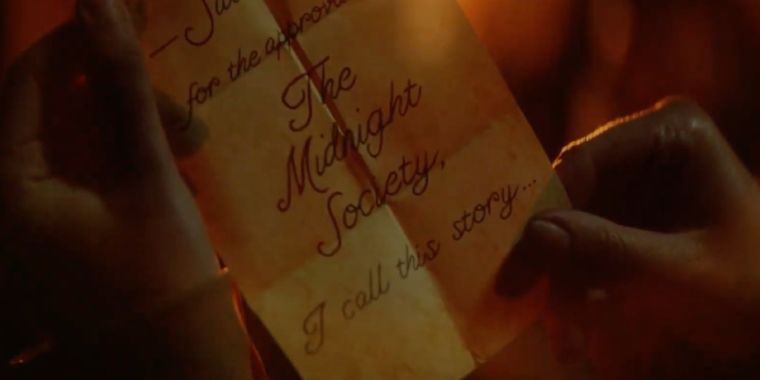


The Midnight Society is back in trailer for Are You Afraid of the Dark? reboot

[embedded content]
There’s a new Midnight Society of scary storytellers in the Nickelodeon reboot of Are You Afraid of the Dark.

Hot on the heels of this summer’s adaptation of Scary Stories To Tell in the Dark, Nickelodeon has dropped the first trailer for its reboot of the popular 1990s series, Are You Afraid of the Dark?, featuring a group of teens telling each other scary campfire stories that then come to life.

The original Are You Afraid of the Dark? was a Canadian “dark fantasy” (aka YA horror) anthology series that aired on Nickelodeon in the US from 1990 to 1996, followed by a second run from 1999 to 2000. At the start of each episode, the members of the Midnight Society would gather around a campfire in the woods, and one member would be chosen tell a story—typically an urban legend or something involving ghosts, werewolves, vampires, witches, and the like. The storyteller would announce the title and toss a handful of “midnight dust” into the campfire—producing white smoke for extra ambience—before launching into the tale.

The rest of the episode would dramatize the story for the viewers. There was a fair share of humor mixed in with the jump scares and creepy moments, often courtesy of several colorful recurring characters like mad scientist/sorcerer Dr. Vink (“Vink. With a va-va-va!”), and magic shop owner Sardo (“No mister; accent on the doh!”). And few fans of the original series will soon forget terrifying monsters like the Ghastly Grinner.

Despite a modest budget and correspondingly modest production values, the TV series was successful enough to inspire a separate series of books. Paramount announced plans to adapt Are You Afraid of the Dark? into a feature film in 2017, but the company removed the project from its production schedule earlier this year. That may have been because Nickelodeon had just announced a limited reboot miniseries (both Paramount and Nickelodeon are owned by Viacom).

Per the official synopsis, “Across the three hour-long episodes, Are You Afraid of the Dark? will follow members of an entirely new Midnight Society, who tell a terrifying tale of the Carnival of Doom and its evil ringmaster Mr. Top Hat, only to witness the shocking story come frightfully to life.” The cast includes Sam Ashe Arnold as Gavin, Miya Cech as Akiko, Tamara Smart as Louise, Lyliana Wray as Rachel, and Jeremy Ray Taylor—one of the breakout stars in the recent IT and IT Chapter Two films, where he played a young Ben Hanscom—as Graham.

Judging by the trailer, the rebooted series will keep the same framing device as the original, but this time, the stories the Midnight Society tells come to life (yes, much like Scary Stories). Rachel has been having nightmares about Mr. Top Hat and the Carnival of Doom, inspiring her to work them into the story she tells around the campfire when it’s her turn. But then an actual Carnival of Doom comes to town, populated by nightmarish figures from the teens’ prolific imaginations—including Mr. Top Hat (Rafael Casal). The teens soon find themselves locked in a supernatural battle to prevail against the monsters they’ve somehow conjured out of their own deep-seated fears.

Tonally, the trailer reminds me of the 1983 film, Something Wicked This Way Comes, an adaptation of the classic Ray Bradbury 1962 novel, featuring Jonathan Pryce as ringmaster Mr. Dark. That’s not a bad thing at all, given how well that film has stood the test of time despite underperforming at the box office upon its release. Here’s hoping this Nickelodeon miniseries avoids a similar fate.

Are You Afraid of the Dark debuts on Nickelodeon on October 11, 2019, with parts two and three to follow on October 18 and 25, respectively.

Listing image by YouTube/Nickelodeon

https://arstechnica.com/?p=1568419


Every game should copy Death Stranding’s “Very Easy Mode”

Settle in, grab some popcorn, and enjoy the game.
Enlarge / Settle in, grab some popcorn, and enjoy the game.
Aurich Lawson / Getty

Last week, the team behind Death Stranding discussed the game’s “Very Easy Mode” publicly for the first time. The mode, according to Director Hideo Kojima’s assistant Ayako Terashima, is designed for “[people] who usually don’t play game[s], movie fans or RPG fans. Normal or Hard Mode is for action game fans.” Kojima later added that the new mode was designed for “movie fans since we have real actors [starring]. Even [writer Kenji Yano], who never completed the 1st stage of Pac-Man, was able to complete the game on Very Easy Mode.”

The news was treated with its fair share of derision in certain corners. Some poked fun at Kojima’s not-so-hidden desire to be a movie director (as usual, the Onion did it first). Others said such a mode was below their dignity and only appropriate for babies (or for those lousy game journalists, of course).

But Death Stranding‘s Super Easy mode is part of a trend toward extreme difficulty tuning that’s slowly seeping into the industry at large. And, frankly, it’s a trend we hope picks up more steam going forward.

A brief history of easy modes

Games with multiple difficulty options have been around nearly as long as the industry itself, but the idea of a “super easy” difficulty—one that makes it practically impossible to lose—used to go by another name: the cheat code. The kind of key combinations that gave infinite health in Doom or free money in SimCity 2000, to pick just a couple of prominent examples, were technically hidden from players at the outset. These settings required special knowledge gleaned from magazines, websites, or word of mouth to unlock. By calling these modes “cheats,” the developers set them distinctly apart from the “standard” gameplay found in the front-and-center difficulty options.

That wall started to come down with the 2009 release of New Super Mario Bros. Wii. In that game, failing a level eight times in a row gives players the option to let a computer-controlled Luigi beat the level (or a portion of it) automatically. The feature has since become a staple of the Mario series, ensuring players can see the entire game even if they get stuck on a single difficulty portion.

In the decade since, a few other game makers have slowly offered modes that let practically anyone complete the game’s challenges, no skill required. Bayonetta included a “Very Easy Automatic” mode that was so simple it could be played with one hand. Mass Effect 3 let players choose their way through the story with minimal combat challenge in Narrative Mode. Nier: Automata‘s “auto mode” goes so far as to let the AI play for you so you can get through the game’s hundreds of endings (that’s only a slight exaggeration).

Sometimes you just want to wander around a lovingly detailed virtual Egypt without worrying about dying all the time.
Enlarge / Sometimes you just want to wander around a lovingly detailed virtual Egypt without worrying about dying all the time.

Some developers are quite up front about their intentions with these modes. Assassin’s Creed Origins introduced a combat-free “Discovery Mode” shortly after the game’s release, in part as an effort to create a “living museum” from the game’s detailed Egyptian recreations. Around the same time, horror game Soma introduced a “Safe Mode” designed to let players explore without “fear of failure.” Soma‘s developers wanted that mode “to not feel like a cheat, but for it to be a genuine way of experiencing the game.”

Other developers are using extremely low difficulty modes as a way of expanding accessibility. Celeste‘s assist mode is a brilliant example, letting players adjust gameplay speed, health, and control options without being patronizing to differently abled players. Other developers have banded together to create detailed guidelines for making game modes that can be enjoyed by players of practically any physical ability.

Even developers remaking retro games that were renowned for their punishing difficulty are realizing that it’s not necessary to force players through a quarter-munching/cartridge-value-extending death march anymore. The recent SNK 40th Anniversary Collection includes a clever “Watch Mode” that lets you view a complete playthrough of the game and jump in wherever you want. The Mega Man X Collection introduced an easy mode that made the series’ instant deaths less punishing. Other classic gaming collections, including the Super NES Classic Edition, include the ability to rewind a few seconds, so a single mistake doesn’t mean restarting an entire level.

Different strokes for different folks

Inherent to all these efforts is a key recognition: players can have very different motivations for playing games. It’s a fact perhaps best summarized by Penny Arcade back in 2005: “I play games to enter a trance state and experience other lives, he plays them to defeat the designer of the game by proxy. That’s a significant distinction.”

Often, this kind of distinction seems to require those different classes of players to seek out entirely different games. One group might revel in the challenge of a Cuphead or Dark Souls, while the other seeks to inhabit another universe with The Sims or No Man’s Sky. There are gradations between these two extremes, but for the most part, developers often seem like they’re picking one group or the other as their main target.

What more and more developers are now realizing is that there’s no reason their games can’t appeal to both groups. With a Super Easy mode in the mix, the players themselves can choose if they want a tough-as-nails test of skill and strategy or a more relaxing exploration of a detailed interactive world.

Some players and developers try to argue that the mere existence of a “Super Easy” mode option can ruin the game for everyone. “If you have a cover shooter and you switch it to easy and you don’t have to use cover, you kind of broke your game,” Assassin’s Creed 3 Creative Director Alex Hutchinson said in 2012. “You made a game that is essentially the worst possible version of your game… It’s like if I picked up a book and it said, ‘Do you want the easy version or the complicated version?'”

Before you can read this book, please fill out the following reading comprehension quiz...
Enlarge / Before you can read this book, please fill out the following reading comprehension quiz…

Personally, I tend to trust players to decide for themselves what level of challenge they find will give them the most enjoyment. Maybe sometimes the player wants to explore the art and environments of a game more than they want to cower behind cover waiting for a chance to pick off enemies. Simply having the option to do so doesn’t ruin the “traditional” experience for anyone who wants it. And if those players do feel compelled to try Super Easy mode just because it’s there, then maybe the “traditional” experience wasn’t really what they wanted after all.

More than that, Hutchinson’s attempted analogy to books is a little telling. We’d never tolerate a book that required readers to complete a short quiz before each chapter to ensure they had fully absorbed what came before. On the contrary, many classic books contain copious footnotes that make the content more accessible to a lay-reader (think of those Shakespeare collections with explanations for outdated terms).

Games, on the other hand, are the only major artistic medium that routinely requires the audience to prove they’re “good enough” before they can experience the entirety of the work. Plenty of game-makers seem perfectly content completely stopping players from even trying levels 5 through 25 until they’ve finished level 4.

You can make the paternalistic argument that this kind of gatekeeping is for players’ own good, or that it helps them grow their skills and appreciate the game even more. But players interested in a game for its story or its world-building deserve the ability to focus on the parts they enjoy without having to jump through some reflex-based hoops. “Super Easy” modes offer those players a new way into a game world without taking anything away from those who want their old-school challenges.

https://arstechnica.com/?p=1568435


Björk made music’s first “VR pop album”—she opens up about its heartbreak

Björk's metamorphosis within VR already looks trippy enough as a sample image. It'll blow your mind in VR.
Enlarge / Björk’s metamorphosis within VR already looks trippy enough as a sample image. It’ll blow your mind in VR.

“I often feel like some sort of [technology] bridge,” singer, songwriter, artist, and producer Björk tells me over the telephone from her home in Iceland. “I’m there in the middle, to translate nerddom to the normal people or something.”

Her mix of Icelandic accent and audible excitement makes every word sound full and round as she describes her personal push-pull relationship with high-end gadgets. For decades, Björk has been renowned for layering synthesizers and electronic effects on top of her indelible singing voice to push pop music’s boundaries (not to mention music videos full of cutting-edge CGI). Professionally, she’s relished new technologies that answer her constant art-making hunch of, “someone should have invented this by now!” But in her personal life, Björk is sometimes woefully behind. She admits, for instance, that she was nearly a decade behind everyone else in her life to use systems like SMS texting and Facebook.

“I like extremes,” Björk tells Ars. “I like things when they’re really acoustic—really, hairs and bones and blood and shit. And I like the extreme opposite, where the tool or the craft gets to be the queen and takes over.”

Björk’s dynamic relationship with technology comes into stark relief when considering the reason she’s calling Ars Technica: a project called Vulnicura VR. This is arguably the world’s first full “VR pop album,” and it’s now available on Windows PC via Steam for $24.99. It, too, feels like a technology bridge in the middle: an experience sitting between VR’s skeptical critics and its feverish admirers. It’s equal parts approachable and wild. Grounded in nature and simple VR filmmaking tricks, the album floats into the sky in experimental fashion like a neon-scorched phoenix.

In other words, it’s very, very Björk.

Walk with Björk along a beach of grief

For a certain audience of VR fan, Vulnicura VR isn’t necessarily new. The project first emerged publicly in 2015, when Björk released a 360-degree video for “Stonemilker,” the lead single on the 2015 studio album Vulnicura. That project came out at the beginning of VR’s tipping point, in terms of mainstream interest, thanks to cheap “VR shells” like Google Cardboard. Suddenly, anyone could convert a high-end smartphone into a VR viewmaster of sorts.

While most early VR experimenters threw a mess of unfocused visuals and noise at their 360-degree projects, Björk’s first VR video was different. It wasn’t a mess. It was simple, refined, and marked by cinematic restraint.

The crew, led by filmmaker Andy Thomas Huang, placed a single 360-degree camera on a beach where Bjork had written the song—and had grappled with her recent, real-life divorce. In the video, Björk dances around the viewer, often slinking towards them and making direct eye contact, before splitting into multiple versions of herself, all dancing slowly around the viewer. It’s a clever spin on the feeling of relationship unease: of becoming multiple dancing bodies, spun into anxiety and eager to know what’s wrong (“like milking a stone to get you to say it,” she sings). Meanwhile, a gray ocean’s waves approach nearby, hinting to the same unease that can be heard in the song’s aching, stripped-down string section. There’s no camera trickery, no perspective warping, and nothing that requires spinning around to look all over the place. It’s immersive, haunting, and memorable.

After exhibiting this video at Brooklyn’s Rough Trade record shop in late 2015 and seeing the public’s positive response, Björk accepted offers to build more VR videos for the album’s songs. This week’s Vulnicura VR app collects everything developed during the traveling exhibit’s multi-year run across the world, and it arrives at a time when owning a dedicated VR system isn’t as crazy as that sounded in 2015. “Weirdly enough, when I went into the VR album [four years ago], I allowed myself to dream that I’d be able to eventually release it on something as democratic as a gaming device,” Björk says. “But I decided that’d be a bonus. I couldn’t have that as an end target. I had to let the industry or whatever it is develop, and trust it. That, if I didn’t feel it was friendly to creating things, it was in my head. I had to change my attitude [to create something in VR], not the industry’s attitude.”

As she explains, the final version of Vulnicura VR is a many-headed beast from a production and technology standpoint. Its seven VR videos play back in four discrete “engines,” and they were built by seven different production teams. The range of styles, from simpler 360-degree videos to “fully 3D” worlds, were all bolted together by the end of 2016 with a barebones budget and an early understanding of how to optimize VR content. Björk repeatedly calls out the “DIY” and “punk” nature of the whole production, adding that she’d watch exhibit attendees in real life and solicit feedback to tweak each VR video after each exhibit.

That’s not me. That’s everyone. That’s the same Pagan little puppet you find in the Amazon, in some tribe.

“It’s one of the scariest journeys I’ve taken on,” Björk says about putting the full VR collection together. The source album, Vulnicura, follows a chronological structure as related to her real-life divorce. Björk considered that a benefit in some ways: a timeline to follow, which could add a useful anchor for anyone new to VR. “But I worried,” she says about following that structure. “Are people going to be bored shitless having headsets on? And in the beginning, people were throwing them off and shit. Can people even have headsets on for an hour?”

But the team’s VR hardware got better over time, and along the way, Björk and her production team benefited from the original installations’ biggest limitation. Every headset only had enough memory to hold a single video. Visitors had to wait in a line, watch one video, then wait in another line to watch the next, thus giving them breathing room between each. During this time, Björk learned that one of her early experiments—a sound mix that swirled around users’ ears in intense, 360-degree fashion—made viewers feel uncomfortable, not immersed. “So I started making everything still sonically with only one thing moving,” she says. “It’d be really intentional and obvious. That seemed to move people to tears, make them love it.”

https://arstechnica.com/?p=1564063


UK Parliament: Ban all loot boxes until evidence proves they’re safe for kids

UK Parliament sends a clear signal: loot boxes in series like FIFA are on notice.
Enlarge / UK Parliament sends a clear signal: loot boxes in series like FIFA are on notice.
EA / Machkovech

UK Parliament published a wide-ranging inquiry on Thursday looking into the rise of “immersive and addictive technologies” and what the British government should do to recognize manipulative, unsafe, and otherwise uncouth business practices in a rapidly changing industry. The report covers a lot: user tracking, cyberbullying, esports, social media, and on and on.

Tucked into this sweeping report is at least one wholly firm rebuke of a notorious games industry practice: the loot box. And as far as Parliament is concerned, loot boxes should be banned outright in any games targeted to minors.

“We recommend that loot boxes that contain the element of chance should not be sold to children playing games, and instead in-game credits should be earned through rewards won through playing the games,” the Parliament report reads. “In the absence of research which proves that no harm is being done by exposing children to gambling through the purchasing of loot boxes, then, we believe the precautionary principle should apply and they are not permitted in games played by children until the evidence proves otherwise.”

Not Kinder about it

This statement follows an awkward exchange between Parliament and an EA executive during a June hearing. At that time, EA Legal and Government Affairs VP Kerry Hopkins copped to the “surprise” factor attached to games’ loot boxes—which ask players to blindly pay for a wholly random in-game item, outfit, or reward. After comparing loot boxes to retail items like Kinder eggs (and never acknowledging that with those eggs, customers at least get a guarantee of some chocolate), Hopkins went on to call gaming’s loot boxes “quite ethical and fun [and] enjoyable to people.”

Thursday’s statement from Parliament recalls this specific description from Hopkins, then responds:

This [description] is noticeably out of step with the attitude of many of the gamers who contacted us following our evidence session, including those who vehemently rejected her characterisation of packs not as loot boxes but as “surprise mechanics.” One gamer called the company’s testimony to us “a bare face lie.” Another told us that the company has “heavily marketed and referred to their systems as ‘loot boxes’ for several years and… the mechanics of the system are exactly the same no matter what they choose to call it.”

Coincidentally, much of Parliament’s Thursday commentary on loot boxes revolves around EA, particularly the company’s top-selling FIFA series of video games. The commentary points out EA’s bullish admission that FIFA’s “Ultimate Team” mode, which revolves around wholly random drops of purchasable cards, accounts for hundreds of millions of dollars of digital sales revenue. After quoting EA sales figures, the report explains how the annualized game series routinely wipes players’ card collections when jumping from one year’s version to the next.

“One gamer told us that this cycle resulted in them spending ‘almost £800 to £1000 a year annually on FIFA,'” the report says. “Another gamer told us that because a pack’s contents ‘directly affects gameplay because some players are not as good as others,’ it incentivises people to keep buying packs in the hope of getting better players and, therefore, performing better in the game.”

The heart of this inquiry subsection can be found in a quote taken from a concerned UK citizen, which acknowledges, then obliterates, the gaming industry’s common “only cosmetic” defense of loot box elements: “Children are especially vulnerable because they lack the maturity to understand that these purchases are manipulative, and their parents may not understand that these purchases are entirely unnecessary.”

What’s to be done?

The inquiry takes a further scientific look at the psychology of game players enticed by loot boxes. After citing multiple studies, the inquiry concedes that a clear, causal link has yet to be established between loot boxes and problem gambling. Still, the current preponderance of evidence has at least convinced researchers that more transparency about loot boxes in games, and about their effective overlap with games of chance like slot machines, should be made apparent to game players and their parents—if not used as consideration to slap age restrictions on said games on par with gambling.

To buffer this argument about the gambling-like qualities of loot box acquisition, the study takes a lengthy dive into the black market of virtual item sales, particularly attached to Counter Strike: Global Offensive. “The volume, variety and sophistication of websites advertising opportunities to exchange in-game items for cash, indicates that to term such circumvention of regulation as ‘occasional’ understates the extent of this issue for certain games,” the report reads.

But gambling-like regulation of loot box practices is stymied by at least one current British law. “Purchasing loot boxes does not meet the regulatory definition of licensable gambling under the Gambling Act 2005 because the in-game items have no real-world monetary value outside the games,” the inquiry reads. (That’s one big reason the inquiry cites so much data about these in-game items having cash value in the black market.) The report thus suggests that “the Government should bring forward regulations under section 6 of the Gambling Act 2005 in the next parliamentary session to specify that loot boxes are a game of chance.” From there, either a rewriting of the law may begin, or regulators would at least be held to public scrutiny in explaining why they wouldn’t do so.

https://arstechnica.com/?p=1568087


Former Donkey Kong champ threatens to sue Guinness over record removal

Mitchell rides an oversized <em>Donkey Kong</em> machine in the Citrus Bowl parade.
Enlarge / Mitchell rides an oversized Donkey Kong machine in the Citrus Bowl parade.

Competitive video gamer Billy Mitchell is threatening “legal recourse” against Guinness World Records and the Twin Galaxies scoreboard if they don’t retract “defamatory statements” against him and reinstate his expunged video game high score world records within the next two weeks.

Last April, in response to a dispute raised by Donkey Kong Forum’s Jeremy Young, Twin Galaxies determined that a number of Donkey Kong score tapes submitted by Mitchell were not achieved on an “unmodified original DK arcade PCB [printed circuit board] as per the competitive rules.” The scoreboard management thus decided to remove all of Mitchell’s scores from its listings, including Mitchell’s heavily publicized record for the first perfect Pac-Man score. Guinness, which partners with Twin Galaxies to adjudicate video game-based records, followed suit.

At the time, Mitchell said he planned to provide witnesses and documents that would “show that everything was done professionally, according to the rules.” Mitchell has now attempted to do just that, sending Twin Galaxies a 156-page document dump outlining his disputes through a collection of screenshots, witness statements, and “technical evidence.”

Who judges the judges?

The somewhat disorganized and rambling evidence package is an almost overwhelming amount of information to take in, including data from the chain of custody of the tapes used in Twin Galaxies’ investigation, discussion of Nintendo technicians certifying Mitchell’s boards as authentic, and obscure technical details of how arcade (and emulator) gameplay can be captured on video. Twin Galaxies Head Custodian Jace Hall says the organization has “not had time to fully examine all of the material that has been sent us, so we need to take some time to digest.”

But the core of Mitchell’s more legalistic claims is summarized in a four-page letter sent to Twin Galaxies Monday on the letterhead of Manning & Kass, Ellrod, Ramirzer, Trester LLP. In the letter, Mitchell suggested that he was not provided a “fair opportunity to provide evidence to prove his innocence. Throughout the investigation, Twin Galaxies had a double standard. Specific evidence against Mitchell was accepted, while evidence of equal stature was rejected.”

Hall has disputed that claim multiple times, most recently this week in the very Twin Galaxies dispute thread that led to the score removal. “Mr. Mitchell as well as Walter Day were offered the option (but no obligation) to provide any information they felt relevant on numerous occasions and this is well documented in this thread, emails and text messages,” he wrote. “There was and is absolutely no ‘double standard’ as proposed by Mr. Mitchell or Walter Day, and no evidence was ever disallowed from the dispute thread.”

[embedded content]
Mitchell presents video of his purported high score performances in Donkey Kong and Donkey Kong Jr. in 2010.

But in a 12-page letter provided by Mitchell, Twin Galaxies founder Walter Day, who ran the scoreboard until 2014, claimed the dispute thread format made it “difficult to testify” because it created “an environment that was ‘howling’ for Billy’s blood and anyone who posted a statement that was even vaguely in support of Billy was attacked and publicly humiliated.” Day went on to suggest that information he provided to Hall in a phone call was disregarded and that Hall “moved forward with no regard for any information that didn’t automatically paint Billy as guilty.”

Hall addressed this accusation further down the TG dispute thread: “So far I’ve noticed that throughout the evidence package that is presented, there seems to be a basic and false underlying supposition that I was a person with an agenda against Billy making a dispute claim for some reason and therefore trying to support my personal claim against the score. This makes no sense at all and is completely untrue.”

Day suggested that the current Twin Galaxies administration has no authority to re-litigate his own confirmation of the record in the first place. “I would like to remind Guinness World Records that I, not the current Twin Galaxies administration, am the original verification source of all of Billy Mitchell’s world records, including Donkey Kong and Pac-Man,” Day said. “Since [Twin Galaxies’ decision] is Guinness World Records’ grounds for removing these scores, I, as the real original adjudication source and partner of 36 years, hope Billy Mitchell’s achievements and good name will be restored on this basis.”

Mitchell stands behind footage of his claimed 1.06 million point <em>Donkey Kong</em> game at a 2010 press conference (click for slow motion replay that seems to show a MAME screen transition).
Enlarge / Mitchell stands behind footage of his claimed 1.06 million point Donkey Kong game at a 2010 press conference (click for slow motion replay that seems to show a MAME screen transition).

Mitchell also suggested that the involvement of Donkey Kong Forum’s Jeremy Young in the Twin Galaxies dispute represents the involvement of an “openly inflammatory” and “biased third party” who “expressed his support of score removal on the very first day of the dispute; there was nothing unbiased about him. This, along with other examples, displays a substantial level of constitutional malice.”

Hall also disputed this characterization, writing in the thread that Young merely initiated the dispute claim and asked Twin Galaxies to adjudicate his evidence. “Twin Galaxies absolutely did not generate the dispute claim nor select any 3rd party investigator for this matter,” he wrote. “Once the dispute claim warranted it, Twin Galaxies began its own direct investigation with its own original Donkey Kong hardware and technicians. There were no 3rd parties involved with TG’s internal investigation.”

“It is important to understand the difference between a person that makes a claim and an entity that has to verify the veracity of the claim being made,” Hall wrote later in the thread. “They are not the same things.”

Finding the real tapes?

In his letter, Day also backed Mitchell’s assertion that his presentation of a taped 1,047,200 Donkey Kong performance, as recorded in the King of Kong documentary, was only filmed “for entertainment purposes” and never represented an official Twin Galaxies submission. That’s an important point, because there’s significant evidence that the gameplay shown on that tape was indeed produced by MAME emulation (a fact Mitchell himself has grudgingly semi-acknowledged in the past). Mitchell now says he has never submitted scores to Twin Galaxies via tape and only uses live performances as official evidence.

Former Twin Galaxies referee Robert Mruczek disputed Mitchell and Day’s claims about that video evidence, writing in the Twin Galaxies thread that “several months after the event [shown in the King of Kong], I ended up receiving in the mail from Billy Mitchell the “master” tape of that performance… Billy Mitchell absolutely used this videotaped performance as the basis of his 1,047,200 world record score… If need be I will swear in court that I received this ‘master tape’ from Billy Mitchell directly for the purpose of viewing and entering this score into the Twin Galaxies database.”

Mruczek’s assertion is backed up by a 2006 MTV interview which includes video of Mruczek screening Mitchell’s tapes.

Amid the continuing back and forth, Hall said the new legal threats brought by Mitchell may actually impact his ability to share certain evidence publicly going forward. That includes the contents of an unsolicited voicemail Hall previously said he received from Mitchell (and which Hall said is irrelevant to the adjudication, in any case). “The voicemail and other correspondence I have [from Mitchell] may become relevant in a legal procedure to demonstrably show things like character, frame of mind, proof of Twin Galaxies outreach, interaction towards me personally,” Hall wrote.

We’ll see later this month how Twin Galaxies decides to formally respond to Mitchell’s new information and whether Mitchell will actually follow through on his threatened legal action if the organization doesn’t comply. For now, though, it’s clear that Mitchell doesn’t intend to let his history as one of classic gaming’s most prominent high scorers to be erased without a fight.

https://arstechnica.com/?p=1568001


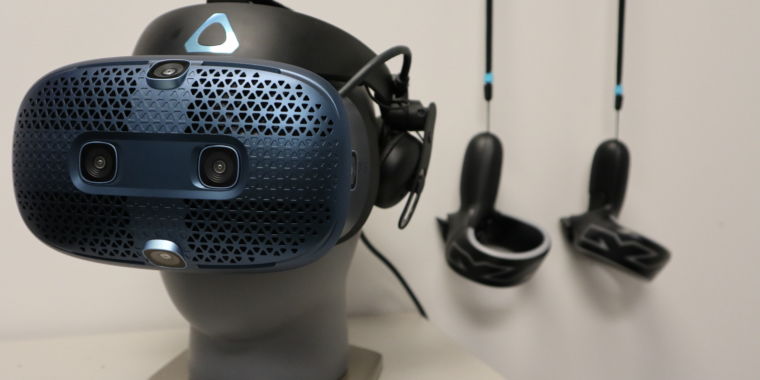
HTC Vive Cosmos VR: We have the price, release date, and first hands-on

SEATTLE—After nearly a year of teases, HTC has taken the full wraps off its next PC-VR headset, the Vive Cosmos. The company invited me to its American Vive headquarters to confirm a release plan: starting October 3, HTC will begin selling the full system for $699, and this system finally dumps the old HTC Vive “lighthouse” tracking boxes in favor of built-in, “inside-out” tracking cameras.

However, HTC also invited me to test the Cosmos in a few VR games, and while I didn’t test for long enough to put together a definitive review, I’m currently left wondering whether HTC’s latest VR system has what it takes to compete with either the pricier Valve Index or the best of the industry’s cheaper, inside-out tracking headsets.

One step forward, one step back?

On a technical level, Vice Cosmos introduces a new pair of VR lenses that take a one-step-forward, one-step-back move compared to similar lenses in the HTC Vive Pro. Cosmos reportedly has a slightly increased “combined” resolution for both eyes, up to 2,880 x 1,700 compared to the Vive Pro’s 2,880 x 1,600 resolution. HTC reps insist that this new panel additionally beefs up the subpixel resolution to reduce the inherent “screen door” effect seen in older VR headsets.

The thing is, Cosmos dumps HTC’s usual OLED panels in favor of fast-switching LCDs, a shift we’ve seen in a range of new VR headsets over the past year. Like the other good ones, Vive Cosmos’s LCDs indeed take advantage of a boosted subpixel resolution without suffering from ghosting, and they run at the VR industry’s standard refresh rate of 90Hz. But LCDs aren’t up to the same color reproduction snuff as OLEDs, and the Vice Cosmos headset I tested had arguably the most muted color palette I’ve seen in a 2019 LCD headset. I was directed to a “vibrant” color toggle to try and fix this, but it didn’t do the trick.

What’s more, I didn’t have newer VR panels to compare the Cosmos to at the event, just 2016’s original HTC Vive. So I can’t speak clearly to why the Cosmos’s high-resolution panels looked a bit smeary. Some text reproduction was surprisingly blurry in apps like the Museum of Other Realities, which might be an issue with how the headset handles its subpixel arrangement; the HP Reverb has a similar pixel-smoothing system in place, and that’ll likely be up to user’s preferences, in terms of how they feel about it.

Also, that resolution count doesn’t tell the whole story. The Vive Cosmos doesn’t use an extra 100 pixels of vertical resolution to increase its apparent field of view (FOV). Maybe I’ve just gotten used to the Valve Index, but the Cosmos felt a bit claustrophobic in practice, in terms of its “110 degree” FOV rating.

Inside-out questions

In order to dump the older Vive systems’ reliance on lighthouse tracking boxes, HTC has opted for a whopping six-camera array on the Vive Cosmos. Four sensors scan ahead, above, and below the headset on its front face, while an additional pair of sensors flanks the headset’s left and right sides.

But my own personal red flag went off when I asked HTC’s reps for my favorite testing app: Beat Saber. This game is a great measure of “normal” VR hand movement for a couple reasons: it doesn’t require waving hands behind the head (where cameras traditionally can’t track), but it still demands a mix of wild gesticulation and rapid movement to beat its rhythm-matching levels. HTC didn’t have a copy of the game handy, the reps said.

Instead, I was offered a sword-swinging app, which simply asked me to wave my hands ahead of me to parry and strike foes. This motion was decidedly less intense than what’s required from an “expert” Beat Saber song, yet I was still left feeling concerned. For one, something about the Vive Cosmos’s tracking array kept losing my hands for “acceptable but noticeable” split seconds on a regular basis.

This same issue stopped me from recommending many first-generation Windows Mixed Reality headsets, which also relied on built-in sensors and inside-out tracking. If this keeps up with the final, shipping Vive Cosmos, I’ll be singing the same pessimistic tune. I’m somewhat confident that HTC can fine-tune this issue ahead of the October launch, but it’s definitely noticeable for HTC’s first big inside-out tracking product.

Heft in the hands: Not necessarily good news

Worse, there’s something else amiss. HTC has finally seen fit to replace the old Vive wand controllers with a controller comparable to Oculus Touch, and that should be nothing but good news. It feels sturdy in the hand; it offers a nice array of joysticks, buttons, and triggers; and it maps 1:1 with Oculus’s solid standard array, plus bonus buttons that don’t get in the way.

But unlike Oculus Touch, Valve Knuckles, or even WMR, the Vive Cosmos controllers have been built to emphasize bright lights, which the Cosmos’s sensors look for in tracking your VR hands. That means this is easily the heaviest VR controller I’ve seen paired with a commercial-grade headset. WMR is the only other mainstream controller with built-in lights, but those controllers have tiny LEDs, as opposed to the big, lit-up patterns on the Cosmos pads.

After 15 minutes of testing the Vive Cosmos and maybe three minutes swinging a VR sword in my final demo, I felt pooped. I’m a pretty fit person with no shortage of waving-like-a-VR-idiot experience. I’m likely the high-end of users who can forgive required VR exertion. If HTC doesn’t come up with a solution for these controllers’ weight soon, they’re in trouble in terms of the wider market.

In good news, at least, the Vive Cosmos has modularity in mind, as can be seen in the above images. The first Vive Cosmos add-on face plate option, coming “early 2020,” will add a constellation of trackable dots for the sake of older HTC Vive lighthouse tracking boxes, should VR owners want to combine the Cosmos with existing hardware. As the above gallery hints, more face plates may be on their way.

And HTC has other existing Vive hardware in mind for Cosmos, particularly the Vive Wireless Adapter. An “attach kit” will be sold “soon” to adapt existing Vive Wireless Adapters to work with the Vive Cosmos, but no release date or price for that was yet offered.

And I was happy to see a revamped Vive Reality software suite introduced in my Cosmos demo. Think of it like another “VR home” where you can discover content, much like SteamVR Home. HTC’s new take neatly serves and advertises a range of games and apps as served by the Viveport subscription service.

It doesn’t take much to surpass the game-shuffling interface built into SteamVR, so HTC deserves props for cleaning this up with big, clear icons and simple controls to flip through so much software. Still, all Vive systems still rely on SteamVR as a launching hook for their games and software, and my pre-release Vive Reality test included one crash while trying to feed a Viveport app to SteamVR’s booting system.

Clearly, I have some reservations about Vive Cosmos’s VR potential. Oculus Rift S is currently a much snappier system in terms of reliable inside-out tracking. And Valve Index doesn’t cost that much more to blow Cosmos away in terms of LCD panel performance and FOV boosts. (Let’s not forget Oculus Quest, which still leads my “best VR headsets of 2019” list by more than a slim margin.)

We’ll plan to return to the Cosmos next month with a review. Until then, we’re keeping our VR fingers crossed that robust tests and last-minute tweaks will reveal that HTC has some secret sauce packed into the depths of its Cosmos.

Listing image by Sam Machkovech

https://arstechnica.com/?p=1567595


200 GameStop closures planned ahead of “a much larger tranche” coming

200 GameStop closures planned ahead of “a much larger tranche” coming

Major gaming retailer GameStop says it will be closing “between 180 and 200 underperforming stores” in the next six months. That statement comes following 195 store closures in the last 12 months and what the company says it expects will be “a much larger tranche of closures over the coming 12 months to 24 months.”

While that might seem like drastic news at first glance, even hundreds of store closures could have a relatively small impact on a chain that still has 5,700 locations worldwide. And GameStop CFO Jim Bell said in a recent earnings call that 95 percent of those stores still show positive earnings, suggesting the bottom hasn’t totally fallen out of the chain’s locations across the board.

GameStop is spinning the current set of closures as an effort to “optimiz[e] the store portfolio” through “de-densification” in certain markets that have multiple stores serving “overlapping trade areas.” That said, it’s always a bad sign when a retailer is planning on closing stores instead of opening new ones. And for GameStop, it’s a sign that comes after months of bad news, including major layoffs, executive departures, a failed corporate sale attempt, cratering earnings reports, and a stock price that continues to tumble.

The company’s latest quarterly earnings report didn’t include much that would suggest an imminent turnaround. Losses were more than triple what they were for the same period a year ago, and sales were down 14.3% year-over-year (or 11.6% when you factor out stores that were closed in the interim). That includes a 5.3% reduction in software sales, a 17.5% reduction in pre-owned sales, and a whopping 41% drop in hardware sales. The only bright spot was collectible sales, which were up 21% to represent the 15th straight quarter of growth in that category.

As of this writing, GameStop stock was down 8.5% from Monday’s close to a price of $4.65. That price is down over 70% from a year ago and off roughly 92 percent from a high point in late 2013.

Bell admitted in the earnings call that these are “results that admittedly were below what we would want,” and warned investors to “expect our year-over-year sales to be down over the next three or four quarters.” But the company also remained hopeful that things would start to turn around late next year, when players would come to GameStop for new consoles from Sony and Microsoft (both of which, Bell pointed out, have disc drives that could help drive additional retail game sales).

“In our view, our current sales performance reflects the natural end of console cycle that will rebound with console launches later in 2020,” GameStop CEO George Sherman said.

The turnaround plan

GameStop isn’t just counting on new hardware to buoy its bottom line, though. On the earnings call, Sherman outlined a multipoint plan to burnish the company’s “credibility with customers as the only retail outlet for the aggregation of all things video gaming and pop culture… [and] the video game authority in countless neighborhoods around the globe.”

The first point in that plan is becoming more efficient. That means closing stores but also streamlining the number of products (or SKUs) in each location to focus on those that can be “highly productive… from a demand perspective.” In other words, expect fewer examples of niche games and collectibles on the shelves going forward.

Beyond just selling games, though, GameStop wants to transform itself to create “a social and cultural hub of gaming within each GameStop store.” That means testing more “try before you buy” experiences in stores, planning in-store gatherings around esports viewing, and creating other “high margin immersive experiential gaming content” designed to bring gamers together in a physical space. Not every GameStop location will be completely remodeled by this initiative, but key locations in certain markets will be testing out more and more ideas along these lines, Sherman said.

The most interesting pillar of GameStop’s turnaround plan, though, might be its efforts to leverage its sales force into better partnerships with console makers. “Our 50,000-plus knowledgeable associates worldwide remain the only full-time dedicated sales force in the video game industry,” Sherman said, highlighting how those sales associates can “bring an enormous amount of value to console makers.” Sherman said that GameStop is working with those console makers to create a new sales model that “rewards us across the customer acquisition and lifetime value spectrum.”

That’s all pretty vague, but it sounds like GameStop is looking for a better deal from console makers when it comes to pushing their hardware—one that perhaps reflects all those digital sales the console maker will get after the buyer takes the console home. It’s easy to envision GameStop pushing for new deals where each console maker gives the retailer (and its sales associates?) a bonus for selling their hardware instead of the competition. Maybe GameStop could play the console makers against each other in this, asking each one to provide better “motivation” for its sales force to sell its specific console.

That’s just a fun bit of speculation for now, of course. What’s clear, though, is that GameStop is not giving up without a fight, and it seems willing to leverage its existing scale and sales force to try to help revive a moribund business based around selling games on discs.

https://arstechnica.com/?p=1567195


Apple releases first trailer for new sci-fi series See, starring Jason Momoa

[embedded content]
Aquaman star Jason Momoa plays the lead role in See, a new sci-fi series on Apple TV Plus.

At today’s Apple event, Apple CEO Tim Cook introduced the first trailer for See, an original 10-episode sci-fi series for the company’s forthcoming streaming service, Apple TV Plus.

“This morning, I want to share with you one of the most imaginative, thrilling, and thought-provoking dramas ever,” Cook said. “See stars Jason Momoa and takes place hundreds of years into the future in a world without sight,” adding, “We worked with blind and low-vision cast, crew, and consultants for authenticity.”

Per Variety, “See takes place in the distant future, after a deadly virus decimated humankind. Those who survived emerged blind. Jason Momoa stars as Baba Voss, the father of twins born centuries later with the mythic ability to see. He must protect his tribe against a powerful yet desperate queen who wants the twins destroyed.”

The series is created and written by Steven Knight, of Peaky Blinders fame, and directed by Francis Lawrence, who directed 2007’s I Am Legend and three films in the Hunger Games franchise (Catching Fire and Mockingjay Parts 1 and 2). Judging from the trailer, he’s bringing that same singular dystopian vision to See.

“Centuries from now, almost all humans have lost the ability to see,” we hear a child say in a voiceover. “Some say sight was taken from them by God to heal the Earth. For the few who remain, vision is only a myth.” So what happens when the power of sight returns unexpectedly, with the birth of twins? One might think that would be a good thing, but many now deem sight to be magical or evil.

“The evil of light once almost destroyed the world!” a queen declares.  So Baba Voss and his tribe go on the run with the sighted children, knowing others will come for them—unless they give up the babies. And if you think Jason Momoa is going to go along with that, guess again. “These children are a gift,” says Baba Voss. “They will bring knowledge. They will begin a new world.” So the tribe will fight as one—as a family—to protect the children, and their own future.

See is expected to debut alongside the soft launch of Apple TV Plus on November 1, 2019. The service will cost $4.99 per month. It will be available on the Apple TV app on iPhone, iPad, Apple TV, iPod touch, Mac, and other platforms.

Listing image by Apple

https://arstechnica.com/?p=1565549


Danny Torrance goes back to the Overlook Hotel in Doctor Sleep trailer

[embedded content]
A grown-up Danny Torrance (Ewan McGregor) must face the ghosts of his childhood to defeat a new evil in Doctor Sleep.

Fans of the 1980 film The Shining will be going back to the Overlook Hotel with a grown Danny Torrance in Doctor Sleep, the big-screen adaptation of Stephen King’s bestselling novel. It’s written and directed by Mike Flanagan, who also wrote and directed last year’s stunning adaptation of The Haunting of Hill House, so I have high hopes for what he’s done with Doctor Sleep.

Doctor Sleep explores what happened to young Danny Torrance as he grew into adulthood after the horrifying events of The Shining. King published The Shining in 1977, and it became his first hardback bestseller. In the 2013 follow-up novel, a grown-up Danny struggles to recover from the psychological trauma he experienced at the Overlook Hotel. He has learned to contain the ghosts in a mental “lockbox” but still spends years as an alcoholic, just like his father—the drinking suppresses the shining—wandering from town to town.

Now in his 40s, Dan finally gets sober and settles in a New Hampshire town called Frazier. He gets a job at a hospice, where he uses his psychic gift to comfort dying patients, earning him the moniker Doctor Sleep. Dan also forms a psychic connection with a young girl, Abra Stone, whose psychic powers are even stronger than his own. When she witnesses the murder of a boy by members of a cult of psychic vampires called the True Knot, she turns to Dan for help. The True Knot members feed off “steam,” a psychic essence that comes from people with the shining who die in pain—a lot of pain, and the longer the torture lasts, the better the steam. The True Knot targets Abra, believing they can torture her indefinitely to give them a steady supply. It’s up to Dan to protect her.

The film looks to follow the book’s plot fairly closely, per the official synopsis:

Still irrevocably scarred by the trauma he endured as a child at the Overlook, Dan Torrance has fought to find some semblance of peace. But that peace is shattered when he encounters Abra, a courageous teenager with her own powerful extrasensory gift, known as the ‘shine.’ Instinctively recognizing that Dan shares her power, Abra has sought him out, desperate for his help against the merciless Rose the Hat and her followers, The True Knot, who feed off the shine of innocents in their quest for immortality. Forming an unlikely alliance, Dan and Abra engage in a brutal life-or-death battle with Rose. Abra’s innocence and fearless embrace of her shine compel Dan to call upon his own powers as never before—at once facing his fears and reawakening the ghosts of the past.

This latest trailer opens with a voiceover by Dan (Ewan McGregor): “When I was a kid, there was a place. A dark place. They closed it down and let it rot. But the things that lived there, they come back.” We see him move to Frazier, and meet Abra (Kyliegh Curran), who tells him about the murderous activities of the True Knot, headed by Rose the Hat (Rebecca Ferguson). Dick Halloran makes an appearance (now played by Carl Lumbly), who tells Dan, “These empty devils, they’ll eat what shines. And they’ve noticed that little girl.”

They’ve noticed her because Abra has done a bit of psychic sleuthing, and Rose picks up on her presence. It’s a classic scene in the book: Abra senses Rose sensing her, and screams, “Get out of my head!”

And she’s so powerful, it knocks Rose flat. This naturally just makes Rose all the more keen to tap into Abra as a source of perennial steam. “Yes, you run, dear,” we hear her say. “And then I will find you and you will scream for years.”

As in the first trailer, which dropped in June, we get several direct callbacks to Kubrick’s original film: a young Danny riding his tricycle through the Overlook Hotel’s maze-like hallways, the creepy twins, the ghost in the bathtub, and of course, the torrents of blood pouring out of the hotel elevators. But this time, we see Dan and Alba facing off against Rose the Hat, who might not be fully prepared for the horrors the Overlook could unleash.

Doctor Sleep hits theaters November 8, 2019.

Listing image by YouTube/Warner Bros.

https://arstechnica.com/?p=1564165