What Sega’s Dreamcast launch keynote would have looked like, 20 years ago
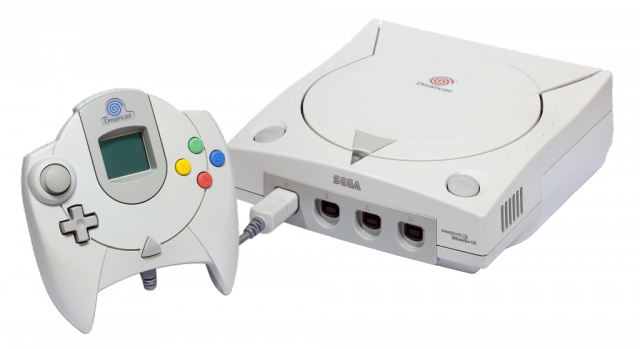
For a brief period 20 years ago, this was console gaming's state-of-the-art.
For a brief period 20 years ago, this was console gaming’s state-of-the-art.

We originally ran this piece five years ago, on a day when the 15th birthday of Sega’s Dreamcast coincided with a major Apple keynote event. In honor of the Dreamcast’s 20th birthday today, we thought we’d revisit this fun “alternate history” take on how the Dreamcast’s launch impacted the world of gaming and continues to influence it to this day.

While seemingly the entirety of the Internet was off paying attention to Apple announcing its new phones and watch, something weird was happening to my Twitter feed. Apparently, someone had messed with my settings so that my feed displayed tweets on a 15-year delay for a couple of hours. That means that, instead of Apple tweets, my followers got to go back in time and experience a portion of my liveblogging from Sega’s Dreamcast launch-day keynote address from September 9, 1999.

We figure this technical snafu is as good an excuse as any to look back on the Dreamcast as it existed 15 years ago today, when it hoped to be the savior of a once-proud Sega still recovering from the failure of the Sega CD, 32X, Saturn, et al. Below are my live tweets as they were written 15 years ago, along with some accompanying commentary that has the benefit of a decade and a half of hindsight.

[Editor’s Note: For those with defective sarcasm genes (or just those feeling a little bit slow today), I will state up front that these are not actually tweets from over six years before Twitter even existed. Sega didn’t even have a keynote-style launch event on 9/9/99. I just thought these somewhat jokey “livetweets” would be a fun way to reminisce on the launch of Sega’s last console, and reflect on how much technology and the gaming market has changed in the intervening period.]

Yes, I know there’s a typo in here. It was actually Soulcalibur (a.k.a. Soul Edge 2) that launched with the Dreamcast in the US, not Soulcalibur 2. In any case, I actually probably undersold the home conversion a little bit. The Dreamcast version actually looks significantly better than the System 12-based arcade version, which has more in common with the original PlayStation. Consoles had been aiming for “arcade perfect” for years, but the Dreamcast ushered in a new era of surpassing arcade perfection.

Unfortunately, Sonic has yet to really stop talking. The Sonic series has come to be dominated by the kind of cut scene-heavy, exploration-filled 3D quests first envisioned by Sonic Adventure, much to the series’ detriment. Even the games that focus on speed and platforming don’t have the same oomph they had before this first real 3D effort. A shark-jumping moment if ever there was one.

I was probably a bit too enthusiastic about the Visual Memory Unit. Sure, it could play extremely simple games on its extremely lo-res, two-color screen, and show secret/enhanced information to the player outside the TV screen. Still, it was an idea before its time, without the technology to really support it in 1999. These days, the Wii U GamePad owes a debt of gratitude to this little screen-in-a-controller.

This is quite possibly the most incorrect tweet I’ve ever written, as the Dreamcast was quickly cracked to run “backup” games burned to regular old CD-Rs. The widespread piracy this allowed probably hurt the long-term market for the system’s software, but may have been the best thing possible for the hardware’s general longevity, as Michael Gapper recently argued over on Medium.

First off, how did we ever tolerate online gaming before broadband? It was OK for slow-paced, turn-based games and the like, but anything that required any reflexes at all was an exercise in lag-filled frustration. Second off, can you imagine if Microsoft or Sony charged $22 a month for their online gaming service these days? There would be riots in the streets!

The Dreamcast didn’t exactly hurt for sports games, but the lack of EA’s popular sports titles probably hurt the system’s prospects more than Sega would have liked to admit. The omission stemmed from a disagreement over exclusivity: EA wanted to be the only sports brand on Dreamcast for a five-year window, but Sega wanted to also make use of its recently purchased Visual Concepts team. The split robbed Sega of some important early third-party support that may have helped the system survive a bit longer.

Given its ignominious failure less than two years later, it can be hard to remember that the Dreamcast was an unqualified success during its US launch, selling over 500,000 consoles in a two-week period. But with the PlayStation 2 buzz getting louder and louder as 2000 went on, and sales in Japan and Europe looking weaker than in the US, Sega lost the oxygen it needed to build up an early lead and really challenge Sony’s coming juggernaut.

I was just joking here… the keynote barely mentioned Hardcore Heat at all. But this tweet highlights the ridiculously large and varied launch library for the US Dreamcast launch. The 19 games available when the system hit stores was unprecedented at a time when consoles usually limped out with six rushed titles at most. Even though the PS2 would launch with 26 titles less than a year later, the Dreamcast’s well-constructed launch library helped contribute to the early buzz for the system.

While not everybody hates Big the Cat, he’s probably the least loved character in the growing Sonic diaspora at this point. In fact, Sonic Team officially retired the big galoot in 2012, and I bet you didn’t even notice, did you? DID YOU?!

I’ll admit it: this tweet was just an excuse to link to the hilarious video of Funky Head Boxers. 3D graphics had already come a long way, even in 1999…

http://arstechnica.com/?p=535499


Ars goes back to school: The video games that threatened our college GPA

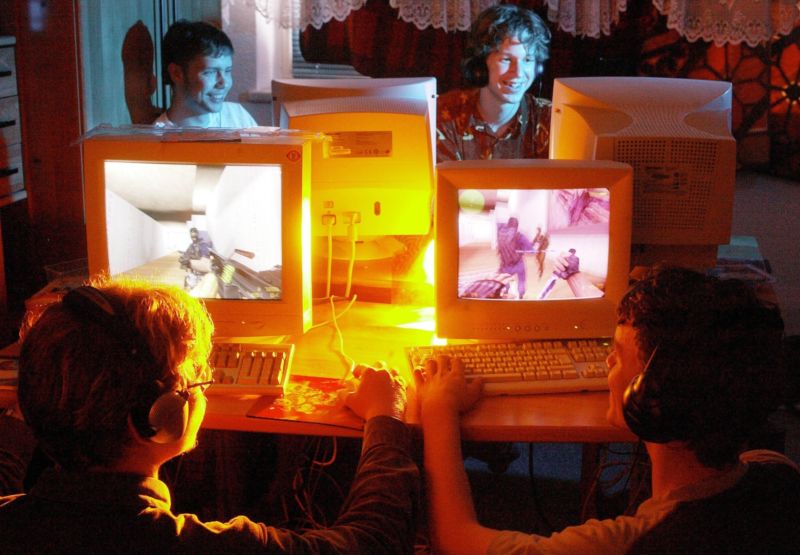
A photographer's approximation of what LAN party life was like for Ars Technica staffers in the CRT monitor era.
Enlarge / A photographer’s approximation of what LAN party life was like for Ars Technica staffers in the CRT monitor era.
Getty Images

With Labor Day out of the way, school is afoot here for most high school and college kids in the States—and that, of course, means procrastination by way of gaming. Ars Technica’s staff knows a thing or two about putting off important work by using video or board games as an excuse (let alone the times we make work out of our favorite games), so we used the latest school year as an excuse to recall our favorite risking-our-GPA memories.

Our staff runs a pretty wide gamut of ages and gaming proclivities, so this list includes a nice variety, but it’s incomplete without your contributions. Enjoy our stories for inspiration, then take to the comments and let us know how you juggled your favorite gaming addictions between classes.

My job ate my homework

I managed to turn video gaming into a job at a young age, as I wrote for a daily newspaper’s gaming column through much of my high school and college career. The game that got closest to wrecking my high school GPA was Legend of Zelda: Ocarina of Time, which arrived at my home a few weeks before its retail launch. A tight review-draft deadline for the holiday’s biggest game left me scrambling to juggle entry-level calculus, a high school newspaper editorship, and a proper rumination on Link’s open-world, time-travel journey from boyhood to manhood. (Way to drop a classic before a bunch of pre-Thanksgiving tests and papers, Miyamoto-san.)

I arrived at the University of Texas in 1999, just in time for every on-campus dorm to be slathered in T1 connections. My random-lottery dorm assignment didn’t just turn out to be the only all-guys dorm on campus; it was also notorious for being full of nerds who lugged giant gaming PCs and CRT monitors to their dorm rooms. I showed up to this dorm with a serious Quake III Arena online-deathmatch addiction, and I was giddy to finally stop getting called out as an “HPB” thanks to my reduced ping. (Look it up.)

The rest of the dorm fell hard for a brand-new Half-Life mod called Counter-Strike, whose networked-multiplayer action left me a bit unsatisfied. (CS 1.6 is a tension-filled classic, obviously, but I’m a rocket-jumping madman at heart.) Instead of switching to a new PC shooter, I leaned into a newfound Dreamcast addiction, since I was my newspaper column’s lead Sega critic at the time. (Tomorrow will mark the Dreamcast’s 20th anniversary in the United States, since it famously launched on 9-9-99.)

[embedded content]
Virtua Tennis footage from the original Dreamcast

Singling out one classic Dreamcast game as a grades-threatening timesink would be disingenuous, but Resident Evil: Code Veronica‘s gorgeous terror was an attention-stealing highlight, while my dorm room became an eventual four-player hub for non-stop doubles Virtua Tennis among friends. That is, when we weren’t all screaming along to Offspring and Bad Religion songs while trading turns in Crazy Taxi.

As a side note, my best gaming friend in the dorm ran a Quake-related fansite in his off hours. I don’t remember its domain, but it was typical of fansites at the time: a massive list of links to other sites’ news and opinion posts, along with my friend’s occasional whiny op-eds. He rigged the site so that pop-up ads appeared in hard-to-spot frames in readers’ web browsers, and he often bragged about the resulting cashflow while showing off his latest PlayStation game purchases or ordering pizzas for anybody who wanted to hang out.

I remember the day the pizzas stopped coming. “My advertising network sent an audit earlier today,” he said with the kind of pained expression I haven’t since seen in my adult life.

—Sam Machkovech, Tech Culture Editor

Dorm shareware chaos before Counter-Strike

[embedded content]
Rise of the Triad, 1994 edition footage

Gamers “of a certain age” may remember the 1995 shareware shooter Rise of the Triad. In it, players ran around… shooting things… while bouncing on trampolines. The goal probably involved saving the world, but I wouldn’t know anything about that, because I never ponied up any cash for the rest of the game.

Still, RoTT holds a special place in my heart. It was the first multiplayer game I played against someone not sitting next to me on the couch. RoTT let you dial up another player by modem and, after listening to the soothing static of the two modems shaking hands, some extremely violent gameplay would begin. I used to round up a group of players who took turns playing on my computer, and we took on another team three doors down our college dorm hallway. The real shock was seeing just how another human moved in the game; it was nothing like the computer-controlled enemies, and the difficultly made every kill that much more satisfying.

RoTT was all about the kills, too, offering crazy weapons like the weaving “drunk missile” launcher. Score a particularly amazing hit and your opponent would explode into bloody bits while “Ludicrous gibs!” flashed on the screen. (This was usually followed by the sound of angry shouting drifting down the hall.)

According to Wikipedia, the game was later open sourced and ported “to AmigaOS, Linux, Mac OS, Xbox, Dreamcast, PlayStation Portable and Nintendo DS (homebrew) and 32-bit versions of Microsoft Windows.” I knew nothing of this because, as the group in our dorm moved on to other titles, so did I. But I still have fond memories of those evenings when I should have been studying, letting drunk missiles fly as I bonded with friends around the glow of a CRT monitor and those cries of disappointment down the hall.

—Nate Anderson, Deputy Editor

The “A” in this AD&D stood for “Automation”

When I was in college (1982-1986), “gaming” was still very much a tabletop thing. And one of my friends blamed our regular games of Risk for him not landing an engineering job before graduation. But my primary time-suck was that I was running our group’s Advanced Dungeons & Dragons campaign—and building the tool that would save me more time doing so.

In high school, I had written some fairly complex programs in Apple Basic, including a database program for the Apple II for my dad (who was my high school principal) to track student parking permits. I wasn’t far into my sophomore year at the University of Wisconsin when I realized I could remove a big chunk out of the workload of running AD&D games if I had the paperwork all computerized. So I wrote a menu-driven Dungeon Master’s Familiar, complete with a random-access database for player and non-player character data, random and planned monster encounters, random dungeon generation, and combat resolution—including a manual override for dice throws that the players insisted be physical.

The whole thing ran on an Apple II+ with 64 kilobytes of RAM and dual floppy drives.

—Sean Gallagher, IT Editor

GPA was not one of the eight virtues

The GPA buster for me wasn’t really in college, it was high school—and the game in question was Ultima IV, played on my Apple IIc.

Ultima IV, aka Quest of the Avatar, was in some ways a radical departure for late 1980s gaming. The focus of the game was supposedly not on beating down monsters but on perfecting the Virtues of the player character themselves: Honesty, Compassion, Valor, Justice, Sacrifice, Honor, Spirituality, and Humility. This frequently required the player to balance decisions on a knife’s edge: do I increase my Valor by defeating these (non-evil but aggressive) enemies at the cost of Justice or my Sacrifice by retreating from battle with them at the cost of Valor?

It was an interesting idea, but at age 17, all I really cared about was treating Britannia as an open, make-your-own-fun sandbox. I wanted to sail the seas, walk the forests, and find all the hidden cities, towns, and dungeons—the heck with the main quest. I generally only worried about the Virtues if one of them being too low kept me out of a new location. I had no real interest in actually becoming the Avatar at all.

Unfortunately for me, Lord British had other ideas. One day, I emerged from a dungeon to discover the entire world map covered in monsters on every single tile. I could magic myself to the nearest town—but upon exiting the town, it was just wall-to-wall monsters again. There was never an actual “game over” message, but it was obvious that Lord British had finally had enough of my BS.

Aside from the wonder of exploring such a huge game space—eight cities, eight towns/castles, eight dungeons, and seven Shrines—Ultima IV offered a young gamer something modern games don’t: unencrypted save files. The joys of using a byte zap utility to cautiously edit the saved file, slowly figuring out which hex codes represented inventory items, equipped items, or character attributes drew me as much as the game itself did. Why should Geoffrey the fighter be the only one to get the good plate mail or Mariah the mage be the only one who can equip the powerful magic wand?

Homework never stood a chance against Ultima IV. I barely squeaked out of high school with a diploma, but the foundational skills I learned forcing Geoffrey the fighter to equip a magic wand—and forcing poor Dupre the paladin to suffer being renamed “Blastmaster”—went a long way in my eventual IT career.

—Jim Salter, Technology Reporter

“Doing lines” in college

One of the four colleges I went to was a small conservatory in the Northeast, and you could play Tetris in the basement computer lab. Even though the game was nearly 15 years old by then, we still wasted enough time playing that we joked in the cafeteria about “doing lines.” One time, a guy got so depressed that he started playing Tetris for hours a day. I’ll never forget the look on his face when his girlfriend quietly begged him, in front of the whole lab, to go to class, and he ignored her. His expression was the platonic idea of self-loathing. I wonder what happened to that dude. I think he played bassoon.

—Peter Opaskar, Line Editor

A LAN party reward for good behavior

When I started college in 1998, networked gaming was still a new and obscure phenomenon. Most people only had dial-up modems if they had Internet connections at all. So the possibilities of gaming on a college LAN were a revelation.

My game of choice was Starcraft, which had only come out a few months earlier. On Friday nights, when many of my peers were out trying to get drunk and/or laid, I’d head down to the computer lab in the basement of the computer science building. The lab was officially closed, but we had friends in the IT department who would give us access to the lab after hours if we behaved ourselves.

PC gaming is more fun when you can do it at the scale of a campus computer lab. Having everyone in the same room allows people to shout encouragement at teammates and taunt opponents.

Starcraft only accommodates eight players per game, so there were sometimes three or four games happening at once. Everyone would start at the same time, then as some games wrapped up (or players were eliminated), stragglers would hover behind those still playing, cheering them on.

Sadly, these semi-organized Starcraft tournaments only happened about once a week. The rest of the time, I’d play smaller-scale games with friends in the dorms. Later we moved into a group house, and I set up a house-wide LAN with ethernet cables snaking along the walls (wi-fi was new, and most desktop computers didn’t have it). This experience was a little different because we’d each go to our separate rooms—on multiple floors—during the game, then afterwards we’d congregate in the hallway to talk through the game and relive our greatest moments.

I didn’t realize what a unique experience this would prove to be. I still play occasional Starcraft games—now Starcraft II—with friends. But my Starcraft-playing friends are now spread out across the country, so we have to play over the Internet. Our days of in-real-life encouragement and trash talk are over.

—Timothy B. Lee, Senior Tech Policy Reporter

The quest that sank the most time

In my college days, I played a lot of games. I’ve always been a fan of MMOs, and World of Warcraft came out while I was in college, so that was dangerous enough. Before the expansions, WoW was extremely demanding of players’ time, even for college students. However, I was pretty casual in WoW compared to some earlier MMOs I played in high school, like Meridian 59 or Ultima Online.

Beyond WoW, I mainly associate gaming in college with three other specific experiences: one was playing split-screen Halo with my friends after class almost every day on the Xbox. I have such fond memories of that game and still enjoy the franchise today. The next was playing LAN party Civilization IV games with my best friend Eryn. We must have played 100 hours together, each on a Dell laptop and sitting in two matching recliners in his living room, Joey-and-Chandler from Friends style—usually with Battlestar Galactica or Star Trek episodes playing on the TV.

But if we’re talking about risking your GPA with games, for me the real danger was Final Fantasy XII, which I played in my last year of college. I stood in line overnight to buy that game, and I’m not going to lie—my grades suffered as I spent my last semester 100 percenting it. To this day, it’s still my favorite Final Fantasy entry. But its length and addictive nature made that one of the most precarious gaming experiences I’ve had in terms of impact on other, admittedly more important things!

—Samuel Axon, Senior Reviews Editor

A different kind of massively multiplayer experience

The reasons for my crappy college GPA were completely unrelated to gaming.

—Eric Bangeman, Managing Editor

https://arstechnica.com/?p=1564019


Facebook dating is now available in the US. Here’s how it works

Promotional image for Facebook Dating app.

Facebook has long been the place where everyone from college students to divorcées scope out their romantic interests. Now Facebook users in the United States can officially use the social network as a dating service—complete with specialized profiles, a matchmaking algorithm, and more. Facebook Dating, which began rolling out in other countries last year and launches in the US today, gives users ages 18 and up access to a suite of features designed to help them find a meaningful relationship. Plenty of them will be familiar to anyone with experience on other dating apps, but a few options take unique advantage of Facebook’s biggest asset—its extensive cache of data on you and all your friends.

Facebook Dating lives within the existing Facebook app, but to use it you need to set up a separate profile. The only information carried over is your name and age. The service will present you with potential matches based on your location, indicated preferences, and other factors. You can also choose to match with people who attend the same Facebook events or are part of the same Facebook groups. One thing it won’t show you are your existing Facebook friends—that option is turned off by default.

Facebook is also using Dating’s US debut to launch several new privacy and security features within the service. And, of course, it’s integrating Instagram into Dating. Which is not surprising since the company has been bringing its platforms closer together in various ways all year.

On most dating apps, “people are forced to make a decision off this one profile that never changes and is extremely curated,” says Charmaine Hung, a Dating product manager at Facebook. The social network wants to create a more dynamic and authentic experience. Starting today, users will have the opportunity to feature their permanent Instagram posts in their Dating profiles. By the end of the year, Facebook says it will also allow you to share Instagram or Facebook Stories. They won’t be Dating-specific Stories, but the same ones you already upload for your friends or followers; they will also still erase after 24 hours. The social network isn’t the first to have the idea: Tinder announced it would begin integrating Snapchat Stories in April.

Instagram will also become part of Secret Crush, an existing Facebook Dating feature that lets users select up to nine Facebook friends they want to express an interest in—as long as that person indicates they have a crush back. Now your Instagram followers can be Secret Crushes, too—no choosing celebrities or influencers unless they follow you, sorry! If someone adds you to their Secret Crush list, you’ll receive a notification. If you then pick the same person for your list, Facebook will match you together and reveal your names. If the feelings are one-sided, nothing happens.

Unique safety features

Dating apps like Hinge have historically marketed themselves on their ability to match you with friends of friends—people with whom you already have existing social ties. Facebook Dating also allows you to do the opposite: you can preemptively turn off matching with friends of friends, which may be a welcome option for anyone who wants to date outside their network. The feature may also help LGTBQ+ people who are not out to their communities. You can also block people from seeing your Facebook Dating profile, even if you want them to still have access to your Facebook or Instagram accounts.

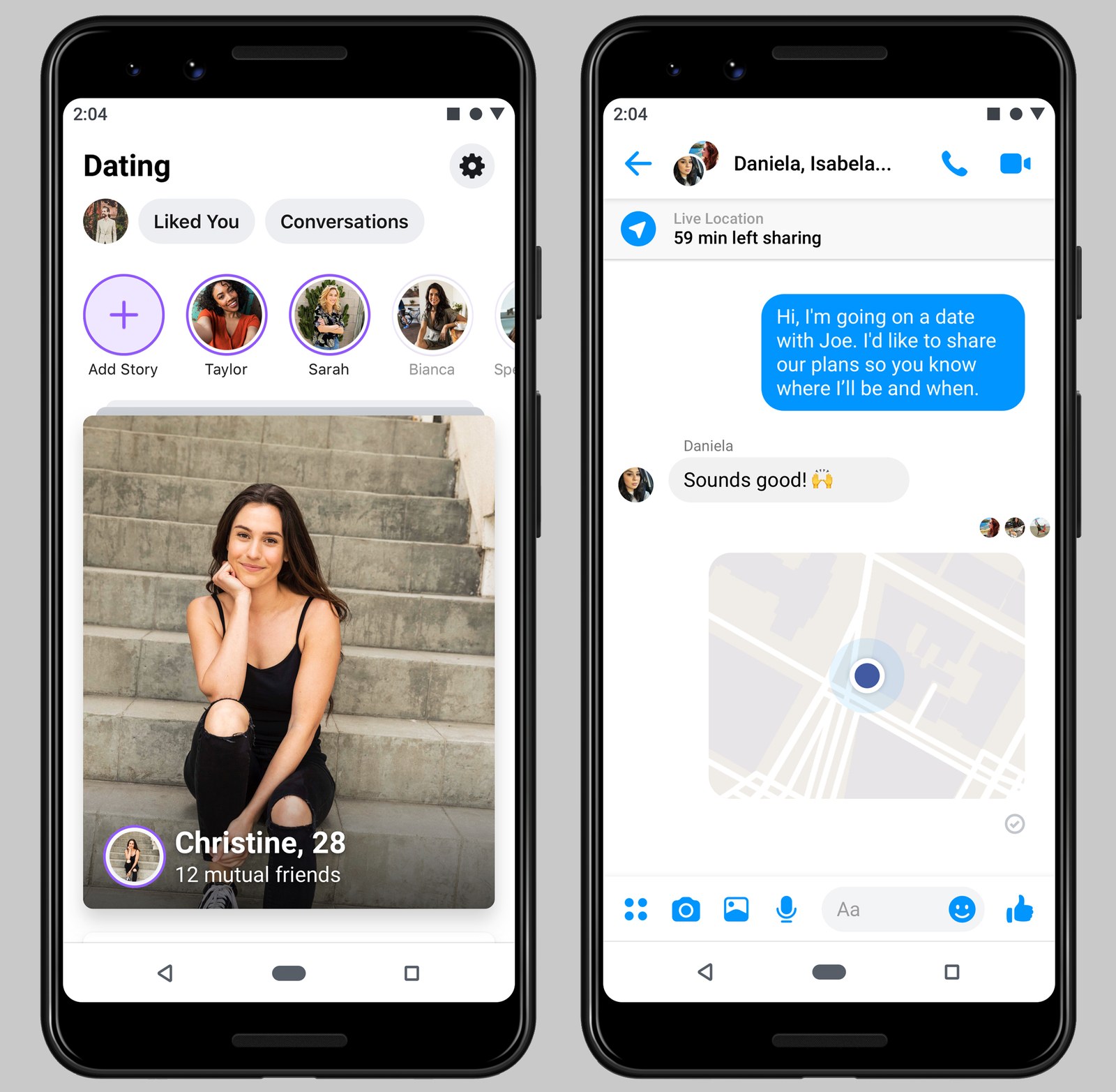
Facebook Dating shows you matches (left) and also lets you message a friend about your location when you meet someone (right).
Enlarge / Facebook Dating shows you matches (left) and also lets you message a friend about your location when you meet someone (right).

Facebook Dating’s most exciting new feature builds upon a well-established safety practice for online dating. Before meeting someone in person for the first time, many people—especially women—tell a friend or family member where they’re going and when they expect to be back, in case something happens. More recently, people have been sharing their location using tools like Apple’s Find My Friends. Facebook will allow you to automatically open Messenger from Dating and tell a friend the name of the person you’re going on a date with, as well as the time and place where you plan to hang out. Fifteen minutes before your date happens, that person will receive a notification reminder and access to your live location. But unlike Find My Friends, your location is only shared for up to an hour, at least for now.

“We’re definitely playing around with the timing,” says Hung. “We did want to make sure that people weren’t accidentally sharing their live location longer than they intended to.”

The basics of Facebook Dating

Facebook Dating will live as a tab within Facebook’s main menu on mobile. When you first set up your profile, Facebook will ask you to specify your gender and the gender(s) of the people you’re interested in. According to a preview shared by Facebook, the options are “cis woman,” “trans woman,” “cis man,” “trans man,” and “non-binary person.” Your gender identity won’t be shared with potential matches. You can express interest in “everyone,” “women,” “men,” “trans women,” or “trans men.” You can also fill in details like your height, religion, job title, where you work, where you went to school, and whether you have children.

You can complete your profile with up to a total of nine photos and ice-breaker questions provided by Facebook, like “What does the perfect day look like?” For now, you can’t write your own. Once your profile is set, Facebook says it will start matching you with potential dates based on “your preferences, interests, and other things you do on Facebook.” The company says this includes factors like where you’re from, the Facebook groups you’re in, and where you say you went to school. You also can only match with people who are located within roughly 100 miles of you. Dating doesn’t require you to continuously share your location with Facebook, but you do need to turn on location services in order to verify you are where you say you are—whether that’s just once, when you’re home, or if you update it if you move or travel.

Facebook Dating presents matches one at a time, but it doesn’t have a certain famous right-or-left swiping mechanism. Instead, to start a conversation, you need to like a person’s profile or respond directly to one of their questions, photos, or Instagram posts, similar to dating app Hinge. For example, you can click on a picture of their dog and send a message saying, “He’s cute!” To turn someone down, you tap “Not Interested.” You can also re-review someone’s profile using a feature called “Second Look.”

Facebook Dating messages live in their own separate inbox, and they’re strictly text-only. You can’t send links, photos, or payments for security reasons. (So-called romance scams have been a problem online for years, including on Facebook.)

Will Facebook Dating find love in the US?

Facebook is entering a crowded online dating market in the United States, but the company also has certain advantages weighing in its favor. It’s already a unique player, since many competitors rely on its API to power their own apps. The company says it has no current plans to cut off data access to apps like Bumble and Tinder, which rely on Facebook to tell users information like whether a match has friends in common.
Facebook Dating also leverages other parts of the social network that apps like Tinder can’t access. You can “unlock” any Facebook event you were invited to or Facebook group you’re in and begin matching with people who also opted in to find potential dates on the guest list or membership roll. All events and groups are fair game—even that concert you attended five years ago. No other dating service has that.

Facebook Dating could be a significant boon for the social network. It will provide Facebook with a trove of new information about how people connect with each other, which could be lucrative for its advertising business in the future. But for now, the company says it has no plans to monetize Dating. There are no ads in the service, and advertisers can’t use information from it to target you.

Even if it doesn’t inform advertising, Dating may prove valuable in other ways. Growth on Facebook’s core app has slowed, and many people in their 20s say they’ve deleted it recently. That demographic is already more likely to be single, and maybe they’ll be more likely to use Facebook if it has an official dating service. That’s especially true now that Dating is integrated with Instagram, a platform already popular with younger generations. And no matter what age you are, checking out your latest matches, honing your dating profile, checking whether your crush likes you back—these are all potentially powerful boosters of engagement.

In addition to the US, Facebook Dating is available in Argentina, Bolivia, Brazil, Canada, Chile, Colombia, Ecuador, Guyana, Laos, Malaysia, Mexico, Paraguay, Peru, the Philippines, Singapore, Suriname, Thailand, Uruguay, and Vietnam. Europeans will have to wait until early 2020 to gain access to the service.

This story originally appeared on wired.com.

https://arstechnica.com/?p=1563947


Review: IT Chapter Two is overlong, but Pennywise will still haunt your dreams

The Losers Club is all grown up and back in Derry for a final confrontation with Pennywise in IT Chapter Two, Director Andy Muschietti’s follow up to his 2017 box office hit, IT. Chapter Two isn’t quite as good as its phenomenal predecessor, but it’s still good, scary fun. And together, the two films comprise a deeply satisfying full adaptation of Stephen King’s bestselling novel.

(Some spoilers for the 1986 novel, the first film, and IT: Chapter Two, but no major reveals from IT: Chapter Two)

Confession: IT was the book that turned me on to Stephen King, convincing me that the horror novelist’s work wasn’t just about monsters, gore, and jump scares. It scared the crap out of my 20-something self; I slept with a light on for two nights after finishing it. I can’t recall any other book that had that effect on me. Somehow it tapped into my most deep-seated fears from childhood—fears I wasn’t aware I still possessed on some long-submerged level. The best of King plumbs the psychological depths of the best and worst of human nature, and IT is definitely one of his best.

The novel tells the story of a group of misfit preteen kids calling themselves “The Losers Club.” The kids discover their small town of Derry, Maine, is home to an ancient, trans-dimensional evil that awakens every 27 years to prey mostly on children by taking the form of an evil clown named Pennywise. Actually, the evil, It, takes on many forms, preying on the specific fears of its targets. At one point, unofficial group leader Bill concludes that It is a “glamour,” a mythological shapeshifting creature with the power to create illusions. One of the more terrifying aspects of the reality-bending illusions It inflicts upon the children is that adults don’t seem to be able to see the horrors at all.

The book opens with the brutal murder of Bill’s little brother Georgie one rainy afternoon at the hands of Pennywise and proceeds to jump back and forth between that harrowing past and the members of the Losers Club as successful adults. They have forgotten the events of that fateful summer, and when they reconvene in Derry 27 years later, their memories start to return bit by bit. It’s a clever narrative device, as the characters must confront the truth about themselves, their lost childhood innocence, and the traumas they’ve repressed for so long. Re-igniting their lifelong bond is the key to defeating It.

The tightly interwoven narrative makes it challenging to adapt King’s sprawling novel for the screen—and the highly conceptual finale, essentially a mental battle of wills, is even more difficult to capture in a visual medium. There was a TV miniseries in 1990—technically, a two-part, three-hour movie, which meant that much of the novel’s richest storylines were excised from the script. It was OK, as adaptations go, but the visual effects were cheesy, and the reworked finale was a bit silly. Still, Tim Curry lit up the small screen as Pennywise with his unforgettable cackle. So when Bill Skarsgård was tapped to portray Pennywise the Dancing Clown in the 2017 remake, he had some pretty big shoes to fill. He proved more than up to the task, creating a version of Pennywise even more likely to haunt your dreams.

Set in 1988-1989 (updated from the book’s childhood timeframe of 1957-1958), IT essentially adapted the childhood half of King’s original novel. Bill (Jaeden Lieberher) loses his little brother Georgie (Jackson Robert Scott) to Pennywise and recruits the Loser’s Club to take on the killer clown the following summer when they realize what’s going on. Bill, Stan (Wyatt Oleff), Eddie (Jack Dylan Grazer), Ben (Jeremy Ray Taylor), Richie (Finn Wolfhard), Beverly (Sophia Lillis), and Mike (Chosen Jacobs) succeed in driving It into early hibernation, where It will hopefully starve. But Beverly has a vision warning that Pennywise will return on schedule in 27 years, and they must be ready to fight It anew.

IT is quite possibly the best adaptation of a King novel I’ve yet seen (Castle Rock is an anthology series inspired by the works of King, not a direct adaptation). The childhood storyline was the beating heart of the novel, and Muschietti coaxed wonderful performances out of his young cast. The film is visually stunning and impeccably paced, dispensing terror and dread at regular intervals but never neglecting the humor and warm glow of these preteens teetering on the brink of adolescence.

And Muschietti wisely omitted the most controversial scene from the book, when the Losers get lost in the sewers after defeating Pennywise the first time, and Beverly (the only girl) decides she must have sex with each of the six boys so they can re-unify. King has said it was intended to connect childhood and adulthood, and it’s true that the brutal murders of children are (or should be) far more shocking. But I’ve always thought having the only girl in the group basically pull a train was the novel’s greatest flaw. Had Muschietti included it, that’s all anyone would have talked about. IT was much stronger for the omission and went on to become the highest grossing horror film of all time.

IT: Chapter Two revisits our protagonists 27 years later, as they all return to Derry as adults, in response to a call from Mike (Isaiah Mustafa), the only member of the Losers Club who stayed in Derry. Bill (James McAvoy) is now a successful novelist, married to a famous actress. Beverly (Jessica Chastain) is a successful fashion designer married to an abusive husband. Ben (Jay Ryan) is no longer the fat kid, transforming into a slim, well-muscled successful architect. Eddie (James Ransone) runs a limousine business in New York City. Stanley (Andy Bean) is a partner in an accounting firm. And Richie “Trashmouth” Tozier (Bill Hader) is a successful DJ and comedian. They recall very little of that summer in Derry, although the memories come flooding back over dinner at a local Chinese restaurant—a dinner that also features some taunting horrific illusions from Pennywise.

Muschietti had an even bigger challenge on his hands adapting the adult storyline from King’s novels because he used all the major reveals in his first film. So instead of wandering around Derry on their own to recover their memories, the Losers go in search of tokens from their past for use in a “ritual of CHUD” that Mike believes will allow them to defeat It. (In the book, that “ritual” is the aforementioned orgy.) It’s a clever move, giving us a few more details via flashbacks about the Losers’ personal demons, although those scenes don’t have quite the same punch as those featured in the first film. Another smart move: Muschietti dispenses with one of the book’s subplots involving Beverley’s abusive husband and Bill’s wife, Audra, following their spouses to Derry and getting pulled into Pennywise’s shenanigans. It would have been an unnecessary complication to an already complicated film.

IT: Chapter Two boasts the same stunning visuals, and Muschietti has also assembled a stellar cast. Bill Hader in particular turns in one of the best performances of his career as the wise-cracking, trash-talking adult Richie, whose steady stream of witticisms brings some much-needed levity to the horrifying events. King himself has a cameo as a crotchety, rather creepy antique store owner.

I’m not a purist when it comes to book adaptations, especially for a novel as long and multi-faceted as IT; a clever re-interpretation in a new medium can be a wonderful thing. Unfortunately, Gary Dauberman’s script makes several additions to the storyline that don’t quite work, making the film feel bloated and overlong. (It is long, with a 169-minute running time; the first film clocked in at 135 minutes.) For instance, there’s really no need for a subplot involving Bill trying to save a young boy from Pennywise in a fun house, except that it makes for a cool scary scene in a hall of mirrors.

The narrative threads start to unravel a bit as we move toward the climactic confrontation with Pennywise, and the means by which the Losers ultimately prevail is, well, a bit of a letdown. There’s a running joke that the endings of Bill’s novels always suck, and it feels like Muschietti couldn’t figure out how to end his film. A lovely moment where the adults see their younger selves in a storefront window reflection would have made for a fitting coda, encapsulating the major themes of both films. Instead, the director tacks on a lengthy follow-up sequence showing us where the Losers ended up after leaving Derry for the last time. Granted, the novel has a similar sequence, but it’s much more effective than the film version, which is more maudlin than moving.

Despite these nitpicks, IT: Chapter Two is still a very good, enjoyable film, with plenty of effective jump scares, powerful performances, and nightmare-inducing visions to make it a lasting addition to the horror genre. I’d recommend watching both films back to back if you have the five hours to spare. Maybe leave a light on. Or two.

[embedded content]
IT Chapter Two featurette.

Listing image by YouTube/Warner Bros.

https://arstechnica.com/?p=1562553


This $700 Lego Star Destroyer is as close as you’ll get to the real thing

You probably remember the first time you saw Star Wars, the first time you saw that opening crawl give way to a star field above Tatooine as the Tantive IV tried desperately to escape the clutches of an Imperial Star Destroyer as it filled the screen.

I do. I remember in particular how the sheer size of it made me feel. This was one big ship—a mile long from the pointy bit at the front to those three huge engines at the back, I’d later learn. Afterward, you may have gone straight for the Lego bricks to recreate it. If not, now’s the chance, because Lego is bringing out a new Ultimate Collector Series (UCS) edition of the Devastator, the Imperial Star Destroyer from the beginning of Star Wars: A New Hope.

The specs are not for the faint-hearted. Made from 4,784 pieces, the model is 43 inches long (110cm), 26 inches (66cm) wide, and 17 inches (44cm) tall, so it will need a fair amount of room on your shelf (or above your bed). Lego says the model features a tilting radar dish and swiveling guns, and as you’ll see from the images above, the build looks like it involves plenty of greebling to keep you busy for hours.

In addition to the Devastator and its display stand, there are also parts to build the rebel blockade runner the Tantive IV at the same scale, and two minifigs, an Imperial officer and an Imperial crew member. Be warned: like all of Lego’s UCS sets, this one doesn’t come cheap, although the $699 price tag is $100 less than the UCS Millennium Falcon.

As Ars’ resident Lego Star Wars obsessive (no, really), if I were about to drop that kind of wedge on a new box of bricks, I think I’d save up another Benjamin and go for the UCS version of the ship that did the Kessel Run in less than 12 parsecs. For starters, with 7,541 pieces the dollar:brick ratio is a lot higher. And more importantly, the UCS Falcon is built to the same scale as the minifigs it comes with. Sadly, a minifig-scale Imperial Star Destroyer would be about 87.5 feet (26.7m) long.

Listing image by LEGO

https://arstechnica.com/?p=1563635


Say goodbye to a “regular schedule” of emulated classics on Switch

We'll no longer be seeing regular monthly additions to this selection of SNES classics playable on the Switch, nor their NES counterparts.
Enlarge / We’ll no longer be seeing regular monthly additions to this selection of SNES classics playable on the Switch, nor their NES counterparts.

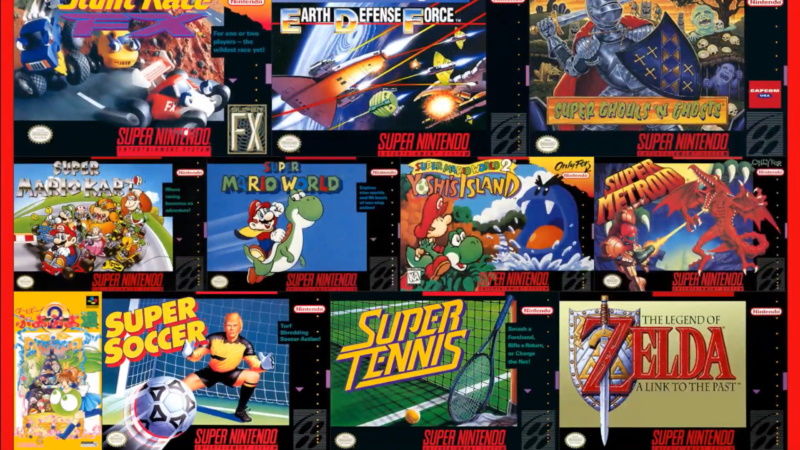
Fans of classic Nintendo re-releases got some good news this week, as Nintendo finally released emulated versions of 20 Super NES games as part of its $20-per-year Switch Online service. But the company tempered that announcement with some less visible bad news: further releases in that collection will no longer come on their usual monthly schedule. Since launching with 20 NES titles last September, the Switch’s collection of playable classics has expanded by two or three games each month, to the point where it now includes 46 distinct NES titles. But yesterday, a blog post on Nintendo’s Japanese site (machine translation) indicated that those releases would be coming “irregularly” from now on.

In a statement to Business Insider, a Nintendo representative confirmed that “More NES games will be added in the future, but those releases will not adhere to a regular schedule.”

By contrast, Nintendo kept up its pace of regular monthly releases for the (now defunct) Virtual Console emulators on the Wii and Wii U for years before those releases began to slow to a trickle. That situation was a bit different, as Virtual Console games could be purchased individually rather than rented en masse via subscription. Still, the few dozen emulated games available via Switch subscription currently pale in comparison to the hundreds available on the Virtual Console, making it an odd time for Nintendo to announce a slowdown.

That said, $20 a year is still a pretty good price for access to over 60 NES and SNES games in an easy-to-play portable-or-TV-based format (not to mention the online features you get on top of that). We’ll have to see just how “irregularly” those further releases are before we can know just how much better that deal will get in the future. But if Nintendo lays down another surprise release of 20 Nintendo 64 games in the next few months, all is forgiven.

https://arstechnica.com/?p=1563605


Wii Fit redux: Nintendo shows mysterious exercise ring for the Switch

Remember the Wii Fit Balance Board? Twelve years ago, Nintendo released a device that looked like a bathroom scale but actually acted as a relatively sensitive controller that responded to subtle shifts in weight in specially designed games. Nintendo sold at least 22 million of the suckers to health-conscious gamers, 99.9% of whom have doubtless put their Balance Boards in the closet or a donation bin by now.

Fast forward to today, and Nintendo is once again teasing a new entry into the fitness game. In a short video tweeted late Thursday, the company showed off a flexible black plastic ring and accompanying leg strap, both of which apparently integrate with Switch Joy-Cons to measure your motion in a number of ways.

The yet-unnamed ring looks to include two rubberized grips on opposite sides and two connection slots for a Joy-Con. Stretching the ring in one direction flattens a bit in in the other, turning the ring into an oval and seemingly increasing the physical resistance required to stretch further. An accompanying holster straps around the leg and holds another Joy-Con, presumably to measure leg angle and movement speed.

The video shows an international crew of health nuts doing everything from running and dancing in place, to yoga-style positioning, to Thighmaster-style leg squeezes, to Pilates-style leg lifts, to overhead stretches, to imitation hula dancing and weight lifting with the mysterious device. At one point a player exclaims at his character doing a backflip in response to motion from the device.

This new health-focused effort brings to life Nintendo’s previous announcement—now five years old—of a focus on “quality of life” tools designed to “enable people to monitor their health and offer them appropriate propositions.” The only previous example of a real product in that line, a planned Nintendo sleep monitor, was finally scrapped years after it was announced. But Nintendo has shown an interest in getting gamers moving since the 1988 release of the Power Pad for the original NES.

Nintendo’s tweet promises more information about its Switch exercise ring on September 12. For now, enjoy the video and the above gallery showing the next gaming health device that will no doubt end up in gathering dust in your closet in a few years.

Listing image by Nintendo

https://arstechnica.com/?p=1563259


First trailer for latest Black Christmas slasher reboot goes for “woke”

[embedded content]
Sorority sisters are hunted by a crazed killer in Black Christmas, a remake of the 1974 cult-classic slasher film.

The calls (and texts) might be coming from inside the house as a killer stalks a group of sorority sisters in the first trailer for Black Christmas, directed by Sophia Takal (best known for directing an episode of Into the Dark), who also co-wrote the script with April Wolfe. The original 1974 Black Christmas is widely regarded by film historians as one of the first slasher films.

(Some spoilers for original film and 2006 remake below.)

Original screenwriter A. Roy Moore was influenced by the infamous urban legend about the babysitter and the man upstairs, as well as string of holiday murders in Montreal, Quebec. While the film mostly received lackluster reviews, it proved modestly profitable at the box office, and over the years, it has garnered a strong cult following. Director John Carpenter was purportedly inspired by Black Christmas when he made 1978’s Halloween. Sure, it’s a typical slasher film, but you could do worse for gory alternative holiday fare if you’re in the mood for that sort of thing. Along with the occasional humorous touches, there are some genuinely shocking twists, including a deliberately ambiguous ending (we never learn the killer’s identity, for one thing). Sadly, the 2006 remake had none of those redeeming qualities.

This latest remake is clearly going for woke. Per the official synopsis:

Hawthorne College is quieting down for the holidays. But as Riley Stone (Imogen Poots) and her Mu Kappa Epsilon sisters—athlete Marty (Lily Donoghue), rebel Kris (Aleyse Shannon), and foodie Jesse (Brittany O’Grady)—prepare to deck the halls with a series of seasonal parties, a black-masked stalker begins killing sorority women one by one. As the body count rises, Riley and her squad start to question whether they can trust any man, including Marty’s beta-male boyfriend, Nate (Simon Mead), Riley’s new crush Landon (Caleb Eberhardt), or even esteemed classics instructor Professor Gelson (Cary Elwes). Whoever the killer is, he’s about to discover that this generation’s young women aren’t about to be anybody’s victims.

Frankly, I find the term “beta-male” cringe-inducing in pretty much any context, and if you’re going to go all girl power in your marketing, at least allow for the possibility that the killer could be a woman. The trailer itself covers fairly standard ground. The sisters throw a winter-break party, and before long someone wonders aloud whether they should have let their friend Helena walk home alone. The sisters figure she’ll be fine.

But this is a slasher movie, so of course Helena runs afoul of the killer, who takes her out with a handy icicle. Then the creepy calls and text messages start, and ultimately we get to the iconic declaration: “There’s someone in the house!”

The “fresh twist” appears to be a longstanding tradition of ritual sacrifice at Hawthorne College. “This school has 200 years of history,” we hear Professor Gelson explain. “Many sacrifices have been made to keep our traditions alive.” And of course, the surviving sisters decide they’d rather not be sacrificial lambs and opt to fight back. I’m frankly skeptical that this remake can do justice to the original. But Blumhouse Productions has a decent track record with horror, so I’m inclined to give the film a chance to win me over.

Black Christmas is slated for release on December 13, 2019 (a Friday, of course).

Listing image by YouTube/Universal

https://arstechnica.com/?p=1563053


Nintendo Switch will finally get SNES games—20 of them—starting tomorrow

Handheld video game system.
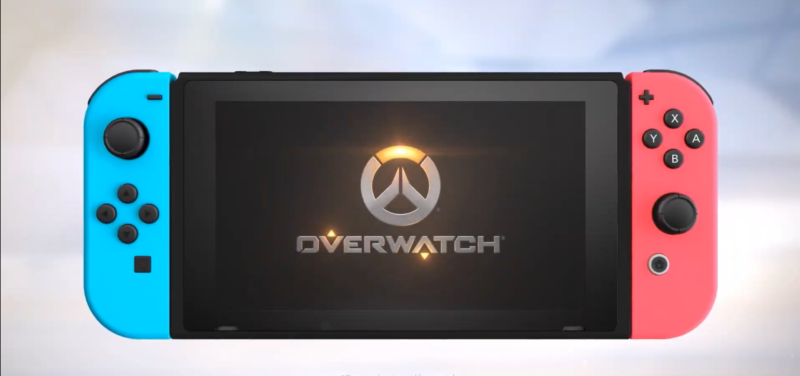
Enlarge / Blizzard is back on Nintendo Switch with its colorful, popular team-based shooter Overwatch.

The latest Nintendo Direct video presentation saw the game maker deliver on a huge slew of holiday-timed announcements for first- and third-party fare. Arguably its biggest news came in the form of Overwatch, the mega-popular team-shooter game from Blizzard Entertainment. Nintendo confirmed that we can expect a Switch version of Overwatch on October 15.

Though the game’s reveal footage was marked with a “not real gameplay” disclaimer, it at least included confirmation that Blizzard will lean into the Nintendo Switch’s unique gyroscope options. Aiming some of the game’s combat superpowers, including Junkrat’s RIP-Tire attack, can be assigned to rotating the Nintendo Switch or its Joy-Con controllers (though we don’t have firm confirmation that this can be disabled, if you prefer to restrict controls to joysticks). The announcement included no information about the potential for cross-play between other platforms.

As has become standard in game-announcement surprises, today’s Overwatch news was spoiled by a leak. This one came from a goof-up at Amazon. As spied by the deal-hunting Twitter account Wario64 last week, the site accidentally revealed a new Switch carrying case smothered in Overwatch logos (along with a detailed zipper pull shaped like a Nintendo Switch Joy-Con controller). The accessory listing was almost immediately deleted.

In what might be the most hoped-for update to the Nintendo Switch’s retro-minded side, the system’s paid online subscription service will finally get support for another library of classic video games: the Super Nintendo. A full suite of 20 SNES games will land for all Nintendo Switch Online subscribers starting tomorrow, September 5. And while Nintendo was mum on how many other SNES games to expect in the future, this opening slate is pretty killer, with a surprising launch of Stunt Race FX—a “Super FX”-powered classic that has never seen a re-release on other platforms until now.

Nintendo took the opportunity to announce a “coming soon” piece of hardware: a wireless SNES controller for the Switch, priced $29.99 and exclusively available for NSO subscribers. Nintendo placed the same restriction on its Switch-compatible NES controllers last year, but unlike those, the Switch SNES pads will have near-complete control parity with the Switch. (It lacks a joystick, but it does include tiny ZL/ZR buttons.)

In addition to details about Nintendo’s three biggest first-party games of the season—Luigi’s Mansion 3, Link’s Awakening, and Pokemon Sword/Shield—the presentation included a mix of confirmations and surprises. On the first-party front, we learned that the Super Smash Bros. Ultimate‘s onslaught of new characters will last longer than originally anticipated. The game’s existing Character Pack DLC will conclude with five characters in all (including, as revealed today, Terry from SNK’s Fatal Fury.) But now we know there will also be an open-ended slew of additional, paid characters once that five-character pack is fully released.

(If you’ve been keeping track of Smash Bros. Ultimate, you know a release tied to the N64 classic Banjo-Kazooie is coming, and Nintendo confirmed its launch date. You can purchase and download the beloved Rare characters to your Smash Bros. sessions starting today.)

The announcement slate included two surprises for classic-gaming aficionados: the first-ever port of Doom 64 on a system other than its original N64 home, coming to Switch on November 22, and a Switch port of 2002’s Jedi Knight II: Jedi Outcast, coming September 24. In terms of out-of-nowhere announcements, arguably nothing topped the revival of the cult classic series Deadly Premonition, which now has a modern-looking sequel slated to launch in “2020.” (Or you can dive into the 2010 original today on Switch by way of a brand-new port.)

And for those keeping an eye on Switch’s future, Nintendo used today’s opportunity to tease Xenoblade Chronicles: Definitive Edition, coming in “2020,” and a longer look at the multiplayer features coming to Animal Crossing: New Horizons (formerly set to launch in 2019, but now delayed until “March 2020”).

For more on other newly announced games and ports coming to Switch, including Ars favorites Return of the Obra Dinn and Divinity: Original Sin 2, watch Nintendo’s 40-minute video presentation below.

[embedded content]
Nintendo Direct, September 4, 2019

https://arstechnica.com/?p=1562421


Steam’s new, handsome “Library” update is better 16 years late than never

While we prefer our "handsome PC game box" collections with gatefold covers and lenticular prints, we're still pretty charmed by Steam's upcoming update.
Enlarge / While we prefer our “handsome PC game box” collections with gatefold covers and lenticular prints, we’re still pretty charmed by Steam’s upcoming update.

As the West’s largest source of downloadable computer games, Steam has faced immense scrutiny for just about every one of its practices. Among its less controversial choices is one of its most dated: the “Steam Library” tab, where you find and load the games you’ve already purchased. What could be sensational about that?

But if you’re interested in usability, this might be Steam’s most offensive element. This interface, which revolves around a collapsible plain-text list, has remained the same since Steam’s 2003 launch. It might have made sense in Steam’s early years, but anyone who owns more than 50 games—a reasonable count after 16 years, between standard games and crazily discounted ones—knows that this interface does more to hide your oldies-but-goodies than to expose them.

The 2012 launch of a TV-friendly “Big Picture” mode didn’t resolve this issue; if anything, its (wholly optional) oversized icons and text compounded the problem. But now, as the PC game-launcher space begins rapidly heating up, Steam has finally followed through on a promise to smooth over its game-launcher interface. Behold: the brand-new Steam Library, coming as an opt-in beta on Thursday, September 17.

The story is largely told by the above gallery. It includes one snapshot of the existing Steam Library interface and is otherwise loaded with the interface’s upcoming changes. The core concept is left somewhat intact. A left-hand sidebar is full of collapsible lists of games, and a wider, right-hand interface gives out information about particular games.

But the original interface always dedicated the right-side chunk to a single column about a single game. “Friends who own this game” was the top item, then achievements, then a plain-text dump of news. If you don’t select a particular game, this space now becomes a home for “shelves,” or regularly updated bumps in news and activity about games you already own. You can delete these if you want, but the default interface includes a few useful sorting mechanisms: games with recent news updates, games you recently played, and games that your friends recently played.

Below those, by default, are your own custom “collections” of games. A static collection can be built by dragging and dropping game names into their respective collection box. This mimics the existing, buried option to create “categories” in your games list. More interesting is the dynamic collection option, which lets users type and select whatever descriptive tag they want (“single-player,” “RPG,” “turn-based,” “split-screen multiplayer,” etc.) to have Steam pick out all matching games in your library. Dynamic collections will automatically add any new purchases that match the criteria you’ve set.

You can still disable the new 3D-animated flourishes via a “low performance” toggle.

Notice that none of this is designed to push games you don’t already own. The “Store” tab is a click away if you want purchase recommendations. Steam Library, on the other hand, remains focused on software you already own (though that can include game makers announcing paid DLC or even sequels and other software).

And, yes, once you’ve selected a game, a slightly more familiar-looking interface comes up. Like before, these game-specific listings come with relevant news updates and information about your friends’ play. But now everything has been re-ordered in a more logical manner. If there’s a big live event, tournament, sale, or other time-limited announcement, that can appear at the very top, as per a developer’s discretion. A few more game-news updates follow that, and then a split-column view shows more relevant information: friends’ uploads relating to the game, personal achievements, trading cards, and a new “post-game summary” view that rounds up gameplay details not only from your most recent session, but from the past week, past month, and more.

You can’t see it in the gallery, but many parts of the interface include new visual flourishes, such as a depth-of-field effect when you expand a news post and some 3D-animated icons when you mouse over achievements and trading cards. It’s all subtle, handsome stuff. Valve reps say they built this Steam Library update with low-end hardware in mind, but users can still disable the new flourishes via a “low performance” toggle, should they wish to (particularly to save laptop battery life).

More news outlets, more events… and more Steam Store changes?

Valve also announced new tools for game developers to take advantage of this update, which go live later today (assumedly to populate the Steam Library beta with flashy update posts, once it goes live in nearly two weeks). The primary initiative is called “Steam Events,” which lets game makers and publishers schedule game-related announcements and flesh them out with video and streaming embeds, Steam store entries, and even a pipeline to import translation-related text.

In related news, Valve has also announced plans to completely overhaul Steam’s syndication of magazine and blog content. The company told Ars Technica:

Any [press] outlet could show up to players who want to follow that outlet and receive that news. We need a system that can support any language. All six current outlets [in the existing Steam Library] only serve a particular audience, and they only speak English. Soon, any outlet can show up in there based on who’s following them, and then we can support different languages.

During the announcement presentation, Valve acknowledged worries that the Steam Library system might be gamed by enterprising game makers who post a barrage of Steam Events. “For each player, the Steam Library’s posts are personalized based on what they play a lot, recently, and in the past,” Valve developer Alden Kroll said. “An update from an unplayed game is less likely to pop up. We’re implementing rate limiting to prevent six updates from the same game at the same time. Still, we want feedback from players on this.”

The announcement event revolved entirely around the Steam Library, as opposed to the Steam Store. But Kroll did say that the two systems are inherently intertwined. “A bunch of what we’re doing with the new Library will inform a lot of changes in the Store both visually and structurally. A bunch of that will inform the next steps of Steam Store.”

Update: Shortly after this article went live, Valve posted its own announcement. The company has yet to confirm how users will opt into this beta redesign on the 17th, though it will likely work like other Steam beta updates, which can be toggled via “settings,” “account,” “beta participation.”

https://arstechnica.com/?p=1561719