Gears of War 5 hands-on: A new blockbuster for the game-subscription era
The Coalition decorated its testing lab with Gears of War merch old and new during its campaign preview event. The signature piece is this life-sized model of the game’s hero, Kait Diaz.
Sam Machkovech
Some merch tie-ins from games old and new.
Sam Machkovech
That’s gold, Jerry. Gold.
Sam Machkovech
Do not touch.
Sam Machkovech
Key art from the new game, along with its source pencil sketch.
Sam Machkovech
Some custom character masks flanking a few gameplay stations.
Sam Machkovech
A zoom on one of these.
Sam Machkovech
Sadly, this isn’t a new weapon in the game.
Sam Machkovech
I asked The Coalition to pump in the Bodycount song from Gears 3‘s promotional push, but they did not oblige. Ah well.
Sam Machkovech
VANCOUVER, British Columbia—Gears of War 5, which launches on Windows 7, Windows 10, and Xbox consoles starting on September 6, is not yet in a reviewable state, in terms of how we typically talk about video games’ value. But based on what I’ve already seen of the sprawling game (the sixth of its series), that may already be a moot point.
After a six-hour gameplay event at Microsoft’s Coalition studio—and hours more spent testing its online versus options in a July beta test—I’ve come to a conclusion that I can’t shake off. The Xbox Game Pass subscription service now has its official, signature game: the something-for-everyone blockbuster that lands less as a “must-buy” product and more as a no-brainer action game to sample. If you’re already paying for Xbox Game Pass ($10/mo on console, or $5/mo on Windows 10 for a limited time), Gears of War 5 arrives with a Baskin Robbins counter of surprisingly varied action options, all easy to try with a tiny, silver spoon.
Start with an open-world twist to the campaign, which hews to the “cover-shooter” formula of old while injecting just enough new ideas. From there, sample a thoughtful expansion of the “Horde” co-op mode. You can also dive into multiple flavors of online versus battling and an admittedly unproven “Gears of Duty: Zombies” option, too (dubbed “Escape”). On top of those, The Coalition has built one of the most compelling new “helper” characters I’ve ever seen in a shooter, one tailored specifically for people who might otherwise prefer not to play, for both its campaign and Horde modes.
Is that combined package worth a $60 purchase? Maybe. At the very least, aiming less for the $60 sale and more for the Xbox Game Pass content proposition is already a good thing for a series that I was seriously ready to shrug off. Call Gears of War 5 anything you want, but it sure isn’t “lazy.”
It’s not all gushing praise
The above introduction sounds pretty positive—and for good reason—so I’d like to offer some reality-checking notes before diving further.
First off, Microsoft’s timing on promoting this game, arguably its biggest holiday Xbox exclusive, is bizarre. We expect “big campaign reveal” blowouts at events like June’s E3. Instead, Microsoft and The Coalition left us scrambling to put together impressions only 11 days before the game unlocks for Xbox Game Pass subscribers, on September 6.
Coalition studio head and Creative Director Rod Fergusson argued that this PR timeline is an intentional reaction to how crowded the gaming marketplace is in 2019. “When we did Gears 4, we started the hype fire 18 months before launch, constantly reheating and reheating. It’s better to save a bunch of stuff up to allow us to be loud right before the very end.”
My experience with the games industry, on the other hand, makes me suspicious of another possibility. The development team didn’t hint to it, but I wonder if the game’s many moving parts (so many moving parts) didn’t necessarily snap into place until very late in production. I acknowledge some of that suspicion between the bits of praise below.
Additionally, this game does not see The Coalition breaking the Gears series out of its most familiar elements. Here’s the checklist: third-person combat; constantly ducking behind chest-high cover; previously seen weapons, including the usual half-gun-half-chainsaw Lancer; and a lot of enemies returning from prior entries. If you hate this kind of gameplay, a lot of the Gears 5 package will leave you unmoved. (With one exception, hinted at above.)
But if you, like me, were ready for The Coalition to shake this series up with fundamentally new ideas, there is enough new here to get disenfranchised players back on board.
Listing image by Sam Machkovech
https://arstechnica.com/?p=1558379
Eddie Redmayne stars as a pioneering balloonist in The Aeronauts trailer
[embedded content]
The Aeronauts hits theaters December 6, 2019, and will be available for streaming on Amazon Video on December 20.
A 19th-century aspiring meteorologist with a dream of predicting the weather hires a young female aeronaut to pilot a hot-air balloon for his experiments in the first trailer for The Aeronauts, a forthcoming original film from Amazon Studios. Per the official synopsis:
In 1862, daredevil balloon pilot Amelia Wren (Felicity Jones) teams up with pioneering meteorologist James Glaisher (Eddie Redmayne) to advance human knowledge of the weather and fly higher than anyone in history. While breaking records and advancing scientific discovery, their voyage to the very edge of existence helps the unlikely pair find their place in the world they have left far below them. But they face physical and emotional challenges in the thin air, as the ascent becomes a fight for survival.
James Glaisher is a historical figure well-known to aviation history buffs, since he and his pilot, Henry Coxwell, made several balloon flights to measure the temperature and humidity of the upper atmosphere between 1862 and 1866. Armed with scientific instruments and bottles of brandy, Glaisher and Coxwell set a world-altitude record on their very first successful flight, reaching an estimated 38,999 feet (11,887 meters) on September 5, 1862. They were the first men to reach the atmospheric stratosphere, without the benefit of oxygen tanks, pressure suits, or a pressurized cabin.
The men released pigeons at various altitudes during their ascent to see how well they flew, recalling that those released above the three-mile mark “dropped like a stone.” The men would have continued rising and likely died because the valving rope Coxwell needed to manipulate to begin their descent got tangled up with the balloon net. Coxwell had to climb out of the basket into the rigging to release the valve with his teeth—his hands were badly frost-bitten—in order to begin their descent. By then, Glaisher had passed out. Eventually, the men landed safely (if a bit roughly) about 20 miles from their original launch point.
Eddie Redmayne plays Sir James Glaisher.
Glaisher spots a balloon in the distance.
YouTube/Amazon
“Prove them wrong, James.”
YouTube/Amazon
Glaisher persuades female aeronaut Amelia Wren to take him into the skies. She’s played by Redmayne’s Theory of Everything co-star, Felicity Jones.
YouTube/Amazon
Preparing for launch.
YouTube/Amazon
And so it begins.
YouTube/Amazon
Unknown territory above.
YouTube/Amazon
Fluttering butterflies.
YouTube/Amazon
Suffering the ill effects of high altitude.
YouTube/Amazon
Amelia scales the balloon.
YouTube/Amazon
A dicey moment.
YouTube/Amazon
Glaisher lends a helping hand.
YouTube/Amazon
Into the stratosphere.
YouTube/Amazon
While Glaisher is a primary character in The Aeronauts, writer/director Tom Harper opted to omit Coxwell, replacing him with a fictional female character, Amelia Wren. That decision spawned a bit of controversy last year, when the Royal Society’s head of library, Keith Moore, told The Daily Telegraph, “It’s a great shame that Henry isn’t portrayed because he performed very well and saved the life of a leading scientist,” adding that he wished the film had chosen to include one of the “many deserving female scientists of the period.”
But Harper did do so, after a fashion. Amelia Wren was inspired by several historical women, most notably Sophie Blanchard, the first woman to find work as a professional balloonist when her husband, Jean-Pierre, died. British aeronaut Margaret Graham and American aviator Amelia Earhart were also influential as Harper was developing the character.
Harper also wanted to bring some authenticity to the sky-borne scenes, so Redmayne and Jones shot scenes from around 2,000 feet in the air with the help of a helicopter. He filmed some scenes with IMAX cameras, since the original plan was to premiere the film in IMAX theaters. But IMAX wanted a 90-day exclusive commitment, rather than a brief exclusive before the film’s wider release, so those plans were scrapped.
Judging from this first trailer, The Aeronaut will draw quite a lot from Glaisher and Coxwell’s historic flight into the stratosphere—including Coxwell’s heroic manual release of the valve—while fictionalizing other elements to get the most narrative bang for the buck. We see Glaisher addressing dubious scientific colleagues, insisting that his scheme to make measurements in the atmosphere will one day help them predict the weather, thereby saving lives.
“We are scientists, not fortune tellers,” one skeptic scoffs. Naturally, Glaisher sets out to prove them wrong. Meanwhile, Amelia Wren is fighting social norms of her era (“Women don’t belong in balloons”). Glaisher convinces her to be his pilot: “You’re the only person who could fly us higher than anyone has ever been.” And so she does, with all the life-threatening dangers such a feat entails.
The Aeronauts will be screened at the Telluride Film Festival on August 30 and at the Toronto International Film Festival next month. It hits theaters December 6, 2019, and will be available for streaming on Amazon Video on December 20, 2019.
Collector unearths long-lost 8-bit Konami games, dumps them for emulation
Konami’s Space School was long considered one of the Holy Grails of the game preservation community.
Konami’s ultra-rare QTa adapter, only available to Japanese schools.
Examining the difference between the Famicom’s 60-pin cartridges and Space School‘s 40-pin design.
Nintendo’s own Tower of Power.
A labeled diagram of the innards for the Space School cartridge (left) and the QTa adapter (right).
OK, hear me out. What if there was a school…. in space?!?!
Is… is that the ship from Gradius?
Your nightmare says “Hello.”
The last Metroid is in captivity. The galaxy is at peace.
With these colorful alien sprites around, learning can be FUN!
At this point, you might think the entire history of a major gaming company like Konami would be well and fully documented. But you’d be wrong in the case of Space School, a series of game-like educational Famicom cartridges Konami designed for Japanese elementary school children in the ’80s.
Designed in partnership with Japanese broadcaster NHK, the Space School series was never available in stores, and it could only be ordered directly by the schools themselves. The games also made use of a special “QTa” adapter that fitted Konami’s specially designed 40-pin cartridges into the 60-pin slot of the Famicom.
Enter a collector and YouTuber going by “Russian Geek,” who managed to track down both a Space School cartridge (Part 1 of the “5th Grade” set, specifically) and an even rarer QTa adapter by scouring multiple Japanese auction sites (and spending hundreds of Patreon-provided dollars). In a lengthy video (Russian with English subtitles), Russian Geek lays out how he got access to these rarities and provides the Internet’s first real glimpse into how these games look, sound, and play.
[embedded content]
“Russian Geek” takes us through the process of obtaining and preserving the ultra-rare Space School in this video (with English subtitles).
The video also features well-known NES hacker CaH4e3 (pronounced “Sanchez”), who took a deep dive into the QTa adapter and cart to decipher its unique memory mapper. While the cart itself just contains simple ROM files, the adapter apparently contains a unique Konami VRC5 microchip that isn’t found in any other Nintendo cartridges (though other VRC chips are well-documented). This chip gave the Space School games capabilities similar to an MMC5 game like Castlevania 3, including more on-screen tiles and graphics that appear to “overlay” on top of backgrounds.
There are still at least three other undumped Space School cartridges known to exist, and even the dumped ROMs are of limited functionality without the supplemental booklets that contained quiz questions and special input codes. For now, though, the world can enjoy some new “classic” Konami chiptunes and long-lost pixel art from the golden age of 8-bit gaming.
[embedded content]
The rocking opening song to Space School, recorded via emulator.
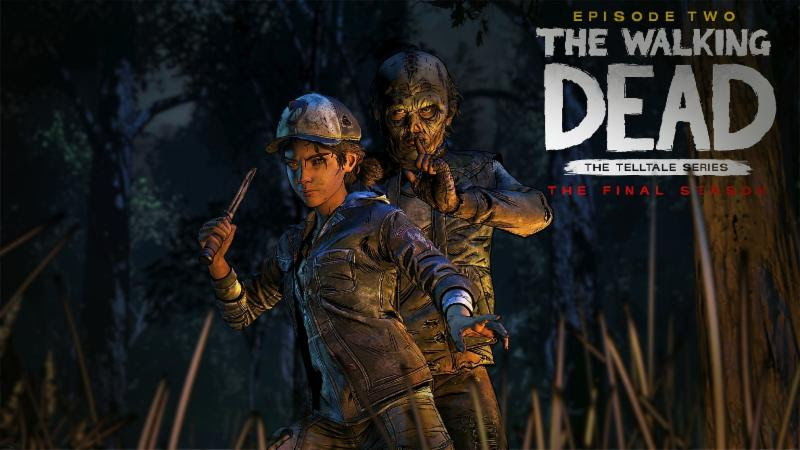
Like a zombie, the Telltale brand is coming back from the dead
Enlarge/ Lookout behind you, it’s the new Telltale Games!
Telltale Games may have been dead for nearly a year now, but a zombie version of the brand is poised to rise, much like a character from the company’s Walking Dead games.
Holding company LCG Entertainment will be taking on the “key assets, trademarks, technology, and select intellectual properties” of the old Telltale Games, according to a statement released by the newly formed corporation. The new company will be focused on “re-releasing select games from the studio’s back catalog and developing new games in some of the company’s best-selling brands,” according to the announcement.
GameDaily reports on the efforts by game industry veterans James Ottilie and Brian Waddle to purchase and revive the Telltale Games brand. The pair—best known for work on mobile and licensed games and game engine marketing, respectively—joined with a number of industry investors to make an offer for the remains of the company as early as December, according to GameDaily. That was followed by months of negotiations with Telltale’s creditors, Polygon reports.
“There is still a huge fanbase of Telltale players and that’s one of the main reasons we decided to make this investment,” Waddle said in a statement. “It’s hard to see your favorite games disappear or not get the sequels they deserve, so we thank everyone for their patience and support. We’ve got some exciting things to share soon. We’ll try not to keep them waiting too long, but we think fans will be pleased.”
LCG’s purchase includes the rights to The Wolf Among Us and Batman licenses, Polygon reports, as well as Telltale originals like Puzzle Agent. The fate of other Telltale licenses—including the currently not-sold-online Tales from the Borderlands series—are not being publicly discussed, save for The Walking Dead, which is now controlled by Skybound. A previously announced Telltale Stranger Things collaboration remains canceled, though, as the rights have reportedly reverted back to Netflix.
In name only?
LCG says in its announcement that “key talent from the original company has been hired or contracted by the new Telltale,” without going into detail on who that might include. But Ottilie told Polygon that “some workers from the original Telltale Games will be offered freelance roles, with full-time positions possible in the future.”
That’s probably cold comfort to the roughly 250 Telltale staffers who were unceremoniously let go last year. Polygon adds that the executives and founders of the original Telltale are not involved with the revival, though “some former managers have been consulted in an unofficial capacity.”
Telltale’s brand name revival continues a proud tradition of dead gaming companies returning in almost unrecognizable forms. Atari is the prototypical example, with the original arcade and console maker going through decades of corporate juggling and restructuring only to come back recently with a Kickstarter-backed revival of the VCS. Retro brands like Coleco and Intellivision have planned similar nostalgia-tinged revivals with extremelymixed success. https://arstechnica.com/?p=1559151
Time for the f-society Christmas Special in Mr. Robot’s final season trailer
NBC Universal
I’d recognize that hoodie anywhere.
NBC Universal
It’s OK, Angela. As Lesley Gore once said, you would cry too if (the reveal at the end of S3) happened to you.
NBC Universal
Phillip Price was showing everyone money ruled the world even back in 2015.
NBC Universal
BD Wong’s mysterious Whiterose looks to be the big bad Elliot will have to answer to in the end.
NBC Universal
Darlene is back and available for f-society’ing.
NBC Universal
Oh Krista, you had your work cut out for you with Elliot the whole time.
NBC Universal
All good things must come to an end, and USA has made it official: Mr. Robot‘s fourth and final season will debut on Sunday, October 6. And to celebrate the news, the network has released an official teaser.
The show’s first three seasons are currently available to stream on Amazon Prime, so we won’t spoil anything major for those still catching up (the Ars season three review awaits for everyone else). But every fan favorite from the series so far at least makes a cameo in the new spot. Angela and Phillip Price appear after ending season three in an unexpected place. Circumstances have changed greatly for Darlene, Dom, and Krista, but they’ll factor into this final run as well.
There are characters many thought we would never see again, too, but this trailer for the show’s ending rightfully centers on what has always been Mr. Robot‘s central relationship: the one between Elliot and Mr. Robot. If those two are aligned once again to take on the overarching evils of Whiterose and her Dark Army hacking group, then season four will likely pwn harder than Elliot on an unsuspecting cell phone. (For USA’s part, here’s all they’ll reveal for a synopsis: “Set during the 2015 Christmas holiday, the fast-paced season will be one filled with answers, hacking, and blood.”)
Warts and all, Mr. Robot will likely forever maintain a special place in the hearts of the Orbital HQ for its (comparatively) hyper-accurate depiction of hacking, inventive production techniques, and gripping depiction of one man navigating his mental illness. (The insanely layered ARG never hurt, either.) And given how its biggest stars have risen to prominence since—Esmail launched Amazon’s Homecoming with Julia Roberts last year and is producing another USA show called Briarpatch; Rami Malek won the freakin’ Best Actor Oscar—this show couldn’t go on forever, anyway. If the insane eight months or so of 2015 depicted in the show’s version of NYC must come to an end, culminating everything around Christmas feels appropriately nostalgic enough.
All we ask: someone just make sure Leon (in a breakout role for rapper Joey Badass) appears with a few more ’90s TV recommendations before the last goodbyes.
[embedded content]
The trailer for Mr. Robot‘s final season, which premieres on October 6.
Listing image by NBC Universal
https://arstechnica.com/?p=1558947
Review: Control is Remedy’s best game yet—and a ray tracing masterpiece
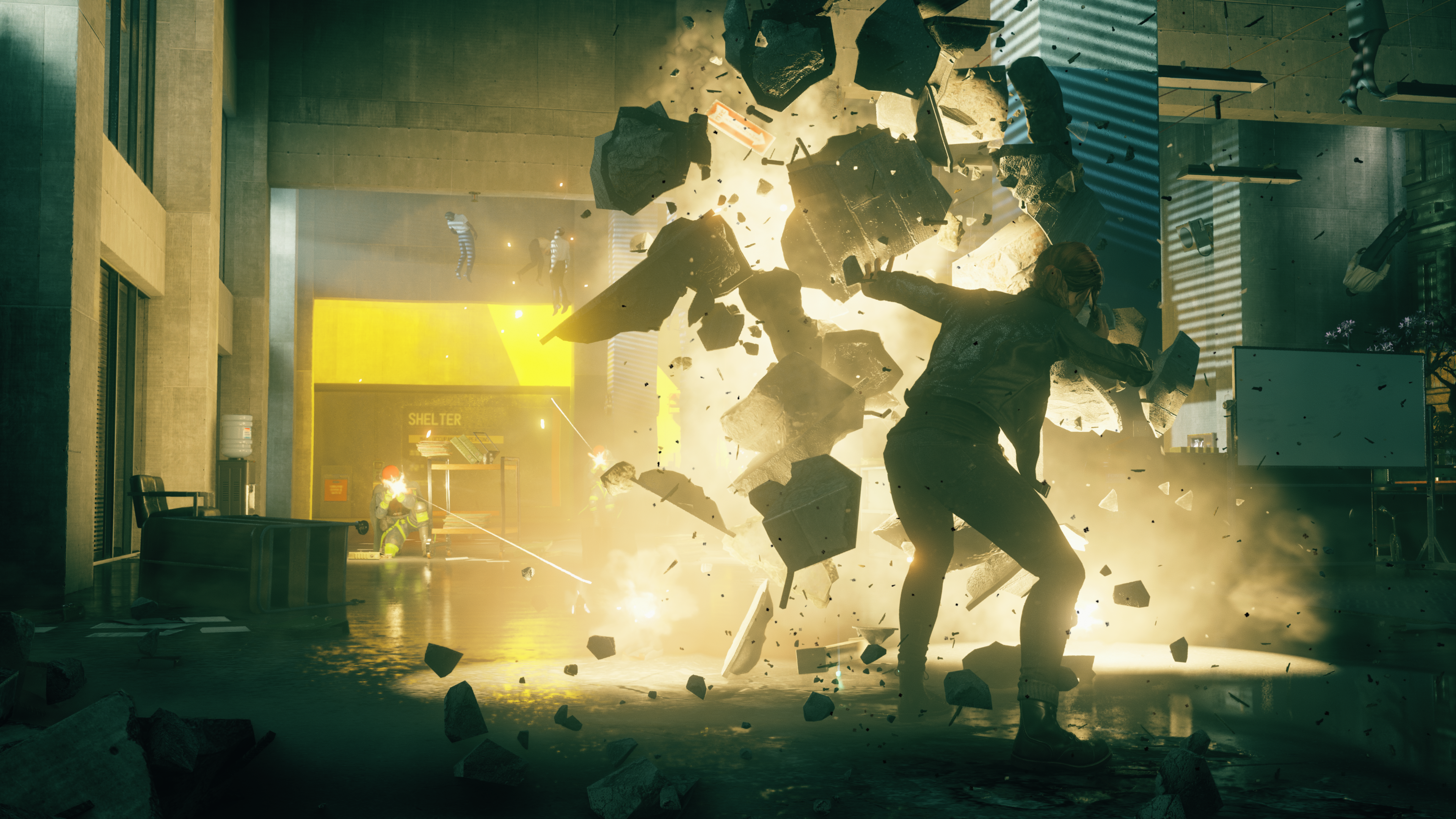
Enlarge/ This is what it looks (and feels) like to play the telekinetic insanity of Remedy Entertainment’s latest game, Control.
Remedy Entertainment
Gamers of a certain age and persuasion have been waiting years for this: a video game from Remedy Studios that feels like a worthy successor to the studio’s 2001 breakout Max Payne. The Finnish studio has been trying for years to pull this off, albeit with less emphasis on MP‘s Matrix-like bullet-time combat and more emphasis on dimension-shifting battles, memorable characters, and serious intrigue.
If you’ve appreciated the developer’s attempts for the past decade-plus, including Alan Wake and Quantum Break—or even if you found those attempts close-but-not-quite—Control should land on your must-play list before year’s end. Consider its status on our end-of-the-year list a given, in spite of some imperfections and fumbles.
And if you paid for one of the newest Nvidia graphics cards on PC, complete with a dedicated ray tracing chip, fast forward that must-play recommendation to “ASAP.” Control is exactly the showcase graphical achievement that will ease any buyer’s remorse.
Fling the boxes, sip the Jesse juice
Those floating bodies? Yeah, they’re everywhere. And sometimes they fight back.
Telekinesis may not be a real thing, but in Control, it’s really fun.
When possessed enemies are defeated in Control, they explode in pretty satisfying fashion.
More oil-smear effects when enemies go kaboom. Though don’t kid yourself; this game is rated M for a reason, primarily thanks to all the dead, scattered bodies around this Federal Bureau of Control (FBC) facility.
Jesse has important business to attend to as the newly appointed chief of the FBC.
Whenever players enter a new section of the FBC, a dramatic, all-caps logo announces it.
A better look at a similarly eerie, glowing-red hallway full of monsters.
The FBC’s former director somehow talks telepathically to you.
Optional video sequences explain some of the FBC’s studies and experiments.
Or you can watch them on old CRT TVs.
Ahti has a lot to say throughout the game. Very rarely does he make sense.
At least Jess acknowledges how weird he sounds.
This children’s series about the effects of supernatural forces is darkly hilarious.
C is not for “cookie.”
Some dramatic sequences end with Jesse removing the “Hiss” effects from everyday objects.
I’m always a fan of video game signage that takes fictional catastrophes really seriously.
Control takes its admittedly forgettable name from the game’s fictionalized US agency, the Federal Bureau of Control, or FBC. (Sorry, Janet Jackson fans.) This agency was established decades ago in an effort to contain, research, and possibly exploit a supernatural discovery—the likes of which would make all those “Invade Area 51” Facebook groups blush. Within the game’s opening minutes, your hero, Jesse Faden, declares what she’s doing at the FBC’s doorstep: she was the sole survivor of this agency’s “ground zero” event as a child, and she’s come all this way to find the brother she lost on that day.
A few mysteries remain unanswered when she arrives, like how she knew her brother might be here and why Jesse’s face is all over the agency’s walls as a portrait. (This is explained later, but I’m leaving it vague for now in the course of our spoiler-free coverage.) But clearly, the FBC was expecting Jesse, and conveniently enough, she soon realizes she’s had some powers within her all along. She uses these powers to quell the sudden, terrifying bursts of activity within the FBC, all identifiable by glowing red clouds and a creepy murmur of simultaneous, nonsensical voices. When she arrives, she’s informed that she’s been named head of the agency, just as its leadership and research teams have begun vanishing or, worse, succumbing to forces that turn them into violent, shapeshifting monsters. (It’s a bonkers transition of power within an American agency, but I have to wonder whether Remedy thought the angle seemed weirder in a more innocent political era.)
By tapping into this slew of murmuring voices and shapeshifting forms (dubbed “The Hiss”), Jesse begins embracing her own supernatural powers, which she learns about one at a time while descending further and further into the trippy underbelly of the FBC. And her resulting arsenal of abilities makes her one of the coolest gaming superheroes we’ve seen in a while.
In terms of third-person combat mechanics, the easiest comparison point is Remedy’s own Quantum Break, which revolved around time manipulation. More accurately, Jesse errs on the side of telekinesis and material manipulation. She can use her mind to lift and throw most any object inside the FBC, and in a pinch, she can even break off chunks of ground, ceiling, or wall to use as deadly projectiles. No matter the size of the object, Jesse can likely use her mind to fling it across the room. It’s the game’s coolest party trick—its gravity gun, its Quake rocket launcher, its Super Mario jump.
That power must be balanced with other kinetic abilities, all limited by a recharging “power” meter that drains when used. Eventually, Jesse learns how to warp-jump, which works both as a dodge and a tricky way to fly around; hypnotize her foes into joining her side as limited-time combatants; create a protective, temporary shield while running through danger; and more.
Jesse also packs heat in the form of the Service Weapon, a special pistol taken from the FBC’s former chief. Jesse can use her powers to transform this pistol at will, turning it into a shotgun, a machine gun, a railgun, and other weapons. Like in Halo, only two weapon forms can be set at a time, but unlike Halo, these weapons draw from their own “energy” pool of ammunition, which recharges on a regular basis.
In practice, this juggling of two energy meters makes for some of the most phenomenal third-person combat I’ve ever seen. Imagine this: a well-rounded cast of foes storms Jesse’s position in a massive, vertically staged battle arena, and each enemy comes with its own weapons, tactics, and trippy perks (particularly the floating baddies who easily dodge any flung objects). Successful combat requires constantly dodging and keeping an eye out for enemies that might suddenly appear in a mist, all while alternating between your pistol’s modes of fire and your supernatural pool of Jesse juice.
Those four enemies ahead of you, rushing your position in a veritable row? Fling a table at them to knock them all down at once, then turn to the right to shoot a floater before putting the hurt on a grenade-launching creature on a balcony. Once you’ve weakened the launching foe, if it’s close enough to your position, you can hide behind a crumbling wall for long enough to convert it into an ally so that it helps you finish off the rest of the attacking fray. I ran into so many examples like this, where I always felt like the game pushed my energy resources to their limits to force me to make crucial tactical decisions while shuffling through a variety of satisfying superpowers. No other Remedy action game—not even Max Payne—has felt this fun.
Looks great on any platform—but ray tracing reigns
All the while, every single thing you’re blasting and flinging has a clearly visible effect on the structures and geometry around you, and that emphasis on destructible environments is met by an oil-slick prism swirl that floods the air when corrupted “Hiss” enemies explode. (I’ll take this trippy effect over realistically snapping body parts any day if it looks this cool.) Even without its wild stir of combat, Remedy nails a pretty incredible aesthetic. The FBC unfolds as a glossy, professional government facility, one that’s eventually bombarded with endless, spiraling ceilings, randomly warping walls (usually in arresting geometric patterns), and overgrowth of seemingly organic blobs.
Plus, if you’ve played a Remedy game in the past 13 years, you know the studio loves an opportunity to borrow liberally from the book of David Lynch, and without spoiling its weirder moments and set pieces, I’ll simply say that the game’s visual leaps in logic fit neatly into the game’s otherworldly story without seeming like a ripoff of Blue Velvet or Twin Peaks.
All of which is to say: if performance is solid on current-gen gaming consoles, then you’re already in for a visually memorable time. But we don’t yet have impressions of the game on Xbox One or PlayStation 4 systems, so we don’t know on that front just yet. In good news, our tests on Windows 10 were quite revealing… because we went to town on its ray tracing pipeline.
All screens in this gallery were captured in real-time gameplay on Windows 10. It consists of comparison shots of ray tracing enabled and disabled, so you can see the difference by flipping back and forth. This image, with ray tracing on, includes light bounces from the rest of this room’s geometry, even though it’s not in the shot. (That’s a pretty computationally expensive trick.)
Same scene, ray tracing disabled. There’s a very slight effect on the portrait’s glass, but it’s definitely nowhere near the same. You can also see a reduction in proper ambient occlusion in this shot.
Ray tracing is most useful when a tight viewpoint makes a pre-baked “reflection” image impossible to pull off. Ray tracing enabled.
Same scene, ray tracing disabled. Perhaps there’s a more clever “faked reflection” possible in this scene, but the developers didn’t try it.
Ray tracing enabled. This scene’s wider viewpoint makes more traditional faked-reflection trickery possible, as you’ll see in the comparison shot.
Ray tracing disabled. Some inherent limitations are more evident when comparing these two shots.
Ray tracing enabled. Finer details in the floor’s reflection, plus the main character can be seen in the glass.
Ray tracing disabled. Moody enough, but you lose the finer details, not to mention reflections of your own character.
Ray tracing enabled. This one’s a stunner, mostly because of how much off-screen geometry can be seen on the left-hand glass.
Ray tracing disabled. When certain geometry is visible on screen, it’s easy to flip for a faked reflection. But ray tracing can also manage the light bounces of geometry that is not currently on screen.
Ray tracing enabled. A reminder that ray tracing doesn’t magically transform every scene.
Ray tracing disabled. You can see a slight difference in shadows and ambient occlusion… if you squint.
Ray tracing enabled. Notice that fluorescent light? It’s being reflected in spite of not appearing in this screen’s natural geometry.
Ray tracing disabled. That fluorescent light reflected in the first shot is gone here.
Ray tracing enabled. Flip back and forth to see the yellow lights’ impact on the metal materials, along with more natural light-and-shadow bouncing on the walls.
Ray tracing disabled. It definitely looks flatter now, and this effect is even more pronounced in motion.
Ray tracing enabled. A great example of the full scene’s light intensity doing work to reduce certain reflection effects as appropriate.
Ray tracing disabled.
The above gallery includes captions and explanations for a bunch of after-and-before moments where I turned on the game’s ray tracing options at the game’s maximum “high” setting, then paused and captured the same moment with ray tracing completely disabled. In some cases, there’s no discernible difference, since plenty of the game has been built to look good across all platforms. In particular, ray tracing effects aren’t going to make a room full of concrete and other generic materials look that much different in terms of shadow and light.
But as soon as players walk into rooms set off by reflective surfaces and more diverse materials, the effect is absolutely stunning. So much so that players are given a pretty intense question on how to proceed: more ray tracing, or more pixels?
As of press time, only Nvidia’s RTX series of graphics cards include ties to the DirectX 12 ray tracing pipeline, which thus limits your potential access to these ray tracing effects. In the case of Nvidia’s cards, enabling ray tracing immediately drops the frame rate an apparent 15-20fps. This is where Nvidia’s exclusive DLSS (deep learning super sampling) pipeline proves handy. This system uses a machine-learning model of 3D-rendering information to upscale any gameplay from a lower rendering resolution. In the case of Control, that’s almost required to get ray-traced performance above a 60fps threshold on respectable resolutions, depending on your graphics card.
In my case, I confirmed a frame rate hovering around 60fps when I used a notebook version of the RTX 2070 GPU at “1080p DLSS” resolution—meaning, a native 720p signal upscaled to 1080p. I could get comfortably in the 70fps range on my desktop system, powered by the $1,199 RTX 2080 Ti, when I ran ray tracing settings at “high” (the maximum) and picked “1440p DLSS” resolution (a native 960p signal upscaled). Want to get all the way to 4K? Even with a pricey card and a DLSS upscale, you’ll have to do some serious option toggling to get anywhere near a 60fps refresh (unless you nix ray tracing, at least).
Does DLSS magically nail a faked higher resolution? Heck no. Screenshots don’t tell that story, since DLSS effectively works like temporal anti-aliasing (TAA) and thus fails the most when the in-game camera is moving. But in practice, the way light bounces as modeled by a full ray tracing pipeline is some of the most impressive stuff I’ve seen in real-time rendering in years. Full-room scenes benefit from a sense of weight and depth, and this lighting doesn’t look insufferably dim, unlike the dramatic-but-iffy lighting model in Metro Exodus. The results are worth the resolution downgrade. I’d argue that the effective resolution and performance with DLSS turned on was somewhere in the 1200p range—clearly sharper than 1080p, and clearly not a perfect pixel match for my 1440p Gsync display. On my notebook version of the RTX 2070, the effective resolution looked like 900p—so, your average Xbox One S game.
Lynchian for better, Lynchian for worse
When the game isn’t impressing with phenomenally fluid combat, rich ray tracing effects, or delightfully tricky puzzle-traversal moments, Control also comes with a standard-issue Remedy Studios plot. It’s jibberish, but boy is it rich.
Remedy is clearly drunk on its vision of a federal mad-scientist agency. For one thing, you won’t find a much better implementation of full-motion video in an action game than in Control. The studio’s knack for FMV was teased in Alan Wake, then proved to be a momentum-stifling, plot-confusing obstacle in the ambitious Quantum Break. Third time’s the charm, apparently, as a slew of mostly optional video moments are cleverly staged and organically inserted into the FBC. At least one of them tantalizingly hints to a connection to another Remedy game.
In BioShock-like fashion, various text documents are strewn all over the FBC’s offices and labs. Unlike in Bioshock, though, these documents do a wonderfully subtle job of setting up clues and answers for moments and set pieces you run into later in the game. Plus, they liberally play with government agencies’ knack for redacting and blacking out swaths of text—and it’s easy to pick out the inherent humor and satire when Remedy goes this route.
The worst part about Control’s plot-immersion attempts comes from the real-time, in-game conversations, which often revolve around sloppy facial animation—sometimes dipping hideously into the uncanny valley—and occasionally rigid dialogue. I counted no less than a dozen moments that seemed like they were originally written in the studio’s native Finnish tongue, then machine translated into English. In Remedy’s defense, the studio winks at this fact in the form of one casting decision. The omnipresent weirdo janitor Ahti slips back and forth between his native Finnish and delightfully broken English when speaking to Jesse, all while issuing directives that sound equal parts ominous and whimsical.
Does that sound like your cup of tea? Does a creepy guy whistling while mopping and talking in circles around the broken logic of a mysterious federal agency, all while your main character remarks openly about how weird she is before continuing on her journey to find her lost, troubled brother draw your interest? If so, then you shouldn’t waste a second diving into the truly possessed weirdness that is Control. The plot payoff goes as far as you want it to, whether you fast-forward through the campaign to chase down the mystery of your sibling or because you dig deeply into side missions and optional flavor text. And every time the plot becomes obnoxious or confusing, you can liven things up with a frenetic, tactically rich opportunity to kick butt via telekinesis. Only in video games.
The good
Remedy delivers some of gaming’s best third-person combat yet.
Ray tracing on compatible PCs looks so incredible, it’s worth the downgrade in resolution.
The plot goes as weird and deep as players might want between the frenetic action.
The plot’s supernatural-mystery payoff is on par with the weirdest, most exuberant David Lynch fare.
The bad
Beautiful visuals don’t always extend to the uncanny valley of facial animation.
The effort spent completing optional missions isn’t necessarily paid off with useful perks.
The plot’s supernatural-mystery payoff is on par with the weirdest, most exuberant David Lynch fare. (For some people, that is not a positive.)
The ugly
How much you have to pay in 2019 to get this game’s ray traced version to run efficiently.
Verdict: If you seek exhilarating third-person action, buy this before year’s end. If you own a PC GPU that supports DirectX 12 ray tracing, buy this immediately.
https://arstechnica.com/?p=1557719
Disney releases new footage from The Rise of Skywalker
This is the poster for The Rise of Skywalker, which opens on December 20th. If you want to avoid any possible spoilers, then don’t click through this gallery.
Rey (Daisy Ridley), Finn (John Boyega), Poe Dameron (Oscar Isaac), Chewbacca (Joonas Suotamo), and C-3PO (Anthony Daniels) just love hanging out in deserts.
This one has a bustling tent city. They seem happy down there.
Footage of Carrie Fisher as Leia was shot during filming of The Last Jedi.
The Resistance drops out of hyperspace.
Holy s*&% that’s a lot of Star Destroyers.
People criticize the more recent Star Wars films for returning to the same well over and over again and I’m starting to think they have a point.
Oh I do like to fight beside the seaside, oh I do like to fight beside the sea…
Rey gets a fancy new double-saber. It’s red, and it’s meant to make us think she’s gone to the dark side.
It’s been a busy few days for Star Wars fans thanks to Disney’s D23 expo. First, we saw the trailer for The Mandalorian, an original series for the new Disney+ streaming service, which begins in November. That was followed with news that Ewan McGregor will return to the role of Obi-Wan Kenobi in another new series for Disney+, but it didn’t stop there. At D23 we also got our best look yet at episode nine—The Rise of Skywalker—which opens in December, and on Monday morning Disney posted that footage to YouTube.
[embedded content]
First we see a montage of scenes from the original trilogy, then more recent Star Wars films, set to a haunting variation on John Williams’ score. We hear a tired-sounding Luke Skywalker telling someone that “this is your fight,” then the horns begin to swell. What follows over the next 30 or so seconds is new.
Rey, Finn, Poe, Chewie, and C-3PO are on a desert planet. Tatooine, Jakku, or somewhere new? Who knows, but there’s a bustling settlement. Then a brief shot of Leia before the setup to what may well be an enormous space battle. The resistance better have something up their collective sleeve because I don’t think I’ve ever seen so many Star Destroyers in one frame before.
There’s a giant red laser ruining the day of everything in its path, indicating that the starkiller technology we saw in The Force Awakens might make a comeback. Rey does some some Jedi training in Endor, or a place that looks a lot like it, and there’s a stormy seaside saber showdown between her and Kylo Ren. Things go black for a while, we hear the sound of a Vader-like respirator, and then… Rey as a Sith?
Disney also dropped a poster for The Rise of Skywalker, which curiously features Palpatine staring straight at you as Rey and Kylo Ren duel in the foreground. I was pretty sure he met his end in the reactor of the second Death Star during Return of the Jedi, but I guess not.
Listing image by Disney
https://arstechnica.com/?p=1557997
Why the NFL’s field goal record is waiting to be smashed
[embedded content]
There’s a Wired video accompaniment if curious.
A northeasterly breeze blows across the football fieldat the University of Wisconsin-Whitewater. To me the wind provides some glorious relief: It’s the middle of the day in the middle of July, and a heat wave has just descended on the region. But to Harrison Butker, who is standing with me at the 40-yard line, facing north, it’s a tactical advantage. “Bit of a tailwind,” he says, eyeing the goal posts as he bends to tee up a football.
Not that he needs it. Butker backs away, takes two steps to his left, pauses, and dashes toward the ball, his right foot making contact with a thwock that sings throughout the stadium. The kick drifts right, tails left, then soars high between the uprights. It’s a 50-yard field goal, but it looks to me like it could have been good from more than 60.
Butker is the starting placekicker for the Kansas City Chiefs. He’s met me here at a kicking camp in Whitewater to demonstrate his skills, which are considerable. One of the most powerful and consistent kickers in the NFL, Butker has made more than 95 percent of the extra points he’s attempted in the course of his career and 90 percent of his field goals, including several from 50 yards or more.
He’s made even more impressive field goals in practice. Dressed in full pads and facing down a defensive line, he’s sent footballs flying through the uprights from 67 yards away. That’s a good bit farther than the NFL’s current in-game record of 64 yards, which Matt Prater, then of the Denver Broncos, set in 2013 at the city’s Mile High Stadium.
That’s the interesting thing about the field goal: While the in-game record has barely budged in half a century (before Prater, it belonged to New Orleans Saints placekicker Tom Dempsey, who made a game-winning, 63-yard field goal against the Detroit Lions all the way back in 1970), kickers are capable of much greater distances. “In practice, if there’s wind going and a broken-in ball, you can see guys going back to 80, maybe even farther than that,” Butker says. Which is why players, coaches, and sports scientists all agree that it’s only a matter of time until someone breaks the record.
The question is: By how much?
Probably by quite a lot. “I would not be surprised if at some point in my day I saw somebody kick an upper 80s, maybe even 90-yard field goal,” says Chase Pfeifer. A biomechanist and biomedical engineer, Pfeifer was a placekicker as an undergraduate at Florida State University. He went on to perform 3D analyses of elite placekickers, including where and how fast their foot makes contact with the ball, and the flight dynamics of their kicks—originally for his PhD dissertation, and later for fun and profit.
He also built a field-goal-kicking robot named Herbie Junior, after the mascot of the University of Nebraska-Lincoln, Pfeifer’s alma mater. At first, the kicking leg on Herbie Junior was a counter-weighted pendulum powered by a custom gear chain, a lawnmower engine, and an industrial shock absorber. Pfeifer later replaced the lawnmower engine with a winch, to give him more control. “Humans are unpredictable and inconsistent,” Pfeifer adds. “But a mechanical robot kicks the same way every time.”
By cross-referencing his player data with his robot data, Pfeifer was able to study how things like foot speed, foot placement, and coordination affect the quality of a given kick. According to Pfeifer’s observations, when an elite placekicker’s foot makes contact with the ball, it’s usually traveling between 42 and 49 miles per hour (that’s between 19 and 22 meters per second), and can deliver more than 3,000 newtons of force to the ball. To achieve maximum distance, a kicker needs to launch the ball at 43 degrees. And to do that, their foot needs to make contact a quarter of the way up the football, which, on a standard NFL ball, is about 2.5 inches off the ground.
Enlarge/ Maybe Peyton Manning would call him an “idiot kicker,” but to others it’s more like “occasional fantasy football hero” and Kansas City Chiefs place kicker Harrison Butker (7).
Frank Jansky/Icon Sportswire via Getty Images
Based on his data, Pfeifer says that a record-breaking 70-yard field goal kicked at sea level, with no wind, would require a foot speed of around 49 miles per hour delivered right to the ball’s sweet spot, while an 80-yarder would take a foot speed of about 56 mph. And while the latter is outside the range typical of elite kickers, it’s well within the realm of human ability: The foot speeds of elite soccer players have been clocked at more than 60 miles per hour (27 m/s), which, in theory, is good enough for a field goal from 90 yards.
But you might never see that during an NFL game. From a strategic standpoint, it’s difficult to conceive of a game-time scenario in which a coach would actually consider going for a field goal greater than 70 yards instead of, say, a Hail Mary. (Not that it hasn’t happened.) That’s because, even if a coach felt confident in a kicker’s range, the kicker would also have to have extraordinary accuracy.
The farther from the goal posts you get, the smaller your margin of error becomes. A 20-yard field goal kicked from the center of the field has to stay within a lateral window 17 1/2-degrees wide, but at 60 yards that window decreases to below six degrees. Back up all the way to 90 yards, and it shrinks to 3.9 degrees. “If you’re off by a hair, you’re going to miss,” Pfeifer says.
When the next record-breaking field goal does happen, it will be the result of an unprecedented combination of power, precision, and circumstance. The last one’s tough to speak to: No one can say when such an opportunity will present itself. But if it does for Butker, he might just be accurate enough to pull it off; one of his favorite parlor tricks is drilling the goal post with a ball he kicks from the corner of the end zone. And he certainly has the leg for it. The day after he shows me how effortless a 50-yard field goal can look, he launches a kickoff that flies 90 yards and lingers in the air for nearly four and a half seconds.
Kicks like that one catch even Butker off guard. “You’re almost surprised by how far the ball goes,” he says. “Everything’s just so lined up, that it almost feels like butter off your foot. It’s like, man, I don’t know what happened, but that ball just flew.”
Ewan McGregor confirms he will return as Obi-Wan for new Star Wars series
Enlarge/ Ewan McGregor made a surprise appearance at Disney’s D23 Expo yesterday to announce he will star in an as-yet-untitled Obi-Wan Kenobi spin-off series. It will stream exclusively on Disney+, which launches November 12.
The rumors were true: there will indeed be a Star Wars spinoff series featuring Obi-Wan Kenobi, and none other than Ewan McGregor will be reprising his role as the iconic character. The actor (and Officer of the British Empire) made a surprise appearance last night at the tail-end of a showcase presentation at D23 Expo 2019, Disney’s annual fan extravaganza. The series is still in the earliest stages of development, but will air on Disney+, the studio’s new streaming service scheduled to launch in November. The showcase also featured several other notable projects Star Wars and Marvel fans in particular can expect to debut over the next two years.
Star Wars: The Mandalorian
The other major announcement during the Star Wars portion of the showcase was the premiere of the first official trailer for the spinoff series, The Mandalorian. Starring Pedro Pascal, the series takes place a few years “after the fall of the Empire and before the emergence of the First Order,'” according to the official synopsis. Pascal’s bounty hunter is “a lone gunfighter in the outer reaches of the galaxy, far from the authority of the New Republic.”
Enlarge/ On display: costumes for The Mandalorian, for stars Pedro Pascal and Gina Carano.
Jennifer Ouellette
Disney+ is also developed a Star Wars spinoff (“Untitled Spy Series”) featuring Rogue One‘s Cassian (Diego Luna) and his best droid buddy, K2 (Alan Tudyk). Both actors made a brief appearance during the announcement. Although there’s no title yet, Tudyk quipped he though it could be called K2 Fast K2 Furious. Or possibly the Untold Cassian Untitled Story. In addition, there will be a return of the hugely popular animated series, The Clone Wars, in February 2020.
Marvel
What If…?
Marvel Studios President Kevin Feige introduced a slew of new original programming for Disney+, kicking off with an animated series called What If…? The basic concept is to reimagine all 23 films in the MCU universe with key plot twists changed—further building on the MCU-is-a-multiverse concept. If you change one small element, how does that change the way events unfold in an alternate universe? Some highlights from the short exclusive clip Feige played during the showcase: a black Star Lord, a zombie Captain America, and—in a snippet that received raucous cheers from fans—Peggy Carter gets the super soldier serum instead of Steve Rogers and proceeds to kick butt as Captain Carter.
Enlarge/ President of Marvel Studios Kevin Feige showed a trailer for the upcoming new animated series What If…? at Disney’s D23 EXPO 2019.
Jesse Grant/Getty Images for Disney
WandaVision et al.
Possibly the strangest spinoff series under development is WandaVision, which sees the Scarlet Witch (Elizabeth Olsen) and Vision (Paul Bettany) living in a kind of dystopian suburban hell. At least that seems to be the tone of the series, based on the teaser Feige screened during the showcase. Lacking any actual footage, the teaser was just snippets of The Dick van Dyke Show interspersed with snips of the Scarlet Witch and Vision from the various MCU films. It’s meant to be a kind of sitcom/epic superhero mashup, with Kat Dennings reprising her role as Darcy from the Thor films, alongside Randall Park reprising his Ant Man and the Wasp role. I am a bit skeptical. We won’t find out whether or not the writing team can pull it off until spring 2021.
There’s also The Falcon and the Winter Soldier, slated to air sometime in late 2020, starring Anthony Mackie and Sebastian Stan, both of whom made brief appearances during the showcase. Several other projects in development received passing namechecks, namely Loki, with Tom Hiddleston reprising his MCU role (he gave pre-taped remarks to the assembled fans), which is slated for early 2021 and will pick up the god of mischief’s story where Avengers: Endgame left off. Hawkeye should debut in late 2021.
Enlarge/ D3 Expo 2019, Disney’s annual showcase of all things Disney, Pixar, Marvel, Star Wars, and now also National Geographic takes place this weekend in Anaheim, Calif.
Jennifer Ouellette
Feige mentioned three other new series in the earliest stages of development for Disney+. Ms. Marvel will be a live-action series based on the Hugo-Award-winning comic of the same name. The Hollywood Reporter leaked the news just before the showcase announcement, noting:
The latest incarnation… is a teenager named Kamala Khan. Khan broke ground by becoming Marvel’s first Muslim character to lead her own comics title. Her identity as a Pakistani-American living in a religious family in New Jersey whilst trying to find her own way has been a major focus of the stories. Her powers have been described as polymorphous, meaning she has the ability to stretch and change her shape.
Ms. Marvel may even find her way into future MCU movies, per Feige. Less well-known to broader audiences is Moon Knight, aka Marc Spector, a former CIA agent turned mercenary. When he is nearly killed by a terrorist, the Moon God Khonsu saves his life, and Spector becomes Moon Knight. He also shows signs of multiple personalities, leading to questions about his sanity. Finally, there will be She-Hulk, aka Jennifer Walters, the lawyer cousin of Bruce Banner. She gets her own Hulk-like abilities after getting an emergency blood transfusion to treat a traumatic injury.
Honestly, the Stars Wars and Marvel franchises alone are probably sufficient to guarantee a healthy subscriber base for the fledgling streaming service for years to come. But Disney+ will also be the exclusive home for all its classic animated films; the growing stable of live-action reboots—there’s a trailer now for Lady and the Tramp; a new Phineas and Ferb movie; an entire slate of fare for children and young adults (including a Lizzie McGuire revival with original star Hillary Duff portraying a grown-up version of the character); plus some documentary-style and unscripted fare—most notably The World According to Jeff Goldblum. That’s a slate of programming to be reckoned with, although I don’t see it displacing the Netflix streaming giant entirely any time soon.
https://arstechnica.com/?p=1557479
A lone gunman roams a galaxy in chaos in first trailer for The Mandalorian
[embedded content]
Pedro Pascal and Gina Carano star in The Mandalorian, a new Star Wars series debuting with Disney+ in November.
Fans went wild as Disney debuted the first trailer for its hotly anticipated original series, The Mandalorian, last night at D23, the annual fan extravaganza the studio has been organizing for the last several years. The series will be released in conjunction with the company’s new streaming platform, Disney+, on November 12, 2019.
Starring Pedro Pascal (Oberyn Martell, aka the Red Viper, in Game of Thrones) as the Mandalorian, the series takes place a few years “after the fall of the Empire and before the emergence of the First Order,'” according to the official synopsis. Pascal’s bounty hunter is “a lone gunfighter in the outer reaches of the galaxy, far from the authority of the New Republic.” Pascal delighted the assembled fans with a surprise appearance at D23, along with co-stars Gina Carano, who plays Cara Dune, a former Rebel Shock Trooper; Carl Weathers as Greef Carga, leader of a bounty-hunter guild; Giancarlo Esposito; and Taika Waititi, who voices the droid IG-11. Ming-Na Wen (Agents of Shield) has also been cast in the series.
Stormtrooper skulls from a fallen Empire.
A distant outpost.
YouTube/Star Wars/Disney
The galaxy is a dangerous place in the wake of the Empire’s collapse.
YouTube/Star Wars/Disney
Itchy trigger finger.
YouTube/Star Wars/Disney
Greef Carga (Carl Weathers) has an assignment.
YouTube/Star Wars/Disney
No time for flirting.
YouTube/Star Wars/Disney
Giancarlo Esposito joins the Star Wars franchise family.
YouTube/Star Wars/Disney
Someone brought backup.
YouTube/Star Wars/Disney
The Mandalorian finds a sidekick in IG-11.
YouTube/Star Wars/Disney
Taika Waititi voices IG-11.
YouTube/Star Wars/Disney
Heavy artillery.
YouTube/Star Wars/Disney
That’s a sweet ride.
YouTube/Star Wars/Disney
A tense standoff.
YouTube/Star Wars/Disney
Could this be what the Mandalorian seeks?
YouTube/Star Wars/Disney
Why yes, it’s Werner Herzog.
YouTube/Star Wars/Disney
Pedro Pascal is The Mandalorian.
Showrunner and series creator Jon Favreau was also on stage for the event, and he explained that, after the defeat of the Empire in Return of the Jedi, there was a period of chaos and lawlessness as a new government struggled to emerge from the wreckage. The trailer plays up the space opera/spaghetti Western crossover vive. There’s almost no dialogue, just scenes depicting a mysterious lone figure taking on an assignment from Carga to track something. Or someone. Could it be Han Solo trapped in carbonite?
There are battles in space and on land, and there’s even a tense standoff as the Mandalorian is surrounded. The only dialogue is uttered by Werner Herzog at the very end: “Bounty hunting is a complicated profession,” he drawls. “Don’t you agree?” All in all, it’s got a great Firefly feel to it. We can’t wait to see more.
The Mandalorian will premiere along with the Disney+ streaming service on November 12, 2019.