Our favorite gaming studios, expos, museum exhibits—in a photo blowout
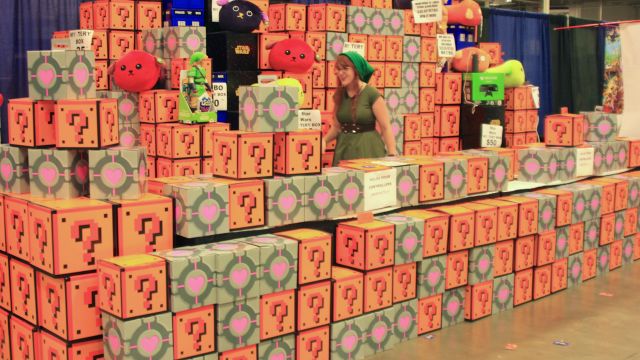
When we publish galleries dedicated to gaming exhibitions, events, and landmarks, it’s not a way to put off writing work. For one, we have to write all of the freaking captions (and also try to make some of them equal parts funny and informative). There’s also the matter of a bunch of trained writers doubling as professional photographers while finding ourselves overstimulated by the coolest video games old and new. Hey. It’s a living.
But while the work of shooting, editing, touching up, and publishing these collections is more involved than they might look, we love making them. There’s something to be said about basking in the glow of an expertly crafted gaming-event gallery. I liken it to the digital equivalent of a freshly mowed yard. There’s a certain, I dunno, majesty to it. At least, without the whole “sunlight” thing.
Thus, to conclude our dedicated Ars Gaming Week event, we invite you to bask in years of our digital yard work, all taken from our favorite gaming-related events.
Exhibits: Three game-filled museums across the USA
When we heard that a traveling 2015 museum exhibit would combine the words “Smithsonian” and “gaming history,” we rushed over with a camera and a critical eye. The resulting exhibit technically revolved around centuries of American innovation in “consumer technology.” In good news for us, that meant video games, toys, and other electromechanical fare figured prominently behind glass, which you can see in our gallery below. (Click through the article’s link for more non-gaming photos from the exhibit, but we left the calculators in here.)
-
Ralph Baer’s original “Brown Box” prototype, arguably the first ever TV video game, is a large part of the reason Kyle Orland wanted to check out this Smithsonian gaming exhibit from 2015.
-
A close up on the Brown Box controller and its pasted-on labels.Kyle Orland
-
A side view showing the thick wiring connecting the controllers to the box itself.Kyle Orland
-
The circuitry and wiring inside the Brown Box wasn’t exactly elegantly laid out…Kyle Orland
-
A video screen behind the Brown Box showed an example of the “Brown Box” gameplay, an unscored game where two dots bounced another dot between them.Kyle Orland
-
Baer’s actual workshop, rebuilt in the lobby of the museum. Small child shown for scale.Kyle Orland
-
Did I mention Baer created the classic pattern-matching game Simon? Because he did. He did not invent the giant eraser, though.Kyle Orland
-
Looks like Baer was working on some sort of rhythmic drumming toy here…Kyle Orland
-
A few of the awards bestowed on Baer, including a commendation from the President George W. Bush.Kyle Orland
-
A beat up box for the Odyssey, the first video game console, hides underneath the side of Baer’s desk. I wonder if Baer actually kept one there while he was working…Kyle Orland
-
A facsimile of the front entrance to Baer’s lab, which happened to be the basement of his Manchester, NH home.Kyle Orland
-
A circuit board for the now hard-to-find Apple I computerKyle Orland
-
There was an entire section devoted to the art of icon design in the “Silicon Valley” part of the exhibit.Kyle Orland
-
Aw, thanks Steve!Kyle Orland
-
Some much-deserved credit for Apple icon design guru Susan Kare.Kyle Orland
-
The exhibit featured a large dot-matrix puzzle where you could design your own icons, which would then show up on a Macintosh Classic screen. Neat!Kyle Orland
-
A college-style bulletin board tries to capture the hobbyist/enthusiast nature of early computer building.Kyle Orland
-
-
Bill Gates’ real, heartfelt plea for enthusiasts to pay for the “Basic” programming language is met with a sticky note encouraging piracy from the exhibit makers. Harsh!
-
Keyword: “was.”
-
From left to right, the 1973 Xerox Alto, the 1984 Apple Macintosh, and the 1975 MITS Altair 8800. Three peas in a pod?
-
Yeah they do! *high fives self*
-
This T-Rex on a set of wheels, invented by one Jerome Lemelson, is the first of many horrifying toys in this gallery.
-
“You kids and your iWhatzits… back in my day, this was music!” “Whatever, grandpa!”
-
The note amusingly calls this a “portable TV.” Maybe if you’re a bodybuilder!
-
“You kids and your Tivo. back in my day…” “WhatEVER, grandpa!”
-
A visitor tries out a stereograph. From around 1880 to 1910, these were a popular way to view three-dimensional photos taken with a special camera.
-
130 years later, the Oculus Rift is pretty much the same thing, except for a few additions.
-
From a section looking at technology in early science fiction and fantasy, this 1908 H.G. Wells book envisioned a year 2000 where “airships would travel the world” and families would place ads for personal pilots.
-
An 1867 French copy of Jules Verne’s “Journey to the Center of the Earth” showcases some fantastic blockcut artwork.
-
In 1883, R.M. Ballantyne’s “The Battery and the Boiler” told a thrilling tale of laying undersea telegraph cables. Which made us wonder… where are the novels about laying fiber optics these days?
-
A replica of Charles Babbage’s original adding machine, circa 1820. A long way from the pocket calculator…
-
Close-up on Babbage’s machine.
-
Close-up on Babbage’s machine.
-
An example of the important mathematical reference tables that Babbage’s engine could generate much more quickly and accurately than a human.
-
This circa 1884 “macaroni box” adding machine was literally built within an empty macaroni box.
-
Continuing the horrifying toy theme, this 1871 “patent model of a creeping baby doll.”
-
From 1871, Montague Redgrave’s “Bagatelle” was an early precursor to pinball. Notice the spring-loaded plunger and tilted playfield.
-
Don “Mr. Wizard” Herbert got his own display dedicated to his efforts to bring scientific education to kids.
-
Age 13, when a young man’s mind turns to… science!
-
You’ve been warned, Channel 4!
-
The cotton gin helped spur on the industrial revolution by automating the deseeding of cotton bales. This 1800 model was used in a patent trial surrounding the important device.
-
This mid-1800s cash register was referred to as an “incorruptible cashier” by its inventors.
-
Thomas Edison is well known for the electric light bulb, but I’m not sure why he isn’t better remembered as the creator of this horrific talking doll prototype.
-
In 1934, this creepy “Reddy-Killowatt” puppet was used to increase demand for electricity, and to help increase power plant efficiency in turn.
-
When games and toys you played with as a kid are museum pieces, you’re officially old…
-
Apple might prefer you forgot the Newton , but the Smithsonian American History Museum would prefer you didn’t.
-
A 1977 Hewlett-Packard calculator watch was the height of style at the time. Trust us.
-
I take it back… when your first digital camera is a museum piece, you’re officially old…
-
Back in 1992, you needed a bulky gizmo like this to make use of the global positioning system satellites.
-
One man’s “Trash-80” computer is another museum’s treasure…
-
“Mommy, why did Superman need two computer geeks to save the day? Also, what was Radio Shack?”
Unlike the Smithsonian’s traveling, limited-time exhibit, the National Videogame Museum in Frisco, Tex., is a dedicated, year-round home for some of the most tantalizing gaming rarities we’ve ever seen. Our 2016 stroll through its many exhibits is too massive to reproduce in this article; I strongly advise anyone who drools at the below collection of prototype hardware to click through for even more rare games-industry memorabilia. (After that, book a flight to the Dallas area and see it for yourself.)
-
This gallery is a dive down game-collector wonk, with a mix of super-rare items and collections of various gaming “eras.” Here is arguably the most famous of the NES’s rare carts.
-
But the Nintendo World Championship wasn’t the only competition game in town. Blockbuster had its own.Sam Machkovech
-
Another Blockbuster competition cart.
-
Before Mike Tyson, and before the edited Mr. Dream edition, there was this limited-edition Famicom gold cart.
-
No, this wasn’t Twilight Princess as a playable game. This DS cart had a preview video of the GameCube and Wii game. Pretty odd way to promote the game, if you ask us.
-
Not seen in this photo: The drool that dribbled out of my mouth when I laid eyes on that incredibly rare Stadium Events cartridge.
-
A slew of rarities.
-
The game is real, but it was never legitimately published, seeing as how it was canceled at roughly 95 percent completion. This was a fan-printed box and cartridge with its leaked ROM loaded onto it. Still, it’s a cool Nintendo relic.
-
Yep. Star Voyager’s ship, made by the original designers before drawing that box art.
-
Nothing worse than being the only kid in the neighborhood who doesn’t have the sewing machine kit for his or her Game Boy.
-
Collect enough tokens, get a Dreamcast-branded portable CD-player. Unsure on whether it loads GD-ROMs…
-
This photo of a race-promotional PS2 doesn’t do the paint job justice. Click one more…
-
…and gaze upon this beauty. The paint job on these is insanely pretty.
-
Company-branded portables have been part of the NVM’s touring show for years. This is not quite as cool as the Marlboro-branded Lynx (which the NVM also had).
-
A Gunpei Yokoi toy to the left; a signed Pikmin 2 display to the right.
-
More Gunpei. (Remember, he’s the engineer who essentially steered Nintendo away from cards and toward becoming a full-on gaming company.)
-
Keep the Gunpei goodness coming.
-
Ultra-Hand, Yokoi-san’s breakout toy.
-
Ultra-zoom on Ultra-Hand.
-
It’s the TurboExpress that you wish you could’ve gotten in the USA.Sam Machkovech
-
That’s pretty much every Madden video game ever released right there. Weirdly, the series’ very first PC release is missing from that pile.
-
Nintendo 64DD!
-
Some of what’s inside the 64DD box.
-
The RandNet online adapter for the 64DD.
-
A microphone for one of the Mario Artist software packages. Also, a cute doodle from the 64DD exclusive Doshin the Giant.
-
A $2,500 price tag and only two retail games? No wonder the RDI Halcyon didn’t quite take off.
-
Still, I’ll always drool over laserdisc consoles for some reason.
-
So simple to operate.
-
You couldn’t throw a copy of Zork around without hitting a prototype cartridge or game system at the NVM.
-
For example, here’s an early version of the Sega Channel adapter.
-
How about a customized Sega Genesis that only worked with a single cartridge—and one that only interfaces with exercise bikes, at that?
-
Nights into Dreams onto VHS.
-
Some Pong clones.
-
The note explains that only 50 of this version of Elemental Gearbolt were produced. The case includes a note warning users that sweat will wear the gold coloring off of the GunCon accessory.
-
Putting the “collector” into this collector’s edition of Maximum Carnage for the Super Nintendo.
-
Completed boxes for games that were canceled well before completion. Parker Bros. + licensed fare = perhaps we dodged a few bullets?
-
No, not the Dreamcast, silly. The Treamcast!
-
You have no idea how close I was to shattering this kiosk and stealing this working copy of Thrill Kill. That thing is rare as hell.
-
How about a limited-edition, extra-tiny keyboard for the sake of playing Typing of the Dead?
-
The complete version of Earthbound, with its box and strategy guide, is rare enough. But a prize related to its scratch-and-sniff promotion? That there’s super raresville.
-
Only the world classiest of service for your Super Nintendo.
-
Everything that came before and after the Game Genie hack- and cheat-code device.
-
Cheat! Cheat! Cheat!
-
You know it’s rare when even the museum card begs visitors to help them figure something out. A white-molded Atari 2600. Anybody else ever see one of these?
-
Debug and prototype cartridges.
-
More rarities.
-
Propeller Arena was completed just weeks before September 11, 2001, and it let players very easily crash planes into giant skyscrapers. Sega permanently shelved the online dogfighting sim as a result.
-
-
No, that is not Jet Grind Radio for the N64, though man, I wish Sega had done that.
-
Just an old microprocessor development system from the early ’80s. No, really, how many of these things have been so nicely preserved from the personal computing era’s wildest days?
-
I snapped this image solely to look up this rip-off copy of Sega’s Chu Chu Rocket. Turns out this was a homebrew clone of CCR for the Mega CD in Europe. I really wish Sega would port the original to other consoles.
-
Pervy classics.
-
Games that circumvented the NES’s lockout chip. (Yes, there were some Tengen gems on display, as well.)
-
Tetris clones.
-
Back when third parties would sell adapters that only worked with their own games.
-
All you need is an Atari VCS and a Supercharger and these games, and you’re good to go.
-
Beating Nintendo to the “call everything Super” trend.
-
More Starpath info.
-
Coleco’s Atari system clone that played Atari games. Huh.
-
Everything you need to clone the Atari 2600 hardware. CommaVid didn’t last after the ’80s game crash.
-
PlayStation dev kit.
-
Genesis/Sega CD dev kit.
-
Sketches for an unreleased game from Fox Interactive.
-
These labels and CD cases may look like shady rip-offs, but these are from a legitimate N64 dev kit.
-
More Playstation dev kit stuff.
-
Game Boy dev kit devices.
-
But before the Game Boy, there were these portable games.
-
And these.
-
These too.
-
So many portables.
-
Only requires 50 zillion D batteries, give or take.
-
A few of the older-styled portable games were available to play. This Pac-Man was in pretty good shape.
-
Honestly, as a grown-up, I kind of want this sort of dorky, shiny Game Boy.
-
Double that for this see-through, Famitsu-branded Game Boy Light (a model that never reached the United States).
-
So many Boys of Game.
-
Many of the post-Game Boy flops.
-
-
Nintendo’s older Game and Watch era set off next to the modern portable systems.
-
Climber sure looks like Kid Icarus, doesn’t it?
-
More Game and Watch.
-
Donkey Kong 3? Or…. a super-early prototype of the Nintendo Switch?
In 2014, we visited the Indie Game Revolution exhibit at Seattle’s MoPOP Museum (formerly Experience Music Project), with the caveat that the whole thing would be dismantled within two years. Turns out, MoPOP has left the exhibit intact as late as 2019 and has even continued regularly updating its showcased games. The below gallery is from an opening-day press preview and thus revolves around games from five years ago. (Their Tenya Wanya Teens cabinet is still one of the rarest arcade cabinets in the world, and I recommend anybody near Seattle check it out if they like the weirdness of Katamari Damacy.)
-
This Seattle museum exhibit, dedicated to independent video games, was only slated to run for two years. As of 2019, it remains (though the following game exhibits have been cycled through in the years since, to add newer titles on a semi-regular basis).Sam Machkovech
-
Good question, EMP!
-
This stood in the way of entrants up until the exhibit’s official opening.
-
“Pixelated” decorations abound.
-
This animated screen ran through many, many stages of gaming’s history.
-
-
Never Alone is one of eight displayed games from the Pacific Northwest. This one’s a co-op adventure that tells a story about First Nations tribes in the region. One player controls a little girl; the other controls a white wolf.
-
-
Really, not too many museums demand that their visitors “pee!” Tenya Wanya Teens was made by the creator of Katamari Damacy; McMullen pointed out that “this is one of only three customized control boards for this game in existence.”
-
“The Pacific Northwest employs over 16,000 people in the gaming industry,” McMullen pointed out.
-
Interview screens.
-
More interview screens.
-
Republique, made by a Seattle studio.
-
Music game Paranomical requires a MIDI controller to play. It’s awesome.
-
The exhibit’s most complicated game by far, Quadrilateral Cowboy asks players to control a squad of hackers with disparate skill sets; it also has some weird time-bending stuff.
-
-
Fencing game Nidhogg, seen here as part of a handsome, coffee-table setup.
-
-
Renowned Twine game creator Porpentine brought her insane Ke$ha game to Indie Game Revolution, which we figure will weird a few passers-by out.
-
Lovers In A Dangerous Spacetime, also set up with a gorgeous coffee-table display.
-
How the Kickstarter sausage gets made.
-
It’s actually about ethics in museum exhibits.
-
Might’ve heard of this one.
-
All of the keyboards for the exhibit’s computer games have their primary control keys painted white. Also, these are old-style, clicky keyboards, so we at Ars love them.
-
Fjords is a brilliant mix of lo-fi platforming and terminal hackery.
-
Sentris, a brilliant music game also made in Seattle.
-
The exhibit is currently sponsored by Nintendo, meaning the company put this mural up next door…
-
…and added an NES Remix demo kiosk on the way out of the room.
Gaming pilgrimages: Firaxis, Valve, and the city of Tokyo
On the eve of Civilization: Beyond Earth‘s launch in 2014, developer Firaxis invited fans to a first-of-its-kind Firaxicon event. Our own Kyle Orland took advantage of living near the studio’s Maryland headquarters to swing by, and he snapped photos of everything he could while there, which you can click through below.
-
Without this sign, you might think this co assemble heavy machinery inside the nondescript building.
-
A smattering of BAFTA and AIAS awards sit just off the side of the main entrance.Kyle Orland
-
The walls of the main conference room are lined with framed copies of every Firaxis game.Kyle Orland
-
Just a few of the many game magazines that have been graced with Firaxis titles.Kyle Orland
-
More magazines.Kyle Orland
-
-
“Game Developer Sid Meier Has His Priorities Straight.”
-
The Firaxis library, which sits open in the middle of the hallway, has a wide assortment of games to play… for research purposes, of course.
-
Also in the library: Model railroad magazines, comic books, fantasy tomes, debug hardware, and… a chess trophy?
-
A small selection of the board games available in the library.
-
You never know when you’re going to want to play Dilbert: Escape from Cubeville…
-
Seeing these guys as life-size statues is a lot more intimidating than seeing them as tiny figures on a PC monitor, for sure.
-
Who needs wallpaper when you’ve got concept art sitting around?
-
A couple of makeshift XCom: Enemy Unknown arcade cabinets sitting incongruously under a Gettysburg banner.
-
Close up on the controls for those XCom cabinets.
-
The Firaxis offices are a lot like your offices, in a way… except the employees get to be called “Firaxians!” which is cool.
-
A sign in the gym encourages employees not to take just “one more turn.”
-
If I worked here, I’d be forced to play this every time I walked by and get a lot less work done as a result.
-
You’ll want to build your first city in a relatively ghost-free zone in Sid Meier’s Pac-Man.
-
Sid Meier’s Asteroids requires about 50 turns of planning before you can destroy your first asteroid.
-
Your guess is as good as ours.
-
Fun fact: This Galaxian cocktail cabinet was actually running a copy of Congo Bongo at one point.
-
Tour-goers and employees were encouraged to take a move on the communal chess board, which led to this odd configuration of pieces…
-
And the most important leader of all… YOU!
-
The overflow awards cabinet includes plaudits like the Maximum PC “Kickass Game” award.
-
Behind these bobbleheads is Sid Meier’s actual office. We’re told he’s a real person who actually still comes in to design games, not a marketing construct. Crazy, I know.
-
You’ve got to love a waiting area that has PC Gamer and Game Informer right next to National Geographic.
-
Back at Firaxicon, attendees mill about with employees in the hallway.
-
The golden trophy awarded to the winner of the day’s XCom: Enemy Unknown tournament.
-
The board game area was a constant cacophany of dice rolls and occasional arguments.
-
The board game version of XCom uses a mobile app to keep track of timed actions and assign enemy units to the board.
-
Asia was so overrun with enemy UFOs that we decided to give it up for lost at about this point.
-
Just after this shot, the competitor on the right missed a “90 percent success” headshot and was thus knocked out of the tournament.
-
The main attraction, for many: an hour with a pre-release version of Civilization: Beyond Earth.
-
This was the kind of crowd that would watch with rapt attention as a Firaxis employee reset a demo station.
-
Nicely personalized headphones and mice adorned each demo station.
-
Think hard… the fate of space rests on your next decision!
-
Every great civilization is really a generational story…
-
Meier holds forth with fans at a Firaxicon fan gathering in 2014.
-
The Firaxis team signs posters and other items brought in by fans.
-
Meier did not end up signing this baby, but we wouldn’t have been surprised if he was asked to.
-
“See, mom, this is why I told you not to throw out those old game boxes for all those decades!”
-
The signature line got so long that staffers eventually limited attendees to one signed item each.
-
Firaxis president and CEO Steve Martin introduces Meier to the assembled crowd.
-
Attendees munch on dessert as they listen to Meier hold forth.
-
XCom designer Jake Solomon (right) grills Meier with some tough questions. Well, not really… but it was a light-hearted and illuminating interview anyway.
We’ve been fortunate to visit Valve Software’s headquarters a few times, and that means we’ve cataloged two of the company’s offices. Our most recent visit included many snaps of Valve’s current Bellevue, Wash., headquarters, which is pictured below. The associated article includes even more photos of other Valve office zones, including a room full of rare merch and a kid’s playpen. You can also rewind time to the company’s Redmond, Wash., offices and see even more rare concept art and office decorations in an article dedicated to 2016’s SteamVR reveal.
-
The most interesting new art at Valve’s new office is stuck up against the company’s cafeteria wall.Sam Machkovech
-
It’s such a big tile piece that I had to take two photos.Sam Machkovech
-
You can’t have a Valve office without THE valve, which Gabe Newell’s brother built for the company years ago. It weighs approximately 80 pounds, according to Valve devs.Sam Machkovech
-
Companion Cube and bowling pins, placed precipitously above a SteamVR demo station.
-
More companion cubes dot a lobby.
-
An awards array.
-
Nice arrangement for these zillions of AIAS awards.
-
Valve’s first physical game publisher, Sierra, made this for Valve after the company launched Half-Life 1.
-
-
This is the Aegis of Champions held by the winning team of Valve’s major annual Dota 2 tournament, the International.
-
More Aegis info.
-
They also let scrubs like me hold the thing. Eat your heart out, Team Newbee.
-
Valve has had a version of this logo-etch design in its offices for over five years at this point.
-
Gosh, if only that sign wasn’t there.
-
Team Fortress 2 character Saxton Hale faces off against a bear on this striking carpet that I nearly didn’t notice as I stepped on it.
-
A Valve-branded guitar hangs out in another lobby.
-
Half-Life series concept art.
-
The Citadel.
-
The fact that this domineering Half-Life 2 art piece hangs in a workplace seems disconcerting to me. Is that supposed to inspire employees to work harder?
-
Portal 2 as a film poster.
-
More Saxton Hale, arranged on a wall next to other TF2 characters.
-
-
Heating up.
-
How about a little rocket launcher in your kombucha today?
-
The time-to-crate metric from walking into Valve to seeing this “award” was roughly 20 minutes. You’re slowing down there, Valve.
-
Elevator lobby with Heavy artwork. (Valve’s last offices had similar murals on every floor.)
-
Cafeteria seating area.
-
The view from the compost bin.
-
Most rooms have this Portal and SteamVR-inspired accent art.
-
Some toys.
-
I’d love if this is how Valve and The Behemoth announced a Dota 2 and Castle Crashers crossover project.
-
We’ve never toured a Japanese video game studio, though based on what we’ve seen in documentaries, those offices tend to be quite drab. Still, we’ve definitely been to the home nation of such monumental companies as Taito, Nintendo, Sega, and more, and that means we’ve explored its many expansive arcades—which continue to thrive in bustling districts like Akihabara. Kyle Orland documented his Japanese travels as part of his Tokyo Game Show coverage in 2013, while I documented my own visit a few years later. The below gallery includes a variety of arcade machines, and it runs in semi-chronological order in terms of earlier, more historic machines first, followed by newer, card-based examples later. (Click through to its source article for even more arcade photos, along with a ton of shots from retro gaming stores and a few board game shops, to boot.)
-
Behold: Natsuge Museum, the best (and easily tiniest) arcade in all of Akihabara. It’s crammed full of classic Capcom, Sega, and Konami cabinets, including a few classics that never made it stateside.
-
A closer look at that Super Hang-On bike machine.
-
The room’s current piece de resistance: a fully functional, riveting Thunder Blade cabinet. (Natsuge Museum regularly rotates its selection, so I was happy to see this one.)
-
Sit in that chair, grab the throttle, and hold on for dear life.
-
It’s hard to convey in photos, but this chair weaves and wobbles as you fly through the game, and the sensation is hair-raising.
-
Plus, the cabinet’s original speakers have clearly been upgraded to kick up a tremendous ruckus.
-
Kinda makes the room’s other Sega racing classics feel a little wimpy. (Just kidding. These rip, too.)
-
Natsuge Museum prides itself on operating solely with original hardware and circuit boards for its playable games. I got an awesome look at how the Natsuge sausage is made when one machine broke down mid-session. Yep, that was a live repair, and the game-history nerd in me started freaking drooling.
-
Notice those gray pods on the cabinets?
-
Those are some fierce speakers.
-
Some of these cabinets had stools to sit on, which were loaded with subwoofers. As a result, playing this classic Capcom beat-‘em-up felt like I was in the middle of an earthquake.
-
Such delicious, classic cabinets, all lined up to match.
-
What a beaut.
-
A closer look at some of those cocktail cabs in the middle of the room.
-
Old arcade posters, original art at the top-left.
-
Our look at Natsuge concludes with signatures from game-making luminaries.
-
Off to another legendary arcade, Mikado, down the road from my hotel. Its upper floor included row after row of fighting games. (I had been one block away from this place for nearly a week before seeing Brian Ashcraft’s recommendation on Kotaku.)
-
This was maybe a fifth of the selection on this fighting-game floor alone.
-
Dig on those button panels.
-
One corner was dedicated to turn-of-the-century arcade wrestling games. One of these kiosks is so legitimate that it includes optional Dreamcast controllers.
-
We move into the back of this arcade’s lower level, and… what’s this in the far-right corner?
-
A Starblade sit-down cabinet?! This may look like any average oversized ’80s shooting-game cockpit…
-
…but inside is the wildest mix of early polygonal graphics and scattered, weirdly shaped screens ever seen in an arcade!
-
But Namco can’t have all the fun here. Here’s Sega with POWER DRIFT.
-
I get a kick out of this racer, especially with the crazy hydraulic seat in the Japanese cabinet. Otherwise, I think the only people who love this game are Sega Saturn apologists.
-
Also, some classic Sega licensed baseball.
-
Japan doesn’t skimp on its sit-down cabinets.
-
Or its widescreen ones.
-
A few shmups pile up in this arcade’s lower level.
-
A magazine about arcades, available to freely read while hanging out in an arcade? I freaking love Japan.
-
This train-conductor cabinet includes beautifully rendered imagery, on par with a high-end computer running Unreal Engine 4.
-
But the gameplay revolves around driving a legitimate train in safe, fast, efficient, and comfortable fashion. Meaning, no races or crazy stuff. It’s solely for train freaks. FYI: 900 yen is about eight bucks, but the pricing structure on this game is a little fluid.
-
Card games are everywhere in Japanese arcades. Here’s an unattended soccer game…
-
…and here’s how the NFC-enabled “table” screen looks with a full deck. One patron was generous enough to let me take a detailed snap between his sessions as a soccer team “manager,” which had him dragging and rearranging cards to instruct AI-controlled characters on where to go and how to play.
-
Another card game, in which players manage armies by moving cards around a screen.
-
A closer look at that machine.
-
I didn’t see anybody playing this two-year-old Pokemon game, which requires plastic “disks” that contain Pokemon characters (which can be evolved and trained by using them in repeat sessions).
-
In spite of zillions of arcade games that require cards to operate, I struggled to find any actual card vending machines for these games in arcades. I swear that I looked. Here’s one of only two I saw.
-
I never figured out what these Paseli cards were about. And the disproportionate cartoon lady nearby wasn’t talkin’.
-
As an American who grew up near a Battlemech arcade center, I envy Japanese kids who get networked battle-pod arcade games to this very day.
-
All I could figure out by watching other people play is that the game takes forever to start and never stops feeling slow.
-
On our way of one Akihabara arcade, and these awesome posters appeared, stuck to a drab wall. There’s a lot of this “cartoon art on drab walls” stuff in Japan.
Expos: Cosplay, weird controllers, and esports
This section begins with one of our favorite near-annual traditions: going hands-on, feet-on, and even butt-on (not “button,” we’re seriously talking tushies) with some of the weirdest gaming controllers ever made. The Game Developers Conference has hosted an “Alt Ctrl” pavilion for many years running, filled out with one-off experiments made by small, indie teams (including some really cool college-program creations). The below gallery highlights some gems from the 2017 collection, while other years are just a click away: 2015, 2016, and 2019.
-
Fancy yourself a vinyl-scratching master? vinylOS is a bullet-hell shooter that lets you spin a record to rotate your spaceship, then quickly “scratch” the record back and forth to fire a bullet at the enemies coming at you. (All images are created by a projector above the white record.) Play is much smoother than that description suggests.
-
To play Alt.Ctrl IGF award winner Fear Sphere, you have to crawl into an inflated plastic bag, then hold a giant flashlight and aim it at the dome’s walls. This projects a small, lit-up bit of your view. You then spin around in the real world to illuminate objects in the game. Another player outside of the dome asks you questions and directs you based on what you see. (Think Keep Talking And Nobody Explodes.)
-
How Fear Sphere looks from inside of its weird, plastic dome. The effect in motion is pretty convincing.
-
Close the Leaks has four players controlling the movement and rotation of a spaceship by letting their hands off their own tube. This pushes air out of one of four rockets on the ship, but it also slightly depletes the ship’s oxygen. The group must not only manage combined movement but also make sure not to waste precious air.
-
Emotional Fugitive Detector uses face-tracking sensors in an intriguing way. One person sits in front of a sensor and must give hints to a person sitting outside the box of a certain emotion. If the person in the box moves their facial muscles too much, an alarm goes off and both players lose. The person outside the box must perceive which of four emotions is being represented and press the correct button to save the other player’s life. While the face-sensing stuff was wonky, the concept and execution were still fun to play with.Sam Machkovech
-
Orpheus Quest combines Guitar Hero, lasers, and a harp. Strum the right laser string to the beat with your fingers.
-
UFO Bellies asks teams to smash colors to match whatever color flashes on the screen. (Words for other colors appear to trick players.) For secondary colors, the teams must match the right pair (red+blue, etc.) to proceed.
-
Objects In Space can be played solely with a computer, but if you want the “pure” experience, you can build your own wired kit—and the cool part is, you can go to their site and download instructions to make your own!
-
“It controls more like a submarine,” I was told by a demonstrator, and that bore out. Every button and knob controlled some different aspect of defenses, missile launches, rocket thrusts, and more.
-
Objects In Space wouldn’t boot until I turned this key, attached to some fun, fuzzy dice.
-
More buttons for navigation. I got a small taste of the game’s apparently expansive mission-based structure. Objects In Space was probably my favorite of the whole Alt.Ctrl exhibit.
-
In Zombie Crawler, you pull an endless loop of carpeted pedals to move forward—then slam your hands on either side to dodge left or right.
-
Another angle of the rig and its “attack” buttons.
-
This rhythm game mapped its pedals to real-life objects, which I had to slap when mice ran over them. (This, conveniently, played to the rhythm of a song, full of obnoxious “meow” effects.)
-
A peek at what players saw in VR.
-
Sand Garden combines kinetic sand and a Kinect 2.0 IR tracker. Create mounds of sand based on the demands of the on-screen world, to produce woods, lakes, or mountains as your settlers demand. Think of it like a Play-Doh version of Doshin the Giant.
-
Cylindrus lets up to four people control a small LED bulb (their spaceship) as it moves around a full sphere and shoots at some obstacles while dodging others.
-
Another Cylindrus angle.
-
Schadenfreude makes players communicate with each other using pads of paper with clues on them. Players try to win mini-games mastered by one button presser (as if your group were actually in an elevator). The cramped-space part isn’t required, however.
Ars Technica is far from a dedicated esports resource, but we never pass up an opportunity to watch pro gamers be the very best, like no one ever was. Our trips down esports-gallery lane include games like Rocket League and Dota 2, but arguably our archives’ funnest event is the most homegrown one we’ve ever seen. In 2016, Super Smash Con was loudly operating as a celebration of the GameCube classic Super Smash Bros. Melee, even as Nintendo pressed forward with its 2014 version of the series for Wii U. You can argue that the older game is better for mechanical reasons (wavedash, all day), but we prefer to let community events like this, in the below gallery, count as a significant metric. (Super Smash Con still operates to this day, though it currently makes room for the series’ triumphant Switch version.)
-
Hiiiiiiii!
-
Ever wondered what hundreds of people playing a 17-year-old game looks like? Now you know.
-
The last time I saw this many CRT TVs in one place was the 1997 Consumer Electronics Show (not really)
-
Not enough flat-panel TVs have fold-out speakers that double as a screen cover.
-
To the Centreville High School class of 1997: Thank you. Sincerely, Super Smash Con.
-
N64 controller grip styles: compare and contrast.
-
The main stage competitors get cushy seats to aid in their intense focus.
-
A custom-colored, logo’ed controller can give you the psychological edge you need in a tough Smash match.
-
With hundreds of people playing a game that requires smashing the joystick as hard as possible over and over again, custom replacement joystick casings are a hot commodity.
-
The colors. THE COLORS!
-
When a pro like ESAM plays in the preliminary pools, a hallway-blocking crowd has a way of forming.
-
Fun fact: If Trela signs your controller, it actually unlocks a super-secret special move for every character.
-
The two types of Smash spectator: joyful and quietly appreciative.
-
This match got so intense one spectator started eating his controller. Literally.
-
The commentators calling the action were actually pretty far away from the players, to avoid distraction, we suppose.
-
When your entire gaming rig fits in your suitcase, you never even need to unpack!
-
You’re not hallucinating… the Super Smash Crusade fan game includes a bevy of fan-fiction favorites as characters, from Phoenix Wright to Goku.
-
Super Smash Flash evoked a sense of childlike wonder in these… children.
-
Brawlout helps prove that the “platform fighter” genre is about more than just Smash Bros.
-
Any ’80s kid will have fond memories of playing Flappy Bird on the NES…
-
Well before the Wii remote, the Super Scope bazooka for the SNES worked on the same essential technology.
-
A bargain at twice the price.
-
A game practically no one wanted when it came out is now a $200 collector’s item. These facts are related.
-
Is it wrong that I wanted to launch a cartoon bird at this booth?
-
Man, this Pokemon Go lure really works fast!
-
This Virtual Boy user was not included in Steam’s recent hardware survey.
-
Looking cool and intense when using such a cute bongo controller is nearly impossible, but this guy is doing his best.
-
I swear I did not stage this shot with those Little Mac boxing gloves in the corner. He actually took them off so he could start playing!
-
This is like 90% of the reason to have kids.
-
Despite the (seriously) on this Neo Geo marquee, Ninja Baseball Batman was not working. Wow. Very bust. No work.
-
Shortly after this photo, this competitor played a Brawl match on the big stage. Of course he played as Kind Dedede.
-
I would play a game that mashed up Super Mario Galaxy and Pokemon all day.
-
Show me ya’ moves!
-
A group from the Urban Evolution parkour gym put on a “live action” Smash Bros. show.
-
Wheeeeeeeee!
-
You’re never too old to pretend to be Pikachu.
-
Oh my god I am dying of cuteness.
-
Dyinnnnnnnng. Tooo cuuuuuuute!
-
Shirtless She-Shulk
The Super Smash Con gallery includes a healthy dollop of cosplay, which is a good reminder that most of our convention coverage has included snapshots of fans dressed as their favorite gaming and geek-culture characters. Picking a favorite is hard, because the events we’ve attended have all had their share of incredible, handmade handiwork. But we’ll focus on PAX East 2016 in the below gallery. (Though, really, you should hit up our “cosplay” tag collection for even more gaming costumes modeled over the past seven-plus years.)
-
By your powers combined, I am Captain Cosplay!
-
Child-rearing done right.
-
This Full Metal Alchemist cosplayer freaked me out with her portable head every single time.
-
-
This cosplay always seemed to be looking directly into my soul, no matter where I stood.
-
These “orcs must live” protesters were doing a good job of attracting attention to the new “Orcs Must Die” game.
-
Hey, you gotta do something with all those leftover common cards… why not make some clothing?
-
These cosplayers are kids now, but later they will be squids… now.
-
The speaker system on this cosplayer actually pumped out ’80s music, making us wonder what it sounded like from the inside.
-
This cosplayer sat completely unmoving, posing for pictures for a good five minutes. That is dedication.
-
Undertale cosplay saw an unsurprising surge in cosplay at this year’s show.
-
If you don’t understand this costume, go play Undertale right now.
Listing image by Kyle Orland
https://arstechnica.com/?p=1555979


