Google Stadia exclusives push potential players to data centers [Updated]
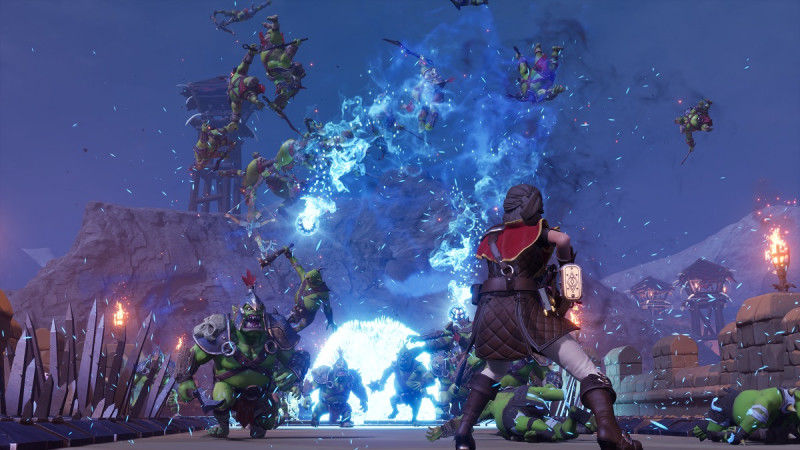
Enlarge/ Artist’s rendering of players that aren’t interested in game streaming reacting to news that Orcs Must Die 3 is a Stadia exclusive.
[Update (7:45pm ET): In a “clarification” post on Reddit this evening, Robot Entertainment CEO Patrick Hudson said that Orcs Must Die 3 would be a timed exclusive for Stadia, but the company wouldn’t say how long that timing would last. This is a relatively standard setup for third-party exclusive games these days.
“OMD3 would not be possible today without Google’s support,” Hudson wrote. “They are behind the game in a big way. We’ve hired more developers to bring it to life. It;s the OMD game that fans of the first two games have been wanting, and we’re thrilled that we have the opportunity to make it.”]
Original Story
Excited to get back to the silly tower-defense action of Orcs Must Die with the series’ next upcoming sequel? You’d better be ready to do so via a streaming high-speed Internet connection. That’s because Google and Robot Entertainment announced today that Orcs Must Die 3 will be a Google Stadia exclusive when the game launches in spring of 2020.
In a Stadia Connect announcement today, Robot Entertainment CEO Patrick Hudson said Google invited his team to check out Stadia back in January of 2018, well before the service’s public announcement earlier this year. “Right away it was a fantastic experience,” he said. “I immediately saw it as the next transformative platform coming to the industry.”
Design Director Jerome Jones was also on hand in the video to stress how, thanks to Stadia’s centralized servers, the game will feature massive armies with 500 monsters clustered together in a tight space. Orcs Must Die 3 players won’t be “subject to the power of their machine… everyone gets that same massive power,” Jones said.
Up the stream without a paddle
Those Stadia players will, of course, be subject to Stadia’s bandwidth requirements, which start at a recommended minimum of 10Mbps as well as potential added latency from the Internet roundtrip to and from Stadia’s data centers. That’s par for the course for Stadia games, but as a Stadia exclusive, Orcs Must Die 3 won’t even offer potential players the option of downloading a local copy to play without an Internet connection.
While Orcs Must Die 3 is the highest-profile exclusive announced for Stadia thus far, it’s not the first one to be revealed. Back in June, Google announced Overcooked-style party game Get Packed as a Stadia exclusive from newcomer studio Moonshine. RiME developer Tequila Works also announced moody platformer Gylt as a Stadia exclusive that month. But the company later threw some cold water on that announcement: co-founder and creative director Raúl Rubio Munárriz contradicted the game’s own public trailer by telling Eurogamer “we haven’t confirmed that it’s an exclusive yet… that’s a question we cannot answer.”
Google hasn’t been shy about its ambitions for exclusive Stadia content, with Google Head of Stadia Games and Entertainment Jade Raymond saying back in March that the company was creating a first-party publishing house just for such games. Google’s Phil Harrison said such games might be able to take advantage of “distributed physics” and “complex multiplayer going from hundreds to tens of thousands in a very sophisticated world” by focusing on Stadia’s powerful servers.
“With cloud gaming, particularly the idea of compute being sharable across multiple CPUs in a data center, now this transition to gaming being data-centric is going to a really fundamental shift,” Harrison said in April.
Stadia’s exclusivity ambitions come amid controversy surrounding Epic’s continuing efforts to buy as many exclusives as possible for the Epic Games Store. With those games, though, PC gamers are merely faced with the prospect of downloading a free launcher to play the “exclusive.” With Stadia exclusives, though, potential players had better get used to the idea of getting set for remote game streaming if they want to try certain games.
https://arstechnica.com/?p=1554283
Kerbal Space Program 2 will take flight in 2020—here’s the first trailer
The game’s logo from its trailer.
The trailer is a pre-rendered cinematic with many shots inspired by famous space films.
There’s also this allusion to Apollo 11, but…
… things go goofy pretty fast, as also happens in the game.
The trailer features glimpses of your standard rocket-building concept…
… but you can build colonies too. Notice this one is collapsing a little bit—that’ll happen.
During the Gamescom opening night livestream, game publisher Private Division released a new trailer revealing and announcing Kerbal Space Program 2, a sequel to the popular 2015 physics-based spaceship construction and spaceflight sim. Kerbal Space Program 2 will be released in the first quarter of 2020.
We’ve included the trailer below. Set to music by M83, it’s a pre-rendered cinematic that humorously juxtaposes dramatic spaceflight documentary tropes with the characters and frequent accidents of the game.
Newly announced features include “new planets to explore, new technologies to traverse the stars, and the ability to establish colonies, all rooted in real-world science,” according to Private Division’s press release. Additionally, the sequel will bring multiplayer to the franchise, and players will be able to build “without the constraints of planetary gravitation for the first time,” which should allow for more elaborate constructions than were possible in the previous game.
[embedded content]
Kerbal Space Program 2 cinematic announce trailer
The game will not be made by Mexico City-based Squad, the developers of the original Kerbal Space Program. Squad is also an interactive marketing agency and is not directly involved in the making of this sequel; some of its former game-development talent was hired by Valve in 2017. Also in 2017, Take Two Interactive acquired the rights to Kerbal Space Program. Kerbal Space Program 2 publisher Private Division—which also published the enhanced edition of the first game—is a publishing label of Take Two that is focused on independent games that are smaller than the parent company’s usual fare.
The new developer behind Kerbal Space Program 2 is Star Theory Games, a Seattle-area independent studio that formerly went by Uber Entertainment. According to Private Division’s press release, “Star Theory Games is comprised of a team of engineers and designers with aerospace specialization who have worked on a variety of titles including Monday Night Combat, Planetary Annihilation, Microsoft Flight Simulator, and more.”
Kerbal Space Program 2 will be released first on PC in spring 2020 for $59.99, with PS4 and Xbox One versions to follow shortly.
Review: Fight scenes are the only bright spot in grim, joyless Wu Assassins
[embedded content]
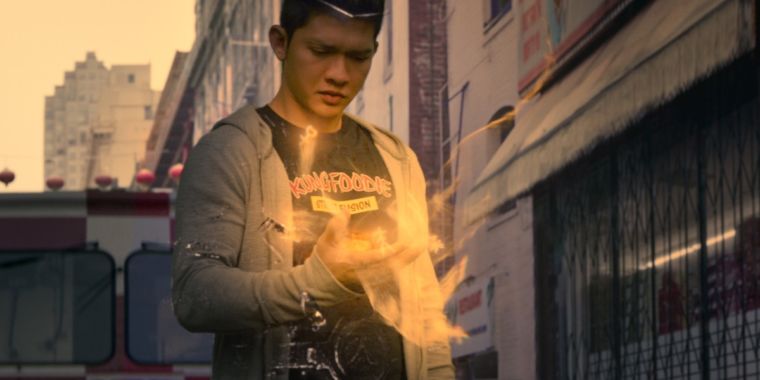
Iko Uwais stars as Kai Jin, a Chinese-Indonesian chef in San Francisco’s Chinatown who is granted a mystical power in the new Netflix series Wu Assassins.
A humble chef is granted mystical powers to hunt down five powerful warlords in Wu Assassins, a new supernatural action drama from Netflix. Unfortunately, a talented cast and terrific fight choreography can’t keep the show from sinking under the weight of its leaden, uninspired script. No martial arts series should be this much of a slog.
(Some spoilers below.)
Indonesian martial-arts star Iko Uwais (The Raid, Stuber) stars as Kai Jin, a Chinese-Indonesian chef in San Francisco’s Chinatown who finds himself chosen as the last of the Wu Assassins, a long line of fighters tasked with killing the five Wu Warlords. The warlords all possess elemental supernatural powers tied to fire, wood, earth, metal, and water. These powers were conferred upon them by the Wu Xing: five shards that are absorbed into the body when touched. Kai’s task is to kill the current crop of Wu Warlords, reassemble the shards, and send them back to heaven where they belong, thus ridding the world of their influence. Not that the Wu Xing are necessarily evil: we learn they reflect the character of whoever possesses them. It just so happens that bad people tend to crave the immense power they confer.
All this is set against the backdrop of the Chinese triad in San Francisco. Kai’s estranged adoptive father, Uncle Six (Byron Mann, The Expanse), heads the triad—hence the father/son estrangement. And Uncle Six turns out to be the Fire Wu, complicating matters even further. Kai has a strong bond with three childhood friends, all of whom survived a warehouse fire as kids: Jenny Wah (Li Jun Li, Quantico), who runs a chic Chinese restaurant thanks to a loan from Uncle Six; her brother Tommy (Lawrence Kao, The Walking Dead), who’d be a great restaurateur if he could kick his drug habit and the triad; and Lu Xin Lee (Lewis Tan, Iron Fist, Into the Badlands), who owns a custom garage that serves as a front for the triad. There’s also an undercover cop, Christine “CG” Gavin (Katheryn Winnick, Bones, Vikings), trying to infiltrate the triad.
Indonesian martial arts star Iko Uwais fights with the grace of a dancer.
Let’s start with what Wu Assassins gets exactly right: stellar fight scenes. You’d expect no less with such a skilled martial artist as Uwais playing the lead; he fights with the grace of a dancer, and there are scenes where his fists are moving so fast, they’re little more than a blur on-screen. The choreography is creatively brutal, and most of the main cast members have at least some martial arts training and do their own fighting, so there’s no need for Iron Fist-style creative editing. JuJu Chan is a joy to watch in action as Zan, Uncle Six’s ambitious lieutenant. Chan is sometimes called the “female Bruce Lee,” and her beat-down of Jenny in an underground street-fighting ring is proof she has earned the moniker.
Unfortunately, the script is a dull, plodding mess, with gaping plot holes and almost laughably over-earnest dialogue. Much is made of Kai’s unwillingness to kill people, which frankly makes him a very poor choice for the Wu Assassin and necessitates an elaborate ploy involving a special poison to remove the Wu Xing without killing its host. Then, just as quickly as the poison option is introduced, it’s forgotten in favor of good old-fashioned killing. For some inexplicable reason, Kai takes on the face of a monk (Mark Dacascos, John Wick: Parabellum) when he fights as the Wu Assassin. I mean, Dacascos is a gifted martial artist in his own right, but it doesn’t make sense to pull the focus from Uwais. And the final 10 minutes literally just tacks on a clumsy setup for a possible second season. Talk about a failed cliffhanger.
Aspiring chef Kai Jin (Iko Uwais) plies his trade in a local food truck.
His best buddy from childhood, Lu Xin Lee (Lewis Tan), runs Lees Wheels, a front for the Chinese triad in San Francisco’s Chinatown.
Kai is pals with a local grocer, Mr. Young (Tzi Ma).
Kai is chosen to be the new Wu Assassin.
Ying Ying (Celia Au) is Kai’s guide in the Dao, and she shows him the statues of the Wu assassins who came before him.
Kai takes on the face of a monk (Mark Dacascos) when necessary to protect his identity.
Flashback: the Fire Wu uses his power to take over Chinatown’s crime syndicate.
A teenaged Kai, Liu Xin Lee, and brother/sister duo Tommy and Jenny Wah (Lawrence Kao and Li Jun Li) were trapped in the building when the fire started.
The Fire Wu lobs a fireball.
Kai’s adoptive father, Uncle Six (Byron Mann), is the leader of the Chinese triad and also the Fire Wu.
Uncle Six’s right hand, Zan (JuJu Chan), is a deadly force to be reckoned with.
Undercover cop CG (Katheryn Winnick) gets caught up in Kai’s quest.
Lu Xin Lee, Tommy, and Jenny help Kai concoct a magical potion to take on the five Wu masters.
A well-executed kick is a beautiful thing.
Lu Xin Lee defends himself in a tight spot.
It’s such a shame, because there is enough here in terms of a potentially rich mythology to get a sense for the show this might have been. The strongest plot line involves the Wood Wu, Alec McCullough (Tommy Flanagan, Sons of Anarchy), a Scottish crime lord who wants to challenge Uncle Six for control of Chinatown. He was once a Wu Assassin, but his wife and son were killed by the Water Wu. In desperation, he became the Wood Wu in hopes of using the healing powers to resurrect his family. Instead, he has had to live five centuries without them. He has a scheme to unite all five Wu Warlords in their human hosts and open a portal into the past to reunite with his family. Never mind that doing so would apparently unravel the spacetime continuum.
If only the show had taken the time to develop equally compelling backstories for all the Wu Warlords, we might care more about them as characters. They’d certainly be more interesting villains.
While the cast is undeniably talented physically, not all of them are equally strong actors—and it takes some pretty strong acting skills to rise above a script this bad. Uwais, Mann, Winnick, Chan, and Flanagan are up to the task, as is Summer Glau (Firefly, The Sarah Connor Chronicles), who is tragically wasted in the small supporting role of Miss Jones, the Water Wu. But poor Celia Au (Lodge 49) as Ying-Ying—the very first Wu Assassin and a kind of spirit guide to Kai—is stuck with all the clumsy exposition dialogue. She flounders badly.
It’s not unusual for Hong Kong action films in particular to suffer from similar faults. There, too, the whole point is to create exciting, innovative fight scenes, and those of us who are fans of the genre will forgive quite a lot as a tradeoff. But the best of those lean into the silly absurdity with joyful relish. The greatest sin Wu Assassins commits is that it is unrelentingly grim and joyless. My advice: watch it for the incredible fight scenes and fast forward through the rest.
Insomniac Games acquired by Sony, calls out “a special relationship”
Enlarge/ One of these PlayStation controller icons is not like the other. Insomniac Games’ logo, third from the left, is now an official part of the Sony Interactive Entertainment family.
Sony / Sam Machkovech
Insomniac Games, one of PlayStation’s most consistent game developers, has been officially acquired by Sony Interactive Entertainment. Monday’s announcement did not include any terms.
“We’ve enjoyed a special relationship with PlayStation practically since our inception,” Insomniac founder and CEO Ted Price said in the acquisition’s announcement. “Our partnership amplifies our potential, and Marvel’s Spider-Man was a testament to this.”
It’s easy to assume that Insomniac already operated as a “first-party” Sony game studio. The developer has been responsible for some of the biggest PlayStation-exclusive franchises throughout that console’s lifespan, including Ratchet & Clank, Resistance, and last year’s phenomenal Marvel’s Spider-Man.
However, the developer began dipping its toes into multi-platform efforts in the ’10s, including the (formerly) Xbox-only platformer Sunset Overdrive and a few Oculus-exclusive VR games. In fact, Insomniac is still putting the finishing touches on Stormlands, arguably the most impressive Oculus-exclusive VR game to date, which doesn’t yet have a release date in spite of over a year of public demos.
In an emailed response to Ars Technica, Facebook officials confirmed that “Stormlands will launch as planned” in spite of this acquisition. The VR game is currently an Oculus exclusive, and we don’t yet have reason to believe that will change, in terms of the game eventually landing on Sony’s own PlayStation VR headset.
What does Amazon’s “Top Brand” badge actually mean?
Getty Images | Leon Neal
Amazon’s biggest asset can also be a headache for its customers. The so-called “everything store” really does sell almost any item consumers might want, but it’s often cumbersome and time-consuming to sort through them all. To avoid “choice overload,” the retail giant has come up with certain signals designed to help people distinguish high-quality products from the rest. They include star ratings and product reviews, as well as “Amazon’s Choice,” a mysterious badge bestowed on some individual items, which has recently become the subject of scrutiny from lawmakers. Now, Amazon is testing a new signifier, called “Top Brand.” But no one seems to know what, exactly, a “Top Brand” is, and Amazon won’t say.
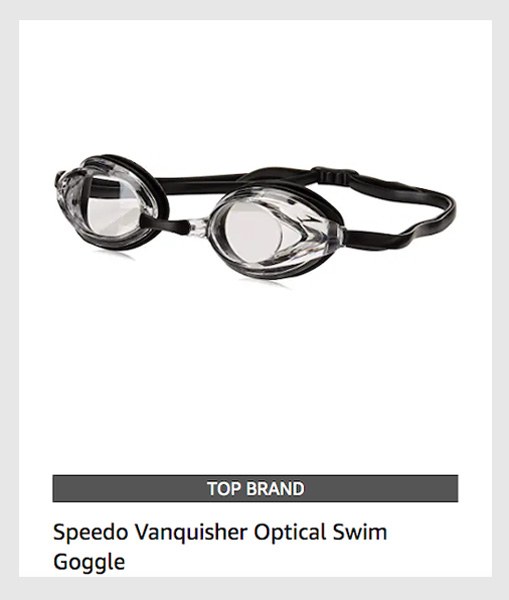
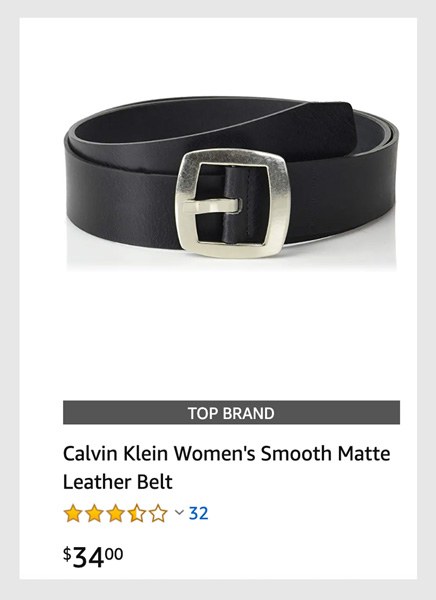
Amazon has long given customers the ability to search by “Top Brands,” but the products previously weren’t distinguished by a special badge in search results. Now, if you search for “swimming goggles,” for instance, Amazon may return several pairs from Speedo whose photos bear a “Top Brand” badge. Here’s the weird part: the longstanding “Top Brands” search filter isn’t quite the same thing as the newer “Top Brand” badge. Here’s an example: if you look up “women’s belts” on Amazon and filter for “Top Brands,” you may notice that not all of the results actually receive the Top Brand badge. How can a company be a Top Brand in one sense but not in another?
Louise Matsakis via Amazon
Amazon says the discrepancy exists because the Top Brand badge is only a feature within Amazon Fashion, the part of its website dedicated to clothes, accessories, and luggage, while the Top Brands search filter is available across the entire marketplace. It makes sense for Amazon to try out this new badge feature specifically for fashion, since consumers are generally brand-conscious when shopping for things like handbags and shoes. But since not all women’s belts are within the fashion category, they’re not eligible for the Top Brand badge, even though Amazon might consider them to be Top Brands generally. Confusing, right?
At this point in the story, you may be wondering: What even is a Top Brand? Are Top Brands selected by humans? Or is the metric controlled by an algorithm? Amazon, for its part, says the Top Brand badge simply highlights brands that customers love, but it did not go into any further detail about how that’s determined.
Louise Matsakis via Amazon
Wired reached out to four Amazon experts to ask about the logic behind the preexisting Top Brands filter, including two former employees, and they each had different explanations. Fred Dimyan, the CEO of Potoo Solutions, a firm that consultants with e-commerce companies, says Amazon takes two factors into consideration when awarding the honor: the amount of products a brand sells and how many different products it offers in the first place. In other words, companies that make a narrow range of goods, but sell a lot of them, are likely to be Top Brands. Dave Bryant, an Amazon seller and blogger, thinks the distinction might be related to customers’ overall purchase satisfaction, which can include metrics like how often people returned items.
James Thomson, a former Amazon employee and a partner at Buy Box Experts, a firm that consults with independent Amazon sellers, says Top Brands likely have high sales volumes and high conversion rates, meaning a lot of people who look at their product listings ultimately choose to buy from them. Chris McCabe, another former Amazon employee who now consults with Amazon sellers at eCommerceChris.com, says Top Brands are the highest revenue-earning items in a certain category. Every expert agreed that “Top Brand” is not a promotional title companies can pay to display on their Amazon product listings.
At least anecdotally, Top Brands look to encompass household names you might find in a mall, like Steve Madden, Oakley, Under Armour, and IZOD. That might be the point: to flag the names you’re already familiar with from shopping in brick-and-mortar stores, so it’s easier to purchase something quickly from a trusted company. “I wouldn’t be surprised if the idea is to make this function like being verified on social platforms,” says Juozas Kaziukénas, founder of the e-commerce intelligence firm Marketplace Pulse, who first alerted Wired to the Top Brand badge. But there are also lots of unknown companies with the Top Brand distinction, and every one of Amazon’s in-house labels appears to be designated a Top Brand, too.
After Wired reached out to Amazon for this story, something strange happened. Many of the Top Brand badges that had been present in search results Wired conducted disappeared, including in an incognito browsing window on several different computers, browsers, and phones. Amazon says, because the feature is a test, it may not always be visible.
US lawmakers have begun scrutinizing how Amazon evaluates the goods for sale in its sprawling marketplace using signals like Top Brand. On Monday, Senator Bob Menendez and Senator Richard Blumenthal, both Democrats, sent a letter to Amazon CEO Jeff Bezos asking for a “detailed explanation” about how the Amazon’s Choice badge is awarded, after a Buzzfeed investigation found it was sometimes given to what appeared to poor-quality items. Democratic presidential candidate and Massachusetts Senator Elizabeth Warren has also expressed concern that Amazon may favor items from its own house brands over those from competitors. And the Department of Justice and Federal Trade Commission each recently announced they are looking at the business practices of online marketplaces, including Amazon specifically.
In a statement, a spokesperson for Amazon didn’t respond directly to the senators’ letter. The company instead highlighted its efforts to detect fake product reviews and said it believes that 90% of inauthentic reviews are computer-generated.
Opaque features like “Top Brand” serve as a reminder that Amazon isn’t a traditional retailer, despite the fact that it often wants to look like one to consumers. It’s an enormous marketplace where millions of independent merchants from around the world sell their goods. Amazon needs not just to combat bad actors but also steer customers toward the brands it knows they’re likely to be happy with, or risk them getting overwhelmed and going somewhere else. The hard part for Amazon, like every online platform, is figuring out how to manage the chaos without taking full responsibility for the consequences of its management choices.
Is there something about Amazon you think we should know? Contact the author at louise_matsakis@wired.com or via Signal at 347-966-3806.
Undead hordes rise from the sea in delightfully campy Zombie Tidal Wave
[embedded content]
SYFY hopes to do for zombies what all those Sharknado movies did for sharks with Zombie Tidal Wave.
Fans of SYFY’s delightfully cheesy B-movies like Sharktopus and Sharknado, rejoice. This weekend, the network debuts its latest offering in the genre: Zombie Tidal Wave. The title pretty much says it all.
(Mild spoilers below.)
Director Anthony C. Ferrante is the mastermind behind the hugely popular Sharknado and its five (count ‘em!) sequels—it’s a franchise that now even has a theme park attraction in Malaysia called Sharknado Alive. So what’s this latest movie about? The trailer (embedded above) reveals a few details. A mysterious substance oozes out from the ocean floor, and suddenly hordes of the undead are swimming to the surface, popping up in the shallows off a local beach to snack on some unsuspecting sunbathers just trying to enjoy the day.
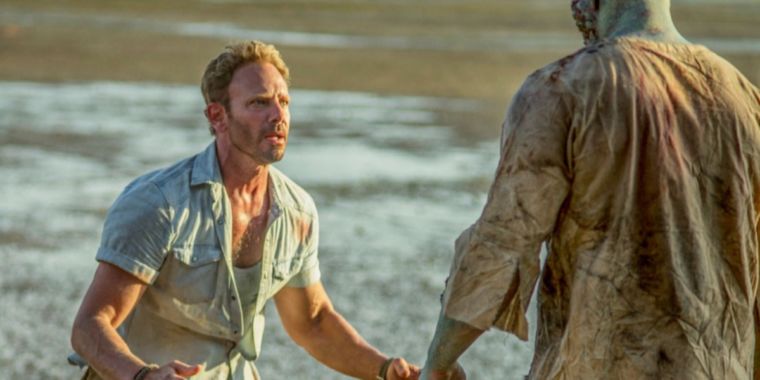
And then… ZOMBIE TIDAL WAVE! Yes, it’s a zombie pandemic, and “rogue veteran sea captain” Hunter Shaw (Sharknado franchise star Ian Ziering) is just the man to fight the monsters off and figure out what’s causing the pandemic in the first place. He’s aided by a few plucky locals from the fictional town of Emrys Bay, and it’s a safe bet that not all those locals will survive.
When Ziering approached Ferrante about making Zombie Tidal Wave, the director was immediately intrigued by the fun, silly title, even though he’d never made a zombie movie before. “I love the genre,” he said. “So I thought, let’s make a zombie movie first and foremost.” The film was shot over 18 days in Thailand late last year, and it mostly takes place during the day. In light of that, Ferrante chose to play up the 1980s feel, particularly the style of Italian horror director Lucio Fulci (aka the Godfather of Gore).
A strange substance is leaking from the ocean floor.
YouTube/SYFY
And now the undead are swimming to the surface.
YouTube/SYFY
Zombies emerge from the waves.
YouTube/SYFY
What is that floating off in the distance?
YouTube/SYFY
This beach goer is horrified to see a zombie emerge from the ocean.
YouTube/SYFY
Lunch time!
YouTube/SYFY
A school of swimming zombies converges on a boat.
YouTube/SYFY
Hunter Shaw (Ian Ziering) wonders what he’s going to do about them.
Zombie tidal wave!
YouTube/SYFY
Run away! Run away!
YouTube/SYFY
Hungry zombie stops for a snack.
YouTube/SYFY
A new zombie awakens.
YouTube/SYFY
Take that, you flesh-eating ghoul.
YouTube/SYFY
Hunter Shaw has a special electrified weapon.
YouTube/SYFY
Zapped into oblivion.
YouTube/SYFY
Has sword, will fight zombies.
Mano a undead-mano.
Check out this awesome movie poster art.
YouTube/SYFY
Given his budget constraints, “We can’t achieve the things that World War Z does, or The Walking Dead,” said Ferrante. “We don’t have $200 million and we don’t have 100 days to shoot. But we can do really graphic gore and make it fun. It takes place in modern day, but if you’re a fan of these movies, you’re going to notice a lot of little nods [to the ’80s].” There’s a character named Blaine (Lincoln Bevers), for instance—”We needed a douchebag, and Blaine is the quintessential 1980s douchebag name”—who sports a pink polo shirt and teal blue sweater despite the heat on set in Thailand. Think preppy Miami Vice.
Zombie Tidal Wave really does dial-up the gore-factor, an unusual choice for SYFY even if the network has been known to produce edgier fare in the past (for instance, its raunchy 2017 grindhouse homage, Blood Drive). About 95% of the gore on-screen was done with practical effects rather than CGI—like the moment when someone’s head explodes, spewing brain matter out the back. Blood has long been simulated on-screen with corn syrup and food coloring, of course, combined in this case with chunks of material in a pressurized blood rig. “We thought we were going to be trimmed by the network, but they said it was fine,” said Ferrante.
“At the end of the day, I just want people to go into it having a good time.”
Most of the boating scenes were filmed onsite, along with a few dives to get some footage of sunken ships. On the first day of shooting, the crew actually got stranded at sea when the boat’s anchor got stuck. The blue-tinged zombie makeup also posed a challenge, not just because Thailand is hot and humid, but the monsters are often in the water. And because of the brutal shooting schedule, some scenes at the end of the day were pretty much done in one take—like the scene where actress Tatum Chiniquy, who plays Sam, is hiding from a zombie in the closet and the zombie smashes its head through the door. “We broke once or twice for the door [effect], but that was essentially a continuous take,” said Ferrante.
That ended up being a bonus, according to Ferrante. It kept the actors on their toes and in the moment, lending an immediacy and spontaneous energy to the final film. “It’s supposed to be silly, it’s supposed to be fun,” said Ferrante. “At the end of the day, I just want people to go into it having a good time. I don’t think there’s any shame in trying to have fun.”
Zombie Tidal Wave premieres on SYFY Saturday, August 17 at 9pm ET/8pm CT. It’s part of SYFYs “Off the Deep End Weekend,” which means you can also binge all the Sharknado movies, plus Sharktopus and a bunch of other campy shark movies for good measure.
Listing image by SYFY
https://arstechnica.com/?p=1550535
Despite complaints, Epic stands behind Fortnite’s “anyone can win” mechs
Epic is showing no signs of plans to remove the controversial mech-like B.R.U.T.E. from Fortnite, saying the powerful new combat option helps in the studio’s mission “to bring players of all skill levels together to have a fun experience where anyone can win.”
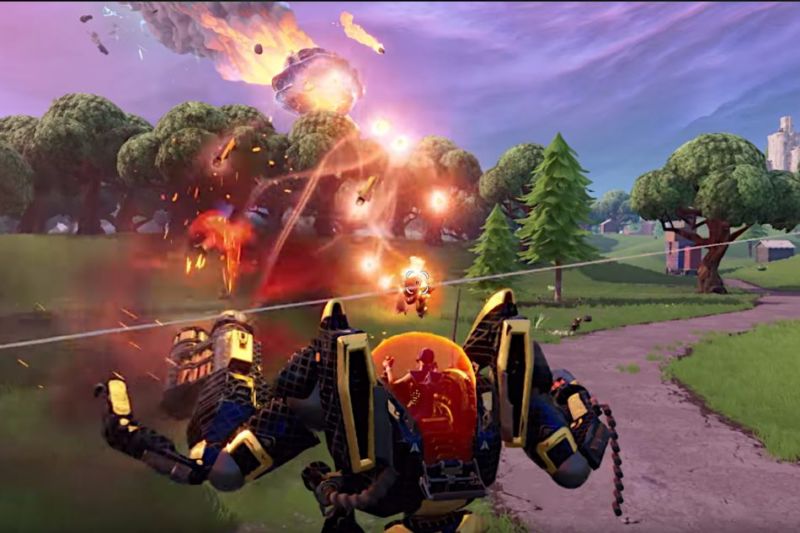
The launch of the B.R.U.T.E. earlier this month has been one of the biggest changes in the game’s short history, letting two players team up in an armored automaton to hurl a barrage of missiles at relatively tiny, mech-less opponents. Angry players have been flooding online forums and social media with clips showing overpowered mechs destroying other players, claiming the addition is ruining the competitive balance of the game.
Epic has already tweaked the B.R.U.T.E. a bit in response to the complaints, adding a targeting laser to warn otherwise unsuspecting players of an incoming barrage. But in a new update posted yesterday, the Fortnite Team suggested the B.R.U.T.E. has actually been beneficial to their view of how the game should be balanced.
We’ve heard the frequent discussions (#RemoveTheMech) about the B.R.U.T.E., and decided this would be a good opportunity to explain the Fortnite philosophy. The mission of Fortnite is to bring players of all skill levels together to have a fun experience where anyone can win. For example—everyone having a shot at that first elimination or Victory Royale moment and the satisfying feeling that comes with it. Right now, we know there are players out there who have never had that opportunity.
Another part of the mission is to provide spectacle and entertainment when playing Fortnite. Bringing these moments to the game every week means there is always a new way to enjoy and experience the game.
The B.R.U.T.E. was added at the start of Season X with this mission in mind. Since then, we have seen players who had previously struggled with getting eliminations acquiring more, while the number of eliminations earned by more experienced players remained steady.
Enlarge/ Though they may feel overpowered, Epic says statistics show mechs are not utterly dominating the Fortnite competitive experience.
In its post, Epic also shared a couple of graphs showing that the B.R.U.T.E. has not completely dominated more traditional Fortnite gameplay. The mechs average only six or seven of the 99 total eliminations per match in most modes, and only one or two eliminations in the more competitive Arena modes. The latter statistic could be because, as Epic points out, “specifically for Arena we made the change to spawn rate in order to reduce late-game encounters. This is due to a higher number of players surviving to those circles compared to non-Arena modes.”
The anger remains
Statistics aside, these numbers don’t really capture the frustration many players say they feel when facing down a powerful mech-equipped opponent or the disappointment they might feel at no longer having a more traditional mech-free gameplay mode. “Personally the mechs are not so much of a fun experience when your whole squad gets wiped by one and you had the best loot,” writes one characteristic Twitter poster using the #RemoveTheMech hashtag on Twitter (which trended briefly last weekend).
The “anyone can win,” all-skill-levels-welcome ethos Epic is espousing here could also rankle long-time Fortnite players, who have spent months building up their skills only to see Epic seemingly catering more to “newbies.” Popular Fortnite pro Tfue epitomized that viewpoint in a recent stream, saying bluntly, “I fucking hate everything about these fucking mechs, they can go fuck themselves. If Epic Games is watching my stream, go fuck yourself until you take these out of the game because they don’t fucking do anything positive. They’re all negative. Fuck yourself.”
That kind of backlash is at least a little ironic, since Fortnite‘s Battle Royale mode was initially widely seen as a more welcoming and accessible alternative to the more technical gameplay in games like PUBG. But it also highlights a split that’s long been developing among Fortnite‘s massive player base between highly competitive players solely looking for kills and the (perhaps larger?) community of players more interested in building stuff and goofing around.
In any case, Epic seems content to weather the backlash and stick with the B.R.U.T.E.s for the time being. The company will have an easy opportunity to change course and introduce more new gameplay tweaks with the start of Fortnite‘s next season, expected sometime in October.
https://arstechnica.com/?p=1552859
Invader Zim: Enter the Florpus might be Netflix’s best nostalgia throwback yet
Zim (left) and GIR have been hiding for years. But they’re back.
Netflix / Nickelodeon
The special opens with a hilarious recap of the series up to this point, all drawn in hyperrealistic fashion.
Dib’s been hiding out in a lair, keeping tabs on Zim’s eventual return.
Gaz wishes her dad would make dinner instead of this goofy, cheery robot.
Gaz is forced to get her brother downstairs for dinner… and she preps accordingly.
“Gazmat.” Love it.
Dib is revealed.
First, we see Dib as a silhouette.
Once Zim’s return is confirmed, Dib finally emerges. He literally cannot get his tush out of that office chair.
Eventually, Dib shapes up. Maybe a bit too much?
Zim pleads with the Almighty Tallest.
“You mean Invader Jim, the one who sends us the donuts? He’s great.”
Of all the cartoon series produced by Nickelodeon in its decades of operation, none could have been more unlikely than Invader Zim. Creator Jhonen Vasquez had previously achieved cult fame and notoriety for producing two of the most twisted comic series of the late ’90s, Johnny the Homicidal Maniac and Squee, full of gallons of black-and-white blood and utterly evil characters. Yep, that’s a perfect fit for one of the biggest children’s networks of all time.
That the series aired for a full year on Nickelodeon, packed full of dark comedy and sneering satire of complacent mainstream culture, is as baffling now as it was then. But that surprise has nothing to do with the series’ inherent preteen-friendliness. Above all, Invader Zim worked because its wiry alien fingers tapped directly into the nonconformist weirdo tendencies that lurk in growing children. It respected the instincts of preteens—and understood their equal desires to feel smugly superior to authority while also acting as immaturely as possible. This concept wrapped deftly around a universe where one alien had sneaked onto the planet Earth—with the Vasquez twist that nobody other than the two main characters (the alien, Zim, and his Mulder-like rival, Dib) gave a damn.
This balanced juggling of topics—of maniacally cackling teen aliens, galactic-stakes battles over the universe, and bulbous creatures who both roll around in and vomit entire pizza pies—is not an easy thing to pull off. Thank the Almighty Tallest, then, that Invader Zim‘s return this week on Netflix is not a lazy cash-in on catch phrases or previous episodes. Invader Zim: Enter the Florpus may rank as Netflix’s most impressive nostalgia rebirth to date.
“Sitting in a toilet? The whole time?”
This week’s new 70-minute standalone special begins by introducing a plot point hinted to in the series’ return as an Oni Press comic book. The alien Zim vanished years ago without a trace, but arch-nemesis Dib still obsesses over the possibility that Zim has somehow been hiding, waiting, and lurking. Dib’s younger sister Gaz relentlessly calls her brother out for his unhealthy obsession (which has turned him into an unhygienic blob, wedged into his office chair). Seconds later, she flatly remarks, “Oh, there he is.”
Sure enough, Zim is back, doing calisthenics and stretches in the series’ familiar neighborhood.
From there, each of the two main characters continues their streak of obsessing over how to beat their rival, which likely sounds familiar to series fans. No matter how big the stakes become in Zim and Dib’s battle for Earth’s future, the special never fails to remind us of how foolish these rivals are in their battle to out-narcissist each other. Zim’s supposed bosses complain about how much they wish their “Urth” ambassador would just leave them alone, while Dib is truly the planet’s last Rodney Dangerfield, failing to elicit respect from both his mega-famous scientist dad and his much more capable younger sister.
Enlarge/ Dib and his scientist father have a nice subplot throughout the special.
Netflix / Nickelodeon
Yet the special manages to do something that has eluded many TV series’ bloated, feature-length efforts: it keeps the story’s momentum moving with a tight, focused plot. Instead of introducing a cast of new characters or an ambitious and unfamiliar motivation, Vasquez plays to the series’ strengths by having the two loudest, weirdest characters concoct goofy schemes that slam human and alien technology together in visually stunning fashion, all while failing brilliantly and repeatedly for humor’s sake. Why does the plot have to become unwieldy, when the show can instead take a welcome breather with a hilariously drawn montage of something else going wrong? And why waver from a successful formula of hopping from one relationship to the next while letting the plot unspool its goofy surprises? As soon as we’re bored watching siblings Dib and Gaz battle over a way to sneak out of a hairy situation, the camera can pan to Zim and his dimwitted robot companion GIR, where we watch them each talk past the other to great comedic effect.
One thing that boosts Enter the Florpus is its willingness to throw in some true emotional moments, in the form of Dib finally confronting his father about a conflict that persisted throughout the TV show. “I wish you were on my side!” Dib shouts while trying to convince his father, for the zillionth time, that aliens do exist. His father pauses for a beat, peering through his thick pupil-hiding scientist glasses before replying, “Son, wishing isn’t very scientific.” The special is extremely careful not to overdo this quest for affirmation, and luckily, it doesn’t have to. We already know Dib craves an entire planet’s worth of gratitude for everything he thinks he’s done to battle aliens, and his delusion is easily mined for comedy without diluting the emotional power of a boy wishing his dad just gave a crap.
“Their greatest and most incredible invader!”
Enlarge/ The gang’s all here. Wait, who’s that weird, fish-looking thing? You’ll find out soon enough.
Netflix / Nickelodeon
Everything else about the special is either easily spoiled or would make absolutely no sense typed out in the context of a review. But here’s one of a few anecdotal examples that, to me, highlights exactly the sense of humor Enter the Florpus does best. In one scene, a hundreds-strong army of robots is torn apart, and Zim is forced to watch this battle happen from the sidelines. We have only briefly been introduced to the fact that Zim controls any of these robots. After we see sparks fly and robots fall apart, the camera pans to Zim, who looks entirely forlorn as he watches from afar.
We hear a metallic whack in the distance. “Spencer!” Zim cries. Another crunch. “Devon!” One more smash. “Maria!” he yells, this time rolling the “r” for no apparent reason. Finally, a robot’s head lands in front of Zim’s feet, to which he exclaims, in his most bonkers scream yet, “Lawrence! Noooo!”
There’s so much genius to how this moment pulls away from a battle and introduces us to the care Zim has applied to these robots for no good reason. It’s funny on a sheer “Zim is shouting” level for kids, with equal parts silly animation and bonkers voice acting, along with the nuance of laughing at his obsessiveness over the otherwise-worthless bots. We even get a giggle-worthy bonus at the end of this sequence, when Zim barks an order to his robo-buddy GIR: “Avenge your robot brothers! And Maria!”
More often than that, Enter the Florpus elicits laughs—serious out-loud howls—for its willingness to abruptly disobey all logic and reason in the name of absurdity. Conversations will turn on a dime (especially when GIR unwittingly messes up), and these moments land so confidently that it’s easy to forget how long it’s been since we’ve seen a new animated Zim episode. Sometimes people call each other names, and other times characters punch each other, but there’s a strange kindness to how Florpus nails its memorable jokes and gags.
And that’s really the best part about the special: it carries forward the series’ bizarrely wholesome core, as opposed to pivoting to bloodiness or extreme content thanks to its new Netflix home. The original series’ ethos (carried by its use of gorgeous, hand-drawn animation) remains intact. Thank you, Vasquez and company, for pulling off another successful alien invasion.
Listing image by Netflix / Nickelodeon
https://arstechnica.com/?p=1551285
Bungie says current Destiny 2 development is “unsustainable”
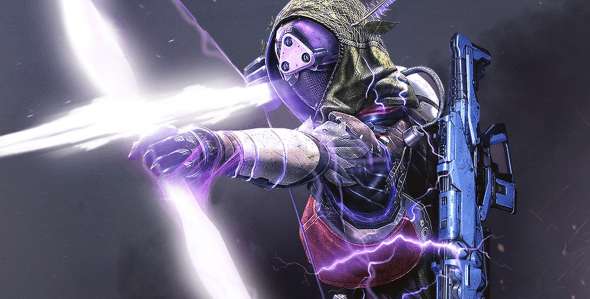
The arrow is aimed at a culture of overwork.
Bungie says it is taking steps “to keep our teams healthier” following a year of Destiny 2 content development that “was starting to wear people down.”
That messaging comes from Bungie Creative Director Luke Smith, who shared the concerns as part of a massive “Director’s Cut” community update this week. In the update, Smith praised the team at Bungie for recently avoiding Destiny‘s history of post-launch “content droughts” and for doing “a great job of providing stuff to do, items to chase, growing fat with strength, et cetera.”
At the same time, though, providing the kind of content promised by Bungie’s Annual Pass system “was harder on the team than we anticipated,” according to Smith:
The scope of what we delivered, the pace that we delivered it, and the overall throughput for Annual Pass takes a toll on the Bungie team. I—and many others—had conversations throughout the year with team members—who had jumped from release to release—about the grind of working on Destiny. Working on the game was starting to wear people down. Here’s an example:
During the annual pass, we invented new, bespoke ways to earn rewards each season. Black Armory had its bounties, Season of the Drifter had the “Reckoning Machine,” Season of Opulence had its Chalice. Each of these mechanics—each with their own lessons—were valuable, but also put the team into an unsustainable development cycle. We needed to develop a more systemic, standardized set of mechanics for progression to keep our teams healthier.
We’re going to take this problem on in [the next year of Destiny 2].
Smith didn’t go into further detail on just how the Destiny team’s workload would be reduced going forward. But it’s not the first sign that Bungie has been scaling back the pace of updates for its workers’ benefit. Back in June, Smith said Bungie was delaying a patch to fix an in-game weapon by a month to help preserve the “work-life balance” of the development team.
Work smarter, not harder?
Those moves by Bungie reflect a small but growing trend of companies publicly saying they’re slowing game release schedules to avoid “crunch”—the widespreadindustry practice of requiring employees to work punishingly long hours to finish a game, sometimes for months on end.
In announcing a release date delay for Animal Crossing back in June, Nintendo of America President Doug Bowser told IGN that the decision came in part because of a “need to make sure that our employees have good work-life balance.” Apex Legends Executive Producer Drew McCoy said in April that while releasing frequent updates is a focus, “we want to maintain our culture as a development team and avoid crunch that can quickly lead to burnout or worse.” And Blizzard’s Mike Morhaime told Eurogamer last month that crunch “is not sustainable, and we need to find better ways of working,” even as he acknowledged it was key to the company’s formation and growth.
“I hear more and more publishers… rejecting crunch and saying, ‘That’s not how we operate,'” ESA president Michael Gallagher told Vice Games at E3. “And that is an attraction for the best and the brightest to see those opportunities and make those individual choices, to go to those companies.”
https://arstechnica.com/?p=1552291
Amazon unveils first batch of casting for The Wheel of Time adaptation
Enlarge/ Amazon is adapting the late Robert Jordan’s bestselling 14-book series of fantasy novels, The Wheel of Time.
Amazon has announced its first round of casting for The Wheel of Time, the long-awaited TV adaptation of the late Robert Jordan’s bestselling 14-book series of epic fantasy novels. Within that genre, Jordan’s series is as popular as George R.R. Martin’s Song of Ice and Fire.The last book in the series was published after Jordan died and written from Jordan’s notes by bestselling author Brandon Sanderson.
The TV series will center on Moiraine (played by Oscar-nominee Rosamund Pike), a member of a powerful, all-woman organization called the Aes Sedai. (In this world, magic exists, but only certain women can use it—i.e., the members of the Aes Sedai.) She identifies five young people, one of whom could be the reincarnation of a person who prophecies say will save or destroy humanity. Together, the youngsters embark on a journey across the world.
Josha Stradowski will play Rand al’Thor, aka The Dragon Reborn, He Who Comes With the Dawn, the Coramoor, Shadowkiller, and who knows how many other monikers. He’s apparently the person featured in the prophecy. Marcus Rutherford has been cast as apprentice blacksmith and dream walker Perrin Aybara. Zoe Robins will play healer Nynaeve al’Meara, and Madeleine Madden will play the powerful channeler Egwene al’Vere. Finally, Barney Harris has been cast as series comic relief, Matrim Cauthon.
Enlarge/ Madeleine Madden, Josha Stradowski, Marcus Rutherford, Zoe Robins, and Barney Harris.
There was one feeble prior attempt to jump-start a TV adaptation a few years ago. Entitled The Winter Dragon, the 30-minute short series pilot covered just the prologue of the first book in the series, The Eye of the World. The less said about it, the better. As Ars’ Lee Hutchinson wrote in 2015:
What makes for a relatively quick few pages in the book is stretched out over 30 interminable, plodding minutes onscreen, including three long commercial breaks. Max Ryan’s delivery of his lines as Lews Therin can best be characterized as “ghastly” (“Light forgive me. Light forgive me. Light… forgive me,” he says in an emotion-free monotone), and Billy Zane (yes, that Billy Zane) as Ishamael acts less like the godhood-obsessed Betrayer of Hope in the books and more like Cal from Titanic.
In other words: it wasn’t good. And apparently it wasn’t authorized. There’s a reason it aired in the middle of the night on FXX as “client-supplied programming,” more akin to an infomercial. Jordan’s widow and editor, Harriet McDougal, wrote in a statement that she was “dumbfounded” and had no idea a pilot was being made. The producers then countered with a lawsuit against her, claiming “breach of contract, slander, and interference with contractual relations and prospective economic relations.” But all that drama has since been resolved, and hopes are much higher for Amazon’s adaptation. Production is slated to begin this fall.