Expanse fans, no need to worry—Amazon orders season 5 of its new sci-fi show
[embedded content]
It’s back! The long-awaited fourth season of The Expanse returns on its new network, Amazon Prime. It will now apparently also air a future fifth season.
Variety reports that Amazon made the announcement during the Television Critics Association summer press tour over the weekend. The series showrunner to date, Naren Shankar, will presumably keep steering the ship going forward. While pre-ordering seasons of television in this regard isn’t a rarity (based on its past, Netflix probably already has the Duffer Bros. moving on S5 of Stranger Things, for instance), the news stands out a bit more considering The Expanse‘s reported ratings struggles at SyFy and subsequent cancellation. Though Amazon doesn’t green light everything in the same manner as its primary streaming service counterpart, the company has shown a willingness to strategically spend and support sci-fi and fantasy genre fare, from Good Omens to its future (hyper, hyper expensive) Lord of the Rings series. In that vein, The Expanse likely couldn’t have landed at a better second home.
https://arstechnica.com/?p=1542775
Classic Doom games vanish, reappear on Xbox One with features missing
Enlarge/ You can still purchase and play the first three Doom games on Xbox One consoles. But this comes after certain Xbox One-compatible ports of the series were apparently delisted on Friday.
Aurich Lawson / id Software
As part of its annual QuakeCon festivities, id Software surprise-announced a launch of all three “original” Doom games on modern consoles on Friday, effective immediately. That was solid news for PlayStation 4 and Nintendo Switch owners, who’ve yet to get ports of Doom, Doom II, or Doom 3: BFG Edition.
But the news was different on Xbox One, where all three games had already received digital-download ports thanks to that platform’s hearty Xbox 360 backwards-compatibility program. And on Friday, Bethesda gave those version’s holders a rude awakening: the company completely delisted those Xbox 360 versions.
As of press time, those games’ original SKUs can still be found in Larry “Major Nelson” Hyrb’s definitive Xbox 360 backwards-compatibility list, along with reminders that those games came back to life on Xbox One consoles in 2015 and 2016. Clicking any of the affected Doom games’ listings right now, however, leads to dead Xbox 360 content pages, the kind you might find for delisted Xbox games like Marvel Ultimate Alliance.
Owners of the original licenses are not redirected on their consoles to the new SKUs, and as of press time, those games’ original owners are asked to pay full price to play the new, Xbox One-native versions of those classic games ($5 each for Doom and Doom II, $10 for Doom 3).
Wait—they removed online play?!
These new SKUs both add features and take features away. Both of the first two Doom games now come with native split-screen play in both deathmatch and co-op modes for up to four players, a first for an id Software-produced version of either game. However, Doom II‘s Xbox 360 version originally launched with a console-exclusive expansion pack, “No Rest For The Living,” and that has not been brought back in today’s new Xbox One version. Worse, both of the first two games have lost all of their online gameplay modes (deathmatch, co-op). From what I can tell, Doom 3‘s full “BFG Edition” package has been kept intact, complete with its pair of expansion packs.
If you haven’t deleted either original Doom game from your Xbox One, the games will still function as advertised, complete with online mode access. For now, it appears that re-downloading the game is still possible if you previously purchased it, though it might require jumping through the hoop of downloading the “free trial” version via Xbox.com. (Scattered reports indicate that Xbox 360 consoles can still natively redownload both Doom and Doom II.) The best apparent way to hold onto the Xbox 360 versions of these three games on Xbox One is to keep an Xbox 360 disc copy of Doom 3: BFG Edition handy. Putting that disc in will still prompt players to install all three 360 SKUs of the original games to their Xbox One hard drive.
Bethesda representatives did not immediately respond to Ars Technica’s questions about the delisting. We’ll keep an eye on the situation and post an update if Bethesda gives existing classic-Doom buyers any recourse about recovering their purchases.
Consider today’s news another reminder that your digital game purchases are nothing more than licenses, which publishers are free to revoke. Konami’s free horror-game demo PT is the most obvious example, and its PS4 delisting in 2015 prompted rabid fans to sell consoles with working copies for well over $1,000. Issues with licensed songs and characters, meanwhile, have cursed the availability of games with characters like Scott Pilgrim, Wolverine, and Mickey Mouse. https://arstechnica.com/?p=1542321
Zombies have evolved to be harder to kill in Zombieland 2: Double Tap trailer
[embedded content]
Tallahassee and the gang are back to take on an evolved version of the walking dead in Zombieland 2: Double Tap.
Our favorite ragtag survivors of the zombie apocalypse must battle newly evolved versions of the undead in Zombieland 2: Double Tap, a sequel to 2009’s surprise hit black comedy Zombieland.
In the first Zombieland, a particularly virulent form of human-adapted mad cow disease sweeps across the United States, transforming most of the nation’s populace into ravenous zombies. The film follows a ragtag group of unlikely survivors—Columbus (Jesse Eisenberg), Tallahassee (Woody Harrelson), and orphaned sisters Wichita (Emma Stone) and Little Rock (Abigail Breslin)—on a road trip in hopes of finding some place yet untouched by the disease, ending with a pitched battle against zombie hordes in an abandoned amusement park. Audiences (myself included) loved the mix of horror and dark screwball comedy. In fact, Zombieland beat out the Dawn of the Dead remake as the top-grossing zombie film to date.
While the original cast expressed enthusiasm for a sequel in the wake of Zombieland‘s success, their enthusiasm waned as the project languished for several years. Along the way, the four main cast members were each nominated for Academy Awards, and Emma Stone actually won the Best Actress Oscar for her role in La La Land (2016). So it’s surprising and a bit gratifying that each of them retained sufficient fondness for their Zombieland experience to return for the sequel when it went into production. It’s not like any of them really needed the work. “I think they are making this movie because they love these characters,” Columbia Pictures President Stanford Panitch said in a June 2018 statement to The Hollywood Reporter.
Tallahassee’s Twinkie totem decorates the grille.
YouTube/Sony Pictures
Battling zombies in what’s left of DC.
YouTube/Sony Pictures
Wichita and Little Rock, armed and ready.
YouTube/Sony Pictures
The gang finds a once-prestigious new home.
YouTube/Sony Pictures
Tallahassee thinks he’d make a terrific president.
YouTube/Sony Pictures
A tender moment between Columbus and Wichita.
YouTube/Sony Pictures
Tallahassee tries to get his makeshift family into the holiday spirit
YouTube/Sony Pictures
Little Rock meets the man of her teenaged dreams.
YouTube/Sony Pictures
Does Berkeley (Avan Jogia) look like the kind of guy who’d be carrying around a bunch of weed?
YouTube/Sony Pictures
Columbus picks up stray survivor Madison (Zoey Deutch).
YouTube/Sony Pictures
Nevada (Rosario Dawson) shows she’s just as tough as the rest of the gang.
YouTube/Sony Pictures
Tallahassee channels his inner Elvis.
YouTube/Sony Pictures
Doppelgängers! Luke Wilson meets Tallahassee in full-on Elvis mode.
YouTube/Sony Pictures
There’s even a doppelgänger (Thomas Middleditch) for Columbus.
YouTube/Sony Pictures
When will they learn that zombies are drawn to noise and lights?
YouTube/Sony Pictures
Battle by monster truck.
YouTube/Sony Pictures
The official synopsis for Zombieland 2 is scant on details: “Columbus, Tallahassee, Wichita, and Little Rock move to the American heartland as they face off against evolved zombies, fellow survivors, and the growing pains of the snarky makeshift family.” But in the trailer, we see our makeshift family setting up camp in a deserted White House, just in time for Christmas.
Complicating matters is the fact that Little Rock is now a teenager and feeling a bit restless and hormonal. When she meets a dreamy boy named Berkeley (Avan Jogia), she runs off with him. Columbus, Wichita, and Tallahassee take off in hot pursuit. Along the way, they meet tough-as-nails Nevada (Rosario Dawson) and two curious doppelgängers (Luke Wilson and Thomas Middleditch) for Tallahassee and Columbus. Of course, the zombies have evolved to be harder to kill, upping the ante for the final inevitable confrontation.
Zombieland 2: Double Tap hits theaters October 18, 2019.
Listing image by YouTube/Sony Pictures
https://arstechnica.com/?p=1541899
Rutger Hauer, genre actor and Blade Runner icon, has died at 75
Dutch actor Rutger Hauer, an icon of genre fiction perhaps best known to general audiences for his portrayal of renegade android Roy Batty in Ridley Scott’s 1982 cult classic Blade Runner, died on Friday.
As reported today in Variety, Hauer’s agent Steve Kanis confirmed the actor’s death, noting that a funeral had already been held. Hauer died at the age of 75 at his home in Beetsterzwaag in the Netherlands after struggling with an unnamed illness.
Hauer starred as a leading man in Dutch TV series and films before starring alongside Sylvester Stallone in 1981’s Nighthawks. He soon became a staple of ’80s genre films, appearing in Blade Runner, Ladyhawke, and The Hitcher, among others.
Later in his career, he played a recurring role in Batman Begins, Sin City, the HBO series True Blood, and numerous lower-budget genre films such as The Scorpion King 4 and Dracula 3D. He also voiced Master Xehanort in the 2019 video game Kingdom Hearts III.
Hauer was an outspoken environmentalist and the founder of an AIDS awareness organization, to which he committed proceeds from an autobiography he wrote and published in 2007. He is survived by his spouse, a daughter, and grandchildren.
To many, he will be most remembered for his dying monologue in Blade Runner, a poignant meditation on death and memory that still resonates with viewers today. Blade Runner was written by Hampton Fancher and David Peoples and was based on a book by renowned science-fiction author Philip K. Dick, but Hauer famously wrote his iconic monologue himself. “I’ve seen things you people wouldn’t believe,” Hauer begins when delivering the speech in the film. And given the life and career this actor enjoyed, it’s easy to believe at least that snippet held true off-screen, too.
[embedded content]
Roy Batty’s Blade Runner death scene.
https://arstechnica.com/?p=1541091
We’ve got our first peek at S4 of The Expanse and an airdate: December 13
[embedded content]
It’s back! The long-awaited fourth season of The Expanse returns on its new network, Amazon Prime.
Amazon Prime has released the first teaser for the upcoming fourth season of the beloved science fiction series, The Expanse.
The Expanse is based on a series of novels by James S.A. Corey (the pen name for writing team Daniel Abraham and Ty Franck), exploring interplanetary tensions that are breaking out all over a solar system long since colonized by humans—mostly between Earthers, Martians, and “Belters.” Part mystery, part political thriller, part classic space opera, The Expanse has earned almost nothing but praise from critics and its devoted fans alike, not just for its gripping storytelling, but also its excellent use of accurate physics. (Wired‘s Rhett Allain has explored the physics of a spinning spacecraft and an accelerating spacecraft, among other topics.) The third season earned a rare 100% score on Rotten Tomatoes (seasons one and two earned 76% and 96%, respectively).
So it was something of a shock when SyFy cancelled the series after just three seasons, citing “restrictive distribution arrangements,” specifically, just first-run linear rights in the US. Per Deadline Hollywood, “That puts an extraordinary amount of emphasis on live, linear viewing, which is inherently challenging for sci-fi/genre series that tend to draw the lion’s share of their audiences from digital/streaming.”
Whatever. Fortunately, the production company, Alcon Entertainment, committed to shopping the show around to other networks, and its devoted fan base circulated an online petition (with over 100,000 signatures) to Netflix and Amazon. In the end, Amazon saved the show; no doubt it helped that CEO Jeff Bezos was also a fan.
The Rocinante returns.
YouTube/Amazon Prime
A whole new world.
YouTube/Amazon Prime
Who knows what they might find?
YouTube/Amazon Prime
Whatever happens, they’ll deal with it together.
YouTube/Amazon Prime
Shohreh Aghdashloo is back as Chrisjen Avasarala, UN deputy undersecretary of Executive Administration.
YouTube/Amazon Prime
Burn Gorman as Adolphus Murtry, chief of security for Royal Charter Energy (RCE).
YouTube/Amazon Prime
Space laser battle
YouTube/Amazon Prime
Bodies floating in space.
YouTube/Amazon Prime
Our heroes take on some damage in this firefight.
YouTube/Amazon Prime
Who’s on the other end of that gun barrel?
YouTube/Amazon Prime
Details about this long-awaited fourth season have been scant, although we know that the first episode is titled “New Terra.” It’s supposedly based onCibola Burn, the fourth novel in the series. The crew members aboard the Rocinante travel to Ilus, a colonial world where a dispute has broken out between Royal Charter Energy (RCE)—the corporation that claimed rights to the world—and the first settlers there. There are also surviving members of an alien civilization living there, who created the protomolecule that featured so heavily in the story arc of season three in particular.
This first teaser doesn’t add much information. We see a strange new desert world, the crew gearing up for a skirmish with REC security forces, and it looks like we’re in for some pretty exciting space battles and a certain number of casualties, judging by a haunting shot of bodies floating in the expanse of space. The final scene shows Royal Charter Energy security chief Adolphus Murtry (Burn Gorman), pointing his gun at an unseen foe: “I hope that answers your question.” I have many unanswered questions, but I’m happy to wait a few months for answers.
The Expanse S4 debuts on Amazon Prime on December 13, 2019. That gives folks who have fallen behind a chance to catch up on this fantastic series.
Of the many “board game of the year” awards handed out each year, the most prestigious is unquestionably the “Spiel des Jahres” prize. Judged by a panel of German critics, the long-running award earns the winner a boost in profile, increased sales, and the hushed awe of the entire board game community.
This year, the main award, which focuses on lighter, family-friendly fare, went to the party game Just One. Just One is a cooperative word-guessing party game designed by Ludovic Roudy and Bruno Sautter, the team that brought us the ambitious adventure game The 7th Continent. Each round, players write down one-word clues to present to the round’s guesser, who has to figure out a secret word. Players need to give a clue good enough to point the guesser in the right direction—but any identical clues are discarded before the guesser can see them, so being too obvious could backfire. The game is simple to teach and play, and a 13-round game is over in a brisk 20 minutes. Also nominated for the Spiel des Jahres were party word game (Werewords) and legendary designer Reiner Knizia’s L.A.M.A. This year’s “Kennerspiel des Jahres,” the prize awarded to more strategically complex games, went to Wingspan, a beautiful engine-building game about birds. Designed by Elizabeth Hargrave, Wingspan quickly became one of the hottest games of the year when it was released a few months ago, and it’s not hard to see why. The production is gorgeous (no surprise, as it comes from publisher Stonemaier Games), and the gameplay is simple and satisfying. You can read our full review here or check out a gallery of the game’s lovely components below. Stefan Feld’s Carpe Diem and Portal Games’ Detective: A Modern Crime Board Game were also up for the Kennerspiel.
The Children’s Game of the Year (“Kinderspiel”) went to the barrel-bowling dexterity game Valley of the Vikings (Tal der Wikinger), by designers Marie and Wilfried Fort. The game beat out nominees Fabulantica and Go Gecko Go!
For those whose lust for new board games can’t be sated by a mere nine titles, the jury announced an additional list of recommended titles in each category. For the Spiel des Jahres, those games are Belratti, Dizzle, Imhotep – Das Duell, Krasse Kacke, Sherlock, and Reef (check out our review of Reef here). For the Kennerspiel, we have Architects of the West Kingdom, Lowlands, Newton, and Paper Tales. Seven more Kinderspiel recommendations can be found here.
Congratulations to all the nominees and winners!
LOOK AT ALL THIS FUN STUFF.
Aaron Zimmerman
In Wingspan, players are bird enthusiasts trying to attract birds to their aviaries. There are 170 unique bird cards in the game.
Aaron Zimmerman
A game in action.
The birdhouse dice tower is adorable.
Aaron Zimmerman
When you pick a die from the birdfeeder, you take a corresponding food token.
Aaron Zimmerman
These are not chocolate eggs, no matter how much you may want them to be.
Aaron Zimmerman
The game comes with these handy plastic trays for storage both in and out of play.
Aaron Zimmerman
Cards are stored in this included box, which reminds me of a baby wipes container.
Aaron Zimmerman
Its lid serves as a card display during play.
Aaron Zimmerman
Player colors are often boring. Not here!
Aaron Zimmerman
Objective cards give you end-game goals to shoot for.
Aaron Zimmerman
(They even show the percentage of applicable cards in the deck. More games need to do this.)
Aaron Zimmerman
Variable end-of-round bonuses keep you on your toes throughout the game.
Aaron Zimmerman
Here’s all you need to play a quick solo game.
Aaron Zimmerman
https://arstechnica.com/?p=1540319
Nvidia RTX 2080 Super hands-on: The result when AMD is out of striking distance
It’s neither bird nor plane, but rather a new RTX Super GPU from Nvidia. Behold: the RTX 2080 Super, shipping as of today.
The Nvidia RTX 2080 Super. Coming July 23 for $699.
And now, time for… GPU glamour shots!
NSFW, if you’re a circuit board.
Earlier this month, Nvidia kicked a stool out from under AMD’s feet, just as the graphics-card sector began heating up anew. AMD was set to land a serious blow with new RX 5700 cards in the “pricey but reasonable” range—a range that Nvidia had failed to capture with its “entry-level” RTX cards, the 2060 and 2070. Nvidia responded to AMD’s news by unveiling and launching a surprise pair of solid “Super” cards. AMD responded with its own price cut (and a claim that this price-war dance was its plan all along).
As these similarly specced cards jostled for the “$400ish” crown, the winner was ultimately consumers. At every price point, new GPU buyers can expect a solid bang-for-buck quotient between the $349 AMD Radeon RX 5700 and the $499 Nvidia RTX 2070 Super.
Weeks later, we have Nvidia’s third Super-branded launch, the RTX 2080 Super. And it’s a good reminder of what happens when AMD is not in striking distance of a particular price sector.
Say hello to the “2080 sorta Super”
RTX 2080 Ti Founders Edition
RTX 2080 Super
RTX 2080 Founders Edition
RTX 2070 Super
RTX 2070
RTX 2060 Super
RTX 2060
GTX 1080 Ti
CUDA Cores
4,352
3,072
2,944
2,560
2,304
2,176
1,920
3,584
Texture Units
272
192
184
184
144
136
120
224
ROPs
88
64
64
64
64
64
48
88
Tensor cores
544
384
368
320
288
272
240
n/a
RT cores
68
48
46
40
36
34
30
n/a
Core Clock
1,350MHz
1,650MHz
1,515MHz
1,605MHz
1,410MHz
1,470MHz
1,365MHz
1,480MHz
Boost Clock
1,635MHz
1,815MHz
1,800MHz
1,770MHz
1,620MHz
1,650MHz
1,680MHz
1,582MHz
Memory Bus Width
352-bit
256-bit
256-bit
256-bit
256-bit
256-bit
192-bit
352-bit
Memory Speed
14GHz
15.5GHz
14GHz
14GHz
14GHz
14GHz
14GHz
11GHz
Memory Bandwidth
616GB/s
496GB/s
448GB/s
448GB/s
448GB/s
448GB/s
336GB/s
484GB/s
Memory Size
11GB GDDR6
8GB GDDR6
8GB GDDR6
8GB GDDR6
8GB GDDR6
8GB GDDR6
6GB GDDR6
11GB GDDR5X
TDP
260W
250W
250W
215W
175W
175W
160W
250W
MSRP
$1,199
$699
$799 (discontinued)
$499
$499 (discontinued)
$399
$349
$699 (discontinued)
The RTX 2080 Super, launching at retail today, is a $699 replacement for last year’s RTX 2080 (which also had a $699 MSRP). The best thing I can say about this card is that it is technically a $699 replacement for last year’s slightly more powerful $799 RTX 2080 Founder’s Edition—which was identical to the normal RTX 2080, save an overclock. (This week’s 2080 Super goes a slight bit above that FE overclock’s boost speed, at 1,815MHz versus the FE’s 1,800MHz.) Both the 2080 and its FE variant have effectively been replaced by this new Super.
But “Super” branding is arguably the worst thing Nvidia could have saddled this card with. In terms of sheer percentages, the RTX 2080 Super doesn’t offer the same percentage boosts found with its other Super launches.
The above tale-of-the-tape is telling. Look at the RTX 2080 Super and its non-Super sibling, and you’ll see a milder uptick in compute units (“CUDA cores” in Nvidia parlance) and texture units compared to other Super upgrades. Its bump in memory bandwidth also pales compared to the same bump on the 2060 Super.
And the RTX-specific cores only get a teensy uptick in the RTX 2080 Super: 384 “tensor cores,” up from 368 in the non-Super card, and 48 “RT cores,” up from 46. That’s a 4.16% jump in both categories, as opposed to the RTX 2070 Super getting a 10% boost and the RTX 2060 Super jumping 11.7%.
Let’s do the numbers:
These tests were conducted in July 2019 on an i7-8770K CPU (overclocked to 4.9GHz) and 32GB DDR4-3000 RAM. All “OC” toggles are applied automatically by the latest version of EVGA Precision X1.
The performance delta between the RTX 2080 Ti and the competition is a constant theme in this benchmark gallery.
Assassin’s Creed: Odyssey is a grueling test at 4K resolution in “Ultra” mode. Unlike other cards here, the RTX 2080 Super turned in consistently equal results whether overclocked or not.
Quake II RTX offers the most RTX-specific test results of any RTX-compatible game on the market. Notice how incredibly close the sub-2080 Ti cards perform.
The same result when the base resolution for Quake II RTX’s effects is cranked up from “medium” to “high.” The $200 premium on the RTX 2080 Super isn’t paying off with global illumination boosts.
GTA V‘s tests, with EVGA X1 overclocks turned off.
GTA V‘s tests, with EVGA X1 overclocks turned on. In both cases, the GTX 1080 Ti reminds us that it’s still a force to be reckoned with.
And we conclude with a pair of 3DMark benchmarks.
Again, the GTX 1080 Ti gets an opportunity to show up the RTX 2080 Super. RTX 2080 Ti remains king—though whether that’s worth an MSRP of $1,199 is up to you, dear reader.
Every test above includes the RTX 2080 and RTX 2080 Super in direct comparison, along with a few other options: this year’s RTX 2070 Super, last year’s $1,199 RTX 2080 Ti Founder’s Edition, and the enduring GTX 1080 Ti from Nvidia’s Pascal generation. (That card launched with a $699 MSRP, but the price is a bit moot since the 1080 Ti has all but vanished at retail.) Each card was first tested at factory clocks, then given a mild “safe” overclock as determined by EVGA’s Precision X1 software.
Whether you prefer to overclock your GPU to the edge of its voltage limit or feel like overclocking is a fool’s game, we think this split-the-diff number is a good reminder that Nvidia leaves some power to be squeezed from its official models—which commonly trickles down into other vendors’ cards.
Additionally, these tests all focus on 4K rendering, with each game’s or test’s settings largely cranked to max, as opposed to 1080p or 1440p. Lower resolutions tend to be CPU-bound, so I prefer to leave no doubt how each GPU handles a higher-resolution burden (especially on older software that arguably goes easier on modern GPUs). But I also try to disable SMAA once I’m up to 4K, with the exception of the older Hitman benchmark.
These tests do not include equivalent AMD cards, owing to the fact that I have a pile of Nvidia cards at my home office without AMD options to match. I’ll summarize what we know about AMD’s latest Navi cards in a bit.
Welcome to Earth
The first big takeaway from these tests is that Nvidia doesn’t want anybody second-guessing the value of its $1,199 RTX 2080 Ti. If you had hopes that the RTX 2080 Super would get anywhere near the 2080 Ti’s brute-force approach to 4K resolutions, come back to Earth, please. (Weighing in at 11GB GDDR6 VRAM, compared to the other cards’ 8GB, doesn’t hurt the RTX 2080 Ti one bit.)
There’s also the curious fact that every card beneath the RTX 2080 Ti has terribly similar RTX test results. As of press time, no RTX test is more intensive than Quake II RTX, owing to its insane number of light and reflection calls; hence, we run the test in 1080p resolution just to get a reasonable frame rate. (Turn off the RTX effects, and the frame rate jumps to over 1,000fps.) My Quake II RTX tests all revolve around focusing on a single, intense moment in terms of global illumination rendering, perhaps owing to a mix of open sky and a large body of reflective water.
In emails to Ars Technica, Nvidia’s marketing team pointed to its own Quake 2 RTX tests, which run through an entire level with a pre-defined script. The company claimed a 3.7% performance increase for the RTX 2080 Super over the RTX 2080 FE—and that’s in line with my own test results of a focused, intense scene. The thing is, if you want to do the RTX dance, the RTX 2070 Super is in reaching distance of those Quake 2 RTX tests… at $200 less.
Above all, these tests are a good reminder that Nvidia already knocked GPU power out of the park with one of its stronger Pascal cards: 2017’s GTX 1080 Ti, a card that fell below “Titan” status (and pricing) but continues to endure in terms of 4K viability. Had the market not succumbed to crypto-mining fever in 2017, perhaps this exact model would have been Nvidia’s focus in terms of strength and efficiency.
Instead, Nvidia pivoted with a focus on proprietary ray-tracing systems. The fact that AMD has made its own announcements about ray tracing is, for better or for worse, a sign that Nvidia was bound to make such a shift anyway. But we’re still waiting on more reasons to buy into the RTX revolution before insisting that any GTX 1080 Ti owner should throw their powerful GPU into the trash. (Nvidia uses this opportunity to remind shoppers that the RTX 2080 Super comes with free copies of two RTX-compatible games, July’s Wolfenstein Youngblood and August’s Control, but we’ve yet to comprehensively test RTX-enabled modes in either game.)
A thought on AMD’s “prescription”
Via third-party reports, we know that AMD’s RX 5700 and RX 5700 XT cards, at $349 and $399 respectively, slot perfectly into the pricey-but-reasonable GPU category. With some exceptions, you’ll get more brute-force power from a $499 RTX 2070 Super, and that means you’re maybe spending $50 more on power and $50 more on an RTX lottery ticket. Or you can skip the RTX lottery altogether and get something near RTX 2060 Super performance for $50 less on the RX 5700 front.
What’s more, if you’re not interested in 4K resolutions, then you’re arguably fine sticking with anything beneath the RTX 2080 Super—especially since RTX games for the next year or so will likely require resolutions in the 1080p and 1440p range, based on what we’ve seen in games like Battlefield V. And, again, the RTX 2070 Super isn’t all that far behind the RTX 2080 Super in RTX-specific performance.
The $200 you’re spending on a jump to the RTX 2080 Super, then, gets you close to a no-fuss, no-muss 4K gaming experience. But as the above charts show, the RTX 2080 Super falls short when games are set to a mix of “high” and “ultra” settings in 4K resolution. That’ll mean doing the usual settings dance (Do I turn down shadow resolution? Reflection quality? Resolution scaling?) when opting for a full 3840×2160 gaming experience.
But, again, the worst thing I can say about the RTX 2080 Super is that it suffers in the shadow of the impressive, competitively priced RTX 2070 Super. There’s no other “medium-high 4K” card like it on the market, and every boost compared to the non-Super variant is welcome. But we’re likely going to have to wait for AMD to light another fire under Nvidia’s butt before we see this card’s price or performance shift more significantly.
Listing image by Nvidia
https://arstechnica.com/?p=1538105
AMD exec: Nvidia fell for our double bluff
Enlarge/ AMD’s Scott Herkelman explains to HotHardware how he “jebaited” Nvidia.
Earlier this month, AMD Radeon VP Scott Herkelman tweeted a single, cryptic word: jebaited. If you’re not a big Twitch person, that probably doesn’t mean much to you. Thankfully, Herkelman made it clear for the rest of us a week later, when he appeared on HotHardware‘s 2.5 Geeks podcast to talk about the Radeon 5700 launch.
The first half of the 45 minute interview goes by with Herkelman propping up his gamer cred, then he walks through AMD’s usual talking points about contrast-adaptive sharpening and doing the usual “we love the reviewer community” routine. But about 26 minutes later, HotHardware’s Dave Altavilla asked Herkelman about the tweet—which referenced AMD’s Radeon pricing strategy—and things got more interesting.
[embedded content]
Ever seen a T-shirted division vice president of a $35B company crow about “jebaiting” a corporate opponent by “double bluffing the Super strategy?” No? Well, today’s your day.
AMD first unveiled its new Navi cards in June, with Nvidia’s forthcoming “Super” line of upclocked refreshes waiting in the wings. While the RX5700 line promised a better performance-per-dollar ratio than competing Nvidia cards—a promise that has been borne out by third-party reviews—Nvidia still had the possibility of muting AMD’s thunder with a well-timed Super release, which might bring that price:performance ratio back into line. Herkelman’s cryptic tweet dropped when Nvidia acted—and the next day, AMD slashed prices on the new cards enough to bring the entire line under the new RTX 2070 Super’s $499 asking price.
In the 2.5 Geeks interview, Herkelman expands on his tweet and says that AMD had planned the price drop all along. According to Herkelman, this whole thing was a chess match, and Nvidia fell into his clever trap as planned. AMD initially bid the card high, Nvidia undercut it with the lowest price it could afford, and AMD then dropped the hammer on Nvidia with itsown lowest price.
Some consumers might think the whole thing seems needlessly complex and unlikely. Why wouldn’t you just set the price of the card where it ought to be in the first place? But such a strategy does make some business sense. As much as some of us might prefer companies to just set an honest price and let the chips fall where they may, an initially low price might have cemented a market impression of the new Navi cards as budget options rather than serious competitors.
Had AMD led with the low price, Nvidia might have taken exactly that strategy—confidently pricing the new Super cards high and giving the complementing impression that its cards were the ones for serious gamers who were willing to spend a few bucks extra. An AMD pre-planned strategy of debut high, wait for Nvidia’s response, then cut prices might allow the underdog company a chance to both reap a few higher-margin sales in the opening weeks and bring better long-term optics to a new line in one fell swoop.
Or, more cynically, one might assume that Occam’s Razor applies, and the situation is exactly what it looks like: AMD debuted, Nvidia responded, and AMD adjusted its prices reactively rather than as part of some grand, moustachio-twirling strategy.
https://arstechnica.com/?p=1539811
You can’t copyright a cocktail, so what’s a creative bartender to do?
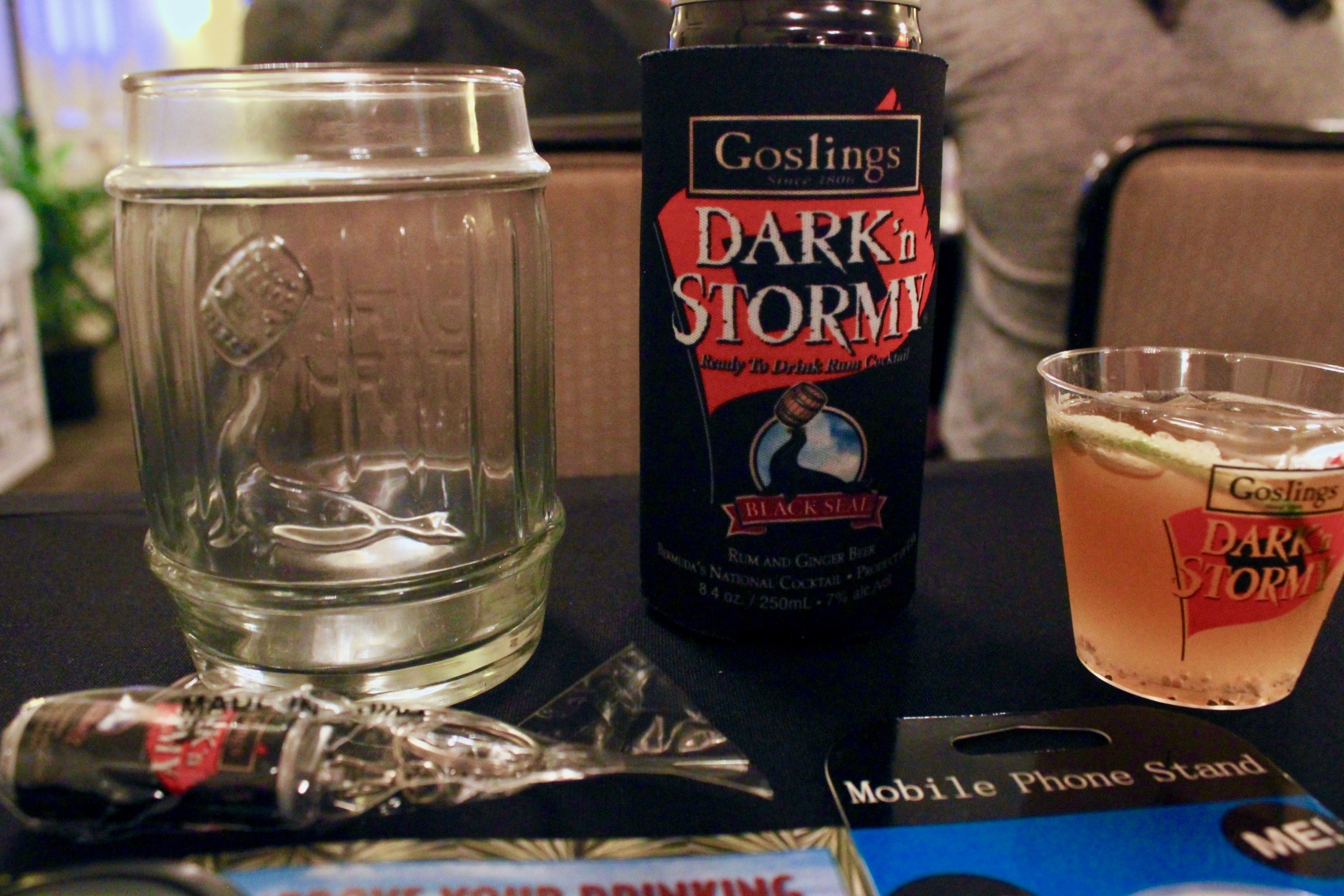
Enlarge/ Welcome to the conference, this is the 10am panel. Can we interest you in a Dark ‘n’ Stormy®?
Nathan Mattise
NEW ORLEANS—Anyone who fancies themselves a fan of cocktails knows the names: the Manhattan, Old Fashioned, Martini, Margarita, on and on and on. In the drinks world, such recipes have stood the test of time and grown into industry icons over decades. But unlike similar cultural colossuses elsewhere—from Mickey Mouse on screen or “Hey Jude” in the stereo—you can find the Negroni being deployed freely at virtually every bar in America. What gives?
“Can you copyright and own a recipe? A recipe in the eyes of the law doesn’t have that creative spark,” says attorney Andrea Mealey, an intellectual property expert who’s done legal work for beverage companies like Gosling’s Rum. During a panel on IP in the bar industry at the 2019 Tales of the Cocktail (TOTC) conference, she next points at the ceiling in this conference room. “The design of that chandelier—someone had to come up with it. It’s creative, and you can own copyright on that design. I can do a slightly different design and own that as well. But a recipe is like a phone book in the eyes of the law—you can’t own something so factual.”
In the modern drinks world, Mealey not-so-subtly implies copyright may be the most useless legal tool for enterprising bartenders. (You could at least patent some amazing new tool, in theory.) It’s a not-so-dirty secret that many have increasingly become aware of in this modern cocktail renaissance, where a killer recipe at an influential bar can suddenly show up on menus worldwide with little more than a written credit. The US Copyright Office puts it plainly: “A mere listing of ingredients or contents, or a simple set of directions, is uncopyrightable.”
“In no other creative business can you so easily identify money attached to your creative property,” bartender Eben Freeman told The Atlantic back at the 2010 TOTC conference. Freeman has been credited as a pioneer of fat-washing, the practice of infusing a spirit with a fat-heavy flavor like bacon, but Bacon Old Fashioneds appear all over without a cent going back to Freeman. “There is an implied commerce to our intellectual property. Yet we have less protection than anyone else.”
Luckily, Mealey’s panel this week emphasized there is some hope for modern bartenders looking to profit off good imbibing ideas. And while it takes a lot of circumstance and effort to protect the IP of an individual drink, bartenders can think bigger and package a lot of industry know-how together into entities more easily licensed out to others.
Trademarks and tiki
When it comes to drinks, legal muscle has historically stemmed from two entities: trademarks and trade secrets. Brands like TGI Fridays used to trademark drinks to prevent chain competitors from offering the same things, and individual drinks like the Dark ‘n’ Stormy or the Painkiller (err, Dark ‘n’ Stormy® and Painkiller®) are trademarked by individual liquor brands. The Bermudan brand Gosling’s earned a US trademark on the Dark ‘n’ Stormy in 1991, and ever since the official recipe has dictated Gosling’s brand rum and Gosling’s brand ginger beer. (It doesn’t specify measurements, notably—”A really weak Dark ‘n’ Stormy is still a Dark ‘n’ Stormy,” Mealey says.)
The basics logistics for a trademark, however, make this a rare route for success. To start, Gosling’s trademark was helped by its use of specifics (Gosling’s Rum, Gosling’s Ginger Beer) and later strengthened by the brand’s ultimate move into offering those as a package: a pre-canned Dark ‘n’ Stormy.
“It makes sense to people in Washington DC—’This is a drink, we can trademark a drink, Class 32 Beverages, a-ha!,'” Mealey says. “It’s a specific kind of rum with a specific ginger beer—this is a Dark ‘n’ Stormy.”
And while applying for a trademark is relatively easy and inexpensive (comparatively for most legal processes), Mealey says the key to maintaining it is showing a willingness to defend that trademark. Gosling’s has done just that throughout the years. The rum makers famously took legal action against the second-biggest alcohol company in the world, Pernod Ricard, back in 2015. Pernod had posted a recipe for a Dark ‘n’ Stormy to its website, but it used Malibu Rum rather than Gosling’s. Eventually, Pernod opted to settle and entered into an agreement with Gosling’s preventing a future Dark ‘n’ Stormy storm.
Not every trademark defense ends with legal action, of course. Mealey says she likely gets three notices a week about restaurants or in-flight menus, and often these just spark cease and desist letters. (Gosling’s in the past had sent C&D letters even to bloggers.) The trick now, at least from the company’s perspective, is striking the right balance between muscle and market opportunities. If a bar pushes Dark ‘n’ Stormy drinks with the wrong rum, for instance, can a letter encourage them instead to use Gosling’s? A new consistent customer represents a better outcome than a legal fight. (Panelist Daniel Eun, an attorney/bartender formerly of PDT, knows that first hand—he helped open a bar called Painkiller in NYC, which quickly heard from Pusser’s Rum. Eun’s bar eventually became PKNY and certainly opted to carry different rums.)
“I tease Mount Gay [Rum] that they help fund my children’s college,” Mealey jokes. “But if you invest in the brand, you have to enforce it. Otherwise, you’d have it genericize—Band-Aid and Escalator are trademarks. We don’t ever want a rum and ginger to be a Dark ‘n’ Stormy, so we have to keep these third parties at bay in a way that doesn’t make you a bully out in the market. Just call it a rum and ginger; it’s not a Dark ‘n’ Stormy unless you’re putting our rum in it, which would be fabulous.”
https://arstechnica.com/?p=1539447
Game of Thrones goes on a Victory Lap—and an Apology Tour
Enlarge/ You know nothing, Jon Snow—like, maybe wear a hat when conditions are freezing in the North. Even if it musses up your luscious locks.
Hey. So, um, remember the end of Game of Thrones? If you were a fan of the show, you probably do. And there’s a good chance it still stings. Daenerys Targaryen turned into a totalitarian dictator (if that can, indeed, be a thing). Then she died. Then Bran Stark—of all people!—was picked to rule Westeros. His sister Sansa became Queen in the North. And those are just the major plot points, the top of the crap-heap. It was, well, not beloved.
And the people who made that final season know it. To be clear, they don’t entirely agree with the criticisms of the HBO show, they just know there was some blowback. A murderer’s row of fan favorites from Game of Thrones—Isaac Hempstead Wright (Bran Stark), Conleth Hill (Varys), John Bradley (Samwell Tarly), Maisie Williams (Arya Stark), Jacob Anderson (Greyworm), Liam Cunningham (Davos), Nikolaj Coster-Waldau (Jamie Lannister)—showed up at Comic-Con International to both take a victory lap and go on a quick apology tour. (Showrunners David Benioff and D. B. Weiss, who were originally slated to appear, canceled two days ago.)
“I don’t regret starting the petition,” Hill joked when asked if he had any regrets over comments he made about his own disappointments, referencing the online petition to remake the show’s eighth season. But, he added, “for the record I loved all my 10 years on Game of Thrones.” Coster-Waldau went further, saying, “You look at the amount of people who are here, and we’re here to thank you for watching us for all those years … I think this is the reality [of how much people enjoyed the show], rather than media-led hate.” People cheered.
Reiterating that people did like Game of Thrones and thanking the fans were common themes during the hour-long panel. But what was also evident was that the show left many unanswered questions. Some discrepancies were acknowledged and laughed off—the cast all had coffee cups left at their seats—while others, like the choice to have Jamie Lannister die with his twin Cersei, were met with at least one boo. “Every season we had huge controversies,” Coster-Waldau acknowledged. “This show has brought so many people together, watching it, loving it. It’s going to piss you off no matter what, because it’s the end.”
Well, sure. But certainly there were things fans wanted to know, or grievances they wanted to air. (In what might have been the best cosplay of the whole con, one person in attendance came dressed as the Night King, complete with a dagger in his gut that said “Star Wars”—presumably a nod to the fact that Arya Stark killed that Darth Maul-looking-dude in a way not all that different from the move Rey used in Star Wars: The Last Jedi, or the possibility that Benioff and Weiss were distracted by planning Star Wars movies during GoT‘s final season. Take your pick.) Yet folks in attendance—and the panelists themselves—will never get to know if the fans loved them in the end or had axes to grind: The cast didn’t take questions. The moderator, James Hibberd of Entertainment Weekly, blamed the lack of an audience Q&A on the panel running long. The cast waved for photos and walked off the stage. That was that.
It’s a shame. Before it began, the panel was billed as a farewell from the show to its fans. It was a one-sided way to say good-bye. Maybe one day the stars of Game of Thrones will answer fan questions about the end of their beloved series. Not today.