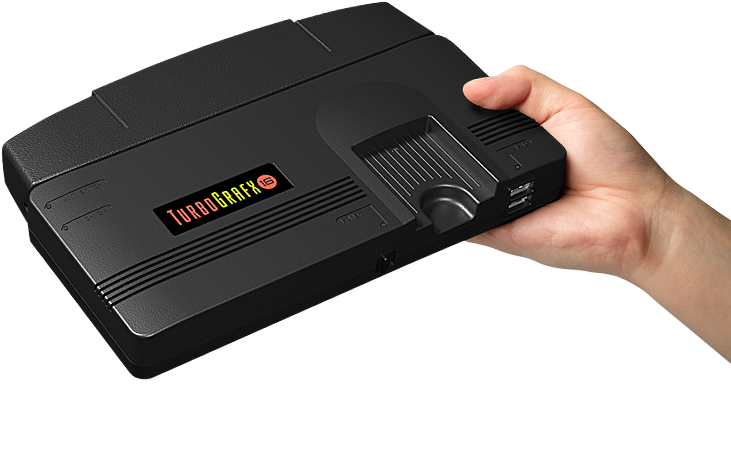
Konami may well have earned the “most surprising announcement of E3” trophy with Tuesday night’s unexpected reveal of the TurboGrafx-16 Mini (known as the PC Engine Mini in Japan and the PC Engine Core Grafx Mini in Europe).
Price and release date were not announced, but Konami did reveal six games for the US and European editions of the plug-and-play HDMI system, with more to be announced in the future:
R-Type
New Adventure Island
Ninja Spirit
Ys Book I & II
Dungeon Explorer
Alien Crush
The Japanese edition has a somewhat distinct list of announced games thus far, including well-remembered classics like Super Star Soldier, PC Kid (a.k.a. Bonk’s Adventure), and Castlevania: Rondo of Blood (later ported to the SNES as Dracula X). Versions of these games may be coming for other regions, but they have yet to be announced. Japan and Europe also get a different design for the system’s case itself, modeled after the squarish PC Engine, while US customers will get the larger, rectangular TurboGrafx design.
Konami says all versions of the system will feature standard functions like quick saves, virtual simulated CRT scanlines, and the original 4:3 aspect ratio display. An optional multitap will also be available to allow for up for five-player simultaneous play.
The latest plug-and-play HDMI retro system follows a trend that now includes miniature editions of the NES, Super NES, PlayStation, and Neo Geo, with a licensed Genesis Mini coming in September. Many of the games on those systems, though, have been re-released in myriad forms for many different platforms over the years. TurboGrafx games, on the other hand, have only been re-released en masse as part of the Virtual Console collections for the Wii and Wii U. Original TurboGrafx hardware and software can command significant prices in today’s secondhand market as well.
Konami gained control of the TurboGrafx/PC Engine brand in 2011 with the purchase of Hudson Soft, which designed the original system in the late ’80s (with manufacturing licensed out to NEC).
https://arstechnica.com/?p=1521023
Stardock and Star Control creators settle lawsuits—with mead and honey
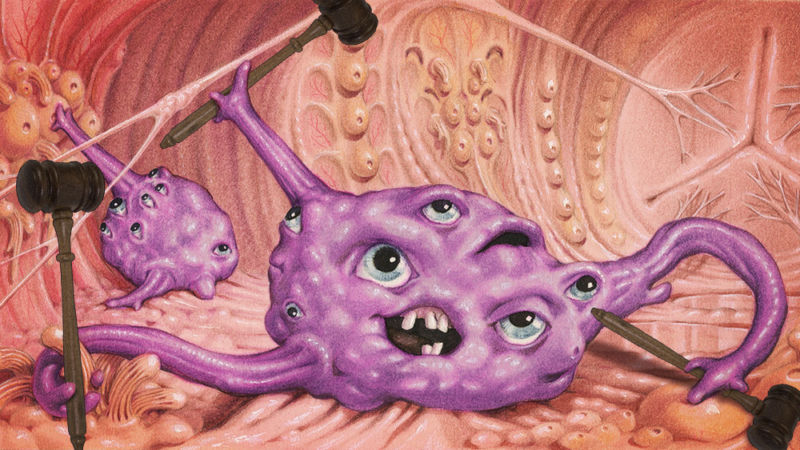
Enlarge/ “HELLO HUMAN, Umgah Court sentences you to TEN MILLION YEARS OF HARD LABOR!… Oh, you settled? But… what Umgah supposed to do with three gavels if Umgah can’t sentence anyone?!”
Star Control / Aurich
Stardock’s Brad Wardell and original Star Control creators Fred Ford and Paul Reiche III announced over the weekend that all parties have reached an amicable settlement in the tangled web of lawsuits between them and Stardock, which stretch back almost two years.
(To very briefly recap, Stardock and Ford & Reiche were at legal odds over who owns the copyrights and trademarks for the Star Control series of games from the 1990s. To give any more details would require a massive amount of explanation and discussion—which we already wrote a couple of years ago with this story right here. If you aren’t familiar with the disagreement—or if you want to refresh your memory—that piece will give you a good, solid grounding on the mess that got us to now.)
The settlement’s details are public, and Ford & Reiche have a blog post on their site explaining things. In summary, though, the terms are simple and straightforward:
All existing lawsuits between Stardock and Ford & Reiche are dismissed with prejudice (this simply means the suits cannot be re-litigated).
All parties are responsible for their own attorney’s fees.
Stardock gets to use the Star Control name for its Star Control Origins game and can develop sequels and DLCs as it likes.
Ford & Reiche get to continue to develop their own direct Ur-Quan Masters sequel (which was previously called Ghosts of the Precursors but will be renamed).
The Star Control Origins universe (now known as “the Star Control franchise”) will continue in a disconnected bubble from the Ur-Quan Masters/Ghosts of the Precursors universe (now known as “the Ur-Quan Masters franchise”).
Reiche will contribute some writing to the Origins universe in a volunteer role.
All of the complicated arguments about who owns which copyrights and trademarks and who they bought them from and when and what’s copyrightable and what’s not are mooted. (Which is great because it means I don’t have to re-summarize the mountain of IP arguments that both sides were making!)
The original three Star Control games can continue to be sold on other storefronts, including Stardock’s, and Stardock will split revenue from those games’ sales with Ford & Reiche.
No licensing money changed hands.
Brad Wardell of Stardock must furnish Paul Reiche with a specific amount of honey from Wardell’s apiary.
In turn, Paul Reiche must furnish Brad Wardell with a specific amount of mead brewed from Wardell’s bees’ honey.
Wait… what?
Yeah, the last bit kind of threw me, too.
“We solved this problem like most problems—with booze and bees,” joked Stardock’s Brad Wardell in a phone interview earlier today with Ars (he was joined by Reiche & Ford on the line, as all three are in Los Angeles for E3 at the moment). Citing dissatisfaction with the overtly confrontational legal process—which all three described as depressingly combative and focused on winning over all else—Wardell, Reiche, and Ford instead made somewhat of an end run around their respective attorneys and decided to build on their shared interests rather than fighting each other in court.
Those shared interests, as it turns out, involve bees and honey. Wardell is an apiarist (I feel like, as someone who’s covered Stardock before, I should have known that, but I had no idea!). And Reiche, through an odd coincidence, brews mead. Mead is created from fermented honey.
As the lawsuits continued to shamble on and attorneys on both sides continued to suggest new ways to fight, Reiche decided to try to approach Wardell directly with a proposal built around creativity rather than combat.
“The first thing I did was sit back and say, ‘What is the common ground I genuinely have with Brad?’ And that is that I want to know how to raise bees. Honest to God, I have this long, long-standing goal to learn all medieval villager skills, and this has been on my list,” explained Reiche. “And I thought, ‘OK, this is something that we can kind of bond over and talk about, even if this whole thing doesn’t work out in the settlement, we can have a good conversation about bees.'”
Here Wardell picked up the tale. “During the course of the agreement,” he said, “we decided, well, what is it we want to get out of this? Well… Paul makes mead. And I make honey. And actually in the settlement, we exchange honey for mead, and I’m working with Paul on beekeeping.”
He laughed. “I actually sent him a video—it’s not going to be public because it’ll become a meme—of ‘OK, here’s how you set up a hive,’ and I get stung—” here he, Reiche, and Ford all began laughing, “—on the video, I wasn’t wearing any protective gear, and I’m standing there next to this very angry hive after I’ve been messing with it—” And laughter and bee jokes then derailed the entire conversation.
Enlarge/ Artist’s impression of Brad Wardell’s beekeeping instructional video.
The mead must flow
Continued Reiche: “I think it also is going to come as very unexpected to the fans, although ultimately I very much hope that it brings them back together. Because it was painful to see people who fundamentally both like something we worked on get mad at each other and stay mad at each other… it’s not necessarily going to be what fans expect, because it’s a ‘more than the sum of its parts’ solution.”
Wardell was effusive in his praise and excitement about the settlement, as were Ford & Reiche—two parties coming to a simple agreement (with appropriate legal backing) feels like an unprecedented development in the litigious environment of game development. Stardock’s Origins title will continue to be sold, and Stardock can produce DLCs and sequels as it likes, so long as those future expansions don’t nudge into “old” Star Control territory with respect to aliens and locations and plots (there are a few caveats around the Arilou, but that’s the basics of the agreement).
Reiche, in turn, volunteered to spend some time writing some creative ideas for the Origins universe, to give it even more of that classic Star Control vibe. Perhaps most importantly to old-school Star Control fans, Ford & Reiche are free to continue work on their new direct Ur-Quan Masters sequel—although they’re going to change its name away from Ghosts of the Precursors to another title that they haven’t thought of yet. (Reiche joked that tentative titles so far include Goats of the Precursors, referencing Star Control 3‘s space cows; Mask Effect, a deep dive into the history of the Utwig; and possibly The Color Purple, where we finally get to find out why the Melnorme ship’s bridge turns purple when you begin trading.)
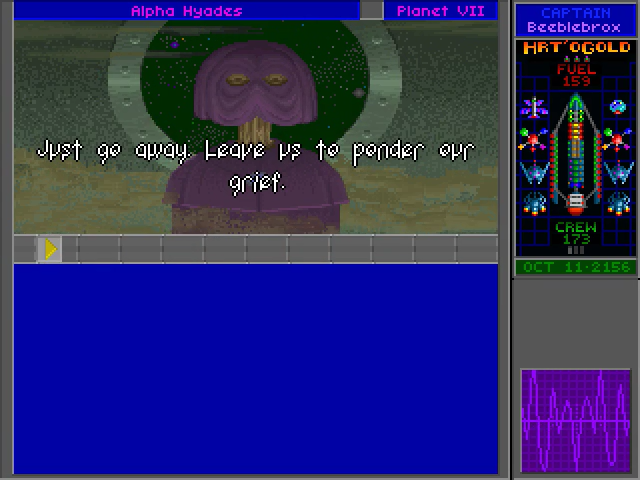
Mask Effect, starring Commander… oh, it doesn’t matter. Nothing matters. You should go.
And if the two parties realize that either has developed a story idea that intrudes into the others’ territory, they’ve all agreed to simply pick up the phone and work it out. Both Wardell and Ford & Reiche are committed to talking through any potential disagreements and reaching a conclusion amicably, without attorneys. Because no one wants to jeopardize the mead supply.
The Settlement of Now and Forever
Wardell jumped in then to explain that he and Reiche hammered out the details of the entire settlement in a conversation lasting a couple of hours. The collection of attorneys attached to the case then spent several weeks transforming the quick agreement into a formalized settlement offer. He and Reiche and Ford laughed when recounting the frantic attorneys’ cries of “you can’t do that!” and “you can’t give that away!” They again made the point that the lawsuit process was creatively draining and too combative for the kind of compromise they were attempting to reach. Reiche interjected that the resulting settlement contract is the first contract he’s ever signed that included specific language about bees and about how many jars of honey must be exchanged per month for flagons of mead.
The agreement also includes some stipulation that Ford & Reiche go into a quiet period for a while, which will allow them to focus on Mask Effect their now-untitled UQM sequel and will also allow Origins and its DLC and sequels to have some more spotlight time before Ford & Reiche begin dropping announcements. As part of that, Ford & Reiche have taken down all the lawsuit-related posts on their blog (which is basically all of the posts) and terminated their lawsuit fundraiser; Wardell has reciprocated by removing similar lawsuit-focused posts.
“The manner in which we settled is… I think uniquely creative and unexpected, and definitely not the direction the lawsuit was going,” said Reiche.
For what it’s worth, this lifelong Star Control fan couldn’t be happier with how this has all worked out.
https://arstechnica.com/?p=1520849
Final Fantasy VII Remake headlines Square Enix E3 event, gets March 2020 launch
Based on how Final Fantasy VII Remake‘s reveal looked live at Square Enix’s event (meaning, on the company’s giant projectors), its stutters and minor visual artifacts hint at fully real-time rendering on PS4. But we’ll have to wait and see if that bears out when we test the game later this week at E3.
Square Enix
We’ve already seen high-fidelity Cloud…
Square Enix
And we’ve already seen high-fidelity Aerith…
…but today, we finally get to see the redesigned, modern-gen version of fan-favorite Tifa in all her martial arts glory.
And, hey, we’ll gladly take another dramatic look at Sephiroth.
Nanoseconds after this frame, Sephiroth mysteriously vanishes. Of course he does.
She’s happy to see Barret.
She’s not exactly thrilled to see Cloud.
He’s happy to see… well, anything he can shoot.
A few more familiar characters popped up in today’s new trailer.
Midgar, in all its shiny glory.
Landing with a somersault and a Buster Sword unsheathing.
Cloud is running.
Barret doling out some punishment.
The buster sword is just as big an awesome as we remember.
The attacks have lots of particle effects.
We even got a recreation of the original box art.
The only thing missing from this lineup is a blue menu system.
LOS ANGELES—Square Enix’s E3 press conference began by wasting no time with its big, expected news: Final Fantasy VII Remake finally has a release date. The PlayStation 4-exclusive JRPG will launch on March 3, 2020. If that sounds like too long to wait, and you’re in Los Angeles this week, Square Enix says all E3 2019 attendees will have a chance to play the game’s first real-time demo on the show floor.
Monday night’s event included the clearest demonstration yet of how the game’s combat system will work: as a mix of real-time attacking and dodging, and an “active time battle” (ATB) system of pausing to activate special abilities and items. The latter will only activate once players have built up enough of their fighters’ ATB meters, which grow as players pull off more successful weapon swipes and dodges. (This means crucial items like potions and Phoenix Down revives won’t work until you rack up enough hits on foes, and using those will mean waiting longer to activate magical spells and special melee attacks.)
More familiar FFVII characters finally got their in-game reveals, as well, particularly the popular martial arts ally Tifa. One of her ATB special attacks, a flurry of punches followed by a flashy bicycle kick, fit in nicely with Cloud’s barrage of sword swipes within a Japanese kanji character, a massive lighting-ball blast from Barret’s machine gun, and a green, particle-filled explosion of healing power from Aerith. Barret’s standard attacks will largely revolve around gun shots, not melee swipes, so he will be able to control real-time combat from a distance—and that likely means other popular FFVII characters will work the same.
Finally, a lengthy look at the game’s mix of real-time action and pause-menu activation of special powers.
The scorpion activates yet another shield.
We tried our best to get clear shots of Final Fantasy VII Remake‘s frantic combat.
When the action is paused, any dramatic effects on screen will pan slowly in Matrix-like bullet-time style.
Let’s wreck some baddies.
Will our heroes outlast the scorpion? (Spoiler: yes, but not before the jerk activates a bomb with a 20-minute timer.)
As Cloud explains, you can take cover behind debris.
The game’s mix of real-time and paused-menu action was demonstrated in lengthy, breathtaking fashion by a battle sequence between Cloud, Barret, and a massive Scorpion Sentinel. In this boss battle, the robo-arachnid activated various shield effects and healing fields, which Cloud and Barret had to take down one at a time by focusing on weak points, using proper elemental attacks, and distracting the Sentinel. The latter example came when a massive laser blast was aimed at Barret, who hid beneath cover. At this point, the demo’s player switched control to Cloud to rush the robot and slash it to bits. Character swapping is imperative in the game’s bigger battles, we’re told, in order to more quickly grow each combatant’s ATB meters, but you can still assign their battle traits via a menu when you’re not in direct control. (We only saw three characters active in battle at any given time during the whirlwind presentation.)
In addition to so much battle content, the Monday night reveal included a ton of apparent real-time game content, as evidenced by slight frame rate judders (clearly visible since we were in attendance at the publisher’s E3 event) during the familiar opening sequence: a tight zoom on Aerith’s scared face, then a shift to a madly rushing train with Cloud as its passenger. As the train pulled up to the game’s familiar train station, the iconic hero landed from a somersault jump by dramatically unsheathing his massive Buster Sword.
However, while the lengthy reveal included a few memorable, cinematic scenes, we didn’t get a formal look at how the game’s traversal within (and outside of) Midgar will work. At the very least, the conversation snippets we saw were typical Square JRPG fare—meaning, serviceable dialogue between familiar characters, only framed in cinematic fashion with apparent real-time graphics. One sad conversation at a bar saw Tifa admit to Cloud, “I know we have to think big if we’re going to make a difference… but not like this. I just… I feel trapped.” In another sequence, Cloud approaches the villain Sephiroth in an alleyway that is filled with burning imagery, to which Sephiroth replies, “I have a favor to ask of you. run away. You have to leave.”
Enlarge/ Tetsuya Nomura (left), FFVII’s original director, showed up at the Los Angeles event to offer his blessing.
Sam Machkovech
And, yes, as previously announced, this Final Fantasy VII Remake project is episodic, which the publisher confirmed once more by saying: “The first game in this project expands on the story of Midgar and is such an elaborate retelling that it has become a solid standalone game in its own right.” The company also described the current project as “two Blu-ray discs worth of content,” but it’s currently unclear whether those two discs will make up this March’s game, or whether that “two discs” line is a hint at two FFVII Remake launches altogether. Today’s announcement of a pre-order opportunity doesn’t include any “episode one” subtitle for the March 2020 SKU.
But that’s not all, classic JRPG fans!
After FFVII‘s splashy presentation, the publisher confirmed a number of fan-favorite series landing on modern platforms. Arguably the biggest of these is Final Fantasy VIII Remastered, an apparent upscaling of the PS1 classic’s original polygonal assets to higher resolutions. As a surprise perk, the release will also include apparently higher-resolution full-motion-video sequences than we ever saw on PS1 (albeit they’re still blurrier than standard 1080p resolution).
That game will launch in “2019” on PlayStation 4, Xbox One, Nintendo Switch, and Windows 10 (via Steam). Hopefully its development will include significant optimizations, as the video footage shown on Monday suffered from significant frame rate stutter.
Two never-before-translated Square Enix RPGs are also coming to the West for the first time, both in the “SaGa” series: the Super Nintendo classic Romancing SaGa 3, and the 2016 PlayStation Vita game SaGa: Scarlett Grace. Both freshly translated games will hit Nintendo Switch, Steam, PlayStation 4, iOS, and Android, while Romancing SaGa 3 will additionally reach Xbox One, the Windows Store, and PlayStation Vita. Neither game has a release date.
And if you never got to dive into the multiplayer fun of the GameCube action-RPG Final Fantasy: Crystal Chronicles, that four-player quest will soon be yours to try out on PS4, Nintendo Switch, iOS, and Android. How exactly its real-time action will scale to smartphones remains to be seen, but we’ll find out soon enough, thanks to a vague release window of “this winter.”
Listing image by Square Enix
https://arstechnica.com/?p=1519979
Microsoft working to get “every single Xbox One game” working on Scarlett
[embedded content]
LOS ANGELES—When Microsoft announced the first details of its next game console Sunday, it said that “thousands of games across four console generations will look and play best on Project Scarlett.” In a video follow-up focused on backward compatibility posted Monday, the company clarified that its goal is that “every single game you play on Xbox One today [will] work on the Scarlett device.”
That would be a change from previous Xbox console generations, which have only supported a significant subset of previous generations’ titles through software updates. It sounds like getting Xbox One games to run on Project Scarlett will also take some specific software-level effort on the part of Microsoft, rather than being supported directly at the hardware level.
“Ensuring every game that runs on Xbox One is going to run incredibly well on Scarlett will take a ton of commitment and time from our team,” Microsoft Head of Xbox Phil Spencer said in the video. “The team is dedicated. We’re ramping up our testing facilities to make sure we can hit the ground running and make sure that stuff works.”
To account for that testing time (and to allow the backward-compatibility team to focus on Scarlett), Microsoft also announced that, “after this week, we have no plans to add additional Original Xbox or Xbox 360 titles to the catalog on Xbox One.” That ends a program that started in 2015 with 104 Xbox 360 titles and has since grown to include 568 Xbox 360 games (including 15 new ones announced today) and 39 games for the original Xbox (eight new ones announced today). A total of 69 games across both generations have also been “Enhanced” for the Xbox One X, with new textures and other enhancements to look better on 4K displays.
That processor isn’t going anywhere on Microsoft’s watch.
Vacuum tubes, eat your heart out.
Confirmed: Microsoft’s next console has wires.
Confirmed: Microsoft’s next console uses electricity.
Taking a closer look.
Hot hot heat sink shots.
That’s a nice logo for a tentative name that won’t even be referenced in two years…
Which holiday? President’s Day is a holiday…
Microsoft reminded readers of its blog today that backward-compatible games supported on Xbox One can be purchased digitally or played “with the disc you already own.” Reading between the lines a bit, that post suggests Project Scarlett will also have a disc drive to ensure that through-line continues (though Microsoft has not officially confirmed any such disc-drive plans for its next console).
UPlay+ subscription lets you play every Ubisoft game on PC and Stadia
Enlarge/ Just a few of the titles and franchises coming to Ubisoft’s UPlay+ service.
LOS ANGELES—At its E3 press conference today, Ubisoft announced a new subscription service called UPlay+. For $14.99 a month, subscribers will be able to access every title in Ubisoft’s catalog—over 100 games—as a PC download (starting September 3) and through Google’s Stadia streaming service (starting in 2020).
That list of available games includes:
Upcoming releases: Watch Dogs: Legion, Tom Clancy’s Ghost Recon: Breakpoint, Rainbow Six Quarantine, Gods & Monsters
Recent games: Tom Clancy’s The Division 2, Assassin’s Creed Odyssey, Tom Clancy’s Rainbow Six Siege, Far Cry 5, Anno 1800
Classic Ubisoft Titles: Titles from the Far Cry and Rayman franchises, Prince of Persia, Tom Clancy’s Splinter Cell, Beyond Good & Evil
Beloved PC Franchises: Heroes of Might and Magic, Silent Hunter, The Settlers, Anno
A subscription to UPlay+ will also include the “earliest available access to new games,” including beta and early access editions of upcoming titles. Additional content “such as DLCs, expansions and automatic updates” is also included as part of the package.
Players that sign up before August 15 will get free access to UPlay+ for the month of September before being signed up for the monthly service plan in October. Early subscribers will also get a Ghost Recon: Breakpoint Atmosphere Emblem and a Watch Dogs Legion Ubisoft Hat for their in-game characters.
Ubisoft’s move continues the fragmentary subscription battle playing out across the game industry. UPlay+ goes a step further than EA’s existing EA Access program, which offers a limited selection of legacy and early access titles from the company’s catalog for $30 a year. It looks more like Microsoft’s Xbox Games Pass, which offers hundreds of classic and current games on Xbox One and now Windows starting at $10 a month. Sony’s PlayStation Now service also offers downloads of many of its games alongside cloud-based streaming access to hundreds of titles for $99 a year. UPlay+ is the first publicly announced subscription service for Stadia. Google announced last week that it would sell Stadia games à la carte and offer access to a small selection of free titles with its $9.99-per-month Stadia Pro package.https://arstechnica.com/?p=1519753
Bethesda says its Orion tech can make all cloud gaming better, faster
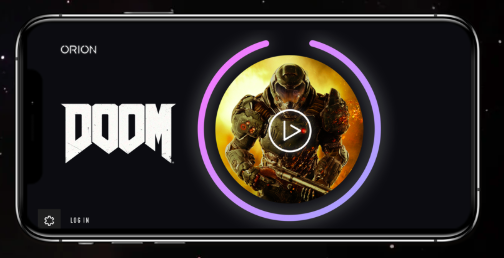
Enlarge/ It’s Doom, only streamed more efficiently to your phone thanks to Orion.
LOS ANGELES—Bethesda Softworks announced Sunday that it is getting involved in the increasingly competitive field of cloud gaming. But rather than announcing a service to compete with the likes of Google Stadia or Microsoft’s Project Xcloud, Bethesda’s Orion system is focused on improving streaming performance on the platforms that already exist.
While most cloud gaming efforts try to improve performance by throwing hardware at the problem—often in the form of prime data center locations loaded with high-end servers—Bethesda says Orion is instead incorporated “at the game engine level.” The result of what Bethesda calls “years of research and development,” the company says its group of patented Orion technologies can optimize frame rendering time by approximately 20% per frame. Improved compression also leads to streams that require 40% lower bandwidth for the same quality, reducing the potential costs for both users and streaming services, Bethesda said.
At a pre-E3 demonstration attended by GamesIndustry.biz, the 2016 edition of Doom running on a MacBook went from 7ms of combined GPU rendering and encoding time to 5.3ms. That may not sound like much, but when it comes to increasing streaming quality and reducing apparent latency, every little bit helps. Average bandwidth usage in a 10-minute gameplay test reportedly dropped from 23.43Mbps to 13.67Mbps at the demo, while GPU utilization on the server-side dropped from a high of 64 percent to a low of 55 percent.
To show off the Orion technology, players that sign up for the Doom Slayers Club will be able to try out a streaming demo on iOS11+ devices in a public trial later this year. Additional tests for PC and Android devices will come later.
https://arstechnica.com/?p=1519267
Fallout 76 updates promise turnaround after “well-deserved criticism”
[embedded content]
LOS ANGELES—After what Bethesda’s Todd Howard admitted on stage was some “well-deserved criticism” at the launch of Fallout 76, Bethesda rolled out the first phase of its turnaround plan for the game at its E3 press conference tonight.
That plan starts with Nuclear Winter, a 52-player Battle Royale mode that sees players fighting for the role of “overseer” using Fallout‘s usual lineup of guns, power armor, and some “exclusive perks” to upgrade your own abilities. That mode will be available as a “sneak peek” during a free trial of the full game starting June 10 and running through June 17.
Then, in the fall, a free update being called “Wastelanders” will introduce new elements including a full quest line, new rewards, full dialogue trees, and the much-requested return of human non-player characters. Players will also be able to choose between siding with two different factions: Settlers and Raiders.
“This is a long-term story we’re telling,” Bethesda said. “Year one of Fallout 76 was all about the opening of Vault 76 and players settling the Wasteland. In year two, other humans are returning to reclaim Appalachia.”
DOOM Eternal gameplay world premiere: Devil horns in the air—literally
If your workplace has rules that restrict images of virtual blood and gore, consider this your last warning: DOOM Eternal only looks more gruesome from here on out.
id Software
The Doomslayer lands.
Most of this gallery is taken from real first-person gameplay, which is why the screen is smothered in a HUD. Milliseconds after this “glory kill” moment, your hero punches this demon’s head so hard that it explodes.
Another glory kill. It was hard to capture clear images of these violent, health-refilling attacks; they’re all pretty quick in action.
New default mod attachments come to nearly every DOOM Eternal weapon.
The trick with the super shotgun is, make sure to shoot before you get all the way to your target. The momentum will still drive your blast directly into the foe, and the recoil of your shot will conveniently bounce you away from its limp body toward your next target.
The provided gameplay footage didn’t include examples of this new sniping attachment being used to pick off specific pieces of bad guys’ artillery and armor.
Instead, it made peons’ heads go boom. Still satisfying. (This image was captured just before a head-‘splosion.)
This, by the way, is what happens to the previous demon’s head roughly two frames later.
In this game, you get an armor pickup whenever an enemy dies while it’s caught on fire. Conveniently enough, the new “flame belcher” attachment can torch an entire crowd en masse.
There’s also the DOOM 2016 standby of running a chainsaw through an enemy to turn its body into useful ammunition. (Don’t ask us how that science works.)
Decisions, decisions: do I go in for the glory kill, since the enemy on the left is staggered and glowing?
Nah, let’s focus explosive ballista fire on the bigger, scarier-looking one.
Pretty terrifying sight, right? Hold on, lemme crank this one up a smidge…
…there. You can practically smell its cow-carcass breath from here.
Dash forward to close distance on your foe.
Then set it on fire, because, why not.
We should kill this one.
A new “extra life” system brings you back to life mid-mission if you lose all your health. I liked it as a way to speed gameplay up in my first playthrough, while I imagine turning it off once I’ve gotten the hang of the game.
There’s a little green meter beneath the afflicted enemy. Fill that meter up all the way, and it’ll explode and harm any other bad guys nearby or below. Bigger enemies take longer to fill with this deadly radiation, but their enemy-damaging blast radius grows, as well.
SANTA MONICA, Calif.—I don’t often get as jazzed about an in-development video game the way I have about DOOM Eternal. After playing its 20-minute E3 demo to completion for my first time, I yelled, “AGAIN! AGAIN!” like a child unwilling to get off of a rollercoaster (and was thankfully granted another go at the fun). Upon getting home and preparing this article before Bethesda’s Sunday E3 press conference, I combed through a full playthrough video provided by the developers like a sad ex flipping through a photo album. I had to look again. I wanted to remember.
That’s not my normal way; I’m a gaming curmudgeon, to put it lightly. And yet I am struck by how pristinely iterative this game feels—a perfect execution of the cheesy poster quote, “If you liked DOOM 2016, you’ll love DOOM Eternal.” By carrying familiar elements forward and then supercharging them with compelling twists, DOOM Eternal (launching November 22 on Windows 10, Xbox One, PlayStation 4, and Google Stadia) could very well rank alongside past elite sequels like Super Mario Bros. 3, Uncharted 2, and Burnout 3: Takedown.
Familiar demons, meet new flamethrower
I mention those specific sequels because they each returned to unsurprising gameplay mechanics and art styles, only polished like crazy and met with a zillion new features that all somehow fit. DOOM Eternal sits in that category, so much so that a peek at its supercharged screenshots might elicit a mix of “ooh, crazy demons” and “uh, haven’t we seen this before?”
Indeed, id Software returns to the idTech 6 rendering engine for this high-speed, 60fps combat frenzy (er, technically, our demo PC kiosks used variable refresh monitors that roared into 90fps-and-above territory). In addition to returning monsters, the brutal “glory kill” mechanic still dominates. That asks players to use a special melee attack when an enemy is on its last legs. Do this, and you’ll deliver a dramatic “fatality” blow that also coughs up useful health pickups. As ever, this offers a tantalizing risk-reward balance by encouraging players to stupidly rush into a crowd.
You’ve seen all of that before to some extent. But not like this.
To start, the glory kill concept has been covered in hot sauce by offering a few additional melee-for-boost options. The first is a “flame belcher,” which has a recharge timer and spews a wave of fire from a shoulder-mounted turret. Any enemies that you kill while they’re set on fire will explode in armor pickups.
There’s also a new meter to manage, which fills up as you accumulate glory kills. You can spend this meter on an overcharged melee attack, dubbed the “blood punch,” which does explosive damage to whatever you’re punching and anything nearby (no “wait for stagger” required). I didn’t get enough time with this to see if it insta-kills any enemy, but this option did prove useful enough to clear a crowd when a battle got too hot.
A different kind of “mod” support
Additionally, each weapon seems to be getting at least one new “right mouse button” modification. The double-barreled super shotgun’s DOOM Eternal twist had already been revealed: a grappling hook (dubbed the meathook) that extends from your gun, grabs onto an enemy, and flings you directly into that demon’s face. I came to discover the secret sauce once I actually used this attachment—you need to shoot your gun just a moment before you think you should. Your grappling-motion’s momentum will drive all of this buckshot directly into your foe, then fling you away from the enemy via shotgun recoil so that you can neatly bounce toward your next threat. What already looked cool in last year’s trailer only feels more awesome in action.
The machine gun gets a “precision bolt,” which requires that you hold a sniped perspective for long enough to charge a single bullet. And, wouldn’tcha know it, enemies now have a variety of weak points (shields on extremities, body-mounted guns) that can all be torn off with one of these bullets. The eight-legged Arachnotron conveniently appeared right after I equipped this mod, and many of its bits were clearly destructible, as evidenced by shiny, metal attachment points.
I took advantage of a second playthrough of this mission to focus on this aspect, and it’s pretty solid in action. The precision bolt offers enough of a momentum freeze to focus and debilitate this foe, then whiz around and bludgeon other enemies with standard machine gun fire before returning to focused, limb-stripping sniper rounds. Should you simply wish to pick off smaller enemies with a single headshot, the precision bolt will take their heads clean off, as well.
Other new mods include the “arbalest,” whose charged rounds stick into foes and then explode shortly after insertion. It also has a wider explosion-damage radius when fired at flying enemies. Then there’s the plasma rifle’s “microwave beam,” which lets you pump an enemy full of radiation. Focus that beam on a single foe for long enough, and it, too, will hurt nearby foes with an explosive radius. (The bigger the radiation victim, the more sustained fire required—but, of course, a bigger boom.)
After I finished the demo, Creative Director Hugo Martin gave me a hint about one more default weapon mod that we didn’t yet see: a freeze gun. Shameless yank of an old Duke Nukem 3D favorite? Maybe. But if it turns out to be fun, I’ll forgive the transgression.
Listing image by id Software
https://arstechnica.com/?p=1516919
Bethesda revives ‘80s PC series Commander Keen as a… free-to-play mobile game
Oh, hey! Commander Keen is back! But…
…it doesn’t really look like the 1990 MS-DOS original. Tap on the screen to move around.
Keen hops.
A tighter zoom on how the game’s characters look. In action, they move like mid-’00s Flash sprites.
Tap to move.
Unsure what these timers mean, but that may indicate limited time activation for the game’s items.
Hop hop hop.
This version will include a “versus” race mode.
Connect with friends to play. We’re unsure if that is for local play, online, or both.
The flashy animated intro looks cute, at least.
Billy Keen and Billie Keen, siblings and alien fighters.
PC gamers of a certain era fondly remember Commander Keen, one of the most technically proficient side-scrolling action series to land on MS-DOS. Fans of its creators, id Software (perhaps better known for Doom and Quake), have always wondered when the relatively cutesy series might see a revival since its halcyon PC years of 1990-91.
That day was Sunday, as announced by Bethesda at its E3 press conference. But fans may not have seen this version of Keen coming.
The new Commander Keen, as shown in the above gallery, will “soft-launch” on iOS and Android “this summer” as a free-to-play platforming game. Gameplay specifics were not clarified either at the press conference or the game’s brand-new announcement site, but this smartphone game appears to revolve around tapping on smartphone screens to direct players’ upward hops (recalling ’80s arcade games like Ice Climbers) and activate attacks.
Every screen provided by Bethesda has a massive item selection menu on the screen’s bottom, and these colorful icons appear to activate limited-use items. This Candy Crush-like system may very well be the hook through which Bethesda monetizes this version of Keen, since the reveal did not hint to any cosmetic economy of outfits, dance moves, or other common stuff found in smartphone and console F2P games. (Pre-registering for the game at Bethesda’s site does come with a giveaway of an outfit for the Keen siblings.)
This version of Commander Keen follows Bethesda’s other recent forays into mobile gaming, particularly Fallout Shelter and Elder Scrolls: Blades. The latter has been loudly criticized since its April early access launch for its F2P economy and deluge of momentum-slowing timers. A Bethesda representative clarified at the E3 press conference that this version of the series is being handled by a Bethesda development team, not id Software.
Listing image by Bethesda
https://arstechnica.com/?p=1519239
Double Fine Productions is Microsoft’s latest Xbox acquisition
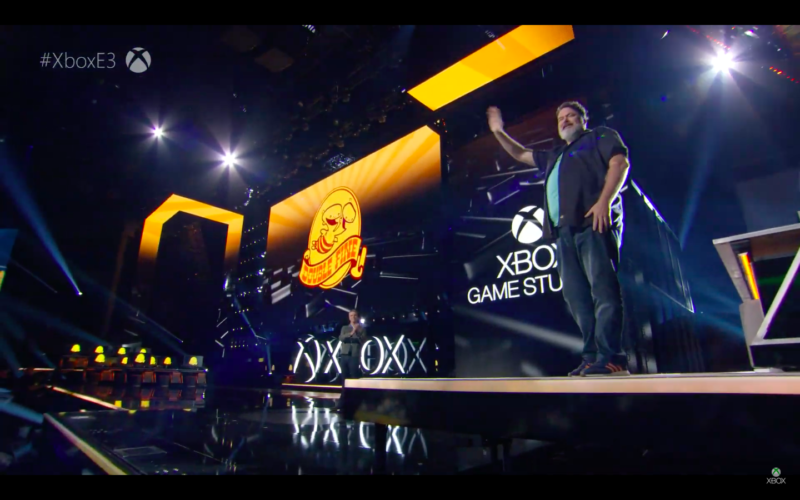
Enlarge/ Tim Schafer introduces himself as part of Microsoft for the first time.
LOS ANGELES—”For the last 19 years, we’ve been independent. Then Microsoft came to us and said, ‘What if we gave you a bunch of money.’ And I said ‘OK, yeah.'”
That was the half-kidding way Double Fine Productions (Psychonauts, Brutal Legend, Broken Age) founder and President Tim Schafer introduced the company’s newly announced acquisition by Microsoft Game Studios. Schafer appeared on stage at Microsoft’s pre-show conference, ready to joke about the new partnership with Head of Microsoft Studios Matt Booty.
“I am a team player,” Schafer said on stage. “Whatever you need from Double Fine we’ll make for you. Halo stuff, Forza stuff, Excel stuff. Whatever you want, we are there.”
“Tim, we just want you to make great games,” Booty responded.
Tim Schafer introduces Double Fine as part of the Microsoft family.
Schafer was also clear in his commitment that being a Microsoft subsidiary wouldn’t change the types of games Double Fine makes, or alter the “unique spirit” the company has gained.
“Microsoft wants us for who we are and the type of games we’re already making,” he said. “The thought of being able to develop [those ideas] without dragging them all over the world, pitching them to every publisher that exists, is really nice to think about.” That statement resonates all the more when you consider Schafer’s own experience struggling to find funding for the original Psychonautsafter a publishing deal with Microsoft fell through in 2004 and Schafer’s long search for Psychonauts 2 funding after that.
While the news was accompanied by a brand-new trailer for Psychonauts 2, today’s announcement did not mention RAD, the roguelite action game that Double Fine has been working on as part of a publishing deal with Bandai Namco Games.