Xbox at E3: Halo Infinite leads massive first-party deluge of Xbox, PC games

Moments before the beginning of the Xbox press conference at E3 2019.
Enlarge / Moments before the beginning of the Xbox press conference at E3 2019.
Sam Machkovech

LOS ANGELES—Without its direct console rival Sony anywhere in sight at this year’s E3, the team behind Xbox took advantage with a Sunday press conference that revolved around games, games, and more games. In particular, Microsoft finally began paying forward its investment in various acquisitions over the past couple of years to make a huge Xbox Game Studios statement in the form of legitimate gameplay variety.

Even with that in mind, nobody in the room was surprised to see one game elicit the loudest response: Halo Infinite, now confirmed for “holiday 2020” as a launch title for the code-named Xbox Scarlett console.

“We lost. We lost everything.”

Unlike the game’s E3 2018 tease, this year’s reveal revolved around “game engine footage” that bordered on the kind of stuff you’d expect from a pre-rendered sequence. This quality came primarily from lengthy zooms on an unnamed civilian stuck floating in space on a UNSC vehicle. The trailer begins with this character waking amid booming alarms, which he deactivates by clumsily twisting a valve in a ceiling compartment.

After showing incredible detail and animations on his panicked face, the sequence shifts to a view of a holographic device showing footage of an apparent wife and child—rendering the woman’s appearance with what looks like real-time volumetric capture, the likes of which we’ve only previously seen in compelling VR cinema sequences. This sentimental moment, in which both loved ones talk about missing this man, we see a tight camera zoom on his strained, nearly sobbing face. It’s a beautiful, emotional piece of rendering work, made all the more impressive when his breath wafts in a cold room via dense particle effects.

Shortly after this, the man in question looks through his vehicle’s cockpit to see Master Chief’s iconic suit floating lifelessly nearby. The sequence concludes with Chief coming back to life, manually yanking himself out of a life support rig, at which point the man gestures to the cockpit: “There’s something you need to see. We lost. We lost everything.” Sure enough, a massive rip has been torn through the series’ iconic halo-shaped planet.

From there, Chief responds to a surprise attack on this ship by locking the other guy into the cockpit, opening the airlock, and leaping out. The scene fades to white, followed by Chief walking along a familiar path with familiar ally Cortana’s voice saying, “I chose you because you were special. I knew we would be perfect together. And I was right.”

Tantalizing leaks confirmed

One of the event’s biggest pop-culture crossovers, the new From Software game Elden Ring, had already been leaked multiple times ahead of Microsoft’s press conference. The basic gist we knew: Game of Thrones author George R. R. Martin is part of the game’s “world development,” working in tandem with Dark Souls creator Hidetaka Miyazaki.

That leak didn’t include footage of how the game looks in action, and today’s brand-new teaser trailer didn’t do much to fill that gap. Its evocative visuals saw dramatically lit human characters kneeling, hammering, and staring stoically into the sky, while its narration included vague phrases: “The Elden Ring. Shattered, by someone, or something,” and “Look up at the sky. It burns.” Publisher Bandai Namco did not attach any release window to the reveal trailer.

New game Bleeding Edge, from Xbox Game Studios’ Ninja Theory, also suffered from a pre-E3 leak, and its melee-focused, four-on-four gameplay looked identical to the game’s leaked trailer. Instead of emphasizing exactly how its mechanics play out with a controller in hand, this trailer put a spotlight on a hypercolored cast of characters, seemingly ripped out of previous Xbox exclusive game Sunset Overdrive.

Luckily for us at Ars, we went hands-on with the game immediately after the press conference, where we discovered a frantic third-person combat game that compared positively to the wild character balance of beloved MOBA games like Dota 2 and League of Legends, only with a heavy foot on the gas in terms of those genres’ character-specific superpowers and turf-controlling tactics. How exactly the game will play out in the hands of a rabid fanbase remains to be seen, but a June 27 open beta will give us a more ample opportunity to test a variety of melee-focused bruisers, shape-shifting controllers, and tricky healers.

Somehow, the event’s craziest reveal did not leak ahead of E3: Keanu Reeves as a starring character in the upcoming CD Projekt Red adventure game Cyberpunk 2077. Weirdly, that game’s box art and “special edition” contents did leak days before the event, but that left plenty of interesting info under wraps.

An “Ultimate” roster

Microsoft’s bullish stance on the Xbox Game Pass continued apace with the reveal of a new paid-subscription tier: Xbox Game Pass Ultimate, which costs $15 per month and bundles two existing subscriptions and one brand-new one. The existing Xbox Live Gold and Xbox Game Pass are joined now by a Windows version of Game Pass. (As of press time, this service does not include a bundled three-month or 12-month option.) This was followed by Microsoft’s surprise premiere of a new version of Microsoft Flight Simulator for Xbox One and Windows 10.

Its trailer began with a “powered by Azure” tag, along with an explanation about cloud processing used to process and render its real-world locations, then showed some of the most stunning real-time world simulation we’ve ever seen in a game. The trailer began with commercial aircraft flying over densely detailed cities and biomes, then shifted the perspective to a stunt-plane flight over prairies and cities. Zip over the space needle, then soar above a crowd of giraffes. How exactly that kind of incredible detail will scale to existing Xbox One consoles remains to be seen.

Soon after, a whirlwind sizzle reel of ID@Xbox games played out, with an attached guarantee that each of these titles would be playable for Xbox Game Pass subscribers on the games’ public launch days. Games in this bundle that we’ve already played (and quite enjoyed) included puzzle platformer Felix the Reaper; Overcooked-like multiplayer romp Supermarket Shriek;
narrative-heavy romp through booze-soaked hell Afterparty; and the eight-player port of arcade sensation Killer Queen Black.

Seemingly every Microsoft-published game at the event came with some promise of Xbox Game Pass support (with the exception of Halo Infinite, which is admittedly the most far-out first-party game in terms of launch window). The upcoming first-party sequel Gears 5 is no exception, and it finally received a release date: September 10, 2019. Instead of a major campaign reveal, however, its developers at The Coalition confirmed a slow drip of Gears 5 news over the next few months, including a “multiplayer tech test” going live in July and a Horde Mode reveal on August 19 as part of Gamescom.

Until then, interested Gears 5 fans can rush to either an E3 kiosk or a participating Microsoft Store to try out the series’ newest co-op PvE mode: “Escape.” Few details were given, but the three-player mode appears to revolve around planting a bomb within a hive of enemies, then killing your way through your escape route as you take down an enemy scourge from within. Instead of more clearly revealing how the mode will mechanically work, The Coalition trotted out a cinematic trailer that had a surprising lack of soldiers hiding beneath chest-high cover—perhaps hinting to a more active combat style for this mode. One thing that was clear, at least, was that the mode emphasizes customized characters who haven’t previously appeared in Gears games.

Expected thrills, surprise delights

The event’s first-party lineup goes on and on: Age of Empires II Definitive Edition, coming “this fall” with original pixel art combined with 4K resolution support and a “new campaign” pitted against Genghis Khan’s empire; the Lego Speed Champions expansion pack for Forza Horizon 4, which combines real cars, Lego cars, real-world environs, and Lego-ized environs; the smartphone-exclusive Gears Pop, which finally revealed how much it resembles the popular free-to-play phone series Clash Royale; and Minecraft Dungeons, which borrows liberally from Diablo‘s top-down isometric perspective, multiple character classes, four-player co-op, screen-filling magic attacks, loot juggling, and dozens of on-screen foes.

Another Xbox Game Studios game, Ori and the Will of the Wisps, received another evocative trailer on Sunday, only this time with a release date: February 11, 2020. Having already played its E3 2018 demo, we’re confident that its momentum-driven action will be a blast, but now we also have a sense that it’s going full steam ahead with a variety of incredible-looking boss encounters. Its whirlwind demo included the hero Ori running and leaping madly away from screen-filling beasts: a spider, an owl, a wolf, a snake, and an eagle. Each was bathed in different impressive atmospheric effects, and a few saw Ori react with its own supernatural powers to either dash away or fight back.

The event didn’t slouch on third-party fare, either. It actually began with a stunner of a presentation from Obsidian, one of Microsoft’s newest studio acquisitions, for its upcoming RPG The Outer Worlds. (That game still appears to be part of a publishing plan outside of Xbox Game Studios.) This was the game’s biggest gameplay reveal yet, showing portions of its opening sequence. The game begins with players landing as the sole survivor of a planet-colonization space mission gone awry, and today’s new trailer shows off a variety of powerful weapons being shot at massive monsters—between first-person conversation sequences that very fondly recall the studio’s work on Fallout: New Vegas.

The event’s other major third-party trailers came from familiar fare like Borderlands 3, Jedi: Fallen Order, and Dying Light 2, brand new indie fare like Spiritfarer and 12 Minutes, and a surprise reveal of a creepy-as-heck horror game simply titled Blair Witch. But the biggest “what the heck was that game” surprise may have come from a new indie take on ’80s RPGs, titled RPGTime: The Legend of Wright. This mix of plastic action figures, hand-drawn flipbooks, papercraft monsters, and other tabletop creations looked like the kind of genre-mixing madness that a child would invent in his or her middle-school sketchbook, only literally brought to life with all matter of controllable objects.

But in terms of taking players back to Saturday morning-caliber cartoon whimsy, Xbox Game Studios pulled a surprise one-more-thing out of its sleeve: the acquisition of Tim Schafer’s Double Fine Studios, which is barreling forward with development of its long-awaited, crowdfunded sequel Psychonauts 2. Unsurprisingly, that game got a revealing trailer of its first mission following the announcement, along with confirmation of its “2020” launch window.

https://arstechnica.com/?p=1518861


Microsoft reveals first details on “Project Scarlett” game console for 2020

LOS ANGELES—After an extremely brief tease at last year’s E3 presentation, Microsoft revealed the first details of the successor to the Xbox One today, called “Project Scarlett” for now. The hardware will launch in the 2020 holiday season, the company said.

Much like the Playstation 4 successor first discussed earlier this year, reduced loading times are a major focus for Microsoft’s next console hardware. The company said the system will sport high-bandwidth GDDR6 RAM, and a “new generation of SSD” will act as “virtual RAM,” leading to “more than 40 times performance increases over the current generation” when it comes to data bus bandwidth. That means being able to “move through worlds without waiting for screnes to load,” and the end of those long “fake elevator” scenes that hide loading on previous platforms.

Microsoft didn’t go into too much detail on the system’s custom-designed AMD processor, but did say it will be utilizing “the latest Zen 2 and Navi technology.” The company said the system would be “four times more powerful than the Xbox One X,” with support for 120 fps, variable refresh rate, “real-time hardware accelerated ray-tracing” and resolution up to 8K. Whether the system can handle all of those things at the same time, though, seems doubtful, to say the least.

Xbox’s Phil Spencer said Project Scarlett was being developed by the same team behind the Xbox One and Xbox One X, and hinted that the company has learned from the less focused rollout of the Xbox One. “For us, the console is vital and central to our experience,” he said. “We heard you. A console should be designed and built and optimized for one thing and one thing only: gaming.”

While Spencer didn’t discuss features like backward compatibility on stage, a press release highlighted that “thousands of games across four console generations will look and play best on Project Scarlett.” In a video presentation on stage, the company also hinted that “your games, your achievements, your progression, your accessories, your console experience with Xbox: it all comes forward with Scarlett.”

[embedded content]

https://arstechnica.com/?p=1518863


Cyberpunk 2077’s April 2020 release date confirmed by, uh, Keanu Reeves

LOS ANGELES—After being revealed as a character in the upcoming video game Cyberpunk 2077, actor Keanu Reeves took the stage at Xbox’s E3 2019 press conference to confirm the game’s PC and console release date: April 16, 2020.

“I’ve got to talk to you about something,” Reeves said to a roaring crowd after his surprise appearance. “CD Project Red, a while back, they approached me and asked me to be part of their project.” After describing the studio’s sales pitch about a massive quest, Reeves explained why he joined the project: “I’m always drawn to fascinating stories.”

He then gestured to a monitor that showed a brand-new “live gameplay” trailer, as opposed to the cinematic trailer that had revealed Reeves’ involvement. The latter was a whirlwind presentation of combat and futuristic Los Angeles encounters, along with a hint of a new interface that saw the game’s main character, V, warp from a bizarre, ice-filled bathtub into a virtual, all-white world that looked like a pathway to computer-connected worlds.

[embedded content]
Cyberpunk 2077 cinematic trailer from E3 2019

The cinematic trailer, meanwhile, pulled its perspective away from real-time first-person combat. This trailer starred a male version of the lead character V (you can make the character male or female in the final game, and customize him/her to a great extent), and he faces off against previously revealed villain Dex while flashing back to the tragic loss of his ally Jackie (who also appeared in last year’s impressive 2018 sequence).

This impressive battle begins with V tearing off one foe’s limbs, then having his own limbs disabled by another. He eventually submits to an apparent death, only to black out and wake up in a Los Angeles valley where a long-haired, sunglasses-wearing man picks you up and says, “Wake the fuck up, samurai. We have a city to burn.” This character, if you’re wondering, is Reeves, down to his digital look and voice acting.

We’re looking forward to more time with Cyberpunk 2077 at an E3 behind-closed-doors presentation later this week.

Listing image by CD Projekt Red

https://arstechnica.com/?p=1518967


Kevin Bacon shares the Tremors TV pilot—Val is washed, Graboids are hungry

AUSTIN, Texas—Two types of Tremors fans exist in the world: those who’ve seen Tremors: Bloodlines and those who only acknowledge the franchise’s original film starring Kevin Bacon. In that 1990 horror-comedy, a small Southwestern town called Perfection suffers from an infestation of people-eating sandworms (called Graboids) that local not-so-brainy beefcake Val McKee (Bacon) eventually beats back. Ars’ Culture Writer Jennifer Ouellette casually refers to this movie as “perfection,” not an uncommon sentiment. If B-movie horror with flashes of comedic brilliance and a few edge-of-your-seat scares interests you, viewers likely can’t do much better than Tremors.

So when news of a modern reboot for television first trickled out in 2015, this development triggered both cautious optimism and premature regret. Various sequels already existed in the straight-to-DVD world, as well as a short-lived 2003 cable series. But they resembled the over-the-top camp of Sharknado more than Tremors.

Yet, Bacon agreed to both reprising his role and executive producing. Writer Andrew Miller put together the script. And horror powerhouse Blumhouse Productions—then pre-Get Out but still post-gems like the original The Purge—partnered with Bacon on the whole thing. Even the most diehard fans couldn’t wish for much more 25 years after the original cult classic. After all, Bacon seemingly never opted to revisit old roles before that point.

“[Val] was pretty much the only character I played in a movie where I thought it’d be fun to check out 25 years later—it’s because he was such a mess,” the actor said on a stage in Austin, Tex., this week. “Finding out what happened to him post-worms would be an interesting journey. So I took the idea to Jason Blum, and we explored a film version. But there were complications—Universal is a complicated company with a lot of moving parts. It became clear it wouldn’t be done as a film, but Jason asked what I thought about a TV series… On the first few takes [at plotting out a script], I thought this was a terrible idea to do as a series. But then I spoke to Andrew, and suddenly it was an awesome idea to do it as a series.”

Miller’s take likely won over Bacon for a few reasons. To start, it ignores everything that came after the original 1990 film (sorry to fans of the Arctic adventures in 2018’s Tremors: A Cold Day in Hell, now on Netflix!). Second, Miller threaded the needle between staying loyal to that first Tremors film and making a more 2018-appropriate TV series. Tonally, the show kept the blend of horror and comedy that helped the original eventually find an audience, but story-wise it really embraced what would later become a modern trend. As characters in these beloved classic worlds age, how do they deal with the events of the past as a new generation grows up knowing little-to-nothing of lost glory? (See 2018’s Cobra Kai as another delightful example.)

In Tremors’ TV pilot, Val has clung to his hero days while the town of Perfection struggled to determine its next move. The show’s Graboids’ World theme park more closely resembles an aging regional destination than Disney World, and even the local cafe probably regrets changing its name to an inevitable Instagram thirst trap, Grab-A-Coffee.

“[Early on] we were looking at nostalgia as a good thing,” said Jessica Rhoades, the show’s executive producer (then with Blumhouse TV). “But [Andrew] was the first person to say to Kevin and I, ‘Nostalgia is just looking at the past without looking at the future or being focused on the problems of the present.’ That was an exciting way to talk about something with Tremors.”

“So I started with, ‘What if Perfection was the hottest town in the world for a minute, but eventually the Graboids didn’t come back—then what?'” Miller added. “We wanted to explore that in Val’s relationship with his daughter, who now resents him for not focusing on the present, becoming a drunk, etc.”

The idea had enough meat to it that Bacon and co. eventually found a buyer in SyFy, and they set out to make a pilot. Shot in a 70-plus acre ranch about an hour outside of Albuquerque, director Vincenzo Natali (Westworld, Hannibal) brought a cinematic polish to everything that perhaps the original film lacked. Actors like Toks Olagundoye (Veep) and PJ Byrne (Big Little Lies) signed on for some new Hollywood muscle. And present day VFX meant even the beloved Graboids—and any victim sequences to come—could grow a little more sinister, a little “realer” this time around.

SyFy ultimately had three pilots made for the spring of 2018: Deadly Class, Tremors, and Run for Your Life. Only Deadly Class made it to order, with news of the Tremors cancellation coming that April (around the same time SyFy broke hearts with the then-end of The Expanse).

SyFy never went on the record with its reasoning, leaving those who worked on the Tremors pilot a bit baffled. The trailer eventually leaked out because #Internet, and its competence only complicated that network silence. Did it cost too much? Did the season plot outline feel weak? Do people suddenly hate Kevin Bacon? Whatever the situation, the single episode never aired…

…until this week, of course.

Listing image by SyFy

https://arstechnica.com/?p=1518797


Ars To-Be-Read: Our most anticipated books for the second half of 2019

Ars To-Be-Read: Our most anticipated books for the second half of 2019
Valentina Palladino

Authors, publishers, and book nerds converge on New York City at the end of May each year for Book Expo America, and this year Ars was there to scope out some stories. The convention showcases books of all kinds—fiction, nonfiction, sci-fi, fantasy, historical fiction, YA, graphic novels, comics, and everything in between—making it an excellent opportunity to learn more about already anticipated titles and discover new releases debuting in the coming months.

After talking to numerous publishers and hearing a few authors speak (including Star Trek’s George Takei—check out the first pick in our list), we’re highlighting a few of our most anticipated reads for the rest of 2019. Most fit into the nonfiction, sci-fi, and fantasy genres, but some bleed into other genres as well. Add to your TBR list, e-reader, library app, or Audible wish list so you don’t miss any of these exciting upcoming releases.

Note: Ars Technica may earn compensation for sales from links on this post through affiliate programs.

They Called Us Enemy by George Takei, Justin Eisinger, Steven Scott, Harmony Becker (artist)

Most know George Takei for his work in Star Trek or for his witty, progressive comebacks on social media. But many may not know about the Japanese-American actor and activist’s early life—one that was defined by a painful, difficult period for his whole family. In They Called Us Enemy, Takei retells his family’s story of life in American concentration camps during World War II, when the country was rounding up and imprisoning thousands of Japanese Americans as tensions between the US and Japan escalated.

As a young boy, Takei didn’t understand the meaning behind his family’s sudden “vacation” to a place called Arkansas. As an adult, Takei reflects back on that time, which was full of discovery through his child eyes but full of anxiety and anguish for adults like his parents. Speaking to a crowd at Book Expo, Takei recalled how terrifying and angering that time was for his father. The elder Takei bore most of the burden of his family’s imprisonment—despite his desire to speak up and fight back, he knew that remaining compliant was the best course of action to keep himself and his family alive. They Called Us Enemy promises to be both a sobering look into a difficult period in American history and an enlightening glimpse into Takei’s early life.

The Lesson by Cadwell Turnbull

This debut novel brings a sci-fi twist to the US Virgin Islands. The Lesson follows the residents of Water Island who have been living with a mysterious alien race called the Ynaa for the past five years. What exactly the Ynaa are “researching,” no one really knows. The aliens are mostly benevolent, but any overstepping of boundaries is met with furious anger—thus complicating the relationship between Water Island’s inhabitants and their new neighbors.

Everything takes a turn when a young boy is killed by the Ynaa. His death sends three families into chaos, and they are forced to face a conflict they never dreamed of. Told in multiple points of view, including that of an alien leader, The Lesson promises a unique twist on sci-fi’s alien-invasion trope in addition to commentary on how humans have treated (and continue to treat) those who are different from them.

Dr. Space Junk vs the Universe: Archeology and the Future by Alice Gorman

The study of space artifacts is Alice Gorman’s thing. In Dr. Space Junk vs the Universe, the space archeologist now affectionately known as Dr. Space Junk takes readers on a journey to discover the many things humans have left in the cosmos during their space travels. Space enthusiasts may know this already, but newbies will be intrigued to find out that space holds many weird yet innocuous objects that humans have left behind either intentionally or unintentionally. Similarly, many objects have careened down onto Earth from space, and Gorman looks into those as well—everything from dead satellites, forgotten zip ties, a recognizable American flag, and more.

Gorman also explains how she got into and became a pioneer of space archeology. From a young age growing up on a farm in Australia, Gorman was fascinated by both the very new and the very old—things like space travel and fossils—and that led her to a career in archeology. But craving even more science in her life, she gravitated toward astrophysics, space, and the like—eventually, she carved out her own area of expertise in the world of discovery. Dr. Space Junk vs the Universe will be a delightful and educational read for anyone interested in the space oddities and how artifacts from the past can tell us a lot about our future.

Monster, She Wrote: The Women Who Pioneered Horror and Speculative Fiction by Lisa Kröger and Melanie R. Anderson

Many mischaracterize science fiction, horror, speculative fiction, and similar genres as “male-dominated,” but those genres would not be as they are today without seminal female writers. Monster, She Wrote takes a look at some of the most important writers in the horror and speculative fiction spaces who often get overlooked. Mary Shelley may get all of the accolades for Frankenstein, but plenty of other female writers have produced genre-defining works that influenced revered male writers like H.P. Lovecraft.

Margaret Cavendish, Violet Paget, and Gertrude Barrows Bennett are just a few female writers who get their much-deserved moment in the spotlight in Monster, She Wrote, and the book dives into their under-appreciated published works as well as their personal lives. In addition to highlighting writers of the past, the book also takes a look at up-and-coming writers in the horror and speculative genres that would not be as successful or as challenging as they are without the work of female writers that came before them.

https://arstechnica.com/?p=1513935


Dealmaster: Sony and Microsoft launch a bunch of PS4 and Xbox deals ahead of E3

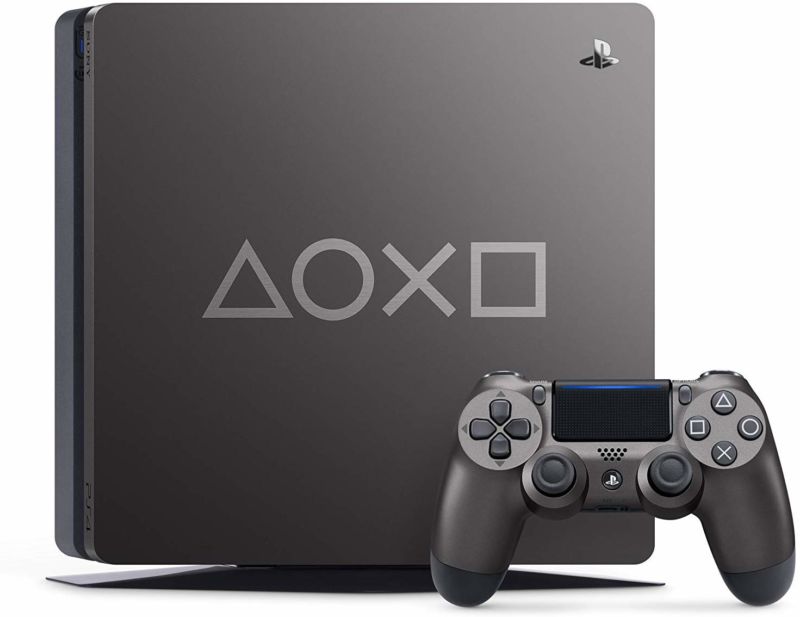
The limited-edition PS4 Sony has launched for its E3 sale this year.
Enlarge / The limited-edition PS4 Sony has launched for its E3 sale this year.

This weekend marks the unofficial start of E3, the most prominent video game trade event in the United States. Ars will be at the show again, and this year’s edition is expected to be somewhat muted compared to years past, what with Sony joining Nintendo in foregoing a formal presence at the event. There should still be plenty of news and new game footage for industry watchers to digest, however.

For those who are just interested in playing games, though, E3 has also become an excuse for game companies to hold sales events. Sony and Microsoft both rolled out big promotions this time last year—and apparently, their efforts went well. On Friday, the two once again kicked off sweeping sets of discounts for PlayStation 4 and Xbox One owners, respectively.

The deals apply to consoles, controllers, subscription services, and, naturally, lots of games, and are available on the company’s own digital stores and at various retailers. Both Sony and Microsoft say their promos will last from June 7 through June 17.

To help those looking for something new to play—or just those with a compulsive need to add to their backlog—we’ve broken down what’s worth considering from each sale below.

Note: Ars Technica may earn compensation for sales from links on this post through affiliate programs.

Sony “Days of Play” PlayStation 4 deals

  • Much like last year’s “Days of Play” sale, as the company dubs it, Sony has launched a limited-edition model of the PlayStation 4 Slim to commemorate the event. It costs $299.99, the standard MSRP for the console, so it’s not an out-and-out “deal.” Its gray-black finish is a bit more muted than last year’s blue-and-gold console, and given that Sony is openly discussing details about the PS4’s successor, now isn’t the optimal time for most people to buy new current-generation hardware. But if you’re a PlayStation diehard or your current PS4 is on its last legs, there you go. If last year is any indication, though, supply will likely run out before long. (Amazon, GameStop, Best Buy)
  • The PlayStation 4 Pro, meanwhile, gets a $50 discount, bringing it down to $349.99. This isn’t a huge savings, but discounts on the 4K-ready PS4 are still few and far between, relatively speaking, so it’s not the worst offer. Of note here is a bundle at B&H that comes with seven older but still solid games, including Uncharted 4, Bloodborne, and Until Dawn. (Walmart, Amazon, Newegg, Google Express, GameStop, Best Buy)
  • A PlayStation VR bundle that includes new VR games Trover Saves the Universe and Five Nights at Freddy’s VR: Help Wanted is down to $249. That’s $50 off its usual MSRP. (Walmart, Amazon, Target, GameStop, Best Buy)
  • Separate bundles that include two PlayStation Move controllers and either Borderlands 2 and Beat Saber or Everybody’s Golf VR and Blood & Truth, respectively, are down to $299.99. (We can vouch for the former from a game quality perspective.) That is, again, a $50 discount. The PS VR has been priced lower before, but mostly with bundles that Sony has since discontinued. In any case, while Oculus, HTC, and now Valve are selling more technically advanced headsets, game support for the PSVR is still kicking along, and Sony has said existing PSVR headsets will be supported by the presumed PlayStation 5.
  • If you simply need a new gamepad, Sony’s DualShock 4 controllers are down to $39.99. We’ve seen these go for less, but given that their street price tends to fluctuate between $45 and $55 online, this is a good price. That they’ll soon be compatible with iPhones is a nice bonus. (Walmart, Amazon, Google Express, Best Buy)
  • A 12-month subscription to Sony’s PlayStation Plus online service is down to $39.99, which is $20 off MSRP and possibly the best deal in Sony’s sale. (Amazon, GameStop, Best Buy)
  • A 12-month membership to its less essential PlayStation Now game streaming service is now $30 off, bringing it to $69.99. We’d recommend checking out its game library and making sure your internet can handle it before pulling the trigger.
  • Finally, the PlayStation Classic is down to $30, though that’s only $5 or so off from where it’s been priced in recent months. That’s mostly because it’s bad, so we wouldn’t recommend it. But since it is a deal, we’re obligated to give it a mention.
Marvel's Spider-Man.
Enlarge / Marvel’s Spider-Man.

There are tons of games on sale as part of Sony’s event—far too many for us to list each individually here. But we’ll make note of a few:

Microsoft E3 Week Xbox One deals

The special-edition Xbox One S Microsoft has launched alongside its E3 sale.
Enlarge / The special-edition Xbox One S Microsoft has launched alongside its E3 sale.
  • Perhaps the most newsworthy discount of Microsoft’s E3 sale is the All-Digital Edition of the Xbox One S falling to $199, which is a $50 savings. Ars Gaming Editor Kyle Orland has previously noted that it’s silly Microsoft is expecting users to buy a disc-less Xbox One S at an MSRP of $250 when standard One S consoles are going for less, but for now, Microsoft has the download-only machine at a more reasonable price. Whether you should buy it is another question—we know Microsoft is working on new Xbox hardware, and it wouldn’t be a shock if we hear more about it this weekend. But if you don’t have a 4K TV and only buy digitally anyway, it’s technically a deal. (Walmart, Amazon, Microsoft, Google Express, Best Buy)
  • Like Sony, Microsoft has launched a special-edition console for E3: in this case, a “gradient purple” Xbox One S that comes bundled with Fortnite Battle Royale. It goes for $249.99. Again, that’s a good ways pricier than some of the other One S bundles we’ve seen of late, so this should only be worth it to people who really like the look of the hardware. (Walmart, Amazon, Microsoft, Newegg, GameStop, Best Buy)
  • Microsoft is advertising the brawnier Xbox One X as being $100 off at $399. While that’s true relative to the console’s MSRP, we’ve seen it go for much less than that at various points over the past year, so it’s hard to call it a true deal. Walmart currently has a One X bundle with Fallout 76 up for nearly $20 less, for instance. (Yes, we know, but cheaper is cheaper.)
  • Likewise, the company says Xbox One Wireless Controllers are $10 off MSRP, but that only brings them to a minimum of $50, a price we routinely see beat at third-party retailers. Case in point: Amazon currently has them for $40, which is a genuine deal even if it’s not the lowest we’ve seen. Unfortunately, though, there’s no discount on the more customizable Xbox Elite Wireless Controller.
  • There are several deals on games, though, even if the Xbox One’s first-party library isn’t quite as celebrated as that of the PS4. Here, we particularly like Forza Horizon 4 for $30, Assassin’s Creed Odyssey for $23, Metro Exodus for $36, Hitman 2 for $24, and Hellblade: Senua’s Sacrifice for $20, but again there are dozens more discounts to peruse.

https://arstechnica.com/?p=1518369


Dark Phoenix isn’t an epic X-Men conclusion—but it’s a darned good teen flick

Dark Phoenix film still
Enlarge / Sophie Turner’s face often looks like it’s about to explode in Dark Phoenix.

Arguably, the biggest shockwave in recent Marvel films and series wasn’t a snap from a comics villain but a click of Disney CEO Bob Iger’s pen. One by one, we’ve seen the reverberations of Disney’s Fox acquisition from last year, mostly in the form of Netflix series wrapping up so that Disney can move full steam(boat Willie) ahead with its own films and streaming service. This week sees an arguably bigger conclusion: the end of the latest X-Men cinematic series.

Dark Phoenix sees the rug getting pulled from under the series’ teen-reboot incarnation, which began life in 2011’s X-Men: First Class and became an overwhelming mess in 2016’s X-Men: Apocalypse. That last entry wrapped a bow on an apparent trilogy, but this week’s one-more-time film is a bummer for a surprising reason. Dark Phoenix starts with a glimmer of hope that this central cast could go somewhere interesting if given one more shot. Much of the film plays out like an incredible, self-contained graphic novel, with legitimate surprises, compelling intra-X conflict, and a tighter focus on relationships that the last film lost sight of.

If you’re the kind of series fan who can have your wind knocked out by a lousy ending and neatly wrapped bow, Dark Phoenix‘s best bits may not be good enough. But up until that annoying conclusion, the film does its best to redeem the half of X-Men that never had a Hugh Jackman or Sir Patrick Stewart to lean on—and the result is a pleasant surprise in a crowded superhero-film ecosystem.

X-Women to the rescue

Dark Phoenix‘s best content revolves around a trio of badass leads: Jean Grey (Sophie Turner, Game of Thrones), Mystique (Academy Award-winner Jennifer Lawrence), and a mysterious newcomer (Academy Award-winner Jessica Chastain). I can point to a single, cringe-worthy line of over-serious dialogue and delivery from each actor listed, which, for a lore-filled series like X-Men, is like shooting four-under-par on a single hole in a golf course.

Turner in particular steps up to the plate to juggle childhood trauma, coming-of-age anger, and endearing vulnerability, all while making sense of her complicated past. The film opens with Jean flashing back to the childhood moment when her life turned upside-down, at which point a certain Dr. Charles Xavier (James McAvoy, Glass) shows up with an interest in her apparent mutant gifts.

The timeline then fast-forwards to the year 1992, when a core cast of seven familiar heroes (Jean Grey, Mystique, Cyclops, Storm, Nightcrawler, Beast, and Quicksilver) blasts off into space to save the day. This focused action sequence sees each hero trot out a superpower with some incredible VFX work applied, particularly the wisp-of-smoke warps that Nightcrawler leaves in his wake, while the inevitable “something’s not right” twist plays out with logical rationale for every character involved.

Jean suffers the most intense consequences from this mission, but we also see showdowns among other characters, all clashing with their own interpretations of what life as an American mutant should mean. For some of the cast, the answer is to just be kids—and we get some welcome comic relief as a result, along with a few sequences that balance teenaged melodrama with superhero stakes. The result reminded me of my favorite parts in Spider-Man Homecoming, in which young characters have to contend with the usual coming-of-age trope of new powers versus old insecurities—though Dark Phoenix spreads that responsibility across more characters and, as a result, occasionally feels more like Dawson’s butt-kicking Creek.

McAvoy also does well to portray Xavier’s sometimes skewed priorities while still making his character likable and respectable—a fact that fuels a particularly interesting showdown between his character and Lawrence’s. (Her reminder that “the women are always saving the men around here” may seem cheesy out of context, but in the heat of the film’s moment, the line fuels an impressive showdown of X-Men leadership.)

It’s a bird (er, a phoenix), it’s a train

Still images don't do justice to how cool Nightcrawler's smoke-explosion effects look in action.
Enlarge / Still images don’t do justice to how cool Nightcrawler’s smoke-explosion effects look in action.
20th Century Fox

But the best relationship in Dark Phoenix is between Xavier and Jean, thanks to how their similar mind-reading powers collide at dramatic moments. That’s all the more impressive when you consider that for some of their most intense conversations, the actors aren’t staring each other down but instead having their conversations thrown against the wall of mind-reading CGI effects. The resulting glob of chopped-and-screwed memories, whizzing and blurring across a theater screen, could have been a dizzying, even obnoxious way to cut corners. Instead, Dark Phoenix‘s effects team delivers cohesive visual themes to sell these vignettes.

In even better visual news, the film’s battle sequences pare down the usual open-sky, zillions-of-lasers paradigm that Marvel Cinematic Universe films have beaten us over the head with for the past five years or so. Focused camera angles stick with a particular point of impact long enough before cutting away to the next hero or conflict. Characters face off in clever ways, usually with each mutant’s strength or weakness paired nicely with an ally or foe. And early events make clear that no fight’s outcome is predictable, lending more weight and tension to each showdown.

An end-of-film train sequence does a particularly good job of selling the hierarchy of each mutant’s strength. Weaker and stronger characters face off in ways that rationally make sense without diluting the tension of what’s to come next—and this fact is carried forward by a solid variety of in-the-car and above-the-train camera angles and major action moments to sell each.

Ultimately, none of this visually arresting stuff matters if we don’t care about Jean, a superhero who spends much of the film peeling back onion layers of deception and tragedy. She and Mystique are the focal points, with every major male character failing the reverse version of the Bechdel Test by obsessing over them. The result is both a refreshing gimmick and a masterwork in execution. These two characters push the limits of what the X-Men organization should be, and they both suffer—and nobly carry—great heartbreak along the way, affording viewers the opportunity to attach our own coming-of-age metaphors. (I would argue this is executed well enough to possibly surpass the best similar stuff in Captain Marvel.)

Without spoiling the whole thing, however, I’ll just say that this specific praise all but crumbles once the film ends. Jean, Xavier, and a few other characters end Dark Phoenix with the kind of “nope, there’s no sequel coming” tidiness that spits in the face of surviving and living through tragedy—a point that would have been wonderful to leave hanging for one more film in this X-Men universe. Alas. If this were a graphic novel, I’d rip out the final few pages and feel pretty good about having experienced the whole thing, and I urge anyone who likes this fork of the X-Men series to do the same, either at theaters or an eventual home-viewing experience in a few months.

https://arstechnica.com/?p=1518159


Report: Blizzard began making, then canceled, a StarCraft first-person shooter

Report: Blizzard began making, then canceled, a StarCraft first-person shooter
Blizzard Entertainment

On Wednesday, a vague tweet from a Blizzard game developer hinted at a canceled game project that fans would “never see,” then announced his departure from the company. As questions started flying over what that game was, Kotaku super-reporter Jason Schreier showed up one day later with the scoop: the canceled game, which had been in development for two years, was a first-person shooter set in the StarCraft universe.

In addition to citing “three people familiar with goings-on,” Schreier received a lengthy official response from Blizzard on Thursday that did not deny the game’s existence and cancellation. It reads, in part: “As has been the case at Blizzard numerous times in the past, there is always the possibility that we’ll make the decision to not move forward on a given project.”

This project, which Schreier says was codenamed “Ares” within Blizzard, began as a Battlefield-like campaign against the series’ Zerg aliens whose initial prototypes put players in control of a “Terran marine.” The Schreier report says that the team had planned to put players in control of Zerg aliens, as well—but the fact that such content was only hinted at, as opposed to being internally playable, may point to how far along the game had gotten.

Schreier’s report didn’t clarify what aspects of the Battlefield series may have found their way into the prototype, including big vehicles or destructible terrain. But the game was built using the same Blizzard-exclusive engine used to power Overwatch.

Despite the news’ original tease coming as part of a developer’s “goodbye to Blizzard” tweet, Schreier’s sources say no staffers were let go due to the game’s cancellation “a couple of weeks ago.” Instead, those staffers were shuffled to the internal teams working on Diablo 4 and Overwatch 2. This project’s cancellation follows reports that Blizzard would focus its development resources on existing IP, as opposed to new series experiments. A StarCraft-branded FPS may have fit into that plan at the time, but that has clearly changed.

One of Schreier’s unnamed sources expressed “shock” about the game’s cancellation, while another described the prototype as “looking quite good.” Neither offered any direct comparisons between that game and the infamous StarCraft Ghost project, a third-person shooter that was teased publicly for years before being formally canceled in 2006.

Schreier took the Thursday news opportunity to offer a tease about Overwatch 2, as well: that it will include a substantial amount of “PvE” combat. While Schreier mentioned direct comparisons to the co-op shooting franchise Left 4 Dead, we wonder how much of that PvE content will resemble the seasonal Overwatch events that have already landed in the existing game.

https://arstechnica.com/?p=1518089


Baldur’s Gate III is finally official, coming to PC and Stadia

After the game’s existence was hinted at months ago and all but confirmed via website source scouring last week, Larian Studios officially announced that it is working on Baldur’s Gate III today, nearly 19 years after the release of BioWare’s Baldur’s Gate II.

If you recognize the Belgian Larian Studios name, it’s probably because of the Divinity series of computer RPGs, reborn in recent years as the critically and commercially successful Divinity: Original Sin series.

The Larian team is also working “in close collaboration with the Dungeons & Dragons team at Wizards of the Coast,” according to a press release.

Baldur’s Gate III will push the boundaries of the RPG genre and offer a rich narrative with unparalleled player freedom, high-stakes decisions, unique companion characters, and memorable combat. It is Larian Studios’ biggest production ever and will be playable together with friends or as a single-player adventure.

While the game’s first pre-rendered trailer premiered as part of Google’s Stadia pricing announcements today, Larian has since confirmed that the game will also be coming to Windows PCs. The timeline for the game’s release is still anyone’s guess, though Larian says it “plans to work closely with the global community to bring the coveted series to life, with more news to follow over the course of the year.”

[embedded content]

In an interview with USGamer conducted before the announcement, Larian creative director Swen Vincke emphasized that the new sequel would be more streamlined than previous games, thanks in part to the easier-to-explain fifth-edition Dungeons & Dragons rules that form its basis. He also stressed that the game, which takes place 100 years after the original game, would be “starting clean” to some extent, with only “iconic” callbacks to the original.

Perhaps most surprisingly, Vincke suggested in the interview that Baldur’s Gate III might not have the same isometric perspective as the titles that preceded it (and which characterizes games like Divinity: Original Sin). “We’re going to have some things that you haven’t seen yet in CRPGs, which I would love to talk about, but I’m going to hold it,” Vincke said on that score.

Listing image by Larian Studios

https://arstechnica.com/?p=1518009


Destiny 2 will become free-to-play later this year, cross-platform [Updated]

Shortly after Google’s Stadia reveal presentation on Thursday, the Destiny 2 handlers at Bungie kicked off their own whopper of a livestream. While the broadcast revolved around the game’s upcoming paid expansion—Shadowkeep, out September 17—it arguably made a bigger splash with a free-to-play and cross-platform announcement.

Once Shadowkeep goes live this September on PlayStation 4, Xbox One, Windows 10, and Google Stadia, Destiny 2‘s base version will become wholly free to download, boot, and play on Bungie’s live servers. The “New Light” version may be better described as “Destiny 2 Year One,” which includes the overworld and campaign content from the 2016 SKU and the game’s first pair of paid expansions, Warmind and Curse of Osiris.

From there, the rest of the game’s existing and future content—meaning, full expansion packs and paid “season” content bumps—will be sold “a la carte” without requiring other purchases. “None of the existing content is required to access Shadowkeep,” one Bungie staffer said when explaining this retail model. “All expansions going forward will be simple and a la carte.” (The staffers also admitted that “pre-purchasing content wasn’t as cool as it could be,” referring specifically to the “season” content bumps being sold before their contents were advertised.)

Bungie describes this version as “tailored towards new players,” as it drops players into Destiny 2‘s first campaign chapter before dumping them into a social hub. The hub is where online players connect to the “full breadth” of content like destinations, strikes, free-roam, and lost sectors, along with versus modes like Crucible and Gambit. Some paid-expansion content, particularly basic “destination content,” will unlock “over time” for free players. These will essentially tease free players to pay for Forsaken and Shadowkeep content like campaign missions and exotic quests.

This is the only technical hint to how cross-save support will work once this feature is added to <em>Destiny 2</em> in September of this year. As you can see, this player is connecting multiple platforms' accounts with character progress <em>and</em> entitlements. Will we be able to move expansion pack payments from one platform to another? We don't yet know.
Enlarge / This is the only technical hint to how cross-save support will work once this feature is added to Destiny 2 in September of this year. As you can see, this player is connecting multiple platforms’ accounts with character progress and entitlements. Will we be able to move expansion pack payments from one platform to another? We don’t yet know.

Additionally, if you’ve made progress on one supported Destiny 2 platform, you’ll be able to transfer characters to other platforms. This includes Sony’s PlayStation 4, a platform that has been notorious for gating its content and accounts behind “only on PS4” restrictions. However, Bungie was more tight-lipped on exactly how this account- and character-transition process will work. The above image hints to the considerations that must be minded when moving one platform’s characters and entitlements (meaning, what you’ve paid for) to another. Will an expansion-pack purchase on PS4 count toward PC? If I started a character on a non-expansion account, can I shift that one to a platform where I have paid for that content? We’ll have to wait and see.

[Update, 3:20pm ET: After reviewing Bungie’s “cross-save” page, which went live shortly before this article went live, we wanted to clarify our original article’s “cross-play” claim. It appears that Destiny 2 players will still be restricted within their platform of choice for matchmaking and grouping up with friends, as opposed to, say, Windows 10 players joining groups with Stadia and PS4 players in the same instance. We have adjusted the original headline as a result, which previously read “fully cross-platform.”]

In related news: Destiny 2 will no longer feature any “platform-exclusive” content. Wherever you buy the game’s future expansions and season packs, you can expect to see the same gear, missions, multiplayer levels, and more.

There’s also a major change coming for Windows 10 players. By the end of this year, all of those Destiny 2 accounts will have a required merge from Blizzard’s Battle.net launcher to Valve’s Steam. Bungie compared this process to having a moving service show up to your house, take your possessions and furniture, and set them up neatly at your new location. We’ll have to wait to see whether Bungie makes the PC-launcher shift as smooth as that sounds.

Bungie was coy when explaining why these features (free-to-play, cross-platform) hadn’t come to the game before: “capital-R reasons.” But frequent mentions of the series’ former publishing partner in Activision (as well as reminders that Bungie bought itself out of the deal earlier this year) seemed to clearly hint that Activision had been a major preventative factor up until now.

For more on the sales pitch of Destiny 2: Shadowkeep, check out the video below, which details the series’ return to the Moon and the paid campaign content it will include.

[embedded content]
Destiny 2: Shadowkeep trailer.

Listing image by Bungie

https://arstechnica.com/?p=1517939