Grumpy Cat’s death marks the end of the joyful Internet

Grumpy Cat poses on the set as she makes her broadway debut in "Cats" on Broadway at The Neil Simon Theatre on September 30, 2016 in New York City.
Enlarge / Grumpy Cat poses on the set as she makes her broadway debut in “Cats” on Broadway at The Neil Simon Theatre on September 30, 2016 in New York City.

In 2012, America was halfway through President Obama’s time in office. The first Avengers movie came out, and Hunger Games premiered. Hope was high, and Reddit—the Web’s “front page”—was where anyone with a cute pet could get thousands of upvotes. Cats were the most popular, but occasionally a dog or two would slip in. Then, in September of that year, Bryan Bundesen posted a picture of his sister Tabatha’s cat, Tardar Sauce, an 11-month old tabby with feline dwarfism that perpetually looked annoyed. The Internet was enraptured with Grumpy Cat.

That’s how life on social media used to be. The biggest memeswere funny looking cats like Tardar and Lil Bub, or Mohawk Guy, and “Call Me Maybe.” Memes weren’t yet weapons of mass disruption (at least not on the scale that they came to be in 2016) and we still knew what a troll was. Now, Grumpy Cat is dead—the feline’s owners announced her passing today on Twitter—and with her goes an era in which the Internet was more a place of joy than hate, uplift rather than harassment.

Obviously, this isn’t all about Grumpy Cat. Scores of other memes and videos and animals were a part of the early-2000s Internet. But, just like many pop stars before her, Grumpy Cat is an avatar for her generation, a time when a cat could have a wildly successful online presence and be the hottest photo op at South by Southwest. Sure, 4chan was a little dicey back then, but for the most part, the lulz were harmless. (Or at least they seemed to be.) Back in 2012, and the years before, one of the Internet’s central themes was that it was a place we all went to watch stupid videos and read Texts from Hillary. The most sexist thing presidential candidates said back then were blundered statements like “binders full of women.” Years later, the videos are largely sponcon and the memes about Clinton are no longer funny—and might have cost her a presidential election.

It’s (sadly) fitting that Grumpy Cat’s death comes so close to the shuttering of the website YTMND. You’re the Man Now Dog, like Reddit or Know Your Meme, was a place where, not too long ago, people went online for collective amusement. You could share a laugh and leave. The “Don’t Read the Comments” rule applied, but the comments didn’t automatically show up in your Twitter mentions. The challenges were about ice buckets and “Gangnam Style”—things far less dangerous than eating Tide Pods. Yes, we still have Drake and Beyoncé to give us challenges—some stars will always burn bright—but even their presence online only feels like small shafts of light in an otherwise shadowy, and shady, abyss.

Was Grumpy Cat the most important figure on the Internet ever? No. But her passing is a reminder of a time that already feels like decades ago, even though it’s only been the length of most people’s college education. There was an era when a lethargic cat—or a dance, or Ecce Homo-ing a painting—could be a token of collective happiness for months. Nostalgia can be dangerous, and I know this might make me a curmudgeon, but I believe those days are gone.

This story originally appeared on wired.com.

https://arstechnica.com/?p=1507095



Wandering Earth: Rocket scientist explains how we could move our planet

Wandering Earth: Rocket scientist explains how we could move our planet

In the Chinese science fiction film The Wandering Earth, recently released on Netflix, humanity attempts to change the Earth’s orbit using enormous thrusters in order to escape the expanding Sun—and prevent a collision with Jupiter.

The scenario may one day come true. In five billion years, the Sun will run out of fuel and expand, most likely engulfing the Earth. A more immediate threat is a global warming apocalypse. Moving the Earth to a wider orbit could be a solution—and it is possible in theory.

But how could we go about it and what are the engineering challenges? For the sake of argument, let us assume that we aim to move the Earth from its current orbit to an orbit 50% further from the Sun, similar to Mars’.

We have been devising techniques to move small bodies—asteroids—from their orbit for many years, mainly to protect our planet from impacts. Some are based on an impulsive, and often destructive, action: a nuclear blast near or on the surface of the asteroid, or a “kinetic impactor”, for example a spacecraft colliding with the asteroid at high velocity. These are clearly not applicable to Earth due to their destructive nature.

Other techniques instead involve a very gentle, continuous push over a long time, provided by a tugboat docked on the surface of the asteroid, or a spacecraft hovering near it (pushing through gravity or other methods). But this would be impossible for the Earth as its mass is enormous compared to even the largest asteroids.

Electric thrusters

We have actually already been moving the Earth from its orbit. Every time a probe leaves the Earth for another planet, it imparts a small impulse to the Earth in the opposite direction, similar to the recoil of a gun. Luckily for us—but unfortunately for the purpose of moving the Earth—this effect is incredibly small.

SpaceX’s Falcon Heavy is the most capable launch vehicle today. We would need 300 billion billion launches at full capacity in order to achieve the orbit change to Mars. The material making up all these rockets would be equivalent to 85% of the Earth, leaving only 15% of Earth in Mars orbit.

An electric thruster is a much more efficient way to accelerate mass—in particular ion drives, which work by firing out a stream of charged particles that propel the vessel forward. We could point and fire an electric thruster in the trailing direction of Earth’s orbit.

The oversized thruster should be 1,000 kilometres above sea level, beyond Earth’s atmosphere, but still solidly attached to the Earth with a rigid beam, to transmit the pushing force. With an ion beam fired at 40 kilometres per second in the right direction, we would still need to eject the equivalent of 13% of the mass of the Earth in ions to move the remaining 87%.

Sailing on light

As light carries momentum, but no mass, we may also be able to continuously power a focused light beam, such as a laser. The required power would be collected from the Sun, and no Earth mass would be consumed. Even using the enormous 100GW laser plant envisaged by the Breakthrough Starshot project, which aims to propel spacecraft out of the solar system to explore neighbouring stars, it would still take three billion billion years of continuous use to achieve the orbital change.

But light can also be reflected directly from the Sun to the Earth using a solar sail stationed next to the Earth. Researchers have shown that it would need a reflective disc 19 times bigger than the Earth’s diameter to achieve the orbital change over a timescale of one billion years.

[embedded content]
The trailer for Wandering Earth

Interplanetary billiard

A well-known technique for two orbiting bodies to exchange momentum and change their velocity is with a close passage, or gravitational slingshot. This type of manoeuvre has been extensively used by interplanetary probes. For example, the Rosetta spacecraft that visited comet 67P in 2014-2016, during its ten-year journey to the comet passed in the vicinity of the Earth twice, in 2005 and 2007.

As a result, the gravity field of the Earth imparted a substantial acceleration to Rosetta, which would have been unachievable solely using thrusters. Consequently, the Earth received an opposite and equal impulse—although this did not have any measurable effect due to Earth’s mass.

But what if we could perform a slingshot, using something much more massive than a spacecraft? Asteroids can certainly be redirected by the Earth, and while the mutual effect on Earth’s orbit will be tiny, this action can be repeated numerous times to ultimately achieve a considerable Earth orbit change.

Some regions of the solar system are dense with small bodies such as asteroids and comets, the mass of many of which is small enough to be moved with realistic technology, but still orders of magnitude larger than what can be realistically launched from Earth.

With accurate trajectory design, it is possible to exploit so-called “Δv leveraging”—a small body can be nudged out of its orbit and as a result swing past the Earth, providing a much larger impulse to our planet. This may seem exciting, but it has been estimated that we would need a million such asteroid close passes, each spaced about a few thousand years apart, to keep up with the Sun’s expansion.

The verdict

Of all the options available, using multiple asteroid slingshots seems the most achievable right now. But in the future, exploiting light might be the key—if we learn how to build giant space structures or super-powerful laser arrays. These could also be used for space exploration.

But while it is theoretically possible, and may one day be technically feasible, it might actually be easier to move our species to our planetary next-door neighbour, Mars, which may survive the Sun’s destruction. We have, after all, already landed on and roved its surface several times.

After considering how challenging it would be to move the Earth, colonising Mars, making it habitable and moving Earth’s population there over time, might not sound as difficult after all.The Conversation

This article is republished from The Conversation under a Creative Commons license. You can read the original article here.

https://arstechnica.com/?p=1507409


Star Wars: Outer Rim review—Piloting as Han or Boba Fett could use more thrills

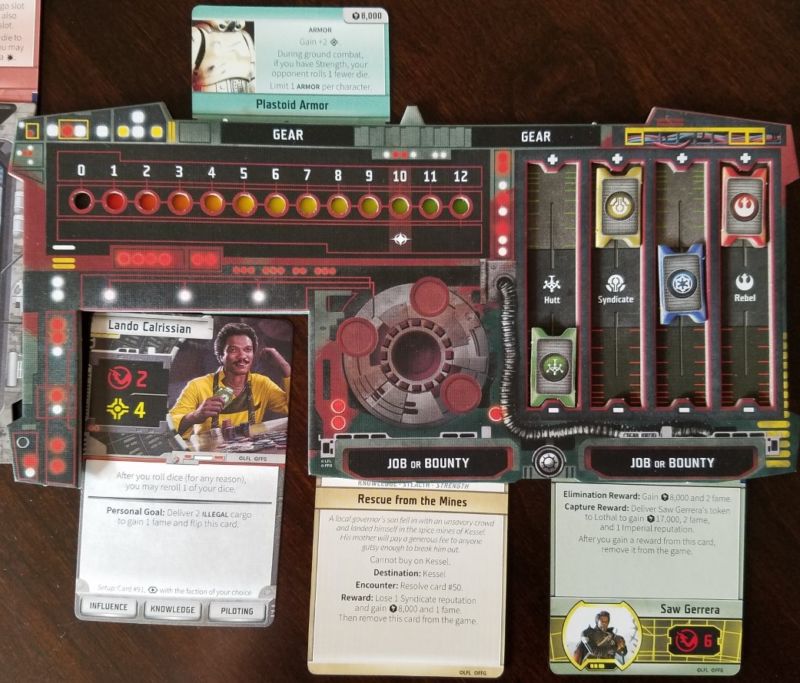
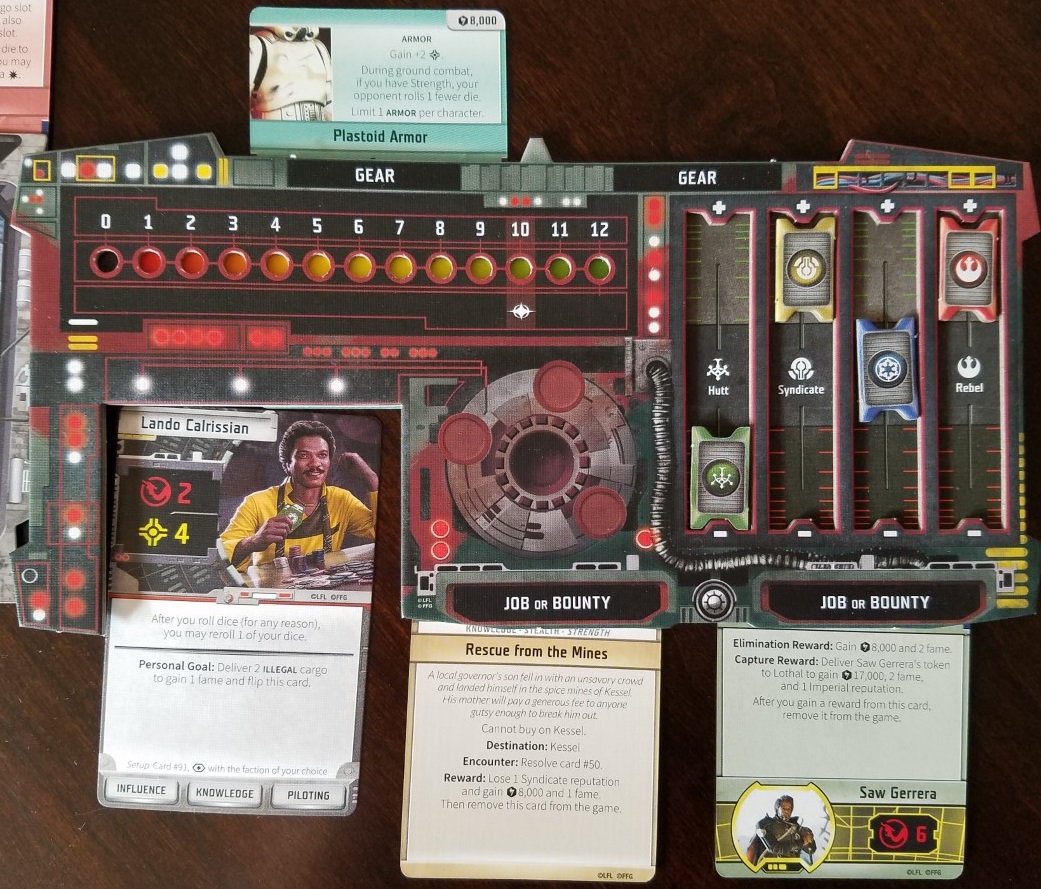
The game's player board.
Enlarge / The game’s player board.
Welcome to Ars Cardboard, our weekend look at tabletop games! Check out our complete board gaming coverage at cardboard.arstechnica.com.

One of the defining aspects of Star Wars is its dramatic sense of adventure. Hopping from planet to planet, quarreling with local cultures, and getting swept up in something greater than yourself are all essential to the property’s Midichlorian-infused DNA. That’s why it’s surprising to realize that we’ve never had a proper Star Wars adventure game.

But the new Star Wars: Outer Rim is just that, a star-hopping frolic in the vein of classic titles Talisman and Runebound. You select your pilot from an eclectic mix drawn from both the big and small screen. Favorites such as Boba Fett and Han Solo are of course included, but we’re also offered Ketsu Onyo from the Rebels television show and Doctor Aphra from a beloved comic series.

Your pilot starts off in a little rock-hopper, plugging away at small jobs and easy bounties as you amass credit and fame. Soon enough you upgrade, acquiring an iconic ship such as the Millennium Falcon or IG-2000, and maybe you bulk out your crew with Lobot and Chewbacca. Eventually someone hits 10 fame and the game ends with the Outer Rim peppered with bodies and wreckage. At least, that’s the hope.

I’ve got a bad feeling about this

From the beginning of the game, however, something feels amiss. Everything is standard fare—you move a few spaces, interact with a randomized market of goods and services, and finally conclude your turn with an encounter specific to the planet you’ve landed upon. We’ve done this before. I’ve flown the Verse in Firefly: The Board Game, I’ve taken odd jobs and hunted NPCs in Xia: Legends of a Drift System, and I’ve managed my relationship status with sovereign nations and military entities in Merchants & Marauders. Little flourishes such as losing reputation with the Hutts for dropping their cargo or slapping a turbolaser on your version of Slave-1 trigger a smirk, but they don’t push the needle.

Grabbing cargo and taking it across the map is typical “pick up and deliver,” which was perfected decades ago by Merchants of Venus. Even combat and skill tests use those dice we’ve rolled before in X-Wing. The only significant twist here is jettisoning the typical board and instead utilizing an odd cardboard arch. 

There is some positive here in that the hyperspace lanes you move along are constricted to few branching vectors. This causes more congestion as you collide with NPC patrols, though it can also result in frustration as the only available jobs require you travel to the other side of the rim with no shortcut. More impactful is the claustrophobic atmosphere this board creates, which severely blunts the “vastness of space” feel.

The goal here was obviously to streamline this type of game. Instead of each planet possessing its own teeming economy, we have a single central market. There are decks with bounties, jobs, modifications, and new ship models. Each offers a single top card which can be purchased, after which the reveal of new cards prompts ship movements from the AI-controlled patrols working for the Rebels, the Hutts, etc.

The philosophy here is ace. Letting players fly where they want and pursue their goals while minimizing upkeep is a worthy goal, and Outer Rim is a simple and straightforward design because of this. Unfortunately, it’s still a three-hour affair at higher player counts, and the experience offered is not nearly as rich or evocative as it needs to be. The game’s commitment to a middle ground would have benefited from a sharply reduced playing—or going the opposite direction and leaning into a much stronger narrative.

Star Wars as a property is often overshadowed by its big players and events. It would have been grand to see more compelling setting elements such as factions at war, the exploding of worlds by Death Star, or branching plot elements. Foregoing that for this sense of streamlining is fine, but not when the experience will consume most of the night anyway.

Additionally, the hard edges of the genre have all been sanded off here. You can’t directly fight another player unless they’ve employed a character you have a bounty for or you’ve acquired a rare event card that permits aggression. Paths to victory are similarly restricted compared to more sandbox designs such as the aforementioned Xia. Late in the game, you will often just take the path of least resistance, such as hunting the many patrols littered across the board.

This is Star Wars and Star Wars is not dull. Outer Rim loses sight of this.

That’s not to say that nothing inspires here. The personal goals for each character and ship are compelling. They offer alternate directions, such as winning combats or acquiring ship mods. Additionally, the numbered card library that originally appeared in Fallout: The Board Game returns. This is an enjoyable mechanism that injects surprising intermittent narrative twists. You will head to the deck when encountering contacts such as Greedo or when resolving a complicated job which requires multiple skill tests.

And those story-driven tests are the sweetest moments in the game. You will roll the dice and hope for success—with odds modified by your crew’s skills—before moving on to the next test. For instance, while attempting to hijack a cargo hauler, you first must board the vessel with a pilot check. Next you must rely on your technical acumen to slice the target’s terminal. Finally, you will get into a bloody shootout with the guards on board and either make it away with the goods or roar in anguish. Failure at each step leading to the climax usually results in damage to a ship or character. This is a neat and functional narrative system that conveys story in small and colorful chunks.

There is also a quaint joy in flying about the rim pursuing bounties in the Moldy Crow with 4-LOM riding shotgun. Star Wars has its own magical pull, and the designers have certainly peppered references and color throughout.

Perhaps the best thing found in this box is the included solo (as in solitaire, not Harrison Ford) mode. This makes great sense since the game does not hinge on player interaction; a simple automated opponent is handled via cards, and you can focus on your personal story with little downtime.

Alas, none of it is quite enough. It’s difficult to envisage a day when you’d be better off getting this to the table as opposed to its more significant peers. It cuts an hour or so off the length of Firefly, but it pales in comparison to the daring quality of Merchants & Marauders or Xia.

In a crowded market with a continual onslaught of new releases, you really have to offer something special, and Outer Rim feels content to parrot the success of others. This is ultimately Star Wars, quiet and tame.

https://arstechnica.com/?p=1507237


There’s a new Minecraft game coming, and it’s played entirely in augmented reality

Microsoft may believe it has made augmented reality’s killer app: the just-announced Minecraft Earth for iOS and Android.

AR on mobile devices may carry tremendous potential, but it’s easy enough to argue that the mainstream value proposition hasn’t arrived yet. Pokémon Go is probably the most oft-cited “killer app” for AR, but it’s only barely a true AR app. And there are some neat shopping apps and educational tools (from Warby Parker and Ikea, for example), but none of them have made a big dent in the mainstream consciousness.

[embedded content]
Minecraft Earth

At first glance, Minecraft Earth is a bit like Pokémon Go, given that it seems to be location aware in some ways. But there’s a bit more to it than that. Players will be able to construct builds on their living room tables either alone or in collaboration with others, then go and place them full-size in the outside world when they’re ready. You can collect new mobs (both familiar and new) and resources around you to incorporate in your build, then fight them in the life-size version of the build. Fundamentally, it appears to be the basic Minecraft experience translated to augmented reality with geolocation features.

Microsoft acquired Minecraft from its creator in 2014 and has (mostly successfully) sought to turn it into a family-friendly, educational gaming and creative powerhouse. Interestingly, the company previously demoed an AR version of Minecraft at the E3 gaming conference using the company’s HoloLens AR platform. That platform is still in development, but it seems the game is probably not, as HoloLens has pivoted to focus on commercial and professional rather than consumer use cases.

Minecraft Earth runs on Azure PlayFab, a platform used by various game developers for multiplayer experiences. According to Engadget’s Devindra Hardawar, who got some hands-on time with the game, the game “relies on Open Street Maps for basic mapping data, as well as Azure Spatial Anchors to keep track of all the players.” Also, Windows Central has a deep-dive on the various gameplay elements.

Microsoft says a “limited beta” will begin in the summer but hasn’t yet indicated when the public launch will happen. The company did, however, clarify in its FAQ that Minecraft Earth will be free to play on both iOS and Android, but without any loot boxes. That said, we don’t know anything about this game’s pricing structure, and free-to-play games range from fair to outrageous. So we’ll have to wait and see.

Listing image by Minecraft

https://arstechnica.com/?p=1507061


Xbox, PC get a little bit closer with the latest Xbox updates

Xbox, PC get a little bit closer with the latest Xbox updates

The May 2019 update for the Xbox One’s system software is now rolling out, bringing some small refinements to the friends list, messaging, and game/app list.

Starting with the last one first, the app list will now ignore “a,” “an,” and “the” when sorting or grouping alphabetically. This is the kind of change that makes me amazed that they weren’t already doing this, as it almost always makes for easier-to-use listings. Video games don’t even have The The to contend with.

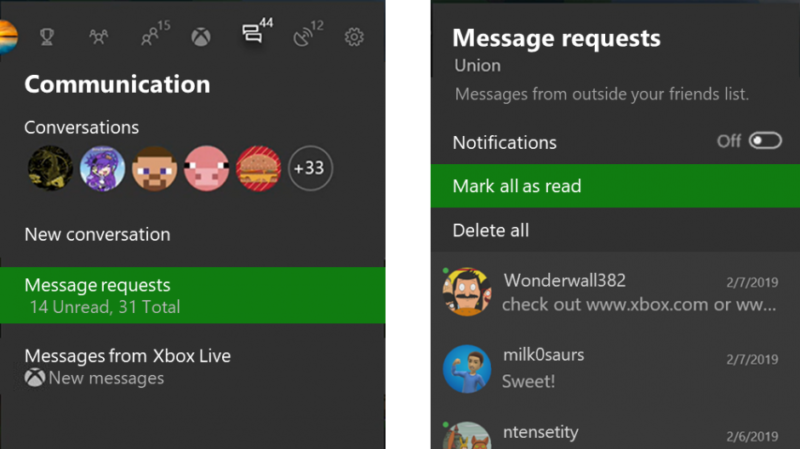
The Messaging change is rather inexplicable. There’s a sensible change: incoming messaging requests from your friends are now prioritized, with requests from non-friends put in a separate category. But for some reason, Microsoft is going to wipe all group messages as a result. You can save backups of the messages for a limited time at Xbox.com, and messages with individual users are safe, but the group messages are all going. There’s no obvious justification for this change, as even if there were some significant change being made to group messaging, one would expect Microsoft to handle migrating the messages from old to new.

The most interesting change, however, is the one to the friends list. Microsoft is adding indicators beside the name of each online friend to indicate if they’re in a game on console, using the Xbox app on Windows, or using the Xbox app on a smartphone. This should make it easier to know who you can invite to games, especially as cross-platform play becomes more common. Moreover, it underscores Microsoft’s move to make Xbox a gaming brand independent of any particular hardware: you’re still part of the Xbox ecosystem if you’re on PC or mobile. Xbox isn’t the hardware: Xbox is playing games with your friends, wherever you and they are.

On the PC side, Windows 10’s Game Bar is being renamed the Xbox Game Bar, and the latest preview also includes the “Looking for Group” feature used to find people playing the game you want to play. Start a search for people to join your game, and you’ll be notified not just on the PC, but also on the Xbox, that someone has been found. This feature was previously available on Windows in the Xbox app, but putting it in the Game Bar makes it faster and easier to use.

All together, it feels like Microsoft is blurring the lines between Xbox, PC, and Mobile gaming, and we can only expect those lines to get even more blurred in the future. The Xcloud gaming service further erodes these platform differences—while the premium experience will be offered on the console or a high-end PC, game streaming should make many games playable on just about any hardware. The final missing piece would surely be the ability to play Xbox games on PC. There are already signs that Microsoft is working on this, but such a change would further cement this shift in emphasis from console hardware to gaming wherever you are.

https://arstechnica.com/?p=1506953


Two games temporarily leave Epic Games Store during first-ever sale

<em>Vampire: The Masquerade - Bloodlines 2</em> took itself off of the Epic Games Store temporarily rather than take part in the recent "Mega Sale"
Vampire: The Masquerade – Bloodlines 2 took itself off of the Epic Games Store temporarily rather than take part in the recent “Mega Sale”

Epic’s first “Mega Sale,” launched yesterday, is causing some pricing and availability hiccups for a few publishers. As Kotaku lays out, a couple of games in the store’s small catalog seem to have removed themselves from the platform rather than participate in the temporary price reductions.

Paradox Interactive’s Vampire: The Masquerade – Bloodlines 2 and Klei Entertainment’s Oxygen Not Included are no longer available on the Epic Games Store as of this writing. Bloodlines 2 was actually removed shortly after being listed at a reduced sale price, a state of affairs that Epic’s Sergei Galyonkin said happened because Paradox was unaware of the “sale mechanism.”

“If a developer or publisher chooses to not participate in our sales, we will honor that decision,” an Epic representative told Kotaku. “Paradox Interactive has chosen to not participate in the Epic Mega Sale and the game has been temporarily removed from sale. If you’ve purchased Vampire: The Masquerade – Bloodlines 2 during the period when the discount did apply at the time of check out, Epic will honor that price.”

Paradox also noted in a statement that the game will “return to the store soon,” presumably after the sale is complete.

Epic’s Mega Sale, which offers a reduced price for every game currently available on the platform, also includes an additional $10 discount for games prices $14.99 and over, covered by Epic itself. But those steep discounts can cause an awkward price discrepancy for publishers that also offer their games on Steam, where Valve’s larger revenue cut can create a different value proposition. Some publishers also might be wary of effectively devaluing a new release by offering such a large price reduction so soon after launch.

Meanwhile, the Epic Mega Sale also caused some brief pricing confusion for Supergiant’s hack-and-slash title Hades. After the game was briefly listed at $6.99, its sale price was reset to $14.99. The game’s base price, however, was listed at $24.99, up from its original listing of $19.99. Supergiant later reset both the base and sale prices to $19.99 and apologized for raising the base price without advance warning.

https://arstechnica.com/?p=1506959


What Microsoft and Sony’s streaming partnership means for gaming’s future

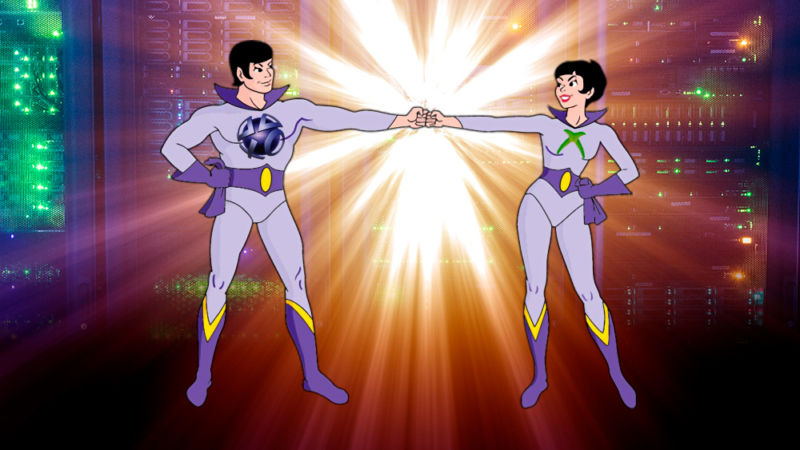
Superheroes the Wonder Twins fist-bump in front of giant computer parts.

In a rare move, console rivals Microsoft and Sony announced a major collaboration on Thursday to join forces on a potentially huge new gaming sector: the cloud. The companies announced today that they have entered into a “memorandum of understanding” to “explore joint development of future cloud solutions in Microsoft Azure to support their respective game and content-streaming services.”

The surprise move is the closest sign of collaboration between two fierce competitors in the console-gaming space, but it is probably not a sign that they will stop being competitors any time soon.

As part of the agreement, Sony will still use Microsoft’s Azure servers and data centers for its own game and content-streaming services. That presumably includes PlayStation Now—the Sony game-streaming service launched in 2014 after Sony’s 2012 acquisition of streaming company Gaikai—and PlayStation Vue, the company’s Internet-based cable TV alternative.

Microsoft is already planning to utilize Azure as part of its own Project xCloud service for game streaming. That could play into a split hardware plan that Microsoft alluded to at last year’s E3, with a high-end console for top-of-the-line local gaming and streaming gaming content that can also run on all sorts of other devices.

The companies also agreed to “explore collaboration in the areas of semiconductors and AI,” but the announcement’s mention of “joint development of new intelligent image-sensor solutions” suggests this might have more to do with the Azure Kinect sensor than anything gaming-related.

Don’t worry, they’re still competitors

Seeing two fierce console competitors announce a gaming partnership makes it easy to jump to conclusions about what the future of the gaming market might look like. We’re sure there will be countless speculative articles and YouTube videos opining on how this partnership portends the “End of the Console Wars” for these two companies. We can practically hear the keyboards typing out supposed details of some imagined joint Microsoft/Sony streaming service allowing owners of either PlayStation or Xbox hardware (and quite possibly other devices) to play games streamed through a single server platform under a single Netflix-style subscription.

In this console-gaming Shangri-La, the idea of a console game “exclusive” would disappear as Sony and Microsoft both publish their major franchises directly to a joint streaming service for everyone to enjoy. Finally, Gears of War and Uncharted on a single platform, playable on a cheap streaming box or a mobile phone!

There’s some twisted logic to this idea. Google’s March announcement of its Stadia service and reports that Amazon is planning a similar play have convinced a large segment of the industry that remote streaming is gaming’s inevitable future. The prospect of impending competition from such Internet giants could be enough to get former rivals to work together to hold onto a joint position in the marketplace. And considering how similar the current Xbox and PlayStation consoles are on an architectural level, teaming up for a single “dual-console” streaming standard might make some sense.

On the other hand, this kind of major shift in direction seems like an unlikely move for the two entrenched console giants. Consider the PlayStation 4 follow-up that Sony recently teased with promises of faster SSD storage, 3D positional audio, and state-of-the-art CPU and GPU hardware. The mere existence of such a console stands counter to the play-even-on-cheap-hardware ethos of efforts like Stadia. And a console like that is going to need exclusive games to convince people to buy it, making it unlikely that Sony would be willing to just give up that software exclusivity for a “let’s all work together” streaming service.

“Deep into architecting”

Microsoft, similarly, has already hinted that it is “deep into architecting the next Xbox consoles” that will “set the benchmark for console gaming.” Why bother doing that if you’re just going to put the next Halo game on a service that’s fully accessible to people who buy the competing console (or no console at all)?

The most direct reading of today’s announcement could just be an acknowledgement of Sony and Microsoft’s respective strengths. Sony has a head start in the streaming-content game via its PlayStation Now and PlayStation Vue brands. Microsoft, on the other hand, has a wider geographic distribution of Azure data centers than competitors Amazon and Google. Given how sensitive game-streaming services are to latency issues, this makes Azure uniquely well-suited as a platform for Sony to stream its PlayStation content to users.

Maybe it would be better for everyone if Microsoft and Sony stopped trying to sell proprietary hardware altogether and simply embraced a supposed streaming utopia, where all games are just playable on practically all Internet-connected devices (never mind the continuing concerns about latency, Internet infrastructure, and cost).

But this is wishful thinking. Both Sony and Microsoft are working on their next generation consoles with state-of-the-art hardware, making it clear that they see premium, high-end consoles, and the platform exclusives used to shift them are here to stay. Despite today’s announcement, we don’t see Microsoft and Sony linking arms and putting a halt to the console wars any time soon.

https://arstechnica.com/?p=1506565


Epic plans more exclusive Games Store announcements, storewide “Mega Sale”

Epic plans more exclusive Games Store announcements, storewide “Mega Sale”

If you thought Epic was done adding to the growing pile of PC games exclusively available on its own Games Store, well… I’d like to know where you got that impression. In any case, you should think again, because Epic has announced it will “reveal brand-new material for several games, including some exclusives, coming to the Epic Games store” at next month’s Electronic Entertainment Expo.

The announcement comes as part of Epic’s participation as a “presenting sponsor” at the fifth annual PC Gaming Show during the expo. Epic takes over a role previously held by Intel and AMD at the event, suggesting this year’s show may feature fewer awkward scenes of a chip-maker standing on stage talking about how great their new hardware is. It also ensures a relatively high-profile stage for Epic’s coming exclusivity announcements, following on the company’s own press conference at the Game Developers Conference.

Other confirmed participants at this year’s PC Gaming Show include:

  • Annapurna Interactive
  • Chucklefish
  • Digital Extremes
  • Digital Uppercut
  • E-WIN
  • Fatshark
  • Fellow Traveller
  • Frontier Developments
  • Funcom
  • Modus Games
  • Paradox Interactive
  • Perfect World Entertainment
  • Raw Fury
  • Rebellion
  • Re-Logic
  • Tripwire Interactive

Elsewhere in online-gaming-storefront news, Epic has also confirmed the platform’s first storewide sale will be announced in the coming days. That confirmation came after a few eagle-eyed Fortnite players noticed a news-feed ad for the “Epic Games Store Mega Sale” when launching the game.

The message, which was quickly taken down, promised that users could “Sign up for 2FA [two-factor authentication] in order to get $10 to spend in the store.” That’s probably a worthwhile enticement on Epic’s part, considering widespread reports of a significant account hacking problem for Fortnite and scattered reports of similar attempts on the wider Epic storefront. It’s unclear if Epic Games users that have already signed up for 2FA will receive a similar benefit, though.

“An MOTD snuck out about a sale,” Epic wrote on the official Fortnite Twitter account. “There is an Epic Games store sale on games in the works, but it hasn’t launched yet.” Epic offered further confirmation on the Epic Games Twitter account, saying “we look forward to sharing more info about the Epic Mega Sale soon!”

Regular software discounts have been a staple of Steam for years now, offering significant savings on a wide variety of titles multiple times a year. But while Epic CEO Tim Sweeney has promised that Epic’s reduced revenue cut means “You’re going to see lower prices” on the Epic Games Store, those customer savings compared to other platforms have yet to develop.https://arstechnica.com/?p=1505675


The dark side of technology is back in first Black Mirror S5 trailer

[embedded content]
An impressive ensemble cast will appear in three new episodes for Netflix series Black Mirror season 5.

The first trailer for the highly anticipated fifth season of the Netflix sci-fi anthology series Black Mirror is finally here, and it looks to be as edgy, darkly satiric, and thought-provoking as ever.

(Mildest of spoilers for prior seasons and Bandersnatch below.)

For the uninitiated, Black Mirror is the creation of Charlie Brooker, co-showrunner with Annabel Jones. The series explores, shall we say, the darker side of technology and its impact on people’s lives in the near future, and it’s in the spirit of classic anthology series like The Twilight Zone. Brooker developed Black Mirror to highlight topics related to humanity’s relationship to technology, creating stories that feature “the way we live now—and the way we might be living in 10 minutes’ time if we’re clumsy.” The series debuted on the British Channel 4 in December 2011, followed by a second season. Noting its popularity, Netflix took over the series in 2015, releasing longer seasons 3 and 4 in 2016 and 2017, respectively.

Last December, Netflix confirmed rumors of an experimental “choose your own adventure” feature on Netflix with the debut of a standalone one-off Black Mirror “event,” dubbed Black Mirror: Bandersnatch. Set in 1984, Bandersnatch follows the travails of a young programmer named Stefan (Fionn Whitehead), intent on making an interactive video game based on a fictional choose-your-own-adventure (CYOA) novel, Bandersnatch, from a tragic writer named Jerome F. Davies. It’s a great, period-specific choice, since CYOA books were all the rage in the 1980s and 1990s. (Check out our spoiler-y Choose-Your-Own-Opinion review from earlier this year. I declared it “an enticing blend of fantasy and horror that doesn’t take its dark rumination on the illusion of free will too seriously.”) [Editor’s note: or you could check out our CYOA “Tentacular, tentacular!” from 2011.]

That CYOA experiment was technically challenging enough to delay season 5 of the regular series. But now we have our first trailer showcasing an impressive cast that includes Anthony Mackie, Miley Cyrus, Topher Grace, Damson Idris, and Yahya Abdul-Mateen II, among others. Season 5 consists of just three episodes, a return to its British roots; personally, I’m in favor of fewer, better episodes on TV in general if that’s what the storytelling requires.

The trailer is cagey about precisely what each episode will be about, but the potentially sinister influence of an Alexa-like doll on a lonely teenaged girl is one scenario. We also get glimpses of a married couple whose relationship is on the rocks—a return to the themes explored in S1’s “The Entire History of You” perhaps?—with the husband tempted by the ease of Tinder-like apps for finding nubile young women. Miley Cyrus plays a hugely popular online pop star (of course). We see a man with obvious emotional issues and a gun about to snap in a coffee shop filled with people typing away on their smartphones. And we might be getting an episode featuring a virtual reality Mortal Combat kind of game.

Black Mirror S5 hits Netflix on June 5, 2019.

Listing image by YouTube/Netflix

https://arstechnica.com/?p=1505521


Party like it’s 2004 with WoW Classic starting August 27

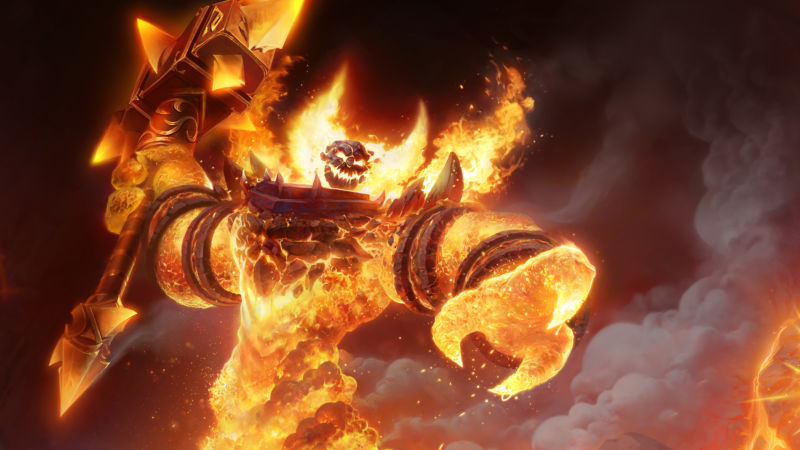
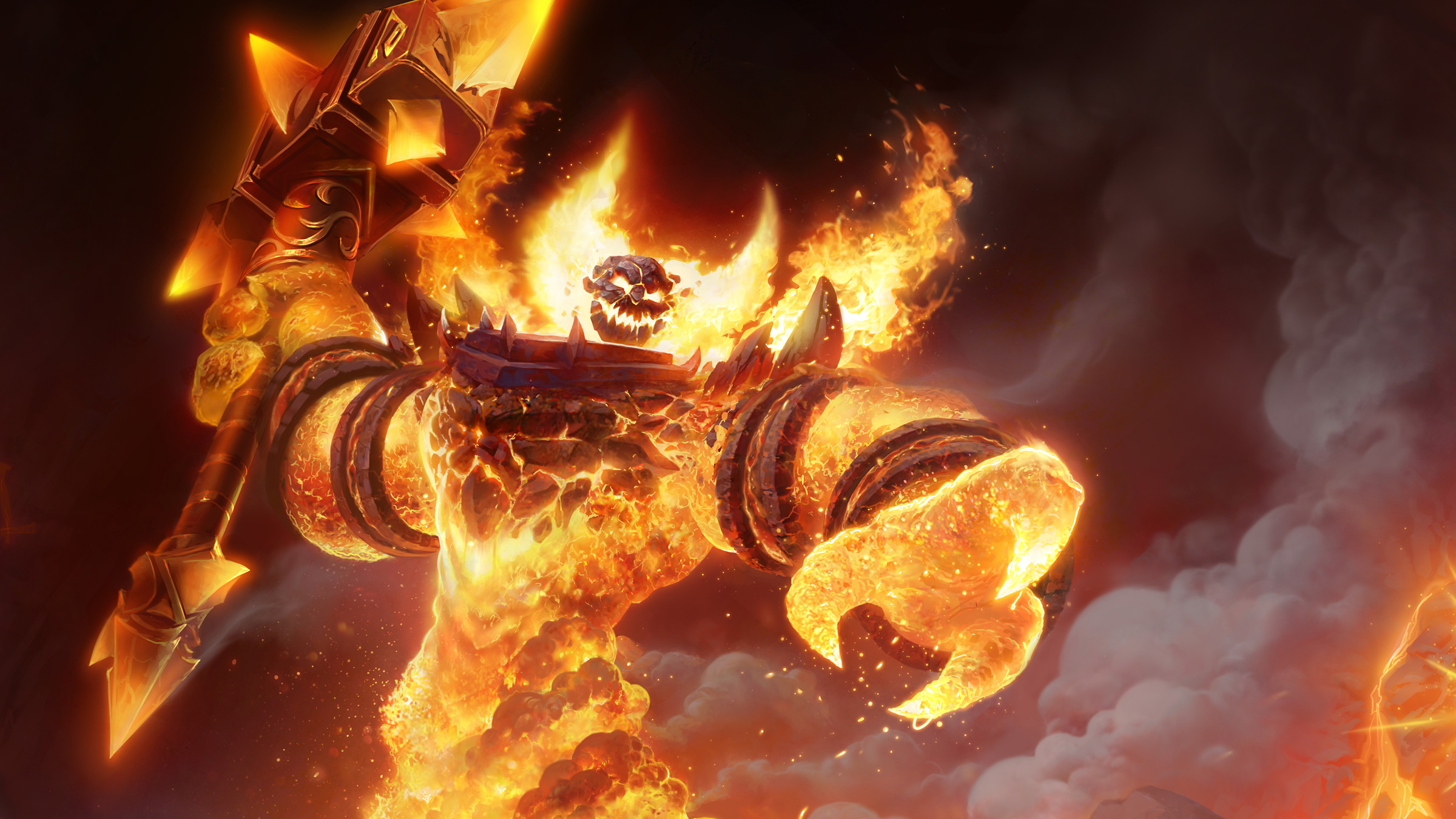
No, <em>World of Warcraft Classic</em> won't look like this in-game. (Not that the modern version looks that much more polished, of course.)
Enlarge / No, World of Warcraft Classic won’t look like this in-game. (Not that the modern version looks that much more polished, of course.)
Blizzard Entertainment

Rewind to those halcyon days of 2004, when cries of “for the Horde” and “for the Alliance” were still novel, with the return of World of Warcraft Classic on August 27. Blizzard announced the release date in a lengthy news post that also spells out a range of closed beta and stress-test periods over the next three months.

This release date will place the game’s launch nearly two years after Blizzard Entertainment confirmed it would release and maintain the game’s “vanilla” version as a live service. That decision followed years of fans doing the same “behind” Blizzard’s back, though their attempt to do so was an open secret—one that Blizzard battled aggressively.

“Select WoW players will be invited” to the classic version’s first closed beta period beginning May 15, though Blizzard didn’t confirm what makes particular WoW fans more eligible than others (perhaps the ones who signed certain petitions get bumped to the front of the list). Meanwhile, players who want to participate in a later trio of stress tests, taking place this May, June, and July, can opt in by flipping a toggle in their official Blizzard accounts.

And if you can’t wait to claim your favorite consonant-filled Tauren druid name on the WoW Classic server of your choice, mark the heck out of your calendar. Blizzard will open up a WoW Classic character name sign-up process on August 13 for active subscribers to the modern version of World of Warcraft.

The project’s official 2017 announcement came with a brief WoW Classic testing period for BlizzCon attendees, which Ars can report largely resembled WoW‘s oldest version. We can’t yet confirm how many quality-of-life improvements from later versions seeped into an otherwise pre-Burning Crusade version of the Blizzard mega-hit, though.

https://arstechnica.com/?p=1505229