Id Software’s open source shooters get ported to Apple’s iOS, tvOS
[embedded content]
Doom 3 running on iOS via Tom Kidd’s recent port.
A lone coder has ported many of id Software’s classic shooters to Apple’s iOS and tvOS, though you’ll have to do a bit of work to get them working on your iDevices.
The porting story goes back to 2009, when id Software brought official versions of Wolfenstein 3D and the original Doom to the iOS App Store. Updates for those ports stopped in 2014, though, and that became a problem in 2017, when iOS 10.3 officially stopped supporting “legacy” apps developed with a deprecated 32-bit codebase.
That sunsetting inspired mobile developer Tom Kidd, who noted that both Wolfenstein 3D and Doom had long been available as open source apps on id Software’s GitHub page, complete with the iOS versions of their respective engines. “I went and did the work to update them and get them working in the latest versions of iOS,” Kidd wrote last year. “This wound up being both harder and easier than I expected.”
Kidd goes into intense detail on the porting process over on his blog, including fights with checksums, coordinate systems, and resolution changes that have intervened since these games last saw an official iOS release. The results of his efforts were posted to his own Github pages last year, complete with MFi controller support and full-screen stretch on the iPhone X.
Enlarge/Doom running on a modern iOS device, years after official support ended.
The detailed porting discussions accompanying each of those releases provide a fascinating journal of the vagaries of open source code and the difficulties whipping it into shape for a closed environment like iOS. “In almost every case, I was able to incorporate the work of others, and pretty much none of the games were the same thing twice,” Kidd writes. “Every game posed a unique challenge, which was part of the fun.”
If you want to take advantage of Kidd’s efforts yourself, you can’t just download these new ports from the App Store (where the copyrighted code would never pass Apple’s checks). Instead, the above-linked articles include links to GitHub projects that you can compile into iOS or tvOS executables. Getting those onto your iDevice means using a Mac with a copy of Xcode and an Apple Developer account, or you can sideload via less scrupulous methods.
You should also note that these are pure engine ports, which means copyrighted game data like graphics, sound, and level design are not included in most cases (as they weren’t included in id’s open source releases). You’ll have to provide your own files from the original releases to fill in those gaps and get a playable game.
Coding without a keystroke: The hands-free creation of a full video game
Enlarge/ The object of each Dig Dog stage is simple: dig through the level to find a bone. And watch out for enemies along the way.
Update: The solid, unassuming Dig Dog is kind of an ideal “Spelunky on the go” type of video game, and we enjoyed happening upon it first during the 2017 Fantastic Arcade in Austin, Texas. This weekend, Dig Dog gets a proper re-release on the Nintendo Switch, so we’re taking an opportunity to resurface this article that’s ultimately less review and more origin story. After all, Dig Dog isn’t just a solid, cheap option to enjoy with Switch’s portable mode—it’s also a remarkable example of a game coded and drawn as a hands-free experiment. This piece originally published on February 9, 2018, and it appears unchanged below.
Dig Dog is a pretty fun little video game. Call it “Spelunky for kids”—and don’t think of that as a backhanded compliment, either. Dig Dog, which launched Thursday on iOS, Xbox, Windows, and Mac, shaves away some of the genre’s complications, controls smoothly, and has depth. It’s as if the modern wave of randomly generated, dig-for-surprises adventures had existed in early ’80s arcades. (And all for only $3!)
I liked Dig Dog enough when I stumbled upon it at last year’s Fantastic Arcade event in Austin, Texas. But my interest in the game spiked when its creator reached out ahead of this week’s launch to confirm something I’m not sure any other video game creator has done: coding an entire game by himself… without using his hands.
Like in Spelunky, your game is always randomly generated in Dig Dog. This newer game is a little bit easier than Spelunky, but its difficulty does ramp up in surprising and tricky ways.
A dash attack gives your dog brief invulnerability AND lets you dig sideways.
Every golden coin you accumulate in a run can be spent on health refills, movement bonuses, and other treats. You’ll want the gold.
Rusty Moyher
White icons in the buried dirt can represent bombs and other dangers.
The further you dig, the weirder enemies become.
Longtime developer and Austin resident Rusty Moyher was diagnosed with Repetitive Strain Injury (RSI) roughly five years ago—while in the middle of a time-crunched game-design project, no less—and found that his only true physical relief came when he took full, 100-percent breaks from typing and using a mouse. That wouldn’t cut it for him, he admitted. “I still want to make games,” Moyher told Ars. “It’s hard to imagine any career or job that doesn’t involve computers.”
Moyher wanted to prove that his dream—of making legitimate video games without using his hands—was possible. For him, the only true answer was to make and launch a good, working game—and to tell the world how he did it so that others might follow suit.
Battling RSI with a Dragon
Nobody’s RSI diagnosis is ever convenient, but Moyher’s wrist and hand pains reached an unsustainable peak while he was in the middle of possibly the least-compatible project imaginable. He and two longtime game-design collaborators had just met a $60,000 Kickstarter goal for a “six games in six months” project. Just reading the Retro Game Crunch pitch these days still makes Moyher’s wrists hurt: the team would take suggestions from paying backers, then turn a prototype around in 72 hours. A fine-tuning process would follow with a slap-dash game being completed by the end of the month, with the next game’s creation and development starting immediately after.
Thanks to Moyher’s RSI, the three-man team didn’t meet those deadlines. Nevertheless, he plowed away on those Kickstarter games while experimenting with changes to his office setup: ergonomic keyboards, desk changes for the sake of posture, mice swaps. Nothing worked, aside from good old-fashioned time away from a keyboard and mouse (along with injections of medicine directly into his skin).
“The silver bullet” came when Moyher found a video presentation by developer and coder Travis Rudd, which appeared online in 2013 shortly after his diagnosis, that took viewers step-by-step through Rudd’s own RSI experience. The 28-minute video shows Rudd breaking down exactly how he customized Dragon NaturallySpeaking, a voice-recognition software suite, to write code in the Python language using nothing other than his voice. This countered the wisdom Moyher had seen in forums about RSI and coding, declaring that Dragon’s usefulness in coding was limited. “Don’t do it, it’s impossible,” was the common wisdom, Moyher said.
But Rudd swore by hacks he’d applied to the Dragon ecosystem, which Moyher eventually fished from the speaker by nagging him via email. The two toolsets he learned about, Natlink and Dragonfly, were appealing because they could be customized to support certain key phrases that would then trigger anything from basic text entry to variable names to macros. “The commands you come up with, basically in a made-up language, are all built to be quickly and easily recognized by Dragon,” Moyher said, and he recommended “short, tight words or phrases that can be executed quickly.”
The word “slap” hits the return key once; “two slap” hits it twice. Say “camel” before saying a phrase like “this is variable” out loud, and it’ll be parsed like so: “thisIsVariable.” Open-faced brackets can be typed by saying “lack” (for <) and “rack” (for >). For a sample of exactly how this works, Moyher was kind enough to provide video of an average coding session, embedded below:
[embedded content]
Rusty Moyher demonstrates how he codes using nothing other than his voice.
Some of these terms were already baked into the tools that Moyher downloaded and attached to his install of Dragon NaturallySpeaking. But he admits that for the most part, he had to invent and train the system to accept new ones.
The ol’ Texas two slap
“I needed to build a vocabulary that was suited for what I was doing that I was familiar with,” Moyher said. “The process of coding by voice is, I have to do programming tasks, like normal, and come up with commands and modify the system. On top of that, all at once, I also have to remember these [shortcut terms]. It can be really slow going. I had to slowly build up a library of commands I was familiar with, working with my voice, that I could basically remember.”
Part of his need for a custom vocabulary was that his programming choices of Visual Studio and Xcode were better suited for game development, as opposed to the Emacs-friendly voice commands that Rudd and his peers had built up. His choice of programs, by the way, also required significantly more cursor movement, he reckoned, which meant he needed something that Rudd and others had not suggested: a true hands-free mouse replacement.
Rather than jerry-rig some sort of infrared head or sight tracker, Moyher went for what appeared to be the best option at the time: a $500 SmartNav 4 from the special-needs computing supplies company Natural Point. One sensor is placed in front of his line of sight, and he attaches a small reflector to whatever hat he wants to wear. After some sensitivity adjustments, Moyher got this to work with pretty minimal movement of his head, roughly “5-10 degrees” left-to-right and less up-to-down. The final piece of the hardware puzzle was a foot pedal, which he uses to control clicks of a mouse.
As Dig Dog‘s sole coder, designer, and artist, this head-tracking solution was imperative to draw the game’s elements and animation frames, which are otherwise admittedly simple. The game’s giant-pixel look fills out at roughly 220p with a maximum six-color palette. “It’s not as precise or quick as a mouse,” Moyher admitted. “I designed the style of the game to be more achievable with this system.”
Moyher’s original mission was to pull off something that would not only be designed without hands but also testable without hands, but he didn’t quite pull that part off. Dig Dog originally began life with a design priority that went beyond simply being achievable; he wanted to create a good iOS platformer. His first prototypes were more atmospheric and low-key, and they simply featured a pixellated dog wandering across a giant desert. “Then I stumbled upon digging and realized, oh, this is obviously about digging now.” (Indeed, the basic action of tapping to dig and moving around by hitting the screen’s edges works quite well within the constraints of a smartphone screen, though it’s also fun with a standard gamepad.)
But as a sole designer and coder, Moyher had to endure wrist pain in the form of one exception: testing the prototype. “I wanted to playtest the game with my tools, but all the playtesting was with my hands,” Moyher said. “There was no other way to get the game feel and fine-tune the mechanics without doing that.”
Tossing the community a bone
Moyher’s full-game mission came, in part, to give himself breathing room to figure out a speech-to-text coding vocabulary. Unlike that Kickstarter, he didn’t want anybody in a project depending on his speed or competency to get work done on a larger project. He now believes he has set roots for moving forward as a speech-first coder, whether alone or in a larger project. (“I’ve gotten close to one-to-one speed,” he said, in comparing his spoken speed with normal typing speed.) And he’s already looking into superior tools, particularly eye-tracking technology, to see if he can get increased speed and fidelity with head-tracked mouse movement.
But just as Moyher looked to the community for inspiration when he first succumbed to RSI, so he hopes that other game makers with similar diagnoses or disabilities look at his accomplishment and plow forward on their own dream games.
“My thought (from the beginning) was, if I could make a game interesting and fun to play, it’d be a fun way to promote [voice coding] as an idea,” Moyher said. “The tools right now are pretty brittle. They can break relatively easily, in terms of having to install software, get it working in Windows, get various add-ons and hardware. Just to promote the idea that there’s this other way to work, and that these things exist? Maybe it’d improve voice coding in general!”
Moyher sent a few links along after our interview for anybody interested, as many of his tweaks and efforts were based on publicly available information. Start with this guide to DragonFly as a coding-specific addition to NaturallySpeaking, along with an installation guide for relevant add-ons. Dive further at handsfreecoding.org.
https://arstechnica.com/?p=1257291
The Orville proves it’s one of the best sci-fi shows on TV with S2 finale
Enlarge/ The crew of the USS Orville stands ready for new adventures in season 2 of The Orville.
Fox Broadcasting
Fox’s sci-fi series The Orville closed out a terrific second season with an ambitious finale that showcased all the elements that make this such an intellectually and emotionally satisfying show.
(Some spoilers below.)
Season 1 of The Orville admittedly had a rocky start, at least in terms of critical reception, garnering just a 19 percent approval rating on Rotten Tomatoes when it debuted. Viewers begged to differ: they gave the freshman series a 91 percent favorable rating, won over by its skillful mix of humor and drama. That’s a tough balance to pull off, but The Orville succeeds admirably. Season 2 won even more fans. This is a smart series that combines humor and witty dialogue with cutting-edge science, ethical musings, the occasional literary reference, and genuine heart. (For more on the science behind the series, see our interview with writer/producer Andre Bormanis.)
Series creator and star Seth MacFarlane (The Family Guy, Cosmos), who plays Captain Ed Mercer, was a huge fan of Star Trek growing up, particularly The Next Generation. The Orville has a similar sensibility. The series is set aboard the U.S.S. Orville (ECV-197), an exploratory spaceship in the service of a 25th century interstellar alliance known as the Planetary Union. The show has a similar standalone episodic structure, especially in its first season, and the same strong social conscience. The original Star Trek, after all, made waves with the first on-air inter-racial kiss. The Orville continues that tradition, delving into gender identity, addiction, bigotry, the pros and cons of social media, and superstition versus rationality, to name a few.
Ultimately, it’s the how the writers develop the various interpersonal relationships that makes the series shine. In the pilot, Ed’s marriage to Commander Kelly Grayson (Adrianne Palicki) ended in divorce after he caught her in bed with a Retepsian archaeologist archaeologist named Darulio (Rob Lowe). A year later, Ed takes command of the Orville with Kelly as his second-in-command, and much of that first season is the crew learning to work together (and learning more about themselves) while exploring interstellar space.
USS Orville crew members Lt. John LaMarr, First Officer Kelly Grayson, Chief Medical Officer Claire Finn, Captain Ed Mercer, Lt. Cmmdr. Bortus, and Science & Engineering Officer Isaac.
Lt. Alara Kitan (Halston Sage) arm wrestles with Isaac.
Lt. Gordon Malloy (Scott Grimes) at the helm of the Orville.
Looks like Kelly (Adrianne Palicki) and Bortus (Pater Macon) are in a spot of trouble
Exploring an alien planet.
Captain Ed Mercer (Seth McFarlane) attempting a toast.
Looks like arch enemies the Krill will be back in season 2.
Kelly and Bortus engage in a spot of banter.
Greetings from Isaac
A pile of skulls probably isn’t a good omen.
Exterior shot of the USS Orville.
Onward to the next adventure.
If season 1 established those myriad relationships, the second season puts them to the test. Ed and Kelly must adjust to dating other people as they move beyond their romantic history toward friendship. Lt. Commander Bortus (Peter Macon) struggles to maintain a meaningful connection with his partner, fellow Moclan Klyden (Chad Coleman), in the wake of a serious conflict over their child. Chief medical officer Claire Finn (Penny Johnson) finds herself drawn romantically to the Orville‘s resident Kaylon, Isaac (Mark Jackson), an AI in a robot body whose mission is to study humans. All these interpersonal developments take place against a backdrop of various white-knuckled adventures.
Among the many S2 standout episodes is “Lasting Impressions,” in which the Orville is transporting a recently discovered time capsule from 2015 to a museum where it will be studied. Among the archaeological artifacts: an iPhone that once belonged to a young woman named Laura (Leighton Meester). The ship’s pilot, Gordon (Scott Grimes), figures out how to hack into the iPhone and uploads to the data to the simulator (the series’ version of the Star Trek Holodeck). The computer creates such a convincing simulation that Gordon falls in love with someone who’s been dead for 400 years. It’s a lovely episode in part because there’s nothing all that special about Laura herself: she could be any pretty young woman working in a department store while trying to make it as a singer. And yet, as Kelly put it, “She reached across four centuries and got a guy to fall in love with her.” That makes her truly extraordinary.
The S2 finale takes on the classic sci-fi trope of the alternate timeline, focusing on Ed and Kelly’s relationship (they are shown to be the heart of the entire series in the process). What if they had never had a second date, never married, never divorced, and so forth? The repercussions turn out to be more far-reaching than anyone could have imagined. It’s an ambitious high-wire feat with callbacks not just to the pilot episode, but to several other subplots, including a S2 two-parter involving the Kaylons—and a gut-wrenching choice that Isaac must make between his people and the humans he has come to know. To pull all those disparate narrative and thematic threads together after 13 episodes is pretty darn impressive.
There’s no word yet whether Fox will renew The Orville for a third season (ratings have been middling, in the 3 million viewers per episode range). Here’s hoping the network recognizes the value of what they’ve got, and sticks by the intrepid team behind the show.
https://arstechnica.com/?p=1495185
Cox Internet now charges $15 extra for faster access to online game servers
Enlarge/ Cox’s website advertises the Cox Elite Gamer service.
Cox cable is beginning to charge Internet users an extra $15 a month for a service that reduces lag in online gaming.
Cox’s new offer sparked concerns that the ISP is violating net neutrality principles. But the service wouldn’t have violated net neutrality rules even if they hadn’t been repealed, because Cox is merely reselling a third-party service and not making any changes to its broadband network.
Dubbed “Cox Elite Gamer,” the service is a Cox-branded version of Wtfast, which can alternatively be purchased directly from Wtfast and used with other ISPs. Cox says the service “routes your game activity through a dedicated gaming network to provide a reduced latency path between your computer and the game servers of select online games.”
But the service’s limitations help demonstrate why it isn’t a net neutrality issue. It only works on Windows computers, and only then when you install an application that connects to the special routing service, so online gamers who prefer consoles instead of PCs have no reason to buy it. “The service will not operate with game consoles or Macintosh operating systems,” Cox says.
If Cox was implementing prioritization at the network level, it wouldn’t be limited to Windows.
“This service does not increase the speed of any traffic, nor prioritize gaming traffic ahead of other traffic on our network,” a Cox spokesperson told Ars. “Cox Elite Gamer solves a problem with deficiencies in the public Internet, not our network. No customer’s experience is degraded as a result of any customers purchasing Cox Elite Gamer service as an add-on to their Internet service… the Cox Elite Gamer service selects an optimized Internet path with each gaming session initiated by the customers.”
Cox’s advertising claims the service results in 34 percent less lag, 55 percent fewer ping spikes, and 45 percent less jitter.
Cox Elite Gamer debuted this week in a trial run in Phoenix that will last for about three months. Cox will then decide whether to expand the service to other parts of its territory. “Following the trial period, we will evaluate the results and determine next steps,” Cox said.
Cox is only making the service available to customers who subscribe to download speeds of 100Mbps or higher. Cox has about 5 million broadband subscribers in 18 states.
Wtfast declined to comment on its partnership with Cox when contacted by Ars.
Wtfast offers mixed results
The biggest difference between buying the service from Cox or Wtfast directly seems to be price. Cox’s $14.99-per-month price includes simultaneous access for two PC users. But it appears to require a two-year agreement, and the price rises to $20 a month after the promotional rate expires. Cox sells additional licenses for $4.99 a month each, up to a total of five simultaneous gaming sessions.
Wtfast’s direct pricing starts at $14.99 for usage on just one computer, but that’s month-to-month pricing with no long-term commitment. A license for two computers is $28.48 a month. Wtfast offers discounted rates if you sign up for three months, six months, or 12 months of service. Twelve months on one computer costs $149.90, for example.
Is it worth it? IGN’s Matt Elliott reviewed Wtfast in April 2017, testing several games and connections to servers in different regions. IGN found that Wtfast improved Overwatch latency when connecting to a game server in the Americas region from 301ms to 43ms, but in most other cases Wtfast had little to no effect. “Without Wtfast, my ping on Overwatch’s Asia server was 249ms, and it dropped to only 202ms when I used WTFast and manually selected the ‘East Asia (Choose Best)’ option,” Elliott wrote. With League of Legends, Elliott found average latency of 43ms without Wtfast and a nearly identical result of 44ms with Wtfast.
“Wtfast was able to impressively improve our ping in some tests, but had no impact in others,” IGN wrote. “If you have a slow ping of 150ms or more on your favorite online game or often want to connect to international game servers, or just want to get any edge you can, it may be worthwhile to give WTFast a try.”
https://arstechnica.com/?p=1496531
Review: Avengers Endgame is three of Marvel’s best films, rolled into one
Ars Technica takes spoilers seriously. This Avengers Endgame review has been written with a bare minimum of plot details, for those interested in seeing the film completely fresh-eyed starting on Friday, April 26.
The buzz word “inevitability” comes up a few times during the three-hour course of Avengers Endgame. And it’s fitting: there’s no ignoring the buzz and build-up for this film, which began with the mega-event of Infinity War and continued with two huge teases in the satisfying (and arguably time-killing) films Ant Man 2 and Captain Marvel.
It’s gonna be big, epic, full of drama, this Endgame thing. Inevitable, right? And isn’t the continuation of Disney’s money-printing Marvel Cinematic Universe just as inevitable? How can this movie—whose trailers have focused on loss and grief—have any teeth if superhero business is supposed to continue as usual?
But the Russo Brothers didn’t just pull off an incredible action-blockbuster experience in Endgame—they made the kind of riveting, funny, full-of-life production that instantly rockets to the top of the MCU’s best. They also made a film that impresses in spite of the inherent lack of drama tied up in the reality of Marvel’s money-making. The show will go on, and Endgame doesn’t ignore that fact, yet it still flexes some huge narrative muscles by making room for some compelling stakes in both big and small ways. It makes the seemingly impossible possible.
Buckle up for a film as wild, fun, intense, and satisfying as its mix of expectations and enormity could possibly permit.
“Being who they actually are”
The surviving Avengers assemble. (This gallery consists of very slight plot spoilers from a months-old trailer.)
YouTube/Marvel Studios
Steve Rogers finds himself in a support group.
YouTube/Marvel Studios
Rogers can’t let go of those he lost.
YouTube/Marvel Studios
Sad Thor mourns his fallen comrades.
YouTube/Marvel Studios
The world is a bleaker place, post-Infinity War.
YouTube/Marvel Studios
Something mysterious in the sky?
YouTube/Marvel Studios
Tony Stark and Nebula working side by side in the lab.
YouTube/Marvel Studios
Black Widow takes in a bit of target practice.
Hawkeye is coming out of retirement, it seems.
YouTube/Marvel Studios
Rocket is the only Guardian of the Galaxy left.
YouTube/Marvel Studios
War Machine and Ant Man, ready for action.
YouTube/Marvel Studios
Putting hand to shield for the coming showdown.
YouTube/Marvel Studios
Because I’m erring on the side of a spoiler-free review, I’ll start with some fresh and sometimes even vague mixes of fact and opinion.
First up: Avengers Endgame is roughly three films in one. This is the primary way the film keeps moving at a brisk pace, as it makes room for a ton of MCU characters—particularly the original Avengers cast—to have their spotlight moments as they reckon with Thanos’ notorious “snap.”
Rather than get lost as the film jumps from character to character, Endgame‘s three-hour brilliance comes from the major characters having a variety of shared experiences to react to as separate, stakes-filled “acts” in this cosmic play. It’s no surprise that at least one superhero comes up with “a plan” at some point, but who else is on board? What’s at stake? And how has a wild, surprising series of events both eroded and reinforced the things you know and love most about your favorite heroes?
To the last question, we get really, really great answers from… most of the Avengers. It’s no spoiler to say that Jeremy Renner returns to the role of Hawkeye in this film, and I would argue that it’s also not a spoiler to say that he seems the most bored and uninspired for much of Endgame. The only signs of life we ever saw in Renner’s Hawkeye was in Age of Ultron, and Endgame‘s efforts to make viewers buy into his character’s unretirement at the end of that film are all for naught.
This is mostly because the rest of the core Avengers cast lays claim to the best dialogue and character development moments, all buoyed with enthusiastic support from a mix of highly dramatic and highly hilarious support characters. Yes, all of the other Avengers characters—Captain America, Black Widow, Thor, Hulk, and Iron Man—get at least one incredible sequence to tell the story of who they’ve become and what they’re reckoning with. Much of that involves ways that each character is forced to redefine their personal story of what being a “superhero” means in the face of stark change (not just snap-related). And then those characters get to spend time with each other, reveal a few surprises, and reinforce their collective missions.
“The world is in our hands”
I’d like to offer one slight tease about the film’s content, but this is to convince anybody on the fence about Endgame that they should really reconsider their ambivalence. The Russo Brothers have absolutely pulled the reins back on overblown action sequences.
Do you get tired of seemingly invincible superheroes punching the crap out of each other to pad out time, merely repeating the kinds of Dragon Ball Z-esque super-punches and sky-high explosions you’ve seen a million times, before the inevitable surprise twist ends the fisticuffs? (This was one of my biggest beefs with Infinity War, whose toothless final battle left me both overwhelmed and bored.) If you’re in that camp, then you’ll absolutely love how Endgame frames its conflicts and special effects.
Which is to say: oh, there’s plenty of conflict, action, and digital wizardry to be found here. But Endgame is at its most clever when it utilizes framing and surprises, not cliché action sequences, to redirect viewers’ attention right back where it belongs: the Avengers’ relationships, grief, and burning questions.
I was surprised by this because, ahem, I saw the thing I wasn’t supposed to see. Meaning, the two-minute “leak” of actual footage from the film, smuggled out of a clearly non-American cinema a few days ago. I’m actually glad I “spoiled” myself (though, now that I’ve seen the film, I would strongly suggest not following my lead). That’s because the film’s remaining 2:58 goes in a few directions I didn’t necessarily see coming in terms of how it carries so many big-name characters through the kind of convoluted plot that would take many, many words to summarize.
This includes no less than four sequences that had my face hurting from a “dang, they pulled it off” grin of surprise and wonderment, which made up for a few of my own personal guesses about how Endgame‘s plot was going to go. (Related: if you’ve come up with relatively educated guesses about this film, I promise you at least one of them comes true. On a macro level, Endgame doesn’t jerk viewers around with a rollercoaster’s worth of insane twists, and kudos to the Russo Brothers for keeping their plot ambitions in check to some extent.)
“Return sequence activated”
[embedded content]
Marvel’s Avengers: End Game trailer.
And it wouldn’t be a top-notch Marvel film without a substantial dollop of comedy and heart. The Russo Brothers infuse their high-stakes drama not just with the ego-clashing jabs of the first Avengers film but also the kinder, deeper stuff formed by this many films’ worth of bonding. Relationships range from buddy-cop banter to a hero-journey moment that seems plucked out of a Muppet production. A few delightful, er, “swaps” really sell the heroes’ bonds with each other.
That levity is met by one Thanos-related sequence—I won’t say when or how it comes to pass—that crystallizes his exact brand of evil and oppression in ways that his Infinity War role sorely lacked. Endgame‘s moment implies that the Russo Brothers needed this many combined hours of Avengers-ing to get to that emotional wallop. I don’t entirely buy it, but I am happy to report that we got at least one solid, convincing Thanos moment as part of the overarching plot that has been brewing for so many films. And in terms of other drama-filled moments… nope. I’m not typing about those today.
Instead, I’ll insist that your time at Endgame will absolutely include a few gripes with how certain characters are under-utilized or wasted—because, yeah, a few eggs get cracked and wasted in the making of this otherwise rich, balanced soufflé. Your three hours will still whisk by in mostly satisfying fashion thanks to an “action tentpole” film willing to buck the all-CGI, all-the-time expectations that have contributed to superhero-film fatigue.
Endgame‘s actors redeem this film—and perhaps the genre—by reminding us why they were cast in the first place: because once the CGI turns off, and once the superhero suits melt away, they’re still human, powerful, and unforgettable. Bravo.
https://arstechnica.com/?p=1495041
Did a vigilante ROM leaker go too far to “preserve” a lost Atari ROM?
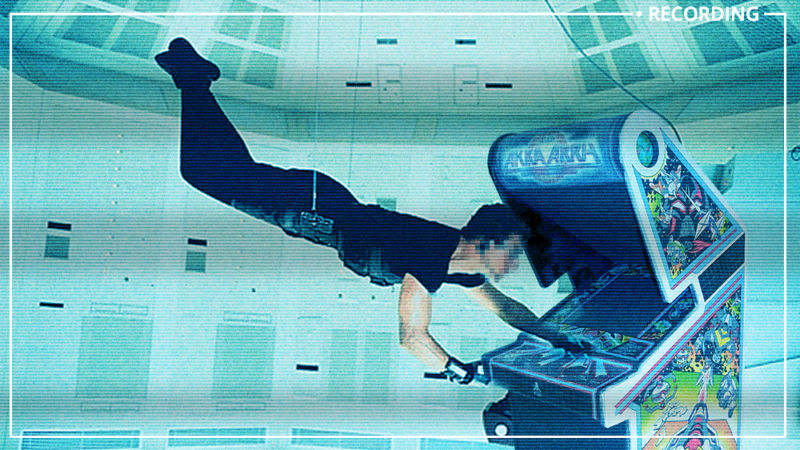
Enlarge/ Your mission… should you choose to accept it…
Earlier this month, the digital preservationists at The Dumping Union made an important announcement in the world of arcade game emulation. The collective had gotten its hands on a ROM image of Akka Arrh, an extremely rare Atari arcade prototype and one of the most prominent remaining cabinets that had, to that point, never been available through emulation on MAME (the Multiple Arcade Machine Emulator).
That alone would have been notable news in the world of gaming history—the Dumping Union suggested as much by titling their forum announcement “Sit down on the toilet before reading this or else you will shit your pants.” But the story might require another round of toilet sitting, because what started as a rare-game reveal has turned into a credible “heist” tale, perpetrated by an alleged MAME vigilante, no less.
A bit of history
The story of Akka Arrh (also known as Target Outpost during development) dates back to 1982, when the game was created by Atari’s Dave Ralston and Mike Hally, who would go on to work on plenty of well-rememberedarcade games for the company (the title is supposedly a mangled initialism for “Also Known As Another Ralston Hally”). After a small test-market release in 1982, Akka Arrh‘s rotational take on Missile Command‘s trackball targeting was reportedly deemed too complicated for the masses at the time. So even though Akka Arrh was practically complete and had its own unique cabinet art and design, wide release was scrapped in favor of more promising Atari titles.
The existing test-market prototypes were at some point rescued from the refuse of Atari’s warehouses—likely during or after the company’s spectacular crash—and over the years made their way to the hands of some extremely private arcade-cabinet collectors. Only three such cabinets are believed to exist, and only two are registered in the Vintage Arcade Preservation Society’s census of nearly 8,500 collectors.
[embedded content]
A demo of Akka Arrh being played via MAME.
Perhaps because of that rarity, the ROM chips comprising Akka Arrh‘s game program had (until recently) never been publicly dumped and cataloged in the Multiple Arcade Machine Emulator’s massive database. That’s bad for the historical preservation community, but it could be good for the value of these extremely rare machines. After all, collectors might not be willing to pay quite the same premium for a rare cabinet if they (and anyone else) could just play the same essential game on an emulator.
But Akka Arrh‘s few owners haven’t hoarded the rare game completely to themselves. The cabinets are occasionally set out for free play at conventions like California Extreme, which provide the only public opportunities to experience the game. Still, many in the emulation and preservation communities have expressed dismay over the years that such a singular piece of Atari history is essentially inaccessible to all but a few very private collectors.
A shady tech?
All that context should highlight just how big a deal it was to finally see Akka Arrh dumped and playable via MAME earlier this month, 37 years after it was made. But where exactly did that ROM come from, and why was it dumped now?
The Dumping Union’s CEO, who goes by Smitdogg online, says only that the dump came from an anonymous donor. But a MAMEWorld forum-goer with the handle “atariscott” had an explosive accusation on that score (emphasis added):
There were only three machines ever built. All are in high-end collections. One collector had a tech come and work on some of his games. The unscrupulous tech copied the ROMS without permission. The game was not broken and not one he was supposed to “fix.” The owner is reviewing a couple of months of security video to see if he can catch him in the act. This is the first time that someone has actually had the balls to steal ROMS from a collector.
Without context, there are reasons to be skeptical of this story. For one, the accusation is the only post from “atariscott” on the MAMEWorld forums. The account behind it, though, was created back in 2005, which would be a pretty long setup for a random troll.
Atariscott is also the public Internet handle of Atari collector Scott Evans, who uses it to post on other retro game forums online (as well as Instagram). And Evans is in a good position to know something about the state of Akka Arrh preservation, being well-known in the collecting community for owning a number of rare arcade prototypes over the years. That list at one point included not one but two Akka Arrh cabinets (at least one of which seems to have been sold to another collector since then).
Evans also owned two cabinets of Marble Man, the prototype sequel to Marble Madness which is seen as another “undumped” grail inaccessible to the emulation community. And then there’s Bradley Trainer, a version of Atari’s Battlezone modified for US military training. Evans apparently discovered the only known extant cabinet for that “next to a dumpster outside the closed offices of Midway,” as the story goes.
If the “atariscott” posting on MAMEWorld is Evans, there’s ample reason to give credence to his story. Evans has not responded to multiple requests for comment from Ars Technica via a variety of contact methods.
But that forum post is not going up in a vacuum. One well-placed arcade collector with direct knowledge of the extant Akka Arrh cabinets and their owners (who asked for anonymity to “avoid burning bridges”) told me “it does sound like this really happened.” That source tells me that the victim of the alleged theft is sharing essentially the same story as atariscott with other Akka Arrh owners (who, unsurprisingly, all know each other).
“They were told it was theft from the tech who had access, and apparently there were rumblings about this tech being shady ahead of this release,” the collector tells Ars. “It wasn’t their board that was dumped, but [they] were pretty upset when the ROMs were released, given the rarity of the machine.”
It’s far from direct evidence or on-the-record testimony confirming the “unsolicited repair tech copy” story. But this might be the closest we’re able to come for now, given the insular and secretive world of rare arcade collecting.
And just because the story is being passed around this world doesn’t mean it’s true, either. The “theft” could be a cover story for an Akka Arrh owner (past or present) just deciding to release his own ROM dump voluntarily, for instance.
Arcade Heroes blogger and arcade owner Adam Pratt has his own take, which he shared with Ars:
As it comes across online, it sounds like something is missing… That a technician would come in to a collection to fix something else, break into the Akka Arrh machine, pull out all of the ROMs, burn them one-by-one (which requires a ROM burner and a computer), then put everything back unnoticed doesn’t seem plausible to me. Chances are, [Evans] or one of the other two collectors happened to have backed up the ROMs when they first got the machine and that backup either got out, or one of the collectors finally decided to anonymously upload the ROMs.
Does it belong in a museum?
[embedded content]
An Akka Arrh prototype is seen as part of Joe Magiera’s collection at about 12:24 in this video from 2014.
Story or no, the allegation alone has refocused a long-running debate in emulation circles. Is there a moral imperative for collectors of rare games and prototypes to release their code for the good of preservation? And if they refuse, is there any ethical argument for literally sneaking into a private collection to make an unsolicited copy of the game for posterity?
“All the ROMs are way past their lifespan for holding data,” Dumping Union’s Smitdogg writes in a MAMEWorld post. “It’s amazing that the data can still be extracted if the ROMs are original. A miracle. The first thing any sane tech would do is dump the ROMs. It’s amazing to me that people think they own the data on these, like [they] own the copyright.”
Dumping the ROM, Smitdogg argues, just makes Akka Arrh “identical to every other game that has ever been emulated in the past 25 years.”
Others disagree. “If what he alleges is true, the collector who was allegedly bilked has every right to be absolutely furious,” MAMEWorld user Mooglyguy said. “A person’s private goods, acquired through private transactions, are sacrosanct. We can sit here and dither about moral imperatives as they pertain to preserving history, but at the end of the day, these collectors either need to come around to the Kindergarten-level concept of sharing on their own, or they need to be left well alone. Forcing their hand, so to speak, is an incredibly bad look.”
And just because a game isn’t available to the emulating public doesn’t mean an individual owner isn’t protecting it for history. As Evans himself put it in a 2009 forum post, “everything does not need to be in MAME for it to be ‘preserved.'”
If atariscott’s story about the Akka Arrh ROM is true, Pratt says the repair tech’s actions were “the right thing to do, but the wrong way to go about it.” On the one hand, Pratt says he’s “happy that the game will be preserved and more available.” On the other, “there is a level of trust you put into someone to come in and work on your games.”
It has yet to be proven whether the MAME release will even reduce the collectible value of what are still some extremely rare prototype cabinets. “In my view, Akka Arrh‘s presence on MAME won’t diminish the value of the existing machines,” Pratt said. “If anything, it will probably enhance it, since more people will know about it now.”
“Arcades are more than just the software,” he continued. “When cabinets are specially tailored to a game experience, it makes that game stick with you more than playing a digital-only game on Steam… Akka Arrh‘s cabinet is unique, so if I ever had the chance, my preference would be to play it on the original cabinet over emulation any day.”
https://arstechnica.com/?p=1496277
Google Stadia will support “a variety of business models”
Google’s Phil Harrison (you may remember him from his days at Sony).
The Stadia interface.
Specs for Google’s Stadia data centers.
How many screens can you play Assassin’s Creed Odyssey on?
Stadia on a laptop.
Stadia on a smartphone.
Stadia on, well, another system.
The logo for Google’s new gaming service.
Google CEO Sundar Pichai appears at his company’s GDC keynote presentation at GDC 2019.
“Everyone” is a pretty big potential market.
Promises of crazy-high performance for the upcoming Doom Eternal on Google Stadia.
A hint at how “multi-GPU” options will boost performance and graphical options.
Big promise there, Google.
Great news.
Last month, when Google revealed its upcoming Stadia streaming gaming platform, it left open the major question of precisely how Google and game developers would make money from these games running on remote servers. In an on-stage discussion at LA’s GamesBeat Summit this week, though, Google’s Phil Harrison mentioned that “our platform at a fundamental level has been architected to support a very wide variety of what people call ‘monetization options.’ Everything from purchase to transaction to subscription.”
That’s not quite a direct confirmation that all those different options will be available to developers on Stadia. All Harrison would reveal is that “there is no technical limitation on how we have architected the platform to support a variety of business models.” (Emphasis ours.). But that architecture would be a very odd thing for Harrison to bring up if, say, Google was planning to impose a one-size-fits-all subscription on Stadia users.
In discussing Stadia, Harrison has put a lot of focus on how the platform makes it easy for players to share a game through a link in a text message, for instance, or by letting people instantly jump in to an instance of a game they’re watching on YouTube at a specific point on the video. This form of game discovery could “change the way game value is perceived by players,” Harrison said, by removing the “retail store pressure” and limited “outward facing” selection of brick-and-mortar and digital storefronts. “When a game is a link, the Internet is your store,” he said. “That means we can change the perceived value of games.”
That kind of “frictionless” discovery of new games gets a bit more frictional, though, if players have to buy a complete game outright every time they click a Stadia link. All-you-can-play subscriptions, free-to-play ad-supported games, and timed trials could all serve as ways to lessen that friction, and it sounds like all those options and more could work on Stadia.
Harrison says Google will provide more details of Stadia’s business plan “in the summer,” talking “about how gamers will be able to buy and get access to games” at the same time “we talk about the games themselves” that will be available on the platform. That first wave of Stadia titles, he said, will be focused on attracting “a gamer type familiar with AAA games… familiar games and game types.” After that, he envisions “concentric rings of games” that entice a wider audience “to get to the significantly greater scale we aspire to.”
The long haul
Harrison remains confident that streaming game distribution will revolutionize the business of gaming, especially as broadband infrastructure continues to improve worldwide. He noted that the EU has put access to the Internet on the level of a human right. “I don’t think they’ve said access to a high-end gaming PC is considered a human right,” he quipped, as a way of pointing out Stadia’s lower barriers to entry.
[embedded content]
Harrison speaks at the GamesBeat Summit in LA (section starts around the 56:30 mark)
At the same time, though, Harrison warns that the switch to streaming gaming “is not going to happen overnight. It’s not going to be a switch that we flip and suddenly we’re all in this utopia of cloud-based gaming. It is going to take a while to get to the scale we think we can get to.”
Part of that transition will be developers getting used to having the power of Google’s cloud infrastructure, Harrison said. For decades, game developers have had to be “device centric,” Harrison pointed out, designing games for specific and limited home hardware specifications. “With cloud gaming, particularly the idea of compute being sharable across multiple CPUs in a data center, now this transition to gaming being data-centric is going to a really fundamental shift,” he said.
The developers who are devoted to taking advantage of this will be able to implement everything from “distributed physics” to “complex multiplayer going from hundreds to tens of thousands in a very sophisticated world,” he said. In Stadia multiplayer games, “every change that I make to my world can be instantly, in microseconds or less, be distributed to every other client… You can’t do that with a discrete box.”
Elsewhere in the talk, Harrison also started crafting lofty visions of Stadia games with “conversational understanding” of spoken player commands delivered through the controller’s built-in microphone. Google’s research in AI and machine learning could come into play to help enable games with NPCs that “talk back in a way that’s contextual,” he said, making use of data center storage for an “enormous database” of potential conversation options built in real time. Similar machine learning work could also one day help Stadia developers build content more cheaply, with less manpower and time, Harrison suggested.
Netflix and other streaming platforms won’t be banned from the Oscars as the Academy of Motion Picture Arts and Sciences has rejected calls from Steven Spielberg and others to restrict eligibility for the annual awards.
The Academy’s Board of Governors approved rules for the February 2020 Oscars and left the eligibility requirement unchanged. Just as before, feature-length films must be shown for at least one week in a Los Angeles County theater to be eligible, a requirement Netflix-backed movies such as Roma met on their way to winning awards. Proposals to require theater runs of at least four weeks were rejected.
“We support the theatrical experience as integral to the art of motion pictures, and this weighed heavily in our discussions,” Academy President John Bailey said in an announcement yesterday. “Our rules currently require theatrical exhibition, and also allow for a broad selection of films to be submitted for Oscars consideration. We plan to further study the profound changes occurring in our industry and continue discussions with our members about these issues.”
The unchanged rule maintains eligibility for films released on non-theatrical media (e.g., online streaming services, broadcast or cable TV, DVDs) “on or after the first day of their Los Angeles County theatrical qualifying run.” The required seven-day theatrical run must include “at least three screenings per day for paid admission.” As before, films will not be eligible if they “receive their first public exhibition or distribution in any manner other than as a theatrical motion picture release.”
The Academy was under pressure from the federal government to leave the rule unchanged. The US Department of Justice’s antitrust division warned the Academy in a letter last month that shutting out streaming-only movies may violate antitrust law.
“In the event that the Academy—an association that includes multiple competitors in its membership—establishes certain eligibility requirements for the Oscars that eliminate competition without procompetitive justification, such conduct may raise antitrust concerns,” DOJ antitrust chief Makan Delrahim told the Academy at the time.
Spielberg wants theaters “to remain relevant”
A Spielberg spokesperson told IndieWire in February this year that the famed director planned to support an effort to restrict eligibility for films primarily distributed via streaming platforms like Netflix. Spielberg had said in March 2018 that “once you commit to a television format, you’re a TV movie,” and that such a movie might deserve an Emmy “but not an Oscar.” Movies that merely meet the “token” qualification of one week in a theater shouldn’t be eligible for the Oscars, he said at the time.
Spielberg is a member of the Academy’s Board of Governors, but he reportedly didn’t attend yesterday’s meeting and has remained silent about the matter over the past couple months. A New York Times article yesterday said that “Mr. Spielberg’s animosity toward Netflix appears to have been acutely overstated.”
“I want people to find their entertainment in any form or fashion that suits them,” whether on the “big screen” or “small screen,” Spielberg told the Times.
“However, I feel people need to have the opportunity to leave the safe and familiar of their lives and go to a place where they can sit in the company of others and have a shared experience—cry together, laugh together, be afraid together—so that when it’s over they might feel a little less like strangers,” he continued. “I want to see the survival of movie theaters. I want the theatrical experience to remain relevant in our culture.”
https://arstechnica.com/?p=1495431
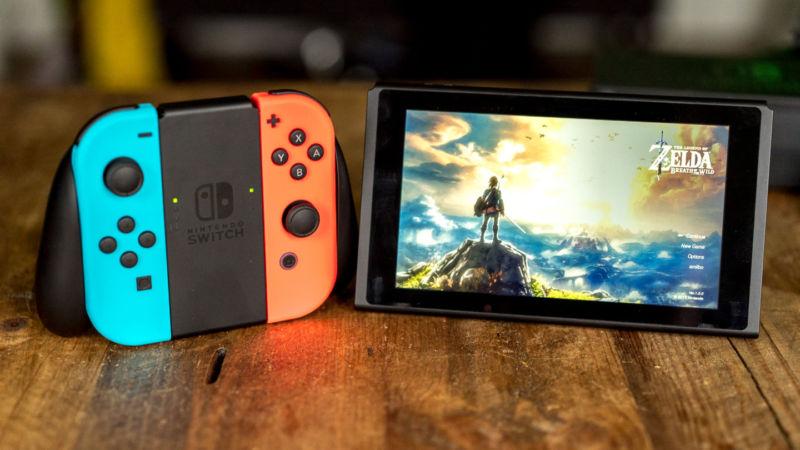
Report: Cheaper Switch coming by June
Mark Walton
A new, cheaper version of the Switch will be released by the end of June, according to one “person familiar with the matter” cited in a recent Bloomberg report. That’s the most specific time frame yet for the still-rumored release of a redesigned version of Nintendo’s system and coincides well with the E3 expo, a major gaming convention in June.
Bloomberg also echoes Nikkei in suggesting that a “more powerful version” of the system, rumored by the WSJ, is not currently in the works. But a more “modest upgrade” to the standard Switch hardware could be coming before the end of the year, according to Bloomberg’s sources.
Nintendo often releases slight redesigns of its portable and console hardware a few years into their life cycles. Those releases are usually cosmetic, though, with little underlying change to base hardware features or software compatibility. One counterexample, 2015’s New Nintendo 3DS, gave that system a small power boost and second analog nub before being discontinued in 2017.
Rumors of redesigned Switch models have persisted practically since the system launched two years ago. WSJ previously reported on those rumors back in October, focusing on a new LCD screen supplier for the new model. Another January report from Japan’s Nikkei news service suggested a miniaturized Switch focused on portability.
Check out Batman’s and Marty McFly’s rides at the Petersen Museum
The BTTF DeLorean DMC-12 has actually been on display at the Petersen for a while now. That doesn’t make it any less cool.
The Petersen Museum
The DeLorean is one of three that were used in the movie.
The Petersen Museum
Back to the Future II was supposed to be fiction.
The Petersen Museum
Did you know a company in Texas will build you a new DMC-12?
The Petersen Museum
If the movie had come out a few years earlier, perhaps John DeLorean wouldn’t have had to resort to drug smuggling to keep the factory open.
The Petersen Museum
There have been many Batmobiles, but this one is from the 1989 Tim Burton movie starring Michael Keaton as the bat.
The Petersen Museum
The Batmobile’s dash is more 1980s race car than gadget-filled crime fighter machine.
The Petersen Museum
There’s a Christopher Nolan-era Batbike in the exhibit, too.
The Petersen Museum
I’m not going to lie, I never really liked the Nolan Batvehicles.
The Petersen Museum
This is the bike from Ghost in the Shell. Ars editor Sam Machkovech hated the movie and I never watched the anime, so I have nothing helpful to say about this bike.
The Petersen Museum
If you know more about the GITS bike, let us know in the comments.
The Petersen Museum
When I was at the museum in February, there were already some movie cars on display. This is obviously Lightning McQueen, from Cars. Does the fact that the film has a WWII veteran Jeep mean that in the Cars universe there was a Car Hitler?
Jonathan Gitlin
Now this is a real Batbike if you ask me.
Jonathan Gitlin
No mistakes this time around—this is Suki’s Honda S2000 from 2 Fast 2 Furious
Jonathan Gitlin
The Plymouth Fury from Christine.
Jonathan Gitlin
I can’t remember which film this custom starred in, but the detailing was too good not to share.
Jonathan Gitlin
This Herbie must be from the reboot because it’s wearing NASCAR stickers.
Jonathan Gitlin
The Ford Thunderbird from Thelma and Louise.
Jonathan Gitlin
A new exhibition will open shortly at Los Angeles’ wonderful Petersen Automotive Museum. It’s called “Hollywood Dream Machines: Vehicles of Science Fiction and Fantasy,” and as the name suggests, it features the two- and four-wheel stars of movies and video games, most of which will be very familiar to anyone with a passing interest in depictions of dystopian futures or speculative fiction.
“‘Hollywood Dream Machines’ will be the biggest exhibit of our 25th anniversary,” said Petersen Automotive Museum Executive Director Terry L. Karges. “With more than 40 vehicles from the silver screen spread across the museum, the exhibit is an ode to the industry that Los Angeles was built upon. We can’t wait to explore the fantasy and fictional concepts behind these extraordinary vehicles with the world.”
Some of the featured vehicles will be more instantly recognizable than others. I’m sure everyone is familiar with Batmobiles and the time machine from Back to the Future. Others might be a little more obscure, like the Weyland Industries RT01 Group Transport from Prometheus, or Frankenstein’s Corvette from Death Race 2000. And they aren’t all from films, either. Halo‘s iconic Warthog will be on display, and along with the BTTF DeLorean, you can don a HoloLens to check it out in augmented reality.
The exhibit opens on May 5 and runs until March 15, 2020, but in advance of the opening, the museum shared some studio photos of a few of the new exhibits. In addition to the gorgeous shots they sent us, I’ve included a few other movie cars that were on display from my visit there earlier this year. Now, if you’ll excuse me, I’m going to see if I can persuade my editors to send me back to LA sometime soon…