Nintendo issues DMCA takedown for Super Mario Bros. Commodore 64 port
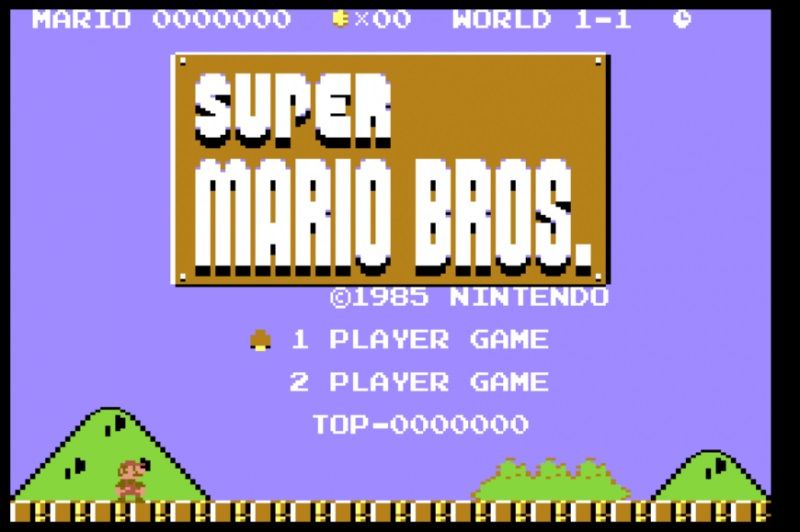
Enlarge/ The Commodore 64 version of Super Mario Bros. that Nintendo doesn’t want you to see!
Late last week, a retro computer developer going by the handle ZeroPaige culminated what he said was seven years of development on Super Mario Bros. 64, a complete and highly authentic port of the original NES side-scroller for the original Commodore 64 computer. The 109KB file is an incredible achievement, coded for a computer with a clock speed of around 1Mhz (about 55 percent of the NES’ speed) that needs a bit of massaging to get smooth screen scrolling working at all.
Last night, though, Nintendo reportedly issued a DMCA notice for the game, leading to its removal from many hobbyist sites and upload services. “Due to a DMCA takedown notice we had to remove the Super Mario Bros. 64 download from our website blog post from 4 days ago,” the Vancouver-based hobbyist group Commodore Computer Club tweeted last night. “Hopefully everyone enjoys the Commodore 64 game who was able to snag it.”
The ROM file, which can be run on emulators and real C64 hardware, is still floating around online, if you know where to look. But the takedown notice continues Nintendo’s long history of using legal muscle to stifle everything from ROM distribution sites and fangames to online emulators and even certain game mods based on its properties.
Using the DMCA to protect a fresh port of a nearly 34-year-old game, designed to run on nearly 37-year-old hardware, may seem like a dramatic new overreach for this kind of DMCA protection. That said, Nintendo currently offers the original Super Mario Bros. as part of its paid Nintendo Switch Online subscription package, and it sells virtual console versions on the Wii U, 3DS, and NES Classic hardware. The unlicensed Commodore 64 port can be seen as direct competition for that ongoing business, or just as illicit use of Nintendo’s copyrighted characters, art, and music.
DMCA or no, Nintendo can’t diminish the sheer programming ingenuity on display in this singular effort. If you don’t want to track down the file, you can experience the magic through the below video.
[embedded content]
https://arstechnica.com/?p=1494817
Time travel and Black Lives Matter mix in new trailer for See You Yesterday
[embedded content]
High school BFFs C.J. and Sebastian build a backpack to travel through time in the Spike Lee-produced See You Yesterday.
Two teenaged science nerds in the Flatbush neighborhood of Brooklyn build a makeshift time machine to right a tragic wrong in See You Yesterday, a new film from Spike Lee’s 40 Acres and a Mule Filmworks. It’s director Stefon Bristol’s first feature film, based on a 2017 short film co-written by Fredrica Bailey and featured at the American Black Film Festival.
Here’s the official synopsis:
High school best friends and science prodigies C.J. and Sebastian spend every spare minute working on their latest homemade invention: backpacks that enable time travel. But when C.J.’s older brother Calvin dies after an encounter with police officers, the young duo decide to put their unfinished tech to use in a desperate bid to save Calvin. From director Stefon Bristol and producer Spike Lee comes See You Yesterday, a sci-fi adventure grounded in familial love, cultural divides, and the universal urge to change the wrongs of the past.
The trailer is equally straightforward. We see C.J. (Eden Duncan-Smith) and Sebastian (Dante Crichlow) geeking out over their science experiment, excited about what it would mean for their college prospects should they actually get their time travel device to work. There’s the obligatory shout-out to Einstein, whose general theory of relativity at least offers the (highly improbable) possibility of traveling back in time. Even if that were somehow possible, and with a portable device that fits in a backpack, there’s still the question of whether it’s possible to change the past. (Lost had it right: “Whatever happened, happened.”)
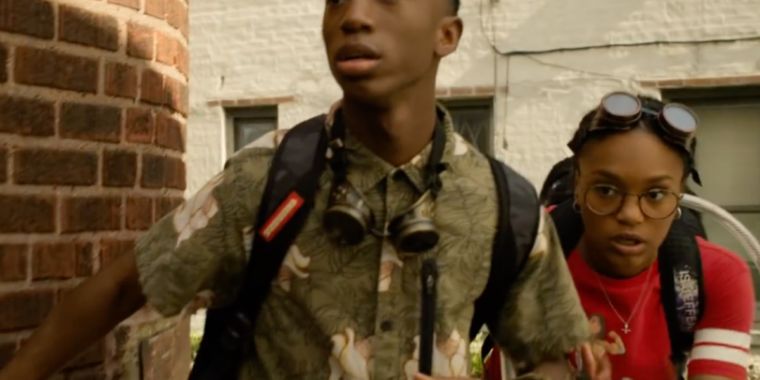
Claudette “C.J.” Walker (Eden Duncan-Smith), Sebastian (Dante Crichlow), and their lab mate, Eduardo (Johnathan Nieves), carefree and excited about science.
YouTube/Netflix
Teens doing science warms the heart.
YouTube/Netflix
Putting together their portable (!) time travel device.
YouTube/Netflix
The first test looks promising.
YouTube/Netflix
Even time travel devices need computer controls.
YouTube/Netflix
A trigger-happy NYPD Officer Bryce (Brett G. Smith).
YouTube/Netflix
CJ’s older brother Calvin (Astro) in the crosshairs.
YouTube/Netflix
Mourning at Calvin’s grave.
YouTube/Netflix
“If I could go back and fix it, I would.”
YouTube/Netflix
What good is a time machine if you can’t change a tragedy in the past?
YouTube/Netflix
Backpacks in place and ready to go.
YouTube/Netflix
Sebastian and CJ try to time their intervention.
Even if you go back in time and change some details, can you change the outcome?
YouTube/Netflix
That prospect fuels pretty much every time travel film or TV series out there, and See You Yesterday is no different. In an all-too-familiar scenario these days, C.J.’s older brother Calvin (the rapper Astro, aka Brian Bradley Jr.) runs afoul of a trigger-happy NYPD officer, who mistakes Calvin pulling a cell phone out of his pocket for a weapon and shoots him dead. C.J. figures she and Sebastian can use their science project to travel back in time and save Calvin, because apparently she hasn’t yet encountered the chronology protection conjecture in her studies yet. That, and she’s driven by grief. Who among us wouldn’t want to at least try to reverse such a tragedy?
There are always rules/constraints when it comes to time travel. It seems there’s only a limited number of times Sebastian and C.J. can travel back in time, so “Everything gonna need to be perfect,” says Sebastian. They arrive too late on their first attempt, and we can safely assume it will all come down to their last chance. Sebastian, at least, seems to develop some misgivings about all these attempts: “It’s about controlling something we obviously have no control over.”
This is also a time travel movie with a strong social conscience and a potentially powerful message. “I started this project when Mike Brown and Eric Gardner were murdered [in 2014],” Bristol said in a statement last year. “And we are still dealing with deadly police misconduct. I made this film because I don’t want the conversation on police brutality to slow down.”
See You Yesterday premieres at the Tribeca Film Festival in New York City on May 3, 2019, and starts streaming on Netflix May 17, 2019.
Hanna TV adaptation sacrifices magic of original film for typical teen angst
Enlarge/ Esme Creed-Miles plays the titular teen assassin in Amazon Prime’s new series, Hanna.
YouTube/Amazon Prime
An isolated teenaged girl genetically engineered to be an assassin must elude rogue CIA agents intent on terminating her in Hanna, Amazon’s adaption of the 2011 film of the same name. It’s a gritty, competent thriller, with strong performances from a talented cast, and has already been renewed for a second season. The problem is that no matter how much one tries to separate the series from the film, comparisons are inevitable. And in almost all respects, the TV adaptation comes up short.
(Some spoilers for the series and the 2011 film below.)
Not everyone was a fan of Director Joe Wright’s original film, with its strange mix of espionage and dark coming-of-age fairytale. But it’s one of my recent favorites for precisely those elements, driven by an exquisitely unsettling performance by Saoirse Ronan in the titular role. Ronan had this otherworldly presence of untouched innocence, combined with a ruthless hunter’s instinct, as we saw in the very first scene when she kills and dresses a deer with just a bow and arrow and a hunting knife.
In the film, Hanna is raised in the wilderness by her father, Erik Heller (Eric Bana), an ex-CIA operative who trains her in all the skills she needs to survive—not just in their winter fairyland, but in the brutal world outside. We eventually find out that she was part of a government program to genetically engineer children as trained assassins. When the project went south, the children were all killed—except for Hanna, because Erik rescued her. Now the teenaged Hanna is ready to leave the nest. Her mission: to take out Marissa Wiegler (Cate Blanchett), the woman who ran the secret project that produced Hanna, who will most certainly have her killed if she finds out Hannah is alive.
What was missing from the early teasers for the series was anything resembling that other-worldly cautionary fairytale quality that made the original Hanna so evocative and memorable (even if those elements weren’t to everybody’s taste). It’s missing from the full series, too, even though it recreates several key scenes, most notably Hanna’s first encounter with a woman pretending to be Marissa and subsequent escape from the military enclave where she’s being held. It’s a pale reflection of the original. All the same beats are in place, but the sequence feels flat, lacking the same heart-pounding energy.
Erik Heller (Joel Kinnaman) flees through the woods with a stolen infant.
YouTube/Amazon Prime
Heller trains a now-teenaged Hanna (Esme Creed-Miles)
YouTube/Amazon Prime
Hanna defies her father and meets a cute boy, Arvo (Aleksandr Gorchilin).
YouTube/Amazon Prime
Not a great end to an otherwise romantic evening: a special ops helicopter intrudes.
YouTube/Amazon Prime
Erik and Hanna are discovered and must flee.
YouTube/Amazon Prime
Erik is an ex-CIA operative from Germany.
YouTube/Amazon Prime
Marissa Wiegler (Mireille Enos) is an agent seeking to take out Erik and Hannah.
YouTube/Amazon Prime
A famous scene from the film version plays out on Marissa’s tablet.
YouTube/Amazon Prime
Rhianne Barreto plays Sophie, an English teen who befriends a fugitive Hanna.
YouTube/Amazon Prime
Hanna finds romance yet again.
YouTube/Amazon Prime
Ever watchful, even while bidding Sophie farewell.
YouTube/Amazon Prime
“Bury Heller, bury the past,” Marissa tells her off-the-books operative.
YouTube/Amazon Prime
Erik and Hanna in lethal action.
YouTube/Amazon Prime
There’s little mystery about Hanna herself, since the series opens with Erik Heller (Joel Kinnaman) stealing baby Hanna from the Utrex facility and follows a relentlessly linear chronology throughout. There are also several unnecessary subplots involving Erik seeking out his old army buddies to raid an arms cache, visiting his mother, or taking Hanna to meet her biological father. All that extra narrative padding mostly serves to try the viewer’s patience.
Esme Creed-Miles (Dark River) was a huge fan of the original film, and delivers a strong performance as Hanna. But she’s hampered by the writers’ determination to bring in elements of a much more typical coming-of-age tale. In the process, her character gets watered down to a distressing degree. This Hanna has a lot more stereotypical (read: tedious) teen angst. In the pilot, she chafes at Erik’s restricting her movements within the forest. She defies him to meet a cute boy in the woods, and that bad decision lets Marissa’s men find them, forcing Hanna and Erik to flee. Film Hanna would never have done this; she chooses when she’s ready to leave and deliberately reveals their location, with Erik’s blessing. It’s a critical distinction. And it’s not the last bad decision TV Hanna makes.
The one character that really benefits from the transfer from big to small screen is Marissa Wiegler, played by Mireille Enos in the series. Blanchett made a deliciously evil queen as Film Marissa, but we never learned much about her background or motivations for issuing all those orders to torture and kill. Enos portrays a much more complicated woman, in a rocky relationship with a single father despite her pronounced lack of maternal instincts, and has some regrets about her past dark actions. She’s more of a good soldier than an evil queen, and much more physical: TV Marissa is almost as good at martial arts and weapons as Hanna.
We don’t really get to see Hanna fully unleashed in all her lethal glory until the last two episodes, which are significantly better than everything that came before. It’s a logical follow-up twist to the story that neatly sets up the second season, which looks to be far more interesting. Frankly, I wish the series creators hadn’t bothered to rehash much of the film at all, and simply jumped right into the sequel material, delivering the backstory in a sprinkling of flashbacks. It would have avoided all the unflattering comparisons, and more cleanly set the series apart as its own beast. Assuming fans of the original film even made it through all eight episodes of season 1, will they come back to see how the story continues?
Hanna is currently streaming on Amazon Prime.
[embedded content]
Trailer for Amazon Prime’s Hannah.
https://arstechnica.com/?p=1487573
Happy 30th B-Day, Game Boy: Here are six reasons why you’re #1
Now you’re playing with power… portable power!
Andrew Cunningham
Best-selling games for the original Game Boy (various sources): #1 – Tetris – 35 million copies.
#2 – Pokemon Red/Blue/Green – ~23.64 million
#3 – Super Mario Land – 18.06 million
#4 – Super Mario Land 2: Six Golden Coins – 11.09 million
#5 – Pokemon Yellow – ~8.86 million
#6 – Kirby’s Dream Land – ~5 million
#7 – The Legend of Zelda: Link’s Awakening – ~3.83 million
#8 – Dr. Mario – 2.08 million (in Japan)
#9 – Wario Land: Super Mario Land 3 – 1.59 million (in Japan)
#10 – Kirby’s Dream Land 2 – 1.49 million (in Japan)
Thirty years ago this week, Nintendo released the Game Boy, its first handheld video game console. Excited Japanese customers snatched up the innovative monochrome handheld by the thousands, which retailed for 12,500 yen (about $94 at 1989 rates) at launch—a small price to pay for what seemed to be an NES in your pocket. Nintendo initially offered four games for the new Game Boy: Super Mario Land, Baseball, Alleyway, and Yakuman (a mahjong game), but the number of available titles quickly grew into the hundreds.
Later that year, the Game Boy hit the US at $89.99 with a secret weapon—Tetris as its pack-in game. Selling over a million units during the first Christmas season, the Game Boy proved equally successful in the US, and that success was by no means short-lived: to date, Nintendo has sold 118.69 million units of the original Game Boy line (not including Game Boy Advance) worldwide, making it the longest running dynasty in the video game business. So in honor of the Game Boy’s twentieth (Editor’s note: now thirtieth!) anniversary, we give you six reasons why the Game Boy dominated the handheld video game market during most of its astounding multi-decade run.
Enlarge/ In a rare public discussion at DICE 2015, Alexey Pajitnov talks about pentominoes (and other origins of Tetris.
Sam Machkovech
1. Tetris
It’s common pop-marketing knowledge these days that every new hardware platform needs a “killer app” to truly succeed. In the Game Boy’s case, Tetris filled that role perfectly.
Alexey Pajitnov‘s block-stacking classic was easy to play in short sessions, and its simple graphics and mostly non-action gameplay proved perfect for the Game Boy’s limited screen capabilities. (If you’ll recall, the first Game Boy had a slow LCD response time, which translated to blurry “ghosting” during movement in action games.) Nintendo of America’s management made a gutsy and intelligent move to pack in Tetris with its new handheld instead of a proven name like Super Mario Land, and that move proved essential to the Game Boy’s long-term success.
Tetris didn’t start with the Game Boy, of course (Pajitnov created it for the PC in 1985), but the Game Boy made it mainstream. Ultimately, Tetris proved so popular that it quickly drove sales of Nintendo’s handheld console into the millions. Tetris‘s grown-up gameplay also attracted adults to Nintendo’s new platform, expanding Game Boy’s potential audience beyond the usual adolescent NES set.
2. Battery Life
The original Game Boy boasted anywhere from 10 to 30 hours of battery life on four AA batteries, according to different sources (the more generous estimates came from Nintendo itself at launch). Nintendo achieved this feat of longevity by using a non-backlit monochrome screen and a low-power 8-bit processor in its first handheld. By contrast, Nintendo’s competitors were obsessed with color backlit LCD displays and more beefy processors that made their units into battery guzzlers. The NEC TurboExpress, Sega Game Gear, and Atari Lynx only managed to squeeze out 2-5 hours of play time on 6 AA batteries, which could prove quite expensive for their owners over time.
From a hardware design standpoint, Nintendo’s first concern with the Game Boy always seemed to be battery life. It makes sense, because an electronic device’s portability is directly related to how long you can use it without being tethered down by a power cord. So when it came to adding color to the Game Boy line, Nintendo took its sweet time—nine years, in fact. Why did it take so long? Nintendo wisely waited until it could provide a low-cost, low-power color LCD display that would not only keep the cost of the Game Boy Color low, but provide it with a long battery life comparable to its earlier monochrome cousins.
Ultimately, Nintendo’s obsession with battery efficiency proved pivotal. While the Game Boy’s early competitors possessed technologically superior displays and more processing power, consumers chose the Game Boy in large part because of the lower cost of operation (fewer batteries to buy) and greater portability afforded by its economical battery usage. Before long, the color power hogs drowned in Nintendo’s wake while the Game Boy captured the portable gaming market.
3. The Nintendo Brand
In addition to battery life, the Game Boy had a major advantage behind it that its competitors lacked: a monster brand name—Nintendo—that dominated 80% of the video game market. Sure, Atari was Atari—once a video game giant, but by the late ’80s it was a tarnished shadow of its former self. Sega’s success in the home console wars was still brewing, and NEC’s relatively low profile and short history in the video game business didn’t resonate with consumers.
By contrast, Nintendo’s 8-bit home console, the Nintendo Entertainment System (and the Famicom, its Japanese counterpart), found itself near the peak of its popularity between 1989 and 1991—key years in the handheld wars. Consumers on both sides of the Pacific trusted the Nintendo name to deliver a high quality gaming experience. They knew they could count on Nintendo to provide world-class first-party software for the new console year after year, especially thanks to an enviable set of popular franchises like Super Mario Bros., Zelda, Metroid, and Kid Icarus.
Perhaps more importantly, Nintendo also brought to the handheld a dedicated group of skilled third party developers who knew they could rely on the Game Boy as a strong platform for their software. Plentiful third party support meant plentiful titles, which is always good news for the long-term health of any game system.
4. Price
The Game Boy retailed for $89.95 at launch in the US. Compare that to its closest competitors at their launches: the TurboExpress sold for $249.99; the Game Gear, $149.99; and the Lynx, $189.95. Nintendo could afford to offer the Game Boy at a lower price primarily because of the unit’s less expensive non-backlit monochrome LCD screen. The Game Boy also gained an advantage over its rivals in total cost of ownership: as previously mentioned, Nintendo’s handheld cost less to operate over time due to its more conservative use of disposable batteries.
Launch price wasn’t the only factor in Game Boy’s success. Over time, Nintendo continued to lower the price of its portable console as production costs decreased, keeping the Game Boy affordable and price competitive despite significant improvements in technology.
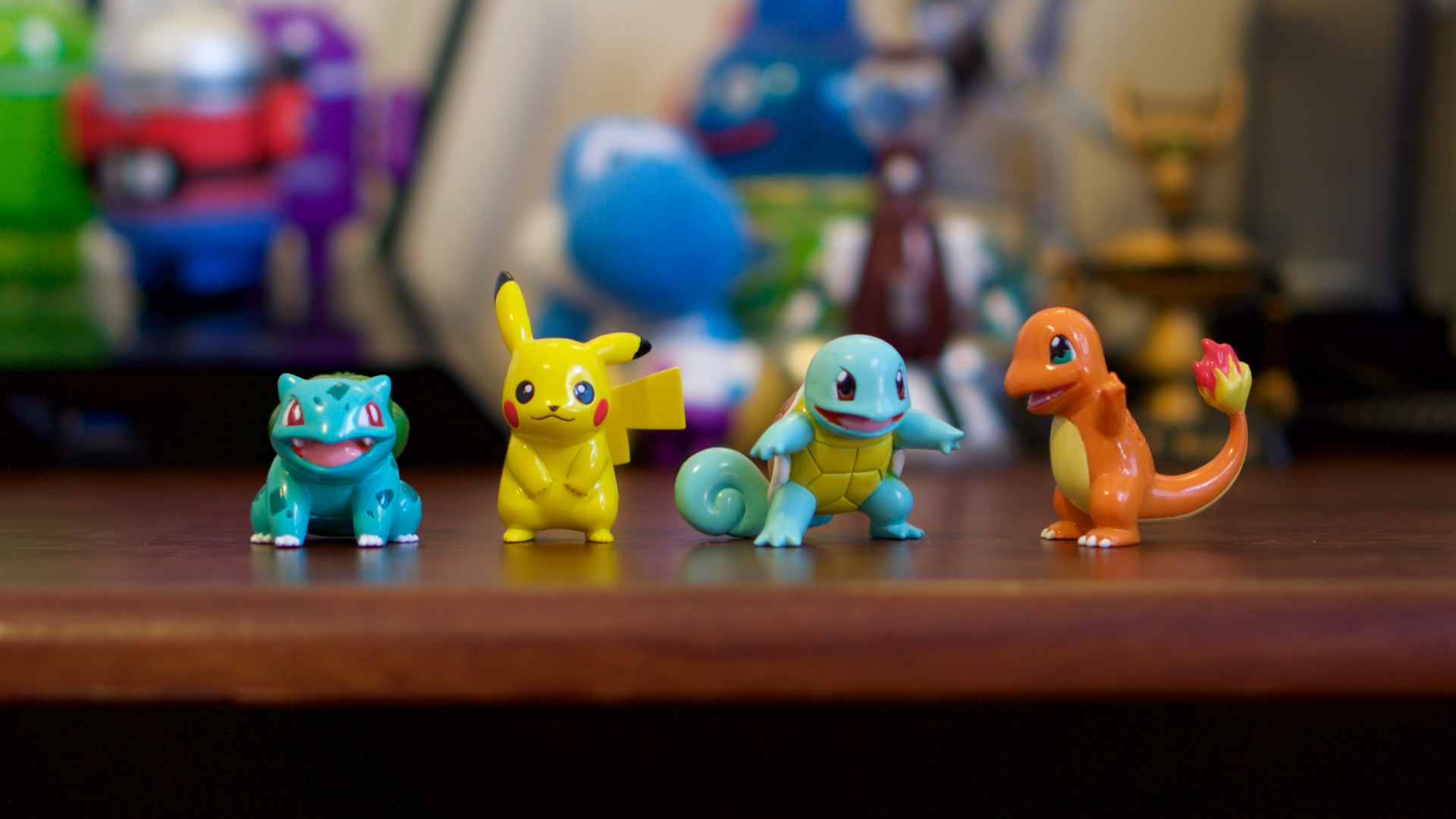
Enlarge/ Nowadays, these gents need no introduction.
Andrew Cunningham
5. Pokémon
Tetris may have driven the public’s ravenous early appetite for Game Boy, but Pokémon cemented it to legendary status. The monster collecting RPG for the original Game Boy sold a combined 20 million copies in the US and Japan and proved that the aging Game Boy platform was still relevant in the late 1990s. And having a new hot title for the handheld at the time proved especially important in the face of a new breed of portable platforms like the Neo Geo Pocket, Bandai Wonderswan, and Tiger Game.com that had learned a few tricks from Nintendo’s portable wunderkind. Lacking an absolute must-have game like Pokémon, those new portable contenders quickly fell by the wayside.
Interestingly, Pokémon‘s success kept more than just the Game Boy alive. 1996-2006 were lean years for Nintendo on the home console front. While the Nintendo 64 and GameCube didn’t sell particularly well, sales of Game Boy and Game Boy Advance hardware remained strong, largely driven by the Pokémon craze. In fact, after disappointing sales of the Nintendo 64, Nintendo decided to bring the blockbuster franchise to its ailing console. Sales of the N64 briefly tripled after the release of Pokémon Stadium in 1999. Even so, it wasn’t enough to stay on top of the home console race. If Game Boy sales hadn’t been so strong, it’s possible that Nintendo might have left the hardware business entirely by now. So in some ways, Pokémon and Game Boy kept Nintendo afloat during tough times. Nintendo, and Game Boy, lived on to see another day.
6. Flexibility
Throughout its first two decades of history, the Game Boy was clearly a hardware franchise that would not sit still. As technology improved, Nintendo followed, regularly refreshing its handheld console to provide better battery life, sharper displays, and more compact form factors. As of 2009, Nintendo has released seven distinct models in the Game Boy series (all but one are completely backwards compatible with earlier units): Game Boy, Game Boy Pocket, Game Boy Light (Japan only), Game Boy Color, Game Boy Advance, Game Boy Advance SP, and Game Boy Micro. Within those seven models, Nintendo provided many color variations and even a few minor hardware revisions. Nintendo also released three home console adapters that allowed users to play Game Boy games on a TV set: Super Game Boy and Super Game Boy 2 (Japan) for the Super NES, and Game Boy Player for the GameCube.
[embedded content]
Today’s kids don’t know the first thing about Kirby’s Dreamland, evidently. (We tried asking in 2018.) | Video shot and edited by CNE. Click here for transcript.
At the moment, Nintendo’s dominance in the handheld gaming business continues with the Nintendo DS line of consoles. The Nintendo DS launched in 2004 with Game Boy Advance backwards compatibility as a major feature, making the DS a spiritual successor to the Game Boy line. Even with the DS firmly in the spotlight, Nintendo still sells the Game Boy Micro, a compact version of the Game Boy Advance. So even now, the “Game Boy” name remains alive, although it’s on life support. Unfortunately, Nintendo chose to remove Game Boy Advance compatibility from its latest handheld, the Nintendo DSi. As we look ahead, the future of the Game Boy brand remains uncertain at best, grim at worst, but it has been one hell of a ride. Happy birthday, Game Boy. Next year, I’ll buy you a beer.
Review: Santa Clarita Diet S3 blends slapstick, satire with genuine heart
Enlarge/ Sheila (Drew Barrymore) and Joel (Tim Olyphant) Hammond are married real estate agents with an undead secret.
The Santa Clarita Diet, Netflix’s smart, slyly satiric sitcom about a zombie outbreak in suburban Southern California, has largely flown under the pop culture radar since it debuted in February 2017. And that’s a shame, because it’s easily one of the best half-hour comedies on TV right now. Season 3 brings the same winning blend of satire, snappy dialogue, slapstick, and of course, plenty of zombie-munching gore.
(Some spoilers below.)
The series centers on Joel and Sheila Hammond (Tim Olyphant and Drew Barrymore), married real estate agents in Santa Clarita who find their lives irrevocably altered after Sheila has an extreme upchucking incident while showing a house to prospective clients. She thinks it’s a bad case of food poisoning but soon begins to crave human flesh. The upside: she feels better than she has in years, and her increased libido kickstarts the Hammonds’ previously humdrum sex life into overdrive. Season 1 was a bit uneven, especially in the earlier episodes, but the show found its stride by the end of that first 10-episode run, and both seasons 2 and 3 are sheer bingeable delights.
Mostly, Shiela tries to eat bad people: pedophiles, drug dealers, Nazis, crooked cops, and one lascivious fellow real estate agent named Gary (Nathan Fillion), who aggressively hits on Sheila and suffers for it. Fillion’s character was so beloved by fans, the writers brought him back as a reanimated severed head in season 2. As the couple tries to elude detection, Joel and Sheila investigate how she ended up being zombified in the first place. So far, it involves coughing up a mysterious round organ-like thing (it eventually evolves into a mutant spider ball Sheila nicknames “Mr. Ball-Legs” and keeps as a pet), ancient Serbian texts, and a shipment of bad clams to a local restaurant.
[The show] also has plenty of heart, anchored by Joel and Sheila’s genuine love and commitment to each other.
But for all the gore (usually played for laughs) and the zany, over-the-top elements, Santa Clarita Diet also has plenty of heart, anchored by Joel and Sheila’s genuine love and commitment to each other in the face of some radical changes—not just her gruesome eating habits. In season 3, Joel’s thus-far unconditional love for his wife is pushed near the breaking point when Sheila proposes that she turn him, too, so they can be together forever.
The Hammonds also struggle to remain incognito as more people learn about Sheila’s condition. The super-religious sheriff’s deputy Anne (Natalie Morales) thinks Sheila has been raised from the dead by God and can’t help sharing the good news with various church members. A disturbed mental patient named Ron (Jonathan Slavin) becomes obsessed with Sheila, begging her to bite him so he can be a zombie, too.
Husband and wife real estate agents Joel (Tim Olyphant) and Sheila (Drew Barrymore) Hammond in the crosshairs.
Sheila sees something (actually someone) she likes.
Someone could use a napkin, amirite?
Joel and Sheila are getting their lives back on track.
When the stored Nazi meat goes bad.
Going for the kill.
Sheila snacks on some leftovers.
Daughter Abby (Liv Hewson) takes mom’s zombie state (mostly) in stride.
A pet spider for Sheila’s pet… whatever.
This mysterious object is somehow related to the zombie virus.
Abby and geeky next-door-neighbor Eric (Skyler Gisondo) have a budding romance.
Joel and Sheila discover that Gary (Alan Tudyk) is a useful partner in their fledgling real estate company.
Ron (Jonathan Slavin) is a former asylum inmate who wants to be Undead.
YouTube/Netflix
Sheila makes a romantic (?) proposal.
Dobrivoje Poplovic (Goran Visnjic) is a Serbian official with a nefarious scheme.
YouTube/Netflix
You probably don’t want these neighbors knocking on your door.
Meanwhile, an organization dating back to the Middle Ages called the Knights of Serbia has come to Santa Clarita, intent on wiping out any zombies they might find. So Joel decides to join their ranks to protect Sheila. A hilarious montage where he makes a training video with the help of teenaged next-door neighbor Eric (Skyler Gisondo), recreating bizarre medieval feats to prove his worthiness, is the highlight of the season. (Olyphant has a real gift for physical comedy.)
Gary is still around, too, living in the basement and partnering with Joel and Sheila to get their fledgling business off the ground with the help of an Alexa and a headset. (This time around he’s voiced by Alan Tudyk. The change in voice is explained by Gary’s continued decomposition, which causes part of his throat to rot.) At the local Serbian embassy, an official named Dobrivoje Poplovic (Goran Visnjic) seems intent on tracking down rumors of zombies running wild in SoCal suburbia, with the help of two incompetent henchmen. Then there’s daughter Abby’s (Liv Hewson) ongoing rebellious antics and an elderly Meals on Wheels recipient named Jean (Linda Lavin), whom Sheila befriends.
Juggling all those crazy subplots is no easy feat, and I admit to wondering mid-season whether the writers—led by series creator Victor Fresco—would be able to stick the landing for the finale. But once again they pulled it off, wrapping up most of the narrative threads and ending on a pretty inventive cliffhanger. That’s a risky move, since there’s no word yet on whether Netflix will renew the series for a fourth season or whether Santa Clarita Diet will become the latest casualty of the streaming network’s budget axe. Here’s hoping we’ll get at least one more season for this vastly entertaining, chronically under-appreciated gem.
[embedded content]
Netflix’s Santa Clarita Diet season 3 trailer.
https://arstechnica.com/?p=1487663
Review: The indestructible humanity of A Boy and His Dog at the End of the World
Warning: Mild spoilers ahead.
Orbit Books
Dystopian stories take many forms, but it’s a rare dystopian novel that prominently features man’s best friend. Author of the Oversight and Stoneheart trilogies, C.A. Fletcher doesn’t hide the importance of dogs in his latest novel. Aptly titled A Boy and His Dog at the End of the World, it follows a young boy named Griz as he goes on a journey to retrieve his stolen pet.
“Dogs were with us from the very beginning,” Griz writes. “And those that remain are still with us now, here at the end of the world.”
Griz’s world is a broken version of our own. An event known as The Gelding has devastated the world’s population so much so that only thousands—not billions—of humans survive. The Gelding is never fully explained, but the havoc it wreaked has isolated pockets of people, like Griz and his family, so much so that seeing an unfamiliar human being has become a rarity.
That’s why Griz and his father, mother, and two sisters are apprehensive when a man named Brand sails up to their home, which is on an island off the coast of what was once Scotland. With the promise of trade, they cautiously embrace Brand. However, Griz wakes up one morning to find Brand’s characteristic red sails bobbing away on the sea—along with some of their supplies and one of his beloved dogs named Jess. Griz, along with his other dog Jip, go after Brand to rescue their four-legged family member.
The young Griz doesn’t remember what life was like before The Gelding, so the world outside of his home island is a foreign one. This creates a slow start to the novel, albeit one rich with discovery. A Boy and His Dog is told from Griz’s point of view as he records his story from an unknown point in the future, and Griz spends a lot of time describing what he sees. Fletcher dives deep with his descriptions of the world, which has been ravaged by destruction, decay, and general abandon:
It was one of the old buildings, a large farmhouse that had been added to over the years, so it sprawled expansively when compared with the other island houses. The walls had once been whitewashed but now little of that remained, so it was a gray house with a dark slate roof and intact glass windows that seemed to watch me approach up the old drive. A car had rotted to the axles and stood amid the long grass by the back door as if waiting to pounce. The door was not as easy to open as it had been when we visited three years before, but I was bigger now and managed to kick it open carefully enough that it would sort of close after us when we left. I left it open as I waited for the dogs to scramble ahead of me and put any waiting rats to flight.
Despite the bleakness of his surroundings, Griz’s naive curiosity about the world comes off as optimistic and hopeful. However, the effect starts to wear off after the reader has spent the first third of the novel alone with Griz and Jip, with only the former’s descriptions for fuel.
But Griz’s journey to rescue Jess eventually becomes harrowing, full of unexpected human and animal visitors and challenges posed by the unforgiving remains of the world. A French woman who claims her name is “John Dark” accompanies him for part of his journey—which includes a terrifying scene in which our protagonists get jumped by wolves—and becomes the source of one of the book’s tear-jerk moments. Plenty of surprises await once the reader gets over the slow hump at the beginning, but Griz’s determination and humanity are mainstays throughout.
Griz’s sense of humanity and loyalty clearly separates him from other humans who seem to have lost theirs—even while those strangers claim to be on a righteous path.
His loyalty to his furry family members is refreshing, particularly given the post-apocalyptic setting and brutal nature of those he meets on his quest. In the latter third of the book, Griz’s sense of humanity and loyalty separates him from other humans have lost those instincts—even while they claim to be on a righteous path. Fletcher uses characteristics like this to infuse A Boy and His Dog at the End of the World with hope rather than sorrow, something that most dystopian novels cannot boast.
A Boy and His Dog contains two big reveals, and one of them may be polarizing because it’s framed as a revelation. I won’t spoil either here, but the polarizing reveal, while integral to the final fourth of the novel, doesn’t change much about everything readers learn previously. This notion, which turns out to be false, needed to be established early on in the story, but it amounts to a shrug when the truth actually comes out. However, the second revelation introduces an intriguing character dynamic into the final chapters, making them even more complex and exciting than what came before.
You may very well expect some twists in a long book about a mysterious world. While I’m going to err on the side of not spoiling those, I’d be remiss if I didn’t point out that this twisty stuff pays off in the form of one juicy character dynamic. This makes up for another moment that is framed as a capital-R Revelation but falls a bit flat.
While some may think the novel’s ending is a too-neatly tied bow, it brings together some seemingly random, disparate parts of the story. If you’re a fan of post-apocalyptic stories that barrel forward at breakneck speed, A Boy and His Dog at the End of the World isn’t for you. But anyone interested in character-driven stories that highlight our collective humanity and place a healthy emphasis on our relationship with dogs, C.A. Fletcher’s novel will be a breath of fresh air.
A Boy and His Dog at the End of the World is published by Orbit Books and will be available on April 23, 2019. You can read a longer excerpt from the novel on Orbit’s website.
Reverse review bomb? AC: Unity draws praise for Notre Dame preservation
Enlarge/ The famous cathedral lives on in interactive digital form.
At this point, we’re actually a little tired of stories about “review bombing,” where various put-upon groups of gamers gather together to leave a flood a negative user reviews, often for issues that have nothing to do with the game itself. But this week’s flood of positive reviews for Ubisoft’s Assassin’s Creed Unity on Steam is a different (and much rarer) story altogether.
The impetus for this reverse review-bomb (Review rocket? Review scaffolding? Review hug?) came earlier this week after the tragic fire in Paris’ Notre Dame cathedral. On Wednesday, Ubisoft announced it would be donating €500,000 to help rebuild the cathedral that’s recreated as a central landmark in Assassin’s Creed Unity. On top of that, the company is giving away free copies of the game on its UPlay platform through April 25 as a way to encourage further donations and in order “to give everyone the chance to experience the majesty and beauty of Notre-Dame the best way we know how.”
“When we created Assassin’s Creed Unity, we developed an even closer connection with this incredible city and its landmarks,” the company wrote this week. “One of the most notable elements of the game was the extraordinary recreation of Notre-Dame… We hope, with this small gesture, we can provide everyone an opportunity to appreciate our virtual homage to this monumental piece of architecture.”
The PR-focused altruism seems to have paid off on Steam, where what had been decidedly mixed user reviews for Unity (partially driven by a bug-addled launch) have shifted to hundreds of “Very Positive” reviews in the last four days. Those reviews seem to be pretty evenly split in thanking Ubisoft for the free game and in appreciation for the real-world Notre Dame (and hopes for its rebuilding).
“I hope this game will be able to help the repairation [sic] of Notre-Dame de Paris,” reads one characteristic recent Steam review. “Although its [sic] not a good game for everybody (seems like) but Ubisoft paid much efforts on this [sic]”
If you want to get technical, these laudatory reviews could probably be classified as “off topic” under the strict letter of the definition Valve outlined in a recent blog post. But since the reviews aren’t “aimed at lowering the Review Score of a game”—one of Valve’s criteria for identifying a review bomb—it seems doubtful the company will implement the same kind of user review fix that was recently needed for the Borderlands series.https://arstechnica.com/?p=1493821
World of Goo is Epic Game Store’s next freebie—and all PC owners will get HD update
Enlarge/ The Goo is back! And free! And updated for existing owners! Everyone wins, we think.
As has become a regular occurrence lately, Epic Games announced another solid free video game coming to all of its Epic Games Store (EGS) users, which has so far been an every-two-weeks promo for the relatively new storefront. And again, as has become a regular occurrence, the news came with some confusing crossover with Steam, the mega-ton retailer that EGS is not-so-subtly taking on.
Friday’s announcement confirmed that the award-winning puzzle game World of Goo, which launched in 2008 on PC and the Wii before reaching other platforms, will become an EGS freebie starting May 2. Users will have a two-week window to log in and claim a copy of the game (which currently retails for $10 at Steam and other digital-download storefronts).
Shortly after Epic’s announcement, a PC Gamer report clarified one key detail: this version of World of Goo includes a significant “framework” update with an emphasis on higher resolutions. However, that report didn’t answer if that update was an EGS exclusive—the kind of update that would require the game’s existing fans to log into a second storefront and claim a free copy—or when exactly its Steam equivalent will get the update.
“No artificial delay”
In an interview with Ars, World of Goo co-creator Kyle Gabler confirmed that all of the game’s existing Windows/Mac/Linux versions on storefronts such as Steam and GOG (and developer 2DBoy’s own site) will get the update “as soon as it’s ready.” Whether that means it’ll arrive on May 2 or a few days later will depend on “our own ability to generate and test the builds,” Gabler said.
“It’s a free update for everyone—we don’t do DLC,” Gabler added. “Timing is just whenever we can, and there’s no contractual or artificial delay otherwise. We assumed we’d slip out this update without anybody noticing, so we didn’t make a fancy plan or anything.”
While World of Goo has a relatively timeless look thanks to vector-based graphics and cartoon-shaded worlds, the original game’s foundation was built with an expectation of 800×600 resolutions—more in line with the original Wii’s 480p output. As such, 2DBoy took the game’s EGS launch as an opportunity to “tidy up before you invite the neighborhood in,” which includes a redrawing of all in-game assets at double their original resolution, a wholly replaced framework for asset rendering (“you can [now] run the game on modern widescreen displays at whatever resolution you want”), and quality-of-life improvements found in the Nintendo Switch version.
The original game’s leaderboards will be turned off because the three-person team at 2DBoy had been running those leaderboards on their own server and are opting to cut that off instead of transferring it to another service. But they seem to be making up for this by doing something pretty cool: removing all encryption for the game’s assets and save files. “We hope this makes the game more open and friendly to mod,” Gabler said to Ars.
So there you have it: existing owners will get some nice perks, and anyone who hasn’t already bought one of the game’s fifty zillion versions will soon be able to dive in and see what the World of Goo fun is all about for free—even on their favorite widescreen, 21:9 monitors, if they want. It’s certainly a change of pace from the last time 2DBoy spoke publicly about people playing its game for free—the developer revealed a staggering 90% piracy rate on the game’s DRM-free version back in 2008.
[embedded content]
This might be the World of Goo world-record speedrun. We don’t know. But we certainly can’t beat the original game this quickly.
https://arstechnica.com/?p=1493675
Gearbox’s Pitchford: Steam may be “a dying store” in 5 to 10 years
Enlarge/ “You can’t get us on Steam, and that’s a good thing.”
Earlier this month, Gearbox drew some ire from Steam-loving Borderlands fans by announcing the next game in the series, due in September, would be exclusive to the Epic Games Store on PC. In a massive tweet thread earlier this week, though (helpfully collated in this reddit post), Gearbox founder and CEO Randy Pitchford defends that decision and highlights what he sees as the long-term positives that Epic’s competition with Steam will bring to the industry.
While acknowledging that Epic’s platform currently lacks many quality-of-life features available on Steam, Pitchford pointed to Epic’s public road map for adding many of those features before September’s Borderlands 3 launch. In fact, Pitchford sees the game’s impending release as a “forcing function… that will, in turn, make all those features available on a faster timeline than otherwise possible… If I were to bet on this… Epic will inevitably surpass Valve on features and quality of service.”
Pitchford acknowledges that publisher 2K and developer Gearbox could have hedged their bets by releasing on both Steam and Epic. But he added that he feels the entire industry will be better served in the long run if Borderlands 3‘s exclusivity can help make the Epic Games Store competitive with Steam. (The sizable investment Epic has made in paying to get exclusive content on its store probably didn’t hurt, either)
Before Epic came into the platform picture, Pitchford says, “a huge amount of the value that Valve has generated [through Steam] has been used to enrich the handful of people who own and manage the company… They’ve been able to do this because they haven’t had to worry about it. There has been no viable competitor to Steam. They have had no external force sufficient to challenge their revenue share and no external force sufficient to motivate a sufficient reinvestment of revenue.”
Pitchford sees Epic as “the only guys who can really come along to disrupt Steam’s monopoly and help all this get fixed… From a track record point of view, my expectation is that Epic’s investment in technology will outpace Valve’s substantially. When we look back at Steam in five or ten years, it may look like a dying store and other, competitive stores, will be the place to be.”
Pitchford points to the way Steam has already upped its revenue sharing for popular games as evidence of how seriously it is taking the new competition. “Holy shit! That’s a miracle,” he added. “I think the folks at Valve are really smart and really great and they are also, probably, starting to redirect investment into their store.”
By way of summary, Pitchford suggests that Epic’s competition means that “Steam will have no choice but to either give up, lose, or to get better faster than ever before [and] because Valve is pretty damn good with some awesome talent, I do not expect them to give up or to lose.
“At the end of the day when we look back at this moment we’ll realize that this was the moment where the digital stores on PC became unmonopolized,” he continued. “And we’re all going to look back and see how change happened and how costs for developers and publishers to be on stores went down and how that value was passed on to the customers.”
Pitchford’s lengthy thoughts on the issue are well worth reading in full for anyone interested in a major developer’s direct, involved opinion on the expanding PC game store wars.
https://arstechnica.com/?p=1493549
Iron Man VR preview makes me want to put on nerdy headgear again
[embedded content]
Trailer for PSVR game Marvel’s Iron Man VR
AUSTIN, Texas—In some ways, I am the worst candidate among the Ars Technica gaming braintrust to demo the world premiere of Iron Man VR, a video game slated to launch on PlayStation VR by the end of this year. I have never used a PSVR, let alone any VR headset between the pricey HTC Vive and the build-it-yourself Nintendo Labo VR. And I’m an inconsistent Marvel movie follower at best. If we don’t count the early 2000s Spider-Man trilogy, Black Panther is my only MCU reference point.
But maybe that actually makes me the best candidate to fake like Tony Stark via a bulky headset. There is no veneer of VR snobbery to rely on. Instead, I had simple questions: Is this fun? Would I do it again, and for longer?
After a 20-minute(ish) flight test with a rep from the devs at Camouflaj (the studio behind the upcoming PSVR game) nearby, I can still confidently say the old X-Men co-op arcade cabinet remains my favorite Marvel game of all-time. But I would absolutely be down to fly around a bit more in Iron Man’s ruby-red armor soon, which is probably good news for millions of VR and Marvel novices who might be intrigued by the possibility of becoming their own living-room Iron Person.
The right mechanics
One of the first things you see upon firing up Iron Man VR is some series wish fulfillment. A startup screen, mirroring your face inside the helmet, slowly boots up and comes to life. It immediately reminded me that Iron Man probably lends himself to VR better than other Marvel heroes. He already has a built-in heads-up display (HUD), which constantly provides in-game tips like indicators of enemies outside your field of vision or prompts to take a particular action (“Hold button to extinguish the flames,” for instance).
Iron Man also flies via tools, not superhuman ability, so holding controllers or VR wands doesn’t feel out of place. I tested the game with a pair of PlayStation Move wands, which asked me to move up, down, forwards, or backwards by putting my hands palm-down at my sides and pushing a button. (Just like Stark, I’m sure.) If you need to go faster, hit your buttons twice to enable the turbo boost. Flying as Superman like this might feel unnatural (leveraging a controller versus just raising my arms and lunging forward), but here I only needed a few moments to have the basic gist. The same goes for shooting enemies: palms out and hit the button, then palms down to quickly recharge.
Having read a wealth of VR stories about face pain and virtually induced nausea, I’ll admit to a bit of initial nerves. But the PSVR hardware was as comfortable as everyone says, and I only made myself dizzy once (I turbo-boosted and turned 360 degrees to find the next tutorial target). That was decidedly user-error and not in anyway caused by the software or visuals, though.
Upon reflection, the tutorial itself likely would’ve been enough to impress me. After some brief hand-positioning calibration, Iron Man VR transports you to the scenic cliffside vistas of Stark HQ. Here, the game teaches you how to travel through an obstacle course of seaside rock formations and refine your shooting with an array of targets. Going through this experience for the first time is as satisfying as I imagine the sensation of slinging around in the Spider-Man PS4 was on traditional TVs.
These are screen grabs from the trailer and “not actual gameplay.” But the images do look very much like a cutscene experienced during our demo.
Sony / Camouflaj / Marvel
The visuals during our plane saving “level” weren’t too far off from this, either.
Sony / Camouflaj / Marvel
The next two images are from Sony press: this vista is from the tutorial around Stark HQ (and this may be a quick visual pan of the place before you get started, but it is scenic)
Sony / Camouflaj / Marvel
Did I mention you can punch, too? There’s punching fools.
Sony / Camouflaj / Marvel
Hey, I saved the day (for now)!
Sony and Camouflaj’s healthy 20-minute demo was comprised of that play tutorial, a cut scene, and a “level” to work through. As the Camoflauj rep noted, Iron Man VR won’t be a simulator or experience when it releases “in 2019.” This will be a traditional game with a one-player story campaign—albeit one exclusively in VR.
So I left Stark HQ and thrust headfirst into the one-player campaign. Its lead voice actor is decidedly Downey-ish—similar sounding and certainly as quippy. While flying in his AI-Friday-controlled plane, you learn Stark just named Pepper Potts CEO via the media without telling her first (whoops). You get a few Mass Effect-like dialogue wheels and a couple of opportunities to interact with the environment. For example, open the briefcase in front of you—position your hands, hold the button—and, voilà, there’s the suit in all its glory, including holographic pop-ups. But things kick into playable gear after Friday notices a few Stark Industries military drones buzzing uncomfortably close to the plane.
We don’t make those anymore, Stark notes, but evidently someone nefarious has remotely hacked the fleet. The in-cabin TVs soon turn to static before a veiled figure threatens you and Stark Industries at large. One of the drones starts firing into the side of your plane. The resulting hole is a problem in its own right, but the damage seems to be sending the plane downward—and your suit-carrying briefcase has been sucked out into the clouds.
The demo level starts here, and you’re dodging debris as Friday recalls your suit to you piece by piece. Once armored up, it’s go time. Take out the drones, monitor the plane so you can put out fires or fix exterior malfunctions, and ensure that Pepper either lands that thing or gets out to safety.
As a VR novice, I immediately thought this would end poorly. But slowly and surely, I found myself getting better at dodging incoming attacks (use your thrusters, idiot, don’t just move your head) and utilizing both hands to take down swarms of oncoming drones. Throughout the firefight, Friday and Pepper stay in communications through your HUD. They give you directions on where the plane takes on damage and how fast you better get yourself over there to fix it.
Each corresponding action becomes more intuitive than the last—fly into the spot your HUD has glowing, move your hands to take the appropriate action (hitting the button to shoot or hold things). I ended up taking a lot of damage when the level’s two heavies came out (souped-up drones with Punch-Out-y mechanics; let them fire, dodge, counter before their shields are up again). But ultimately I managed to save the day with ~30 percent of function still intact.
Even though I’m an infrequent gamer these days, I immediately bought into this demo’s sales pitch: a first-person adventure as Iron Man theoretically with a full campaign. That’s already more intriguing than the disappointing Oculus-exclusive 2018 game, Marvel Powers United VR, which my VR-loving Ars colleagues tell me was button-mashy and uninspiring. Here, the actions felt intuitive; the graphics kept me immersed. And while I could see the potential for things to perhaps feel a little repetitive—can you build enough levels, enemies, and fly-then-shoot diversity to keep things engaging mechanically?—even that isn’t necessarily a deal-breaker for modern games. Hello, Assassin’s Creed!
This 20-minute(ish) demo definitely did not satiate me, and I would’ve (and physically could’ve) happily moved forward to see how everything got a bit more complicated from there. If Marvel and Camouflaj build on this successfully—clever level and villain design that challenges your basic abilities in new ways; an original Iron Man story that can contextualize your actions in a satisfying way (word is supervillain Ghost will be lurking in this adventure)—then PSVR likely has a new contender for the title of “VR game you’d immediately show to a rookie.”
Whether that’s enough to move headsets off shelves is another question, but that likely shouldn’t rest on any singular set of shoulders. Even Iron Man’s.