You can now download the source code for all Infocom text adventure classics
Enlarge/ The Apple II, one of the myriad personal computers used to play Infocom games years ago.
The source code of every Infocom text adventure game has been uploaded to code-sharing repository GitHub, allowing savvy programmers to examine and build upon some of the most beloved works of digital storytelling to date.
There are numerous repositories under the name historicalsource, each for a different game. Titles include, but are not limited to, The Hitchhiker’s Guide to the Galaxy, Planetfall,Shogun, and several Zork games—plus some more unusual inclusions like an incomplete version of Hitchhiker‘s sequel The Restaurant at the End of the Universe, Infocom samplers, and an unreleased adaptation of James Cameron’s The Abyss.
The code was uploaded by Jason Scott, an archivist who is the proprietor of textfiles.com. His website describes itself as “a glimpse into the history of writers and artists bound by the 128 characters that the American Standard Code for Information Interchange (ASCII) allowed them”—in particular those of the 1980s. He announced the GitHub uploads on Twitter earlier this week.
The games were written in the LISP-esque “Zork Implementation Language,” or ZIL, which you could be forgiven for not being intimately familiar with already. Fortunately, Scott also tweeted a link to a helpful manual for the language on archive.org.
Dive in and you’ll find that things are very different now than they were then. At the time Infocom was active, personal computers did not have a widely shared architecture, so the path ZIL’s architects took was to allow game creators to write instructions for a virtual machine called the Z-machine, which was then brought to the various platforms of the day. There are interpreters available today for Windows, macOS, Linux, iOS, and Android, among other platforms.
The interactive fiction community is still quite lively, and people are still making games using ZIL and the Z-machine today. But they’ve been joined by creators using new tools for spinning interactive, text-focused games like Twine and Ink, some of which are used as middleware in modern graphical game productions big and small.
The news was reported by Gamasutra, which covers news for the game developer industry. The site also noted that Activision still owns the rights to Infocom games and could request a takedown if it wanted. For now, though, historians, narrative designers, programmers, and gaming enthusiasts alike can benefit from Scott’s effort.
https://arstechnica.com/?p=1492683
HD emulation mod makes “Mode 7” SNES games look like new
How Super Mario Kart looks under traditional bsnes emulation…
…and how it looks with the HD mod activated. Check out the checkerboard starting line pattern to see how pronounced the improvement can be.
In the original Pilotwings, the far-off island is just a blob of pixels.
With the HD emulation mod, individual island features can be made out clearly.
In the original F-Zero, “circular” walls appear lumpy, and far-off “city” backgrounds are incoherent smears.
With the HD mod, you can see the individual pixels that make up the background much more clearly.
This Link to the Past world map gets the point across but loses a lot of detail around object edges.
With the HD mod activated, you can see the crisp lines of every individual ridge on the game’s topography.
Flying around over a mess of color in Dragon Quest III.
Flying around an actual world in the HD modded Dragon Quest III.
A four-tile SNES sprite, like this question block, looks fine in its original form…
…but when you rotate it at original resolution, the algorithm has trouble deciding which color to use for edges.
Upscaling the original tiles to a higher resolution before performing the rotations…
…gives much smoother lines and less apparent edge conflict after the transformation.
Gamers of a certain age probably remember being wowed by the quick, smooth scaling and rotation effects of the Super Nintendo’s much-ballyhooed “Mode 7” graphics. Looking back, though, those gamers might also notice how chunky and pixelated those background transformations could end up looking, especially when viewed on today’s high-end screens.
Emulation to the rescue. A modder going by the handle DerKoun has released an “HD Mode 7” patch for the accuracy-focused SNES emulator bsnes. In their own words, the patch “performs Mode 7 transformations… at up to 4 times the horizontal and vertical resolution” of the original hardware.
The results, as you can see in the above gallery and the below YouTube video, are practically miraculous. Pieces of Mode 7 maps that used to be boxy smears of color far in the distance are now sharp, straight lines with distinct borders and distinguishable features. It’s like looking at a brand-new game.
Perhaps the most impressive thing about these effects is that they take place on original SNES ROM and graphics files; DerKoun has said that “no artwork has been modified” in the games since the project was just a proof of concept a month ago. That makes this project different from upscaling emulation efforts for the N64 and other retro consoles, which often require hand-drawn HD texture packs to make old art look good at higher resolutions.
How it works
Games that made use of the SNES “Graphics Mode 7” used backgrounds that were coded in the SNES memory as a 128×128 grid of 256-color, 8×8 pixel tiles. That made for a 1024×1024 “map” that could be manipulated en masse by basic linear algebra affine transforms to rotate, scale, shear, and translate the entire screen quickly [Update: The original version of this story misstated the tileset and resolution for Mode 7 backgrounds. Ars regrets the error].
Some Mode 7 games also made use of an additional HDMA mode (Horizontal-blanking Direct Memory Access) to fake a “3D” plane that stretches off into the horizon. These games would essentially draw every horizontal scanline in a single SDTV frame at a different scale, making pieces lower in the image appear “closer” than ones far away.
It’s a clever effect but one that can make the underlying map data look especially smeary and blob-like, especially for parts of the map that are “far away.” This smearing is exacerbated by the SNES’ matrix math implementation, which uses trigonometric lookup tables and rounding to cut down on the time needed to perform all that linear algebra on ’90s-era consumer hardware. Translating those transformation results back to SNES-scale tiles and a 420p SD screen leads to some problems on the edges of objects, which can look lumpy and “off” by a pixel or two at certain points on the screen.
The HD Mode 7 mod fixes this problem by making use of modern computer hardware to perform its matrix math “at the output resolution,” upscaling the original tiles before any transformations are done. This provides more accurate underlying “sub-pixel” data, which lets the emulator effectively use the HD display and fill in some of the spaces between those “boxy” scaled-up pixels.
For those tilt-shifted HDMA Mode 7 games, the HD mod also eliminates “some limitations of the integer math used by the SNES… by more aggressive averaging,” DerKoun says. This gets rid of those rounding errors from the actual SNES hardware, straightening out lines and positioning tilted background tiles more accurately.
Byuu, the lead coder on the bsnes project, says DerKoun’s HD Mode 7 mod will be integrated into the next major release of the emulator. Then the project will officially join the growing list of other emulation efforts that actually improve on the performance of the original hardware, including WideNES, RetroArch’s LAGFIX latency mitigation and 4K upscaling for PS3 and Wii U games, to name just a few.
Tolkien was right: Scholars conclude Beowulf likely the work of single author
Enlarge/ Illustration of Beowulf about to battle a fire-breathing dragon. A new study using a statistical technique called stylometry provides further evidence the poem was the work of a single author.
The epic poem Beowulf is the most famous surviving work of Old English literature. For decades, scholars have hotly debated both when the poem was composed and whether it was the work of a single anonymous author (“the Beowulf poet”). Lord of the Rings’ scribe J.R.R. Tolkien was among those who famously championed the single-author stance. Now researchers at Harvard University have conducted a statistical analysis and concluded that there was very likely just one author, further bolstering Tolkien’s case. They published their findings in a recent paper in Nature Human Behavior.
Set in Scandinavia, Beowulf recounts the adventures of its titular hero. The Danish King Hrothgar’s mead hall is under attack from a monster called Grendel. Beowulf obligingly slays the beast, incurring the wrath of Grendel’s equally monstrous mother. He slays her, too, and eventually becomes king of his people, the Geats. Some 50 years after those adventures, Beowulf slays a dragon, although he is killed in the process. Scholars believe many of the characters are based on historical figures in sixth-century Scandinavia.
The original manuscript dates back to between the eighth and early 11th centuries; a more precise date is one of the most heated academic debates about Beowulf. The second debate centers on whether Beowulf is the work of many different authors, stitched together from multiple sources, or a single person. According to Madison Krieger, a postdoc in evolutionary dynamics at Harvard University and one of the new paper’s authors, the questions about Beowulf‘s authorship began in earnest in 1815 with the publication of the first widely available edition of the poem.
“The way we read it now seems very disjointed,” said Krieger. “From high school, everyone remembers the battle with Grendel and Grendel’s mother and maybe the dragon, but if you go back and read the whole poem, there are weird sections about, for instance, how good Beowulf is at swimming and other sections that go back hundreds of years and talk about hero kings that have ostensibly nothing to do with the story.”
Enlarge/ The first page of Beowulf in Cotton Vitellius A. xv, currently located within the British Library.
Then there’s the fact that the handwriting of the original manuscript is different; at line 1,939, mid-sentence, a second scribe’s hand takes over. Scholars agree that these were different scribes copying the poem, not two different poets. However, “It has helped contribute to a narrative according to which the writing of Beowulf, and maybe its original composition, was a long and collaborative effort,” said Krieger.
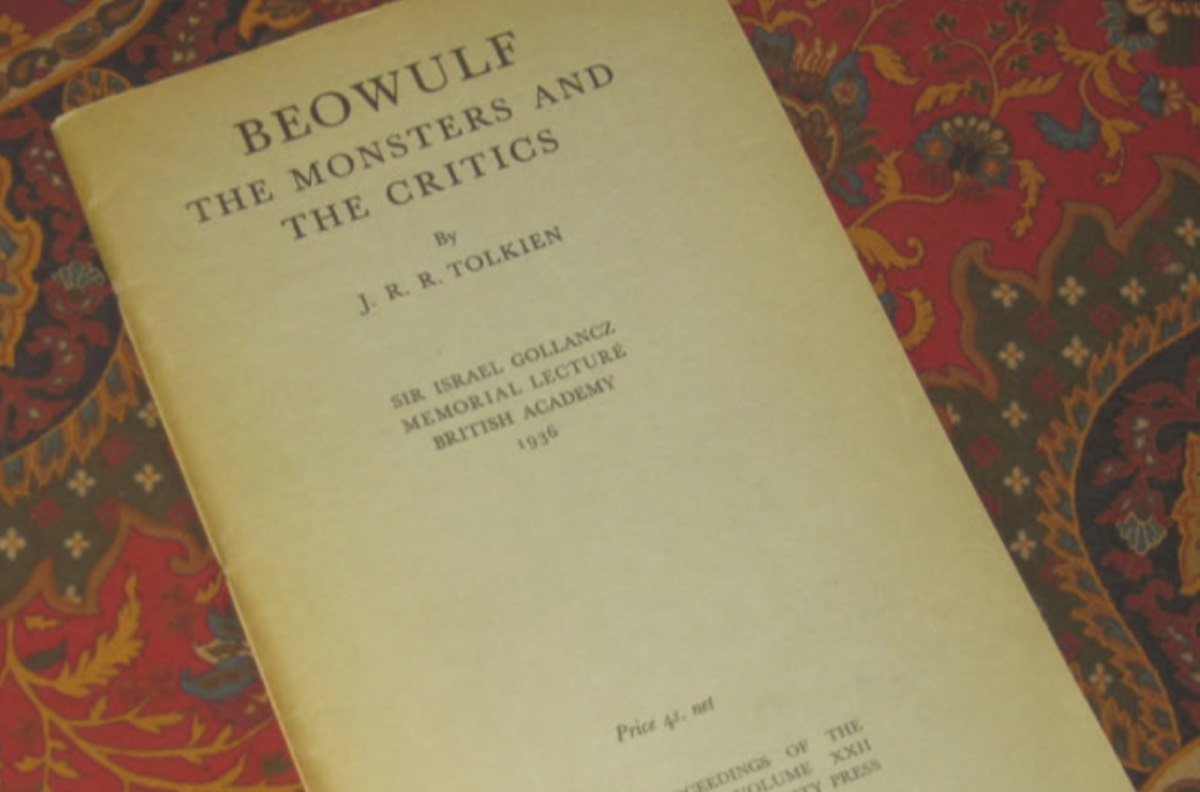
That was the prevailing view until 1936. That’s when Tolkien published his seminal literary analysis, “Beowulf: The Monsters and the Critics,” in Proceedings of the British Academy, based on a lecture delivered that same year. Tolkien was a great admirer of Beowulf, which greatly influenced the world-building of The Hobbit and his Lord of the Rings trilogy. In Tolkien’s paper, he argued for an earlier eighth-century composition date, based on textual evidence of a strong influence of Anglo-Saxon paganism. As Krieger points out, every character in the poem is a pagan, although “it’s overlaid throughout with a Christian perspective and infused with Christian language.” Tolkien also defended the single-author viewpoint in the essay.
This new study brings the power of computational analysis to bear on the debate. “Arguments based on the poem’s content or its author’s supposed belief system are vital, of course, but equally important are arguments based on the nitty-gritty of stylistic details,” said Krieger. “The latter also have the merit of being testable, measurable. This is the first step in taking an old debate and refreshing it with some new methodology.”
The methodology in this case is called stylometry, which analyzes the statistical characteristics in textual style: the poem’s meter, for example, or how many times different words or letter combinations appear in a given text. Everybody uses language a bit differently: we favor different punctuation or turns of phrase, have a broader or narrow vocabulary, and so forth. Stylometry is intended to identify and quantify those individual tics. Collecting that data for an unknown text and comparing it to texts by known authors can, in theory, make a positive identification. A paper published last week in Information Sciences by Polish scientists found that it’s possible to identify an author based on connections between just a dozen words in an English text and even fewer words for texts in Slavic languages.
Enlarge/ A copy of J.R.R. Tolkien’s seminal manuscript, “Beowulf: The Monsters and the Critics,” reprinted lithographically at the University Press, Oxford from sheets of the first edition, 1958, 1960.
For their analysis, Krieger and his co-authors examined four broad categories: meter, “sense pauses” between clauses and sentences in many of the lines (serving as a kind of punctuation), word choice, and letter combinations. The latter provided the best markers for this kind of measurement. They found that, based on those metrics, the text of Beowulf is remarkably consistent throughout.
“Across many of the proposed breaks in the poem, we see that these measures are homogeneous,” said Krieger. “So as far as the actual text of Beowulf is concerned, it doesn’t act as though there is supposed to be a major stylistic change at these breaks. The absence of major stylistic shifts is an argument for unity.”
He and his colleagues reasoned that if there is homogeneity in a single feature, such as how bigrams are distributed (ab, ac, ad, etc.), one can conclude that the text was written by a single author or by multiple authors seeking to trick the analysis into thinking it was written by a single author. Add additional features into the mix, like punctuation and meter, and the homogeneity still persists. This makes a single author more likely, since would-be tricksters would have to be even more clever in their subterfuge.
“So as we keep adding more and more features, it becomes harder and harder to believe that a text isn’t just the homogenous work of one person,” said Krieger.
That said, this finding isn’t likely to settle the authorship question once and for all. “Every tool in this field is statistical,” said Krieger. “Even as they get more and more sophisticated, they are just tipping our needle of probabilistic reasoning in one direction or another.”
Krieger et al. also analyzed a collection of four Old English poems believed to be written by an author known only as Cynewulf. Some scholars have noted certain similarities in style and theme in other anonymous Old English poems and sought to also attribute them to Cynewulf, although the consensus is that those were likely the product of a Cynwulfian school of poetry. Krieger et al.’s analysis showed that Cynewulf was very likely the author of three (and possibly all four) of the signed poems, based on stylistic homogeneity, as well as an anonymous poem called Andreas, which tells the story of St. Andrew the Apostle.
Enlarge/ Graphs showing stylistic homogeneity of Beowulf, indicating it was written by a single author.
Leonard Neidorf et al.
“Authorship attribution is hard,” said Simon DeDeo of Carnegie Mellon University, a former physicist who now applies mathematical techniques to the study of historical and current cultural phenomena, who was not involved with the study. Case in point: in 1995, a scholar named Donald Foster claimed, based on his computer analysis, that a poem entitled “Funeral Elegy for Master William Peter” had been written by William Shakespeare. But it wasn’t: the poem was written by John Ford, a Shakespeare contemporary best known for his play, ‘Tis Pity She’s a Whore, who was known for imitating the Bard.
“In the end,” said DeDeo, “Foster’s attribution was disproved—as much as it could be—the old-fashioned way: by close reading.” (Foster was a good enough scholar to admit he was wrong.)
“This group is working in that Foster style, building statistics of word usage and metrical patterns that might count as fingerprints to distinguish interlopers,” said DeDeo. “I certainly believe their no-detection result for Beowulf: i.e., the claim that their metrics cannot find evidence for a change in authorship. That doesn’t disprove the historical claim, of course—absence of evidence is not evidence of absence, and a critic could reply that their measures were too coarse for the task at hand.”
“We demonstrate a lot of homogeneity in ‘Beowulf,’ tipping the scales toward unitary authorship.”
Krieger recognizes the inherent challenges, and he is familiar with the Foster case. But he points out that he and his colleagues are posing a simpler question than attributing a text to a specific author. “We demonstrate a lot of homogeneity in Beowulf, tipping the scales toward unitary authorship, but we don’t say who,” he said. “If you gave me some choices, I would not be nearly as confident in the results of my tests. It’s important to distinguish our work from this kind of higher-order problem of saying who wrote something.”
As for the Cynewulf result, DeDeo thinks that claim is a little bit stronger, but he notes that the statistics here are also coarse. “In as much as these poems differ because of style, I could make a forgery that would pass their tests simply by substituting in synonyms,” he said. “You’re relying on the authors not trying to imitate a match.”
“It’s exciting to think that authorship could be settled the way crimes are on C.S.I., by technology alone, but I don’t think it ever can be,” said DeDeo. “One of the nice things this work can do, however, is challenge received wisdom and open up new hypotheses about where these texts did come from. Computers ‘see’ things in a different way than human readers do: projected onto these more abstract spaces, they can often reveal something unexpected that the conscious mind can miss.”
Why $249 is an unsustainable price for the first all-digital Xbox [Updated]
Enlarge/ Microsoft needs to give customers a better deal to convince them to give up discs for good.
[Update: Since Microsoft’s announcement, the Xbox One S All-Digital Edition has appeared for pre-order on retailers such as Amazon and Best Buy for the MSRP for $249.99. As outlined below, the more capable, disc-drive-equipped Xbox One S currently sells for the same price at thosevery retailers.]
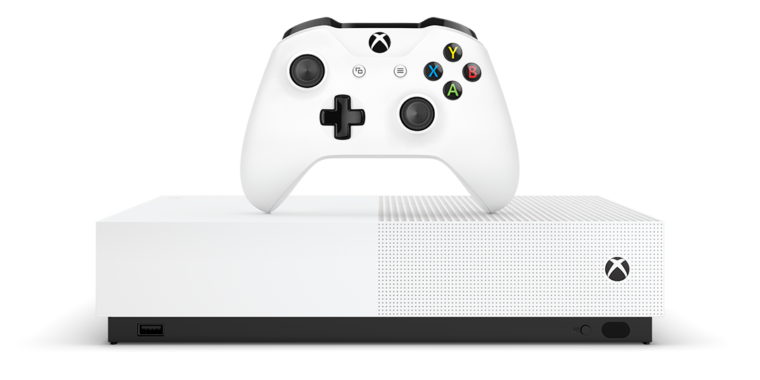
Today’s announcement of the previously rumored “All-Digital Edition” of the Xbox One S is one of the few instances when a redesigned version of a home console is, from a features perspective, strictly worse than the version that came before it. The removal of the disc drive means the All-Digital Edition can’t play Blu-rays, DVDs, or old disc-based games you (or GameStop) might have lying around, and it won’t let you resell any games you might buy for it. The new box isn’t even any smaller, even though the bulky optical drive has been removed.
Microsoft intends to make up for this loss of features with a lower price point for the new unit, which will sell for a $249 MSRP starting May 7. But that suggested price point—while technically lower than the official $299 MSRP for a 1TB Xbox One S bundle—doesn’t seem likely to convince many people to invest in the disc-free console future.
Yes, that price was for the bulkier original Xbox One design, and it only included a 500GB hard drive. But that unit, available 32 months ago at $249, plays all the same games as the “All-Digital” Xbox One announced today for the same MSRP. And the old unit can play those games on disc, to boot.
Sure, the All-Digital Edition has twice the hard drive space as those old deals. But 1TB Xbox One S systems, with disc drives, were being offered at $249 with a bundled game nearly a year ago. And though $299 is the “official” MSRP for a 1TB Xbox One bundle these days, there has been an extended, de facto price drop to $249 at all major retailers (including Microsoft’s own stores) since late January.
This is the Xbox One S All-Digital Edition. Sure looks like an existing Xbox One S, doesn’t it?
The existing Xbox One S and its new, no-disc sibling. Other than that solid panel where the disc drive slot used to be, they’re identical.
It appears Microsoft forgot to put the French and Spanish translations on this North American box mock-up. English repeats three times in every slot for some reason.
Unlike a temporary holiday sale, the multiple months that have been spent at the lower $249 price are going to make it hard to convince customers (and retailers) to ever go back to the “actual MSRP” of $299. That becomes even harder when you consider that a 1TB Xbox One system with Battlefield V is currently available for $199 from Walmart or $219 from Amazon.
And yes, the All-Digital Edition comes with three downloadable games rather than the single disc usually bundled with disc-drive-enabled Xbox One S units. But those games—Sea of Thieves, Forza Horizon 3, and Minecraft—are low-priced legacy titles that were released one year, 2.5 years, and 4.5 years ago, respectively. All three digital games are available for free through an Xbox Game Pass subscription, as well. The bundles Microsoft is currently offering for the original Xbox One S, meanwhile, let customers choose from more recent (and higher-priced) hits: The Division 2, Anthem, Fallout 76, Forza Horizon 4, Battlefield V, and NBA 2K19.
The unenforceable MSRP
Historically, console makers have been able to enforce their MSRPs with an iron fist. Companies like Sony, Nintendo, and Microsoft would impose “minimum advertised price” requirements on distributors and retailers, then refuse to provide future stock to any stores that dared attempt to undercut the competition.
By officially keeping the full-featured Xbox One S at a $299 MSRP, Microsoft gets to keep its slower-selling hardware in parity with Sony, which has sold 1TB PS4 bundles at that price for a while now. But with the de facto retail price for an Xbox One being lower across the board, things get a bit weird. Yesterday, when I asked my Twitter followers what the MSRP for a 1TB Xbox One S bundle was, almost half of them picked the $249 price. That’s not a scientific survey or anything, but it’s also not that surprising, considering $249 is the price retailers have been charging for the system for months.
That’s a perception problem that Microsoft Platform and Devices GM Jeff Gattis told Ars he was “painfully aware of.” But the official pricing of the newer system doesn’t show such awareness. For this new hardware to really make an impact, Microsoft should have launched it at a $199 MSRP, trumpeting console hardware that breaks through the $200 barrier (before sales pricing) for the first time this generation. That could have been packaged with an official drop to $249 for the disc-drive version of the Xbox One S, locking in a price that has been the de facto standard at retailers for months now.
As it stands, this kind of below-MSRP pricing is likely what we’re going to see happen at retail anyway. Stores that currently sell an Xbox One with a disc drive for $249 can’t really get away with selling the same console without a disc drive for the same price. If they do, they’ll soon find customers ignoring the All-Digital Edition until the price comes down below Microsoft’s unsustainable MSRP.
We’ve long argued that there’s a market for an all-digital console that’s priced aggressively compared to the competition. But for that kind of pricing to work, Microsoft has to stop pretending that the 1TB Xbox One S is still a $299 system in practice.https://arstechnica.com/?p=1491973
Everything we know about the first discless Xbox One, coming May 7 for $249
This is the Xbox One S All-Digital Edition. Sure looks like an existing Xbox One S, doesn’t it?
The existing Xbox One S and its new, no-disc sibling. Other than that solid panel where the disc drive slot used to be, they’re identical.
It appears Microsoft forgot to put the French and Spanish translations on this North American box mock-up. English repeats three times in every slot for some reason.
The Xbox One S All-Digital Edition will be the first major home console in the disc-media era to ship without an optical drive, Microsoft has confirmed. The new system will launch on May 7 in the United States and bears such a resemblance to the existing Xbox One S that they share an identical outside shell and motherboard, only with a plastic blocker where the disc drive’s slot used to be.
In an interview with Ars Technica, Microsoft’s Platform and Devices GM Jeff Gattis confirmed an MSRP of $249, which includes the discless console (currently only in “bone white”), one matching Xbox One controller, an internal 1TB hard drive, and three bundled game-download codes: Minecraft, Sea of Thieves, and Forza Horizon 3. This model will launch “in most Xbox One markets” on May 7, Microsoft says, and all existing Xbox One accessories will be compatible with the All-Digital Edition, owing to its identical motherboard.
Gattis explained that this price point will “pass the value of removing the disc drive onto the customer.” I asked him, however, how he reckons that with the fact that, as of press time, most retailers list existing Xbox One S bundles (complete with at least one pack-in game) at a $249 price point.
“I’m painfully aware of it,” Gattis said, before suggesting that “right now, if you walk into retailers like Best Buy, [the existing Xbox One S] is a $299 product.” As of press time, however, both Best Buy and the Microsoft Store list compelling Xbox One S 1TB bundles for $249.
Even so, Gattis explained Microsoft’s intention to maintain a “$50 delta” between the disc-drive Xbox One S (which includes 4K Blu-ray support) and the no-disc XB1S All-Digital Edition: “Over time, those same price deltas will be passed to the All-Digital Edition. It’s about maintaining the price gap. It’s $50 less. I’d expect those ratios to hold once the All-Digital Edition is on the market.”
Gattis hinted to that $50 delta also figuring into major sales promotions like Black Friday: “I’m not confirming a [All-Digital Edition] $149 price [during Black Friday], but there’ll be a $50 gap between the two products.” But Gattis didn’t explain how that $50 price delta will emerge on May 7 and seems to be currently passing that buck to retailers.
“Would it be nice if it was smaller? Sure”
While the Xbox One S was already an impressive shrinking of the original Xbox One, Gattis says Microsoft decided to pass on shrinking this new hardware revision any further, even though the XB1S’ Blu-ray drive (at 47.9 square inches) takes up 18.6 percent of its volume.
When asked why Microsoft chose not to shrink the All-Digital Version any further, Gattis emphasized the “value” of this XB1S model. “Reworking the motherboard and chassis, we could get to a smaller form factor, but that time and engineering cost would make it less attractive from a consumer-value standpoint,” he told Ars. “Some people may think it took less than 10 minutes to do this, but we had to go through a new testing cycle, quality control, and so on.”
When pressed about whether Microsoft’s product-design team is perhaps too busy building an entirely new console—the one already announced by Xbox chief Phil Spencer—Gattis simply acknowledged “another generational console.” He then added, “at this stage in the generation, we thought this was the right thing to do to not invest a bunch of time redesigning [Xbox One S]’ form factor. Would it be nice if [the All-Digital Edition] was smaller? Sure. Our market research says there’s demand for this new product as-is.”
“Not trying to push a digital agenda”
Curiously, the All-Digital Version does not come with any bundle for the Xbox Game Pass, a subscription service that lets Xbox One owners download and play a huge selection of games so long as they’re paying subscribers. This console’s existence seems absolutely primed for something like Xbox Game Pass, which dumps enough games into paying users’ hands to perhaps make them forget about that disc drive in the first place.
When asked about the lack of bundled Game Pass offer, Gattis explained that “when you bundle something like that [in a console purchase], it doesn’t get the uptake and conversion”—perhaps because first-time subscribers don’t have to enter credit card information when using a free voucher code. Thus, buyers of the XB1S All-Digital Edition will be presented with some form of first-time subscriber offer for Xbox Game Pass, which normally costs $10/month but currently includes a first-time price of $1 for players’ first three months.
Gattis says that this new console’s offer will be “richer” and that “we are going to experiment.” But he declined to offer more specifics. [Update: Minutes after this article went live, Xbox’s Larry “Major Nelson” Hyrb confirmed that new XB1S All-Digital Edition owners will get an offer for three months of Xbox Game Pass for $1.]
He had no news for Xbox fans who might want to transfer their older disc-based games to a no-disc console. When asked about a rumored trade-in program for older games, Gattis didn’t have a solid answer. “You can guess we’re well aware of that and want to find a way to solve that,” he told Ars. “We have nothing to share yet.”
For now, Microsoft intends to sell this model alongside the Xbox One S and Xbox One X. “This is additive,” Gattis told Ars. “We’re not trying to push a digital agenda. We’ve seen a customer segment that prefers to buy [its] content digitally. At the end of the day, this is about choice.”
The Xbox One S All-Digital Edition comes nearly 10 years after Sony tried its hand at a discless revision of a system, though it did so with the portable PSP Go. That hardware revision did turn out smaller than its predecessor, though that meant a more cramped control situation, which we didn’t care for at the time. Today’s news also reminds us of the Nintendo Wii’s 2011 revision, which removed its GameCube ports and Wi-Fi chip while only slightly lowering the price.
In his opening notes about the new console, Gattis suggested that market research included comments from a “Generation-Z audience” who wondered aloud, “isn’t this going to cost more than the One S thanks to the added convenience?” But it’s hard to agree. This new Xbox One model takes away a few major conveniences, like movie-on-disc playback, support for disc-based games whose digital versions have been delisted due to expiring licenses, and the perk of trading or selling a game once you’re done with it.
And without a volume-slimming hardware revision, the only perk we’re getting in exchange is a “$50 delta” that is currently in retailers’ hands to enforce, not Microsoft’s.
OpenAI bot crushes Dota 2 champions, and now anyone can play against it
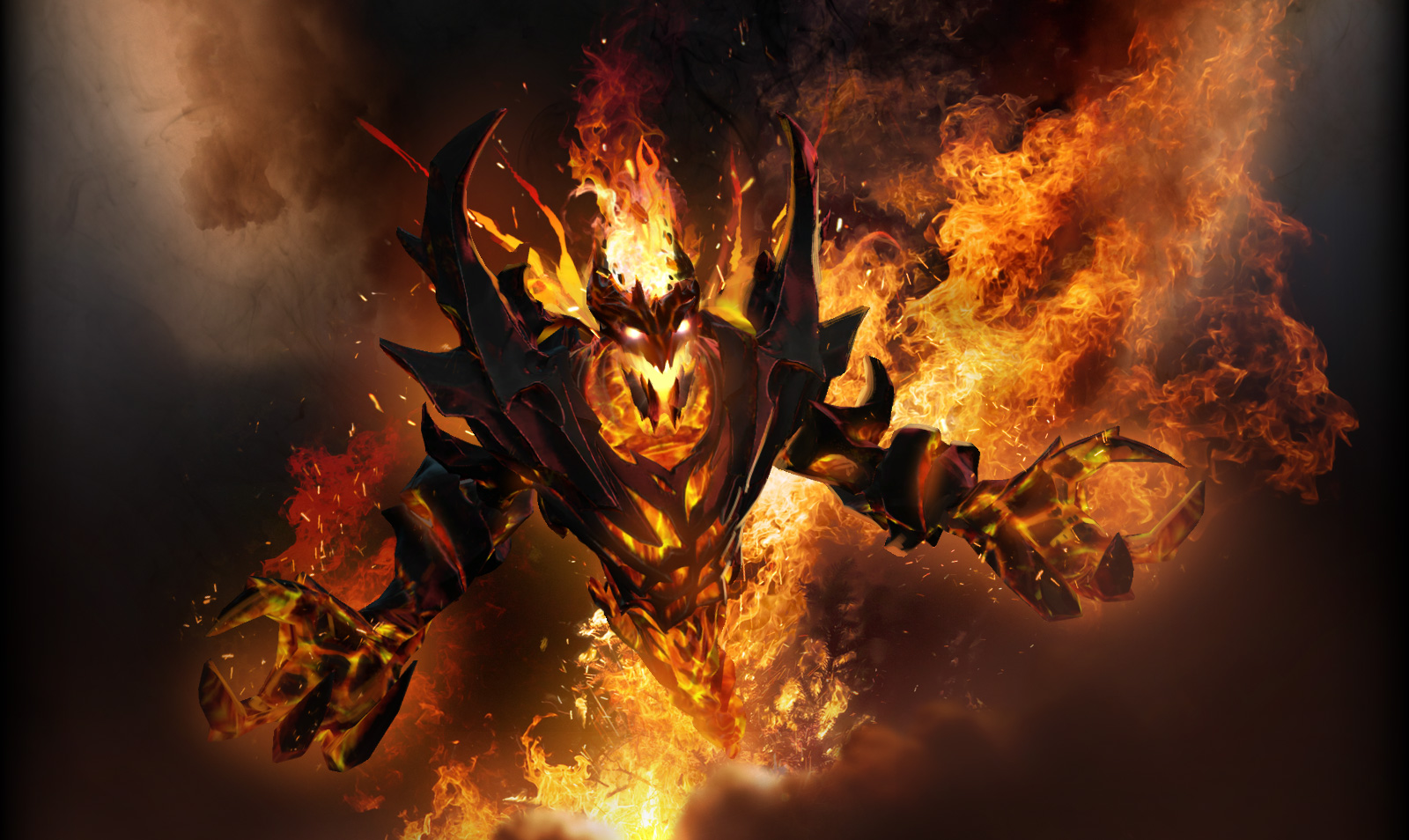
Enlarge/ Shadow Fiend, looking shadowy and fiendish.
Over the past several years, OpenAI, a startup with the mission of ensuring that “artificial general intelligence benefits all of humanity,” has been developing a machine-learning-driven bot to play Dota 2, the greatest game in the universe. Starting from a very cut-down version of the full game, the bot has been developed over the years through playing millions upon millions of matches against itself, learning not just how to play the five-on-five team game but how to win, consistently.
We’ve been able to watch the bot’s development over a number of show matches, with each one using a more complete version of a game and more skilled human opponents. This culminated in what’s expected to be the final show match over the weekend, when OpenAI Five was pitted in a best-of-three match against OG, the team that won the biggest competition in all of esports last year, The International.
OpenAI is subject to a few handicaps in the name of keeping things interesting. Each of its five AI players is running an identical version of the bot software, with no communication among them: they’re five independent players who happen to think very alike but have no direct means of coordinating their actions. OpenAI’s reaction time is artificially slowed down to ensure that the game isn’t simply a showcase of superhuman reflexes. And the bot still isn’t using the full version of the game: only a limited selection of heroes is available, and items that create controllable minions or illusions are banned because it’s felt that the bot would be able to micromanage its minions more effectively than any human could.
The games can be watched here. The first game looked even until about 19 minutes in. The humans had a small gold advantage, but the bots had better territorial control. The bots came out ahead in a teamfight, killing three human players while losing only one themselves. The game still looked like it was on a knife-edge, but the bots disagreed: they announced that they had a 95-percent chance of winning and, upon making this declaration, instantly used their numbers advantage to deal heavy damage to the human base. This further enhanced their territorial control and gave them a significant gold lead, too.
This put the humans on the back foot, and while they managed to draw the game out for another 20 minutes, they were unable to overcome the bots’ lead, giving OpenAI a 1-0 advantage.
In the second game, things weren’t even close; the bots took an early lead and breached the human base within 15 minutes. They took the victory five minutes later.
Overall, it was a dominant performance by OpenAI: a 2-0 victory against an established human team accustomed to playing with each other at the very highest level the game has to offer. This performance was far and away OpenAI’s strongest over the years.
The bots’ coordination is uncanny: though they can’t communicate, all five computer-controlled players think in the same way. If one thinks that it’s a good opportunity to attack a human player, the other four of them will think the same and will join in the attack. This gives the appearance of great coordination in teamfights—coordination with a precision and rigor that human teams can’t match.
But OpenAI does look beatable. It has definite, if surprising, weaknesses—it’s not great at scoring last hits, the killing blows on computer-controlled units that are used to accumulate in-game gold. This gives humans an opportunity to get an early gold advantage. The bots also struggled to counter invisibility on the human side. They also seemed to adapt poorly to certain spells from some of the heroes, in particular Earthshaker’s Fissure, a spell that temporarily creates an impassable barrier on the map. Humans were effective at using this to trap bot players and restrict their movement, and this seemed to confuse OpenAI.
The behavior of the bots is also an object lesson in the large gap between this kind of machine-learning system and a full general artificial intelligence. While AI Five is clearly effective at winning games, it also clearly doesn’t actually know how to play Dota 2. Human players of the game use a technique called “pulling” to redirect the flow of their side’s computer-controlled minions (known as creeps in Dota 2) as a way of denying the enemy team both gold and experience. Human players can recognize that this has occurred because creeps don’t show up when they’re supposed to. Human players have a mental model of the entire game, an understanding of its rules, and hence can recognize that something is amiss; they can reason about where the creeps must have gone and interfere with the pull. The computer, by contrast, just wanders around aimlessly when faced with this scenario.
No pulling
In its millions of games played against itself, OpenAI appears to have never picked up the technique of pulling, and so it has never learned to play against it. So when a human team starts pulling, the bot doesn’t recognize the situation and doesn’t really know what to do. It can’t reason about how the game should be, and it can’t speculate as to why the game is behaving in an unexpected way. All the bot can do is look for patterns it recognizes and pick the action most likely to yield the best outcome; give it a pattern that it can’t recognize and its performance deteriorates.
Until now, the OpenAI bot has been restricted; certain pros and streamers have been given access to play against it, and it has also been available to play against at some live events. But for a few days, that’s changing: Dota 2 players can sign up here to play against the bot—or with it—for a three-day period. Unfortunately, this public period doesn’t look like it’s going to result in a new and improved bot: beating a top human team was the goal that OpenAI set for its bot, and with that accomplished, the experiment seems to be complete.
https://arstechnica.com/?p=1491117
Report: “All Digital” Xbox One coming May 7, for €229 in Europe
Enlarge/ The purported box for an “All Digital” Xbox One S.
Following a November report on Microsoft’s plans for a disc-free Xbox One S option, new reports suggest that new hardware will arrive on May 7 and sell for €229 in Europe.
Thurrott.com’s Brad Sams, who has been reliable on Microsoft-related hardware rumors in the past, this weekend pointed to reporting from German site WinFuture which “confirm everything I have reported so far.” That report includes purported shots of the “All Digital Edition” of the Xbox One S and its European packaging. The hardware displayed there looks identical to the existing Xbox One S—right down to the sizing—save for the lack of a hole for the disc drive on the front panel.
The reported packaging for the 1TB system includes logos for first-party title Minecraft, Sea of Thieves, and Forza Horizon 3. It’s unclear if those games will be bundled with the hardware or simply included as part of a potential Xbox Games Pass subscription.
Sims also reiterated his reporting on a trade-in program Microsoft is planning for disc-based Xbox titles, codenamed Odessa, which would give customers the “ability to take disc-based games and trade them in for a token to download the digital version of the game.” Such a program would be necessary to maintain backward compatibility with many original Xbox and Xbox 360 discs players may have purchased before they were available as digital downloads.
How much cheaper?
The reported price of €229 would correspond to a price just over $250 in the United States, at current exchange rates. European prices routinely include value-added taxes and other fees that don’t correspond in the US, though. European retailers like GameStop currently charge €299.99 for a 1TB Xbox One S with a bundled game [Update: Amazon Germany currently offers a similar Forza Horizon 4 bundle for €199].
In the US, the existing, disc-drive-sporting Xbox One S technically retails for a $299 MSRP with a bundled game. In practice, though, the system/game bundles currently sell for $249 or lower at every major retailer, including Microsoft’s own stores.
We argued on these pages roughly two years ago that a disc-free Xbox One option could be an attractive option for the significant chunk of players that has already transitioned away from disc-based console games. But for that setup to work, the new hardware has to be significantly cheaper than the more capable disc-drive version. We’re eager to see if Microsoft can deliver on that additional value if and when the disc-drive-free Xbox One S is officially announced.https://arstechnica.com/?p=1491233
Winter is here: humans rally as Night King advances on GoT S8 debut episode
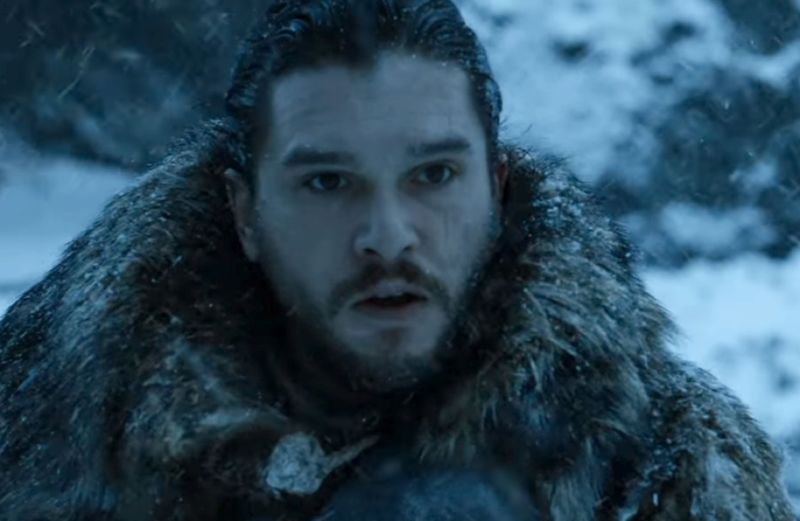
Enlarge/ Jon Snow (Kit Harington) brings Daenerys Targaryen (Emilia Clarke) home to meet the family at Winterfell.
Winter is here! The first episode of the hotly anticipated final season of HBO’s Game of Thrones aired Sunday night, and it proved a solid, if not scintillating showing. There were reunions galore, a bit of sniping and tension, a nifty new opening credits sequence, and the dragons (the true stars at this point) got plenty of screen time.
(Spoilers for first seven seasons; mild spoilers for last night’s episode.)
Based on George R.R. Martin’s best-selling epic fantasy series, A Song of Ice and Fire, HBO’s Game of Thrones long ago outstripped the novels in terms of plot, although the author had some early input in shaping the TV series’ broad narrative arc. We’ve seen plenty of sex, blood, and horrifying death over the course of seven seasons, and now it’s time for the end game. This being George R.R. Martin, there’s no guarantee of a happy ending.
It’s a complicated show with a massive cast, even after killing off so many major characters to clear the board a bit. When we last left off, Cersei Lannister (Lena Headey) had improbably outlasted all rivals (including her own children) and ascended to the Iron Throne, with the help of her own Doctor Frankenstein, Qyburn (Anton Lesser). Her younger brother, Tyrion (Peter Dinklage), had joined forces with Daenerys Targaryen (Emilia Clarke), who also won the loyalty of Stark family bastard and new King of the North, Jon Snow (Kit Harington). Dany came to Westeros to battle Cersei for the Iron Throne, but is convinced to call a truce by Jon, who proves that the White Walkers (led by the Night King) and their undead zombies, the wights, (a) exist, and (b) are preparing to conquer Westeros and wipe out the living once and for all.
The Stark family has regained its ancestral home, Winterfell, with Sansa (Sophie Turner) in charge in Jon’s absence, aided by her sister-turned-faceless-assassin Arya (Maisie Williams). Their only surviving brother, Bran (Isaac Hempstead Wright), is now a powerful seer called the Three-Eyed Raven, although his exact role in the end game is still unclear. (He spends most of his time looking dreamily solemn and occasionally makes portentous observations.) We know from earlier teasers that Dany and Jon come to Winterfell, and Sansa reluctantly cedes Winterfell to her, since Jon had “bent the knee” and declared his loyalty to the Mother of Dragons.
Arya Stark knows the many faces of death.
Tormund and Beric survived the falling of the great wall of ice.
The people of Winterfell hide and await their fate.
Sansa sees her first dragons.
Dragons over Winterfell are a glorious sight.
Daenerys and Jon Snow arrive at Winterfell with her army.
The Golden Company arrives at King’s Landing
A smirking Cersei thinks her hold on the Iron Throne will soon be secure.
Tyrion Lannister, the Queen’s Hand, ponders his next move.
Jon Snow communes with the family weir-wood tree.
Dany and Jon with her two remaining dragons.
Missandei and Grey Worm share a moment alone.
Grey Worm ready to lead the Unsullied into battle.
Why, there’s Jorah Mormont, preparing to do his part.
Is that Gendry? We haven’t seen him since, what, season 2?
Brienne of Tarth will fight with honor.
Prepare to meet the Night King.
Dany also lost one of her dragons to the Night King, got it on with Jon Snow, and is unaware that he is, in fact, a legitimate Targaryen by birth. (The incest here is less relevant than what this means for her claim to the throne.) In the final scene, the Night King took down the great wall of ice that has protected Westeros for centuries. So things are looking very bad for the human race indeed.
The first full trailer dropped last month, giving us brief glimpses of all the surviving characters. Everyone is basically gearing up to take on the Night King and his ice zombie hordes—everyone except Cersei, that is, whose genius plan is to wait it out and let her enemy’s forces be depleted (if not wiped out entirely). That means a whole lot of people are converging on Winterfell, starting with Jon and Dany, accompanied by her Unsullied and Dothraki armies—and remaining two dragons, of course. It’s a grim homecoming for Jon in one respect, since Northerners don’t trust outsiders and resent their king for bending the knee to a foreign queen and relinquishing his shiny new crown.
The emotional payoff for viewers is all the reunions that inevitably take place at Winterfell. Jon hasn’t seen Bran or Arya since season 1. Arya is pleased to see Gendry (Joe Dempsie) still alive—and surprised to see her frenemy, the Hound (Rory McCann), still breathing, seeing as she last left him for dead. Tyrion hasn’t seen his ex-wife Sansa since the Purple Wedding, when she fled and he wound up on trial for a murder he didn’t commit. But not all the reunions are happy ones, as one might expect when former adversaries must reluctantly join forces to defeat a common threat.
As always, the dragons steal the show, and the sight of them soaring over a snowy Winterfell is glorious. “What do they eat?” Sansa snippily asks Dany, after complaining that she never expected to have to provide for so many extra mouths. “Whatever they want,” Dany responds.
Game of Thrones has always had its share of placeholder episodes, where things advance incrementally and very little of major import happens. Such episodes serve a purpose in the overall narrative arc, setting up the relationships and conflicts—and just moving people from place to place—that make the big set pieces all the more powerful. This isn’t quite one of them, since rather a lot happens in an episode that clocks in just under an hour. But the big fireworks are still to come with the upcoming Battle of Winterfell, rumored to be the most massive staged battle sequence of the series. We should expect to see at least some of the fan favorites fall, and fairly early in this final season. So taking the time to relish some bittersweet reunions before all hell breaks loose seems like a fitting opening salvo.
https://arstechnica.com/?p=1490955
Terry Gilliam’s Don Quixote film finally hits the big screen after 25 years
Enlarge/ Jonathan Pryce stars as an aging Spanish cobbler who becomes convinced he is Don Quixote in Terry Gilliam’s film, The Man Who Killed Don Quixote.
It’s been 25 years in the making, but The Man Who Killed Don Quixote, director Terry Gilliam’s tribute to the classic Spanish novel, has finally hit the silver screen. The project has foundered and been revived so many times, it became a poster child for Hollywood’s notorious development hell, with a reputation of being cursed. But Gilliam persevered, and while the finished product isn’t exactly a masterpiece, it definitely reflects the singular vision of one of our most original filmmakers.
(Mild spoilers for the film and Miguel de Cervantes’ 17th-century novel below.)
Miguel de Cervantes’ Don Quixote is inarguably one of the most influential works of Spanish literature. The book is written in the picaresque tradition, which means it’s more a series of loosely connected episodes than a plot. It follows the adventures of a nobleman (hidalgo) named Alonso Quixano who has read far too many chivalric romances and becomes convinced he is a knight errant. With his trusty peasant sidekick, Sancho Panza, he embarks on a series of random tragicomic adventures, with the Don’s hot temper frequently getting them into scraps. (Sancho usually gets the worst of the beatings and humiliations.) Don Quixote is the archetype of the delusional dreamer, tilting at windmills and believing them to be giants, preferring his fantasy to mundane reality.
Everything went almost comically wrong from the start.
Gilliam came up with the idea for his Don Quixote film back in 1989 when he read Cervantes’ novel, but he didn’t secure funding until 1998. Johnny Depp signed on to play the role of Toby Grisoni, while his then-partner Vanessa Paradis would be the female lead. Shooting commenced in 2000 in Navarre, Spain. But everything went almost comically wrong from the start. There were conflicts with the various actors’ schedules, making it difficult to get everyone on set at the same time. The production site was near a NATO military base, and F-16 fighter jets flew overhead the entire first day of shooting, making it necessary to dub those scenes in post-production. A flash flood ruined the second day of filming by damaging equipment that was not covered by the insurance policy. The flood also caused continuity problems, since the colors of the terrain had noticeably changed.
Finally, on the fifth day, the film’s star, the late Jean Rochefort, was clearly in pain during the scenes on horseback, despite being an experienced horseman. He turned out to have prostate problems and a double herniated disc, and while Gilliam tried to shoot around Rochefort’s scenes, it soon became clear the ailing actor could not return to the set. The production was officially cancelled in November 2000.
The shoot did produce a critically acclaimed documentary film, Lost in La Mancha (2002), detailing the production’s various woes. (It was originally intended to be an accompanying “making-of” special feature. A second follow-up documentary is in the works, titled He Dreamed of Giants.) In it, cinematographer Nicola Pecorini claims that “never in 22 years of being in this business have I seen such a sum of bad luck.”
In the years since, Gilliam kept trying to revive the project with a constantly shifting cast and multiple rewrites of the script. Finally, he succeeded in getting funding and completing The Man Who Killed Don Quixote, only to have its release delayed by legal disputes involving one of the earlier producers. The film ultimately debuted at Cannes last year, although it was ineligible for the top prize because of its ongoing legal woes.
They might be giants
Don Quixote tilting at a windmill.
YouTube/ONE Media
It gets the better of him.
YouTube/ONE Media
“Cut!” Adam Driver plays Toby Grisoni, an auteur advertising executive who comes to Spain to shoot a commercial.
YouTube/ONE Media
“I am Don Quixote!” The beginning of a years-long delusion.
YouTube/ONE Media
A delusional Javier mistakes Toby for Sancho Panza.
YouTube/ONE Media
Javier/the Don ridicules the notion that his lowly Sancho can read.
YouTube/ONE Media
A joust! Why not?
YouTube/ONE Media
Toby and Javier/the Don run into Angelica (Joana Ribeiro), whom Toby first met while making his student film.
YouTube/ONE Media
Thou shalt not covet thy boss’s wife, Toby: Olga Kurylenko plays the alluring Jacqui.
YouTube/ONE Media
An elaborate gala designed to humiliate the delusional Javier.
YouTube/ONE Media
Oligarch Alexei Miiskin (Jordi Molla) uses and abuses Angelica.
YouTube/ONE Media
A steamy tango as Toby and Angelica rekindle their spark.
YouTube/ONE Media
You see windmills, but Don Quixote sees giants.
YouTube/ONE Media
Don Quixote cannot die; he will ride forever with his trusty companion, Sancho Panza.
YouTube/ONE Media
The Man Who Killed Don Quixote features Jonathan Pryce as Javier, an old cobbler in a small Spanish village. He becomes convinced he really is Don Quixote after a visiting college student named Toby Grisoni (Adam Driver) casts him in a student film about the legendary hidalgo. Ten years later, Toby is a hotshot advertising executive who returns to Spain to shoot a Quixote-themed commercial. He finds Javier still so caught up in his delusion that Javier mistakes Toby for his loyal sidekick, Sancho Panza. Together, they set off on a series of increasingly wild and incoherent misadventures. And like Cervantes’ Sancho, Toby often bears the brunt of the consequences.
The cast is fantastic, especially Pryce and Driver. The dialogue is sharp and witty, and Gilliam remains a master at skirting the fine line between comedy and tragedy—much like Cervantes himself. The first half of the film works really well, driving home the unintended consequences that a naive Toby’s student film wrought on the people of that small Spanish village. (“I’m incorporating the idea of the damage that films do to people, so it’s become a bit more autobiographical,” Gilliam told the BBC last year.)
This may be one of those visionary films that will play better with age.
Unfortunately, the plot, such as it is, unravels into delirious chaos during the second half. Toby even breaks the fourth wall at one point to wonder aloud, “There’s a plot?” Certainly the sumptuous visuals and dazzling dream-like sequences, blurring the line between what’s really happening and what’s just in Toby’s head, reflect Gilliam’s unique sensibility. It’s the same sensibility that produced Gilliam’s incomparable dystopian satire, Brazil (1985), which kept the director’s wilder instincts well-constrained and was all the better for it. The Man Who Killed Don Quixote might have benefited from a few more constraints. But given the sheer effort of will it took just to make the film, I’m inclined to forgive its chaotic excesses. It helps to be familiar with the source material, since the film shares the same meandering episodic structure and weaves in plenty of nods to Cervantes’ novel.
“The problem is that people have very high expectations,” Gilliam told the BBC in May 2017. “And a lot of people say I’m a fool to make the film, and that it would have been better to let people imagine how great it would have been rather than making it a reality and disappointing them. People love Roman ruins because they’re not complete and you can imagine them. So I may be making a great mistake. Maybe the film would be better as a fantasy.”
He has a point. Personally, I’m glad Gilliam finally finished his film, the way he always wanted, with all its messy imperfections. Whether it connects with audiences remains to be seen. This may be one of those visionary films that will play better with age. Its spirit is true to the picaresque tradition, and the Man of La Mancha would approve, I think. Gilliam has been tilting at this particular windmill for 25 years, and it’s gratifying to see him finally conquer the giant.
[embedded content]
Trailer for Terry Gilliam’s The Man Who Killed Don Quixote.
https://arstechnica.com/?p=1489411
Who had the most merciful death on Game of Thrones? Science has an answer
Enlarge/ You know nothing, Jon Snow—like, maybe wear a hat when conditions are freezing in the North. Even if it musses up your luscious locks.
Warning: This story contains some mild spoilers from the first seven seasons of Game of Thrones.
The world of Game of Thrones may be fictional, but that doesn’t stop its fans from heatedly arguing about all the possible underlying science, because nerd-gassing about one’s favorite science fiction is a time-honored tradition. Just how hot is dragon’s breath? Is there a real-world equivalent of wildfire? What’s the best and worst way to die? And how fast would Gendry have to run back to the wall to send a raven to King’s Landing requesting help?
These and other scintillating topics are discussed in a forthcoming book by physicist (and uber-fan) Rebecca Thompson, Fire, Ice, and Physics: The Science of Game of Thrones. The book comes out in October from MIT Press, but as we gear up for the premiere of the final season Sunday night, Thompson graciously gave us a sneak preview into some of the burning science questions she investigated.
Hot fire, hot steel, and hot locks
After completing her PhD, Thompson spent several years doing physics outreach for the American Physical Society, and she authors the society’s popular Spectra educational comic book series. (Attendees of San Diego Comic-Con have likely seen her in costume as Spectra on the exhibit floor.) This is her first popular science book, inspired by a talk she gave to physics teachers a few years ago on the physics of dragon fire and ice walls in Game of Thrones. Scouring the many fan sites on which such things are debated at length, she found far more interesting science questions than what could fit into a single talk—it turned into a book’s worth of science, in fact.
Fire, Ice, and Physics covers everything from the physics of dragon fire and Valyrian steel, to the best and worst ways to die. Thompson even ponders why Jon Snow never wears a hat in freezing conditions beyond the wall—the obvious answer is that it would mess up his hair, and the author admits to being a fan of said hair. “But wearing a hat is more important than just having thick luscious hair,” she said. That’s because the head doesn’t have much fat to insulate the body against the cold. Also, a hat would keep warm air trapped close to the head, whereas the wind would blow through Jon’s unruly locks and dissipate said heat. Still, it’s not any worse than not wearing gloves, per Thompson; it’s a myth that the body loses most of its heat through the head.
Enlarge/ Viserion likely breathed hot blue fire. Even that might not be enough to bring down the wall.
Valyrian steel may be fictional, but there is a real-life counterpart: Damascus steel, known for its high carbon content, which made it brittle and therefore difficult to work with. The secret of how it was made has been lost to history, but a few years ago German scientists x-rayed a sample from a Damascus steel blade and found carbon nanotubes at the sharp edge. They likely formed as a natural result of the smelting process, which strengthened the steel. “When the swords were made, they were often quenched in the urine of red-headed boys,” said Thompson. “The acid in the urine etched off all the other material and exposed the carbon nanotubes.
While fire-breathing dragons are entirely fictional, it’s still possible to analyze its properties from a scientific perspective. Dragon fire is white-hot, certainly hot enough to melt iron and steel to forge the Iron Throne. It would also be able to melt granite, which is why Harrenhal has “that melted candle look,” according to Thompson. The bigger the dragon, the hotter the flame it produces. Drogon, the biggest of Daenerys‘ three dragons, would spew fire more than capable of melting the Red Keep at King’s Landing.
And what about poor Viserion, killed by the Night King and revived as an undead Ice Dragon? He breathes blue fire, and fans have hotly debated whether it burns hot or cold. Per Thompson, a cold blue fire might cause some thermal cracking in the Wall, but probably not enough to take it down entirely. For that you would need hot blue fire—and even then, it would take some time to bore through a 300-foot-wide wall. A simple flyby, as depicted in the Season 7 finale, wouldn’t be sufficient (although the Night King keeps Viserion hovering in one spot of the wall for a bit). “The majority of the energy to melt ice is to break the [chemical] bonds, not to raise the temperature,” said Thompson.
Wildfire is a chemical weapon that plays a major role on the series. It’s not water soluble, which means you can’t wash it off and it floats on the surface water. It’s sticky, and it burns green. The closest real-world equivalent would be napalm, which was sticky, burns on water, and burns hot enough to melt steel and stone, according to Thompson. Another real-world contender is the “Greek fire” used by the Byzantine Empire. It was fairly stable, could burn on water, and could only be extinguished with vinegar or sand. It likely contained pine tar, sulphur, and either saltpeter or quick lime, among other ingredients. It had all the elements of wildfire except one: wildfire burns green. “The one piece that is hard to reproduce is the green fire, because for that you need certain elements, like copper,” she said.
Enlarge/ Viserys gets his golden crown, and it’s actually a most merciful death.
Death decoded
Given the high body count on Game of Thrones, Thompson naturally had to include a chapter on the science of the many different ways to die on the show. For instance, Ned Stark may have experienced a most unjust death at the order of King Joffrey way back in season 1, but beheading is actually one of the more merciful deaths. That said, Ned may well have remained conscious for a good ten seconds after losing his head, based on a study in the Netherlands. The scientist implanted electrodes in the heads of rats and beheaded them using tiny guillotines, and measured how long brain activity continued to register afterward. Then they extrapolated that to humans to arrive at the ten second estimate.
The death of Dany’s weaselly brother, Viserys, in season 1 would be an even faster way to die. Recall that Khal Drogo melted down some golden medallions and poured the molten gold over the aspiring king’s head. Would Viserys have died of shock, or suffocation? Neither, it seems; he would have died from a boiling brain. Thompson researched the thermal conductivity of bone and found it conducts heat quite well. Molten gold has a temperature of around 1947 degrees F. “If you assume the brain is mostly water (73 percent), his brain would boil extremely quickly,” she said—in about 3.5 seconds. “He would probably never even feel the heat. If you consider what would be the most merciful death on the show, it would absolutely be the Golden Crown.”
By far the most agonizing death was that suffered by poor Shireen Baratheon in season 5—a death so horrible that Thompson had a difficult time even writing about it. The most merciful way to burn someone at the stake is to pile up green wood in such a way as to enclose the victim, so that they die from smoke inhalation fairly quickly. In the case of Shireen, the wood was stacked on a pallet at her feet, burning her from the bottom up and ensuring she was conscious for most of her agonizing death. It could have taken as long as 30 minutes for her to die. So Melisandre lied when she told a frightened Shireen, “It will all be over soon.”
Enlarge/ Poor Princess Shireen Baratheon suffered one of the most agonizing deaths.
Another means of slow, painful death would be the fictional Manticore poison on the tip of Oberyn‘s spear when he bested the Mountain (at least until he started monologuing). It would likely be a combination of two different actual poisons: the necrotizing venom of a brown recluse spider, for instance, paired with the slow-acting venom of a scorpion bite, a neurotoxin that targets the central nervous system, paralyzing and ultimately killing the prey. A fictional beast that produced a venom capable of doing both would make for a very impressive poison indeed.
As for Oberyn’s horrifying death at the hands of a mortally wounded Mountain, Thompson found that it takes about 538 pounds of force to crush a human skull. Not even the Mountain could have produced that much force, even leaning on Oberyn with all his weight. Her source for this information was a study conducted for manufacturers of bicycle helmets that involved filling cadaver skulls with goo to simulate the human brain and putting the skulls in a vise to see how much force was required to crush them. (As an avid triathlete, Thompson credits such research for keeping her safe when the inevitable accident occurs: “I’m very grateful to all the cadavers that were involved.”)
Travel time
One of the sticking points that bothered even hardcore fans last season was just how Daenerys could have gotten all the way from King’s Landing to north of the Wall in time to save Jon Snow and his merry band of wight hunters from the Night King’s army. “We spent all of season 2 just traveling to King’s Landing,” said Thompson. So she sat down and crunched the numbers on how fast Gendry would have to run to get back to the wall; how fast a raven could fly to King’s Landing to deliver a message to Daenerys; and how long it would take Dany and her dragons to fly back to the north to save the hunting party.
Enlarge/ Physicist Rebecca Thompson poses with her own baby dragon.
Rebecca Thompson/MIT press
Thompson had to make certain assumptions, of course, but assuming that Westeros is roughly the size England, it’s doable. Granted, Gendry would have to be running a marathon, averaging an eight-minute mile. The lake had refrozen by the time Daenerys arrives, which her calculations showed would take a couple of days—sufficient time for a raven to get to King’s Landing and the dragons to fly back up north. “So it wasn’t that bad if you assume everyone was moving as fast as possible,” she said. “And yes, I did make the obligatory reference to the air speed velocity of an unladen sparrow.“
The general rule of thumb when working science into fiction is that you want just enough realistic science to keep people from being pulled out of the story by niggling questions. “Here, it’s not that the science is bad, but it’s something that pulls people out of the story anyway,” said Thompson. “They’re probably not going to sit down and do the math to see that it’s reasonable.”
So what is Thompson most looking forward to in the upcoming final season of Game of Thrones? She hopes that Drogon will level the Red Keep with his dragon fire, because she’s curious how it will be depicted on the show. “Granite is a mixture of several different kinds of rock, different crystals,” she said. “Are they going to have it run like molten lava, or crack and crumble?” The Red Keep might end up looking like Harrenhal. “Personally I think keeping it scientifically correct would be visually stunning,” said Thompson.