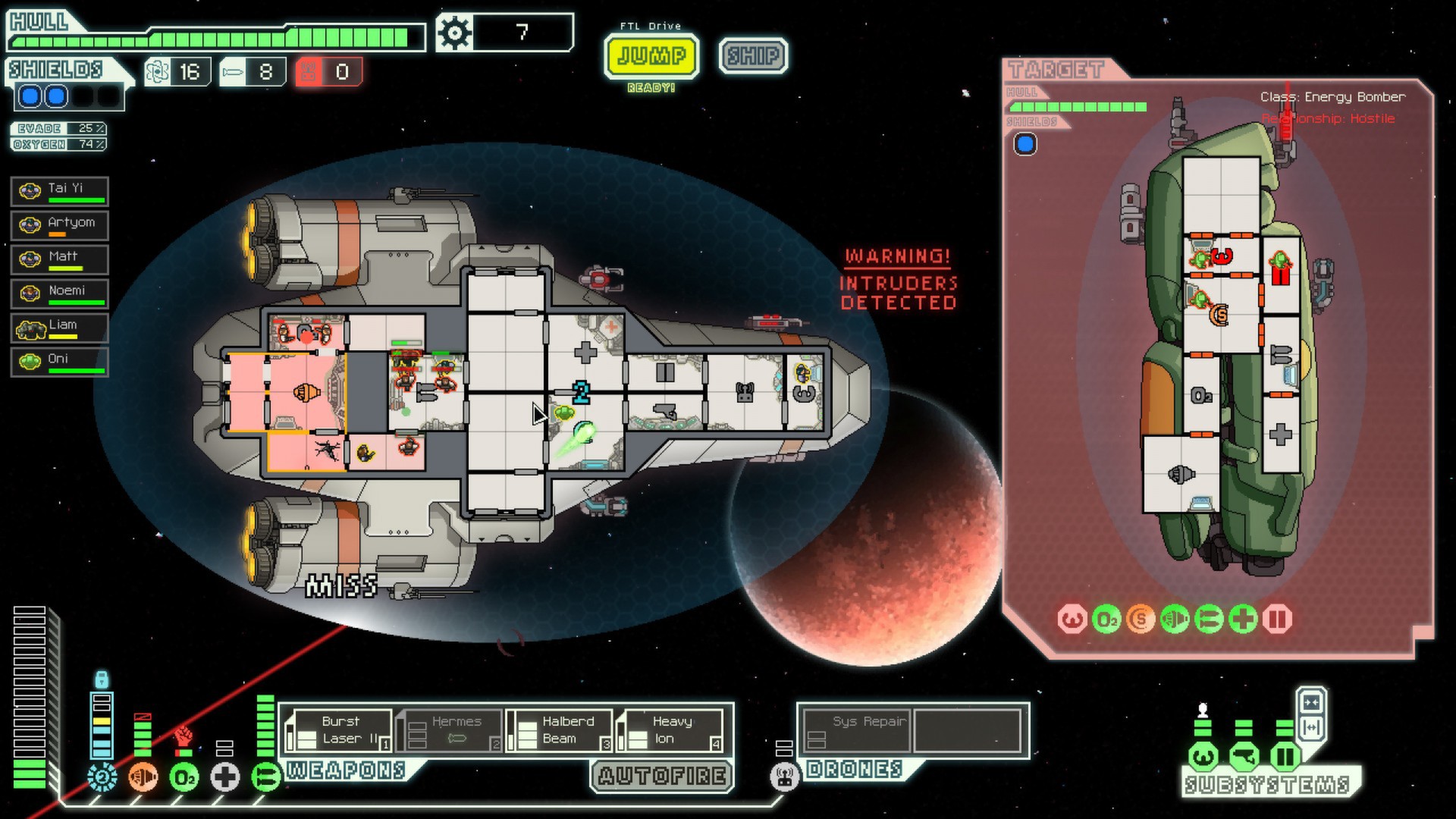
10 years of FTL: The making of an enduring spaceship simulator

WARNING! INTRUDERS DETECTED
Enlarge / WARNING! INTRUDERS DETECTED


Today, FTL: Faster than Light is recognized as one of the most influential games in the indie sector. Alongside The Binding of Isaac and Spelunky, it was part of a holy trinity of games that popularized the roguelite genre in the early ’10s.

But before it was a hit, FTL was just a humble idea shared by Matthew Davis and Justin Ma, two developers working at 2K’s Shanghai office. The studio wasn’t a bad place to work, by their accounts, but they just weren’t making the kinds of games they were interested in. So Davis and Ma departed the big-budget firm and started a hobby project to keep them busy while they were looking for new jobs.

“The original intention, at least from my perspective, was that [FTL] was only intended as a hobby project or a prototype,” Davis tells Ars. “It was something in between jobs to build up a resume that we could use to get a job at a studio working on projects that we were more excited about. But we stumbled into something that became a lot bigger than what we set out to do.”

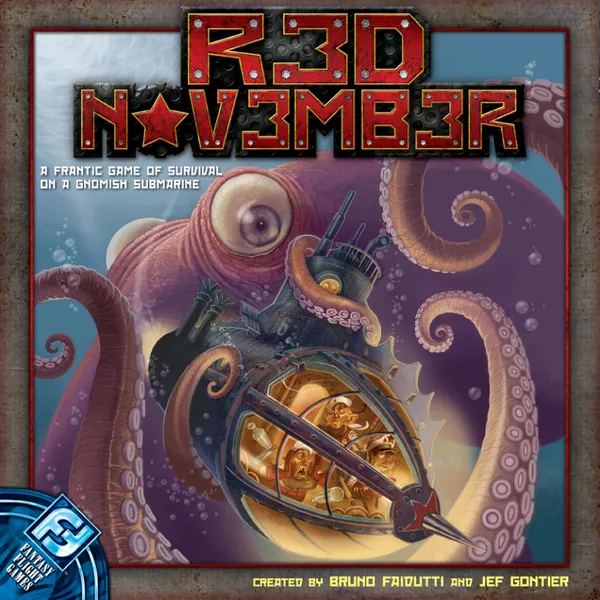
<a href="https://rassegna.lbit-solution.it/wp-content/uploads/2022/11/10-years-of-ftl-the-making-of-an-enduring-spaceship-simulator-1.png" class="enlarge" data-height="600" data-width="600" alt="Davis and Ma say board games like Red November helped inspire FTL‘s design.”><img alt="Davis and Ma say board games like Red November helped inspire FTL‘s design.” src=”https://rassegna.lbit-solution.it/wp-content/uploads/2022/11/10-years-of-ftl-the-making-of-an-enduring-spaceship-simulator.png” width=”300″ height=”300″ srcset=”https://rassegna.lbit-solution.it/wp-content/uploads/2022/11/10-years-of-ftl-the-making-of-an-enduring-spaceship-simulator-1.png 2x”>
Enlarge / Davis and Ma say board games like Red November helped inspire FTL‘s design.

Getting inspired

In setting out to make a new kind of indie game, Ma and Davis say they were inspired by the strategic board games that filled their free time when they lived in Shanghai. “Games like the Battlestar Galactica board game, and there was this submarine game called Red November that did a lot of crew management and cooperative play which we really enjoyed,” Davis remembers.

Before starting development in earnest, Davis and Ma jotted down some of the mechanics they wanted to draw from those kinds of games to include in their prototype. They also wrote down what kinds of feelings they were hoping to impart to the player, landing on an angle that was reasonably unique to video games at the time.

“We wanted to put the player in the captain’s shoes rather than the pilot’s shoes on a spaceship,” Davis explains. “Most games at that point were focused on fighter pilots and dogfighting in space. We wanted to give you more of that Picard feel of shifting power and protecting your shields and repairing damage and that kind of thing.”

“We wanted them to struggle with managing the ship’s systems and feel the pain of losing a crew member from their bad decision-making,” Ma adds.

In trying to engender those kinds of player feelings, Ma remembers being inspired by the randomized situations and permanent death of roguelike games. At the time, those kinds of design elements were expanding from traditional turn-based adventures into other types of gameplay.

“I did play a ton of traditional roguelikes in the previous few years, but it was only Spelunky Classic that made me think about how the principles of roguelikes could apply to other genres,” Ma remembers.

That being said, a lot of the decisions to incorporate similar mechanics were practical ones. “For example, we wanted you to be forced to live with the consequences of your decisions, so a run-based game with permadeath just made sense,” Ma said. “We wanted you to have the feeling of exploring an unknown world, so randomized text events with various outcomes sounded like the easiest way to create that. We were also a bit masochistic and enjoyed failing at the game, so it naturally became quite challenging.”

https://arstechnica.com/?p=1895421


Age of Empires is 25 years old and fans are shaping the franchise

Age of Empires is 25 years old and fans are shaping the franchise

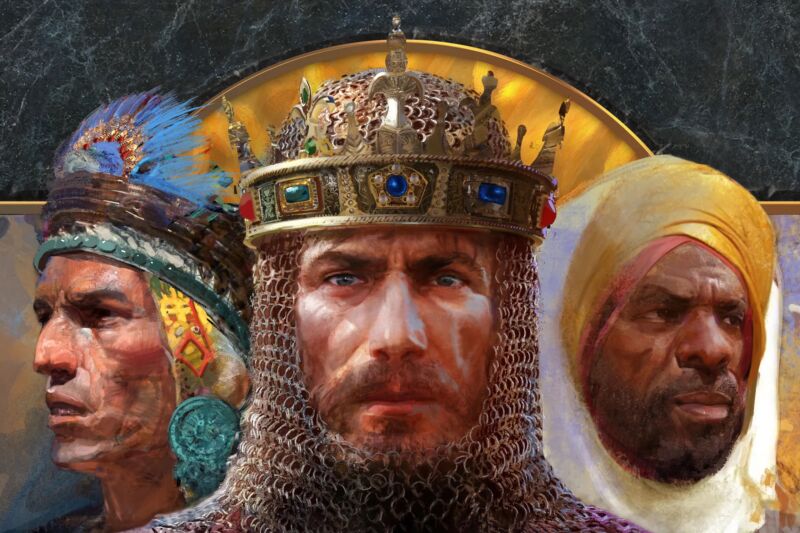
It’s been 25 years since a small studio in Dallas recast the ancient world through the prism of a real-time strategy game. Age of Empires has echoed Monk wololos about our homes ever since: Parents believed that their kids were learning history; kids believed that they were gaming surreptitiously. And veteran players know that both were right.

Yet Age of Empires did not always receive the love it does today. The rise of the Xbox saw PC gaming take a back seat for Microsoft: Communities like AoE’s were left to fend for themselves. In a very real way, it was the passion of these obsessives that led to Microsoft’s renewed attention and the release of the franchise’s latest entry, 2021’s Age of Empires IV.

All the games continue to receive updates or DLCs. Age of Empires games are headed for Xbox and mobile devices, complete with cross-play so console gamers can get their hands on the RTS classic and play with their PC-loving friends. Also, Age of Mythology is finally getting a definitive edition. Age IV is building momentum, too, with an anniversary edition crowning a year of updates designed to woo players who found it a tad stripped back at launch. AoE is now a point of real-time-strategy pride and a shining jewel in Microsoft’s roster.

[embedded content]

On October 25, after watching the anniversary event—and enjoying a surprisingly adept group of lute-bearing bards perform the series’ iconic music—I spoke with Phil Spencer, CEO of Microsoft Gaming, and World’s Edge studio head Michael Mann about the past and future of the franchise.

This interview has been edited for length and clarity.

WIRED: So it’s the 25th anniversary of Age of Empires, and I know, Phil, you’ve been with Microsoft for more than 30 years. You’ve seen this evolution of the franchise. But I think there was definitely a gap, for both real-time strategy and Age of Empires, where it didn’t look good. Was there ever a moment where Microsoft was like, Age and the real-time-strategy genre is done? And then, the second part of that is, when and what turned it around? When you were like, wow, this is worth paying attention to again?

Phil Spencer: So it’s a good thread to pull on this one. I mean, the thing that we saw with Age was less about the genre, to be honest, and more just how the community was continuing to play. The games were still available to buy, and we just saw a vibrant community of people out there playing. And we weren’t actively engaged with the community as Xbox. When Xbox started, I would say, regretfully, we took our focus off of PC and focused more on console, which meant franchises like Flight Sim and Age—the communities were left to fend for themselves a bit. And as we evolved our gaming strategy, looking at players playing on any screen, we started looking at franchises in our portfolio where the communities were active, fairly large, and really engaged with the game and engaged with each other. And Age was right there as one of those franchises.

So we had the opportunity to find a good partner. And getting back to Age with Relic [Entertainment], a partner that knew the genre, we saw it as a great opportunity for us to really just meet the community where they were, with their love of Age. And I’d say the same thing about the announcements about Agecoming to console just trying to show the community that we recognize their love of Age of Empires, what it’s meant for so many people, and I’m proud that we can now kind of step up and do our side of it as the IP owners and the stewards of the franchise.

Michael Mann: I also want to congratulate Ensemble Studios—they created the franchise 25 years ago. I know that World’s Edge gets to enjoy the celebration too. But I also want to just reach out and say Tony Goodman, Bruce Shelley, all those individuals just did an amazing job 25 years ago to create this franchise that we’re the ambassadors of going forward.

https://arstechnica.com/?p=1895192


Linux devs discover that Intel Arc GPU firmware updates need an Intel CPU

An Intel Arc GPU.
Enlarge / An Intel Arc GPU.

In our review of Intel’s Arc GPUs, we were generally impressed by their performance for the price, especially as a first-generation product. But buyers have plenty of potential caveats to consider, including unstable drivers, inconsistent performance, and a couple of weird problems that you need to dig around in your computer’s BIOS settings to resolve.

Linux developers working on Arc support appear to have uncovered another oddity about the cards. According to developer Richard Hughes (as reported by Phoronix), updating the firmware on Arc GPUs appears to be handled by the Intel Management Engine, a small microcontroller that is only included in PCs with Intel processors. Hughes ran into the problem specifically in the context of IBM’s POWER CPU architecture, but it seems to make firmware updates impossible on any non-Intel platform, including those based on AMD or Arm CPUs.

Luckily, these kinds of GPU firmware updates don’t happen all that often, and when they do happen, it’s usually to fix a specific obscure problem or add minor features—using a GPU with outdated firmware isn’t the end of the world. On the other hand, if ever a GPU was going to need important firmware updates somewhere down the line, it would be this first generation of Arc cards, which are Intel’s first widely released dedicated GPUs and have already proven to be exceptionally rough around the edges in a bunch of other ways.

We’ve contacted Intel to ask whether it plans to change how Arc firmware updates are installed, and we’ll update this article if we receive a response.

https://arstechnica.com/?p=1895391


Bungie to PS5 owners: Stop playing the old PS4 version of Destiny 2 already

A screenshot of a character in Destiny 2
Enlarge / PS5 owners, ask yourselves: Does this landscape truly look as good as it could?

Destiny 2 developer Bungie says a “notable” number of PS5 owners are still playing the worse-looking PS4 version of the game on their high-end console hardware.

Bungie first offered a free PS5 update for the PS4 version of Destiny 2 in late 2020, shortly after the console’s release. To take advantage of that update, though, PS5 owners need to go through a few steps to find and manually download the PS5-specific files, as outlined in a Bungie support page and a PlayStation Support page.

Without that download, the PS5 simply plays the PS4 version of the game in the system’s backward-compatibility mode. Digital Foundry’s write-up goes into detail on the “true 4K resolution” and 60 to 120 fps gameplay offered by the upgraded PS5 version of the game. Bungie’s latest “This Week at Bungie” update also explicitly notes that players on the PS4 version are missing out on improvements in frame rates and graphics.

This is in contrast to the Xbox Series X/S, which uses Microsoft’s “Smart Delivery” system to automatically download the version of the game best tailored to the user’s hardware.

A continuing problem

This kind of versioning confusion isn’t a completely new problem for PlayStation owners. Just after the PS5 launched, some Call of Duty: Black Ops players on the PS5 reportedly ended up accidentally downloading the PS4 version of the game as well and launching that underpowered version unknowingly when it was time to play.

In December, Sony rolled out a system update to make this difference more apparent. Now, the system can pop up a “confirm game version” warning when players load the PS4 version of a game that also has a PS5 version available.

Unfortunately, this warning doesn’t seem to apply to Destiny 2 for some reason. For that game, players with the PS4 version still have to know to dive into the game’s product page and manually choose to download the upgrade files.

The difference may be especially obscured for players who purchased Destiny 2 as a physical disc. That physical package has been labeled as a PS4 game since its launch in 2017 and has yet to receive an updated package noting the availability of an enhanced PS5 version of the game.

It’s unclear just how many Destiny 2 players make up the “notable” minority that are not taking full advantage of their PS5 hardware. Still, the fact that Bungie feels the number is worth noting at all suggests that this continues to be a problem for the developer and for Sony in general.

https://arstechnica.com/?p=1895218


God of War Ragnarök review: A scattered but strong sequel

Just bear with me for a second, Kratos...
Enlarge / Just bear with me for a second, Kratos…

It’s been four years now since Sony reimagined the remorseless god of war Kratos as a meme-worthy single father struggling to connect with his son. A few years have also passed between the events of that game and those of God of War: Ragnarök, a less focused game that still serves as a worthy sequel that slots easily into the same groove as that reboot.

In Ragnarök, the young and eager Atreus of the last God of War has been replaced with a headstrong pre-teen who is constantly pushing against his father’s headstrong attitude. As the title implies, father and son find themselves struggling through the realm-scarring Fimbulwinter, a prelude to the world-ending battle of Ragnarök.

Yet even the prospect of the end of the world isn’t enough to re-ignite Kratos’ lust for war. He’s eager to avoid the battle, seeing that as the best way to fulfill his monomaniacal desire to protect his son at all costs. Atreus, meanwhile, sees his dad as too cautious and struggles to convince Kratos to trust his more active (and risky) plans to avoid an outcome that is literally fated.

Ragnarök’s writing and characterization push very hard in an attempt to achieve the same kind of heartstring-tugging moments of growth and understanding between Kratos and Atreus that the last game achieved effortlessly. Unfortunately, for the most part, these moments don’t land as well as they did in the last game.

Part of the problem is the performances: Kratos and Atreus have some of the weakest and least effective line deliveries in a game that is full of strong voice acting and motion capture. As a result, I never fully bought the pre-teen angst that leads Atreus to explode in a surprising (and momentous) burst of defiance at a key point in the middle of the narrative. Kratos’ near-constant defensive crouch at the thought of his son being in danger, meanwhile, is much less interesting and affecting than his growth into a reluctant but caring father from the last game (and often seems in direct opposition to all the battling he does in between cutscenes).

Meet the team

Another problem is the game’s lack of narrative focus. While Kratos and Atreus are still central to this story, Ragnarök diverts its attention constantly to narrative interludes based on the small, reluctant band of allies that has formed around this core pair. Aside from distracting from the parental-and-child tale that could serve as the game’s emotional core, these digressions end up more than a bit uneven.

The game puts a lot of effort into a heavily telegraphed “redemption” arc for Freya, for instance. The goddess’ transition from murderous rage after Kratos killed her son to a reluctant partnership doesn’t have much in the way of believable justification and ends up feeling unearned. I also found myself utterly unable to get interested in the overwrought backstory of the two dwarven brothers who serve as the resident blacksmiths for the crew.

<a href="https://cdn.arstechnica.net/wp-content/uploads/2022/11/God-of-War-Ragnarok_20221017160820-scaled.jpg" class="enlarge" data-height="1440" data-width="2560" alt="Freya's ark in Ragnarök is one of the less believable ones, seeming to exist mainly for narrative convenience,”><img alt="Freya's ark in Ragnarök is one of the less believable ones, seeming to exist mainly for narrative convenience,” src=”https://rassegna.lbit-solution.it/wp-content/uploads/2022/11/god-of-war-ragnarok-review-a-scattered-but-strong-sequel-1.jpg” width=”640″ height=”360″ srcset=”https://rassegna.lbit-solution.it/wp-content/uploads/2022/11/god-of-war-ragnarok-review-a-scattered-but-strong-sequel-2.jpg 2x”>
Enlarge / Freya’s ark in Ragnarök is one of the less believable ones, seeming to exist mainly for narrative convenience,

I was a bit more intrigued by Tyr, another former god of war who suffered a long confinement under Odin and, like Kratos, has renounced violence as a way of life. Unlike Kratos, though, Tyr does his best to stick with his newfound pacifism, offering a compelling and tortured take on whether an immortal force can really change its nature. And while Atreus’ interactions with his father didn’t really connect emotionally, extended sections where he pairs with various young female companions shine bright, full of the kind of flirtatious banter and emotional upheaval that can characterize youth.

https://arstechnica.com/?p=1894799


Steam on Chromebooks enters beta, adds AMD support

Steam on Chromebook beta screenshot

It has been almost three years since Chromebook users got word that Steam support is coming to ChromeOS. We’re still not totally there yet, but today Google announced that it’s ready to enter beta testing.

In a blog post, Zach Alcorn, Google product manager, announced that Steam on Chromebooks is available as a beta with ChromeOS 108.0.5359.24 and later. Steam on ChromeOS entered alpha in March, and Alcorn said the updates announced today are based on “thousands of gameplay reports.”

AMD support

The Steam on ChromeOS alpha required not just an Intel CPU, but also an Intel 11th-gen Core i5 chip with Intel’s Iris Xe graphics. The beta supports Intel’s latest 12th-gen chips and extends support to Team Red. Alcorn said the beta supports AMD’s Ryzen 5000 C-Series CPUs.

Google’s beta also lowers spec requirements to an i3 CPU in the case of Intel-based Chromebooks, while AMD Chromebooks require a Ryzen 3 chip or greater.

The RAM requirement has also dropped from 16GB of RAM to 8GB.

However, Alcorn said an i5 or Ryzen 5 and 16GB is still recommended “for the best experience.” In fact, some supported games will only work with 16GB of memory. As is the case with any local gaming, the more powerful the machine you have, the better the performance you can expect.

Chromebooks that support Steam testing

With these updated requirements, the number of Chromebooks that can test Steam has tripled. Below is the full list of supported devices that Alcorn shared. Unsurprisingly, they include the high-refresh rate (up to 144 Hz) cloud-gaming Chromebooks announced last month.

Google has posted instructions for installing the Steam on ChromeOS beta.

Other improvements

Google’s Alcorn said the Steam beta comes with performance improvements and support for 50 new games, with more promised.

Some of the updates are around storage management.

“Previously we managed storage based on a game’s reported installation size on Steam. However, this prevented games that download content from outside Steam from being able to access the storage they needed,” Alcorn said. “Our entirely reworked solution uses a sparse disk and ballooning and has additional benefits, like improved file access performance for Proton games.”

Speaking of Proton, it’s worth noting that anti-cheating software BattlEye and Easy Anti-Cheat still don’t work with Proton with this beta. And some Proton games will try to render the image off-screen when windowed.

DirectX 12 and Vulkan games, meanwhile, have reduced CPU overhead now. That’s meant to boost battery life when gaming, even though PC gamers are used to needing a power source for serious gaming.

And as more premium, $1,000-plus Chromebooks continue to come out, Google is also working on getting ChromeOS to better support 1440p and 4K displays. Before, laptops with these resolutions would see “significant performance hit even when the game itself was running at a much lower resolution,” Alcorn explained. Google purportedly optimized the display pipeline when scaling, so this will be an issue for fewer games.

Steam on Chromebooks still doesn’t support external monitors, though.

Google’s announcement brings Chromebook users closer to a full-fledged Steam experience. Once there’s general availability (Google didn’t point to when that might be), we can expect to see Chromebook releases that challenge ChromeOS’s reputation as a low-price alternative to other OSes, whose best use cases are for web browsing, for children, or as a secondary device.

We’re still waiting for word on Chromebooks with Nvidia RTX graphics cards, which has the potential to push Chromebooks even further from its basic computing reputation. Last year, Nvidia announced work with SoC-maker MediaTek to make a reference platform supporting Chromium and Nvidia SDKs, plus Linux. Nvidia has shared a demo, but there has been no concrete release date shared.

Ars Technica may earn compensation for sales from links on this post through affiliate programs.

https://arstechnica.com/?p=1894779


After nearly 50 years, FBI identifies “Lady of the Dunes” murder victim

Remains of Ruth Marie Terry as she was found in 1974
Enlarge / The body of Ruth Marie Terry as she was found in 1974 in Provincetown, Massachusetts.

A 12-year-old chasing after her barking dog discovered the mutilated body of a woman in the Race Point Dunes of Provincetown, Massachusetts, on July 26, 1974. Law enforcement was unable to identify the victim, who became known as the “Lady of the Dunes.” Nearly 50 years later, on October 31, the FBI announced it finally identified the woman as Ruth Marie Terry, a native of Tennessee who was 37 at the time of her death.

The identification was made via genetic genealogy methods: a combination of DNA testing and profiling with traditional genealogical analysis to trace family trees—the same approach used to identify the Golden State Killer (former police officer Joseph James DeAngelo) in 2018. According to the FBI, Terry was born in 1936; had “connections” to the states of California, Massachusetts, and Michigan; and was a “daughter, sister, aunt, wife, and mother.” Further details have not been released out of respect for her family—and also because the murder investigation is ongoing.

“While we have identified Ruth as the victim of this horrific murder, it does not ease the pain for her family—nothing can,” Joseph Bonavolonta, a special agent from the Boston branch of the FBI, said at a press conference announcing the identification. “But hopefully, they answer some questions while we continue to look for her killer. This is, without a doubt, a major break in the investigation that will hopefully bring us all closer to identifying the killer.”

One of several facial reconstructions of a murdered woman found on Race Point Beach in Provincetown, Massachusetts, in 1974. She has now been identified as Ruth Marie Terry.
Enlarge / One of several facial reconstructions of a murdered woman found on Race Point Beach in Provincetown, Massachusetts, in 1974. She has now been identified as Ruth Marie Terry.

The Lady of the Dunes was found naked and lying face down under long grass on that fateful summer day. The girl who found her initially thought it was a dead deer. The body was badly decomposed, with insect activity indicating she had been dead for about two weeks. She was nearly decapitated from a brutal strangulation, but cause of death turned out to be blunt force trauma to the side of the head.

There was no sign of a struggle, but there was evidence of sexual assault that likely occurred after death. In fact, it seems that her attacker had been lying next to her, based on the angle of the blow to the head. Both her hands and one forearm were missing, and several teeth had been removed. Her last meal consisted of a burger and fries. Her body was buried at St. Peter’s Cemetery near the center of town, with an inscription on a small gravestone: “Unidentified female body found Race Point dunes July 26, 1974.”

Other than two sets of footprints leading to the body and a set of tire tracks, there wasn’t much to go on in terms of leads. Police ran the license plates of everyone who had visited the park around the time of the woman’s murder. There was no record of her arrival to the area, so she may have been killed elsewhere and dumped at the site. Potential suspects over the years included Irish mob boss Whitey Bulger (known for removing his victims’ teeth), serial killer Tony Costa (ruled out because he died in May 1974, two months before the murder), and serial killer Hadden Clark. (Clark actually confessed to the crime but suffered from severe schizophrenia, so it was thought to be a false confession.)

https://arstechnica.com/?p=1894476


Avatar: The Way of Water trailer brings us closer to a mighty heartbeat

[embedded content]
James Cameron’s Avatar: The Way of Water has an official trailer.

Director James Cameron has spent more than a decade making the first of a planned four sequels to his 2009 blockbuster film Avatar. We got our first peek at the first of those sequels, Avatar: The Way of Water, in May with a brief, visually stunning teaser that showcased Cameron’s undisputed skill at world-building. Yet despite enthusiasm for the visuals, the overall response was fairly muted. Perhaps more audience excitement for the upcoming film will emerge now that we have the full official trailer.

As we’ve reported previously, Cameron wrote a treatment for Avatar way back in 1994, and it was supposed to be the director’s next big project after he wrapped his blockbuster Titanic. But Cameron realized the technology did not yet exist to make the film he envisioned. He spent several years working to develop what he needed, including a cutting-edge virtual camera system to direct the motion-capture scenes. (He compared it to “a big, powerful game engine.”)

The finished film set new box office records upon its release; it was the highest-grossing film until Avengers: Endgame briefly took the top spot in 2019. (A March 2021 Chinese rerelease put Avatar back on top.) Critics were mostly positive, praising the technological achievements, although some pointed out that the storytelling suffered. Cameron also consulted with multiple scientists while designing the world of Pandora (a moon orbiting a gas giant exoplanet called Polyphemus in the Alpha Centauri A system). Avatar was nominated for nine Oscars, ultimately winning Best Art Direction, Best Cinematography, and Best Visual Effects.

Even before Avatar‘s release, Cameron expressed his hope of making two sequels, widening the story’s scope to include other moons of Polyphemus. The first would feature Pandora’s ocean and involve shooting footage at the bottom of the Mariana Trench with a deepwater submersible. But once again, he needed technology that didn’t exist yet—namely, for filming motion capture scenes underwater.

Jake Sully (Sam Worthington) passing some useful skills down to his offspring
Enlarge / Jake Sully (Sam Worthington) passing some useful skills down to his offspring
YouTube/20th Century Studios

Sam Worthington and Zoe Saldana are reprising their roles as Jake Sully and Neytiri, respectively. Jake decided to meld with his avatar permanently at the end of the first film so he could be with Neytiri and start a family on Pandora. Per the official synopsis: “Set more than a decade after the events of the first film, Avatar: The Way of Water begins to tell the story of the Sully family (Jake, Neytiri, and their kids), the trouble that follows them, the lengths they go to keep each other safe, the battles they fight to stay alive, and the tragedies they endure.”

Jamie Flatters, Britain Dalton, and Trinity Bliss play the pair’s three children (Neteyam, Lo-ak, and Tuk), while Jack Champion plays a teen named Spider, who was born on the human base and is rescued and adopted by the couple. Sigourney Weaver (Dr. Grace Augustine), Stephen Lang (Colonel Miles Quaritch), and Matt Gerald (Corporal Lyle Wainfleet) will also be returning, despite all three of their characters having died in the original. And CCH Pounder returns as Mo’at, Neytiri’s mother and the Omaticaya clan’s spiritual leader.

This new trailer doesn’t give us much more in the way of plot specifics, but Cameron has always known how to tell a compelling story. We do know that the Sully clan will be forced to leave their home when humans stir up trouble again on Pandora. That leads them to seek refuge with an underwater tribe of Na’vi, who are initially reluctant to accept the newcomers, lest they bring “their war” to this other tribe. The trailer shows the Scully family adjusting to their new environs despite some tension at being “outcasts.” But another clash with humans is inevitable.

Avatar: The Way of Water hits theaters on December 16, 2022. Avatar 3 (filmed simultaneously with The Way of Water) is scheduled for a December 20, 2024 release.

Listing image by YouTube/20th Century Studios

https://arstechnica.com/?p=1894518


Dwarf Fortress on Steam gets release date, trailer, and graphics beyond ASCII

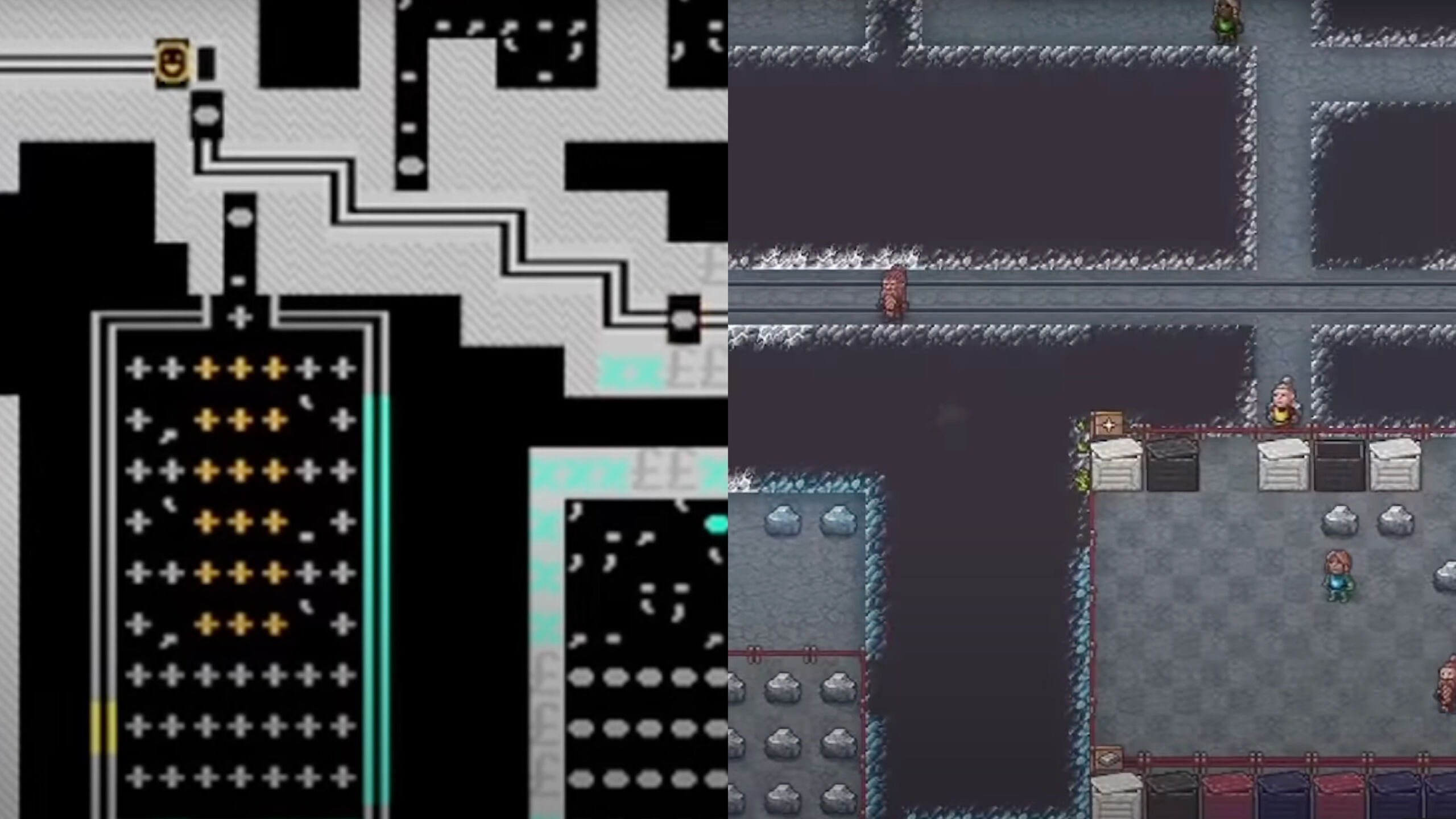
<img src="https://rassegna.lbit-solution.it/wp-content/uploads/2022/11/dwarf-fortress-on-steam-gets-release-date-trailer-and-graphics-beyond-ascii.jpg" alt="Two views of a Dwarf Fortress scene, in the original graphics and in the upcoming Steam/Itch.io release.”>
Enlarge / Two views of a Dwarf Fortress scene, in the original graphics and in the upcoming Steam/Itch.io release.
Kitfox Games / Kevin Purdy

The version of Dwarf Fortress that looks and sounds more like a game than a DOS-era driver glitch will be unearthed on December 6, the creators and its publisher announced Tuesday.

There’s a trailer, a $30 price, and, should things go as planned, versions for Steam and Itch.io arriving that day. Buying these editions gets you a version with graphics, music, an improved UI and keyboard shortcuts, and—perhaps most importantly—a tutorial. It also supports the brothers who have worked on the game for more than 16 years, offering it for free and subsisting on donations. That free version of the game, ASCII graphics and all, will remain available.

You can see the difference in looks in the release trailer:

[embedded content]
Dwarf Fortress Steam Edition trailer, featuring pixels that most humans can interpret as representations of real objects.

Or, for those not keen on moving-picture embeds, here are a couple of screenshots showing near-identical scenes from the trailer:

While the trailer is focused on the Steam release, Dwarf Fortress will also be sold through Itch.io, where creators typically receive a greater portion of proceeds. That’s important for Zach and Tarn Adams, the two creators and coders who have seen the project through, and both dealt with family health concerns in recent years, including a cancer scare for Zach in the late 2010s.

What’s the game actually like? Former Ars writer Casey Johnston spent 10 hours searching for that answer. Here’s a snippet from her report:

I’m already in this thing, eight or so hours deep, so it’s time to solve a problem. Googling the “non-economic stone” error takes me to the wiki. This error can happen “when a dwarf walls himself into a corner and is unable to leave to get more rocks. Be careful where you build your Mason’s workshop, as some parts of it obstruct movement.” Otherwise, there may just be too many kinds of economic rock around (stone reserved for a special purpose) or a stockpile might block the loose stones that might be used for making things. I should be able to mine more and generate more loose stones, but I try mining around. Not a single thing changes.

https://arstechnica.com/?p=1894474


$550 PlayStation VR2 launches on Feb. 22, 2023

Say so long to the original PSVR's glowing blue lights.
Enlarge / Say so long to the original PSVR’s glowing blue lights.

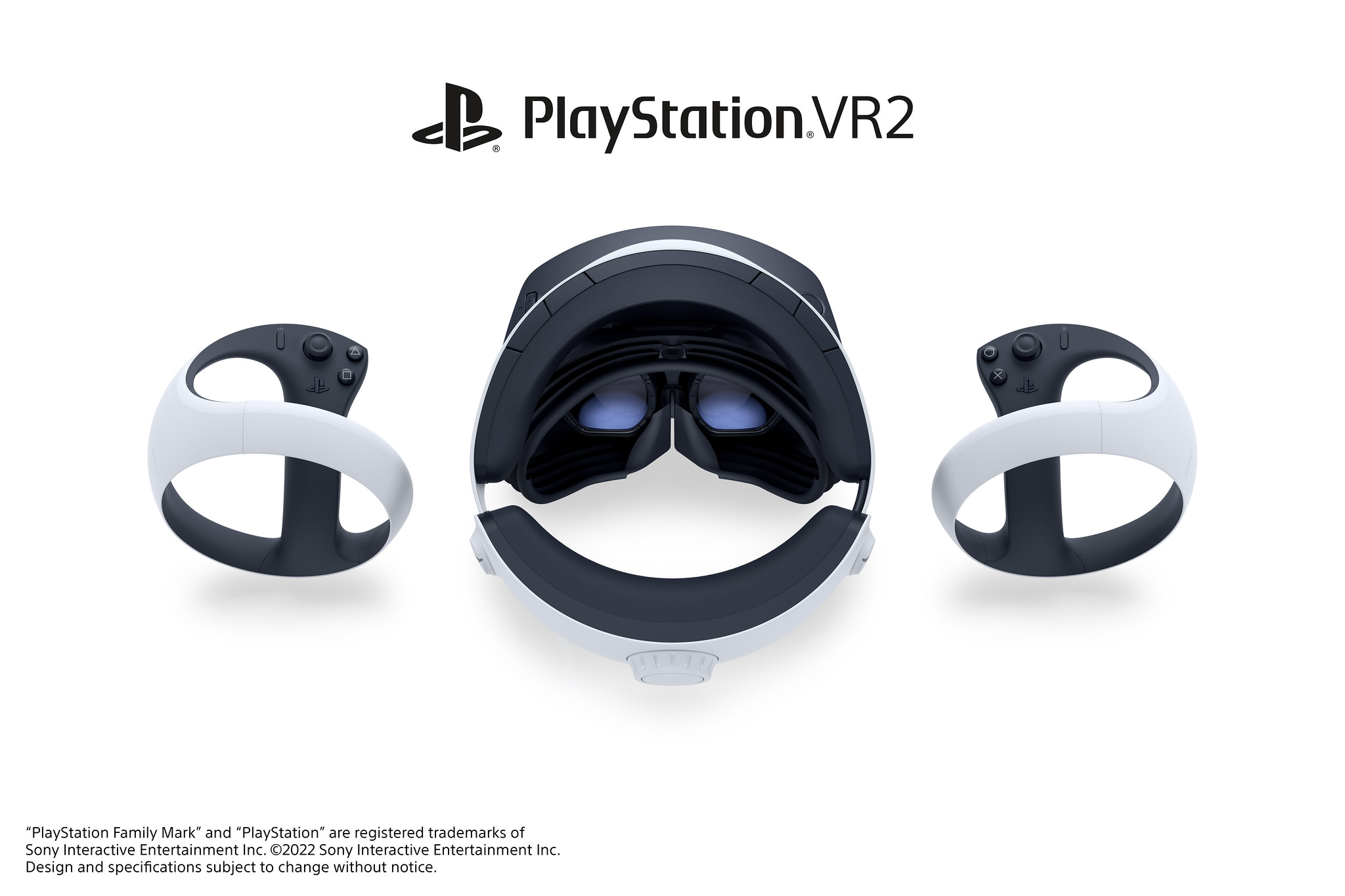
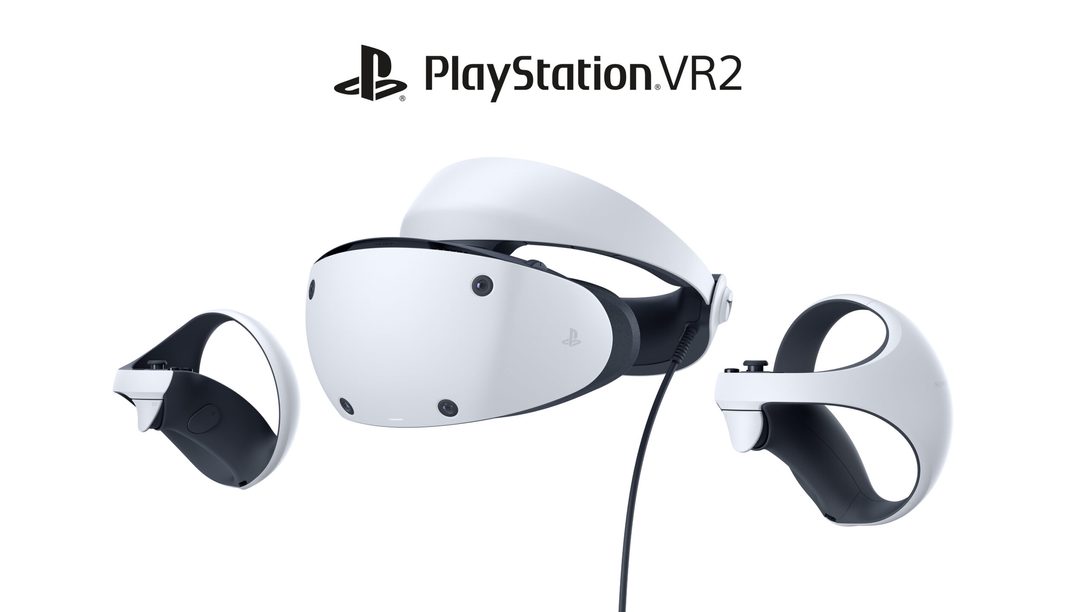
Sony’s PlayStation VR2 headset will cost $550 in the US when it launches on February 22, 2023, almost exactly two years after the headset was first announced.

The $550 package will come bundled with two tracked, handheld “PS VR2 Sense” controllers and stereo headphones, Sony announced in a blog post Wednesday morning. A $600 bundle will include the VR-exclusive Horizon Call of the Mountain.

On the surface, $550 seems like a sizable increase over the $400 asking price for the original PlayStation VR in late 2016. But that comparison is a bit misleading. First, $400 in October 2016 is worth the same as about $490 in today’s dollars when accounting for inflation. Second, the original PlayStation VR required a tracking camera and two PlayStation Move controllers to control many games.

Those accessories were sold separately or included in a $500 bundle when the original PSVR launched (about $613 in today’s dollars). PlayStation VR2, on the other hand, is packaged with two hand-tracking controllers and uses “inside-out” tracking that doesn’t require an external camera.

While prototype PSVR2 controllers have been all-black, they now match the white of the PS5 itself.
Enlarge / While prototype PSVR2 controllers have been all-black, they now match the white of the PS5 itself.

Sony’s new headset is not compatible with the PS4 and will not work with original PlayStation VR games, either. Today, Sony also announced 11 new PSVR2 titles that will launch sometime in 2023.

Of those announced games, six will be available for preorder alongside the PSVR2 hardware starting on November 15, suggesting they will be available at or near the headset’s launch.

Those titles are:

  • The Light Brigade
  • Cities VR
  • Cosmonious High
  • Hello Neighbor: Search and Rescue
  • Zenith: The Last City
  • Tentacular

Sony previously revealed most of the relevant specs for the PSVR2 headset, including a 2000×2400 per-eye OLED display, 110-degree field of view, 120 Hz maximum refresh rate, and headset vibration. The headset also features a simplified single-cable console connection and cameras for both eye-tracking and a “passthrough” view of your environment. https://arstechnica.com/?p=1894491