How a mobile game is reopening a hidden chapter in Taiwan’s history

Some imagery from the mobile game, <em>Unforgivable</em>.
Enlarge / Some imagery from the mobile game, Unforgivable.

Thirty years ago, the grandfather of a Taiwanese-American NYPD detective named Danny Lin was thrown off a cliff in Taipei, the capital of Taiwan. The killing took place during what is known today as the White Terror, a 40-year period of violent political suppression and martial law in Taiwan in the middle 20th century. The killer was never identified. Bent on solving his grandfather’s cold case and prompted by the admissions of a mysterious Japanese-Taiwanese woman in a Manhattan ramen restaurant, Lin travels to Taiwan. He knows little about the place, only that, somehow, he must find answers.

Until the last couple of decades, this kind of story, focused on Taiwan’s brutal authoritarianism under military rule, would have been a touchy topic in Taiwan. Today, though, Detective Lin’s saga is the fictional plot behind Unforgivable: Eliza, a popular augmented reality game played on a smartphone, similar to Pokemon Go. The game unfolds as a digitally enhanced tour of New York and then Taipei, with bright manga-esque presentation.

Unforgivable was penned by the Taiwanese-American crime novelist Ed Lin (Incensed, Ghost Month, One Red Bastard) and developed by Allen Yu, the 34-year-old Taiwanese founder of Flushing-based Toii Inc. For these game makers, Lin’s story has been a way to get a new generation to engage with the country’s past. Their efforts parallel a larger trend of younger Taiwanese people exploring their parents’ and grandparents’ lives under military rule.

“People know about this history in Taiwan but don’t really talk about it,” says Yu.

Play your history

<em>Unforgivable</em> writer Ed Lin.
Enlarge / Unforgivable writer Ed Lin.

In recent years, a number of popular books, films and games have focused on Taiwan’s military period. A whimsical YouTube animation about the 228 Incident, a defining event of the era, has more than two million views. Part of Yu’s own inspiration for Unforgivable comes from Detention, another video game set during the White Terror. Ranked as the second-best PC game of 2017 by Metacritic, Detention boasts more than 200,000 players, according to its developer Red Candle Games. By contrast, Unforgivable counts around 7,000 players between Taiwan, America, and China, says Yu. Rainy Port Keelung, a 2015 game set during the deadly government crackdown that began the White Terror (known as the 228 Incident), has also been commercially successful.

And earlier this year, a mystery title, Devotion, set in ’80s Taiwan, sparked a cross-strait controversy after a meme mocking Chinese President Xi Jinping was discovered hiding in the game. That game was eventually removed from the Steam platform with an apology issued by developer Red Candle Games.

But if Unforgivable is a vehicle through which to learn about past political horrors, it is also meant to encourage a distinct political identity in the present, one firmly grounded on Taiwanese terms. Fifty percent of the game’s funding—one million New Taiwan Dollars, or about $32,300—came from Taiwan’s Ministry of Culture. “We support the game because its story structure describes the background of Taiwan’s democratization,” says Olivia Su, an M.O.C. representative in New York.

Their support parallels larger Taiwanese efforts to strengthen ties between Taiwanese-Americans and Taiwan and to solidify a decidedly Taiwanese identity back home. That’s a political aim of the country’s current administration, headed by Tsai Ing-wen and her Democratic People’s Party (DPP). Her administration has taken a notably more anti-China posture than its predecessor, the Guomindang, or KMT, which, in its previous incarnation, oversaw Taiwan’s dictatorship.

“During KMT rule, we did not have democracy,” says Yu. “My parents would be told, ‘We are all Chinese, we speak Chinese, we are part of China.’ Even today we call ourselves R.O.C., the Republic of China. Everything is so Chinese. But since democracy, after martial law ended, people realized that we are different from China, that we have our own culture.”

Not so long ago, such a statement might have landed Yu in jail.

Growing up alone

Taiwan is an egg-shaped island off Southeast China, north of the Philippines and south of Japan, with a population of 23 million. Slightly bigger than Maryland, it is a rugged place, boasting the highest peaks east of Tibet, verdant and steaming hot. When Portuguese sailors came upon it in the 16th century, they called it Ilha Formosa: beautiful island.

Its modern development has been tumultuous. Beginning in the 17th century, increasingly large groups of Chinese began crossing the Taiwan Strait from Fujian Province. Small conflicts regularly erupted between the settlers and the island’s indigenous population, of which there are several Austronesian tribes. In 1683, the island came under administrative control of the Qing Dynasty, China’s last imperial regime.

The change brought little stability. Intermittent conflict continued amid plagues and occasional uprisings. In 1895, following Japan’s victory in the First Sino-Japanese War, a decade after Taiwan became an official province of the Qing, the emperor ceded Taiwan to Meiji Japan, where it remained a colony for fifty years. Despite the abuses Tokyo may have inflicted, the Japanese laid the commercial and infrastructural foundations for the economic prosperity that would remake the island in the ’80s and ’90s. The northern neighbor also left a significant cultural mark on Taiwan that is still noticeable today.

After the Japanese defeat in World War II, Taiwan came under the control of the KMT, who declared it part of the Republic of China (ROC). Since 1927, the KMT, led by a general from Zhejiang province named Chiang Kai-shek, had been in bitter conflict with Mao Zedong’s Communists. In 1949, when Mao defeated Chiang’s forces, the KMT fled the mainland to Taiwan. Vowing one day to retake China, Chiang instituted a strict military regime over Taiwan, transforming the island into a police state.

Taiwan was remade ever-ready for war, at the expense of the Taiwanese people. Military service became compulsory. Agricultural and industrial resources were exported to KMT troops across the strait. Civil rights were denied.

The Taiwanese people, who had initially welcomed the KMT as liberators, quickly grew resentful of their exploitative and chaotic rule. In 1947, following a crackdown on an anti-KMT civilian uprising that left more than a thousand dead, Chiang declared martial law, thrusting Taiwan into a suspended period of Orwellian paranoia. That lasted until 1987, twelve years after the Generalissimo’s death, when martial law was finally lifted and democratic reforms began. Remarkably, the small island today counts as one of Asia’s strongest and most open democracies.

With a robust export-based economy, a well-educated populace, sophisticated military, modern infrastructure, and vibrant democracy, Taiwan is by all accounts a resounding developmental success story. Nonetheless, it has been unable to achieve one important milestone: universally recognized sovereignty. Persistent efforts by Beijing, which considers Taiwan a rogue but inseparable piece of its territory, have reduced, through diplomatic and economic pressure, the number of countries recognizing the island’s independence to only seventeen.

Though the US ceded to Beijing’s demands and renounced its recognition in 1979, Washington continues to supply Taipei with critical military support. Beijing’s most serious acts of aggression against Taiwan have all been met with the dispatching of American warships to the Taiwan Strait. Though the People’s Republic of China still claims the right to use force to take Taiwan (a claim it recently reiterated), US support has ensured that the island has remained functionally independent for more than seventy years.

Identity issues

As Taiwan has developed in parallel to the mainland, so too have the cultural and political identities of its citizens. Identity in Taiwan, as intertwined as it is with politics, is very much in flux. That’s a reality reflected in Unforgivable, where characters represent a multitude of backgrounds and ideologies. “It’s kind of like American society. We have different groups, different beliefs,” says Yu. “The most common shared value for Taiwanese identity is that we love democracy and freedom.”

According to an influential annual survey conducted by the Election Studies Center at Taipei’s National Chengchi University, 55.8 percent of respondents identified themselves as only “Taiwanese,” while 37.2 percent chose “Both Taiwanese and Chinese.” The rate of “only Taiwanese” responses has steadily increased since 2007, peaking after the 2014 Sunflower Movement, when mostly student anti-China protesters stormed and occupied the Taiwanese legislature for 23 days.

Such issues often play out in the cultural sphere, sometimes controversially. Spats related to independence and Taiwanese identity have erupted through video game championships, high school choral concerts, a performance by a South Korean teenage popstar, and the Gay Games in Paris, to name a few. At this year’s Golden Horse Awards in Taipei, the Chinese-language Oscars, Taiwanese documentarian Fu Yue sparked an uproar when, in her acceptance speech for best documentary (for a film about the Sunflower Movement), she expressed hope that, “one day our country will be recognized and treated as a truly independent entity.”

Immediately censored in China, the speech soon became a “super topic” on Chinese social network Weibo, with many commentators denouncing the director as deluded. “Every one of these things just adds one more level of humiliation [to Taiwan],” says Andrew Morris, a historian of modern Taiwan at California Polytechnic State University who has studied Taiwanese identity and popular culture. “But I think it’s really hard to sustain a sense of ‘We’re Chinese’ for this long.”

Taboo topics

Allen Yu traces his inspiration for Unforgivable to two Taiwanese political events he attended in New York, (where he studied at NYU’s Game Center) and Washington, DC. At the events, Yu was moved listening to talks from former Taiwanese democracy activists, and he says their tales of selflessness fighting for a higher ideal left a mark on him.

“I think they’re really, really brave people,” he says. “Right now in Taiwan we talk shit—we say anything we like to say—but if these people had said anything bad about the government they might have been kidnapped.” Young Taiwanese individuals nowadays, Yu feels, “take democracy and freedom of speech for granted. We don’t really cherish it.” Though the game is primarily intended for entertainment, Yu hopes it will also help educate the young of the sacrifices made by generations past.

It is a history that, until relatively recently, was too taboo to touch. One of the most sensitive topics was the 1947 anti-KMT uprising that started on February 28, known colloquially as the 228 Incident or the 228 Massacre. Estimates of civilians killed in the ensuing decades-long government crackdown range from 2,000 to 25,000; an official death toll has not been issued. Other details, such as locations of burial sites and which officials ordered what, also remain unknown.

To date, there has been no Truth and Reconciliation-style process in Taiwan. “A lot of the victims and perpetrators are still alive, living together in Taiwan,” says Chieh-Ting Yeh, 36, editor in chief of Ketagalan Media, an online Taiwanese affairs journal. “There’s still a lot of the history that hasn’t been disclosed.”

Instead, much has been swept under the rug. Morris recalls a moment during his time studying Mandarin in the ’90s in Taiwan when, after mentioning the White Terror, his teacher chided him, “We don’t talk about that.” Until recently, Taiwanese school textbooks hardly mentioned the martial law period at all. Certainly during the period itself, it was never mentioned; the education system then focused largely on preparing citizens for their eventual triumphant return to the mainland. “It’s quite funny,” recalls Yu. “When I grew up I learned the geography of China, the history of China, but I didn’t learn about my homeland Taiwan.”

It is only since 2016, with the election of Tsai Ing-wen and her opposition DPP party, that archival documents related to the period have begun being made publicly available; the 2002 Taiwan Archives Act had made it illegal to destroy such documents. The material includes letters written by political prisoners to their loved ones that, for a generation, went unseen. “As soon as I read the first sentence, I cried,” one daughter of an activist who died in prison told the BBC in 2016 after seeing her father’s 1953 letter to her. “I finally had a connection with my father. I realized not only do I have a father, but this father loved me very much.” Many Taiwanese individuals, says Yeh, “still don’t have a sense of closure.”

All of this feeds back into the way that the martial law period is remembered by average Taiwanese today. “There’s a conflation of the Chinese P.R.C. and the Chinese KMT,” says Morris. “It’s almost like, ‘That’s the way the Chinese are. The Chinese who threatened us in the ’90s and 2000s are the same as the Chinese who came here after 1945 and killed all the elites.’”

Playing with the past

Though most young Taiwanese people will have a passing familiarity with the martial law period, most will not know its particulars, Yu says. “It’s ancient history for the younger generation,” he says. The plot of Unforgivable centers around one such “ancient” moment in history, the 1970 assassination attempt of Chiang Ching-kuo, then-vice premier and Chiang Kai-shek’s son, at the Plaza Hotel in New York. The would-be assassin, a Taiwanese Cornell graduate student named Peter Huang, was thwarted by the quick hand of an American security detail and eventually fled to Europe before returning to Taiwan in the ’90s.

Through a series of events, which speaks to Taiwan’s often-confusing political landscape, Huang went on, in 2000, to be appointed by President Chen Shui-bian as national policy advisor on human rights. He has also headed the Taiwan Association for Human Rights, Amnesty International Taiwan, and the Peacetime Foundation for Taiwan.

Though the game is not intended as a political statement, it has inevitably struck some as one. Contemporary supporters of the KMT, reports Yu, “say this game is crap.” Ted Lin, the crime novelist who wrote its storyline, says he received one angry response from a stranger online who accused the game of being too pro-Japanese. “It’s like, if you don’t think Taiwan is part of China you think it’s Japanese or something,” says Lin. “It’s completely nuts. Why can’t it be its own thing?”

One reaction to Unforgivable that has been surprising to Yu has been its positive reception in China. “We didn’t expect that,” he says. On TapTap, China’s version of Google Play, the game rates an average 9.8 out of 10 stars. “We wonder why [it’s rated so highly], because we talk about the Taiwanese democracy movement and a little bit about Taiwanese identity,” says Yu. “These kinds of political topics are forbidden in China. But I guess that’s what attracts the Chinese players.”

At a recent game show in Tokyo, Yu’s team was approached by Chinese publishers impressed by Unforgivable hoping to collaborate on other games, he adds. Unforgivable players on the mainland, Yu hopes, might notice similarities between repressive KMT agents and contemporary Chinese officials. “They can see how the Taiwanese people fought back,” he says.

On a recent afternoon in Manhattan, Ed Lin and Unforgivable designer Ted Chen sat together at an outdoor table in Bryant Park contemplating the game’s cultural significance. It was an overcast sky with a strengthening wind; a rainstorm was approaching. Chen, bespectacled, with a flat-brim hat and looking ten years younger than his 39 years, mused that Taiwan was becoming more inwardly focused. The popularity of the game, so centered, in a retrospective way, on a heretofore ignored part of Taiwan’s past, reflected that change.

“Young people are not really connected to mainland China because they’re raised in Taiwan,” he said. “All my life is in Taiwan. I received an education there. I did everything in Taiwan.” He had never been to China, he added. Lin, smiley and prone to boisterous, cartoonish laughter, was nodding along intently. The noise of New York auto traffic swirled and waned. “My grandparents,” Chen continued, “always told me, ‘One day we will go back to China. We will be triumphant.’”

Both men looked at each other and laughed.

https://arstechnica.com/?p=1490241



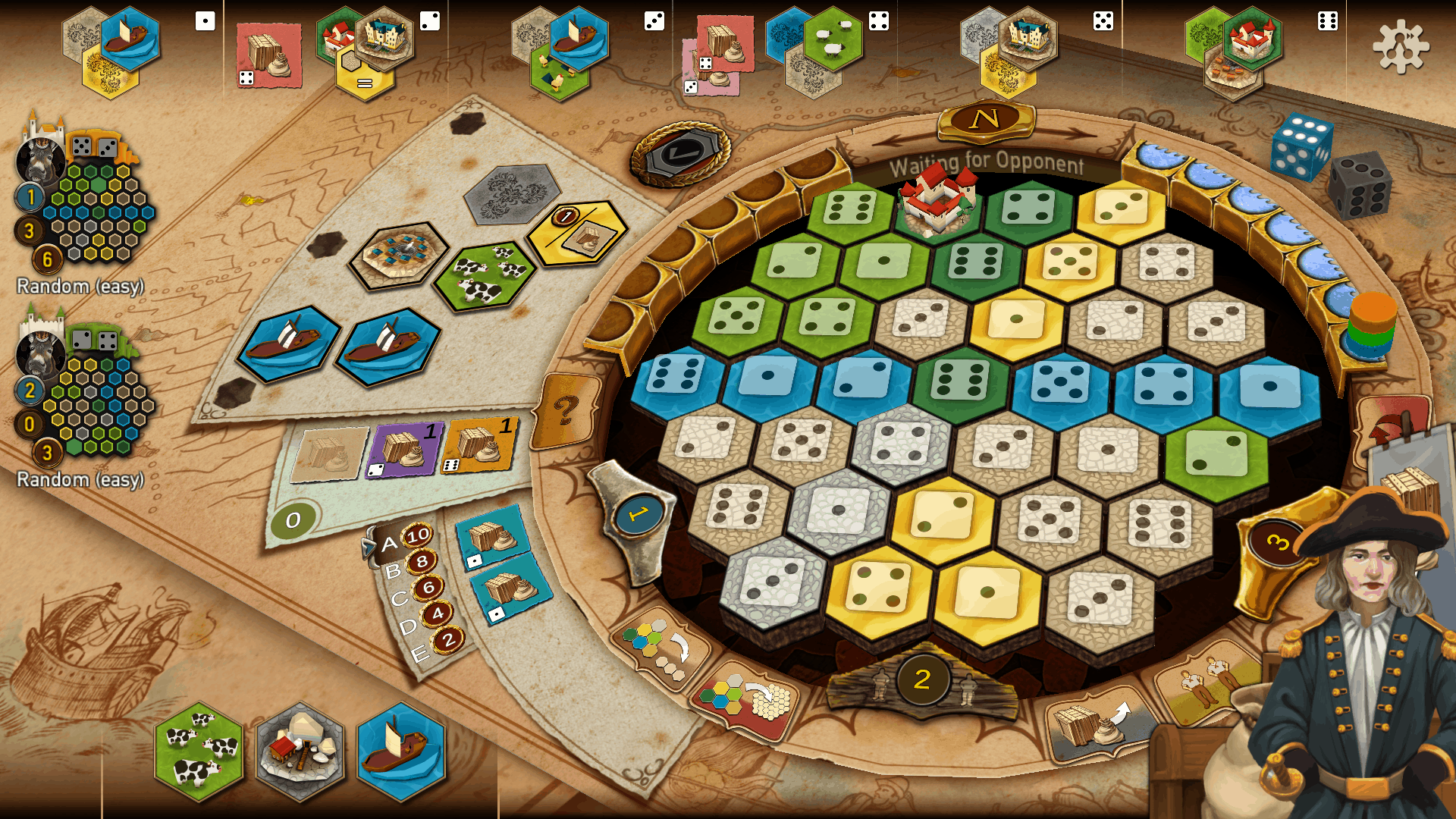
Review: Beloved board game Castles of Burgundy is now an app

Let's get ready for some hot Renaissance action!
Enlarge / Let’s get ready for some hot Renaissance action!
Welcome to Ars Cardboard, our weekend look at tabletop games! Check out our complete board gaming coverage at cardboard.arstechnica.com.

The Castles of Burgundy has long been one of my favorite strategy board games, a 90-120 minute game of tile-laying with a complex scoring system that is often derided as “point salad,” meaning you can get points from so many different paths that there might seem to be no logic to it. I mention that up front because I think it’s a fair criticism of this style of game. Still, Castles of Burgundy is the best implementation I’ve seen of that sort of scoring, especially since designer Stefan Feld, who specializes in this sort of game, connects the different tile types in multiple ways, creating a game that scratches that complex scoring itch but is also well-balanced and coherent.

Digidiced has now brought Castles of Burgundy to Steam and to mobile platforms in a great-looking app that uses new artwork and allows for quick gameplay against AI opponents. Despite a few quirks in the first release, it’s a strong introduction to the game for new users and smooth experience for local play, although I’d like to see a smarter “hard” AI opponent and perhaps a more streamlined tile-placement system. Online multiplayer games could still use some work, especially regarding how the app handles timed play and an occasional bug that occurs when switching games (which is enough of a concern that I’d suggest holding off on purchasing the app if you prefer online play versus local or solo games).

CoB players each work to fill in a personal board of 36 hex tiles (plus one that is already filled in at the start) by selecting tiles of six different types, matching them to the colors on their own boards, placing tiles adjacent to anything they’ve already built, and then gaining points and/or other rewards from every placement. Each tile color has a different function within the game and scores differently—hence the point-salad criticism. There are layers of bonuses within the game for filling in a specific region of your board, which is worth more points if you do it earlier in the game, or for filling all hexes of a specific color on your entire board.

The game unfolds over five stages, each of which has five rounds within it, and you get two actions in each round, although you can also gain quite a few “free” actions by playing certain tiles. With each player getting a minimum of 50 actions over the course of an entire game, Castles of Burgundy is not a quick play. But it isa real thinker of a game because you’re trying to build a long-term plan while also keeping an eye on what opposing players might do, jockeying for position on the turn order track, and weighing short-term point gains against the potential for larger bonuses as the game nears its end.

Digidiced’s implementation is more than adequate, but it definitely needs some fine-tuning now that it’s out in the wild. Once you know the game, you’ll want to crank up the app’s speed to Fast, because it’s far too pokey at Medium and excruciating at Slow, with two-player games against the AI taking well over half an hour on that slowest setting. Some users have also reported heavy battery usage from the tablet versions of the app, but I have not experienced that even playing with the HD setting on.

The app has an undo feature, essential for many reasons, the main one of which is that it allows you to test out a move. Because the scoring is a bit involved, you may want to try a couple of different moves to see which nets you the most points before committing. The undo function only lets you restart your entire turn, however, rather than just rolling back your last move, which can be a mild hassle.

Although the artwork is cute and clear, the app inherits the base game’s disconnect between the (very bland and brown) building tile images and their functions. There are eight such building types, and each has a unique role in the game, from giving you two gold to letting you select a tile of a specific color from the main board to letting you place a tile onto your personal board without using an action. There’s nothing obvious in the tile artwork that lets you know what each tile does, which means you have to press on the tile (on mobile) and hold until you get a pop-up that explains it. Eventually you’ll start to remember most of the tiles’ functions by their images, although I still find the watchtower (four points, no other bonus) and the warehouse (sell all of your trade goods of one color) to be too similar.

Online play gives you a few options, including quick games versus ranked ones where you have up to 24 hours to make your move. If you’re playing one game, however, the app doesn’t notify you if it’s your turn in a different game—even if you’re playing a local game and you’re up in an online one with a timer running. When you switch games, the app also replays everything that’s happened since your last turn— even if you were ‘”watching” those opponents’ moves—so playing multiple games at once is more aggravating than it needs to be. (This is especially true since sometimes switching from a game to the list of running games is the only place where I encountered a bug; the screen would say “Loading” but would never load anything).

There’s also no live timer on the screen while it is your turn; you can only see your time left for a move in the list of running games, but not once you enter the screen for a specific game. It also took me a few turns to realize that the app was showing me the “time’s up” icon because the next player had already been booted from the game for missing an earlier turn.

I’ve played mostly solo games, due to some of the issues I mentioned with online play, and have found the Castles of Burgundy app to be a good distraction and a reminder of how much I enjoy the tabletop game. The hardest AI setting can still be a little predictable, and depending on how the random tile draws go, it can be anything from a moderate challenge to being easy to beat (especially by seizing first place in the turn order early in the game), but it’s never enough of a pushover that I found myself uninterested in playing again.

Since playing the physical game against live opponents can easily run an hour and a half or more, getting Castles of Burgundy in digital form is a boon for anyone who loves the game. With some updates to the online play portion, the app would be an easy recommendation for anyone who likes the original game.

https://arstechnica.com/?p=1490629


Microsoft’s Spring Sale makes Xbox Game Pass an absolute bargain

Ten days to ponder whether <em>Fallout 76</em> is worth a console discount. Hmm.
Enlarge / Ten days to ponder whether Fallout 76 is worth a console discount. Hmm.

We’re expecting some imminent changes to Microsoft’s Game Pass service, but right now the company is offering something of a bargain: three months of Xbox Game Pass, with more than 100 games available, for just $1.

This is part of Microsoft’s broader Spring Sale, which includes some significant discounts on both Xbox and PC games, consoles, and accessories. One month of Gold is also available for $1.

Because nothing’s ever easy, the exact deals on offer depend on which day you want to buy. Most deals run through April 22, though a few go a little shorter or longer, and some deals aren’t available until next week. Aside from the Game Pass, the other standout is $100 off certain Xbox One X models, bringing them down to $399. The downside? They come with a bundled copy of Fallout 76.

Over on the PC side of things, Goat Simulator is 50 percent off at $4.79. You can also save $200 on the Samsung HMD Odyssey+ virtual reality headset and motion controllers, which is a great price and probably why the thing is already out of stock. There are further savings to be had on gaming laptops and desktops as well, so browse away within the next 10 days if you’re in the market.

Note: Ars Technica may earn compensation for sales from links on this post through affiliate programs.

https://arstechnica.com/?p=1490505


Star Wars: The Rise of Skywalker has been revealed with a stunning trailer

On Friday, a world premiere trailer at the annual Star Wars Celebration event confirmed the name of the final film in the “Skywalker Saga.” Star Wars: The Rise of Skywalker is the official name for Episode IX, which is slated to land in theaters “this Christmas.”

After hearing narration from Luke Skywalker (“A thousand generations live in you now, but this is your fight”), the trailer focuses largely on dramatic action sequences. We see a few Millennium Falcon flights and some desert-speeder combat before this teaser reveals at least one scene starring Carrie Fisher as Princess Leia. (We already knew Fisher would appear in the film by way of footage shot before her 2016 death.) This new footage concludes with the primary new-trilogy cast staring at the landed wreckage of a Death Star.

The trailer appeared at the end of an hour-long event hosted by CBS’ Stephen Colbert; other reveals included world-premiere photos of various cast members in the film and the live-action unveiling of BB-8’s new robotic buddy, a one-wheeled junk-heap character named Dio.

In addition to hints gleaned from today’s world premiere trailer, “it’s been a little while” since the events of The Last Jedi, actor Daisy Ridley told the Star Wars Celebration crowd during the panel presentation. She said that “the lightsaber that Rey inherited from Luke lives.” She did not, on the other hand, explain which “Skywalker” the film’s newly revealed title might be referring to.

The Rise of Skywalker‘s trailer ended with actor Ian McDiarmid appearing on the stage and telling the audience, “roll it again,” which followed the sound of Emperor Palpatine’s laughter at the trailer’s close. Hence, we certainly expect Palpatine to figure into the plot, as will a cast composed of familiar faces (Billy Dee Williams, Fisher) and new ones.

[embedded content]
Star Wars: The Rise of Skywalker premiere trailer.

Listing image by Lucasfilm

https://arstechnica.com/?p=1490365


Disney+ launches on November 12 for $6.99/mo, plus new Marvel, Star Wars series

The Walt Disney Company finally took the wraps off of its Disney+ streaming service’s app, slated to launch on November 12 of this year at a $6.99/mo rate or an annual price of $69. The company also confirmed a few new series exclusive to the paid, ad-free subscription service, along with some technical details—and Disney+’s exclusive acquisition of the complete Simpsons archives.

Ahead of the event, rumors pointed to one major Marvel-affiliated series revolving around the hero Hawkeye. Instead, Disney confirmed a series in the Disney+ “Marvel” tab titled Falcon and Winter Soldier while showing off the service’s interface. No footage was shown of this series as of press time, but the characters will be portrayed by their MCU actors, Anthony Mackie and Sebastian Stan. Additional series announced by Marvel at the event include What If, an animated series that will “take pivotal moments from the MCU and turn them on their head,” and WandaVision, a vaguely teased series starring Elizabeth Olsen and Paul Bettany as Wanda Maximoff and The Vision, respectively.

“The post-Endgame vision will be extremely different,” Marvel added as a sneaky tease to its upcoming blockbuster (and its assumedly crazy ramifications on the MCU).

A Marvel representative confirmed only four Marvel films coming to Disney+ in the service’s launch window, as opposed to a guarantee that the entire Marvel Cinematic Universe catalog will be live in Disney+’s first year. Conversely, every single Star Wars and Pixar theatrical film will roll out on Disney+ within the first year. Thanks to the service’s November launch, Captain Marvel fans will have to wait some time before that March film gets its streaming premiere (as it’s not slated to premiere on other services before Disney+ rolls out).

These interface teases also confirmed a few surprise Disney+ exclusives, including a National Geographic-branded travel series called The World According to Jeff Goldblum, a live-action recreation of the Disney classic cartoon Lady and the Tramp, and a TV spin-off based on the Toy Story 4 character Forky. On top of that, Lucasfilm chief Kathleen Kennedy confirmed plans for a new Star Wars live-action series that will see Diego Luna and Alan Tudyk return to their characters from Rogue One (assumedly in prequel fashion, based on how that film ended).

Many of Disney+’s upcoming offerings have already been announced or teased, including a live-action Star Wars series titled The Mandalorian, a slate of Disney-affiliated series (based on the likes of Star Wars: Clone Wars and Monsters, Inc.), and four animated Marvel series. Mandalorian showrunner Jon Favreau attended the event and showed off premiere footage of that new Star Wars series to the crowd, which was obscured in the event’s live webcast.

And if all of that content isn’t enough, get a load of the Disney Channel content dump coming to Disney+: 5,000 episodes of that station’s TV series and 100 of its original movies. However, as of press time, we don’t know how far back in Disney’s timeline that number goes, which means Disney+’s promise of DuckTales episodes may simply refer to that series’ modern reboot, not the ’80s original.

Some interesting news tucked into the event: Disney+ might be one of the few streaming-media apps to be supported by the Nintendo Switch, which famously does not support Netflix (but does support Hulu, which Disney now owns a 60 percent stake of).
Enlarge / Some interesting news tucked into the event: Disney+ might be one of the few streaming-media apps to be supported by the Nintendo Switch, which famously does not support Netflix (but does support Hulu, which Disney now owns a 60 percent stake of).

Disney chairman Kevin Mayer confirmed 4K and HDR support on the service on all compatible devices, though he did not confirm whether older Disney content will be upscaled or tuned for such high-fidelity perks. Computer users can look forward to announced support for Disney+ use on desktop web browsers. Additionally, the service’s tablet and smartphone versions will include a pretty robust-sounding offline-viewing option: “Disney+ subscribers will be able to download all of our content and access it offline on an unlimited basis for as long as they are subscribers.”

“We’ll likely bundle [our digital subscription services] at a discounted price,” Mayer told the Burbank crowd, referring to the United States trifecta of Disney+, ESPN Plus, and Hulu. No date or price window was announced for this bundle subscription possibility.

Disney confirmed plans for Disney+ launches in “each major region of the world” over the next two years. These launches will vary, in part, based on expiring content contracts with streaming providers in specific territories. Exact timelines for which regions will get first crack at Disney+ at the same time, or after, the United States were not yet confirmed.

A rep from Disney Streaming Services reminded the audience of technical chops that this team (formerly known as Bamtech) had built while working on existing apps such as PlayStation Vue and HBO Now, which will now technically compete with Disney’s portfolio. And as Disney has loudly confirmed over the past year, Netflix will also become a direct Disney+ competitor, as Disney-affiliated content will indeed disappear from that service (and others) when related content contracts expire.

The event concluded with quite the one-more-thing announcement: Disney+ will become “the exclusive streaming-video-on-demand home of The Simpsons” with all 30 seasons of the series available for unlimited streaming on Disney+’s first day. That news came in the form of a brief animated sequence with the family full of visual puns, all clearly enabled by Disney’s recent acquisition of 21st Century Fox.

Listing image by 20th Century Fox / Walt Disney Company

https://arstechnica.com/?p=1489967


YouTube, Facebook put up ad roadblocks for Weedcraft, Inc. business sim

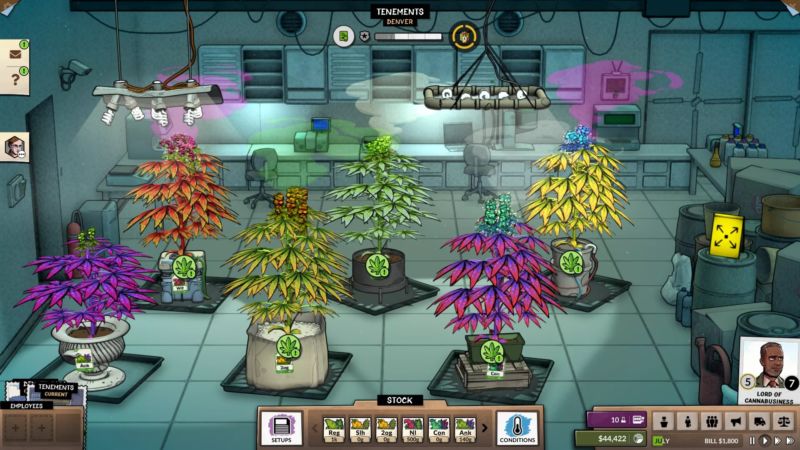
A scene from a grow room in <em>Weedcraft, Inc.</em>, where you can become "Lord of Canabusiness"
Enlarge / A scene from a grow room in Weedcraft, Inc., where you can become “Lord of Canabusiness”

Online social and video networks have taken action to limit discussion of Weedcraft, Inc., a new simulation game focused on building a business empire to sell the drug. Videos of the game have been demonetized on YouTube and the game’s Facebook page has been restricted to prevent ad sales, according to a representative for publisher Devolver Digital.

Weedcraft Inc., launching today on Steam and GOG, includes Tycoon-style business-growing scenarios that focus on both the legal and illegal sides of the marijuana trade during what developer Vile Monarch calls the “semi prohibition-era” for the drug. Situations where you have to conceal grow rooms from cops exist in the game alongside legitimate lobbying efforts to legalize the drug in more jurisdictions through two distinct story scenarios.

Despite the nuanced and decidedly artistic take on the drug war, though, Devolver says its partners on YouTube are reporting their videos about the game have been blocked from receiving any revenue from advertising. And Devolver’s ad manager tells Ars that “basically they’ve said we can’t advertise on [Facebook or Instagram], restricted the page (still trying to find out what that means exactly), and they completely banned my personal ad account because why not, I guess.”

An image from Devolver shows Facebook's advertising restrictions for <em>Weedcraft, Inc.</em>. Redacted slightly for privacy.
Enlarge / An image from Devolver shows Facebook’s advertising restrictions for Weedcraft, Inc.. Redacted slightly for privacy.
Devolver Digital

“We have been absolutely stunned with the amount of resistance this game has received in trying to market it,” Devolver’s Mike Wilson told Ars. “[Developer] Vile Monarch and Devolver went above and beyond to produce a thoughtful game devoid of the typical cliches, and totally agnostic about the subject matter. It’s meant to be an educational look at the fascinating dynamics of building businesses…

“We knew there might be some fear reluctance over the subject matter but assumed those would be related to ideas of either promoting drugs or the typical ‘bitches and bongs’ misogyny and cliches,” he continued. “We made this game because these games are fascinating studies of industries for those curious about it… not to promote marijuana. And today’s restriction by Facebook, where Nazi propaganda, and endless stream of fake news, and live snuff films proliferate, is especially insulting. It’s all just so fucking ridiculous.”

What are the rules?

YouTube’s advertiser-friendly content guidelines page does include a section on “drugs and dangerous products or substances.” That section prohibits ad sales on “video content that promotes or features the sale, use, or abuse of illegal drugs, regulated drugs or substances, or other dangerous products.” There is a general exception for videos that show drug use in “educational, documentary, and artistic” contexts, though, which would arguably apply to Weedcraft, Inc.

“We have clear policies that govern what videos may show ads, and content that features the sale or use of illegal drugs or regulated drugs or substances is not suitable for advertising,” a YouTube spokesperson told Ars. “If we find a video that violate our policies, we remove ads.”

Facebook’s advertising policies prohibit ads that “promote the sale or use of illegal, prescription, or recreational drugs.” That includes ads that use “images of either recreational or medical marijuana” or “images that imply the use of a recreational drug,” by way of example. A Facebook representative did not respond to a request for comment from Ars as of this writing.

Though YouTube has recently begun cracking down on videos focused on guns and gun violence, the site’s guidelines contain a specific carve out to note that “violence in the normal course of video gameplay is generally acceptable for advertising.”

Devolver representative Stephanie Tinsley called out that distinction on Twitter, pointing out that “murdering people is also illegal in every state and country around the world but there’s still a billion videos showing games that do that on YouTube, so it’s really less about what’s legal and more about hypocrisy, I think.”

https://arstechnica.com/?p=1489779


SNL’s Kate McKinnon will play Theranos’ Elizabeth Holmes in new Hulu series

ABC News' podcast series, The Dropout, will soon be a Hulu TV series, according to Deadline.
Enlarge / ABC News’ podcast series, The Dropout, will soon be a Hulu TV series, according to Deadline.

If a book, podcast, and pair of ABC and HBO documentaries weren’t enough, Elizabeth Holmes’ prominence in the media will soon continue in the form of a Hulu-exclusive TV series.

Deadline reported on Wednesday that the co-founder and disgraced CEO of Theranos will be played by Kate McKinnon (SNL, Ghostbusters) in a series called The Dropout, named after the podcast that chronicled the rise and fall of Holmes’ formerly $4 billion health-tech company. The TV version is described as a “limited series” with an expected length of 6-10 episodes.

McKinnon will be joined on the production front by major players from ABC’s Dropout podcast, including its host and creator Rebecca Jarvis. Since the series is being reported as very recently “ordered,” no other information (including supporting cast or writers) has yet been revealed.

Deadline points out that this will be the first series made by relatively new production house Fox Searchlight TV. The show’s landing on Hulu is helped by the new media maelstrom formed by Disney’s acquisition of assets such as 21st Century Fox, Fox Searchlight, and Fox’s former 30 percent stake in Hulu.

Anyone who’s familiar with both Holmes’ media appearances and McKinnon’s knack for celebrity impersonations should be champing at the bit to see what comes out of this project. Holmes’ peculiar mannerisms (particularly her ability to not blink) should be something else in McKinnon’s genius hands. The source podcast from ABC News dove deeply into both Holmes’ upbringing and the quieter parts of Theranos’ roughly 15 years of existence; those details were relatively glossed over in HBO’s The Inventor documentary, which, while entertaining and informative, played more like a quick-and-dirty primer to the tale.

Listing image by ABC News

https://arstechnica.com/?p=1489343


Teaser for Addams Family animated film can’t quite beat reboot fatigue

[embedded content]
One of America’s most iconic fictional families is getting another reboot with MGM’s new animated film The Addams Family.

MGM just dropped the first teaser for its animated reboot of The Addams Family, and it’s exactly what you’d expect from the franchise—no more, no less. Do I sound a teensy bit grumpy? Chalk it up to reboot fatigue.

American cartoonist Charles Addams created the characters in 1938, originally as a series of single-panel cartoons published in The New Yorker. They were his satirical sendup of American “family values,” turning the entire social framework upside down. The characters proved so popular that ABC created a 1964 live-action sitcom, The Addams Family, based on them. (Not everyone was pleased by the development. Wallace Shawn was editor of The New Yorker at the time, and his refined sensibilities were allegedly so offended by the TV series that he actually banned Addams Family cartoons from the magazine; the characters didn’t return to its pages until he retired in 1987.)

Animated versions of the family have appeared regularly in film and TV since the 1970s, and Fox unsuccessfully attempted to revive the original TV series in 1998 with The New Addams Family. But it was two live-action feature films in 1991 and 1993, respectively, that defined their canonical representation in popular culture: The Addams Family and Addams Family Values.

The late Raul Julia and Anjelica Huston were the Platonic ideals of Gomez and Morticia Addams, and Christina Ricci’s dourly deadpan Wednesday Addams was someone to whom every former misfit kid with macabre interests could relate. The writing was crisp, the performances were inspired, the cinematography and set musical numbers were phenomenal, and the gags (several lifted from the original cartoons) landed strong. Both films are now justly considered comedy classics (and they sit among my all-time personal favorites).

But reboot frenzy leaves no classic film unscathed, it seems, so now we’re getting yet another animated film in the franchise. This one was originally supposed to be a stop-motion film directed by Tim Burton—which, honestly, sounds pretty awesome, given Burton’s distinctive visual style. It’s unclear what happened there, but it seems MGM acquired the rights to the original series from Universal Pictures and opted to go in a different direction.

Now we have our first glimpse of the finished product, and it’s… fine. Plot-wise, it seems the Addams family runs into trouble when it is targeted by a treacherous reality TV host, Margaux Needler (Allison Janney), just as the family is expecting the extended family for a big celebration. Wednesday still plays with guillotines and electric chairs, Pugsley still loves explosives, and it’s the same topsy-turvy world where things the mainstream considers “bad” hold much value for the Addams clan, right down to their trademark gothic Victorian mansion. “It’s hideous,” declares Morticia. “It’s horrible,” Gomez agrees. Then they sigh contentedly: “It’s home.” (I do appreciate how closely these characters resemble the original cartoons, at least.)

I’m not saying this latest animated incarnation will be bad. Given its talented cast, perhaps it will make a fine addition to the franchise (though, again, nothing will ever top the delightful 1991 and 1993 live action films). But it was the freshness and originality that made Charles Addams’ macabre family such a pop culture juggernaut in the first place. I guess I’d rather see something equally fresh and original this Halloween rather than yet another reboot. So one note to Hollywood: maybe something inspired by Edward Gorey, who shared Addams’ sense of the Gothic macabre, could jump-start the next successful franchise. I’d watch an animated special of The Gashleycrumb Tinies in a heartbeat.

The Addams Family is slated to hit theaters October 11, 2019.

Listing image by YouTube/MGM

https://arstechnica.com/?p=1488489


Fallout 76 Repair Kits raise new “pay-to-win” concerns

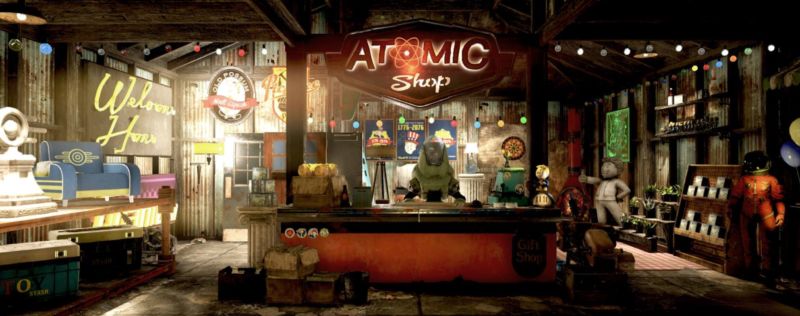
Screenshot from video game Fallout 76.
Enlarge / Welcome to the Atomic Shop, where your real money can turn into cosmetic items and, soon, this one specific item that helps you win the game.

Since Fallout 76‘s release last November, the game’s “Atomic Shop” has allowed players to use in-game currency and/or real-world money solely for cosmetic items like skins, costumes, and emotes. “It doesn’t offer anything with a competitive advantage, and more so, it aims to bring joy not just to you, but the other dwellers around you” is how Bethesda’s website describes the shop.

That seems set to change at least a bit with tomorrow’s “Patch 8” update to the game, which will introduce a new Repair Kit utility item to the shop. While “Improved” Repair Kits can only be found through gameplay, “Basic” Repair Kits will be for sale in the Atomic Shop, offering instant restoration of any one item in your inventory to full durability.

That addition has some fans up in arms that developer Bethesda has broken a promise to keep so-called “pay-to-win” elements out of the premium game. As Bethesda’s Pete Hines told Gamespot last October [emphasis added]:

If you don’t want to spend money in the Atomic Shop for cosmetic stuff, you don’t have to. We give you a shitload of Atoms just for playing the game. Folks that want to spend money on whatever the hell it is because they don’t have enough Atoms, they can, but it’s not, “I’m now better playing against other players because I spent money.” It’s not pay-to-win. And it’s not loot crates.

As “pay-to-win” items go, Repair Kits aren’t on the order of, say, an ultra-powerful weapon that can only be purchased with real money. In essence, the Kits merely offer a shortcut for the same kind of repairs players can already perform with scrounged crafting materials. Still, players willing to pay for Repair Kits could have much a easier time maintaining their arsenals against other players who merely search for their own materials.

Though the new items haven’t launched yet, Fallout 76 players are already gathering on Reddit and other forums to express their concern about what the items will do to the game. “This is my No.1 rant about GTA V online, and I really would hate to see Fallout 76 fall the same way,” wrote one Resetera user. “How long before guns break easily before you get to the next repair station… or finding the materials gets a whole lot harder?”

“We were told the atomic shop would be cosmetic only, and I honestly don’t think selling these are that big of a deal,” a player on Reddit added. “But I don’t want these in the Atomic Shop because I see it as a slippery slope, where Bethesda says, ‘Well they didn’t mind repair kits, why not sell gun upgrades?'”

Bethesda representatives have yet to respond to a request for comment from Ars Technica. But the company did write in its announcement post that “we plan to make adjustments based on your feedback, so we hope you’ll share your thoughts with us when they go live later this month.”

https://arstechnica.com/?p=1488051


Whatever you expect from “Robert Pattinson in space sci-fi,” High Life isn’t it

[embedded content]
The trailer for Claire Denis’ High Life

For space-cinema fans, Spring 2019 has long had two big releases on the schedule unrelated to that big Apollo anniversary. The Brad Pitt-led, James Gray (Lost City of Z)-directed Ad Astra continues to target May, and the Robert Pattinson-starring, Claire Denis-made High Life arrives this week.

Before even so much as seeing a trailer for the former, I now know that the only thing these two films likely have in common will be an out-of-this-world setting.

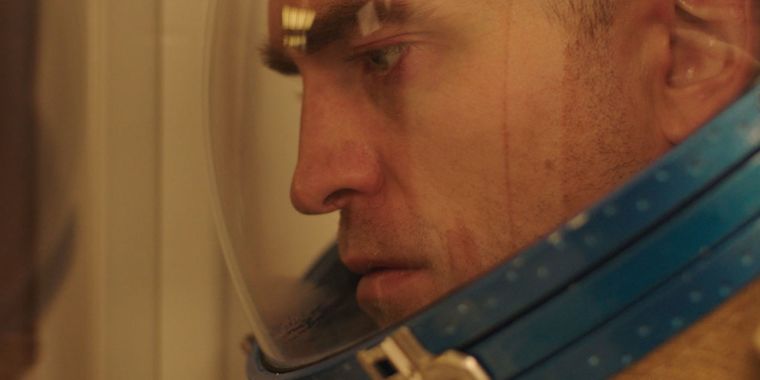
At the most basic-level, High Life centers on the story of Monte (Pattinson), the last man on the nondescript spaceship No.7. Quickly, the film reveals he hasn’t always been this alone—originally Monte was one of nine inmates released from their sentences in exchange for accepting an interstellar mission. “We were scum, trash, refuse that didn’t fit into the system until someone had the bright idea of recycling us to serve science,” as Monte’s narration frames it. Why and how these people ended up as hauntingly beautiful floating space debris makes up the bulk of High Life’s minimalist plot, as does the question of what made Monte avoid and continue to put off such a fate. Violence, mental challenges, and some off-the-books drugs and research complicate everything.

But as those who recognize famed French auteur Claire Denis might expect, plot never really rises above a secondary priority at best. Those sci-fi film fans seeking a tense drama or some intricate allegory filled with clear messages and answers will be better off booting up A New Hope for the 100th time while waiting for Brad Pitt. Instead, Denis’ first foray into space sci-fi and English-language film will probably delight anyone that dabbles in Film Twitter™ with its ambiguity and artiness. But unlike the 2001-ish experience it may sound like in certain ways, High Life will just as easily lose certain segments of its audience with its abundance of extremes and seeming disinterest in story.

In space, no one can hear you ¯\_(ツ)_/¯

Wherever she can, Denis intentionally zags with High Life where prior space films zigged. Though she obviously thought a lot about the genre and its scientific basis—Denis namechecks 2001 and Solaris in the film’s press materials, and she worked with the European Space Agency and astrophysicist Aurélien Barrau to familiarize herself with everything from black holes and the Big Bang to string theory and wormholes—the director intentionally eschews a lot of that detail.

For instance, while the world of High Life is undeniably constructed with care and has a certain blue-collar chic that’s more Prospect than SpaceX, Denis sought to avoid the sleekness so often associated with sci-fi or NASA glory. This is not “Kens and Barbies floating in spaceships resembling children’s toys,” Denis says in her press notes. Spaceship No.7 looks like a functional shoe-box when it floats through space, and its interior might as well be a prison.

High Life’s action follows this same aesthetic, with little-to-no effects. This film’s space cadets simply walk. Anything discarded from the ship just falls off a ledge into the nothingness of space. Views of the outside galaxy definitely can be striking, but they’re minimalistic, and at times, it’s (intentionally) hard to decipher whether we’re looking at space or inside the human body. Beyond one very First Man-y (lo-fi, practical, stunning in its own right) exploratory pod sequence, the closest thing to a “set piece” is a seductively shot, extended romp inside the ship’s solo sex dungeon (which, yes, had become something to shout out on Twitter even before High Life left the festival circuit). Action often unfolds in unflinching, graphic, disturbing, watch-through-your-fingers detail, all stemming from one human exhibiting kindness or aggression towards another.

“[With] weightlessness—there is no need for it because the spaceship is accelerating close to the speed of light,” Denis says. “Terrestrial gravity—gravity in every sense of the word—reestablishes itself, because gravity is the effect of acceleration. If I had to film actors hanging from cables against a green screen, I’d never have made this movie.”

While those against-the-grain choices work wonderfully, things get muddier with the story itself. Small stories in galaxies far, far away can work amazingly, as can subverting more traditional filmmaking choices (High Life is just the latest in Denis’ non-linear legacy). But Denis challenges the audience sometimes to the point of frustration by doling out that kind of information in only the smallest doses.

Evil vixen Dr. Dibs (Juliette Binoche) manages everything on the ship and has a diabolical study to carry out with extreme personal investment. That’s separate from what we learn is the stated mission society and governments offered spaceship No.7’s crew in exchange for pseudo-release. But neither of those macro-plots gets sustained forward momentum or extended, obvious contemplation. Instead, the most engaging story to High Life appears to be Monte’s psychological journey from accepting this mission, through coming to grips with its reality, to finally settling on what actions he will or won’t take to go forward.

“I’m interested in the variety of human life—how people live,” Denis says in the press notes, seemingly confirming this notion. “I’m most interested in individuals and how they respond to challenges or to difficulties, or just to each other. The cinema should be human and be part of people’s lives; it should focus on ordinary existences in extraordinary situations and places. That’s what really motivates me.”

As someone not as versed in Denis’ work as film critics who can casually namecheck 2001’s Trouble Every Day, maybe having the context of her entire filmography would unlock a lot of High Life’s enigmas. High Life might mostly speak to the challenge of being human in the face of insurmountable forces—black holes in the film, things like climate change in real life. Or perhaps Denis has a Us-ian sentiment in mind about never being truly able to outrun your past. After all, Monte, definitely now a different individual from the juvenile criminal that got locked up, still remains sentenced to an existence separate from humanity. At the very least, this film clearly has something to say about sexuality, sex, reproduction, and men’s and women’s bodies.

With each thread you find yourself trying to unravel, Denis stays just on the opaque end of decipherable. For some, that’s an attraction; for others, an aversion. For sci-fi diehards that read about a big movie star in a new space movie, it’s definitely something other than what you’d expect.

High Life opens this weekend in New York and Los Angeles before going nationwide on April 19.

Listing image by High Life / Claire Denis / Fons PR

https://arstechnica.com/?p=1487123