That long absence will finally end later this year with Space Channel 5 VR: Kinda Funky News Flash for PlayStation VR. I was one of the first people to try the game out at PAX East this morning and the demo was a welcoming, familiar, and all-encompassing jump back into the series’ unique world.
First things first—no, you don’t get to play as Ulala. Instead, you’re a similarly outfitted, silent cub reporter shadowing her for a day on the job (as a 36-year-old man, looking down at that provocative outfit from my first-person VR perspective is… interesting, to say the least). Ulala’s voice is noticeably different from the original games—her original voice actress has been notoriously hard to track down—but the sound-alike is close enough to not be distracting.
The demo starts with a quick tutorial that has you mirroring Ulala’s basic moves with two handheld PlayStation Move controllers. That means gesturing up, down, left, right, and forward in time with the music, Simon Says-style (the familiar brassy ’60s hit Mexican Flyer makes a welcome return for the demo). You also get a few new moves in VR: dodging your entire body left, right, and down to avoid incoming shots, for instance, or waving your hands above your head briefly to charge up a shot.
After the tutorial, it’s right off to a (slightly empty) fully 3D version of the familiar, stark white spaceport from the first stage of the original game. The brightly colored Morolians have once again hypnotized some citizens and forced them to dance, and it’s up to you and Ulala to set journalistic distance aside and save them.
A view similar to the one you’ll see in VR.
Chu chu chu!
I am a beautiful, musical space journalist.
Ulala walks in from behind you and takes position just to the side, letting you grab a quick glance and mimic her moves during the timed sequences. There’s also a 2D screen floating off to the right, giving you a third-person view of Ulala and your dancer to center your timing a bit. A subtle bell sound after each individual move helps you judge whether or not your moves are landing with the correct timing.
The call-and-response experience is extremely familiar to rhythm-game fans, but it’s also reborn thanks to the motion and perspective of VR. Actually moving along with the music ends up much more engrossing than simply tapping buttons to control Ulala, and there’s something a little magical about throwing both arms forward and seeing those perfectly timed, glittery power beams fly out and obliterate some Morolians. Even though my feet weren’t tracked, I found myself moving almost instinctively in the same kind of full body poses Ulala makes and bobbing to the music between sections.
The early demo still ran into some tracking problems during my short ten-minute session (which I blame for my final 85 percent rating), and the introductory rhythmic patterns were a bit simple, as you might expect for the beginning of the game. Still, as the demo faded away with a glimpse of Coco Tapioca’s imposing, rotund presence, I found myself wanting to keep playing. This quick taste got me looking forward to seeing some more new first-person VR takes on Space Channel 5‘s distinct style.
https://arstechnica.com/?p=1482527
Today, WarCraft 1 & 2 get their first-ever digital launch—and it’s on GOG
Enlarge/ The kind of image that makes us immediately ask, “What you wan’me kill?”
Blizzard / GOG
When we last spoke with Blizzard Entertainment about one of its biggest classics, the original Diablo, the chat came with a surprise announcement: the original PC game was now for sale online for the first time, and not on Battle.net. The game’s launch on GOG prompted many technical and logistical questions, and after answering those, Blizzard confirmed an intriguing “one more thing” about the first two WarCraft RTS games also coming to GOG. At the time, these had no release date.
Turns out, the wait was surprisingly brief.
GOG and Blizzard have officially opened a veritable Dark Portal to the first-ever digital-download version of its first two PC RTS games, WarCraft: Orcs & Humans and WarCraft II: Battle.net Edition (which includes that sequel’s awesome expansion pack). Right now, you can buy both as a combo pack for $15, or buy them separately for $6 and $10, respectively. And we’ve played them!
GOG got axe for you
Taking it back to the days when Battle.net support required a full SKU update.
Familiar RTS sights. Yes, you can walk on this ice, and the trolls in question won’t slide around. (But they will constantly remind you that you are, indeed, the boss.)
Pre-mission briefing.
Post-mission taunting. (Lose one unit in battle, and they call you a slave… some nerve, Blizzard.)
WC2‘s launcher, like the GOG launcher for Diablo 1, offers two versions of the EXE. The “updated” one includes this inset options menu for visual preferences.
GOG’s interface makes it easy to insert your newly acquired CD key, should you wish to look that info up before booting into the game.
Trouble is, of course, that a mix of ancient netcode and port-opening requirements make this a less than ideal game to play online.
But, hey, Battle.net still works for this game.
Just like this month’s Diablo re-launch, GOG has rebuilt WarCraft II‘s executable to run with modern operating systems and monitor resolutions in mind. Meaning: nothing has been remastered. Instead, players can expect “integer scaling” as an option for any monitor resolution they have so that the original artwork and sprites fall into a proper 4:3 ratio whether they appear in a window or full-screen mode. Other GOG-specific bonuses include optional anti-aliasing and anisotropic filtering. (As with Diablo, I would advise WarCraft II players to ignore these pixel-blurring options, but if that’s your jam, then by all means use them.)
The problem with this is the same as in Diablo: in many of the “integer scaling” modes, WC2 lets your mouse cursor float away if pushed against the right or bottom edges. This happens when you move the map around with your mouse, which is way more common in an RTS than in a Diablo game. I prefer moving an RTS map via the mouse instead of arrow keys, so this issue bums me out. The solution has been to pick the generic “fullscreen” option, which fixes the mouse-boundary issue but adds much blurrier pixels (and messes up my Windows desktop once the game quits out). I’ve asked GOG for help with this issue and will update this section with any pointers they send.
Additionally, GOG’s version of WC2 includes a “vanilla” binary without many of the modern display adaptations. The reason is that this version includes Battle.net support, which requires leaving the executable in its ancient 2.02 state. Just like the 1999 launch of this game’s “Battle.net edition,” it requires a valid CD key, which GOG packs into your purchase. (GOG’s version of Diablo doesn’t require this.) And, yep, Blizzard’s WC2 servers are still alive and kickin’.
But once again, GOG has loosed a “Battle.net” game of old that requires a stomach-turning combination: you have to open specific ports on both your PC and your router, and you have to subject your machine to some pretty ancient netcode. As Ars’ Peter Bright said last time around: “Running this game and opening up your network to it is going to make it extraordinarily easy to hack your computer. We have built numerous safeguards over the last 15 years to try to reduce the risks of exploitable network code, and this game removes all of them.” (Click here to read the full screed.)
In good news, you can either directly connect to other computers on your LAN or fake a LAN connection by using a VPN program like Hamachi and loading an old-school online IPX session to play eight-player WarCraft II versus matches.
Bombs are great!
The original WarCraft means we’re going back to DOS, baby. (Or, technically, DOSBox, a DOS emulator.)
Welcome, human.
Gearing up to launch the orc campaign.
Blizzard’s art for the first game still looks pretty great, all things considered. But it’s a pain in the butt to actually play.
Meanwhile, the original WarCraft has been repackaged to boot into a DOSBox emulation session, essentially running DOS within your OS of choice. And, you know, it works in that funky-but-functional DOSBox way. (Thanks to this DOSBox support, WC1 works in both Windows and MacOS; WC2 with its customized binaries sticks to a Windows-only release on GOG.)
But I have a hard time recommending WarCraft: Orcs & Humans as anything other than a historic relic. This game saw Blizzard boldly dipping its toes into the nascent real-time strategy universe, which meant dealing with early ’90s expectations that anything outside of slow, rigid, turn-based tactics was “too fast.” The result is a painfully ponderous experience in desperate need of quality-of-life fixes across the board.
WC2 wasn’t just a “WarCraft but slightly better” kind of sequel. It was the true fulfillment of the original game’s potential—first on a mechanical level, then supercharged with incredible pixel art, sound design, and army balance. It’s a no-brainer recommendation for every proud mouse-and-keyboard gamer in the world, from the wistful and nostalgic to the RTS-clueless, because its early take on the genre combines slower speeds with good ideas and an endearing, fresh-faced universe. There’s a reason WarCraft was embraced as its own world of characters and lore, as opposed to laughed off as a Tolkien rip-off, and WC2 is the primary source of that reputation.
If you want to open your wallet to GOG and Blizzard today and dive into a DRM-free WarCraft game, skip the bundle and grab the $10 WC2 package. Its massive single-player campaign, boosted by the critically acclaimed Beyond the Dark Portal expansion pack, will keep you (or an excited kiddo) busy for fifty quintillion hours, give or take. And since it’s DRM-free and the CD key is only required for the vanilla Battle.net mode (which, again, we don’t necessarily recommend), you might find a way to get your paid copy of the game onto a second computer and boot some satisfying IPX-based versus combat. (Every parent who reads Ars Technica should do this with their kids. It’s the responsible thing to do.)
These are the remaining two games GOG and Blizzard teased earlier this month during Diablo’s GOG launch. We think it’s now up to the Blizzard Classic team to put out a “new” old game from here on out, and WarCraft III: Reforged is on deck.
https://arstechnica.com/?p=1482345
We put our hands all over the weirdest game controllers of the year
SAN FRANCISCO—For years, we’ve put one particular item on our annual Game Developers Conference itinerary: the most elaborate and inconvenient game controller this side of a Japanese arcade.
Every year, international teams submit their craziest hardwired contraptions to GDC’s Alt.Ctrl Competition, and the winners get massive booth space to let passersby grab, smack, pull, and sit on whatever custom rigs the teams have dreamed up. (We’ve written about these exhibits a few years running.) Some of our favorites from that booth are in the above gallery, and their captions explain what’s going on in each game.
To be clear: most of these will likely never launch either at arcades or for home purchase. That’s not surprising, though I would probably pay for a Hellcouch conversion kit if it existed, just to mess with house guests. (A few creators hinted at releasing their work as downloads to be applied to build-it-yourself kits, but I didn’t find any yet released for the above games in my cursory search.)
Welcome to a new era of “couch co-op” with Hellcouch. The white pad on the floor is lined with LEDs, and its changing colors indicate when and where players should either stand (blue) or sit (red) at any given time. Then Rock Band drum pedals underneath do the grunt work of sensing your butt’s state. “Spooky” voices and sound effects round out the game’s “hell” pastiche.
Sam Machkovech
Plunge features a simple input system of repeatedly tapping a button, converted to a table-mounted toilet plunger. You’ll have to exert to get the full suction action on this bad boy while playing through a variety of two-player mini-games, ranging from rhythm games to timed-jump challenges in a sewer.
Sam Machkovech
The brilliance of Octopad is in its custom-built NES controllers, which only have one button each (B, A, Up, Select, etc.). The resulting co-op action was crazier and more fun with platformers like Super Mario 3 than puzzlers like Tetris.
Koo-Koo is a three-on-three action game where players control little birds via clock hands (to change aim) and clock levers (to change speed).
In Hot Swap, two players plug “controllers” into their limited decks and must repeatedly swap them in and out to survive an open-seas pirate adventure against AI foes.
A summary of the six controller plugs, which all have some attached button, dial, or switch.
I really enjoyed Hot Swap as a concentrated twist on Sea of Thieves.
My personal favorite of this year’s Alt.Ctrl collection was Table44, which supports up to eight players in various color-tapping mini-games.
The best of its mini-games assigns a color to each player, then demands that they slap their personal color whenever and wherever it appears on the board. Meaning, you’ll have to reach across the table and over players’ hands to win.
At first glance, Cook Your Way looks like a simple, fun twist on children’s kitchen sets, in terms of having players mix “ingredients” with utensils to complete on-screen recipes. But its larger story is about fulfilling crazy demands for an ominous overseer. The result is a surprisingly engaging take on US border security of all things. We look forward to its home version launching in the near future.
Guitar Wizards is a two-player rhythm-guitar game, where you and your opponent send each other music-note attacks. I wish this included a more robust system of, say, required chords on each player’s side required to “conjure” spell energy, instead of just dumping notes on each other willy-nilly. But it’s still cute and doesn’t require much more than a $30 Teensy board and some LED strips. (We’d love to see a built-your-own kit for this released.)
Roambot asks you to tune a robot’s antennae until you discover a new world, then aim its head and move its legs to wander around in this world. It’s a clever twist on first-person control in a game, though its robot gimmick doesn’t add a ton to the gameplay experience.
The Book Ritual includes a story about a robot’s sadness, which you can contribute to by feeding real pieces of paper into a shredder.
But most GDC players didn’t bother writing notes or essays onto the papers before feeding them. (The game asks you to do this, but the shredder doesn’t actually detect your words before om-nom-nomming on whatever pages you feed it.)
In Ruins Climber, use a rope to climb upward and side buttons to strafe while climbing up.
Additionally, Google and Bandai Namco unveiled a surprise that may look familiar to avid Ars Technica readers: a smartphone version of Pac-in-Town. This augmented reality game launched as a limited Hololens-arcade game in Japan last year, and it turned its players into Pac-People who had to walk around in real space to gobble yellow pellets and avoid ghosts. (Basically, it’s a real-life approximation of the arcade original.) Now, this former Hololens exclusive works by holding up a smartphone, turning on its camera, and calibrating the game by aiming at a floor mat.
The resulting smartphone game plays just like the one we saw last year, only with an easier viewpoint than the original Hololens’ tiny field-of-view. (Instead, you get to hold one of Bandai Namco’s silly, not-really-necessary Pac-Rigs.) As goofy as the game may look in the above gallery, I swear it was more fun in action. That said, I’d love for Bandai Namco and Google to update the game (which has no public release date) to support a larger floor space. I almost ran into my opponents multiple times in our cramped quarters.
In addition to that Pac-in-Town demo, we also took a peek at a retro-minded exhibit and GDC’s annual Experimental Gameplay Workshop. The below gallery includes highlights from both of those.
Pac-in-Town looks ridiculous in action. But it’s pretty solid. Seen here: a Kinect sensor, which helps a video feed track the virtual action for onlookers. (Notice the scoreboard and display behind the action.)
Sam Machkovech
A first-person view of what the game looks like in action. The ground tracking mat didn’t have to be seen precisely for the augmented reality action to work smoothly.
We wrote about Pac-In-Town last year, which debuted at a single Japanese arcade and required Hololens headsets. This year, Bandai Namco and Google unveiled a new augmented reality version of the game, and it required nothing more than a few Android smartphones.
Stand in a confined space and aim your smartphone camera at a floor mat. After a brief initialization, each display shows yellow pellets hovering in mid-air. Race to “eat” the most pellets, which appear not only in rows but also at different altitudes, while occasionally dodging deadly ghosts. I hopped, ducked, and rolled around without breaking my AR system’s tracking. This game is way more fun than the dorky Pac-Man phone holders might suggest.
GDC’s “retro play” booth didn’t have nearly as many museum-worthy selection as in previous years…
…but this custom-built two-player Steel Battalion rig was an exception. The right-side cabinet is an enclosed version of the same original-Xbox game, and the two players must use a video camera relay to communicate while in battle.
This year’s Experimental Game Workshop opened with Jenn Sandercock and her collection of edible game prototypes. The best of these was similar to the card game Werewolf, only it revolved around players figuring out who’d gotten the one “bad-tasting” pastry out of the whole gang.
Hidden notes in this baked good revealed secret clues to fuel another game.
One of my favorite discoveries at GDC is a new puzzle game titled Lucky Me, in which every enemy in a puzzle instance copies your every move. So you must walk, aim, and shoot accordingly.
An example of how this plays out: this puzzle starts with at least one laser pointed at you. If you pull the trigger, so do all the other people, and you’ll die.
This angle would also get you killed.
But if you turn the aim at just the right angle, they’ll all shoot each other without touching you. No release date has yet been set, but even though this demo at the Experimental Gameplay Workshop lacked a “wacky” controller, I wanted to sneak it into our coverage. I can’t wait for the full game.
Listing image by Sam Machkovech
https://arstechnica.com/?p=1479353
Apple finally enters TV streaming space with new Apple TV+ service
CUPERTINO, Calif.—It’s been a long time and many rumors coming, but Apple has finally unveiled its streaming video service. Dubbed Apple TV+, the service combines some aspects of existing players in the space like Netflix, Amazon Prime Video, and Hulu.
The originals
At the vanguard of Apple TV+ is Apple’s own original programming. The company reportedly spent $1 billion developing TV shows and films to include on the service. Upon announcing the streaming service, Apple showed a video featuring the numerous artists it worked with to create original content for the service—filmmakers including Steven Spielberg and J.J. Abrams, as well as actors including Reese Witherspoon and Octavia Spencer.
These creators and actors serve as the foundation for Apple TV+, thanks to all the original content they have created (and will continue to create) for the service. Steven Spielberg took Apple’s stage to talk about the reboot of Amazing Stories, a sci-fi anthology series that Spielberg hopes will “transport the audience with every episode.”
Reese Witherspoon and Jennifer Aniston followed up by talking about their new series, The Morning Show, which pulls back the curtain of the many morning news shows with which people wake up every day. The show will “take an honest look at the complex relationships between women and men in the workplace,” according to Aniston. They were later joined on stage by actor Steve Carell, who is also a part of the show.
Jason Momoa and Alfre Woodard were ushered to the stage to detail See, a futuristic sci-fi series in which the world’s inhabitants have gone without sight for as long as they can remember.
Another anthology series will come from Kumail Nanjiani, one of the writers behind the hit movie The Big Sick. The series, dubbed Little America, will focus on “everyday life stuff” of immigrants in the United States. Rather than focusing on exceptionality, which many immigrant stories do, Little America will focus on the small things that immigrants in America accomplish every day. The majority of the writers on the show are the children of immigrants or immigrants themselves.
Sesame Street‘s Big Bird also flocked to Apple’s stage to announce a new TV series for kids called Helpsters. Its famous cast of characters will help kids solve problems using coding and emphasizing the importance of computer programming in kids’ education.
Singer-songwriter Sara Bareilles and director J.J. Abrams came together to create Little Voice, a series about a 20-something musician trying to find her way and make it in New York City. The series will feature original music by the Grammy- and Tony-nominated Bareilles.
To close out the on-stage appearances, Oprah Winfrey talked about two documentary projects she has in the works for Apple TV+. The first, dubbed Toxic Labor, will explore the toll of sexual harassment and sexual misconduct in the workplace, while the other unnamed series will tackle mental health issues.
The new Apple TV app
Apple clearly wanted to emphasize the star power behind TV+, as those mentioned above were only a handful of partners making originals for the new streaming service. As with most other TV streaming services, Apple TV+ is an ad-free subscription service, and paying for it gives you access to all of Apple’s originals. The service will be available in over 100 countries starting this fall.
New content will live in Apple’s new TV app, which will initially be available to iPhone and iPad users this May through a software update. The updated TV app aggregates all the different sources of video content that people have, including subscription services like Hulu, live-TV cable subscriptions from the likes of Direct TV and Spectrum, and new offerings through Apple TV Channels.
Similar to Amazon’s new Channels service, Apple TV Channels lets users pay for individual network subscriptions like HBO, Starz, and Showtime directly through the new TV app. In addition to only paying for the channels that you want, the new Apple TV app puts all of that content in one place so you don’t have to jump from app to app to watch different content.
The new TV app also features a new Kids panel that collects a bunch of kid- and family-friendly content, including shows like Sesame Street and movies like Big Hero 6. After the initial May rollout of the new Apple TV app to mobile devices and Apple Channels, the company will bring the new app to macOS later this year. Also later this year, the app will come to smart TVs, like those made by Samsung and LG and platforms including Roku and Amazon.
Apple unveiled its TV streaming service today alongside two new offerings that bolster its overall services business. Apple News+ is a $10-per-month news and magazine subscription that gives you access to more than 300 publications, including Wired, GQ, the Los Angeles Times, and more from within the Apple News app. Apple Arcade is the company’s first gaming service, and it gives subscribers access to more than 100 games across iOS, macOS, and Apple TV devices.
Apple News+ is available today, while Apple Arcade, for which pricing is still unknown, will be available this fall.
https://arstechnica.com/?p=1479295
Apple unveils Apple Arcade subscription service for iOS, Mac, Apple TV games
CUPERTINO, Calif.—Apple today announced a new subscription service called Apple Arcade for games on its platforms, including iPad, iPhone, Mac, and Apple TV. The service will debut “this fall.” Its exact price has not yet been confirmed.
The paid-subscription service will include games “unavailable on any other mobile service,” Apple confirmed, and it will launch with “over 100 new and exclusive games.” A sizzle reel of flashy games appeared at today’s Apple event, and it largely focused on indie games that haven’t yet launched on either traditional or mobile platforms yet. One notable exception: there was a brief shot of an apparently unannounced Sonic the Hedgehog game.
By paying the subscription fee, players will have access to all games for as long as they want with no limits or microtransactions attached. Shared family accounts will have access to the titles and parental controls for no additional charge. And the service’s multi-device support extends to letting iOS gamers suspend an Apple Arcade game on their phone, then resume playing it on another device, or vice versa.
As previously reported by Cheddar, Apple will publish games itself, but today’s event didn’t include news about specific first-party titles or efforts.
Enlarge/ Confirmed developers and publishers coming to Apple Arcade.
Apple’s approach here differs significantly from some of the new games services we’ve seen announced lately, particularly Google’s Stadia service, which was unveiled at the 2019 Game Developers Conference last week. Stadia is aimed at streaming core games like Assassin’s Creed: Odyssey and Doom Eternal to mobile devices with streaming technology. Apple will simply offer free downloads of games that users would otherwise have to buy individually. Apple pointed this fact out, saying its games will work “regardless of your Internet connection.”
For mobile game developers, securing a position in this service could prove very attractive. That’s because mobile games often live and die by if, how, and when they are featured in the App Store—a call made by Apple. Mobile developers commonly implement features that Apple wants to prioritize, like augmented reality modes or Shortcuts, in order to entice the company to feature them. By joining the subscription service, these games could essentially secure a featured spot—at least, as long as there aren’t too many games in the service crowding them out.
This story is breaking, and we will update it as more information becomes available. Apple’s event is still in progress, and you can follow everything in real time through our liveblog.
https://arstechnica.com/?p=1479241
Report: Nintendo planning two new Switch models
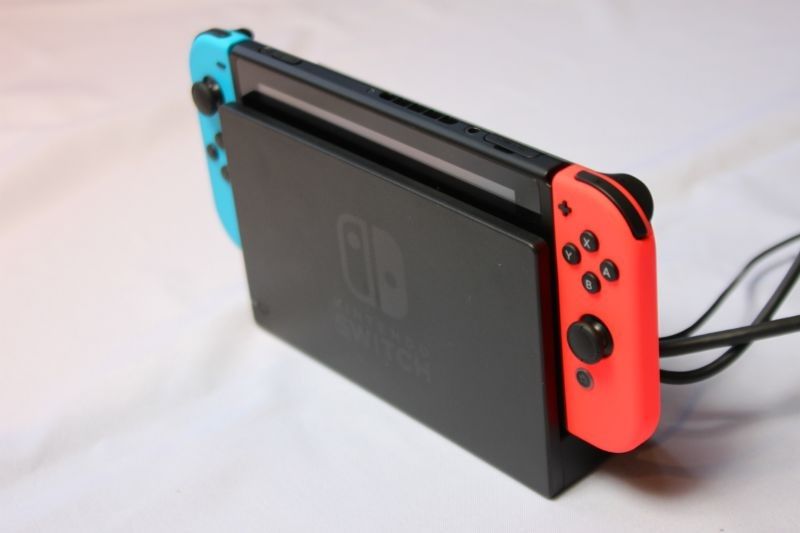
Nintendo has plans to release two new models of the Nintendo Switch “as early as this summer,” according to a Wall Street Journal report citing “parts suppliers and software developers for Nintendo.”
One model would be a higher-end system with enhanced hardware akin to the Xbox One X or PS4 Pro, though not as powerful as either, according to the report. The other would be a “cheaper option” intended to replace the aging Nintendo 3DS, whose sales have finally started to collapse.
This cheaper Switch would reportedly cut costs by losing features such as controller vibration. That’s a move which would render portions of games such as 1-2-Switch and Super Mario Party unplayable, but Nintendo “judged the new Switch models won’t need the vibration feature because there wouldn’t be many games released using the full benefit of it,” according to a quoted supplier.
An announcement of the new Switch hardware options could come at E3 in June with a release a few months later, according to the WSJ.
Nintendo often releases slight redesigns of its portable and console hardware a few years into their life cycles. Those releases are usually cosmetic, though, with little underlying change to base hardware features or software compatibility. One counterexample, 2015’s New Nintendo 3DS, gave that system a small power boost and second analog nub before being discontinued in 2017. Rumors of redesigned Switch models have persisted practically since the system launched two years ago. The Wall Street Journal previously reported on those rumors back in October, focusing on a new LCD screen supplier for the new model. Another January report from Japan’s Nikkei news service suggested a miniaturized Switch focused on portability.
The soldier who removed his own bladder stone, and other medical history marvels
Enlarge/ A patient receiving dental treatment, circa 1892. There were several cases of “exploding teeth” in the 19th century that remain unexplained to this day.
Oxford Science Archive/Getty Images
While researching his 2017 book on the history of heart surgery, medical journalist Thomas Morris perused hundreds of journals from the 19th century. One day, a headline on the page opposite the one he was reading caught his eye: “sudden protrusion of the whole of the intestines into the scrotum.” It was a bizarre case from the 1820s, involving a laborer run over by a brick-laden cart. The resulting hernia forced his intestines into his scrotum, and yet the laborer made a full recovery.
Once he got over his initial amused revulsion, Morris was struck by the sheer ingenuity displayed by doctors in treating the man’s condition. And he found plenty of other similar bizarre cases as he continued his research, with people surviving truly horrifying injuries—a testament to the resiliency of the human body. “Doctors, even when they had less than a tenth of the knowledge we do today in terms of treating major trauma, could still come up with innovative and ingenious solutions to acute problems,” he said.
Many of the most interesting medical cases Morris uncovered are featured in his hugely entertaining compendium of medical oddities, The Mystery of the Exploding Teeth, and Other Curiosities From the History of Medicine. Regular readers of his blog (tagline: “making you grateful for modern medicine”) will revel in stories about a sword-swallowing sailor, a soldier who removed his own bladder stone, a man with combustible belches, a woman who peed through her nose, and a boy who inhaled a bird’s larynx and started honking like a goose. All are delivered in elegant prose, punctuated with the author’s distinctive dry wit. Morris has collected 500 or so of these frequently jaw-dropping cases thus far, and only included 70 or so in the book. So a sequel (or two) isn’t out of the question.
Thomas Morris
The titular case concerns numerous 19th century instances of people experiencing an increasingly painful toothache, followed by a sudden crack, akin to a pistol shot, as the tooth exploded, conferring instant relief. The burst was sufficient to nearly knock over one young woman, partially deafening her for several weeks after.
Why did the teeth explode? Several theories were proposed, such as tooth decay causing a build-up of gas that led to a fracturing of the tooth, perhaps from the chemicals used to make early fillings. But there’s no record of any of the patients experiencing exploding teeth having had fillings. The cause remains a mystery to this day, and no case has been reported in the medical journals since the 1920s, according to Morris.
One of the more memorable cases Morris describes concerns a 25-year-old man in San Francisco, who was critically injured in 1858 when an old shotgun exploded in his grasp, driving a large slug of iron into his chest. A celebrated surgeon of that era, Elias Samuel Cooper, didn’t have access to modern technologies like x-ray imaging to help him locate the metal, which had lodged just under the man’s heart.
So he opened up the ribcage and just started rummaging around. Initially he did this without anesthesia, although when it came time to reach into the chest cavity and remove the slug, Cooper mercifully provided some (likely ether). “The idea that a surgeon in 1858 would put their hand underneath a patient’s heart—I’d never come across anything like that in many years of researching heart surgery,” said Morris.
“There is an amazing propensity of humans to do really stupid things involving sticking foreign objects into their orifices.”
An entire section is devoted to treatment of various objects stuck into people’s orifices—like the 16th century monk who inserted a perfume bottle up his rectum, presumably to “relieve the cholic,” or so the monk claimed. “There is an amazing constant propensity of the ability of humans, particularly young men, to do really stupid things involving sticking foreign objects into their orifices,” said Morris. “There are entire treatises on foreign bodies from the 19th century and earlier, listing hundreds if not thousands of cases.” Modern emergency rooms see this sort of thing on a regular basis, so clearly human nature hasn’t changed much in the ensuing centuries.
Over the course of several decades in the 19th century, surgeons became increasingly daring in terms of what they thought they could do for their patients, until several high-profile disasters prompted a spate of ethical soul-searching to balance innovation with the needs of patients. Among the most noteworthy: a Chinese man suffering from a seriously engorged scrotum who opted for surgery even though the condition didn’t seem to be life threatening. He spent hours in agony on the table, with no anesthesia (and a roomful of spectators), and eventually died from shock and blood loss.
“That operation prompted an exchange of letters in the professional journals afterwards,” said Morris. “There were some surgeons who were absolutely scathing and felt it was a terrible dereliction of duty to have submitted this man to the operation.”
While there is plenty of humor and witty asides in the book, Morris is adamant that it was never his intention to simply mock the doctors practicing in these earlier eras. “I think it’s all too easy to laugh at the idea that they used to use leeches or all these poisonous [things like] belladonna and deadly nightshade,” he said. “Whatever a doctor did in 1780 was part of a system of thought they’d been taught by their teachers and passed on to their students. You’re talking about people who didn’t have a tenth of our understanding of microbiology or disease mechanisms. I think it’s wrong to judge historically without taking into account that context.”
[embedded content]
Courtesy of Penguin/Random House.
https://arstechnica.com/?p=1475079
I played 11 Assassin’s Creed games in 11 years, and Odyssey made them all worth it
Climbing on rooftops for the 11th time—but I had more fun than ever this time around.
Samuel Axon
One of Odyssey‘s many varied environments.
Samuel Axon
The scale of this game is ludicrous, but in this case, it works.
Samuel Axon
I might have played a bit of this game.
Samuel Axon
I’ve been a dedicated fan of the Assassin’s Creed video game franchise for 11 years. It hasn’t always been a happy relationship. While the early games captured my imagination and introduced me to whole new modes of gameplay, the series’ middle years were laden with misfires, feature bloat, and other serious problems.
I often look at fans raging against the companies that make their favorite franchises—Bethesda or Blizzard are the two most common targets I see—and shake my head in bewilderment. “If you hate their work so much, why don’t you just play something else and let everyone else enjoy their games? It’s not like there’s a shortage of great games to try,” I say.
But as I looked back on more than a decade of playing Assassin’s Creed games to write this article, I for the first time kind of understood loving something so much that its stumbles make you feel not just disappointed, but a little mad.
And Assassin’s Creed has made some infuriating missteps over the years. But at the same time, it has something in common with many of my favorite music artists like David Bowie and Radiohead: it’s willing to reinvent the wheel on the regular and try new things rather than settle into a Call of Duty or FIFA-like pattern of barely-there refinements.
My ups and downs with the series reached a new zenith with this year’s Assassin’s Creed Odyssey. Just as I was giving up on one of my favorite franchises, this reinvention gave me the feels I hadn’t had since the series’ best days (that means the Ezio Trilogy, by the way). And while the deepest heart of the new game was still Assassin’s Creed, Odyssey was a wild departure.
But that’s OK. Because by tossing out the old ideas about what this beloved franchise was, Ubisoft actually saved it from doom. What you’re about to read isn’t a review—Ars already did that. This is just a super-fan putting his geek-out hat on to ponder why Odyssey worked so well where other recent Assassin’s Creed games didn’t.
Table of Contents
11 games in 11 years
It makes sense to start with a summary of the journey so far, so we’ll go through each main series game one-by-one. To understand why Odyssey is great, it’s important to recognize why not all of its predecessors were.
If you’re just interested in Odyssey, you can skip ahead—this will be bloated and lengthy, just like a modern Assassin’s Creed game. You probably won’t agree with all my takes. That’s OK, it makes for a good conversation. Think of it kind of like a “best and worst” list without firm rankings. Also included here: a link to every main series Assassin’s Creed review ever published on Ars.
Here we go.
Assassin’s Creed (2007)
The first Assassin’s Creed was all about crowds.
Its stealth-in-plain-sight feature was original for triple-A games at the time.
It also introduced a more advanced parkour system than most players had seen before.
Combat involved performing pre-canned, synced animations with enemies. It was all about counters.
The game featured a handful of Crusades-era cities to explore.
This was a janky, broken, frustrating mess of ideas. The potential was there, and I was enthralled, but Assassin’s Creed was not always fun to play. Still, it was a revelation. I could see what it was going for, and I loved it. How often did a triple-A game come along that tried this many ambitious new things? Even if it didn’t always work, you had to respect the game for trying during a time when it felt like almost every big release was a Call of Duty, Grand Theft Auto, or God of War copycat.
Today, the series has a reputation for aping the best ideas from other franchises and adapting them for the Assassin’s Creed formula, and that’s accurate. But sometimes we forget that the first game actually was truly inventive. It wasn’t just imitating other games—at least, not other triple-A ones. While the first version of anything usually falls short and this title was no exception, I warmly remember it for its ambition regardless.
I’m just glad the future titles made it so falling in the water wouldn’t instantly kill you, you know?
(Also, the bratty, entitled main character was the absolute worst.)
Assassin’s Creed II (2009)
Assassin’s Creed II was set during the Italian renaissance.
Unlike the first game, you wouldn’t instantly die in water. Needless to say, this was nice to see.
Combat was not radically altered from the first game, but it felt much better and offered many more tactical options.
Earlier games in the series involved a lot of rooftop combat. That became less common later on.
What followed two years later was one of my favorite games of all time. I virtually never play games multiple times through. Yet I have played Assassin’s Creed II three times, as recently as last year. II took every great idea from Assassin’s Creed, refined most of the rough edges, and added even more to love.
II kicked off a trilogy of titles (with Brotherhood and Revelations) centered around the Renaissance-era Italian protagonist Ezio Auditore. That trilogy is regarded by most fans as the series’ heyday. To this day, the mobile-game spinoffs Ubisoft makes are still set in this era, if that tells you anything.
While Assassin’s Creed‘s fresh ideas were janky and unfinished, II realized them fully. It’s definitely not perfect, but it’s a great game.
Assassin’s Creed Brotherhood (2010)
Brotherhood took Ezio to Rome, but not at the time of the Roman Empire, of course. This was a dilapidated Rome.
This game had multiplayer for some reason. I actually forgot about it until I was fetching this screenshot. It wasn’t exactly the best part.
The core gameplay was almost identical to that of Assassin’s Creed II.
Brotherhood was a direct sequel to II, and more of the same. While II had some gear upgrades, Brotherhood introduced much deeper progression systems that would become a key part of the series moving forward. Many people consider it to be the best in the series, and I enjoyed it immensely, but I wasn’t as engaged by its setting, and the freshness of the first two games had faded a bit—the first sign of what a curse the series’ too-frequent annual release schedule would be—so I remember II more fondly. Still, this game was in the series’ sweet spot.
Assassin’s Creed Revelations (2011)
The Instanbul setting of Revelations was a marked and welcome departure from the previous two games.
Unfortunately, the game went on some undesired tangents in both gameplay and narrative.
It brought neat innovations on the parkour side of things, though.
Revelations was a good game, but it was also the first time since the forgivable experimentalism of the first title that the series stumbled a little bit for me. Ubisoft claimed they wanted more action set piece moments in this one, but trying to cram Naughty Dog/Uncharted-style on-rails moments into a systems-based game was confusing at best, frustrating at worst.
Further, this is when Ubisoft started putting in entirely different, less-good games and systems unrelated to the core experience—in this case, the awful tower defense minigame for territorial control.
In Revelations, these down moments were edge cases in an otherwise good game—after all, the problems were on the fringes, but the core gameplay built nicely on top of the previous titles—but the problems that would become all-pervasive in future titles planted their seeds here.
Assassin’s Creed III (2012)
Let me be very clear here: Assassin’s Creed III had terrible, no-good, very bad controls.
It was set in the American Northeast around the time of the revolutionary war.
The protagonist was a Native American boy, and the primary weapon was a Tomahawk—a signal of a modest departure in the combat system.
The story was absolutely ridiculous, though.
III was the true beginning of dark days for player satisfaction over the ensuing years. It might have been the worst game in the franchise’s history. (For the other candidate, jump ahead two years to Unity.)
Control precision was never the series’ strong suit, so III decided to overhaul the inputs. But the resulting control mechanism was spectacularly worse than what it replaced. For every time you felt awesome climbing a tree like a ninja before dropping down on your unaware target, there were at least two times you’d be trying to jump from a branch to a rooftop and found yourself leaping 80 degrees in the wrong direction off a cliff to your death—or you’d tumble into one of the game’s brutal instant mission-fail states. (This was a persistent design problem in the franchise until 2017’s Origins.)
There was the infamous final mission, which had you dashing through a burning building chasing an enemy using those controls that only worked the way you expected 33 percent of the time. It was awful—it was almost as if Ubisoft had designed a set piece specifically to show off everything that was wrong with the franchise.
Revelations introduced these problems, but III really drove them home.
Assassin’s Creed IV: Black Flag (2013)
In Assassin’s Creed IV: Black Flag, you arguably spent more time sailing a pirate ship than you did sneaking or stabbing.
The game’s designers worked around the bad controls with smarter level design, so it was a bit more fun to play than III was.
Combat wasn’t a big departure, with only iterative changes. The animation-locking combat system wasn’t in too bad a state at this point, though.
Unfortunately, underwater missions and other distractions bloated the game terribly.
The game’s sheer scale was a big leap forward.
There were cities in Black Flag, but they played a much smaller role in this game than in any other in the franchise.
I have trouble making helpful assessments of Black Flag as an Assassin’s Creed game, because 70 percent of it isn’t one. III introduced a series of boat combat missions. I thought they were the best part of a bad game, and so did some other people. Similar sailing gameplay played a big part in IV, which cast the player as a pirate in the Caribbean.
The Caribbean was the largest and most realistic setting yet, and the immersion was helped by the fact that Black Flag was the first of the series released on current-generation consoles, which had much more memory than their predecessors and were thus better equipped for open worlds.
But you could easily spend more time on your boat than you did with traditional Assassin’s Creed stuff. Remember how Revelations had problems because it had separate-seeming games like tower defense? IV went nuts with that. I’m not sure I could even count how many different games were packed into this one disc, and they didn’t all appeal to the same type of player, giving pretty much everyone something they just wanted to get over with to get to the good part. The systems like underwater diving, boat combat, ground combat, ground combat on boats, ground stealth, boat stealth, collections, mission tables, resource management, and so on were disconnected from one another and didn’t support any one core experience.
In a systems-based game, the systems have to interlock and talk to each other to create emergent stories for the player. When they’re disconnected from one another this way, it just feels like bloat.
A lot of people like Black Flag, and that’s fine. But it was a game co-developed by a half-dozen different Ubisoft studios, and it felt like it. Also, Black Flag was way too long to be an annual release. Finishing it before the next one came out felt like pressure—as I recall, I only managed to complete it a couple of weeks before Unity hit. I was really starting to feel the fatigue.
https://arstechnica.com/?p=1431797
Hold onto your butts: A tour through Kualoa Ranch, aka real world Jurassic Park
You see, it works on levels.
Nathan Mattise (with a 2014 Moto G)
A view from just outside the fence before a Kualoa Ranch UTV tour (other transport options include ATVs, boats, trolleys, bikes, buses, etc.).
Nathan Mattise (with a 2014 Moto G)
Forget golf carts, we’d like our future retirement community to run on Kawasaki Raptors.
Nathan Mattise (with a 2014 Moto G)
…especially if they are branded with dinosaurs.
Nathan Mattise (with a 2014 Moto G)
The ticket might be worth it from the very first moments on path.
Nathan Mattise (with a 2014 Moto G)
Hello, Pacific Ocean.
Nathan Mattise (with a 2014 Moto G)
You can explicitly do tours that follow Kualoa Ranch’s filming locations, but our UTV tour passed a few including this spot from Godzilla
Nathan Mattise (with a 2014 Moto G)
Godzilla’s footprint is bigger than yours (and was a bit too big for the ranch cows)
Nathan Mattise (with a 2014 Moto G)
Some eager vacationing dads really, really enjoyed driving hard at ~15mph through some bumps and puddles (as did my wife)
Nathan Mattise (with an iPhone X inside a weatherproof case)
A large animal graveyard from Kong: Skull Island
Nathan Mattise (with an iPhone X inside a weatherproof case)
“Mr. Hammond, after careful consideration I’ve decided not to endorse your park.”
Tour guide Natasha (with an iPhone X inside a weatherproof case)
Nathan Mattise (with an iPhone X inside a weatherproof case)
brb, going to start the Ars Eastern Oahu bureau.
Nathan Mattise (with an iPhone X inside a weatherproof case)
Kualoa Ranch has a few old WW2 bunkers, which naturally found their way into Pearl Harbor filming once upon a time.
Nathan Mattise (with an iPhone X inside a weatherproof case)
After the tour, you want to get your picture in the Raptor Cage, right?
Nathan Mattise (with a 2014 Moto G)
Helllooooooo Chris Pratt.
Nathan Mattise (with a 2014 Moto G)
KĀNEʻOHE, Hawaii—For a first time visitor driving up from Kailua along HI-83, it felt like that John Williams’ “Main Theme” should’ve been playing the entire time as we watched the Hawaiian landscape reveal itself. Then we arrived—and learned we had signed up to tour the actual Jurassic Park.
I have it on good authority that a certain Ars staffer may or may not have appeared in the background of park scenes in 2015’s Jurassic World. In reality, those particular sequences happened at an abandoned theme park outside of New Orleans on a production set. But it turns out the lush nature and endless greenery seen in both the original and the latest Jurassic Park iterations happens to be very genuine and very open to the public for those that can make it to Kualoa Ranch.
Located on the eastern coast of Oahu, Kualoa Ranch spans 4,000 acres of nature preserve. It boasts so many different microclimates and environments that it can rain in one portion of the place while being bone dry in another. It has such stunning scenery that a freaking Motorola phone from 2014 will take photos that look like movie stills at a glance. And because of those two factors—a private remote setting, effortless visual beauty—Kualoa has become a popular destination for big budget productions. Everything from Jurassic World to Battleship to Jumanji (2017) has worked here in recent years (and gems like The Karate Kid or Krippendorf’s Tribe did in the past). Evidently Triple Frontier had just been at Kualoa filming one particular cliffside escape scene, utilizing an artificially created three-foot high cliff for safety.
So if you’re also lucky enough to be traveling with someone who reads, plans, and books tour tickets in advance, Kualoa Ranch opens its doors to visitor tours on horseback, on boat, on bike, on bus, on trolley, on ATV, and on some delightfully decaled Kawasaki Raptor UTVs so you can feel just like Dr. Ian Malcolm cruising around the ranch’s dirt paths. Eighty-five dollars per head will get you a guided hour of scenery gazing, rain dodging, dust kicking, and photo-taking at various film locations like the bunkers from Pearl Harbor or Hurley’s golf course from Lost. We stood in Godzilla’s footsteps (10-foot-deep stylized trenches, now filled in partially to spare Kualoa Ranch’s poor cows) and looked at the graveyard from Kong: Skull Island. No matter how often we came across illustrated Chris Pratt faces in the gift shop afterward, consensus opinion had long been solidified: that was one tourist activity worth skipping the beach for.
Listing image by Nathan Mattise (with a 2014 Moto G)
https://arstechnica.com/?p=1478775
How id Software went from skeptical to excited about Google Stadia streaming
SAN FRANCISCO—Back in 2016, when Google first approached id Software about bringing some games to a potential new streaming service, the game developer was skeptical to say the least. “The proposal immediately bumped against our main bias,” id Senior Programmer Dustin Land said during a talk at this week’s Game Developers Conference. “Streaming adds latency to the thing we desperately want to remove latency from.”
Fast forward more than two years, and id was proudly on stage this week showing a version of Doom Eternal running on Google’s newly announced Stadia streaming platform. But getting from that initial skepticism to that grand unveiling wasn’t always an easy process, Land said.
Getting to yes
For years, Land said, Google had been watching their YouTube analytics, waiting for a big enough group of users to reach the point where their connections would be able to handle game streaming. By September of 2016, Google thought the broadband market was mature enough to give it a try, and the company approached id for some real-world help with game testing.
Porting the 2016 Doom to that very early version of Stadia took just three weeks of full-time work by two people, Land said. That process was made easier because the game already ran on Vulkan graphics with Linux support, things that Land said made it a “good time [for developers] to adopt” after two years of improvements from Khronos.
But that first streaming version of Doom was “lackluster,” he said, with apparent lag even when running on a local network. So after a bit of iteration, Google came back to id that November with a new version that ran on a nearby cloud instance using a wireless router, a Chromebook, and an Android phone for input.
“Needless to say, it was a night and day difference,” Land said. “We were stunned by how much things had improved… It [only felt] like someone just forgot to enable game mode on the TV.” That was enough to convince id to move forward with the project, even though there were still some kinks to work out.
More recently, Land said Google came to the id offices to set up a “Pepsi Challenge”-style blind test between Stadia and local hardware “to keep themselves honest and really drill down on eliminating perceivable differences in the play experience. They also wanted to demonstrate that Stadia could be superior to a local experience in certain eyes.”
In that blind test, you could “hardly tell what was local and what was remote,” according to Land. The results were strong enough to get non-gamers in the company excited, he added, and convincing enough to get Google’s executives to greenlight the whole project for production, leading to this week’s announcement.
Building a platform
Aside from the streaming quality improvement, Google’s first entry into the gaming platform world has had some other growing pains, Land said. The company’s first version of a Stadia development toolchain, for instance, was just “bad,” with lots of bugs and a complicated sequence of steps for setting up and migrating developer environments.
After complaints from id, though, Google brought in a user experience team and pivoted quickly based on feedback, setting up easy SSH instances and global environments complete with Web-based administration portals. “One thing that really impressed us the degree to which Google listened,” Land said. “Even as they took on more and more, their attentiveness and hunger have not diminished.”
Google has also had to launch from a standing start when it comes to the platform services side of running a gaming company. The first version of the service id saw was literally just a streaming video window with the ability to read inputs, Land said. With id’s support, though, Google has now added Achievement tracking, identity and profile management, leaderboards, parental controls, save games, stat management, matchmaking, and the kind of social graph that developers and players expect from a modern game platform. “Just because you’re Google doesn’t mean you get [these] things for free,” Land noted.
Now that they’re convinced the technology works, Land said id is optimistic that streaming could let high-end games reach a market of mobile phone, tablet, and laptop users that’s potentially ten times the size of the current console and gaming PC market. The company also sees big benefits in the reduced friction of users not having to download game files and the added security of the game binary not being exposed to the end-user.
Land also teased that id was busy working on ways to differentiate the Stadia version of Doom Eternal in ways that aren’t possible on other platforms. “That is all I’m allowed to say on the subject” for the time being, he added.