Netflix makes it official, canceling Punisher and Jessica Jones
Enlarge/ Farewell to the last Defenders standing: Jessica Jones and The Punisher have been officially canceled by Netflix.
It was only a matter of time, but today Netflix finally made it official, announcing the cancelation of its two remaining Marvel Defenders series, The Punisher and Jessica Jones. The latter’s third season hasn’t even aired yet, although Deadline Hollywood reports that Netflix will air season 3 as planned. Nobody who has followed the axing of Iron Fist, Luke Cage, and Daredevil over the last few months was expecting The Punisher to get a third season, even though season 2 was an under-appreciated gem.
Punisher star Jon Bernthal—who is set to join New Line’s The Sopranos prequel feature—gave a fitting farewell on Instagram: “To all who have served. All who know loss. All who love and understand Frank and his pain. It has been an honor to walk in his boots. I’m endlessly grateful to the comic fans and the men and women of the Armed Services and law enforcement community who Frank means so much to. Thank you to the USMC and all the wonderful soldiers who trained me. Go Hard. Be safe.”
UPDATE: Jessica Jones star Krysten Ritter weighs in with her own Instagram post: a pic of the table read for the season 3 finale airing later this year. “I love these people to the moon and back,” she wrote. “It has been a dream to play Jessica alongside my amazing cast and the best crew in the business for these past five years. I am so grateful for every second of it. We have THE BEST fans. You guys mean the world to me and I appreciate you beyond words. The final season … is coming later this year and I am proud of how we complete JJ’s journey.”
In its official statement, Netflix expressed gratitude to the showrunners, stars, other cast, and crews of both Jessica Jones and The Punisher, adding “We are grateful to Marvel for five years of our fruitful partnership and thank the passionate fans who have followed these series from the beginning.”
Marvel also released a lengthy statement via Deadline Hollywood, hinting with a Daredevil reference at the end that we may not have seen the last of these characters. Disney’s new streaming service is launching soon, and while it’s barred from creating new content with these characters for the next couple of years, there’s a solid chance their stories will eventually continue in rebooted shows on that service. The full statement:
It had never been done before. Four separate television series, each with different super-talented showrunners, writers, directors, cast and crew, coming out months apart and then …they would meet in a single event series all set in the heart of New York City. We called them The Defenders.
And together we were thrilled by stories of Daredevil, Jessica Jones, Luke Cage, Iron Fist and even the Punisher joined in! They said it couldn’t be done.But Marvel assembled amazing teams to write, produce, direct, edit, and score 13 seasons and 161 one-hour episodes. Take a moment and go online and look at the dazzling list of actors, writers, directors, and musicians who graced us with the very best of their craft.
We loved each and every minute of it. And we did it all for you — the fans — who cheered for us around the world and made all the hard work worth it.
On behalf of everyone at Marvel Television, we couldn’t be more proud or more grateful to our audience. Our Network partner may have decided they no longer want to continue telling the tales of these great characters… but you know Marvel better than that.
As Matthew Murdock’s Dad once said, ‘The measure of a man is not how he gets knocked to the mat, it’s how he gets back up. To be continued…!
https://arstechnica.com/?p=1458519
Quirky sci-fi farce Mega Time Squad sends up all those time-travel tropes
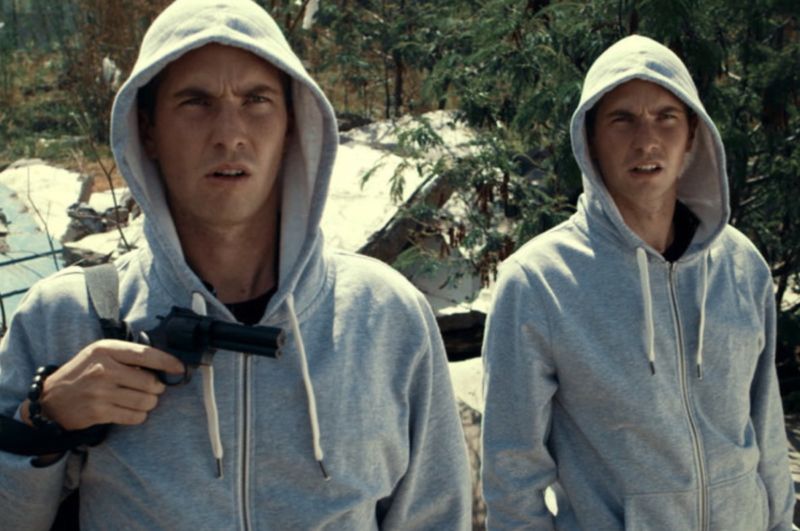
Enlarge/ Seeing double: John (Anton Tennett) steals a magic bracelet from a Chinese antiques store that gives him the ability to go back in time in Mega Time Squad.
A magic bracelet doubles as a time-traveling device for a down-on-his-luck small-time criminal in the 2018 New Zealand sci-fi comedy Mega Time Squad. A favorite of the festival circuit, this quirky twist on the time travel genre is finally available in select theaters and on VOD in the United States.
Our hero, John (Anton Tennet) works as a flunky for local crime boss Shelton (Jonny Brugh, who played one of the vampires in What We Do in the Shadows) and is about to be evicted from the garage he’s been living in. Annoyed that a rival Chinese-triad gang is horning in on his turf, Shelton orders John to steal a money drop at a nearby antiques store. John and his buddy Gaz (Arlo Gibson) decide to steal it for themselves instead. During the heist, he spots an unusual charm bracelet. Despite the proprietor’s ominous warning, John pockets it and splits with the cash.
Local crime boss Shelton (Jonny Brugh) tasks John with stealing from a rival Chinese gang.
Vimeo/Tim van Dammen
Shelton’s sister, Kelly (Hetty Gaskell-Hahn), has a way with explosives.
Vimeo/Tim van Dammen
Pulling off a heist on a budget.
Vimeo/Tim van Dammen
John is intrigued by a mysterious charm bracelet.
Vimeo/Tim van Dammen
“I never thought anybody would be stupid enough to steal from triads.”
Vimeo/Tim van Dammen
A henchman named Damage (Milo Cawthorne) takes aim at John on Shelton’s orders.
Vimeo/Tim van Dammen
A Triad gang member, Wen (Yoson An), is also out to get him.
Vimeo/Tim van Dammen
In a tight spot? Push the button on the bracelet!
Vimeo/Tim van Dammen
Now there are two!
Vimeo/Tim van Dammen
Multiple Johns form the Mega Time Squad.
Vimeo/Tim van Dammen
John’s buddy, Jay (Simon Ward), provides the backstory to the bracelet.
Vimeo/Tim van Dammen
What happened to that other John?
Vimeo/Tim van Dammen
A spot of romance between Kelly and John.
Vimeo/Tim van Dammen
“This is Paeroa, Terry, it’s not America, we’re not made of guns!” But Shelton’s one-eyed henchman, Terry (Eru Wilson), gets a turn with the one they do have.
Vimeo/Tim van Dammen
Gearing up for a fight for the money and the girl.
Vimeo/Tim van Dammen
So John (who is not the brightest bulb in the tree) is now on the run from Shelton and his bumbling minions, as well as the (far more competent) Chinese triad. Then he discovers that pressing the button on the bracelet transports him back in time. Not by much—just a few minutes, or enough to get him out of a tight spot or two. The catch: every time he pushes the button, it duplicates him. To say any more would spoil the fun.
The premise could easily get tiresome, but somehow van Dammen keeps Mega Time Squad moving along at a snappy pace, with just enough twists to keep things interesting. That’s even more impressive considering it’s only his second feature film as director; he also wrote and directed the trailer-park rock musical Romeo and Juliet: A Love Song (2013). Van Dammen has produced and directed a number of music videos, and something of that sensibility comes through here, from the ’80s synth-pop soundtrack to the quick cuts and loving homage to Hong Kong action movies.
“Mega Time Squad celebrates Kiwi-ness, particularly the way Kiwis speak,” van Dammen told NZIFF. “The film is speckled with a fair few four-letter words, but if you chill out and listen to the rhythm, it’s like relaxing profane music. I just hope people can leave their worries at the door, come in and have a laugh.” That’s good advice. Lean into the silly and enjoy the ride.
Mega Time Squad is now playing in select theaters and on VOD.
[embedded content]
Marvel’s Mega Time Squad trailer.
https://arstechnica.com/?p=1457967
Welcome to the cyber world: The real-world tech behind Alita: Battle Angel
Enlarge/ The futuristic cyborg world depicted in Alita: Battle Angel has some promising real-world analogues.
The CGI-heavy cinematic world of Alita: Battle Angel, is chock-full of the kinds of cyberpunk toys most of us only dream about. But while much of the technology in Alita is futuristic, it’s deliberately grounded in the real-world technology of today, per producer James Cameron’s vision.
(Mildest of spoilers for Alita: Battle Angel below. You can read Sam Machkovech’s largely spoiler-free review here.)
Set some 600 years in the future, the cyberpunk world of Alita: Battle Angel is a dystopian society where people in Iron City scavenge for anything useful—especially technology—in the Scrapyard, which holds everything dumped from the floating city of Zalem, where the “elite” reside. There’s a series of tubes where products are sent from the Iron City to Zalem (in exchange for the latter’s refuse), but otherwise the two worlds never really mix. The Scrapyard is where a kind doctor finds cyborg Alita’s head, holding her carefully preserved human brain. He knows immediately he’s looking at highly advanced technology from three centuries earlier, lost in time, and rehabilitates her. The plot follows her journey from amnesiac innocent to fierce warrior.
We’ll leave aside the problematic (from a physics standpoint alone) floating city of Zalem—although the concept of a space elevator is very much a topic of current research and grand hopes. Every movie gets a limited number of what the industry calls “buys:” story elements that are not expected to be realistic, but the audience will hopefully suspend its disbelief and accept them as part of the background. That’s what puts the fiction in science fiction.
In this scavenging economy, people find old technology in the Scrapyard and repurpose it. Sensors are pretty much ubiquitous in 21st-century life, found in appliances, televisions, cars, airplanes, medical devices, and so forth. According to Matt Gould, a field application engineer in the aerospace unit of TE Connectivity, which specializes in sensor technology, they would be equally critical to the realization of the kinds of futuristic cyborgs depicted in Alita.
“A lot of the mechanical features that you see on the cyborgs are grounded in reality. You’ve got gears and actuators,” said Gould. “And then you go down to the way these exaggerated limbs communicate with the human brain.”
Once and future tech
The physics alone likely precludes a floating city like Zalem. Indulge your willing suspension of disbelief.
20th Century Fox
Precursors to Alita‘s unibikes already exist.
20th Century Fox
Design for the unibikes in Alita: Battle Angel
TE Connectivity/20th Century Fox
Prop master shows off collection of prototype unibikes.
TE Connectivity/20th Century Fox
Microturbines could propel Alita’s rocket skates when she plays Motorball.
20th Century Fox
Alita’s advanced Berserker cyborg body incorporates smart armor, sensors, actuators, haptic devices, and a reactor power source.
20th Century Fox
It’s flexible and yet strong enough to absorb hard blows—and it’s self-healing.
20th Century Fox
Alita’s cyborg body is powered by a reactor core in her heart—something currently beyond our technology.
20th Century Fox
Uploading a conscious human brain? Still pretty far in the future.
20th Century Foz
Single-wheeled and electric bikes already exist, for instance; the movie’s design for them was just modified to look cooler and more futuristic. Per Gould, contactless connections could distribute the battery power efficiently in lieu of a gas-powered internal combustion engine, along with a gyroscopic balancing system. Alita’s Berserker cyborg body—technology rare even in her futuristic world—is tough enough to withstand impact but also super-flexible to enable her to move freely. We already have “smart armor” made with unusual materials that are flexible, yet harden in response to impact to protect the wearer. We also have a number of self-healing materials—another unique feature of Alita’s Berserker body.
She would need haptic sensors to feel anything she touched (like her love interest, Hugo’s, face) and nano servo motors to give her full range of motion. Neural power links would be needed to transmit energy from Alita’s cyborg “heart” to her cyborg body, along with high-speed databanks to connect her brain to her body. The heart itself is a miniature reactor (think Tony Stark’s miniaturized arc reactor that powers his Iron Man suit), purportedly capable of powering Iron City for years. That, alas, is still far in the future, although there are several competing large-scale designs in development for fusion energy around the world. (The economics of scale just aren’t there to make it a viable energy source.)
As for the brutal game of Motorball—a hybrid of roller derby and Death Race 2000—Gould argues that those rocket skates could be propelled by microturbines, augmented with tiny MEMS-based gyroscopes and speed sensors to track her velocity and changes in direction. There could also be gyro sensors and magnetics to motorize the ball itself, making it move more erratically and increase the challenge to the players.
This is also a world filled with human/cyborg hybrids. Because life is so hard down below, many residents augment their bodies, sometimes simply with neurally controlled prosthetic limbs. Those who become Hunter-Warriors (basically cyborg bounty hunters) and/or those who compete in the fictional sport of Motorball go much further. They replace various body parts with prosthetics that include any number of creative weapons or useful devices to give them an edge. We’re nowhere near that kind of technological capability, but the seeds of such augmentation are already in place, thanks to cutting-edge research in robotics, prosthetics, exoskeletons, brain-computer interfaces (BCIs), and so forth.
The robotics revolution will be the inverse of the computer revolution.
Aaron Ames, a mechanical engineer at Caltech who specializes in robotics, thinks the robotics revolution will be the inverse of the computer revolution. “Computers started out as these monolithic things that fill rooms, then they were on your desktop, then they were in your pocket,” he said. “I imagine robots going the other way. They start in your pocket, taking an actuator and putting that in a phone. [A smart phone] already has all the processing you need in many respects, and it will grow from there into more elaborate applications.”
The revolution could start with exoskeletons, which Ames considers the most likely means by which robotic augmentation will find its way into the public sphere. His lab is developing an exoskeleton to enable paraplegics, for instance, to walk, along with providing robotic assistance for other motor impairments. One of the biggest mechanical challenges is figuring out how to implement hard, rigid actuators and similar devices with the soft, mushy human body (the realm of so-called “soft robotics“). The mechanics need to be synergized with carefully tailored algorithms, which in turn must sync with the dynamic movements of the human body.
That’s much more difficult than it sounds, because just the simple act of walking is incredibly complicated from a mathematical standpoint. “It’s hard to explain to the public how hard it is, because we take it for granted,” said Ames. “But walking is one of the most difficult things a robot can do.” It’s basically controlled falling: with every step, we catch ourselves from falling flat on our faces by restoring our balance. It’s a periodic motion, just like plants orbiting the sun, and we understand those motions very well. But planets aren’t contending with a constantly shifting terrain: grass, pavement, rocky ground, or ice, for example.
I, Cyborg
Zapan (Ed Skrein) is an unscrupulous Hunter-Warrior (bounty hunter).
20th Century Fox
Grewishka (Jackie Earl Haley) has been heavily modified and hand-picked by archvillain Nova to take out Alita.
20th Century Fox
Nyssiana (Eiza González) is one of Grewishka’s crew of assassins.
20th Century Fox
Another of Grewishka’s band of cyborg assassins.
20th Century Fox
Caltech robotics scientist Aaron Ames with a contraption used to develop walking robots.
Jennifer Ouellette
Ames displays a robotic prosthetic leg.
Jennifer Ouellette
A grad student demonstrates the prosthetic in the lab.
A real-world prosthetic arm
TE Connectivity
The future: Alita’s first cyborg arm.
20th Century Fox
Prototype real-world exoskeleton
TE Connectivity
Walking with the exoskeleton.
TE Connectivity
Cassie, a walking robot, takes a stroll past Caltech’s iconic turtle pond.
YouTube/Caltech
Translating that complexity into something that can interface with robotic assistive devices like an exoskeleton is a daunting task. Ames builds walking robots in his lab that can “learn” the appropriate stride for the greatest stability and lowest energy expenditure in real time, thanks to carefully designed optimization algorithms. One of them, dubbed Cassie, even went for a stroll around the Caltech campus.
But the movements are slow and inefficient compared to human movement. “There’s been no power device with onboard actuation that will actually increase the efficiency of walking for a person, which means we still haven’t figured out this formula” said Ames—never mind the formulas for running, jumping, dunking a basketball, or zipping along a Motorball track at near-supersonic speeds.
Ames’s group is also developing a robotic powered prosthetic leg that can sense automatically how fast the user is walking and adjust its stride to match. The leg sports a flexible ankle that can move in two directions for a more natural, fluid gait. His Caltech colleague, Richard Anderson, was one of the first scientists to create neurally controlled prosthetics via implanted brain-computer interfaces. The current crop is predominantly for arms, according to Ames, because arms have some inherent stability.
“If you overshoot a little in your movements, you’re not going to fall over,” he said. Neurally controlled prosthetics for legs, on the other hand, present an enormous challenge, because they don’t have inherent stability.
There’s also an inherent challenge in the BCIs themselves since the implants require brain surgery with all the associated risks, including coma, bleeding inside the brain, seizures, and infection. The devices also degrade over time. Should a device malfunction, more surgery would be needed to repair or remove it. The risk is worth it for paraplegics (or people with severe epilepsy), but safety concerns will likely dissuade many people from implanting a BCI in their brain—at least in the near-term future.
“It’s a beautiful dream, but I think we make the mistake of expecting computers to be like us.”
Alita herself, of course, is almost entirely cyborg. Only her brain is human, connected to her mechanical and electrical body. We are nowhere near achieving that level of neural control, according to Ames, or uploading an individual’s consciousness. “It’s a beautiful dream, but I think we make the mistake of expecting computers to be like us,” he said. Artificial neural nets may mimic the brain’s many layers and weighted signals passing through the network of nodes. But the human body is so much more complicated. He draws an analogy with the invention of airplanes. Airplanes don’t precisely mimic nature with flapping wings; they achieve lift through different means.
Another Caltech scientist, Joel Burdick, is researching the use of spinal cord stimulation as a form of neural control. He’s found that applying a voltage to the spinal cords of paraplegics can elicit movement from their otherwise paralyzed legs. That’s just one example of how much broader our notion of neural control could be.
“Our brain only does part of the work when we’re walking,” said Ames. “There’s a lot of spinal cord control that’s happening, and that circuitry is different than the circuitry in our brains.”
Alita: Battle Angel is struggling in the domestic box office this weekend for a variety of reasons. That’s a shame, because in addition to being a genuinely entertaining, action-packed adaptation of the original manga, it offers a reasonable vision of what cyber-technology in the future could look like.
“When I’m watching a sci-fi movie, I’m saying, OK, it’s unrealistic, but how could it be made realistic? What are the steps we could take to enable us to do these things?” said Ames. “That’s what science fiction is about: asking what’s possible. It forces you to ask creative questions.”
https://arstechnica.com/?p=1456929
Starz‘ Counterpart has been canceled—which is bad, because the show is good
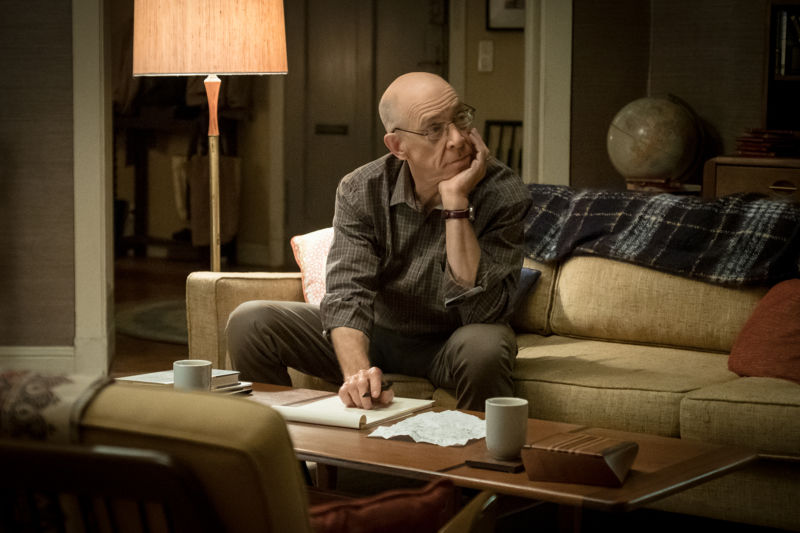
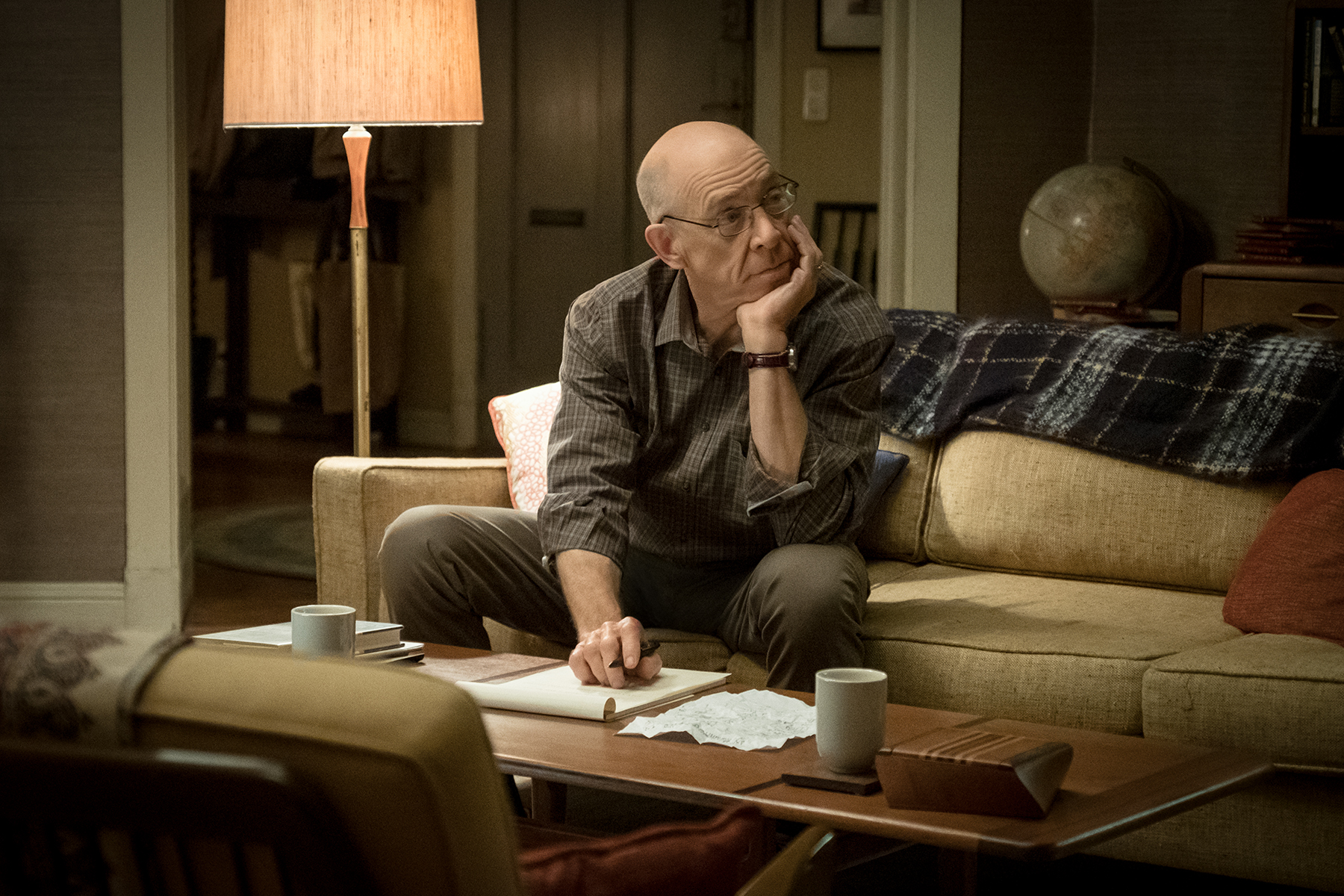
Enlarge/ He may not constantly be the central focus of the narrative (as he was in S1), but Howard(s) is still tangled up in all the larger happenings within Counterpart.
Warning: This story contains minor spoilers for Counterpart S2.
This week, genre TV fans received a bit of bad news. Counterpart, the JK Simmons-led Starz drama combining sci-fi realism with pseudo-Cold War spy thrills, would not be getting a third season.
Deadline reported Starz’ decision to cancel came in early January. Presumably execs had already read scripts if not viewed the rest of the season, but the timing certainly wasn’t ideal for Counterpart‘s chances. After a strong S1 that mixed intriguing world-building, a ticking-clock bit of action (via a mysterious assassin), stunning visuals, and an even more beautiful individual discovery arc executed in the capable hands of Simmons, the start of S2… well, it felt flat.
The table was already set
Counterpart S1 ended with the show’s world in chaos—diplomatic relations between the two sides reached a new low, and the powers that be shut down border crossing between them accordingly. The Alpha world had learned of a sleeper-cell ploy from factions within the Prime world, but the organization bearing the responsibility to investigate this (the Office of Interchange) hadn’t yet determined who the in-house mole was. Interchange thus brought in an outsider—former FBI agent Naya (Betty Gabriel)—to look into whether things were as simple as they seemed (the sleeper cell agent, called Indigo, had framed a higher-up within Interchange).
Meanwhile, Howard (Simmons) found himself suddenly stuck in the Prime world as Howard Prime occupied his life in the Alpha. Howard Prime would do his own off-books search into what exactly was happening at Interchange and with Indigo at the behest of his boss Peter Quayle (Harry Lloyd), who discovered in S1 that he was married to the mole (Clare, played by Nazanin Boniadi). Given the two Howards’ Parent Trap-like switch, they also each had to deal with the personal challenges involved with learning about their other through the eyes of their partner, Emily (Olivia Williams), who holds a very different opinion of Howard depending on which world you’re operating within.
Maybe the premise seems too far-fetched and convoluted when spelled out in text, but virtually all of that information was conveyed elegantly in Counterpart S1. Yet the show’s second season starts with four episodes that barely forward all that narrative momentum. We meet a few new characters like Naya who may or may not be important—others include Yanek (James Cromwell), a social scientist who studies the pre-dimensional split lives of individuals at a Prime world prison-like facility, and Mira (Christiane Paul), the enigmatic leader of Indigo. But by and large these hours seem like table-setting in the grand scheme—a main character receiving new information to sow doubt here, others carrying out some fast-paced action before hitting dead ends there. Perhaps the show leaned too heavily towards conventional espionage drama early on, mistaking dead drops for meaningful development.
But now nine episodes into S2—episode 10, Counterpart‘s season and potential series finale, airs Sunday—this doesn’t feel like a wasted or entirely lackluster year (cough, cough, Mr. Robot S2). That’s because this run of episodes takes a dramatic turn during what’s perhaps the best single episode of TV in 2019 so far: “Twin Cities,” a flashback, standalone episode that adds layers of meaning and motivation to every happening before and after it.
Former FBI agent Naya joins the Office of Interchange to investigate claims of a mole.
In the prime world, the mysterious Yanek questions select individuals about what they remember of childhood (aka life before the dimensional split).
S2 means meeting Quayle’s other, who is detained for a specific reason.
We get a flashback to Berlin Wall-era Germany for an entire standalone episode outlining the origins of the dimensional split (it’s possibly the best single episode of TV in 2019 so far).
As Clare begins to learn the extent of Indigo’s tactics and end-game, her devotion seems to fluctuate between family and her world’s “greater good.”
Old white dudes yielding power? You don’t say
Returning to spy-fi roots
If the most interesting things about Counterpart S1 for you involved the questions this world presented as opposed to the espionage, “Twin Cities” (S2E6) will scratch every itch the show has given. In new-wavey East Berlin pre-Berlin Wall teardown, Yanek is simply a scientific researcher of sorts who feels like his job has run its course and that a start in West Berlin may be better for him (and his family). But one day at work, all his era tech seems to malfunction (in another great visual sequence where computer screens seem to be literally melting onto the desks trying to hold them). The chaos seems earthquake-like, and it leaves a gaping hole in his lab wall.
Soon enough, Yanek comes face-to-face with his other, a chance encounter that essentially births the world of Counterpart fans came to know. If you have seen Three Identical Strangersand thought the ethics there felt a little too “people-playing-God,” this episode satisfyingly tosses scientific standards even further aside—initially out of pure curiosity, but ultimately out of unflinching commitment (and hubris) to the idea that Yanek’s assembled research group are the only ones who can truly understand the nature of humanity. In the course of the hour, every conflict in Counterpart suddenly gets a new dimension. Logic now exists behind previously one note terrorist Mira. The nature of present-day Yanek’s work seems less nefarious. And it’s unclear whether the bloody espionage battles between two worlds and intelligence agencies versus Indigo have been driven by circumstance or by the very nature of humanity itself.
In the episodes following “Twin Cities,” Counterpart leans heavily into existential questions as its espionage plot barrels towards (presumed) culmination. Suddenly, Howard isn’t so sure Howard Prime is a fully-realized and therefore “better” version of himself—his nurture prevailed. At the same time, Howard Prime isn’t as confident in his ability to adopt his meeker other’s lifestyle, instead his nature seems to be what the Alpha world needs in order to survive the sleep-cell plot. The facade of greener grass has faded for everyone.
By re-establishing this philosophical layer of the show (a must for any good sci-fi), Counterpart regained the balance that made its first season standout in what became a stacked year for new television. Hopefully, fans can eventually look back knowing that equilibrium didn’t arrive too late. But at worst, this last run of episodes has been a thrilling reminder of the highs this show remains capable of when it draws upon its dual-genre influences and allows them to intermingle like two Howards in a ho-hum living room.
https://arstechnica.com/?p=1457579
A natural selection: Evolution evolves from board game to digital app
Welcome to Ars Cardboard, our weekend look at tabletop games! Check out our complete board gaming coverage at cardboard.arstechnica.com.
North Star Games has been developing the app version of its popular board game Evolution (read our review) for years, showing demos as far back as PAX Unplugged in November 2017. Now the game is out for Steam, iOS, and Android—and the results have been well worth waiting for. The final version is immaculate in look, feel, and ease of play. Even if you didn’t love the cardboard version, the digital adaptation offers a new and better gameplay experience.
Players in Evolution compete to create and grow their species to consume more food tokens, which are worth points at the game’s end and which become scarcer as the game progresses. Each species can have up to three Trait cards that give it extra powers or makes it harder to attack. One of the Traits makes species (which are herbivores by default) into Carnivores, which feed by attacking other species—including your own, if you can’t feed them by attacking species belonging to other players.
Each species can have a “population size” from one to six, which also becomes the amount of food that species must consume in each round. Species also have a “body size” from one to six, which matters for attacking and defending. At the end of the game, you count all the food your species have consumed, then add one point for each Trait card applied to your active species as well as one point per population of your remaining species after the final feeding.
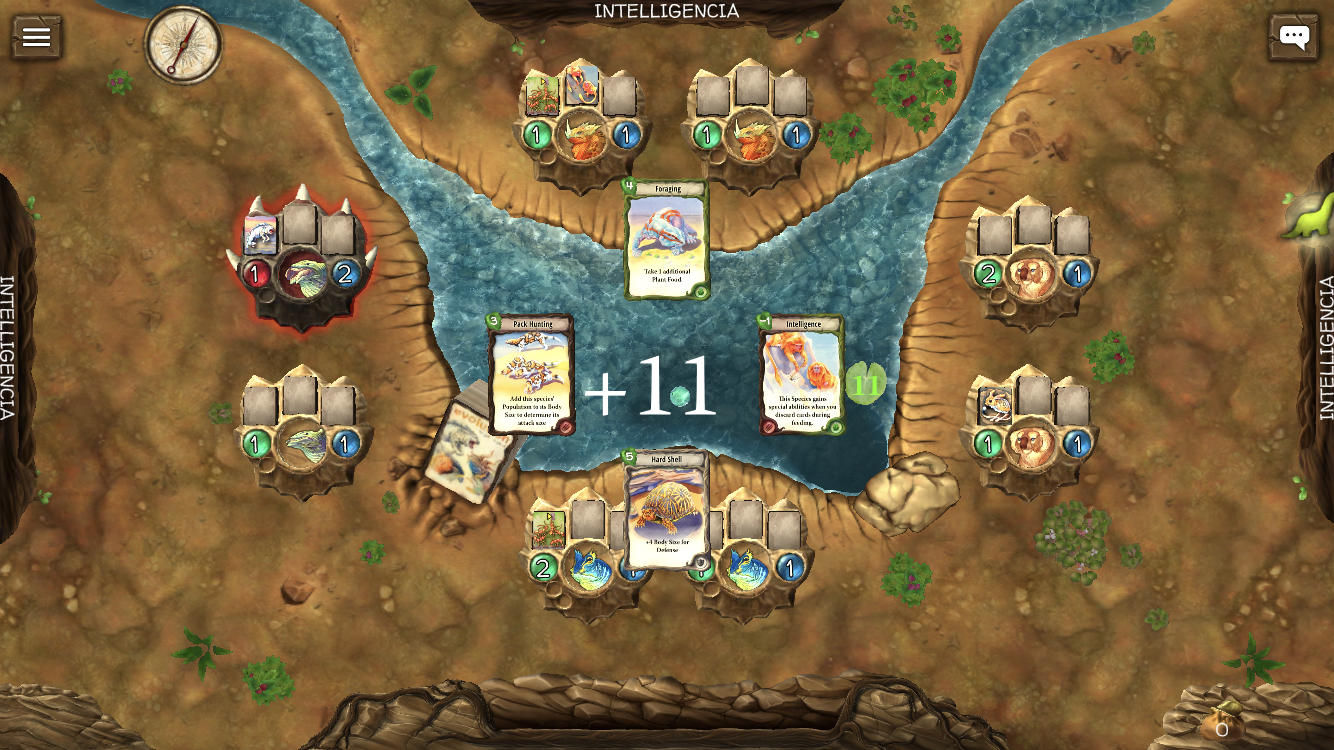
The Evolution app looks spectacular, with brighter colors than in the physical game, and clear, easy-to-read text on the Trait cards (once you zoom in to see them). There’s a fun animation when a Carnivore attacks, and a clear depiction of population loss or extinction at the end of each round. You have to look quickly, but you can also see how many food tokens each player gets to store for points at the end of each round—though they show simultaneously, so your eyes have to work fast. (Points aren’t secret, but because they’re stored in each player’s bag, the game doesn’t display running totals.)
Gameplay is simple and intuitive, with the option to drag cards or tap and place them. The standard view shows you all players’ tableaux, so you can see at a glance other players’ species, populations, and whether they’re herbivores (which compete with you for food at the watering hole) or carnivores (which might eat you). The artwork on the cards is easy to discern even in the full-table view, so once you’ve played the game enough to familiarize yourself with the different Traits and their associated images, you may not need to zoom in to read other players’ Traits. You can also see species’ populations and body types clearly from any view.
This is all especially important if you decide to go savage and turn any of your species into Carnivores, because you need to scope out whether there will be other species for you to eat—or if all available food sources are protected by cards that make them difficult or impossible to attack.
The AI options are adequate but prone to self-defeating moves, such as putting low-numbered cards into the food supply (thus limiting the number of new food tokens in a round) even when the AI has several herbivorous species to feed. AI opponents will attack you as well as attacking other AI players, and they’re strongest at deploying their own Trait cards to their advantage—such as using cards that allow them to gain extra food before feeding or giving them extra pulls from the watering hole on each turn. (Ordinarily, you get to take one food on each turn as the feeding goes around the table, until the food runs out.) If you’ve played the tabletop game at all, you’ll probably want to jump right to the intermediate or, more likely, hard AI options—or just play live opponents online.
The game has a campaign mode that serves as an extended tutorial, adding additional trait cards during each of the first seven stops while also varying how the AI opponents play the game. This forces you to adapt your strategy. For example, there’s one game where you play a single opponent in a setting where nearly all of the trait cards have very low or negative numbers, so there will be little to no plant food in the watering hole during each round. It’s a clever and different way to teach a game, without the excessive hand-holding of most tutorials, and it gives you the satisfaction of beating an opponent that’s actually trying to win still while forcing you to react quickly to the constraints of each new scenario.
Each species can have up to three unique Trait cards.
Carnivore attack!
Whomp whomp. Another species goes extinct.
Adding food cards to the watering hole.
The game comes with a fine tutorial.
You can play single- or multi-player.
The app includes some time-saving features that weren’t strictly necessary but which certainly speed game play. The biggest is the auto-feed feature, where the app will handle all feeding for you when 1) all remaining, unfed species are herbivores and 2) there’s more than enough food in the watering hole to feed everyone. I also enjoyed the quirky animations of carnivores feeding, which change if you or your prey have certain trait cards that alter battle dynamics. The app also highlights the active player and uses an image of the first-player token, a green brachiosaurus, to show who places traits and feeds first in each round.
This is a thoughtful adaptation, one that shows the time North Star put into it. Other than the strength of the AI players, it has no real flaws. A North Star employee told me at the 2018 PAX Unplugged show that the company wants Evolution to be seen as a best-of-breed board game app—like the app version of Galaxy Trucker or the iOS version of Carcassonne—from the first day of release. I think they’ve pulled it off.
https://arstechnica.com/?p=1457709
Aquaman, Khal Drogo actor may play Duncan Idaho in new Dune film
Enlarge/ Jason Momoa hit the big time with his portrayal of Khal Drogo in HBO’s Game of Thrones and had a global box office smash hit with Aquaman. Now he’s set to play Duncan Idaho in new film adaptation of Dune.
Deadline Hollywood reports thatAquaman star Jason Momoa—who immortalized Dothraki warlord Khal Drogo in the first season of Game of Thrones—is in negotiations to portray another science-fiction warrior, Duncan Idaho from Dune, Frank Herbert’s beloved 1965 science fiction novel. Directed by Denis Villeneuve, this new film adaptation is expected to begin shooting this year.
(Mild spoilers for original novel below.)
Dune is set in the distant future (where else?), and follows the fortunes of various noble houses in what amounts to a feudal interstellar society. Much of the action takes place on the planet Arrakis, where the economy is driven largely by a rare life-extending drug called melange (“the spice”) that also conveys a kind of prescience. There’s faster-than-light space travel, a prophecy concerning a messianic figure, giant sandworms, and lots of battles, as protagonist Paul Atreides (a duke’s son) strives to defeat the forces of Shaddam IV, Emperor of the known universe.
That brief synopsis hardly does justice to the sweeping grandeur and enormous cultural influence of Herbert’s novel. When it was first published, the Chicago Tribunecalled it “one of the monuments of modern science fiction.” Astronomers have used the names of many fictional planets in Dune to identify various topographical features on Saturn’s moon, Titan. Herbert wrote five sequels, and the franchise also includes board games, computer games, and numerous prequels and sequels written by his son, Brian Herbert, with Kevin J. Anderson.
It took 20 years before Dune was finally adapted into a film in 1984 by director David Lynch, starring Kyle MacLachlan as Paul Atreides. As an exercise in world-building, it was an impressive accomplishment, bringing so much of Herbert’s original vision to vivid life. But the plot veered away from the novel in significant ways, the acting was leaden, and the film was critically panned. (It hasn’t improved over time; the film is almost unwatchable.) The author pronounced himself pleased with the result, acknowledging the liberties taken but insisting he could “hear my dialogue all the way through.” It failed at the box office, however, grossing just $30.9 million on a $40 million budget.
In 2000, SyFy adapted the novel into an Emmy-award-winning six-part miniseries, Frank Herbert’s Dune, followed by a sequel miniseries in 2003, Frank Herbert’s Children of Dune. Both are among the channel’s most highly rated programs.
In the new adaptation by Legendary Pictures, Momoa will play Duncan Idaho, swordmaster to House House Atreides and trusted advisor to Paul. As our own Lee Hutchinson puts it, “Idaho is basically the C-3PO/R2D2 of Dune—he’s the one character who’s present for every single book, no matter how implausibly.” (The late Richard Jordan played Duncan in the 1984 film, and James Watson played him in the SyFi miniseries.) He joins an already stellar cast, including Timothée Chalamet, Rebecca Ferguson, Dave Bautista, Stellan Skarsgård, Charlotte Rampling, Javier Bardem, and Josh Brolin.
https://arstechnica.com/?p=1457321
Why is this copy of Super Mario Bros. worth $100,000? We asked a buyer
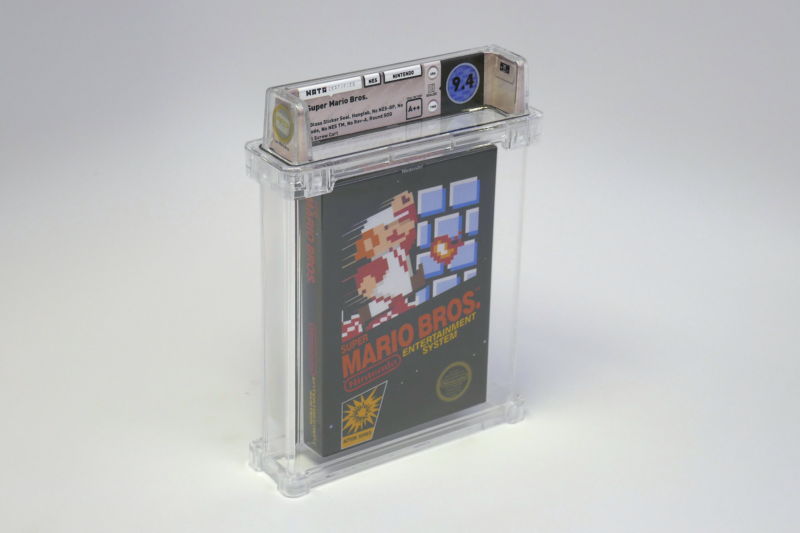
Enlarge/ Of the millions of copies of Super Mario Bros. ever sold, this is the rarest and most valuable known to exist.
A sealed copy of Super Mario Bros. for the NES has sold for $100,150, setting a new record for the video game-collecting market and perhaps ushering in a new era for the valuation of gaming rarities.
Before you go searching to see if that old cartridge in your attic might be your gateway to riches, note that this copy of the game is so valuable primarily because it’s one of the earliest known copies of the game, and in near-perfect condition. The box in question comes from Nintendo’s extremely limited “test market launch” for the NES in New York City and Los Angeles starting in late 1985 (no one actually knows the exact date). These copies didn’t come in the usual shrink wrap but were instead sealed with a small matte or glossy sticker (this handy guide outlines the many different Super Mario Bros. box variants released between 1985 and 1994).
Deniz Kahn—CEO and cofounder of game-grading service Wata Games, which evaluated this specimen—estimates that only 2,000 to 10,000 copies of each of the 27 test market games were ever made in this sticker-sealed style. That makes finding even an opened box decades later rare enough. Finding one with the sticker seal intact is even rarer; Kahn estimates only a few dozen exist across the whole test-market line.
But finding an unopened test-market Super Mario Bros. is so rare that Kahn told Ars that it’s “the only known copy of arguably the most important game in Nintendo history… It’s rumored that there is one more out there, but it’s just hearsay. I haven’t seen proof of it.”
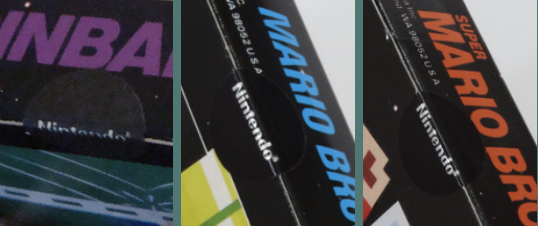
Close-up examples of the sticker seal that only appeared on games sold during the NES’ test market launch, which did not have shrink wrap.
Not only that, but Wata Games’ chief grader Kenneth Thrower said in a statement that this box is in a “supreme state of preservation… [test market boxes] usually exhibit significant wear after more than 30 years.” Wata Games gave the unopened box a 9.4 rating on its ten-point rating scale and gave the sticker seal its highest rating of A++. “This game may be the condition census of all sticker sealed NES games known to exist,” Thrower said.
Coming out of the woodwork
Kahn said he first heard of this one-of-a-kind, sealed test-market Super Mario Bros. about six years ago through direct contact with the person who eventually sold it. While Kahn said that seller wished to keep his identity private, he’s “one of the largest collectors of sealed video games” and is well-known in the tight-knit community of top-level game collectors.
“You couldn’t be a high-level collector without knowing [about this game],” Kahn said. “In the sealed collector market that was one of his holy grails. A lot of collectors at that level know about the game. People know where it came from because the community is not massive.”
Enlarge/ Even shrink-wrapped old games aren’t often found in the pristine condition of this sealed Super Mario Bros. These examples were found in an abandoned video rental store.
There’s not much information available on how the seller came into possession of the game or how it remained in such good condition for decades despite having no protection from shrink wrap. Usually this kind of top-quality find only occurs by happenstance. A collection of 2,200 sealed NES, SNES, and Genesis games was recently uncovered from two Indiana video rental stores that had suddenly shut down, leaving their stock sitting undisturbed on the shelves for years. “Sometimes a grandmother might buy a game for Christmas and then pass away,” Kahn said of previous high-quality gaming finds.
Though the sealed Super Mario Bros. had been previously graded by another company, Kahn says the owner sent it to Wata for re-evaluation in part because “we actually recognize on the label what variant it is, while the old one hadn’t in any way (or not prominently enough).” That’s important because a mint-condition copy of the 11th printing of Super Mario Bros. is only worth about $1,000, Kahn said.
Finding a buyer
Once Wata Games’ grading process was complete, word quickly spread among the community that the game might be available for purchase for the right price. “The owner said he would not listen to an offer that was less than $100,000,” said Jim Halperin, owner of Heritage Auctions and one of three buyers who ended up purchasing a share in the game. “So we all talked about it and decided to buy it together. The extra $150 covered the seller’s expenses.”
(While Halperin sits on the advisory board for Wata Games, Kahn stressed that he had no knowledge or involvement about the grading process before it was completed.)
Halperin was brought in to the record-setting deal by Rich Lecce, who until 2010 had the Guinness World Record for the world’s largest video game collection. Zac Gieg, a collector and owner of Just Press Play Video Games, also took part in the sale.
“At Rich’s request, the partners invited me in after the price was set,” Halperin told Ars. “My now-partners simply decided that we could all go in together and keep it in strong hands. This was an opportunity to diversify the risk, have fun, and use the publicity to help educate others about the hobby.”
Halperin says he’s not sure precisely which of the three owners will hold on to the game going forward. “For now it will be stored in our vaults at Heritage Auctions whenever we aren’t displaying at conventions and other events,” he said. “Of course we all want to share it with the collecting community as often as humanly possible.”
A million-dollar video game?
Enlarge/ If a copy of Action Comics No. 1 can be worth millions of dollars, why not a rare video game?
While the six-figure game sale is a new high-water mark for the collecting community, it may not remain so for long. “When a new collecting genre is launched and a piece comes on the market for the first time, that is the absolute best price you’re going to pay for that item because word will get out and demand will spike across the world,” Heritage Auctions PR Director Eric Bradley told Ars.
“When a story like this gets out, everybody turns to their collection and goes, ‘OK, is my copy of Super Mario Bros. 3 still sealed or did I buy an extra copy?’ They start to look at the quality and the flood gates start to open… I would not be surprised if we saw more games in the next five years getting into the five- or six-figure prices.”
Kahn likened this sealed Super Mario Bros. to Action Comics No. 1, the premiere of Superman that has become the holy grail for comic book collectors. Both examples complete the trifecta for premium collectibility: rarity, popularity among the public, and significance to collectors. The only other game that might compete in value, Kahn said, is a true first-printing of The Legend of Zelda (which has a ™ rather than an ® mark on the box). “There is one known copy [of the first-printing Zelda] and I’ve never even seen a photo of it,” he said.
A pristine copy of Action Comics No. 1 sold for $3.21 million in 2014, and Kahn doesn’t think those kinds of valuations are out of the question for the rarest, most desirable video games. “The Overstreet Price Guide in the mid-’70s was listing $12,000 for a mint condition Action Comics No. 1,” Kahn points out. “In games, some titles sold for one-tenth of their current price just a decade ago.”
“There are bets on what will someday be the first million dollar video game, and many collectors believe that this will be the one,” Halperin said. “Whether it is or not, I think the value is there based upon the rarity, importance of Super Mario and the high grade. When coins, baseball cards, and comic books with much higher populations are bringing millions of dollars, to me this game seems like a great value at this level.”
“I think [this particular Super Mario Bros.] could go higher depending on the demand,” Bradley said. “I don’t know if it would go higher immediately…. The game is iconic, so I wouldn’t be surprised if they hold on to it for a while and when the market matures a little bit it comes up for auction.”
“We’ve been seeing the video game market growing and reaching the level of the more mature hobbies,” Kahn added. “It’s only natural that the people who grew up with this stuff are getting disposable incomes and they want to collect what they grew up with. There’s this transition that happened with comics and now with games; they aren’t just seen as items of nostalgia, but being appreciated for their art and cultural value. That’s what’s causing this paradigm shift.”
“If video games are going to go the way of comics and coins, then there will one day be a million dollar video game sale, and I think this is that game if that’s going to happen.”
https://arstechnica.com/?p=1457327
Dealmaster: As Switch sales slow, Nintendo launches a new bundle
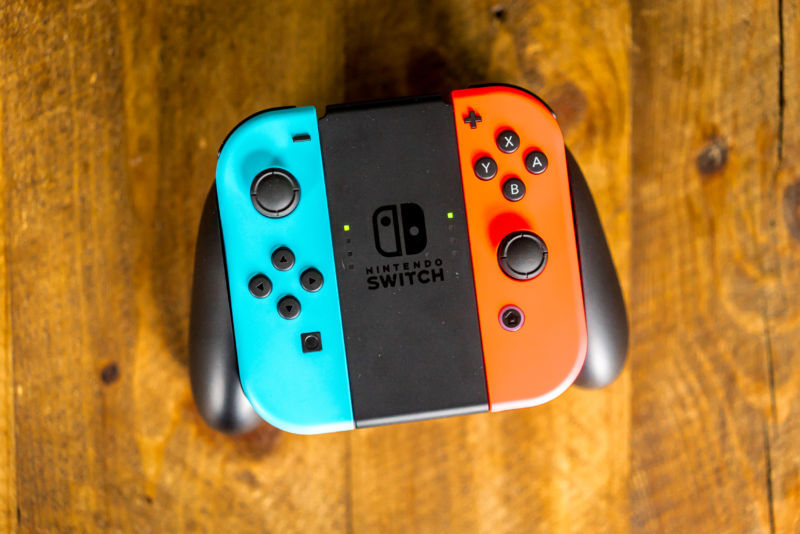
Enlarge/ The bundle includes the neon red and neon blue Joy-Cons.
Nintendo has released a new Switch bundle that pairs the popular game console with a $35 credit to its eShop digital store. The company announced the bundle last week, but the deal has now become available at various retailers, including Walmart, Amazon, GameStop, and Best Buy.
The bundle retails for $299.99, the Switch’s standard going rate, with the $35 credit available in the form of a download code packed with the console. Nintendo says the credit can be put toward any purchase in the eShop. The company has not provided a specific time frame for the new promotion, only saying that the bundle will be available while supplies last.
This isn’t the absolute best deal we’ve seen for the Switch—a handful of coupon codes and one-off promotions have dropped it as low as $225 in the past year. But those deals have typically been brief, and getting what effectively amounts to a $35 discount is still a pleasant bonus for those who have been interested in picking up the console. For reference, Nintendo’s primary Switch deal for Black Friday was simply bundling Mario Kart 8 Deluxe with the device.
Note: Ars Technica may earn compensation for sales from links on this post through affiliate programs.
A boon for business?
The bundle comes at a time where Nintendo seems especially eager to boost Switch sales. The device has been a definitive success for the company since its March 2017 launch; Nintendo last month said it had shipped more than 32 million consoles as of the end of the holiday 2018 quarter. It was the best-selling console in the US last year, according to analysis firm NPD; it has outpaced shipments of most consoles at this point in their life cycle; and it has generally helped revitalize profits after the dismal performance of the company’s prior Wii U console.
All that said, sales of the device have not matched Nintendo’s expectations as of late. The company initially set a sales target of 20 million Switch units for the current fiscal year, but it recently lowered that goal to 17 million as the console’s momentum has cooled. This comes as sales of Nintendo’s 3DS portable console continued an ongoing fall that is now accelerating faster than the company has anticipated.
It’s also worth noting that there have been murmurs of Nintendo releasing new Switch hardware at some point. A January report from Japanese financial news outlet Nikkei.com said that the company may launch a smaller, less feature-rich SKU that’s priced lower than the existing hardware. At the same time, president Shuntaro Furukawa reportedly said last month that the company is not planning a direct successor or price cut to the current console.
While the Switch is not nearly as technically powerful as Sony’s PlayStation 4 or Microsoft’s Xbox One, the device still has the usual cadre of highly regardedfirst-partytitles, and its portability makes it a more flexible piece of hardware. At the end of the day, the new bundle may not bring as big a bump in sales as a steady stream of hit games. But it sweetens the deal either way.
https://arstechnica.com/?p=1457107
Tetris 99 isn’t just a great twist on a classic—it’s a gameplay revolution
Enlarge/ What happens when more people get their hands on Tetris pieces in a single online match? A lot more than you might realize.
In an interview with Ars Technica last year, Brendan Greene, the game designer best known for PlayerUnknown’s Battlegrounds (PUBG), offered a throwaway opinion: every genre should have a battle royale mode. It wasn’t necessarily the best-received suggestion at the time, as backlash against the battle royale phenomenon had begun, but Greene was in a good position to say it. He’d already struck gold multiple times slapping battle royale into other games as a modder.
Since then, we’ve mostly seen battle royale options land in PUBG-like shooters, but Wednesday’s Nintendo Direct presentation shook everything up with its own surprise launch. Tetris 99, a Nintendo-published game, would launch immediately on Wednesday as a “free” perk, with zero microtransactions, for paying Nintendo Switch Online customers.
Shortly after cataloguing the Direct’s firestorm of announcements, I booted up my Nintendo Switch and confirmed two things. First, this was Tetris.
Second, this was my kind of Tetris:difficult, fast, and full of victims.
But Tetris 99 isn’t technically a battle royale game, at least not in the tradition established by PUBG and pushed forward by the likes of Fortnite and Apex Legends. Instead, it transforms the genre’s basic concept into something fascinating: a new form of video game challenge that I’ve never seen before. It’s time to usher in a new era of games built with constant, seemingly random pressure as a focal point—and to imagine where Tetris 99‘s surprisingly fun twist might land next.
98 sprinkles in your vanilla Tetris
Sure looks like Tetris, right? But Tetris 99 adds those other 98 players, whose progress is technically visible mid-match (you’ll likely be too distracted to notice).
Those yellow lines indicate how many players are currently aiming their damage-block output at you. The top of the screen, meanwhile, shows the four damage options you can pick from. The game automatically aims your garbage blocks using that input as a guide.
That bar on the left is the biggie: it tells you exactly how many damage lines you can expect in the near future. Different colors mean even more lines are on their way. (They pop up in phases, not all at once.)
The bottom-right box indicates how many badges you’ve accumulated; you earn them by being the last person to send damage blocks to a foe before they fail.
Once you get to the top 10 in a match, the speed starts to ramp up dramatically. Better hope you have some badges at this point, because you’ll want to put the hurt on your remaining foes before the high speed knocks you out.
Every game of Tetris 99 begins with an apparent 99-player requirement. As you wait for more online peers, the tiny squares positioned behind your centered Tetris grid light up, one opponent at a time, like something out of the old 1 vs. 100 game show. With everyone in place, the game counts down in ready-set-Tetris fashion. (No, it doesn’t actually declare that three-word phrase, which is a shame.)
From that point, the goal is simple: outlast 98 other players in what’s essentially a solo game of vanilla Tetris… with the addition of the series’ “garbage” mechanic scaled up to 99 people. When you clear more than two lines at once, that will send incomplete, “garbage” lines to the bottom of another online player’s grid, thus pushing their stack upward, and they can do the same to you. In some cases, you can prevent incoming garbage blocks from reaching your grid by clearing a few lines of your own; you get roughly 5-10 seconds to offset that incoming damage, if you want.
But Tetris 99 remixes the traditional versus-mode mechanic of your damage focusing squarely on a single opponent. Instead, the game distributes garbage blocks with what I would call an “intelligently random” system.
Here’s how it works
Every player can designate where they want their damage blocks to land by picking from one of four options: “badges,” “KOs,” “attackers,” and “randoms.” Though the game lacks an instruction manual, Nintendo’s UK site includes a breakdown of what these targeting terms mean, in order: “You might choose to go on the offensive against the current top players, focus on those that are nearly finished, counterattack to defend against players that are targeting you… or just send garbage blocks at random players!”
The little squares in the background include itty-bitty previews of their block-stack situation, and you can manually target one of them if you want, but the itty-bitty UI makes this difficult to manage. Your other option is to pick from one of those four targeting priorities and then put your trust in the Tetris 99 gods, all while its system grabs other players’ blocks and sends them your way—sometimes more intensely, thanks to this game’s new “badge” system. If you’re ever the last person to strike another player with garbage blocks before they fail, you’ll claim their badges. Do this, and your garbage-block attacks become incrementally more powerful, but you also get a target on your back if anyone aims their garbage blocks at that “badges” metric.
And if you and another player holding onto badges face off, the victor of that garbage-block juggle gets even more badges. This kind of victory, punctuated by pleasant plinking sound effects, is one of the more satisfying moments I’ve had in a puzzle game in my career as a critic.
Distributed Construct Damage (DCD)
For the record, I rule at Tetris 99. In my first five games, I got three #1 finishes.
Here are the stats exposed at the end of each match.
Three chicken dinners.
Yet in spite of that endorphin-rush moment, the resulting game mostly feels divorced from other real-life players. How am I disrupting other players? Who exactly is sending me garbage blocks? The only answer comes at the end of a given session, when a list of 99 usernames appears, ranked in order of survival time.
Should you get to a match’s top-four climax, you can better guess who you were facing off against at the very end—especially if you take out a player who’d accumulated a bunch of their own badges, at which point the game plays some satisfying sounds to indicate that you’ve scooped up their booty. Otherwise, it’s a bit of a blocky cloud.
Since this is Tetris, that’s mostly OK. Your focus will be on your own Tetris grid, which starts at the slowest possible speed and ramps up based on the number of remaining players, not on time. Get all the way to the top 10, and the drop speed accelerates pretty intensely. Until then, the challenge comes as much from your own grid management as it does from randomly distributed garbage blocks—which, as in Tetris games past, often emerge with steep one-line gaps that can be exploited for return-fire four-line clears.
The result is an interesting new version of Tetris challenge that heretofore has never existed: what I’m calling distributed construct damage (DCD). On top of the series’ usual random-block chaos, Tetris 99 asks a compelling question: how can the game organically change its challenge model to something other than “oh no, the blocks are falling faster”? Enter DCD.
Now, at any time, the game can start sending alerts about incoming damage blocks, and this signals a serious question for Tetris players. Do they immediately clear lines to fend off the impending attack, as noted by a number of blocks in a lower-left warning box? Or do they hang on to their higher stack for a second, take on the damage, and try to come out ahead—by clearing the mixed stack of normal and damage blocks, like a Tetris lord, and claim some KOs?
That simple addition of badges—a gift for taking out an opponent—makes the latter option a tantalizing risk-reward choice. Those badges are darned near necessary to succeed in a top-10 scenario, because you’ll need more powerful damage-block dumps to trump your later opponents, and each successive badge you pick up adds to your attack power. But they also put a target on your back on your way to the top.
Vanilla Tetris already revolves around what design nerds call a Random Number Generator (RNG), which determines which Tetris piece you get next. DCD slyly adds a second, more nuanced RNG-styled dice roll to the game: whether you’ll receive damage blocks at any given moment, driven in part as a reaction to your play style.
A wholly new challenge model—and a tease of what’s to come
The result, just in terms of the blocks popping up in an individual screen, is some darned good Tetris, if you’re into the series’ more stressful side. (If you want a more placid, life-affirming version of the series, Tetris Effect may be more your speed.) But Tetris 99 also delivers something interesting with its unique difficulty model: constructs playing the same game and thus contributing similar data—damage blocks, KOs, and badges—to a central pool.
This is not the same as a video game in which you directly interact with opponents. Tetris 99 doesn’t match up with, say, building a military force in a game like StarCraft, all while keeping tabs on an opponent and attempting to react to a mix of the known and the unknown.
[embedded content]
Dota 2‘s Auto Chess mod, as explained by popular game streamer TrumpSC
The closest corollary I’ve seen in video games, honestly, is the burgeoning Dota 2 mod Auto Chess. This free, Chinese-developed mod wrests many controls away from players to let them focus on an economy of coins and warrior purchases while going through multiple rounds of combat, sometimes against real players and other times against an AI. The combat is automatic, and the economy can punish players for accumulating either a winning or losing streak, so players are constantly trying to thread a performance needle while dealing with an almost slot machine-like system of RNG. (All without microtransactions, I might add.)
Both games dangle real-life and AI constructs as factors in your own screen’s basic challenge crux. And the result in both cases is addictive, rapid-fire dances with admittedly simple controls (drop some Tetris pieces, buy a few Auto Chess characters each round) and a just-out-of-reach dangle of visible puppet strings.
All of which is to say: other video game genres could benefit from having players’ decisions feed into a central, RNG-driven pool of slight chaos. So long as they had nearly immediate impact; for example, a farm-sim game where players’ polluting decisions fed into a climate model would probably take too long to unfold for meaningful impact.
But what if taking too much wood in the first minute of a Fortnite match somehow impacted the resources in a given match—in a build-crazy world where materials like wood, brick, and iron absolutely factor into the endgame? What if Angry Birds relaunched with an ongoing-universe schtick, one in which players must race to clear destructible levels’ piggies while doling out Tetris-like damage blocks in all directions? And what if an augmented reality game one-upped Pokemon Go by having its players feel connected to each other in live battles where their decisions rippled back and forth?
What if…
What’s more, what if a game launched with a Tetris 99 gimmick but everything was driven by AI? If we learned six months from now that Tetris 99 was a fraud and that each session’s 98 opponents were AI the whole time, that would be tacky and distasteful… but it wouldn’t change the core challenge offered by vague, hard-to-pinpoint garbage blocks appearing while players focus on their own grids. And in our crazy machine-learning era, we’re not that far off from simulated simultaneous constructs being run by game developers just for funsies. What might emerge if a game developer watches 100 simultaneous instances of its single-player game being automatically played by AI, looks for trends or possible points of overlap, and then has a “eureka” moment?
I’d love to see more game makers experiment with marrying dozens of simultaneous gameplay instances, with or without legitimate online multiplayer attached, and see what happens. Either way, Tetris 99 is more than a classic game with a bunch of strangers piling on. It’s a tantalizing (and surprising) taste of new game design potential, where the cloud is the limit.
https://arstechnica.com/?p=1456693
Our favorite psychopath, Villanelle, is back in trailer for Killing Eve S2
[embedded content]
Villanelle (Jodie Comer) is back for another round of cat and mouse with Eve (Sandra Oh) in Killing Eve season 2 trailer.
Killing Evetopped the list of our favorite TV shows last year, and we’ve been eagerly awaiting news of a second season. So BBC America gave us a Valentine’s Day gift: the first trailer for season 2, picking up right where the first season left off.
(Spoilers for season 1 below.)
Based on Luke Jennings’ series of thriller novellas, Codename Villanelle, Killing Eve stars Jodie Comer as Villanelle, a self-described psychopathic killer for hire. Her string of corpses catches the attention of an MI5 (later MI6) officer named Eve Polastri (Sandra Oh), who is obsessed with female killers and correctly guesses there is a new player among their ranks. What follows is a sexually charged cat-and-mouse game where it’s not entirely clear who is the predator and who is the prey.
Per Deadline Hollywood, the season 1 finale brought in more than a million viewers, while Oh won the Golden Globe, Critics’ Choice, and SAG Award for best actress in a drama for her portrayal of Eve—deservedly so, although Comer is equally fantastic as Villanelle. It’s their strange mutual attraction that drives much of the show’s tension. “Why are the two of you so interested in each other?” Eve’s MI6 boss, Carolyn Martens (Fiona Shaw), observes in the new trailer. Perhaps it’s because each sees a bit of herself in the other—an element captured when the two met face to face in a hospital ladies’ room without realizing who the other was in season 1.
Pass the popcorn: Killing Eve S2 debuts April 7.
YouTube/BBC America
The S1 cliffhanger had Eve leaving Villanelle for dead.
YouTube/BBC America
“I think I killed her.” Not what this young couple wanted to overhear.
YouTube/BBC America
Not so fast: Villanelle lives (as if we had any doubt).
YouTube/BBC America
Villanelle is still rocking the wacky outfits.
YouTube/BBC America
Fiona Shaw is back as Carolyn Martens, head of the MI6 Russia Section.
YouTube/BBC America
Nothing says “I love you” like flowers from a serial killer.
YouTube/BBC America
Mirrors are a recurrent theme in Killing Eve, it seems.
YouTube/BBC America
Could this be Villanelle in disguise? Doesn’t quite seem her style, unless it’s for killing.
YouTube/BBC America
Eve haunted by the memory of stabbing Villanelle.
YouTube/BBC America
Oh, just looking for a knife to kill you with. No biggie.
YouTube/BBC America
A horrifying accident.
YouTube/BBC America
A horrified response.
YouTube/BBC America
We think Eve deserves a drink, don’t you?
YouTube/BBC America
So close and yet so far: separated by just one door.
YouTube/BBC America
The first season ended with a bona fide cliffhanger: when the two women finally meet, they curl up on Villanelle’s bed for what the killer thinks will be a romantic interlude. Eve stabs her with a knife and flees, leaving Villanelle to bleed out (or so she thinks). The S2 trailer opens with Eve sitting alone in a bus station, eating popcorn, while a breathy, minimalist rendition of Robert Palmer’s “Addicted to Love” plays. Cut to Eve on the phone, presumably with Carolyn: “I think I killed her,” she confesses—in front of a young couple who just got engaged, because Eve’s social skills have never been particularly stellar. It’s part of her charm.
Eventually she figures out Villanelle is still alive. We’re thinking the box of flowers spelling “Eve” might have tipped her off. (It’s Valentine’s Day, after all.) Has Villanelle decided to overlook the stabbing? “Sometimes when you love someone, you do crazy things,” we hear her say. One thing’s for sure: she isn’t likely to underestimate Eve again.
The new season looks like it will still have all the elements we loved about season 1: the darkly humorous beats, Villanelle’s crazy outfits, and the psychological parallels between Villanelle and Eve. A scene with Villanelle hunting for a kitchen knife—”to stab you with!” she cheerfully tells an offscreen man—is interspersed with shots of Eve chopping carrots in her kitchen, running a finger lovingly over the knife blade. All in all, it looks like we’re in for another wild ride.
Killing Eve premieres on both BBC America and AMC on April 7, 2019.