The Gentleman Driver on Netflix looks at the world of amateurs in racing
Over the years there have been a number of good documentaries on the world of endurance racing. There’s just something fascinating about the motivation and perseverance needed to compete at the highest level in long distance classics like the 24 Hours of Le Mans. Back in the 1970s there was Le Mans, the Steve McQueen movie that, while it has a plot, is really closer to a documentary—after all, there’s not a word of dialogue for the first half-hour. In the late 2000s we got the wonderful Truth in 24, about Audi’s highly successful Le Mans program, then a sequel. More recently we’ve had Journey to Le Mans and Sir Chris Hoy: 200mph at Le Mans, and now Netflix has just added The Gentleman Driver.

As the name suggests, this latest documentary looks at the role of the amateur racers that compete at the highest level of the sport, in the World Endurance Championship (WEC). Of the four classes that race at Le Mans and in this series, two of them are for pro-am teams. As the documentary explains, OEMs come and go as corporate priorities change, but the wealthy amateur has always been the backbone of the sport, and some of them are actually quite good at it. As we both happened to be at Daytona at the end of January, I got a chance to chat with Paul Dalla Lana, one of the drivers featured in the documentary, to find out a bit more about why he bothers spending so much time and money on this sport.

“Good teammates and a good team always make the difference. The sport has a big tradition of gentleman drivers being involved, it’s something that drives the customer side of racing all around the world, and now more and more you’re seeing these opportunities to merge in with factory racing and the truly pro configurations. It’s a great part of the sport and it’s nice that so many of us gentlemen are having success out there and pushing ourselves to places you never thought you’d be, right? Because it’s one of the cool thing about this sport—you can really go up and compete at the highest level if you’re prepared to put in the time and energy. There’s not too many sports that afford you that opportunity.”

As it turns out, Dalla Lana’s story isn’t that of a kid who grew up racing then had to give it up, only to return to the sport once he became financially successful in other endeavors. So when exactly did he start racing?

“I know my wife could tell you the date exactly! Somewhere in 2007 I went to my first track day ever, at Mosport [outside Toronto]. I guess it was inside me, I just never knew; it wasn’t part of our family tradition growing up. I got it very late, so this is my 10th or 11th year of racing and I’ve always kept going to the deep end every time I had a chance to do something more challenging I did it. And I’d say I’m probably just feeling comfortable now, I know my way around, what I need to do, what I can do. It’s taken that long to figure it out, in fairness. There’s no substitute for seat time, as everyone says, and in my case its had to come in the heat of battle. I haven’t had a lot of training or a lot of courses, I just jumped right in and started doing it.”

In addition to being a pretty expensive sport to compete in, endurance racing also demands a lot of your time. [Juggling schedules and plenty of travel over the last few years has meant my last race was back in 2016, for instance.] So where does he find the time?

“It’s the hardest part. In the early part of my driving career I did do sim work, and I had a home set up, but then there were some places in Toronto that had pretty sophisticated setups that helped me learn tracks and get comfortable. But personally I find it not as transferable as I’d like. At least in terms of WEC now we know the circuits, we know the car, I think I’m doing enough racing to be current. And when we’re not, we reach out and do other things, which brings me to Daytona right now, which is really a chance to slot in a couple of great races in between that long break in our season.

“So I’m not as current as some of the pros who are racing every weekend—there’s no substitute for that but I think in terms of showing up I think I’ve gotten to a place now where in the first session of the weekend I’m back up to speed and doing what I need to do. I think that’s maybe the case of it being enough time and I’m comfortable doing it. There are places we’ll go—Bathurst [which is racing this very weekend] where you just never get enough track time and it’s such a unique and crazy place that by the end of the race you’re finally figuring it out, but everywhere else I’ve done it enough that I can get comfortable quickly.”

I also wanted to know why he even bothers; after all there are plenty of other series one could go race in where you’re not sharing the track with some of the world’s best professional racing drivers. WEC’s GTE-AM category is pretty hardcore; why this series?

“My feeling was I could contribute. At least in WEC, and more than ever in GTD [in IMSA] Your need to contribute now is quite apparent and there’s no hiding, there’s just the configuration of the races in WEC. There’s very few safety cars, ultimately it’s time—what you put in is what you get out. I like that, that I can do my part, or maybe even more than my part at times. When I started [in other racing series] I won championships, but to be fair about it, it was my [professional] teammate who did all the work, and I just brought the car back [in one piece] and if you did that you had a chance. Now you’ve really got to contribute and do your part, and that’s what drives me, for sure.

Finally, how hard is it to find that last few percent when it comes to getting the most out of himself and the car?

“As I’ve gotten enough experience to observe, there’s two things that stand out in terms of the really good drivers. One is consistency, especially in endurance racing. The most impressive thing is to see people over a long period of time bang it out and be within a very small margin of laptimes. That is really hard to teach; concentration and commitment, pushing and being right in that zone where you can do it. That I think is big.

“More recently what I’ve seen is the ability of a really good driver to adapt to changing conditions, whether that’s tires changing in a stint, or conditions—track temperatures or when it’s extremely wet—just that ability to realize things are going to change. Those are the two things that great drivers are doing all the time to get those last few tenths of a percent out of the car. That’s hard, and I’m not quite there actually; if I looked at myself, sure I could be more consistent, make no mistakes, and just bang it out at the same level the whole time—there’s still some room there. And while doing that to just experiment a tiny bit to find that slightly different line, or doing things through a stint to continue to optimize; I can improve there.

“But there’s always an exception—someone who’s just more committed or hasn’t ever had a crash. In endurance racing in particular [it’s] always about bringing it home, so you realize that last tenth is not what really makes the great endurance driver. It’s important but it’s not the only thing, its really being being consistent, being able to work with a team. You often don’t get the exact setup you want, you often have to look at us [all of the drivers of a car] as a group, nobody’s in a comfortable seat, everyone’s compromising a bit to make it work.Those are all the things about being in a teammate and fitting in. There’s still room for me to learn; we’ll see if life continues to give me the opportunity. It is a big time commitment even though I’m not training the same amount as other drivers, but the training commitment to be fit is huge, the travel commitment in WEC to travel to all the races around the world is massive, particularly with a young family and a very busy business.”

Listing image by Elle Cayabyab Gitlin

https://arstechnica.com/?p=1450451


Basquiat used invisible ink to make secret drawings in his paintings

Side-by-side images of the same neo-expressionist painting under different lights.
Enlarge / A detail from “Untitled” (1981) by Jean-Michel Basquiat, as viewed under normal light (left) and UV light (right). Note the hidden arrow between the letters “E” and “P.”

Jean-Michel Basquiat, the late neo-expressionist whose tragic life story inspired a 1996 film, used invisible ink to draw secret figures in at least one of his early paintings, Artnet News reported last month. The figures are easily visible under UV light, and more of the artist’s work from this period may contain such hidden drawings.

Invisible ink has been around since at least the fourth century BC; it’s mentioned in a treatise on secret communications by Aeneas Tacticus. It’s familiar to anyone who has ever gotten their hand stamped when they entered a club so they could be readmitted later by holding it under UV light. There are many different types, but substances that glow in response to UV light include lemon juice, body fluids (hence the use of UV light in forensics), sunscreen, and some soaps and laundry detergents.

But invisible ink is rarely used by artists. One notable exception is the Chinese-born British artist Aowen Jin, whose 2015 exhibit at London’s Horniman Museum featured a series of hand-drawn invisible-ink illustrations, which can only be seen under UV light, on the walls and floor of the Music Gallery Performance Space. Apparently, Basquiat sometimes used fluorescent materials, and signed one 1982 canvas, Orange Sports Figure, in invisible ink. But this is the first known instance of the artist intentionally embedding secret drawings into a painting.

Basquiat is a classic rags-to-riches story, without the fairytale ending. He struggled in school and dropped out at 17 to attend an alternative high school in Manhattan that caters to creative sorts for whom traditional education was difficult. Kicked out by his father, he crashed on friends’ couches and sold T-shirts and postcards to make ends meet.

A Sotheby's employee hangs a name plate near Jean-Michel Basquiat's <em>Untitled (Pollo Frito)</em> on November 2, 2018, at Sotheby's Auction house in New York
Enlarge / A Sotheby’s employee hangs a name plate near Jean-Michel Basquiat’s Untitled (Pollo Frito) on November 2, 2018, at Sotheby’s Auction house in New York
Don Emmert/AFP/Getty Image

In 1976, he and his best friend, Al Diaz, made a splash spray painting graffiti on buildings in Lower Manhattan as “SAMO.” The two fell out, ending the SAMO project, but the recognition Basquiat gained as a result was the start of his stellar rise in the art world. In 1981, he had his first public showing as part of a New York/New Wave exhibit in Long Inland City, which also featured works by Keith Haring, Talking Heads frontman David Byrne, William Burroughs, and Robert Mapplethorpe.

Soon Basquiat was selling a single painting for as much as $25,000, a princely sum to a man who had been homeless just a few years before. He collaborated with Andy Warhol and David Bowie. He dated a then-unknown Madonna. He painted while clad in expensive Armani suits and was featured on the cover of The New York Times Magazine. But he also developed a crippling heroin addiction and died of an overdose in his art studio in 1988 at 27.

“It’s so exciting to see something that’s literally invisible that the artist put there on purpose.”

It’s often said the best thing a promising artist can do is to die young, and that was certainly true of Basquiat; the posthumous market for his work boomed. It’s the early paintings from 1981-1983—before the drug addiction took hold—that are the most valued by the art world. (One 1982 painting broke records at a 2017 Sotheby’s auction, selling for $110.5 million.) That’s how art conservator Emily MacDonald-Korth made the unexpected discovery of invisible ink drawings back in December: a client asked for her expert analysis to determine whether his original Basquiat was really completed in 1981.

That process included pigment analysis and viewing the canvas under both infrared and UV light. (Per Artnet News, this is “typically used to spot varnish or other signs a painting has undergone repair.”) That’s when she saw the markings: two arrows drawn in what seemed to be black-light crayon. They were identical, readily visible arrows drawn on the canvas. Basquiat may have just been doing so as a kind of guide as he worked on the painting, but he did sometimes paint over images and leave them particularly visible. So MacDonald-Korth thinks it’s consistent with Basquiat’s “use of erasure.”

And it should be very easy to check other paintings by the artist for similar secret drawings—like another 1981 canvas, Poison Oasis, which also features arrows. “Anyone who owns a Basquiat should get a long-wave UV flashlight. They’re compact little flashlights. You can get one on Amazon,” MacDonald-Korth told Artnet News. “It’s so exciting to see something that’s literally invisible that the artist put there on purpose, completely intentionally.”

Those of us too cash-strapped to afford an original Basquiat will just have to follow the hunt from afar.

https://arstechnica.com/?p=1444153


26 years later, Groundhog Day gets revived as… a VR game?

Here at Ars, decades of cheap, poorly made movie-to-game adaptations have made us deeply skeptical of the whole concept. For every Goldeneye or Lego Harry Potter out there, there are hundreds of quick cash-ins that give the whole idea a bad name.

Despite that well-earned skepticism, we’re still at least a little intrigued by Groundhog Day: Like Father Like Son. That’s the new VR-exclusive semi-sequel to the hit 1993 Bill Murray movie being announced today (hey, happy Groundhog Day) by Sony Pictures Virtual Reality. It’s coming “this year” to Oculus Rift, HTC Vive, and PlayStation VR.

If you’re hoping to see Murray reprise his role as temporally-trapped Phil Connors, be aware that Like Father Like Son instead puts you in the shoes of “the charming but arrogant Phil Connors Jr.” as the publisher-provided synopsis puts it. Dear old dad appears only in an Instagram-style photo montage in the trailer and in Junior’s mind as a larger-than-life role model. “Living in his shadow was kind of tough,” Junior opines at one point. Still, the press release does promise that “beloved characters from the 1993 film” will be making an appearance, and a slightly off-kilter version of good old Ned “The Head” Ryerson appears in a fever dream during the trailer.

It should be no surprise that the game focuses on Connors Jr. getting trapped in his own endlessly recurring version of Groundhog Day, one he’s “going to have to repeat… over and over, until he learns the true value of friends and family.” Anyone’s who’s played Majora’s Mask already knows that can make a decent premise for a game. And Sony is promising Bandersnatch-style “branching narratives and interactive storytelling… enabling players to choose myriad ways to get to the end.” The involvement of Madrid-based developer Tequila Works (who worked on the inventive Rime) gives us some hope this will be more than the usual quick cash-in. Even if this does become the latest addition to that storied list of failed film-to-game titles, though, we’re unduly excited to finally get an “official” follow-up set in the Groundhog-verse, even if it took 26 years and a move to virtual reality to do it.

Tequila Works had better watch that first step into VR, though. It’s a doo-hoo-zey.

[embedded content]

https://arstechnica.com/?p=1450005


Three Identical Strangers review: Holy [expletive], can you believe [redacted]?

[embedded content]
The trailer for Three Identical Strangers

Filmmaker Tim Wardle released it in 2018, but the documentary Three Identical Strangers feels appropriately of its ’80s era. Yes, it has the outfits and the crappy cars, but the film’s first hour in particular has the kind of goofy buddy-movie feel that feels so cozy, you’d swear it was ripped out of fiction like Goonies or Ghostbusters.

These three guys just shy of 20—Bobby, David, and Eddy—recount their perspective on a gradually unraveling mystery involving each of them. It starts when Bobby goes to his first day of community college, and everyone seems to greet him as if they’re old best friends. Then, Eddy’s actual best friend recognizes the confusion on this seemingly familiar face and asks: you don’t have a relative named Eddy, do you? 

Maybe you see where this is going and can already imagine the headlines (or Donahue or Today Show appearances). But Three Identical Strangers continues to play theaters today—and will air on CNN this Saturday, February 2—because the film has so much more to offer than a feel-good tale of lost siblings serendipitously finding each other. The documentary doesn’t hide any supernatural elements like Goonies or Ghostbusters, but something otherworldly may or may not be happening.

[embedded content]
Look! Triplets!

Many in the film press have rightly noted 2018 represented a banner year for documentaries—films like Won’t You Be My Neighbor? and RBG had legitimate theatrical runs, and festival fare like Science Fair and Who Is Arthur Chu? delighted nerds like us. But it remains hard to fathom how Three Identical Strangers fell short of the Best Documentary Oscar field despite the stiff competition. This documentary has everything you’d want from the form: likable and engaging main characters, unexpected shifts in tone and story, genuine moments of emotion and surprise, and a conclusion that stays on a viewer’s mind long after the final sequence. How on Earth did this happen and why isn’t this info everywhere? This verging-on-too-wild-to-be-true story feels so much like a well-done mystery, a genuinely scripted remake is already progress.

Discussing the film’s larger plot with anyone who hasn’t seen it would ruin Three Identical Strangers’ most effective device—it creates this sensation, after a half hour or so, where you think to yourself, “This is kind of charming. Long lost brothers find each other, love each other, open a cheesy NYC restaurant together. But wait, why is this a full-length documentary instead of a Web short?” The triplets increasingly go the ’80s equivalent of viral, sure, but seeing that unfold is not the aspect of this film that quite frankly may never occur again. What comes next, well, a certain section of the Ars Technica’s staff would definitely have some feelings.

If you like feel-good family romps, the ’80s as an aesthetic, establishments as opposition, and stories that immediately send you down Internet reading rabbit holes for several hours (to get you started: about a key non-triplet, about the central bit of information, about the triplets today, and about where everything stands today), take the leap of film critic faith. Three Identical Strangers is best experienced blind, but be sure to have a few colleagues (or commenters) to discuss it with soon after.

[embedded content]
I’m not sure Triplets would crack the Eater Hot List in 2019

Listing image by Tim Wardle / NEON Films

https://arstechnica.com/?p=1450085


Spotify reportedly in “advanced stages” of acquiring podcast company for $230M

Spotify reportedly in “advanced stages” of acquiring podcast company for $230M
Spotify / Gimlet

Multiple outlets, citing unnamed sources, reported on Friday that Spotify is in the “advanced stages” of acquiring a leading podcast production company. The rumored deal is no slouch: $230 million to acquire Gimlet Media, the company responsible for highly trafficked podcasts such as Reply All, Science Vs., and StartUp.

Recode and the Wall Street Journal each reported a Gimlet bid from Spotify in the neighborhood of “over $200 million.” That number was later clarified by Hot Pod newsletter author Nick Quah to be closer to $230 million. All three reports point out that the deal has not been completed.

The reports include a reminder that Gimlet’s last public valuation, based on venture capital funding, hovered somewhere around $70 million in August 2017. Spotify has previously acquired smaller music- and streaming-related companies, including the music-rights data firm Loudr.fm and the virtual studio service Soundtrap., but neither acquisition’s cost has been publicly announced (nor have either of those been rumored to be anywhere near $230 million). More importantly, those acquisitions have revolved around platforms and technologies, not potentially exclusive series and content.

Gimlet’s public cache has been on the rise thanks to one particular 2018 development: the adaptation of Gimlet’s fictional, radio-drama podcast Homecoming as a TV series. This series, which received a two-season order, debuted as an Amazon Video exclusive in November of last year, is produced and directed by Mr Robot creator Sam Esmail, and stars Julia Roberts.

Such an acquisition would see Spotify beef up its exclusive podcast library, which currently consists of music-related talk shows such as Ebb and Flow and The Joe Budden Show. None of the reports confirm whether an acquisition would lock down any of Gimlet’s past or present series as Spotify exclusives.https://arstechnica.com/?p=1450197


Scientists solve the mystery of Rembrandt’s “impasto” paint recipe

Detail from Rembrandt van Rijn's <em>Susanna</em> (1636), one of the paintings analyzed by Dutch and French scientists using X-ray synchrotron radiation to determine paint composition.
Enlarge / Detail from Rembrandt van Rijn’s Susanna (1636), one of the paintings analyzed by Dutch and French scientists using X-ray synchrotron radiation to determine paint composition.
Public domain

The 17th century Dutch master Rembrandt van Rijn is justly considered one of the greatest artists of all time. He’s particularly praised for his masterful depiction of light and shadow in his oil paintings, an almost three-dimensional effect achieved with his signature “impasto” technique. The recipes he used to mix his paints were believed to be lost to history. But now a team of Dutch and French scientists has used high-energy X-rays to unlock Rembrandt’s secret recipe, according to a new paper in the journal Angewandte Chemie.

Impasto (translated as “dough” or “mixture”) involves applying paint to the canvas in very thick layers. It’s usually done with oil paint because of the thick consistency and slow drying time, although it’s possible to add acrylic gels as a thickening agent to get a similar effect with acrylics. Rembrandt used it to represent folds in clothing or jewels, among other objects, in his paintings. As David Bressan notes at Forbes, “The layer causes light to reflect in certain ways, giving the painting interesting dark and light contrasts and a three-dimensional effect.”

Like most artists of his era, Rembrandt mixed his own paints, experimenting with different recipes to get different desired effects. Common materials then included lead white pigment (produced via the corrosion of metallic lead) and organic substances like linseed oil. But nobody knew the precise recipe the master used to create the impasto effect.

One of the best, nondestructive ways to analyze precious historical artifacts is with high-energy X-rays from synchrotrons, a type of particle accelerator where the accelerating particle beam travels around a fixed-loop path. (It’s a direct descendent of the cyclotron, invented by physicist E.O. Lawrence in 1930.) Synchrotron radiation is a bit different from conventional X-rays; it’s a thin beam of very high-intensity X-rays generated within a particle accelerator. It’s created by firing electrons into a linear accelerator (linac), thereby boosting their speeds before injecting them into a storage ring, where they zoom through at near-light speed. A series of magnets bend and focus the electrons, and in the process, they give off X-rays, which can then be focused down beamlines.

The shorter the wavelength used (and the higher the energy of the light), the finer the details one can image and/or analyze. Back in 2008, European scientists used synchrotron radiation to reconstruct the hidden portrait of a peasant woman painted by Vincent van Gogh. The artist (known for re-using his canvases) had painted over it when he created 1887’s Patch of Grass. The synchrotron radiation excites the atoms on the canvas, which then emit X-rays of their own that can be picked up by a fluorescence detector. Each element in the painting has its own X-ray signature, so scientists can identify the distribution of each in the many layers of paint.

Alternatively, researchers can zap tiny samples (less than 0.1mm in size) of paint to see what chemicals are present, like the French and Dutch scientists did in this latest study. The team took samples from three Rembrandt masterpieces: Portrait of Marten Soolmans, Bathsheba at her Bath, and Susanna and the Elders. Next they zapped them with X-rays produced by the European Synchrotron (ESRF), discovering the presence of a mineral called plumbonacrite in the impasto layer. It is not a common element in paints. Until now, the earliest painting known to contain plumbonacrite was Van Gogh’s Haystack in Rainy Day (1890).

Apparently, the use of this mineral was intentional. “The presence of plumbonacrite is indicative of an alkaline medium,” said Marine Cotte, a scientist at ESRF specializing in art conservation. “Based on historical texts, we believe that Rembrandt added lead oxide (litharge) to the oil in this purpose, turning the mixture into a paste-like paint.”

This kind of knowledge will help conservationists continue to preserve the Dutch master’s works for future generations, but more research is needed. “We are working with the hypothesis that Rembrandt might have used other recipes, and that is the reason why we will be studying samples from other paintings by Rembrandt and other 17th [century] Dutch Masters, including Vermeer, Hals, and painters belonging to Rembrandt’s circle,” said co-author Annelies van Loon, a scientist at the Rijksmuseum in Amsterdam.

DOI: Angewandte Chemie, 2019. 10.1002/anie.201813105  (About DOIs).

https://arstechnica.com/?p=1449645


What can this Japanese patent tell us about PS5 backward compatibility?

Giant PlayStation button icons.
Enlarge / Giant PlayStation button icons.
Sam Machkovech

A Japanese patent application recently filed by Sony Interactive Entertainment is being seen by many as a hint that the next PlayStation could be fully backward compatible with PS4 software. However, a close reading suggests the patent could also describe existing methods to get original PS4 software working on the PS4 Pro.

Patent Application 2019-503013 (as discovered recently by the Hokanko-Alt blog) describes a method for “impersonating CPU ID for backward compatibility.” A machine translation of that patent details a method for “deceiving legacy application[s]” into thinking they are running on the original CPU they were designed for, rather than a more modern processor. This is done in part to prevent “synchronization errors” that could “prematurely overwrite the data still used by another component of a new device,” due to speed differences, for instance.

That certainly sounds like it could describe a way to run older PS4 games smoothly on a pending PS5. But it could also describe what the PS4 Pro already does to run applications coded for the slower original PS4.

Between the lines

The machine translation offers some circumstantial evidence for that kind of reading, making reference to “the high version (‘new device’) of a computer system.” A human translation of that line provided to Ars says the patent refers to a “new version of a computer system” that’s updating a “previous system version (‘legacy device’).” Both of those sound a lot like a PS4 Pro-style update and not necessarily an entirely new console generation.

What’s more, the Japanese patent also refers back to and updates an existing US patent application for “simulating legacy bus behavior for backwards compatibility.” That patent, filed three years ago (i.e. just before the PS4 Pro’s release), says that “when new computer architecture is released it is desirable for the applications written for a previous version of the architecture to run flawlessly on the new architecture.” In fact, both patents seem to share the same direct translation of the “background” section that includes this sentence.

Rather than focusing on CPU ID spoofing, though, the US patent seems to directly describe the bus-throttling CPU mode used to allow games designed for the original PS4 to operate seamlessly on the PS4 Pro. That’s the same bus throttling that Sony would eventually disable for the PS4 Pro’s optional Boost Mode (though Sony does warn that mode can lead to “unexpected behavior”).

Hints and whispers

None of this means that Sony is not interested in backward compatibility for the PlayStation 5, of course. In fact it’s still unclear if the next PlayStation (which may be a ways off) will form a “clean break” with the PS4 generation at all. The “PS5” could simply be another PS4 Pro-style update, with a continuing software library that works across new and old hardware.

There are also reports that AMD is already working on Zen-derivative x86 processors for the next PlayStation. Such an architecture would be easily compatible with the PS4’s own x86 chip and make backward compatibility relatively easy to pull off. That’s especially true when compared to the unique and complex dual-chip architecture that reportedly made the PS3 such a nightmare to develop for.

For what it’s worth, Digital Foundry’s John Linneman also recently tweeted that there is “zero question” that the PS5 will be backward compatible with PS4 software.

At the very least, this newly discovered patent application suggests that Sony still values and wants to protect its backward compatibility technology. But whether that patent describes technology for future or extant PlayStation systems is still unclear.

https://arstechnica.com/?p=1449957


Nintendo bringing Dr. Mario to iOS, Android this summer

The logo for <em>Dar. Mario World</em>.
Enlarge / The logo for Dar. Mario World.

Nintendo announced last night that it will be bringing the classic color-matching puzzle game Dr. Mario to Android and iOS devices in 60 countries as Dr. Mario World early this summer.

Nintendo said the game will be “free to download with optional in-app purchases” but didn’t go into detail on how exactly the monetization system would work. Many mobile puzzle games (such as the Candy Crush series) use timer-based “energy” systems to limit the amount you can play without paying in a certain period. Nintendo has used similar cooldown timers in games like Animal Crossing: Pocket Camp and Fire Emblem Heroes, though other Nintendo-developed mobile titles have used other monetization methods.

Dr. Mario World is being co-developed by Line, a Japanese mobile developer mainly known for the messaging app of the same name. Nintendo had previously partnered with Line for sticker packs in that app but had relied on a partnership with DeNA for games like Super Mario Run and Miitomo. Nintendo also owns a five percent share of mobile developer Cygames, which released action-RPG Dragalia Lost with Nintendo last year.

Mario Kart Tour, which was initially announced over a year ago, is also currently planned for a launch on mobile phones in mid-2019, according to Nintendo. And the Wall Street Journal reported back in 2017 that Nintendo was working on a mobile entry in The Legend of Zelda franchise, though no details of such a game have been officially announced.

Originally released on the NES in 1990, Dr. Mario has seen occasional re-releases on various Nintendo platforms over the ensuing decades. The latest of these, Dr. Mario: Miracle Cure, hit the 3DS in 2015.

https://arstechnica.com/?p=1449825


Nintendo’s next Switch model will reportedly shrink the size, cost, features

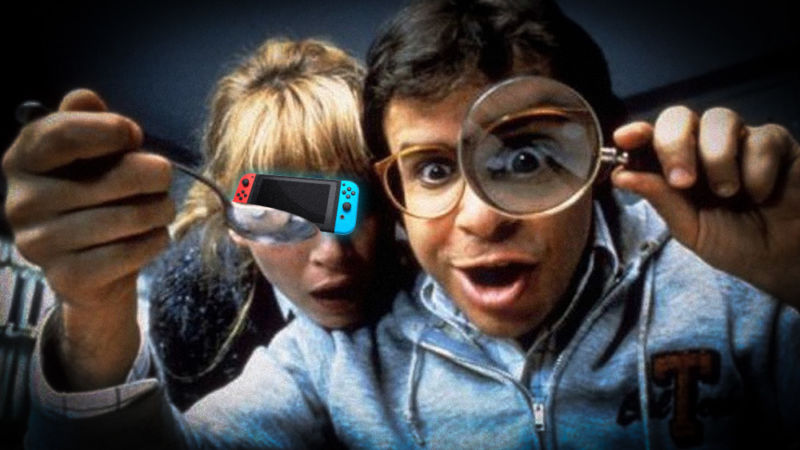
Artist's estimate of how small the rumored Nintendo Switch revision might look, based on a Nikkei report. (To be clear, this image is sarcastic.)
Enlarge / Artist’s estimate of how small the rumored Nintendo Switch revision might look, based on a Nikkei report. (To be clear, this image is sarcastic.)
Aurich / Walt Disney Pictures

Nintendo’s rumored plans to produce a revised Nintendo Switch model picked up steam on Thursday with a tantalizing bit of new information. Last year’s rumor mill simply predicted a new model could arrive in 2019, but a Japanese report has narrowed fans’ expectations based on its sources’ intel: Nintendo may have a new SKU with portability and price, not power, in mind. (And the news outlet uncovered one other possible “service” to come as well.)

The report from official stock exchange news outlet Nikkei.com (helpfully translated by Nintendo Everything) cites a combination of hardware partners and game developers who all suggest the next Switch model will be “miniaturized.” The resulting system will reportedly emphasize “portability” and “playing outside,” and it will “cut features” to bring the retail price down.

Nikkei’s report does not include more specifics, which still leaves plenty of questions about this rumored SKU. If we add up the details offered by Nikkei, though, we can guess that one of its cut features might be the removal of a bundled Switch TV Dock; this product can currently be purchased separately at an MSRP of $89.99. Cutting that combination of chipset, plastic mold, and increased box size and weight would be the easiest way to reduce the system’s current $299.99 MSRP.

Nintendo could also nix support for the dock altogether, but that would only make sense if an updated, shrunken motherboard was no longer compatible with the “overclock” applied to the system when running at a higher pixel resolution in TV mode.

Aesthetically, we could expect a smaller screen size and reduced bezels. If the form factor is shrunken in a way that makes existing Joy-Con controllers no longer fit, Nintendo’s solution may very well be to bolt the controls into the system—though that would break compatibility with certain existing Switch games, particularly last year’s Super Mario Party.

Such a console revision would line up with two glaring pockmarks on Nintendo’s otherwise excellent holiday 2018 financial report: a failure to reach that lofty “20 million Switches sold in fiscal 2018” goal, and a serious dive in Nintendo 3DS hardware and software sales. A new portable-focused Nintendo Switch, which reduces the cost of entry and is marketed as a durable, kid-friendly system, could get Nintendo back into parents’ good sales graces and knock out two birds with one Switch-shaped stone. (The current Nintendo Switch model is handsome and lovely to use in portable mode, but I’ve yet to meet a parent who doesn’t armor up the delicate system in a case and a screen protector before handing it to a clumsy child.)

This report says nothing about the existing SKU, and we imagine a bundled option with a larger screen and TV dock will continue being offered alongside any shrunken revision—just as Nintendo has done with multiple-sized versions of its DS and 3DS systems. However, this report seems to disabuse power-hungry Nintendo fans of any dreams that a Switch-Plus, with a bump to a beefier Nvidia Tegra SoC, might launch in the near future.

And one more thing…

The report also includes an incredibly brief mention of a possible new version of the paid Nintendo Switch Online service. Nikkei says, quite simply, that a “new [online] service” could launch “sometime in 2019” with a focus on “game enthusiasts.” Nikkei does not attempt to guess at this service’s exact nature, nor whether it will cost more. (Nintendo Everything’s translation guessed that this service would come at a higher cost, but other reporters dispute that translation.)

The easiest guess about what’s to come: more classic Nintendo games. We’ve already seen notes inside of the Switch’s NES files that refer to a wide variety of Super Nintendo games from first- and third-parties, and Nintendo may simply be waiting for a certain point in 2019 to announce these and renew interest in the Switch’s anemic selection of classic games.

[Update, 5:55 p.m. ET: In response to our questions, Nintendo sent a brief statement: “We have nothing to announce on this topic.”]

https://arstechnica.com/?p=1449223


Putting Switch’s 32 million shipments in context

With two full holiday seasons of public sales data now under its belt, the Nintendo Switch continues to help right a company balance sheet that was nearly decimated by the Wii U. Last night, Nintendo reported 9.41 million Switch shipments in the holiday 2018 quarter, contributing to 32.27 million consoles shipped worldwide since the system’s March 2017 launch.

Those numbers sure sound big, but they can be hard to judge in the abstract. So, as we have done in the past, we decided to provide some quick comparisons that put the Switch’s continued success into the proper context. Use these numbers to calibrate your impression of how well Nintendo’s new system is really doing and to adjust your projections of how it may do going forward (as Nintendo has).

(Lifetime sales measure slightly different calendar periods due to staggered release dates through the year, but all include two holiday seasons. Monthly periods rounded up for partial launch months).

[Update: The original version of this story gave an incorrect number for the Xbox 360, due to mistaken sourcing. Apologies]

Also, while we’re at it, we thought we’d look at how some of the Switch’s best-selling first-party exclusives are doing compared to previous entries in those franchises. When looking at these numbers, remember that they compare a few months or years of Switch sales to lifetime sales on previous consoles.

(Numbers sourced from Nintendo’s website unless otherwise noted)

Mario Kart franchise sales

  • Mario Kart 8 Deluxe (Switch): 15.02 million
  • Mario Kart 8 (Wii U): 8.42 million
  • Mario Kart 7 (3DS): 18.11 million
  • Mario Kart Wii (Wii): 37.14 million
  • Mario Kart DS (DS): 23.6 million
  • Mario Kart Double Dash (GameCube): 6.96 million
  • Mario Kart Super Circuit (GBA): 5.91 million
  • Mario Kart 64 (N64): 9.87 million
  • Super Mario Kart (SNES): 8.76 million

Additional source: (1)

Super Smash Bros. franchise sales

  • Super Smash Bros. Ultimate (Switch): 12.08 million
  • Super Smash Bros. for Wii U (Wii U): 5.35 million
  • Super Smash Bros. Brawl (Wii): 13.29 million
  • Super Smash Bros. Melee (GameCube): 7.09 million
  • Super Smash Bros. (N64): “Over 5 million”

Additional source: (1)

Super Mario franchise sales (3D titles)

  • Super Mario Odyssey (Switch): 13.76 million
  • Super Mario 3D World (Wii U): 5.8 million
  • Super Mario 3D Land (3DS): 12.41 million
  • Super Mario Galaxy 2 (Wii): 7.41 million
  • Super Mario Galaxy (Wii): 12.78 million
  • Super Mario Sunshine (GameCube): 5.5 million
  • Super Mario 64 (N64): 11.9 million

Additional sources: (1) (2)

The Legend of Zelda franchise sales (3D titles)

  • Breath of the Wild (Switch): 11.68 million
  • Skyward Sword (Wii): 3.04 million
  • Twilight Princess (Wii/GameCube): 8.85 million
  • Wind Waker (GameCube): 4.6 million
  • Ocarina of Time (N64): 7.6 million

Additional sources: (1) (2)

https://arstechnica.com/?p=1449083