Intrepid scientist corrects physiology in Gulliver’s Travels after 300 years

Title page of the first edition of Jonathan Swift's <em>Gulliver's Travels</em>, relating the fictional adventures of one Lemuel Gulliver.
Enlarge / Title page of the first edition of Jonathan Swift’s Gulliver’s Travels, relating the fictional adventures of one Lemuel Gulliver.
Meisei University Library, Tokyo, Japan

Gulliver’s Travels is justly regarded as one of the best satirical novels of all time, although its author, Jonathan Swift, claimed he wrote the book “to vex the world rather than divert it.” Politicians of the time were indeed vexed at being mocked in its pages. It seems the author’s physiological descriptions also proved a bit vexatious, according to a charming new paper in the Journal of Physiological Sciences.

First published in 1726, Gulliver’s Travels relates the fictional adventures of one Lemuel Gulliver, “first a surgeon and then a captain of several ships,” according to the book’s lengthy subtitle. During his voyages, Gulliver encounters several unusual species: the tiny people of Lilliput; the giants of Brobdingnag; talking horses called Houyhnhnms who rule over the deformed, uncouth Yahoos; and the inhabitants of the flying island of Laputa, who devote themselves to the study of science and the arts but have never figured out how to apply that knowledge for practical applications. Apart from its literary qualities, Gulliver’s Travels provided ample fodder for eagle-eyed experts, since Swift couldn’t resist going into great detail about the physiology of his fictional species, practically inviting closer scrutiny.

Toshio Kuroki, special advisor to the Japan Society for the Promotion of Science and professor emeritus at the University of Tokyo and Gifu University, read Gulliver’s Travels for the first time with his book club. Having spent a long, prestigious career conducting cancer research, Kuroki immediately noticed an error on Swift’s part when estimating Gulliver’s energy requirements compared to those of the diminutive Lilliputians. It spurred him to look more closely at similar passages in the book and to make his own comparative physiological analysis of the fictional creatures encountered by Gulliver during his travels.

“The sizes of the Lilliputians and Brobdingnagians are close to those of rats and large dinosaurs, respectively.”

Gulliver is described as being less than 6 feet tall in the book. Per Kuroki, a 2000 survey of heights across England found that the average height for men in the 18th century was around 5 feet 6 inches, so this seems about right. Apparently Swift “adopted the base of 12 in imagining these fictitious peoples,” Kuroki wrote. Per Swift’s text, the Lilliputians were 1/12 the size of Gulliver, while the Brobdingnagians were 12 times his size. That would make the Lilliputians just under half a foot, with the Brobdingnagian towering above everyone at just over 67 feet. Both fictional species are described as having bodies shaped similarly to humans.

Swift assumed weight would be proportional to the cube of the height, and used that to estimate the relative energy requirements of the three species. But Kuroki cites Quetelet’s rule (1869), stating that weight is proportional to the square of the height. It was kind of the body-mass index (BMI) of the 19th century, and Kuroki came up with an average BMI of 23 for his analysis. That would put the average Lilliputian’s weight at 1 pound, Gulliver’s at 148 pounds, and the Brobdingnagians at 21,351 pounds. “The sizes of the Lilliputians and Brobdingnagians are close to those of rats and large dinosaurs, respectively,” Kuroki wrote.

Whereas Swift estimated that Gulliver would need to consume the daily food requirement of 1,724 Lilliputians, Kuroki’s analysis showed that food for just 42 of the tiny creatures would suffice for the adventurer’s energy needs. As for the gigantic Brobdingnagians, Gulliver would only need the food consumed by 1/42 such creatures. Based on this, “the food requirement of Gulliver in the original text should be corrected after almost three centuries,” Kuroki wrote. Kuroki also estimated the comparative heartbeats, respiration rates, life spans (known to roughly follow a power law), and blood pressure for the three species.

Energy (metabolic rate, watt) of various animals as a function of body mass (kg). Those of Lilliputians, Gulliver, and Brobdingnagians are plotted on a regression line.
Enlarge / Energy (metabolic rate, watt) of various animals as a function of body mass (kg). Those of Lilliputians, Gulliver, and Brobdingnagians are plotted on a regression line.
Toshio Kuroki

Apparently Kuroki gave a presentation on his analyses to his fellow book club members. “After my presentation, colleagues at the book club appreciated that they now had a better image of these fictitious peoples, but added that it was a unique but not necessarily proper viewpoint from which to consider this book,” Kuroki wrote. “I agreed.” I suspect Swift himself would have been amused by the exercise.

Swift fared a bit better in his treatment of astronomy in Gulliver’s Travels. In “The Voyage to Laputa” (Part 3, Chapter 3), he notes that the astronomers of that land had discovered “two lesser stars, or satellites, which revolve about Mars.” Mars does indeed have two moons, Deimos and Phobos, both found in 1877 by Asaph Hall, although Kepler had speculated about their possible existence. (Kepler may have been Swift’s inspiration.) That’s why a crater on Deimos is named after Swift, along with various minor features on Phobos.

DOI: Journal of Physiological Sciences, 2019. 10.1007/s12576-018-00655-4  (About DOIs).

https://arstechnica.com/?p=1443895


How Buke and Gase built a huge indie rock career—and its own guitars, software

NEW YORK CITY—The band brings to the stage: two stringed instruments, neither of which look exactly like a bass or a guitar; two grids of foot-triggered effects pedals and switches; two music stands, covered with a smattering of synthesizers, touchscreens, and touch-sensitive pads; two laptops, connected to this variety of inputs in a center console; and two foot-triggered pieces of percussion.

One of those is a compact kick-drum rig, connected to the laptops. The other is a bicycling shoe with tambourine parts welded onto its sides and sole.

This pre-show array of gear usually elicits curious looks from crowds who wonder what kind of noise is about to emerge. But the band Buke and Gase are here for a homecoming show of sorts. They’re fresh off a nationwide tour with Shellac, among the esteemed post-punk bands to have ties to the genre’s original DIY movement. They’ve just put the final touches on their new album, titled Scholars, set to launch two months later (as in, January 18). People are here to celebrate.

So the people in the crowd are mostly fans who are familiar with Buke and Gase’s unique attributes, who’ve heard the band’s critically acclaimed albums and seen them play concerts with some of indie rock’s biggest names. They’ve seen those custom-built instruments before (a baritone ukulele and fused guitar-bass—hence, the band’s name). The fans already know that the duo, Arone Dyer and Aron Sanchez, has built their mix of elaborate and junior-sized gear so that they can play their brand of rock in truly DIY fashion; it all fits in a sedan. And the crowd may even know about the band’s customized programming rig, used to connect all of the gear for a tone-perfect live setlist.

The result is a concert—and a new album—that see Buke and Gase at their absolute best. The album’s new songs deliver on a heady-yet-accessible fusion of genres like post-punk, dub, and (heavily amplified) folk, capped off by the inimitable sheen of Dyer’ singing. Whether bouncing through tempo changes or playing with electronics, this show is all smiles, all beauty. As for the gear—it kind of melts away.

A Blue Man, a bike-building woman

[embedded content]
“Pink Boots,” by Buke and Gase—a song that sounds like an indie version of a really good Nike commercial theme song. I swear that’s a compliment.

One day after the show, the band’s members (Sanchez on gase, synthesizers, and drum sequencing; Dyer on buke, synthesizers, toe-tambourine, and vocals) meet me at a Brooklyn coffee shop around the corner from their homes in the area to chat about their decade-plus of music making. First off: let’s talk about those custom instruments.

Sanchez takes lead on this topic as the proprietor of a custom-gear workshop called Polyphonic Workshop. It’s been a formal business for years, but Sanchez can barely remember a time in his life when he wasn’t building musical instruments and gear.

Sanchez grew up in a small town in Maine, where his father was an artist, painter, and percussionist. “He had a book on musical-instrument building, like, creating acoustic stuff,” Sanchez says. “He got into making a marimba at one point.”

Between a basement full of woodworking tools and a town with lots of “wood and boat-building” shops nearby, Sanchez had relatively easy, cheap access to making instruments—which held his interest a bit more than the piano and music lessons he had as a kid. (“It was a lot of hand-cutting,” he remarks, since he had to rely on a jigsaw instead of a table saw.) His first creation was a monochord—”blocks of wood with a string on them. Then I realized, ‘I could electrify this.’ How does that work? Get a microphone. Get pickups. Add electronics.”

As he got older, Sanchez’s musical interests shifted—in part because he’d visit a grandparent a few times a year in New York City. “That’s where I’d get jazzed,” he says. “I’d go to Canal Street, get a bunch of parts, bring them back.” He began building his first effects pedals in high school via a trial-and-error process of taking electronics apart and gobbling up whatever books he could find at libraries or via special orders. (“I was pretty isolated in Maine,” he points out. “Even music magazines—access to those was limited.”) Once he got more exposure to new music via college radio, he got into playing, and building, elements of rock music. “Once I started playing bass, I thought, I can build a bass.”

Listing image by Sam Machkovech

https://arstechnica.com/?p=1442501


Star Trek: Discovery’s second season may boldly go where the first did not

Michael Burnham is all of us.
Enlarge / Michael Burnham is all of us.

In many ways, this season felt very much like a much-needed reset from the previous one. The Klingon war is over, and the Federation is consumed by a new scientific pursuit: mysterious red bursts of light that have appeared across 30,000 light years.

The scene that really drove home the reset was the formal roll call, where our bridge characters say their names—really, directly to the audience.

It’s still baffling that we went an entire season without knowing most of the bridge crew’s names! Yes, we sort of got to know a handful of characters, but there are regular faces that we’ve seen many times on the bridge. If like the other shows, where the bulk of each episode happens in the nerve center of the ship, it would help to know who we’re interacting with.

But by the end of this episode, “Brother,” despite all the original series-era teases Discovery is telling the audience that it’s leaving old Trek tropes behind. The show is uncharted space from here on out.

“I suggest that you focus on the problem in front of you, rather than what is behind,” Sarek tells Burnham in the scene just before the roll call.

Spoilers ahead. If you continue to read and then complain about spoilers, you’ll be up to your elbow in Tellarite brains.

Not all who wander are lost

This first episode is about setting the tone of the new season and exploring relationships. There are all kinds of relationships to dive into—relationships that are being mended, forged, and possibly even broken.

There’s the relationship between Burnham and Spock (she wants to repair it); the one between Stamets and Tilly (he says he’s leaving Disco, but of course he’ll stay on); and the one between Captain Pike and the new crew (everyone’s excited to work with a rockstar Starfleet captain!). But this episode is primarily about the relationship between the show’s viewers and the show itself.

As the first Trek television show in many years, its creators are constantly aware of the fans’ feelings towards the iconic series. (Recall, the end of the show’s rather silly opening scene in its debut episode is Capt. Georgiou revealing that she’s drawn a huge Starfleet badge icon in the sand, ostensibly as a way to get rescued.)

As Ars pointed out last season, Discovery used the mirror universe story arc as a crutch and largely failed to explore the implications of new characters and new technology that it set up for itself. The first season was full of ties back to the original 1960s-era Trek (known colloquially as “TOS,” for “the original series”): the mirror universe itself, Harry Mudd, tribbles, Klingons, and more. To top it all off, the first season ended with the USS Discovery going bow-to-bow with the USS Enterprise.

The second season premiere was one TOS tease after another. Heck, literally the first words spoken in the episode strike an immediate chord with any Trek fan: “Space, the final frontier.”

There’s the monocolor TOS-era “new” uniforms, the unnamed and unremarked-upon Saurian with the sneeze gag in the turbolift, the Tellarite in the makeshift sickbay on an asteroid, the familiar TOS Enterprise door hiss, and even the direct fortune cookie reference to the name of the original TOS pilot episode “The Cage.”

But by the end of the episode, we get Captain Pike in a proper Discovery uniform, Sarek’s announced departure, and Burnham watching as the Enterprise is being pulled away by space tugboats. Even when she’s aboard, there are no wide shots—just a turbolift door and Spock’s stuff in storage. We don’t even get to see the NCC-1701 bridge.

“The damage to Enterprise was severe,” Pike tells Burnham at one point. “The engineering corps has no idea when she’ll be back online.”

In other words, this season just might be the actual premiere that we all might have wished for at the beginning of last season. A nod to TOS, but with a handoff to actually explore “strange new worlds.”

It’s probably worth noting that the Mirror Universe wasn’t mentioned at all. (I’m happy to fire aft torpedoes on that entire storyline.)

Pike’s peak

We know that the overarching question of season two has to do with what these crazy red spots are Spock’s connection to them. That seems like a fun objective to explore. Plus we’ve got the B-story mystery: how and why does this asteroid fragment tickle the spore drive in an unusual way?

As a 21st century show with modern special effects, Discovery was all too happy to dazzle us with new vehicles, costumes, and equipment. The titular starship is equipped with spinning single-person flying pods that come equipped with sweet voice-activated spacesuits. It appears that the purpose of the early chase scene is simply to show off this tech. Discovery also sports a telescopic camera (possibly borrowed from the Google Street View cars?), and something awesome called a “gravity simulator.”

Also distinct from TOS is the fact that the first person to get red-shirted is the blue-shirted cocky science officer, Evan Connelly—and no one cares at all. Connelly perishes in a high-stakes chase scene, and is never mentioned again.

Heck, the title sequence has changed as well: we now see some new animated sketches, including the captain’s chair, the angel figure, three enlarged Starfleet badges positioned in a transporter room, (The Klingon weaponry is gone.)

There are new crewmembers too: Tig Notaro turns in a hilarious performance as Chief Engineer Jet Reno, leader of the surviving members of the crashed starship USS Hiawatha.

Still, the premiere raises some curious questions: why was the Enterprise, Starfleet’s flagship, away for the duration of the Klingon war? Does it really take that long to get across the galaxy at high warp? When Burnham calls the Enterprise “an instrument of last resort,” what does she mean? Why is the Enterprise disabled? What did Burnham to do to drive Spock away?

And finally, we’ve got Pike himself, who remains a bit of a blank slate. He’s revered, sure—season one briefly named him as one of Starfleet’s “decorated captains”—but we don’t know why. At least in this episode, Pike comes across as earnest: of all the previous television captains, he’s probably the most like Captain Jonathan Archer of the NX-01 Enterprise.

“Wherever our mission takes us,” Pike tells Burnham, “We’ll try to have a little fun on the way too, huh? Make a little noise. Ruffle a few feathers.”

Her reply: “I look forward to it, captain.”

Maybe we’ll finally get the show that we were promised after all.

https://arstechnica.com/?p=1443257


Mortal Kombat 11 gameplay as seen by a ‘90s arcade rat

Scorpion has come a long way in <em>Mortal Kombat 11</em>, but he's still a golden ninja with flaming powers, so it works for me.
Enlarge / Scorpion has come a long way in Mortal Kombat 11, but he’s still a golden ninja with flaming powers, so it works for me.

I was 15 when Mortal Kombat first hit the arcades in 1992. It was a different era then—no social media, no modern Internet to speak of, and we didn’t have year-long teaser campaigns for new games. You would just walk into the arcade one day and there was a new cabinet sitting there, maybe back in a corner, like a secret, or maybe in the center of the floor, already gathering a crowd.

Being nostalgic for your teenage years is easy, and I don’t want to over-mythologize the arcade of my youth. But there was something special about getting those surprises, and we’ve lost that. It seems rare now to be hit with the unexpected—dodging spoilers is practically a contact sport. Here was this game like nothing else we’d seen before, and it just appeared.

We were already fighting-game players. Street Fighter II, Fatal Fury, World Heroes—we dropped our quarters into every game we could get our hands on. But Mortal Kombat was different.

You heard it first. The arcade put Mortal Kombat in the middle, so you didn’t see it the moment you walked in the door. The rumble of the subwoofer was the first clue there was something new. No other game had bass like this. When the announcer shouted FIGHT or TEST YOUR MIGHT, you could practically feel it in your bones. The sound of the gong cut through the noise of other games.

We’d seen digitized characters before, in games like Pit Fighter, but those were choppy and stiff. Mortal Kombat‘s characters had idle animations, they shot electricity, and there was a sea of bobbing, bald-headed monks watching you fight. The game looked, felt, and sounded so visceral and real. Uppercuts sent your opponent flying in a wonderfully meaty way while blood splattered everywhere. We were hooked from the start.

Then, of course, I saw my first fatality. I’m pretty sure it was Sub-Zero tearing someone’s head off and holding it up, their spine still dangling below it. FATALITY. We didn’t know Sen. Joe Lieberman was going to lead a moral panic and that it would spark the best console war ever (Genesis’ blood cheat code versus Super Nintendo’s sad, gray “sweat”). We just knew it was amazing, and we had to know how to do it.

Skulls on fire

I became a Scorpion player, if for no other reason than I could do his fatality: space yourself right, hold block, press up up, and he’d take his mask off to reveal a flame-spewing skull, torching his enemies into Uncle Owen and Aunt Beru. It was violent, realistic, and cartoony at the same time, and I loved it.

I kept playing for a few years. Midway knew it had a hit, so the company kept releasing new versions of the game that one-upped the environments, characters, and, of course, the violence. After Mortal Kombat 3, I left for college and stopped going to my favorite Market Street arcade in San Francisco, which later closed. The series moved to ugly 3D graphics, and I stopped following it.

Fast-forward to the end of 2018: NetherRealm Studios, the company created by Warner Bros. to carry the MK torch, announces Mortal Kombat 11. I’m still a fighting-game player to this day, still playing Street Fighter and whatever else I get my hands on, but Mortal Kombat just wasn’t something I paid much attention to anymore. Something about the new announcement stirred all these arcade memories, though, and I found myself looking forward to today’s reveal event.

Watch the new gameplay trailer below and form your own thoughts first:

[embedded content]
Mortal Kombat 11 Gameplay Reveal

Wow. I’m in the arcade again. I know these characters. Well, some of them, at least. And it looks gorgeous. We’re so spoiled by modern 3D graphics that it’s hard to come by the surprises of the arcade days, but this is still a great-looking game. Textures, models, lighting, environments—everything has been given a high level of polish and love. My 15-year-old self would be blown away, that’s for sure. All these years later, Scorpion still throwing his spear and shouting GET OVER HERE!

I’m not 15 anymore, and I have to admit a little bit of old-man feelings creeping in while I watch these fatalities. It’s, well, a bit much. Gone is that heady blend of realism mixed with the cartoony. The new finishers are a little uncomfortably real. Not sure I needed to see someone’s bloody eyeball speared through the back of their head. My inner teen is cheering, I can’t lie, but the rest of me isn’t so sure this level of realism is what fatalities needed.

Still, there’s no denying that this is a good-looking game. The story is apparently convoluted and crazy, but it looks well done and is clearly not throwaway content. The reveal showed off a very robust character-customization engine, and I’m a big fan of personalizing and owning your character. NetherRealm is known for packing a lot of single-player content into its fighting games, and MK11 looks like no exception. If you’re not a fan of online play or you don’t have any friends to try versus mode with, you’re going to still have plenty to do.

I’ll always be nostalgic for the original game. I still think the magic of the arcade is something special beyond just wistful youthful memories. But the legacy clearly lives on, and there’s hopefully a new generation to get hooked on ripping people’s heads off. It might be a little more realistic than I’m comfortable with, but if Mortal Kombat doesn’t make the adults queasy, is it really doing its job?

https://arstechnica.com/?p=1443115


Ars community gives more than $20,000 in annual charity drive

Ars community gives more than $20,000 in annual charity drive

A month ago, I asked readers to donate to our 2018 Charity Drive sweepstakes. All told, Ars Technica readers donated $20,210.66 to Child’s Play and the EFF through the charity drive. That brings our total donations over 12 years of charity driving over the $300,000 mark! Well done, Arsians!

Thanks to everyone who gave whatever they could. We’re still early in the process of selecting and notifying winners of our swag giveaway, so don’t fret if you haven’t heard if you’re a winner yet. In the meantime, enjoy these quick stats from the 2018 drive.

  • 2018 Fundraising total: $20,210.66
    • Total given to Child’s Play: $6,739.69
    • Total given to the EFF: $13,470.97
  • Number of individual donations: 305
    • Child’s Play donations: 145
    • EFF donations: 160
  • Average donation: $66.26
    • Child’s Play average donation: $52.37
    • EFF average donation: $84.19
  • Median donation: $25 (even)
    • Median Child’s Play donation: $25
    • Median EFF donation: $37.50 (even)
  • Top single donation: $1,500 (to EFF)
  • Donations of $1,000 or more: 3
  • Donations of $100 or more: 65
  • $1 donations: 3 (every little bit helps!)
  • Total charity donations from Ars Technica drives since 2007 (approximate): $302,925.90
    • 2017: $36,012.37
    • 2016: $38,738.11
    • 2015: $38,861.06
    • 2014: $25,094.31
    • 2013: $23,570.13
    • 2012: $28,713.52
    • 2011: ~$26,000
    • 2010: ~$24,000
    • 2009: ~$17,000
    • 2008: ~$12,000
    • 2007: ~$10,000

https://arstechnica.com/?p=1442857


Unity clarifies ToS changes, welcomes back “unsupported” SpatialOS

Unity clarifies ToS changes, welcomes back “unsupported” SpatialOS

Days after a nasty public split with cloud gaming developer Improbable, Unity has reinstated the company’s license and updated its own terms of service to offer what it is calling a “commitment to being an open platform.”

“When you make a game with Unity, you own the content and you should have the right to put it wherever you want,” Unity wrote in a blog post explaining the move. “Our TOS didn’t reflect this principle—something that is not in line with who we are.”

The new terms of service allow Unity developers to integrate any third-party service into their projects, no questions asked. As a caveat, though, Unity will now distinguish between “supported” third-party services—those Unity ensures will “always [run] well on the latest version of our software”—and “unsupported” third-party services, which developers use at their own risk.

Under the new terms, Improbable will have its Unity license reinstated, and the company’s SpatialOS will be allowed to work with Unity as an unsupported third-party service. “We do not consider them a partner, and cannot vouch for how their service works with Unity as we have no insight into their technology or how they run their business,” Unity wrote. “Although SpatialOS is not a supported third-party service, it can continue to be used for development and shipping games.”

How we got here and where we’re going

The move is a significant retreat for Unity, which said it had been in negotiations with Improbable for “over a year” to make sure the SpatialOS service could continue to operate as an “approved Unity platform partner.” Improbable maintains that its service had been in compliance with Unity’s terms until a December 5 ToS update imperiled any games and projects that were using SpatialOS at the time.

Unity later offered a special exception allowing current SpatialOS projects to continue to work with its engine, though it continued to deny Improbable a license to provide SpatialOS updates. Later that day, Improbable partnered with Unreal Engine maker Epic Games to “assist developers who are left in limbo by the new engine and service incompatibilities that were introduced today… [to] transition to more open engines, services, and ecosystems.”

To ensure developers aren’t blindsided by similar ToS changes in the future, Unity now says developers can stick to the ToS version for that year’s major version release (including bug fixes) as long as they don’t actively upgrade the project. Thus, games released under an older version of the ToS will be able to continue to operate under that legal framework indefinitely. Updates to the Unity ToS will now be posted on GitHub as well.

In a Reddit AMA session earlier today, Unity CEO John Riccitiello said, “We have no plans to make our TOS more challenging in the future.” He added that Improbable’s conflict with Unity was a unique case where the cloud gaming service maker implied a partnership with Unity that did not exist.

“Aside from Improbable, we’ve never terminated licenses for a service provider, and would not have in this instance had they been more open with us,” Riccitiello wrote.

https://arstechnica.com/?p=1442357


Netflix reveals Space Force comedy series before Trump gets real thing approved

Netflix took the wraps off its latest comedy series on Wednesday, and while that may sound humdrum for a company with roughly 7,000 series in the works, this one has set its sights on something huge: the outer reaches of space. Er, sorry, we misread that. The Space Force.

Indeed, before President Trump’s proposal for a sixth military branch can become an official item in the United States’ 2020 budget, Netflix has jumped on the idea of making a show about this branch’s day-to-day ops—and it has three major vets of TV’s The Office on board, including Steve Carell as both a co-creator and a star.

The resulting TV series, currently named Space Force, was unveiled in the form of a teaser trailer on Wednesday morning. This mostly text trailer, set to Strauss’ “Zarathustra,” brings viewers up to speed about how the branch began life in a June 2018 speech. “The goal of the new branch is ‘to defend satellites from attack’ and ‘perform other space-related tasks’… or something,” it reads. “This is the story of the men and women who have to figure it out.”

Netflix’s own press release on the matter says little else beyond confirming that Space Force co-creator Greg Daniels and Executive Producer Howard Klein worked with Carell on the US adaptation of Ricky Gervais and Stephen Merchant’s The Office. We don’t have a release date or any information about other stars, writers, or contributors. A report from THR, citing “sources,” suggests Carell’s overall per-episode salary “sets a new overall record for talent” compared to other popular TV series.

Those Office credentials loudly hint at a mockumentary take on Trump’s Space Force, though it remains to be seen how Netflix’s new series may set itself apart from the bumbling-government comedy of HBO’s Veep. Its deliberate ties to actual US policy suggest opportunities to openly mock existing elected officials, but we may come to find that Space Force is staged, say, 10 or 20 years in the future; again, details are terribly vague at this point. (We imagine Space Force will at least be funnier than what used to pass for president-mocking comedy in the early ’00s.)

[embedded content]
Space Force teaser from Netflix.

Listing image by Getty/Will Heath/NBC/NBCU

https://arstechnica.com/?p=1442283


We’ll send postcards—pinball museums, CERN, and more favorite Ars trips of all time

By default, life at Ars involves a lot of day-to-day work from a home office. But putting together two-decades-and-counting of high-quality journalism has opened opportunities over the years that may not have existed in 1999. Looking back through the archives recently in light of our 20th anniversary, we couldn’t help but notice all the unbelievable places we’ve been and seen previously. Maybe things started with looking at Mac OS X DP2 from the confines of the Siracusa house, but work here has pretty quickly evolved to require occasional dinosaur riding and NASA booties wearing, too.

Ars will never say no to an on-the-nose museum exhibit (thank you again, Smithsonian’s Art of the Video Game), but some of our most memorable tours have leveraged journalism privilege into some amazing behind-the-scenes experiences to share with readers. We’ve seen particle accelerators across continents and followed the forum’s lead into hallowed ground like Mission Control (editor’s note: we really need to do the same with the National Air Force Museum, too). Our former Navy man got to visit his old ship and see the quarters on a newly restored WWII PT-boat. Ars has seen old space and new space up close, and we even spent quality time with George, the early supercomputer.

Luckily, the future looks like it will have more of the same—if recent trips to the set of The Orville or to the Boring Company’s LA tunnel are any indication, at least. We’ll try to be better about postcards (and certainly remain open to invitations), but for now it’s time to reminiscence and look back at snapshots from some of Ars’ greatest trips.

Listing image by Jonathan Gitlin

https://arstechnica.com/?p=1440613


The original Ghostbusters franchise is getting a new film in 2020

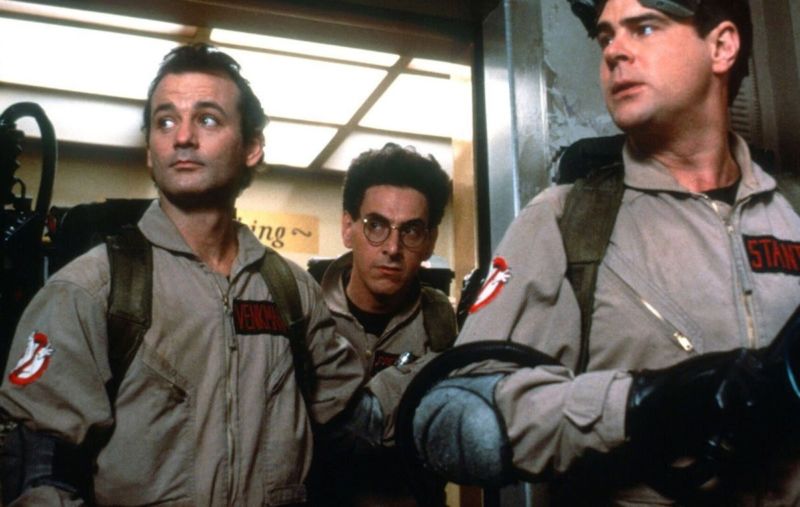
Who ya gonna call? Three of the four original Ghostbusters: Bill Murray, the late Harold Ramis, and Dan Ackroyd.
Enlarge / Who ya gonna call? Three of the four original Ghostbusters: Bill Murray, the late Harold Ramis, and Dan Ackroyd.
Columbia Pictures

Fire up your proton packs, people, because there’s going to be another Ghostbusters movie from Sony Pictures, according to Entertainment Weekly. Jason Reitman (Juno, Thank You For Smoking) will direct the new film, which will be set in the same fictional universe as the 1984 original and its sequel—unlike Paul Feige’s 2016 all-female Ghostbusters.

Reitman is a fitting choice, seeing as how he’s the son of Ivan Reitman, director of the 1980s films. You may have glimpsed Jason, his mother, and his sister in the original Ghostbusters, as residents fleeing their haunted skyscraper. Jason even had a line in the 1989 sequel: he was the birthday boy who told the ‘Busters, “My dad says you guys are full of crap.”

Reitman resisted following in his father’s footsteps for years, but it seems he’s finally succumbing to the call. “I’ve always thought of myself as the first Ghostbusters fan, when I was a 6-year-old visiting the set. I wanted to make a movie for all the other fans,” Reitman told EW. “This is the next chapter in the original franchise. It is not a reboot. What happened in the ‘80s happened in the ‘80s, and this is set in the present day.”

Reitman co-wrote the script with Gil Kenan (Monster House), but declined to share any details with EW, preferring to let “the film unwrap like a present.” But there’s bound to be excited speculation about the possibility of original cast members returning. Harold Ramis died in 2014, but Dan Ackroyd, Ernie Hudson, and Bill Murray are still around. Murray had a small role in the 2016 reboot, along with cameos by Sigourney Weaver and Annie Potts (who played the shrill receptionist Vanessa in the original.)

Count me among those who genuinely loved Feige’s 2016 vision (especially the extended director’s cut, which was vastly superior to the theatrical release)—Kate Mackinnon as Jillian Holtzmann was a sheer delight and practically stole every scene. I thought the controversy surrounding its all-female cast was ridiculous. Reitman is a fan too. “I have so much respect for what Paul created with those brilliant actresses and would love to see more stories from them,” he said.

Shooting should begin later this year, with a planned release in 2020. But do we really need another Ghostbusters movie, especially since Sony is also developing an animated Ghostbusters film? Reitman certainly thinks so. “The Ghostbusters universe is big enough to hold a lot of different stories,” he said.

https://arstechnica.com/?p=1441843


Report: EA’s beleaguered, open-world Star Wars game is no more

Artist's approximation of the status of EA Vancouver's Star Wars video game.
Artist’s approximation of the status of EA Vancouver’s Star Wars video game.

Ahead of an official EA announcement, Kotaku has gone forward with major Star Wars gaming news. The most troubled game in the EA and Star Wars deal, which was signed in 2013, has been canceled.

The game in question was once codenamed “Ragtag” while in development with wholly owned EA subsidiary Visceral Games. That changed in late 2017 with a formal announcement of that studio’s closure, along with the game’s assets and development being primarily handed over to the EA Vancouver studio. This handover was officially described as “a significant change” to the in-development game due to “fundamental shifts in the marketplace.”

Kotaku’s Tuesday report alleges that the resulting, rebooted Star Wars game, which had been built as an “open-world” adventure, has since been canceled. The report, from Jason Schreier, cites “three sources,” but it does not confirm an exact timeline of the cancellation. Schreier says that EA has neither offered its own news post nor responded to Kotaku’s questions.

Little was known about the shape of “Ragtag” after it had been taken over by EA Vancouver beyond the fact that its development shift included the departure of former project lead Amy Hennig. Hennig did not confirm at that time whether that departure was voluntary. Reports about Visceral’s demise included a hefty amount of blame to go around, from issues with Hennig’s leadership to constant shuffling of EA employees and assets dedicated to the game.

EA has remained mum on other Star Wars games in its portfolio, which, as of press time, only includes an announced game in development from Titanfall creator Respawn Entertainment. That game, currently titled Jedi: Fallen Order, received nothing more than a lip-service mention at the studio’s E3 2018 presentation, which confirmed that its events will take place between the film series’ Episode III and IV and will star “a surviving Padawan.”

https://arstechnica.com/?p=1441781