Ubisoft goes Steam-less, embraces Epic Games Store for The Division 2

The soldier here is Ubisoft. The Capitol building is Steam. Epic is... the turret?
Enlarge / The soldier here is Ubisoft. The Capitol building is Steam. Epic is… the turret?

The Epic Games Store’s relatively new effort to take on Valve’s Steam juggernaut received a major shot in the arm today. That’s because Ubisoft has announced that the PC version of The Division 2 will not be sold on Steam and will instead be available only through the Epic Games Store and Ubisoft’s own UPlay service.

Though The Division 2 previously had an info page listed on Steam, Ubisoft confirmed to numerous press outlets that “we have no plans currently on releasing Tom Clancy’s The Division 2 on Steam.” Epic Games also said in a statement that it “will also partner [with Ubisoft] on additional select titles to be announced during the coming year.” Epic said it will “work to integrate key components of Ubisoft’’s Uplay and Epic’’s online services to provide gamers from both ecosystems with more seamless social features and interoperability.”

Ubisoft titles previously released on Steam, including the first Division game, will remain on the service for now. Certain future games, including Far Cry: New Dawn, are also still planned for Steam release, Ubisoft told Variety.

“We entrust Epic to deliver a smooth journey for our fans, from pre-ordering the game and enjoying our Beta to the launch of Tom Clancy’’s The Division 2 on March 15,”” Ubisoft Vice President of Partnerships Chris Early said in a statement. ““Epic continues to disrupt the video game industry, and their third-party digital distribution model is the latest example, and something Ubisoft wants to support.””

While Ubisoft didn’t go into further detail on its reasoning for eschewing Steam in this case, Epic’s more generous revenue-sharing scheme likely played an outsized role. On the Epic Games Store, Ubisoft will keep 88 percent of all sales revenue compared with 70 percent on Steam (though the share on Steam would eventually rise to 80 percent after $50 million in sales).

Though the Epic Games Store has enjoyed some smaller exclusive releases since its December launch—including Supergiant’s Hades—The Division 2 is the first big-budget title from a major developer to ignore Steam in favor of the new platform. The first Division game attracted millions of owners through Steam, according to estimates from tracking service Steam Spy.

Since the Epic Game Store’s launch, some PC gamers have expressed annoyance at being asked to manage another online store and game launcher in addition to Steam’s de facto Steam standard. But The Division 2 is likely a big enough exclusive to convince many players to take a look at a service they might otherwise ignore. At the same time, that attention from gamers will increase the visibility of other titles on Epic’s store, potentially feeding a virtuous cycle for developers who might be thinking about taking advantage of Epic’s more favorable revenue sharing.

Ubisoft’s move comes after Discord announced an even more favorable 90-percent revenue share for its expanding Discord Store platform.

https://arstechnica.com/?p=1438699


Here’s what we know so far about long-awaited Game of Thrones prequel

The rumored prequel to HBO's smash hit <em>Game of Thrones</em> will take place thousands of years before the events of the original series—perhaps involving the Children of the Forest, the original inhabitants of Westeros.
Enlarge / The rumored prequel to HBO’s smash hit Game of Thrones will take place thousands of years before the events of the original series—perhaps involving the Children of the Forest, the original inhabitants of Westeros.

HBO has unleashed a flood of casting news about a planned prequel to its hugely successful Game of Thrones series, which will air its final season later this year. Details are scarce, but the company confirmed the prequel will be set thousands of years before the events of the original series, fueling even more fan speculation about which aspects of George R.R. Martin’s vast fictional universe will be featured.

We do get some strong hints from the official HBO website. The prequel “chronicles the world’s descent from the Golden Age of Heroes into its darkest hour,” HBO announced. “From the horrifying secrets of Westeros’ history to the true origin of the White Walkers, the mysteries of the East to the Starks of legend, only one thing is for sure: It’s not the story we think we know.”

A Long Night?

The Age of Heroes in the Martinverse timeline coincides with two key mythical figures, Bran the Builder—a House Stark forebear famous for building the great Wall of Westeros (the one that came crashing down in the final moments of last season)—and Lann the Clever, a forefather of House Lannister. This is also right around the time of the infamous “Long Night” occasionally referenced on Game of Thrones, a winter that lasted a very long time, when mankind first waged war against the White Walkers, ultimately joining forces with the Children of the Forest to defeat them. Martin himself referred to the prequel as The Long Night, and while HBO has not confirmed it, it’ll do for a working title.

We can be fairly certain that the prequel won’t be about Robert’s Rebellion, which takes place within 20 years or so of the events of the original HBO series. Martin himself wrote on his blog in 2017 that, by the time he finishes A Song of Ice and Fire, readers will know all there is to know about that part of Westeros history (although, given his famously glacial writing pace, that could be several years off). “There would be no surprises or revelations left in such a show, just the acting out of conflicts whose resolutions you already know,” he wrote. “It would feel too much like a twice-told tale.”

Nor will it be an adaption of his popular Dunk & Egg spinoff novellas, since he’s not done writing those either. “I don’t want to repeat what happened with Game of Thrones itself, where the show gets ahead of the books,” he wrote.

Newly announced <em>Game of Thrones</em> prequel cast members: (top, left to right) Toby Regbo, Sheila Atim, Ivanno Jeremiah, Denise Gough; (bottom, left to right) Alex Sharp, Naomi Ackie, Georgie Henley, Jamie Campbell Bower.
Enlarge / Newly announced Game of Thrones prequel cast members: (top, left to right) Toby Regbo, Sheila Atim, Ivanno Jeremiah, Denise Gough; (bottom, left to right) Alex Sharp, Naomi Ackie, Georgie Henley, Jamie Campbell Bower.

At one point there were five prequel projects in development for HBO. One fell by the wayside, and the others are presumably on the back burner for now. HBO officially ordered The Long Night pilot last June, created by Martin and Jane Goldman as co-executive producers, with the latter penning the teleplay. It will be directed by SJ Clarkson (Jessica Jones, The Defenders). Production should begin later this year on the approved prequel pilot, with shooting locations likely to include Northern Ireland (where most of the Winterfell footage has been shot in the past) and the Canary Islands.

As for the cast, Naomi Watts (Twin Peaks, The Return) signed up early on to play “a charismatic socialite hiding a dark secret,” along with Josh Whitehouse (Poldark) in an unspecified role (perhaps Bran the Builder?). The rest of the cast showcases an impressive diversity that frankly was often missing from the original series, including Denise Gough and Jamie Campbell Bower, both of whom made a splash playing queer or gender-bending characters (Gough as the cross-dressing Mathilde de Morny in the biopic Colette, and Campbell Bower as young Grindelwald, Dumbledore’s love interest in the Harry Potter franchise).

Also just announced as cast members: Naomi Ackie (Star Wars: Episode IX), Sheila Atim (Harlots), Ivanno Jeremiah (Black Mirror, Humans), Georgie Henley (The Chronicles of Narnia), Alex Sharp (To the Bone), and Toby Regbo (Fantastic Beasts: The Crimes of Grindelwald).

While there’s no guarantee for a full series order, HBO has said if it does move forward with the project, the prequel definitely won’t air until at least a year after Game of Thrones ends. So we’re looking at 2020 or beyond before our next TV foray into the mythical world of Westeros.

https://arstechnica.com/?p=1438403


Razer leaks seeming Xbox One keyboard/mouse expansion ahead of schedule

Pardon us, Razer, but how many games did you say will work with this Xbox One keyboard/mouse combo, exactly?
Enlarge / Pardon us, Razer, but how many games did you say will work with this Xbox One keyboard/mouse combo, exactly?

Last November’s announcement of support for keyboard and mouse controls in 15 Xbox One titles was the culmination of literally years of Microsoft promises on the matter. Now, peripheral maker Razer seems to have accidentally revealed the feature is expanding to a handful of additional titles, including some big-name franchises.

As part of a CES stealth launch of the $250 Razer Turret—the first officially licensed wireless keyboard/mouse combo for the Xbox One—Razer provided press materials that listed 22 compatible Xbox One games. That includes the 15 games Microsoft already announced in November, plus:

  • Gears of War 5
  • Gears Tactics*
  • PlayerUnknown’s Battlegrounds*
  • Roblox
  • Sea of Thieves*
  • The Sims 4*
  • Surviving Mars*

About 25 hours later, Razer issued a “corrected” press release that condensed that list considerably. While Gears of War 5 and Roblox are still confirmed for Xbox One keyboard/mouse support, the other (asterisked) games listed above were no longer included in the corrected release.

What led to the correction? A Razer representative told Ars, “we have many ongoing discussions with game developers who are working on keyboard/mouse and lighting support, and a few titles in the original alert were erroneously communicated and/or were done so in advance of the game developer’s preferred timing (emphasis added).”

That suggests at least some of the five newly “unlisted” titles are indeed getting keyboard/mouse support, even if we’re not supposed to know it yet. But which ones were accidentally leaked and which ones were just “erroneously communicated”?

PlayerUnknown’s Battlegrounds developer PUBG Corp. has already clarified on Reddit that “the information in [Razer’s] advertisement is false and our game was incorrectly listed.” We’ve reached out to the other publishers affected by the correction but have yet to receive any responses as of press time.

Gears Tactics is perhaps the most surprising game on Razer’s initial list, since that game was announced as a PC exclusive at least year’s E3. It seems unlikely that Razer would just assume an Xbox One version of the game existed in compiling its initial list of supported games.

Of the remainder, The Sims 4 and Surviving Mars seem like no-brainer examples of games that could easily add keyboard/mouse support on Xbox One, as they were already designed to take full advantage of those controls on PC. Sea of Thieves‘ inclusion, meanwhile, could potentially allow console players to enjoy the text-based in-game chat that PC players already enjoy in addition to non-verbal emotes.

Of the newly confirmed keyboard/mouse additions, Gears of War 5 isn’t that surprising. Microsoft and developer The Coalition have long allowed PC and console players to mix in competitive Gears of War 4 matches.

Microsoft has said it will leave the addition of keyboard/mouse support in Xbox One games up to individual developers and has made API tools available to ease the integration. For multiplayer titles, developers have the option to segregate Xbox One players into different matchmaking pools based on their chosen control scheme.

https://arstechnica.com/?p=1438635


Sony just acquired the gaming industry’s biggest audio toolset

Wwise's logo, now slapped onto a Sony backdrop. What's to come of this new audio-toolset arrangement?
Enlarge / Wwise’s logo, now slapped onto a Sony backdrop. What’s to come of this new audio-toolset arrangement?
Aurich / Sony / Audiokinetic

Sony Interactive Entertainment announced its latest studio acquisition on Tuesday, but the company it is set to acquire, Audiokinetic, is a different kind of “development” studio. Instead of making games, Audiokinetic makes Wwise, arguably the gaming industry’s most popular multi-platform audio middleware toolset.

Anybody who has played a video game in the past five years has a hint of how big of an acquisition this is, as those gamers have likely seen the “Wwise” logo in at least one game’s opening or closing credits. That logo indicates that Audiokinetic’s proprietary tools have been used to help developers more easily arrange sound effects, dialogue, and music in their games.

The acquisition will allow Audiokinetic to continue operating as an independent developer and licensor of tools like Wwise, the Montreal studio says, while letting Sony “tap into Audiokinetic’s vast audio engineering expertise.”

Estimating exactly how many games and game studios employ the Wwise toolset to deliver in-game audio is tough, if only because Audiokinetic has never put out a definitive list. And if it did, the list might never end. Audiokinetic’s official site mentions its relationship with studios like Konami, Ubisoft, Capcom, Bandai Namco, Insomniac, 2K Games, CD Projekt Red, and Codemasters, while a cursory glance at Wikipedia’s massive list suggests that all three major console publishers have used Wwise in their first-party fare. And again, it doesn’t sound like those agreements with outside studios will change, at least based on the announcement’s language.

Audiokinetic only goes so far as to say that “over 500 games per year” use the company’s audio tools, and the toolset’s compatibility with every modern gaming engine lines up with the studio’s promise that these games appear on every platform imaginable, from PC to console to smartphone. Since its tools appeared in the company’s “500th” game in 2013, it’s our estimation that the toolset has cleared the 1,000-game mark, if not thousands.

“This acquisition will allow us to further grow the PlayStation platform and contribute to the broader gaming industry,” SIE President and CEO John Kodera said in Audiokinetic’s press release. “It’s our goal to support Audiokinetic’s efforts to advance its audio technology while maintaining independence and platform neutrality.”

That’s all well and good, but what is Sony’s angle in acquiring a sound-tool studio that will continue to provide tools to outside studios (and possibly its console-producing competitors Microsoft and Nintendo)? The answer may be the sheer financial boon of selling these tools to every studio known to man. Or it could come in the form of developing new proprietary audio technologies for future Sony products. Ars Technica’s inside-source birdies frequently mention audio-systems development as a priority at various hardware companies, particularly those with designs on next-generation virtual reality systems. And those suspicions only grew at this year’s Oculus Connect, where that company’s engineering leaders (Michael Abrash, John Carmack) spoke openly about efforts such as positional audio research.

Audiokinetic has not been a slouch on spatial and 3D audio technologies, particularly thanks to tools that account for video games’ 3D architecture and materials to have sounds adjust on the fly. Whether Sony has greater plans for these kinds of tools remains to be seen.

https://arstechnica.com/?p=1438073


Captain Marvel shows off her very own ‘Iron Fist’ in latest trailer

[embedded content]
Marvel Studios drops a special look at its forthcoming Captain Marvel film, starring Brie Larson.

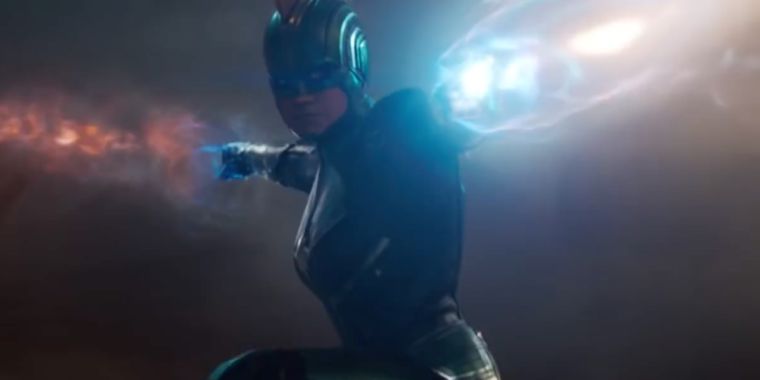
The release of Captain Marvel is just two months away, and Marvel Studios is stoking the excitement with an extended “special look” at the upcoming film. We learn that Carole Danvers seems to have her very own “Iron Fist” and catch glimpses of a Skrull mid-shapeshift, as well as a young Agent Coulson.

By now we know that Captain Marvel will be set in the 1990s, long before the infamous “Snappening” at the end of Avengers: Infinity War. She falls from the sky and lands in a Blockbuster Video and soon draws the attention of a young Nick Fury (all hail the power of CGI and Samuel L. Jackson). We also learned from prior trailers that she had a life on Earth as a pilot with the military. She was rescued, near death, by the Kree after her aircraft crashed. Left with no memories, they made her one of them so she “could live longer, stronger, superior.”

Carole is rocking a grunge/biker look in this latest trailer, debriefing Nick Fury in a dive bar about the Skrulls’ invasion of Earth. They’re a shape-shifting alien species, and we get to see that process in action here, as a Skrull takes on the form of an unsuspecting surfer. She’s here to fight them, evidenced by the infamous subway scene where she beats up a seemingly sweet old granny (really a Skrull in disguise).

One of the more intriguing things we learn from this special look is that Carole seems to have her very own Iron Fist, the source of her incredible powers. It looks a lot like Danny Rand’s orange glowing fist, except hers delivers a powerful photon blast. Could there be a connection? We don’t know how she acquired this power, but it seems to be related to her accident. There’s a brief shot of a mysterious substance seeping into her hand, right before she transforms in a brilliant flash of blue energy.

This footage brings out even more of the sparkling chemistry between Carole and Fury. She’s witty as well as fierce, and she’s cheeky enough to question the wisdom of advertising her association with S.H.I.E.L.D. with a baseball cap on a supposedly covert op. “Says the space soldier who was wearing a rubber suit,” he counters. And we get our first glimpse of a young Agent Coulson (Clark Gregg), hoping there might be more beings with special powers lurking about. “She’s just the beginning,” Fury tells him.

What this special look doesn’t do is shed more light on Jude Law’s character. It had been widely rumored that he plays the original Mar-Vell, introduced in the comics back in 1967 as an alien military officer of the Kree Empire who joins forces with the humans. Fans speculated he would play Carole Danvers’ mentor in the new film. But leaked images of the new line of Captain Marvel Funko Pop toys suggested that Law would play a Kree named Yon-Rogg, one of Captain Marvel’s greatest enemies.

This latest trailer suggests he is indeed a mentor to Carole, teaching her combat skills and, more importantly, how to control that powerful fist of hers. That doesn’t necessarily rule out the possibility that he becomes her enemy, however. It’s a common trope in the genre. UPDATE: Check out the training featurette below.

All in all, it looks like Carole Danvers will be a force to be reckoned with in the major battle that is likely to be the focus of Avengers: End Game (coming in April). Captain Marvel hits theaters on March 8.

[embedded content]
Captain Marvel training featurette.

Listing image by YouTube/Marvel Studios

https://arstechnica.com/?p=1437979


These 12 FreeSync monitors will soon be compatible with Nvidia’s G-Sync

An Nvidia graphic that depicts what G-Sync technology is like, I guess...
Enlarge / An Nvidia graphic that depicts what G-Sync technology is like, I guess…

In addition to the entirely expected news about the upcoming RTX 2060, Nvidia CES presentation this weekend included a surprise about its G-Sync display standard. That screen-tear and input-lag-smoothing technology will soon work with select monitors designed for VESA’s competing DisplayPort Adaptive-Sync protocol (which is used in AMD’s FreeSync monitors).

In announcing the move, Nvidia says the gaming experience on these variable refresh rate (VRR) monitors “can vary widely.” So Nvidia says it has gone to the trouble of testing 400 different Adaptive-Sync monitors to see which ones are worthy of being certified as “G-Sync Compatible.”

Of those 400 tests, Nvidia says only 12 monitors have met its standards so far. They are:

  • Acer XFA240
  • Acer XG270HU
  • Acer XV273K
  • Acer XZ321Q
  • AOC AGON AG241QG4
  • AOC G2590FX
  • Asus MG278Q
  • Asus XG248 / XG258
  • Asus VG258Q
  • BenQ XL2740

Starting with an Nvidia driver update on January 15, these G-Sync Compatible monitors will automatically be able to take advantage of G-Sync’s basic variable VRR features when used with Nvidia 20-series and 10-series graphics cards. Owners of other Adaptive-Sync monitors will be able to manually enable VRR on Nvidia graphics cards as well, but Nvidia won’t certify how well that support will work.

Nvidia also stresses that monitors actually designed from the start with G-Sync in mind will be the only ones able to take advantage of features like “full refresh rate range from 1Hz to the display panel’s maximum rate… variable overdrive, refresh rate overclocking, ultra-low motion blur display modes and industry-leading HDR with 1,000 nits, full matrix backlight and DCI-P3 color.”

Open up

Besides being unexpected good news for gamers who already own one of these FreeSync monitors, this is also great news for gamers that want to add VRR to their Nvidia graphics card setup without breaking the bank. G-Sync monitors generally retail for hundreds of dollars more than similar FreeSync competition, a premium they were able to demand in part because of that exclusive compatibility with Nvidia’s market-leading graphics cards (though higher hardware manufacturing costs and additional G-Sync features like those listed above also play some part in the value proposition).

Expanding that compatibility will likely make Nvidia’s cards more appealing to gamers who don’t want to spend that premium money on a top-of-the-line monitor. At the same time, it could make monitor manufacturers less likely to put themselves through Nvidia’s “300 test” certification process for the G-Sync standard (gamers that recently paid top dollar for the G-Sync label might also be a bit put off).

In any case, it’s always heartening to see hardware manufacturers softening the more exclusionary portions of their ever-evolving war of standards. We’re reminded of Oculus’ decision to officially offer Facebook Spaces support on competing VR headsets. Let’s hope it’s the start of a trend.

https://arstechnica.com/?p=1436915


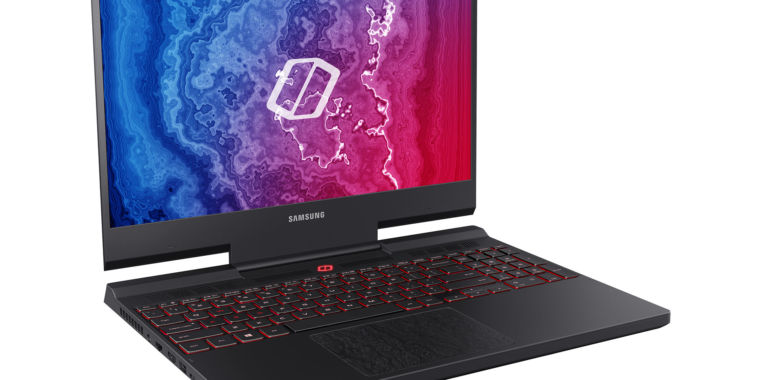
Samsung sticks Nvidia RTX 2080 GPU inside new Odyssey gaming notebook

Samsung is making news at CES 2019—but not for an obvious reason. The Korean manufacturer announced its first new gaming laptop in quite some time: the Samsung Notebook Odyssey. While Samsung has made gaming devices with the Odyssey name, this new notebook appears to compete with similarly powerful and portable gaming PCs from the likes of Acer, Alienware, and Razer.

Most noteworthy is the graphics card inside the Notebook Odyssey: the Nvidia RTX 2080. Nvidia just announced these new graphics cards, which will come to at least 40 laptops soon. The RTX 2080 and RTX 2060 cards promise big performance and efficiency gains over their GTX counterparts, with the RTX 2080 serving up 20 percent more performance when compared to the GTX 1080 GPU. They also bring ray-tracing abilities to the PCs they power, a process used in films to make live-action graphics look hyper-realistic.

But ray-tracing requires a lot of computing power, so the PCs sporting Nvidia’s newest graphics have to be prepared to support it. The new GPUs use Mac-Q tech to ensure they can run properly inside the relatively small and thin chassis of gaming laptops (there’s obviously not as much space to work with as in a desktop). Samsung is employing a new “penta-pipe” cooling system in the Notebook Odyssey as well, which uses two fans with more than 83 blades each to help the machine run as fast and as cool as it can in any situation.

Also inside the Notebook Odyssey is an 8th-gen hexa-core Intel Core i7 processor, 16GB of RAM, and space for two NVMe SSDs and one HDD. The laptop’s 15.6-inch FHD display runs at 144Hz and has Nvidia G-Sync support. It’s disappointing to see that it only comes with an FHD panel, but it will undoubtedly speak to gamers who care don’t mind forgoing 4K screens in favor of smooth, high frame-rate performance.

Samsung didn’t design the Notebook Odyssey to look identical to other gaming laptops, but it does employ a few signature features common to gaming devices, like a colorful keyboard backlight. It has a strange centered hinge as well that prompts questions about its stability and durability, but we can’t judge it thoroughly until we have the device in our hands.

Samsung wasn’t going for thin-and-light either: the Notebook Odyssey weighs 5.3 pounds, but at least the company included a number of ports on its chunky edges. The laptop has 1 USB-C port, three USB-A 3.0 ports, one HDMI port, and one Ethernet port.

Pricing hasn’t been released yet for the Samsung Notebook Odyssey, but it’s expected to be available early this year.

Listing image by Samsung

https://arstechnica.com/?p=1436791


The next Alien project will be a mixed-media experience in 2019

20th Century Fox announced the next project, or possible projects, in the Alien universe on Saturday by way of a vague and tantalizing social-media post. This next Alien universe release, slated for a “2019” launch, includes a “read, watch, play” promise, suggesting a mixed-media launch whose various parts could commingle.

Its interactive aspects will be paid off, at the very least, by the protagonist already named in the above teaser: Amanda Ripley. This character, the daughter of Sigourney Weaver’s character Ellen Ripley, featured prominently in the 2014 video game Alien Isolation. In that game, the younger Ripley was tasked with uncovering mysteries on a Weyland-Yutani craft called the Sevastopol.

The stakes will be higher for the younger Ripley in this year’s release, as the tease includes a promised return to the famed Nostromo, the setting of the very first Alien film in 1979. Saturday’s tease suggests that Amanda Ripley will have the first human interaction with anything Nostromo-related in 40 years. (Maybe she will analyze some shards?)

The post’s lack of film studio logos suggests this mixed-media launch could skip a theatrical launch, but as of press time, details are incredibly scant. Whatever comes of this project, it will mark the first major entry in the series since 2017’s serviceable film Alien Covenant. 

Listing image by 20th Century Fox

https://arstechnica.com/?p=1436517


Want Lewis or Rowling-like worlds but more nightmarish? Snag In an Absent Dream

Mild spoilers ahead.
Tor Publishing

If you’re looking for a grittier, dream-edging-on-nightmare version of a world created by C.S. Lewis or J.K. Rowling, author Seanan McGuire has you covered. McGuire explores worlds that are simultaneously fascinating and frightening in her award-winning Wayward Children novella series. It’s a dark-fantasy version of a conceit you might have heard of before: kids discover new worlds behind mysterious doors, then return to the “real world” only to search for the doorway back to their new, preferred homes.

The fourth installment in the series, In an Absent Dream, follows Lundy, a character introduced in the first book Every Heart A Doorway. And in this new installment, Lundy ventures into the Goblin Market, a world inspired by the narrative poem of the same name by Christina Rossetti.

A world of “fair value”

The story begins when Lundy was once Katherine Lundy, an ordinary yet remarkable young girl with a love for books. One day, a strange tree blocks her usual walking path home from school, and inside it is a door with the message “Be Sure” carved into its wood. Lundy opens it and enters the Goblin Market, an alternative universe where “fair value” rules. She quickly learns her way around the Market thanks to her new friend and Market-dweller Moon and the Market’s debt handler, a woman named the Archivist.

Unlike the worlds explored in previous Wayward Children novellas, the Goblin Market has a quiet kind of sinister air. Whereas the threats of violence and manipulation were overt in the Moors of Down Among the Sticks and Bones (book two), the Goblin Market controls its citizens through the rules of fair value, or the equitable exchange of goods and services between parties. Let’s say there are consequences to racking up debt when fair value isn’t achieved.

Moon and the Archivist teach Lundy how to survive, and thrive, in the Goblin Market, so much so that Lundy wants nothing more than to stay in this new world forever. But the Goblin Market doesn’t keep children during their first visit, so Lundy is forced back into the real world more quickly than she had hoped. She returns to the Goblin Market a handful of times after that, coming and going between it and the real world as experiences the trials and tribulations of a young girl coming of age.

This world-traveling introduces a new dynamic into the series. In the three previous novellas, children who find new homes beyond strange doors either stay in their new homes forever, or wind up back in the real world by choice or by force. Those who are forced back end up at Eleanor West’s Home for Wayward Children, where they can live among other kids searching for ways back to their worlds, or ways to accept their real-world fate. In an Absent Dream shows how Lundy is affected by literally being in limbo between two worlds, both of which contain things she loves and hates.

In an Absent Dream combines a high-stakes plot, vivid world-building, and gentle character development best out of all of the Wayward Children novellas.

While McGuire introduces plenty of external conflict in this installment, the most compelling is Lundy’s internal struggle. Should she return to the Goblin Market forever, pledging an unbreakable oath to the world when she turns 18 years old? Or should she stay in the real world, where her younger sister Diana yearns for the sibling bond she feels she missed out on after Lundy disappeared the first time?

Without getting deep into spoilers, many experiences influence Lundy’s final decision. The Market’s fair value system proves to be more complicated than she first thought, as a very peculiar, entrancing, and frightening fate awaits those who amass too much debt. Much of her time spent in the Goblin Market revolves around settling debts, both her own and those of others. McGuire expertly uses the rules of the Goblin Market to explore relationship dynamics, showing how the circumstances of the world in which you live may have more of an effect on your relationships than you think.

In an Absent Dream combines a high-stakes plot, vivid world-building, and gentle character development best out of all of the Wayward Children novellas. While the previous three novellas are strong (McGuire does so much in few very pages, as all of the novellas are around 200 pages), the balance between those three points isn’t as well-executed as it is in this fourth installment.

Thanks to their brevity and individualistic nature, the Wayward Children stories don’t need to be read in order (although, some general rules about worlds and doorways will make more sense if you do). In every novella, readers re-experience the wonders, uncertainties, and anxieties of childhood as these characters journey through new worlds with fresh, hungry eyes. And no matter which world they end up in, they face universal challenges that we all face at one point or another in our lives—even if most of us do so without dominating vampires, doctors with powers over the dead, and landscapes made of cake and sugar shards.

In an Absent Dream is published by Tor/Forge and will be available January 8, 2019.

Listing image by Tor Publishing

https://arstechnica.com/?p=1435455


Hobbyists resurrect Kojima’s “lost” game P.T. as a free PC download

Roughly a year after Konami released P.T., a free “Silent Hills teaser” experience for the PlayStation 4, the Japanese game publisher removed its listing. Ever since, the only way to play through this eerie, atmospheric horror vignette has been to find a PS4 that had already downloaded the demo.

That changed on Friday with the release of a free, and largely authentic, replica of the experience. Unreal PT is now available for Windows PCs, and it offers a nearly identical playthrough of the PS4 original. Ars has played through the 1.6GB experience and confirmed that it delivers a remarkable version of the Hideo Kojima original.

Meaning you’ll want to put on headphones and get a fresh pair of pants. Many years later, P.T. still offers a uniquely unsettling experience, thanks to its mix of repetition, simplicity, creepy touches, and impeccable sound design. Unreal PT transfers all of those aspects to Windows PC, all while scaling up to true 4K resolution, leaning into impressive Unreal Engine 4 visual effects, and maxing out at your preferred frame rate. Unfortunately, the game’s “wake from the ground” intro and pre-rendered conclusion are not included, so anybody brand-new to P.T. will want to watch a playthrough on YouTube after finishing to see what’s missing. (In good news, the download includes a helpful “guide.txt” file to explain how to get through P.T.‘s most confusing moments should you get stuck at any point.)

The project’s lead developer, Radius Gordello, posted a development log alongside the release to confirm roughly nine months of development time. It details the team’s effort to build many of his version’s assets from scratch, including “textures, models, animations, gameplay, and code.” But Gordello makes no bones about reusing specific, key assets, including “Lisa’s, Norman’s, and the baby’s models, the radio, and the pictures in the picture frames,” along with every original sound effect and dialogue recording. That sheer fact makes the download’s legal status particularly murky.

As a bonus (or a minus, depending on your point of view), Unreal PT purports to work with VR headsets in a sit-down capacity. However, Gordello makes clear in his notes that the demo’s VR implementation is far from optimal, owing to his lack of sufficient VR development equipment (he simply ran a few VR tests at a school’s computer lab). In addition to being creepy as all get-out, Unreal PT‘s VR implementation is absolutely broken; its only truly interesting aspect is that it fails to properly align your 3D avatar, so you can reposition your body in real-life space to see the game’s real-time render of actor Norman Reedus.

P.T.‘s original purpose, as a teaser for a collaboration between Hideo Kojima and film director Guillermo Del Toro on a “Silent Hills” game project, has long since flown the coop. Kojima was fired from Konami less than a year after P.T.‘s launch, and all of the studio’s Kojima-helmed projects, including Silent Hills, ground to a halt shortly afterward. (The firing’s timing, ahead of Metal Gear Solid V‘s launch, led to later speculation about why that game’s ending seemed rushed.)

Kojima, Del Toro, and Reedus have all since reunited for the Sony-published, PS4-exclusive game Death Stranding, whose release date still has not been announced.

Listing image by Unreal PT

https://arstechnica.com/?p=1436147